King County Assessor John Wilson says there is “entirely” enough underused land in Seattle to shelter 1,000 homeless people a year. “I’ve become more and more convinced that we have adequate land capacity to solve the housing problem in this county,” he says. “It’s a question of, ‘Do we have the will?’”
Shortly after his 2015 election, Wilson ordered a map of every vacant or underused parcel of government-owned property inside the city limits. The effort was spurred out of conversations with his longtime friend, Seattle City Councilmember Sally Bagshaw, who has long believed the city has available land to address the region’s homelessness crisis.
Seattle’s Office of Housing has tracked property owned by the City of Seattle before, concluding that, while there is some surplus property, very little can address the housing crisis.
But Wilson’s map goes further, cataloging property owned by the City of Seattle, King County, the State of Washington, University of Washington, Washington State University, the Port of Seattle, Sound Transit and all other government-owned land within Seattle. The map identifies more than 300 spaces that are larger than 20,000 square feet and are located within a quarter-mile of transit.
There are hurdles to using these parcels, some of which are likely insurmountable, such as contamination or terrain that is, for example, too steep to build on.
Additionally, there are two significant bureaucratic obstacles to potentially using the land: First, under state law, surplus utility land must be sold at market rate prices, even to a city department; and second, the city’s zoning and permitting processes make it difficult to construct shelters on some underused lots.
But Wilson thinks these obstacles are surmountable. Since receiving the map, he’s been in talks with State House Speaker Frank Chopp to pass legislation making utility land more accessible. Chopp is supportive and is researching the issue, he told Crosscut.
Wilson also believes the State of Emergency declared by former Mayor Ed Murray and King County Executive Dow Constantine could be used more liberally to get around zoning issues. Murray said the declaration would allow for speedier construction of shelter in areas not currently zoned for that. But Wilson argues, “I’m not sure that that’s how it’s been acted on.”
Wilson has blunt words for Murray, saying he received enthusiastic feedback on the map from the former mayor’s staff, but that Murray himself didn’t weigh in before leaving office. “Hopefully the next mayor, whoever she is, will take a look at this and hopefully work with us and realize that there is the potential here in the city. ‘How do I drive that forward and drive it faster?’”
In an email, Julie Moore with the Department of Finance and Administrative Services said the city appreciated Wilson’s work and is continuing to search for usable land.
King County Assessor John Wilson/King County photo
Under state law, property owned by utilities, like Seattle City Light, Seattle Public Utilities or the Seattle Department of Transportation, must earn market-rate prices for land, a sort-of fiduciary bind between the companies and the ratepayers. According to the Office of Housing, there are 45 such properties owned by Seattle; Wilson could not say exactly how many his map tagged.
“It’s part of what’s maddening,” says Wilson. “There was a parcel we identified up on Capitol Hill that’s owned by City Light. It’s been sitting there vacant for some time now. They’re not making any money off it. We approached City Light and they said, ‘Sure you can use it for modular housing,’ and they said, ‘That’ll be $91,000 a year.’”
The requirement hasn’t precluded all use of utility land, but it comes at a cost: the Human Services Department is paying market-rate prices to Seattle City Light for an encampment in Interbay, said Moore with the Department of Finance and Administrative Services.
In some cases, it’s been a direct barrier to using vacant areas for housing, including at several large plots of SDOT land in South Lake Union that were not used for housing, according to Curbed Seattle.
Speaker Chopp says, if and when the property is sold, the high cost makes it less likely private developers will build affordable housing. When asked if the market-rate requirement might speed the sale of public land to private owners, Chopp says, “Yeah, obviously.”
After several meetings with Wilson, Bagshaw and others, Chopp is interested in drafting legislation to allow cities to lease utility land for as little as $1 if it’s for the “public benefit” — housing, early childhood education or park space. “We think they should have the option of getting these lands and putting them back into public purpose,” he says.
The upcoming session in Olympia is a short one and Chopp says he’s determined to finish on time. But he says initial advice from lawyers is that the rule does not interfere with the constitution and can be changed through a statute change.
Zoning restrictions are another reason development on underused landscan be difficult. Wilson wishes the State of Emergency was used more freely to get around this, especially because Murray said at the time of the declaration he would do so.
But this question of how far the city can go under a State of Emergency is ill-defined. The mayor’s office and city council have been in conversation with the City Attorney’s Office about the declaration’s limits and therefore the City Attorney could not comment due to attorney-client privilege, according to spokesperson Kimberly Mills.
Hugh Spitzer, a professor of Law at the University of Washington, says it’s very unclear how much latitude the State of Emergency declaration gives to the city or county. “From a practical standpoint, if the mayor and the county executive were to make modest adjustments that were not very much but kind of helped things along, it might not be challenged and might be upheld,” he says. “On the other hand, if the mayor were to attempt to ignore fair, clear permitting processes, it might be challenged and then the city would have to show that this is really the kind of emergency that those state laws, the charter and this ordinance are meant to address.”
There are currently seven sites in Seattle reserved for tiny homes — 96-square-foot sheds with a bed, shelves and heating. These “tiny home villages” are scattered from Othello to Ballard. Each has a communal kitchen and shared bathrooms as well as security.
Tiny home villages could be more easily situated on the identified vacant land parcels because space and siting requirement for tiny homes are more flexible. “Our housing models for providing low-income or mixed-income housing have tended to focus on, ‘I need a chunk of property that big,’” says Wilson. “And you realize that in some cases that’s not the size you’ve got. That’s in part why you look at tiny houses where you go, ‘Alright, but could you do something that is smaller or more compact but we could still house a number of people?’”
Sharon Lee, Executive Director of the Low Income Housing Institute (LIHI) that administers Seattle’s tiny house villages, wants her organization to double the number of residences — a goal she sees as achievable if given the land to do it. “We’re hoping that the new mayoral administration will be more generous and expansive in use of city property,” she says.
On a lot once zoned for a single-family house in Seattle’s Central District, 14 tiny homes form a community for 22 people and 5 pets. It’s on church property and LIHI pays $200 a month to lease the land. Many of the sheds — about the size of a horse’s stall — were built by different organizations, so their designs vary: a pop-up roof that serves as a sleeping loft; burnt-cedar siding; a third painted in Seahawks colors. There’s a communal kitchen housed beneath a tent, its shelves lined with cans of beans.
Each tiny residencecost $2,200 to build, $2,500 if built off-site and moved here. It was established in 2015 out of a collaborative effort between Nickelsville, which advocates for people with homes, and LIHI.
Harley (who did not give his last name) has lived here since June, after livingin several other homeless encampments nearby. He arrived in Seattle recently from Colorado, where he’d spent 13 years in prison. “Nobody I knew was out here,” which is a good thing, he says about why he moved to the Pacific Northwest.
This tiny home lot is “peaceful,” he says. He can’t remember the last time he felt so stable; he’s now interviewing for jobs. “It’s kind of like a little community,” he says of the village. “It has the same dynamic as a family.”
There’s debate over whether tiny home villages can be a permanent solution to homelessness. But there is widespread support for them among elected officials as an alternative to unsanctioned encampments — so-called tent cities — including from both Jenny Durkan and Cary Moon who are running for mayor.
On Wednesday, council members Bagshaw and Kshama Sawant found themselves in a rare moment of agreement that the city should add more tiny homes. Sawant is proposing an additional $500,000 for encampments, although shewould like up to $2.2 million to double the number of tiny housevillages.
Bagshaw agreed, saying she’d like to see 150 new beds in each of theseven Seattle neighborhood districts — a goal that tiny home construction could hasten. She also said she’s asked the King County Council to set a similar goal, which she thinks could result in 2,000 new beds within six months.
Prioritizing vacant land for housing was one of the many 2015 recommendations to come out of the Housing Affordability and Livability Agenda. But Wilson believes there hasn’t been enough communication between the different government agencies to fully understand what’s available. He says many institutions simply don’t know what they have. “To one degree or another it’s, ‘We still have that?’ and ‘Oh yeah, we still own that.'”
If the city is going to wrap its arms around the homelessness crisis, he argues, something needs to change. “Simply doing what we’ve done before won’t get us there. It won’t get us to the thousand new beds a year. It won’t get us to a point where we have sufficient housing, where we have people living in the streets needlessly and it won’t get us to a point where people who work in this city can afford to live in this city.”
If you’re like many other humans on this planet, winter’s shorter days may get you feeling a bit down from lack of sunlight. But some folks in the state are on a mission to reclaim one hour of daylight, with a campaign to get Massachusetts to leave the Eastern Time Zone.
One member of a Massachusetts state commission that’s currently looking at whether or not the state should move to the Atlantic Time Zone — and thus, opt out of Daylight Savings Time — said he started his quest when he moved from Washington, D.C., to Massachusetts.
“I knew I was moving north, but I had no idea how far I was moving east, and so you can imagine my horror when in December the sun was setting” at 4:11 p.m., he told NBC News.
If Massachusetts does move time zones, it would be an hour ahead of the rest of the East Coast for roughly four months each year.
In September, the state commission released a draft report [PDF] that found Massachusetts “could make a data-driven case for moving to the Atlantic Time Zone year-round.”
The commission’s report notes that year-round DST would positively impact consumer spending, which could help the state attract and retain more talented workers; would increase residents’ productivity and cut down on both the number and severity of on-the-job injuries; and improve public health in general.
A second draft will be voted on Nov. 1, and if approved could go on to lawmakers.
Massachusetts isn’t the only state to consider such a move, the commission notes: Four of the other five New England states have also looked into year-round DST. In Maine, a bill that would’ve prompted such a change in the state if Massachusetts and New Hampshire also participated was passed by both legislative chambers before it was laid aside.
Another bill in New Hampshire passed the House but was voted down in the Senate, while bills establishing year-round DST were also filed in the Connecticut and Rhode Island legislatures. Elsewhere in the country, legislators have introduced bills in Illinois, Michigan, Mississippi, New Mexico, and Wyoming.
In 2011, the Pacific Coast Coal Company first filed a proposal to reopen the John Henry mine, a small, long-dormant coal mine near the town of Black Diamond in southeastern King County. That year, the proposal was placed on administrative delay pending an environmental assessment. In 2014, a number of environmentalists led by Fuse Washington protested the project, and the delay was renewed again in 2016.
But now that environmental assessment is complete, courtesy of the U.S. Department of the Interior. Its findings? That the John Henry mine should have no significant impact on the surrounding area. Hmm!
Leaving aside for the moment how likely that is, let’s just note that the Pacific Coast Coal Company has not engaged in any mining activity since 1999, and the state of Washington currently has zero active coal mines.
The Office of Surface Mining Reclamation and Enforcement has not yet issued a permit to reopen the mine, as it still needs to review the public comments, but the entire proposition feels extremely … retro.
Last month, after six months of construction, New York’s Metropolitan Transportation Authority reopened the first of three rehabbed Brooklyn stations. It had new USB charging stations, large-screen digital maps, countdown clocks, and even a new mosaic.
But what really caught straphangers’ attention was the leaning bar. A slanted wooden slab set against the wall at about the height of a person’s rear end, the bar was meant to give passengers a way to take some weight off their feet as they waited for the next train. What it was not, however, was a bench.
“Are they trying to tell us something? Is this even for humans?” asked one incredulous Twitter user. “Is leaning the new sitting?” tweeted another. “With all the walking in NYC you need to sit occasionally.”
The first Cuomo Station opens in Bay Ridge, 53rd St. biggest changes - leaning benches, charging ports, digital screens pic.twitter.com/QMTIXPToM2
In an email to CityLab, MTA spokesman Kevin Ortiz called the leaning bar “the result of a review of best practices in transit systems around the world.” Bars take up less floor space than benches, he wrote, and serve as another option for transit riders. “They didn’t replace traditional seating in the station,” he wrote; “they supplement it.”
Despite the MTA’s protestations, some New Yorkers saw the bar as the latest salvo in what could be called the War on Sitting. As cities around the world tear out benches in an effort to deter homeless people from sleeping and drug dealers from hovering, or to force loiterers to move along, pedestrians and transit users may find fewer and fewer places to sit down and take a load off, or hang out and watch the world go by—and that’s bad news not only for tired feet, but for city life itself.
In the past few years, benches have disappeared from Uptown Chicago bus shelters (city officials cited concerns about loitering) and downtown Cincinnati (because “lewd and lascivious behavior” was allegedly occurring behind them). In San Francisco’s Castro, the local business association pulled seating out of Harvey Milk Plaza. The benches, it said, were being used as a “loophole” by people who wanted to avoid violating the city’s law against lying on sidewalks. In D.C., George Washington University pulled up seating outside a campus 7-Eleven after university police received complaints about panhandling and harassment. “If there are benches there, there are homeless people there,” an officer told the student paper.
Earlier this year, the London Borough of Islington installed new “smart” benches with Wi-Fi, solar panels, and phone charging stations—but soon after the borough council announced it would remove them, due to a lack of planning permission and concerns that the benches presented “an opportunity for thieves travelling past to snatch phones and iPads.”
Anaheim got attention in July because of officials’ decision to remove benches from bus stops near Disneyland, leading some people to assume that the theme park requested homeless people be evicted for the sake of its squeaky-clean image. City spokesman Mike Lyster said that was incorrect—the benches were not pulled out at the theme park’s behest.
“We got into a situation where bus riders were losing access to the benches—people were basically occupying them 24 hours a day,” he said. “This at least restored the shelters for bus riders.”
Lyster noted that the city has an outreach program to connect homeless people with social services that can get them into housing; since 2014, some 800 people have found homes, he said. “But it’s a long game, and the problem grows.” Meanwhile, the bench removals had their intended effect, he said. While people slept on the sidewalk for a while, eventually, they moved on.
No one seems to be keeping statistics on the disappearance of street seating, but G.W. Rolle, who sits on the board at the National Law Center on Homelessness & Poverty, places the trend within the greater context of so-called hostile architecture—features such as spikes to prevent people from sitting on ledges and segmented benches that don’t allow them to lie down—and anti-vagrancy laws, which criminalize sleeping in public, sitting on sidewalks, and loitering. The center, which tracks laws that affect homeless people, found in a recent survey of U.S. cities that nearly half have laws barring lying down or sitting in certain places, a number that has climbed more than 50 percent over the past decade.
Elderly women and a homeless man share a park bench in Santa Monica. (Reed Saxon/AP)
“A physical object must occupy physical space,” says Rolle, who was himself homeless for several years. “But wherever you sit, you’re vulnerable to vagrancy citations. They don’t want homeless people to have any peace.”
Rolle is now a pastor and advocate for homeless people in St. Petersburg, Florida, a city that was once famous for its distinctive green benches. Today, St. Petersburg has one of the highest concentrations of homeless people in the U.S., and those benches have all but disappeared.
“It hasn’t solved homelessness, and the people they put the benches there for still need them,” Rolle says. “It would make the city look better if they put them back. It’s a beautiful city, surrounded on three sides by water, and more people would walk, more people would go downtown, more of the elderly would come out of their buildings, if they had somewhere to sit.”
Rolle’s observations are consistent with findings of the New York-based nonprofit Project for Public Spaces. “Removing benches also removes some of the positive activity,” says Ethan Kent, the group’s senior vice president. “It sends a message of fear: This is a place to move through quickly. People disengage. … The most effective way to deal with ‘undesirable’ activity is to make the place friendlier for everyone else. So the bench becomes the battle line, the turning point for cities either welcoming people or designing out of fear.”
While many communities are taking away benches for fear of illegal or undesirable behavior, something else suggests keeping or even adding more of them: our country’s (and the world’s) aging population. In 2007, the World Health Organization published a guide to “Global Age-friendly Cities,” which noted, “The availability of seating areas is generally viewed as a necessary urban feature for older people.” Some older people surveyed for the guide expressed concern about “antisocial” elements occupying public benches. To mitigate that, the WHO recommended that outdoor seating be abundant, well-maintained, and regularly spaced.
Today, more than 500 communities worldwide are working, to various extents, on meeting the WHO’s guidelines. Surprisingly enough, the home of the infamous leaning bench—New York—has been among the most ambitious.
Ruth Finkelstein was the original director of the Age-Friendly NYC Commission, which launched in 2007. (She is now an assistant professor of health policy and management at Columbia University’s Mailman School of Public Health.) To begin with, Finkelstein says, her group held town-hall-style meetings with thousands of older people in each borough, listening to their concerns about everything from sidewalk maintenance to gaps in the city’s healthcare system.
“Benches came up a lot,” Finkelstein says, “both people talking about the fact that it made it difficult to do their errands if they didn’t have a place to sit, and also people just saying they want to sit out in their neighborhood and watch the world go by.”
Some of the older citizens’ desires were beyond the means of the initiative, but it seemed simple enough to add more benches—especially with money from the federal government’s 2009 stimulus package available. So Finkelstein’s group worked with the city’s Department of Transportation (a separate entity from the MTA) to put benches at bus stops and at other locations with higher concentrations of older people. Then they came up with a simple form that let anyone request a bench. To date, DOT has installed 1,500 benches, with another 600 planned by 2019.
“They just started popping up all over the place,” Finkelstein says. “People love them. People use them. And there’s nothing about them that makes them only for old people. It’s an important way of creating a town square. Old people sit on them, young people sit on them, and sometimes old people and young people sit on them together and—God forbid—talk to each other.”
New York is not the only city that, in recent years, has both given benches and taken them away. Wichita, Kansas, recently floated a plan to remove seating from one downtown park in an effort to drive out homeless people. But as part of its own age-friendly initiative, the city also built a new “Grandparents Park” with plenty of seating to accommodate older people. Boston claimed that removing benches near one of its main train stations had reduced drug activity, but elsewhere, City Hall is proudly rolling out MIT-designed smart benches with phone-charging stations.
Local governments evidently remain conflicted. But the grumbling that ensues when benches are taken away—and the positive press when new ones are installed—suggest a stalemate in the War on Sitting, for now.
Last weekend, 1-year-old Neallie Junior Saxon III was playing with other neighborhood kids in their front yards in Broward County, Florida, when he did what young kids do and went after a ball, into the street.
The driver of a Hyundai Santa Fe SUV hit Neallie and did not even slow down until she reached a stop sign, at which point, onlookers dragged her out and beat her, according to the Miami Herald.
“He was my pride and joy,” Neallie’s grief-stricken mother wrote on Facebook. “You will always be loved and missed. Mommy and daddy are being as strong as we can be.”
The identity of the driver wasn’t released, but as is common in this kind of story, she is already being absolved by the police and the media. The Herald reports:
The toddler, who would have been 2 in December, was shorter than the bumper of the 2007 four-door Hyundai Santa Fe SUV. Broward Sheriff’s Office deputies said it was unlikely the woman driving would have seen the little boy, especially with all the other kids running around in the road.
There’s a lot to unpack in that passage, but one of the more striking questions it raises is this: Why are companies allowed to sell mass market vehicles with such a huge blind spot in front that children are rendered invisible? Where are the regulators at the National Highway Traffic Safety Administration?
The specific dangers of SUVs have been out in the open for a long time, and it’s no secret that pedestrians are at particular risk.
In 2015, researchers at the University of Michigan determined that pedestrians are more than three times as likely to be killed when struck by an SUV than when struck by a regular passenger vehicle. The critical design factor is the high, blocky front end, which pushes people below the wheels instead of over the hood.
Clay Gabler, a mechanical engineer who researched pedestrian safety in SUV collisions for Rowan University in Glassboro, New Jersey, was warning about the front end design of SUVs back in 2003.
Why are big square-nosed SUVs still everywhere? Because they sell. Those front end features that kill and maim pedestrians are popular with consumers.
Keith Bradsher, a former New York Times Detroit bureau chief, wrote a scathing account of the production and marketing of sport utility vehicles in 2002, “High and Mighty.”
SUV drivers are similar to minivan drivers demographically, but they are more “self-oriented” psychologically, Bradsher reported. They are more fearful of crime, less likely to be involved in their communities, and less committed to their families, he wrote.
In 2000, DaimlerChrysler Director of Market Research David Bostwick told Bradsher that for consumers, ”It’s not safety as the issue, it’s aggressiveness, it’s the ability to go off the road.” Research also showed that SUV owners drive faster and place a lower value on being courteous on the road.
SUVs are designed specifically to appeal to this psychological profile, executives admitted:
DaimlerChrysler has chosen high-riding designs even for the two-wheel-drive versions of its sport utilities, even though they are unlikely to be driven over rough terrain and are therefore unlikely to need to ride higher, said David C. McKinnon, DaimlerChrysler’s director of vehicle exterior design. Mr. McKinnon said the company’s highest executives had told him repeatedly to ‘get them up in the air and make them husky.’
Up in the air, where drivers can’t see little kids like Neallie Saxon. For no reason other than style.
When the New Scientist published Gabler’s research 14 years ago, it carried a warning:
But in the US, pedestrians are losing the safety battle. “Despite over 4000 pedestrian deaths a year, there are no pedestrian impact safety regulations under serious consideration in the US,” Gabler says.
Since then pedestrian deaths have increased nearly 50 percent. Lives like Neallie’s are the price we pay to satisfy consumer preferences and maximize automakers’ profits.
You probably haven’t heard of internet prankster Jeremy Piatt, but you may be familiar with his work. A mock GoFundme campaign to “Get Kanye out of debt” was widely covered in the press as serious, with Kanye’s camp eventually having to clarify that no, he didn’t want the money.
Piatt, a graphic designer, recently pulled off a sequel of sorts by stirring up the hornet’s nest that is the the current bike-lane debate in Minneapolis. About two weeks ago, Piatt created a Facebook event for what he thought would be a fake protest against new extended bike lanes near his home downtown.
He wrote that the streets had become “congested driving nightmares” since lanes were installed, “making driving a mess.” He ended with a rallying cry in all-caps: “TAKE BACK OUR CITY!”
But some people took his invitation seriously. On Sunday, a small crowd of about 15 to 25 people showed up to protest at the designated place, the intersection of 26th and Hennepin Avenue, including two city council candidates, Joe Kovacs and David Schorn. (Piatt was nowhere to be found.) The protest was even more intense than Piatt had satirically called for: As Minneapolis’s ever-present political Twitter account, @WedgeLIVE, noted, people carried signs that read “Mafia Lanes,” “Suck it Lanes,” and “Nazi Lanes.” For extra effect, sign posts were painted red to look like they were dripping with blood.
(Shane Morin)
How did what was intended as a fake call for protest turn into an invective-laden real-life event, and one of the most extreme examples of what is known as “bikelash”?
It started with the response to Piatt.
After he created an event, people took the bait, with the pro-bike camp being the first to jump in.
“It was all cyclists arguing with nobody basically, just showing everybody how great they are and just kind of patting themselves on the back. They started sharing it, then the real people who are actually against the bike lanes started sharing it,” Piatt says.
Now Piatt had an audience. And, like any good internet troll, he knew what to do. “I kept fanning the flames and putting in terrible memes with comic sans,” he says.
Kovacs, the Republican candidate for city council, was among those who appreciated Piatt’s meme work.
“It started as a joke, but it’s an issue people care about so it very quickly became not a joke,” he says. “It was so funny because he kept putting up facts for us and our points, many of them legitimate. So maybe it was a joke but he was helping us out.”
Kovacs says he figured out the event was a spoof once he got there, but he chose to participate anyway. Schorn, however, didn’t discover the hoax until this reporter told him.
“I didn’t know that—I just found out from you,” says Schorn, a former civics teacher. “So he does this for fake news? Geez. I don’t know, I’ve never heard that before… I mean, the guy has a lot of time on his hands? There is a lot of tension in the neighborhood based on those two new bike lanes they put in ... so I think that prankster probably recognized that. Maybe that’s why he did it.”
Both Kovacs and Schorn disavow the “Nazi Lane” signs, but insist that the protest expressed the concerns of some residents who felt like the city had ignored them. Schorn says he’s primarily worried about traffic delaying first responders—an argument proponents have dismissed as unfounded, with this video filmed Tuesday showing a cop car with its emergency lights on easily passing traffic next to the bike lane. Kovacs takes a broader view, arguing that the bike lanes were part of an “anti-car agenda” at City Hall.
“Many people that I’ve talked to feel that adding bike lanes is a way to try to force people to stop driving—to try to make traffic so bad, and parking so bad, that people don’t want to drive down here anymore, so they have to bike or find alternative means of transportation,” he says.
One of Schorn’s opponents, incumbent Lisa Bender, attended a pro-bike lane rally that was quickly organized later that day.
“We are in a time in our country when there are actual Nazis and white supremacists marching in cities across the country, so absolutely, any time, particularly now, any person who wants to be an elected representative in our city should absolutely not stand for that kind of language or display of disrespect,” she says.
This might be among the most extreme examples of bikelash, but it is far from the onlyone in just the last few months, nor is it the only example of transportation policy satire.
That Minneapolis is a site of such a vitriolic debate could come as some surprise. Despite the the city’s harsh winters, it is consistently ranked among the most bike-friendly in the country and the world, in part because of its increasingly interconnected system of bike trails and lanes. Two years ago, the city passed a plan to add 40 protected bike lanes, like the ones extended further along 26th and 28th streets, to that system.
The streets that are the current focus of the bike lane debate have a unique place in the city’s planning history. As noted by local geographer/blogger Bill Lindeke, they were made into fast one-way streets to provide an easy way to get around the city while the freeways were being constructed in the 1960s, but stayed as one-ways after the highways were complete. That design, argues Lindeke, has made both streets two of the more dangerous in the city for pedestrians and cyclists, with numerous fatalities over the years, including a 4-year-old who was killed when he stepped into traffic on 26th Street in 2014.
Janne Flisrand, a co-founder of the Minneapolis Bicycle Coalition, a bicycle advocacy group, is also running for city council in a four-way race that includes Kovacs, incumbent Lisa Goodan, and Teqen Zea-Aida, a gallery owner. While she has a different point of view, she understands the frustration with bike lanes.
“If you've been using 26th and 28th as a speedy way to commute, it feels like you’re losing something, and change is often hard,” she says. “It’s hard to get used to things being different, and there is a shift in Minneapolis about how people chose to get around, about what neighborhoods they want to live in, and about what people want their streets to look like. And in this particular instance it’s coming out in the form of bikelash.”
You don’t have to read the business pages to know that recent decades have resulted in massive corporate consolidation. Whether it’s air travel, wireless service, internet, banking, or eyeglasses, a number of industries have enjoyed such merger mania that only a few national competitors remain.
Mergers aren’t typical fodder for comedy, but Last Week Tonight‘s John Oliver gave it a go on Sunday, and even did a bit of biting the heavily consolidated hand that feeds him by blasting the upcoming merger of AT&T and HBO parent company Time Warner.
The entire segment is available online, and we recommend you watch it. But without further ado, here are five funny things you should know about corporate consolidation.
Oliver didn’t let this small detail deter from making a point about the ridiculously consolidated market, though.
Instead, he took the time to point out that AT&T is “the top telecom company around alphabetically, and nothing else.”
He also didn’t seem too worried that his future “stepfather” would catch the segment, noting that his story could be a little dangerous for the show but that was “presuming that AT&T executives manage to get their shitty service working long enough to see it.”
2. The Golden Age Of Small Business
Oliver laments on the fact that many politicians and consumers firmly believe that small dollar businesses have a special place in America’s heart.
And they often do. But simply referring to these small businesses as the backbone of the country doesn’t do anything.
In fact, Oliver notes that the rate at which new businesses are created has fallen since the 1970s, all while big businesses continue to get bigger.
2. Ridiculously Consolidated
If you’ve ever traveled by air, rented a car, or subscribed to cable, then you know there really aren’t that many options to meet your needs.
“All this merger activity has helped make some sections of our economy ridiculously consolidated,” Oliver said.
For instance, there are just four major airlines — Delta, United, Southwest, and American. Oliver points out that JetBlue isn’t included because it’s “just a very expensive way to eat blue chips.”
As for car rentals, three companies — Avis, Hertz, and Enterprise — control 90% of business in the U.S. And don’t even get started on beer. After the $107 billion dollar merger last year between AB InBev and SABMiller, there are just two major beer players in the U.S. — AB InBev and Molson Coors.
Oliver also takes time to point out that online search engines aren’t immune to little competition.
“Online search engines, are as we all know, dominated by one player,” he says. “That’s right, say it with me, Bing. That’s right ‘Bing, the best way to Google something.”
4. Blowing Up Your Cable Box… Literally
While the U.S. has several regulatory bodies that are supposed to ensure competition is fair and there are no monopolies in operation, they still happen.
But they aren’t monopolies, they’re “oligarchies” in which several companies control an entire industry and live peacefully among each other without worrying about price competition, Oliver notes. Another drawback from such consolidation and peaceful operation between companies, is a lack of innovation.
“Heavily consolidated industries can lose the incentive to innovate,” Oliver says, pointing to everyone’s favorite home appliance, the set-top cable box.
“If you have one of those, you probably hate it, because it’s huge, it’s glitchy,” Oliver notes. “And it may be one of the largest energy consuming items in your house even when it’s turned off.”
“But if you think about it, cable companies have no real incentive to improve them, they are essentially regional monopolies,” he says.
To make matters worse, “you can’t even smash your cable box out of frustration, because you are renting it and they will charge you hundreds of dollars if you don’t give it back.”
That’s why Oliver did everyone a solid and blew one up… in slow motion.
5. Grow A Backbone
To close the segment, Oliver points out a few other industries that offer customers few, if any options: caskets, banks, insurance, and the afterlife.
“The point is,” he said. “We have laws to prevent the worst effects of consolidation, it might be time to actual use them.”
To that end, he suggested the politicians who champion small businesses as the backbone of America, “stop talking about backbones and actually f***ing grow one.”
Delaware Governor John Carney is expected to sign a package of bike safety bills in October that will make the First State’s legal protections for cyclists among the best in the nation.
Perhaps the most exciting of the reforms: Bicyclists would be allowed to treat stop signs as yields. That will make Delaware only the second state to legalize the Idaho Stop.
Despite a long history in Idaho, with solid safety outcomes, no other state in the nation allows cyclists to treat stop signs as yields, or red lights as stop signs. Delaware’s legislation will only apply to stop signs, and moreover, only on roads with two lanes or fewer. Bicyclists will still be required to wait at red lights. This short video, by Spencer Boomhower, is probably the best explanation for why the Idaho Stop is practical and beneficial for people on bikes.
The law will offer other benefits. It will require motorists to change lanes when passing cyclists on roads with two lanes in the same direction, or even if there are fewer lanes if there isn’t enough room to give safe distance. Otherwise drivers are required to slow down and pass with no fewer than three feet of clearance.
The law will also clarify where cyclists should ride in the roadway, in an effort to protect them from bogus tickets for not hugging the curb. It would legally prohibit motorists from honking when passing a cyclist. It would also allow Delaware DOT to operate bike-specific traffic signals.
Bike Delaware reports that the law passed with with overwhelming bipartisan support (refreshing!). Carney is expected to sign it October 5.
Last Thursday, Maryland Governor Larry Hogan unveiled a $9 billion project to widen three of the state’s most heavily trafficked highways: I-270, I-495—also known as the Capital Beltway—and MD-295, the Baltimore-Washington Parkway.
What the governor’s office dubbed the Traffic Relief Plan involves constructing two express toll lanes each way—or four total toll lanes—to all three highways. Widening the Capital Beltway and the section of I-270 connecting the growing commuter-city of Frederick to Washington, D.C., would cost an estimated $7.6 billion, which the state expects to be financed via public-private partnerships: Private companies would build and maintain the new toll lanes, sending a portion of their revenue to the state every year. Hogan’s office billed that effort as “the largest proposed P3 highway project in North America.”
The revenue from those toll lanes would also fund the expansion of the Baltimore-Washington Parkway, a comparatively bucolic 32-mile-long two-lane that largely parallels four-lane-wide Interstate 95. Doubling its capacity to four lanes is expected to cost $1.4 billion and comes with the added hurdle of convincing the National Park Service to hand over the woodsy route to the Maryland Transportation Authority.
On paper, this looks like a textbook example of the sort of voter-friendly infrastructure project that the Trump Administration has been promoting: privately funded and auto-centric. But in a state once considered a leader on sprawl-containing “Smart Growth” policies, this is also a kind of pave-a-thon from another era—one that comes with some extremely unrealistic cost estimates.
“When I heard about the governor’s announcement, I thought, ‘There’s a 20th-century solution to a 21st-century problem,’” says Emily Scarr, director of Maryland Public Interest Research Group (PIRG).
A P3 Primer
America’s second-most popular governor is a blue-state Republican who has been adept at maintaining a safe distance from President Donald Trump while serving the needs of the state’s millions of suburban voter-drivers. This plan is aimed squarely at that cohort, and they are indeed hurting: Washington, D.C., now tops the list of gridlock-plagued cities in the U.S., with 82 hours of delay per commuter, according to the Texas A&M Transportation Institute. Maryland Department of Transportation spokeswoman Erin Henson told the Baltimore Sun that rush hour traffic on each of the highways in the Hogan plan “amounts to seven hours every weekday.” Daily, that’s 260,000 cars on I-270, 240,000 on I-495, and another 120,000 on the Baltimore-Washington Parkway. “These three massive, unprecedented projects … will be absolutely transformative, and they will help Maryland citizens go about their daily lives in a more efficient and safer manner,” Hogan proclaimed at the unveiling event.
A key feature of Hogan’s proposal is the premise that high-occupancy toll lanes are essentially self-financing: With private developers shouldering the design, construction, and maintenance costs and tolls serving as a reliable source of regular revenue, the project would be subsidized by the legion of well-heeled commuters willing to pay extra to escape gridlock. And the suburbs of D.C., home of America’s four wealthiest counties, have no lack of them. “Not only do P3s dramatically decrease the cost to taxpayers, they also have the potential to generate billions of dollars in much-needed revenue for the state,” Hogan said at the announcement last week. “It won’t cost us tax dollars.”
But toll roads aren’t always cash-making slam-dunks: Virginia, a leader in P3-style highway projects, has tempered its enthusiasm for the model lately. And there’s a similar project nearby that shows this new highway expansion might be making promises it can’t keep. In 2014, 8-mile-long, two-lane express toll lanes opened on I-95 north of Baltimore. Then-Governor Martin O’Malley’s administration pegged the cost of the project at $645 million, an estimate that ballooned to $1.49 billion. Anticipated revenue from tolls has fallen short: The total toll collected on those lanes over one year from 2015 to 2016? Just $11.4 million, according to Ben Ross, chair of the Maryland Transit Opportunities Coalition.
“They say it’s a P3 and claim the taxpayers don’t have to pay any money, but even if the entire $9 billion is put up by a private partnership, that doesn’t mean residents and taxpayers aren’t paying in another way,” says Matt Casale, transportation advocate with U.S. PIRG.
For Whom, the Tolls?
The highway plan’s main goal, as the name says, is traffic relief. The principle of induced demand is a familiar one to CityLab readers, and gets frequently invoked by foes of highway-widening. But making the new lanes a priced resource can change that equation. “If new lanes are ‘free,’ everyone crowds in, so you pay for using the road in time and gas wasted rather than money,” says Loyola University Maryland economics professor Stephen Walters. “But there’s lots of evidence that the price system—tolls—works very well to reallocate demand over time, coaxing those who value the road least at peak times not to use it then, while making high-valuing users pay for the privilege.”
When Stockholm implemented congestion charges on several highways in 2006, traffic was shown to decrease by 22 percent. Maryland’s Intercounty Connector was constructed in 2011 as a toll highway expressly for the purpose of easing congestion on the Beltway, and, according to AAA, it looks like that has slowly begun to happen.
Still, PIRG’s Casale submits that the danger of induced demand lurks in any sort of highway expansion, even one that makes use of toll lanes. As PIRG has discussed in a series of reports, many highway expansions in the U.S. are tolled expressways, yet exhibit the same problems that non-tolled expressways do: New lanes attract more drivers, which leads to more traffic, which leads to congested roadways—even before the lanes are fully operational.
In North Carolina, tolled express lanes are currently being added to I-77 through a P3 arrangement. But since construction began, the project has already run into many problems. “The private construction firm that the state hired … has created a 26-mile work-zone where drivers had to dodge roadway debris. Congestion has increased and crashes are up 41 percent,” Casale says.
New toll expressways also raise the divisive specter of “Lexus lanes,” something with which Californians are familiar: tolled expressways that are too expensive for many drivers to use. In 2009, the Maryland State Highway Administration completed a study to assess potential costs incurred to widen I-270 from Frederick to Shady Grove using tolled expressways, and concluded it would cost no less than $4 billion. To pay that back over 30 years, the pro-rail Maryland Transit Opportunities Coalition estimated that the state would have to charge $38 per car to drive the 28 miles from Frederick to Shady Grove in Montgomery County.
What’s more, expanding I-270 and the Capital Beltway in what are already crowded population centers and residential regions will require displacing people and houses—further driving up costs. That same 2009 study from the SHA said a widening of I-270 “will displace a large number of residences and requires minor property takings.”And development around the Beltway is far more dense; the current ring road threads through some of the most valuable real estate in the country.
“Where the heck do four lanes go around the Beltway?” wonders Dru Schmidt-Perkins, executive director of the transit-friendly advocacy group 1000 Friends of Maryland.
A Rebuke to Rail Fans
For Baltimore-area residents like Schmidt-Perkins, a highway mega-project aimed at suburban commuters is also a galling reminder of Hogan’s decision two years ago to cancel the Red Line, a 14.2-mile-long east-west Light Rail line that was supposed to help connect Baltimore’s most overlooked and impoverished neighborhoods to public transit. “A major transportation project that had been planned for decades was stolen from Baltimore,” she says.
The $2.9 billion budgeted for the Red Line was reallocated to highway spending across the state, and $900 million in federal money to be used on construction—one of only six projects nationwide to receive federal financial support—vanished. In place of the Red Line, the Hogan administration offered up BaltimoreLink, a $135 million route overhaul of the bus system in the city that launched this June. Samuel Jordan, president of the Baltimore Transit Equity Coalition, calls the comparatively minor bus makeover “a dismissive, punitive consolation prize for what would be a transformative transportation project for the region and for Baltimore.”
Now it’s the governor’s turn to bandy that phrase around. But his brand of transformative project still has a long road to travel before any commuter feels anything approaching relief: As Maryland Reporter columnist Barry Rascovar noted, the project faces years of legal and environmental reviews. “Indeed, Hogan may be out of office by the time the first ground-breaking ceremony takes place—which may be part of his strategy.”
Schmidt-Perkins sounds equally skeptical. “They’re talking about massive infrastructure, massive tolls, at a time when there are so many urgent transportation needs in this state,” she says. “It’s wackadoodle.”
If you've ever used half a lemon (read: if you cook at all), you know how annoying it can be to try to keep the unused portion fresh. Do you throw it in a plastic baggie? Or cover it in plastic wrap? You don't want the lemon to go to waste, but you also don't want to fill the garbage with unnecessary trash.
In the lead up to Hurricane Irma hitting Florida over the weekend, Tesla did something kind of interesting: it gave a "free" upgrade to a bunch of Tesla drivers in Florida, extending the range of those vehicles, to make it easier for them to evacuate the state. Now, as an initial response, this may seem praiseworthy. The company did something (at no cost to car-owners) to help them evacuate from a serious danger zone. In a complete vacuum, that sounds like a good idea. But there are a variety of problems with it when put back into context.
The first thing you need to understand is that while Tesla sells different version of its Model S, with different ranges, the range is actually entirely software-dependent. That is, it uses the same batteries in different cars -- it just limits how much they'll charge via software. Thus, spend more on a "nicer" model and more of the battery is used. So all that happened here was that Tesla "upgraded" these cars with an over the air update. In some ways, this feels kind of neat -- it means that a Tesla owner could "purchase" an upgrade to extend the range of the car. But it should also be somewhat terrifying.
In some areas, this has lead to discussions about the possibility of hacking the software on the cheaper version to unlock the greater battery power -- and I, for one, can't wait to see the CFAA lawsuit that eventually comes out of that should it ever happen (at least some people are hacking into the Tesla's battery management system, but just to determine how much capacity is really available).
But this brings us back to the same old discussion of whether or not you really own what you've bought. When a company can automagically update the physical product you bought from them, it at least raises some serious questions. Yes, in this case, it's being used for a good purpose: to hopefully make it easier for Tesla owners to get the hell out of Florida. But it works the other way too, as law professor Elizabeth Jo points out:
This sounds great until you realize the power to brick a car useful to corporations and the police: https://t.co/rbcfBr1HsF
So, yes, without any context, merely upgrading the cars' range sure sounds like a good thing. But when you begin to think about it in the context of who actually owns the car you bought, it gets a lot scarier.
There’s nothing that can ruin a great tourism experience quite like the intense need to go to the bathroom. That’s why officials in some U.S. cities are trying to figure out how to provide more public restrooms: If tourists have a place to go when they need to, they may be more likely to visit — and spend money — in those cities.
Roving toilets
For example in Denver, city officials have embarked on their own version of China’s toilet revolution, by introducing two mobile restrooms in the hope that giving people a place to do their bathroom business will not only help keep the city cleaner, but increase foot traffic and tourism.
Each toilet truck has three stalls, lights, running water, and flushing toilets. An attendant monitors the restrooms, cleaning up between uses, keeping any eye out for any illicit activity. The city also provides an online map so people can see where the roving bathrooms are on any given day.
“We’re encouraging people to walk and bike and use transit and it just makes sense then to offer a public restroom as well in these places where people are gathering,” Angela Casias, legislative services manager for the Denver Department of Public Works tells Stateline. “[We’re] trying to have a positive impact on all kinds of people.”
Denver officials say it seems to be working: They’re receiving fewer complaints about fecal matter in the areas where these mobile toilets roam, and that use is split between tourists, folks who work downtown, and homeless people.
The loo stands alone
In Portland, OR, standalone steel bathroom stalls — The Portland Loo — dot city sidewalks, and are connected to the city’s sewage and water system. They’re “designed to be durable in an urban setting,” with stainless steel construction and a graffiti-resistant finish.
Because these stalls don’t have an attendant, however, they’re open at the bottom and the top in an effort to dissuade folks from doing drugs inside or engaging in other unapproved uses.
“You don’t have complete privacy, and it’s not supposed to be comfortable,” Evan Madden of Portland Loo explained to Stateline. “It’s cold, sounds pass through and everything.”
Other cities like San Antonio, San Francisco, and Seattle have tried out similar bathroom systems, notes Stateline.
Giving folks a place to go can provide peace of mind, public restroom advocates say.
“Knowing that there’s a restroom there supports you physically and puts your mind at ease,” Carol McCreary, program manager for Public Hygiene Lets Us Stay Human (PHLUSH), tells Stateline. “People will not congregate in multigenerational groups in public space unless the restroom is there.”
Want to design a city to maximize flood damage? Start on very flat land — any kind of slope will help water flow out of town. Next you’d want to create incentives for people to build the city wide and low; by covering a large area with concrete and asphalt, you collect more water whenever it rains. Then, be sure not to build much in the way of a drainage system. Ideally you’d be close to a humid body of water. And if you really wanted to put a cherry on top, you’d devote the city to industry that contributes to the warming of the seas, thereby increasing the likelihood of extreme downpours.
Voilà! You’ve just built Houston.
While America’s fourth-largest city is a poster child for flood vulnerability, much of the United States is built on similar principles. When the Dutch, the experts in flood prevention, look at us, they try to be polite, but really there’s no way around the truth.
“The United States is a little bit lagging behind in flood protection, to be honest,” says Jeroen Aerts, professor of water and climate risk at Vrije University in Amsterdam.
Aerts says that good flood control rests on three pillars: first, fortification to keep water out; second, buildings that can withstand flooding; and third, resources for evacuation and reconstruction.
The United States does fine on the third pillar, but fails on the first two. We build low-slung, widespread exurbs — partly because many American cities grew after the advent of the automobile. Thus, U.S. cities lack density, violating a key tenet advanced by the Dutch for making flood control possible and affordable. To avoid future Harvey-scale events, the U.S. could do well to take a page from Holland and get ahead of flooding, rather than scrambling to recover from it.
It’s hard to keep a city dry if it’s huge. The reverse is also true, says Jeff Carney, director of the Coastal Sustainability Studio at Louisiana State University. When cities stack their housing up, rather than sprawling out, they are easier to defend and are more resilient.
One example of a well-stacked American city is New York, New York — aka the island of Manhattan. It’s compact, with more than 1.5 million people in fewer than 34 square miles of land, so flood-prevention efforts are feasible.
A couple of years ago, the New York City government allocated $100 million to build a flood barrier around the lower part of the borough, and the U.S. Department of Housing and Urban Development kicked in nearly twice that last year to ensure it becomes a reality.
“Lower Manhattan has the ability — because of the amount of people and the amount of economic value on the island — to build a wall around itself,” Carney says. “They can do infrastructure that Houston isn’t going be able to do. You’re not going to be able to pump water out of Houston. It’s just too big.”
Houston took a laissez-faire approach to development, essentially allowing people to build whatever — and wherever — they wanted. Aerts thinks the United States would benefit from a baseline urban-planning rule requiring some level of fortification against floods.
If government required a measure of flood protection, a lot of the low-lying development just wouldn’t pencil out economically. If you have to build a levee around a sprawling subdivision, it drives up construction costs, as well as home prices — and not because the neighborhood is suddenly hip. (Strangely, the Trump administration is moving in the opposite direction: Earlier this month it revoked an Obama-era rule mandating that potential future flooding be taken into account when constructing federally funded buildings.)
From a European perspective, American flood protection is astonishingly fragmented and ad hoc. Some U.S. cities use levees, drains, or pumps; others do nothing. Usually, Aerts says, cities build their protections only after a disaster. That’s the case in lower Manhattan, where the proposed flood-protection system is a direct response to Superstorm Sandy in 2012.
Still, prevention isn’t enough. Even if Houston had state-of-the-art infrastructure, according to Aerts, it would have flooded. “If we had 30 inches of rain in 12 hours, the Netherlands would flood as well,” he says. “And we have the biggest flood-safety system in the world.”
Nature can always overwhelm humanity’s efforts, and so we need backup plans.
When authorities issue a flood warning, people tend to focus on escaping by moving out of the area — getting in cars and driving away. But it’s much easier, and often safer, to go up, rather than out.
“If you can flee to a higher floor and stay there for days, you will be safe,” says Frans van de Ven, an engineer at the Dutch institute Deltares who helped New Orleans design new flood-control plans after Hurricane Katrina.
This works a lot better if the lights stay on, plumbing continues to work, and food in refrigerators stays fresh. So cities need to invest more to keep critical services above the water line, says van de Ven. If power plants and hospitals stay dry, electricity could continue to flow, and patients could be moved upstairs instead of out of town.
Apartment-dwellers like Louise Walker are exceptions to Houston’s single-family-home norm. When the water rose into her first floor apartment, Walker was able to bunk upstairs with her neighbor. This kind of “vertical evacuation” is often a better option than jamming freeways or evacuating people to convention centers, arenas, and megachurches.
“If we really are moving into a time of greater dynamics in the weather — and I think the science is suggesting that we are — we’re going to have to build our cities differently,” says Louisiana State’s Carney. “We really need to rethink our obsession with the single-family house. We need to rethink our obsession with auto-dependent development.”
Deltare’s van de Ven is less prescriptive about designing cities. He says governments have every right to build in floodplains, but they should require those houses to be constructed to withstand and mitigate floods, rather than making them worse by converting landscape that could absorb water into a bigger bathtub.
American cities have started requiring builders to pay for the problems they cause. Even Houston’s in on it. In 2010, it voted to start taxing landowners $3 for every 1,000 square feet of shingles and pavement that sheds water from their properties into the sewers. The tax is providing some money for the city to start beefing up its drainage system.
That’s good, but not good enough, van de Ven says. Because Houston is so flat, there’s nowhere for draining stormwater to go, and even the best system will be overwhelmed unless people can also capture water on their own lots.
Here’s where even the Dutch look elsewhere for inspiration. Singapore requires builders to create water-retention basins when constructing new homes.
“You dig a hole for a retention basin,” van de Ven says. “And you can use the soil from that hole to build a hill so your house is on higher ground.”
Jeroen Aerts says America focuses mostly on flood insurance — futher proof we prioritize recovery over thinking about preventing floods or how best to cope with seeing more of them.
“In general, America depends more on insurance and the self-reliance of individual citizens, which basically reflects the whole American way of thinking,” Aerts says.
That doesn’t mean that the only way to prepare for a future of floods is to go Dutch. If we want to eschew European-style centralized control in favor of free-market systems for flood management, that’s entirely possible, says van de Ven. But we have to lay the groundwork for those systems to work.
Right now, Carney says, the markets are failing because people don’t have enough information to make smart choices. For example, people are buying houses all over America without fully understanding how likely they are to lose them to floods.
“When you build a community on the wrong side of a levee and no one knows it — then people are making decisions with bad information,” he says.
For much of U.S. history, we’ve opted to clean up after floods rather than protect against them. But experts say that as the climate warms, more cities are taking the first steps to enacting the three pillars of Dutch flood protection.
“Of course we from the Netherlands are happy to help,” van de Ven says, when it comes to fortifying American cities for the future. “But it is up to you.”
CHICAGO—Testifying one recent Wednesday morning that her marriage was irretrievably broken, a young woman told the Cook County court she was waiving her option to collect spousal support or divide any shared assets with her husband; all she wanted was to be free of him.
When the woman’s legal representative asked if she’d tried to work out their differences, she paused. “Well, he had an alcohol problem and had been abusive,” she testified. “You can’t really work that out.”
After a few more questions, Circuit Court Judge Grace Dickler was satisfied. From her courtroom downtown, she granted a divorce to the woman, who was imprisoned 175 miles away.
Like many prisoners with legal issues unrelated to their incarceration, the woman had previously been locked out of the court system—precisely, and paradoxically, because she was in prison. Thorny civil and domestic matters, like child custody or divorce, are hard enough to navigate for someone on the outside; they’re near impossible for the average prisoner who has neither the power to compel transportation to court nor the money to hire an attorney.
But with a pair of TVs and a camera, litigants like the young woman can avoid those obstacles by virtually visiting Dickler’s courtroom, where they are represented pro bono and can interact with the judge in real time.
“Just because someone is incarcerated doesn’t mean they shouldn’t have access to the courts,” Dickler told me back in her chambers, following the hearing. “We give parties the ability to get on with their lives. When they come out, they’ll have a clean slate and won’t have to address these matters.”
Known as the incarcerated litigants call, this recurring court session allows Dickler to quickly process prisoners’ family-court cases. (In the first session I visited, she disposed of 10 in about two hours.) The program began two years ago in her courtroom, which is part of the second-largest family court in the United States. A legal-aid group provides the inmates free representation, and all associated court fees are waived.
For years, Dickler and her staff had received letters from prisoners around the state who were desperate to settle domestic matters but would inevitably hit a wall while attempting to draft a petition themselves, pay filing fees, or serve a spouse with papers. Most of them were women, who make up the fastest-growing segment of the prison population and who have, in some cases, unique legal needs. Women, for example, often have complicated child-visitation or guardianship cases. They also get fewer visitors from family than men do, according to legal-aid experts, which can translate to them having fewer advocates helping them negotiate red tape from the outside.
That effort becomes more difficult the lower prisoners fall on the income ladder. According to a 2015 report, the median pre-incarceration income of a state prisoner was just $19,185 in 2014; for incarcerated women, it was $13,890. Add to that the inflexible requirements many courts have about physically appearing, and the barriers to settling legal matters can become insurmountable. Take an incarcerated woman in Cook County like the one whose testimony I watched: If her spouse doesn’t respond to her divorce filing, she’ll need to get a court date for a hearing to finalize the divorce, known as the “prove up.” She can’t get a court date unless she shows up in person to request one from the clerk. She can’t show up in person unless she receives a writ to leave prison. And she can’t get a writ unless she can show there’s already a court date on the books.
What’s more: “In cases like divorce, if you’re not present on the last day and don’t have an attorney—and most people who are incarcerated don’t—you cannot complete the divorce,” said Alexis Mansfield, a supervising attorney with Cabrini Green Legal Aid, the nonprofit group representing litigants pro bono during Dickler’s bimonthly calls. “The court basically had people filing [domestic] cases and having them go nowhere.” (While CGLA staffers have represented male inmates on the calls, they’ve primarily focused on women and mothers.)
Though the court doesn’t go out of its way to make access harder for those incarcerated, it does relatively little to make it easier. Most logistical difficulties stem from prisoners having no other recourse when they’re unable to pay court fees or comply with other rigid requirements.
The consequences of all this can be significant. For inmates who will eventually return to their communities—as an estimated 95 percent of state prisoners do after release—settling domestic matters like divorce, guardianship, or visitation rights with young children won’t help them leave prison any sooner, but it can dramatically affect their lives after release.
Mansfield described one of the more common scenarios: A mother imprisoned for a non-violent offense is married to an abusive spouse, and their kids are put in state custody in her absence. “The state can argue that if the mother didn’t leave the father, she can be held accountable [for his potential abuse]—even if she’s done everything in her power to protect the child,” Mansfield said. It helps women’s custody cases “a great deal” once they leave prison if they can “prove that they’re not going back to their partner. It proves to the court she’s making changes in her life.”
Even when children aren’t in the picture, getting a divorce while in prison can represent an important step toward personal freedom. That’s particularly true if, like 75 percent of incarcerated women, an inmate has experienced some form of domestic violence. “Anyone who says divorce isn’t the happiest day of someone’s life should come to the litigants call,” Mansfield said.
One previous litigant told me that her divorce allowed her to start over. “I can break the mental hold he had on me,” the woman said, in a message that came through CGLA. “My marriage was very abusive, with mental, physical, broken bones, and bruises. [The call] was a start for me to be independent now and when I get out of prison.”
The call gives litigants a chance to be heard in the courtroom, but it’s the video component that really makes their presence tangible—which can tip the scales in their favor.
“People have preconceived ideas about incarcerated people,” said Harriette Davis, a family-unity coordinator with the California-based Legal Services for Prisoners with Children. “Seeing things—like maybe how strongly a child resembles her parent—can humanize them before a judge. It can also give women a chance to speak up and [inform a judge] that they’ve [participated in Alcoholics Anonymous] or counseling.”
Attorneys who have participated in Dickler’s call say they have seen anecdotally how a litigant’s virtual TV presence can have more weight than a written statement. When I was in Dickler’s courtroom, I observed the proceedings of an ongoing child-visitation case. The mother, who is in a downstate prison, wanted to establish more contact between her father and her child. Her child’s father, who has sole custody, opposed the idea; during the hearing, he and his attorney alluded to her prior substance abuse in an attempt to discredit her and distance the child from the mother’s family.
Ultimately, though, they were trumped by what the judge and the court-appointed child advocate saw for themselves on the TV screen: a sober- and healthy-looking woman who seemed focused and concerned about her own dad getting more time with her child. The judge’s ruling was favorable, ordering the parties to reach a compromise that would keep the mother’s family in the picture.
The child advocate later told Mansfield, the mother’s representative, that he was struck by how well she looked. “Had [he] not seen the mom on the video screen, his old image of her would have been locked in,” Mansfield said.
Prison officials and the courts have so far been receptive to Dickler’s program; the closest thing to pushback it’s seen is the occasional judge reluctant to reassign a case he or she has worked on. Scaling the program up, however, could prove difficult: While the court and the prisons pay for their respective TVs and camera, courts must find a willing legal-aid partner that does not receive federal funds. Due to restrictions set by the Legal Services Corporation, legal-aid groups in most states are prohibited from providing services to certain categories of litigants, including those who are currently incarcerated.
The Illinois Supreme Court’s Access to Justice Commission has been examining ways to use video calls in other types of litigation, like civil mental-health commitments or emergency orders of protection. The commission is also considering the call model as a way to improve everyday access to rural courts, where the local population is dispersed and there’s a dearth of public transportation. Bill Raftery, a senior analyst at the National Center for State Courts, said he’s unaware of similar programs outside of Cook County, though his organization doesn’t keep data on specific programs nationwide.
“What Judge Dickler’s call teaches us is that technology helps us improve access,” said Danielle Hirsch, the assistant director of the civil-justice division at the Administrative Office of the Illinois Courts. “It shows that with limited resources and technology, you can decrease barriers and increase access to the court system for people who might otherwise have trouble being part of the court process.”
[UPDATE 9/1/17 1:50pm PT: Read this email from Google’s vice president of global communications, Rob Shilkin, to Hill, which is at the bottom of the Gizmodo article. In the email, Shilkin tells Hill that Google "had nothing to do with removing the article from the cache...we couldn’t and wouldn’t engage in this type of behavior - never have, never will."]
Google sent along a much longer email with its tick-tock of what happened. See update at end: https://t.co/jFKYm7uHJk
...I was pressured to unpublish a critical piece about Google’s monopolistic practices after the company got upset about it. In my case, the post stayed unpublished.
After joining Forbes as a writer, she learned from a meeting with Google salespeople that sites refusing to add the Google Plus +1 buttons to their sites would "suffer" in search results.
After the meeting, I approached Google’s public relations team ...The press office confirmed it, though they preferred to say the Plus button “influences the ranking.” They didn’t deny what their sales people told me: If you don’t feature the +1 button, your stories will be harder to find with Google. ...
Google never challenged the accuracy of the reporting. Instead, a Google spokesperson told me that I needed to unpublish the story because the meeting had been confidential, and the information discussed there had been subject to a non-disclosure agreement between Google and Forbes. (I had signed no such agreement, hadn’t been told the meeting was confidential, and had identified myself as a journalist.)
It escalated quickly from there. I was told by my higher-ups at Forbes that Google representatives called them saying that the article was problematic and had to come down. The implication was that it might have consequences for Forbes, a troubling possibility given how much traffic came through Google searches and Google News.
As if to make clear what would be brought to bear, Google immediately scrubbed the article from Google, including the URL cache.
the most disturbing part of the experience was what came next: Somehow, very quickly, search results stopped showing the original story at all. As I recall it—and although it has been six years, this episode was seared into my memory—a cached version remained shortly after the post was unpublished, but it was soon scrubbed from Google search results.
Ironic ending: the last place you can find the story is apparently the Internet Marketing Association, which scraped it from Forbes.
Salt Lake City police detective Jeff Payne didn't have a warrant to draw blood from an injured patient at the University of Utah Hospital’s burn unit. He also didn't have the patient's consent to draw blood. And the patient was not under arrest. That means none of three conditions that would allow the hospital to draw blood from the patient had been met, so Nurse Alex Wubbels calmly refused the Detective Payne's order. But Detective Payne apparently thought his violent, bullying demeanor would suffice in lieu of a warrant. As Nurse Wubbels was talking to her supervisor on her mobile speakerphone in front of Detective Payne, her supervisor told her not to draw the blood and warned the detective not to threaten the nurse. This triggered Detective Payne and he suddenly lurched forward and grabbed the nurse. Things got worse from there.
Nurse Alex Wubbels politely stood her ground. She got her supervisor on the phone so Payne could hear the decision loud and clear. “Sir,” said the supervisor, “you’re making a huge mistake because you’re threatening a nurse.”
Payne snapped. He seized hold of the nurse, shoved her out of the building and cuffed her hands behind her back. A bewildered Wubbels screamed “help me” and “you’re assaulting me” as the detective forced her into an unmarked car and accused her of interfering with an investigation.
The explosive July 26 encounter was captured on officers’ body cameras and is now the subject of an internal investigation by the police department, as the Salt Lake Tribune reported Thursday. The videos were released by the Tribune, the Deseret News and other local media.
On top of that, Wubbels was right. The U.S. Supreme Court has explicitly ruled that blood can only be drawn from drivers for probable cause, with a warrant.
Wubbels, who was not criminally charged, played the footage at a news conference Thursday with her attorney. They called on police to rethink their treatment of hospital workers and said they had not ruled out legal action.
Salt Lake police spokesman Sgt. Brandon Shearer said Detective Payne is still on active duty but that he has been "suspended" from the department’s blood draw unit.
Washington is poised to embark on an experiment in electric car ferries that could eventually transform the largest ferry fleet in the nation. And little Skagit County is leading the way, as it moves to replace its old diesel-powered Guemes Island ferry with a battery-powered, zero emissions model.
That would make the run between Anacortes and the island the nation’s first all-electric car ferry operating with batteries, and one of the first in the world.
Ditching diesel ferries in favor of all-electric or hybrid vessels would have far-reaching benefits, proponents say, including cleaner air and reduced carbon dioxide emissions. And the quieter electric engines would reduce underwater noise, which scientists now recognize as a key threat to the survival of endangered killer whales, salmon and other marine wildlife.
“There’s just so many benefits from this,” said Skagit County Commissioner Ken Dahlstedt, who is leading the charge on the Guemes Island ferry.
Inspired by Norway’s recent embrace of electric ferries, Dahlstedt saw an opportunity to try out the technology in his county, which was in the market for a new ferry. The 38-year-old diesel clunker that now plies the route is on its last legs, and maintenance costs have become prohibitive.
The short Guemes Island run, at just over half a mile, “is a perfect place to start for a pilot project,” Dalhstedt said. “But our ferry is really only the tip of the spear. We’re hoping that we can be the pioneers here in the U.S.”
The Guemes Island ferry in operation. Credit: Courtesy of Skagit County
Washington State Ferries is also studying the idea of converting some of its 22 vessels to hybrid electric, after a multi-year effort to move to liquefied natural gas stalled due to lack of funding from Olympia. Electric technology “is something we’re really excited about,” said Ian Sterling, public information officer for State Ferries.
Many state ferries already have electric motors, but that electricity is generated by a diesel engine. So it should be relatively simple to use a big battery to generate power, Sterling said. The ferries would still have diesel engines but would run off a battery when possible.
“So it’s a pretty cool thing, and with the battery technology becoming more mature, it’s become much more realistic for us,” Sterling said. “And it’s also something we believe would … pay for itself relatively quickly.”
However, Sterling cautioned, it’s premature to speculate on costs or a timetable.
In the years the state spent considering liquefied natural gas as a cleaner alternative to diesel, other countries have moved on to electric. Norway is now converting dozens of routes to all-electric or plug-in hybrids.
A similar effort in Washington could slash the state’s marine emissions of carbon dioxide and other pollutants. A new electric Guemes Island ferry alone would cut carbon dioxide emissions by 620 metric tons a year, the county estimates. That’s the equivalent of taking about 132 cars off the road.
While battery-only ferries might not be feasible for some longer routes, even hybrid engines could dramatically trim the 18 million gallons of diesel Washington State Ferries use each year. Imagine that reduction in terms of the controversial coal trains that go rolling through Puget Sound, Skagit’s Dahlstedt said. Converting all state ferries to electric “would eliminate a coal train worth of carbon dioxide per year,” he said.
Electric-powered ferries would not only make the air cleaner for people, but could also make the waters quieter for the region’s struggling Southern Resident killer whale, or Orca, population.
Noise from ships and boats interferes with Orca’s ability to locate increasingly scarce Chinook salmon and to communicate with each other. Rising underwater noise levels, combined with declining prey and chemical contaminants, are threatening the animals’ survival. Ferries are one of the top sources of overall underwater vessel noise, a recent study for the Port of Vancouver in Canada found, because of the high quantity of vessel (or ferry) trips and the amount of time they spend on the water. Using electric and hybrid engines is one way to reduce vessel noise, another port study concluded.
Trimming long-term maintenance and operational costs is another benefit of electric ferries, said Bruce Agnew, director of the Discovery Institute’s Cascadia Center for Regional Development, which promotes transportation and sustainable development issues across Washington, Oregon and British Columbia.
With access to inexpensive hydropower, the state and counties would save money on diesel fuel. That means more money for maintenance, and thus better service, Agnew said. The state has struggled to keep its aging fleet running, often resulting in service cuts. In recent weeks, two broken Washington State Ferries have led to canceled sailings and major delays on San Juan Island routes.
But the up-front costs of electric ferries and related infrastructure, such as battery charging stations, can be daunting, especially given other transportation needs in a rapidly growing region.
Skagit County said it is still nailing down the exact costs for the new Guemes Island ferry, but based on Norway’s experience, the full project could run roughly $20 million. “And for a small county, $20 million… is a big lift,” Agnew said.
A new diesel ferry would cost $12 to $16 million, according to Skagit County’s public works director, Dan Berentson. Charging stations and other one-time facility improvements needed for an electric ferry account for most of the price difference.
Skagit County is moving ahead with plans to have the new Guemes Island ferry on the water by 2020. Officials there received a study in 2016 that laid out options for powering the ferry; it concluded that an all-electric propulsion system “is highly feasible for this particular route and its unique environmental conditions.”
The county recently contracted with the Seattle naval architecture firm Glosten to complete a partial design for a new Guemes Island ferry by the end of the year. That will allow the county to better estimate costs and begin applying for grants, Berentson said. On Aug. 29, the county commissioners will hold a meeting to discuss the plans to use all-electric technology with residents.
The project’s boosters say the ferry, which will likely be built in-state, could help make Washington a center of innovation for electric propulsion, not just for ferries, but for all types of ships.
“If the technology pans out as we expect it will, it could have major implications on all maritime traffic coming in and out of the Salish Sea,” Agnew said. “This could put the Salish Sea on the map, politically and environmentally.”
This story has been updated since it first appeared to clarify the description of the power system. A cable-guided ferry on the Willamette River in Oregon operates with electric power provided by an electric line.
Just twooooo short weeks left to get your proposal in for BAHFest Seattle or BAHFest San Francisco! We are always looking for more submissions from women, so please nudge your nerdy ladyfriends!
Seattle Mayor Ed Murray's statement calling for the removal of Fremont's Lenin statue came a day after a small group led by self-proclaimed "alt-right" activist Jack Posobiec demonstrated in front of the statue, equating it with Confederate memorials being removed on the East Coast in the wake of last weekend's deadly violence in Virginia.
Earlier this year, Seattle closed down its publicly-funded bike-share system, Pronto, after it failed to gain significant ridership. With just 50 awkwardly distributed stations, the Pronto network wasn’t set up to succeed, and Seattle’s mandatory helmet law was also seen as a drag on use.
The failure of public bike-share in Seattle makes it an interesting testing ground for the privately-financed bike-share companies that are trying to make inroads in American cities. Two of those companies — LimeBike and Spin — have set up shop in the city, and more are on the way.
There are plenty of questions about whether this new bike-share business model, which is backed by Silicon Valley-style venture capital, will have legs. Will the companies be able to maintain safe bikes, provide good service, and stay financially viable in the long run? It’s too soon to say. But in the early going, they are proving that plenty of people will use bike-share in a city where it previously flopped, reports Tom Fucoloro at Seattle Bike Blog:
LimeBike says its first 500 bikes saw “about 10,000 rides” in their first week of action. When added to Spin’s total the same week, Seattle’s 1,000 bike share bikes likely quadrupled Pronto’s best week ever and surpassed even Portland’s Biketown in its first week of operations in July 2016 with the same number of bikes.
This is a big deal because Portland has significantly higher biking rates, many more miles of connected bike infrastructure and is much less hilly than Seattle. So if the same number of bikes is doing the same or better here compared to there, that’s eye-opening.
Spin declined to give us a ride count for the same week, but CEO Derrick Ko said that combined with LimeBike’s reported total, the two companies “significantly bested” Biketown’s opening week ride count of 13,402.
The days of comparing these new bike share systems to Pronto are already over. We’re in all-new territory for West Coast bike share. Because unlike Biketown, the bike share companies in Seattle are not stopping at 1,000. Starting Monday, Spin and LimeBike started rolling out their next 500 bikes each. Both companies say they are adding bikes gradually all week, so Seattle’s bike share total should be up to 2,000 in a couple days.
Two more companies, VBikes and ofo, have also submitted permits to operate in Seattle and could add 1,000 each if approved. And in one month, companies will be able to increase their bike counts to 2,000 each. Then in October, caps will be lifted. That’s really the start of stage two for this new private bike share experiment in Seattle: The search for the magic number of bikes needed to best serve our city (and, of course, win riders and make money).
It’s worth noting that in this promotional phase, some rides were given away for free. The real test of these systems and their staying power hasn’t come yet.
More recommended reading today: The Dallas Morning News says the arrival of bike-share companies in Dallas should compel the city to implement long-delayed bike infrastructure improvements. And TransitCenter reports on Los Angeles Metro’s strategy to reverse declining bus ridership.
Late last month, about 100 researchers from around the world gathered at Logan International Airport in Boston. A fleet of buses appeared to whisk them to a remote and luxurious ski resort in northeastern Maine. They met to talk, drink, and cogitate off the record for five days about a messy solution to one of the world’s most challenging problems. They had gathered to discuss how to provide humanity one last line of defense against catastrophic global warming: solar geoengineering.
The idea behind solar geoengineering is simple. For the last four decades, humanity has struggled to reduce the amount of greenhouse gas entering the atmosphere. We have decommissioned nuclear plants, introduced millions of new gasoline-burning cars to the roadway, and dawdled through treaty after treaty. Meanwhile, the concentration of carbon dioxide in the atmosphere has only risen.
It sure seems like we’ll need some more time to get our act together. So maybe we should toy with another variable: While we try to reduce the planet’s heat-trapping gas, maybe we can also try to reduce the amount of heat entering the atmosphere in the first place.
Interest in the technique has spiked recently. An administration hostile to climate mitigation has taken power in the United States, and some countries risk falling short of the promises they made under the Paris Agreement. It seems suddenly plausible that the industrialized world will not succeed in staving off two degrees of temperature rise.
Governments and private donors have opened their pockets in advance of that failure. This summer, China’s national Ministry of Science and Technology announced it will fund a 15-person, $3 million geoengineering research program at Beijing Normal University. It will join several government-funded teams working on the same problem in Germany as well.
This fall, Harvard University will also launch its own solar geoengineering research with $7.5 million in funding from private sources. Its leaders hope to eventually amass a budget of $20 million.
So the conference, organized by Gordon Research Conferences, was well-timed. It is thought to be the largest gathering of geoengineering scientists ever assembled, and its participants included almost every senior researcher in the field. It was held under the Chatham House rule, which proscribed attendees from disclosing who said what, but its agenda and attendees list are available online.
Leaders and participants described a strategy-focused gathering that allowed the rapidly growing field to settle on common research questions.
“We had a really, really good conference,” said Trude Storelvmo, a professor of atmospheric chemistry at Yale University and one of the vice chairs of the conference. The attendees included physicists, chemists, biologists, economists and social scientists, reflecting the degree to which the problem “touches a lot of disciplines.”
Nearly everyone involved described their work as a way to find a stopgap to the looming problem of climate mitigation.
“We all agree that climate change is real and that the solution is to reduce the emissions of the gases that cause global warming,” said Alan Robock, a professor of atmospheric chemistry at Rutgers University and one of the co-chairs of the Maine meeting. “The Paris Agreement was a good start, but those pledges aren’t enough, and we have to reduce more. Even then it [won’t be] fast enough. So what we’re looking at is: If global warming is so dangerous, could we shave off a little warming while we continue to mitigate greenhouse gases?”
There are several ways of holding off that warmth. They all involve bouncing sunlight back into space before it penetrates too far into the lower atmosphere. Over the past decade, scientists have discussed some different ways to do this: by brightening clouds over the ocean; by pushing cirrus clouds to form in the high atmosphere; or by spraying a reflective gas into the sky at high altitudes, mimicking the effect of a large volcanic eruption.
Last month’s meeting arrived at the consensus that this final technique—called stratospheric aerosol injection—is the best bet going forward. Researchers don’t see a technological impediment to developing seeding tools, seeing the few remaining problems as within the capability of any large aerospace company. There are plenty of natural precedents for stratospheric aerosols, too—volcanoes have gone off hundreds of time during human history—and they see it as the most reversible and easy to model.
“When you put particles in the stratosphere, it’s simpler to calculate what the effect would be on the energy budget and on the temperature,” said Storelvmo. “Anything that involves clouds generally becomes much more complicated.”
It also benefits from some built-in economies of scale. “With the physics [of stratospheric injection], you can have huge multipliers. You put one particle in the stratosphere and it can deflect trillions of photons,” said Ken Caldeira, a senior scientist at the Carnegie Institution for Science and a presenter at last month’s meeting.
This neat efficiency separates solar geoengineering from its sibling, “carbon geoengineering,” which aims to directly scrub the atmosphere of carbon dioxide and other heat-trapping gases. If perfected, carbon geoengineering could permanently solve the problem of global warming, but researchers consider the technological advances needed to accomplish it far-off, and the meeting didn’t address it.
“With carbon-dioxide removal, you basically need one molecule of the reactant to touch each molecule of carbon dioxide you capture. So carbon geoengineering has to be the scale of the [global] energy system,” Caldeira told me. “And if you have to do something on the scale of the energy system, why don’t we just build a better energy system?”
Yet this makes the most feasible form of geoengineering (dimming the sun) only a stopgap—albeit a tentatively effective one. “Most of the climate models project that solar geoengineering could offset most climate change for most people most of the time. But in climate models, if something goes wrong, you can run the model again. In the real world you don’t have that option,” Caldeira said.
So much of the meeting was devoted to the natural follow-up question: What could go wrong?
The most glaring concerns are about how stratospheric aerosol injection could affect the water cycle, “whether it could induce droughts or floods or things like that,” said Storelvmo. Many researchers describe that as the riskiest aspect of solar geoengineering right now.
“There’s no consensus on it, really,” said Storelvmo. “If we had a better understanding of the risks there, that would make a big difference.”
But those will be difficult issues to resolve, even aside from the complexities of modeling aerosols at the scale of geoengineering. Climate models generally struggle to predict how precipitation patterns will change years or decades from now, even as they have excelled at projecting future temperature change.
It’s also unclear how much solar geoengineering will be required to hold off the worst symptoms of climate change. Because the equator receives stronger, more frequent sunlight than the poles, stratospheric aerosols would chill the tropics more than they would the higher latitudes. This could trap wannabe geoengineers in a dosage dilemma.“If you’re interested in stopping ice sheets from melting, you can’t just make global temperature constant. You have to overcool it to reach the high latitudes,” said Robock.
A similar mechanism could create even nastier water-cycle problems. Stratospheric aerosols may cool the continents more than they cool the oceans, equalizing the normal pressure difference between land and sea—and, in turn, killing the seasonal monsoons of Asia and Africa. Food prices worldwide would skyrocket.
Some researchers are investigating whether these secondary problems could be addressed by adjusting where or how aerosols are sprayed, but Robock said this was “like putting a Band-Aid on a Band-Aid.”
“We still have to see if that’s better than not doing it at all,” he told me.
Other sessions at the conference focused on other unknowns about solar geoengineering beyond weather. Little research has been conducted into how ecosystems would respond to prolonged global dimming. Some researchers also worry that spraying sulfur dioxide into the high stratosphere could damage the ozone layer, though recent research has suggested this risk is smaller than once thought.
And, of course, there are outstanding questions about who will get to make the call—morally, politically, and technologically—that it’s time to deploy solar geoengineering.
The existence of a large, organized field to study geoengineering is itself a recent development. Eleven years ago, the Dutch climate scientist and Nobel laureate Paul Crutzen called for researchers to seriously investigate solar geoengineering “as an escape route against strongly increasing temperatures” in an article in the journal Climatic Change. Today, the paper is considered the founding article in the field, allowing researchers to seriously study solar geoengineering.
“It was a big deal—not in anything that [the paper] said, but in that it said anythingabout solar geoengineering at all,” said Gernot Wagner, a co-director at the Harvard solar-geoengineering program, and an attendee at last month’s meeting. “There was a decades-long taboo to work on this topic.”
“Now, there are hundreds of peer-reviewed papers on this topic. It’s developing as a research field that people take seriously, where people are interested in formulating testable hypotheses, and where people work on advancing the state of knowledge across the field,” he said.
The new Chinese program is a testament to the scientific seriousness of the field, he said. “That it’s funded through the regular Chinese scientific apparatus, that in itself is important. These things don’t happen overnight.”
It’s still unclear whether solar geoengineering will ever be deployed. Some researchers, like Wagner, consider it a virtual certainty. “It’s not a question of if, it’s a question of when someone will pull the trigger,” he told me.
In his book Climate Shock, written with the economist Martin Weitzman, he argues that it will be a principle in the 21st century:
Geoengineering is so cheap to do crudely, and it has such high leverage, that it almost has the exact opposite properties of carbon pollution ... It’s so cheap that someone will surely do it based on their own self-interest, broader consequences be damned.
Ken Caldeira wasn’t so sure—though he said that last month’s meeting helped solar geoengineering seem real to him. “The meeting made me take it a little more seriously as something practical, and not just theoretical,” he said.
He continued: “I think it really rests on this question of: Is climate change going to be catastrophic, or is it going to be a nuisance and an ongoing cost? If it’s a nuisance, probably people will muddle through. But if climate change does turn out to be catastrophic, then solar geoengineering is pretty much the only way that our political system could start cooling the Earth in a few years or decades.”
The next off-the-record Gordon conference on solar geoengineering has already been planned for the summer of 2020.
If you’ve ever wondered what the anti-Streetfilm would look like, wonder no more.
Prager University (“[we are] not a university and we do not offer degrees”) is a non-profit founded by conservative talk show host Dennis Prager, whose mission is to spread “Americanism.”
PragerU, as it’s known, releases five-minute videos on a range of topics, featuring titles like, “If There Is No God, Murder Isn’t Wrong,” “There Is No Gender Wage Gap,” “Income Inequality Is Good,” “Just Say Merry Christmas,” “Was the Civil War About Slavery?,” “Build the Wall,” and “Where Are the Moderate Muslims?”
Its latest video, released this week, is about another fundamental American value: driving big, gas-guzzling cars and not using other modes of transportation, because freedom.
The video is presented by Lauren Fix, a New York-based “car coach” who also hosts an automotive segment on Newsmax, the right-wing outlet.
In case you’re not aware that cars are private vehicles used for point-to-point transportation, Fix lays it out for you. “They allow us to go wherever we want, whenever we want, with whomever we want,” she says. “When you get behind the wheel, you are in control. You are free.”
Got that, car drivers? You have now been informed that you are free. Yes, free… to get stuck in traffic, or circle endlessly for a parking space, or make large monthly payments until you’re on the verge of bankruptcy. This is pure American freedom.
Fix also has a message for everyone who can’t afford a car, or is physically unable to drive, or just prefers to live life without being tethered to a big, expensive metal box whose value rapidly depreciates. The message is: Wake up! Don’t you realize you’ve been brainwashed by regulators?
“The very reason people love cars — personal freedom — is also why regulators can’t stand them. Government at all levels craves control. And when it comes to your car, they want you off the road. So do the environmentalists, with whom they’ve made common cause,” she says. “Urban planners are adding bike lanes, reducing parking spots, and pouring billions into more public transportation.” And they’re putting up subliminal ads everywhere that say “Obey.”
For a video that purportedly extols freedom from regulation, PragerU left out a lot of stuff.
Apparently, only a government bureaucrat would harp on this government excess, or something. “There’s been a concerted push by government bureaucrats and environmentalists to transform car ownership from a source a pride to a source of guilt,” she says. “America’s car culture isn’t dead — yet. So as long as Americans want to live in the land of the free, America’s car culture will never die.”
God bless you, Veronica Moss — I mean, Lauren Fix and PragerU. And God bless Americanism.
Google recently announced a suite of new tools for advertisers, allowing them to link a customer’s offline credit card purchases with the things they look at online. Shockingly, some privacy advocates think this sort of tracking goes too far and have called on the federal government to investigate.
The Electronic Privacy Information Center this morning filed a complaint [PDF] with the Federal Trade Commission, asking the agency to investigate Google’s Store Sales Management consumer profiling technology and stop the company from tracking customers’ in-store purchases.
According to EPIC, Google’s system, which can allegedly track 70% of all credit and debt card transactions in the U.S., puts the personal information — including product searches, location searches and payment information — of shoppers and Internet users at risk of hacks or other data breaches.
The group alleges that Google is increasing that risk by refusing to reveal details about the algorithm that “deidentifies” — or removes shoppers’ personal details — customers while tracking their purchase.
“Google claims that it can preserve consumer privacy while correlating advertising impressions with store purchases, but Google refuses to reveal—or allow independent testing of the technique that would make this possible,” the complaint states. “The privacy of millions of consumers thus depends on a secret, proprietary algorithm. And although Google claims that consumers can opt out of being tracked, the process is burdensome, opaque, and misleading.”
The Advertising Tool
Businesses are willing to spend some money on advertising and outreach, but only if they see it translate into a return. Google’s system attempts to do just this.
Back in May, Google launched the Store Sales Measurement tool as a way to connect in-store revenue for purchases to adverting purchased from Google.
The technique correlates in-store purchases with actions users take on their smartphones using Google’s Internet-based services, such as searching for products or searching for alternative locations to make purchases.
To do this, Google collects credit card transaction information from credit card companies, data brokers, and others. The company then links this information to a customer’s phone searches or internet history.
Google noted at the time that the data it collects won’t have customers’ names attached to it. The data is anonymized and then hashed over. So what advertisers see is something more like, ten users, with names like 08a862b091c379fe9767615d10873, saw these ads in the morning, and spent between $23 and $28 on those products at a certain grocery store that afternoon.
Privacy Problems
Despite this, EPIC claims that Google’s reliance on a secret, proprietary algorithm to ensure customer privacy is anything but safe.
According to EPIC, the mathematical technique that Store Sales Measurement is based on is known to have security risks, as researchers were able to hack into a CryptDB protected database of healthcare records in 2015.
Additionally, the group claims that Google would not specify if users had consented to having their credit and debit card transactions shared with advertisers.
Google claims that users can delete and/or opt out of location history tracking on both Android and iPhone devices if they do not want to be tracked. To do so, users can visit their My Activity Page, click on Activity Controls and uncheck Web and Web Activity.
Still, EPIC claims that Google’s opt-out settings and description are confusing and opaque.
Also, because Google won’t identify which companies are providing it with transaction records, customers cannot know which cards not to use or where not to shop if they do not want their purchases tracked.
“Google’s collection of massive numbers of credit card records through unidentified ‘third-party partnerships,’ and Google’s use of an opaque and misleading ‘opt-out’ mechanism are unfair and deceptive trade practices subject to investigation and injunction by the FTC,” EPIC said in the complaint.
EPIC claims that if Google’s program is allowed to move forward and does not work as described by the company, millions of consumers’ credit card transactions and other private information could be at risk for exposure.
A rep for Google tells the Washington Post that its new advertising system is “common” and that it “ensures users’ data remains private, secure, and anonymous.”



.png)



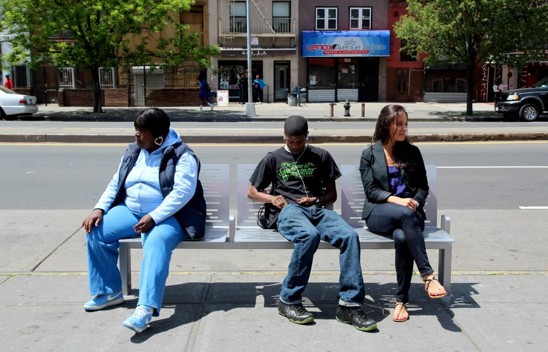
















 For a video that purportedly extols freedom from regulation, PragerU left out a lot of stuff.

