Shared posts

31 Jul 15:41

At City Hall, a massive department is mired in chaos

by David Kroman
Outside the Seattle Municipal Tower, where the city's IT department operates

Last summer, a Seattle police officer called in to say his in-car network was down. No driving or arrest records could be checked. There was no way to pull up any crisis-intervention advice. He couldn’t even get a readout of emergency dispatcher’s instructions.

It was a problem for the officer, but, according to one former employee, the issue improbably found its way to the head of the new Seattle Information Technology department, Michael Mattmiller — the gatekeeper to nearly every scrap of technology in the city. “So right away he writes an email with 16 different things to check,” said the former employee.

As Mattmiller and others in the tech department scrambled, one police employee found the officer who’d called it in and checked out his system. The officer, it turned out, had bumped his screen and shut his car’s system off. Flipping it back on solved the problem.

“Mattmiller,” said the former employee, “got personally involved with troubleshooting the network instead of trusting the people who work for him.”

It was a small, if head-scratching, incident. But it’s telling of how City Hall employees have come to view the massive IT consolidation that, over the year and a half since it officially began, has been plagued by confusion, chaos, mistrust and frustration among both its employees and its customers, the various city departments.

Seattle Information Technology — SIT, as it’s known — is the most important city department you’ve never heard of. Transportation, City Light, Parks, Police, Fire, Construction and Development: These are the rock stars, the ones that Seattle citizens can see and touch and get angry with.

Its reach in city government is largely invisible to the city’s residents, but SIT is essential to the purchasing and managing of the city’s technologies. Its presence is everywhere — in traffic technology, permitting processes, police-car cameras.

It’s also relatively new. In May 2015, Mayor Ed Murray announced it would be better for the city if there was one, centralized information technology department, rather than each department having its own. The idea was to create a more efficient, more fluid tech network where everyone was working off the same programs and technologies. The technology department once had about 200 employees. Now it has over 600.

That the department’s head jumped on solving an officer’s problem with his computer was, in City Hall terms, akin to the Fire Chief helping answer a 911 phone call.

As Murray prepares to leave office and recounts his legacy, IT consolidation has taken its place next to his housing agenda and the $15 minimum wage as a major accomplishment. He name-checked it in the lobby of the Paramount Theatre recently as he was endorsing Jenny Durkan to take his place.

But in interviews with a dozen current city employees — all of whom asked for anonymity because of professional unease about speaking out — as well as interviews with several former employees, the consolidation was universally panned. A recent internal survey of nearly 400 employees from SIT and the departments that rely on SIT for help —  commissioned by Seattle IT and obtained by Crosscut through a public records request — echoes this sentiment, ranking both employee and customer satisfaction significantly worse than even the public’s general opinion of internet service providers and fast food restaurants.

Grievances flow in from many directions — from a memo out of Seattle City Light to senior leadership of the Seattle Police Department griping openly in a courtroom recently (“Every department is upset,” one police leader said). When asked to characterize SIT as an animal as part of the survey, the customers who need SIT — i.e., people in other city departments — chose a porcupine, a rhinoceros and a sloth.

The complaints are many: There’s no transparency or trust; few understand SIT’s process; the department is slow to react; and more. On a scale of minus 100 to 100, SIT received a minus 68 from employees and customers. For context, national results using the same scale give the frequently disparaged TV service providers an average score of plus 11; health plans, 24; and airlines, 37.

“The report shows we have room for improvement, to say the least,” says Mattmiller.

The issues, in part, highlight the incredible complexity of a wholesale restructuring of an integral part of city infrastructure. It’s like the frustration of switching to a new computer, but compounded by the inertia of 12,000 city employees and with the backing of a nearly $40 million administrative budget. As Mattmiller says repeatedly, change on this scale is very hard from a logistics standpoint, for one, and also because it requires long-time veterans of city government to alter well-ingrained habits. Further, city executives are quick to point out that the consolidation is still a work in progress — close to halfway through a three-year rollout — with plenty more time to adjust.

But that’s given little comfort to the departments that need services now.

Seattle IT has to keep both its internal employees and customers in the other departments happy. The transition has been especially challenging on both fronts because it came as the city was in the middle of preparing $370 million worth of new IT systems, including a new construction-permitting system, a new work management system, City Light’s advanced metering infrastructure and the new utility customer billing system, which ran $34 million over budget.

“That’s a lot of money and that’s a lot of pressure on a lot of people,” says Bruce Blood, a 30-year information technology veteran with the City of Seattle who retired last January. He said later, “When I left in the last six months, I don’t recall morale ever being lower.”

Even among former employees who have witnessed or studied similar transitions, many characterize the consolidation as uniquely chaotic.

At the center is Mattmiller — 35, smart and a Microsoft veteran who’s fluent in a combination of tech- and bureaucrat-speak, using words like “functionality,” “processes,” and “stakeholders” with a book-on-tape formality.

The ceaseless optimism he conveys in his Municipal Tower office is a jarring contrast to the sky-is-falling panic of employees and customers, who described him as “bright” and “engaging,” but also in over his head and controlling. Few believe he was prepared to come out of the private sector to take the helm of the cruise-ship sized IT consolidation. That he’s viewed as a politically connected friend of Mayor Murray’s does not help build faith that he is the right person for the job. Mattmiller disagrees with these assessments, but that disconnect between the people below him and his executive office is palpable in every conversation, both in the interviews and the commissioned survey. It’s clear that trust in his leadership is thin.

Although the consolidation still has ways to go, employees are already wondering if it can succeed, especially as the city prepares for a new mayor.

“You can go to every area: infrastructure, purchasing, project management, personnel,” said one IT employee. “Nobody is happy.”

Michael Mattmiller, speaking in 2015 Credit: City of Seattle

Consolidating IT may be the biggest change to city government in nearly two decades. Each department — SDOT, Public Utilities, Police — once had its own team of IT experts. There were obvious disadvantages to this: Each would use different technologies and organizing tools that may or may not translate easily to other departments. The city, says Mattmiller, “had 15 different IT departments with very different processes and in many cases very different technologies. So to get a project done in the city, you had to sometimes coordinate with all 15 different teams and get together with these big stakeholder groups that were very onerous and slowed things down.”

Before consolidation, says Mattmiller, the city had more than 1,500 different vendors. Even a year and four months after the consolidation officially began, officials are still taking inventory of each vendor’s purpose.

While some employees were always resistant to the idea of consolidation (immediately after the plans were announced, some distributed a petition urging the City Council to slow down), others supported it. “I’ve been an advocate of consolidation for a long time,” says Blood, the recently retired IT employee. “I think it’s the right thing to do overall.”

The hope was and still is to create one place where all departments get the help they need and where the solutions are largely consistent across the city.

Seattle has tried to consolidate before, in 2005-2006. It didn’t go well. The city’s Chief Technology Officer at the time, the highly regarded Bill Schrier, later called it “My Biggest Failure,” accepting responsibility for not communicating goals well and over-promising that jobs would not be lost. Then-Mayor Greg Nickels abandoned the effort.

What the failed attempt a decade ago shows is that re-organizing technology systems in a city that employs 12,000 people is massively complicated. That is no different this time around.

Seattle’s IT consolidation is not just a matter of moving all the servers into one building or buying the same model desktop for every employee. Seattle’s process is going much further, moving hundreds of employees into one centralized office space. The idea is to create a system that does not have a person in City Light buying a technology that Public Utilities might already own. Speaking of centralizing department-specific experts, Mattmiller says, “You’re not losing the police department, you’re not losing any of our departments, but we’re now giving an opportunity where that goodness you bring can actually support multiple departments and make us all more successful.”

But that movement of personnel has proven to be the seed of a lot of the confusion. In short, departments no longer have their own internal technology experts, whom they’d grown to rely on and trust.

“I supported consolidating infrastructure, not the people doing the applications,” said the former senior level employee. The needs of each department are so unique, said this person, removing the expertise was always going to be a problem. Permitting for construction, records management for police, dam control in City Light’s Skagit Valley Hydroelectric Project: “All these things are pretty important to the business of the department. All those people are now centralized.”

Speaking out loud, with reporters nearby, while awaiting a recent federal court hearing, senior police department officials complained it seemed that troubleshooting their 911 system, which has significant problems to remedy, was now in the same queue as dam control in City Light’s Skagit Valley Hydroelectric Project.

The customers describe feeling further separated from the help they need, unsure of who their point person is and frustrated with the pace of hiring and appointments. In a memo from City Light obtained by Crosscut, officials complained that, over the course of a year, they were only given two IT project managers, leaving 10 major projects, including the Denny Substation, the Advanced Metering Infrastructure and the Utility Discount Program, without point people. As of May, five of those had finally been filled.

Even replacing basic equipment has proven difficult. The memo pointed to a City Light employee who put in a request for a printer and fax machine last March. After nothing arrived, employees inquired in May, only to find they had not actually been ordered. “Meanwhile, 1 of 2 printers was taken away from the North service center that serves 100 people without a replacement printer put in.”

Similar criticism was echoed throughout the customer survey. “It’s not just the slowness, it’s a repetitive slowness,” reads one account. “Customer service at the beginning is great. I leave meetings smiling and then in a few weeks I feel like I’ve been duped again. I’ve been given a lot of empty promises and end up back at square one.”

“We’ve never had a product delivered yet,” reads another account of an employee interview. “Not one at all.”

Another complaint was even more succinct: “I don’t feel like a customer.” The survey organizers noted “universal nods” from other participants in a group session.

Internally, among SIT employees, the results aren’t much better. The more than 600 employees are still learning new and confusing processes. Rank-and-file employees describe an environment in which even purchasing pencils or headsets can take weeks. One person Crosscut spoke with said it took nine weeks to replace a battery for a server.

Some blame a lack of clear organizational structure, where decision-making processes get muddled.

On larger purchases, employees complain that, after weeks of research and a recommendation from a steering committee made of six to eight people, the executive team has the authority to overrule and make unilateral decisions. “Eventually people get to the point where they just say, ‘Just tell us what to do’ because they get tired of being told they’re wrong,” said one employee. “It’s like a disease of disengagement in my organization. If only top people can make decisions, then other people just give up.”

The city code crafted for the new department grants Mattmiller this authority, running all final decisions on new technology through his office. If there’s a perception that people are being steamrolled, says Mattmiller, it’s an issue of communication. But there are times, he says, when he needs to make decisions from his view at the top. “As we get better at having steering committees and as we get better as a new consolidated IT department, it should be rare for a steering committee to get overridden,” he says. “At the end of the day, though, the steering committees advise on behalf of their department and on behalf of the city. And in a situation where a steering committee makes a well-intentioned decision … it may be necessary to take an alternative path.”

But some purchasing processes have been so opaque, several employees say they initially refused to sign off on invoices because they couldn’t understand who’d made the final call or how much consideration had gone into alternatives.

Despite the poor results of the survey, Mayor Murray is still committed. “The City has very recently undertaken a major reorganization in how IT is managed and change is always difficult,” he said in a statement. “My administration has often been willing to ask difficult questions about the success of our programs, which we did here, and to use that feedback as we move forward.

“While undergoing this transformation, Seattle IT has received awards for its work on digital equity and led the nation in defending consumer privacy after Congress voted to undermine it. This national recognition underscores the important and successful work being done for our city under Michael’s leadership.”

But come Jan. 1, 2018, it will be a new mayor’s job, in consultation with the Seattle City Council, to decide what to do. The consolidation did not come up in any of the many mayoral forums and none of the candidates addressed it on their website or campaign platforms. Will whoever wins in November commit to the consolidation and work to address the employees’ concerns? Or will the new administration pull back, either to what the city had before or some halfway point? And either way, does Mattmiller stay? Replacing department heads is routine for new administrations and Mattmiller is close with Murray.

Retiree Blood says he thinks it can ultimately succeed, but, he says, there needs to be a major shift in the employees’ relationship to their leadership. “How do you make sure people don’t hate coming to work?”

At stake is how the city ushers in hundreds of millions of dollars of new tech to the city. On its surface, Seattle’s IT department should thrive in such a tech-heavy city. But that can actually make retaining talent more difficult: There are high-paying alternatives just down the road. Although Blood had not seen any mass exodus, he worries that the new environment will lead to a talent drain. Other employees have said many of their colleagues are considering leaving or have recently left. Had he not been in a position to retire, Blood says, “I would have been looking for another job. The atmosphere was just not sustainable.”

There’s also a general nervousness among city departments that their tech projects won’t come in on time, be it the new permitting or police records management system.

For his part, Mattmiller doesn’t know what the new administration will mean for IT. “That’s up to the new mayor,” he says. “Absent that, where we are with consolidation, I think we made an incredible amount of progress in just our first year. There have been enough benefits that I think our council and our stakeholders will see that would help them make the decision to continue moving forward.”

The survey is the first step in a broader consulting effort, called the Critical IT Processes Project, to make SIT function better. Mattmiller doesn’t shy away from the fact that the results now look bad, but he says that process will soon yield results. “I hope that over the next year through implementing many of the changes that are going to be made through the Critical IT Processes Project, as well as some other changes we’re making, will help to move the needle.”

25 Jul 18:12

Wifi vs Cellular

According to the cable company reps who keep calling me, it's because I haven't upgraded to the XTREME GIGABAND PANAMAX FLAVOR-BLASTED PRO PACKAGE WITH HBO, which is only $5 more per month for the first 6 months and five billion dollars per month after that.
25 Jul 00:17

Trump gave a weird speech to thousands of Boy Scouts in which he relitigated election & crowd sizes (again)

by Xeni Jardin

Trump relitigated the 2016 election, boasted about his inauguration crowds, and told other inappropriate fabulisms to a crowd of children at the 2017 Boy Scout Jamboree today, because nothing matters anymore.

“The hottest people in New York were at this party. A lot of successful people were there. And I was invited to the party, I was very young...”

As you watch, and read the transcript, remember. The audience is primarily children. Could have been me mis-hearing, but I could swear he mis-speaks, "their road to American sex."

(more…)

24 Jul 17:43

The Supreme Court’s Newest Justice Must Help Run The Cafeteria

by Laura Northrup

The junior person in a workplace often gets stuck with tasks that no one else wants to do, in a form of occupational hazing. In the U.S. Supreme Court, one hallowed tradition is that the newest addition to the bench must take on a task that nothing in law school or in a Senate confirmation hearing has prepared them for: He or she must serve on the committee in charge of the building’s cafeteria.

The weird tradition began in 1981, when the first female justice, Sandra Day O’Connor, arrived on the Supreme Court. We don’t know what message then-Chief Justice Warren Burger was trying to send by putting her on the building’s cafeteria committee, though we have some guesses.

Every new justice since then, male or female, has served on the committee alongside regular federal employees, helping to set the menu and the prices. They also deal with complaints from the cafeteria’s customers, who are mostly Supreme Court employees.

Most justices arrive in Washington with little to no food service experience, The Wall Street Journal explains. Do you remember any questions about salad bars or vegan entrées during the recent confirmation hearings of Associate Justice Neil Gorsuch?

There were no new justices appointed from 1994 to 2006, which meant that Justice Stephen Breyer has had the longest tenure on the committee. The cafeteria did expand its salad bar during that time, but his tenure was otherwise undistinguished.

“It’s not a very good cafeteria, so this is really just the opportunity they have to kind of haze you all the time,” Associate Justice Elena Kagan said in a speech at Princeton. Justice Kagan, for what it’s worth, distinguished herself in this task more than any other judge in recent memory: During her time on the committee, the cafeteria acquired a frozen yogurt machine.

Justice Samuel Alito helped with the landmark decision of changing coffee vendors during his tour of duty in the cafeteria, but also had to deal with complaints about the disappearance of pudding parfaits. The next justice appointed, Sonia Sotomayor, tried to change the coffee provider back, but the rest of the building overruled her.

24 Jul 17:12

Security researcher arrested after he warns Hungarian transit company about their dumb mistake

by Cory Doctorow

A teenager discovered that the website of Budapesti Közlekedési Központ -- the public transit authority in Budapest -- would allow you to edit the price you paid for your tickets, so that purchasers could give themselves massive discounts on their travel, and when he told the authority about it, they had him arrested and issued a press-release boasting about it. (more…)

07 Jul 23:06

Oregon (Yes, Oregon) Just Put a Tax on Bicycles

by Laura Bliss

Oregon boasts the country’s top share of bike commuters, the first per-mile driving fee program, and some of the cleanest urban air quality. And with its newly passed transportation bill, this famously progressive playground will also be the first state with a bicycle tax.

Oregon, which does not levy regular sales taxes, will require buyers of new, adult-sized bikes priced $200 and up to pay $15 in excise taxes starting in the fall. With annual administration costs pegged at a mere $100,000, the tax is expected to raise $1.2 million a year for the Oregon DOT’s Connect Oregon program, which helps fund projects serving multiple modes of transportation.

Legislators pushing the tax—an idea that’s swirled in Oregon, Washington, and other statehouses for years—“felt that bicycles ought to contribute to the system, bicycle owners ought to contribute to the system, irrespective of the fact that most of them also own a car,” Senator Lee Beyer, who helped write the bill, told Oregon Public Broadcasting in May.

To look at bikes and declare “put a tax on it!” might appear off-brand for Oregon, typically an active transit bastion. Indeed, cycling advocates are calling BS.

“Congrats to Oregon on its preposterous bike tax that accomplishes no discernible transportation goal except dampening demand for new bikes,” writes Angie Schmitt at Streetsblog.

Fulminates Jonathan Maus at Bike Portland: “We are taxing the healthiest, most inexpensive, most environmentally friendly, most efficient, and most economically sustainable form of transportation ever devised by the human species.”

“Not even in Denmark where we tax *everything* do we have such [a thing],” the Danish transportation researcher Soren Have tweeted.

Oregon’s bike tax seems designed to address a familiar straw-man argument: that cyclists use streets without paying for them. Such a belief ignores the fact that all U.S. taxpayers pay for roads, whether or not they own cars—which most cyclists do. Furthermore, bikes’ physical impact on roads is close to nil. Some argue that bikes represent an infrastructure cost savings, in that they take heavy-bearing cars off the road.

Besides dissuading some potential buyers entirely, the $15 tax on costly bikes could compel others to buy lower-priced products from big-box stores, or avoid the tax entirely by shopping for used rides on Craigslist. That means local bike shops are likely to be hit hardest.

Is there any value in a bike tax? An extra million dollars per year for protected lanes is not a lot, but it could help leverage federal matching grants (if any survive the current administration), as, for example, Colorado Springs’ $4 bike excise tax has helped do for decades. And while the tax isn’t likely to silence resentful drivers entirely, it might help muffle some of the perennial gripes about sharing infrastructure costs.

But these benefits could be outweighed by the risk to local businesses. Worse, the tax could warp the public’s sense of how much road-funding responsibility cyclists should bear. It’s easy for drivers to resent cyclists for not paying their “fair share,” because the true costs of driving are largely hidden.

Drivers don’t pay for the congestion they create, or the full extent of the environmental harm they cause. They don’t see how parking is subsidized, how “free” parking makes housing and goods more expensive, and how auto-oriented sprawl makes commutes longer. To begin with, gas taxes only cover a small fraction of road upkeep.

Legislators might shift their priorities if these hidden subsidies were revealed to drivers. State policies like replacing gas taxes with per-mile driving fees—which Oregon is itself piloting—are in line with this kind of thinking. So are local policies like eliminating minimum parking requirements, enforcing developer impact fees, and establishing congestion pricing plans.

In his interview with OPB, Senator Beyer went on to argue that the bike tax is a signal that the state is placing a higher priority on bike investments. That’s a strange token of appreciation. More heartfelt would be to crank up the tax on driving.

07 Jul 20:49

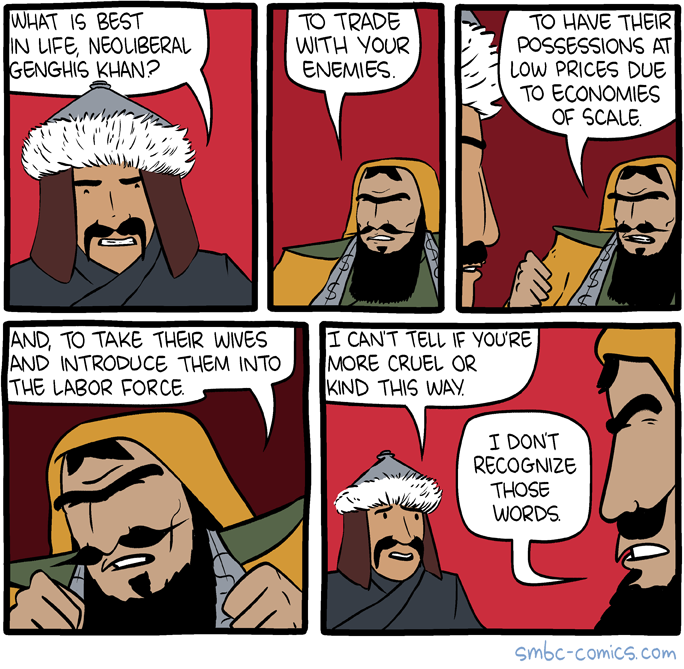
Saturday Morning Breakfast Cereal - Neoliberal

by tech@thehiveworks.com


Click here to go see the bonus panel!

Hovertext:
Oh please oh please don't let anyone take this as for or against any position.

New comic!
Today's News:
07 Jul 20:19

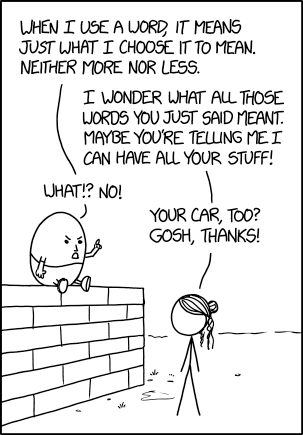
Communicating

You're saying that the responsibility for avoiding miscommunication lies entirely with the listener, not the speaker, which explains why you haven't been able to convince anyone to help you down from that wall.
07 Jul 20:17

Caving to Resentment Politics, Oregon Enacts a Bike Tax

by Angie Schmitt

A straw man erected by bike infrastructure opponents has morphed into official policy in what’s supposedly one of the most bike-friendly corners of the United States.

The accusation that people who ride bikes don’t pay for roads is familiar to anyone who’s tried to argue for bike infrastructure in a public setting. Never mind that biking puts almost zero strain on the road network compared to driving, that people who bike also pay a variety of taxes that do fund roads, and that drivers don’t cover the full cost of car infrastructure by a longshot. It’s all about resentment.

Nevertheless, that idea has managed to shape the law in Oregon (yes, Oregon), which now has a tax on bicycles. Jonathan Maus at Bike Portland explains how it works:

The tax was opposed by small business owners, advocacy groups, and by many voters; but the political winds were simply too much to overcome. I have some thoughts about how we got to this point that I’ll share in a future post. For now, here are the final details of the bike tax:

  • It’s a $15 flat tax instead of the 4-5% tax initially proposed.
  • Applies to new bicycles with a wheel diameter of 26-inches or larger and a retail price of $200 or more.
  • Expected to raise $1.2 million per year and cost $100,000 per year to administer.
  • Funds will go into the Connect Oregon program and be set aside specifically, “for the purposes of grants for bicycle and pedestrian transportation projects… that expand and improve commuter routes for nonmotorized vehicles and pedestrians, including bicycle trails, footpaths and multiuse trails.”
  • Tax will be collected by bicycle retailers and they’ll be required to file quarterly returns with the Department of Revenue.
  • Bicycle retailers are required to keep receipts and records pertaining the collection of the tax for a minimum of five years.
  • The tax will go into effect 91 days after the legislative session ends (that’d be October 8th if it ends on July 10th as scheduled).

So there you have it. We are taxing the healthiest, most inexpensive, most environmentally friendly, most efficient, and most economically sustainable form of transportation ever devised by the human species.

Congrats to Oregon on its preposterous bike tax that accomplishes no discernible transportation goal except dampening demand for new bikes. Will this finally put to rest the politics of bicycle resentment (spoiler: no), or will it just embolden the usual cast of bike lane haters to ratchet up their noise?

More recommended reading today: KXAN reports that some Houston residents are complaining “speed cushions” will slow emergency fire evacuations — but in practice what’s really endangering residents trying to flee wildfires is sprawling neighborhood design. And Human Transit says that while uncrowded transit vehicles may have plenty of room to stretch your legs, that’s not what cities should be striving for.

06 Jul 22:44

Sexist “No Sleeveless” Dress Code on Capitol Hill - With bonus anti-journalism!

by Vivian Kane

Pictured: Paul Ryan’s ideal dress code for women.

Despite the notoriously brutally hot summers of Washington D.C., and also despite there being nothing about women’s shoulders that is inherently inappropriate, women are being barred from entering the Speaker’s lobby (a hallway outside the house where reporters ask questions of the representatives) for showing up in sleeveless outfits.

Apparently, the House dress code is super vague, only saying women should wear “appropriate attire.” Beyond that, details seem to be at the discretion of Paul Ryan, who’s repeatedly proven he shouldn’t have a say in anything pertaining to the rights of women. This is real. Fellow female reporters barred from Speaker’s lobby for wearing sleeveless dresses while doing their jobs.

One reporter even went so far as to try to fashion what I will forever refer to as “journalism sleeves,” made out of pages of her notebook. She was still turned away.

These antiquated, sexist dress codes are nothing we wouldn’t expect from a Republican party who works tirelessly to undermine the accomplishments of women, to strip them of their right to reproductive health care, and who, under this current administration has tripled the gender pay gap among White House employees. It’s also worth noting that while these rules do extend to female staff and lawmakers as well, they seem to have only been enforced so far with reporters, with whom many Republicans have a contentious relationship.

But that’s just a coincidence, right? Surely, this Republican war on bare-armed temptresses extends to all women?

Right?

Is this “inappropriate”?

Ivanka, please. There are children present.

If you’re looking to fight a pointless battle armed with nothing but outdated ideas of what women should be doing with their bodies, Paul Ryan is, as always, your man.

(via Jezebel, image: Hulu)

Want more stories like this? Become a subscriber and support the site!

The Mary Sue has a strict comment policy that forbids, but is not limited to, personal insults toward anyone, hate speech, and trolling.—

06 Jul 22:41

New fast ferry to Bremerton sails Monday, but bikes with fenders, disk brakes won’t fit – UPDATED

by Tom Fucoloro

Bike rack image from Kitsap Transit.

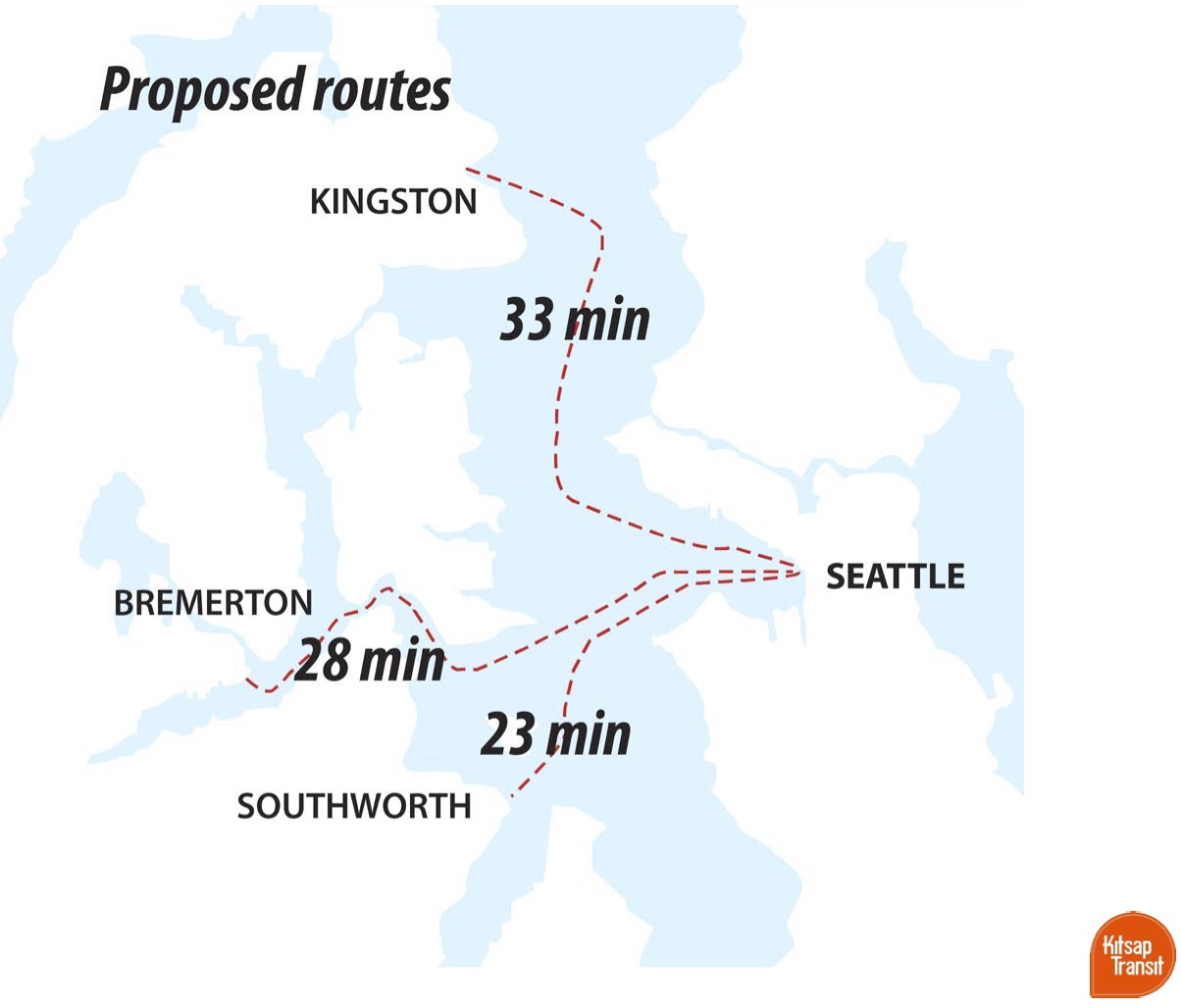
The new Kitsap Fast Ferry routes. Bremerton starts Monday. Kingston is scheduled for July 2018. Southworth in 2020.

Kitsap Transit is set to start service on the first of its new walk-on fast ferries to downtown Seattle Monday.

The first route will provide a much faster alternative to the Washington State Ferry to Bremerton (about a half hour vs an hour on the state ferry). You can reserve a seat online, though limited walk-up tickets will also be available.

But many (most?) people hoping to bring their bikes on the new ferry may find that their rides don’t fit on the custom hanging bike racks installed on the Rich Passage 1 vessel, the Kitsap Sun reports.

Bikes with fenders (!), fat tires, some kinds of front racks, or disk brakes will not fit, Kitsap Transit cautions. E-bikes are also not allowed due to weight concerns. And it seems unlikely many cargo or family bikes will fit even if they don’t have e-assist motors, fenders or disk brakes.

Kitsap Transit is aware of the issue and is working with the vessel manufacturer on a solution:

“We have shared our concerns with the boat’s manufacturer and their engineers are working on a fix for the Rich Passage 1,” said Kitsap Transit spokesperson Sanjay Bhatt. “Once we have an idea of what that fix looks like, we will be able to give the bicycle community an update on our timeline for retrofitting the vessel.”

UPDATE 7/14: “Passengers departing Bremerton can use a newly installed test bike rack at the head of the gangway to see if their bicycle fits in the fast-ferry’s bike racks,” Kitsap Transit said in a press release. “Kitsap Transit is also coordinating with King County on the installation of a test bike rack near the dock for passengers departing Seattle. Based on community feedback, Kitsap Transit is expediting plans to retrofit its fast ferry over the winter to accommodate a wider variety of bicycles and exploring the options with bike-rack designers.”

Kitsap Transit recently hosted a workshop with West Sound Cycle Club to try several different bikes on the racks to see what fits.

“We got some useful feedback that we relayed to the firm that built the racks and is working on a solution,” said Bhatt.

Here’s another angle of the bike rack design:

This seems like a classic case of designing a clever bike rack that works really well, but with only one type of bike. But disk brakes are already very common and are only becoming more standard across the bike industry. Fat tires are very popular these days, as well. And this is rainy Western Washington, so almost everyone has fenders on their bikes if they are using them for everyday, year-round transportation.

Ironically, many people who ride fenderless road bikes that will work on the bike racks also wear bike cleat shoes, which also are not allowed on the ferry.

For comparison, the King County Water Taxi bike parking has more deck space to work with, so bikes can simply be held upright by floor racks like this:

With a bit of work, you can even get your bike on the little Kitsap Transit ferry from Bremerton and Port Orchard. If you are very tenacious, you can even get a big family bike on it, as demonstrated by Madi Carlson of FamilyRide.

Hopefully the manufacturer can come up with a design that at least works on most people’s bikes, though hanging bikes will always be a barrier for people who are not able to easily lift them. Some more deck space would be needed to accommodate bigger family and cargo bikes that cannot be hung, though the hydrofoil vessel also has some rather specific weight balance considerations that could make heavy bikes harder to accommodate.

For now, at least people have the option to take their bikes on the state ferry instead. Or people starting their trips in Kitsap can lock their bikes in Bremerton and take a private bike share bike when they get into Seattle.

However, bike parking is an absolutely critical issue for the Seattle-to-Kingston route, which is scheduled to start operations in a year. That ferry will revolutionize Kitsap and Olympic Peninsula bike connections to Seattle, cutting about 1:30 of biking out of the trip from downtown Seattle to Kingston.

If you are headed to Port Gamble, for example, the trip by Fast Ferry and bike will only take about 1:15. That’s about 15 minutes faster than driving (assuming you can even make it on the first ferry with your car) and about an 1:45 faster than it takes to bike there today (using Google Maps estimates).

Biking from downtown Seattle to Port Townsend with the Kingston Fast Ferry will take about 3:30 and shave 11 miles off the trip. So Port Townsend will be about the same biking distance from downtown Seattle as Snoqualmie Falls.

So here’s to hoping Kitsap Transit and the manufacturer improve the bike carrying capacity of these ferries. Because they could do wonders for regional bike transportation, both for commuting and for regional adventuring.

Here’s the current warning for people trying to bring bikes on the Bremerton Fast Ferry.

Bicycles are welcome aboard on a first-come first-served basis. Crews will direct passengers on secure placement of their bikes in one of the 12 exterior racks. The current design of the existing bike rack (each with inside openings of 2.25″) makes it impossible to safely secure bikes with fenders, disc brakes, or balloon tires. Vessel weight restrictions also prohibit electric bikes. Shoes with metal sports cleats are not allowed in passenger areas.

UPDATE: More on how the bike rack design came to be, from Bhatt:

We hear the concerns about the bike racks on the Rich Passage 1 not fitting some bicycles with disc brakes, fenders or balloon tires. We are working with the shipyard that built the vessel to see if we can come up with a better solution that will cover a broader variety of bicycles. Because we don’t know what that solution is yet, we don’t know how much it would cost or what it would entail.

As the old saying goes, hindsight is 20/20. The RP1’s bike racks were designed in 2009, before significant shifts happened in bicycle braking technology and consumer preferences. In the past two years, disc brakes have become popular on road bikes. Electric bikes also are catching on, but we can’t allow them because they are heavier and could throw off balance our required weight ratios for operations.

It’s also worth noting that it would be difficult for the bike racks on our current and future vessels to accommodate “all or most bikes” because there is no standard in the bicycle industry: There are more than a dozen categories of bicycles, including road bikes, mountain bikes, hybrid bikes, cruiser bikes, city bikes, BMX bikes, folding bikes, recumbent bikes and tandem bikes.

Designing for such diversity forces tradeoffs: Wider bike racks would accommodate more types of bicycles but take up more space, reducing the vessel’s bike capacity (fewer bikes). Our design for the RP1 and future vessels provides bike racks for 10 percent of passengers (i.e. 12 racks on the 118-seat RP1), a common industry ratio.

06 Jul 19:55

America is starting to realize that "liberal/conservative" labels exclude the left

by Cory Doctorow

On my first day at Michigan State University in 1992, a fellow student called me a "liberal" and I was shocked: as a Canadian who was often to the left of the social-democratic New Democratic Party, I identified "liberal" with the Liberal Party, a centre-right political party that had once imposed martial law in Canada. (more…)

06 Jul 01:30

'Free Market' Group: FCC Comments Show Nobody Really Wants Net Neutrality

by Karl Bode

So we've discussed how there's growing controversy about the gaming of the FCC's public docket on net neutrality to give the illusion of support for what's an extremely unpopular plan to kill the rules. A bot has been stuffing the ballot box with bogus comments using dead or otherwise fraudulent people, and I've seen my name hijacked and used to support the killing of the rules as well. So far, there's every indication that the FCC has no intention to crack down on any of this, since this fraudulent behavior supports its awful plan to kill net neutrality protections.

One analysts suggested that up to 40% of the roughly five-million comments submitted so far are coming from the aforementioned bot. After initially telling me they were "looking into" things, the FCC has ignored repeated requests for comment on why it's failing to police even the most rudimentary abuse of its own systems, like the example in my name above.

And now, with the ballot box stuffed, it's easier than ever for industry-connected groups to pretend the FCC's plan has broad support among the public. For example, a "free market" group calling itself Consumer Action for a Strong Economy (CASE) this week conducted a "study" of the comments. It's findings? People apparently overwhelmingly don't want a healthy and open internet free from the meddling of historically anti-competitive telecom duopolies:

"Free market group Consumer Action for a Strong Economy (CASE) says according to its analysis of the FCC's open internet docket, a majority (65%) favor repealing the Title II-based Open Internet order, as FCC chairman Ajit Pai has proposed to do...The group said it looked at the 4,990,000 filings as of June 20, and said it would do similar assessments in the future. Of those, it said, 3,237,916 support repealing the order, while 35% (1,752,084) oppose repeal.

Of course, you can certainly trust a group previously on record as saying FCC boss Ajit Pai is "brilliant" and "courageous" for ignoring the will of the public and gutting consumer protections governing some of the least liked, and least-competitive companies in American industry. Looking at the group's methodology of the study (pdf), it notes that it came to its conclusion by looking specifically for "unique phrases," but fails to show any of the math for what these phrases are, or how they were used. The group doesn't even mention the major scandal involving the bot using dead or otherwise fake people to stuff the ballot box:

"We identified form letters by sorting large batches of comments to find groupings of comments with similar language. Then we scored each form letter as "supporting repeal" and "opposing repeal." Within each form letter we identified unique phrases, then used these phrases to query all of the comments to find the number of comments containing the same language. This allowed (sic) to score 75% of all the comments in the docket as either "supporting" or "opposing" repeal."

Of course that runs in dramatic contrast to previous studies that found, once you eliminated bullshit bots from the equation, that the vast majority of real comments support keeping the rules intact. The group's study also flies in the face of survey after survey that indicates net neutrality has broad, bipartisan support among consumers. Of course "studies" like this are precisely why the FCC refuses to even comment on why it's turning a blind eye to comment fraud.

Even if nobody takes studies like this seriously (and it's pretty clear some news outlets do), the hope is clearly to generate enough doubt about the validity of the comments and commenting process to justify ignoring the will of the public when the FCC votes to finalize killing the rules later this year.


Permalink | Comments | Email This Story
05 Jul 22:19

Should You Move? See How Your State Gets Its Tax Money

by Mary Beth Quirk

Ever wonder where your state gets its tax money? Whether you’re thinking about moving or just want to know more about how your state’s government is funded, there’s a handy guide that breaks it all down.

The Pew Charitable Trusts broke down the mix of tax sources by state for fiscal year 2016, showing what percentage of each state’s tax revenue is supplied by personal income taxes, corporate income taxes, general sales taxes, selective sales taxes, severance taxes, taxes for licenses, property taxes, and “other.”

In 28 of 41 states that impose them, personal income taxes were the great source of tax dollars. The highest share was in Oregon, at 69.6% of the state’s tax money. General sales taxes are the largest source in 17 of the 45 states that collect them, with Texas the most reliant on those taxes at 61.6%.

Percentages for the two largest revenue streams are included in the infographic below — click here for downloadable data for the other percentages. It’s worth noting that these are percentages so it can be a trade off. For example, Oregon, Alaska, Montana, New Hampshire, and Delaware don’t have a general sales tax at all, so the percentages for other taxes will be higher.

05 Jul 18:56

New House Bill Would Kill Gerrymandering and Could Move America Away From Two-Party Dominance

by Zaid Jilani

If you want good job security, get elected to Congress. In 2016, the U.S. House had a 97 percent re-election rate, despite the latest Gallup poll placing the House’s approval rating at 21 percent.

A big part of the reason why is the way we elect our representatives. The U.S. uses a winner-take-all, single-member district system. Those districts are often drawn in a way to privilege one party over another — which is called gerrymandering. So if you’re a Democrat living in a district drawn to include a huge number of Republican voters, your vote is purposely drowned out (and vice versa).

And the winner-take-all, first-past-the-post system means that if you want to vote for a third party, your vote will often be “wasted,” as two parties compete to get the most votes and other votes are considered inconsequential to the outcome. If a candidate wins 40 percent of the vote, while her two opponents get 30 percent each, the first one wins, even though 60 percent of the district voted against her. That dynamic effectively forces political actors to sort themselves into two parties, or risk being boxed out of power entirely.

Gerrymandering, combined with the way voters have sorted themselves into cities and rural areas, means that even while Democrats consistently win a majority of votes cast for House candidates, Republicans wind up controlling the House of Representatives regardless.

A group of representatives in the House want to change this system, and are introducing legislation to change this system and make America’s federal elections more representative and competitive.

Virginia Democratic Rep. Don Beyer authored and introduced the Fair Representation Act, which would enact a series of reforms designed to make our elections more competitive and open them up to more parties. Democratic Reps. Ro Khanna of California and Jamie Raskin of Maryland have co-sponsored the legislation.

The bill would do three things: require all congressional districts to be drawn by independent redistricting commissions, establish multi-member districts, and have all districts use what’s known as ranked-choice voting (RCV).

The independent redistricting would take power away from partisan legislatures to draw congressional district lines, meaning that one party or another could no longer engage in gerrymandering.

Multi-member districts would mean that voters in each district would have the opportunity to elect multiple legislators to represent them instead of just one — which would mean that more people in the district would have the opportunity to elect someone closer to their own ideology rather than being stuck with one lawmaker who may or may not represent their viewpoint.

Finally, perhaps the most significant reform in the bill is RCV. Under this system, voters would be able to rank their preferences among various candidates and parties, rather than simply casting one vote for each office. If no candidate receives a majority of first-preference votes, then second-preferences are accounted for, and so on, until one candidate has a majority. Under RCV, you can vote your conscience without helping a candidate you loathe win instead.

RCV would make it so that there is no longer anything as a “wasted” vote — if your candidate ends up not being one of the top two candidates in the election, you can deliver your other votes to one of those instead. It would also force major party candidates to respect third-party voters and their ideas — after all, they would want their second-preference votes, and their third, and so on and so forth.

Lastly, it would eliminate the need for expensive runoff elections, as under this system the runoffs would be instantaneous.

Watch this video from the Minnesota Public Radio explaining how RCV works. Minneapolis has used this system for local elections since 2009:

(Maine’s voters approved RCV in a referendum in the 2016 election; however the state’s supreme court is blocking the move.)

In an interview with The Intercept, Rep. Khanna stressed the benefits the bill would have in changing Congress to make it more representative of Americans.

“The reform of Congress is one of the biggest priorities to empower citizens,” he said. “This would help with minority representation and more women because many times communities in a small population are shut out and multi-candidate districts would allow them to have proportional voice.”

He also said it would help finally open up America’s so-called “two-party system” to more political choice and competition thanks to RCV.

The major obstacle is getting a Congress full of incumbents from the two parties to support legislation that would cut against their own self-interest. Khanna suggested that only grassroots pressure moves legislators to act.

“The challenge is how do we get that kind of thinking that we need to challenge incumbency and we need to challenge the two-party system in a Congress where everyone has bought into that system?” he asked. “That’s where I think Don Beyer showed I think extraordinary courage in introducing this bill. The only way that change is going to come is if we have the grassroots citizens start to demand that change.”

Top photo: A polling place in Denver, Colorado, on Nov. 8, 2016.

The post New House Bill Would Kill Gerrymandering and Could Move America Away From Two-Party Dominance appeared first on The Intercept.

03 Jul 18:46

New oven to bake bread in space

by David Pescovitz

A German start-up has prototyped a bread oven that operated in microgravity that may someday enable astronauts to enjoy fresh-baked goods in space. Currently, astronauts eat tortillas because they aren't crumbly and have a long shelf-life. (See the below photo of a rather unappetizing tortilla cheeseburger on the International Space Station.) From Space.com:

On Earth, bread needs to be baked at a temperature of about 400 degrees F (200 degrees C). Once it’s done, the bakers remove it from the heated oven. But that would not be possible in space. Processes such as thermal convection, which helps to mix up air on Earth, don't work in space. If a bubble of air that hot were to escape from the oven in orbit, it could stay floating inside the station for quite a while, posing a serious health risk to the astronauts, (Bake In Space CEO Sebastian) Marcu said.

Marcu said the team has found a way to overcome this challenge.

"We basically put the baking product, the dough, inside the cold oven and start heating it up," he said. "Once it's almost done, we start cooling it down. But at that time, any product will start to get dry, and that's why we need to design the oven so that some water is added during the baking process."

The oven also needs to be able to operate with only 270 watts of power — about one-tenth the power used by conventional ovens on Earth. Marcu said the team hopes to have a prototype ready by the end of this year.

Mastering the process of baking is only one step toward making the space-grade bread. Crumbs could damage the station's equipment, or astronauts could accidently inhale them. Marcu said he hopes the combination of the new baking process and a carefully designed dough will solve the problem.

03 Jul 18:39

Look at the public bike purgatory in Hangzhou,China

by David Pescovitz

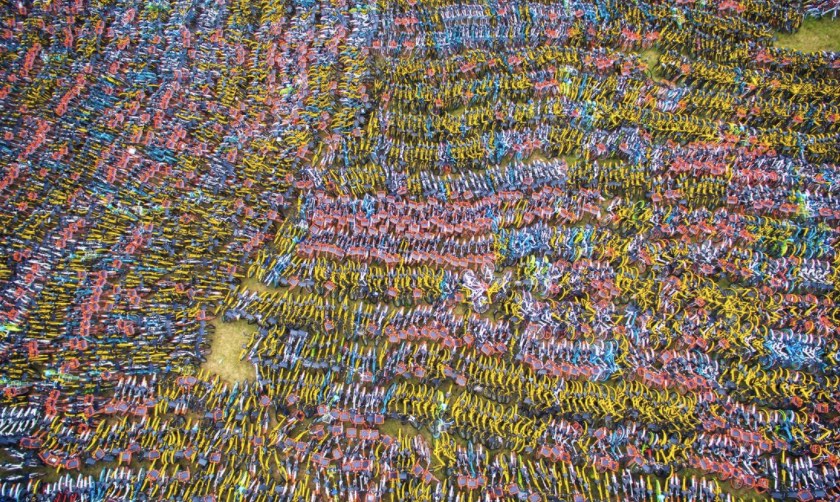
The city of Hangzhou, China has more than 86,000 public bicycles. Unfortunately, when many people are done using them, they don't put them in the designated docking center but just drop them wherever. According to Wired, "police have rounded up 23,000 bikes so far this year and hauled them to 16 corrals around the city" like the one seen above. And that's not even the whole lot of 'em.

30 Jun 20:56

Facebook 'Hate Speech' Rules Protect Races And Sexes -- So, Yes, White Men Are Going To Be 'Protected'

by Tim Cushing

ProPublica recently obtained some internal documents related to Facebook's hate speech moderation. Hate speech -- as applied to Facebook -- isn't a statutory term. Much of what Facebook removes is still protected speech. But Facebook is a private company and is able to remove whatever it wants without acting as a censorial arm of the government.

That being said, there's a large number of government officials around the planet who feel Facebook should be doing more to remove hate speech -- all of it based on very subjective views as to what that term should encompass.

It's impossible to make everyone happy. So, Facebook has decided to apply a set of rules to its moderation that appear to lead to completely wrong conclusions about what posts should be removed. A single image included in the ProPublica article went viral. But the explanation behind it did not. The rules Facebook uses for moderation lead directly to increased protections for a historically well-protected group.

[If you can't read/see the image, the slide says "Which of the below subsets do we protect?" with the choices being "female drivers," "black children," and "white men." The answer -- to the great internet consternation of many -- is: "white men."]

Given Facebook's general inability to moderate other forms of "offensiveness" (mainly female breasts) without screwing it all up, the answer to this quiz question seems like more Facebook moderation ineptitude. But there's more to it than this one question. The rest of the quiz is published at ProPublica and it shows the "white men" answer is, at least, internally consistent with Facebook's self-imposed rules.

Facebook must define "hate speech" before it can attempt to moderate it, since there are no statutes (at least in the United States) that strictly apply to this content. Here's how Facebook defines it:

Protected category + attack = hate speech

These are the protected categories:

  • Sex
  • Race
  • Religious affiliation
  • Ethnicity
  • National origin
  • Sexual orientation
  • Gender identity
  • Serious disability/disease

Here's what's not considered "protected" by Facebook:

  • Social class
  • Occupation
  • Continental origin
  • Political ideology
  • Appearance
  • Religions
  • Age
  • Countries

"White men" have both race and sex going for them. Any "attack" on white men can be deleted by Facebook. "Black children" only have race. Age is not a protected category. An attack on black men would be deleted but black children are, apparently, fair game. The same goes for white children. In the category "female drivers," only the "female" part is considered protected.

The quiz goes on to explain other facets of hate speech moderation. Calling for acts of physical violence against protected categories is hate speech. If any component of the group targeted is "unprotected," the call for violence will be allowed to stay online. The rules also cover "degrading generalization," "dismissive" speech, cursing, and slurs. If any of these target a protected class (or quasi-protected class, i.e., migrants whose nationality may be in flux), moderators can take down the posts. The QPCs have only slightly more protection than entirely unprotected classes, so they can receive more posted abuse before hate speech protections kick in.

These rules lead to all sorts of things that seem unfair, if not completely wrong:

In the wake of a terrorist attack in London earlier this month, a U.S. congressman wrote a Facebook post in which he called for the slaughter of “radicalized” Muslims. “Hunt them, identify them, and kill them,” declared U.S. Rep. Clay Higgins, a Louisiana Republican. “Kill them all. For the sake of all that is good and righteous. Kill them all.”

Higgins’ plea for violent revenge went untouched by Facebook workers who scour the social network deleting offensive speech.

But a May posting on Facebook by Boston poet and Black Lives Matter activist Didi Delgado drew a different response.

“All white people are racist. Start from this reference point, or you’ve already failed,” Delgado wrote. The post was removed and her Facebook account was disabled for seven days.

Religions are unprotected. Races are. That's why this happens. At best, it would seem like both should be taken down, or the less violent of the two remain intact. But that's not the way the rules work. People who criticize Facebook's moderation efforts are asking for something worse than is already in place. To right the perceived wrongs of everything listed above, the rules would have to be replaced by subjectivity -- setting up every moderator, all over the world, with their own micro-fiefdom to run as they see fit. If people don't like it now, just wait until thousands of additional biases are injected into the mix.

That's the other issue: Facebook is a worldwide social platform. Protecting white men may seem pointless here in the US, but the United States isn't the only country with access to Facebook.

“The policies do not always lead to perfect outcomes,” said Monika Bickert, head of global policy management at Facebook. “That is the reality of having policies that apply to a global community where people around the world are going to have very different ideas about what is OK to share.”

This is the unfortunate byproduct of a job that's impossible to do to everyone's satisfaction. Blanket rules may seem dumb on a case-by-case basis, but the alternative would be even worse. If a company is going to proactively protect sexes and races, it's inevitably going to have to stand up for white men, even if the general feeling is white men are in no need of extra protection.


Permalink | Comments | Email This Story
30 Jun 15:37

Goop and Infowars sell the same wellness stuff

by Rob Beschizza

You'd think Goop, Gwyneth Paltrow's "lifestyle brand" for clean-freak whippies, and Infowars, Alex Jones' conspiracy compendium for seething fascists, wouldn't share much in common. But they both have exactly the same business model: selling wellness to people skeptical and fearful of mainstream medicine and healthcare. Nikhil Sonnad took a look at the ingredients on each site and found that it's all the same stuff.

We at Quartz have created a compendium, from Ashwagandha to zizyphus, of the magical healing ingredients both sides of the political spectrum are buying, and how they are presented to each. We looked at the ingredients used in products sold on the Infowars store, and compared them to products on the wellness shops Moon Juice and Goop. All make similar claims about the health benefits of these ingredients, but what gets called “Super Male Vitality” by Infowars is branded as “Sex Dust” by Moon Juice.

Call it horseshit theory: opposite extremes of lifestyle branding converging on a hidden axis of shared appreciation for their audiences.

[h/t Agies]

28 Jun 15:53

What Do Drivers Really Think of Cyclists?

by Stephen Miller

There’s ample research out there backing up the safety benefits of streets with protected bikeways and slow car speeds. But what about the critically important yet less tangible factor of individual attitudes — how does the mind of the person behind the wheel affect driver behavior toward cyclists? A new report from Portland State University looks at the question.

“Driving is one of the most complex tasks that we all engage in. Very few of us are airline pilots or surgeons, but almost all of us can get a drivers license,” says Tara Goddard, who authored the report as part of her PhD dissertation at Portland State’s urban planning program. “Like all aspects of human behavior, we’re not always rational, and we’re not always civil.”

Goddard surveyed 676 frequent drivers from across the country about how they feel when driving near cyclists and about their own cycling behavior. She also asked questions aimed at assessing each respondent’s biases regarding drivers and cyclists.

“We have finite road space and finite transportation dollars, so we create this system of competition. It’s a totally uneven competition… But when you put people in those circumstances, they act like a member of their group and not an individual,” Goddard says. The result is that “there is a complete lack of empathy” among otherwise nice, normal people, she explains. “Do these interactions have an impact on safety, and if so, what can we do about it?”

The survey responses indicate that drivers feel a lot of pressure not to hold up traffic behind them. “That’s relevant to vulnerable road users, because then, potentially, drivers are going to be making closer passes, or engaging in unsafe passing behaviors,” Goddard says. “We know that when people are under stress, they make more errors in their motor skills.”

Goddard found that drivers who live in more densely-settled zip codes, who ride a bike at least once a week, or who ride to commute and do errands, had positive attitudes about bicyclists on the road. But drivers who ride a bike for recreation did not necessarily have a higher opinion of cyclists — even though, unlike all other drivers, they said they were comfortable with their ability to pilot a car around bike riders.

“The type of riding you do matters,” Goddard says. “One-off events like Sunday Parkways might have a lot of benefits, but that may not include making people more empathetic drivers.”

Goddard, who is about to start work as an assistant professor at Texas A&M’s urban planning program, is interested in pursuing more research about the anxiety drivers feel around cyclists. She also asked drivers for the first word that came to mind when they saw three outlines showing different types of cyclists — a racer, an upright commuter, and a backpack-wearing rider doing a track stand. The goal, Goddard says, is to explore how stereotypes inform driver behavior.

“It’s very difficult as a planner or engineer to take on peoples’ biases,” she said. “My research helps shore up the evidence that it’s not fair or safe to put the onus on cyclists to just take the lane… Drivers, whether they mean to or not, are behaving unsafely or badly around cyclists.”

Goddard sees enormous potential for technology to improve road safety, but also big risks in the development of autonomous vehicles. “The algorithms behind them are human creations,” Goddard says. “Are decisions being coded into these decision-making processes that have views about who is a legitimate roadway user? Is the most important thing to get drivers to their destinations on time, or is the most important thing to not hit anyone?”

28 Jun 15:17

The city that solved homelessness

by Joe Copeland
Wohnpark Alt-Erlaa was built in stages between 1976 and 1985.

Construction is everywhere. The economy is booming. And yet Seattle’s homeless problem continues to grow. If we can’t even make progress in good times, the odds would seem to be against real solutions.

But there is one city that seems to have it figured out: Vienna.

European cities, in general, do much better than North America in providing housing. The Austrian capital, though, has had unusual success with housing issues that dog metro areas in the Pacific Northwest.

Vienna offers a vision of a city that doesn’t shove long-time residents to neighboring communities, accommodates a range of incomes, and actually has enough affordable housing that the homeless problem is solved.

The Austrian capital’s model has attracted attention in Asia, other parts of the U.S. and Vancouver, British Columbia, where political leaders have declared a homelessness crisis. Recently, a Museum of Vancouver exhibit, “The Vienna Model: Housing for the 21st Century City,” has provoked considerable attention.

In terms of people living on the streets, there’s just “no comparison, no comparison” at all between European cities in general and the U.S. or even Canada, says William Menking, the New York-based co-editor of a book, “The Vienna Model,” on which the exhibit is based. He’s in Berlin currently, where on a recent day in a working-class neighborhood he didn’t see a single homeless person.

Here are just a few of the many issues that Vienna has figured out: Mixing ethnic, age and income groups. Protecting open space. Aging in place. Transit-centered development. Building new train lines to the hinterlands before suburban housing developments are built.

These successes cut across the range of social, transportation and sustainability issues that Seattle knows it should tackle.

Some of Vienna’s housing uses the high-rise, easy-to-construct styles that generally flopped — often so spectacularly that whole buildings were demolished — in America’s public housing. Austria, like America, has a history of discrimination (Hitler spent considerable time there) and ethnic tensions; it approached its big housing projects with an eye toward creating a functioning society.

George-Washington-Hof, 1930. Credit: Thomas Maria Laimgruber/City of Vienna
The entrance to the George-Washington-Hof complex, built in 1930. Credit: Thomas Maria Laimgruber/City of Vienna

Even before World War II, Vienna was working at bringing people together in attractive housing projects, not warehousing the needy and the working class. Architects sought to create a “garden city” for workers with an early low-rise complex, George-Washington-Hof. In the 1960s, a large, 11-story complex of prefabricated elements plopped in place by cranes was redeemed by individual units that were laid out to allow ample natural light, and by buildings placed in such a way that they create a park-like setting. By the mid-’70s, a complex with 20-plus story buildings — called Wohnpark (Residential Park) Alt-Erlaa — was being built for 7,000 people with spacious gardens, rooftop pools, saunas, preschools and more — a concept the exhibit organizers call “luxury for all.”

More recent innovations tend to use somewhat lower-rise buildings juxtaposed with a variety of walkways, recreational facilities, residence balconies and green space — all accomplished while creating enough density to support transit.

One recent housing project used generally low-rise construction and flexible floor plans to ensure that residents could have options as they aged to shrink their space or share their units with others — and the rooftop gardens are wheelchair accessible.

Those rooftop gardens, common in Vienna’s housing for people of all incomes, are starting to pop up in a few new developments here — for those who can afford the steep-even-for-Seattle rents.

Vienna certainly has advantages: The federal government covers more than half of the roughly $700 million a year spent there on “social housing,” the subsidized units that house about 60 percent of the city’s population. These dwellings have some sort of subsidy for construction or operation, a concept that’s very different from the public housing practices in this country that give a small percentage of people a break but come nowhere near making rents broadly affordable.

The city also owns a lot of land where it can develop the housing complexes (at least one Viennese architect advises never selling public land). And it uses its advantages smartly: Menking says that the practice of awarding housing projects to nonprofits encourages collaborations with architects, and quality counts in making awards. The result: housing that incorporates — and creates — the best of urban life.

Sargfabrik includes a kindergarten, restaurant, library and rehearsal room. Credit: Miriam Kittel

As Sharon Lee of Seattle’s Low Income Housing Institute notes, about 100,000 households here are paying more than 30 percent of their income for housing, many of them forking out more than 50 percent. Seattle could benefit from 60,000 more affordable units, she says — not the 50,000 total new units, most at market rate, that the mayor hopes to see built.

Vienna’s tradition is vastly different than ours; it’s supported by people who are willing to pay taxes for housing, health care and transit. There’s no prospect at the moment that national politics in the United States will lead to the kind of federal support that would make a huge difference in housing affordability.

But Seattle’s voters have acted almost European in approving taxes for transit and housing. Although the city turns the Vienna model of mixing incomes upside down by allowing developers to fund affordable housing elsewhere rather than including it in their own buildings, it does have some experience in making use of the nonprofit sector along Austrian lines.

LIHI’s Lee points out that, beyond Seattle’s longstanding housing levy, there’s a new factor. Councilmembers Kshama Sawant and Lisa Herbold managed to insert $29 million in housing bonds into the city budget for this year. Lee thinks the idea could tap into the kind of spirit that energized Seattle’s campaign for a $15 per hour minimum wage.

Jonathan Rosenblum, the author of a book about that campaign called “Beyond $15,” has been writing about the need for “a massive public housing program” in Seattle. His idea for financing it would be a local version of an income tax. That likely raises issues with the state constitution, which courts have interpreted as barring any income tax unless it were a flat rate. But where there’s a will, there may be a way to tackle at least part of the need.

It’s not something that will happen overnight. But perhaps we can take some small consolation — confidence — in knowing that Vienna’s emphasis on affordable residences dates from a housing crisis a century ago.

This series is made possible with support from Comcast. The views and opinions expressed in the media, articles, or comments on this article are those of the authors and do not reflect or represent the views and opinions held by Comcast.

Comcast Bright Ideas

28 Jun 00:20

Court Says Gov't Has To Give Back $167,000 It Seized During A String Of 4th Amendment Violations

by Tim Cushing

The Ninth Circuit Court of Appeals has no good news for the lying law enforcement officers who were hoping to walk off with $167,000 of someone else's money. Two years ago, the district court ruled in favor of Straughn Gorman, who was subjected to two lengthy traffic stops in less than an hour by officers hoping to help themselves to cash he was carrying in his RV.

After stopping Gorman for a non-violation (driving too slow in the left lane), State Trooper Greg Monroe spent roughly a half-hour trying to obtain consent to search Gorman's RV. His reasonable suspicion? Gorman's use of the word "chick" to describe the girlfriend he was driving to visit and the supposedly "rehearsed" aspects of his employment history. Trooper Monroe performed an extensive background check on Gorman while hoping to prolong the stop until a K-9 unit could be deployed, but even his non-routine call to an El Paso DEA records center failed to drag out the traffic stop long enough for it to arrive.

All Monroe knew when he finally let Gorman go is Gorman had at least $2,000 on him. Monroe wasn't going to let this money get away, so he called up another officer from another agency and "relayed his suspicions." He also told the other officer (Deputy Doug Fisher) to bring a drug-sniffing dog with him. Fisher wasn't assigned to patrol the highway Gorman was traveling on, but decided that would be the best use of his time.

Fisher pulled over Gorman after his tire touched the fog line a couple of times. Another records check was run, even though Fisher already knew what results to expect, thanks to Trooper Monroe's heads-up. The drug dog supposedly alerted near a right-rear compartment of the RV. Gorman gave the deputy permission to search that area, but that wasn't good enough for Fisher. Fisher said the alert gave him permission to search the entire RV. This resulted in the discovery of $167,000 in cash, which Fisher took. Gorman was (again) free to go. Gorman was never charged with any criminal act, much less given a citation for the supposed moving violations that predicated the two stops.

The government appealed the lower court's decision, which gave Gorman back his $167,000 plus legal fees. It raised a number of defenses for its actions (which included the state's attorney omitting several facts about the two searches from its affidavits), but the Appeals Court is no more receptive of this deception and deceit than the lower court. From the decision [PDF]:

We hold that the search of Gorman’s vehicle following the coordinated traffic stops violated the Constitution and affirm the district court’s order granting Gorman’s motion to suppress. Gorman’s first roadside detention was unreasonably prolonged in violation of the Fourth Amendment. The dog sniff and the search of Gorman’s vehicle, in turn, followed directly in an unbroken causal chain of events from that constitutional violation. As a result, the seized currency is the “fruit of the poisonous tree” and was properly suppressed under the exclusionary rule.

[...]

The coordinated action at issue in Gorman’s case offers a prime illustration of the value of the “fruit of the poisonous tree” analysis. The analysis allows us to see the officers’ conduct in Gorman’s case as what it is: a single integrated effort by police to circumvent the Constitution by making two coordinated stops. When the result of one stop is communicated and, on that basis, another stop is planned and implemented, the coordinated stops become, in effect, one integrated stop that must as a whole satisfy the Constitution’s requirements. An illegal police venture cannot be made legal simply by dividing it into two coordinated stops.

This won't be the only time officers behave this way. The Supreme Court's Rodriguez decision stated traffic stops are over once the "objective is complete." This forces officers to be a bit more creative if they're engaged in fishing expeditions without reasonable suspicion to extend the stop. One "solution" is shown above: have a second law enforcement officer initiate a stop to prolong the roadside investigation without triggering the protections of Rodriguez. Another "solution" is to have K-9 units perform stops or be in close proximity, thus lowering the chances of a court finding the stop to be "prolonged."

Both of these solutions are violations of Rodriguez, even if some courts will award the government points for effort. Fortunately, there are a few courts adhering to the intent of the decision: it's not the length of the Fourth Amendment violation, it's the violation itself.

Unfortunately, anything cash-related tends to make officers bypass their better judgment and push the edge of the Fourth Amendment envelope. The good news -- at least for Straugh Gorman -- is he's getting all of his cash back, plus legal fees. That it took more than two years for this to happen is unfortunate, but to be expected -- especially in a legal system that's stacked against victims of civil asset forfeiture.


Permalink | Comments | Email This Story
27 Jun 16:18

Car control: Why don’t we talk about automobiles the way we talk about guns?

Let’s say you have an object in your home, right now, that you could use to kill another human being.

It was easy for you to buy, and completely legal. Depending on where you live, you may or may not have been required to attend some training on how to use it safely. The purpose of this object, after all, isn’t to go on a murderous rampage. It’s just a tool, and it can be used correctly or incorrectly. But no one would deny that it has the potential to be deadly.

Is the object you’re picturing locked in a gun safe, or locked in a garage?

No matter where you fall in the debate about gun control and gun owners’ rights in the US, the war between increasing weapons safety and increasing weapons access is one that nearly everyone in our country feels some sort of stake in. Ask your neighbor about car control, however, and you’ll get blank stares. There’s no national news-worthy movement to ban all cars from the road to prevent vehicular homicides. The auto industry doesn’t employ lobbyists to ensure more citizens access to unrestricted driver’s licenses, much less the ability to drive without one. Though over 35,000 people die in car crashes in the US each year--only slightly more than die by firearms--we still don’t ascribe words like “epidemic” or “crisis” to describe the phenomenon. Instead, we’ve adopted the phrase “car accident” as a blanket term to describe almost any time a vehicle collides with another vehicle, bicycle, or person--no matter the circumstances of the crash.

It’s nearly impossible to imagine a world where every gun death is referred to as an “accident.” And even in incidents where gun deaths do occur because of truly unavoidable mechanical errors, even the most strident gun control opponents are usually in favor of at least some forms of safety equipment, proper gun storage and training programs. There are far fewer heated debates over whether or not a hunter should wear an orange safety vest than over whether or not she should have access to an assault rifle designed for wartime.

For better or worse, the lynchpin in our national debate about guns seems to be the guns themselves: who should get to use them, when, and what kinds. While we might sometimes debate our support for increased mental health screening by gun dealers (which some would argue isn’t a key problem, or perhaps even a harmful insinuation to make about the mentally ill) or private gun-owners’ role in public safety (again, an issue with strong voices on both sides), the loudest arguments both for and against gun rights tend to be focused squarely on weapons, not on altering the many intersecting systems that might make gun use more or less likely. Some gun control advocates would bristle a bit at the suggestion that local gun regulation may not do much if we don't also address the conditions of concentrated poverty. Some opponents on the right might take issue with the idea that the same might go for concentrated rural poverty, and that subsistence hunting might not be necessary if we really tackled rural food deserts. 

I'm not here to express my opinion on the best way to solve the debate over firearms in this country. But it interests me that when we talk about the car--an object that’s been involved in the deaths of more people every year on record than the gun--our debate sounds very different, if we have a debate at all. And that's not necessarily a bad thing. When it comes to car control, we should recognize that the tools at our disposal are largely systems based--and that means they're far more vast than better screening drivers licenses or limiting access to semi trucks. And we'll need every skill available to us if we want to change our most insidious cultural assumptions: that car “accidents” are acts of God, and that they are an unavoidable price we pay for basic mobility.

I believe our car control debate should focus on these systems because I don't believe that people, by their nature, want our streets to be as dangerous as they are. I don’t believe that all drivers are would-be killers any more than I believe, say, a person who hunts for basic sustenance in rural Vermont is a would-be murderer. I’m glad that we have the controls on auto safety that we do, from seat belts to bumpers to evolving pre-crash detection technology.

But the safety controls we still need will never be embedded in a car chassis, or even enforced at your local DMV. They need to be embedded in our laws, which should recognize the responsibility of distracted drivers and hold them responsible, so that no one can plow into a public park and get off without so much as a warning. They need to be embedded in the very language of our laws, so that the word car “accident” doesn’t appear in a single official state statute unless a crash has been proven to be the result of mechanical failure, or sudden weather, or a true act of God (no, a crash resulting from "distracted" driving is not an accident.). And most of all, they need to be embedded in the design of our streets, which should express the radical notion that the safety of all people is a requirement for the places we love.

In the end, the controls we need for cars are simple and colossal: street design that slows them down, laws that recognize the true responsibilities of drivers, and a culture that doesn’t think avoidable car-related deaths are acceptable for any reason.

But we made the world this way, and we can remake it another way. We chose a development pattern that controls so much about how every other mode of transportation can (or can’t) use the street, and effectively puts a ceiling on our community wealth in the process.

Maybe we don’t need a car control debate. Maybe we need to talk about what a world made for cars is worth to us. And if we don’t think mass death, failing economies and the erosion of community is worth it, we need to choose something better.

(Top photo source: Steve Lyon)


Related stories


26 Jun 23:07

Zillow Sends Totally Bullshit Legal Threat To McMansion Hell

by Mike Masnick

There are few things I hate more than when tech platforms -- which have benefited from key rights provided to internet platforms and the public -- turn around and abuse the law to try to silence or kill off others. And the latest company to dive headfirst into this unfortunate pool of shame is Zillow, which is threatening to sue the person behind McMansionHell.com based on a number of different awful interpretations of the law that can be summed up as: "hey, you can't use our images to make fun of homes."

This threat against McMansion Hell is particularly dumb. On multiple levels. The threat letter offers up a bunch of theories for why McMansion Hell is illegal, none of which make any sense at all when you dig in. Zillow just looks like a particularly assholish, censorial thug.

McMansion Hell, if you didn't already know about it, is basically exactly what it says on the tin. It's a website that looks critically at some trends in home design. I've visited the site a few times in the past, but not in a while -- and because of the threat, the site is currently down. This is what you see as I write this:

But, before that, it looked something like this (via Google Cache):

I realize there's a lot there, but the site would take a bunch of images, of houses, sometimes adding annotations and captions and the go into great detail critiquing a trend, or style, or architectural or real estate idea. It was informative and funny. And, at least for the time being, it doesn't exist.

Zillow's legal theories here are... mostly of the crazypants variety. First, the letter says that McMansion Hell is violating Zillow's terms of service, because the terms of service forbid reproducing or modifying images on Zillow.

Zillow's Terms of Use (the "Terms") specifically prohibit reproducing, modifying, distributing, or otherwise creating derivative works from any portion of the Zillow Site. The Terms further prohibit reproduction of any underlying images from real estate listings on the Zillow Site, as well as any use of the Zillow Site that could harm Zillow or its suppliers.

You are in violation of the Terms, and admit to this Yourself in certain posts on Your Site, wherein You state that "[a]ll photographs in this post are from real estate aggregate Zillow.com..." and reference the fact that Your posts feature "[m]anipulated photos."

First off, Zillow cannot use its terms of service to wipe out fair use as a legal defense. The only remedy for Zillow is to stop the person behind McMansion Hell, Kate Wagner, from having an account on the site. But since many of the images are publicly available, she absolutely has a right to make non-infringing fair use reproductions and derivative works. This general threat that if you violate the terms that the company comes up with itself you've run into legal trouble is nonsensical (even though some try to make CFAA arguments about this -- but we'll get to that).

Next, Zillow's lawyer insists that this is not fair use. The argument here can basically be summed up as "No Fair Use Allowed."

In addition to violating the Terms, Your actions infringe on the rights of each copyright holder of the images. You state that the Images are used "for the purposes of education, satire, and parody consistent with 17 U.S.C. § 107," which appears to be a claim that Your use constitutes fair use. Courts weight four primary factors in determining whether use of a copyright work is fair use. When those factors are applied to Your use of the Images on Your Site, none support an argument that Your use is fair use.

That's it. Say there are four factors, mention none of them, then say that none of the factors apply. While it is true that merely saying that you're using the images for fair use purposes is not enough to shield you if you are infringing, here it seems to pretty clearly be fair use under all of the factors. The use is clearly transformative. Whereas Zillow is about selling houses, McMansion Hell is about providing commentary and criticism about real estate and residential architecture. That's a very different use, and showing images of actual homes seems perfectly key to that, and we have multiple cases that have said similar uses are fair use. On top of that, there's tremendous commentary and criticism to go along with the images, which makes it an even stronger fair use argument.

And, let's not forget that, as far as I know -- and as the letter more or less admits -- Zillow doesn't hold the copyright in these images. It's merely licensing them from the actual copyright holders, and thus it can't make any credible copyright threat against McMansion Hell, as it doesn't even hold the rights in question. What a joke.

Finally we get to the CFAA argument which, of the three arguments made, is the dumbest. But at least there's an actual legal issue there -- unlike the previous two:

Furthermore, Your activities may violate the federal Computer Fraud and Abuse Act, 18 U.S.C. § 1030, and state laws prohibiting fraud and interference with Zillow's business expectations and interests.

Of course, note the lack of any explanation for how this violates the CFAA. That should be a pretty strong statement that Zillow's lawyer knows there's no substance to this argument, but wants to make the threat letter sound as scary as possible (which worked). The only argument that the company could probably come up with is the claim that violating the terms is what violates the CFAA -- but those arguments have mostly (though not entirely) failed in court. Even when the argument has been accepted, I fail to see how the situations in those cases would apply here to a blog doing commentary.

In other words, all three of the supposed arguments against McMansion Hell are silly in the extreme. Zillow and its lawyer, Christopher Poole, (note: not moot) should feel bad. It appears that Poole (the lawyer one) just joined Zillow last month. Hopefully, this was the overeager new guy thinking he was doing something good, rather than shitting all over Zillow's brand as a supporter of a free and open internet.

Hopefully as this gets out, and people realize just how ridiculously censorial and obnoxious Zillow appears, the company will reconsider and apologize. This is not just bad behavior. This is attacking free speech on an open internet -- the same open internet that allowed Zillow to exist and thrive in the first place. The company should be ashamed.


Permalink | Comments | Email This Story
26 Jun 19:05

TSA May Want To Flip Through Your Summer Reading Next Time You Fly

by Kate Cox

At this point, most travelers know that your electronics, your shoes, your food, and your liquids are going to have to come out of your bag (or off your person) and get extra screening just so you can get on a flight. But now, it seems books — good, old-fashioned paper books — may be joining that list.

The plan to check out your books and reading materials isn’t wholly new; rather, it’s the expansion of a test policy we’ve mentioned before. The TSA tried a pilot experiment back in May where travelers through the airport in Kansas City, MO were asked to remove paper items and notebooks from their bags. That test was halted after only a few days, but a similar program seems primed to expand.

The Week first reported on the book searches at the beginning of June. At that point passengers traveling through security checkpoints in Missouri and Sacramento were being required to take “all reading material and food” out of their carry-on bags and have it travel through separate bins.

Department of Homeland Security Secretary John Kelly recently confirmed that the policy is likely to expand nationwide, leading the ACLU to object to the privacy concerns raised by having government agents scan your choice of reading material.

Theoretically, TSA agents aren’t looking at what your book is, or at any of the content inside it, but are instead simply flipping through in order to make sure that the pages are actually pages and not something like weapons.

ACLU senior policy analyst Jay Stanley wrote in a blog post that it was unclear whether books were being singled out as some kind of special threat, or whether they were being targeted because their size and composition makes them hard to distinguish from other physically-similar items (i.e. explosives) on an x-ray machine.

“That said,” Stanley notes, “books raise very special privacy issues.” Case law and several state statutes protect Americans’ reading habits from some scrutiny, in part by protecting public libraries or requiring search warrants to obtain book sale, lending, or rental records.

Stanley suggests that if the TSA wants to expand the policy, that it take two particular recommendations.

First, he says, the agency needs to realize that there are major privacy concerns. “That means training screeners to be aware of the privacy issues around books and papers, along with orders curbing any agents’ temptations to snoop through, draw attention to, comment on, or discriminate upon” anything they find, as well as considering protocols for private screenings if requested.

Second, Stanley suggests, the TSA should allow books and papers “to be contained by themselves within another package.” In other words, you should be able to put your file full of papers in an opaque folder inside some kind of clear plastic sleeve or even a large Ziploc bag, and run that through a bin by itself in the same way you already do with your three-ounce bottles or laptop.

The ACLU isn’t the only group that’s concerned: College faculty nationwide have worries about the searches too, Inside Higher Ed reports.

“Academics are unsurprisingly big readers, and since we don’t simply read for pleasure, we often read materials with which we disagree or which may be seen by others as offensive,” one academic expert told Inside Higher Ed. “For instance, a scholar studying terrorism and its roots may well be reading — and potentially carrying on a plane — books that others might see as endorsing terrorism. In addition, because scholarship is international, I suspect academics are more likely than others to be reading and carrying material in foreign languages, which might arouse some suspicion … Finally, academics (as well as editors and journalists) may well be carrying pre-publication materials — drafts for peer review or comment, etc. — and these could raise special concerns.”

And on top of privacy concerns, there are of course logistical challenges. Having everyone unpack their entire bag item by item, place its contents into a half-dozen bins, and then have to repack their bags after getting through the machines isn’t exactly going to speed up the screening process. More the exact opposite, really.

And the more densely packed your bag is, the more likely you are to have to unpack it, which just makes the situation even worse, since those are the bags that have the most stuff and take the longest to deal with.

The TSA is testing a new type of carry-on bag scanner in Phoenix (and soon, in Boston) that would give agents a better insight into what you’re packing without you first having to unpack it all publicly. Those could significantly speed up the security process, but they’re big and expansive so it’ll take a long time for them to roll out.

So for now, leave a lot of extra time before your flight — and maybe be prepared to explain that the copy of George R.R. Martin’s latest book, that you brought for beach reading, really is just that long.

26 Jun 16:04

The Fight Against Gendered Dress Codes Is Finally Making Progress Now That Men & Boys Are Complaining

by Vivian Kane

For as long as there have been dress codes, women and girls have been hating them. More often than not, the restrictions placed on women’s clothing are based in nothing but unmitigated gender-blaming, teaching girls from a young age that not only are their bodies a natural threat to boys and themselves, but that the response boys and men have to those bodies is to be considered over the bodies themselves. Add to that the body-shaming that comes with applying blanket rules (hiding cleavage, mandatory skirt & short lengths, tightness, etc) to all bodies without exception, and there’s a lot to hate about gendered dress codes.

Luckily, thanks to the internet, the struggles women and girls face on these issues can quickly and frequently go viral, gathering support and camaraderie worldwide. Every time a girl gets sent home for having fingertips that don’t touch her shorts’ hem, or people criticize the way a woman’s swimsuit fits, or a group of boys feels emboldened enough to publically call young girls derogatory names because their school sanctions the intention behind them–these women and girls, at the very least, know they’re not alone.

And now, this struggle against unfair, sexist dress codes is finally making some headway. And all it took, wouldn’t you know it, is for some people to start speaking up who aren’t women.

Last week, a photo and story went viral about a group of boys at a school in Exeter, England who aren’t allowed to wear shorts to school. The recent heatwave proved miserable to ride out in pants, but the school wouldn’t budge on letting the boys trade them in for shorts. So they showed up in skirts, which are allowed per the girls’ dress code.

The initial reaction of “Heck yeah, wear what makes you comfortable!” is followed quickly by the uncomfortable knowledge that this act will make an impact because boys in dresses is still, by many, considered an over-the-top joke of a statement meant to highlight just how ridiculous the lack of options is for boys. Indeed, a quick scroll through the replies on Twitter (never look at the comments!) is a wave of gay jokes and derisive questioning of these children’s masculinity.

The school hasn’t caved yet. They’ve made some hot weather amendments to the dress codes, allowing students to “undo the top button of shirts” and carry their tie rather than wear it. Shorts haven’t been implemented, but the headteacher wrote to students and parents that “with hotter weather becoming more normal, I would be happy to consider a change for the future and will talk to families and staff further about this in the coming weeks.” That’s more than most schools have ever done when girls fight their own dress codes.

Daily Dot points out that this isn’t the only recent progress we’ve seen with dress code battles waged by men and boys. Another U.K. man was sent home from work after showing up in shorts, which are not allowed by his company’s dress code. So he showed up in a dress and voila, official dress code changed to include shorts.

How is it that men in dresses is still, to this day, seen as such an offense that companies and schools will do whatever necessary to make it stop?

How, also, is it possible that when men and boys claim of physical discomfort, their concerns aren’t undermined by assumptions? When they complain of being hot, no one assumes their real aim is to sexualize themselves or distract women and girls from their work and studies. They’re not told their physical comfort is going to detract from the needs of others. They just–get this–are listened to.

That must be pretty nice.

(via Daily Dot, image: Shutterstock)

Want more stories like this? Become a subscriber and support the site!

The Mary Sue has a strict comment policy that forbids, but is not limited to, personal insults toward anyone, hate speech, and trolling.—

23 Jun 19:31

Bob Murray's Lawsuit Against John Oliver Is Even Sillier Than We Expected

by Mike Masnick

Yesterday we wrote about coal company Murray Energy and its CEO, Bob Murray, actually following through and suing John Oliver -- something that Murray's lawyers had threatened to do when Oliver and his team had reached out to Murray for a piece Oliver was doing on coal. The result of being threatened was that Oliver spent nearly half of the 24 minute segment on Murray, carefully detailing some of Murray's history and positions. If you missed it, watch it again here:

Anyway, when we wrote about the case yesterday, we noted that we had to do it based solely on the reporting of the Daily Beast, as they broke the story and -- for reasons I still don't understand -- refused to post the actual complaint. However, now we've obtained the full complaint and can dig in on how incredibly silly it is. It appears to be a quintessential SLAPP lawsuit, where the entire point is not to bring a legitimate cause of action, but to chill free speech that criticizes Bob Murray. As Ken "Popehat" White notes, it's "lawsuit as theater" and "an unapologetic political screed" -- that is, apparently designed to rile people up, rather than to present a reasonable legal argument.

Let's dig in. It certainly starts out on a high note with the rhetoric:

On June 18, 2017, Defendants executed a meticulously planned attempt to assassinate the character and reputation of Mr. Robert E. Murray and his companies, including Murray Energy Corporation and those in West Virginia, on a world stage. They did so for their personal financial gain by knowingly broadcasting false, injurious, and defamatory comments to HBO's approximately 134 million paying subscribers, while also knowing that their malicious broadcast would be repeated to countless more individuals through various outlets (including other media owned by certain Defendants.

I've now watched the video four times and I fail to see anywhere that it goes after "those in West Virginia." Indeed, it's actually quite sympathetic to the plight of miners and former miners in the area who have run into problems or lost their jobs. The only people that it holds out as problematic... are the CEOs of various mining companies and the President of the United States. And even if Murray's reputation is mocked in the piece, as long as there aren't false statements of fact, presented with knowledge of their falsity or reckless disregard for the truth, it's all perfectly legal. Making Bob Murray look foolish or mean isn't illegal, as long as it's based on statements of opinion or those backed up with evidence.

But, Murray's lawyers appear to suggest that because Murray is in poor health, that somehow makes this entirely different. It's... an odd sympathy play in a lawsuit:

They did this to a man who needs a lung transplant, a man who does not expect to live to see the end of this case. They attacked him in a forum in which he had no opportunity to defend himself, and so he has brought this suit to try to set the record straight.

The health stuff is pure "theater" as Ken noted. The "no opportunity to defend" himself is weird, because I thought Republicans like Murray were completely 100% against a "fairness doctrine" that required equal time for political opponents (which is the right position to take). But, even beyond that, the idea that Murray had no choice but to file a lawsuit to defend himself or to set the record straight is laughable. As Oliver's report clearly showed, Murray is regularly on TV and could easily get a message onto the various TV news programs that have him on as a guest. And, either way (again) that's got absolutely nothing to do with defamation law and how it works.

The sob story continues:

Worse yet, Defendants employed techniques designed solely to harass and embarrass Plaintiffs, including Mr. Murray, a seventy-seven year old citizen in ill health and dependent on an oxygen tank for survival, who, despite the foregoing, continuously devotes his life, including by working seven days each week, to save the jobs and better the lives of the thousands of coal miners that he employs in West Virginia and elsewhere. Defendants childishly demeaned and disparaged Mr. Murray and his companies, made jokes about Mr. Murray's age, health, and appearance, made light of a tragic mining incident, broadcasted false statements, and incited television and internet viewers to do harm to Mr. Murray and his companies, all before a worldwide audience--including the thousands of people that work for and do business with Mr. Murray and his companies in West Virginia. In fact, medical doctors have informed Mr. Murray that he should stop working because the stress is shortening his life. Mr. Murray must, however, continue working because of all those individuals who rely on him. But nothing has ever stressed him more than this vicious and untruthful attack.

Bravo! Quite a performance there. This seems clearly targeted towards pulling at the heartstrings of folks in West Virginia, but, again seems to have little to nothing to do with the actual law. Again, Murray's health is not an issue here -- and if this has caused him more stress than anything else in his life ever, then Mr. Murray has led an incredibly low stress life. Is he really saying that a late night British comedian on a premium channel has caused him more stress than the time that one of his mines collapsed and killed a group of his employees? If so... that's... weird. Separately, making fun of someone's age, health or appearance (and I don't recall any actual jokes about his age or health...) is, again, not defamation. It's sort of protected by the First Amendment. The only thing that could be defamation is "false statements" and notice how the lawsuit seems to be playing up everything else, rather than that?

When you start to dig into the actual meat of the lawsuit... there's almost nothing there. It complains that Oliver's staff may have contacted Murray Energy under false pretenses, saying that they "were under the false impression that Defendants would use this supplied information to accurately and responsibly broadcast the facts and circumstances regarding the topics," but that, again, makes little difference to the question of defamation. Just because a news company doesn't present your version of the events exactly as you want it presented, doesn't make it defamation. Not by any stretch of the imagination.

The lawsuit does provide plenty of additional bits of information concerning the Crandall Canyon mine collapse and how Murray reacted to it. And all of that is perhaps interesting, but again, none of it requires Oliver to portray the story in the way that Murray Energy likes. And, again, if you go back and review the actual story that Oliver did, he does not contradict any of the factual claims laid out by Murray's lawyers. Rather, he highlights the stories of miners or families of miners who were impacted by the collapse and were not happy with how Murray responded. The crux of the argument on Murray's side is "but we tried real hard." And, great. But highlighting how others felt about the effort and actions is not defamation. It's presenting other viewpoints.

The only possible "factual" point where there could be some controversy is over whether or not the mine collapsed due to an earthquake, as Murray has insisted since the day of the collapse itself. Oliver pointed to the US government report on the incident put together by the Mine Safety and Health Administration (MSHA), a part of the US Department of Labor. That report concluded: "The August 6 catastrophic accident was the result of an inadequate mine design," and, on top of it: "MSHA found no evidence that a naturally occurring earthquake caused the collapse on August 6."

In the lawsuit, Murray's evidence that this is false seems to focus on semantics and making fun of the MSHA inspectors (you know they're making fun of them because it puts "experts" in quote marks):

The Federal Mine Safety and Health Administration's report regarding the collapse (the "MSHA Report") contained multiple concessions that a sudden change in stresses due to a "slip along a joint" or "joint slip in the overburden," which is very similar to the United States Geological Survey's definition of an "earthquake" (i.e., "both sudden slip on a fault, and the resulting ground shaking and radiated seismic energy caused by the slip"), "could have been a factor in triggering the collapse" and was one of the "likely candidates" for triggering the collapse, but MSHA and its "experts" chose not to analyze the seismic data of the triggering event and instead focused on the secondary collapse, which was a disservice to the lost miners, their families and the truth.

Studies have shown that the Mine collapse was a seismic event originating in the Joe's Valley Fault Zone. More specifically, these studies indicated that the triggering event for the seismic disturbance, which was not consistent with normal mining-induced seismicity resulting in the collapse, occurred on a subsidiary fault parallel to the Joe's Valley Fault. This is a more technical manner of stating that the collapse was caused by what many would characterize as an earthquake.

So that first paragraph is nonsense. It's not "actual malice" if you have clear evidence to back up your statements, and the official MSHA report sure seems like pretty good evidence to support that Oliver and his team believed what Oliver said was true. The fact that Murray doesn't like the MSHA "experts" doesn't magically make using their report "defamation." Second, notice that all of the talk about the earthquake comes with qualifying language: "very similar to... definition of an 'earthquake'", "what many would characterize as an earthquake." Even beyond the other stuff, this further undermines any defamation claim over the one sort of "fact" the lawsuit focuses on: if there's a dispute over whether or not what happened was truly an earthquake, then choosing a side in that dispute is not defamation. It's an opinion. That's protected.

Mr. Murray and his companies warned Defendants to cease and desist from a broadcast of defamatory comments or any misguided attempt at humor regarding the tragic mine collapse and loss of life, which Plaintiffs believed would be cruel and heartless.

So, uh, earlier in the complaint, Murray's lawyers argue that they believed that when Oliver and his team reached out they were ordinary journalists, claiming that they reached out "under the guise of responsible and ethical journalism." And, yet, here they admit that that they knew that he's a comedian who regularly satirizes people and companies, thus they didn't want to see a humorous take on the situation. Also, there's no law against "misguided" humor (and, uh, many folks found the humor to be quite on target). Finally, there is nothing in defamation law about it being illegal for you to have "cruel and heartless" comedy. And, in actuality, Oliver's piece was neither cruel, nor heartless. Many would likely argue that it was incredibly sympathetic and empathetic to the plight of struggling coal miners, who are facing a radical transformation of their industry.

The complaint, once again, then hits on the idea that because Oliver's story didn't represent the collapse the way Bob Murray wanted it portrayed, that's defamation. That's... not how it works. It's not how any of this works.

In the ensuing broadcast, Defendants deliberately omitted the facts Plaintiffs provided regarding the Crandall Canyon Mine incident. There was no mention of the efforts Mr. Murray personally made to save the trapped miners. Defendant Oliver did not tell his audience that Mr. Murray arrived at the Crandall Canyon Mine in Utah within four hours of the collapse. Nor did Defendant Oliver say anything about the twenty-eight straight days Mr. Murray then spent on that mountain overseeing the massive rescue efforts, and administering to the families. Nor did he mention that Mr. Murray personally led the rescue efforts when rescue workers were injured and killed in a subsequent event ten days after the initial seismic event, in fact pulling rescue workers from the debris and attending to their injuries with his own hands and administering to them.

That's nice and all... but it's totally meaningless. Not reporting those things is not defamation. Murray has every right to then put out a statement, or go on TV, or get another reporter to tell these stories. But in a lawsuit? Just because the story is about Bob Murray doesn't mean that Bob Murray gets editorial control. That's not how it works, Bob.

Then it gets even more bizarre:

Instead, presumably to boost ratings, line their pockets with profits, and advance the show's anti-coal agenda, Defendant Oliver intentionally, falsely, and outrageously conveyed that Mr. Murray has no evidence to support his statements that an earthquake caused the tragedy that took the lives of Murray Energy miners during the course of their work for the organization.

Rather than fairly characterizing the evidence that he had in his possession on the subject, Defendant Oliver instead quoted an out-of-context snippet from a single report stating that there was "no evidence that a naturally occurring earthquake caused the collapse." Because Defendant Oliver omitted any mention of the other reports he was aware of that evidence that an earthquake caused the collapse, as Mr. Murray correctly stated following the collapse, Defendant Oliver's presentation intentionally and falsely implied that there is no such evidence.

Yeah. So, about that. The above just isn't true. Watch the video again. Oliver directly says that Murray relies on other evidence to support the earthquake claim ("to this day, Murray says the evidence proves that he was correct.") Then Oliver notes (correctly and accurately) that the government report says otherwise: "that was decidedly not the conclusion of the government's investigation." So, for Murray's lawyers to argue that Oliver ignored the evidence on the other side is... simply not accurate. Oliver notes that Murray points to evidence on his side, but he then points to the government's conclusions. Yes, Oliver makes it clear he believes the government's report, but, um, it's the US government. You're not going to win a defamation lawsuit by arguing that relying on the conclusions of a federal government investigation is defamation, just because you have "other evidence" that you claim disagrees with the government's evidence.

Worse still, as discussed, Defendant Oliver's Senior News Producer, Defendant Wilson, obtained from Plaintiffs detailed information evidencing an earthquake or earthquake-like event did trigger and cause the Crandall Canyon Mine collapse.

Note the immediate caveats of an "earthquake-like event." Again, this undermines the argument that saying a government report concluded it wasn't an earthquake is somehow defamation.

They also did this despite knowing that determinations of causation are vastly complex and can take years before a reliable conclusion can be reached.

So, uh, yeah. About that. This is true, but remember, part of the joke here, from Oliver, was that Murray declared definitively in a press conference the day of the collapse that it was clearly an earthquake that caused this and not the company itself. So, if Murray's own lawyers are now admitting that this is vastly complex and "can take years," it sort of reinforces the key point that Oliver was making, that Murray himself immediately jumped to the conclusion that it was an earthquake and not his fault, when that was not at all clearly know. This filing seems to do more to undermine Murray than Oliver.

Defendants also aired a clip of congressional testimony of a relative of a former employee of Murray Energy that appeared to be dissatisfied with Mr. Murray's handling of the Crandall Canyon Mine collapse, when upon information and belief the statements of that employee were not his own, but were instead scripted by adverse counsel in a lawsuit against Murray Energy and given to the employee to further the agenda of such counsel and their clients.

Right, so this is similar to the whole dismissing the MSHA report by calling its experts "experts." Oliver accurately reported what this relative said. Who wrote it is immaterial. If what that relative said was defamatory, then Murray could go after that relative. But there's no defamation in Oliver playing a clip of Congressional testimony. Again, that's not how it works.

There's a lot more in the lawsuit, which you can read below, but it pretty much all falls into the same issues as the parts described above. It's no surprise that, looking over the website of Murray's lawyers, they don't list defamation as a specialty, but tend to focus on personal injury. There's a lot of complaining and theatricality, but very little of substance, and nothing that I can see that comes anywhere close to defamation. And that makes this a pretty clear SLAPP suit, designed to chill the speech not just of Oliver and HBO, but of any other reporters looking to cover Bob Murray and Murray Energy. This is the nature of chilling effects created by SLAPP suits. They try to punish people for actually speaking out and sharing their opinion while scaring off others from doing the same.

Once again: this is an example of why we need much stronger anti-SLAPP laws at the state and federal level. Laws that require plaintiffs to pay up for filing bogus SLAPP suits, as a deterrent. And, again, one hopes that now that he's facing such a lawsuit (which, as I've said from personal experience is no fun at all, no matter how sure you are that you're in the right), John Oliver will become as outspoken in favor of anti-SLAPP laws as he's been about other important issues.


Permalink | Comments | Email This Story
21 Jun 18:11

How do you draw a circle?

by swissmiss

Analysis suggests that the way you draw a simple circle is linked to geography and cultural upbringing, deep-rooted in hundreds of years of written language, and significant in developmental psychology and trends in education today. Fascinating article!

(thanks Christine)

16 Jun 16:32

Virginia DOT Hopes People Will Enjoy Bicycling Next to a Noisy, Exhaust-Choked Freeway

by Stephen Miller

When a bike path is added to a highway expansion project, it risks being an afterthought, resulting in a low-quality, high-stress route. Riders, inundated with noise and pollution from cars, end up not using the path. Northern Virginia bicycle advocates fear that could happen to a planned bike path along Interstate 66 in Fairfax County — and they’re asking the state department of transportation to come up with a better design.

In recent years, Virginia has undergone a highway building boom, not by building new expressways but by contracting with private companies to add high-occupancy toll, or HOT, lanes. The latest plan is to add four new toll lanes — two in each direction — to more than 20 miles of I-66 beyond the Capital Beltway, widening the highway from three lanes in each direction to five.

Many transportation advocates opposed the project, pointing out the folly of expanding highways to cure congestion. Nevertheless, last November Governor Terry McAuliffe awarded a 50-year contract to a private consortium to build it. Before the contract went out to bid, advocates succeeded in getting the state to include a multi-use path and better bus service as part of the deal.

A bike path already exists along much of I-66 inside the Beltway, and the bike path along the wider section of I-66 would connect to Metro stations while getting riders close to Tysons Corner and other job centers. It would also connect with the Cross County Trail and pass near the Washington & Old Dominion Trail, a popular rail-trail across Arlington and Fairfax counties.

“A quarter of the population of Fairfax lives within a mile of this corridor. We ought to be serving them,” says Jeff Anderson, president of the Fairfax Alliance for Better Bicycling, or FABB. “It’s being shoehorned in because we asked for it.”

Anderson isn’t kidding when he says shoehorned. Widening a highway in a developed area often involves taking nearby land, and I-66 is no exception. Under pressure to keep the takings to a minimum, the project is cramming its 12-foot bike path between a sound barrier and moving traffic. The trail would double as a utility access right-of-way for the highway.

As illustrated by a video rendering from FABB, trail users would be right up next to traffic. Anderson noted that although the state studied the impact of noise and pollution on nearby residents, it didn’t quantify the impact on trail users, who would be even closer to the highway. At the very least, he wants a better barrier between cars and the bike path, like the transparent fence on the Woodrow Wilson Bridge across the Potomac River.

Because it’s on the wrong side of the sound wall, connections to nearby streets are limited, and trail users who do brave the path might feel boxed in. But convincing the state and nearby residents to build a path on the other side of the sound wall could be difficult.

“We want the best trail we can get, and we’re cognizant of the neighborhood residents’ concerns. And we think it’s a really heavy lift to get it outside the wall,” Anderson says. “If it’s going to be inside the wall, they’ve got to do everything to make it safe.”

Public meetings on the plan are taking place this week, and Anderson expects feedback to continue over the summer until final design gets underway in the fall. He’s already planning a ride along a nearby bike path with one of the project’s designers to show him what works and what doesn’t.

We’ll see in the coming months if the state is willing to design a bike path worth riding, or if it’s just squeezing it in because it’s required. As Canaan Merchant writes at Greater Greater Washington:

For a trail that could connect hundreds of thousands of people in dozens of neighborhoods, it is critical that we make sure we follow best practices and design trails that are well made, useful, and not just an afterthought meant to get the environmentalists off of VDOT’s back.

“They know how to build good trails,” Anderson says of VDOT. “Why would we want to build something that people won’t use? Let’s build it the best we can.”

15 Jun 19:21

Rape Victim Sues Uber After Learning Company Exec Obtained, Shared Her Medical Records

by Kate Cox

The 2014 rape of an Uber passenger by her driver was in the news again recently when it was reported that an Uber executive had not only obtained the woman’s medical records in an attempt to discredit her, but shared them with others at the company. Now the passenger is suing the ride-hailing service for invading her privacy.

Attorneys for the victim filed the suit today in the Northern District of California. The complaint [PDF] names CEO Travis Kalanick (currently on leave) and two former Uber executives, Eric Alexander and Emil Michael.

News came out last week that Alexander had not only obtained the victim’s medical records, but carried them around with him for a year and showed them to others inside the company, including Kalanick and Michael. The suit says that although the incident took place in Dec. 2014, Alexander held onto the victim’s records until someone in the company made him turn them over in Dec. 2015.

The suit also alleges that after obtaining the records in India and bringing them back to the United States, Alexander showed them to Kalanick and Michael, at which point the three, “discussed the records among themselves and with other staff at Uber, speculating that [the victim] had made up the brutal rape in collusion with a rival of Uber in India in order to undermine Uber’s business.”

The executives used the medical records to try to discredit the victim, the complaint says, and so the victim is suing “for intrusion into private affairs and public disclosure of private facts, as well as for defaming her character.”

The suit also describes Uber’s recent wave of PR woes and its “unrestrained, unethical executives” at length, saying, “Absent public pressure from reporters at publications like the New York Times, Reuters, and Recode, Uber would have continued to reward and promote employees who were unlawfully discriminating against subordinates and brushing complaints of discrimination under the proverbial rug.”

The lawsuit does not seek a specific amount in damages, but rather asserts that “Plaintiff is entitled to recovery against Defendants in an amount to be determined at trial.”

“It is shocking that Travis Kalanick could publicly say that Uber would do everything to support our client and her family in her recovery when he and other executives were reviewing illegally obtained medical records and engaging in offensive and spurious conspiracy theories about the brutal rape she so tragically suffered,” the victim’s attorney, Douglas Wigdor, said in a statement.

“Rape denial is just another form of the toxic gender discrimination that is endemic at Uber and ingrained in its culture,” added Wigdor. “Hopefully, this lawsuit coupled with the changes recommended by the independent counsel will create real change and reform at Uber and elsewhere.”