Burly.ThurrThanks for a good breakfast this morning, bros. Sorry to miss you bjorno.
Burly.ThurrHoly shit, I just realized this is the public radio version of facebook.
It made us angry to see great products like Google Reader shut down for no good reason. It was frightening when we heard The Old Reader might have to close its doors.
It’s easy to shrug your shoulders and just hope that there will always be great free software for content delivery. And if you do eventually have to join some closed social network, it can’t be that terrible, right? It might be controlled by a giant Internet company, but hey, it’ll be free, right?
Why Freemium is the Thing
Since we introduced Premium pricing for The Old Reader, we’ve gotten some thoughtful comments, as well as some pushback. Why should I pay for a technology that’s always been free? Isn’t the whole point of RSS that it’s part of the free Internet? I want to explain why we’re here and why we’ve adopted the Premium pricing plan ($2/month for 500 subscriptions with full-text search).
RSS has been neglected and abused, but as I’ve said before, I believe it will be the preferred content-delivery format once people tire of private/closed networks. Twitter, Facebook and the rest aren’t delivering content- they’re delivering you to advertisers. RSS doesn’t fit that model. That’s why the big players aren’t supporting it.
Get Your Sponsored Content Somewhere Else
One of the most common questions we get is why didn’t we just bring in advertising. We settled on the freemium model because its the one that supports the service the best while doing the least harm. The more I use Facebook, Twitter, and other platforms, the more I see the subtle and insidious ways they control what I see, what I do, and what I can say, all in the name of advertising.
We’re trying to provide something the closed Internet doesn’t do- give you unfiltered access to the content you choose. The value in RSS is that it doesn’t try to make money by observing your online habits and feeding you sponsored content. But there are costs to making that possible.
We can learn more about you by building closed systems and tracking and targeting your every move and serving up ad content. But as we’ve said, ads introduce bias and distract from the primary purpose of RSS readers. RSS should aggregate the content you choose from the web, not push advertising to you.
Besides, ads won’t work. Most of you won’t look at the ads. You will do what I do- block them with Adblock or some other tool or just flat out ignore them. Advertisements that don’t get attention don’t pay any bills. Then we’re forced to find ways to make those ads effective, or lose advertisers. That means putting our resources into forcing you to watch more ads, click on more ads, or some other gambit that has nothing to do with getting the content you want.
Finally, an RSS reader knows a lot about people’s interests, but we don’t want to exploit that fact. We should be using that information to find more stuff you like, not selling it to advertisers. We believe in privacy and do our best to protect it. To maximize ad revenues we’d need to violate your privacy to some degree.
It’s Not a Free Ride
But why should Premium users have to pay the bill for the free users? It’s important to remember that this is a social network, and the more friends you have to share with, the better. Not all your friends will be Premium/power RSS users. But the more people using the service, the more great content you can find. (And not sponsored content from advertisers.)
In addition, we hope that over time we are able to attract more and more of our free users to Premium accounts. We know it’ll be a small percentage but we’re working hard to build incredible functionality worthy of a small monthly fee. Besides, I know you’ve heard the “it’s less than cup of coffee” line a thousand times, but we REALLY think it’s a reasonable amount for the power you have. If you’re a power user, know that the money we make from your subscription will be plowed into development. Real, honest-to-goodness development.
I know that there are still free RSS readers available. The Old Reader was completely free until a couple weeks ago. And for the VAST majority of our users it still can be completely free. The freemium model is important because we’re focused on making this a sustainable service that won’t be closing.
In The Words of a Wise Man…
Our goal isn’t just to keep The Old Reader chugging along, but to build an online platform and community that is an alternative to the Facebooks and Twitters of the world. I think Dave Winer said it best when he wrote in our blog comments:
We have as a community, been boring the hell out of users.
This what happens when a product doesn’t introduce any new features for 10 years! :-)
I’m talking about RSS, as a product — vs its competitors, Twitter and Facebook, which have been actively pushing new goodies for users.
We are not doing that in RSS.
So if we want to get users on board, and other developers, we have to move.
Everyone’s been doing it for themselves, and no one has been willing to go first with a new feature that might delight users, and inspire their competitors to follow them.
If we want to have a good open alternative to Twitter and Facebook, we have to do some new stuff!
We’re committed to the open web and giving you the best possible reading experience without sneaking in ads. And we’re also not going to be using your private information to sell you anything or help others sell you anything. That’s not just a promise. That’s the principle behind Premium membership.
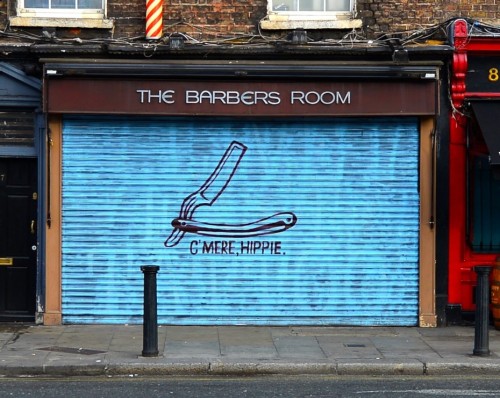
Burly.ThurrTeehee. I love hippie jokes.
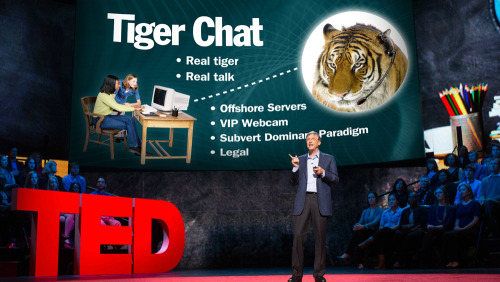
Burly.ThurrI nearly cried from loling. I think this is real.
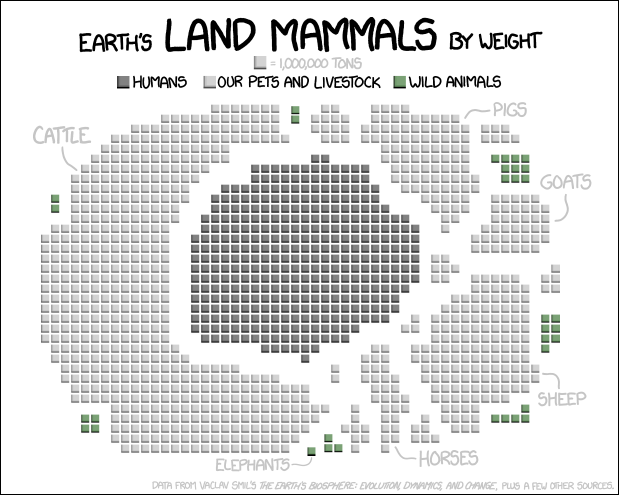
Burly.ThurrReader is my way of turning my back on my work. Although it's too focused to get any work related insight. I should probably take more walks.
Sep Kamvar on the key to great technologies:
[T]he key to building great technologies is to first find your purpose. And you will not find it by polling your users.
And:
The best surfers I know seem to have a sense of exactly where the next wave will be. They craft a style about their surfing and their life that seems to come directly from the water. Artists that I admire seem to be quiet and quiet and quiet, and then come up with something beautiful, as if the beauty came from some relationship with the silence. And the great programmers I know are always taking breaks from the screen to go walk in the woods, as if they receive the most difficult parts of their programs by osmosis, and then just go to their desk to type it up.
Not to be forgotten: walking in the woods makes you smarter
I think a lot about what I would teach the younger version of myself. How would I prepare her for what life has become decades later? I see her struggling, searching, working, doubting, stretching. If I met her, we would take a walk outside so I could explain how focus works. In order to see, you must not look. In order to focus, you must unfocus entirely. Choose a thing and turn your back on it. Walk outside. Walk a line in the direction of the sun, the rain, the surf. If only for a moment. And that in that opposite direction, in nature, you see yourself.
“Natural technologies arise from the heart of the builder” and when one’s head is down, it’s hard to feel your heart. Work it. Walk it. And build the world that can be.
Burly.ThurrI'm back guys... cluttering up your oldreaderz with bullshit.

Burly.Thurr*snort. Effin' boomers.

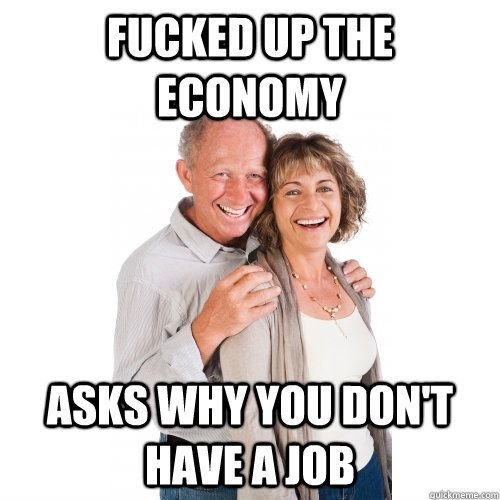

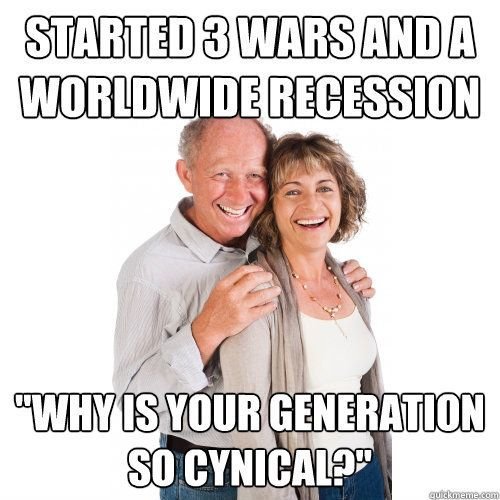
7 ways our parents can be total hypocrites when it comes to politics
Baby Boomers entered the workforce during one of the greatest economic miracles in modern history: U.S. real GDP per capita decreased only two years between 1950 and 1970, and the resulting bounty was distributed rather equitably. We, meanwhile, have borne the brunt of the largest economic disaster since the Great Depression and watched middle-class real wages stagnate throughout our lives.
These class differences have predictably resulted in conflict. The older set has taken to newspapers, radio and print books to denounce their underemployed descendants as narcissistic, lazy and clueless: a “Generation Me” uninterested in hard work. We have responded from our own turf, in our own language, with a new Internet meme. Here are seven popular examples of the striking ways that our parents, or grandparents for some, just don’t get what we go through.
Burly.ThurrI had forgotten I was such a huge fan of Darren Aronofsky.
 Artisan Films
 On this most noble of Pi Days (not only is today’s date 3/14, but it’s also March 2014, or 3/14), and only one week before the release of Darren Aronofsky’s Noah in theaters, it’s only fitting to toddle on over to Netflix and check out his debut film Pi. It’s perhaps not the best choice for sunny middle-of-the-day viewing, but I sat down with Pi this morning and had a grand old time. Sure, it looks like it was shot on used coffee filters and it has a grating film-school quality that surely makes Aronofsky blush now. But for fans of the director, it’s fun to see him playing around with themes and imagery that would recur throughout his career.
Pi is probably the most successful psychological thriller about number theory and sequencing ever made. Thrown together for $60,000, it made a splash at Sundance (where Aronofsky won Best Director) and got picked up by Artisan Entertainment, and ended up making more than $3 million. This is a not-unworthy sum, and it’s a real example of what a bygone era it came out in. These days, Pi would go straight to video-on-demand, have a tiny theatrical run, and make peanuts. Upstream Color, a similarly culty experimental auteur film, pulled in only $444,000 theatrically last year.
In case you haven’t seen it, Pi follows twitchy math genius Max (played by Sean Gullette, whose one-note hyper-intensity is the most challenging aspect of the film after a while) who has a machine that spits out stock predictions. Eventually, it spits out a 216-digit number that can maybe be used to predict stock outcomes. Or maybe it’s a Kabbalah-coded version of the secret Hebrew name of God. Or maybe it’s just a random sequence of numbers that broke his weird machine.
Like so many of the paranoid thrillers of the ‘90s (Jacob's Ladder, say, or 12 Monkeys), Pi never lets you banish the thought that Max is just a crazy person. After all, he spends most of his time alone talking to himself and suffers from debilitating headaches. Plot-wise, it’s a pretty straightforward movie: Max has a magic number, which may or may not be the answer to all life’s problems/an evil inescapable curse, and a bunch of creeps want to get it from him. Also, it’s driving him crazy. Aronofsky essentially coasts for 85 minutes by letting us into the buzzing, oppressive atmosphere of Max’s brain and questioning whether or not he’s a delusional lunatic. One recurring sequence that particularly works sees Max finding a disembodied brain and poking at it—it doesn’t mean much past serving as a simple metaphor for his psychosis, but it’s really effective.
It’s one of the first signs of Aronofsky’s major skill as a director—the ability to really put you in his characters’ skins. Requiem for a Dream is also a straightforward movie in terms of plot (it honestly feels more dated than Pi), but it had such a profound impact because it seared its characters’ addictions onto the audience. The Wrestler is characterized as being apart from Aronofsky’s more patently weird body horror movies, but it’s really not—you’re as close to Randy The Ram as you can be, and you feel it every time someone puts a staple in his head.

But Black Swan is certainly Pi’s most obvious analogue, although it replaces the religious unease of Aronofsky’s debut film with Nina Sayers’ (Natalie Portman) sexual terror. They both have an unreliable narrator, a prickly sense of being uncomfortable in your own skin, and gross body abuse (spoiler alert: at the end of Pi, Max takes a drill to his brain to stop the headaches, and seemingly succeeds, at the cost of his genius intellect). The two films would make for a great double feature if you want to take the subway home some night and feel like everyone on the train is out to get you.
The most important thing to note is that Pi is always going to have Pi Day locked down on Netflix. Sure, there are the pie-themed dramedy Waitress, or the American Pie series, but Pi is the only movie about math that we can all rally around. Netflix had better offer it up to us every 3/14, whatever the cost, simply as a public service.

    
|
Burly.ThurrKind of totally hate cats. Unless they're social justice kittens.
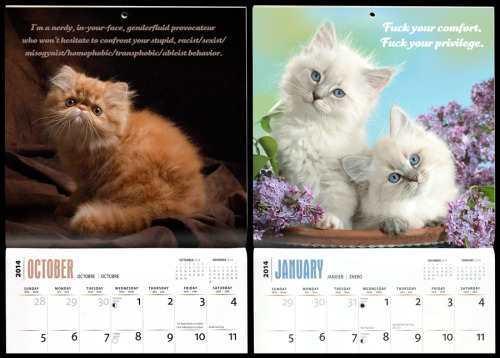
Social Justice Kittens 2014 Calendar (sample pages)
Burly.ThurrWhen you don't need prostitutes but would prefer just to do it (to) yourself.
Burly.ThurrSo this one requires that you a) watched the movie Hackers in the 90s and b) you remember any of it.
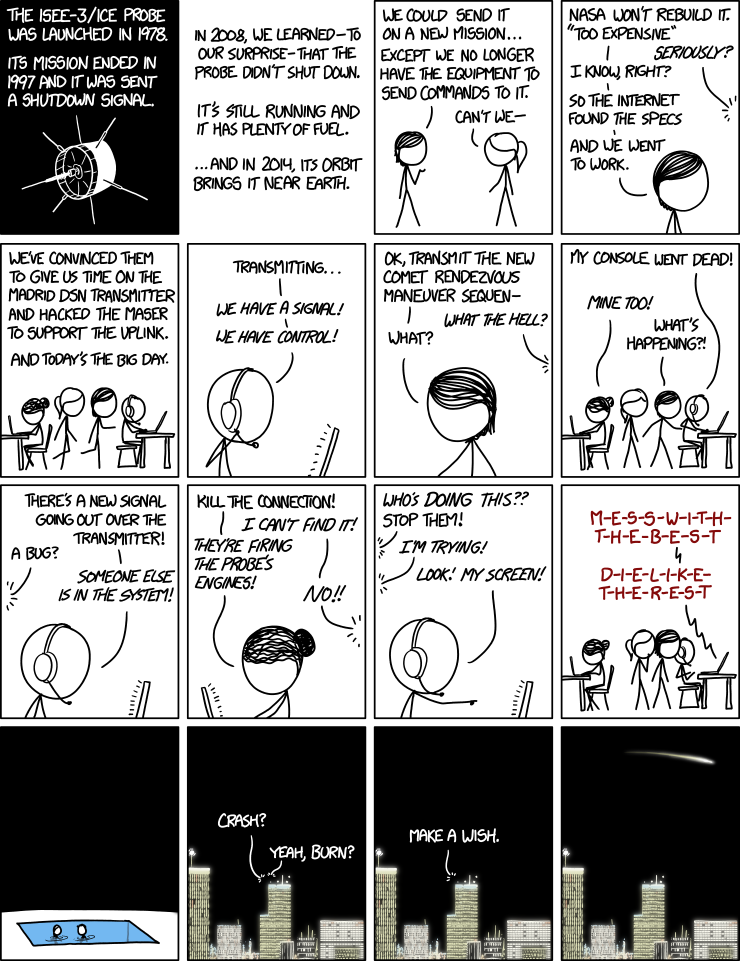
Burly.ThurrHehe. Cheap electronics. I'm not a huge fan of purposeful waste considering the small amounts of heavy metals in the circuit boards, but this is pretty funny, and otherwise non-destructive.

[Mike] has just put a new spin on LED throwies — turning innocent statues into scary possessed demons of the night. He calls them Statueyes, and while it’s not quite vandalism, you might still cause a public disturbance.
If you’re not familiar, magnetic LEDs throwies are a fun little way to add some light to the city at night. They’re a little bit wasteful (sometimes you can’t retrieve them), but so cheap to make it’s sometimes worth it. Depending on what you’re using them for they can open up a whole world of possibilities — like this location tracking augmented reality using IR LED throwies!
Anyway, the main difference with [Mike's] take on the project is he’s using home-made play-dough which allows him to stick these creepy eyes on non-metallic statues. The Play-Doh in question has an interesting ingredients list: flour, water, salt, vegetable oil and… cream of tartar? It’s the classic edible Play-Doh recipe, but to the unfamiliar it certainly sounds odd.
How cheap do you think we could make these with a simple dimming circuit? Imagine seeing a statues eyes light up as you’re walking by…


Burly.ThurrHeard this was happening. Haven't watched yet but it must be epic. It has to be. (Please?)

"I wouldn't be here with you today if I didn't have something to plug," President Obama told comedian Zach Galifianakis, betwixt ferns.
Burly.ThurrI was intrigued by the NSFW trending. This is what I found. Mostly it was TSFW.

Back in January, photographer Ger Kelliher snapped this high speed photo of angry sea foam captured on Coomeenole beach in West Kerry, Ireland. The lighting and perfect timing make the water look almost sculptural in quality. If you’re interested, he has the image available as a high resolution download over on Etsy so you can make your own prints.
Burly.ThurrNot sure if this is legit... but it's still effed up.


Burly.Thurr+1 reference to Richard Feynman. TLBR - Too Long But Read.
It could be any dinner, in any place. Every person around the table wants intimacy. And every one of you—whether you came here with that in mind or not—no matter what your intended investment, wants a relationship of some kind although you’ve just met.
Yet by dessert and coffee, you’re challenged to recall either the first or last name of any person you shared a meal with. You look around. You are thirsty, but you can’t remember a single person’s name to ask for a refill. You are at once among friends and strangers. Nameless faces together. If asked, you might be able to identify each of their avatars, know where each is a mayor of, know how to friend each of them in any given social network, but as for their names? “Hey,” you say out loud to no one in particular, “I need water.”
Where once, a person’s name was his or her primary identifier, we’re now seeing the spread of that identity as people intentionally scatter selves, supported by social systems where identities are stored and accessed. As a result, acknowledging someone’s name is no longer the same sign of mutual respect or politeness. Nor is it a necessary signifier that indicates you’re invested in them. What we may be seeing is a death of a single primary name as key identifier. It has been decentralized and decondensed. In social relationships, what has replaced it? And in what contexts do we recall and use each identity?
In Emily Post’s 1922 edition of Etiquette and Society, in Business, in Politics and at Home, Post outlines didactic manifestos for interacting with one another. Whether one is a lady or a man, married or unmarried, the Queen or the President of a nation, it is clear which fork, which name, and which manner of addressing one another is appropriate. Specific scenes in that text dictated the rules for behavior, and each was predictable: a business visit, letters, at dinner.
Yet correct introductions are meaningless in a culture where boundaries have dissolved and situations are defined only by the people present in a given moment. How to behave is not an etiquette we can memorize, it’s a sensitivity that starts and ends with being able to read people in an instant. How important is it then to remember someone’s name when that sign is retrievable via any social network, any device that is likely within arm’s length?
There is a new public. The new public is one of context, one perceivable by behaviors. Remembering someone’s name, or deciding we don’t need to, is no longer a given. Our business for behaving—as executives, as friends, as inventors and scientists and designers, as humans—relies on our ability to be sharply aware of that context and shift as appropriate.
We have come well past knowing only one another’s names. It seems to be we’re 300 colors richer in our understanding of knowing identities as explorers of the particulars of what and where they can be.
Through the shifts, people want to be polite. People want to call on one another in a way that’s meaningful. But they’re busy. And memories full. And now some people, bewildered. In a culture where work spills over into play, time zones overlap, and reference points intertwingled, they no longer have rules for calling upon one another. The rules, if any were followed at all, have changed, and our behavior for interacting is getting a serious redesign. There’s a new public for behaving. And using names as the primary identifier for one another, as one example, is becoming extinct.
But before getting caught up in rhetoric of “the death of” predictions, what is more imperative to consider is the role its demise can play in the larger evolutionary pace the Internet environment has allowed for. We’ve already seen radio give way to film, film give way to television, and television give way to the web. At least. Underlying it all is an evolving ecology that shifts and clicks along—humming at times, dragging at other—to keep up with the fast pace that is the shifting nature of the media ecology.
The death of the name is not an extinction at all then; it’s an adaptation. Just as etiquette is not dead; it’s simply evolving. The evolution of any new behavior—similar to what we saw with the introduction of radio, television, film—is bringing with it a whole new range of manners. Where once we relied on a prescribed code of conduct written by one and applied to many, that is no longer the case.
We are seeing what Andrew Heyward, former president of CBS News, calls “user-generated context” take shape. These behavioral and adaptive systems are evidence that the complex dialogues among people are taking place in fundamentally new ways; lines between consumer and creator have merged, and context, not content, is taking over as a guide.
In a 1963 “What is Science?” talk, physicist and educator Richard Feynman explained the difference between simply knowing the name of something and truly knowing something.
The code of conduct has been replaced with a code of context. Watches have been replaced by the timepieces that are our smartphones. And while no one under the age of 12 is using those smartphones for email, we are using social networks like Facebook and Twitter and LinkedIn at a staggering rate to stay in touch. We’re not calling one another but we’re talking more than ever before. And with that, we are writing more as well. And we can confidently say, as these words are printed on this page, that the physical book is not going away; it too is evolving. To know your audience is not enough.
As a culture whose trades efficiency as currency, it’s curious that we’re creating more, not fewer, identities. Contrast that with Mongolian culture which has 300 words for color—and whose horses, as a result, have no name as we know it. They refer to them by color and age. Duly practical and nuanced. What we might see and consider as “white” in English, they see as variations of “ash white” and “snow white” and so forth. Perhaps we too are developing 300 words for social variation, with no one dominant name.
While technology is certainly affording us the ability to use only one identifier, and we uphold efficiency as one of our values, it would seem otherwise. Identifiers abound. Redundancy abounds. And we, in spite our ourselves, seem to value it. Multiple names, then, are a new currency.
Our signature files have out-charactered the text of our email. It’s not enough to sign a note, but to ensure that all forms of contact are known. Our own 300 colors are on display. Yet around a dinner table, it rare to have remembered even one name.
At the intersection of people, technology, and context, we have an opportunity like never before to create new identities and shape new publics. Whether it’s it user-generated context, the display of wealth by waste, or simply the exponential explosion of the name, there is a new pubic for behaving.
Is this proliferation waste, is it branding, or is it a display of power? Thorstein Veblen writer of The Theory of the Leisure Class in 1899 suggested a position on the latter regarding wealth and power. He observed that simply amassing wealth is not enough. One must display wealth in order for it to be powerful as an act of status and power. “Wastefulness,” therefore, was a necessary part of of the display of wealth and power. Like the peacock’s feathers, he notes, “Throughout the entire evolution of conspicuous expenditure, whether of goods or of services or human life, runs the obvious implication that in order to effectually mend the consumer’s good fame it must be an expenditure of superfluities. In order to be reputable it must be wasteful.” Therefore, in order to be reputable, we must be present waste. In other words, the amassing of identities—in part practical—may be in other parts, a power move. And it is in their display that there is power.
If power is in the display of multiple identities, where are they or should be be displayed? Prior to circa 2003 when social networks became popular, the mall and the movies were where teenagers would display their wealth. But since that time, the “networked place” has largely replaced these spaces. Networked publics are not a defined set of people in a bounded space, but rather a flexible category where people conceptualize the boundaries but do not control them. Because of this, networked publics allow knowing people both in the moment (e.g., around a table) and contextually (e.g., only ever at that table). The boundaries of the contexts online, however, are afforded by technology such that the practice dictates the boundaries, depending on the imagination of the individuals involved.
This new public can play a few roles:
First, in contrast to the Emily-Postian public of the past, they help us define ourselves by the boundaries set forth by the context of the group in the moment. The dinner table this evening creates one set of boundaries, and the people present set the conditions for behavior in that moment. The new public of the table made it alright for no one to know names. Change the table, change the people, and the public changes.
Second, the new public help us define ourselves in relation to the group. Because each group’s identity is both momentary and contextual, it is up to the group’s imagination to put boundaries on it. If everyone wishes to remain anonymous, but only speak about their passion about something specific, it can be so. At the dinner table, one person cannot be a name dropper; each person must image and abide by the same set of social conditions or the public will change.
Third, the new public helps us define ourselves in relation to society. Because each group helps define its context in relation to the context of the culture of a neighborhood or a city, it can do so. Therefore, if citizens wish to protest or to take action on any issue, they can do so. Their allegiance to the group remains strong and patriotism to the society unchanged.
The new public allows. Context is forgiving. Context is the new public.
This thought was first published by The Manual, Issue #1.
Burly.ThurrHey old reader assholes. Pay up or shut up. I think I'll probably throw some money at them just for being there.
We are thrilled to announce that we are rolling out Premium accounts for The Old Reader. Since taking over the application in August we’ve made tremendous strides to improve the dependability and speed of the application. We’ve also begun the process of building and releasing heavily requested features and have worked diligently on user support. We believe The Old Reader is now truly a world-class application!
Our next goal is to ensure the long term financial viability of The Old Reader. Hosting, development, and support are not inexpensive and while it’s never been our goal to get rich off of this application, long term sustainability and growth will require revenue. So we explored several models for generating revenues including a premium offering and advertising. In the end, we’d like to avoid advertising as we feel it’s too invasive and runs counter to our strong belief in the open web. So we started working on a premium offering that would allow 90% of our users to continue on with a free account that is largely unchanged from what they are using today.
What will you get with The Old Reader Premium?
- Full-text search
- Faster feed refresh times
- Up to 500 Subscriptions
- 6 months of post storage
- Instapaper and Readability integration
- Early access to new features
What will it cost?
The Old Reader Premium will cost $3/month or $30/year. However, for the next 2 weeks (or up to 5,000 accounts) we’ll be offering the service for $2/month or $20/year and we will lock you into that price for a minimum of the next 2 years. This is our way of saying thanks to our existing users and hopefully getting the Premium service off to a great start.
Do I have to upgrade?
No! 90% of our users can continue on for free just as they are today. However, users with more than 100 feeds will need to upgrade to premium. Otherwise, all functionality will remain available to free accounts. We also offer a 2 week trial period for the premium service and will even allow that trial period to get extended for those still interested in moving to Premium.
We hope you are as excited about TOR Premium as we are. It’s a great value for a service that we know our users will love. Thanks for continuing to support us and thanks for using The Old Reader!
Burly.ThurrSharing to enhance my growing ennui around never watching films again.
 StudioCanal
 Oscar Isaac could not be hotter right now, coming off of Inside Llewyn Davis. His follow-up movie, The Two Faces of January premieres at the Berlin film festival this week, an event that's been paired with a trailer premiere. And despite one of those vague word-salad titles that recalls the fictional films in Seinfeld, the trailer suggests a stylish, sexy psychodrama with co-stars Viggo Mortensen and Kirsten Dunst.
The film, based on a novel by The Talented Mr. Ripley author Patricia Highsmith, appears to be tapping into that omnidirectional chemistry of desire that 1999 Anthony Minghella film sported between Jude Law, Matt Damon, and Gwyneth Paltrow. Isaac plays a charming scammer who gets caught up with married Mortensen and Dunst, who are on the run from a murder, all in stylist 1960s Greece. I tried to tally the number of shots of one character making sex eyes at another, but I gave up due to oversaturation.
The film is also the directorial debut of longtime screenwriter Hossein Amini, whose career adapting novels for the screen is as eclectic as it is erratic (Jude, The Wings of the Dove, Drive, Snow White and the Huntsman, 47 Ronin).

|
|
Burly.ThurrA little regional context for Sochi.

Today marks the 10th anniversary of Kanye West's long-delayed debut, The College Dropout, which also marks the anniversary of West's wild and impossibly strange life in the public eye, more or less. So we turned to our staff for stories of the first time we heard Kanye, or heard of Kanye, or really anything of the sort that came to mind. Share your own reflection in the comments section. How time flies!
Someone gave me a CD (I assume) of MP3s from College Dropout. Except that the identifiers on the album were all wrong and said "College Droupout." So I just figured that was what the album was called, because on prehistoric iTunes you could barely see the cover art and it's not like I had a subscription to Spin, which at the time was still a magazine.
Then I kept playing "Jesus Walks" on a loop, because it has one of the best hooks in the history of hip hop, the end. —Philip Bump
I definitely remember when The College Dropout came out. Back then, seventh-graders like me didn't have debit cards, and so I would have to get my parents to drive me to a brick-and-mortar store to buy media. So for most of the spring of 2004, you couldn't enter a Borders (oh, also, Borders existed in 2004) without seeing a poster of a sad bear mascot and the words The College Dropout. This was a time when music store poster prominence was, I believe, directly proportional to record sales, so I would bet that a lot of my friends bought the album. I had no interest in it though because I wasn't really interested in hip hop, but also probably because I planned to go to college.
2004 was the Year of 1,000 Bar Mitzvahs for me, yet oddly enough, neither I nor any of the friends I polled remember hearing Kanye at any of them. "Get Low" was spun ad nauseam though, so Kanye's absence can't have anything to do with explicit lyrics—it might have been that the album's biggest single, "Jesus Walks," just doesn't work well at Jewish coming-of-age ceremonies.
By high school, I had eventually come around on Kanye (and rap, and popular music in general). I don't remember exactly when I listened to The College Dropout for the first time, but I do remember thinking it was weird to open the album with the voice of M̶r̶ ̶3̶0̶0̶0̶ Bernie Mac, and I thought it was funny that "We Don't Care" had little children singing about drugs (I own literally one thousand graphic tees featuring Stewie the Family Guy baby). A lot of girls at sleepaway camp were into "The New Workout Plan," but I think someone eventually told them that it wasn't actually a fitness plan.
Anyway, The College Dropout remains my favorite Kanye album, and I not-so-secretly think "Family Business" is still my favorite song of his. —Brian Feldman
The first time I ever heard about Kanye West was on MTV, which at this point seems like a hilariously old-fashioned way to find out about a musician. Kind of like your dad telling you he first saw Joni Mitchell on The Dick Cavett Show. But it's true. In between reruns of The Real World San Diego (probably), MTV would still air the occasional music video (or I would be watching on MTV Hits, maybe? Gosh, I loved MTV Hits), and the video for "Through the Wire" was certainly an eye-catching one. With an opening title card about how Kanye had his jaw wired shut after a car accident, the implication was that "Through the Wire" was not only a single heralding an exciting new hip hop star, it was a triumph of the human spirit. What a brave and courageous way to assert your resolve after a calamitous setback! Very much like Gloria Estefan in her "Coming Out of the Dark" phase! Certainly there was no element of attention-grabbing self-mythologizing going on here. Not with this Kayne West.*
*Right, yes, also, because I am a dummy, I misread Kanye's name on the video bug, and I referred to him as "Kayne West" until I was finally set straight at some point around "Jesus Walks." —Joe Reid
I went to a private Jewish elementary school, and so I had a pretty limited knowledge of rap music aside from the occasional Ying Yang Twins or Lil Jon Bar Mitzvah jam. This was fine for my sheltered little bubble, but when I moved over to a public middle school, it became harder to talk about music with my friends without knowing much about hip hop. So I asked a friend of mine for a good rap album to ease in to, and he gifted me a burnt College Dropout CD. I absolutely loved it, especially Anna Nicole Smith's part in "The New Workout Plan." It took me about 20 listens to figure out what "Row da plane" meant. One of my secret skills is that I'm really good at learning song lyrics, and I immediately set about memorizing "Get 'Em High." Finally nailing the Talib Kweli verse is one of my prouder moments, and I've been a big fan of Kanye and Kweli ever since. (Common, not so much.) —Eric Levenson
When I was an intern at Time in the summer of 2005, they put Kanye on the cover. My fellow intern, who is black, and I spent a lot of time joking about how Kanye was the first black man on the cover since Darth Vader. In fairness, Darth had been on the cover only a few months earlier. (Before that, the last black man on the cover was in December 2003, when "The American Soldier" was Person of the Year.) Barack Obama's presidency has made this issue a less pressing one. And when you read the 2005 story, it does feel like its from another era. "More GQ than gangsta, Kanye West is challenging the way rap thinks about race and class—and striking a chord with fans of all stripes," the subheadline said. Here's an excerpt:
Executives at record companies large and small failed to reconcile West's appearance and demeanor with their expectations of what a rapper should be. They had no idea how to market him. "It was a strike against me that I didn't wear baggy jeans and jerseys and that I never hustled, never sold drugs," says West, 28, who grew up in suburban Chicago and often dresses as if he's anticipating an acceptance letter from Exeter.
—Elspeth Reeve
I was always aware of Kanye, sorry, I can't help you. —Abigail Ohlheiser

|
|
Burly.ThurrA slightly more satisfying intellectual treatment of nuclear weapons than the imperturbable Paul Fussell's diatribe against thought vs. experience.
Burly.ThurrSounds like the front-women were getting a little too intoxicated with capitalism. The rest of the band says "Pussy Riot only performs illegal concerts."

Two members of Pussy Riot, the punk group that notoriously angered Russian President Vladimir Putin by performing anti-government songs in a church, have been working the media circuit in New York and putting our home-grown celebrities to shame. But Pussy Riot isn't having it, and frankly, it's their loss.
In an open letter, six members of the group said Nadezhda Tolokonnikova, 24, and Maria Alyokhina, 25, had become "institutionalized advocates of prisoners rights," and abandoned the group's "leftist anti-capitalist ideology." They said that Pussy Riot only performs illegal concerts, and that Tolokonnikova and Alyokhina should not have participated in an Amnesty International concert on Wednesday. The letter continues:
Unfortunately for us, they are being so carried away with the problems in Russian prisons, that they completely forgot about the aspirations and ideals of our group - feminism, separatist resistance, fight against authoritarianism and personality cult, all of which, as a matter of fact, was the cause for their unjust punishment.
It seems like a pretty bone small to pick with the activists, who were both found guilty of hooliganism for performing as part of the collective in 2012 and were sent to jail.
Tolokonnikova and Alyokhina each served nearly two years before they were released early thanks to a hastily-passed amnesty bill, in what the activists referred to as a publicity stunt designed to whitewash the country's poor human rights record. Now, the two are on a worldwide tour to spread awareness of Russian prison camps and other rights offenses and, frankly, they are killing it.
The two arrived in New York on Tuesday and have been charming the pants off of New York media ever since. On Tuesday night they appeared as guests on The Colbert Report, where Tolokonnikova went quip for quip against the pseudo-conservative host and Alyokhina, taking a more serious tone, discussed the country's harsh anti-LGBT laws. The two performed like pros, telling Colbert they didn't want their futures determined by a "man on a horse," and thanking the audience for their support, prompting Colbert to wonder if they knew the Russian word for "pander." The banter was hardly slowed by the presence of a translator.
On Wednesday, the pair spoke with the New York Times opinion team, which live-tweeted the conversation and published Tolokonnikova and Alyokhina's comments on why they're not afraid of prison, despite terrifying conditions, their political futures, and thoughts on art versus activism. According to The Times, their opinions are "why they're getting so much attention."
Pussy Riot has arrived @nytopinion pic.twitter.com/DTCwtculzm
— Leah Finnegan (@leahfinnegan) February 5, 2014
That night, the two appeared at the concert at the Barclays Center in Brooklyn, where they were introduced by Madonna. Madonna, who said she'd received death threats while on tour in Russia, was "upstaged" by the Pussy Riot members, according to The New York Post:
Once the members of Pussy Riot joined her, they delivered an impassioned ten minute speech through an interpreter about their experiences and quoted the statements of other Russians facing prison terms for similar protests. “We have to remember that freedom is not a given,” Tolokonnikova said. “It’s something we have to fight for and stand for everyday. It is our duty to speak for those who are still behind bars.”
The pair also had a chance to speak with U.S. Ambassador to the United Nations Samantha Power. Power's spokesperson said they spoke about "the disturbing trend in (Russia) of legislation, prosecutions and government actions aimed at suppressing dissent and pressuring groups that advocate for fundamental human rights and basic government accountability."
Tolokonnikova and Alyokhina are a rare breed for an American audience, which freaks out when celebrities spend hours in jail for doing things that are justly illegal. In their mid-twenties, the dedicated activists spoke out against Putin and were thrown in jail for it, spending several months under horrific conditions in prison (Tolokonnikova went on a hunger strike while in jail to call attention to how hard it is for incarcerated women, highlighting 16-17 hour workdays and a lack of medical services). Once freed, they immediately challenged Putin again, embarking on a world tour to sully his name and dare him to put them back in jail. They seem humble and thoughtful and honest, and they look cool and young and relatable. They both have children back home.
If the pair manage to persuade the Kremlin to enact prison reform -- or any reform -- we hope Pussy Riot will take them back, and it sounds like they just might. In the letter they write that "we lost two friends, two ideological fellow member [sic], but the world has acquired two brave, interesting, controversial human rights defenders -- fighters for the rights of the Russian prisoners."

|
|
Burly.ThurrI don't really fathom what is going on in this article, but I shared with the hope that Bryan could elaborate on WTF is going on.
 AP
AP Al-Qaeda has formally cut ties with the Islamic State of Iraq and Syria, a radicalist group fighting against Assad's regime, following months of feuding between the two groups. Ayman al-Zawahiri, al-Qaeda's leader, denounced ISIS after being unable to reconcile a conflict between them and the al-Nusra Front, another al-Qaeda arm in the region.
ISIS expanded from Iraq into Syria against Zawahiri's wishes. They refused his orders to withdraw from the country. In May, Zawahiri balked at a deal to merge the two groups. ISIS's leader, Abu Bakr al-Baghdadi reportedly said around that time, "I have to choose between the rule of God and the rule of al-Zawahiri, and I choose the rule of God." Between the two al-Qaeda is the more moderate group.
The disassociation has a few consequences. It leaves al-Qaeda without any official presence in Iraq and makes al-Nusra the only representative of al-Qaeda in Syria. One official told The Washington Post, however, that ISIS and its estimated 10,000 members were never particularly reliant on al-Qaeda for their core needs, and so whether the decision will significantly weaken ISIS is unclear. Regardless, both organizations are still terrorist organizations.

|
|
Burly.ThurrIt is a pretty good tweet.
 Associated Press
 In case you'd forgotten about Hillary Clinton's maybe-I'm-not-but-I-definitely-am campaign for the presidency, a well-timed Super Bowl tweet was there to remind you. So was the pre-game interview between President Obama and Fox News' Bill O'Reilly. No wonder Democrats are worried about breathing room between now and 2016.
It’s so much more fun to watch FOX when it’s someone else being blitzed & sacked! #SuperBowl
— Hillary Clinton (@HillaryClinton) February 3, 2014
It's not really a joke to call Clinton's tweet — which got tens of thousands of retweets and favorites — an ad. It was timed perfectly amidst the rest of the highly-considered tweets from other established brands, and had its intended effect immediately: wide distribution and accolades. JC Penney and Cheerios should be so lucky. The sports site SB Nation said Clinton "improbably sends the best Super Bowl tweet." There was nothing improbable about the tweet, anyway.
The Wall Street Journal reports that other Democrats are afraid Clinton's ability to demand attention will make it that much harder for them to do so. "There's no question that the Hillary movement is taking the oxygen out of the air for every other potential candidate," said former Bill Clinton staffer-turned-pundit David Gergen.
Over the short term, the concern is that Hillary's star power will vacuum out donors' wallets in advance of the 2014 midterms; over the longer term, the fear is that there will be no real Democratic primary process. Politico, looking at how likely 2016 candidates are setting up fundraising efforts, simply says, "Many of the biggest Democratic donors and top campaign operatives are aligning behind Hillary Clinton." Which is an understatement. The high-profile Priorities USA PAC, according to the Journal, is apparently so effective at getting commitments for a (possible) Clinton run that it's asking donors to space out contributions so that 2014 fundraising isn't affected.
@HillaryClinton I know of 4 guys in Benghazi that got "blitzed", it's too bad you weren't sacked for that.
— GOPMommy (@GOPMommy) February 3, 2014
Shortly before the Super Bowl aired, Obama sat down with O'Reilly to discuss all of 2013's hottest topics: the IRS targeting Tea Paty groups, the Healthcare.gov website, and, of course, Benghazi. At The Hill, Juan Williams points out the obvious: the debate over Benghazi is a debate over 2016, and it is a debate over Hillary Clinton's role at the State Department. "The GOP is frantic to keep Clinton within reach as just one more generic Democrat," Williams writes, with only a bit of hyperbole. And: "The Benghazi story is their best hope, though a very thin one." As Obama said to O'Reilly — again with only a bit of hyperbole — things like Benghazi "keep on surfacing in part because you and your TV station will promote them." Expect Benghazi to stay near the surface — as the response to Clinton's tweet made clear.
Pity poor Maryland Gov. Martin O'Malley, who, as Gergen says, might be "the kind of candidate who in ordinary times might attract very positive press attention," but who — for many reasons — is now invisible in Clinton's shadow. O'Malley told The Washington Post that he was setting up his 2016 operation, because he wasn't going to wait for Clinton to make up her mind about running. Oh, poor Martin. She's running. Aren't you on Twitter?

|
|

Extremists are taking advantage of the chaos created by the Syrian civil war—and might leave the war-torn country to carry out attacks in the West.
That's a big worry for the Intelligence leaders testifying before the Senate Intelligence Committee on Wednesday.
"Syria has become a huge magnet for extremists," Director of National Intelligence James Clapper said.
Burly.Thurr@Aaron. If you're even looking at this yet.
RICHLAND, WA – Hanford’s River Corridor contractor, Washington Closure Hanford, has met a significant cleanup challenge on the U.S. Department of Energy’s (DOE) Hanford Site by removing a 1,082-ton nuclear test reactor from the 300 Area.
Burly.ThurrThe Joy and Stereotyping is contagious.

Marijuana went on sale in Colorado on January 1, following its legalization way back in 2013. Residents were very excited and a ton lined up outside marijuana dispensaries, ready to try this new 'weed' thing that they had heard so much about but probably never tried before.
Here's what it looked like.

Employees David Marlow, right, and Chris Broussard work behind sales counter inside Medicine Man marijuana retail store.

That guy in the Harley sweatshirt looks very ready to buy weed.

Thumbs up!

Some revelers threw a Prohibition-themed New Year's party, because like marijuana, alcohol was once illegal but is now legal.

Do you think they want weed?

A discerning marijuana customer takes stock of his options.

47? More like: 420!

Two men wearing what appear to be Guy Fawkes masks celebrate being the first to ever log on to 4chan while high.

Uh oh. Don't look now buy I think one of these guys is a federal officer. Marijuana is still illegal under federal law, so be careful!

|
|
Burly.Thurr@stefan. OMGod-damnG
At one point Johnny Depp was known for his skills as a thespian, not his ability to wear too much eyeliner and mumble with a drunken grace. Seems like Depp wants to remind us that he can be great in the trailer for his latest movie, Transcendence.
Depp's IMDB page reads like a graveyard for big-budget franchises and kiddie popcorn fare. The last time Depp was in a movie for adults, in which he really came to show us Johnny Depp, Actor was four years ago, in 2009's Public Enemies, when he played the outlaw John Dillinger. Before that, he was nominated for Best Actor in Sweeney Todd, and won the Golden Globe, but it gets worse until you clear that first Pirates of the Caribbean movie.
While Depp has another Pirates movie and an Alice in Wonderland sequel on the way, the Transcendence trailer marks the first time in what seems like decades that Depp isn't doing a movie for Disney or Tim Burton or mailing in a performance beside someone like Angelina Jolie. This time he enters the House of Christopher Nolan, who executive produces, for a sci-fi thriller with Morgan Freeman and Kate Mara directed by Wally Pfister, Nolan's longtime cinematographer. Depp plays a scientist who focuses on sentient artificial intelligence. Once he gets shot by an anarchist group, Rift, his injuries force his partner, played by Rebecca Hall, to move his consciousness to a computer. Depp's becomes the thing he strived to prove could exist, and then chaos, of course, with the army and guns and some Skynet-inspired techno-terror.
Depp wearing his serious shoes for the first time in a long time is a welcome sight to behold. Hopefully the movie delivers when it debuts in theaters on April 18, 2014.

|
|