Shared posts

25 May 17:59

Alon Shaya is America’s king of hummus—heed his advice

by Kevin Pang on The Takeout, shared by Virginia K. Smith to Lifehacker

Take a good look at this man. His name is Alon Shaya. Maybe you’re a fellow restaurant geek and know about his beloved restaurants in New Orleans—formerly the eponymous Shaya, now Saba. In a city of etouffees, po’boys and gumbo z’Herbes, Alon Shaya made the hottest restaurant in the Crescent City one that served Israeli food. (Watch episode five of Netflix’s Somebody Feed Phil and see why.)

Shaya’s cooking has brought him acclaim—from glossy national publications to James Beard Awards—and yet, much of that fame is attributed to one dish: hummus. No less than GQ food writer and New Orleanian Brett Martin said: “I can’t think of a better restaurant hummus that I’ve tried,” while New Orleans Times-Picayune restaurant critic and fellow-Brett Brett Anderson wrote: “Anyone who has passed torn pieces of Shaya’s hot-from-the-oven pita bread through one of his wide assortment of dips knows that calling this chic Uptown canteen a ‘hummus house’ is neither hyperbole nor insult. At its root, Shaya’s cooking is both that basic and that good.”

Advertisement

When The Takeout spoke to Shaya by phone, we expressed some regret for reducing his considerable accolades to a single dish, like calling Blur the band that did the “Woo-hoo!” song. We asked if he was okay talking about hummus ad nauseum.

“I feel great about it,” said Shaya, who just published his first cookbook Shaya: An Odyssey Of Food, My Journey Back To Israel (co-written by Tina Antolini). “It’s something that I love; it’s a food people crave. And if I can help spread the word about how great hummus is to the world, then I’m going to take that opportunity.”

We took that as the green light to talk about hummus for the duration of our conversation:

Advertisement

The Takeout: It took years for you to refine your hummus technique to where it is today. Can you talk about some of the discoveries during that process?

Alon Shaya: When I started cooking Israeli food, that’s when I started to practice the hummus recipe. And I feel like it’s continued to get better because we continue to refine the technique. Now, it’s the best it’s ever been.

Alon Shaya

It came down to a simple equation: To get the hummus to be as smooth as it can be, you need to get as much skin off the beans. We began thinking of ways to get the majority of skins off. Soaking them in water with baking soda helped. We used to just soak and boil them to remove as many skins as we could, and we found that it was too hard to get enough off. So then we sprinkled with baking soda and tried baking it. The alkaline helped break down the texture on the skin. And then the secret after that was to rinse it all off because we didn’t want to taste the baking soda. And then we found that as you rinse it and massaged it, a lot of the skins will fall off. That was the big reveal: the dry roast and the massaging under running water.

Advertisement

So then, the question was do you have to take every piece of skin off? That would take forever if you’re making 20 gallons at a time at the restaurant. So we thought to put it back in the water, simmer it, and skim for the skin as we’re stirring the beans. We measured how many skins come off the beans before we made the hummus, which allows to achieve that consistency.


Alon Shaya’s Classic Hummus With Tahini

Makes two cups

  • 4 1/2 quarts water, divided
  • 3 tsp. baking soda, divided

  • 1 1/2 cups dried chickpeas
  • 7 cloves garlic, lightly crushed
  • 1/4 cup raw tahini
  • 2 Tbsp. lemon juice
  • 1 1/2 tsp. Morton kosher salt

  • 1/2 tsp. ground cumin
  • 3 Tbsp. canola oil
  • 2 Tbsp. hot water
  • 5 Tbsp. extra virgin olive oil, divided

  • 1/4 lightly packed fresh parsley leaves, chopped
  • 1/2 tsp. Aleppo pepper

From Alon Shaya: Hummus wasn’t always ubiquitous, the way it is now. I can remember when you could buy it only at Middle Eastern grocery stores; now people are seasoning it with Sriracha, mixing it with guacamole, making it with black beans—you name it. With its simple flavors and the creaminess from tahini, it’s not hard to like. But when’s the last time it was so good you wanted to eat it with a spoon? This one is the ticket. You’ll see several details that you may not have encountered in past hummus-making adventures—baking soda plays a prominent role, and a fine-mesh strainer comes in handy—but those steps go the extra mile to make it something people remember and celebrate. At my restaurant Shaya, we treat it like a blank canvas and top it with everything from lamb ragu to seasonal vegetables. The simplest way to dress it up is with a big dollop of prepared tahini, but that’s hardly necessary.

Advertisement

1. In a large bowl, combine 1 1/2 quarts water and 1/2 teaspoons baking soda; add the chickpeas and soak overnight.

2. Heat the oven to 400 degrees Fahrenheit. Drain the chickpeas, and toss with two teaspoons baking soda, then spread in a single layer on a rimmed baking sheet, and roast until the beans have visibly dried, 10 to 15 minutes.

3. Move the chickpeas to a large sieve or colander; with cold water running over the chickpeas, start roughing them up with your hands to loosen the skins. You can grab a small handful and briskly run them between your palms, or pinch them between your fingers (don’t worry about removing and discarding the skins yet). The more you do now, the more will come off during cooking, so take some time here and don’t worry if they split. It’s good to be thorough—this is like giving them a deep-tissue massage to loosen everything up. 


Advertisement

4. Combine the remaining three quarts water with the remaining 1/2 teaspoon baking soda, this time in a pot. Add the chickpeas, and bring to a boil over high heat, then reduce the heat to medium. With a small sieve or slotted spoon, skim away the foam and loose skins from the top of the water and discard. It may be helpful for you to reserve the discarded skins in a bowl to track your progress; with enough persistence, you’re aiming to have about 3/4 cup of skins by the time you’re finished.

5. Every couple of minutes during the cooking process, strain away the skins by plunging your sieve deep into the pot and giving a good stir, then using the sieve to catch the swirling skins, as you would fish for minnows. It’s okay to beat the chickpeas up a little against the side of the pot to speed this along. Repeat this process as much as you have the patience to do (you won’t get them all, so don’t drive yourself insane), until the chickpeas are just becoming tender, in 20 to 25 minutes.

6. When the chickpeas are still sort of “al dente,” give them one last skim to trap any skins, then add the garlic. Cook for another 25 to 30 minutes, until the beans are super-creamy. Drain, and let them sit in the strainer for a few minutes, so any extra moisture can evaporate. 


Advertisement

7. Combine the chickpeas in a food processor with the raw tahini, lemon juice, salt, and cumin. Process for several minutes, until the mixture is incredibly smooth. With the machine still going, stream in the canola oil, hot water, and two tablespoons olive oil. Let it rip—there’s no way to over-process this stuff, and you want it to be as light as air. 


8. Serve the hummus at room temperature. I like to spread it in a wide, shallow bowl, where I can smear it up the sides and show off the topping. Use the back of your spoon to make
a well in the center, and fill it with prepared tahini if you’re using it. Drizzle with the last three tablespoons olive oil, and scatter the parsley and Aleppo pepper on top. 


Excerpted from Shaya by Alon Shaya. Copyright © 2018 by Alon Shaya. Excerpted by permission of Alfred A. Knopf, a division of Penguin Random House LLC. All rights reserved. No part of this excerpt may be reproduced or reprinted without permission in writing from the publisher.

15 Jan 20:45

What Do I Do When I Receive Someone Else's Email?

by Patrick Allan
Image via Quote Catalog.

If you have a popular name combination, or just get a lot of email at work, you’re bound to get an email that wasn’t intended for you. You could ignore it, sure, but there are better ways to handle it.

To get some solid tips on how to handle this all-too-common issue, I chatted with someone who’s no stranger to getting emails intended for someone else: Liz Miller, who operates the clever Wrong Liz Miller blog. She says she always responds to wrong emails if she can help it:

I even used to have a macro for my standard response: “Wrong Liz Miller — please check your address and try again.” It’s more of a good karma thing than anything, since it doesn’t take too long, but it also (hopefully) ensures that the sender a) figures out their error and b) doesn’t repeat it down the line.

So that’s all it takes most of the time. The sender will see that they made a mistake and re-send to the right person. Or, if you know who the intended recipient is (like in an office situation), it’s fine to forward it to them so they get it in a timely manner. That said, some people don’t learn from their mistakes. That’s why Miller recommends you hold onto those messages:

My biggest tip with wrong emails is to archive them in a folder/label if you can, because it’s a good way to track patterns (i.e. — if you get a lot from the the same people). Also, let’s say someone creates an account for a site or service using your email; you may need the original sign-up email (with identifying details) to correct the error.

For frequent offenders who don’t take the hint, feel free to block them so your inbox isn’t constantly getting filled with to-dos you shouldn’t have to waste your time on. At the end of the day, there’s no ethical obligation for you to do anything with wrong email, especially if you’ve already tried to point them in the right direction.

19 Dec 19:43

What to Buy (and What to Skip) at Trader Joe's This Christmas

by Claire Lower on Skillet, shared by Claire Lower to Lifehacker
Photos by Claire Lower.

Trader Joe’s loves a theme and, if the veritable wealth of holiday items are any indication, they freaking adore the Christmas season. The selection of cookies, candy, and other edible ephemera is frankly overwhelming, so we took it upon ourselves to taste test it all, and let you know which items are worthy of your money and mouth.

Now, before we dive into it, we must note that these items represent the options that were available for purchase in Portland Oregon, and that prices and availability may vary from location to location. For example, not all stores get their cookies from the same producer, so the cookies I ate may be a little different from the cookies available to you, and so forth. Let’s proceed.

The Very Good

It’s Sedimentary My Dear Cookie! Mix ($4.99)
Peppermint Hot Chocolate ($4.99) and Sipping Chocolate ($3.99)
Uncured Spiral Cut Quarter Ham ($4.99 per pound)
Frozen Traditional Potato Latkes ($2.49)
Chocolate Liqueur Cherries ($5.99)
Chocolate Peppermint Crinkle Cookies ($3.49)
Jumbo Cinnamon Rolls ($3.99)
Cheesy Trees ($2.99)
Gingerbread Cookie Sticks ($2.99)
Duo of Tea Cookies ($5.99)
Astounding Multi-Flavored Joe-Joe’s ($6.99)
English Toffee with Nuts ($9.99)
Danish Butter Cookies ($3.99)
Seasoned Rack of Lamb ($9.99 per pound)
Gingerbread House Kit ($7.99)
Sugar Glazed Lebkuchen Cookies ($2.49)
Brandy Beans ($2.99)
1 / 17

These are the items I would gladly purchase and eat again.

  • It’s Sedimentary My Dear Cookie! Mix: I was skeptical of this layered mason jar of sugar and spice and all that looks nice, but the cookies I baked up with this mix were delightful. It’s kind of a kitchen sink situation, with peanut butter, oats, graham crackers, and coffee, and the resulting treat is chewy and moist, with just the right amount of sweetness.
  • Peppermint Hot Chocolate and Sipping Chocolate: The mint cocoa is bracing without being toothpaste-y, and flecked with little bits of shaved chocolate, and the sipping chocolate is rich and bittersweet. Both are excellent.
  • Uncured Spiral Cut Quarter Ham: I love a ham, and this one is tender, juicy, and just a touch fatty. I did think the glaze was little heavy on the cloves, but that’s just a matter of personal preference.
  • Frozen Traditional Potato Latkes: There are hashbrown-y latkes and thick, eggy latkes, and these fall smack-dab in the middle. They’re not as good as homemade—obviously—but the are less than three bucks, are ready in less than 20 minutes, and you don’t have to shred a single potato.
  • Chocolate Liqueur Cherries: The chocolate is bittersweet and the liqueur flavor really shines.
  • Chocolate Peppermint Crinkle Cookies: These brownie-type cookies have a blast of invigorating peppermint flavor, and aren’t so sweet that you can’t eat three in rapid succession.
  • Jumbo Cinnamon Rolls: I have made many a cinnamon roll from a tube (and a few from scratch) and these are the absolute best store-bought rolls I’ve ever had. Though they’re not technically a “holiday” item, they’re perfect for Christmas morning, so I’m including them.
  • Cheesy Trees: Besides the meats, this was the only savory holiday offering, and these little trees stole my heart. They’re basically like a more buttery Cheez-It, and I don’t know who wouldn’t like that.
  • Gingerbread Cookie Sticks: These things are perfectly spiced, slightly cakey, and wonderfully chewy.
  • Duo of Tea Cookies: Both flavors—hot cocoa and ginger—just melt in your mouth, and are the perfect size for popping in your mouth by the handful.
  • All of the Holiday Joe-Joe’s Offerings: The Candy Can Joe-Joe’s are fabulous in their own right, but the chocolate-covered sampler, which contains ginger and peanut butter flavors, is downright indulgent.
  • English Toffee with Nuts: This is buttery, slightly salty, and covered in dark chocolate and nuts. In short, it is flawless, and I will accept no criticism of it.
  • Danish Butter Cookies: These actually aren’t any different than the tin you’d get at the drug store, but those cookies are already perfect, and this tin is prettier.
  • Seasoned Rack of Lamb: I’m not sure where this lamb came from geographically, but it was mild in flavor, moist, easy to cook, and wonderfully seasoned. I ate the heck out of it and will be purchasing another for Christmas Day.
  • Gingerbread House Kit: As I have mentioned before, I am extremely bad at constructing gingerbread houses, but the very large, slanted roof on this one makes it less likely fall apart. I was able to build and decorate this house with only one stream of swear words, and that is truly impressive.
  • Sugar Glazed Lebkuchen Cookies: These cookies are somehow both extremely tender and totally chewy, and the sugar icing offers the perfect amount of crunchy resistance as you bite into them.
  • Brandy Beans: These are basically tiny shots of brandy inside a kidney-shaped chocolate and they are the reason for the season.

The Pretty Good

Chocolate Reindeer and Sled Kit ($1.99)
Candy Cane Green Tea ($1.99)
Irish Whiskey Caramels ($3.99)
Dark Chocolate Shortbread Stars ($3.99) and Mini Dark Chocolate Mint Stars ($2.99)
Dark Chocolate Covered Peppermint Cremes ($2.99)
Holiday Popcorn Tin ($9.99)
Dark Chocolate Orange ($2.99)
Chocolate Bar Quintet ($3.99)
Salty Honey Toffee Milk Chocolate Covered Crackers ($3.99)
Winter Wassail Punch ($3.99, gin not included)
Gingerbread Molasses Cookie Dough ($2.99)
1 / 11

These items were good, but not so good that I would buy them next year.

  • Chocolate Reindeer and Sled Kit: This kit is very cute, but I don’t like that you need to glue the paper presents together, mainly because I didn’t have any glue and had to use tape.
  • Candy Cane Green Tea: This is a very pleasant, subtly minted decaf tea. After an intense evening of cookie and candy-tasting, it was much appreciated.
  • Irish Whiskey Caramels: The whiskey was detectable, which is nice, but the texture of the caramel was a little fondant-y.
  • All the Chocolate Stars: Both of these crisp little celestial cookies had great flavor and texture, but the chocolate became a bit much after a bit.
  • Dark Chocolate Covered Peppermint Cremes: These are better versions of York Peppermint Patties.
  • Holiday Popcorn Tin: It’s impossible to hate on a large tin of festive popped corn, but I don’t totally appreciate that they replaced the traditional butter flavor with olive oil. The white cheddar, however, was flawless, and there is even more (orange) cheese popcorn mixed in with the caramel section, which is great, because there’s more cheese.
  • Dark Chocolate Orange: This was exactly what it should be—an orb of citrusy dark chocolate that smashes into segments in a very pleasing manner.
  • Chocolate Bar Quintet: All the flavors quite tasty, the wrappers are pretty, and it’s a very cost-effective way to purchase chocolaty stocking stuffers.
  • Salty Honey Toffee Milk Chocolate Covered Crackers: These are saltines with coffee and chocolate on them, which is great, but half the chocolate kept falling off the crackers.
  • Winter Wassail Punch: The lemon and currant in this punch keeps the spiced apple from veering towards the cloying, and it makes a pretty good mixer.
  • Gingerbread Molasses Cookie Dough: These cookies were chewy, quite gingery, and just a touch salty.

The Slightly Underwhelming

St. Christopher Glühwein ($6.99)
Marbellous Chocolate Bar ($1.99)
Peppermint Bark ($9.99)
Egg Nog ($2.99)
Gingerbread Coffee ($7.99)
Christmas Cookie Tray ($3.99)
Mini Gingerbread Men Cookies ($3.99)
Nutty Popcorn Trio ($6.99)
Chocolate Covered Pretzel Twist Assortment ($6.99)
Italian Butter Cookies ($7.99)
Cinnamon Stars ($2.99)
Trader Joe’s Hot Cocoa O’s ($2.99)
Chocolate Mousse Snowman ($3.99)
Jingle Jangle ($8.99)
Extraordinary Bark of the Finest Collection ($3.99)
Pernigotti Assorted Truffles ($6.99)
Mini Chocolate Mousse Presents ($2.99)
1 / 17

Nothing on this list is offensive, but none of it left me wanting more.

  • St. Christopher Glühwein: A friend and I made it through the bottle without too much trouble, but it’s not very flavorful and you’d be better off mulling your own vino.
  • Marbellous Chocolate Bar: It’s a white and dark chocolate bar in cute wrapper. It’s fine.
  • Peppermint Bark: I love peppermint bark, and this one is just too thick. I also didn’t taste a ton of peppermint in the chocolate itself, and the candy cane pieces kept falling off.
  • Egg Nog: This is a very mild, not-too-thick, and not-too-spiced nog. It’d be totally fine with some whiskey and an extra grating of cinnamon, but I wasn’t blown away.
  • Gingerbread Coffee: This is a very flavored flavored coffee, and the gingerbread aroma and taste completely overwhelms the medium-roast.
  • Christmas Cookie Tray: The buttery, surprisingly crisp cookies are somewhat obscured by a waxy, cloying icing. They are very cute though.
  • Mini Gingerbread Men Cookies: These little dudes are billed as “dapper gents with fashion sense,” yet they wear nothing but buttons. They’re also a little dry.
  • Nutty Popcorn Trio: Moose Munch this is not, but the pecan offering had a some wonderful browned butter notes.
  • Chocolate Covered Pretzel Twist Assortment: Very pleasing to look at, but a little dull, flavor-wise.
  • Italian Butter Cookies: These were a bit bland and dry, and I have not had another since the initial tasting.
  • Cinnamon Stars: The poor man’s Lebkuchen, to be very honest, with very powdery icing.
  • Trader Joe’s Hot Cocoa O’s: I wanted to love these, but they just weren’t chocolaty enough. The marshmallows were on point, though.
  • Chocolate Mousse Snowman: This guy was so cute, but the flavor was very “Hostess cupcake,” and one-note.
  • Jingle Jangle: It’s a bunch milk chocolate-covered crap which would have greatly benefited from a salty component.
  • Extraordinary Bark of the Finest Collection: A good bark is all about a contrast of flavors and textures, and this one was just too sweet.
  • Pernigotti Assorted Truffles: If you took the hazelnut and crunchy shell out of Ferrero Rocher, you would get these, and you would be disappointed.
  • Mini Chocolate Mousse Presents: These taste just like the aforementioned snowman.

The Things You Could Skip

Chocolate Chip Pannetone ($4.49) and Pannetone Classico Mini ($1.79)
Stelle Di Notte Cookies ($1.99)
Boneless Uncured Maple Bourbon Ham ($5.99 per pound)
Wintry Blend Coffee ($7.99)
Taste Test of Caramels ($5.99)
Ugly Sweater Cookie Kit ($5.99)
1 / 6

I wouldn’t buy these again, and neither should you.

  • Any Pannetone: Pannetone is dry bread pretending to be cake, and I find that very offensive.
  • Stelle Di Notte Cookies: These were bland, with no detectable hazelnut flavor.
  • Boneless Uncured Maple Bourbon Ham: This ham is drier and more expensive than the quarter ham we talked about above, with the texture of Canadian bacon. I also didn’t taste any maple or bourbon.
  • Wintry Blend Coffee: It’s just a really weak coffee with some unnecessary peppercorns.
  • Taste Test of Caramels: This would have been fun except the alarmingly synthetic-tasting caramels did not taste good.
  • Ugly Sweater Cookie Kit: The frosting in this kit is not only way too thick, there isn’t enough of it. I was not able to accomplish any of the designs I saw on the box, which upset me. The cookies also taste bad.

Though I tried my very best to get every single holiday item available at my local TJ’s it is possible I missed one or two. If I missed your favorite, go ahead and leave it in the comments, and yell at me for missing it.

22 Nov 16:51

How to Cultivate Everyday Gratitude in Kids

by Michelle Woo on Offspring, shared by Michelle Woo to Lifehacker
Photo by SNAPAVELLI from nappy.co 

By now, we know how important it is to instill a sense of gratitude in our children—according to the book Making Grateful Kids: The Science of Building Character, those who practice thankfulness get better grades, have a lower risk of depression, and are more engaged in their hobbies and communities. And we’re trying. Around the parenting sphere, there are countless posts about teaching kids to write thank-you letters, start gratitude journals, toss their daily joys into the gratitude jar, and list their blessings at the dinner table. All are completely worthwhile rituals. It seems like parents are becoming really intentional about cultivating gratitude in their homes—or at least about writing about it on the internet. As a mom, I sure would like to become more disciplined in this area. Who wouldn’t?

But teaching kids about gratitude isn’t just sitting down for these heartwarming gestures. It’s more. There are opportunities to teach the skill in all sorts of everyday interactions. Here’s how to help your children harness more gratitude in ways beyond the literal counting of blessings:

Start modeling gratitude early. Really early.

“Thank you for letting me change your diaper. Would you please put your arms down so I can put on your bib? Thank you.” It may sound a little silly, but writer Emily Plank gives these examples to show how moms and dads can model gratitude to even the littlest beings. At this age, it may be more about shaping your own mindset and helping you understand that from the very beginning, you are connecting with a person who is paying close attention to what you say and how you say it. Show them respect and gratitude, as they grow up, they will do the same for you.

Have them chop the veggies.

Susan Roberts, author of My Kid Eats Everything, told The Atlantic that kids today have horrible diets because they are just being “fed.” In the past, as the article describes, “kids joined families in the kitchen, helping to prepare food, setting the table, clearing the table, and washing the dishes.” Before that, they even helped catch the family’s meals. Modern passivity has dissolved kids’ awareness of what goes into the food on their plate, so how can they be grateful for it? Involve kids in the whole process. Bring them with you to the grocery store. Show them your budget. Have them chop all the veggies. Let them know that food doesn’t just appear out of nowhere, and there is a finite amount of it.

If they lose or break their favorite toy, don’t replace it.

In this just-buy-a-new-one culture, it’s easy for kids to lose their sense of value for the things they have. I know that to quell my daughter’s sobbing, I’ve said, “It’s okay, we can get another one,” to I don’t even remember what. A dropped cookie? An Elmo? If she knew that was the only one she was getting, she might have been more grateful—and careful. Here’s a good reminder from Becoming Minimalist: “Kids who get everything they want believe they can have everything they want.”

Role-play potentially complicated social situations

Getting kids to say “thank you” shouldn’t become a power struggle (more on that in the next section), but it’s important to teach them basic manners. That includes prepping them for situations where they might receive a gift (or food or something else) that they don’t like. As Plank explains, “it’s unfair to expect a child to say ‘thank you’ for a gift she doesn’t want if we haven’t prepared her for that possibility. We are raising children to be truthful.”

Advertisement

She gives examples of how to practice saying no to kind gestures with gratitude:

Unwanted Food: Pretend you’re at a birthday party and Stephen offers you something you don’t like. If you say, “Yuck! I don’t like that!” it might hurt his feelings, or it might hurt the feelings of the other people at the table who do like it. Whenever you don’t want to eat what is offered to you, saying, “I don’t care for that. Thank you,” is a way you can communicate what you want and not hurt the cook’s feelings.

Don’t let “Say thank you” become a power struggle.

It’s a tough balance, because as much as you want to hear your kid to say thank you to the waiter who served her dinner, or the neighbor who picked up her ball, prompts like “What do you say?” can lead to annoyance and resentment. This issue is a big one for me because my four-year-old always shies away when any adult she doesn’t know tries to talk to her, even when they’re doing something nice. And when she doesn’t say thank you, I fume inside. But the best thing to do is keep practicing and modeling gratitude, and not force it upon kids. I liked the philosophy of Larissa Kosmos, who wrote the Washington Post piece, “I stopped forcing my kids to say thank you, and they learned true gratitude.”

Advertisement

“I launched a new habit in situations when someone deserves thanks: I illuminate for my children what has just transpired,” Kosmos writs. “For example, I’ll say, ‘Dad spent time fixing your toy instead of relaxing’ or ‘The librarian left the work at her desk to help you find that book.’ Instead of cuing words to be spoken, I’m aiming to trigger something deeper and more meaningful—awareness.”

11 Sep 20:58

Still in Use

'Which one?' 'I dunno, it's your house. Just check each object.' 'Check it for *what*?' 'Whether it looks like it might have touched a paper towel at some point and then forgotten to let go.' '...' 'You can also Google to learn how to check which things are using which resources.' 'You know, I'll just leave the towel there and try again tomorrow.'
08 Sep 17:53

Trolls Hijacked a Racist Reddit Page With Dozens of Posts About Actual Racing

by Bryan Menegus on Gizmodo, shared by Barry Petchesky to Deadspin
Belgium’s Scheldeprijs race Image: AP Photo

Activist trolls have taken ownership of Reddit’s r/race_realism, finally establishing a safe space on the “frontpage of the internet” to discuss politically incorrect opinions about NASCAR and cycling.

“Race realism,” as you may already know, is yet another euphemism used by clay-brained internet fascists to try to disguise their bigotry. Essentially a new name for the old practice of using pseudoscience to justify racism, a fairly typical recent post on Reddit’s r/race_realism simply stated “HEIL!”

r/race_realism

The forum founded in 2011 to discuss “the realities of race and living in a multi-racial society” still exists today, but under new management. It’s now a cheeky home for the realistic discussion of racing sports and games.

Advertisement

Discussion on r/race_realism now focuses on whether or not Formula 1 is the “superior” race, if its ethical to use the blue shell in Mario Kart, and if it makes someone a “race traitor” to enjoy cycling.

r/race_realism

The users behind the takeover are members the same group that turned r/whites and r/WhitePolitics into discussion groups for fans of the color white. One of the biggest anti-racist reclamations on the site was of r/Stormfront, formerly Reddit’s offshoot of the web’s oldest neo-Nazi forum. It’s now dedicated to weather systems, Stormfront’s “white pride world wide” logo replaced with the phrase “eyes on the skies.”

r/stormfront

“What we do is keep an eye out for hatereddits without active moderation. When mods of hate subs fall off the radar or get banned, their subreddit may become eligible to be taken over via /r/redditrequest,” awkwardtheturtle, a newly minted r/race_realism moderator, told Gizmodo over Reddit private message. Subreddits with inactive moderators can be posted to r/redditrequest so that site admins can relinquish control to new owners—in this case, awkwardtheturtle and their friends, who scout out targets and coordinate requests in a Slack channel. “All the mods of this sub were either banned by the admins or very inactive.”

Advertisement

The team scooping up these derelict hate communities claims they don’t do anything to “free up” ownership of the subreddits they take over. Another user, GodOfAtheism, told Gizmodo that there’s rarely any need, as moderators of such pages “tend to be very good at finding innovative ways to get themselves banned, often by things like suggesting that killing people with skin color darker than #FFFFFF is a good idea.” The group plans to continue taking over white power communities and similar hives of intolerance on the site.

Image: libertarians-against-feminism.tumblr.com

URL camping is becoming an increasingly popular tactic against bigots online. Another group of anti-racists known as “Woody’s Roundup Gang” would take over the usernames of deactivated white supremacists on Tumblr, replacing their avatars with the same menacing picture of Toy Story’s protagonist. The (since disbanded) Woodys made liberal use of the character’s lexicon, referring to neutral users as “pardner” and targets as “varmints,” reclaiming dozens of URLs and replying to posts en masse.

Advertisement

Before it fell apart, the Roundup Gang was hailed by many as “saving Tumblr,” and users on Reddit’s r/againsthatesubreddits were overjoyed at seeing awkwardtheturtle’s group claim another victory. “We only want what every mod of the site wants,” GodOfAtheism told Gizmodo, “to see reddit thrive as a place to discuss the realities of racing, the use of white in architecture, and of course, first hand reports of severe weather.”

25 Aug 15:21

Kingdomino.

by keith

Bruno Cathala’s Kingdomino won the Spiel des Jahres (Game of the Year) award this year, beating out Reiner Knizia’s Quest for El Dorado and the cooperative game Magic Maze, a result that I thought was a bit of a surprise given how little publicity Kingdomino had received prior to the win. It’s about as light a game as I can think of among winners of the prize, but incredibly fun and quick to play, striking a nice balance between crafting a game where kids can still compete and one where adults won’t be bored.

Each player starts with a single square tile and a castle on it, and will build out his/her “kingdom” from two-square rectangular tiles drawn over the course of the game. Like dominoes, these pieces have two separate images on each half, representing six different terrain types, some with crowns and some without. You must place each tile so that at least one of the terrains matches one tile it’s touching. (The start tile is “wild” and matches all six types.) Players will draw 12 tiles during the game and must not allow their kingdom to grow beyond a 5×5 grid; the castle doesn’t have to be in the center, but the kingdom can’t exceed five tiles in any direction. If you can’t place a tile legally, then you discard it and won’t get points for it.

The scoring is simple: You count up the number of contiguous squares of each terrain type and multiply that number by the number of crowns in that contiguous area. So a five-square water area with two crowns on it would score ten points. You can potentially have a huge area without crowns and score nothing – especially with the yellow wheat fields, the terrain type least likely to have a crown: there are 26 wheat squares in the game, but only five of them have crowns. Seven squares have two crowns and one mine square has three crowns, so those become highly coveted.

The tiles go to players in a draft where the order changes in each round. At the start of the game, you shuffle enough tiles so that you have 12 per player (there are 48 total, so a four-player game uses all of them) and then divide them into stacks, three for three players and four for two or four players. In each round, you reveal new tiles and order them on the board based on the numbers on their backs – one tile per player for three or four player games, two per player in a two-player game. The order for the first round is random, but after that, it’s determined by the previous round’s choices: If you took the lowest-numbered (top) tile of the ones available in that round, you get to choose first among the next set of three or four tiles. (In a two-player game, each player chooses two tiles per round.) That means the person who chose or ended up with the highest-numbered tile – probably the most valuable one for points – ends up with the last “choice” in the next round, which isn’t a choice at all because you’re stuck with whatever’s left. That internal balancing mechanism tends to keep anyone from running away with the game by racking up too many crowns.

I played the game for the first time at GenCon, when I happened upon the mini-tournament (which only had about a half-dozen players) Blue Orange was holding for the game, and two players who’d lost their round invited me to play and offered to teach me as we went. Once you know what you’re doing, an entire game takes about 15-20 minutes. We played a three-player variant, although I didn’t realize it at the time, where instead of removing 12 tiles for a 3-player game, we played with all 48, and in each round revealed four tiles; each of us chose one, and the fourth was discarded. The rules also describe a two-player variant using all 48 tiles, expanding the kingdom size to 7×7. There’s also a variant rule for any number of players where you get 5 bonus points if you never discard a tile – in other words, if you fill every square of your 5×5 grid.

The game lists the age range as 8+, but I don’t see any reason a child of 6 or 7 couldn’t play along – it’s color matching at heart, with some spatial relations stuff and a little strategy around the crowns (just tell your kid “crowns are good” and s/he’ll probably be fine). It’s also quick enough to play any time or to reel off a few games in a row, unlike most of the best family-level strategy games I recommend. There’s a standalone sequel, Queendomino, coming this fall, adding more features to the game to make it a little more challenging, but I recommend Kingdomino because it’s so elegantly simple. You can teach it to anyone in a few minutes, and it brings replay value because the order of the tiles determines the flow of the game. It’ll be a regular in our game rotation for weeknight plays for a long time.

25 Aug 15:19

How to Make Hard Boiled Eggs That Will Peel, Dammit

by Claire Lower on Skillet, shared by Claire Lower to Lifehacker
Photo via Unsplash.

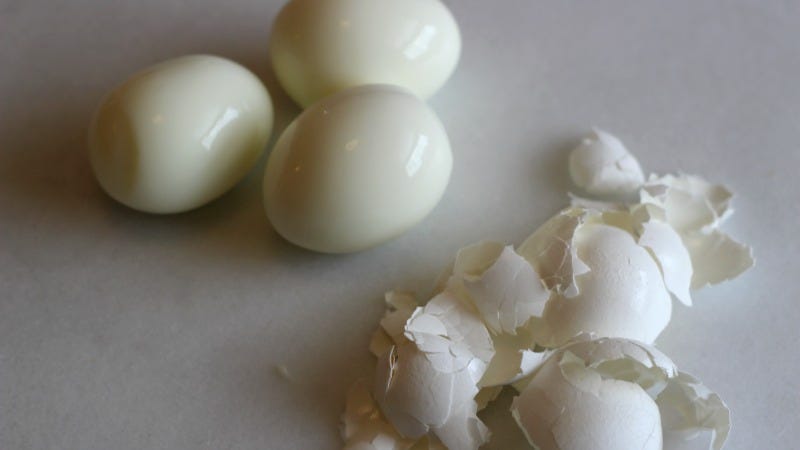
I love deviled eggs more than is decent, but I used to hate making them. It wasn’t the difficulty of getting the yolk just perfect or the smell of sulfur, but the act of peeling eggs almost always sent me into a blind rage. Those days are gone, however, as I now know how to make hard-boiled eggs that will peel without issue.

The problem, you see, is that I was taking the wrong advice. Though my Better Homes & Gardens cookbook had served me well in other endeavors, it was just plain incorrect in the matter of hard-boiled eggs. The recipe, which instructed one to place the eggs in a pot of cold water, bring it to a boil, then cover and remove from the heat, was deeply flawed. Though the eggs would be cooked “properly,” their shells seemed to have severe separation anxiety, and large chunks of white would peel off with them.

Advertisement

But then I read The Food Lab’s hard-boiled egg treatise, and the heavens parted and my life has been better. You see, a cold start simply doesn’t work out well. As Kenji explains, the whites of eggs that are gradually heated bond strongly to the membrane, and that membrane will eff your egg right up.

There are two ways I cook my hard-boiled eggs: boiling them on the stove and steaming them in my Instant Pot. Both result in eggs that peel beautifully 98% of the time.

On the Stove

That egg crater is not from peeling; it just dimpled that way during cooking.

To hard boil eggs on the stove, you will need:

  • Eggs (As many as you like. Don’t worry about using “older eggs” either. I have not found fresher eggs to be harder to peel.)
  • A pot or sauce pan
  • Water
  • An ice bath

Bring the water to a boil and gradually lower your eggs in. Set a timer for seven minutes and find a short activity to pass the time. (I usually check my social media or take pictures of my dog.) Once the timer goes off, immediately transfer the eggs to an ice bath, and let them chill for at least fifteen minutes.

Once chilled, peel the eggs by gently tapping them on a flat surface to form cracks all over, then pry away the shell under running water.
If you like your hard-boiled eggs like I do—firm but still slightly fudgy and not at all dry—seven minutes is the perfect cooking time, but feel free to add a minute or too if you like them a little more done.

Daaaamn yoooouuuu!

You could cook eggs this way your whole life and be pretty satisfied, but you would notice one small annoyance: one of the eggs almost always cracks upon being placed in the boiling water.
A wonky egg that cracked under the pressure.
This isn’t usually a big deal, as I feed the wonky egg to my egg-obsessed spaniel, but it’s not optimum I guess. If you wish to crack down on unwanted egg ruptures, I suggest you try steaming.

In the Steamer

“SIP” stands for “Steaming Instant Pot”

Steaming eggs can be done using a steamer basket and pot or an appliance with a steamer function such as the Instant Pot. In either case you will need:

  • Eggs
  • Enough water to come up about an inch in whatever vessel you’re using
  • A pot for the stove or the liner for your steamer
  • A trivet or steamer basket.
  • An ice bath

If you’re steaming on the stove, fill a pot with about an inch of water, place a steamer basket or trivet down in there and bring it to a boil. Gently lower your eggs into the basket, cover, and let cook for 11 minutes. Remove from the basket and immediately place the eggs in an ice bath for at least 15 minutes. Peel as described above.

Advertisement

If you are using an electric steamer, you may have to play around with timing a bit, depending on the model. For the Instant Pot however, you just need to add a cup of water to the insert, place the trivet down in there, and set the eggs on the trivet. Close the Instant Pot, set the release valve to “sealing,” and press the “Steam” button. Set the time for seven minutes using the “+” and “-” buttons, and check your Twitter or something. Once the timer has gone off, manually release the pressure by switching the release valve to “venting,” then remove the eggs from the pot and place them in an ice bath for at least fifteen minutes. Peel as described above.

Just beautiful.

I have found that, though the stove top eggs are easy to peel, the steamed eggs peel even more easily, and have less dents and dimples than their stove-top brethren. Dents and dimples aren’t the end of the world though. I’m a pretty happy camper as long as I get to keep all of my white.

24 Aug 16:26

How to Entertain Your Child While Lying Down

by Michelle Woo on Offspring, shared by Virginia K. Smith to Lifehacker
Shalom Goldberg

A true Lifehack...

Photo: Michelle Woo

“Just rest,” I would tell my daughter pretty much the moment she started walking and wanted me to play with her here, then over there, then back over here, then over there again, all day, every day. The kid never learned to rest.

The energy level of children is wildly disproportionate to the energy level of adults. You try your best to keep up, but there are times when you just can’t—say, if you’re not feeling well, or if you were up every hour with a crying baby the night before, or if you are 40. Fortunately, if you have some clever games and activities in your arsenal, you can entice your kids to play with you as you lie down on the sofa or floor. Seasoned parents call it “horizontal parenting.” I call it bloody brilliant, and I made those parents give me all their secrets.

Here’s how you can parent horizontally, too:

Beginner

Activities that require just the tiniest bit of brain power and effort.

  • Read books. Basic, but you really can’t go wrong.
  • Play the Quiet Game. Who can be quiet the longest? You know a parent, babysitter or teacher has played this on with you.
  • “Walk on my back.” Perfect if you have little kids. They get some balancing practice, and you get a back massage.
  • “Guess the letter on my back.” Take turns writing letters or words with your finger on each other’s backs, and guessing what it is.

Intermediate

Requires a bit more thought, but in return, you usually get more down time.

  • “Camping.” Do the same things as above (and other activities), but do it all in a tent in the living room or backyard so it feels like you’re camping.
  • Play doctor/restaurant/hotel/baby. You’re the patient, the restaurant customer, the hotel guest and the baby, of course.
  • Play salon/barbershop. Get out the nail polish, makeup, hair brushes, hair ties/clips, pretend razors and warm wet towels, and let your kids make you beautiful. Don’t get out the real scissors.

Expert

This is master level, folks.

  • Sofa games. Move your sofa so that there’s some space behind it, and have your kids run around it in circles. You lie down or sit on the sofa and be the “monster,” catching and tickling one kid at random intervals.
  • “Go find me a ____.” A mom named Julie told me this one. “I used to ask my son to bring me something from his room: “Bring me something blue,” “Bring me something that looks like a unicorn pooped it out,” etc. He always came back with something. Part two: I’d tell him to put it back where he found it, exactly how he found it, because I would be able to tell.” Freakin’ genius.
  • Build your own ball pit, and lay in it with your kid.
  • Ninja training. Here’s another one from Julie. (“I had so many of these ‘games,’” she says.) Close your eyes and have your kids try to walk past you as quietly as possible. If you hear them make a sound, send them back to the starting line.
  • Floor Hokey Pokey. Turn on the “Hokey Pokey” song, but play it while lying down. When it’s time to “turn yourself around,” have your kids do the work and spin you.
  • “Mommy’s legs are roads.” Let kids roll their toy trucks on your legs, my friend Mindy suggests. “It’s kind of relaxing as a massage, depending on the size and type of truck,” she says.
  • “What’s on my butt?” Have your kids put random household items on your bottom, and you try to guess what it is. Kids really like hearing the word “butt.”
14 Aug 21:01

How to Protect Your Kids From Disturbing, Fake Peppa Pig Videos On YouTube 

by Michelle Woo on Offspring, shared by Michelle Woo to Lifehacker
Shalom Goldberg

what is wrong with people

Photo: YouTube

I’m cool with Peppa Pig. Peppa is a charmingly imperfect pig-child, and Daddy Pig, despite falling into the cliché befuddled father type, makes me giggle. And who can resist George’s one-track obsession with Mr. Dinosaur? I don’t protest much when my four-year-old daughter asks to watch the British preschool cartoon, and the quickest way for me to find a string of episodes is to grab the iPad and type in “Peppa Pig” on YouTube.

But online safety experts are warning that this isn’t a great search method. An investigation found that thousands of YouTube videos containing violent and disturbing content are posing as legitimate Peppa cartoons. According to Engadget, a new study reports that such content is “indistinguishable from regular kids’ programming,” and increasing difficult to police.

Peppa Pig certainly isn’t the only popular kids’ show that is aggressively counterfeited, but since it’s one that’s not available in the U.S. via standard subscriptions to Netflix, Amazon Prime Video and Hulu, many parents seek out the full episodes on YouTube. And that’s where the uncertainty lies. As Laura June writes in The Outline, “knock-off Peppa Pig is the stuff of nightmares.” The reporter details one clip that she noticed her young daughter watching—Peppa, who is mysteriously green instead of pink, gets taunted by a dentist with a giant needle and scary tools. Another video apparently shows Peppa and a friend burning down a house with someone inside it. One clip depicts two “gangster” pigs smoking cigarettes and wielding knives and guns.

“The stuff of nightmares.”

Clayton Ostler, chief product officer of the parental control software Net Nanny, tells me that while technology has improved its detection of live-action video content such as terrorism, violence or pornography, “cartoons are still far behind.” Here’s what he says parents can do to help keep kids safe.

Enable All the Filters

Start with the big ones—use YouTube Kids, which filters content for children, and turn on Safe Search. Still, even with these safeguards, Ostler says, “fake cartoons can slip by.” When searching, select videos from trusted channels, such as the Peppa Pig or Disney Channel’s official YouTube page. (Note: these channels may offer more limited content.) Parental control software such as Net Nanny may use filters to scan the entire page where a video appears, including the comments. So if a video’s comments note that a fake Peppa Pig video is violent or disturbing, the filter should detect that. “As a parent, be sure to comment when you find these videos to warn other parents and report videos to YouTube as ‘violent or repulsive,’” Ostler says.

Make a Playlist

For further protection, Ostler says parents can make a playlist for their kids with videos only from reputable sources and trusted channels. This is especially effective for watching YouTube videos on a smart TV—little kids can’t easily click from one video to the next using a remote control.

Keep an Open Dialogue With Your Kids About What They See Online—and Keep Watching What They’re Watching

It’s tough—counterfeit YouTube cartoons seem to be made to fool and confuse young children, so they often won’t know that what they’re seeing isn’t the real Peppa or Doc McStuffins or Spider-Man. As a parent, it’s important to keep talking to your kids about what they’re watching, and to make sure they’re comfortable telling you if they see something they don’t like or understand. If they’re too young to do so, it’s probably best to either watch the show with them, or pass on YouTube for a while.

11 Aug 19:05

Computers vs Humans

It's hard to train deep learning algorithms when most of the positive feedback they get is sarcastic.
09 Aug 20:37

Great Job, Internet!: Meanwhile, in China, people are just frolicking around dressed as Minions

by Reid McCarter

When Dante descended the circles of hell, he crossed the River Styx and found the damned, mud-covered and pitiful, tearing one another apart. In the real world city of Lianyuan—located in Hunan province, China—something much more horrifying occurs: Groups of tourists, dressed in adult-sized Minion costumes, frolic across nature’s beauty in open contempt of the notion of a just or kind universal order.

While the entire world is at fault for allowing the pube-headed, Twinkie-looking Despicable Me characters’ popularity to get this far out of hand, China in particular shoulders a decent amount of responsibility for injecting so much cash into the coffers of those who continue to make movies and merchandise centered on them. As ...

17 Jul 15:11

Great Job, Internet!: Desperate government resorts to hip memes to keep fidget spinners out of children’s mouths

by William Hughes

We have to assume the rise of the fidget spinner set off a series of increasingly strident alarm bells in the offices of the U.S. Consumer Product Safety Commission, the independent government agency tasked with stopping the American people from wiping themselves out with “unreasonable risks” created by the products we blindly but constantly consume. At first, things were probably pretty chill. “Someone might slip on that,” maybe, or “Seems like it could cause some distractions in the classroom.” But then, the damn things just kept going, spinning faster and faster in the public consciousness, and things rapidly got out of hand. (“Oh god,” someone at the US CPSC may have whispered to themselves. “They’ve started sharpening them.”)

The biggest danger, though, was that spinners contain ball bearings and other tiny parts, which are basically candy to the accidentally (but industriously) suicidal children of the planet Earth. Faced ...

10 Jul 17:36

Canadian Money is Better than US Money

by Alex Tabarrok

Canadian bills and coins are better than US bills and coins. Canadian bills are colorful, waterproof, partially transparent and holographic. Awesome. Canadian coins are also better. Who wouldn’t want a sterling silver and niobium Wolf Moon? And as if that weren’t enough the Canadian mint just started producing a glow in the dark coin for Canada’s 150th (shown at link) although it doesn’t match the great 2012 glow in the dark skeleton dinosaur (shown below).


The post Canadian Money is Better than US Money appeared first on Marginal REVOLUTION.

06 Jul 16:52

Cook This Page is IKEA’s brilliant cooking hack

by Jules Yap

Finally, easy to follow assembly instructions from IKEA.

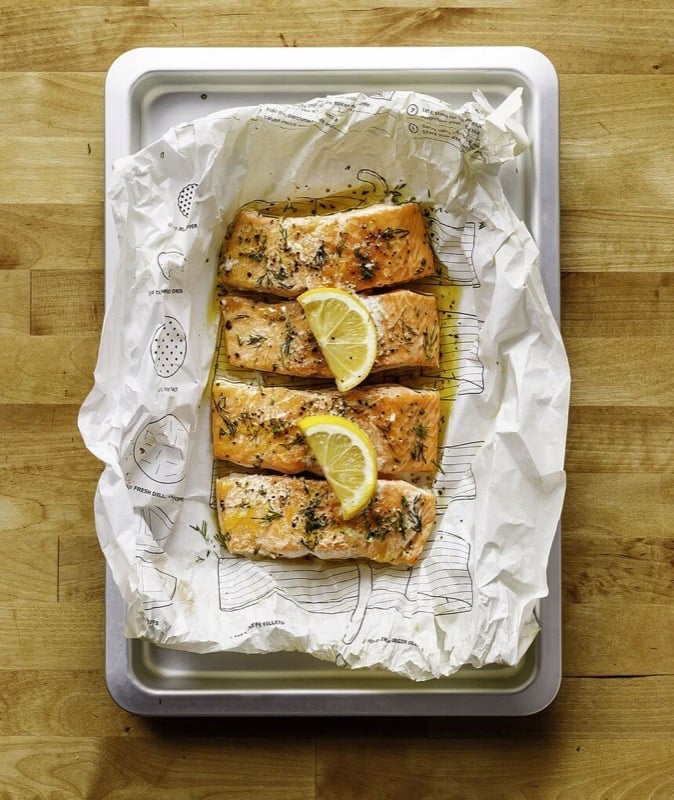
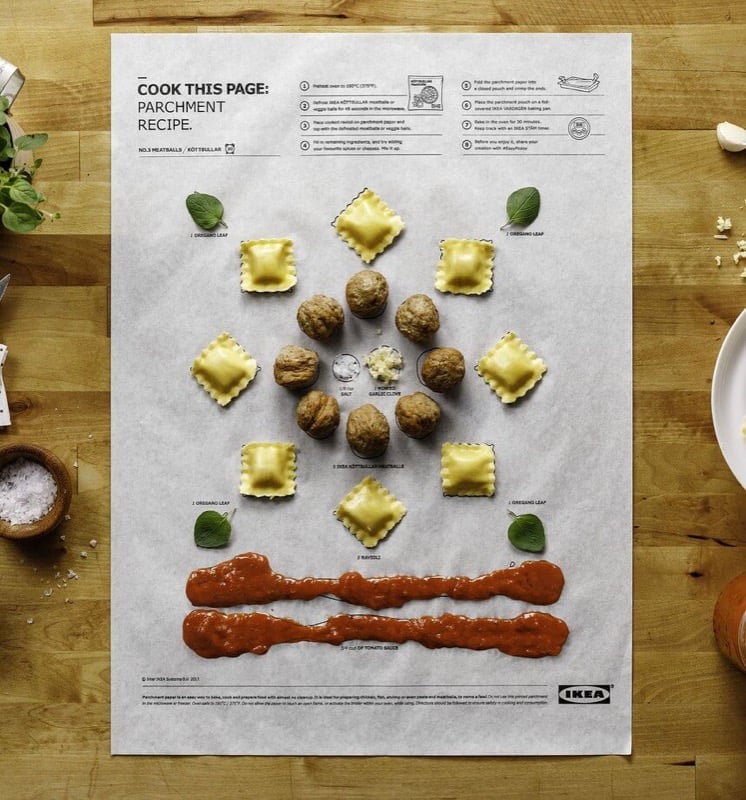
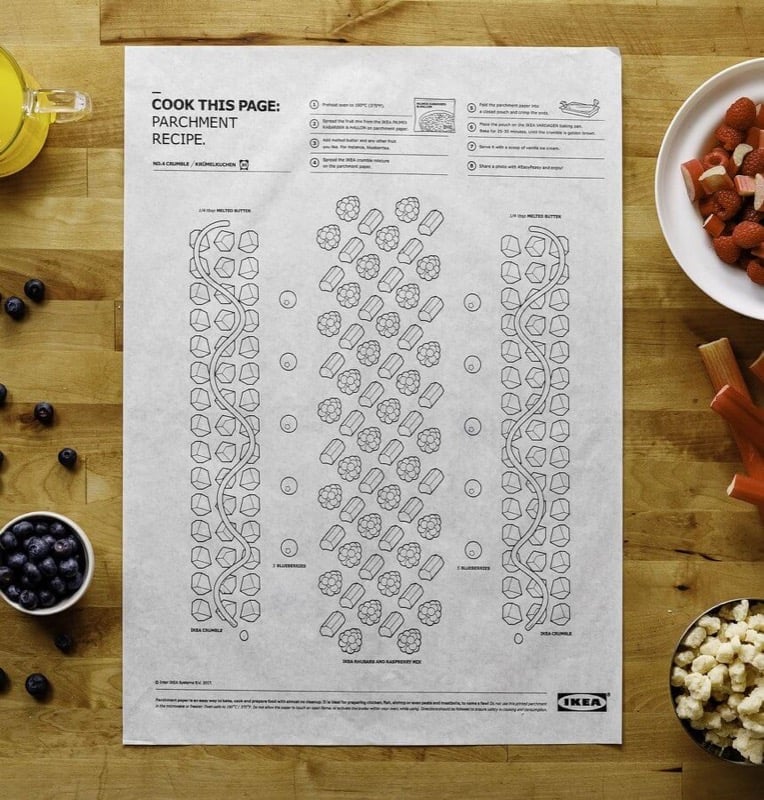
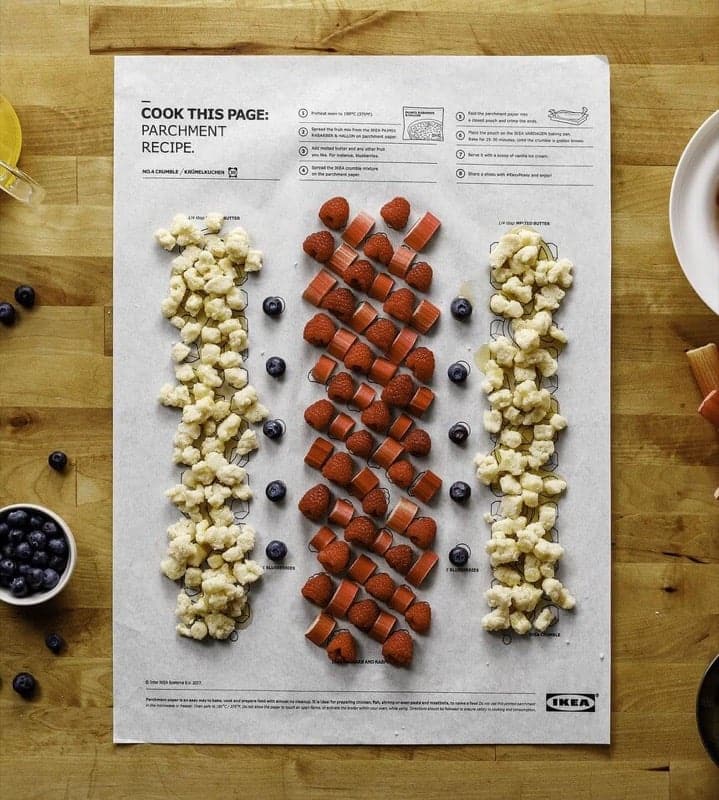
It’s hard to go wrong with the Cook This Page recipe parchment paper, an interactive recipe card from IKEA. Using food safe ink, the recipes are printed on parchment paper, with ingredient blanks measured to size. All you need to do is to place the ingredients on their corresponding images, roll it up and place it in the oven to bake.

Cook this page IKEA parchment paper - ingredients close up

Cook this page IKEA parchment paper - ingredients close up

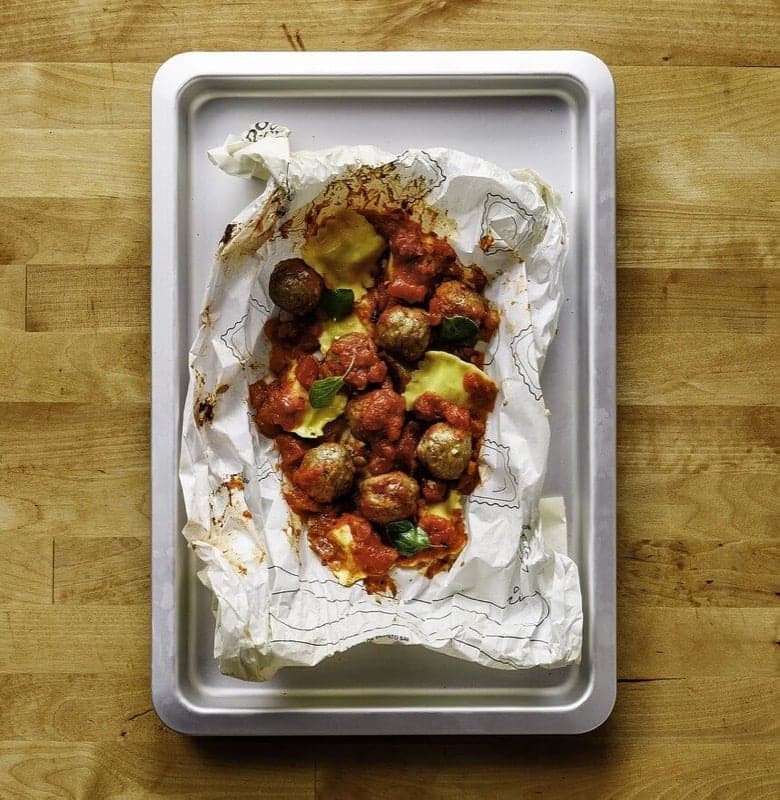
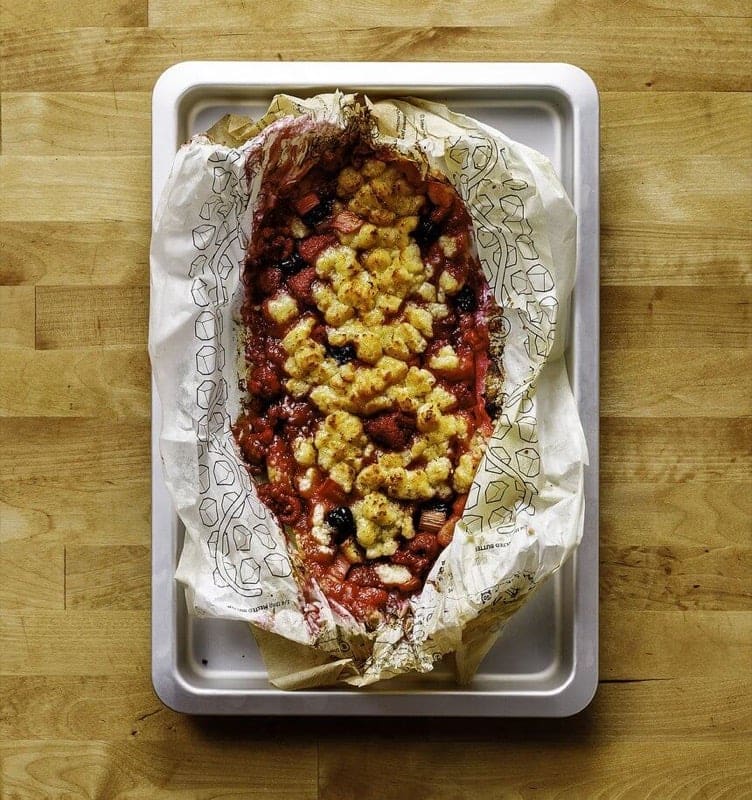
The ingredients get steamed in the wrapper and when it’s done, cut it open and voilà! It’s ready to serve. And what I like most, it’s so easy to clean up. The lazy cook/ dishwasher in me is jumping with joy!

Cook this page IKEA parchment paper - blank

Cook this page IKEA parchment paper with ingredients

Cook this page IKEA parchment paper - cooked

Parchment paper cooking is not an entirely new idea, so we can’t give IKEA all the credit. The concept has been around ever since our forefathers learnt how to wrap food in leaves/ mud/ bamboo/ whatever. In my hometown, we have a famous salted chicken baked in parchment paper and it’s the yummiest ever and it’s been around since I was wee small.

But most parchment paper is just that – paper – they don’t come with recipes printed on them, with to-size measurements of ingredients. Well, this may change soon. I see a Kickstarter in the making.

Cook this page IKEA parchment paper - blank

Cook this page IKEA parchment paper with ingredients

Cook this page IKEA parchment paper - cooked

Kudos to IKEA and their agency Leo Burnett for the fresh twist. The extra step of printing the illustrations onto the paper makes it easier for “people who find new recipes intimidating. IKEA wanted to show people that getting creative can be deliciously simple,” it says in this video. It’s a great way for the beginner cook to get started on healthy homemade meals. I think it’s also an awesome way to introduce kids to cooking. What better way to keep little fingers busy than lining up shrimp!

The recipes incorporate IKEA food and kitchen items. From what I can see, each booklet comes with 4 recipes: Salmon with Lemon and Dill, Meatballs with Ravioli, Shrimp with Olives and Rhubarb Raspberry Crumble. Yums.

Cook this page IKEA parchment paper - blank

Cook this page IKEA parchment paper with ingredients

Cook this page IKEA parchment paper - cooked

Now, don’t get too excited. The Cook This Page recipe sheets were a promotional item for the IKEA Canada’s kitchen sale, so we may never see them in stores. But we’re keeping our fingers crossed, aren’t we?

The post Cook This Page is IKEA’s brilliant cooking hack appeared first on IKEA Hackers.

30 Jun 13:51

Parents Share How They Protect Their Kids Online

by Conor Friedersdorf

Earlier this week, I asked parents to share their approach to protecting the privacy of their children as they begin to use devices with Internet access and social networks. The inquiry was inspired by an Aspen Ideas Festival talk where Julia Angwin and Manoush Zomorodi revealed how their reporting on privacy changed their parenting.

The parents who’ve replied so far are in agreement that the task is difficult.

Our first correspondent is a married woman in her mid-40's with a 12-year-old child. She lives in Irvine, California. She recently created a technology contract with her child.

She writes:

My 12-year-old doesn't yet have a Facebook account, and doesn't remember how to use her Instagram account. I've showed her Snapchat, but her friends don't use it, and she hasn't pushed for it. (She was understanding when I told her I'd deleted it because the filters were so racist.) I expect her upcoming 7th-grade year to involve a lot of change in what has up to now been very limited use of social media. She just this year got a smartphone, several years after many in her upper-middle-class-neighborhood public school did. She has a cheap tablet that she uses to watch Cartoon Network and Youtube. She watches hours of Youtube with little supervision, mostly young adults who are passionate about animation or crafting, and she texts with friends. So my level of awareness about what she does in digital spaces is fairly low - I have no idea who most of the you-tubers are who she watches. We do talk about them, and she knows we can access her browser
history, for now.

We did have a conversation this year after one of my husband's periodic browser-history checks turned up some moderately adult content (YouTube animations illustrating funny-in-retrospect sexual experiences, like getting caught by a parent), but I'm okay with her using the internet to look around a bit. We have talked for a while now about how the internet can get intimacy wrong, and these conversations are an important part of the general ongoing conversations about intimacy, sex, contraception, and consent.

My job as a librarian does involve a slightly higher than average level of involvement with online privacy issues, but that hasn't translated to at-home chats about higher-level information security. We're still more focused on issues around communication, and how the online setting can make it even harder to make mature, empathetic decisions that it is normally, especially for teens whose brains are still developing. So her concept of personal information is evolving, and I think it's going to be challenging to navigate that at the very same time she's navigating the complicated personal-growth time of the early teen years.

I would characterize my attitude towards dealing with the online world in parenting as resentful but resigned. I'm not scared of the internet, like I don't worry about rando sex offenders. Instead, I feel like the companies and governments that are collecting dossiers of information about individuals can't be trusted to get things right, and I feel like I need to teach my kid to deal with that, and that's a drag. We're trading so much for cute cat videos and easy access to coffee filters and hand cream.

She really likes those cute cat videos, though.

* * *

James has worked for more than 20 years in the IT industry and has nine children ranging in age from eighteen to three years old. “I'm probably in the minority in that I'm definitely not ‘out-teched’ by our kids, despite years of trying to get them interested in what goes on under the hood,” he writes. “My wife and I are one of the last cohorts to remember, fully, the time prior to the Internet and so it's much easier for us to end-run the whole thing by simply not participating. Suggesting the same to our kids or their peers is akin to asking them to give up one eye and both feet.”

Their advice distills down to a few first principles:

1. If you are not paying for the app, website, or service, you are not the customer. You are the product, and the way that they're making all their money.

2. There is no privacy online. Doesn't matter how clever you think you are with a nickname or how careful you are with your pictures and comments. Say the wrong thing at the wrong time and you will be unmasked, publicly, for the world to gawk at.

3. Don't say anything online you wouldn't own in person, or want read back to you by us over dinner.

As to our awareness - one rule we have for the few that have taken some steps into social media (Facebook and Instagram for the most part) - is that they stay connected with us so we can see what's going on. We're aware of at least one finsta; the child (who is 16) is also aware that we're aware.

Using tools borne from the professional experience I mentioned above, internet traffic is monitored regularly (and filtered). I pull up the dashboard, explain how it all works, show what I'm able to see - and not see. So far, these lessons seem to have take hold, especially as the kids get older and see the consequences in the news, whether it's doxing, texting scandals, or cautionary tales of students (or professionals) getting called out for their online activities and losing scholarships (or jobs) as a result of them.

* * *

Our next correspondent is a mother of two boys, eight and ten, and the Data Privacy Consultant for the California Department of Education. In her work, she has seen “both the power of data to tell compelling stories and power of data to wreak havoc.”

She explains:

When used for good, data can ensure personalized instruction / interventions for kids who are struggling, food for kids who are hungry, and more. When used for ill, data can be inconvenient (e.g., useless to answer important questions), annoying (e.g., telemarketers), and terrifying (e.g., identity theft). In constantly-connected, perpetually-hacked digital spaces, collection of any data comes with risks. As such, one must constantly be asking: (1) Is collecting/sharing these data legal and necessary to answer important questions? (2) Do the expected benefits outweigh the inherent risks? and (3) Is every conceivable, plausible measure being taken to minimize data collection, protect data assets, manage/utilize data to maximize benefit?

But awareness of those perils does not cause her to keep her kids offline:

My approach to screen time mirrors my approach to life in general. I don’t believe in living in a bubble, avoiding uncomfortable truths, pretending that I can control things that I cannot. But I do believe in being reasonable and thoughtful, staying informed and sharing information with others, striving each day to learn and do better. I believe in being cautious without being alarmist…in managing and minimizing risks without suffocating benefits. When it comes to my kids and any topic—including but certainly not limited to screen time—I hope I can imbue them with both the confidence to explore and the knowledge/skills to ask questions/seek help when they find they’ve wandered too far. In both the physical and the digital world, parenting is a perpetual lesson in letting go, a daily affirmation that control is an illusion.

I recently heard an analogy that I think makes a lot of sense. The analogy is this: We don’t teach our kids to be water safe by showing them a video, pretending water doesn’t exist, or refusing to let them get in the pool. We teach them to be water safe by suiting up, jumping in the pool with them, and helping them learn the skills that will minimize their risk of drowning. Carrying this analogy into the online space, my personal stance is that—whether we like it—our kids are in the pool. Technology is everywhere. As such, it’s up to us to get in there with them and guide them through mistakes and dangers so that someday…even when we’re not around to pull them out of the water…they can save themselves with smart decisions and well-honed skills. I’m a big fan of Web sites like Common Sense Media, FERPA Sherpa, On Guard Online, US Department of Education’s Protecting Student Privacy, and Soul Behind That Screen.

Here are the rules in her house:

(1) No screen time is permitted before my hubs and I wake up in the morning. If the boys rise before us, they need to find other activities (e.g., reading, Legos) to fill their time.

(2) My hubs and I are the holders of the passwords. If the boys want online access, we’re the gatekeepers. The boys understand that at any moment, Mom and Dad can and will check their history to see what they’ve been up to.

(3) Any abuse of screen time privileges will result in immediate revocation of said privileges. We have a very small house and Mama’s got very good ears. If a Minecraft or basketball YouTube video veers into inappropriate language or content, the boys are responsible to shut it down…IMMEDIATELY. If Mom or Dad have to come in to shut it down, the screen is going OFF for a good, long time.

(4)  When playing games with potential to connect with others, they are required to:

a.       Never connect with anyone they don’t know

b. Never share personal information

c.       Only use online IDs that are nonsensical and won’t reveal anything about who they are, how old they are, where they live, etc.

d. Only connect with friends whose identities have been verified by me or their dad (e.g., through a text to other parents verifying that the user name my kiddos want to connect with is affiliated with the kiddo we think it is)

e.       Tell my hubs or I immediately if anyone is pressuring them to share information

(5) Screen time ends at least 30 minutes before bed.

(6) We watch together. Especially when watching shows that aren’t necessarily targeted to their demographic, either my hubs and I watch ahead of time to make sure everything is copacetic before giving approval and/or we watch together so that we can shut things down or answer questions as appropriate. One example is Gilmore Girls. This is one of my favorite shows and I’ve been binge watching it with the boys. It’s sparked a lot of important conversations about coming of age. It has been a great tool for us to bond and talk about important topics. If they ask to watch or play something that I don’t think they’re ready for, I’ll give them the respect of watching at least a portion/researching so that I can cite specific reasons (language, sex, violence, etc.) that I think they should wait or avoid consuming the content altogether. Especially as they grow older, I won’t be around all the time to hover. I want them to be analytic, critical thinkers who make thoughtful decisions. As such, I try to let them experience what it’s like to ask, debate, research, consider the input of others, and draw conclusions. I try to avoid too many “No! Because I said so’s.”

(7) Family time, exercise, and chores are greater than screen time. Those who live in the house connect in the house, help in the house, behave in healthy ways in the house. The second the screen gets in the way of responsibilities to one another and ourselves, it’s time to go cold turkey for a bit and remember that we are NOT addicts fiending for a drug but humans who have the capacity to enjoy things in moderation.

* * *

Veronica is the parent of a 3-year-old, and while she has thought deeply about the ways she will try to protect her digital privacy she feels that regulatory changes are what’s ultimately needed:

The production and collection of my child's digital traces is really beyond my control. For instance, although I asked her pre-school not to share photos of her on Facebook, other parents do, and this leads to the fact that the Facebook's DeepFace technology has already stored her facial recognition data. Sometimes I ask parents to remove the pictures, but social media content is deeply interconnected with highly emotional and personal relationships, with the need to share experiences and give meaning to them, and sometimes - as a parent - it is simply not possible to 'opt out'.

Yet social media are just one dimension of the datafication of children, and the impossibility to opt out. Most of my daugthers' data is collected and stored by a plurality of agents, from her preschool digital records to her health records (both stored on outsourced platforms), from social media to cloud systems. I have little control of how her data is collected, stored, shared and exploited.

As a parent I will of course talk to her about digital privacy, and what should and should not be posted on social media. I will probably use the technique used by one parent in London: everytime the daugther wanted to download an app on her phone she would need to study the terms and conditions… However, I believe that the issue is far more complex than simply developing ways to teach our children how to protect their privacy. As parents,  we should not only be talking about digital privacy and how we can instruct our children to protect it, but rather about 'data justice'. What we need is to campaign for more regulation and transparency.

* * *

Alex writes:

This was a topic my wife and I discussed at length during her pregnancy.  Our daughter is now 8months old. From the second she was born she was old enough for us to be concerned about her presence on the internet.  We haven't decides on rules for when she is older, but from the start we agreed and had a strict policy required for us, family, and friends: her face would NOT be used in any social media posts. Our concerns ranged from privacy policies on instagram and facebook, to who controls the rights to those photos once posted. We impose pretty harsh penalties for not abiding by our rules, mostly a length of time where you do not get access to our child or their photos as distributed by us.

Being 31 and growing up in the ancient times (Before Social Media), I know that had my parents plastered my image on the internet for all to see, I would have held it against them well into my adulthood. This is a simple matter of respect and trust for your child. I want her to make the decisions about her online footprint and understand the consequences of what happens if you are not thoughtful about your internet presence in our current world.

I won’t make that choice for her.

If you’ve taken a different approach than these correspondents write conor@theatlantic.com to share your approach.

06 Jun 21:00

Great Job, Internet!: Please meet the all-time king of watersliding

by Clayton Purdom

Greatness is magnetic. It is also irrefutable. We know it when we see it, instantaneously, radiating off of the great person, and while there will always be contrarians and truthers, poring over the evidence in an attempt to doubt the greatness at hand, the whole point here is that if it is refutable, it is not greatness. Greatness is obvious in athletes—just look at what Serena Williams or LeBron James does on any given day—and it is occasionally obvious in art. (Nobody shrugged at Moonlight, for example.) Sometimes, an act of greatness seems to combine the two.

Here is one such instance:

Twitter user Morgan Evick captured this moment of transcendent human achievement while on vacation in Jamaica. The exact name, whereabouts, location, dietary habits, and molecular makeup of the young ...

24 May 16:18

A New Genius Salad From the Chef Who Started the Kale Salad Craze

by Kristen Miglore

This post originally appeared in Genius Recipes on Food52.

Before I convince you to make this hot-off-the-presses genius salad, I need you to remember that we used to think kale salad was weird.

Now you can buy bags of Sweet Kale salad pre-mixed with broccoli and dried cranberries at Costco, and even fast food restaurants have gotten in on the game.

But back in October 2007, Melissa Clark was introducing the concept to many for the first time in the New York Times: “If a chef dares to offer something as unappealing as, say, a raw kale salad, chances are it’s fantastic,” she wrote in an article titled “If It Sounds Bad, It’s Got to Be Good.” This article was all about the curious, addictive raw kale salad at Franny’s in Brooklyn (also published in Saveur the same month), which seems to mark the launch point for kale salad to catapult into the food trend hall of fame.

And now Joshua McFadden—the chef who created that recipe, simply because he was fed up with the sad salad greens available in winter months—has a brilliant, vegetable-charged cookbook out called Six Seasons. And wouldn’t you know it: There’s another salad in the book that sounds like it just should not be. I didn’t even want to try it, but knew I had to. And it’s incredibly delicious. I’d even call it addictive.

It’s a tossed salad, with a layer of cheese melted right on top like nachos. Sounds dicey, right?

Here’s why it works so well: The greens are radicchio and arugula, a hardy mix of bitter and crisp, and are only broiled for a minute, just long enough to melt the cheese. So the pile just warms through and softens a bit but still tastes fresh and resilient, the wine vinegar and oil dressing subtly concentrating. (Even if the only arugula you can find is a box of the baby leaves, instead of the full-grown kind shown here, the radicchio more than holds up its end, structurally speaking.)

You end up with a wild interplay of textures—slick curling leaves, some relaxed and some still-springy, topped with a modest layer of softly melted cheese, then cracked toasted hazelnuts and streaks of sticky saba (or balsamic). The flavors are wild, too: Every forkful has swings of bitter on tangy on funky on salty on nutty on sweet.

The tension between all these forces is what keeps you diving back in, just like in McFadden’s first, fateful kale salad. I can’t wait to see where this hot little number takes us.

Joshua McFadden’s Bitter Greens Salad With Melted Cheese
Serves 6

  • 3 tablespoons red wine vinegar
  • Extra-virgin olive oil
  • Kosher salt and freshly ground pepper
  • 1 large head radicchio (3/4 pound), cored and coarsely shredded
  • 5 ounces arugula
  • 1/4 pound Crucolo, provolone, Taleggio, or Fontina cheese, grated
  • 1/2 cup roughly chopped lightly toasted hazelnuts
  • Saba or balsamic vinegar, for drizzling

See the full recipe on Food52.

More from Food52:
These Nachos Are Like Flag Cake—Only Gooey, Crispy, and Cheesy, Too 
Your Summer Calendar, in 14 Dishes (We’re Planning Ahead) 
The Only Thing Standing Between You and Chocolate Cake Is One Pot and 40 Minutes 
What Went Wrong? The Hard-Boiled Eggs Edition 
The Beguiling Elixir That’s Become One Chef's Lifelong Obsession 
The Breakfast Hack That Adds More Nutrition—and Flavor—to Any Recipe

12 May 13:32

Here's A Useful App For Sending A Rabbi Photos Of Your Menstrual Blood

by Dvora Meyers on The Concourse, shared by Dvora Meyers to Deadspin

There really is an app for everything. I know that’s been said before but now it’s finally true. Meet “Tahor,” (Hebrew for “pure”) the app that allows you to send pictures of your menstrual blood to a rabbi for inspection.

Advertisement

Why, you might be wondering, would this be something you’d even want to be able to do? Well, like every other app ever invented, this is about having sex.

Orthodox Jewish couples are not supposed to engage in “period sex.” Practically, this means they abstain from having sex while a woman is menstruating, but uterine bleeding due to certain other causes such as hormonal contraception can also be a reason to abstain.

After a woman believes her period to be over, she is supposed to count an additional seven “clean” days, at which point she can go to the ritual bath and immerse herself so she is “pure” and can start having sex with her husband again.

Advertisement

But if there is any staining during the clean days, she might have to start counting all over again.

Sometimes, a woman may not know what to make of the stain, so she can send the cloth to a rabbi (sometimes via her husband) to inspect it. The rabbi, judging by the color and other factors will rule whether or not the counting needs to start anew. (There are other reasons and times you might need to get a stain inspected but I’m not going to give you the whole bloody list.)

Advertisement

Sponsored

With Tahor, you can cut out the middle man (the husband). The app allows you to choose your rabbi from an exhaustive menu of a few different kinds of Orthodox rabbis and then hit “send” to find out if the blood you’re seeing is uterine or not, because who better than a male rabbi with an iPhone to tell you about your menstrual cycle? (If male Congressmen can unilaterally decide matters of birth control, why not this?)

In many ways, this does seem like it could be an improvement for Orthodox women, allowing them direct and anonymous access to a rabbi. It’s also way more convenient, especially for a woman who is traveling and can’t swing by a rabbi’s office to drop off a stained cloth or pair of underwear.

Advertisement

(While I grew up in the Orthodox community, I never learned these rules in great detail when I was in school. Young women typically aren’t taught the specifics until right before they get married in a special “bride” class. However, a high school teacher did take us on a tour of a ritual bath. This visit constituted the majority of our sex ed.)

And as with most things intended to make life less onerous for Orthodox Jews—especially women—there is already controversy. One rabbi is calling for it to be banned, arguing that he might not be able to parse the exact color or texture of the stain with a fancy iPhone photo.

So: No Valencia filters on your menstrual stain photos. Also, don’t get too artsy with the camera angles. This isn’t for your MFA thesis or your Instagram feed.

Advertisement

And here’s hoping that the app makers take web encryption and security seriously.

16 Sep 17:13

Earth Temperature Timeline

[After setting your car on fire] Listen, your car's temperature has changed before.
18 Aug 20:10

What It Really Means When There's A 50 Percent Chance Of Rain

by Matt Hardigree on Gizmodo, shared by Barry Petchesky to Deadspin
What It Really Means When There's A 50 Percent Chance Of Rain
Photo Credit: TWC via Getty Images

As a student and observer of meteorology, it constantly bums me out that people do not understand what it means when someone says there’s an “X% chance of rain” tomorrow. A 50 percent chance of rain does not mean there’s a 1-in-2 chance that you’re going to get wet.

To be fair, this confusion cannot entirely be blamed on the general public. The terminology most used by people is “There’s a 80 percent chance of rain,” which reasonably leads people to think there’s an 80 percent chance it’s going to rain on them. And when they don’t see it, they think their local meteorologists are huffing glue.

The factor that’s missing in the comprehension of Probability of Precipitation (PoP)? Area. To quote the National Weather Service (NWS), what PoP is actually describing is the chance of rain at any point over an area.

Here’s the math:

PoP = C x A where “C” = the confidence that precipitation will occur somewhere in the forecast area, and where “A” = the percent of the area that will receive measurable precipitation, if it occurs at all.

Let’s break that down. Using various models and data a meteorologist will look at the chances that rain will happen somewhere in their forecast area and determine how much of that area is likely to get rain. For the National Weather Service this can mean a large area. For instance, look at the Houston-Galveston NWS Forecast area outlined below:

What It Really Means When There's A 50 Percent Chance Of Rain
Photo: NWS Houston

For those of you who haven’t driven from Palacios to Crockett or Galveston to College Station it’s a big area. If NWS forecasters were 100 percent certain that it was going to rain in the lower third of counties and 100 percent certain it wouldn’t rain in the upper third, then there would be a 30 percent chance of rain for the whole area.

That rarely happens, again, as the NWS points out:

[M]ost of the time, the forecaster is expressing a combination of degree of confidence and areal coverage. If the forecaster is only 50% sure that precipitation will occur, and expects that, if it does occur, it will produce measurable rain over about 80 percent of the area, the PoP (chance of rain) is 40%. ( PoP = .5 x .8 which equals .4 or 40%. )

So, your local TV weather person isn’t a moron if they say there’s a 50 percent chance of rain every day and it never rains. It’s possibly that for some of the area he or she was referring to, there’s someone on the other end of your viewing area who got rained on every day.

The standing out in floods, though, that’s just good television.

15 Aug 20:50

The Science Behind Why You Feel Sick When You Try to Read in the Car

by Alan Henry

Some people get carsick when they try to read on the road, other people do it blissfully, but if you’re one of those folks who just can’t get through a page without feeling nauseous, there’s finally a good reason for it. Essentially, your brain thinks it’s being poisoned. Here’s why.

Read more...

25 Jul 13:18

Washington Metro: Safety, Delay, Cost

by Alex Tabarrok

Metro Station Smoke

WTOP: A Metro worker blamed for falsifying records about the tunnel fans that failed during last year’s deadly smoke incident near L’Enfant Plaza has been granted his job back by an arbitration panel — and Metro’s largest union has just filed a lawsuit against Metro because the worker hasn’t been reinstated yet.

The union’s defense is that everyone was doing it so no one is to blame. The Union is probably right that the WMTA suffers from a culture of poor safety and responsibility but you can’t fix that culture without clear signals that the incentives have changed.

I had to take the Metro to DC earlier this week and due to track closings for safety improvements it was miserable, at least 45 minutes of delays for the roundtrip. Some 700,000 people ride the metro every day and if each is delayed by just 15 minutes total (7.5 minutes each way) then at $15 an hour that’s 2.6 million dollars worth of delay every day.

The post Washington Metro: Safety, Delay, Cost appeared first on Marginal REVOLUTION.

11 Jul 20:54

Great Job, Internet!: Coriander—a.k.a. cilantro—couldn’t care less that you hate it

by Caitlin PenzeyMoog

Cilantro has long been the whipping boy of herbs, a notorious and divisive flavor that a sizable population would gladly exterminate from the Earth. Those cilantro-sensitive buds reside in the U.S., while their U.K. counterparts unite under the banner of coriander hating; for those unversed in herb scholarship, they are the same thing.

The “I Hate Coriander” profile image

Facebook’s “I Hate Coriander” page is a U.K.-made hub of haters and complainers. Apparently based across the pond, these 77,500-plus folks grouse that their mums bought coriander, grumble when they find it in their curry, and post many a photo containing the offending herb and a middle finger. There are even a few videos, including a rather anticlimactic clip of the offending herb getting run over by a slow-moving car, and an emphatic flushing of fresh coriander down a toilet (followed, in page-appropriate mores, with ...

25 May 20:33

The Right Way to Remove a Splinter, According to Doctors

by Mihir Patkar

Having a splinter stuck in your skin can be quite painful. The good news is that you can remove most at home, without going to a doctor. The bad news is that you can cause more damage if you don’t know the right way to do it.

Read more...

30 Mar 14:52

Zahav’s Hummus Recipe Is Genius. Here’s How to Make It.

by Kristen Miglore

This post originally appeared on Food52.

There’s been a whole lot of talk about Zahav’s hummus lately—ascribing to it the texture of buttercream, the phrase revelatory heights, and being both the creamiest and the dreamiest. Bon Appétit named it their 2015 dish of the year. In Phyllis Grant’s recent Piglet judgement, she wrote that the first chapter alone, with its seven types of hummus, should win a James Beard Award.

But in all of these heaps of accolades, no one has said boo about the craziest and most genius part. Wait till you see it!

The genius of this hummus is credited to all sorts of smart maneuvers in Chef Michael Solomonov’s process: soaking the chickpeas in baking soda to lower the pH and soften their skins, his respect for the finest tahini to drive the flavor (he likes Soom Foods), intentionally overcooking the chickpeas until they’re just shy of total mush, then whipping them longer than you think you should, till the hummus practically floats.

All of these details make the hummus what it is: an unearthly cloud, with a haunting, smoky, nutty pulse. “Making Hummus Tehina is one of the hardest things we do at Zahav,” Solomonov wrote to me. “Without just the right technique, it just doesn’t work.”

But there’s one more fascinating step that I’m stunned no one has zeroed in on, that has perhaps the biggest effect on the hummus’ nuanced flavor. It was so strange that I had to re-read it a few times. Break up the head of garlic with your hands, letting the unpeeled cloves fall into a blender. Come again?

Yes, you drop whole unpeeled cloves of garlic, papery skins and all, into the blender (or food processor), then mulch it all up with lemon juice and salt. It’s an unsettling mixture to think about, filled with inedible debris—until you learn that it’s just steeping for 10 minutes, then all getting strained away.

What this means, aside from the fact that you don’t have to peel anything, is that you’re not adding mashed garlic—fiery, unhinged, very perishable garlic—directly into the hummus, which would usually mean that it would taste precipitously worse and less fresh, the longer it sits in the fridge. (I’d give your average hummus 3 days, tops.)

You’re instead adding garlic-infused lemon juice, which makes for a much more gently garlicky, and therefore more fridge-stable, hummus. Solomonov would probably want me to point out, as he writes in Zahav, “Please note that great hummus is never refrigerated,” but we can’t all be a hummusiya (though if you want to visit one, his New York City outpost of Dizengoff is opening in Chelsea Market next week).

Just eat whatever you can, then let any lingering in the fridge come down to room temp and it will be pretty darn great. (Also creamy, dreamy, revelatory, buttercream-esque, and so forth.)

Zahav's Hummus Tehina
Makes about 4 cups

1 cup dried chickpeas
2 teaspoons baking soda, divided
4 garlic cloves, unpeeled
⅓ cup (or more) fresh lemon juice
1 teaspoon kosher salt, plus more
2/3 cup excellent quality tahini (a.k.a. tehina—Chef Michael Solomonov loves Soom Foods, available on Amazon)
¼ teaspoon (or more) ground cumin
Olive oil, for serving
Chopped parsley and paprika, for serving (optional)

See the full recipe at Food52.

More from Food52:

A Cheaper Way to Make Pesto & 8 Weeknight Meals to Use It In
5 Tips Obvious to Baking Experts, Surprising to the Rest of Us
In Defense of Airport Bars
Roast Pasta Before Cooking it. Really!
8 Chicken Recipes That Come with Their Own Sides
Lemon Cupcakes They'll Never Know Are Vegan

03 Mar 02:44

Baby

Does it get taller first and then widen, or does it reach full width before getting taller, or alternate, or what?
21 Feb 02:43

Great Job, Internet!: Read This: Everything you wanted to know about PBS’ spooky but literate Ghostwriter

by Joe Blevins

For a generation of book-loving ’90s kids raised on PBS, any passing reference to the 1992-95 educational series Ghostwriter is liable to cause pangs of nostalgia. Produced by the Children’s Television Workshop, an organization now redubbed Sesame Workshop in deference to its most famous creation, Ghostwriter centered around a group of mystery-solving New York teens whose investigations are aided and abetted by a hyper-literate ghost (the titular character) only they can see. It’s sort of like a hybrid of Scooby-Doo and PBS’ earlier The Bloodhound Gang, only with an admirable emphasis on the power of reading. Now, Eric Grundhauser at Atlas Obscura has talked extensively with supervising producer Miranda Barry for an article boldly called “Everything You’ve Ever Wanted To Know About Ghostwriter.” In the piece, Barry talks with great warmth about the show’s origins, casting, and production.

The idea behind the series, Barry explains, was ...

15 Jan 14:06

Bougie Food Review: Partially Popped Popcorn

by Kevin Draper on Adequate Man, shared by Kevin Draper to Deadspin

Food tastes better when you have to work hard for it—same with drinks. This phenomenon manifests itself in a number of ways. Ice-cold lemonade is never as refreshing as after you’ve spent all day working outside under the baking sun; produce from your own garden is always better than what you buy in the supermarket. And food that requires physical labor even after it hits your plate isn’t nearly as satisfying when somebody else does that work for you.

Read more...


23 Nov 14:35

Almost Always Win the Game Guess Who With This Math-Based Strategy

by Patrick Allan

The next time you sit down for a riveting game of Guess Who with one of your younger family members, you can win 96% of the time with this mathematical approach.

Read more...