
Shared posts


10 Nov 11:29

Giant Birdsnest For Humans Breeds New Ideas, Not Chicks
by Johnny Strategy


The Giant Birdsnest is exactly that. Except it’s not made from twigs and it’s definitely not for the birds. The gigantic, cozy nest is made from a foam-padded wooden backwall that’s covered with wooden panels and filled with egg-shaped cushions that allow for ergonomic sitting positions. Designed by the Israel-based design firm OGE Creative Group, the Birdsnest is a “new and inspiring socializing space: a fusion of furniture and playground” where ideas come to get incubated.
It’s a multifunctional piece of furniture that can be used for resting, browsing the web, reading, talking and doing almost anything. It comes in 4 different sizes (ranging from 2,700 – 7,900 Euros) and, at its largest, can accommodate up to 16 people at a time. We want all our future meetings to be held in the Birdsnest! (via Laughing Squid)
bytatia, Mary Vílchez Torices and 7 others like this




30 Oct 22:55
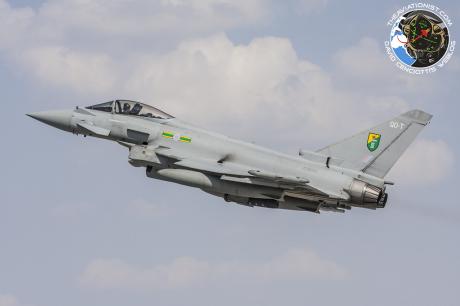
[Audio] I’m instructed by Her Majesty’s government of the United Kingdom to warn you if you do not respond you will be shot down
by David Cenciotti
“I’m instructed by Her Majesty’s government of the United Kingdom to warn you if you do not respond you will be shot down”
On Oct. 29, two RAF Typhoon fighter jets were scrambled from RAF Coningsby airbase, and flew at supersonic speeds across the UK to intercept a Latvian Antonov An-26 cargo plane that took an unauthorized detour over London causing concern to civil air traffic control.
The two Eurofighter warplanes on QRA (Quick Reaction Alert) reached the Soviet-designed cargo plane (registration YL-RAA) on its way to Birmingham airport and forced it to land at Stansted airport.
Interestingly, the pilot of the lead RAF Typhoon (radio callsign “L9T47″) which intercepted the Latvian plane (callsign MLA1605) radioed warning the three-man crew on board the foreign plane to listen to military instructions or risk being ‘shot down’.
Here’s the audio recorded on a VHF frequency.
You can clear hear the pilot say:
“MLA1605 from the L9T47, I’m instructed by Her Majesty’s government of the UK to warn you if you do not respond you will be shot down”
This is how real interceptions work.
Related articles
-
 British pilots flew armed U.S drones during the Libyan conflict
-
 James Bond daredevil chopper leap, helicopter’s eight billion confetti air drop: some of the Olympic opener highlights
-
 Air-to-Air image of RAF Typhoon Display Jet’s first flight with newly painted tail
-
 An ordinary day at RAF Coningsby airbase, UK’s main Eurofighter Typhoon base
-
 Experience the thrills of flying backseat in the RAF’s Typhoon jet
-
 Eurofighter Typhoon takes the stage at the Zeltweg airshow among several interesting participants
-
 Focus on Eurofighter Typhoons’ role in Exercise Anatolian Eagle in Turkey



29 Oct 10:54
Orbital Rocket Explodes After Liftoff in Virginia
by news@military-inc.com(Brendan McGarry)

(Story was updated to include additional information and quotes from the NASA press conference, which concluded around 10 p.m. local time.)
An unmanned Orbital Sciences Corp. rocket exploded seconds after liftoff Tuesday from a launch pad in Virginia.
The company’s $200 million Antares rocket topped with a Cygnus spacecraft suffered a “catastrophic anomaly” at 6:22 p.m. local time in what would have been its third mission to resupply the International Space Station.
“Teams were not tracking any issues prior to launch,” one official said on NASA TV, which was live-streaming the event.
There were no injuries reported and all personnel were accounted for after the explosion at the space agency’s Wallops Flight Facility on Virginia’s Eastern Shore, about 160 miles southeast of Washington, D.C. Photographs show the explosion was visible from nearby residences.
Orbital has formed an anomaly investigation board that will work with NASA and the Federal Aviation Administration to determine the cause of the mishap, the company said in a statement.
“It is far too early to know the details of what happened,” Frank Culbertson, executive vice president and general manager of the firm’s Advanced Programs Group, said in the release.
He was among several officials who participated in a press conference later in the evening and advised residents in the region not to touch or collect any suspected debris, which may be contaminated with toxic fuel and other harmful material.
“Certainly don’t go souvenir-hunting on the beach,” he said.
The view from the ground of the Antares explosion: RT @CarrieSigrist: view from Modest Town, VA pic.twitter.com/fwoqQFTTZK
— NBCWashington (@nbcwashington) October 28, 2014
Orbital and Space Exploration Technologies Corp., known as SpaceX and headed by billionaire Elon Musk, have NASA contracts to ferry cargo to the space station.
After retiring its shuttle fleet in 2011, the space agency turned to the private sector to resupply the station with water, food and other supplies. It depends on Russia to ferry astronauts to and from the orbital outpost, though recently awarded SpaceX and Boeing deals to develop spacecraft to do the job.
During the press conference, officials said there is enough sustenance aboard the station to sustain astronauts through March — months after SpaceX’s next planned resupply flight in early December. They couldn’t say how the failure might affect congressional support for the so-called commercial crew program to fund privately developed human-rated spacecraft.
Orbital and SpaceX want to challenge United Launch Alliance LLC, a Boeing Co.-Lockheed Martin Corp. joint venture, in competing to launch medium-sized military and spy satellites as part of the Air Force’s Evolved Expendable Launch Vehicle, or EELV, program.
Antares is Orbital’s newest and biggest rocket, and it employs Soviet-era engines. The two-stage booster, initially developed for the defense market, for its first stage uses two liquid-fuel AJ26 engines, made by Aerojet, part of California-based GenCorp Inc. They’re modified versions of the NK-33s built in Russia more than four decades ago for its moon program, which was later canceled.
Aerojet bought about 40 NK-33 engines in the mid-1990s and, under a contract with Orbital, modified them specifically for Antares, according to Aerojet. The second-stage of the rocket uses a solid-fuel engine made by Arlington, Virginia-based Alliant Techsystems Inc.
When asked why the company selected the Russian engines, Culbertson said officials still don’t know whether the propulsion system caused Tuesday’s failure. He acknowledged the engine was “designed to carry cosmonauts to the moon,” and described it as a “very robust and rugged” design that was tested extensively before launch without any suspected problems.
“There are not many other options around the world of using power plants of this size and certainly not in this country, unfortunately,” he said.
Culbertson estimated the cost of the Antares rocket and Cygnus spacecraft at about $200 million. He said a portion of the cost of the launch was insured, but didn’t specify any details. Neither he, nor other officials, said how much it might cost to fix the launch pad, which news outlets reported was significantly damaged.
Orbital and ATK’s defense units earlier this year announced a plan to merge in a $5 billion deal to create Orbital-ATK. Shareholders are expected to vote on the merger Dec. 9.
Here’s video of the launch and explosion:

24 Oct 07:48
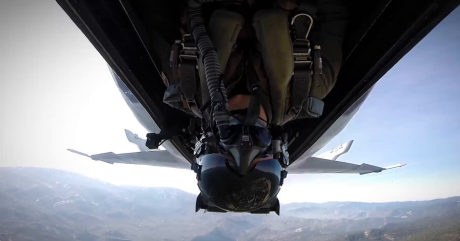
Hornet Ball 2014: the best naval aviation video of the year
by David Cenciotti
Once again, Hornet Ball is the best naval aviation video of the year.
The Hornet Ball (Strike Fighter Ball Pacific) is an annual event consisting of all the West coast Naval F/A-18C Legacy Hornet and F/A-18E/F Super Hornet squadrons, their pilots and guests.
Each year the event features a video, produced by “Wingnut”, a Hornet pilot himself, compiled from all the squadrons’ last year of flying in both combat and training missions: catapult launches, trap landings, aerobatics, dogfighting against Su-30s and Mig-29s, live firing of air-to-air missiles, HARM anti-radion missiles, LGBs (Laser Guided Bombs), cluster bombs, low level flying in the desert, ATFLIR (Advanced Targeting Forward Looking Infrared) pod clips, and much more.
Here’s the Hornet Ball 2013.
H/T Tom Demerly and Al Clark for the heads-up
Related articles
-
 [Photo] U.S. Navy’s Last EA-6B Prowlers and F/A-18C Legacy Hornets take fuel over Iraq
-
 [Photo] F/A-18E lands on USS Nimitz with SLAM-ER stand-off missile
-
 Air-to-Air Images of Mig-29N Fulcrum and Su-30 Flanker jets….taken from U.S. Super Hornet
-
 F-14 vs F-18: which one would you fly in combat?
-
 Breathtaking photo as F/A-18E Super Hornet pilot seemingly activates “Hyperspace Drive”
-
 F-15 Eagle vs CF-18 Hornet vs F-16 Fighting Falcon: a pilot’s perspective
-
 Two unknown F-14 Tomcat wing sweep stories to celebrate Top Gun Day
22 Oct 15:51


Smart Network Saves Battery By Switching to 2G When Your Screen Is Off
by Whitson Gordon

Android (rooted ): LTE is pretty handy when you're browsing the web or downloading files, but when you aren't actively using your phone, it draws a lot of battery without being useful. Smart Network switches your phone to 2G when your screen is off to save battery while keeping you connected.

20 Oct 07:40
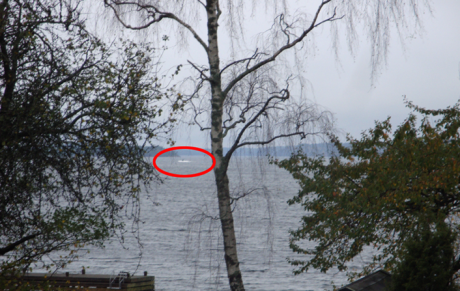
Sweden has released a photo of the mysterious foreign vessel in Stockholm’s archipelago
by David Cenciotti
Sweden is investigating a mysterious, foreign underwater activity in the Stockholm’s archipelago.
On Oct. 19, Sweden Ministry of Defense released a grainy photo of a vessel in waters less than 30 miles (50 km) from Stockholm.
Although this version was partly denied by the Swedish military, according to Swedish media outlets the search for the mysterious vessel, a submarine or underwater vehicle used to deploy divers, started on the night of Oct. 16, after the National Defence Radio Establishment (“Försvarets radioanstalt”, FRA) intercepted a radio communication in Russian, most probably a distress call, and, later, an encrypted radio communication that was used to pin-point the position of both the transmitter and the receiving station. Whilst the transmitter was located somewhere in the Stockholm’s archipelago, the receiver was situated in Kaliningrad oblast, on the Baltic Sea.
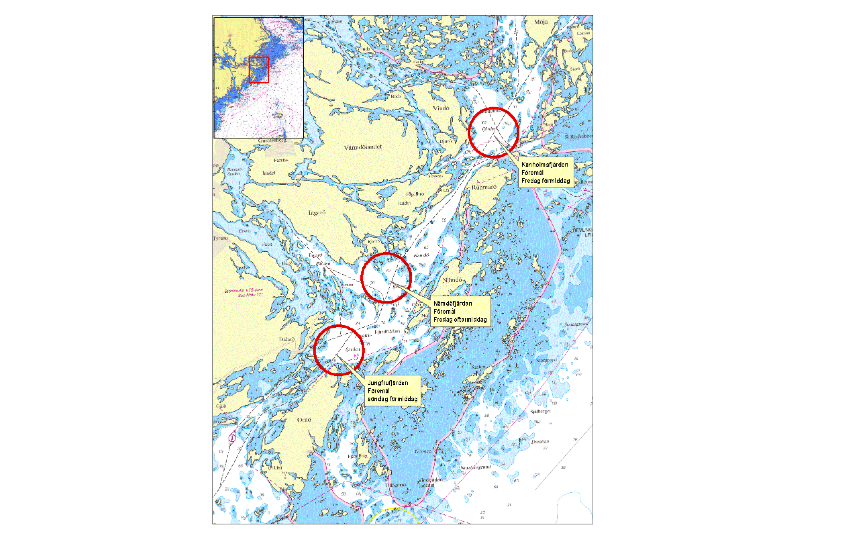
The hunt for the mysterious vessel started on Oct. 17 and included ships, planes and helicopters.
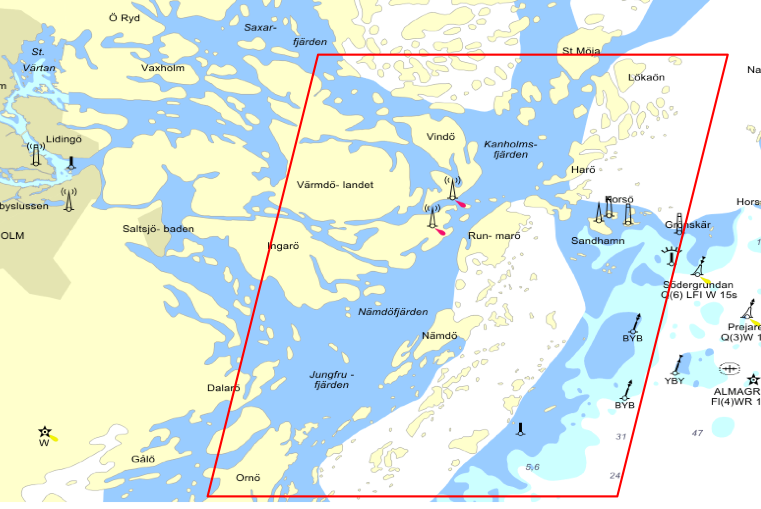
The presence of the vessel (that could be involved in a spying mission) was then confirmed by three different witnesses, in three different locations. One of those people managed to take the picture, from distance, of the object above the sea surface, released by the Swedish Navy.
Among the various theories, there is also the possibility that the submarine, involved in a clandestine mission, experienced an emergency and it is now sailing towards a rescue vessel.
[Read also: Italian Navy Elite team conduct disabled submarine rescue training with support of EH-101 Merlin helicopter]
The Swedish authorities have not linked the submarine to Russia: officially, the vehicle is “very likely” involved in “foreign” underwater activity in an area of interest for many nations.
Regardless to whether the submarine, or mini-sub, is Russian, the incident, which reminds the incident of the Soviet submarine that went aground near a Swedish naval base in 1981, takes place amid raising tensions with Moscow: Stockholm has often accused the Russian Air Force aircraft for their increasingly aggressive behaviour during close encounters with Swedish planes over the Baltic Sea.
Last month, two Russian Su-24s intentionally violated the Swedish airspace to probe local air defense.
Image credit: Swedish Navy
Related articles
-
 Video shows what aerial combat looks like from aboard a Bulgarian Mig-29 Fulcrum
-
 Operation Allied Force: B-52 Stratofortress bombers involvement in the Air Campaign over Kosovo
-
 Photo proves Libyan Mig-21s (not Egyptian aircraft) have conducted air strikes in Benghazi recently
-
 Air India Boeing 787 Dreamliner loses radio contact gets intercepted by Italian Typhoons
-
 Singapore’s F-16s and F-15SGs at Nellis Air Force Base for Red Flag 14-3
-
 This may be the first video to show an ISIS jet in flight in Syria
-
 War in the Web 2.0 era: how Air Forces deal (or don’t) with Internet-based flight tracking tools

03 Oct 14:39


Windows 10 o cómo comprobar mal el número de versión
by rubenfa

Como os comentábamos hace unos días, Microsoft presentó el que será su nuevo sistema: Windows 10. Ayer fue liberada la preview que nuestros compañeros de Xataka Windows han probado a fondo.
Pero las novedades no fueron la mayor sorpresa. La sorpresa más grande fue que los de Redmond se saltaran la versión 9. Aunque Microsoft no siempre ha nombrado sus sistemas con números de versión -tenemos los ejemplos de Windows 98, Me, XP o Vista- parecía que esta iba a ser la tónica habitual después de la salida de Windows 7 y Windows 8. ¿Por qué se han saltado una versión?
En la presentación de Windows 10 no se dieron muchas explicaciones. De hecho se comentó a modo de broma que el 7 y el 8 se comieron al 9. Así que la falta de explicación ha hecho que cada uno la busque por su cuenta. Tanto que hemos llegado a un nivel peligroso de chistes malos (el más recurrente seguramente el de Windows malo-bueno-malo-bueno).
Es entonces cuándo ha aparecido el rumor que más está pegando. Al menos en el mundo del desarrollo. Un supuesto desarrollador de Microsoft publicaba en reddit este comentario:
Microsoft dev here, the internal rumours are that early testing revealed just how many third party products that had code of the form
if(version.StartsWith("Windows 9")) { /* 95 and 98 */ } else {
and that this was the pragmatic solution to avoid that.
Según este desarrollador, muchas aplicaciones y librerías de terceros, están comprobando la versión de Windows de esa manera. Solo se comprueba si el nombre del sistema empieza por "Windows 9", condición que cumplirían Windows 95, Windows 98 y el inexistente Windows 9.
Y claro, si el sistema se llamase Windows 9, muchas aplicaciones podrían verse afectadas.
¿Pero es verdad?
El problema es que sí. Si buscamos en Searchcode, encontraremos miles de resultados. Y no hablamos de cualquier cosa, hablamos de por ejemplo alguna versión del OpenJDK de Java. Por ejemplo en JDK 8:
public WindowsAttachProvider() { String os = System.getProperty("os.name"); if (os.startsWith("Windows 9") || os.equals("Windows Me")) { throw new RuntimeException( "This provider is not supported on this version of Windows"); } String arch = System.getProperty("os.arch"); if (!arch.equals("x86") && !arch.equals("amd64")) { throw new RuntimeException( "This provider is not supported on this processor architecture"); } } Es una forma terrible de comprobar que sistema operativo Windows estamos usando, porque nos estamos basando simplemente en su nombre.
Para hacerlo mejor, podríamos hacer algo similar a lo que se hace en el código de Jenkins:
if (name.startsWith("windows 9")) { if (version.startsWith("4.0")) { version = "95"; } else if (version.startsWith("4.9")) { version = "me"; } else { assert version.startsWith("4.1"); version = "98"; } } else { if (version.startsWith("4.0")) { version = "nt4"; } else if (version.startsWith("5.0")) { version = "2000"; } else if (version.startsWith("5.1")) { version = "xp"; } else if (version.startsWith("5.2")) { if ("amd64".equals(arch)) { // The 64-bit version of xp is based on 2003 version = "2003+xp"; } else { version = "2003"; } } else if (version.startsWith("6.0.6000")) { version = "vista"; } else if (version.startsWith("6.0")) { // Server 2008 is based on 6.0.6001 version = "vista+2008"; } else if (version.startsWith("6.1")) { if ("x86".equals(arch)) { // 2008 R2 is 64-bit only. version = "7"; } else { // TODO distinguish windows 7amd64 from 2008R2? version = "7+2008r2"; } } } El código es más exhaustivo (aunque habría que pensar seriamente en por qué tanto if else if) y permite saber qué versión de Windows usamos de forma más exacta, ya que hacemos uso de dos propiedades de Java: os.name y os.version.
También, si nuestra aplicación lo permite, podemos usar las funciones específicas de Windows para realizar esta tarea.
¿Y de quién es la culpa?
En mi opinión la culpa, en este caso, es del desarrollador. Me parece una temeridad basarse en un string que nunca ha seguido un estándar. Ya sabemos todos que Microsoft no destaca precisamente por nombrar sus productos de forma consistente, así que basarse solo en el nombre del sistema es jugar con fuego.
De todas maneras no creo que Microsoft se haya saltado Windows 9 por esta razón. Más que nada porque podrían haberlo evitado usando otro nombre tipo Windows One, Windows X o similar. Sencillo y jamás nos hubiésemos enterado de todo esto.
¿Qué os parece?
En GenbetaDev | Se desvela el misterio, el nuevo Windows será Windows 10
Imagen | William Mewes
-
La noticia Windows 10 o cómo comprobar mal el número de versión fue publicada originalmente en Genbetadev por rubenfa.
01 Oct 13:18

Watch an ISIS compound be wiped out through an F-15E Strike Eagle’s SNIPER advanced targeting pod
by David Cenciotti
An interesting point of view: from an F-15E Strike Eagle Advanced Targeting Pod
Designated AN/AAQ-33, the Lockheed Martin Sniper Advanced Targeting Pod (ATP), equips several U.S. and foreign attack planes including the B-1B “Lancer” and the F-15E Strike Eagle.
The pod, equipped with a Laser designator used to guide LGBs (Laser Guided Bombs) and a FLIR (Forward Looking Infra Red) and CCD TV camera, is used for identification of targets (both on the ground and airborne ones), tracking, coordinate generation, and guidance.
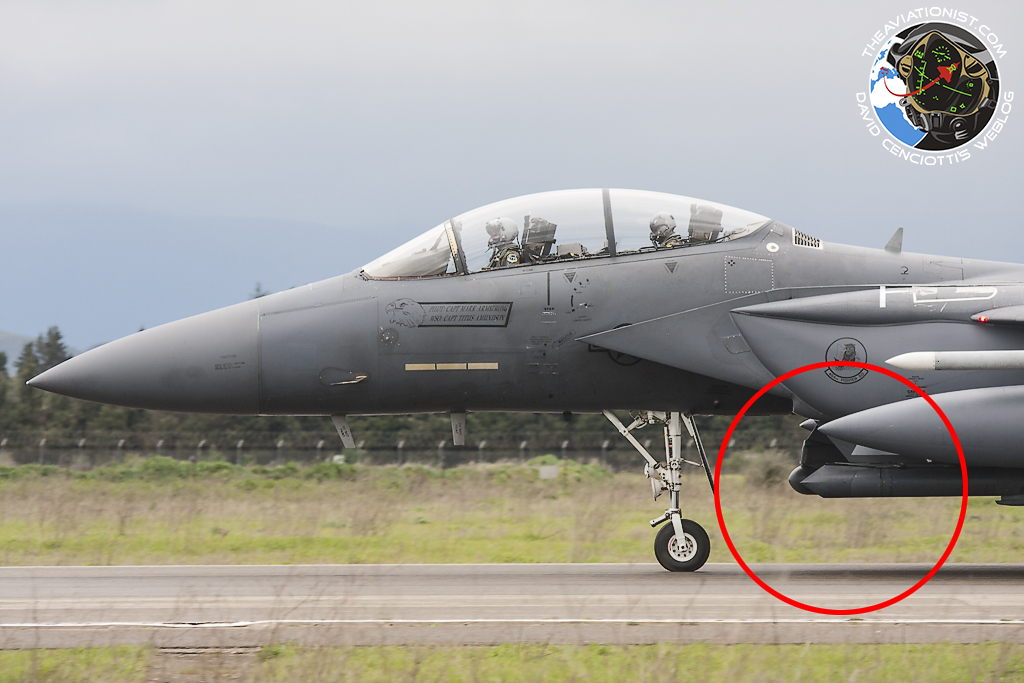
Although some videos recorded through the Sniper ATP are available online, here’s one released by the Pentagon showing an attack on an ISIL Compound near Kobani, Syria.
Blast aside, the symbology that appears in the ATP footage is interesting: target aside, there are a lot of symbols that we know nothing about, a result of the so-called “sensor fusion,” the combination of sensory data derived from the plane and other assets’ data sources.
Related articles
-
 There was a time when the F-14 Tomcat was better at bombing Iraqi ground targets than the F-15E Strike Eagle
-
 Video shows French air strike in Iraq from launch to recovery, including aerial refueling
-
 B-52 bomber flying in your vicinity? Don’t worry, it may just be targeting your house
-
 Egypt and UAE Air Force jets behind mysterious airstrikes on Islamist militias in Libya
-
 RAF Tornado GR4 attack planes perform first strike mission in Iraq (but don’t drop any bomb on ISIS)
-
 Weapons system video of first F-22 Raptor air strike on ISIS in Syria.
-
 This is how a Reaper drone is deployed to Afghanistan. In Kit Form.
01 Oct 08:00
Filed under: transportation hacks


The Chibi-Mikuvan, or a Power Wheels with a Ford Fusion Battery
by Brian Benchoff

At all the big Maker Faires, the Power Racing Series makes an appearance, turning old Power Wheels into race cars that whip around the track at dozens of miles an hour. [Charles] is somewhat famous in the scene – there’s even a clause in the official rules named after him – so of course anything he brings to race day will be amazing. It was. It used a battery pack from a Ford Fusion plugin hybrid, a custom body, and a water cooling unit from a dead Mac G5.
A few months ago, we saw [Charles] tear into the battery pack he picked up for $300. This is the kind of equipment that will kill you before you know you’ve made a mistake, but [Charles] was able to take the pack apart and make a few battery packs – 28.8v and 16Ah – enough to get him around the track a few times.
The chassis for the Chibi-Mikuvan was built from steel, and the bodywork was built from machined pink foam, fiberglassed, and finished using a few tips [Charles] gleaned from [Burt Rutan]‘s book, Moldless Composite Sandwich Aircraft Construction. The motor? That’s an enormous brushless motor meant for a 1/5th scale RC boat. The transmission is from an angle grinder, and the electronics are a work of art.
The result? A nearly perfect Power Wheels racer that has a curb weight of 110 pounds and tops out at 25 mph. It handles well, too: in the videos below, it overtakes the entire field of hacky racers in the Power Wheels Racing competition at Maker Faire NYC, and afterwards still had enough juice to tear around the faire.
Filed under: transportation hacks


25 Sep 08:40

Weapons system video of first F-22 Raptor air strike on ISIS in Syria.
by David Cenciotti
This video shows an attack on a ISIS compound that, according to the Pentagon, was struck by F-22 Raptors at their baptism of fire.
Earlier today, the Pentagon released the imagery of a compound near Ar Raqqah attacked by U.S. Air Force F-22 Raptors before and after the raid conducted by the stealth jets.
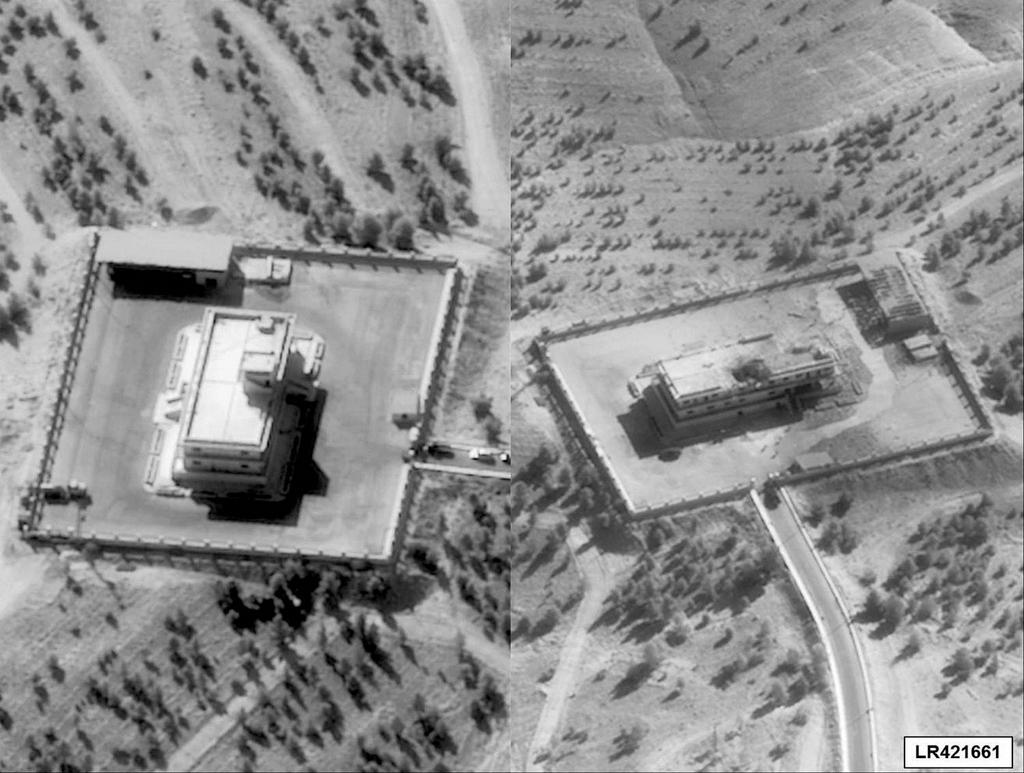
Now take a look at the following video, recorded by an unspecified aircraft on board camera system of this ISIS compound northwest of Ar Raqqah. It’s the very same shape, damage and all, hence it must be the very same plane.
What remains unknown is what F-22 system recorded the footage (provided it was the Raptor and not a drone).
Was the Raptor equipped with an IRST (Infra-Red Search and Tracking) system? Or maybe the one above is not a video recorded by a lens but it is a radar image generated by the F-22’s APG-77v1 radar which provides high-resolution synthetic aperture radar mapping, ground moving target indication and track (GMTI/GMTT), automatic cueing and recognition, combat identification, etc. It would be at super-high-definition, so defined it seems a video recorded with a FLIR…but who knows, maybe the F-22 uses such an advanced radar….
Still, SAR can see through smoke, fog etc. so, it’s quite unlike it is an image taken by the plane itself. It was most probably taken by a nearby drone (raising the question: if a drone was operating nearby, why wasn’t a Reaper dispatched to hit the compound?).
Related articles
-
 The U.S. forces that could be used to strike ISIS in Iraq and Syria
-
 U.S. moved its F-22 stealth fighter jets to South Korea. Here’s what they could do over there.
-
 French Foreign Legion paradrop over Timbuktu, Mali. As seen from a drone.
-
 Photographer captures six F-22 Raptor fighter jets trailing three tankers over the Mediterranean Sea
-
 Has China just rolled out third prototype of J-20 stealth fighter jet?
-
 U.S. F-22 stealth fighter pilot taunted Iranian F-4 Phantom combat planes over the Persian Gulf
-
 F-22 Raptor stealth jets to get automatic backup oxygen systems to prevent new hypoxia-like symptoms

19 Sep 15:37
[Video] Buzzed by U.S. F/A-18 jets in the Death Valley
by David Cenciotti
The American “Mach Loop” is on the Death Valley
Beware: video contains strong language
There is a series of spotting places in Wales, UK, that aviation enthusiasts have nicknamed the “Mach Loop” after the small town at the circuits’ most southern point: Machynlleth.
The “Mach Loop” is located inside an unpopulated area that was given the designation ‘Low Flying Area’ 7 (LFA-7).
LFA-7 has a series of valleys, lined by steep sides with mountains either side rising to around 1,000 metres the highest in the chain being Snowdon (1,200 metres), that allows the pilot to do circuits or to leave this circuit at any point (usually due to low cloud).
It looks like that, besides Coyote Summit, used to spot Red Flag traffic near Area 51, there is a somehow similar place in the famous Death Valley.
Here’s a cool video showing multiple F/A-18 Hornet jets flybys during a training sortie over there.
Related articles
-
 Low level flying in the age of stealth bombers and standoff weapons: welcome to the famous “Mach Loop”
-
 This photo of an F-15E Strike Eagle generating a condensation cloud at low altitude is simply stunning
-
 The very best “seat” you can find on a C-130 airlifter
-
 F/A-18 Hornet pilot performs one of craziest flybys ever
-
Two unknown F-14 Tomcat wing sweep stories to celebrate Top Gun Day
-
 If you suffer motion sickness this video is not for you: low level flying with a Super Hornet
-
The U.S. forces that could be used to strike ISIS in Iraq and Syria
19 Sep 15:35


RC Plane delivers Quadcopter Drone which delivers Quadcopter Drone which delivers Quadcopter Drone which delivers a stick of gum!
by Alan Parekh

The guys over at Flight Test were thinking about the drone delivery systems that we might see in the near future. They wanted to see how far they could push it. They strapped the stack of quad copters onto their Kraken plane, which had an Electrohub quad on it, which had a QAV250 Lumenier on it, which had a Proto X on it which was set to deliver a piece of gum! Of course everything is outfitted with cameras so we can get a really close look at everything unfold.


16 Sep 08:08
Filed under: robots hacks


MIT’s Robotic Cheetah is Getting Even Scarier
by James Hobson

Researchers over at MIT are hard at work upgrading their Robotic Cheetah. They are developing an algorithm for bounding movement, after researching how real cheetahs run in the wild.
Mach 2 is fully electric and battery-powered, can currently run at speeds of 10MPH (however they’re predicting it will be able to reach 30MPH in the future), and can even jump over obstacles 33cm tall.
We originally saw the first robotic Cheetah from Boston Dynamics in cooperation with DARPA two years ago — it could run faster than any human alive (28.3MPH) but in its tests it was tethered to its hydraulic power pack and running on a treadmill. It’s unclear if MIT’s Cheetah is a direct descendant from that one, but they are both supported by DARPA.
The technology in this project is nothing short of amazing — its electric motors are actually a custom part designed by one of the professors of Electrical Engineering at MIT, [Jeffrey Lang]. In order for the robot to run smoothly, its bounding algorithm is sending commands to each leg to exert a very precise amount of force during each footstep, just to ensure it maintains the set speed.
Did we mention it can jump over things too?
Filed under: robots hacks
11 Sep 14:45
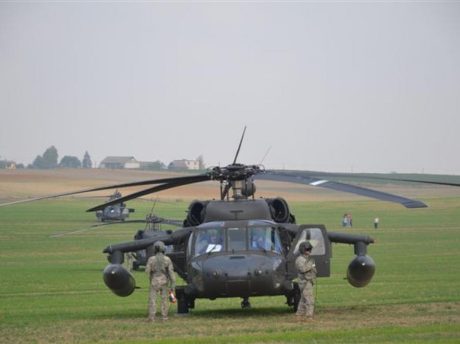
Six U.S. Army helicopters make an unplanned landing in a rapeseed field in Poland
by Jacek Siminski
Six U.S. Army helicopters have made an impromptu landing in Poland
On Sept. 10, six U.S. Army choppers landed in the middle of a rapeseed field near Gruta, Poland. Since the pilots did not know their location they received information leafleats on the municipality, in English.
The group consisted of Chinook and Black Hawk utility helicopters.
The unusual event gathered around 100 spectators. According to the information provided by TVN24 the chopper pilots lost their orientation due to the foggy weather conditions.
According to the official statement of the US Embassy the choppers, belonging to the U.S. Army 12th Combat Aviation Brigade, stationed in Germany, got a much appreciated warm welcome: aircrews were greeted by the locals with cakes and coffee.
The helicopters departed again to their destination about 2 hours later.
Jacek Siminski for TheAviationist

Image credit: gruta.pl
Related articles
-
 Former US adversaries to buy Russian attack choppers…with US consent
-
 CBS obtains unique footage of the famous Black Hawk going down in Mogadishu 20 years ago
-
 Polish made Black Hawk helicopters in the Colombian Army. Featuring advanced avionics.
-
 Poland wants new Attack Helicopters to replace Mi-24 Hind gunships. Soon.
-
 Poland opens a new highway strip in southeast part of country
-
 Poland preparing to buy new helicopters for the Army
-
 Amazing Mil Mi-24 Hind gunship air-to-air photoshoot
