Shared posts

29 Oct 16:19

How Not to Rock the Semantic Boat

by יובל פינטר

My upcoming talk at EMNLP

תמונת הפרופיל של Machine Learning Center at Georgia Tech

By Yuval Pinter

Imagine you’re building a boat, starting from a heap of parts. With each new board or screw, you make sure that it fits the adjacent parts, and that the material type is suitable for the section of the boat it’s in. But there are also bigger concerns to consider – is the new part changing the structure of the boat as a whole? Will it remain stable, or will it start rocking? Maybe there are other places where this part fits that would make more sense, but it's not even where you’re currently looking.

Screen Shot 2018-10-24 at 10.41.14 AM Photo credit: Wikimedia Commons

In Natural Language Processing (NLP), some aspects of linguistic structure are like a boat. Specifically, the structure known as a semantic graph helps a wide variety of AI systems represent knowledge about the world by explicitly connecting linguistic concepts using different relations to create a massive network where each…

View original post 685 מילים נוספות

19 Oct 13:31

No candy corn.

by Lydia Grant
16 Oct 13:56

Saturday Morning Breakfast Cereal - Gregor

by tech@thehiveworks.com


Click here to go see the bonus panel!

Hovertext:
May I just say that I'm really happy with how the fold in the burrito looks in panel 1.


Today's News:
10 Oct 21:44

האמת על Canary Mission

by שלומי בן-מאיר

ב'הארץ', כותבת נעה לנדאו על סיפורה של לארה אל-קאסם, פעילה אנטי ישראלית שנעצרה בנתב"ג בסוף השבוע האחרון, לאחר שניסתה להיכנס לישראל (וקיבלה לשם כך ויזה מהקונסוליה הישראלית במיאמי) במטרה ללמוד באוניברסיטה העברית. אל-קאסם כלואה כעת במתקן המעוכבים וממתינה לדיון בערעור שהגישה על ההחלטה לגרשה מהארץ.

לאחרונה התייחסנו פה לסוגיית מניעת הכניסה לארץ ולשכיחותה בעולם הדמוקרטי. פה אנו מבקשים להתייחס לנקודה אחרת בדיווחה של לנדאו: אחד המקורות מהם נלקח המידע על פעילותה של אל-קסאם, על בסיס מסמך של המשרד לנושאים אסטרטגיים שהגיע לידי לנדאו. וכך היא כותבת, תחת הכותרת 'חיפוש שטחי בגוגל ואתר ימין אמריקאי הם הבסיס לסירוב כניסה לישראל':

החיפוש כולל בעיקר את אתר הימין האמריקאי השנוי במחלוקת Canary Mission…

…המקור המרכזי, מהאתר של ארגון הימין Canary Mission שעוקב אחרי פעילים פרו־פלסטינים בקמפוסים בארה"ב…

האתר, שמצוי בימים אלה בלב מחלוקת ציבורית עזה בקהילה היהודית בארה"ב, מרכז מאז 2015 מידע על פעילים של תנועת החרם נגד ישראל (BDS) באוניברסיטאות… הפעילות ספגה ביקורת קשה גם מצד סטודנטים שפועלים למען ישראל, אשר הזהירו במכתב פומבי בתחילת השנה כי מדובר בארגון "בלתי מוסרי" ו"מזיק".

השבוע חשף האתר היהודי-אמריקאי "פורוורד" כי לפחות מאה אלף דולר מתקציב Canary Mission נתרמו דרך הפדרציה היהודית של סן פרנסיסקו… כמה שעות לאחר פרסום התחקיר הודיעה הפדרציה שהפסיקה לממן אותם.

התיאור של לנדאו את האתר Canary Mission הוא רווי בסופרלטיבים, רובם ככולם שליליים או מתיימרים להיות כאלה, ועולה מהם תמונה של עוול בלתי נסבל. הכיצד ייתכן להסתמך על מידע מ"אתר ימין" "שנוי במחלוקת", שפעילותו "סופגת ביקורת" על היותו "בלתי מוסרי ומזיק" וארגונים יהודיים מתנערים ממנו? וכך, מתייתר הצורך לאשש את הסופרלטיבים, לנמק מדוע הוא מכונה "אתר ימין", לתהות על מהימנות המידע המתפרסם בו או לתת לקורא מידע מינימלי על פועלו של האתר ושיטות העבודה שלו.

נעה לנדאו אכן לא עושה את כל אלה, ולשם כך אנחנו פה. סקירה של האתר, פרסומיו והביקורות המתפרסמות עליו מעלה כי מדובר במקור מידע אמין, וכי לחלק ניכר מהביקורת המוטחת בו אין בסיס.

מי אתם Canary Mission?

אתר האינטרנט Canary Mission הוקם ב-2015 במטרה לתעד "אנשים וקבוצות המעודדים שנאה כלפי ארה"ב, ישראל ויהודים בקמפוסים בצפון אמריקה". צוות האתר, השומר על אנונימיות מוחלטת (ובהחלט ניתן לבקר אותו על כך) חוקר, מתעד ומציג מידע אודות פעילויותיהם, התבטאויותיהם ופרסומיהם של אנשים וארגונים הפועלים נגד ישראל בקמפוסים האמריקנים.

לכל אחד מהאנשים שזכו בכבוד המפוקפק להיכלל באתר, נפתח פרופיל המאגד את המידע עליו. כל המידע נאסף ממקורות אינטרנטיים גלויים כגון הרשתות החברתיות, פרסומי תקשורת ופרסומי הארגונים עצמם. המקורות עצמם תמיד מוצגים לראווה או שניתנים להם קישורים.

במילים אחרות, Canary Mission פשוט מאגד מידע זמין הניתן לאימות ומרכז אותו במקום אחד. פרטיותם של האנשים המוצגים בו לא נפגעת (הם אלה שהסכימו לפומביות המידע מלכתחילה). אולם, ריכוז המידע עלול להוביל אותם לשאת בתוצאות מעשיהם והתבטאויותיהם אל מול המעסיק שלהם, מכריהם, או רשויות ההגירה הישראליות.

לעתים קרובות, המידע הנאסף באתר לא תואם את התדמית שמבקשים הסטודנטים והארגונים לשוות לעצמם- של אידיאליסטים תמימים המתנגדים לאלימות ולשנאה באשר הן. זה יכול להסביר חלק מהזעם המופנה כלפיו.

כך למשל, דו"ח שפרסם Canary Mission לאחרונה מאגד את הטקטיקות והרטוריקה בהן השתמשו פעילי 'סטודנטים למען צדק בפלסטין' (SJP) באונ' ג'ורג' וושינגטון, בדרכם להעביר החלטה התומכת ב-BDS: בין השאר, הפצת שקרים נגד ישראל (כגון הטענה שישראל מבצעת ג'נוסייד ומרעילה את המים הפלסטינים בכדי לזרוע מוות בקרבם), איומים באלימות פיזית נגד "ציונים", קריאות להחרמת ארגוני סטודנטים יהודים ועוד.

תחקיר נוסף של Canary Mission אודות SJP  באונ' פלורידה גילה תמיכה נרחבת בטרור נגד ישראלים, כמו גם התבטאויות ותיאוריות קונספירציה אנטישמיות. עוד דו"ח על משתתפי האסיפה הלאומית של SJP חושף תמיכה נרחבת בטרור, בהשמדת ישראל ובשנאת יהודים.

מה לגבי האנשים להם נפתחו פרופילים ב- Canary Mission? להלן מקבץ אקראי מתוך הציוצים האחרונים של חשבון הטוויטר של האתר, בעת כתיבת שורות אלו: פרופסורית אמריקאית הטוענת כי "אינתיפאדות זה דבר טוב" ואין מה לפחד מהן; פעיל ימין קיצוני אנטישמי המאשימים את "היהודים השולטים בתקשורת" באונס וניצול קטינים; סטודנט המאחל לאמריקה להישרף; נשיא SJP באונ' ראטגרס, המייחל לבוא לפלסטין להשתתף באינתיפאדה; סטודנטית היוצאת כנגד פמיניסטיות התומכות בישראל; סטודנטית ופעילה שהשתתפה בהפגנה לתמיכה באינתיפאדה הפלסטינית; פעילת BDS המצייצת נאצות בוטות כנגד יהודים.

יהיו מי שיסכימו עם חלק מההתבטאויות המתועדות על ידי Canary Mission, או יטענו כי הן חלק לגיטימי מחופש הביטוי. במקרה כזה, לא צריכה להיות בעיה עם תיעוד והבאת אותן התבטאויות כמות שהן, לידיעת הרבים. החשש העלול לעלות הוא לגבי פרסום סילופים, שקרים וטעויות. לשם כך צריך לבחון האם המידע המוצג באתר הוא אכן אמין.

מה שונאיו של Canary Mission אומרים עליו?

כיצד ניתן לבדוק אם Canary Mission מפרסם מידע שגוי או מזויף? הדעת נותנת כי אם ישנן דוגמאות לכך, הרי שהן בוודאי תופענה בדברים שכותבים מבקריו החריפים של האתר (והם רבים) או למצער, אצל האנשים המתלוננים על כך שהם מופיעים בו. לצורך כך, עברנו על עשרות כתבות, מאמרים ותחקירים שנכתבו על האתר. לא מצאנו ולו דוגמא קונקרטית אחת של פיסת מידע שהופיע בו והתבררה כלא נכונה. להלן כמה דוגמאות נבחרות מהזמן האחרון.

כתבה ב- Forward מספקת עדויות של פעילים שנחקרו על ידי הרשויות בכניסתם לישראל, ומציינים כי Canary Mission היווה מקור מידע של חוקריהם. הכתבה מצטטת את עורכת הדין אמילי שפר עומר-מן, שטוענת כי "המידע של Canary Mission הוא לעתים קרובות לא אמין, לא מלא ולא מדויק". עם זאת, הכתבה (ושפר עומר-מן עצמה) לא מציינת ולו מקרה אחד בו פורסם מידע שגוי באתר.

גם המכתב מאת סטודנטים פרו-ישראלים, אותו מציינת נעה לנדאו בכתבתה, ואף אתר אינטרנט בשם Against Canary Mission המוקדש כולו למחאה נגד האתר, אינם מספקים דוגמאות לפיסת מידע שגוי שפורסם על ידי Canary Mission. כתבות רבות נוספות ממשיכות במגמה של גינוי האתר בכינויים שונים, מ"רשימה שחורה" ועד "ארגון מקארתיסטי", אולם אינן מפריכות את המידע המתפרסם בו.

בחזרה ללארה אל-קסאם

לאור כל הסיבות שציינו, אין לפטור את המידע על לארה אל-קסאם שמופיע בפרופיל שלה ב- Canary Mission, בכך שבמדובר ב"אתר ימין שנוי במחלוקת" ולכן אין להתבסס עליו. האתר עצמו הוא מקור משני; המקורות הראשוניים מופיעים בפרופיל. כמו כל המידע המוצג באתר, הם נאספו ממקורות גלויים הניתנים לאימות.

האם יש למנוע כניסתה של לארה אל-קאסם לישראל, על בסיס המידע שפורסם עליה? זאת כבר שאלה אחרת.


פנינו לכתבת 'הארץ' נעה לנדאו עם טענותינו. להלן תגובתה:

עצוב שאנשי פרספקטיבה לא יודעים לזהות שמירכאות פירושן ציטוט. הדברים המיוחסים לי על אתר קאנרי נאמרו בשמם של סטודנטים, לא בשמי, והופיעו גם בידיעות קודמות ב״הארץ״ כפי שמוכיחות הראיות שצירפתי:

קישור 1

קישור 2

הערת הכותב: לצערנו, תגובתה של לנדאו אינה רלוונטית לביקורת שלנו עליה. כבר בתחילה נתנו ציטוט ארוך מהכתבה שלה, כולל המירכאות מפי הסטודנטים. בשום שלב לא יוחסו לא כאן דברים שהיא לא כתבה. כמו כן, הקישור לידיעה ב-JNS על מכתב הסטודנטים הופיע בביקורת שלי כבר בגרסה הראשונה שלה.

The post האמת על Canary Mission appeared first on פרספקטיבה.

10 Oct 13:49

בת קול

by tomarkin

שיחה לא מכוונת מהסלולרי.

תרגום שומר משמעות וצליל של “butt call” שקורה כשהטלפון פועל וסדרה של נגיעות לא מכוונות גורמות לכך שהטלפון מחייג למישהו.

“הלו. הלו. הלו? זה כנראה בת קול משמיים.”

“היי מאמי, איזה הפתעה, שיחה ממך באמצע היום? שוב בת קול?”

נתרם ע”י: עלי זהב.

02 Oct 02:33

Comic for 2018.10.01

New Cyanide and Happiness Comic
01 Oct 01:39

Comic for 2018.09.29

New Cyanide and Happiness Comic
28 Sep 15:19

NINETEEN FORTY-EIGHT for the first major study showing smoking could hurt your health! NINETEEN FORTY-EIGHT. aaaahhhhhhHHHHHHHHHH

archive - contact - sexy exciting merchandise - search - about
← previous September 28th, 2018 next

September 28th, 2018: HOW TO INVENT EVERYTHING IS OUT NOW, aaaahhhhh!!

– Ryan

28 Sep 13:14

What Makes a New Word Stick?

by allieblinder714

By Ian Stewart

The language that people use to communicate online is in constant flux. People may have once written “haha” to indicate laughter but over time have adopted “lol” instead. Entire dictionaries and websites such as UrbanDictionary.com are dedicated to tracking the ebb and flow of the latest slang (i.e. nonstandard) words that propagate across online communities. These changes often seem arbitrary but may be predictable based on the context of how the words are used.

Screen Shot 2018-09-04 at 10.29.08 AM

Such language change can be predicted from social processes such as membership turnover, where new members join an online community and bring in new words while old members leave and are forgotten. In general, it is assumed that a nonstandard word manages to “stick” based on how many people adopt the word. However, it is less often considered how a new word’s function can help predict its growth. If a word like “lol” can occur in a wide range of linguistic contexts, will that give it an edge to overtake competing words such as “haha”? Furthermore, can the word’s linguistic properties predict growth better than its social properties? This is a critical question that can help linguists understand language change, and it can also help social scientists understand the limits of social theory.

Below, we visualize frequencies of laughter words on Reddit over a 3-year period. We see that the laughter acronym “lmao” grew in frequency while the typical form for laughter “haha” declined, even though these words had a similar initial frequency.

How well can these patterns of growth and decline be predicted in advance, using data about the words’ usage?

Screen Shot 2018-09-26 at 10.00.57 AM

Our work studies the growth and decline of non-standard words in Reddit, and we compare the relative importance of social and linguistic “dissemination” in explaining the growth and decline. Here, social dissemination refers to the relative number of Reddit users, communities and threads in which a word appears, normalized by the expected count of users, communities, and threads. Similarly, linguistic dissemination refers to the relative number of contexts in which a word occurs. For instance, the adjective “trashy” occurs in an unusually high number of contexts as compared to the abbreviation “lmao,” which usually occurs at the beginning or end of a sentence. Below, the word “kinda” occurs in a broad range of linguistic contexts as well as social contexts.

Screen Shot 2018-09-04 at 10.29.33 AM

We leverage several statistical tests to compare the relative importance of social and linguistic dissemination, which include logistic regression, causal inference, and survival analysis. Overwhelmingly, linguistic dissemination is a better predictor of word frequency change than social dissemination.

Linguistic dissemination can differentiate a future growing word from a future declining word even when controlling for relative frequency. Furthermore, linguistic dissemination can accurately forecast the point of “death” for declining words (when “hehe” starts to fall out of favor, while social dissemination cannot forecast this as accurately. Although the models used are relatively simple from a machine learning perspective, they reveal new insight into patterns in language change.

The prediction results below reveal the success of linguistic dissemination as a predictor of word growth versus decline, using several months of data to train several logistic regression models. The linguistic dissemination model (f+L = frequency plus linguistic dissemination) outperforms the baseline system (f = frequency alone) and the social dissemination model (f+S = frequency plus social dissemination).

Screen Shot 2018-09-04 at 10.29.43 AMFuture work should look into more fine-grained definitions of linguistic dissemination: does it make a difference if we count syntactic contexts rather than word contexts? It’s also worth considering other kinds of language change, such as the adoption of phrases (“like a boss”) rather than just words. If you want to make words like “fetch” happen, it may take more linguistic creativity than social acceptance.

giphy-2


Stewart and his advisor, Jacob Eisenstein, will be presenting their paper at the 2018 Conference on Empirical Methods in Natural Language Processing (EMNLP) which takes place October 31-November 4 in Brussels, Belgium.

The full paper is available on arXiv here.


25 Sep 16:51

Mobius the Dog

by SpikedMath
Yuval Pinter

I don't get it (the last sentence)

Spiked Math Comic - Mobius the Dog

Thanks to "S" for the "megabite" name.
14 Sep 12:39

Excellent advice.

by Lydia Grant

13 Sep 14:04

This sums up my life.

by Lydia Grant

12 Sep 13:56

THUS CONCLUDES RIDDLE WEEK

Yuval Pinter

The sun?

archive - contact - sexy exciting merchandise - search - about
← previous September 12th, 2018 next

September 12th, 2018: RIDDLE WEEK concludes here! What last three days, but also lasts a week? The answer: RIDDLE WEEK

– Ryan

11 Sep 14:31

Phonetically Boring Languages

by יובל פינטר

[This may be my longest-sitting draft that I finally made into a post. I started it in June 2017, shortly after this graphic made the rounds.]

After studying phonetics in my first year at Tel-Aviv University, I developed a pet theory. See, every phenomenon we came across that was "unique" (or rare, or marked) seemed to have somehow skipped over the Hebrew language. No crazy nasals, no retroflexes, no gutturals (in the standard Israeli dialect), no clicks, no ingressives, no voiced alveolar lateral fricative, just the five canonical vowels, et cetera. My thoughts were, since Modern Hebrew is a revived language co-learned by people from very distinct linguistic backgrounds in a relatively messy (high-entropy) distribution, the phonetic portion of it evolved to a low-common-denominator, most phonetically boring language out there.

But where there's data, there's a chance to test out pet theories. So as soon as I got word of the phoible dataset I immediately jumped and put my theory to the test (then waited 15 months for absolutely no reason to actually publish my findings).

Phoible is an open, simple-format data source for phonetic inventories of language. A few clicks, and you have a table of all phonemes across all languages. Thus my definition for boringness of language converged to:

A language is boring if it chooses boring sounds for its inventory.

Now I need to figure out which sounds (phonemes) are boring, but that I just define based on their frequency across languages, which gives me a clear algorithm:

  1. Calculate each phoneme's frequency in the database
  2. For each language, calculate average phoneme frequency from its inventory
  3. Rank languages from high to low average (high = boring)

That's it! For my first finding, Modern Hebrew got a score of 0.415, which ranked it 1,426th most boring in a field of 2,155 languages, an utter refutation of my hypothesis. The most boring language according to this metric is Southern Nuautl with a score of 0.764; the most interesting is !xóõ (yes, that's a click sound it's starting with) with an astounding 0.103. The average score was 0.464 and the score progression is a normal-distributed thing of this:

Phonetic Score CDF

(CDF = cumulative distribution function, meaning: y many languages have score up to x)

Here's a taste of some languages I thought could be of interest. Check out that lovely long tail of Igbo, which has may phonemes but a lot of the frequent ones; or how fast Quechua plummets from frequent to semi-frequent to rare phonemes; or how boring Swahili, a high-contact language dominating the 20's of the x-axis, is (it's what I expected the Hebrew situation to be, and even so its score is a very unboring 0.292); or how English falls so quickly in the beginning, with all its weird vowels and labiodentals and taps and flaps.

phon-bor

This could mean a few things about why I didn't get what I expected, as well as some other unrelated reasons:

  1. Like always, data is dirty (or at least, this data, for my analysis needs). In this case, more well-documented languages may have more phonemes in their dataset, probably leading to some that are rare, than languages with less extensive research done upon.
  2. My metric must suck. See how Hebrew has the fewest phonemes in the selected sample? That's gotta account for boringness and yet, with my mean it doesn't. Look how many frequent phonemes Swahili has, and yet its average is very low. Let's consider some other metrics ("Future work". Remind me to upload the data if I don't do so soon):
    1. Number of phonemes (a boring metric for a boringness question)
    2. % of phonemes above a boringness threshold p.
    3. Area under the boringness curve (this is just the sum of boringnesses again – but maybe cut it off at some point?)
    4. Deep neural net trained on all these features with the single data point <Hebrew, TRUE>.
  3. bug in my code. As soon as I find it I see if I can look deeper. I mean it's kind of a miracle that I have the post-processed TSVs around, to be honest.


07 Sep 22:58

THUS BEGINS RIDDLE WEEK

archive - contact - sexy exciting merchandise - search - about
← previous September 7th, 2018 next

September 7th, 2018: RIDDLE WEEK begins here! It'll be three comics about riddles, which kinda form a week if you squint sufficiently hard. HERE WE GO!!

Also, I'm at XOXO this weekend! If you're around too LET'S MEET UP AND EXCHANGE HIGH FIVES?

– Ryan

04 Sep 15:23

You will die. Slowly.

by Lydia Grant

04 Sep 00:20

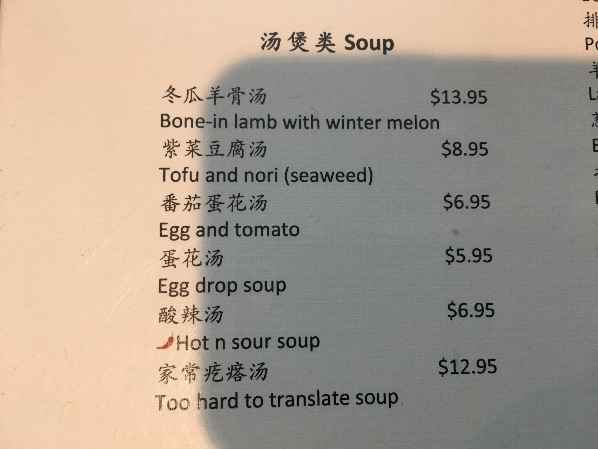
Too hard to translate soup

by Victor Mair

From a menu in a restaurant in Oxford, Ohio:

What gives?  The rest of the translations of the soup dishes on this menu are not bad (fairly standard).  What happened with the last one?

David Costa, who sent in the photograph, explains:

When I asked the waiter what the last item was, he couldn’t describe it either. He just hemmed and hawed, gesticulated a lot and kept saying it included ‘flower’ (or ‘flour’?). I asked him to just translate the Chinese name and that didn’t work either. Ideas?

Google Translate offers "Home-cooked soup", which doesn't account for the main ingredient.  Bing Microsoft Translator has "Homemade pimple Soup", which is decidedly unappetizing.  Baidu Fanyi gives "Dough Drop and Assorted Vegetable Soup", which ignores the first part of the name and adds "Assorted Vegetable".

The problem is with gēda 疙瘩, which is one of those very cool, two syllable Sinitic words, neither of whose syllables means anything by itself (i.e., not only is it a disyllabic lexeme, it is also a disyllabic morpheme).  Furthermore, gēda 疙瘩 is highly polysemous, with the following meanings:  "pimple; knot; swelling on the skin; lump; nodule; blotch; a knot in one's body or heart (–> hangup; problem; preoccupation)".

I remember when my mother-in-law first made this soup and served it to the family, I almost didn't want to eat it because the name sounded as though it meant "zit soup" (it also looked fairly ghastly).  Note that both of the constituent sinographs of this word have as their semantic classifier the "sickness" radical, Kangxi number 104:  疒, pronounced chuáng or nè.  Usually, if you see a character with this semantophore, you know it's bad news, because it has to do with illness and malignancy.

When I encounter Sinitic words of this nature — lexically and morphemically disyllabic — especially if they have variant writings, in this case 疙垯, 疙墶, I tend to think that they may have arisen through dimidiation (perhaps of a consonant cluster) or other type of phonological expansion and that they may reflect a non-Sinititic background.  For those who might wish to pursue the origins of gēda (Pekingese variant gāda) 疙瘩, the following topolectal pronunciations may be useful:

Cantonese (Jyutping): gat6 daap3
Min Nan (POJ): kit-tap
Wu (Wiktionary): keq taq (T4)

One of my favorite Chinese expressions derived from gēda 疙瘩 is jīpí gēda 雞皮疙瘩/鸡皮疙瘩 ("goosebumps; goose pimples"), which I often experience when describing something deeply moving, eerie, or transcendent.

What the Chinese for the last item on the menu says is this:

jiācháng gēda tāng

家常疙瘩汤

home-cooked / home-style dough drop soup

You make it by mixing flour (that's what the waiter was trying to tell David) and water into a runny paste, then dropping it glob by glob, blob by blob into a pot of boiling water.  It's a kind of quick and dirty way to make pasta.

It's not "too hard to translate" after all, once you get over the gēda 疙瘩 ("hangup") of thinking that something that is supposedly edible also has pustular connotations.

02 Sep 20:51

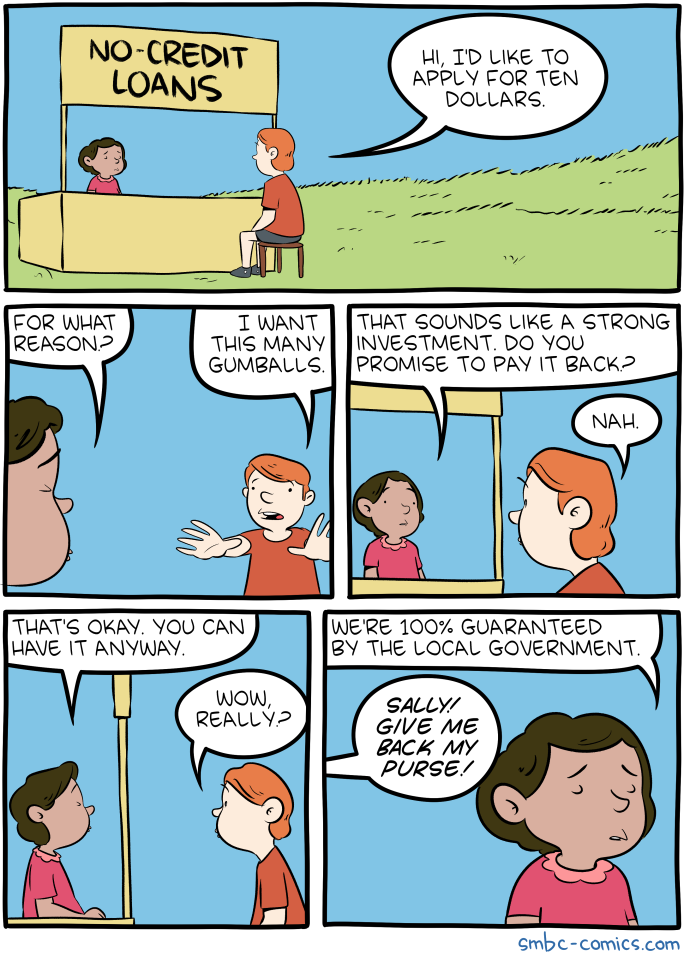
Saturday Morning Breakfast Cereal - Loans

by tech@thehiveworks.com


Click here to go see the bonus panel!

Hovertext:
The secret to getting a home mortgage loan is to hold out your hands and say 'this many dollars please!'


Today's News:
20 Aug 12:42

The Fall of Godzilla

by Doug
13 Aug 17:11

Saturday Morning Breakfast Cereal - Seder

by tech@thehiveworks.com


Click here to go see the bonus panel!

Hovertext:
I hereby release Taco Bell to use this as an ad campaign.


Today's News:
07 Aug 17:08

John Oliver Misses a Zeugma

by יובל פינטר

Zeugmata Zeugmas are fun. We love them here on Dagesh Kal. Our inspiration at Language Log love them too (there's a list of posts here).

And yet, they might not be for everyone. Watch this snippet from John Oliver's August 5 show (17:17-17:34, or follow this link, or tell me how to embed non-YouTube videos on WordPress's new look).

I'm pretty sure the ad slogan mocked here is a moderately-clever zeugma on the verb try.

You see, to try (as in put to trial) a lot more often is a reasonable DA campaign promise (for those who are into that kind of thing). To try (as in, make an effort) harder fits just about any campaign.

Perhaps due to Oliver's (and his show's staff) low esteem of political ads, or the large variance between the frequency of the two meanings of try, or something I'm missing, he jabs at it as though both harder and a lot more often refer to effort.

06 Aug 19:18

City Tree

by Reza

05 Aug 01:33

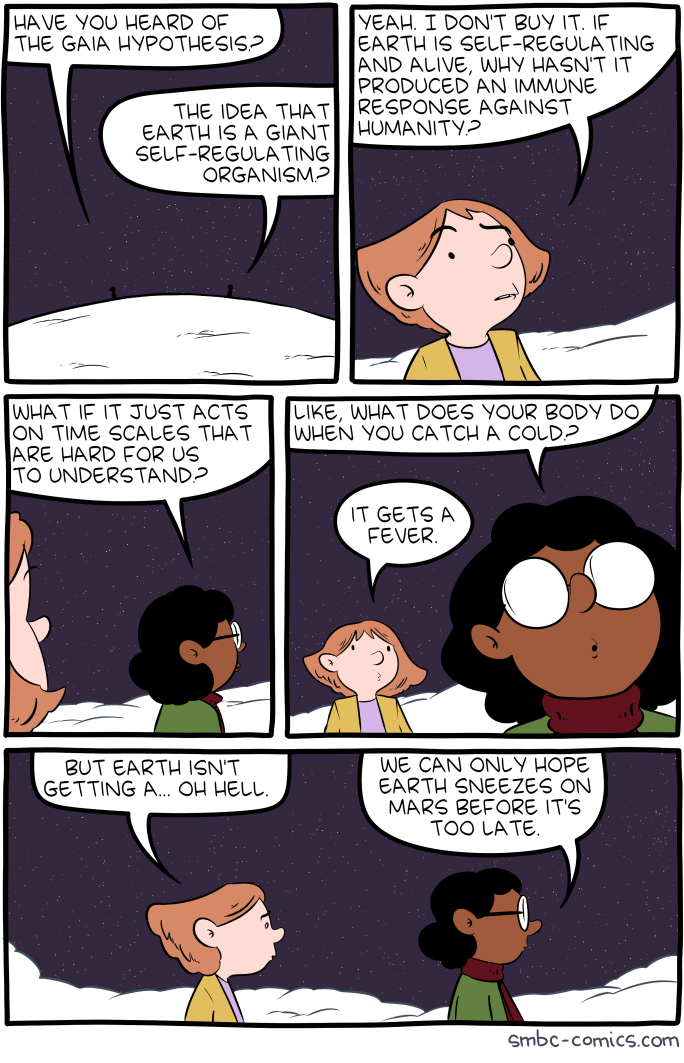
Saturday Morning Breakfast Cereal - Gaia

by tech@thehiveworks.com


Click here to go see the bonus panel!

Hovertext:
Then, Earth can wipe its nose with Enceladus.


Today's News:
31 Jul 17:22

we don't inherit genes from our parents... we BORROW them from our children. wait hold on, nevermind

archive - contact - sexy exciting merchandise - search - about
← previous July 26th, 2018 next

July 26th, 2018: The HOW TO INVENT EVERYTHING Kickstarter is live!! It's my new book and I'm SO EXCITED about it, and if you have any interest in it this Kickstarter is the best way to get it: you get bonus things like a time travel bandana and postcards, AND you're supporting indie bookstores - all for the same price you'd pay at retail! Check it out, and thank you!!

– Ryan

27 Jul 14:05

Meet the joke party that wants to 'Make Hungary Smaller Again'

by Frank Jacobs
Yuval Pinter

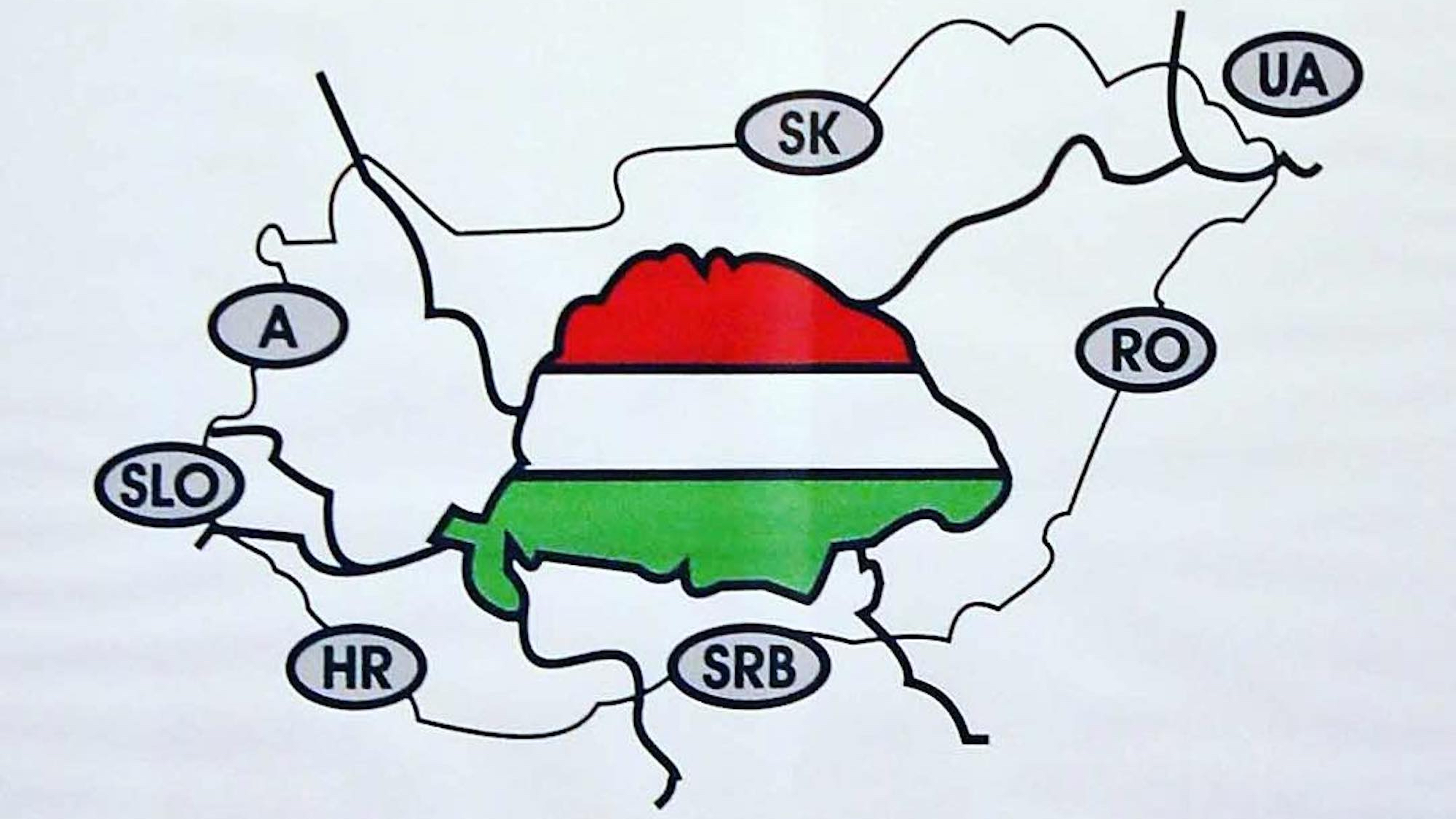
He missed a point - the shape of the suggested Smaller Hungary is the same as Greater Hungary's.


As politics descends into dark comedy, comedians are getting serious about politics. It’s a worldwide trend: In America, late-night tv hosts are some of Trump’s fiercest critics. The Five-Star Movement founded by comedian Beppe Grillo is now a party in Italy’s new coalition government. And in Hungary, the Two-Tailed Dog Party uses graffiti, stencils, billboards and other forms of street art in a guerrilla war of sorts against the ‘illiberal democracy’ espoused by the right-wing government of Prime Minister Viktor Orban.


Founded in 2006, the Magyar Kétfarkú Kutya Párt (MKKP) is more than just a ‘joke party’. It uses absurd inversions of the government’s own slogans to combat the narrow nationalism – anti-immigration, anti-EU and generally anti-internationalist – currently holding sway in Hungary.

For the 2006 elections, the MKKP’s platform promised eternal life, world peace, a one-day working week, lower gravity, free beer and two sunsets a day (in various colours). The standard candidate fielded by the MKKP was a two-tailed dog called Nagy Istvan, the Hungarian equivalent of ‘John Smith’.

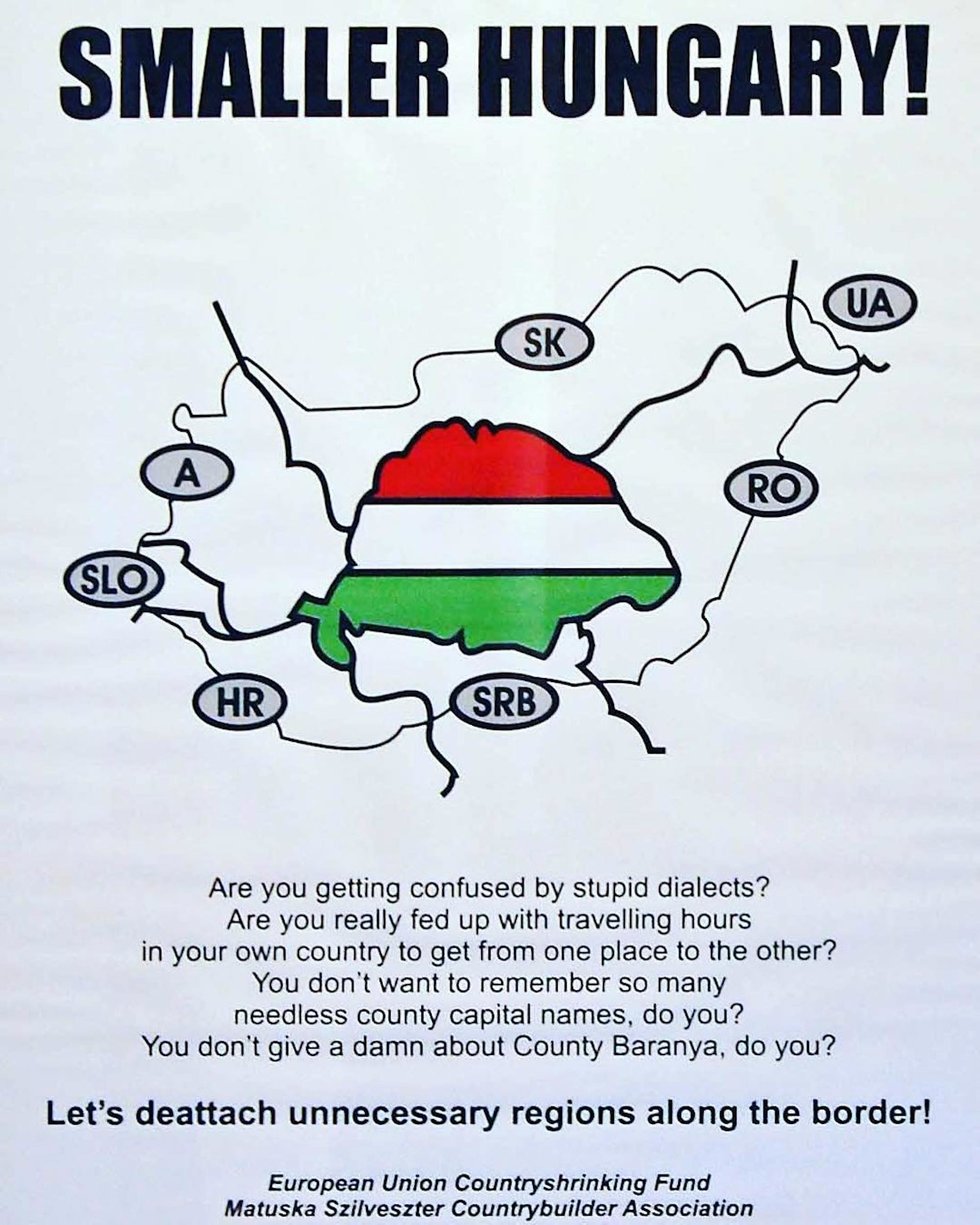
Other MKKP plans included building a great mountain to provide some relief (literally) on the otherwise very flat Hungarian Plain, and the promise, symbolised by this poster, to ‘Make Hungary Smaller Again’.

The Trianon Treaty of 1920 is still a sore point in Hungary: in dismembering Austro-Hungary, it reduced the Hungarian component of the Empire to 28% of its former size, and to one-third of its former population, stranding millions of ethnic Hungarians outside post-World War I Hungary.

This poster reverses the frustrated calls by Hungarian nationalists to enlarge the country to its former borders. Instead, it proposes a smaller version of the outline of ‘Greater Hungary’ as an even smaller version of the homeland.

Listing a number of arguments for its proposal, the poster proclaims: Let’s deattach unnecessary regions along the border! All of Hungary’s immediate neighbours get a piece: Austria (A), Slovakia (SK), Ukraine (UA), Romania (RO), Serbia (SRB), Croatia (HR) and Slovenia (SLO).

In 2009, the MKKP graduated from street art to street protest, gathering around 300 protesters to chant: “What do we want! Nothing! When do we want it? Never!”

In 2010, the MKKP attempted to field candidates in the race for mayor of Budapest, using slogans that parodied actual populist ones. The MKKP promised “Eternal life, free beer, tax-deduction!” and “More everything, less nothing!” Another poster slogan read: “We promise anything!”

As if to underscore that last point, the MKKP said it wanted to open up an interplanetary spaceport at Szeged, create a new animal species out of bits of extinct ones, and open up a Hungarian restaurant on Mars – to improve the country’s tarnished image across the solar system.

The MKKP has had difficulty obtaining the required registration to participate in elections, one judge finding the party too ‘flippant’ for official recognition. On September 8, 2014, the party managed to register for the local elections later that year just 16 minutes before the deadline – leaving it no time to nominate any candidates.

In the summer of 2015, at the height of Europe’s migrant crisis, the right-wing government of Viktor Orban launched an anti-immigration campaign with billboards proclaiming: “If you come to Hungary, you can’t take Hungarians’ jobs away!”

In response, the MKKP and others launched an ‘anti-anti-immigration campaign’, setting up more than 800 billboards with ironic slogans, in both Hungarian and English. Their messages: “Sorry about our Prime Minister”, and “Feel free to come to Hungary, we already work in England anyway!”

The MKKP doesn’t just target Hungary’s political elite, but also its public institutions. The Hungarian State Railways unsuccessfully sued the MKKP for stickers proclaiming: “Our trains are deliberately dirty” and “Our trains are deliberately late”.

Absurd humour may be one of the last weapons of the liberal, internationalist elements in the Hungarian political spectrum. The MKKP is one of its focal points. The ‘anti-anti-immigration’ billboard campaign was funded by public collection: at 33 million forint (about $120,000), it received 10 times more than originally projected.

However, the absurdist strain is not a mass movement, at least not yet: a February 2016 poll indicated the MKKP commands just 1% support among the Hungarian general population. Still, the Two-Tailed Dog Party persists. In the run-up to the October 2016 referendum on migrant quota, the MKKP mocked the government’s anti-immigration platform, putting up posters with slogans such as:

  • “Did you know there’s a war in Syria?”
  • “Did you know that one million Hungarians want to emigrate to Europe?”
  • “Did you know that in the Olympics, the biggest threat to Hungarian participants comes from foreign competitors?”

To protest against the referendum, the MKKP asked voters to spoil their ballot; they even released an app that voters could use to snap and publish their invalidated ballots – for which the party received a $3,000 fine. Eventually, 6% of the results were deemed invalid.

At the parliamentary elections in 2018, the party got 1.73% of the votes, still not enough to obtain a seat in the Hungarian parliament.

Map found here at A Map A Day.

Strange Maps #925

Got a strange map? Let me know at strangemaps@gmail.com.

25 Jul 15:19

let me bing that on my zune via my EarthComm 2000 uplink

archive - contact - sexy exciting merchandise - search - about
← previous July 25th, 2018 next

July 25th, 2018: The HOW TO INVENT EVERYTHING Kickstarter is live!! It's my new book and I'm SO EXCITED about it, and if you have any interest in it this Kickstarter is the best way to get it: you get bonus things like a time travel bandana and postcards, AND you're supporting indie bookstores - all for the same price you'd pay at retail! Check it out, and thank you!!

– Ryan

21 Jul 23:20

hmm i'll just bet on frantically trying to memorize what's on whatever wikipedia tabs i have open before my phone battery dies

archive - contact - sexy exciting merchandise - search - about
← previous July 20th, 2018 next

July 20th, 2018: The HOW TO INVENT EVERYTHING Kickstarter is live!! It's my new book and I'm SO EXCITED about it, and if you have any interest in it this Kickstarter is the best way to get it: you get bonus things like a time travel bandana and postcards, AND you're supporting indie bookstores - all for the same price you'd pay at retail! Check it out, and thank you!!

– Ryan

20 Jul 15:53

Saturday Morning Breakfast Cereal - The Best

by tech@thehiveworks.com


Click here to go see the bonus panel!

Hovertext:
Physicists would love Heaven if they ever went there.


Today's News:
10 Jul 15:29

תודה ליואב

Yuval Pinter

צחקתי יותר מהראוי


תודה ליואב

05 Jul 19:10

הפור נפל

by כתב "העין השביעית"
Yuval Pinter

ביי ביי חינוכית. שערוץ אחר ייתן במה למתנגדי חיסונים.

תיק תקשורת: חיים זיסוביץ' ונתי טוקר על סגירת הטלוויזיה החינוכית | רן רזניק וליסה טרודלר על הלגיטימיות של הדיון על מתן חיסונים | רועי כ"ץ ומיקי קרצמן על התצלומים מפיגוע בקו 5 בתל-אביב ב-1994