Have you ever had a crepe cake? They are surprisingly wonderful creations. They are their own little niche with companies devoted to them. I've seen them glazed with chocolate, brûléed, and tiered into wedding cakes so clearly we are not the only ones to feel the love. A crepe cakes in its simplest form is simply crepes layered with sweetened whipped cream. Of course from this humble structure there are a million extrapolations. Nutmeg crepes layered with lemon curd, cinnamon crepes layered with chocolate pudding, vanilla crepes layered with thinly sliced strawberries and whipped cream, pistachio crepes layered with sweetened mascarpone. Seriously, the possibilities stretch into infinity.
Our favorite crepe? Made from leftover cookies. Recipes testing and holidays tend to leave us with more cookies than we can consume. So when the cookie jar overflows we make crepes. Then we share the love by giving away a cake. Or we make blintzes or glaze them with butter and sugar for a quick dessert. Truly though there's nothing better than a cookies and cream crepe cake (say that 10 times fast). It makes people happy and that makes us happy too.
Cookie Crepes
1 ¾ cups / 400 grams whole milk
12.3 ounces / 350 grams leftover cookies
3 large eggs
½ cup / 75 grams all purpose flour
Put the milk, cookies, eggs, and flour in a blender. Turn on low and increase the speed to high for 10 seconds. Use a rubber spatula to scrape the batter off the sides of the blender. Turn the blender on low and increase the speed to high for another 10-15 seconds. The batter should be perfectly smooth with the texture of heavy cream. Pour the batter into a large measuring cup or deep bowl. Set a non-stick pan over medium heat and let it heat up. Use a 2-ounce ladle to pour batter into the pan. Quickly tilt the pan so the batter coats the bottom evenly. Set the pan back over the heat until the crepe is just set, about 10 seconds. Use a non-stick spatula to loosen the edges and then flip the crepe and cook for 2-3 seconds more. Flip it out onto a cooling rack. Repeat with the remaining batter to make about 20 crepes. Once cool the crepes can be stacked on a plate and covered with plastic wrap.
Forget One Direction. Meet the little known boy band made up of John Cage, James Joyce, and Joey Ramone. Cage composed a song based on Joyce’s Finnegans Wake called “The Wonderful Widow of Eighteen Springs,” which Ramone later sang to haunting effect.
We started with cold cast iron skillets and lined the bottoms with thick slices of pepperoni. We seasoned our turkey thighs with salt and laid them over the salumi. The wood oven registered 450°F and was slowly rising. We slid in the turkey thighs and eight minutes later the skins were brown and blistered and the pepperoni had rendered and caramelized. We transferred them to a large pot with canned tomatoes, house broth, red wine, and soy sauce, set it inside a 250°F oven, and braised the thighs for four hours. Halfway through we enriched the braise with a puree of wood fired onions, chicken livers and bacon. Now it cools and waits for tomorrow.
When I was a child in the 1950s, my friends and I had two educations. We had school (which was not the big deal it is today), and we also had what I call a hunter-gather education. We played in mixed-age neighbourhood groups almost every day after school, often until dark. We played all weekend [...]
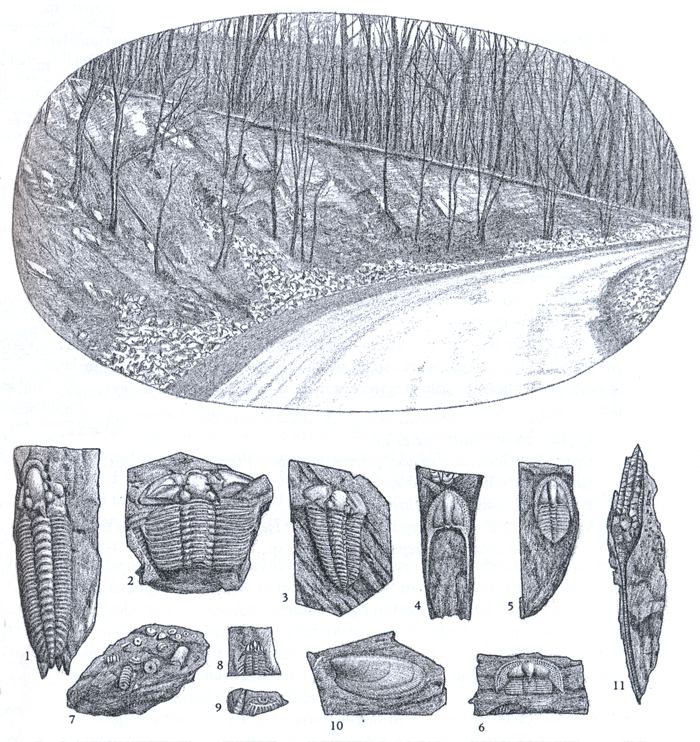
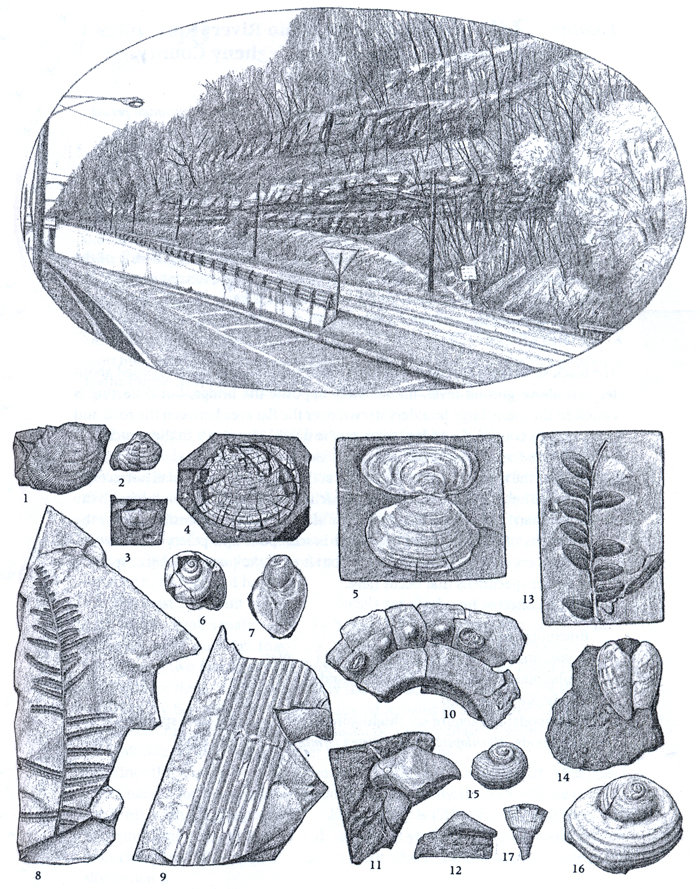
The only thing wrong with this field guide is that it is restricted to the Mid-Atlantic States. It gives very specific driving directions (alas, no GPS coordinates) to easily accessible sites where one can collect small fossils. And each site and its ancient bounty is depicted in lovely sketches. I wish all guides books were like this.
-- KK
Fossil Collecting in the Mid-Atlantic States
Jasper Burns
1991, 216 pages
$31
Field gear for the well-equipped fossil collector. Hand lenses (top), Elmer’s Glue-All, various sizes of masonry chisels (or cold chisels), bandaids (and other first-aid supplies), a chisel-end and pick-end rock hammer, a rock bag, an assortment of maps, newspapers for wrapping specimens, paper bags, plastic bags, an old toothbrush, a notebook and pen, some cotton, small containers, gloves, safety goggles, and a little bit of luck.
People who like to bring up old Nickelodeon cartoons at parties (you know who you are) should be grateful it's not a few hundred years ago. We'd have license to leech them, bully them, and maybe even bury them alive.
These were some of the treatments proposed for nostalgia during the 17th to 19th centuries, when it was considered a psychopathological disorder--rather than a blanket term for fondness for anything that existed more than thirty minutes ago.
Swiss physician Johannes Hofer coined the term in his 1688 medical dissertation, from the Greek nostos, or homecoming, and algos, or pain. The disease was similar to paranoia, except the sufferer was manic with longing, not perceived persecution, and similar to melancholy, except specific to an object or place.
Though Hofer is credited with naming nostalgia, it existed prior to that. During the Thirty Years War, at least six soldiers were discharged from the Spanish Army of Flanders with el mal de corazón. The disease came to be associated with soldiers, particularly Swiss soldiers, who were reportedly so susceptible to nostalgia when they heard a particular Swiss milking song, Khue-Reyen, that its playing was punishable by death.
Also disposed to nostalgia were children sent to the countryside to nurse (who naturally missed their mothers), young men between 20 and 30, and women who left home to be domestic servants. Autumn was a particularly dangerous season, the falling leaves perhaps reminding marching soldiers of their impermanence and making them wonder why they were spending their limited time on this Earth bloodying their swords in distant lands instead of enjoying the comforts of home and hearth.
Aside from the nostalgia epidemic itself, there was also an outbreak of fake nostalgia among soldiers, who would pretend to miss their friends and family to get out of fighting. But the joke was on them, as "true" nostalgics would just retreat into themselves, without revealing why they were suffering, according to Michael S. Roth's Dying of the Past: Medical Studies of Nostalgia in Nineteenth-Century France.
Apparently, almost anything under the sun could cause nostalgia. A too lenient education, coming from the mountains, unfulfilled ambition, masturbation, eating unusual food, and love ("especially happy love," Roth's paper notes) could all bring on the disease. In the 18th and 19th centuries, some doctors were convinced nostalgia came from a "pathological bone" and searched for it to no avail.
Some of the symptoms victims presented with are fairly logical--melancholy, sure; loss of appetite, okay; suicide, upsetting but understandable. But many other symptoms that were gathered under the umbrella of nostalgia almost certainly had causes other than homesickness--malnutrition, brain inflammation, fever, and cardiac arrests among them. Some of the early symptoms, according to Dr. Albert Van Holler, were hearing voices and seeing ghosts of the people and places you missed, though whether these were hallucinations or just regular old dreams is unclear.
How to treat this primordial sludge of symptoms depends on the situation and, I guess, your perspective. For a little boy who missed his wet nurse, doctors brought her back and then slowly conditioned him to spend time away from her. The soldiers sometimes were treated with less patience. French doctor Jourdan Le Cointe thought nostalgia should be treated by "inciting pain and terror," as Svetlana Boym describes in her book The Future of Nostalgia.
Le Cointe cited the example of the Russian army's outbreak of nostalgia in 1733, on its way to Germany. The general told the troops that the first one to come down the nostalgic virus would be buried alive, and actually made good on his threat a couple times, which nipped that right in the bud.
When nostalgia finally made its way to the United States, after the Civil War, the "scare it out of them" tactic was replaced with "shame it out of them." American military doctor Theodore Calhoun thought nostalgia was something to be ashamed of, that those who suffered from it were unmanly, idle and weak-willed. He proposed curing it with a healthy dose of public ridicule and bullying. Maybe this is why most people don't feel nostalgic about middle school.
Other dubious cures tried over the years include leeches, purging the stomach, and "warm hypnotic emulsions," whatever that unspeakable horror might be. Doctors did sometimes go with the obvious solution of just letting the patients go home, which more often than not cleared their symptoms right up. But even that wasn't guaranteed to work, if the home they longed for had changed significantly or just no longer existed.
Obviously the prevailing view on nostalgia has changed over the years, to the point where we now actively cultivate it with GIF-laden lists and VH1 specials, and rarely, if ever, die from it. But advice on treatment from French doctor Hippolyte Petit is as relevant to someone clinging to the past today as it was to a soldier driven mad by a milking song hundreds of years ago: "Create new loves for the person suffering from love sickness; find new joys to erase the domination of the old." Or, just let it go.
This comic is the result of a few items swirling in the news lately. We’re talking about profiling black men in the wake of the Trayvon Martin shooting and apparently how that’s okay. Check out this Pat Oliphant cartoon that I’m sure he would say isn’t about race–just people who look dangerous. CNN anchor Don Lemon called out black males last week for sagging their pants and littering too much. He said they need to get their act together if want people to stop treating them like thugs. Well, Trayvon Martin wasn’t sagging the night he was shot, nor had he littered, but who knows where he would have thrown that Skittles wrapper had he been allowed to finish eating them.
The more realistic threat to every day people is from the big five banks, who have illegally thrown so many people out of their homes they had to work out a $25 billion settlement with the federal government. Would you be surprised if I told you most of that money has yet to find its way into the hands of the victims?
A woman in Ohio recently had her house broken into by a bank and all her possessions destroyed. It wasn’t even her bank–they were repossessing a house across the street and got mixed up. She’s asking for a mere $18,000 from the bank. They are demanding receipts for every item she wants compensation for. If you see any of these people coming for your house, make sure to Stand Your Ground.
Still, these are good questions, even if they come from a repellent nutcase.
Drones continue to raise Senator Rand Paul’s (R-KY) hackles—the FBI’s drones especially, these days.
Last month, and following drone-related congressional testimony by outgoing FBI Director Robert S. Mueller, Paul wrote to the Bureau and asked a number of follow-up questions:
How long has the FBI been using drones without stated privacy protections or operational guidelines?
Why is the FBI only now beginning to develop guidelines for the use of drone surveillance?
Is the FBI working in consultation with Congress in developing operational guidelines for drone surveillance?
What measures do you intend to adopt to protect Fourth Amendment and privacy rights?
Will the FBI make publicly available all rules, procedures and operational guidelines for drone use?
Given that they have already been used, what has the FBI done with information already collected by drones? What are the rules governing storage of information collected via drone?
In what circumstances would the FBI elect to use drone surveillance? Does this surveillance require a warrant?
How many drones does the FBI possess? Is the FBI seeking to expand its inventory of drones?
Are these drones armed? Do they have the capacity to be armed? If so, what guidelines will be put in place regarding the arming of drones and the use of armed drones?
Is there ever a scenario you can envision where the FBI would seek to arm its drones?
Does the FBI currently prohibit federal grant funds under its jurisdiction from being used by recipients to purchase drones?
The FBI responded to Senator Paul this week, and identified ten instances since 2006 in which the FBI has used drones—while noting that the agency additionally was authorized to use them in three other cases, but did not do so. The letter also lays out the FBI’s drone procedures generally, confirms that FBI drones are unarmed, and—surprise—declines to elaborate further, given the matter’s sensitivity. (The letter also had a classified addendum.) The FBI adds that Bureau lawyers review drone flight requests, in order to address any Fourth Amendment or privacy concerns, and further that the FBI has not, as of yet, sought search warrants or judicial orders before deploying its drones.
So did this mollify the Kentucky libertarian? Apparently not. Senator Paul recently said he would place a “hold” on James B. Comey’s nomination to be FBI Director until Paul received sufficient responses to his inquiries; Politicoreports that the Senator is leaving the hold in place for the time being. Senator Paul also introduced legislation that would require a warrant prior to using a drone within the United States, when the use “pertain[s] to criminal conduct or conduct in violation of a statute or regulation.”
This brings us to yesterday, when Senator Paul wrote to Mueller and sought clarification as to how the FBI determines whether an individual has a reasonable expectation of privacy—and thus, whether a warrant is required in advance of drone surveillance. Relatedly, the Senator also asks for copies of any guidance and policies the Bureau relies upon when considering seeking FAA authorization to use drones.
All this has a somewhat familiar feel: drones, executive branch nominations, and Senator Paul. Is another filibuster in the works?
The Bulgarian man and his American husband were the first same-sex couple to get approval for a permanent resident visa after the Supreme Court struck down the Defense of Marriage Act.
Around 10 percent of honey in the U.S. contains spores from the bacteria Clostridium botulinum. That's not really a problem for big humans because it's just the spores, not the botulinum toxin. In infants (humans less than 13 months old), though, those spores can turn into botulinum toxin in their intestines. Not the kind of toxin that throws off chakras or warrants a juice cleanse, but the sort that poisons nerve endings and paralyzes muscles. It is the same toxin that's commercially sold as BOTOX® to assuage muscle spasms and treat migraines and smile lines. In this case, the tiny humans can get a full-blown case of botulism.
Infant botulism can mean anything from subtle changes in muscle tone to so-called "floppy baby syndrome" to "sudden, unexpected death." None of this is common, but it's been repeatedly documented and established that infant botulism from honey does happen. It's not common for kids to get eaten by alligators, either, but that doesn't mean you let your baby live with an alligator family. Unless you do.
Honey pacifier
A study last week in the journal Pediatrics found that of 397 parents of infants in the Houston area, 11 percent reported using honey-pacifiers with their infants. That means buying pacifiers that contain honey, which are still sold. Some actually contain corn syrup instead of honey -- even if they're still sold as "honey pacifiers" but that too can contain botulinum spores.
Most of the parents (81 percent) at the clinic where this study took place were Hispanic, most indigent and of Mexican descent. The parents said they use the honey pacifiers either out of tradition, because the infants seem to prefer them, and/or because they felt there were health benefits (e.g., "helps with constipation or colic").
The only research about botulism and honey-pacifiers specifically are case reports around dipping a pacifier in honey. Even though the honey-pacifiers in question don't drip honey, it does amount to putting a tenuous sack of honey in the infant's mouth. Even assuming it remains intact, this kind of promotes a suboptimal baby-loves-honey culture. That's potentially a gateway to, as the study's authors put it, "dipping the pacifier in honey, or adding it to other foods or drinks."
There are obviously cultural traditions and folk wisdom about the benefits of honey-pacifiers to consider, of the sort that would not likely persist if there were no truth to them. They deserves research, but, as a greater pacifier debate rages, spreading word about botulism and honey is important. About 80 percent of the parents in this study said they did not know that honey was potentially dangerous in any way, much less the thing about sudden unexpected death.
 After Barilla chairman Guido Barilla announced in a radio interview that "he would


 When I was a child in the 1950s, my friends and I had two educations. We had school (which was not the big deal it is today), and we also had what I call a hunter-gather education. We played in mixed-age neighbourhood groups almost every day after school, often until dark. We played all weekend [...]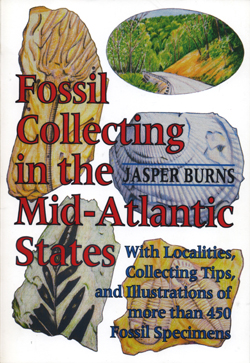






 Honey pacifier