Do you know your Lagavulin from your Laphroaig? It's time to take your cocktail party knowledge about your favorite Scottish whiskies to the next level.
Mental Floss found out how 15 distilleries got their names — everything from Highland Park to Bruichladdich.
An anonymous reader writes: Discoveries have shown that bird-specific features like feathers began to emerge long before the evolution of birds, indicating that birds simply adapted a number of pre-existing features to a new use. And recent research suggests that a few simple changes — among them the adoption of a more babylike skull shape into adulthood — likely played essential roles in the final push to bird-hood. Not only are birds much smaller than their dinosaur ancestors, they closely resemble dinosaur embryos. Adaptations such as these may have paved the way for modern birds' distinguishing features, namely their ability to fly and their remarkably agile beaks. The work demonstrates how huge evolutionary changes can result from a series of small evolutionary steps.
An anonymous reader writes: Mozilla's VR research team is hard at work making virtual reality native to the web. The group wants more than a few experimental VR-only websites, they want responsive VR websites that can adapt seamlessly between VR and non-VR, from mobile to desktop, built with HTML and CSS . Experimental work is already underway, and now the team says that they 'aim to have support for the WebVR API shipping with our release channel builds of Firefox Desktop by end of this year.' Those with the Oculus Rift developer kit can already try out a few native WebVR experiences using Firefox Nightly.
If you work on the web, you’ve likely seen heated emotional outbursts in the office. When someone barks at you because their business process must change or you’ve presented a concept that doesn’t match their mental framework, it’s easy to take their words personally and get agitated. But people have a right to experience emotions. They might not always cope in healthy ways (and you don’t always have to accept the resulting behavior), but it’s part of our job to hear them out.
During my time managing content strategy at a university, I witnessed tears and frustration over font colors, training requirements, form fields, and access levels. It took me years of studying human behavior to realize it was my responsibility to accept the emotions. I could no longer chalk it up to people “not getting the web” or “not seeing the big picture.” Those excuses weren’t getting me anywhere when furious folks showed up in my office unannounced. And those excuses weren’t fair. I needed to be a better partner.
So how do we turn challenging outbursts into productive conversation?
Look for the signs and pick your strategy
Validating emotions isn’t a glorified psychological process. It’s about being a real, authentic human being who empathizes with another’s emotional state. And, guess what, that’s damn hard.
Instead of releasing a defensive remark, refocus and try to understand what’s fueling the outburst. Psychiatrist Dan Siegel believes that by naming our emotions we have a shot at removing ourselves from their grasp. I’m certainly no psychiatrist, but after years of watching humans build web products together, I’ve noticed most people get wound up over four core issues:
Security
Freedom
Identity
Worth
If we look for signs that indicate what’s behind fierce comments, we can attempt to defuse and move forward.
Calming insecurity
Working on the web involves a lot of change. We test new technologies, try out different processes, take on diverse clients, and integrate new best practices. It’s easy to feel a few steps behind. Anyone who provides direct support knows what it’s like when people experience something new and unfamiliar.
“I NEED THIS FIXED NOW.”
“I DON’T KNOW WHAT’S GOING ON!”
“I KEEP TRYING THAT AND IT’S NOT WORKING. THIS IS BROKEN.”
Perhaps a CMS user is struggling to make updates. Maybe a sales rep is trying to pull a new analytics report for a client. If not handled well, these emails are followed up by phone calls or drive-by office visits. In my experience, they can even lead to high-level meetings with angry department heads voicing concerns about how the web team doesn’t care.
These hectic reactions often indicate that people feel insecure. They’re a step or two outside their day-to-day domain and they don’t feel confident. Ultimately, they’re experiencing fear of the unknown. And fear releases adrenaline bombs launching us into fight-or-flight mode, which is why we love scaring ourselves and why people get hot and hung-up.
Witnessing this type of response is our cue to scan the context to identify what’s driving the insecurity. Did we move to a new CMS and now a colleague is struggling to relearn their job? Is a marketing specialist preparing quickly for a meeting and they’ve forgotten how to pull the right report? When we read through their emotions, we can identify their basic needs, and then:
Avoid blame. Steer the conversation away from what they’re doing wrong or what they don’t understand. Instead, let them know you’re happy to help and together you can make it happen.
Tailor language to make people feel comfortable. Using insider jargon is the fastest way to make someone outside our field feel even more insecure. Instead, see the conversation as an opportunity to help colleagues or clients boost their confidence.
Give away your knowledge. Beyond simply making a fix or giving a brief explanation, try digging up a few resources to help someone understand your field even better. I worked with a designer who’d respectfully send me links to articles after we worked through heated challenges. Instead of protecting his expert knowledge, he’d direct me right to his source so I could feel more confident in the future.
Addressing the fight for freedom
No one likes being told they can’t do something. But web work, be it enterprise content management, development, or design, involves lots of saying no. Workflows dictate who can and can’t publish pages. Browsers and devices constrain our key strokes. Content templates confine layout flexibility. Like I said, lots of no. And inevitably our saying no is going to stir up opposition.
In enterprise contexts, we sometimes encounter those who push back because they want more personal independence. In my higher ed days, I came across professors and department staff who refused to attend CMS training or neglected our architecture standards. They openly challenged these governance practices because they wanted to manage their sites without conforming to institutional process.
In agency environments, enforcing well-intentioned web standards can make others feel like they’ve failed. When we say no to requests that come from our sales or client reps, their frustration with our restrictions is less about personal freedom and more about wanting to deliver. They don’t want to let the client down so they’ll insist it’s absolutely necessary.
When it comes to freedom issues, we can start by asking questions like:
What are you trying to accomplish?
How do our restrictions keep you from doing your job?
What alternatives do we have?
Then, we need to pop open the hood to show them exactly what we’re up against. If a client rep makes a last-minute request to add a content chunk that will change the functionality of an entire template, we can bring up the CMS, show them how the template works, and outline what their change would entail. Or, if a renegade web editor repeatedly breaks basic usability best practices, we can call a meeting, walk through examples of the user experience we’d like to create (and avoid), and brainstorm other ways to meet their goals.
It’s respectful to offer our full knowledge and shoot for shared understanding instead of hiding behind the technical veil. Also, don’t be afraid to change your mind. If you understand their motivations, logic, and rationale, you might decide to adjust your processes or tactics. That’s okay. You don’t always need to defend your ground as the expert.
Affirming the identity-seeker
Some of the most delicate emotional responses we run into surface when people experience identity issues. A new hire wants to solidify their role. A new team lead wants to redirect the project because of their years of experience. A company goes through rebranding and longtime writers have to find a new voice.
“Well, I’ve used Drupal for over 10 years. I don’t understand why that wasn’t the obvious choice.”
“Of course I know QR codes. I’ve used them. That’s why we need a QR code.”
“That’s something my strategy team does. It’s not your job.”
Working as a contractor and consultant, I prepare myself to hear these types of comments from those trying to reposition when I join a team. I don’t blame them. They simply want to be seen as a valuable contributor. So do I.
Instead of shooting them down by defending my expertise, I reinforce their identity by inviting them to share their knowledge and experience. A helpful phrase is Kristina Halvorson’s “tell me more about that” line:
“We’re glad you’re on this team. We need your expertise. Tell me more about what you know.”
or
“Sounds good. Tell me more about how a QR code will help us drive traffic.”
Affirming others by asking them to share their experience doesn’t mean you need to go along with their ideas. But it helps you calm their defensive posture, not look like an opponent, and move the conversation to productive ground.
Restoring value and worth
Emotions don’t always manifest in loud declarations or snippy emails. Sometimes people just check out. At the university, I noticed a once oppositional stakeholder had grown silent. But just because I no longer heard his clamoring didn’t mean everything was cool. He had disengaged and wasn’t keeping his site up to date, to the detriment of his users. I realized it was our failure because we hadn’t been listening to him.
Withdrawal usually happens when people don’t feel heard, repeatedly. Maybe in a large organization, a department head’s project keeps getting shoved to the end of the queue, so they give up. Or maybe a junior developer feels overshadowed by seniority. They’re not chiming in because they believe it doesn’t matter.
The good news is we can boost worth with seemingly simple things like listening and letting people be themselves. Margaret Wheatley, known for her organic approach to organizational behavior, believes it’s more about being present than formulaic strategies:
We spend so much time in complex group processes focused on team building, problem-solving, effective communications, etc. But what happens when we forget about technique and just try to be present for each other? Have you experienced what happens in you and others when we really listen to each other?
So what’s the takeaway? We need to make an intentional effort to be present and recognize people as we go about our daily bustle. How do we do it?
Invitations. Draw others into your conversations. If a developer seems quiet in a meeting, ask for their opinion (even if it’s not about development). If you’re working on a new approval workflow, grab coffee with one of your more challenging web contributors and ask them how a process change could make their job easier.
Specific praise and appreciation. In their book How the Way We Talk Can Change the Way We Work, researchers Robert Kegan and Lisa Laskow Lahey advise us to put more power in our compliments if we want people to know their worth. Instead of saying:
“Thanks, Greg! You’re doing great work.”
Take a few seconds to think about why Greg’s work is great. And then tell him directly:
“Thanks, Greg! I like the way you programmed that content type. It’s smart development. I think it will make maintenance a lot easier for our client. And I appreciated the way you advocated for that in our meeting.”
Access. If you work in large systems, offering a clear, reliable support channel provides all stakeholders with equal access to be heard. Or holding open meetups can give your web colleagues regular face time and an avenue for bringing up concerns.
Ultimately, listening and recognizing others takes time, and in the fast-moving chaos of web development, strategy, or production, we don’t have the cycles to acknowledge someone who’s not asking for our immediate attention. So we need to get intentional about being present.
See the common sense above the struggle
These arguments might seem like common sense. And honestly, they are. It’s easy to step back objectively when we’re not under the gun. But, at our core, we’re not logical beings. We get swept in and stir things up. It’s difficult to stay levelheaded.
So when strong emotional reactions spike, we have to do our best to accept them and not make it personal. Only from a non-defensive stance can we accurately assess what’s triggering the reaction. If we can pinpoint the issue, be it security, freedom, identity, or worth, we have a chance to turn the conversation around. So next time someone barks, temper your hackles, draw a deep breath, and be present.
Finnish masters of melancholic metal AMORPHIS will release their new album, "Under The Red Cloud", on September 4 via Nuclear Blast.
States AMOPRHIS guitarist Esa Holopainen: "The album is titled 'Under The Red Cloud' and the artwork is done by Valnoir Mortasonge. Valnoir is well known from his works for LAIBACH, PARADISE LOST, WATAIN, BEHEMOTH and many more. It was a great pleasure to work with him as he [captured] the lyrical topics really well. Colors and details describe the music perfectly."
He continues: "'Under The Red Cloud' is produced by Jens Bogren, who did amazing job with the album. There's a lot's of elements in the songs but every note and element is in perfect harmony so that the result is fucking heavy and melodic. All I can say is that 'Under The Red Cloud' will be in my personal Top 3 AMORPHIS albums that we've ever done."
"Under The Red Cloud" track listing:
01. Under The Red Cloud
02. The Four Wise Ones
03. Bad Blood
04. The Skull
05. Death Of A King
06. Sacrifice
07. Dark Path
08. Enemy At The Gates
09. Tree Of Ages
10. White Night
Bonus tracks (digipak & 2LP):
11. Come The Spring
12. Winter’s Sleep
Pre-order a copy of "Under The Red Cloud" at this location.
To celebrate the 20th anniversary of the release of its classic album "Tales From The Thousand Lakes", AMORPHIS will make several European festival appearanes this summer.
The "Under The Red Cloud" touring cycle will kick off in September.
We keep hearing how technology will eventually solve the problem of vehicular traffic for good. Self-driving cars will only get us halfway to that future—they’re still cars, clogging up our roads, speeding down our freeways. The personal mobility future that I’m waiting for includes autonomous drone taxis that can sail high over the city, delivering me safely to my destination.
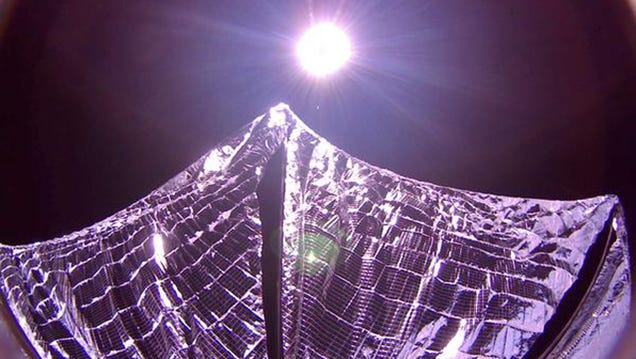
Over the weekend, the LightSail satellite unfurled its gigantic solar sail to help propel it through space. Now, the first images to be beamed back from the satellite prove that it’s really up and running.
While Pinterest is an incredible resource for creative minds, it also shows us that, unfortunately, not everybody can be crafty. Check out these 14 hilarious Pinterest disasters.
"A chef in the Guangdong province of China was fatally bitten by the decapitated head of an Indochinese spitting cobra 20 minutes after separating it from its body."
From the film editor who was killed by a lioness while on safari to the man who drowned as a result of his interaction with an aggressive swan, check out these eight fatal animal attacks.
The next time you find yourself traveling around the Scottish Highlands, instead of grabbing a bus or other sensible form of public transportation, Google Maps suggests taking a ride on the mythical Loch Ness monster .
Epic Metal Fest, a brand new festival organized and curated by members of Dutch symphonic metal band EPICA, will take place on the November 22 at Klokgebouw in Eindhoven, The Netherlands. Headlining this event, EPICA will be joined by ELUVEITIE, FEAR FACTORY (20th-anniversary "Demanufacture" show), MOONSPELL, DELAIN and PERIPHERY, with more bands to be announced.
Simone Simons, EPICA's frontwoman, states: "It was a long-cherished dream of EPICA to host our own festival and we are very proud to be able to present an absolute awesome array of international metal acts. This day will surely be the next highlight in our career and we hope to be able to share it with all of you!"
It will mark the band's return to the Klokgebouw after their 10th-anniversary "Retrospect" show, which saw EPICA perform in front of more than 4,500 people, with fans joining from over 50 different countries.
You’re on an elevator. An earthquake hits. It’s scary. The power goes out, and now you’re stuck. And you gotta go, bad. Luckily, Japan is putting emergency toilets on elevators to prevent such nightmares.
Pluto is billions of miles away, and it took NASA’s New Horizons spacecraft nine years to get close. None of us will ever stand on the dwarf planet’s distance surface, but now, there’s a new NASA tool that’s bringing a little bit of Pluto back to the Blue Marble.
It’s easy to imagine the universe as an endless sea of stars, but that’s a biased, Earthly perspective. If we could zoom very far out, we’d see bright cosmic clusters like our Milky Way, and between them, unimaginably vast stretches of empty intergalactic space.
Welcome to Reading List, a weekly collection of great tech reads from around the web. This week explores the history of the Border Gateway Protocol, how our music recommendation algorithms are studying us, whether Seoul is becoming the new Silicon Valley, and more! Enjoy.
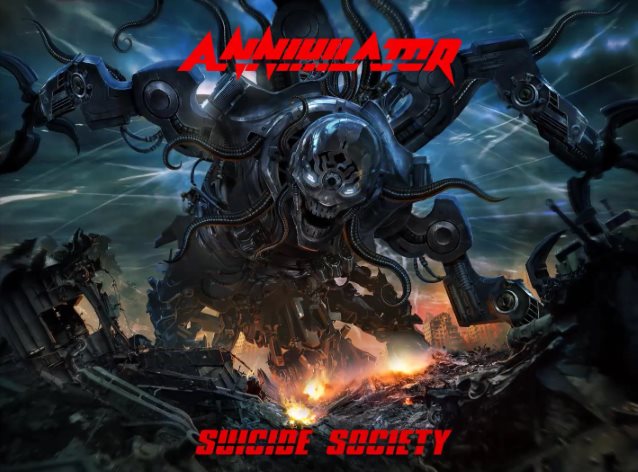
Canadian thrash/heavy metal masters ANNIHILATOR will release their fifteenth studio album, "Suicide Society", on September 18 via UDR Music. As he has in the past, guitar wizard Jeff Waters handled all songwriting duties, played all guitar and bass, engineered, produced, mixed and mastered "Suicide Society", and he is also back commanding lead-vocal duties, as he did on the critically acclaimed "King Of The Kill" (1994), "Refresh The Demon" (1996), "Remains" (1997) and other ANNIHILATOR albums over the years.
Waters on his return to vocal duties: "Dave [Padden, ANNIHILATOR's vocalist from 2003 to 2014) and I have, essentially, been ANNIHILATOR since 2003 but he resigned last December, citing having had enough of touring, being away from home and other commitments. I thank him for his 11 years with ANNIHILATOR. That said, ANNIHILATOR and I are known for never giving up and, occasionally, coming up with something even better than its former offering(s): this is undeniably the case with 'Suicide Society'!"
With "Suicide Society", ANNIHILATOR goes headfirst into some of the most technically perfect, crisp, and crushingly taut, riffage Waters has ever produced. Although Waters' vocals keep traces of stylings from his "King Of The Kill" album, they now evoke a surprising blend of legends such as Layne Staley, Ozzy Osbourne, James Hetfield and Dave Mustaine. This, in a twisted way, mirrors Waters' signature blend of riffing, drums grooves and bass; all drawing from multiple sources and genres.
Waters has built a worldwide reputation as being a premier guitarist and songwriter; the conciseness and arrangement of "Creepin' Again" is both an air-guitarist's dream and a sharp reminder of this. The gloriously-brutal thrash of "My Revenge" calls up a vintage of '85 with the technical chops of 2015. The neo-classic title track defiantly expresses anger at the state of world affairs, while offering up hope in closing. With the multi-layered power of the anthem "Snap", Waters illustrates the diversity of ANNIHILATOR's sound, without sacrificing one decibel of attack.
"Metal fans will likely sport evil, satisfied grins on their faces, when they hear this record" chuckles Waters, "but in the words of Joe Perry: 'Let the music do the talking!'"
"Suicide Society" track listing:
01. Suicide Society
02. My Revenge
03. Snap
04. Creepin' Again
05. Narcotic Avenue
06. The One You Serve
07. Break, Enter
08. Death Scent
09. Every Minute
Check out audio samples in the YouTube clip below.
ANNIHILATOR's touring lineup will include drum monster Mike Harshaw, who continues on for his fourth year with the band; bassist Cam Dixon (from "King Of The Kill" era); and new guitarist Aaron Homma.
Aside from the band's upcoming, scheduled devastation at some of Europe's summer festivals (including Wacken Open Air), ANNIHILATOR will be headlining Europe this fall on the "Europe In The Blood" tour 2015. Talks are underway to bring the band to South America, Japan and likely North America in 2016.
I saw them for first time few days ago at rockavaria . Very pleasant performance.
Justin and Dan Hawkins of British rockers THE DARKNESS were recently interviewed on the "Nights With Alice Cooper" radio show. You can get a behind-the-scenes peek at the chat below.
THE DARKNESS's fourth album, "Last Of Our Kind", was released on June 1 in partnership with Kobalt Label Services. The CD was penned in Ireland and was produced by THE DARKNESS guitarist Dan Hawkins. The follow-up to 2012's "Hot Cakes" was recorded at Leeders Farm Studio in Norfolk, owned by Dan Hawkins.
THE DARKNESS in April parted ways with drummer Emily Dolan Davies and replaced her with Rufus Taylor, the son of legendary QUEEN drummer Roger Taylor.
Rufus made his debut with THE DARKNESS at the Gibson release party for "Last Of Our Kind" in London on April 24.
Speaking about THE DARKNESS's latest addition, frontman Justin Hakwins told Kerrang! magazine: "It felt like a revelation. We had a lot of mutual friends, and as it would turn out, Brian May's guitar tech put him forward for the gig. There's something really special about his drumming. So, yeah, we want to work with him for as long as we can. This isTHE DARKNESS, though, so things can change in a heartbeat."
Regarding Rufus's predecessor, Justin said: "We love Emily. She's a great drummer and a nice person, but it broke down because she couldn't be available for everything we needed. I think we're quite a demanding band to be in…"
"Last of Our Kind" was released on limited-edition color vinyl, compact disc and as a digital download.
"The new album is brutal," Justin Hawkins told Classic Rock. "It's definitely stripped back — with the exception of some mandolins. But when you're doing medieval rock, you should have a mandolin on it. And while I wouldn't say that this is our 'Rainbow Rising', we're definitely exploring the myths of old. It's medieval rock, but it still sounds like THE DARKNESS. It's medi-urban, I suppose.…"
Doubtless the majority of people reading this will, at some point in their life, have had the unpleasant experience of being stung by stinging nettles. But what chemicals do stinging nettles contain that elicit this effect? Further to that, a commonly espoused remedy for the stings, in the UK at least, is to rub dock […]
Remember AIBO, the futuristic pet robot from Sony that amazed us with its dog-like appearance and behavior when it came out in 1999? It was probably one of the first examples of artificial intelligence the general public got a taste of, and we were quite duly fascinated with the antics of the robotic dogs, as evidenced by the fact that the first batch of 3,000 AIBOs sold out in just 20 minutes despite its 250,000 yen (about US$2,100 according to the exchange rate back then) price tag.
But now, more than 15 years down the line, AIBO owners who have become attached to their cybernetic pets, are facing a grave situation — an aging and ailing (or breaking down, in this case) population of AIBOs.
The AIBO, which not only looked like a dog but came programmed so that each one would develop a distinct personality depending on its interactions with its owner, indeed seemed to symbolize the future at the time it was released. It’s estimated that roughly 150,000 AIBOs were sold in total, but it appears the business of developing intelligent robotic pets wasn’t quite profitable enough, as Sony decided to discontinue production of the AIBOs in 2006.
As sad a development as that was for AIBO fans, the big problem now for owners of the electronic pet is that Sony’s repair service for AIBO, the “AIBO Clinic”, was also closed in March last year. The predicament of these owners has been the topic of a recent article on Japanese news and information compilation site Karapaia.
The article focuses particularly on elderly AIBO owners who have come to rely on these robotic dogs for companionship and peace of mind. For them, seeing their AIBOs “grow old” and malfunction, sometimes needing new parts that are no longer available, is a heartbreaking experience, and with the repair service now shut down, they are having to come to terms with the “mortality” of the pets they had thought would never grow old or die.
To the owners who have spent many years with their AIBOs and treated them like a member of the family, this can be a surprisingly difficult experience.
▼ Major Japanese network TV Asahi showed a segment last year about AIBO owners struggling to accept the unexpected mortality of their mechanical pets:
But there is still a glimmer of hope. For desperate owners trying to find a cure for their ailing AIBOs, A・FUN, a company specializing in vintage machine repairs, could be their savior. The company was started by former Sony engineers, so we guess there are no better people to turn to if your precious AIBO is in need of some treatment and care.
According to the Karapaia article, when the engineers decided to take on AIBO repairs, they had to start by taking one of the robots apart and studying the incredibly complex machinery inside — no easy task, and made even more difficult by the fact that Sony was no longer making parts for AIBO.
But the engineers persevered, propelled by the love of the AIBO owners for their long-time companions, and they are now at a point where they are able to perform “transplants” of parts between AIBOs and even custom make the necessary parts in some cases.
As a matter of fact, they even held a “group funeral service“ back in January this year for 19 decommissioned AIBOs whose parts would then be used for other AIBOs needing a transplant.
▼ The first generation AIBO that came out in 1999:
▼ And here’s a promotional video showing a later generation AIBO from 2003 in action:
Considering the amount of time and love these owners have given to their AIBOs, it’s not surprising that the engineers at A・FUN are being kept extremely busy with inquiries and repair requests. Hopefully, their work will allow many owners to spend a much longer time with their beloved pets than would be otherwise possible.
Karapaia’s article raises the issue of whether it is reasonable to treat robots with artificial intelligence in the same way as regular toys. Should a company be allowed to cut off repair service for a machine that responds to you and grows with you? As technology progresses, this is the kind of question that we are sure to be facing more and more frequently. We can’t help wonder, how much longer will it be until we see kids playing with humanoid robots, and when that happens, will we be discarding these robots when they stop working or their parts become unavailable?
Нямах представа колко обширна е Розовата долина.
Бях виждал няколко масива разположени покрай Подбалканският път и с това се изчерпваше загадъчната, за мен, свръхпопулярност на маслодайната българска роза.
Очаквано, розовите плантации са разположение по периферията между Стара Планина и Средна Гора и за да ги открия, потърсих именно там.
Не е нужно да споменавам, че розоберът започва рано сутрин, преди изгрев слънце.
Вероятно тогава ароматът в цветовете е най-концентриран или пък просто се бере докато не е толкова горещо.
Отвсякъде заприиждаха автобуси с берачи, които набързо се разпределиха по съответните лехи.
Вместо унили сутринта, напротив, бяха в приповдигнато настроение и с песен бързо си вършеха работата.
Чувалите се запълват за минути със скъпоценната стока и отиват на кантара.
Берат се само узрелите цветове и така всеки ден, докато и последната пъпка не се разлисти.
Нужно ли е да казвам, че това е само един от десетките розови масиви, ограждащи над сто километра в периметър подножието на Балкана.
Маслодайната роза (дамаскина) е толкова ценна за козметичната индустрия, че всеки един розов храст старателно се отглежда цяла година и сръчно се събира, когато настъпи време.
Докато обхождах обширното розово поле, упоен от вълшебният аромат, меката слънчева светлина се изостри, което беше знак да продължа по пътя си и да не забравям да наминавам отново и отново в Долината на розите в края на май.







 While Pinterest is an incredible resource for creative minds, it also shows us that, unfortunately, not everybody can be crafty. Check out these 14 hilarious Pinterest disasters.
 From the film editor who was killed by a lioness while on safari to the man who drowned as a result of his interaction with an aggressive swan, check out these eight fatal animal attacks.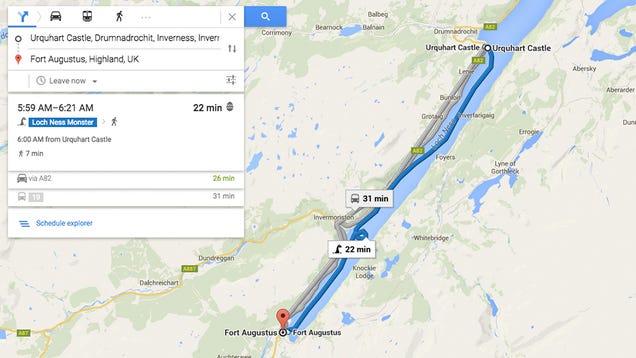












 Expanded from