Shared posts

18 Feb 20:18

How to Make Lemongrass and Coriander-Marinated Grilled Tofu Vietnamese Sandwiches (Vegan Banh Mi)

by J. Kenji López-Alt

Crispy tofu is marinated in garlic, coriander root, and lemongrass, and stuffed into a Vietnamese-style sandwich with pickled carrots, daikon, cilantro, cucumber, and jalapeños. The trick is a low and slow cooking method and a double coating of the flavorful marinade. Read More
12 Feb 16:28

Democrats Pick Philadelphia for Convention

by Taegan Goddard
Dzaleznik

Bummer. Should be Brooklyn.

“Philadelphia has been selected to host the 2016 Democratic National Convention, DNC chair Rep. Debbie Wasserman Schultz announced this morning,” the Philadelphia Inquirer reports.

“The city beat out Columbus, Ohio, and Brooklyn, for the event, which will take place the week of July 25, 2016.”

New York Times: “The symbolism of the city, where the founding fathers overcame broad ideological and regional differences to forge consensus, helped Philadelphia prevail over New York and Columbus, Ohio.”

The post Democrats Pick Philadelphia for Convention appeared first on Political Wire.

12 Feb 15:45

Interactive Matisse cut-outs

by Jason Kottke
Dzaleznik

Figure you've seen it, but this is good.

If, like me, you couldn't get it together to make it to the Matisse cut-outs show at MoMA, the NY Times has you covered with an interactive look at the show.

Tags: art   Henri Matisse   MoMA
12 Feb 11:59

The cost of wind and solar power keeps dropping all over the world

by Brad Plumer

Many people have probably heard that it's getting cheaper to install rooftop solar panels in the US. But that's just part of an even bigger trend. Since 2010, the cost of renewable energy has been plummeting all over the world.

David Roberts highlights a new study from the International Renewable Energy Agency laying it out in detail. Large wind farms got cheaper between 2010 and 2014. Large-scale solar got a lot cheaper. And at least some renewable plants are even becoming competitive with new fossil-fuel plants:

"CSP" is concentrated solar power. (IRENA)

The chart shows the "levelized cost of electricity" for different utility-scale renewable projects built in 2010 and 2014. This is an oft-used metric for comparing different energy technologies. It's a ratio of how much money a power plant costs over its lifetime to how much electricity it will generate. So it factors in construction costs, fuel costs, financing, and how often a plant is used. Notably, it doesn't factor in any subsidies that governments may provide.

Two big things stand out:

1) Wind and solar power are getting cheaper. As the chart above shows, the cost of large utility-scale photovoltaic plants and concentrated solar power plants have dropped sharply. Projects built in 2014 had a lower lifetime cost per kilowatt-hour than projects built in 2010. Both offshore and onshore wind farms also got cheaper, though the decline isn't as dramatic.

By contrast, biomass, geothermal, and hydropower are all pretty mature technologies that haven't seen big drops in cost lately.

For all technologies, there's a wide range, since the cost of individual projects can vary dramatically from place to place. All else equal, wind turbines in windier areas will operate more often and have lower lifetime costs per kilowatt-hour than those in less-windy areas. More efficient technologies or cheap financing can also bring costs down. (That helps explain why solar power is three times costlier in sunny Central America than in North America.)

2) In some regions, renewables are getting competitive with new fossil-fuel plants. This point needs caveats, but it's striking. The chart below has a beige box showing the range of estimates for building new coal or natural gas plants. The average cost of onshore wind is now well within that range. And in North America, utility-scale solar photovoltaic plants are creeping into range:

(IRENA)

Now, these numbers leave a few things out. They don't include the cost of backing up intermittent sources like wind and solar. After all, if you build a solar farm, you may need back-up power or energy storage for when the sun's not shining. That's an extra cost and a real disadvantage for renewables, particularly as wind and solar become a bigger part of the grid.

At the same time, these cost numbers also don't factor in the damage caused by fossil-fuel pollution — including global warming. That's a big disadvantage of fossil fuels. The chart below shows what happens if you factor both those things in. Wind is still competitive, as are the cheapest solar farms:

(IRENA)

Okay, now the caveats. These charts don't mean that renewables are now just as cheap as fossil fuels or that it will be cost-free to replace all our coal and gas plants with wind farms and solar panels.

For one, theses charts are only comparing new solar/wind plants with new fossil-fuel plants. But countries like China have already built plenty of coal plants with lifespans of 40 years or more. All else equal, it's usually cheaper to keep an existing coal plant running than it is to tear it down and build something new. (Though stricter air-pollution regulations could change this calculus.)

Second, different solar and wind projects have a wide range of costs. As the charts show, many solar plants are still vastly more expensive than fossil fuels. What's more, power companies still have lots to consider when deciding whether to build, say, a new wind farm. What subsidies are available? What's the existing resource mix? How often would the turbines operate? Will this wind farm require additional back-up generation? Are fuel prices likely to fluctuate? And so on.

That calculus will change from place to place. As the US Energy Information Administration warns, it can be misleading to read too much into average levelized cost of energy estimates.

That all said, the fact that renewables keep getting cheaper and are moving within range is notable. Increasingly, there will be places where it may make financial sense to rely on wind and solar instead of coal or gas (especially if there are subsidies, though sometimes even if they aren't). At the margins, lower costs will help boost the growth of renewables and reduce the costs of policies to promote clean energy.

The report also argues that wind and solar costs are likely to keep falling in the future. Interestingly, the big gains are expected to come not from a reduction in equipment costs, but rather from a decline in "balance of systems" costs and cheaper financing. We've seen that in the United States, where companies like SolarCity are finding ways to make it easier for homeowners to finance rooftop solar panels. It's worth watching how similar innovations spread overseas.

Further reading

-- The financial firm Lazard did its own "levelized cost of energy" estimates for energy sources in the United States. It's pretty similar, but it gives greater detail for comparing specific energy sources — like thin film solar vs. crystalline solar or nuclear vs. coal. You can also check out the effects of US tax subsidies.

-- The rise and fall of wind power in America

-- Solar power is now growing so fast that older energy companies are trying to stop it

11 Feb 19:27

Mucus is gross. But here are 9 things you should know about it.

by Joseph Stromberg
Dzaleznik

Last point only.

Mucus is not widely considered a topic for polite conversation. It's something to be discreetly blown into a tissue, folded up, and thrown away.

But the simple truth is that without mucus, you wouldn't be alive.

"Mucus is essential for the protection of your body," says Jeffrey Spiegel, an ear, nose, and throat surgeon at Boston University. "It's a protective barrier and it allows you to breathe comfortably. If you had no mucus, you'd be quite sorry you didn't."

Given how important mucus is — and how often colds and allergies cause mucus-related symptoms — it's worth learning a bit more about it.

1) You produce about 1.5 quarts of mucus a day — and swallow the vast majority

Most of us think of mucus as something that leaks from our nose, but the truth is that it also gets secreted in your trachea and other tubes that carry air through your lungs, where it's technically called phlegm. Wherever it's produced, mucus is a mix of water and proteins, and most of it gets pushed to the back of your throat by microscopic hairs called cilia.

Microscopic cilia flap back and forth continuously to push mucus to the back of your throat. (American Rhinologic Society)

Whether you're aware of it or not, you're constantly swallowing all this mucus, and it harmlessly ends up in your stomach. "You're swallowing, on average, twice a minute — even when you're sleeping at night," says Michael Ellis, an ear, nose, and throat doctor at Tulane University.

Ellis says that, on average, a person produces about 1.5 quarts of mucus per day, and contrary to what you might think, it doesn't vary by all that much. But that mucus gets diluted by a separate, watery secretion (called serous fluid), which can vary widely based on your health.

2) Mucus is basically the body's flypaper

Even grosser than mucus. (Shutterstock.com)

Mucus has two main functions: it keeps the nasal cavity and the other airways inside your body moist, preventing them from drying out due to all the air that flows over them. (Relatedly, the serous fluid that mucus is mixed with also moistens the air itself before it enters the lungs.)

Mucus' other function, though, might surprise you. "Mucus is kind of like flypaper," Ellis says. "Debris that comes into the nose or throat sticks to it, and then you swallow it, so it doesn't get into your lungs."

Mucus, in other words, is nature's filter for your delicate lungs. The bacteria, dust and other tiny particles that you breathe in get stuck in mucus and pulled down into your stomach, where they're destroyed by enzymes.

3) There are two different things that cause runny noses

(Shutterstock.com)

When a cold or allergies cause your nose to run, it's because they're triggering an inflammatory response in your nasal cavity and airways. Even though you always produce roughly the same amount of mucus, this dramatically increases the amount of the serous fluid it's diluted in.

We tend to experience this as an excess of watery, runny mucus, and it can be treate by taking an anti-histamine, which reduces the amount of water — leading to thicker, drier mucus.

Cold weather causes a runny nose in an entirely different way. In cold temperatures, your cilia (the microscopic hairs that sweep mucus to the back of your throat) stop sweeping back and forth as quickly, causing some of the mucus to drip down through your nose instead.

4) A stuffy nose isn't stuffed full of mucus — it's swollen

The nose is mostly filled by conchae. (Bruce Blaus)

The inside of your nose is filled with structures called conchae, or turbinates. Their primary function is to warm the air you inhale to body temperature and add moisture until it's very humid — so that the air can enter your lungs without causing problems.

Stuffy noses occur when the conchae rapidly swell in size in response to cold, dry conditions, so there's more surface area for the air to flow over. Additionally, if you're fighting an infection, the conchae can swell further with blood, in order to bring more white blood cells to the site of the infection.

"We call it congestion when [noses] get swollen up, because it seems like we're having trouble getting air through," Ellis says. Most people think of this congestion as a result of too much mucus — but in reality, it's just swollen conchae.

This explains why many people are congested when they wake up in the morning (after breathing cold, dry air all night), especially because central air and heating systems dry out air significantly.

5) The best way to decongest your nose is with steam

(Shutterstock.com)

Because cold, dry air is what most often causes your conchae to swell, the best remedy is to add hot, moist air. This is why taking a hot shower often opens up a clogged nose, and why hot washcloths and facial steamers are also effective treatments.

Nasal decongestants (such as pseudoephedrine and phenylephrine) can also help de-swell the conchae, but in some cases, there's a downside: they dry out the nasal cavity, by reducing the amount of serous fluid. So if you're also experiencing excessively thick, dry mucus, you're better off avoiding decongestants.

6) Thick mucus could mean you're dehydrated

(Shutterstock.com)

A few different factors can reduce the production of serous fluid in your nose, leading to thick, dry mucus. This is often experienced as post-nasal drip — thick mucus at the back of your throat that's much more noticeable than the thinner mucus you swallow unconsciously.

One cause is dehydration: if your body doesn't have enough water, it'll cut back on the secretion of serous fluid. An excessively dry environment — often caused by central heat or air conditioning — can also cause the same problem, as can smoking cigarettes.

Instead of taking a decongestant to relieve post-nasal drip, Ellis recommends using an expectorant, which will increase the amount of serous fluid your mucus is diluted in.

7) Boogers are just dried mucus

Everybody does it. (Shutterstock.com)

Most of the mucus in your nose gets swept by your cilia to the back of your throat. But sometimes — especially in arid environments — some of the mucus near your nostrils (in an area formally called the nasal vestibule) begins to dry out first, becoming too viscous to be swept by cilia. If it sits there long enough, it dries even further, becoming the crusty accretion colloquially known as a booger.

Boogers, as it happens, are the subject of some scientific study. Several researchers have considered the question of why people pick their noses. One theory is that people simply derive pleasure from the act of "cleaning up," and while tissues aren't always available, your fingers are.

Whatever the reason, it's widespread. The authors of one small survey finding that 91 percent of adults admitted to picking from time to time. But that doesn't mean it's a good idea: Dutch researchers, among others, have found that nose-picking can spread infections.

8) The color of your mucus can tell you a lot

Mucus, in its natural state, is clear. But that doesn't mean that colored mucus is necessarily a bad thing.

Grey, whitish, or yellowish mucus could simply be the result of dust, pollen, or other particles you've inhaled from the air around you. On the other hand, these colors can be a sign of an infection, as they can be caused by an excess of white blood cells or pus. And darker colors — like pink, red, or brown — can be a sign of bleeding in your nasal cavity.

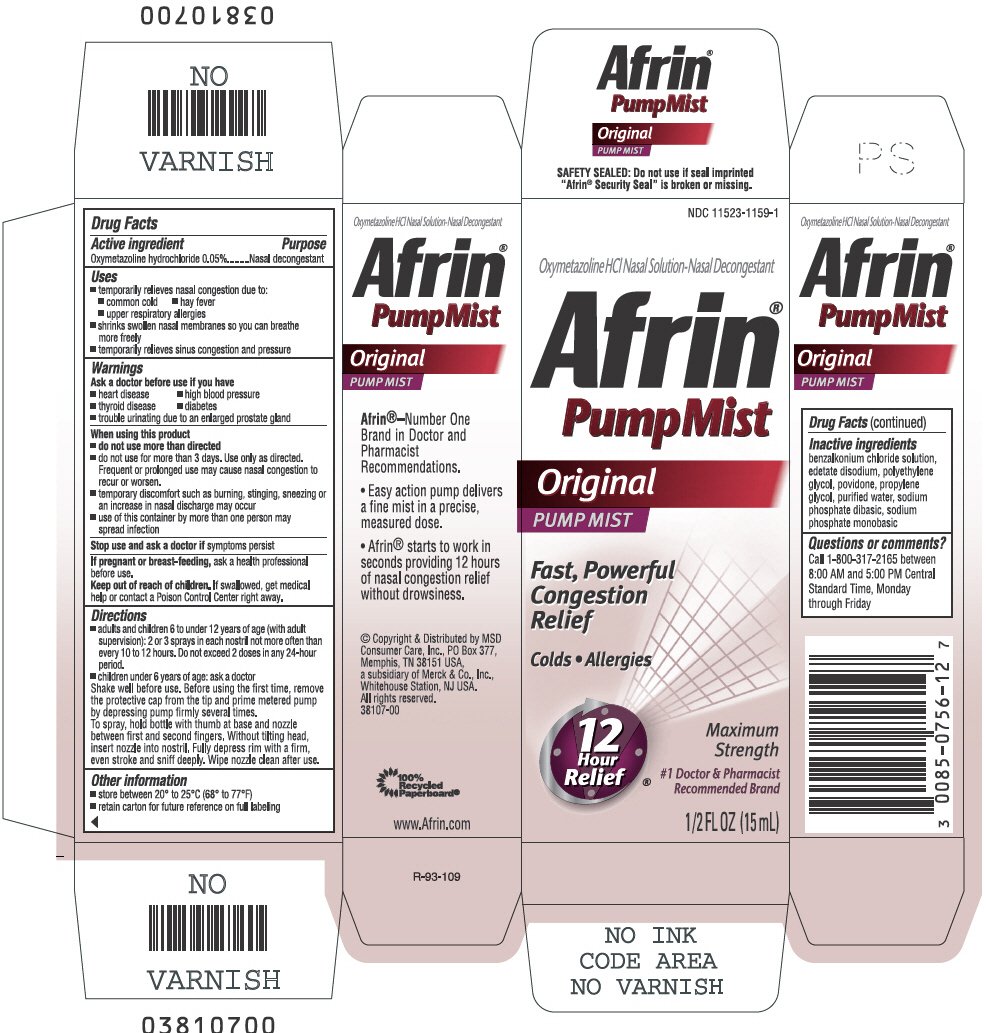
9) Afrin is powerfully addictive

Don't use this. (Coronades03)

The nasal decongestant spray Afrin (which has the active ingredient Oxymetazoline) works really, really well. Too well.

"It's not just habit-forming," Ellis says. "It's totally addictive, because the lining of the nose becomes completely dependent on it."

Afrin relieves congestion by cutting down on blood flow to the conchae, rapidly reducing swelling and opening up the nasal cavity. But soon after it wears off, it leads to rebound swelling, with the conchae getting even bigger than they were before. As a result, many people become totally dependent on Afrin, continuing to use it to fix congestion that it's causing in the first place.

"Once you start spraying, you can't stop," Ellis says. "If you go more than three or four days, the nose becomes so dependent on that it's almost like heroin." Afrin bottles do have a fine print warning telling people not to use the medicine for more than three days, but so many people miss it that there are Afrin addiction support groups online. Ellis, among others, thinks the spray should be a prescription-only medicine.

06 Feb 16:59

Israeli Official Suggests Boehner Misled Netanyahu

by Taegan Goddard
Dzaleznik

Hahaha he's now working on alienating Republicans, too! What a train wreck!

“A senior Israeli official suggested on Friday that Prime Minister Benjamin Netanyahu had been misled into thinking an invitation to address the U.S. Congress on Iran next month was fully supported by the Democrats,” Reuters reports.

“Netanyahu was invited by the Republican speaker of the house, John Boehner, to address Congress on March 3, an invitation Boehner originally described as bipartisan. The move angered the White House, which is upset about the event coming two weeks before Israeli elections and the fact that Netanyahu, who has a testy relationship with President Obama, is expected to be critical of U.S. policy on Iran.”

The post Israeli Official Suggests Boehner Misled Netanyahu appeared first on Political Wire.

06 Jan 18:37

Obama Will Veto Keystone Pipeline Bill

by Taegan Goddard

The White House says President Obama would veto Keystone pipeline legislation, the AP reports.

A spokesman says there is a “well-established” review process that is being run by the State Department that should not be undermined by legislation.

06 Jan 17:21

Play Oregon Trail, King's Quest, and other classic MS-DOS games free online

by Matthew Yglesias

Excellent news for anyone "working" from home on today's snow day. The Internet Archive has brought online free, browser-playable versions of classic MS-DOS games.

The Oregon Trail is an obvious candidate for whiling your day away.

Definitely not my first time

I'm also a big fan of Koei's war simulation games like L'Empereur and Romance of the Three Kingdoms. And who can forget Kings Quest IV: The Perils of Rosella or the original Sim City?

(via Abby Olheiser)

20 Dec 16:32

One small study that explodes the myth that inequality is efficient

by Matthew Yglesias

If you want people to consume less water, there are roughly two ways you could do it. One is to raise the price of water, and the other is to simply mandate that everyone cut back on their water consumption.

Either will work, but they work in different ways. And an important recent study from Casey Wichman, Laura Taylor, and Roger von Haefen suggests that the difference in how they work has crucial implications for how we think about a wide variety of issues. When economic inequality is really severe, using prices to regulate the distribution of scarce goods can be seriously unfair. At the same time, using non-price mechanisms can be seriously inefficient.

That means that inequality is preventing us from adopting efficient solutions to a wide variety of problems, ranging from drought response to traffic congestion to climate change.

Expensive water hammers the poor

First, the study. The authors got their hands on a dataset of monthly water consumption for almost 2,000 households across six municipalities in North Carolina over a 30-month period. That data lets them compare municipalities that responded to droughts by raising the price of water to those that took different approaches. The authors also know the income and lot size of each household, which lets them seem whether poor or rich households bear more of the burden of water conservation.

From this, they were able to empirically demonstrate something that non-economists probably think is obvious — when you cut water use by raising prices, most of the cutting is done by the poor and almost none is done by the rich. As they put it, "the conservation burden falls primarily on lower-income households" while "high income households are significantly less responsive to price."

By contrast, a command-and-control approach — that is, just mandating that people use less water — cuts water use across the board, among both rich and poor households.

Microeconomics needs macrofoundations

This is an important example of a case where, as economist David Glasner puts it, microeconomics needs macrofoundations. Microeconomics is the study of individual markets and how to make them operate effectively. While economists have deep disagreements about macroeconomic topics like recessions, economic growth, and the distribution of income, the basic tenets of microeconomics are not very controversial inside the economics profession. When people say that "economics 101" supports something like Uber's surge pricing during a terrorism panic, they are talking about microeconomics.

Microeconomics tends to tell us, again and again, that life is best when sellers can set prices to rise and fall with the ups and downs of supply and demand. The idea is that markets should "clear." Everything that's produced should be sold, but you shouldn't have shortages that force people to wait around forever and ever.

This is an appealing idea, but as Steve Randy Waldman has written, it tends to brush distributional issues under the rug.

When people say that a price-based scheme for rationing water is most efficient, they mean that prices will deliver the most efficient distribution of dollars and water. The idea is that how much people are willing to spend on something is a good proxy for how much they care about it, or how important it is to their well-being. Different people like different things, but you can buy all kinds of different stuff with dollars, and seeing what people choose to spend their money on tells you a lot about their preferences.

But dollars aren't a perfect proxy for well-being, because money means different things depending on how rich or poor you are. To a middle class American, $5,000 is a really big deal. To a multi-millionaire like Mitt Romney or Hillary Clinton, it's totally trivial — the value of their stock portfolios bounces up and down by that much all the time. To a person living paycheck-to-paycheck with no access to credit beyond very expensive payday loans, $5,000 could be a life-changing amount.

The technical term here is the "declining marginal utility of money." A given dollar produces less happiness in the pockets of a rich person than a poor one. That means that in a society with substantial economic inequality, an efficient distribution of dollars and water isn't going to be the same as an efficient distribution of happiness and water. This is what we're seeing in the North Carolina water case — the dollars are just a lot more important to the poor than the rich, so all the burden of adjusting to reduced water usage falls on them.

Equality can cure inefficiency

For contrarians, trolls, and Uber-haters the analysis can stop here. A tiny dose of complexity refutes the Econ 101 argument, so the world is safe for economist-bashing and conceptual arguments in favor of price controls.

And yet it continues to be the case that allocating scarce goods through prices is much more efficient. Joseph Stromberg's recent piece about the advantages of demand-responsive parking is a case in point. By charging more when parking spaces are in high demand, cities can eliminate pointless (and environmentally destructive) circling for parking. They can also capture revenue that can be used to cut taxes or boost services. Roughly the same is true of "congestion pricing" to alleviate traffic jams, and carbon taxes to tackle the even bigger problem of climate change.

Even back to the water case, the argument in favor of prices really does seem sound. Different people care a different amount about being able to use water lavishly — why shouldn't the reductions be done disproportionately by the people who don't care so much, while those who care a lot pay more?

To the extent that inequality undermines arguments for efficient price-based schemes, the correct conclusion is to reject inequality, not reject pricing. It's probably no coincidence that the three countries to really embrace congestion pricing are either egalitarian (Norway and Sweden) or dictatorial (Singapore). Efficiency-enhancing economic schemes often simply assume a background where there's not too much inequality, in part because, in many cases, they were hatched during the decades when the income distribution was much more even. But to actually implement these schemes in the real world, we need to also deliver the equality.

There's an old saw in the economics profession that there's a tradeoff between egalitarian outcomes and efficient ones, but empirical research consistently fails to find evidence that inequality boosts growth or redistribution slows it. One reason is that needs conditions of macro-equality to make micro-efficient schemes tolerable.

18 Dec 19:06

‘This Is Barack Obama, Formerly Of Somerville’

by Taegan Goddard
Dzaleznik

Barry from Somerville!

Massachusetts Gov. Deval Patrick (D) got a surprise caller on his monthly WGBH radio show:

Jim Braude: “Hello, sir. Yes, you’re on with Gov. Deval Patrick.”

Barack Obama: “Uh, Governor, this is Barack Obama, formerly of Somerville. I’ve got a few complaints about service in and around the neighborhood, but I’ve moved down South since that time…”

Deval Patrick: “You’re kidding, Mr. President. Who is this impersonator? You’re very good. Who is this really?”

Barack Obama: “I want to find out how it is that you got Massachusetts so strong and moving in the right direction.”

10 Dec 21:41

Gas prices are falling, so Americans are rushing out to buy SUVs

by Brad Plumer

With oil prices plummeting around the world, gasoline is cheaper than it's been in years — hitting an average of $2.64 per gallon this week in the United States. And that means gas-guzzlers are making a comeback.

Sales of SUVs and pick-up trucks rose 9.6% last month

The Guardian reports that US sales of new SUVs and pick-up trucks rose 9.6 percent in November (compared with a 1.3 percent rise in overall vehicle sales). And fewer Americans are buying small cars. Sales of Ford's Navigator SUV were up 91.5 percent over this time last year, according to the Financial Times. By contrast, sales of Ford's smaller and popular Fusion were down 11.3 percent.

The same thing is happening in the much bigger used-car market, where prices for mid-sized SUVs, large SUVs, and large trucks have all risen 10 percent or more over the last year. "Low gas prices has increased consumer demand for these utilitarian vehicles," note the car analysts at Edmunds.com.

The end result? Fuel economy in the United States is starting to stagnate after improving during the years when gasoline was expensive. Here are the numbers for new vehicles:

(University of Michigan Transportation Research Institute)

(University of Michigan Transportation Research Institute)

This tends to happens whenever gasoline prices make wild swings. One 2012 study from the University of Michigan's Transportation Research Institute found that when gas prices spike, consumers quickly go out and buy smaller, more efficient cars. But when prices drop, they go back to SUVs. When oil's cheap, we use more of it.

One thing to keep in mind, though, is that a car can last for 10 years or more, while gas prices aren't guaranteed to stay low that long. And over the past decade, as this video shows, wild swings in oil prices have become pretty commonplace:

Something similar could happen again this time around. If new conflicts break out in the Middle East, say, or if China and Europe start growing rapidly again, oil prices could easily shoot back up.

On the other hand, if gas prices do stay low for an extended period of time, that could create a conflict over existing fuel-efficiency rules. The Obama administration has put in place fuel-economy standards that will require automakers to keep improving the average fuel-efficiency of their fleet between now and 2025 — at which point the standard will reach 54.5 miles per gallon (which translates to around 35 miles per gallon on the road).

But these rules are coming up for a midterm review in 2017. And if gas prices stay low and consumers aren't buying these smaller, more efficient cars, manufacturers could well ask to alter the requirements.

Further reading

Oil prices keep plummeting as OPEC starts a price war with the US

What the huge drop in gasoline prices means for America

How far do oil prices have to fall to throttle the US shale boom?

Right now is a perfect time to raise the gas tax

10 Dec 21:28

Manhattan would need 48 new bridges if everyone drove. Here's what it would look like

by Joseph Stromberg

A single visit to Manhattan makes it pretty obvious that most people there depend on the subway, buses, bikes, cabs, and walking for transportation. Just 16 percent of people who commute into Manhattan for work do so by car — by far, the lowest percentage of any US city.

But what would Manhattan look like if everyone drove into the city instead of taking public transport?

According to Vancouver highway engineer Matt Taylor, the island would need 48 new bridges that would each have to carry eight lanes of traffic:

manhattan bridges

(Matt Taylor)

Taylor arrived at that number by noting that 2,060,000 people commute to Manhattan daily. Under ideal conditions, a single lane can convey about 2,000 vehicles per hour, so to let 2.06 million cars on to the island within a four-hour period, you'd need at least 380 additional bridge lanes — or roughly 48 new eight-lane bridges.

Of course, you'd also need somewhere to put all those extra cars. Taylor calculates that they'd require about 24 square miles in total, which is exactly the land area of Manhattan. In other words, you'd need to build a layer of underground parking that takes up the entire borough to fit all the cars driven in by commuters.

Sure, all this is pretty speculative (and it assumes that all commuters would be driving in alone, including the 70,000 students — some of whom aren't old enough to drive — that commute in daily).

But the thought exercise is still a pretty stark reminder of how efficient public transport is at conveying tons of people. Even if you built all those bridges, there wouldn't be enough roads to route the 2.06 million cars underground to the imaginary layer of parking, among many other problems.

In other words, Manhattan as we know it simply wouldn't exist if all its commuters drove.

Further readingNew York City lowered its speed limit to 25. Other cities should do it too.

10 Dec 21:17

Walker Once Wished a Jewish Constituent ‘Molotov’

by Taegan Goddard

The Madison Capital Times dug up a letter from Wisconsin Gov. Scott Walker (R) in which he goofed on a Jewish salutation by ending with, “Thank you again and Molotov.”

“Presumably, Walker meant to write ‘mazel tov’ and didn’t intend to wish good tidings of incendiary weapons. Perhaps it was a case of AutoCorrect or that pesky Microsoft Word paperclip causing shenanigans.”

04 Dec 19:13

Eric Garner's final words

by German Lopez
Dzaleznik

Good lord....

A grand jury on Wednesday decided not to indict New York City Police officer Daniel Pantaleo for killing Eric Garner, a black Staten Island man who died after Pantaleo put him in a chokehold.

Garner's death was captured in a graphic video, but author John Green summarized Garner's final words in one image:

Eric Garner last words

Read more: NYPD officer who killed Eric Garner in chokehold won't face criminal charges.

04 Dec 18:31

A possible solution for dying coral reefs

by Jason Kottke

It turns out if you break some kinds of slow-growing corals into tiny pieces, these microfragments grow much much faster than usual, even 25-50 times faster.

"Part of the coral had grown over the back side and had attached to the bottom of the aquarium," he said. When he grabbed it, "it broke off and left two or three polyps behind. I thought I just killed those. But oh, well, I moved the puck over."

A week later he happened to glance at the abandoned polyps -- the individual hydra-shaped, genetically identical organisms that make up a coral colony -- on the bottom of the aquarium. "I noticed that those one to three polyps were now five to seven polyps," he said. "They not only had lived -- they had grown and had doubled in size."

It was, he said, "my eureka mistake." He cut a few more polyps from the original colony and placed them on other pucks. "And they grew like crazy. The coral seems to want to repair itself quickly and grow back over its lost ground before something else takes its territory."

Both this and the article about the quickly regenerating corals I posted last month seem to hinge on a realization scientists have had recently about coral: what matters most is the surface area, not the volume. You look at a massive brain coral and you think the whole thing is the organism, but most of it is just a base for the thin layer of stuff coating it that actually matters.

Tags: science
04 Dec 02:22

Slow Cooker Chicken Tortilla Soup With All the Fixings

by Jennifer Olvera

Rich chicken tortilla soup, made from slow-simmered chicken thighs, joins quintessential toppings—avocado, red onion, sour cream, cilantro, cheese, tortillas, limes and hot sauce—in this simple, sustaining slow-cooker meal. The broth gets both depth and brightness from chili powder, smoky chipotles, fire-roasted tomatoes, cumin, and a couple of secret ingredients: unsweetened cocoa powder and apple cider vinegar. Read More
19 Nov 22:52

It's too cold to exercise, in 2 charts

by Libby Nelson

It's been a very, very cold week just about everywhere in the US. And if the lower temperatures make you want to hunker down, wrap up in a blanket, and definitely not move any more than you absolutely have to — well, fitness-tracker company Jawbone is here to reassure you that you're not alone.

Jawbone chart of weekend exercise

(Jawbone)

The company released average steps for its users and classified them by the day of week, time of day, and temperature. The darker the bars, the more steps people are taking, on average, at that time of day. (The version on Jawbone's website is interactive, so you can see how many steps each bar represents.)

On the weekends, people move around about 15 percent more when it's 70 degrees outside than at the same time on a weekend day when it's 40 degrees. You can see from the darker bars that steps pick up once it's around 45.

On the weekdays, though, even if it's frigid outside, people still have to commute — but you might be less likely to take a long walk at lunch. That shows up in Jawbone's data too:

Jawbone chart of weekday exercise

(Jawbone)

Unfortunately, the charts start at 7 am and stop at 7 pm. That means it's hard to tell if the most devoted exercisers, people who go for runs or to the gym early in the morning or later in the evening, are managing to persevere despite the cold.

(Hat tip to The Atlantic's Olga Khazan, who spotted the Jawbone charts first.)

19 Nov 17:22

The best conservative argument for another government shutdown

by Matthew Yglesias
Dzaleznik

egads

An important new argument is gaining traction on the right about the wisdom of a government shutdown over Obama taking executive action over immigration. This argument doesn't say that "this time will be different" and congressional Republicans will evade blame for a shutdown. Instead, activist Erick Erickson points out that conservatives won a huge landslide in 2014 even though voters blamed them for the 2013 shutdown. Indeed, he argues that the 1995 shutdown went fine, too.

"Again," he writes, "after the shutdown [in] the Clinton years, the GOP picked up Senate seats." And on Election Day this year we saw "a wave of such magnitude it is pretty hard to claim that if only the Congress had not shut down the wave would have been longer."

Erickson concludes that there's no reason for Republicans to fear a shutdown this fall.

Thus, he concludes, the GOP should pass appropriations containing "everything except Obamacare funding and funding for any immigration actions the President wants to take." And this time they should stick to their guns: "when he shuts down the government, keep it shut till you have your way and then hold public hearings to show how Obama selectively shut things down to hurt the voters intentionally."

After all, the GOP lost the messaging war last time around and nonetheless "the public rewarded them with the biggest election wave in modern American political history from the local level to the federal level."

I think you have to admit that there's something pretty persuasive about this. The 2013 shutdown was a total debacle for Republicans, except there was no objective price to pay. Public opinion moves relatively quickly. And an American president doesn't have the authority to call a "snap" election if his legislative opponents become temporarily unpopular. The shutdown was forgiven and forgotten by the voters long before Election Day. So if you're purely concerned about the electoral politics of the thing, it doesn't seem like a shutdown this winter would do Republicans any harm.

05 Nov 17:57

The Food Lab: How to Make the Best Kale Pizza

by J. Kenji López-Alt

Kale turns crisp, sweet, and nutty when exposed to the high heat of a pizza-ready oven. In this white pie, we pair it with two cheeses (for a mix of more nutty flavor and some creamy stretchiness), plenty of garlic, and a little heat. Read More
05 Nov 02:36

Chappie and the computing rights movement

by Jason Kottke
Dzaleznik

movie would look good without Die Andwoord

Neill Blomkamp (District 9, Elysium) is coming out with a new film in the spring, Chappie. Chappie is a robot who learns how to feel and think for himself. According to Entertainment Weekly, two of the movie's leads are Ninja and Yo-Landi Vi$ of Die Antwoord, who play a pair of criminals who robotnap Chappie.

Discussions of AI are particularly hot right now (e.g. see Musk and Bostrom) and filmmakers are using the opportunity to explore AI in film, as in Her, Ex Machina, and now Chappie.

Blomkamp, with his South African roots, puts a discriminatory spin on AI in Chappie, which is consistent with his previous work. If robots can think and feel for themselves, what sorts of rights and freedoms are they due in our society? Because right now, they don't have any...computers and robots do humanity's bidding without any compensation or thought to their well-being. Because that's an absurd concept, right? Who cares how my Macbook Air feels about me using it to write this post? But imagine a future robot that can feel and think as well as (or, likely, much much faster than) a human...what might it think about that? What might it think about being called "it"? What might it decide to do about that? Perhaps superintelligent emotional robots won't have human feelings or motivations, but in some ways that's even scarier.

The whole thing can be scary to think about because so much is unknown. SETI and the hunt for habitable exoplanets are admirable scientific endeavors, but humans have already discovered alien life here on Earth: mechanical computers. Boole, Lovelace, Babbage, von Neumann, and many others contributed to the invention of computing and those machines are now evolving quickly, and hardware and software both are evolving so much faster than our human bodies (hardware) and culture (software) are evolving. Soon enough, perhaps not for 20-30 years still but soon, there will be machines among us that will be, essentially, incredibly advanced alien beings. What will they think of humans? And what will they do about it? Fun to think about now perhaps, but this issue will be increasingly important in the future.

Tags: Chappie   Die Antwoord   movies   Neill Blomkamp   robots   trailers   video
28 Oct 16:57

Illegal Airbnb Rentals Are Hugely Profitable and Gobbling Up Lower Manhattan

by Alison Griswold

After launching an investigation into Airbnb's practices several months ago, the New York State attorney general's office released its findings in a report this morning. "Until now, the discourse has centered more on opinions and anecdotes than facts," it states in the introduction. "This report seeks to bridge the gulf between rhetoric and reality."

Airbnb, according to the AG's analysis of 497,322 transactions for stays between January 2010 and June 2014, is largely illegal, hugely profitable, and quickly consuming lower Manhattan. Rather than helping the average New Yorker make ends meet, much of Airbnb in New York City is making money for a small number of commercial hosts running large, multimillion-dollar operations. Here are a few quick facts and figures from the office's report (which makes droll and ample use of Airbnb's signature salmon-pink color scheme):

  • 72 percent of "private short-term rentals" (renting out an entire apartment or private room when the host is not present for less than 30 days) were illegal
  • Private short-term rentals have increased tenfold since 2010
  • 6 percent of Airbnb hosts accept 36 percent of private short-term bookings and make 37 percent of all host revenue
  • The top Airbnb commercial operator in NYC ran 272 listings and made $6.8 million in revenue during the period examined
  • 41 percent of host revenue comes from bookings in the Lower East Side/Chinatown, Chelsea/Hell's Kitchen, and Greenwich Village/SoHo. Just 3 percent comes from Queens, Staten Island, and the Bronx combined.

"This report raises serious concerns about the proliferation of illegal hotels and the impact of Airbnb and sites like it on the City of New York," Attorney General Eric Schneiderman said in a statement. He said his office and city officials have launched a program "aimed at aggressively tackling this growing problem" and will be working to track and shut down illegal hotels.

In a statement responding to the report, Airbnb said it is ready to "move forward" and "work together on some sensible rules that stop bad actors and protect regular people who simply want to share the home in which they live." It also contested the accuracy of the findings. "The report's conclusions rely on incomplete and outdated information," Airbnb said. "For example, the findings do not account for the more than 2,000 listings we have already removed from our community in New York."

Even granting that, the AG's report is certainly adding some hard numbers to the growing pile of Airbnb horror stories. One of the most striking of those, reported in late September by New York magazine's Jessica Pressler, involved a European designer in his 40s whose three Airbnb listings include a spare condo near the West Side Highway (rented to a Russian oligarch) and a rent-controlled studio in the West Village (the owner thinks he has a lot of relatives come to stay).

At the time, Airbnb denied that its business was having any effect on the New York housing market and cited a study finding that Airbnb could "make urban housing more affordable for more families." On the other hand, Airbnb commissioned that study. According to the AG's analysis, thousands of short-term rentals on Airbnb are displacing long-term options from the already limited housing stock. And if Airbnb is truly making the supply of long-term rentals go down, odds are it's also contributing to the price of those rentals going up.

27 Oct 20:24

Airbnb's unfortunate logo characters

by Jason Kottke
Dzaleznik

The only logical conclusion is that air bnb is actively seeking the vagina/butt/hanging breasts association of their logo. The evidence is overwhelming.

When the new Airbnb logo was introduced, the company caught a lot of flack from the internet because the logo resembled an odd combination of almost every sexual body part. I actually liked the logo right away and after a few months with it, the juvenile connotations have faded.

But you know what makes Airbnb's logo really really really look like a cartoonish vagina butt? Putting arms and legs and hats on the logo and animating it.

Airbnb Butt

Airbnb is sponsoring the NYC Marathon this year, and the logo characters were created for the event. Maaaaybe they'd like to rethink this?

Tags: Airbnb   design   logos
22 Oct 17:58

homemade harissa

by deb
Dzaleznik

Holy shit, smitten kitchen lady, you just blew my mind.

Bonus points: short recipe that incorporates parsnips and actually sounds good.

homemade harissa

One of my secret food shames is that I don’t love spicy foods as much as would probably make me cool these days. I’ve got no Thai chile-eating bravado, no Sichuan peppercorn count to throw around, and I never even once in college went to one of those Buffalo wings places where they make you sign a waiver (such as the delightfully named, late Cluck U Chicken near Rutgers University) and lived to brag about it, the way others might boast about how much they bench press or how fast they run a mile (nope, nothing to swagger about there either). My ideal hot sauce can’t be found among my husband’s collection of Tapatio, Cholula and Sriracha, but in this Mild Sauce for Hot People, one of the few little orange bottles that I feel really understands my appreciation of heat in food, but not so much that it overwhelms everything. I accept that this makes me culinarily a wuss.

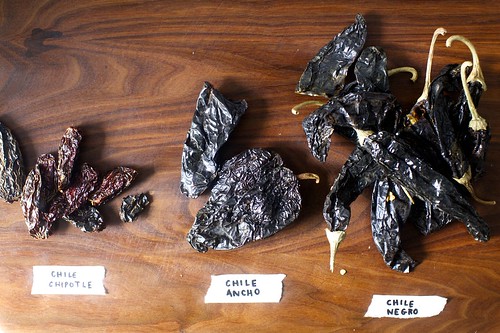
the chiles I used
boiling water to soften dried chiles

Yet I adore harissa, a Northwest African chile pepper paste with red peppers and spices and herbs such as garlic, coriander, caraway. Of course, when a condiment is used everywhere from Tunisia and Libya to Algeria and Morocco, you’re bound to find as many versions of it as there likely are people who make it, so there are recipes with cumin, lemon juice or even smoked chiles. There’s no one correct way to make it.

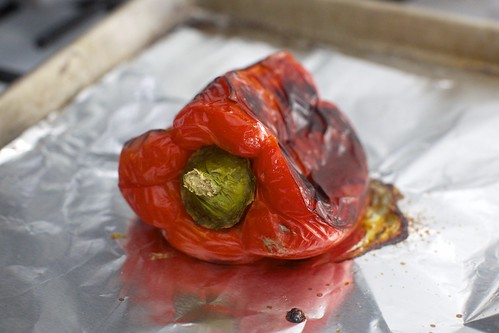
a very roasted red pepper

... Read the rest of homemade harissa on smittenkitchen.com


© smitten kitchen 2006-2012. | permalink to homemade harissa | 117 comments to date | see more: North African, Peppers, Photo, Savory Sauces and Condiments, Vegan, Vegetarian

18 Oct 04:02

GOP Lawmaker Says Hamas Could Use Ebola as a Weapon

Rep. Joe Wilson (R-SC) said that terrorists from Hamas could purposely infect themselves with the Ebola virus and then travel to America, BuzzFeed reports.

Said Wilson: "I'm very concerned. We had people who, I'll repeat it, the creed of Hamas: We value death more than you value life. What? That's their creed. Okay, well, part of their creed would be to bring persons who have Ebola into our country. It would promote their creed. And all this could be avoided by sealing the border, thoroughly. C'mon, this is the 21st century."
13 Oct 00:38

Marmalade Chicken From 'Eat: The Little Book of Fast Food'

by Maggie Mariolis
Dzaleznik

Gonna test this for dinner tomorrow.


This is as simple as it gets, and it's perfect for a busy night. For this recipe from his newest cookbook, Eat, Nigel Slater combines marmalade and whole-grain mustard, pours the mixture over chicken legs, and bakes them. Then he...Nope, that's it, and they're terrific. Read More
03 Oct 17:56

2014 National Geographic Photo Contest

by Jason Kottke
Dzaleznik

#27

In Focus has a look at some of the early entries in National Geographic's annual photography contest. Good stuff as usual.

Nat Geo 2014

Photo by Mehmet Karaca. Love the way the mantis's tail mimics the branch it's standing on.

Tags: Mehmet Karaca   photography
30 Sep 17:14

Inherent Vice

by Jason Kottke
Dzaleznik

What whoah what for serious?

Also, why isn't Jeff Bridges playing Doc Sportello!?! That was supposed to happen. He too tall? And is this the first movie adaptation of a Pynchon book?

I somehow didn't know or forgot that PT Anderson was doing a movie based on Thomas Pynchon's Inherent Vice. It turns out he totally is and here's the first trailer:

That looks entirely goofy and good.

Tags: books   movies   PT Anderson   Thomas Pynchon   trailers   video
26 Sep 16:59

Duckfat Chef Rob Evans Picks Portland, Maine's Best Bites

by Tessa McLean

Headed to Portland, Maine? Here's where to eat lobster rolls, fried clams, and more, according to James Beard award-winning Chef Rob Evans. Read More
17 Sep 15:17

Cast Iron Cooking: The Easy Pull-Apart Pepperoni Garlic Knots That Will Forever Change How You Entertain

by J. Kenji López-Alt
Dzaleznik

Holy Moly.


Who doesn't like knotted bites of tender, chewy, golden-brown pizza dough that are tossed in butter with flecks of garlic and herbs clinging to the nooks and crannies? Now imagine those same garlic knots, but with flecks of crisp, spicy pepperoni worked in, along with the kind of golden brown, crusty bottom that only a cast iron skillet can impart. And let's throw in the wafting steam and moist, tender center that pull-apart breads come with, and oh, how about two different cheeses? Sound good to you? Read More
12 Sep 16:09

herbed tomato and roasted garlic tart

by deb
Dzaleznik

Hahaha, hers is better.

herbed tomato and roasted garlic tart

I had a friend in town this week and just when we were at the point in the conversation when we’d usually pick a place to meet for lunch, something terrible happened. Caught up in a moment where I forgot that I am me and not, say, Ina Garten, I suggested he come over and I’d make lunch for us instead. I realized I’d lost my ever-loving mind. Sure, I’d like to be the kind of person who makes “just lunch, nothing fancy!” for friends on a whim but I am not. I don’t really do “whim” cooking, as a website with nearly 918 intricately detailed recipes in its archives might evidence. Plus, I had so many recipes I was overdue to test out — a lemonade, a salad, a tart and I’d been promising my son I’d make chocolate pudding for weeks, not to mention the daily grind of breakfast, lunchbox and dinner — that I felt like I had no time to cook anything extra.

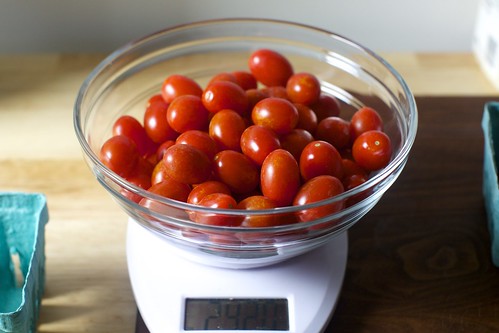
1.5 pounds of tiny tomatoes
baked with weights

And then, thank goodness, I realized how ridiculous that was. What could be more delicious for lunch than a salad, a tart, lemonade and chocolate pudding that I’d made enough of to ensure the kid wouldn’t be left out? What, you say? It might be a flop? My friend might push his food around his plate, hoping I wouldn’t notice or, worse, eat something he hated so not to hurt my feelings? Guys, I am 38 years old, by any standards (unfortunately, most days) a grown-up, and I decided that it was time, once and for all, to boldly embrace Julia Child’s best cooking rule: never apologize.

I don’t believe in twisting yourself into knots of excuses and explanations over the food you make… Usually one’s cooking is better than one thinks it is. And if the food is vile, then the cook must simply grit her teeth and bear it with a smile — and learn from her mistakes. (My Life in France)

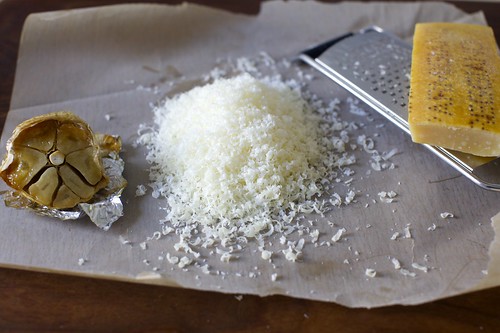
roasted garlic + parmesan

... Read the rest of herbed tomato and roasted garlic tart on smittenkitchen.com


© smitten kitchen 2006-2012. | permalink to herbed tomato and roasted garlic tart | 151 comments to date | see more: Appetizer, Lunch, Photo, Summer, Tarts/Quiche, Tomatoes, Vegetarian