Shared posts

24 Apr 20:25

OpenAI’s nonprofit structure was supposed to protect you. What went wrong?

by Kelsey Piper
OpenAI CEO Sam Altman speaking on a screen.
OpenAI CEO Sam Altman speaks remotely during a keynote discussion for the 2025 Global Privacy Summit on April 24 in Washington. | Anna Moneymaker/Getty Images

A version of this story originally appeared in the Future Perfect newsletter. Sign up here!

Right now, OpenAI is something unique in the landscape of not just AI companies but huge companies in general.

OpenAI’s board of directors is bound not to the mission of providing value for shareholders, like most companies, but to the mission of ensuring that “artificial general intelligence benefits all of humanity,” as the company’s website says. (Still private, OpenAI is currently valued at more than $300 billion after completing a record $40 billion funding round earlier this year.)

That situation is a bit unusual, to put it mildly, and one that is increasingly buckling under the weight of its own contradictions.

For a long time, investors were happy enough to pour money into OpenAI despite a structure that didn’t put their interests first, but in 2023, the board of the nonprofit that controls the company — yep, that’s how confusing it is — fired Sam Altman for lying to them. (Disclosure: Vox Media is one of several publishers that has signed partnership agreements with OpenAI. Our reporting remains editorially independent. One of Anthropic’s early investors is James McClave, whose BEMC Foundation helps fund Future Perfect.)

This story was first featured in the Future Perfect newsletter.

Sign up here to explore the big, complicated problems the world faces and the most efficient ways to solve them. Sent twice a week.

It was a move that definitely didn’t maximize shareholder value, was at best very clumsily handled, and made it clear that the nonprofit’s control of the for-profit could potentially have huge implications — especially for its partner Microsoft, which has poured billions into OpenAI.

Altman’s firing didn’t stick — he returned a week later after an outcry, with much of the board resigning. But ever since the firing, OpenAI has been considering a restructuring into, well, more of a normal company. 

Under this plan, the nonprofit entity that controls OpenAI would sell its control of the company and the assets that it owns. OpenAI would then become a for-profit company — specifically a public benefit corporation, like its rivals Anthropic and X.ai — and the nonprofit would walk away with a hotly disputed but definitely large sum of money in the tens of billions, presumably to spend on improving the world with AI.

There’s just one problem, argues a new open letter by legal scholars, several Nobel Prize winners, and a number of former OpenAI employees: The whole thing is illegal (and a terrible idea). 

Their argument is simple: The thing the nonprofit board currently controls — governance of the world’s leading AI lab — makes no sense for the nonprofit to sell at any price. The nonprofit is supposed to act in pursuit of a highly specific mission: making AI go well for all of humanity. But having the power to make rules for OpenAI is worth more than even a mind-bogglingly large sum of money for that mission. 

“Nonprofit control over how AGI is developed and governed is so important to OpenAI’s mission that removing control would violate the special fiduciary duty owed to the nonprofit’s beneficiaries,” the letter argues. Those beneficiaries are all of us, and the argument is that a big foundation has nothing on “a role guiding OpenAI.”  

And it’s not just saying that the move is a bad thing. It’s saying that the board would be illegally breaching their duties if they went forward with it and the attorneys general of California and Delaware — to whom the letter is addressed because OpenAI is incorporated in Delaware and operates in California — should step in to stop it. 

I’ve previously covered the wrangling over OpenAI’s potential change of structure. I wrote about the challenge of pricing the assets owned by the nonprofit, and we reported on Elon Musk’s claim that his own donations early in OpenAI’s history were misappropriated to make the for-profit. 

This is a different argument. It’s not a claim that the nonprofit’s control of the for-profit ought to produce a higher sale price. It’s an argument that OpenAI, and what it may create, is literally priceless. 

OpenAI’s mission “is to ensure that artificial general intelligence is safe and benefits all of humanity,” Tyler Whitmer, a nonprofit lawyer and one of the letter’s authors, told me. “Talking about the value of that in dollars and cents doesn’t make sense.”

Are they right on the merits? Will it matter? That’s substantially up to two people: California Attorney General Robert Bonta and Delaware Attorney General Kathleen Jennings. But it’s a serious argument that deserves a serious hearing. Here’s my attempt to digest it.

How OpenAI became OpenAI

When OpenAI was founded in 2015, its mission sounded absurd: to work toward the safe development of artificial general intelligence — which, it clarifies now, means artificial intelligence that can do nearly all economically valuable work — and ensure that it benefited all of humanity. 

Many people thought such a future was a hundred years away or more. But many of the few people who wanted to start planning for it were at OpenAI. 

They founded it as a nonprofit, saying that was the only way to ensure that all of humanity maintained a claim to humanity’s future. “We don’t ever want to be making decisions to benefit shareholders,” Altman promised in 2017. “The only people we want to be accountable to is humanity as a whole.” 

Worries about existential risk, too, loomed large. If it was going to be possible to build extremely intelligent AIs, it was going to be possible — even if it were accidental — to build ones that had no interest in cooperating with human goals and laws. “Development of superhuman machine intelligence (SMI) is probably the greatest threat to the continued existence of humanity,” Altman said in 2015.

Thus the nonprofit. The idea was that OpenAI would be shielded from the relentless incentive to make more money for shareholders — the kind of incentive that could drive it to underplay AI safety — and that it would have a governance structure that left it positioned to do the right thing. That would be true even if that meant shutting down the company, merging with a competitor, or taking a major (dangerous) product off the market. 

“A for-profit company’s obligation is to make money for shareholders,” Michael Dorff, a professor of business law at the University of California Los Angeles, told me. “For a nonprofit, those same fiduciary duties run to a different purpose, whatever their charitable purpose is. And in this case, the charitable purpose of the nonprofit is twofold: One is to develop artificial intelligence safely, and two is to make sure that artificial intelligence is developed for the benefit of all humanity.”

“OpenAI’s founders believed the public would be harmed if AGI was developed by a commercial entity with proprietary profit motives,” the letter argues. In fact, the letter documents that OpenAI was founded precisely because many people were worried that AI would otherwise be developed within Google, which was and is a massive commercial entity with a profit motive.

Even in 2019, when OpenAI created a “capped for-profit” structure that would let them raise money from investors and pay the investors back up to a 100x return, they emphasized that the nonprofit was still in control. The mission was still not to build AGI and get rich but to ensure its development benefited all of humanity. 

“We’ve designed OpenAI LP to put our overall mission — ensuring the creation and adoption of safe and beneficial AGI — ahead of generating returns for investors. … Regardless of how the world evolves, we are committed — legally and personally — to our mission,” the company declared in an announcement adopting the new structure. 

OpenAI made further commitments: To avoid an AI “arms race” where two companies cut corners on safety to beat each other to the finish line, they built into their governing documents a “merge and assist” clause where they’d instead join the other lab and work together to make the AI safe. And thanks to the cap, if OpenAI did become unfathomably wealthy, all of the wealth above the 100x cap for investors would be distributed to humanity. The nonprofit board — meant to be composed of a majority of members who had no financial stake in the company — would have ultimate control.

In many ways the company was deliberately restraining its future self, trying to ensure that as the siren call of enormous profits grew louder and louder, OpenAI was tied to the mast of its original mission. And when the original board made the decision to fire Altman, they were acting to carry out that mission as they saw it.

Now, argues the new open letter, OpenAI wants to be unleashed. But the company’s own arguments over the last 10 years are pretty convincing: The mission that they set forth is not one that a fully commercial company is likely to pursue. Therefore, the attorneys general should tell them no and instead work to ensure the board is resourced to do what 2019-era OpenAI intended the board to be resourced to do.

What about a public benefit corporation?

OpenAI, of course, doesn’t intend to become a fully commercial company. The proposal I’ve seen floated is to become a public benefit corporation. 

“Public benefit corporations are what we call hybrid entities,” Dorff told me. “In a traditional for-profit, the board’s primary duty is to make money for shareholders. In a public benefit corporation, their job is to balance making money with public duties: They have to take into account the impact of the company’s activities on everyone who is affected by them.”

The problem is that the obligations of public benefit corporations are, for all practical purposes, unenforceable. In theory, if a public benefit corporation isn’t benefiting the public, you — a member of the public — are being wronged. But you have no right to challenge it in court. 

“Only shareholders can launch those suits,” Dorff told me. Take a public benefit corporation with a mission to help end homelessness. “If a homeless advocacy organization says they’re not benefiting the homeless, they have no grounds to sue.” 

Only OpenAI’s shareholders could try to hold it accountable if it weren’t benefiting humanity. And “it’s very hard for shareholders to win a duty-of-care suit unless the directors acted in bad faith or were engaging in some kind of conflict of interest,” Dorff said. “Courts understandably are very deferential to the board in terms of how they choose to run the business.”

That means, in theory, a public benefit corporation is still a way to balance profit and the good of humanity. In practice, it’s one with the thumb hard on the scales of profit, which is probably a significant part of why OpenAI didn’t choose to restructure to a public benefit corporation back in 2019. 

“Now they’re saying we didn’t foresee that,” Sunny Gandhi of Encode Justice, one of the letter’s signatories, told me. “And that is a deliberate lie to avoid the truth of — they originally were founded in this way because they were worried about this happening.”

But, I challenged Gandhi, OpenAI’s major competitors Anthropic and X.ai are both public benefit corporations. Shouldn’t that make a difference?

“That’s kind of asking why a conservation nonprofit can’t convert to being a logging company just because there are other logging companies out there,” he told me. In this view, yes, Anthropic and X both have inadequate governance that can’t and won’t hold them accountable for ensuring humanity benefits from their AI work. That might be a reason to shun them, protest them or demand reforms from them, but why is it a reason to let OpenAI abandon its mission?

I wish this corporate governance puzzle had never come to me, said Frodo

Reading through the letter — and speaking to its authors and other nonprofit law and corporate law experts — I couldn’t help but feel badly for OpenAI’s board. (I have reached out to OpenAI board members for comment several times over the last few months as I’ve reported on the nonprofit transition. They have not returned any of those requests for comment.)

The very impressive suite of people responsible for OpenAI’s governance have all the usual challenges of being on the board of a fast-growing tech company with enormous potential and very serious risks, and then they have a whole bunch of puzzles unique to OpenAI’s situation. Their fiduciary duty, as Altman has testified before Congress, is to the mission of ensuring AGI is developed safely and to the benefit of all humanity. 

But most of them were selected after Altman’s brief firing with, I would argue, another implicit assignment: Don’t screw it up. Don’t fire Sam Altman. Don’t terrify investors. Don’t get in the way of some of the most exciting research happening anywhere on Earth. 

(After publication, OpenAI reached out to me with the following comment, which reads in part: “Our Board has been very clear: our nonprofit will be strengthened and any changes to our existing structure would be in the service of ensuring the broader public can benefit from AI. This structure will continue to ensure that as the for-profit succeeds and grows, so too does the nonprofit, enabling us to achieve the mission.”)

What, I asked Dorff, are the people on the board supposed to do, if they have a fiduciary duty to humanity that is very hard to live up to? Do they have the nerve to vote against Altman? He was less impressed than me with the difficulty of this plight. “That’s still their duty,” he said. “And sometimes duty is hard.”

That’s where the letter lands, too. OpenAI’s nonprofit has no right to cede its control over OpenAI. Its obligation is to humanity. Humanity deserves a say in how AGI goes. Therefore, it shouldn’t sell that control at any price. 

It shouldn’t sell that control even if it makes fundraising much more convenient. It shouldn’t sell that control even though its current structure is kludgy, awkward, and not meant for handling a challenge of this scale. Because it’s much, much better suited to the challenge than becoming yet another public benefit corporation would be. OpenAI has come further than anyone imagined toward the epic destiny it envisioned for itself in 2015. 

But if we want the development of AGI to benefit humanity, the nonprofit will have to stick to its guns, even in the face of overwhelming incentive not to. Or the state attorneys general will have to step in.

Update, April 24, 3:25 pm ET: This story has been updated to include disclosures about Vox Media’s relationship to OpenAI and Anthropic.

Update, April 25, 5:20 pm ET: This story has been updated to include a comment from OpenAI sent after publication.

30 Oct 17:13

I just found out that the original version of Tetris for the...

by Jason Kottke
I just found out that the original version of Tetris for the Game Boy is available on the Switch, so guess what I’m doing for the rest of the week?

💬 Join the discussion on kottke.org

14 Sep 13:10

Bad Day? Have a Bowl of Pastina

by Jenny Rosenstrach

pastina easy recipe by glossy Pelosi

If you ever need proof that eating well often means living well, look no further than Dan Pelosi…

Pelosi, known to most as Grossy Pelosi (the nickname is a riff on the main character in the movie Never Been Kissed), exploded on the scene during the pandemic when he chronicled his home-cooking escapades on Instagram, inviting everyone along to (virtually) join him.… Read more

The post Bad Day? Have a Bowl of Pastina appeared first on Cup of Jo.

17 Jan 15:48

The Incurable Disease vs the Relentless Couple

by Jason Kottke

When Sonia Vallabh lost her mother to a rare disease called fatal familial insomnia, she soon found out that she had inherited the disease, that there was no cure, and that she’d be dead in “a decade or two”. Despite almost no scientific training, Vallabh and her husband both quit their jobs to work on a cure. Talk about going all-in.

Within a few weeks of the diagnosis, Sonia had quit her job to study science full time, continuing classes at MIT during the day and enrolling in a night class in biology at Harvard’s extension school. The pair lived off savings and Eric’s salary. Sonia had expected to take a temporary sabbatical from her real life, but soon textbooks and academic articles weren’t enough. “The practice of science and the classroom version of science are such different animals,” Sonia says. She wanted to try her hand in the lab. She found a position as a technician with a research group focusing on Huntington’s disease. Eric, not wanting to be left behind, quit his job too and offered his data-crunching expertise to a genetics lab. The deeper they dove into science, the more they began to fixate on finding a cure.

They’re now on the brink of getting their Harvard PhDs and are pushing ahead with a promising medical therapy.

As soon as the couple began their presentation, Lander says, there was a sense of “pushing on an open door” — quite a surprise, given the agency’s stodgy reputation. “People still flat-out don’t believe the FDA was cool with it,” Minikel says. Afterward, one of the 25 scientists in the audience pulled Lander aside and said, “That was one of the best presentations I’ve ever seen.” Schreiber agreed. He alluded to a pharmaceutical company he’d helped set up early in his career. “Twenty-four years into that company, there was nothing to show for it. Not one thing,” he says. “For two graduate students who are not trained in science to come in and do what they did? Absolute forces of nature, savants. They keep seeing things that other people don’t see.”

Update: D.T. Max wrote a book on prions and prion-based diseases called The Family That Couldn’t Sleep. I looked in the kottke.org archives and found a 2010 post on a National Geographic article Max wrote about sleep that specifically referenced fatal familial insomnia:

The main symptom of FFI, as the disease is often called, is the inability to sleep. First the ability to nap disappears, then the ability to get a full night’s sleep, until the patient cannot sleep at all. The syndrome usually strikes when the sufferer is in his or her 50s, ordinarily lasts about a year, and, as the name indicates, always ends in death.

(via @mattbucher)

Tags: D.T. Max   medicine   science   Sonia Vallabh
23 Oct 15:54

Cars Are Getting Permanently Kicked Out Of Prospect Park

by Rebecca Fishbein
Cars Are Getting Permanently Kicked Out Of Prospect Park At last, some good news. After a successful car-free trial run in Prospect Park this summer, Mayor Bill de Blasio announced today he will banish them from the park for good. [ more › ]
17 Oct 16:52

Intrigue in the online mattress review world

by Jason Kottke

For Fast Company, David Zax wrote about the Casper mattress company suing mattress-reviewing bloggers over their affiliate marketing relationships.

As Casper flourished through 2014 and early 2015, I learned, it enjoyed a mutually beneficial relationship with Sleepopolis and similar sites. For many bloggers, in fact, Casper was among the first mattress companies to offer affiliate commissions, leading its competitors to respond in turn. The reviews sites were key parts of what marketers call the “purchase funnel,” converting a vague interest in mattresses into awareness of a specific brand, and often the decision to buy it. Many consumers were Googling terms like “best mattress,” landing on sites like Sleepopolis, and learning about e-tailers like Casper for the first time.

Indeed, one would never have predicted looming lawsuits from a friendly 2015 email exchange, in which Casper CEO Philip Krim attempted to court an affiliate marketer named Jack Mitcham, who ran a Sleepopolis-like site called Mattress Nerd.

In January 2015, Krim wrote Mitcham that while he supported objective reviews, “it pains us to see you (or anyone) recommend a competitor over us.”

Krim went on: “As you know, we are much bigger than our newly formed competitors. I am confident we can offer you a much bigger commercial relationship because of that. How would you ideally want to structure the affiliate relationship? And also, what can we do to help to grow your business?”

I was just thinking the other day about how these companies like Casper formed to undercut the price gouging mattress stores and now, with millions of VC dollars behind them, they’re pulling their own brand of underhanded tricks to manipulate people into buying their products. In five years, Casper will probably have dozens of retail stores and 10 different kinds of mattress at different price points — they already have more than a dozen stores and 3 models ranging from $600 to $1850 — just like the companies they are trying to replace. Their origin story won’t matter…VC-fueled marketing will paper over all of that and, tada, meet the new boss, same as the old boss.

Tags: business   David Zax
17 Oct 13:38

This Is the Only Sheet Brand I'll Ever Buy Again—Here's Why

by Shifrah Combiths

About a year ago, I was a woman on a mission. I was going to find nice white sheets for my family that felt great, would last, and that wouldn't feel like I spent too much money for kids who probably don't enjoy a good set of sheets as much as their mother does.

READ MORE »

16 Oct 18:13

JLo & A-Rod Are Apparently Eyeing Apartments In This Midtown Skyscraper

by Tara Bellucci

If the real estate gossip is to be believed, abbreviated power couple J-Rod is closing in on their new pad. The superstar actress and singer and former baseball player have been seen peeking around one (particularly tall) residential building.

READ MORE »

21 Sep 15:22

How To Make a Small Apartment More Fun for Your Cat

by Candace Bryan

Cats who live in apartments face one very serious threat: boredom. Cat behavior problems—aggression, waking owners up in the middle of the night, obsession with food, and more—can often be traced back to a simple lack of stimulation. Though cats are often considered to be low maintenance pets, most do need some form of entertainment and activity each day.

READ MORE »

19 Sep 21:00

Jeju Noodle Bar Serves NYC's Best New Bowl Of Korean Ramyun

by Scott Lynch
  
Our latest installment of Quick Bites brings us to the West Village for ramyun, Korea's equivalent of Japanese ramen. [ more › ]
12 Sep 21:50

3 Simple Ways to Get a Stronger WiFi Signal at Home

by Taryn Williford

Reliable internet is a necessity these days. I actually came really close to signing a lease for a perfect little apartment close to work a few years ago, but ducked out at the last possible second after discovering that I'd be locked into a crappy internet provider (a wise decision later confirmed by online reviews of said ISP). The point is, nothing should stand between you and a strong and fast internet, and your router placement has more than a little to do with it.

READ MORE »

01 Sep 17:59

2017 fall foliage map

by Jason Kottke

2017 Foliage Map

It’s September 1st and currently 52° here in VT (low tonight of 38°) which means summer is over. :| But luckily fall is pretty great here as well. Once again, SmokyMountains.com has the best fall foliage prediction map around.

The 2017 Fall Foliage Map is the ultimate visual planning guide to the annual progressive changing of the leaves. While no tool can be 100% accurate, this tool is meant to help travelers better time their trips to have the best opportunity of catching peak color each year.

Here’s my favorite VT foliage shot from last year, taken half a mile from my house, right out of my car window on the way to pick up the kids at school:

Vt Foliage 2016

Tags: maps   USA
29 Aug 20:41

Reviewed: The Most Comfortable Sofas at Joybird — The Apartment Therapy Sofa Squad

by Arlyn Hernandez

In our initial call out to readers asking for suggestions on what companies to test next for our Apartment Therapy Sofa Squad, an abundance of you identified Joybird as a brand you wanted to know more about, so we hiked on over to Los Angeles where the company is based and sat on their sofas with Apartment Therapy staffers and a (fantastic!) volunteer group of loyal readers. Check out our thoughts on the 17 models we tested.

READ MORE »

25 Aug 15:37

A New York Izakaya From A Former WD-50 Chef Has Opened In Murray Hill

by Nell Casey
 
This week sake sommelier and former wd-50 research and development cook John McCarthy opened his second New York restaurant Oka in Murray Hill, which is throwing off the yoke of douchedom with some enticing new dining options. McCarthy mimics the izakaya format, reinterpreting the Japanese pub style "through a New York lens." Oka means "hill" in Japanese. [ more › ]
25 Aug 13:59

The Best Way to Cut Corn Kernels From the Cob

by J. Kenji López-Alt

As delicious as corn on the cob is, sometimes you need to set those kernels free to be sautéed or charred in a skillet, or incorporated raw into salads. Here's how to prepare corn to be served off the cob. Read More
23 Aug 16:49

Game of Thrones season 7: we have 27 questions about the White Walker battle in “Beyond the Wall”

by Alex Abad-Santos

Where did those big chains come from? And many, many other questions.

“Beyond the Wall” was one of the most purely spectacular Game of Thrones episodes to date, but if you think about it for more than a few minutes, the whole thing comes crashing down faster than King’s Landing under a scorned queen’s wildfire siege. More than any other episode of season seven — or really, the entire series so far — the hour glossed over so many logistical hurdles and relied on so many convenient twists to arrive at its ice dragon endgame that it didn’t make much sense at all.

The ridiculousness began as soon as Jon Snow and his merry band of wight-hunters began their trek north of the Wall in search of a reanimated corpse to capture and bring back to Cersei. The plan was ill-formed from the start, and they made some baffling decisions along the way. Yet their mission was ultimately successful, give or take a dragon death.

Not only did the tiny search party stumble upon a separated group of wights sooner rather than later, but they discovered that killing one White Walker probably kills every wight that it turned — in a moment that fortuitously still left them a single wight to capture. And from there, they made a series of miraculous escapes from what should have been certain death. There were countless holes in this idea and its execution, and yet, Jon Snow emerged victorious and alive once again.

In an effort to highlight the glaring moments of “Beyond the Wall” that just didn’t make any sense, we came up with 27 basic questions that the episode failed — or more accurately, didn’t even try — to answer.

  1. Instead of Jon leading a ranging party north of the Wall to aimlessly search for a wight to capture and deliver to Cersei, why didn’t just Dany scout out the White Walkers from the air, on her dragons?
  2. Alternately, why didn’t Dany escort the party to help them capture the wight?
  3. Why didn’t anyone in Jon’s party appear to bring any food or other supplies, or bother more appropriate winter gear (namely: hats)?
  4. Who truly believes that seeing a wight will actually convince Cersei to join Jon and Daenerys in battling the White Walkers?
  5. Has anyone pointed out to Jon and Dany that Cersei technically has her own wight bodyguard? Like, maybe Jaime could have mentioned as much when he met with Tyrion about this very plan?
  6. Shouldn’t Tyrion, at the very least, know better than to bet so much on appealing to Cersei Lannister’s humanity?
  7. Why didn’t the group bring a raven with them to send a message back to Eastwatch in the event of trouble?
  8. Wasn’t it really, um, convenient to have the ice break just in time to stop the wights? And for Jon and his buddies to end up on a perfectly placed island?
  9. Why didn’t the Night King just use his ice javelins against Jon, Jorah, Tormund, and the rest of the wight hunters while they were stranded on an island in the middle of the lake? Was he playing a longer game to lure Dany out?
  10. Why didn’t the Night King first try to kill the dragon that Dany — and eventually the rescued members of Jon’s party — was riding? Assuming that what he really wanted a zombified dragon, wouldn’t it make more sense to start with the biggest of the three and the easiest one to hit?
  11. Why didn’t Dany or anybody else try to kill the Night King?
  12. Why did Dany bring all three dragons beyond the wall, when she only used one against the Lannister army? Gendry didn’t know how many undead were coming, so he couldn’t have warned her of the massive army.
  13. Jon and Dany have an essentially unlimited supply of dragonglass now, right? Why didn’t they bring dragonglass arrows, to kill White Walkers with from a distance?
  14. How was Gendry able to run all the way to Eastwatch, however far that was, in what appears to be record time?
  15. While we’re at it, how did Gendry even know where to run after fresh snow wiped out Jon and co.’s tracks, especially since Gendry had never even experienced snow before, period?
  16. How the hell did a raven travel the 2,000 miles from Eastwatch to Dragonstone in less than a day? If it took 12 hours, and the raven never stopped to rest, that’s a 167-mph raven.
  17. And even if it did take more than a day, how did the men not end up like poor Thoros before the hour Daenerys swooped in?
  18. Could Jon really not break away from the fight to get on the dragon with everybody else?
  19. How did Jon survive his plunge into the icy lake water at the hands of the wights, let alone pull himself out while bogged down by soaking wet clothing?
  20. And how did he manage to then ride a horse back to Eastwatch while barely conscious (and also bogged down by soaking wet clothing)?
  21. Why didn’t Benjen show up earlier in the battle against the Night King? The last time he suddenly appeared to help a fellow Stark, he said that the Three-Eyed Raven had sent him; presumably that means Bran sent him to help Jon. But does that mean that Bran didn’t dispatch Benjen until Jon was stranded, dripping wet, and being chased by wights?
  22. Where even was Benjen, before showing up to rescue Jon out of nowhere?
  23. How did thousands of supposedly terrifying and powerful wights not manage to kill anyone except anonymous redshirt wildings?
  24. Where did the Night King acquire giant, industrial-strength chains that he could use for hauling a dead dragon out of a freezing lake?
  25. And if he didn’t just find them somewhere, how did he forge them? We don’t know exactly what the White Walkers’ relationship to fire is; we know they don’t like it, but have shown to have a bit of resistance to it (like when the Night King walked through it to kill the Children of the Forest). We do know the wights are killed by fire. It seems implausible that the White Walkers would have been able to create those giant chains without help from their undead army, but how exactly would they have done it?
  26. Who jumped into the freezing lake to attach the giant chains to the submerged dragon body — the wights that previously wouldn’t enter the water?
  27. And last but definitely not least: Why did no one, out of everyone in this entire all-star war council, realize how dumb the whole “capture a wight” plan was from the start?
07 Aug 15:54

How To Fight Your NYC Parking Ticket From Just About Anywhere

by Sponsor
How To Fight Your NYC Parking Ticket From Just About Anywhere If you happen to be a car-owning New Yorker who gets the occasional parking ticket, then you also know “the boot” is more than just an Oktoberfest chugging challenge. [ more › ]
03 Aug 18:30

Anyone With A Library Card Can Now Stream Thousands Of Feature Films, Including The Criterion Collection

by Jen Carlson
  
In July, LAist announced that you could stream hundreds of movies from the Criterion Collection for free if you had a Los Angeles Public Library card. We immediately reached out to the New York Public Library inquiring about our own hidden benefits as library card holders, and at the time they did not offer access to Kanopy's streaming service, which the LAPL uses. But lo and behold, they have now decided to add it (you're welcome?)—starting Friday August 4th, anyone with a library card (both NYPL and Brooklyn Public Library) will have access to hundreds of movies. Here's what you need to know: [ more › ]
01 Aug 19:52

A New Korean Noodle Bar Is Coming To The West Village

by Nell Casey
A New Korean Noodle Bar Is Coming To The West Village Look out for a new noodle soup slurping spot opening in August in the West Village. Douglas Kim, a chef with an impressive resume that includes Per Se, Morimoto NYC, Bouley and Chef's Table at Brooklyn Fare, will open JeJu Noodle Bar in the former Nighthawks space on Greenwich Street serving ramyun, Korea's equivalent of Japanese ramen, with an eye towards recreating this brand on a larger scale. [ more › ]

11 Jul 14:06

Fresh Ginger Lemonade

by David

Note: I’ll be making this ginger lemonade today at 6pm CET (Noon ET, 9am PT) on my IG Live Apéro Hour on Instagram. To watch, head to my profile on my IG profile page at that time, and when the circle around my profile pic says “Live” – click on it to tune in. More info, as well as how to watch it in replay in my IGTV channel archives, is here.

I once got into a Scrabble tiff when I was challenged for using the word “ade.” I’ve played Scrabble in English, and in French, and I’ve determined that it’s impossible to win if facing off against French players due to the astounding selection of verb conjugations they have at their disposal. (Except for this French Scrabble champion who doesn’t even speak French, but won by memorizing words in the French dictionary. Wow.)

Fortunately, I don’t have a competitive streak, although I did dig my heels over the word ade when I was playing Scrabble with some fellow anglophones one time, who refused to concede that ade was an actual word. There was a dictionary on hand in the summer house we were staying at, which confirmed that ade is, indeed, a drink made with fruit.

Continue Reading Fresh Ginger Lemonade...

10 Jul 15:17

Prospect Park Will Be Entirely Closed To Car Traffic For The First Time This Summer

by Emma Whitford
Prospect Park Will Be Entirely Closed To Car Traffic For The First Time This Summer Prospect Park will be entirely closed to car traffic 24/7 from Monday, July 17th through Monday, September 11th, the Department of Transportation announced today. New signage alerting drivers to the impending change went up this morning. [ more › ]
03 Jul 13:37

Study Confirms North Americans Use Paper Towels to Clean More Than Any Other Country

by Brittney Morgan

Think about your usual cleaning routine—what tools do you use most frequently? Do you rely on your trusty dish sponge every day, or is your vacuum your go-to tool of the trade? Actually, if you live in North America, you probably use paper towels more than anything else, according to a study by Nielsen.

READ MORE »

13 Jun 18:52

Popular South Slope Pizza Bar Expands To Columbia Street

by Nell Casey
 
Toby's Public House, a popular sports bar and pizza spot in South Slope, has expanded its footprint into the Columbia Street Waterfront District, opening up a second location in May for serving its wood-fired pies. [ more › ]
18 May 15:36

Trump axed a rule that would help protect coastal properties like Mar-a-Lago from flooding

by Sarah Frostenson

President Donald Trump has called climate change a “hoax” and a very expensive “tax” on American businesses that make the United States less competitive. In June, he announced that it was in the best interest of the country to withdraw from the Paris climate accord drawing on several bogus arguments.

His administration has also axed several regulations issued by President Obama to limit greenhouse gas emissions and reduce the impacts of climate change. The latest to fall: a 2015 directive to federal agencies requiring them to account for sea-level rise and storms when making grants and building infrastructure.

The so-called federal flood risk management standard was still in the works, but the aim was to create design standards to guard against increased flood risks for new construction in flood-prone areas. Trump did away with it in his executive order on infrastructure on Tuesday.

Environmental groups say the standard would have helped mitigate the risk of costly and harmful damages from floods. Now, “taxpayer dollars will likely be wasted through investments in projects that could be washed away in the next storm,” said Rachel Cleetus, lead economist and climate policy manager at the Union of Concerned Scientists, in a statement. According to FEMA, floods led to $260 billion in damages between 1980 and 2013.

Of course, Trump himself is one such property owner who stands to lose a lot in future flood events. Mar-a-Lago is the crown jewel of his extensive real estate portfolio and his preferred location for carrying out many of his official presidential duties. But rising sea levels are causing more frequent and more damaging tidal floods on the Florida coast. And projections suggest that the risk to human lives and property from climate change-related flooding events in this region is only going to increase dramatically in the coming years.

The National and Oceanic Atmospheric Administration (NOAA) has put out a variety of different estimates of rising sea levels in Southern Florida. The more conservative finding suggests that they could jump anywhere from 3 feet by 2050 to 7 feet by 2100.

But in January, the agency put out new “extreme” sea level projections — its doomsday scenario, in other words. In this scenario, we’d see a 10- to 12-foot rise in sea level in the US by 2100, which would have dramatic consequences for places like Mar-a-Lago (see the photo above).

Of all US states, Florida faces the greatest risk from rising sea levels

So what would a 10-foot rise in sea levels mean for Florida? Here’s a satellite image of what that would look like. Large swaths of the state are submerged. Miami is entirely flooded, along with the rest of Southern Florida:

 Sarah Frostenson / Vox
Things do not look good in south Florida. Miami could be the new underwater city of Atlantis.

There is evidence that average sea levels are already steadily rising in Southern Florida. A 2016 paper found that in the past decade, the average rate of sea-level rise had tripled from 3 millimeters a year to 9 millimeters. And overall sea levels in Southern Florida had risen about 90 millimeters, or 3.5 inches, since 2006.

Of the 30 most populous US cities that would be negatively affected by extreme sea-level rise, Climate Central, a nonprofit climate science research group, found that 19 were located in Florida (circled in yellow in the chart below).

Sea-level rise is hard to predict, but it’s clear Mar-a-Lago is at risk of extreme flooding

Scientists don’t have a great understanding of how exactly rapidly sea levels will continue to rise or the precise impact on specific areas.

But new research that indicates parts of the Antarctic ice sheet may collapse in the next 100 years — and that has scientists scrambling to model more extreme scenarios. If the Antarctic ice sheet does melt, it could trigger a catastrophic 10-foot spike in sea levels and inundate major US cities like New York and Miami, displacing nearly 150 million people worldwide.

“It may be a lot less stable [in Antarctica] than we thought,” said Ben Strauss, a vice president at Climate Central. “But the truth is we are relatively early in our scientific understanding of how the great ice sheets will respond to warming.”

Last summer, the Guardian investigated Trump’s coastal properties to see how at risk each of them were to flooding from rising sea levels.

What they found was Mar-a-Lago was already in serious trouble.

The estate was at high risk for flooding during heavy rains and storms, with water already pooling on the premises in addition to nearby bridges and roads in Palm Beach. Plus, in the next 30 years, they estimated there will be 210 days a year where Mar-a-Lago will be flooded with at least a foot of water.

Keren Bolter, chief scientist for Coastal Risk Consulting and the firm that analyzed Trump’s properties, told the Guardian that tidal flooding in the next 30 years could partially submerge some of the club’s luxurious cottages and bungalows. And perhaps even eventually render Trump’s “Southern White House” uninhabitable.

For now, though, Trump remains stubbornly in denial of the threat. In June, he reportedly told the mayor of Tangier Island, Va., which is losing up to 16 feet of coastline a year, that there was no need to worry about sea-level rise.

11 May 02:35

5 Unexpected Trips To Book For The Honeymoon Of Your Dreams

by Venus Wong

There's your standard romantic getaway, and then there's your honeymoon — the trip where you want every single detail to be exceptionally romantic. Destinations like Paris and Hawaii are lovely and all, but you pretty much know that you'll be getting a slightly fancier version of a standard tourist experience.

Why not make your first proper vacation as a legally wedded couple an exciting opportunity to think outside the box and seek those transformative memories that will bring you two even closer? To inspire you to go all-out on your first married vacay, we've rounded up five far-flung destinations that will make the perfect sendoffs, along with the best hotels to stay in. Click through to discover the adventures that will create intimate memories — and in some cases, epiphanies — to last a lifetime.

Miyajima, Japan
Many travelers see Kyoto as the destination of choice for relishing Japan's heritage and splendor. But in order to experience the most cinematic views in the country — without constantly bumping elbows with tourists — look to this hidden gem, off the coast of Hiroshima.

Nicknamed "The Island of Gods", Miyajima is blessed with out-of-this-world natural landscapes and well-preserved historic shrines. Thanks to its remote location, the streets are hardly ever packed, making for an especially romantic ambience at night. Drink in the marvelous sunset at Mikasano Hama Beach, and take a loved-up selfie in front of Itsukushima Shrine, an iconic landmark.

Photo: Getty Images.

Where To Stay:
You haven't really experienced Japan without staying at a ryokan — a traditional guesthouse. Iwaso has been overlooking the floating crimson gates at Itsukushima Shrine for more than 160 years, and is the ideal accommodation to get a taste of old-world luxury. Snuggling in an open-air hot spring — partially supplied with water from a 19th-century well — is going to be a great kick-off to married life.

Photo: Courtesy of Iwaso

Calvi, Corsica
This Mediterranean island is technically a French region, but the scenery feels full-on Amalfi Coast. The compact area offers a diverse range of natural wonders in its relatively small parameters.

Calvi, an enchanting seaside town facing the French Riviera, is made for honeymooners. Active couples will love the adrenaline rush from surfing the tumbling waves, but if you're more into getting some R&R, you can do that at the many glorious beaches along the coastline, too. Prepare to be dazzled by the rich history of the region, which boasts must-see spots like a gargantuan fortified citadel.

Photo: Getty Images.

Where To Stay:
La Signoria is a seaside gem with a fascinating story: The Genovese-style property was originally a gift from King Louis XV to a nobleman, and it still retains its 18th-century charm. Each room comes with a terrace or balcony overlooking the Mediterranean sea, making for the perfect setting for a romantic tête-à-tête.

Photo: Courtesy of La Signoria

Bhutan
Consistently ranked as the happiest place on Earth, there are plenty of mysteries and magic to unlock in Bhutan. The flights and costs are steep, but the memories you'll make will be unlike those at any other destination. The unspoiled Paro Valley provides a phenomenal hiking experience ending at Paro Taktsang, a sacred site hanging off a Himalayan cliff. Engaging with the local community and learning about their spirituality and way of life is immensely rewarding.

Photo: Getty Images.

Where To Stay:
There aren't that many resorts in Bhutan yet, and Amankora is definitely cream of the crop. The luxury lodge tailors excursions for travelers seeking spirituality or an adrenaline rush, even making far-fetched dreams — like sharing a meal with monks at a 12th-century temple — a reality.

Photo: Courtesy of Aman

Nelson-Tasman, New Zealand
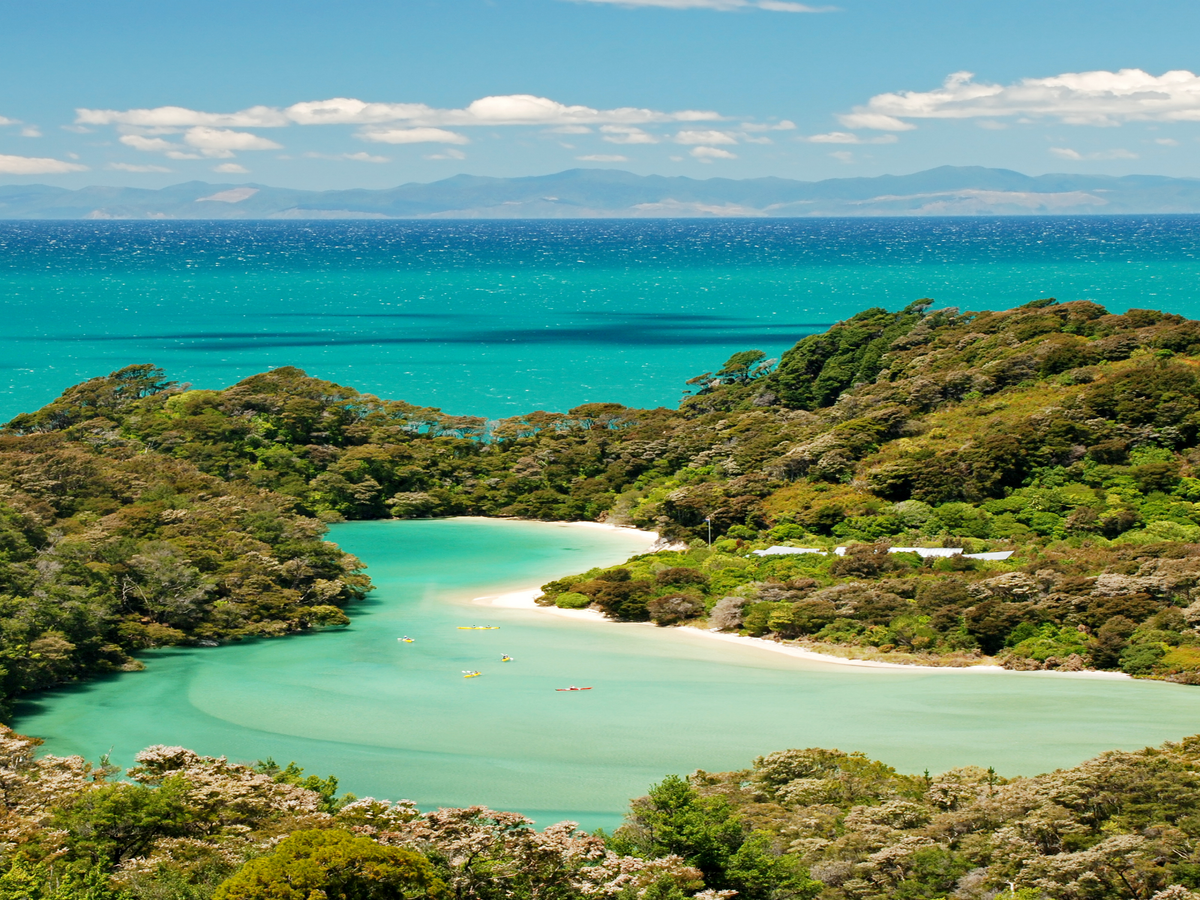
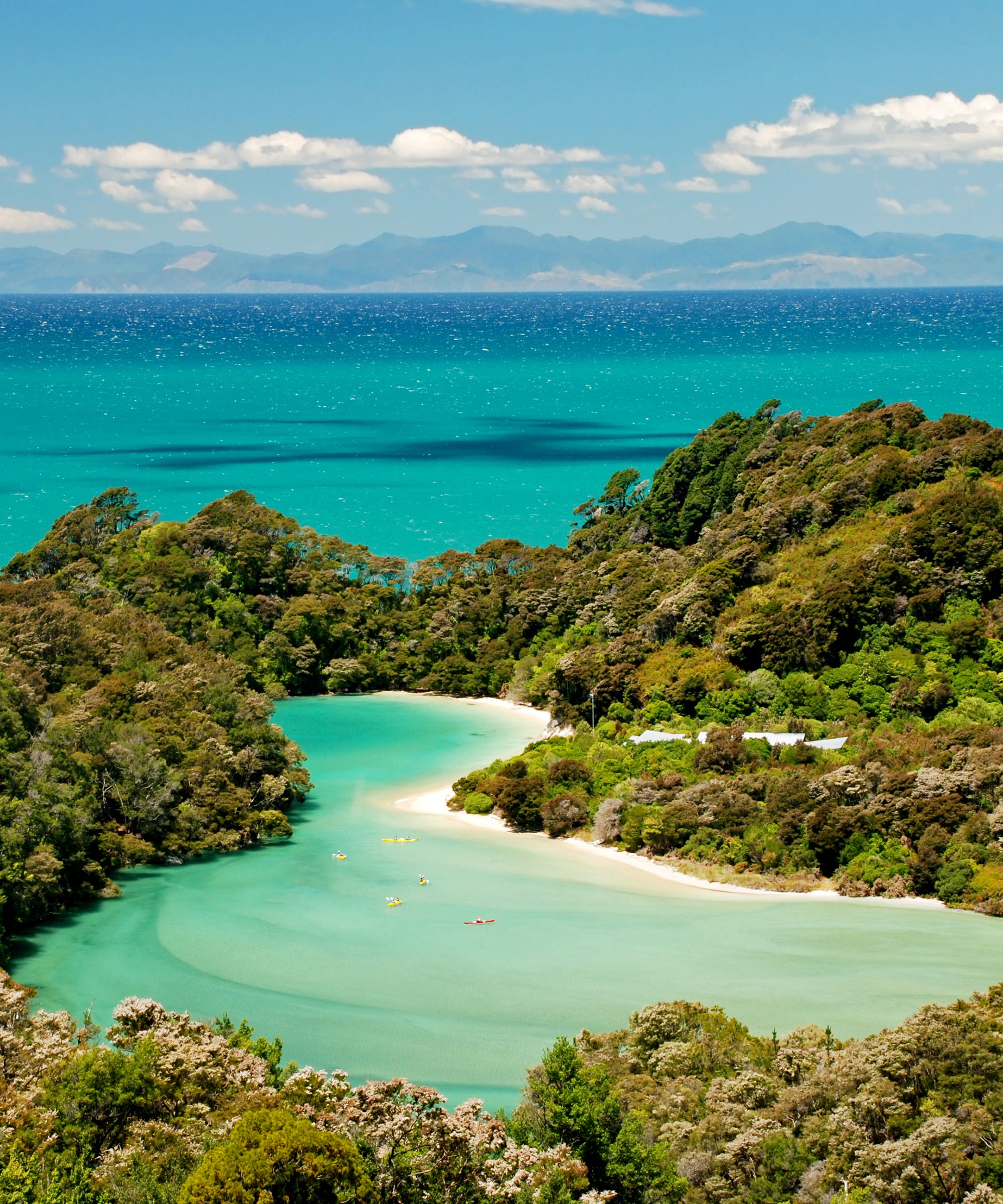
Nelson-Tasman is the sunniest region in New Zealand. There, you'll be getting three life-changing experiences from one honeymoon: Soaring over Rotomairewhenua — the clearest lake in the world — in a helicopter, hiking up the coastal trail at Abel Tasman National Park, and vineyard-hopping on a bicycle. The buzzing local artist community also provides a wealth of original pottery, hand-blown glasses, and wood crafts for you to remember this trip by.

Photo: Getty Images.

Where To Stay:
Mahana Villa is a luxury retreat set within a vineyard, once a family-owned orchard. All of the terraces look out to the verdant grapevines, providing a setting for some of the most gorgeous sunsets you'll ever see. It's hard to imagine anything but honeymoon bliss at this hillside paradise.

Photo: Courtesy of Mahana Villa

The Scottish Highlands
The rugged landscapes of the Scottish Highlands have inspired countless romance novels, and it will be the optimal setting for your very own love story. Take a scenic drive along Northwest Highlands Geopark or go wildcat-spotting at Highland Wildlife Park to fully make use of the natural wonders the area has to offer. Whiskey lovers should not miss the opportunity to tour the single-malt Scotch distilleries in the region.

Photo: Getty Images.

Where To Stay:
Located in the heart of Inverness, The Heathmount is a family-owned boutique hotel that will impress with its cozy vibe, delicious food, and friendly services. Newlyweds will feel right at home in a Four Poster, a room category that comes with grand beds and sensual decor.

Photo: Courtesy of Heathmount Hotel

Like what you see? How about some more R29 goodness, right here?

Trader Joe's Just Recalled Its Chocolate Mochi Ice Cream

31 Stunning Wedding-Invitation Ideas

Watch Aziz Ansari & Jimmy Fallon Read More Outrageous Yelp Reviews

17 Mar 20:58

A Vegan Deli & Grocer Has Opened On The Lower East Side

by Nell Casey
 
Vegans in New York City have access to just about every version of food carnivores enjoy, whether that's street food, BBQ, tapas, pizza, cheese, fine dining, burgers, "butcher" shop items...and on and on. And now: "deli." An all vegan deli and food market called Orchard Grocery has debuted on the Lower East Side, selling sandwiches and pantry-stockers crafted without the inclusion of animals. [ more › ]
16 Mar 19:53

Snooooooow! Traaaiiiinnnnnn!

by Jason Kottke

When the first train rolls into the station after a big snowstorm, you’d best stand well clear. This was the Rhinecliff Amtrak station in New York.

Tags: this is a metaphor for something   trains   video
15 Mar 17:06

DIY Project Test Lab: I Hacked My Rental Kitchen & Bath with Sugru

by Ashley Poskin

Sug-what? Pronounced seew-grew, this sticky substance is like moldable glue that's clay-like out of the package, then hardens to rubber after 24 hours. People have found all sorts of ways to fix and create things with this flexible, interesting stuff. But perhaps most intriguing is its potential for renters. Since Sugru adheres to most substances — like ceramic tile, wood, and plastic — but can also be easily removed, it's potentially a way to hang items temporarily without using nails or drilling. Sounds revolutionary right? We put it to the test to find out just how fantastic Sugru is...

READ MORE »

21 Feb 19:07

We Did the Math: The Neighborhoods to Look at Right Now for Affordable Rent in NYC

by Brittney Morgan

Looking to move to New York, but don't know where to actually look for your new home? NYC is full of amazing neighborhoods and each one has something special to offer, but if you're looking for a less expensive start, these neighborhoods in Manhattan, Brooklyn and Queens can boast more affordable rent, tons of parks, amazing food and plenty of culture—not to mention an easier commute.

READ MORE »

10 Feb 17:14

Mokbar Brings Its Popular Korean Soul Food & Ramen To Park Slope

by Nell Casey
 
Esther Choi's Korean restaurant mokbar channeled its success in Chelsea Market to a new location into Brooklyn on Flatbush Avenue. For the new restaurant, Choi's doing more than her popular Korean ramen, expanding the menu to include jipbap—proteins served with rice and vegetables—and appetizer-sized dishes including anju (small plates) and dumplings. [ more › ]