Whether you're commuting to the office or planning a cross-country journey, find the motorcycle jacket you need.
Rlandau
Shared posts

03 Jan 01:01


Underrail: Expedition Expanding Post-Apocalyptic RPG
by Alice O'Connor

Post-apocalyptic isometric RPG Underrail [official site] will leave its sprawling metroworld to visit an underground sea in its first expansion next year, developers Stygian Software announced today. Underrail: Expedition is off to the Black Sea, a huge subterranean sea filled with pirates, strange wildlife, ancient ruins, and all the usual expansion merriment. I’ve heard good things about Underrail so heck, I’m glad for the reminder to check it out. … [visit site to read more]
13 Dec 14:04

Have You Played… Bernband?
by Alice O'Connor

Have You Played? is an endless stream of game recommendations. One a day, every day of the year, perhaps for all time.
Bernband [official site] has my favourite alien city in a video game. Stuff the Citadel, Bernband is where I want to go. Wandering its streets, corridors, and passageways at night you might see bands play in bars, visit nightclubs, stumble into school classes, wonder what high-tech devices even do, and find folks discreetly pissing in corners. It’s the best experience I’ve had of wandering in a strange city, and I will keep talking about it until everyone has visited.
25 Oct 13:06
Software Gets Easier to Consume Faster Than It Gets Easier to Make
by Eugene Wallingford
In What Is the Business of Literature?, Richard Nash tells a story about how the ideas underlying writing, books, and publishing have evolved over the centuries, shaped by the desires of both creators and merchants. One of the key points is that technological innovation has generally had a far greater effect on the ability to consume literature than on the ability to create it.
But books are just one example of this phenomenon. It is, in fact, a pattern:
For the most part, however, the technical and business-model innovations in literature were one-sided, far better at supplying the means to read a book than to write one. ...... This was by no means unique to books. The world has also become better at allowing people to buy a desk than to make a desk. In fact, from medieval to modern times, it has become easier to buy food than to make it; to buy clothes than to make them; to obtain legal advice than to know the law; to receive medical care than to actually stitch a wound.
One of the neat things about the last twenty years has been the relatively rapid increase in the ability for ordinary people to to write and disseminate creative works. But an imbalance remains.
Over a shorter time scale, this one-sidedness has been true of software as well. The fifty or sixty years of the Software Era have given us seismic changes in the availability, ubiquity, and backgrounding of software. People often overuse the word 'revolution', but these changes really have had an immense effect in how and when almost everyone uses software in their lives.
Yet creating software remains relatively difficult. The evolution of our tools for writing programs hasn't kept pace with the evolution in platforms for using them. Neither has the growth in our knowledge of how make great software.
There is, of course, a movement these days to teach more people how to program and to support other people who want to learn on their own. I think it's wonderful to open doors so that more people have the opportunity to make things. I'm curious to see if the current momentum bears fruit or is merely a fad in a world that goes through fashions faster than we can comprehend them. It's easier still to toss out a fashion that turns out to require a fair bit of work.
Writing software is still a challenge. Our technologies have not changed that fact. But this is also true, as Nash reminds us, of writing books, making furniture, and a host of other creative activities. He also reminds us that there is hope:
What we see again and again in our society is that people do not need to be encouraged to create, only that businesses want methods by which they can minimize the risk of investing in the creation.
The urge to make things is there. Give people the resources they need -- tools, knowledge, and, most of all, time -- and they will create. Maybe one of the new programmers can help us make better tools for making software, or lead us to new knowledge.
20 Sep 13:48
Do Prosecutors Have an Unfair Advantage in Our Criminal Justice System?
by Steven Greenhut
One of California's most prominent federal judges, Alex Kozinski of the Ninth Circuit court of appeals, has sparked a nationwide debate about the state of the nation's criminal-justice system with a recent 42-page jeremiad in the Georgetown Law Review. The article depicts a system that tilts heavily in favor of district attorneys, incarcerates thousands of innocent people and fails to hold accountable prosecutors who abuse their power.
The judge's piece challenges many of our fundamental assumptions about the justice system. It is a compelling and important read — especially as legislatures around the country wrestles with issues of prison overcrowding, police reform, changes to civil-asset forfeiture laws, police body camera bills and the like.
"Police investigators have vast discretion about what leads to pursue, which witnesses to interview, what forensic tests to conduct and countless other aspects of the investigation," Kozinski wrote. "Police also have a unique opportunity to manufacture or destroy evidence, influence witnesses, extract confessions and otherwise direct the investigation so as to stack the deck against people they believe should be convicted." Wow.
A recent admission by an elite FBI forensic unit "gave flawed testimony in almost all (of the 268) trials" it testified in over two decades, according to an article he quoted. "How can you trust the professionalism and objectivity of police anywhere after an admission like that?" Kozinski asked.
By the way, Kozinski is no liberal and was appointed to the court in 1985 by President Ronald Reagan. Yet he blames the nation's incarceration rates — far higher than any other industrialized nation, and far beyond the rates in authoritarian China — on a "war on drugs" (that ramped up during the Reagan era), along with mandatory minimum sentences and three-strikes laws.
The judge is dismayed at the unwillingness of the system to examine credible allegations of wrongful convictions. Those inmates — 125 nationwide in 2014 — who have been exonerated largely because of the Innocence Project are the rare "lucky" ones where clear evidence still exists, he argued. But it's often a tough road. (For instance, the Innocence Project in California has produced compelling evidence that 12 people are serving long sentences for crimes they did not commit, yet 11 of them still languish in prison.)
He argues that Americans accept some truths that might not be so true: eyewitnesses are reliable, fingerprint evidence is unassailable, witness memories are reliable, prosecutors play fair, confessions are infallible, and guilty pleas always mean guilt.
On the last point, he laments "the trend of bringing multiple counts for a single incident – thereby vastly increasing the risk of a life-shattering sentence in case of conviction – as well as the creativity of prosecutors in hatching up criminal cases where no crime exists and the over-criminalization of virtually every aspect of American life." Faced with long sentences and padded criminal charges, many people simply cop a plea and avoid the risk of spending decades in prison.
The judge's solutions fall into two categories: openness and accountability. He calls for requiring prosecutors to be more open and rigorous about, say, releasing any exculpatory evidence. He calls for video-recording interrogations, limiting the use of jailhouse informants and better vetting of expert witnesses. He also suggests creating panels that investigate claims of wrongful conviction and ones to look into allegations of prosecutorial misbehavior. He advocates eliminating "absolute prosecutorial immunity," which currently means that prosecutors aren't held liable even when they engage in misbehavior.
Some other thought experiments: video-recording juries so judges can see if jurors followed instructions and eliminating judicial elections, which will enable judges to be less concerned about being portrayed as insufficiently tough on crime. My favorite: Repealing many felonies given that "a big reason prosecutors have so much leverage in plea negotiations is that there are many laws written in vague and sweeping language, inviting prosecutorial adventurism."
Criminal-justice reformers are seeing more acceptance of their ideas in recent years given a variety of national news events. They should be encouraged to have an influential new ally.
Rlandau likes this
30 Nov 03:15

2D Survival Shenanigans: MiniDayZ
by Alice O'Connor

Look, we can’t put this off much longer. I’m putting up a dado rail in the sitting room and if I have to go to B&Q on a Sunday afternoon, you have to go to B&Q on a Sunday afternoon. No lone person deserves that grim hellscape. If it’ll help you steel yourself, here, have a play of MiniDayZ for free. It might not prepare you for a couple furious that the paint-mixer’s out of a particular pigment, but a top-down 2D take on Bohemia’s zombie apocalypse survival sim comes close to the experience.
15 Nov 20:30
Video Game Violence: A Scientific 'Consensus' Cracks
by Ronald Bailey
For decades it has been a shibboleth among most  social psychologists that increasingly violent
media—violent television, movies, and video games—increase the risk
of violence in society. As expressions of this alleged scientific
consensus, professional societies have adopted various resolutions
decrying the toxic effects of media violence on society. For
example, the American Psychological Association adopted in 2005 a
resolution declaring
that "decades of social science research reveals the strong
influence of televised violence on the aggressive behavior of
children and youth."
social psychologists that increasingly violent
media—violent television, movies, and video games—increase the risk
of violence in society. As expressions of this alleged scientific
consensus, professional societies have adopted various resolutions
decrying the toxic effects of media violence on society. For
example, the American Psychological Association adopted in 2005 a
resolution declaring
that "decades of social science research reveals the strong
influence of televised violence on the aggressive behavior of
children and youth."
Two of the main proponents of the theory that violent media produces social violence are the Iowa State psychologist Craig Anderson and the Ohio State psychologist Brad Bushman. In 2001, they claimed that media violence is nearly as significant a risk factor for social violence as smoking tobacco is for lung cancer. "Research on violent television and films, video games, and music reveals unequivocal evidence that media violence increases the likelihood of aggressive and violent behavior in both immediate and long-term contexts," Anderson and some colleagues asserted in 2003. In 2007, the University of New Mexico pediatrician Victor Strasburger estimated that 10 to 30 percent of the violence in society is attributable to media violence.
As recently as October, Bushman and two colleagues reported that there is a "broad consensus" among media psychologists and mass communication scientists that violent media increases aggression in children. Affecting puzzlement about why anyone might reject this alleged consensus, a group of German media researchers concluded that "strongly identified gamers" reject media violence research results that threaten their views. Earlier this year, Bushman and a colleague denied being in the thrall of a "moral panic" over violent media, instead accusing dissenting researchers who "use violent media themselves" of being "biased by the force of cognitive consistency and experience a 'reactance' of 'regulatory panic.'" Dare to accuse my side of "moral panic" and I'll rebuke yours for "regulatory panic." Doubters are shills for Big Media.
When the International Communication Association met in September, Douglas Gentile, another Iowa State psychologist, made a presentation titled "The Myth of the Fairness Doctrine: Why Both Sides of the Issue Don't Need to be Represented!" In it, he actually advised journalists to not to quote researchers whose work questioned the alleged consensus on media effects.
What is the evidence linking media violence to aggression? A lot of it comes from experiments in which undergraduates view violent scenes or play violent video games for 15 minutes and then are tested for aggression in various ways. Other undergraduates view mild content or play nonviolent games. Typical tests for post-play aggression include how loud a noise blast a player administers to an unseen (fictitious) subject; how much hot sauce he or she adds to food that an unseen subject will eat; and questionnaires designed to find out if the viewers or players are having aggressive feelings or thoughts. Many of the studies do find that viewers of violent content and players of violent games will blast noise a bit louder, dollop a bit more hot sauce, and cop to having slightly more aggressive feelings and thoughts than those who view mild content or play nonviolent games. Interestingly, the researchers do not pause to wonder if providing the opportunity for aggression actually licenses its commission in their experiments. According to media violence proponents, these lab results are relevant to the real world.
Their basic theory linking media violence to real violence can (somewhat unfairly) be summarized as "monkey see/monkey do." They believe that media consumers have difficulty distinguishing between real and fictional mayhem. Violence on movie or video screens supposedly supplies behavioral scripts that viewers and players later act out. Reel violence leads to real violence.
 But
now the old guard is being challenged
by a new generation of researchers who are calling their theories,
methods, data, and sweeping assertions into question. Stetson
University psychologist Christopher Ferguson is one of their chief
antagonists. In their drolly titled 2013 commentary, "Does
Doing Media Violence Research Make One Aggressive?," Ferguson
and his colleague German researcher Malte Elson invite readers to
contemplate a thought experiment as way to think about the
plausibility of the "monkey see/monkey do" theory of media
violence. "Take 200 children and randomize 100 to watch their
parents viciously attack one another for an hour a day, the other
100 to watch a violent television program an hour a day," they
suggest, "then assess their mental health after one month is over."
Surely they are right when they assert that "to suggest the mental
health outcomes for these children would be even remotely identical
is absurd." As the thought experiment makes clear, ordinary folks
do recognize that people, including children, can distinguish
between real and fictional violence and will react accordingly.
But
now the old guard is being challenged
by a new generation of researchers who are calling their theories,
methods, data, and sweeping assertions into question. Stetson
University psychologist Christopher Ferguson is one of their chief
antagonists. In their drolly titled 2013 commentary, "Does
Doing Media Violence Research Make One Aggressive?," Ferguson
and his colleague German researcher Malte Elson invite readers to
contemplate a thought experiment as way to think about the
plausibility of the "monkey see/monkey do" theory of media
violence. "Take 200 children and randomize 100 to watch their
parents viciously attack one another for an hour a day, the other
100 to watch a violent television program an hour a day," they
suggest, "then assess their mental health after one month is over."
Surely they are right when they assert that "to suggest the mental
health outcomes for these children would be even remotely identical
is absurd." As the thought experiment makes clear, ordinary folks
do recognize that people, including children, can distinguish
between real and fictional violence and will react accordingly.
Recent research bolsters this common-sense view of how people actually experience media. Last month the Villanova psychologist Patrick Markey and colleagues published a study comparing trends in onscreen violence to America's murder and aggravated assault rates between 1960 and 2012. They report that movie violence has dramatically increased in the past 50 years, and that depictions of gun violence in PG-13 movies have tripled in the last 27 years. Controlling for possible confounders such as age shifts, poverty, education, incarceration rates, and economic inequality, they report, "Contrary to the notion that trends in violent films are linked to violent behavior, no evidence was found to suggest this medium was a major (or minor) contributing cause of violence in the United States." Earlier this week, the Federal Bureau of Investigation reported that the violent crime rate has fallen by nearly 50 percent over the past 20 years.
With video games, players are not merely passive viewers but active participants in pixelated carnage. In the December 2014 Computers in Human Behavior, a team of researchers at the University of Queensland in Australia used the standard 15 minutes of play format widely adopted by video aggression researchers to assess whether playing ultra-violent, violent, and nonviolent video games had any post-play effect on two measures of pro-social behavior. In one, players are paid $5 and then asked to fill out a brief questionnaire about a local children's charity and told that they could donate some money on their way out. In the second, players were told that they were choosing the level of difficulty of a puzzle that another subject has to finish in a limited time in order to earn money. The hypothesis was that the more violent the game, the harder the puzzle and the lower the charitable donations would be. Instead, the researchers reported that there was no difference among the three groups with regard to pro-social behavior, although the players of the ultra-violent games did donate more. "There is now growing reason to suspect that playing violent video games does not impact prosocial behavior in a normal population," concluded the researchers.
In the November Journal of Communication, Ferguson drolly asks "Does Media Violence Predict Societal Violence?" Analyzing the trends in video game sales and youth violence, he notes that there is likely no incapacitation effect due to incarceration with regard to youth violence trends. "If media violence is a precursor to societal violence the introduction of violent video games in the United States would be expected to precipitate increased youth violence rates," he suggests. Yet as video game consumption increased nearly eightfold since 1996, the violence rate among Americans ages 12 to 17 fell from 35 to 6 per 1,000 people.
How did social science go so wrong? Ideology. As one parses the research, it becomes apparent that well-intentioned liberal social science researchers (and so are they nearly all liberal) engaged in inquiries that they hoped would result in restrictions that prevent school shootings, reduce the murder rate, usher in strict gun control, and, one suspects, elevate their fellow Americans' lowbrow tastes in entertainment. They continue to decry the alleged deleterious effects of violent media even as U.S. violence rates continue their steep decline. The old guard actually cannot see how their experiments and studies are a massive exercise in confirmation bias.
Fortunately, younger social scientists are questioning the ideology that underpins so much prior media violence research. Ferguson and Elson observe that media moral panics eventually abate, in part because the kids who grew up with new media become adults who are less inclined to identify it as a source of social ills.
As the old panic paradigm falls apart, Ferguson and Elson observe, "some scholars actively and aggressively attempt to quell dissenting views, disparage skeptics, question the motives of those who disagree with them, and enforce a highly ideological view of this field." In the April issue of Pediatrics, Bushman and his colleagues somewhat plaintively asked, "Why is it so hard to believe that media influence children and adolescents?" Ferguson's reply is that "the most parsimonious answer to this question is, in fact, 'Because the data are not convincing.'" That's correct.
04 Nov 16:04

900 Arcade Games Emulated In Yer Browser
by Alec Meer

Tireless preservers of multimedia The Internet Archive have begun adding videogames to their publicly-accessible non-profit digi-shelves. You can now play 900 ye olde arcadee gamese for no-pennies, including Galaga, Defender, Outrun, assorted Pac-people and as I’ve screenshotted above, the one everyone talks about all the time time, The Three Stooges.
… [visit site to read more]
03 Sep 02:58

Simple handheld versions of our favorite dishes are not really what the art of sandwich-crafting is all about. A perfect sandwich occupies only one culinary niche—its own. We've rounded up a wide variety of sandwich recipes—from casual sliders to meaty bread-bound mains—making it easier to enjoy great sandwiches all the time.


25 Sandwich Recipes We Love
by Ben Miller
Simple handheld versions of our favorite dishes are not really what the art of sandwich-crafting is all about. A perfect sandwich occupies only one culinary niche—its own. We've rounded up a wide variety of sandwich recipes—from casual sliders to meaty bread-bound mains—making it easier to enjoy great sandwiches all the time.
VIEW SLIDESHOW: 25 Sandwich Recipes We Love
31 Aug 05:28

This corn soup, from The Beekman 1802 Heirloom Vegetable Cookbook by Brent Ridge and Josh Kilmer Purcell (co-authored with Sandy Gluck), is laced with a bit of chipotle powder for a smoky, toasty edge, which is enhanced by roasting the corn kernels with poblano and red bell peppers. A simple and sweet broth is made by simply simmering the cobs in water for a short spell, and the soup is finished with heavy cream, because why not. It looks rich, but it feels surprisingly light and goes down all too easily. Read More


Smoky Roasted Corn Soup With Chipotle Chile From 'The Beekman 1802 Heirloom Vegetable Cookbook'
by Maggie Mariolis
This corn soup, from The Beekman 1802 Heirloom Vegetable Cookbook by Brent Ridge and Josh Kilmer Purcell (co-authored with Sandy Gluck), is laced with a bit of chipotle powder for a smoky, toasty edge, which is enhanced by roasting the corn kernels with poblano and red bell peppers. A simple and sweet broth is made by simply simmering the cobs in water for a short spell, and the soup is finished with heavy cream, because why not. It looks rich, but it feels surprisingly light and goes down all too easily. Read More
Nsnoyman likes this
20 Jul 04:04

First-person Stealth-o-Metafiction: Somewhere
by Alice O'Connor

If I could be anywhere right now, it’d be Somewhere. Look at this video game! Now listen to the song which plays on that radio. Now listen to that song while continuing to look at Somewhere.
It’s a first-person “exploration and stealth” game (with leaning and everything) about different perspectives and incomplete understanding, possessing people to see the world through their eyes and turning the world around. We cast our eye over it in March but oh my, two-man team Oleomingus have been very busy since then. Look at all these wonderful things.
30 May 23:49

Ladies and Gentlemen, Christian Rap
by Ed Brayton
I grew up listening to a lot of Christian rock, most of which, in retrospect, really sucked. But nothing could have prepared me for the horrors of Christian rap. Here are a couple videos that will probably leave your jaw on the floor as they did mine. This is spectacularly bad.
And this one…I should probably just apologize in advance.
24 May 00:44

Pop Culture Workout Routines
by John Farrier

Neila Ray is a fitness expert who knows how to motivate geeks to get in shape. She has an ongoing series of workout routines that require no equipment but a serious connection to at least one fandom. There’s no My Little Pony workout yet, but there are workouts for fans of 300, Batman, Firefly, and more. Conveniently, there’s a workout that can be done without leaving the couch. There’s one that I can do. Well, right after I get bored of Netflixing tonight.




-via Incredible Things
07 Apr 02:32
A Short History of the Satanic Panic
by Miss Cellania
 In the 1980s, a serious moral panic gripped the United States -or at least a substantial number of people in it. It seems like conspiracy paranoia now, but at the time, many were convinced that satanic cults were kidnapping, ritually torturing, and sexually abusing children on a large-scale. Parents were already primed to believe the worse, after hearing about drug abuse and seeing their children participating in a culture they didn’t understand. Along with heavy metal music, the role playing game Dungeons & Dragons was part of that culture. So when college D&D player James Dallas Egbert III disappeared, it was easy to blame the game instead of his depression, drug use, and conflicted sexuality.
[Private detective] Dear, along with the Egbert family, wanted to keep Dallas’s drug problems and sexuality out of the news, but Dear recognized the high profile case as a fantastic opportunity for self-promotion. Never shy of an opportunity to talk to the press, Dear promoted his D&D theory, and the media ate it up. So did their audiences. The D&D theory became gospel and rapidly assumed a place in urban legend. Sadly, Egbert remained suicidal, and in 1980 he died as the result of a self-inflicted gunshot wound.
Others got into the act, and before you know it, bookstores and TV talk shows were full of “experts” and ex-cult members telling tales of satanic ritual abuse and the vast network of occultists behind it. Another phenomenon, “repressed memory,” came into use, to explain why adults suddenly remembered incredible tales of abuse from their childhood. The ball kept rolling downhill until everyone who worked or lived around children was a suspect. It culminated in the sensational McMartin Preschool Trial, the longest and most expensive trial in American history. Matt Staggs has written a condensed history of the moral panic of the 1980s, with profiles of some of the key players who saw the satanic ritual scare as a chance to grab headlines and make some money. -Thanks, Matt!
07 Apr 02:27
Judge Leon explains why the NSA uses everyone’s metadata
by Ed Felten
There are many interesting things to discuss in Judge Leon’s opinion from yesterday, finding the NSA’s phone metadata program likely unconstitutional. In this post, I’ll focus on an interesting bit of computer science in the judge’s ruling, and I’ll explain why the judge’s computer science argument is actually more powerful than he realized.
The judge found that the plaintiffs had standing to challenge the constitutionality of the NSA’s practices, based on the NSA’s use of plaintiffs’ data in processing queries. (He also found standing for other reasons.)
To do this, the judge found that the NSA’s contact chaining analysis was necessarily using data about these specific plaintiffs.
(The relevant part of the opinion starts at the bottom of page 38, and goes through page 41.)
The NSA’s contact chaining analysis uses a notion of distance based on “hops”. If A has talked to B in the last five years, then A and B are one hop apart. If A has talked to B in the last five years, and B in turn has talked to C in the last five years, then A and C are two hops apart. And so on. The NSA’s analysis starts with a “seed” phone number that has been approved as meeting a legally required level of suspicion. The analysis then extends up to three hops away from the seed number.
So how does the judge find that the NSA analysis necessarily uses the plaintiffs’ data? Here’s the key passage in the judge’s opinion:
The Government, however, describes the advantages of bulk collection in such a way as to convince me that plaintiffs’ metadata—indeed everyone’s metadata—is analyzed … whenever the Government runs a query using as the “seed” a phone number or identifier associated with a phone for which the NSA has not collected metadata (e.g., phones operating through foreign phone companies). According to the declaration submitted by NSA Director of Signals Intelligence Directorate (“SID”) Teresa H. Shea, the data collected as part of the Bulk Telephony Metadata Program—had it been in place at that time—would have allowed the NSA to determine that a September 11 hijacker living in the United States had contacted a known al Qaeda safe house in Yemen. Presumably, the NSA is not collecting metadata from whatever Yemeni telephone company was servicing that safehouse, which means that the metadata program remedies the investigative problem in Director Shea’s example only if the metadata can be queried to determine which callers in the United States had ever contacted or been contacted by the target Yemeni safehouse number. [The same point is reinforced elsewhere in the Shea declaration.] When the NSA runs such a query, its system must necessarily analyze metadata for every phone number in the database by comparing the foreign target number against all of the stored call records to determine which U.S. phones, if any, have interacted with the target number.
(pp. 39-40, emphasis in original, internal citations omitted)
The basic argument is that if the analysis needs to know whether Alice and Bob ever talked, then it must look at either Alice’s or Bob’s record. If Alice’s record is unavailable, then the only way to know whether Alice and Bob are connected is to look at Bob’s record.
(You might argue that instead of looking at Bob’s record, the analysis could instead look at some kind of precomputed index to find out the answer. But that doesn’t change anything, because the index-building process would still have to look at Bob’s record, otherwise the index couldn’t “know” whether Alice and Bob were connected. There’s no way to get the answer without looking at Bob’s record at some point.)
It follows that if you want a full list of people who talked to Alice, and you don’t have access to Alice’s record, then you have to look at every record in the database, to figure out whether that record is connected to Alice. If you fail to look at any record, then you can’t be sure that you have a complete list of Alice’s contacts.
This result is actually more powerful than the judge seems to have realized. He applied this argument to the case where the seed number was external (i.e., from a carrier not providing data to the NSA). The same argument, that you must look at every record in the database to get an accurate result, applies not only to the case where the seed is an external record, but also to every case where an external record appears at any point after one hop or two hops. In such a case, the analysis would have to look at every record in the database in order to extend the results to the next hop. (As above, you could instead use an index that was built by looking at every record.)
This case will come up very often. Using the judge’s very conservative calculation, there are at least 10,000 numbers within two hops of a typical seed. If even one of those 10,000 numbers is external, then the system will have to look at every record in the database to complete the three-hop analysis. It looks like this would usually be the case in practice. So the plaintiffs’ data—and your data as well—is not just used occasionally; it is probably used in most every contact chaining calculation done by the NSA.
07 Apr 02:19
The State of Food Policy
by Baylen Linnekin
From the USDA's ridiculous expansion of the National School Lunch Program to the FDA's move to ban trans fats, I've been downright terrified by developments in food policy so far this year. As I wrote here last month, "February 2014 may go down as the worst month for food freedom since the New Deal era."
While I stand by my claim that this year is the worst in recent (or even distant) memory, a little perspective is always useful. To that end, I asked a handful of experts from different fields, perspectives, and regions what, in the respective opinion of each, is the most interesting food-policy development so far this year—for better or worse—and where they see us heading for the rest of the year. I encouraged them to focus their response on any federal, state, or local legislation or regulations (or some combination).
Kristin Canty, Producer/Director, Farmageddon
The food freedom movement has had a few positive developments so far this year.
On the state level, heritage breed hog farmers had a big victory in Michigan. Mark and Jill Baker, owners of Baker's Green Acres, a very successful grass based farm, have been under siege by the government for raising heritage breed hogs. They, and other farmers raising them for food were told that their hogs were feral and needed to be shot or they could pose a danger to Detroit. Many other farmers caved in and shot their pigs, however, Mark and Jill decided to fight the long battle with the state. Last month, a judge ruled that Mark and Jill could continue to raise their hogs.
At the federal level, Rep. Pingree (D-Maine) and Rep. Massie (R-Ky.) have proposed legislation that if passed would protect farmers from federal interference: "The Milk Freedom Act of 2014" and the "Interstate Milk Freedom Act of 2014[.]" Both representatives are farmers. Let's hope that 2014 continues to go in this positive direction.
Helena Bottemiller Evich, Reporter, Politico
I think one of the biggest developments so far this year was the unveiling of the Nutrition Facts panel update. Revamping the design and policy behind the iconic panel is a big deal in and of itself–it’s the first overhaul since the labels were mandated in the 1990s--but it’s particularly interesting that First Lady Michelle Obama announced the proposed policy at the White House. She’s publicly endorsed--and her staff was involved in crafting--a bold policy that will impact every American consumer.
I say bold because the plan is controversial for much of the food industry. The mandate to list added sugars along with updating the serving sizes to be more in line with the larger portions Americans are eating two of the biggest concerns, but Obama has made it pretty clear these two changes are here to stay. Expect to hear more about these issues in the coming year.
Jason Foscolo, Attorney, The Food Law Firm
The most interesting news so far this year has been the FDA's announcement it will overhaul food labeling regulations. This may come as a surprise, but federal food labeling reg[ulation]s are excruciatingly detailed and comprehensive. It takes a big commitment to understand them if you run a food business now, pre-overhaul. Without a doubt, small to midsize manufacturers are going to have to re-familiarize themselves just to stay compliant, and this will come at a cost.
Professor Ernesto Hernández-López, Chapman University Law School
In October of 2013, the Los Angeles suburb of Irwindale went to court to stop production of sriracha, the popular jalapeno-based hot sauce, crafted for Vietnamese pho and used worldwide in myriad dishes. Seeking to "enjoin all operations," Irwindale argues that Huy Fong Foods, maker of sriracha, emits harmful odors. Its city council began public nuisance proceedings. In November, a judge found no credible evidence of health problems associated with odors. As of April 2014, Irwindale has not dropped the suit or ended nuisance proceedings. This has been labeled "sriracha apocalypse" and "srirachagate," with sauce fans fearing an end to Bon Appétit’s 2010 Ingredient of the Year and Cook’s Illustrated’s best-tasting hot sauce. The immediate lesson: cooks and foodies beware. The larger lesson: food producers be careful of local governments and their legal authority.
Professor Jayson Lusk, Oklahoma State University
After California voters passed an initiative in 2008 banning certain livestock production practices, notably battery cages in egg production, the California legislature, fearful that its poultry producers would now be at a competitive disadvantage, passed a law requiring imported eggs to meet the same standard. Earlier this year, the Missouri attorney general (now joined by five other states) filed a federal lawsuit challenging the California law. Proponents of California's law point to state's rights to set their own minimum quality standards. Opponents posit that the law violates the federal interstate Commerce Clause and they argue that farmers and ranchers should be free to sell to consumers in any state, presuming they can find willing buyers. The outcome could have significant implications for states’ abilities to set their own food safety/quality standards and for the free trade of agricultural products across state lines.
Walter Olson, Senior Fellow, Cato Institute
The big, ominous, and still underpublicized story this year has been the Food and Drug Administration's development of regulations to implement Congress' panic-driven, ill-thought-out Food Safety Modernization Act of 2010. "Local growers are discovering that proposed FDA regulations would curtail many common techniques, such as using house-made fertilizers and irrigating from creeks," reported the L.A. Times in February. Another batch of new rules will curtail the age-old practice of feeding livestock on spent beer grains, to the dismay of many small brewers and farmers. While I'm ordinarily critical of the FDA's direction under Commissioner Margaret Hamburg, in some of these cases the agency has no choice—the law requires unreasonable results. Too bad for small, local, distinctive, traditional variety in food and farming—and too bad a supposedly anti-corporate, anti-overprocessed food policy culture led by folks like Mark Bittman, Michael Pollan, and Marion Nestle will offer no effective resistance.
Michele Simon, Public Health Attorney, Eat Drink Politics
While some food advocates are celebrating the first lady's leadership on meager reforms such as increased font sizes on the Nutrition Facts label, there remains deeper food system challenges that continue to go ignored by the Obama Administration.
13 Feb 04:10
One-Pot Wonders: Steak Tacos With Charred Corn and Sriracha
by Yasmin Fahr

[Photograph: Yasmin Fahr]
In my mind, steak tacos equal summer vacation. When I see the juicy charred meat and flavorful toppings, I can't help unhinging my jaws and going for gargantuan bite, causing all the contents the spill out, the juices dripping down over my hands, only to be scooped back in and repeated. It's all part of the fun.
But despite their casual appearance, great tacos can be a pretty involved and messy affair to make. You've got to marinate and grill the meat. You've got to cook the toppings. You've even got to get a pan out to heat the tortillas before you can put it all together. It's enough to push tacos out of weeknight meal territory for me. I couldn't help but wonder if there was a way to pack all that flavor into a taco using only a single skillet.
I started by focusing on the meat. Of all of the inexpensive cuts of beef, skirt steak is the most meaty, buttery, and intensely flavored. Not only that, but its coarse grain makes it ideal for rapidly picking up the flavors of a good spice rub (I used a homemade mixture of cumin, coriander, chili powder, and oregano), and its thinness makes it quick and easy to cook. I didn't want fire up the grill, and found that getting a large, heavy-bottomed skillet ripping hot before adding the meat created the char I was after (make sure to switch off the smoke alarm and open a window before the steak goes on), while still maintaining a tender, medium-rare center.

Skirt Steak [Photograph: J. Kenji Lopez-Alt]
I could have gone with a store-bought salsa, but with fresh corn in season, I figured its nutty sweetness would work well with the meat. To really maximize flavor, I cooked it in the same skillet while the steak rested, allowing the corn to sop up some of the steak's juices and spiced flavors. The trick with the corn is to let it sit in the skillet without moving for a few minutes to really let it char, adding a layer of caramelized, toasted flavors to the dish. Some onion, garlic, and diced jalapeños are the only seasoning the corn needs.
The last problem were the tortillas. Heating them individually in a skillet is a painstaking process, and heating them as a foil-wrapped stack in the oven takes too long. As I sat there trying to solve this issue, I noticed the steaming hot pan of corn and realized my solution was right in front of me: I fanned my tortillas out over the corn as it charred, letting them soften and warm up in the steam from the pan. By the time the corn was cooked, the tortillas were perfectly pliant and ready to be stuffed.
The final touches were a dollop of Greek yogurt (I prefer its bright tang to sour cream) and a squeeze lime juice and sriracha (which I put on everything). Rather than reaching for the cilantro, I added a bit of chopped mint for a unique, flavorful twist. The only other things on the table? Some ice cold beer and a killer margarita (freshly squeezed lime juice, please!)
About the Author: Yasmin Fahr is a food lover, writer, and cook. Follow her @yasminfahr for more updates on her eating adventures and discoveries, which will most likely include tomatoes. And probably feta. Happy eating!
Every recipe we publish is tested, tasted, and Serious Eats-approved by our staff. Never miss a recipe again by following @SeriousRecipes on Twitter!
Get the Recipe!
24 Dec 04:17


Smoky Yellow Split Peas (Tamatar Chana Dal) from 'Indian Cooking Unfolded'
by Kate Williams

[Photograph: Lucy Schaeffer]
As Raghavan Iyer explains in his new cookbook, Indian Cooking Unfolded, dals are a cornerstone of Indian cuisine, especially when you're talking about vegetarian cooking. They're relatively easy to make, full of protein and fiber, and offer countless variations in spice and color. You could probably live off of dals for weeks and rarely get bored. This version, made with regular yellow split peas (or chana dal if you can find it), features a particular seasoning technique. Instead of cooking all of the spices with the peas and potatoes, Iyer blends together toasted seeds and chiles with tomatoes to form a thick, ruddy paste. This paste gets stirred into the dal towards the end of cooking, which allows the spices to retain their vibrancy.
Why I picked this recipe: I make dals all of the time, but I am usually pretty lazy about seasoning.
What worked: Despite the unfamiliar technique, this dal was easy to put together and had a lovely smokiness I've never been able to bring out in my own dals.
What didn't: While I think there was enough salt in the dish as a whole, the potatoes and peas weren't seasoned as deeply as they could have been. Next time, I'll add some of the salt to the simmering pea and potato mixture.
Suggested tweaks: If you can get your hands on chana dal (split baby chickpeas), by all means use that here in place of the yellow peas. If you can't get either split yellow peas or chana dal, you can use regular split green peas (the kind you use for split pea soup) in their place.
As always with our Cook the Book feature, we have five (5) copies of Indian Cooking Unfolded to give away this week.
About the author: Kate Williams is a freelance writer and personal chef living in Berkeley, CA. She is a contributor to The Oxford American and Berkeleyside NOSH, and she blogs at cookingwolves.wordpress.com.
Get the Recipe!
24 Dec 04:17


25 Quick Vegetarian Recipes We Love
by J. Kenji López-Alt
VIEW SLIDESHOW: 25 Quick Vegetarian Recipes We Love
We're in the height of summer's produce bounty, and you're faced with the ultimate quandary. You want to cook and eat everything, but the weather's so nice out that you also just want to relax on the deck with a cold beer and nothing on your mind. What's a Serious Eater to do? Here are 25 vegetable-based recipes that will help make a dent in the season's best produce. The best news? They're quick enough—most of them take less than 30 minutes from start to finish—that you don't have to miss any more of that sunshine and beer than is absolutely necessary.
Jump straight to a recipe below, or click through the slideshow for some more inspiration.
Snacks and Sides

Roasted Zucchini Dip with Za'atar [Photograph: Josh Bousel]
- Grilled Cremini Mushrooms Stuffed with Basil- and Parmesan-Mayo
- Mexican Street Corn (Elotes)
- Roasted Zucchini-Chickpea Dip with Za'atar
Eggs and Breakfast

Eggs Baked in Avocado [Photograph: Sydney Oland]
- Salt and Vinegar Spanish Tortilla with Quick Cheaty Allioli
- Skillet Egg-in-a-Hole with Avocado, Asparagus, and Feta
- Eggs Baked in Avocado
- Shakshuka
Hearty Salads

Carrot and Chickpea Salad with Fried Almonds [Photograph: Jennifer Segal]
- Grilled Romaine Hearts with Buttermilk-Dill Dressing
- Italian Easy: Farro Salad with Lentils, Beans and Oven Roasted Vegetables
- Make-Ahead Spicy Green Bean Salad with Sesame-Lime Tofu
- Panzanella with Artichokes, Black Olives, and Capers
- Carrot and Chickpea Salad with Fried Almonds
Soups

Spanish Chickpea and Spinach Stew [Photographs: J. Kenji Lopez-Alt]
- Make-Ahead Zucchini and Quinoa Dill Bisque
- Vegan: Garbanzos con Espinacas y Jengibre (Spanish Chickpea and Spinach Stew with Ginger)
Pasta and Other Mains

Herb Ricotta Gnocchi with Quick Tomato Sauce [Photograph: Deborah Mele]
- Skillet Pearled Couscous with Tomatoes, Feta, and Spinach
- Torn Pasta Sheets with Brown Butter, Herbs, and Poached Eggs
- Sweet Potato and Spinach Curry
- Herb Ricotta Gnocchi With Quick Tomato Sauce
- Macaroni and Cheese with Black Beans and Chipotle
- Mushroom Fried Rice with Pickled Ginger
- Halloumi and Vegetable Skewers
- Korean Fried Cauliflower (Vegan)
- Mexican Mushroom and Spinach Sandwich (Vegan Torta)
- The Best Vegan Mapo Tofu
- Sicilian-Style Pasta with Eggplant, Tomatoes, and Ricotta Salata (Pasta Alla Norma)
About the author: J. Kenji Lopez-Alt is the Chief Creative Officer of Serious Eats where he likes to explore the science of home cooking in his weekly column The Food Lab. You can follow him at @thefoodlab on Twitter, or at The Food Lab on Facebook.
Estrella López, Nsnoyman likes this
24 Dec 04:15


Gadgets: Kraut Kaps, Making Home Fermentation Easier
by dbcurrie

Making naturally-fermented pickles or sauerkraut is something of a gamble. You put food and salt and maybe some spices or water into a jar, and you wait for it to go bad. And then you hope that it goes bad in a good way. Just like when you're growing a sourdough starter or making yogurt or crème fraîche, you want the good bacteria to ward off the bad.
My mother made fermented pickles in an old pottery cookie jar. More than half the time, the pickles went bad. And once they started to go off, there was no saving them. The pickles would get soft and slimy, and they'd start to smell bad. She'd toss them and try another batch.
Kraut Kaps ($9.99) are designed to help prevent the bad bacteria from working their evilness on the pickles, while letting the good bacteria proliferate. It's a simple idea, really—an airlock on the top of a cap that fits any wide-mouth canning jar.
So does it work? I made two batches of fermented pickles in half-gallon jars, and both were successful. Now I have a batch of sauerkraut in process. It's bubbling like it's supposed to after a couple weeks, and I'm not seeing any sign of rotting.
Whether these products would have worked without the airlock is the question. I've successfully made pickles and sauerkraut without a gadget, but it requires a lot of attention, scraping off the scum on the top, adding water as it evaporated, and constantly looking for mold. Using the caps made the process a lot easier. I still checked the pickles on occasion, and there was a little evaporation, but I didn't need to check them every day. And for those with sensitive noses, not much aroma escapes the jars.
Remember that even with these caps, you can still introduce bacteria into the process with a jar that isn't quite clean enough, pickles that aren't washed well, or utensils or other ingredients that could introduce bugs. But the caps do keep nasties from coming in from the outside, so your chances of success are better.
The caps are a bit pricey, but if you do a lot of pickling, they could save you from having to throw out batches of pickles that have gone bad. Also, since the lids only fit wide-mouth canning jars, the batch sizes you can make are limited.
The caps were recently redesigned with silicone replacing parts that were previously made from rubber, so these new ones should last a bit longer.
About the author: Resident yeast whisperer and bread baking columnist Donna Currie also has a serious gadget habit. When her father-in-law heard about this column, he upgraded the nickname for her kitchen from "gadget world" to "gadget heaven." You can find her on her blog, Cookistry or follow her on Twitter at @dbcurrie.
Disclaimer: Testing samples were provided to Serious Eats.
Jason.c.carter likes this
24 Dec 04:13


Easy Sweet Potato and Pepper Hash with Eggs
by J. Kenji López-Alt

[Photographs: J. Kenji Lopez-Alt]
It was the morning after the first leg of my recent cross-country road trip and I woke up to aroma of cinnamon and butter wafting through the air. We'd arrived at the home of Stella Parks (aka BraveTart) in Lexington, Kentucky, late the night before and spent far too long drinking and chatting before we called it a night. With a full day of driving ahead of us the next morning, going to bed early would have been the smarter move, but I'm wise enough to know that you shouldn't ever turn down bourbon from a Kentuckian in their own home.
Stella, hard at work on her book (slated to be released next fall!) had been up early to test just how sticky a sticky bun could get before reaching the upper limits of absurdity (answer: very sticky) and there was already a batch in the oven by the time I finally rolled out of the fold-out bed in her office. I'm never the type to do anything half-assed, so I resolved then and there to fully commit to procrastinating before getting back on the road by having a long and leisurely brunch.

I'm also wise enough to know that when a gentlelady offers you her buns, no matter how sticky, it's only polite to offer her something in return, so I turned to my in-a-strange-kitchen-with-no-knowledge-of-what-they've-got staple breakfast: vegetable hash. In this case, Stella happened to have some gorgeous sweet potatoes and purple bell peppers, two of my favorite hash ingredients.
If potatoes or sweet potatoes are your base, the best way to make hash is to par-cook them in salted water. Not only does this help season them to the center, but it also ensures that they'll be evenly cooked in the final dish, allowing you to focus only on the browning and crisping stages once they hit the hot oiled skillet. Since sweet potatoes take a little longer to brown than other vegetables like onions and peppers, I give them a good head start before adding the rest.

A touch of acid and heat brighten things up, and I add mine in the form of a vinegary hot sauce. In this case we had Cholula on hand, but my go-to is Frank's (Tabasco would work just fine as well). Finally, to make a meal of it, I make a few wells and crack eggs directly into the hash, cooking them in the oven until they're just beginning to set.
There's nothing like a good 1,200-calorie breakfast to help you power through the pretty countryside of Western Kentucky, or to make you want to fall asleep at the wheel doing it.
About the author: J. Kenji Lopez-Alt is the Chief Creative Officer of Serious Eats where he likes to explore the science of home cooking in his weekly column The Food Lab. You can follow him at @thefoodlab on Twitter, or at The Food Lab on Facebook.
Get the Recipe!
Mrg2138, Augustevening likes this
24 Dec 04:13


Delectable 3.0: You Need This Wine App
by Maggie Hoffman

Almost every time I use Delectable, I end up convincing whoever I'm with to download it right away. It doesn't take much pushing: this iPhone app does all sorts of things wine lovers want.
At its most basic, Delectable serves as an automated wine diary. It recognizes wine labels, making it easy to collect a list of wines you've tried without having to type in long producer or vineyard names. You just take a picture of a bottle you're enjoying, and through a little computer magic (well, a combination of label image recognition, algorithmic matching, and wine-smart people behind the scenes) the app knows what wine it is. You can rate the wine and take notes on it, tag the restaurant where you tried it or the friend you tried it with, and share to Facebook, Twitter, or Instagram...or keep your list private if you're not the social type.

If you are the social type, you can follow friends you know in real life, or see what other folks are drinking...including, say, wine writers like Jon Bonné of the San Francisco Chronicle, or sommeliers like Thomas Pastuszak, wine director of The NoMad in New York.
There's more: Delectable also helps you track down that amazing bottle you tried at a restaurant or a friend's house—in fact, they'll arrange for the wine you loved to be shipped right to your door (if the state you live in allows such things.) They're not a retailer with an inventory; instead, Delectable serves as a 'wine concierge'—they know where to find the exact bottle you're looking for. In the app, you can click on the little shopping cart for any wine that's been posted and find out what that bottle would cost to purchase. If possible, wines are sourced directly from the winery or importer, otherwise there are trusted retailers who ship the wines.

Today, the Delectable team is launching a new version with spruced-up design and a faster photo-submission process, plus a few other cool features. If you tap on the name of a wine, you're taken to a profile that shows what everyone in the Delectable community has been saying about it, how different vintages of the wine have been rated by Delectable users, and all the photos taken of that wine.

For me, it's the community of users that sets Delectable apart from other wine apps. The new version offers a few new ways to find interesting people to follow. The lists of recommendations include a collection of sommeliers, another of people who work in winemaking (like Steve Matthiasson or Cathy Corison), a list of wine writers and educators (like Jordan Mackay or hey, me!), and those who work in the trade as importers, retailers, and distributors.
There are also a few new tools for figuring out what to drink next. You can see a chart of all the wines you've tried from France, for example, that shows which French growing regions you've explored and which you haven't tried yet. You can see which subregions in, say, Burgundy, you've tried or have yet to sample.

The 'Discover' section offers wines you might like that are similar to bottles you've tried; say, wines from the same region as something you tried, or the same grape variety, as well as wines that are different from anything you've tried in case you want to sample something new. You can also see a list of wines that are recommended by the people you follow, as well as some highly rated bottles under $25.
Are you on Delectable? Have you tried out the new version? What do you think?
Delectable 3.0 is available on iTunes today. (Sorry, Android users; they're working on a version for you, but it's not out yet.)
About the Author: Maggie Hoffman is a Senior Editor at Serious Eats, based in San Francisco. She founded Serious Eats: Drinks in 2011. You can follow her on Twitter @maggiejane.
Matthew McCormick likes this
24 Dec 04:12


3 New Whisk(e)ys We Love Right Now
by Andrew Strenio

With so many new whisk(e)ys coming into the market these days, it's a challenge to decide which ones will make the cut for review. But some bottles instantly prove they're something special, standing head and shoulders above the flood of middling booze. These 3 whiskeys stand out from the crowd of recent releases.
Jim Beam Signature Craft Rare Spanish Brandy
Jim Beam has taken the trendy concept of unusual whiskey finishes a step further with their Signature Craft Rare Spanish Brandy expression. Rather then aging the spirit in a brandy barrel, they add a measure of brandy straight into the bourbon. This direct approach keeps the resulting spirit from spending too much time in oak, yet still benefiting from the fruit and spices of the brandy.
The resulting blended spirit has a wonderful spicy aroma, with ginger, cinnamon, and anise blending with classic vanilla and oak bourbon notes. With a rich and creamy body and raisin custard flavor, the brandy influence comes through loud and clear.
It plays as well in a Sidecar as it does in a Manhattan, an makes a really amazing Boulevardier. But Jim Beam Signature Craft Rare Spanish Brandy really is best served neat—it's almost a cocktail straight from the bottle. If you really want to give it just a little kick, an ice cube and a splash of spicy bitters does the trick nicely. In national release as of August for $40 a bottle at 86 proof, it's an easy pick.
Ardbeg Ardbog

Ardbog is the latest release from Ardbeg in their continuing line of no age statement, mysteriously named single-word whiskies (also in the lineup: Uigeadail, Corryvreckan, Supernova, Alligator, and Galileo). A mixture of whiskies aged in bourbon and Manzanilla sherry casks, it's my favorite Ardbeg to come out in some time. It strikes me as one of the more sherry-influenced Islay whiskies, and yet does a wonderful job of balancing out smoke, spice, and sweetness.
Earthy peat mixed with fruity sherry aromas draw you in, while typical Ardbeg campfire smoke and sea spray drifts from the glass. On drinking you'll find these flavors deepen and evolve, with an underlying caramel sweetness that ties together the oak, fruit, and smoke. Finishing long, complex, and satisfying, it's a thick and chewy dram that will stay with you all night. In limited release for the past two months, it's listed around $100 a bottle and worth every penny, if it's up your alley. I enjoyed mine with just a drop of water to take the edge of the 104.2 proof.
Laphroaig Càirdeas Port Wood Edition

High on my list of dream vacations is a trip to the isle of Islay, home to many of my favorite smoky Scotches. I'm torn about when the best time to visit would be—a moody fall requiring thick sweaters and the warmth of a peat fire has deep appeal, and a spring morning with light breaking free of the clouds certainly is tempting. But for sheer ease of access to the distilleries on the island, visiting during the Fèis Ìle might be the winner. An annual festival celebrating all things Islay, with whisky front and center, it's a chance to hobnob with other Scotch nerds, as well as sample rare treats from the whisky warehouses.
This year, though, I've had to settle for traveling by dram. The Càirdeas Port Wood Edition is the latest in a series of limited release whiskies from Laphroaig, released to coincide with the festival this year. It's definitely a departure from the flagship 10 year expression, known for its intense peaty flavor. The Càirdeas PWE is the same juice as the 10 year, but after the 8th year it's transferred to port barrels for 14 months of finishing. And those 14 months make all the difference.
Lighter and nimbler than the Ardbog, this is a rosé of a Scotch—and it pours almost pink! It's initially smoky on the nose, but berries and barbecue begin to dominate. The flavor is lovely: ripe strawberry and plum, a nice balance of oak and smoke, and a sweet jammy body. The finish is nicely drying. Quite a departure from what you would expect in a Laphroaig bottle, yet with just enough peat to ground it, it's the definition of a sunny, summery Islay whisky. Add a tiny ice cube to emphasize the fruit and take the edge off the 102.6 proof, although it drinks just fine at bottle strength. Unfortunately the limited release is mostly sold out, so you'll have to quest for dusty bottles or cross your fingers and contact your specialty liquor retailers, where the pricing may vary dramatically. But it's worth the hunt.
What's your favorite whisk(e)y of the moment?
About the author: Andrew Strenio is a lover of all things potable. Since sneaking his grandmother's bourbon balls, he's moved on to touring distilleries and sipping snifters. He works by day making documentary television and films for an independent production company in Brooklyn.
Samples provided for review consideration.
24 Dec 04:11


Beyond Curry: Chole, Indian Chickpeas in Spiced Gravy
by Denise D'silva Sankhe

[Photograph: Prasanna Sankhe]
Chickpeas are a favorite in most Indian kitchens. Their hearty and versatile nature make them a sought after ingredient in vegetarian dishes. Chole is a chickpea-based dish and arguably one of the best dishes made by the North Indians. Often eaten during breakfast with deep fried bread and slivers of onion and pickles, it's a dish that could keep you going through the morning until a very late lunch. There are many delicious regional versions of this dish, but today's recipe today is more North Indian in nature.
I like to eat chole with white or jeera rice and a good serving of boondi raita (a sweet-salty yogurt-based salad with crunchy chickpea flour beads). But you could have it with rotis or bread and it would be just as delicious.
About the author: Denise Dsilva Sankhe is a writer & creative director by profession. But that's only when she isn't eating her way across India. She recreates this delicious cuisine in her Mumbai home, which she shares with her husband, who has long since given up his determination to have salads for dinner.
Get the Recipe!
Bostelle likes this
23 Dec 19:13
A Flowchart To Help You Decide Which Board Game To Play
by Zeon Santos

Tired of using conventional methods to decide which board game to play? Do you have so many board games that deciding which one to play takes twice as long as actually playing the game?
Well then this handy dandy flowchart is just what you need- it helps guide you towards the perfect board game with questions like “do you think everyone should just get along?” and “is chess too cliché?”.
When you’re finished navigating through the maze of thin white lines the choices are laid out before you in easy to read boxes, and if you’re playing a game like Warhammer or Arkham Horror this flowchart will be the easiest guide you read all night!
Via 22Words
Hpecker likes this
23 Dec 15:21


Tater Tots x Nachos = Totchos
by J. Kenji López-Alt

[Photographs: J. Kenji Lopez-Alt]
There are some mashups so gut-wrenchingly glorious, so decadently delicious, so damn greasy, that they deserve to be tasted, tested, improved, written about, modified, expanded, contracted, broken down, reassembled, broken down again, and possibly reassembled (after lunch) until they've finally emerged in their ultimate form. Kung Pao Popeye's might be one such mashup. Totchos—that'd be Tater Tots dressed like nachos—definitely are.
There's no shortage of Totcho recipes online, but I'm pretty happy with my own version. I've tweaked each nacho element just the way I like it.
We started with the cheese sauce. Plain old grated cheese on nachos is the worst. It melts unevenly, it breaks and turns greasy, and it congeals into crusty cheese rafts as soon as the nachos begin to lose a bit of their heat. Bechamel-based sauces don't have the requisite goo and gloss-factor. Luckily, our Gooey Cheese Sauce recipe solves both these problems by emulsifying real cheddar cheese with just a touch of cornstarch and evaporated milk.
Rather than going with store-bought salsa, we made our own charred tomato salsa by broiling tomatoes in the oven along with onions, garlic, and jalapeños. Once they were completely black on their upper surfaces, we puréed them with some lime juice and cilantro. The salsa comes out sweet, fresh, and complex, with a tinge of bitterness from the charred bits. (It also happens to be my go-to salsa recipe to go with chips).
Diced tomatoes are generally bland and watery compared to all the other flavorful toppings on nachos. Here's a trick for fixing that: salt the chopped tomatoes in advance and let them drain in a strainer while you prep the rest of the ingredients. Salt will draw out excess moisture, which leaves the tomatoes left behind far more flavorful.
To top it off, I add bunch of finely chopped Spanish chorizo sautéed in its own fat until crisp. Not exactly a traditional nacho topping, but it's so much more flavor-packed than chili or plain ground beef. For freshness, red onions, cilantro, pickled jalapeños, and scallions make the cut.
Just like you can make or break a sandwich depending on how you stack it, proper layering is essential in constructing the perfect tray of totchos. What could be worse than eating the over-gooped upper layer of tots only to find a completely goop-free lower layer? It's like when you go to the movie theater and have to slog your way through the un-buttered bottom half of the popcorn bag, desperately trying to scrape the last vestiges of the golden topping from your greasy fingers.
Moral of the story: layer your tots and ingredients so that every tot is evenly gooped, from the first to the last.
About the author: J. Kenji Lopez-Alt is the Chief Creative Officer of Serious Eats where he likes to explore the science of home cooking in his weekly column The Food Lab. You can follow him at @thefoodlab on Twitter, or at The Food Lab on Facebook.
Get the Recipe!
19 Dec 21:21
Confucius Says, Take This Harvard Class. It Will Change Your Life.
by Alex Santoso

Confucius (c. 1770) from The Granger Collection/New York/Wikipedia

Michael Puett, Harvard professor of Chinese History, described a society where narcissim and self-centered behaviors were on the rise, and our relationship with one another was strained. There's much fighting and disagreement on how to live harmoniously together.
Sounds like today's modern world?
Actually, Puett was describing China some 2,500 years ago. That background of societal chaos gave birth of the Chinese philosophy of Confucianism, and despite its thousand years-old age, the same philosophy holds true ... and popular. Puett's class on Classical Chinese Ethical and Political Theory is the third most popular class at Harvard University.
"This course will change your life," Puett promised, and many of his undergraduates agree, as Christine Gross-Loh of The Atlantic wrote:
Puett began offering his course to introduce his students not just to a completely different cultural worldview but also to a different set of tools. He told me he is seeing more students who are “feeling pushed onto a very specific path towards very concrete career goals” than he did when he began teaching nearly 20 years ago. [...] Puett sees students who orient all their courses and even their extracurricular activities towards practical, predetermined career goals and plans.
Puett tells his students that being calculating and rationally deciding on plans is precisely the wrong way to make any sort of important life decision. The Chinese philosophers they are reading would say that this strategy makes it harder to remain open to other possibilities that don’t fit into that plan.
Gross-Loh continues to explain how Puett gave three specific examples of how practical application of classical Chinese philosophy could change a student's life.
Rlandau and -1 others like this
13 Nov 03:54

While they used to just be used by moonshiners and old ladies pickling vegetables, Mason Jars are enjoying their hipster moment as we speak. If you’re on board with the readily available jars and are looking to add some additional functionality to yours, check out this spiffy pour over coffee attachment. The Pour Mason is an aluminum add-on for your mason jar that lets you brew some delicious coffee in a tastier manner than using your pod machine. Perfect for ...
Pour Mason – Pour Over Coffee Attachment for Mason Jars
by Mike Newman
While they used to just be used by moonshiners and old ladies pickling vegetables, Mason Jars are enjoying their hipster moment as we speak. If you’re on board with the readily available jars and are looking to add some additional functionality to yours, check out this spiffy pour over coffee attachment. The Pour Mason is an aluminum add-on for your mason jar that lets you brew some delicious coffee in a tastier manner than using your pod machine. Perfect for ...
04 Sep 16:23
Hands On: Shelter
by Cara Ellison

I am always counting my cubs. Ever since we left the sett, I have been looking behind me and counting my cubs. One, two, three, four… and a sudden panic that I have lost one, until he bounds up from whatever turnip he was investigating to join us. A sudden flash of anger happens in me. ‘You had me so worried,’ I want to say to him. ‘Never stray from us again. You never know what might happen.’ And then I worry that when I was young, I might have made my mother feel this way, and I feel ashamed because at the time I didn’t care.
Shelter, you are turning me into a mother, and until now I have not had one maternal feeling in my body. (more…)
02 Sep 04:52
17 Foods You'll Be Amazed You Can Cook In A Waffle Iron;
by Jill Harness
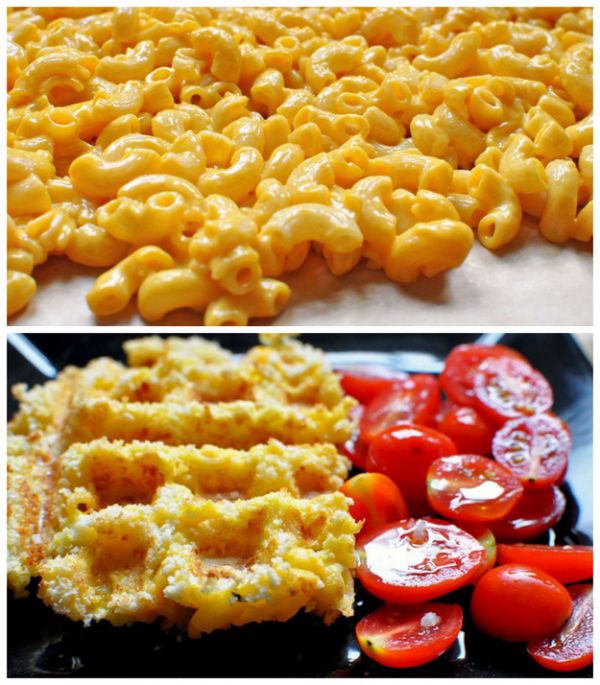
Mac and cheese, pizza, falafel, and scrambled eggs might not be the first foods you think of when you think about a waffle iron, but they can be made in the device and the results are every bit as delicious as the more traditional versions. Just remember to clean them well so you don't end up getting bits of your cheeseburger in your brownies.
David Ospital likes this