New comic!
Actually we’ve been enjoying The Witness quite a lot but it is way up there with building IKEA furniture with respect to relationship stress.
.png)
.png)
Book Review Tuesday!
Below are some recent book reviews for books I've read. If you want more, visit TheWeinerworks.
Wow. What an incredible poem and story. I wasn’t able to put it down after I read the first stanza.
This book was written in the 1920s, but didn’t get much of a print run, mostly due to the sex and murder, one suspects. Anyway, it is a great story told with incredible melody. Here’s a stanza, selected more or less at random:
The candles flared: their flames sprang high:
The shadows leaned dishevelled, awry;
And the party began to reek of sex.
White arms encircled swollen necks:
Blurred faces swam together: locked
Red hungry lips: Closed eyes: Rocked.
White shoulders burst their ribbon bands;
Rose bare to passionate, fumbling hands:
White slender throats curved back beneath
Attacking mouths that choked their breath.
In short: DANG. Wow, what a book. The version I got was a re-issue with very pretty artwork by Art Spiegelman, author of Maus. He apparently happened on the book by accident, due to finding it in a used book store, having a beautiful cover. The illustrations are an excellent reason to re-issue the book, but the star here is really the words. I won’t go so far as to the pictures take away from the poem - they, in fact, have this wonderful Art Deco gruesomeness that I assume was in part inspired by Ward’s book “Gods’ Man” - but part of me regrets having not read it first without pictures.
I really enjoyed this book, which is a sort of braiding of three plotlines, one a fable, one a farce, one a diary, all of them on the topic of finding one’s identity as an Asian person in a predominantly white society. The only thing I will say by way of critique (and maybe this is sort of like someone at a restaurant critiquing small portions rather than quality, BUT...) is that the diary portions were so clever and subtle that I found myself rushing through the other segments. The other parts were there for a reason, and certainly were important to the building of the story and the ultimate coalescing of the different narrative melodies, but… I feel like I could have easily enjoyed three or four hundred pages of the more realistic portion of the tale.
So first, the good: this is a beautiful book, and Mishra has a wonderful command of literature, especially revolutionary literature of the 18th and 19th century. In this book he describes how the present “age of anger” can be understood in terms of those centuries - how the death of old institutions (e.g. religion, tribe) in favor of a commercial world that most people will fail in, results in a deep state of nihilism and longing, which can manifest in anarchy, fascism, and violence.
Literary snobbish types (such as myself) tend to enjoy this sort of thing. I mean, he’s explaining Trump in terms of Nietzsche! And he does it with the flair and verve of Lenin. He has that old style of writing, recently revived, in which all of society and history can be explained if you just grok a few basic ideas about history and human nature.
The problem is I’m not sure it’s true. Partially, I’m a bit biased against this book, having recently read Graeme Wood’s delightful “The Way of Strangers” about understanding ISIS. This is relevant because Mishra frequently cites ISIS as a manifestation of the product of human dislocation in the modern world.
In a way, Wood’s theory can be brought along with Mishra’s - both note that ISIS fighters are frequently young people, often criminals, who know nothing about Islam. In fact, both Mishra and Wood point out the stories of ISIS fighters reading “Islam for Dummies.” But, Wood makes a point that is very contra to Mishra - that we make a mistake if we try to center all this around Europe and the rise of commerce, to the extent that we neglect the fact that Salafis really actually believe their religion.
More importantly to the dorky part of my brain, I have trouble with Mishra’s ideas when I look around the world. Are things bad? In many ways, yes. Trump freaks me out. It may be the case that racists and race separatists are more open with their views.
On the other hand, if Mishra is right and we live in an especially nihilistic world, where old institutions are all collapsing as we spend all our time on social media coveting each others’ lives… why isn’t the modern world more violent than the past? It’s not as if you find a world of peace in those past ages where religion and tribal allegiance reigned. Maybe Voltaire was kind of a prick, and maybe the Enlightenment wasn’t on behalf of the common man, but were the crusades or the Inquisition these things either?
For a book so well-versed in the past, it seems to paint the present as overly important. For example, toward the end of the book, Mishra talks about McVeigh’s experience of the death of the American dream during the economic crises starting around 1970. Sounds interesting, sounds plausible. Except, well, consider any other 40 or so year period. Do you find it devoid of conflict and economic desolations? 1930-1970? 1890-1930? 1850-1890? Of course not.
Capping things off, Mishra makes what I am starting to call the Argumentum ex Trumpum fallacy. To wit - that anything can be gleaned about society from the bare fact that Trump won. Is American society descending into chaos and dislocation? Into race hatred and cataclysm? I mean, maybe, but how does Trump prove it? But for a few coincidences in one or two states, he lost. I’m not saying he won unfairly - I’m saying that, so to speak, there are (let’s say) 40 in 100 universes where he lost.
In those universes, one assumes, the Mishras of the world don’t say “actually, I was wrong about society, and the election of this moderate Democrat proves it.” His Argumentum ex Brexitum falls similarly discordant on my ears. Brexit barely won, and most of its supporters were older Brits, not young angry radicals. How in the world does Brexit show a world withdrawing into itself?
Again, it was tight enough that the outcome could well have been decided by a couple of days of bad weather during the voting period. Without Brexit, does the argument change? Mishra also puts forth the idea that global anomie stems from a sort of halt to the promised progress of humanity that begin with the Enlightenment. Is this true? Not really. It may well be true for the Western middle class (writ large) who’ve generally suffered due to globalization? But, worldwide, the average worker is better off than ever. Poverty and hunger are falling. Malaria is being defeated. Snapchat has nifty Internet-glasses. Where is the purported halt to human progress?
In short, I wanted to see some stronger stats (or maybe some stats at all). Nothing major. Just, maybe a rule that every time you say ressentiment or amour propre in reference to the feelings of an entire people, you oughta make a nice graph or something. All that said, I did enjoy this book. I'm simply not convinced. Or, at least, if you want to explain ISIS, I think "Sometimes people are total fuckers, and other fuckers are attracted to their fuckery" is at least as plausible as some sort sudden Western malaise.

Enlarge / Major in the American film and the Japanese anime.
This analysis contains spoilers for the new Ghost in the Shell movie. Proceed with caution!
Over the weekend, I dragged my best friend–a biracial Japanese dude I’ve known for over a decade–to watch the new Ghost in the Shell movie. Like Ars Technica’s Sam Machkovech, we weren’t impressed. To my surprise, though, I didn’t actually hate Scarlett Johansson's role in the movie.
Her casting as the Major has been controversial, in part due to concerns about "whitewashing" (using white actors to play non-white characters). Yet Mamoru Oshii, director of the original 1995 anime, was unexpectedly supportive of the decision. Maybe that's because Johansson doesn’t pretend to be Motoko Kusanagi, the boisterous lead character from the original. Johansson's new character, Mira Killian, comes across as pure automaton, a blank slate devoid of emotional ties.
Read 20 remaining paragraphs | Comments


Read more of this story at Slashdot.
Remember those old drawing contests they used to advertise in the backs of magazines? The ones with a picture of a turtle or a pirate you were supposed to copy?
Well, Melissa decided to try that route with her bakery. She gave them this picture of a frog and asked them to copy it:

Aaaand...

Ouch.
Don't worry though, bakers; I still see artistic potential here. In fact, if you send me money every month I'll continue critiquing your work FOR FREE. Eh?
And if you believe that one, here's another:

Samira ordered this giant cupcake (made of smaller cupcakes and apparently photographed with a potato), and here's the crazy thing: she was told she would actually GET that cake.
Bahahahaha!
I'm sorry. I shouldn't laugh. It's just, I've seen the next picture.
Ready?

Sha-POW.
Seriously, minions, don't order cupcake cakes (patooie!) - and never EVER order a cupcake cupcake cake. I think it breaks the space time continuum.
And lastly, Kristy gave her bakery this napkin to match for a baby shower cake:

The bakery then did something I've never seen before.
That's right, you guys, this is a first!
The bakery started with an edible image - which looked fine - but then traced over the image with icing, resulting in the kind of nightmare fuel you don't generally see outside of Five Nights At Freddy's:

The longer you look, the scarier it gets.
Plus I like how the baker just stopped about 80% of the way through. Like, "WHELP THAT'S RUINED, guess I'll just leave the palm leaves and border and donkey face off now." o.0
Thanks to Melissa G., Sarah H.,& Kristy H. for reminding there is ALWAYS a new way to wreck it. Always.
*****
Thank you for using our Amazon links to shop! USA, UK, Canada.
There is a lot going on in this modular-style street scene by Agata Pakita. Apparently we are back in the 1930s, judging by the outfits and car on show. The lower floors of the buildings house an arts and crafts store, a tailor, and a mysterious woman who reads tarot cards and predicts your fate. The colourful architecture is a lovely combination of LEGO’s more muted palette of medium dark flesh, light grey, dark red, and tan. I love the curvaceous greenhouse on the roof of the building, where an older lady and her cat relax away from the bustling street.

This is not just a façade though — Agata has filled the interior full of fun details and ingenious little builds, from rocking chairs to toilets and an adorable sewing machine.


The post An elegant 1930s scene complete with tailor shop and tarot readings appeared first on The Brothers Brick.
.png)

Buried in a big paragraph on page 21 of a recent Justice Department report is this gem:
[W]e determined that the DEA could verify only 44 of the 100 seizures we sampled as having advanced or having been related to criminal investigations. This means that in over half the cases there was no discernible connection between the seizure and the advancement of law enforcement efforts.
Emphasis added.
These aren’t drug seizures we’re talking about, but cash and other assets taken from people who are suspected of criminal activity. Not convicted, suspected. Are some of those people actually criminals? Sure! Are they all criminals? Nope. This concerns some people, “this” meaning the practice of government officials or agencies taking someone’s property—and often keeping it—without ever proving that person has done something wrong.
How often does that happen? Well, nobody knows for sure. Why is that? Well, one problem, according to the report by DOJ’s Inspector General, is that DOJ “does not measure how its asset seizure and forfeiture activities advance criminal investigations.” Huh. Doesn’t it seem like that’s something it ought to do? Keep track of how often it actually had a legitimate reason to take someone’s stuff? Well, it doesn’t. This, the report opines, “risks creating the impression that … law enforcement officers prioritize generating forfeiture revenue over dismantling criminal organizations.” Yes there is indeed that risk. Especially because there is a lot of money being taken this way—according to the report, well over $5 billion between 2007 and 2016.

Red=DEA seizures
Since there is no official data, the IG’s office looked at a sample of 100 cash seizures by the DEA, which did about 80 percent of the seizing during the relevant time period. The sample wasn’t totally random, but was chosen from cases that the IG believed met two criteria making them “particularly susceptible to civil liberties concerns”: (1) the officer didn’t have a warrant, meaning he or she was (at best) applying his or her own understanding of the Fourth Amendment; and (2) the circumstances “seemed to indicate the absence of illicit narcotics,” which I guess means there were no drugs and so no direct evidence the person actually was a drug dealer or drug-money courier. In other words, the IG was asking whether, in those cases, does the evidence seem to show there really is a reason for concern?
The answer: yes, if you think that law enforcement should get this right, or at least be able to verify that it got it right, more than 44 percent of the time. Because the DEA could not do that. In fact, of seizures that took place during “interdiction” operations—it profiled stopped people while traveling—it could verify that doing so had “advanced or related to a criminal investigation” only 34 percent of the time.
Local law enforcement seizes stuff too, and its record is also dismal and often flat-out crooked. The report mentions one incident in Florida where a police task force conducted a money-laundering investigation that resulted in 84 arrests and the seizure of $49 million, of which the police department was allowed to keep more than $6 million. How many indictments resulted? You in the back yelling “zero” shut up, you’re ruining it, but yes, zero. Not one. “Such outcomes,” the report tentatively suggests, “can raise questions about whether seizures are intended to serve legitimate law enforcement interests or to bolster law enforcement budgets.” Yes indeed they can.
The report offers a variety of recommendations for improving matters, but can’t quite pull the trigger on the easy and obvious answer: don’t let law enforcement officers or agencies keep any of the money. Ever.

As we reported from Toy Fair in February, the April 2017 LEGO Architecture releases include a redesigned Solomon R. Guggenheim Museum (21035). The new LEGO Guggenheim includes 744 pieces and retails for $79.99.

This latest Guggenheim is a new edition of an earlier LEGO Architecture set released in 2009. We’ll compare the two versions later in this review.
As with other LEGO Architecture sets, the set comes in a sturdy storage box that includes unnumbered bags and a perfect-bound instruction booklet. The instruction booklet includes details about the real-life building and its architect, the incomparable Frank Lloyd Wright.

I like to build my LEGO Architecture and LEGO Ideas sets in the box, dumping all the unnumbered bags into the box and sitting comfortably on the couch with the box in my lap. This proved a grave error with this rather large set, probably adding a full hour to my build time. Oh well, it proved a pleasant evening nevertheless.
The build itself is full of complex building techniques that take advantage of SNOT geometry and half-stud-offset connections. The adjoining office tower (part of Wright’s original design intended to provide a contrasting backdrop for the main museum building, but not actually built until 1992) may look plain once completed, but includes some serious SNOT to achieve the banks of windows and exterior facing.

Similarly, the rotunda structure is built from outward-facing arch and bow bricks. Each level of the building is larger than the one below it, and this necessitates unique LEGO geometries for each floor.

The museum’s signage is printed — there are no stickers in the set. The text “The Solomon R. Guggenheim Museum” spans a 1×8 tile and a 2×2 rounded slope.

Commissioned in 1943 but not completed until 1959, the Guggenheim is one of the most iconic landmarks in New York City. Whenever I visit New York, I spend nearly all my time in art museums (and ramen joints), so after I’d been to the Met and MoMA twice each, I finally hit the Guggenheim. The museum was hosting a temporary exhibition of contemporary pieces created from found objects. In other words, the Guggenheim was full of garbage. After the Met and MoMA, the art inside the museum was a little disappointing, but experiencing Frank Lloyd Wright’s vision of a multi-story structure with a continuous ramp was still a highlight for that trip. The LEGO Guggenheim accurately captures the awe-inspiring design.

This new set is radically more accurate than the 2009 version, which simply stacked large radar dishes for all four circular sections of the building. The new version is also much larger — built from 744 pieces rather than 208 pieces, it’s nearly twice as deep and a third wider.

The higher part count lends itself to brick-built solutions for both the main museum structure and the office tower. The ground level even includes the low wall surrounding the below-ground area between the sidewalk and the museum building.

Details abound even on the street, with crosswalks across Fifth Avenue to Central Park, and taxis heading south toward Times Square.

Even the rear of the building includes the right details. The elevator shaft takes museum visitors to the top of the rotunda, from whence they can walk down the slope at a leisurely pace enjoying an assemblage of found objects.

Unlike the 2009 edition, the fully detailed rotunda includes realistic sand green details that lend big pops of color to the LEGO version. (The 2009 LEGO Guggenheim included parts in only three colors — black, tan, and white!)

Whether you’ve had the opportunity to visit the real-life landmark or not, the Guggenheim Museum is an amazing architectural icon envisioned by one of the greatest architects of all time. The new LEGO Architecture version of Frank Lloyd Wright’s masterpiece is a dramatic improvement over its predecessor of 8 years ago, helped by more than triple the LEGO pieces.

21035 Solomon R. Guggenheim Museum truly does justice to this amazing structure, with a rather brain-bending build that’s full of numerous details absent from the previous version, from taxis on the street to air conditioning units on the modern office tower’s rooftop — even a rooftop balcony with a doorway connecting from the new office building.

Generally intended for tourists and collectors, LEGO Architecture sets are almost always priced higher than the average LEGO Creator or even LEGO Star Wars set, from a parts-per-price standpoint. In contrast, this set is priced quite fairly at $79.99 for 744 pieces, though admittedly more than a hundred of those pieces are just 1×1 tan tiles.
With an enjoyable build that results in a very pleasing finished structure, I can heartily recommend this set for both longtime LEGO Architecture fans and LEGO builders more broadly.
21035 Solomon R. Guggenheim Museum is available now from both Amazon.com and LEGO Shop online.
The LEGO Group sent The Brothers Brick a copy of this set for review. Providing TBB with products for review guarantees neither coverage nor positive reviews.
The post LEGO Architecture 21035 Solomon R. Guggenheim Museum [Review] appeared first on The Brothers Brick.

.png)
Just three weeks until BAHFest East and we've already sold half of the tickets! Buy soon if you want one of the cheaper ones.
This year, the LEGO Technic theme celebrates a remarkable date — 40 years since the first Technic sets hit the store shelves in 1977. To mark that occasion, LEGO prepared a couple of surprises for the theme’s fans: a commemorative 1×3 white Technic beam with “40 1977-2017” print included in every set released in 2017, plus something truly touching — a remake of the legendary 8860 Car Chassis set from 1980.

After the instruction booklet became available online earlier this week, every LEGO fan can build his or her own modern copy of the iconic set using pieces from three 2017 Technic sets — 42057 Ultralight Helicopter, 42061 Telehandler and 42063 BMW R 1200 GS Adventure. The total price of these sets is about $120 USD/95€ for which you will get 4 vehicles at once. At the same time, those with a vast collection of Technic pieces will be able to build their own copy of the classic chassis without getting any new sets, although it would be quite a challenge to get all the pieces in correct colors. The chassis consist of 572 pieces, which sets the model right behind the 42063 BMW R 1200 GS Adventure in this year’s line-up with a price tag of approximately $50 USD/45€.
I had never thought I would start the description of the set with a sentence like this, but the model comes in about 20 bags distributed between 3 different-sized boxes — of course, that’s if you’re grabbing three of the said Technic sets from a store. As mentioned before, the build consists of 572 pieces, leaving 530 pieces unused. No stickers are required, but don’t worry if you have applied any of them before: pieces with stickers are either not used or placed in the way that no stickers are exposed or ruin the car’s exterior.

The build
The build starts with the rear, where the drive axles are placed. About ten minutes into the building process you’ll find yourself holding a neat bundle of beams with an engine attached. Nothing functions at the moment, yet most of the gears will be used in the next several steps.

A bit later the simplest gearbox takes its place. All in all, you’ll need 6 gears of two of the most common types to be able to switch between three speeds. Personally, I have never built LEGO Technic gear boxes in my whole life, so this little baby got me as excited as a 10-year-old boy exploring electric motors or pneumatic systems.

During the next several steps the gear box gets covered with beams, while the rear of the chassis is being decorated is a nicely devised way. Each of the sets required by the model contains one white anniversary beam, and it was especially pleasant to find out that all three are used in the building process. The first one acts as a rear plate number.

The next part of the chassis contains the gear stick. Its three positions match with three available modes: neutral, first gear and second gear. Thanks to an asymmetrical structure, the stick can be securely locked in each gear with no risk of shifting during play. In addition, a a Technic axle connector hub with 3 axles is placed above the engine right behind an exposed tan 20-tooth double-bevel gear which imitates a cooling fan and rotated as you drive the car back and forth; a simple but nice touch.

The front axles go next, and, to be honest, I expected the chassis to be much shorter and smaller. The overall length of the model is 11 inches (28.5 cm) long, as its scale is significantly larger than most other Technic models.

The finished model
It took me about an hour and a half of building time to finish the chassis. The result isn’t something you find in regular LEGO Technic sets. First, several minutes of driving the car on a table is a must.

A top front view gives a great opportunity to examine the model. By the way, can you spot the difference between the seats? Both seats should include a couple of red bent Technic liftarms 1 x 7 (4-4), but there are only three of them available, solely in the 42061 Telehandler set. I must admit I nearly had a little heart attack as I finished the first seat and discovered that there was only one liftarm left. Still, the way the designers dealt with the problem is brilliant, and I love the passenger’s seat even more than the driver’s one.

Unlike the front part, the back of the car is much more exposed — and I love it. Smooth beams and panels are great, but all the axles and pins seen through the car’s joints are simply alluring.

As the chassis isn’t that heavy, the suspension is nearly of no use. Once again, it’s a great illustration of how the system works, but to a certain degree.

One of the least expected features of the model is the ability to change the distance between the seats and the dash panel. Both seats can be moved back and forth along an axle beneath, and in the picture below you can compare both end positions. To my great embarrassment, I had no idea that not only did the seats of the original 8860 set slide along axles in the same way but also were adjustable and could recline as well.

The dash panel is as simple as it can be with only three transparent colored 1×1 round plates which are supposed to be either buttons or displays.

I love how appropriate the gear stick looks in the finished model. It’s not too big, not too small, and I can clearly see a driver being able to easily operate it sitting in the seat. At the same time, the stick is extremely convenient to use during play.

The front panels and the bumper have a lot in common with the 8860 car. Here’s the second 1×3 anniversary beam placed as the front number plate.

Below the chassis, there are several beams and frames that make the whole structure very, very robust and durable. Also, here’s the third anniversary beam hidden between the front wheels.

Once you’ve had enough of playing with the chassis all over the house, you start thinking about possible improvements of the build’s design. And there is plenty of room for any sort of upgrade or customization. The model isn’t just great study material, but also a perfect base for your own creations. Many of the unused parts can be used to change the car’s exterior: you can even attach a telescopic boom between the seats or replace the front bumper with a scoop.

As for now, I’m pretty happy with an alternative steering wheel. In my opinion, a pilot’s yoke looks much better.

Final thoughts
The LEGO Technic 40th anniversary car chassis is a modern build assembled from modern pieces, yet it has so little in common with modern sets. Don’t expect any “cool” building techniques or peculiar mechanisms. The idea behind the model is a simple rear-wheel-driven chassis with a four-cylinder engine, featuring three-speed transmission, rear-wheel independent suspension, and a functioning steering system. Like its ancestor, the 8860 set from 1977, this car is a beautiful illustration of the vehicle’s main mounts and feels like it was built 40 years ago. And I’m sure it will be of great interest for many young builders who had no chance to learn about some of the best LEGO Technic chassis of the past.
The post LEGO Technic 40th Anniversary Car Chassis [Review] appeared first on The Brothers Brick.
.png)
Hey look, it's me failing to solve a riddle with PhysicsGirl!
If you look at the numbers, Bernie Sanders is the most popular politician in America – and it’s not even close. Yet bizarrely, the Democratic party – out of power across the country and increasingly irrelevant – still refuses to embrace him and his message. It’s increasingly clear they do so at their own peril.He would have beaten Trump, IMHO.A new Fox News poll out this week shows Sanders has a +28 net favorability rating among the US population, dwarfing all other elected politicians on both ends of the political spectrum. And he’s even more popular among the vaunted “independents”, where he is at a mind boggling +41...
One would think with numbers like that, Democratic politicians would be falling all over themselves to be associated with Sanders, especially considering the party as a whole is more unpopular than the Republicans and even Donald Trump right now. Yet instead of embracing his message, the establishment wing of the party continues to resist him at almost every turn, and they seem insistent that they don’t have to change their ways to gain back the support of huge swaths of the country....
Democrats seem more than happy to put all the blame of the 2016 election on a combination of Russia and James Comey and have engaged in almost zero introspection on the root causes of the larger reality...
In other words, they’re doubling down on the exact same failing strategy that Clinton used in the final months of the campaign. Sanders himself put it this way in his usual blunt style in an interview with New York magazine this week – when asked about whether the Democrats can adapt to the political reality, he said: “There are some people in the Democratic Party who want to maintain the status quo. They would rather go down with the Titanic so long as they have first-class seats.”

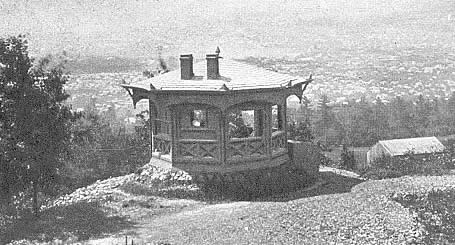
At his most productive, Twain practically chain-smoked cigars, and his craving for a quick burn was conspicuous at 250-acre Quarry Farm, a nest of solitude away from the social hurly-burly of Hartford.
Mindful of her health, perhaps, sister-in-law Susan Crane had a windowed study built specially for Twain in 1874 not far from her Victorian farmhouse. Equipped with a writing table, wicker chair, cot, fireplace and cat door, it was designed to resemble the pilot house of a Mississippi steamboat.After a steak breakfast, Twain would saunter 300 feet across a lawn flecked with buttercups and black-eyed susans and climb the stone steps to a promontory where the octagonal cabin was perched. Amid the chirp and crackle of nature, overlooking a panorama he called a "foretaste of heaven," Twain often churned out as many as 2,600 words a day...To thwart vandals and accommodate tourists, the cabin was moved down to the Elmira College campus in 1952.
I would love to have a similiar tiny "hut" in the north woods of Minnesota to use as a retreat.“It is the loveliest study you ever saw…octagonal with a peaked roof, each face filled with a spacious window…perched in complete isolation on the top of an elevation that commands leagues of valley and city and retreating ranges of distant blue hills. It is a cozy nest and just room in it for a sofa, table, and three or four chairs, and when the storms sweep down the remote valley and the lightning flashes behind the hills beyond and the rain beats upon the roof over my head—imagine the luxury of it.”—Mark Twain, Letter to William Dean Howells, 1874
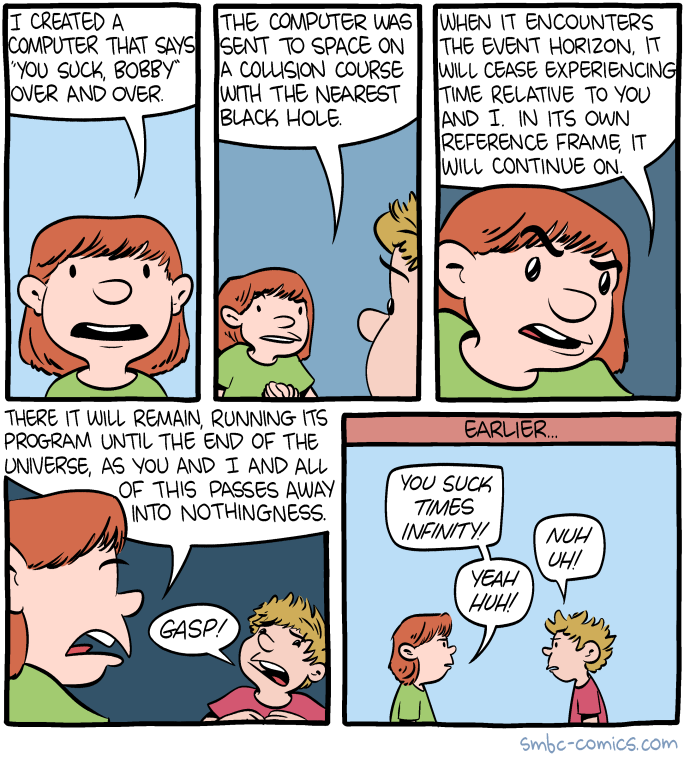
With massive thanks to Dominic Horsman and Mark Hogarth.
LEGO announced last summer that the Apollo 11 Saturn V rocket would be among the future projects turned into an official set from the crowdsourcing platform LEGO Ideas, targeting a tentative release date of summer 2017. Today LEGO has released a teaser image of the Saturn V, giving us our first official look at the final model. They’ve also confirmed a June release for the set.

Although LEGO has given no indications yet on piece count or pricing, it’s clear the model will be massive, and significantly larger than the 2003 Saturn V Moon Mission set. Judging by the scale we can see in the photo above, the rocket will likely stand more than two feet tall, with the main rocket stage about 12 studs in diameter.
While a few design changes have been made (most prominently the removal of the now-discontinued girder element near the top of the nose), overall the model seems very similar to the original design submitted by saabfan and whatsuptoday.

We also don’t know yet if the model will include the Lunar Module, which is neatly housed inside the rocket on the original fan-created design. We certainly hope it will be, though, since it’s a fantastic design that adds a lot to the rocket.

The Saturn V will be the first of two NASA-themed LEGO Ideas sets, with the Women of NASA set having been officially selected last month. That set will likely be available for purchase in 2018.

The post First look at the LEGO Ideas Apollo 11 Saturn V rocket coming in June [News] appeared first on The Brothers Brick.

I’m fairly sure this LEGO “Martian Outpost” is a human outpost on Mars rather than a place for Martians to hang out. The dark orange-red environment in this diorama by KW Vauban certainly looks like Mars to me, and there’s a lot of action despite the microscale size of the build. Centrally, a railed transport vehicle approaches a shelter — suggesting we are seeing only a small portion of a much larger habitat. My favourite part? The sliding doors closing behind the ‘space saucer’ that has just left an underground area. I want to peek inside those doors to see what’s down below!

There’s a whole story in this microscale diorama, but the builder hasn’t given us any extra information — just this smart little snapshot in time.
The post Space pod arriving at Martian Outpost, please mind the gap appeared first on The Brothers Brick.

“The Special Olympics make no sense. The Olympics are for the best athletes in the entire world to compete against each other to determine who is the best,” the individual wrote. “Having retards competing is doing the opposite!”I've embedded his response above.