Shared posts

10 Jan 03:43

The 99 best things that happened in 2017

Philip.paulsson

Happy New Year, all!

And... TIL Norway has the largest pile of money in the world. Their sovereign wealth fund has $1 TRILLION!

A British Airways airplane flies near a rainbow on its way to Heathrow Airport in London, Britain, July 23, 2017.  REUTERS/Kevin Coombs     TPX IMAGES OF THE DAY - RC1D92BE5900
It wasn't all bad. (Reuters/Kevin Coombs)

If you’re feeling despair about the fate of humanity in the 21st century, you might want to reconsider.

In 2017, it felt like the global media picked up all of the problems, and none of the solutions. To fix that, here are 99 of the best stories from this year that you probably missed.

An incredible year for global health

1. This year, the World Health Organisation unveiled a new vaccine that’s cheap and effective enough to end cholera, one of humanity’s greatest ever killers. New York Times

2. Cancer deaths have dropped by 25% in the United States since 1991, saving more than 2 million lives. Breast cancer deaths have fallen by 39%, saving the lives of 322,600 women. Time

3. Zika all but disappeared in 2017. Cases plummeted in Latin America and the Caribbean, and most people in those places are now immune. Science Mag

4. A new report showed that the world’s assault on tropical diseases is working. A massive, five year international effort has saved millions of lives, and countries are now signing up for more. STAT

5. Soft drink sales in the United States dropped for the 12th year in a row, thanks to consumer education and new sugar taxes aimed at stemming obesity and diabetes. Reuters

6. Trachoma, the world’s leading infectious cause of blindness, was eliminated as a public health problem in Oman and Morocco, and Mexico became the first country in the Americas to eliminate it. NBC

7. Meet Sanduk Ruit and Geoff Tabin, two eye doctors responsible for helping restore sight to 4 million people in two dozen countries, including North Korea and Ethiopia. CBS

8. Premature deaths for the world’s four biggest noncommunicable diseases­ — cardiovascular, cancer, diabetes and chronic respiratory — have declined by 16% since 2000. World Bank

9. Global abortion rates have fallen from around 40 procedures per 1,000 women in the early 1990s, to 35 procedures per 1,000 women today. In the United States, abortion rates have reached their lowest level since 1973. Vox

10. In July, UNAIDS, revealed that for the first time in history, half of all people on the planet with HIV are now getting treatment, and that AIDS deaths have dropped by half since 2005. Science Mag

11. There were only 26 cases of Guinea worm in 2017, down from 3.5 million cases in 21 countries in Africa and Asia in 1986. Devex

12. The United Kingdom announced a 20% fall in the incidence of dementia over the past two decades, meaning 40,000 fewer people are being affected every year. iNews

13. Thanks to better access to clean water and sanitation, the number of children around the world who are dying from diarrhoea has fallen by a third since 2005. BBC

14. Leprosy is now easily treatable. The number of worldwide cases has dropped by 97% since 1985, and a new plan has set 2020 as the target for the end of the disease. New York Times

15. In October, new research from the Center for Disease Control revealed that between 2000 and 2016, the measles vaccine saved 20.4 million lives.

16. And on the 17th November, the WHO said that global deaths from tuberculosis have fallen by 37% since 2000, saving an estimated 53 million lives. These astonishing achievements were of course, reported by every media outlet on the planet.

Some stunning victories for global conservation

17. Chile set aside 11 million acres of land for national parks in Patagonia, following the largest ever private land donation from a private entity to a country. Smithsonian

18. China invested more than $100 billion into treating and preventing water pollution, and launched nearly 8,000 water clean-up projects in the first half of 2017. Reuters

19. The United States, Russia, China and the European Union reached a deal to make the Arctic off-limits to commercial fishers for the next 16 years. Science Mag

20. In July, 1.5 million people in the Indian state of Madhya Pradesh set a new Guinness record for reforestation by planting more than 67 million trees in a 12 hour period. RT

21. A province in Pakistan announced it has planted 1 billion trees in two years, in response to the terrible floods of 2015. Independent

22. In August, the Canadian government and Inuit groups signed a deal to create the ‘Serengeti of the Arctic’ by far the largest marine reserve in the country’s history. Globe & Mail

23. A month later, one of the world’s largest marine parks was created off the coast of Easter Island, and will protect 142 species, including 27 threatened with extinction. Guardian

24. The EU imposed new, stricter limits on pollutants such as nitrogen, sulphur, mercury and particulates that will apply to all 2,900 of Europe’s large power plants. Reuters

25. China carried out its largest ever crackdown on pollution, reprimanding, fining or jailing officials in 80,000 factories, 40% of the country’s total. NPR

26. Indonesia pledged $1 billion to clean up its seas from plastic, Kenyaannounced a ban on plastic bags, and Chile said it will ban them in its coastal cities (30 countries now have existing or impending bans in place). ABC

27. Eleven countries continued their plan to build a wall of trees from east to west across Africa in order to push back the desert. In Senegal, it’s already working. BBC World Hacks

28. Cameroon committed to restoring over 12 million hectares of forest in the Congo Basin, and Brazil started a project to plan 73 million trees, the largest tropical reforestation project in history. Fast Co.

29. In November, Mexico’s government created a new 148,000 square kilometer ocean reserve, ‘the Galapagos of North America’ for the conservation of hundreds of species, including rays, humpback whales, sea turtles, lizards and migratory birds. Reuters

30. In 2017, the ozone hole shrunk to its smallest size since 1988, the year Bobby McFerrin topped the charts with ‘Don’t Worry Be Happy.’ CNET

Rising living standards for billions of people

31. The International Energy Agency announced that nearly 1.2 billion people around the world have gained access to electricity in the last 16 years.

32. In February, the World Bank published new figures showing that 20 years ago, the average malnourished person on planet Earth consumed 155 fewer calories per day than they needed. Today, that number is down to 88.

33. Since 2000, life expectancy in Rwanda is up from 49 to 64, child mortality is down more than two-thirds, maternal mortality is down nearly 80%, and HIV/AIDS prevalence is down from 13% to 3%. Mail & Guardian

34. In the last three years, the number of people in China living below the poverty line decreased from 99 million to 43.4 million. And since 2010, income inequality has been falling steadily. Quartz

35. 275 million Indians gained access to proper sanitation between 2014 and 2017. Gates Notes

36. In 1991 more than 40% of Bangladesh lived in extreme poverty. The World Bank said this year that the number has now dropped to 14% (equating to 50 million fewer people). Quartz

37. The United States’ official poverty rate reached 12.7%, the lowest level since the end of the global financial crisis. And the child-poverty rate reached an all time low, dropping to 15.6%. The Atlantic

38. Between 2005 and 2017, Afghanistan built 16,000 schools, the nation-wide literacy rate increased by 5%, and the youth literacy rate increased by more than 16%. USAID

39. In October, a new report by the International Labour Organisation revealed that global child labour has plummeted. In 2016, there were 98 million fewer boys and girls being exploited than in 2000. CS Monitor

A terrible year for the fossil fuels industry

40. Sweden committed to phasing out all carbon emissions by 2045, and the country’s largest pension fund divested from six companies that violate the Paris Agreement, including Exxon, Gazprom and TransCanada. CleanTechnica

41. New figures at the beginning of the year showed that the global coal industry is taking a hammering. A 48% drop in pre-construction activity, a 62% drop in construction starts and a 19% drop in ongoing construction. CoalSwarm

42. In May, a shareholder rebellion forced ExxonMobil, the world’s largest oil company, to start reporting on the effect of preventing climate change on its bottom line. Washington Post

43. France stopped granting all licences for oil and gas exploration, and said it will phase out all production by 2040, a major transition towards clean energy being driven by the new Macron government. Bloomberg

44. Deutsche Bank, one of the coal industry’s biggest financiers, announced it would stop financing all new coal projects. Ouch. Mining.com

45. Norway’s sovereign wealth fund, the largest pile of money on the planet, announced they were officially divesting from all fossil fuels, and the global insurance industry has pulled $20 billion. Telegraph

46. In 2017, the United Kingdom, France and Finland all agreed to ban the sale of any new petrol and diesel cars and vans by 2040.

47. China continued its all out war on coal, stopping construction on more than 150GW of coal plants, and laying off more than 700,000 coal workers since 2014. CleanTechnica

48. In one of the great climate change victories of our time, TransCanada terminated its tar sands pipeline, triggering a $1 billion loss and ending an epic 4 year battle between politicians, big oil, environmentalists and indigenous communities. Calgary Herald

49. On the eve of one of their major feast days, 40 Catholic institutions on five different continents announced the largest ever religious divestment from fossil fuels. Catholic Reporter

50. In the United Kingdom, the birthplace of the industrial revolution, carbon emissions fell to the lowest levels since 1894, and on the 21st of April the country did not burn coal for the first time in 140 years. Independent UK

51. In November, a new global alliance of more than 20 countries, including the UK, France, Mexico, Canada and Finland, committed to ending their use of coal before 2030. BBC

…and an amazing one for clean energy

52. The cost of solar and wind plummeted by more than 25% in 2017, shifting the global clean energy industry on its axis. Think Progress

53. The cost of solar plants in the United States dropped by 30% in one year and in the United Kingdom, the price of offshore wind dropped by half in less than two years.

54. Solar energy is now responsible for one in every 50 new jobs created in the United States, and the clean energy sector is growing at 12 times the rate of the rest of the economy. CNBC

55. In June, South Korea announced a major U-turn on energy, shifting one of the world’s staunchest supporters of coal and nuclear power toward natural gas and renewables. Reuters

56. JP Morgan Chase said it will source 100% of its energy from renewables by 2020 and will facilitate $200 billion in clean financing through 2025. PV Tech

57. General Motors believes “the future is all-electricVolkswagen announced it’s investing 70 billion euros and “putting its full force behind a shift into electric cars” and Volvo said that starting in 2019 it will only make fully electric or hybrid cars “the end of the combustion engine-powered car.” Atlantic

58. China is going to install 54GW of solar by the end of 2017, more than any country has ever previously deployed in a single year, and doubled their 2020 goal to 213 GW. PV Magazine

59. The world’s largest carbon emitter also announced that their Paris Agreement pledges will now be met a decade ahead of schedule, with emissions forecast to peak in 2018. Australian Financial Review

60. Following in China’s footsteps, India more than doubled its solar installations in 2017, accounting for more than 40% of new capacity, the largest addition to the grid of any energy source. Quartz

61. A new report from the European Union said that between 1990 and 2016 the continent cut its carbon emissions by 23% while the economy grew by 53%. So much for the propaganda of fossil fuel lobbyists… CleanTechnica

“The arc of the moral universe is long, but it bends toward justice”

62. On the 21st January 2017, the Women’s March became the largest single-day demonstration in recorded U.S. history. Washington Post

63. On International Women’s Day 2017, Iceland became the first country in the world to make equal pay compulsory by law. Two days later, India passed a bill giving every working woman in the country 26 weeks of compulsory maternity leave. Economic Times

64. Thanks to the legalisation of same-sex marriage, suicide attempts by LGBT teenagers have decreased by 14% in US high schools since 2014. Guardian

65. In May, Taiwan’s constitutional court ruled in favour of allowing same-sex marriage, becoming the first Asian country to do so. SCMP

66. Saudi Arabia said women would no longer need male permission to travel or study. A few months later, women received the right to drive. BBC

67. New figures showed that the gender pay gap in the United States has narrowed from 36% in 1980 to 17% today. For young women the gap has narrowed even further, and now stands at 10%. Pew Research

68. Women now occupy 23% of parliamentary seats around the world, up from 12% in 1997. The Middle East and North Africa have seen a fourfold increase in that time. World Bank

69. As plunging crime closed prisons across the Netherlands, the government started turning them into housing and cultural hubs for ten of thousands of refugees instead. Fast Company

70. New data showed that young people are officially less racist than old people. The worldwide trend is towards towards less discrimination on the grounds of skin tone or caste. Quartz

71. 17% of newlyweds in the United States now marry someone of a different race or ethnicity, a fivefold increase since 1967, when interracial marriage was legalised. Pew Research

72. The immigrant population of the US (people born in another country) has now reached 43.7 million people, one out of every eight residents, the highest proportion in 106 years. CIS

73. Canada became the 9th country to allow a third gender, rather than male or female, on passports and government documents. That came two months after country number 8, Pakistan. Vox

74. India’s Supreme Court issued a historic ruling confirming the right of the country’s LGBTQ people to express their sexuality without discrimination. Independent UK

75. California became the first US state to legally recognise nonbinary genders, and Germany’s top court ruled that lawmakers must legally recognise a third gender from birth. CNN

76. In December, Australia became the 26th country to legalise same sex marriage. A wonderful victory, hard fought for by so many brave people. About bloody time. ABC

The world got a little less violent

77. Global deaths from terrorism dropped by 22% from their peak in 2014, thanks to significant declines in four of the five countries most impacted: Syria, Pakistan, Afghanistan and Nigeria. ReliefWeb

78. After quintupling between 1974 and 2007, the imprisonment rate in the United States is now dropping in a majority of states. New York Times

79. The number of executions recorded worldwide fell by 37% since 2015. The decline was largely driven by fewer deaths recorded in Iran and Pakistan. BBC

80. You didn’t see this story in the evening news — in June, we heard that the homicide rate in Australia has dropped to one victim per 100,000 people, the lowest ever recorded. Guardian

81. Rates of violent crime and property crime have dropped by around 50% in the United States since 1990, yet a majority of people still believe it’s gotten worse. Pew Research

82. A new report showed that incidents of bullying and the number of violent attacks in American public schools have decreased significantly since 2010. Associated Press

83. The European Union passed fresh rules that make it more difficult for armed groups to finance their activities through the sale of conflict minerals. Mining.com

84. Heckler & Koch, the world’s deadliest arms manufacturer, announced it would end gun sales to countries falling short of corruption and democracy standards. Deutsche Welle

85. Nepal passed a law criminalising an ancient Hindu practice called chhaupadi that banishes women from the home during menstruation and after childbirth. Al Jazeera

86. Tunisia, Jordan and Lebanon repealed provisions in their penal codes that allow rapists to escape punishment by marrying their victims. Al Jazeera

87. India’s Supreme Court outlawed non-consensual marital sex with child brides, and raised the age of sexual consent for all women to 18. CNN

Signs of hope for a living planet

88. Snow leopards have been on the endangered list since 1972. In 2017, they were taken off, as the wild population has now increased to more than 10,000 animals. BBC

89. In March, in a big win for two of the world’s most endangered big cats, the Amur leopard and tiger, China approved a national park 60% larger than Yellowstone. HuffPost

90. Taiwan became the first Asian country to ban the eating of cats and dogs, with new laws imposing fines for consumption and jail time for killing and cruelty. National Geographic

91. A decrease in pollution in the Ganges brought Gangetic dolphins, one of the four freshwater dolphin species in the world, back from the brink of extinction. Hindustan Times

92. Germany banned fur farming. This followed similar decisions by Japan and Croatia within the last year. A victory that was two decades in the making. Well done PETA.

93. Vietnam agreed to end bear farming, and said it would work with Animals Asia to rescue 1,000 remaining caged animals.

94. The British government unveiled new plans to require compulsory CCTV cameras in all slaughterhouses, in order to enforce laws against animal cruelty. Guardian

95. In more than 60 regions across the globe, more populations of large sea turtles are improving than declining, a big change from a decade or two ago. Associated Press

96. China agreed to ban the domestic ivory trade in 2017. By mid year, the price of raw ivory in Asia had fallen by around half. And in October, the UK government banned the sale and export of all ivory items. BBC

97. Gucci announced it would go fur-free in 2018 and auction off all remaining fur items. It follows in the footsteps of Armani, which went fur free in 2016. Harper’s Bazaar

98. One of China’s richest women, He Qiaonv, announced a $2 billion donation for wildlife conservation, the largest environmental philanthropic pledge of all time. Bloomberg

99. The Indian government officially banned the use of all wild animals in circus performances. One month later, the Italian parliament did the same. 40 nations now have animal circus bans in place. Inhabit

This post originally appeared on Medium. You can follow Angus on Twitter at @angushervey and sign up to Future Crunch’s newsletter here. Learn how to write for Quartz Ideas. We welcome your comments at ideas@qz.com.


08 Jan 19:09

Whoa, Vacuum Got Something Pretty Big Under Couch

by Ryan Shattuck on Local, shared by Ryan Shattuck to The Onion

CINCINNATI—Reacting immediately to the sudden noise, surprised local woman Fran Copeland confirmed Monday that whoa, her vacuum cleaner just got ahold of something really big underneath the couch. “Oh, man, whatever just got sucked up into there must have been huge,” said the visibly startled 28-year-old, explaining…

Read more...

05 Jan 22:03

Everyone will soon have to use the Google Calendar redesign

by Rob LeFebvre
Philip.paulsson

Fuuuuuuuuuuuck. It's so stupid. It's so annoying that I can no longer just type "Take a dump at 4pm" hit enter, and then have an event called "Take a dump" automatically go in for an hour at 4pm. When I try to do that now, it puts a full day event called "Take a dump at 4pm". ARGH

If you've been avoiding the visual refresh Google recently gave to the web version of Calendar, your time is almost at an end. Starting January 8th, users of G Suite and Google Domains will be automatically switched to the new design. Anyone who opte...

05 Jan 19:09

‘House of Cards’ returns in 2018 -- without Kevin Spacey

by Swapna Krishna
Today, Netflix announced that it has reached an agreement to resume production on the sixth season of its tentpole show House of Cards. Variety reports that the final season will consist of eight episodes starring Robin Wright. Kevin Spacey will not...

05 Jan 18:53

As of today, no US airlines operate the mighty Boeing 747

by Jonathan M. Gitlin
Philip.paulsson

I've always wanted to sit on the upper level of one of those things...

Mike Kane/Bloomberg/Getty Images

On Wednesday, Delta Airlines flight 9771 flew from Atlanta to Pinal Airpark in Arizona. It wasn't a full flight—just 48 people on board. But it was a milestone—and not just for the two people who got married mid-flight—for it marked the very last flight of a Boeing 747 being operated by a US airline. Delta's last scheduled passenger service with the jumbo was actually late in December, at which point it conducted a farewell tour and then some charter flights. But as of today, after 51 long years in service, if you want to ride a 747 you'll need to be traveling abroad.

Way back in the 1960s, when the white heat of technological progress was burning bright, it looked for a while as if supersonic air travel was going to be the next big thing. France and Britain were collaborating on a new kind of airliner that would fly at twice the speed of sound and shrink the globe. But there was just one thing they hadn't counted on: Boeing and its gargantuan 747 jumbo jet. The double-decker airliner wouldn't break the sound barrier, but its vast size compared to anything else in the skies helped drop the cost of long-haul air travel, opening it up to the people in a way Concorde could never hope to do.

Read 6 remaining paragraphs | Comments

05 Jan 18:42

Just 21 Random, Funny Tumblr Posts To Read If You're Stuck In The Bomb Cyclone

Philip.paulsson

LOL #10

It's too cold out. Make some tea and enjoy these Tumblr posts.


View Entire Post ›

05 Jan 15:28

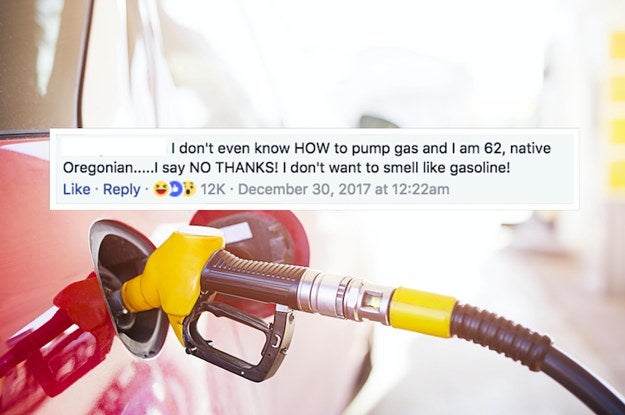
Oregon Is Freaking Out Because People There Now Have To Pump Their Own Gas

Philip.paulsson

Is NJ the last state now?!

And everybody else is making fun of them for it.


View Entire Post ›

05 Jan 14:03

HBO will make Game of Thrones fans wait until 2019 for final season

by Sam Machkovech

Enlarge / We edited the front of the latest Game of Thrones HBO calendar to reflect today's final-season announcement. (credit: HBO/Aurich Lawson)

Last month, HBO offered a sneak peek at series, specials, and films to expect from the cable network in 2018. But its new-year teaser reel had one obvious omission: any declaration about the future of Game of Thrones, other than a brief shot of a few series characters. It turns out that fans were right to raise their eyebrows at this reel.

HBO issued a Thursday announcement to confirm that Game of Thrones' eighth—and final—season will debut in "2019." The network didn't hint at either a month or release window. Instead, it confirmed that the season will contain six episodes and offered a list of writers and directors on board, including longtime TV series contributors David Benioff and D.B. Weiss. Otherwise, the announcement contained nothing in the way of plot or character hints, let alone a trailer. The show's official Twitter feed simply told fans, "Send a raven."

The result: GoT will have its first full year off the airwaves since its 2011 debut. HBO hasn't yet announced firmer plans about an oft-rumored GoT prequel series—and, geez, there are five series possibly in the works—so it's unclear whether fans will have to wait similar amounts of time for any other TV series to kick off. Meanwhile, George R.R. Martin remains coy about whether his long-awaited book follow-up, The Winds of Winter, could arrive before HBO's final season starts.

Read 4 remaining paragraphs | Comments

05 Jan 08:43

If Birds Left Tracks in the Sky, They’d Look Like This

Philip.paulsson

These are so cool

Soaring above the Skógafoss waterfall at their nesting site in Iceland, northern fulmars reveal zipperlike patterns.
This story appears in the January 2018 issue of National Geographic magazine.

If birds left tracks in the sky, what would they look like? For years Barcelona-based photographer Xavi Bou has been fascinated by this question. Just as a sinuous impression appears when a snake slides across sand, he imagined, so must a pattern form in the wake of a flying bird. But of course birds in flight leave no trace—at least none visible to the naked eye. Bou, now 38, spent the past five years trying to capture the elusive contours drawn by birds in motion, or, as he says, “to make visible the invisible.”

First he had to shed the role of mere observer. “Like a naturalist, I used to travel around the world looking at wildlife,” he says. He began exploring photographic techniques that would allow him to express his love of nature and show the beauty of birds in a way not seen before.

Evoking an airborne serpent, western marsh harriers glide above trees where great cormorants perch. The wildlife-rich wetlands of Estany d’Ivars i Vila-Sana, Spain, were drained around 1950 for agricultural use and restored in 2005.
“In winter the starlings gather in large groups,” says Bou, who took this photo in the agrarian village of Arbeca, Spain. “Starlings often prefer cities and agricultural areas, where their food abounds.”
At a calm bay north of Spain’s Ebro River Delta on the Mediterranean coast, a flock of greater flamingos is silhouetted in the water, while European herring gulls fly overhead.
Near the fishing village of Roses, Spain, seagulls form a dreamy tableau as they chase a boat for scraps.

Ultimately he chose to work with a video camera, from which he extracts high-resolution photographs. After he films the birds in motion, Bou selects a section of the footage and layers the individual frames into one image. He finds the process similar to developing film: He can’t tell in advance what the final result will be. There’s one magical second, he says, when the image—chimerical and surreal—begins to emerge.

Before Bou began this project, which he calls “Ornitografías,” he earned degrees in geology and photography in Barcelona, then worked as a lighting technician in the fashion industry and also co-owned a postproduction studio. This current work, he says, combines his passion and his profession. “It’s technical, challenging, artistic, and natural. It’s the connection between photography and nature that I was looking for.”

04 Jan 02:12

Apple Does Make Your iPhone Slower As Its Battery Gets Older

Philip.paulsson

Whoops.

Why you should replace your iPhone battery (instead of getting a new iPhone).


View Entire Post ›

04 Jan 02:10

Saturday Morning Breakfast Cereal - The Old Days

by tech@thehiveworks.com


Click here to go see the bonus panel!

Hovertext:
Of course, the real trick is to adjust the top marginal tax bracket up or down by 2 percent.

New comic!
Today's News:
04 Jan 02:10

Gin and tonic drinkers are more likely to be psychopaths, study says

Philip.paulsson

Uh oh, I may be a psychopath!

Gin and tonic drinkers are more likely to be psychopaths, study says

  • Copy Link

    {copyShortcut} to copy Link copied!

WTAE

Updated: 11:38 PM EST Dec 28, 2017

People who enjoy bitter flavors like black coffee, dark chocolate and tonic water are more likely to possess traits like "Machiavellianism, psychoticism, and narcissism," according to an Austrian study.

Researchers at Innsbruck University carried out two tests on 953 subjects. Men and women were shown different foods that were sour, salty and bitter. They were then asked to grade each item on a scale.

The participants also answered personality questionnaires that gauged their emotional stability.

"Supertasting, that is, having a high sensitivity to bitter compounds, has been consistently linked to increased emotionality in humans and rats," the study said. "Bitter taste experiences were shown to elicit harsher moral judgments and interpersonal hostility."

Scientists found that people who enjoyed bitter foods and drinks tended show more negative personality traits like narcissism.

04 Jan 02:09

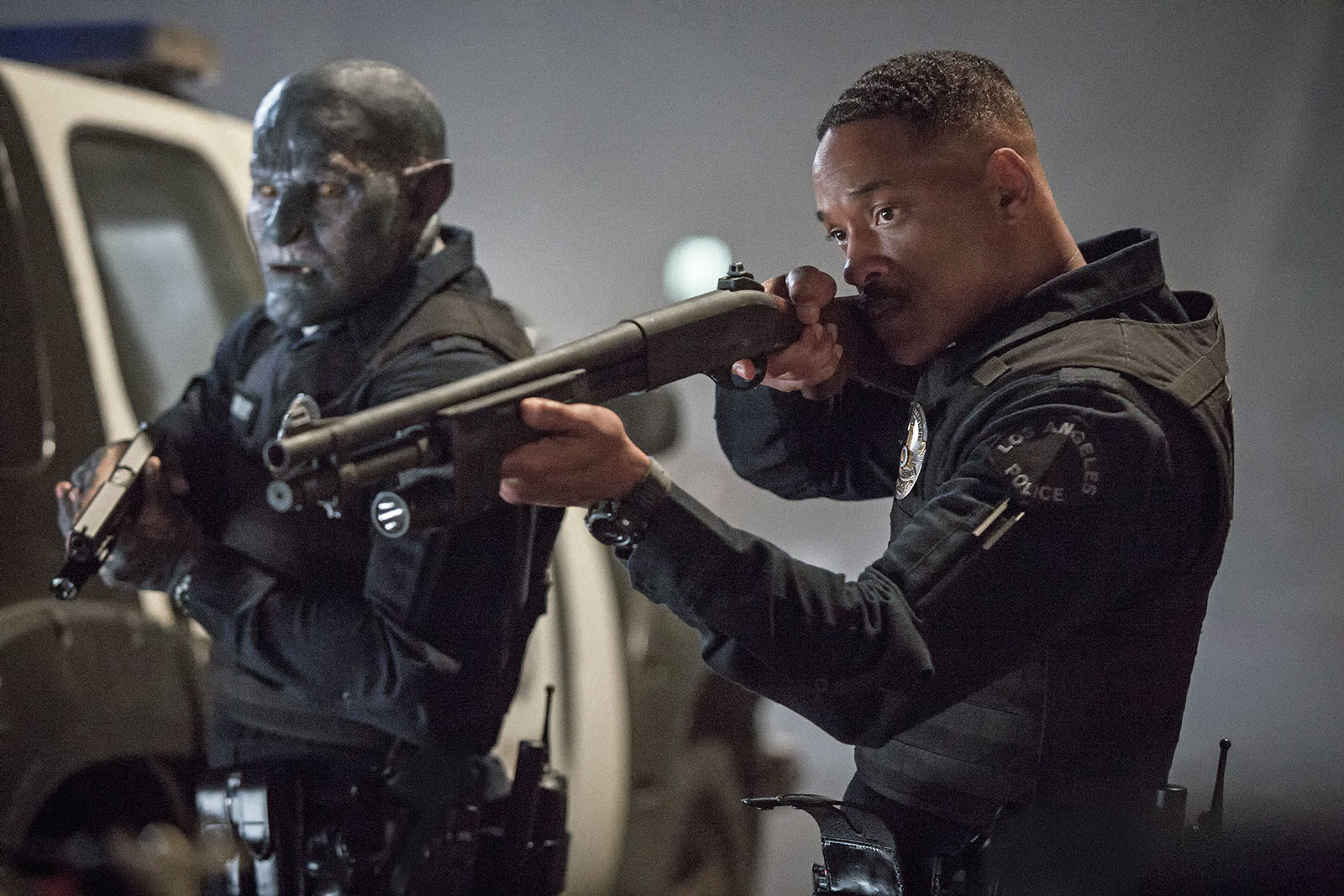
Netflix's big-budget film 'Bright' already has a sequel planned

by Rob LeFebvre
Philip.paulsson

Ooof a sequel? Why?! It was horrible.

If you're as thrilled as we are for Netflix's Will Smith vehicle, Bright, then get ready for even more excitement. The film, which reportedly cost Neftlix $90 million to make, already has a sequel lined up, according to a report at Bloomberg. Whether...

03 Jan 17:55

A Nanjing Massacre survivor's story lives on digitally

by Kevin Wong
Philip.paulsson

The Memorial Hall of Victims in Nanjing was one of the heaviest things I've been to. Had a way more visceral reaction there than in Dachau.

On the morning of December 13th, 1937, Japanese troops pounded on the door of Xia Shuqin's family home in Nanjing, China. Thirteen people had taken shelter under this particular roof: Eight-year-old Xia, her mother and father, two grandparents, four...

27 Dec 16:06

16 Posts About Ikea That You Don’t Need To Speak Swedish To Understand

Philip.paulsson

Some of these are pretty good... #12, #14, #16..

"Living off of discarded meatballs and the tears of lost children."


View Entire Post ›

26 Dec 16:19

Virtual Assistant

If you ask it to please turn off that feature, it apologizes a whole bunch and promises to try to be quieter, then switches to a slightly lower-volume version of the clip with "sorry!" after the louder sounds.
20 Dec 17:39

Al Roker Stares Crestfallen At Matt Lauer Tattoo On Own Torso

by Ryan Shattuck on Entertainment, shared by Ryan Shattuck to The Onion
20 Dec 15:54

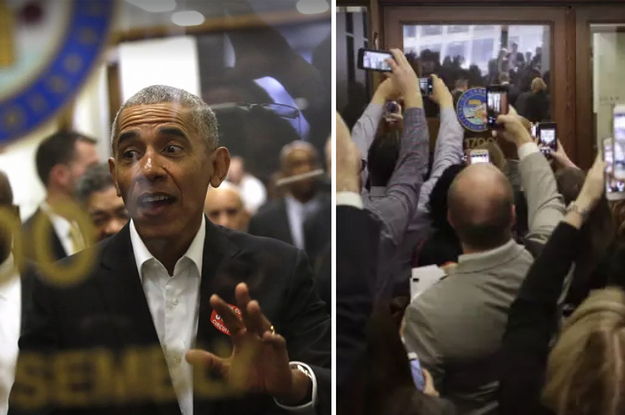
Obama Reported To Jury Duty And A Bunch Of Regular-Ass People Suddenly Got Excited About Jury Duty

Philip.paulsson

Awesome.

"It was awesome," said one surprised potential juror.


View Entire Post ›

20 Dec 06:51

HQ's live trivia is coming to Android in time for the holidays

by Richard Lawler
Philip.paulsson

I'm less excited about this after that article about how one of the founders is a nutjob.

Since launching in August the HQ app has been attracting hundreds of thousands of players to its twice-daily live trivia games, but so far they're all playing on iPhones. Now, a tweet indicates that Android users will be able to get in on the action...
20 Dec 03:52

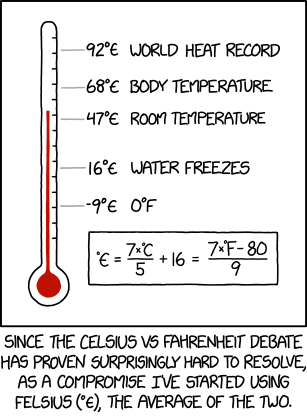
Felsius

Philip.paulsson

Conveniently, they all converge at -40!

The symbol for degrees Felsius is an average of the Euro symbol (€) and the Greek lunate epsilon (ϵ).
19 Dec 15:07

This Choir Had To Perform After Eating Ghost Peppers, And I Can't Stop Laughing

Philip.paulsson

LOL awesome.

Get all the best Tasty recipes in your inbox! Sign up for the Tasty newsletter today!

Great!

You're almost there! Check your inbox and confirm your subscription now!

18 Dec 16:50

Generation Screwed

Philip.paulsson

Holy crap is this a depressing article. Also pretty dang long. I'm really only sharing because the formatting of the whole thing is pretty incredible. Definitely worth the click thru.

The most striking thing about the problems of millennials is how intertwined and self-reinforcing and everywhere they are.

Over the eight months I spent reporting this story, I spent a few evenings at a youth homeless shelter and met unpaid interns and gig-economy bike messengers saving for their first month of rent. During the days I interviewed people like Josh, a 33-year-old affordable housing developer who mentioned that his mother struggles to make ends meet as a contractor in a profession that used to be reliable government work. Every Thanksgiving, she reminds him that her retirement plan is a “401(j)”—J for Josh.

Fixing what has been done to us is going to take more than tinkering. Even if economic growth picks up and unemployment continues to fall, we’re still on a track toward ever more insecurity for young people. The “Leave It To Beaver” workforce, in which everyone has the same job from graduation until gold watch, is not coming back. Any attempt to recreate the economic conditions the boomers had is just sending lifeboats to a whirlpool.

But still, there is already a foot-long list of overdue federal policy changes that would at least begin to fortify our future and reknit the safety net. Even amid the awfulness of our political moment, we can start to build a platform to rally around. Raise the minimum wage and tie it to inflation. Roll back anti-union laws to give workers more leverage against companies that treat them as if they’re disposable. Tilt the tax code away from the wealthy. Right now, rich people can write off mortgage interest on their second home and expenses related to being a landlord or (I'm not kidding) owning a racehorse. The rest of us can’t even deduct student loans or the cost of getting an occupational license.

Some of the trendiest Big Policy Fixes these days are efforts to rebuild government services from the ground up. The ur-example is the Universal Basic Income, a no-questions-asked monthly cash payment to every single American. The idea is to establish a level of basic subsistence below which no one in a civilized country should be allowed to fall. The venture capital firm Y Combinator is planning a pilot program that would give $1,000 each month to 1,000 low- and middle-income participants. And while, yes, it’s inspiring that a pro-poor policy idea has won the support of D.C. wonks and Ayn Rand tech bros alike, it’s worth noting that existing programs like food stamps, TANF, public housing and government-subsidized day care are not inherently ineffective. They have been intentionally made so. It would be nice if the people excited by the shiny new programs would expend a little effort defending and expanding the ones we already have.

But they’re right about one thing: We’re going to need government structures that respond to the way we work now. “Portable benefits,” an idea that’s been bouncing around for years, attempts to break down the zero-sum distinction between full-time employees who get government-backed worker protections and independent contractors who get nothing. The way to solve this, when you think about it, is ridiculously simple: Attach benefits to work instead of jobs. The existing proposals vary, but the good ones are based on the same principle: For every hour you work, your boss chips in to a fund that pays out when you get sick, pregnant, old or fired. The fund follows you from job to job, and companies have to contribute to it whether you work there a day, a month or a year.

Small-scale versions of this idea have been offsetting the inherent insecurity of the gig economy since long before we called it that. Some construction workers have an “hour bank” that fills up when they’re working and provides benefits even when they’re between jobs. Hollywood actors and technical staff have health and pension plans that follow them from movie to movie. In both cases, the benefits are negotiated by unions, but they don’t have to be. Since 1962, California has offered “elective coverage” insurance that allows independent contractors to file for payouts if their kids get sick or if they get injured on the job. “The offloading of risks onto workers and families was not a natural occurrence,” says Hacker, the Yale political scientist. “It was a deliberate effort. And we can roll it back the same way.”

Another no-brainer experiment is to expand jobs programs. As decent opportunities have dwindled and wage inequality has soared, the government’s message to the poorest citizens has remained exactly the same: You’re not trying hard enough. But at the same time, the government has not actually attempted to give people jobs on a large scale since the 1970s.

Because most of us grew up in a world without them, jobs programs can sound overly ambitious or suspiciously Leninist. In fact, they’re neither. In 2010, as part of the stimulus, Mississippi launched a program that simply reimbursed employers for the wages they paid to eligible new hires—100 percent at first, then tapering down to 25 percent. The initiative primarily reached low-income mothers and the long-term unemployed. Nearly half of the recipients were under 30.

The results were impressive. For the average participant, the subsidized wages lasted only 13 weeks. Yet the year after the program ended, long-term unemployed workers were still earning nearly nine times more than they had the previous year. Either they kept the jobs they got through the subsidies or the experience helped them find something new. Plus, the program was a bargain. Subsidizing more than 3,000 jobs cost $22 million, which existing businesses doled out to workers who weren’t required to get special training. It wasn’t an isolated success, either. A Georgetown Center on Poverty and Inequality review of 15 jobs programs from the past four decades concluded that they were “a proven, promising, and underutilized tool for lifting up disadvantaged workers.” The review found that subsidizing employment raised wages and reduced long-term unemployment. Children of the participants even did better at school.

But before I get carried away listing urgent and obvious solutions for the plight of millennials, let’s pause for a bit of reality: Who are we kidding? Donald Trump, Paul Ryan and Mitch McConnell are not interested in our innovative proposals to lift up the systemically disadvantaged. Their entire political agenda, from the Scrooge McDuck tax reform bill to the ongoing assassination attempt on Obamacare, is explicitly designed to turbocharge the forces that are causing this misery. Federally speaking, things are only going to get worse.

Which is why, for now, we need to take the fight to where we can win it.

Over the last decade, states and cities have made remarkable progress adapting to the new economy. Minimum-wage hikes have been passed by voters in nine states, even dark red rectangles like Nebraska and South Dakota. Following a long campaign by the Working Families Party and other activist organizations, eight states and the District of Columbia have instituted guaranteed sick leave. Bills to combat exploitative scheduling practices have been introduced in more than a dozen state legislatures. San Francisco now gives retail and fast-food workers the right to learn their schedules two weeks in advance and get compensated for sudden shift changes. Local initiatives are popular, effective and our best hope of preventing the country’s slide into “Mad Max”-style individualism.

The court system, the only branch of our government currently functioning, offers other encouraging avenues. Class-action lawsuits and state and federal investigations have resulted in a wave of judgments against companies that “misclassify” their workers as contractors. FedEx, which requires some of its drivers to buy their own trucks and then work as independent contractors, recently reached a $227 million settlement with more than 12,000 plaintiffs in 19 states. In 2014, a startup called Hello Alfred—Uber for chores, basically—announced that it would rely exclusively on direct hires instead of “1099s.” Part of the reason, its CEO told Fast Company, was that the legal and financial risk of relying on contractors had gotten too high. A tsunami of similar lawsuits over working conditions and wage theft would be enough to force the same calculation onto every CEO in America.

of millennials with student loans have delayed a major life event—including getting married or having kids—because of their debt

Source: Bankrate Money Pulse survey, July 2015. Percentage is for young adults ages 18-29.

And then there’s housing, where the potential—and necessity—of local action is obvious. This doesn’t just mean showing up to city council hearings to drown out the NIMBYs (though let’s definitely do that). It also means ensuring that the entire system for approving new construction doesn’t prioritize homeowners at the expense of everyone else. Right now, permitting processes examine, in excruciating detail, how one new building will affect rents, noise, traffic, parking, shadows and squirrel populations. But they never investigate the consequences of not building anything—rising prices, displaced renters, low-wage workers commuting hours from outside the sprawl.

Some cities are finally acknowledging this reality. Portland and Denver have sped up approvals and streamlined permitting. In 2016, Seattle’s mayor announced that the city would cut ties with its mostly old, mostly white, very NIMBY district councils and establish a “community involvement commission.” The name is terrible, obviously, but the mandate is groundbreaking: Include renters, the poor, ethnic minorities—and everyone else unable to attend a consultation at 2 p.m. on a Wednesday—in construction decisions. For decades, politicians have been terrified of making the slightest twitch that might upset homeowners. But with renters now outnumbering owners in nine of America’s 11 largest cities, we have the potential to be a powerful political constituency.

The same logic could be applied to our entire generation. In 2018, there will be more millennials than boomers in the voting-age population. The problem, as you’ve already heard a million times, is that we don’t vote enough. Only 49 percent of Americans ages 18 to 35 turned out to vote in the last presidential election, compared to about 70 percent of boomers and Greatests. (It’s lower in midterm elections and positively dire in primaries.)

But like everything about millennials, once you dig into the numbers you find a more complicated story. Youth turnout is low, sure, but not universally. In 2012, it ranged from 68 percent in Mississippi (!) to 24 percent in West Virginia. And across the country, younger Americans who are registered to vote show up at the polls nearly as often as older Americans.

The fact is, it’s simply harder for us to vote. Consider that nearly half of millennials are minorities and that voter suppression efforts are laser-focused on blacks and Latinos. Or that the states with the simplest registration procedures have youth turnout rates significantly higher than the national average. (In Oregon it’s automatic, in Idaho you can do it the same day you vote and in North Dakota you don’t have to register at all.) Adopting voting rights as a cause—forcing politicians to listen to us like they do to the boomers—is the only way we’re ever going to get a shot at creating our own New Deal.

Or, as Shaun Scott, the author of Millennials and the Moments That Made Us, told me, “We can either do politics or we can have politics done to us.”

And that’s exactly it. The boomer-benefiting system we’ve inherited was not inevitable and it is not irreversible. There is still a choice here. For the generations ahead of us, it is whether to pass down some of the opportunities they enjoyed in their youth or to continue hoarding them. Since 1989, the median wealth of families headed by someone over 62 has increased 40 percent. The median wealth of families headed by someone under 40 has decreased by 28 percent. Boomers, it's up to you: Do you want your children to have decent jobs and places to live and a non-Dickensian old age? Or do you want lower taxes and more parking?

Then there’s our responsibility. We’re used to feeling helpless because for most of our lives we’ve been subject to huge forces beyond our control. But pretty soon, we’ll actually be in charge. And the question, as we age into power, is whether our children will one day write the same article about us. We can let our economic infrastructure keep disintegrating and wait to see if the rising seas get us before our social contract dies. Or we can build an equitable future that reflects our values and our demographics and all the chances we wish we'd had. Maybe that sounds naïve, and maybe it is. But I think we're entitled to it.

18 Dec 13:02

Goodbye, net neutrality—Ajit Pai’s FCC votes to allow blocking and throttling

by Jon Brodkin
Philip.paulsson

Fuck you, Ajit Pai.

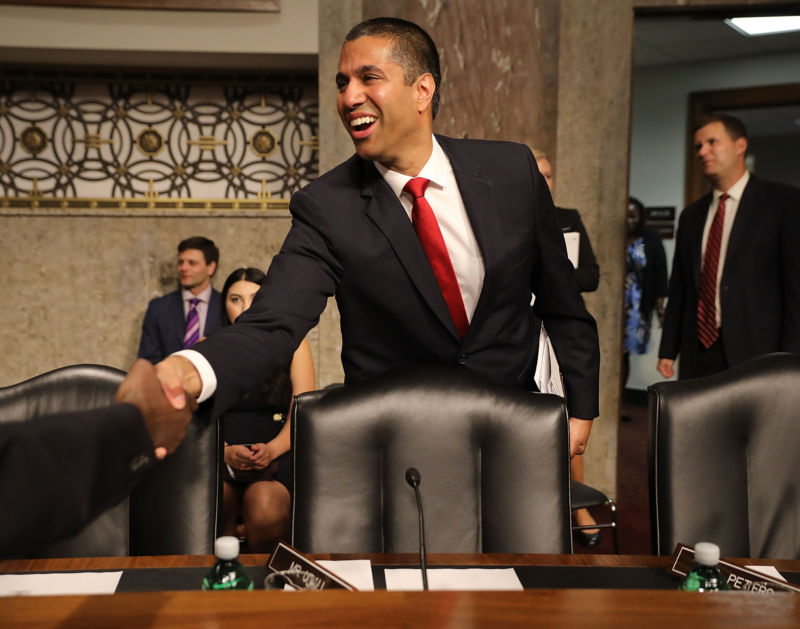
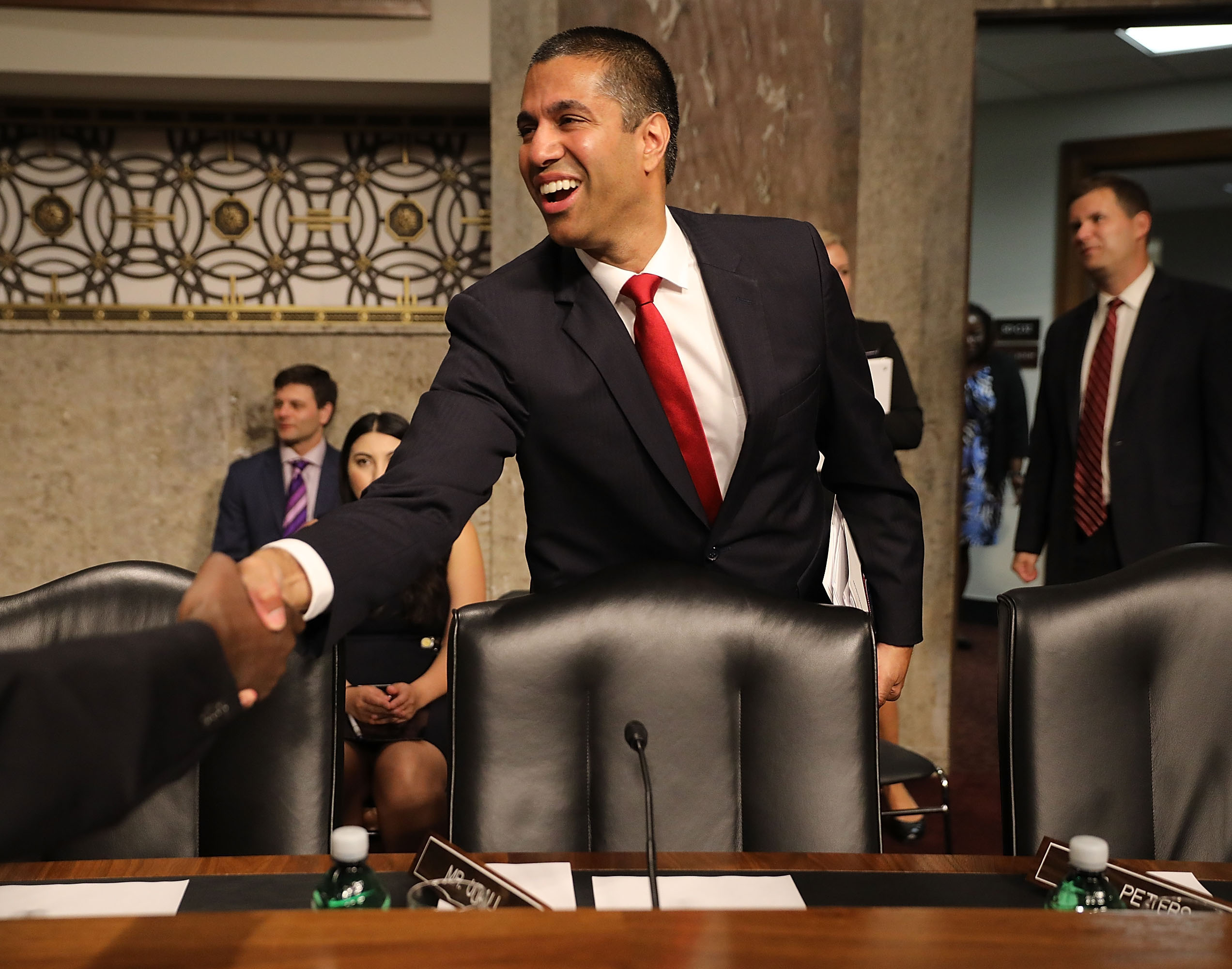
Enlarge / Federal Communications Commission Chairman Ajit Pai arrives for his confirmation hearing with the Senate Commerce Committee on July 19, 2017 in Washington, DC. (credit: Getty Images | Chip Somodevilla )

The Federal Communications Commission voted today to deregulate the broadband industry and eliminate net neutrality rules that prohibit Internet service providers from blocking and throttling Internet traffic.

The repeal of net neutrality rules became a near-certainty about a year ago when Donald Trump won the presidency and appointed Republican Ajit Pai to the FCC chairmanship. Pai and Republican Commissioners Michael O'Rielly and Brendan Carr provided the three votes necessary to overturn the net neutrality rules and the related "Title II" classification of broadband providers as common carriers.

Democrats Mignon Clyburn and Jessica Rosenworcel provided bitter dissents in today's 3-2 vote. Despite the partisan divide in government, polls show that majorities of both Democratic and Republican voters supported the rules, and net neutrality supporters protested outside the FCC headquarters before the vote.

Read 58 remaining paragraphs | Comments

15 Dec 14:27

Motherboard & VICE Are Building a Community Internet Network

Philip.paulsson

I only just yesterday learned about nycmesh.net and I'm really hoping I can convince my building to install a unit on our roof so we can get in on the action. Fuck ISPs.

The net neutrality battle has been exhausting. It has come at enormous cost in time, energy, attention, and money.

Fundamentally, the net neutrality fight is one where the best possible outcome is preserving the status quo: an internet landscape and connection infrastructure that is dominated by big telecom monopolies. Simply put, the internet is too important to rely on politicians and massive corporations to protect it.

In order to preserve net neutrality and the free and open internet, we must end our reliance on monopolistic corporations and build something fundamentally different: internet infrastructure that is locally owned and operated and is dedicated to serving the people who connect to it.

The good news is a better internet infrastructure is possible: Small communities, nonprofits, and startup companies around the United States have built networks that rival those built by big companies. Because these networks are built to serve their communities rather than their owners, they are privacy-focused and respect net neutrality ideals. These networks are proofs-of-concept around the country that a better internet is possible.

Today, Motherboard and VICE Media are committing to be part of the change we’d like to see. We will build a community network based at our Brooklyn headquarters that will provide internet connections for our neighborhood. We will also connect to the broader NYC Mesh network in order to strengthen a community network that has already decided the status quo isn’t good enough.

We are in the very early stages of this process and have begun considering dark fiber to light up, hardware to use, and organizations to work with, support, and learn from. To be clear and to answer a few questions I've gotten: This network will be connected to the real internet and will be backed by fiber from an internet exchange. It will not rely on a traditional ISP.

In hopes of making this replicable, we will document every step of this process, and will release regular updates and guides along the way. Next year, we’ll publish the Motherboard Guide to Building an ISP, a comprehensive guide to the technical, legal, and political aspects of getting a locally-owned internet network off the ground.

Projects like these are possible and affordable today, and are being practiced by groups like NYC Mesh and the Equitable Internet Initiative in Detroit. Enterprise-level fiber connections can be purchased from the same data centers and internet exchanges that big telecom companies use, then distributed using point-to-point Gigabit radio, which have ranges of up to 8 miles.

Today, the FCC stripped away regulations that protect net neutrality, but telecom companies can only end internet freedom if there is no alternative. Motherboard and VICE are dedicated to teaching those who want it how to build that alternative.

If you want to help or partner with us, please get in touch. We've also created a newsletter to provide specific updates on this project.

13 Dec 19:15

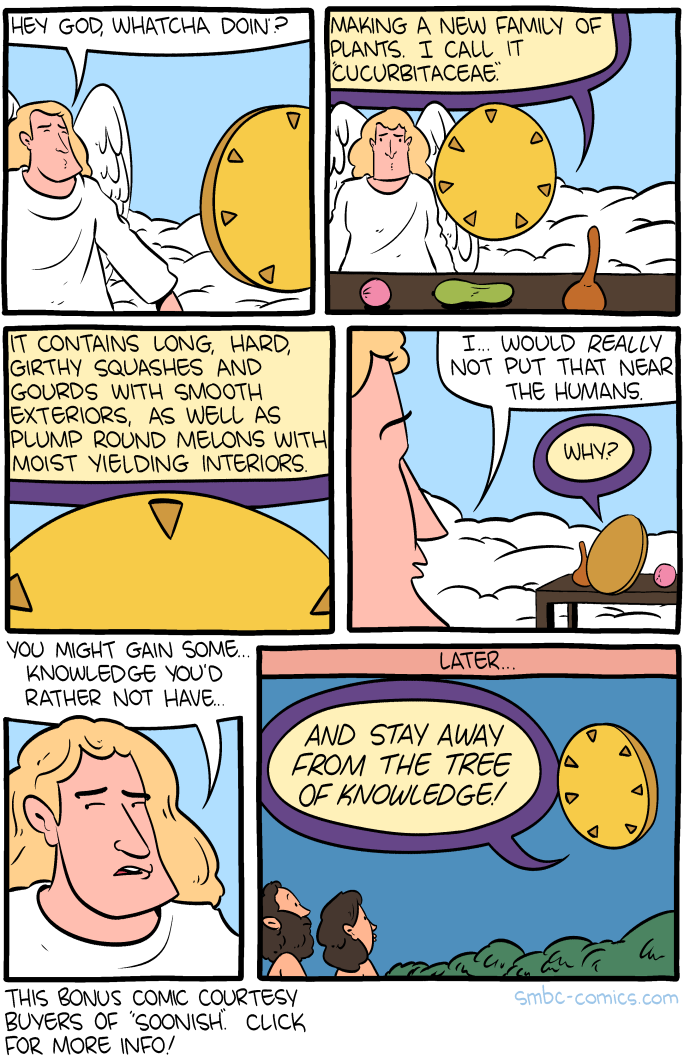
Saturday Morning Breakfast Cereal - Cucurbits

by tech@thehiveworks.com


Click here to go see the bonus panel!

Hovertext:
I feel like the next time someone asks 'what is SMBC about' I'm just going to point at this comic.

New comic!
Today's News:
13 Dec 14:02

Baffled DNC Plant Roy Moore Not Sure What Else He Could Have Done To Defame Republican Party

by Ryan Shattuck on Politics, shared by Ryan Shattuck to The Onion
Philip.paulsson

For None.

Also, woohoo Roy Moore lost!

HUNTSVILLE, AL—Scanning his mind for any minority groups he could have demonized more forcefully, Alabama Senate candidate and secret Democratic operative Roy Moore admitted Tuesday that he wasn’t sure what else he could have done to destroy the Republican Party’s reputation. “When Nancy [Pelosi] sent me here, I was…

Read more...

13 Dec 12:31

Macron to award US climate scientists ‘Make Our Planet Great Again’ grants

Philip.paulsson

Love it.

French President Emmanuel Macron will award U.S. climate scientists with grants to conduct research in France for the remainder of President TrumpDonald John TrumpHouse Democrat slams Donald Trump Jr. for ‘serious case of amnesia’ after testimony Skier Lindsey Vonn: I don’t want to represent Trump at Olympics Poll: 4 in 10 Republicans think senior Trump advisers had improper dealings with Russia MORE’s current presidential term.

The “Make Our Planet Great Again” grants, totaling about $70 million, will be given to about 50 climate research projects, ABC News reported.

The Monday awards ceremony comes the day before the United Nations and World Bank’s “One Planet Summit,” a climate event focused on the Paris Accord. Trump was not invited to the summit, according to ABC.

Macron has been especially critical of Trump’s decision to pull out of the accord, saying in November that France would cover the U.S. share of funding for a U.N. climate change panel.

The grants will allow researchers to relocate to France and will last through the remainder of Trump’s current term.

Macron announced the initiative after Trump said in June that he would pull the U.S. out of the Paris climate agreement.

Macron invited U.S. researchers, and soon other non-French climate researchers, to compete for the opportunity to conduct their work at French institutions like La Sorbonne or Paris-Saclay.

“These are the places you have to come work in to develop new initiatives for our planet,” the “Make Our Planet Great Again” website reads.

Trump has called the Paris climate agreement "unfair" to U.S. interests and promised to pull the U.S. out of the accord during his presidential campaign. The U.S. became the only nation to not be signed onto the deal when Nicaragua and Syria both signed the pact.

12 Dec 16:11

Unpatriotic Man Does Not Maintain Erection During National Anthem

by Ryan Shattuck on Local, shared by Ryan Shattuck to The Onion

PHILADELPHIA—Brazenly demonstrating his near-traitorous contempt for his country, unpatriotic man Douglas Harlow on Tuesday reportedly failed to maintain an erection for the duration of the National Anthem. “Sorry, but he doesn’t deserve to call himself an American if he won’t keep his hard-on going for the entire…

Read more...

12 Dec 12:38

SHC Weekly Roundup: Week 8 (Auspicious AND Nutritious!)

by admin
Philip.paulsson

Haha my brother got a mention! He plays for the Capitalists...

Week 8

Well hållo there, folks!

It looks like another chapter in SHC history is in the books. With gameplay being spread out across the past few weeks more sporadically than Barry ‘Roegain’ Roe’s hairline, it’s been hard to keep track of all the action, admittedly.


Goddamit, Shane! There is NOTHING wrong with my hairline! You know what? Get the Hell out of my spare Bathroom! Nnnngghyyyahhhh! *flips table*

That’s right, folks, with Thursday, Friday and Sunday night games coming together like a couple of beauty bookends to the week, highlights, goals and referee blunders were in full effect for the max capacity crowds down at Feisty ol’ Feiyang Figure skating arena. We had blowouts, low turnouts, Swedish man models on campouts, and – unexpectedly – an intimate lesson in how Shama treats gout.

Just sippin’ my morning coffee, scrollin’ through some moments, when BAM!

In other news, the Bureau of Chinese Sports and Recreation kicked off their all new youth program, featuring none other than the SHC’s very own Barry Roe as the head coach!

I swear to God and all that is holy, child, if you flinch one more time when I’m winding up from the hashmarks I’mma rip your goddam head off.

But enough about that.

Here’s your friggen’ roundup:


Thursday Night (Nov.30th)

Northmen 1 vs. Capitalists 3

The polluted night sky and freezing downpour provided an ominous backdrop for the bright LED lights of the Feiyang hockey Mecca on Thursday night. The weekly live broadcast to hundreds of countries garners 10’s of viewers each week, and at least a dozen tuned in to see how this one played out.

The previous game between the White and Blue franchises was the longest game in SHC history – a 24-round shootout before victory could be claimed (editor’s note: that’s not a joke). This time around, both teams really wanted to settle the score as early as possible. The Capitalists came into the game strong and dominated the first 10 minutes like a skinny Japanese man in a hot dog eating contest. It all seemed to be going well for the Caps until Captain, Matt ‘trip/hook/slash’ Whately decided he wanted an extra rest in the penalty box, allowing the best power play unit in the SHC to work their Magic.

The Northmen big guns: Shama ‘No Drama’, Jeff Göldschlager and Liam Neeson pressured significantly, but goalie Sandy and oddly European sounding Capitalists’ defensemen, Rekrutiak and Anders, were able to keep the danger at bay. However, possibly due to his need to test the new refs, Whately took another blatant tripping penalty soon afterwards. This time the Capitalists were not able to stop the rush and eventually Robert “fisherman’s hook“ Leiske buried a slapper to make it 1-0 for the Northmen.

Deciding to play with 5 players for once, the Capitalists took the game to the Northmen’s zone for a while. After putting on some good pressure with some good shots on net, it wasn’t long before Harvey ‘Weinstein’ He was able to jam home a rebound for the equalizer.

“If I wasn’t supposed to tap it in, then why was it laying out for me on the doorstep like that?”

The Capitalists made some critical line changes going into the second half that resulted in even stronger pressure in the Northmen zone. Only a few minutes into the period, Peter ‘7-Game Goal Streak’ Helenius lobbed one in from the blue line to give white the lead. Fans could see the frustration of Northmen snipers, Shama Obama and Goldmember, who were off their usual game. At one point, the smallest Capitalist Ki ‘I don’t need a last name’ Ko (130 cm tall / 20 pounds) laid out the roughly-5-times-her-size Shamalamadingdong in the neutral zone.

Deciding it was time to put the game to an end Peter ‘Former Hockey Hair Glory’ Helenius scored his second of the game, giving the Capitalists a 3-1 win, cementing the admittedly awesome and childish game plan of only having players with numbers containing 6 and 9 involved in any points.

(Editor’s Note: ahhaha ahah ohhhhh 69 hahahaha get iiiidtt? lol lol o loololol!!!11!!!!)


Friday Night (Dec. 1st)

Lions 4 vs. Capitalists 6

The first back-to-back for the Capitalists this season saw them match up against a Lions team hungry for a win. With a few of their top guys out, former B star, and current A benchwarmer, Marty ‘McFly’ Magnan, went back to the future and suited up for the Lions.

The game started off strong for the Capitalists, with Matt “Climbing the stats board” Quaine potting the first goal of the game. Next up, Peter “8-game goal streak” Helenius floated his signature limp-wrister from the point into the back of the net. Not to be outdone, Matt “I told you I was climbing the stats” Quaine potted his second of the game after some nifty passing from blueline beasts, Chris ‘the R is silent’ Rekrutiak and the aforementioned Finnish Phenom.

At this point, The Lions woke up, with Martin ‘I got faster’ Magnan breaking down the ice, cutting through the whole Capitalists team before throwing it into the back of the net. Capitalists Captain Matt “No seriously, it was a breakaway” Whately, inspired by Martin’s moves, received the puck at the blue line and slowly moved it down the ice, eventually releasing a snail-like shot low glove side to make it 4-1. Martin ‘Delorian’ Magnan, quickly repeated his earlier moves, making it 4-2 a short while after, while Dennis ‘Age is merely a construct’ Larcombe blasted two quick goals into the back of the Caps’ net, tying the game 4-4 with plenty of time remaining.

Tired, but not out, the Caps leading scorer Matt ‘that makes it a hatrick’ Quaine dove at a loose puck in front of the brickwall Lions defence, putting it home and taking the lead. Harvey “2 sticks for 600” He added the insurance marker with a pass from Quaine.

After the game Matt Quaine had this to say:

“I saw Martin get 4 points. And I thought, f@$k it. I’ll get 5.”

And with that, the Capitalists ended their weekend with 4 points on the board.

Pictured Above: Marty ‘McFly’ Magnan, virtually every time he needs to ref

Fog Devils 0 vs. Dirty Blues 1

Well folks, the Dirty Blues are best known around the SHC for having one of the best penalty kills. And that’s no accident. You see, it’s not often we get a game without at least two DB players on the cusp of game ejection for stretching the ‘3 penalties and yer out’ rule. It seems all that experience playing shorthanded paid off in Friday’s late game as the DB’s held off the high powered offence of the Fog Devils for an astounding 7 penalty kills. Jan ‘The Srebrenican Deker’ Velich scored the lone DB’s goal before buying his tickets back to Bosnia for the holidays. We caught up with Fog Devil’s team captain, Hamish von Keister, and had this to say:

Hans: “Why do you assign children to my team, Shane? Every. F@$king. year. Year after year. You think this is a game?”

SHC: “Yes, as a matter of fact I do. But, wasn’t it you who coughed up the pizza onto Jan’s stick that led to the game-winning goal?”

Pictured Above: Ian Huang


Sunday Night (Dec. 3rd)

Scorriors 2 vs. Vikings 6

Damn, folks. I mean, damn. When Tömas Simonsson first stepped into the locker room for his evaluation skate last year, I have to admit it was a bit emasculating being undressed beside this guy. It was almost as if he had stepped right out of pages of the latest issue of GQ Fitness… I mean, look at this shit for f@$k sakes:

(Editor’s Note: GQ is more or less equivalent to Timeout Shanghai)

And as it turns out, this dumb Swedish bastard is more than just a pretty face. With a hattie on the night and an apple to round it out, it goes without saying that we have more than just a few reasons to be jealous of this blonde poster boy. Fellow Scandinavian pretty boys, Tuomo ‘The Turtleneck’ SalmiJofa ‘These eyelashes are au naturel‘ Natour, and Jared ‘not actually Scandinavian but I’m blonde’ Scotchmer, all did their part in this “man-model ensemble” performance.

Pictured Above: Disgruntled Scoriors captain Aaron Liu (2 goals on the night; rode his taxi home like it was a surfboard)

Fingertraps 2 vs. Northmen 0

Folks, we’re proud to announce that finally – FINALLY – the Fingertraps have made history with their first win as a franchise. It may have taken 8 weeks to come to fruition, but the atmosphere was electric in the Fingertraps locker room before the game. Rumour has it that Midori san, perpetual beauty and all round morale machine, made the rookie mistake of forgetting her skates at home.

Editor’s Note: Admittedly, she’s probably forgetful because we force her to do all our promotional materials at the last minute…

With only 7 players left on the roster, and star player Hitomi TaNakata not wanting to dull his skates for the upcoming Monday shinny, the ragtag bunch’s hopes all rested on the shoulders of perpetual powerhouse, Joel ‘I’m probably Newly’s son – seriously – the resemblance is uncanny’ LaChappelle. Joely, much like his estranged Dirty Blues father, has legs that can go for days due to his hobbit-esque stature and unrealistically well-conditioned physique. He used his tenacious forecheck and breakout speed to keep the Northmen on their heels for the majority of the game.

Dennis ‘Da Menace’ Corcoran ripped one home in the first half, letting loose a pinball shot that banged off a couple shin pads before finding the twine. It wasn’t until a little while later that LaChappelle’s hard work paid off with a well-earned empty netter. Strong play between the pipes from Cokehound Karl and a record number of icings literally iced any chances the Northmen had of coming back.

Well folks, that’s all she wrote for week 8. Fun fact, week 9 gameplay is already underway, and the Christmas party is kicking off any minute now so get your asses down to Cages for some good toimes! And remember, keep yer stick on the ice!


08 Dec 18:36

Pirate simulator 'Sea of Thieves' hits Xbox on March 20th

by Timothy J. Seppala
Philip.paulsson

Assassin's Creed Black Flag was awesome because of the pirating... so this has some great potential!

Rare's cartoony pirate simulator Sea of Thieves sets sail for your Xbox One and Windows 10 March 20th. Microsoft's stab at breaking out of its Forza, Gears of War and Halo release cadence can't get here fast enough, and if you're feeling impatient yo...