EL SEGUNDO, CA—After receiving hundreds of injury reports from parents across the nation, American Girl announced Thursday that it has decided to recall 50,000 dolls with chainsaws for hands. “Due to a factory error at our plants, thousands of our signature ‘Maryellen’ dolls were accidentally sent out with small…
GOODYEAR, AZ—Acknowledging that the resemblance was quite striking, local grandmother Dorothy Hanson told reporters Wednesday that her newborn grandchild Dylan definitely has his father Jack’s asshole. “Oh my goodness, you certainly are the spitting image of your daddy,” said Hanson while changing the baby’s diaper,…
A Google panorama photo fail from a Reddit user has again shown how good AI can be at weirdly specific tasks and how bad it is at seeing, well, the big picture. A skier with the handle MalletsDarker snapped three photos of friends at the Lake Louise...
It started as a joke, but now people spend a fortune on bottled fresh air. Alex Moshakis reveals how global pollution is fuelling this fad
Air power: one company has already sold more than 200,000 bottles.
Photograph: Ilka and Franz for the Observer
One day in early 2015, Moses Lam and Troy Paquette filled a Ziploc bag with fresh air and posted it to eBay. The bag sold at the asking price – 99 Canadian cents, about 60p – and what was at first a joke between friends suddenly became less fanciful. The pair filled another bag and posted that online, too. When the media took note, a bidding war began, and the item ended, as hot tickets on eBay normally do, with an improbable surge. It sold for C$168 (£99).
Lam had been toiling on commission as a mortgage specialist. He had met Paquette at work. Both were fed up with the monotony of their jobs, and they saw in their eBay success the opportunity to create a new kind of market – fresh air! – one they might control themselves. Carefully, they developed a product robust enough to survive divergent postal systems: an aluminium canister connected to a plastic mouthpiece through which customers could inhale air siphoned from remote locations in Banff, Alberta, where the pair live. Next they conducted cursory research on air pollution, and soon they identified a primary market: Los Angeles, a city at once health-conscious, plagued by cars, and susceptible to wild fires, which fill the atmosphere with toxins. “We said: ‘Let’s model this after bottled water’,” Lam told me. They named their company Vitality Air.
In these early stages, neither Lam not Paquette mentioned the project to friends – “We didn’t want to get laughed at,” Lam said. Lam did tell his parents not long after the sale of the second bag. They responded by saying: “Don’t quit your day jobs.” But the pair ploughed on regardless. In June 2015 Vitality Air sold its first canister. A few months later the company received an order for 5,000 cans, which were shipped exclusively to cities in China. As media attention grew, so did orders. Lam began to field calls from customers in Beijing and New Delhi. Later he spoke to people in Vietnam, Korea, Iran, Greece and Mexico. A new strategy emerged: to target the inhabitants of the world’s most polluted cities, some of whom were unable to walk 200m without inhaling damaging levels of pollutants. “We kind of forgot about LA,” Lam said. “I don’t know what the population of Los Angeles is, but it’s not 2.8 billion.”
There is now luxury air, cold-pressed air, mountain air, air for new mothers, air for work, for kids, for grandparents
Before long, Lam and Paquette had developed a small industry and others began to cotton on to the opportunity. Start-ups in Switzerland and Australia launched similar products: canisters filled with compressed air collected from areas of outstanding natural beauty. Normally the sites were rural and marketable, locations already associated with purity, or adventure holidays: Banff, Lake Louise, Lucerne, Sydney’s Blue Mountains. There is now luxury air, cold-pressed air, 100% mountain air. There is air canned for the benefit of mothers (“Keep awake and command the household in a natural way.”) There is air for work. Air for kids. Air for grandparents.
Given the actual product, most items are expensive – an 8-litre Vitality Air canister costs C$32 (£19); on average, we each breathe 6 litres a minute – but some are more expensive than others. Leo De Watts, an Englishman who coined the term “air farming” – a strategic coup at the dawn of a new industry – began to fill clip-top jars with air from hillsides in Dorset, roping his family into an outlandish collection process that involved very tall nets. In reference to Greek mythology, he named his company Aethaer. A 580ml jar sets customers back £80.
When I spoke to Lam last November in Edmonton, I asked him to describe in simple terms what his company did. “We’re literally taking clean, pristine air and moving it from one part of the world to another,” he said. He was chipper and earnest. He seemed a nice guy, not the sort to pull the wool over anyone’s eyes. But it is easy to be sceptical of his intent, not least in relation to the efficacy of his product. His company has faced a number of questions, chief among them: isn’t this all poppycock?
Prior to 2014, there is very little on record to suggest that anyone had made a large-scale attempt to transport vast quantities of clean air from one location to another. But the idea had been explored in film. In the 1987 sci-fi spoof Spaceballs, Mel Brooks tells the story of an evil race scheming to steal the fresh air of a neighbouring planet, having squandered its own supply. In one scene, an entire atmosphere is hoovered up by a colossal spaceship that resembles in form a maid using a vacuum cleaner. In another, a character inhales fresh air from a can. The product is branded Perri-Air.
Cool breeze: cans are filled with air from Davos. Photograph: Frederik van den Berg for the Observer
Brook’s premise is hilarious for its absurdity. But he made Spaceballs 30 years ago, when air pollution posed less of a threat. Today it is “the world’s largest single environmental health risk”, according to the World Health Organisation – a modifiable burden that costs 6.5 million premature deaths a year, one in nine of the global total. For the most part that trend is increasing, particularly in emerging economies – India, for example – where rapid industrial growth has come at the expense of the environment. The causes of air pollution are simple and, with legislative support, correctable: inefficient transport, coal-burning power plants, industrial incineration, industrial production and household energy use. In many parts of the world, the air people inhale is quietly killing them, and often there is no escape. “The problem is that when you’re a citizen, you can’t choose the air you’re breathing,” said Dr Maria Neira, a director at the WHO’s department of public health. “You breathe whatever is available.”
The problem is that when you’re a citizen, you can’t choose the air you’re breathing
In countless urban centres, particularly those in Asia, whatever is available regularly exceeds the WHO limit, sometimes tenfold. But it can become worse still. In November, a recording in New Delhi monitored the air pollution level at almost 40 times the recommended maximum, prompting locals to refer to the city as “a gas chamber”. For days, commuters wore scarves over masks. Schools closed, and a dense smog veiled the city in gloomy darkness. Not for the first time, locals had to consider very seriously the necessity of going outside.
Which is all, in a terrifying kind of way, extremely good news for the success of Vitality Air. In November, Lam told me that his company had sold “over 200,000 bottles, easy”, and that nearly all of his orders are delivered to regions troubled by high levels of pollution. Target markets include China, India, Vietnam, Russia, Turkey, Iraq and Kuwait. Often, customers are buying a product they hope will offer much-needed respite, if not a cure. “Our air product is mainly sold to people in affected areas,” Lam said. “This air is for export.”
On a cold Wednesday morning in December, Moritz Krähenmann drove to the Flüela Pass, a mountain road close to Davos, in the Swiss Alps, and pulled 4,000 litres of fresh air through a small compressor. Krähenmann is 25 years old. He lives close to Zurich, in Winterthur, where he runs a small office and a lab in which he stores the equipment necessary to perform rudimentary tests on air quality. Last year he established a business that sells 8-litre canisters of Swiss air at €19.90 (£17.60) a pop. The company is called Swissbreeze, despite similarly named competitors. They include Pure Swiss Air and Swiss Alpine Air. To Krähenmann’s credit, neither brand has quite the same lyricism as his own. On the front of each of Krähenmann’s cans, he has included a series of positive lifestyle slogans. One reads: “100% Swiss air / 100% power to live.” It sits just below a version of the Swiss flag.
Like the majority of his competitors, Krähenmann is a rookie in the air industry. Swissbreeze was officially founded last May. And, much like his rivals, he uses compressors to collect large amounts of air from remote locations before shipping it halfway round the world. He relies on publicly available government data to ensure the air he collects is as pristine as possible. On some days that means travelling to Davos. On others it requires a trip to Lucerne, or Interlaken, or St Moritz. He will often collect 70,000 litres at a time, two or three times a month, depending on demand. The air is filtered and purified on site. Later it is siphoned into canisters.
Unlike Lam – who is prone to describing the collection process as a dangerous quest: “If we ever run out of fuel we’re dead in the water” – Krähenmann is practical and straight talking. But the pair are similar in other ways. The objects they sell are near-identical. They work with partners in China, India, and South Korea. And they have no prior credentials in – or, it seems, any great vocational passion for – public health. While Vitality Air’s founders cut their teeth in the Canadian real estate industry, Krähenmann, whose parents are doctors, worked towards a degree in general management. The passion they share is for business – entrepreneurship, particularly. During a phone call, Krähenmann told me that Swissbreeze is the first in a portfolio of products he plans to launch, all of which centre on exporting some part of the Swiss experience. Lam has already extended Vitality Air’s offer, notably with canned oxygen, which has proven medical benefits. He is marketing the product to professional athletes.
I asked Lam to share his personal ambitions. “I’m the kind of guy who goes after titles,” he said. “I want to be known as the king of air. I want to be known as the first person in the world to sell people air.” He did not mention a desire to contribute to the end of air pollution or to help humanity. Krähenmann remained more humble but he, too, could not disguise his ultimate objective: to trade globally, to sell Switzerland to the world.
None of which is out of the ordinary; people attempt to become rich in many different ways. What makes everything ethically murky is this: few people know whether inhaling air from a can is in any way beneficial to the health of a consumer. When I asked Lam and Krähenmann if they had commissioned studies on the health benefits of their products, they both told me they had not. Neither has anyone else in the industry, and no independent studies appear to exist. (The same can be said, right now, of industry regulations.) “There are reports about the benefit of clean air over highly polluted air,” John Dickinson, director of Green & Clean, an Australian air company, told me. But “the reality is there are no current medical science reports about the benefits of small amounts of clean air.” Nobody has actually sat down and performed rigorous tests to answer the question: does canned air actually work?
Clean machine: Moritz Krähenmann in the Swiss Alps. Photograph: Frederik van den Berg for the Observer
I asked Dr Sarah Elkin,a respiratory consultant at Imperial College London, for her opinion on whether canned air offered health advantages to those in regions affected by high levels of air pollution. Her response was succinct: “To my knowledge there is no evidence of benefit.” (Later in the same email she suggested I search for existing studies. Perhaps the remark was pointed.) Other specialists share Elkin’s stance – Shawn Aaron, the director of the Canadian Respiratory Research Network, once told a reporter that: “We don’t know that these bottles of pollution-free air have any health effects, beyond placebo effects.” But, for the lack of data, few can confirm the position as indisputable.
Dr Neir, the WHO director of public health, dismissed bottles of canned air as “sophisticated ad-hoc products,” before complaining that they encourage users to ignore the larger issue. It is “like accepting what should be unacceptable”, she said. “When you are in a city where the air is totally polluted, and you try to solve it by breathing with your own device, it’s like you are accepting that breathing polluted air is something normal. And it shouldn’t be.” Neir’s colleague, Dr Flavia Bustreo, assistant director general at the WHO, has said: “For people to be healthy, they must breathe clean air from their first breath to their last,” which would appear to discount all temporary measures as ineffectual.
For people to be healthy, they must breathe clean air from their first breath to their last
On the phone, I asked Lam about the health benefits of his product. His language became evasive. “We don’t want to make any health claims,” he said. Next he suggested I turn to Google for clarity on the advantages of breathing fresh air, before remarking: “If you breathe better air, it’s better for blood circulation, you live healthier, you live longer, you live happier.” Later he added that, after a breath of fresh air: “You feel more awake” and “colours seem brighter”. This terminology is similar to the language used on the Vitality Air website, which, on the subject of direct benefits, is curiously ambiguous. “Your body will give you all the strength you need if you feed it the right ingredients,” one paragraph reads. “Quality air is one ingredient you shouldn’t overlook.”
Near to the end of our conversation, Lam described his product as a “once-in-a-lifetime experience”. He was pursuing a narrative that celebrated clean air as a luxury pursuit – a birthright as a unique treat.
I asked him how much he recommended people use one of his canisters. “Maybe 10 breaths a day,” he said, appearing to overlook the contradiction.
In conversation with other directors, I had heard both similar and widely different suggestions. Krähnemann advises consumers to inhale 30 to 50 breaths for every hour they spend outside. (This will “relax and calm the lungs”, he told me.) Dickinson did not give a figure, but did refer to his product as “a supplement”.
I asked Lam to explain the benefit of a single breath of clean air. “It’s a unique experience,” he said. Our conversation was becoming fraught, now. “It’s a shot of something your body is not accustomed to.”
High-quality air: a valuable commodity. Photograph: Ilka and Franz for the Observer
Later I asked whether, by targeting consumers affected daily by terrible pollution, he was preying on their anxieties. “We’re not preying on people choking on pollution,” he said. “We want our customers to experience fresh air.”
Lam began to hint at a grander plan. “This is our first product,” he said. “We want to move on to bigger and better products that help customers in bigger and better ways.” One idea will involve an air pack, carried on a consumer’s back, that will last up to eight hours. “Customers will be able to breathe fresh air for a full workday,” Lam said. This won’t contribute to the reduction of pollution, but, said Lam, it will provide consumers with an alternative – the opportunity for escape. “The air is going to be worse tomorrow than it is today,” he said. “And as much as governments are trying to curb pollution, people aren’t listening.” He added: “For us, the earlier we collect it the better.”
For the first time, Lam appeared concerned for humanity. I asked him if that was the company’s ultimate end game.
COLLEGE PARK, MD—Calling it the most reliable sign of an at-risk marriage, a study released Monday by the University of Maryland found that uttering the phrase, “Marriage is hard work,” was the number one predictor of divorce. “Our research shows that expressing a sentiment such as, ‘No one said marriage would be…
You got: Labradoodle You’re known for your intelligence, kindness, and cheerful disposition! You’re a self-confident pup who rarely comes across as aggressive. There’s nothing you love more than helping people! Actually… you might love swimming more. Well, what are you waiting for? Jump in!
The Upper Michigan Blizzard of 1938
Yes, but can your blizzard do this?
In
Upper Michigan's Storm of the Century in 1938,
some snow drifts reached the level of
utility poles.
Nearly a meter of new and unexpected snow fell over two days in a storm that started 80 years ago this week.
As snow fell and gale-force winds piled snow to
surreal heights; many roads became not only impassable but unplowable; people became stranded; cars, school buses and a train became mired; and even a
dangerous fire raged.
Fortunately only two people were killed, although some
students were forced to spend several consecutive days at school.
The featured image
was taken by a local resident soon after the storm.
Although all of this
snow eventually melted,
repeated snow storms like this help build lasting
glaciers
in snowy regions of our
planet Earth.
This is fascinating.... over 550ft of drop had to be calculated into the shot! Crazy.
In mid-2017, the sniping community was rocked by incredible news: a Canadian sniper team operating in the Middle East had made a successful kill at a distance of more than two miles. The team, deployed to fight the Islamic State, killed an ISIS fighter at a distance of 3,871 yards. The shot was a record breaker and more than a thousand yards farther than the previous world record. The shot, which bordered on the impossible, was made only slightly less so by the skill of the snipers involved.
On June 22, 2017 theGlobe and Mail reported that two snipers assigned to Joint Task Force 2, Canada’s elite special forces unit, had shot an Islamic State fighter in Iraq at a distance of 3,540 meters, or 3,871 yards. The sniper team was stationed on top of a highrise building when it took the shot, which took almost ten seconds to reach its target. The sniper and his spotter had used a McMillan TAC-50 .50 heavy caliber sniper rifle. According to the Globe and Mail, the kill was verified by video “and other data.”
To understand the complexity of the shot, it’s best to start with a sniper maxim: sniping is weaponized math. Although a .50 caliber sniper rifle bullet can fly as far as five miles, a host of factors including gravity, wind speed and direction, altitude, barometric pressure, humidity and even the Coriolis Effect act upon the bullet as it travels. Even worse, these effects increase the farther the bullet travels. A successful sniper team operating at extreme distances must do its best to predict exactly how these factors will affect the bullet and calculate how to get the bullet back onto target.
The first and most influential factor on a bullet is gravity. A bullet begins to lose energy as soon as it leaves the muzzle of a gun, and as it loses energy it loses the ability to counteract gravity. The farther and slower a bullet flies, the more Earth’s gravity will pull the bullet downward. This is known as “bullet drop,” and even the most powerful bullet, such as the .50 caliber round used by the TAC-50, will invariably experience it.
In most shooting shooting situations, bullet drop is only a matter of a few inches or more. The Canadian snipers, on the other hand, had to deal with a phenomenal amount of bullet drop: at 3,450 meters, the bullet would be expected to drop 6,705 inches! Ryan Cleckner, a former U.S. Army Ranger sniper and author shows the ballistic data for the shot here. As the bullet is traveling subsonic at a spend of 940 feet per second, the bullet is diving an average of nearly two inches per foot of forward travel, with the problem getting much worse as distance increases.
In order to make the shot the Canadian snipers had to counteract the staggering amount of drop. Being on a highrise building, or hilltop was a must. The rest of the drop correction had to be done within the rifle’s scope, which can be adjusted for drop, and a scope mount that was angled upward for extreme long distance shooting.
Cleckner’s data also provides other useful information. Bullet flight time, from the muzzle of the Canadian sniper’s gun to target was just over seven seconds. The bullet was traveling at 940 feet per second when it hit, which means it slowed to below the speed of sound. Finally, after traveling more than two miles the bullet hit with 1,472 foot pounds of energy, greater than most M16 bullets at point blank range.
Another major factor that would have affected the shot was windage. When shooting at extreme distances, even a mild wind of five miles an hour will have an effect on the flight of a bullet, slowly but surely nudging it off its flight path toward the direction of the wind. At 400 yards, a .50 caliber bullet will be nudged 2.5 inches off its path by a five mile an hour wind. At 3,800 yards that balloons to an incredible 366 inches. In other words, the snipers had to assume their bullet would impact just over thirty feet in the direction of wind travel and plan accordingly.
Other environmental factors played a hand in the shot. Air pressure (generally a function of altitude), temperature, and humidity are factors most shooters at ranges of 500 yards or less rarely encounter, become major issues at 3,800 meters. These factors are mitigated by the use of wind sensors, barometric pressure readers, and a knowledge of local weather conditions. To complicate matters, these conditions may change so that a shot taken on a cold morning will be much different in the heat of the afternoon and snipers must recalculate the shot accordingly.
DURHAM, NH—A new study released Friday by researchers at the University of New Hampshire’s Aquatic Institute revealed that lobsters are capable of feeling pain, and, what’s more, get off it on like the sick little fucking perverts they are. “Our experiments confirmed that lobsters are most likely able to experience…
Amazon decided to take on the quirky superhero spoof The Tick in 2016 despite the fact that the last live-action version of the comic was cancelled before it could complete a single season. But that risk seems to be paying off because Amazon has now...
You won't have to wait nearly as long for the second season of the new Cosmos as you did for the first. Fox has announced that Cosmos: Possible Worlds will premiere worldwide in spring 2019, with Fox itself airing the show in the US and National Geog...
Enlarge / Notice anything wrong with this picture? It's a little disconcerting to see the interior of a Bolt EV without the driver controls. (credit: General Motors)
General Motors is getting ready to ditch the driver for good—at least in its newest R&D vehicles. In 2019, Cruise—the self-driving startup acquired a couple of years ago by GM—wants to begin testing the fourth generation of its autonomous vehicle, the Cruise AV. (This is a modified Chevrolet Bolt EV, no relation to the Chevrolet Cruze.)
The company has filed a safety petition with the US Department of Transportation requesting permission to deploy the fourth-generation Cruise AV, which will be completely driverless, without any steering wheel, pedals, or other form of manual controls.
According to The Verge, part of the request has to do with ensuring passenger safety despite the car not conforming to the Federal Motor Vehicle Safety Standard regulations. For instance, it lacks a steering wheel, therefore it lacks a steering wheel-mounted airbag. As GM President Dan Amman explained, "[w]hat we can do is put the equivalent of the passenger side airbag on that side as well. So it's to meet the standards but meet them in a way that’s different than what’s exactly prescribed, and that’s what the petition seeks to get approval for.”
ST. MUCUS—Expressing concern that the team might choose to relocate if a deal were not struck by the end of the offseason, Mutant Hockey League officials were reportedly pessimistic Friday that the owners of the St. Mucus Ooze would reach an agreement with the city to publicly finance a new arena.
LONDON—In a discovery that sheds new light on the civilization’s cultural practices, researchers at University College London presented evidence Monday that suggests ancient Egyptians never went to see the pyramids unless they had guests in from out of town. “Recently unearthed papyrus rolls dating from 2400 B.C.…





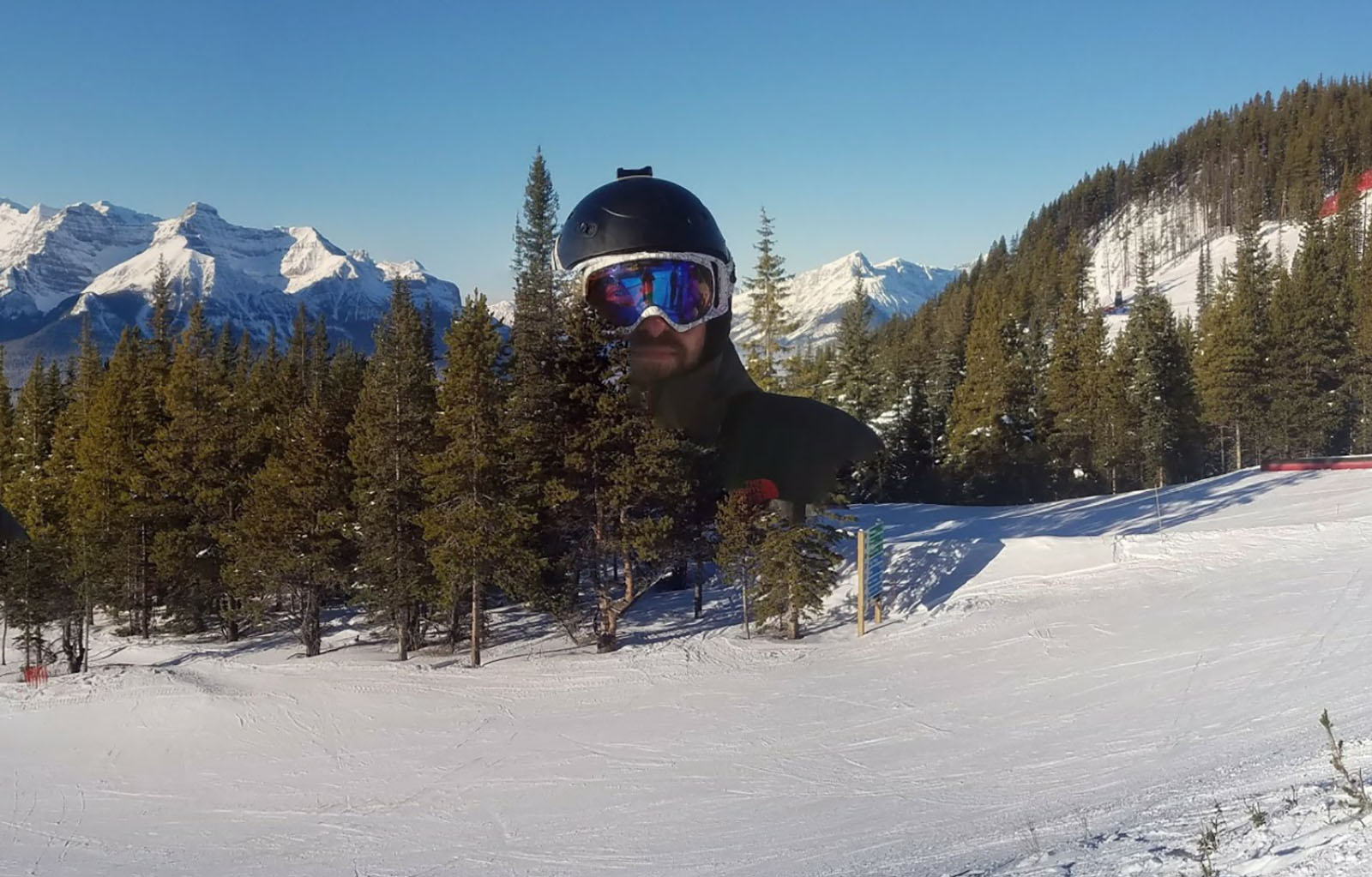 A Google panorama photo fail from a Reddit user has again shown how good AI can be at weirdly specific tasks and how bad it is at seeing, well, the big picture. A skier with the handle MalletsDarker snapped three photos of friends at the Lake Louise...





 The Upper Michigan Blizzard of 1938







 Amazon decided to take on the quirky superhero spoof The Tick in 2016 despite the fact that the last live-action version of the comic was cancelled before it could complete a single season. But that risk seems to be paying off because Amazon has now...

 You won't have to wait nearly as long for the second season of the new Cosmos as you did for the first. Fox has announced that Cosmos: Possible Worlds will premiere worldwide in spring 2019, with Fox itself airing the show in the US and National Geog...