Shared posts

29 Dec 17:42

Building a Better Turkey

by Caren

When it comes to debating the “right” way to prepare a turkey, conversations can get heated. The topic can get downright philosophical with every side ready to evangelize itself on behalf of a particular technique, leaving you to exit the fray with over a dozen methods, each one somehow better than the last. While some methods yield far better results than others, the only true loser is your dried-out bird. Here’s our guide, backed by science, for making a truly succulent turkey.

The Mechanics of Dark and White Meat

Structural differences between white and dark meat make succulence a particularly challenging goal. Meat gets its color from an oxygen-carrying protein called myoglobin, which naturally binds and shuttles oxygen throughout an organism’s body. Dark meat is comprised of slow-twitch muscles that are built for endurance and found primarily in the legs and thighs. These aerobic muscles require large quantities of oxygen-friendly myoglobin to help sustain prolonged use—such as long-distance running—hence their dark coloring. They also burn fat for fuel, so the meat ends up richer in flavor.

In contrast, if you were to look at a turkey breast under a microscope, you would see many light-colored, fast-twitch muscle fibers, geared for intense bursts of activity such as fluttering or scrambling across a road. These fibers work anaerobically and don’t burn fat, so few myoglobin proteins are present, resulting in a white, lean meat.

With different compositions and purposes, muscles cook at different temperatures—dark meat, for instance, requires higher cooking temperatures than white meat. A Modernist approach is to cook each separately. For Thanksgiving, we like to create a confit of dark meat, brine the breast meat, and cook both sous vide at their respective times and temperatures. Cooking sous vide provides a precision-based strategy for maximizing juiciness, and it has an additional bonus: it frees up precious oven space for other dishes on your menu.

06_Baking_Turkey Cutaway_wo oven_IMG_7322

The Whole Turkey

It can be hard to imagine a Thanksgiving meal without an iconic, whole-roasted turkey. Maybe it’s a deep‑seeded, primal instinct based on millennia of roasting meats over a fire. Or perhaps it’s the nostalgia from that special moment when everyone in the kitchen holds their breath in unison to take in the aroma, the color of the skin, and the site of the steaming turkey as it emerges from the oven.

Whatever the reason, there are two issues that make roasting a whole turkey tricky. First, white and dark meat have to be baked together. Second, a crisp, golden skin requires temperatures that will leave the meat underneath undesirably dry. Suddenly, roasting a turkey becomes a juggling act between crispy skin and succulent meat, a task akin to an algebraic formula: if a turkey leaves the station in St. Louis at 15 mph, how long will it take to arrive in Denver with crispy skin and tender meat? Is there a definitive solution for roasting a whole turkey? Likely not. But we’d like to think that injection brining comes pretty close.

How Brines Work

On a fundamental level, brines modify meat proteins. When dissolved, salt dissociates into positively charged sodium ions and negatively charged chloride ions, which are the atoms that actually diffuse throughout your foods. Salinity is a measure of the concentration of these two ions, which equates to a specific ratio of salt to water. Ions flow from areas of high concentration to areas of low concentration, but, due to a shallow gradient in muscle tissues, the diffusion of dissolved salt tends to be quite slow, which is why it can take months to properly cure a ham.

Brining technically does not work via osmosis, as popular opinion suggests. If osmosis alone were at play, water would be drawn out of the meat, but brining works by pulling water into muscles. Chloride ions from dissolved salt diffuse into muscle fibers and accumulate along the surfaces of protein filaments. As these ions increase in number, they generate a negative charge that loosens and pushes neighboring filaments apart. This newly created channel provides enough space for water to enter the muscle, causing it to swell from the influx of ambient water. Ions further modify muscle proteins by causing them to bind tightly to water and resist shrinking as the meat cooks. Muscle will continue to swell until the salinity reaches 6%—after that, it shrinks and begins to lose water.

Brining is a slow process; salt diffuses through muscle roughly 100 to 1,000 times slower than heat conduction. As such, traditional brining can take days—the thicker the cut of meat, the longer it will take to brine. Protein is also found in skin, thus water molecules are bound and trapped there as well. As a result, the skin of brined meat can easily get soggy because of the time it takes for the brining process to work. Excess water can, then, lead to soggy skin and a rubbery texture. Enter injection brining.

MEAT6_Brine Injector_MG_9900

Injection Brining

Injection brining speeds up the process, turning a multiday event into an overnight task. This technique will give you more control over where your brine diffuses, allowing you to expose only the bird’s muscles to the brining solution.

The day before Thanksgiving, create a brine of 6% salt by turkey weight—a reasonable rule of thumb is to use at least as much water by weight as you have meat. Pull back the skin so that you only pierce the meat. Then, using a brining syringe, slowly inject the legs, breasts, and thighs. Inject the muscles evenly over the surface, leaving about an inch between injection sites. Turkeys can be large, so this may require dozens of injections. After your turkey is brimming with brine, let it rest overnight in your refrigerator. When you’re ready to roast the turkey, put it on a roasting rack over a drip pan. The rack allows air to circulate around the turkey, which helps amplify flavors and promote even browning of the skin.

Crispy Skin

Skin has an incredibly high moisture content—it’s about 70–80% water by weight. The science behind golden skin is simple: dry it out by removing moisture. For particularly thick skin, however, we like to add an extra step before cooking—don’t cover your brined turkey when you refrigerate it overnight. Instead, leave it uncovered until it’s time to put it in the oven. By doing so, you’re allowing the turkey’s skin to dry out so that it crisps better in the oven.

Crispy skin is also dependent on knowing the internal temperature of your turkey, so we like to combine the drying step with another equally simple step: tracking the oven’s temperature. Cover your turkey with aluminum foil, which will help prevent the skin from getting too dark, and then place it in the oven. Depending on your oven, bake the covered turkey between 191-204 °C / 375-400 °F. Once the turkey reaches an internal temperature of 68 °C / 155 °F, take the foil off, and crank your oven up to 232 °C / 450 °F in order to brown the skin. When the internal temperature reaches 71–72 °C / 160–162 °F, take the bird out of the oven. The turkey will continue to cook from residual heat to an internal, safe temperature of 73 °C / 163 °F. Note that for the most accurate temperature readings, you should insert your digital probe into the thickest parts of the bird, such as the turkey’s breast.

Patience is a Virtue

Once your turkey is out of the oven, it may be hard to avoid a display of turkey worship, but try to resist the urge to immediately carve your bird. Letting the meat rest can be one of the most difficult steps of the entire process, but it makes a considerable difference in flavor and texture. Ripe with brine, your finished turkey will be juicy. If you carve into it too soon, all of those glorious juices will end up on the cutting board instead of in the meat.

Why do we need to let it rest? Some popular theories suggest that the delay allows moisture, forced toward the meat’s interior during cooking, to travel back to the surface. But the slow diffusion rate of water actually prevents moisture from migrating during cooking and resting. In truth, degraded and dissolved proteins slightly thicken the natural juices as the turkey cools. The thickened liquid then escapes slower when the meat is sliced.

We recommend letting your turkey rest for 20 minutes. Use that time wisely by reheating vegetables made earlier in the day. Five minutes before service, gently warm your turkey in the oven.

One Final Debate: Stuffing

The subject of stuffing also happens to be fodder for debate. In one corner, there are devotees of cooking stuffing inside the turkey. In the other corner are those who insist that stuffing must be prepared separately.

If you want Thanksgiving to be memorable for all of the right reasons, make your stuffing in separate cookware, like a cast-iron skillet. Cooking stuffing inside of your turkey introduces food-safety issues—because turkeys are so thick, your stuffing will never reach a safe internal temperature, meaning you must contend with contamination issues from uncooked turkey drippings. Plus, you’ll miss out on the best part of stuffing: the crispy bits on the surface.

Ready for pie and leftovers? We have a recipe and more tips coming your way.

20 Nov 00:51

David Chang’s ‘Maple’ Startup Aims To Revolutionize NYC Food Delivery

by Janaki Jitchotvisut

We all love having food delivered at the touch of a few keystrokes. But what happens when your meal doesn’t meet your expectations? That happened one too many times to Caleb Merkl, one of the masterminds behind Maple. Merkl elegantly summed…

Photos: Maple, YouTube/The National

The post David Chang’s ‘Maple’ Startup Aims To Revolutionize NYC Food Delivery appeared first on First We Feast.

20 Nov 00:30

I Went to a Beer Festival Called The Festival

by Austin L. Ray
Kevin White

@none

We’re standing line for maybe 30 seconds before I overhear someone talking loudly about a $7,000 bottle of Cantillon. They only made 180 of them, he tells his pals, droning on until one of them finally says something in return:…

All photos by Austin L. Ray

The post I Went to a Beer Festival Called The Festival appeared first on First We Feast.

20 Nov 00:28

What Paper Cuts are Like for Cells

by Katie McKissick

06 Nov 18:39

On the Street….I Love the Way This Look Walks, London

by The Sartorialist
Kevin White

Scroll down surprise!

91514blue6B9801Web

91515Blu6B9819Web

05 Nov 22:36

Photo


05 Nov 14:59

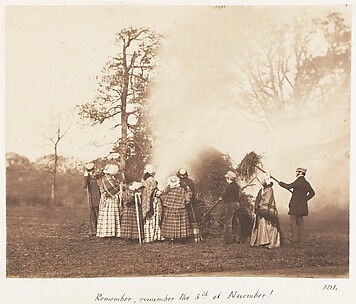
Remember, remember the 5th of November!

Remember, remember the 5th of November!
John Dillwyn Llewelyn

Date: 1853-56
Medium: Salted paper print
Dimensions: Image: 15.6 × 19.5 cm (6 1/8 × 7 11/16 in.)
Classification: Photographs
Credit Line: Gilman Collection, Gift of The Howard Gilman Foundation, 2005
Accession Number: 2005.100.382 (26)

Information about hundreds of thousands of works of art is available in The Metropolitan Museum of Art's Collection Database.

Photograph Credits | Terms and Conditions | Privacy Policy

© 2000–2014 The Metropolitan Museum of Art. All rights reserved.
04 Nov 16:48

November 4, 2014

Picture of a red house and its reflection on a lake in Sweden

Mirror Image

Photograph by Torsten Muehlbacher, National Geographic Your Shot

On a stretch of road between Sderhamn and Gvle on the Swedish coast, Your Shot member Torsten Muehlbacher noticed this small island reflected in a lake. I drove to a nearby parking area and walked a few minutes for the perfect view, he writes. I put my camera on a tripod and made a long-exposure shot for a better mirror on the lake, because it was not windless.

Muehlbachers picture recently appeared in Your Shots Daily Dozen.

This photo was submitted to Your Shot. Check out the new and improved website, where you can share photos, take part in assignments, lend your voice to stories, and connect with fellow photographers from around the globe.

04 Nov 05:53

October 31, 2014

Picture of a green turtle swimming in the Canary Islands

Turtle Power

Photograph by Montse Grillo

On the coast of Tenerife in the Canary Islands, we have quite the selection of affectionate green turtles, writes photographer Montse Grillo. This turtle was coming [down] from the surface. The sun behind it and the sun rays surrounding it gave it a special majesty.

This photo was submitted to the 2014 National Geographic Photo Contest. Enter your best shot by October 31 for a chance to win.


Download wallpaper &raquo

04 Nov 05:50

10 Essential Roast Recipes

by Angelica Frey
Kevin White

@allthedudes

There is nothing quite as cozy as a good roast sputtering away in the oven on a Sunday afternoon while you’re lounging on the couch watching football. As the cool weather arrives, we all start start craving ultra-comforting food. Cue: our 10 favorite…

Anne Serrane’s Beef Rib Roast. Anne Serrane’s make-ahead, perfectly-cooked rib roast needs to be on your menu tonight. Well-seasoned beef and a little bit of broth is all you need for this sensational dish. Get the recipe.

The post 10 Essential Roast Recipes appeared first on First We Feast.

31 Oct 13:25

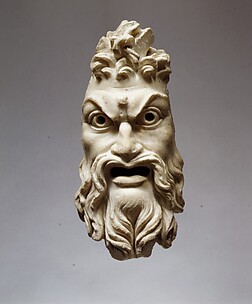
Marble mask of Pan

Marble mask of Pan

Period: Early Imperial
Date: 1st century A.D.
Culture: Roman
Medium: Marble
Dimensions: H. 11 1/8 in. (28.3 cm); width 5 in. (12.7 cm); depth 3 1/2 in. (8.9 cm)
Classification: Stone Sculpture
Credit Line: The Bothmer Purchase Fund, 2002
Accession Number: 2002.284

Information about hundreds of thousands of works of art is available in The Metropolitan Museum of Art's Collection Database.

Photograph Credits | Terms and Conditions | Privacy Policy

© 2000–2014 The Metropolitan Museum of Art. All rights reserved.
30 Oct 12:28

Antibiotic Costume

by Katie McKissick

30 Oct 06:35

Photo


30 Oct 06:08

Girls in Lace Skirts Never Stand Alone, Milan

by The Sartorialist

91414lace6B0619Web

91514Lac6B1337Web

28 Oct 19:46

Times Square

Kevin White

I love/hate my office location. Thankfully i only get to / have to see it a few times a month

The intersection of Broadway and 42nd Street and the surrounding neighborhood on New York City is at or near the top of any tourist destinations list. There are always amazing sights to see, and here's a collection of photos of the spectacles. --By Lane Turner
A dancer poses for a photograph as part of the 'Dance as Art' photo project in Times Square in New York September 22, 2014. The project is a celebration of dancers and their place in the New York experience. REUTERS/Carlo Allegri

28 Oct 19:46

Toronto Residents Now Have A Library for Kitchen Appliances

by Janaki Jitchotvisut
Kevin White

WANT!... way better than checking out books!

There’s no denying that having the right tools makes a huge difference—whether it’s at your office or in your kitchen. But if we’re talking about your kitchen, where are you supposed to put them all? The struggle for kitchen counter…

All photos: The Kitchen Library

The post Toronto Residents Now Have A Library for Kitchen Appliances appeared first on First We Feast.

28 Oct 17:33

Health Workers in Texas are Using Tabasco to Help Train for Ebola

by Angelica Frey
Kevin White

apparently ebola smells a lot like vinegar & peppers?

Texas health workers preparing to treat any future Ebola cases found a great, but rather surprising, training tool: Tabasco sauce. At the University of Texas South Western Medical Center, health workers have been treating fake patients who have been randomly…

Photo: Flickr

The post Health Workers in Texas are Using Tabasco to Help Train for Ebola appeared first on First We Feast.

27 Oct 11:17

October 23, 2014

Picture of mist over Mount Bromo in East Java, Indonesia

Morning Java

Photograph by Achmad Sumawijaya

Photographer Achmad Sumawijaya waited three hours to capture this picture of Mount Bromo (in foreground) and Mount Semeru (in background) on a misty morning in East Java, Indonesia. Some Indonesians believe that the volcanoes are portals to a subterranean world.

This photo was submitted to the 2014 National Geographic Photo Contest.


Download wallpaper &raquo

23 Oct 22:21

How to Do a Tim Tam Slam

by Chris Schonberger
Kevin White

these things are sooooooooooo good!

If you follow Kim Kardashian on Instagram, as anyone who cares about world affairs should, you will have noticed that she recently took a break from butt selfies to shout out an exotic brand of biscuits called Arnott’s Tim Tams. Perhaps…

All photos by Liz Barclay

The post How to Do a Tim Tam Slam appeared first on First We Feast.

23 Oct 22:20

World’s Best Fridge Dispenses Candy Instead of Ice

by Erin Mosbaugh

Deric Peace is a kitchen appliance god. Peace turned his fridge’s built-in ice dispenser into a candy dispenser instead. He simply fills his fridge’s ice tray with sweets instead of ice—et voila, magical frozen Smarties and Reese’s Pieces appear. Frozen candy, whenever the…

man

The post World’s Best Fridge Dispenses Candy Instead of Ice appeared first on First We Feast.

21 Oct 15:10

Red Sox: Slivers of light at Fenway Park

There were more shadows than light at Fenway Park this year. Although the World Champion Red Sox finished dead last this year, nearly 3 million fans watched them play. Because there were few highlights this season we take a last look at the slivers of light, patterns and people that make Fenway a special place. --By Stan Grossfeld
Red Sox third baseman Brock Holt has played every position this year except pitcher and catcher. He likes to wear his red socks high. (Stan Grossfeld/Globe Staff)

21 Oct 15:02

October 21, 2014

Picture of a humphead wrasse and a school of fish in the Great Barrier Reef

Napoleon Invasion

Photograph by Christian Miller

A humphead wrasse, also known as a Napoleon wrasse, builds a living frame as it swims through a school of fish in the waters off Australia. Photographer Christian Miller captured the shot on a windy day right after a cyclone had passed the far northern Great Barrier Reef. Never before [had I seen] that many glass fish on this particular coral bommie [outcrop], he writes.

This photo was submitted to the 2014 National Geographic Photo Contest.


Download wallpaper &raquo

20 Oct 19:18

On the Street…..Astor Place, New York

by The Sartorialist
Kevin White

so many good locations to open up a shop within a short walk from my apt

101714SashaC1415Web

20 Oct 17:59

Orb Hammer

Ok, but make sure to get lots of pieces of rock, because later we'll decide to stay in a room on our regular orb and watch hammers hold themselves and hit rocks for us, and they won't bring us very many rocks.
20 Oct 11:47

A Softer World: 1161


buy this comic as a print!
Or share on: facebookreddit
If you enjoy the comic, please consider supporting A Softer World on Patreon
18 Oct 05:23

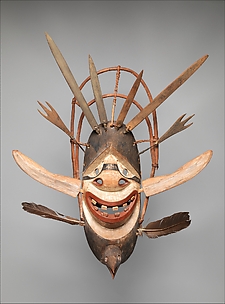
Dance Mask

Kevin White

it looks so happy

Dance Mask

Date: early 20th century
Geography: United States, Alaska
Culture: Yup'ik
Medium: Wood, paint, feathers
Dimensions: H. 24 x W. 23 3/4 x D. 6 1/2 in. (61 x 60.3 x 16.5 cm)
Classification: Wood-Costumes
Credit Line: The Michael C. Rockefeller Memorial Collection, Bequest of Nelson A. Rockefeller, 1979
Accession Number: 1979.206.1120

Information about hundreds of thousands of works of art is available in The Metropolitan Museum of Art's Collection Database.

Photograph Credits | Terms and Conditions | Privacy Policy

© 2000–2014 The Metropolitan Museum of Art. All rights reserved.
16 Oct 19:52

A Softer World: 1160


buy this comic as a print!
Or share on: facebookreddit
If you enjoy the comic, please consider supporting A Softer World on Patreon
16 Oct 19:35

10.11.2014

Cyanide and Happiness, a daily webcomic

Copy this into your blog, website, etc.
<a href="http://explosm.net/comics/3709/"><img alt="Cyanide and Happiness, a daily webcomic" src="http://www.flashasylum.com/db/files/Comics/Rob/sleepwife.png" border=0></a><br />Cyanide & Happiness @ <a href="http://explosm.net">Explosm.net</a>

...or into a forum
[URL="http://explosm.net/comics/3709/"]
[IMG]http://www.flashasylum.com/db/files/Comics/Rob/sleepwife.png[/IMG][/URL]
Cyanide & Happiness @ [URL="http://explosm.net/"]Explosm.net[/URL]
<—- Share this comic!

16 Oct 16:26

Photo


16 Oct 16:26

Photo