Shared posts

22 Nov 16:46

Pattern Drafting With Illustrator

by Amy

After my last post about pattern drafting I got so many great comments about the various programs you use, whether as a hobby or professionally. This subject definitely brings the patternmakers out of the woodwork! That makes me happy because I love patternmaking minds. I want to put you all in a room together so we can geek out on subjects like bone structure, sleeve caps, and pattern puzzles.

Today as promised I’d like to share a few of my favorite Illustrator tools for drafting patterns. Now just to warn you, I am not writing a tutorial on “how to draft in Illustrator”, nor am I trying to exhaust the subject. I’m also assuming that you are a hobbyist drafting for yourself. If you are interested in making sewing patterns for sale, there are many issues to consider and these are worthy of a tutorial series or course on their own. I’ve included some resources at bottom if this is your interest.

So let’s dig in…

Learning the Pen and Line Tools

If you are brand new to using vector software of any type, I recommend spending some time playing with the pen tool. This is the most basic tool and when drafting you’ll use it over and over again. You’ll also use the Line tool, which allows you to draw straight lines and transform them into curved ones later on.

When I first started using Illustrator I created documents and made a bunch of random shapes freehand with the pen. Play around with it until you get used to the motions with your mouse or trackpad.

Get to Know Anchor Points

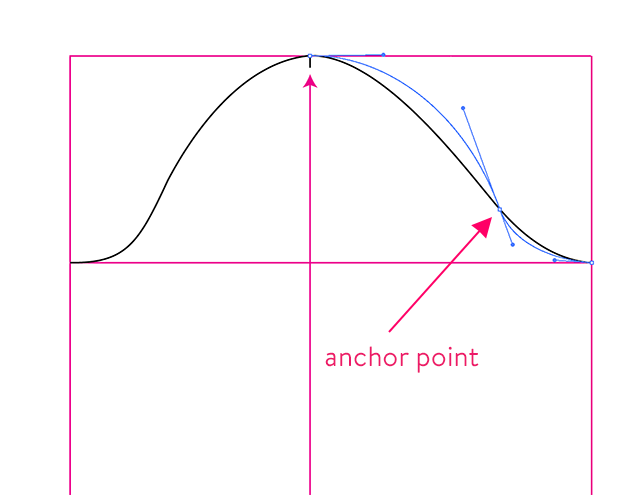
Anchor points are little dots that “anchor” a line or curve into a particular spot. These points have handles that can be pulled out to create curves. The more anchors the more complex a curve can get.

Illustrator Drafting Tips | Cloth Habit

You can add anchor points to any line by clicking on the “Add Anchor” tool (the shortcut in Illustrator is the + key).

Measuring Lines

There are two ways I measure lines. The simplest is through the “Document Info” window.

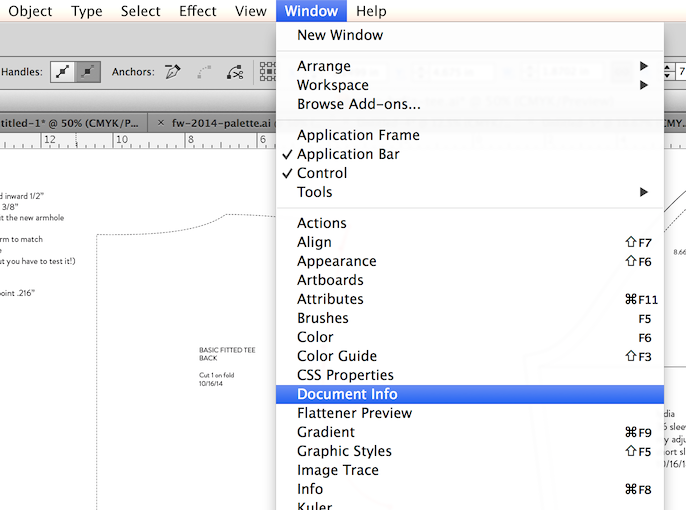
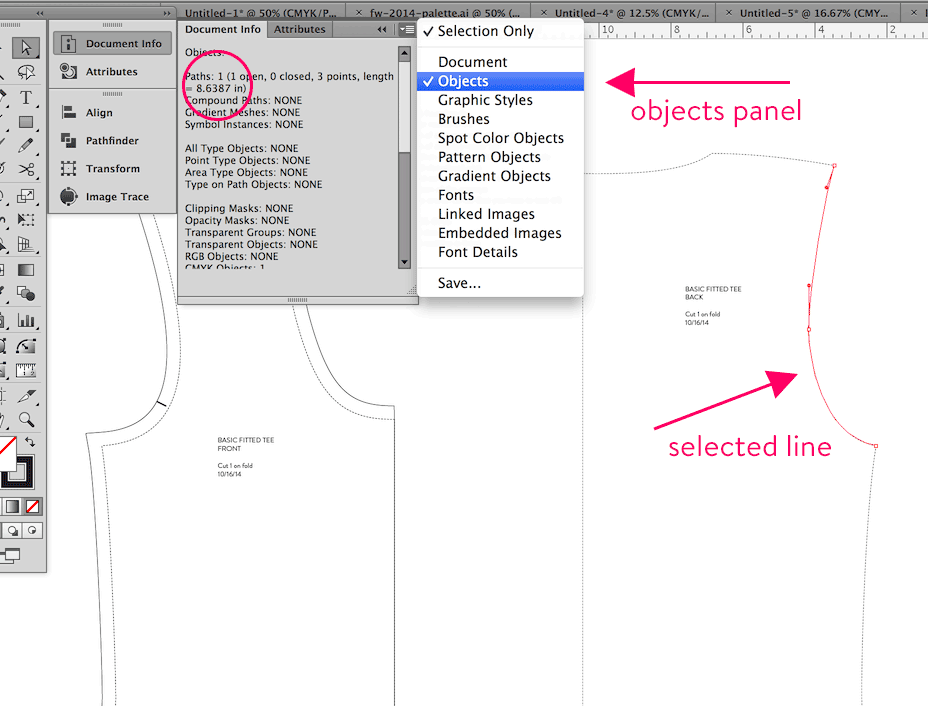
For example, let’s say I want to measure an armscye. First I select the armscye line with the “Direct Selection” tool (shortcut: “A” key). Then I look in the Document Info window. If this is not visible, click on “Window > Show Document Info”.

Illustrator Drafting Tips | Cloth Habit

The Document Info window has an additional dropdown menu for “Objects”.

Illustrator Drafting Tips | Cloth Habit

When a line is selected, this information window will give you an exact measurement of your line down to fractions of inches, millimeters or centimeters.

The second tool I use for measuring lines is a plugin called Vector Scribe. Years ago this plugin was called SnapMeasure. It cost a mere $10 or so. Unfortunately another company bought it out, repackaged and amped the price but I’ve gotten so used to the tool that I had to bite the bullet once I upgraded Illustrator.

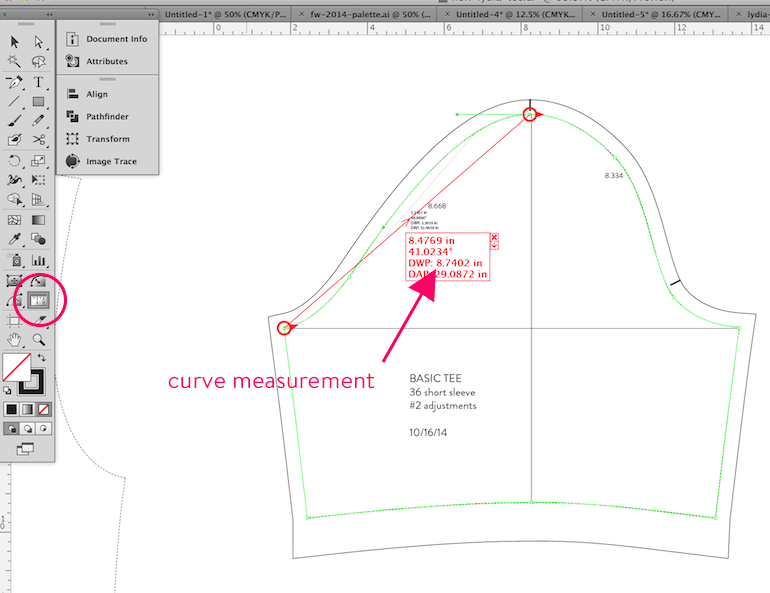
Vector Scribe allows you to measure segments of curves and lines, rather an an entire line. So for example, I can measure just the front part of a sleeve cap:

Illustrator Drafting Tips | Cloth Habit

(DWP means “Distance Within Points”, which is the actual curve measurement along that red line.)

This plugin makes tasks like walking and checking notch placements on my bra patterns so much easier!

Using Guides

Guides are non-printing lines that you can pull into your document. Most Adobe software use guides in some form and they are really helpful for lining pieces up, finding exact corners, or maintaining a control point.

In Illustrator, to pull a guide your rulers have to be visible and you simply click on the ruler and drag downward or inward and a guide appears:

For example, on this sleeve pattern, I pulled in guides to mark the bicep line and the shoulder notch position. I locked the guides (View > Guides > Lock Guides) so they would not move while I was drafting and moving the sleeve seams around.

Duplicating Objects and Layers

Now here is the real beauty of Illustrator—the ability to copy over and over without losing previous work. Illustrator uses layers just like Photoshop.

If I draft something in one layer but need to make an adjustment, I just duplicate the layer. I’ll make the adjustments on the new layer and then go back and make the original layer visible so I can view and assess the changes.

Printing

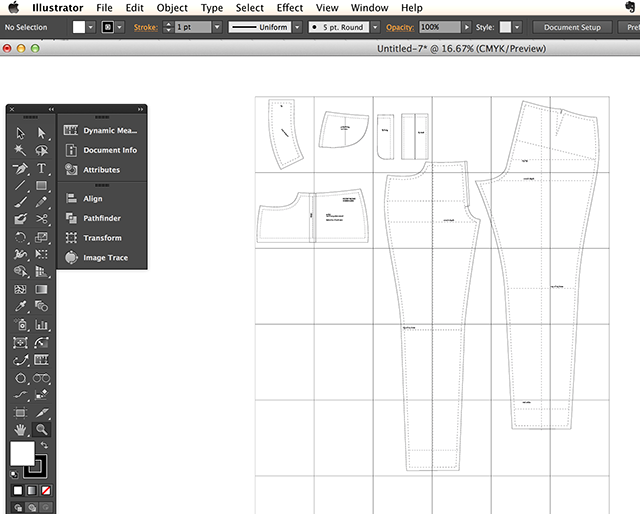
Unless you are lucky to have a wide-format printer or want to take your patterns to the copy shop, you’ll have to print tiled patterns and tape together just like any pdf sewing pattern! Here is the template I use for all my patterns:

Illustrator Drafting Tips | Cloth Habit

Illustrator has a feature called Artboards, which are hidden in the background and create printing boundaries. In my template I created a 7″x9″ printable rectangle for for every page, then an Artboard that covers each rectangle. Explaining Artboards would take up a post in itself so I’ll leave that to you to explore.

Seam Allowances

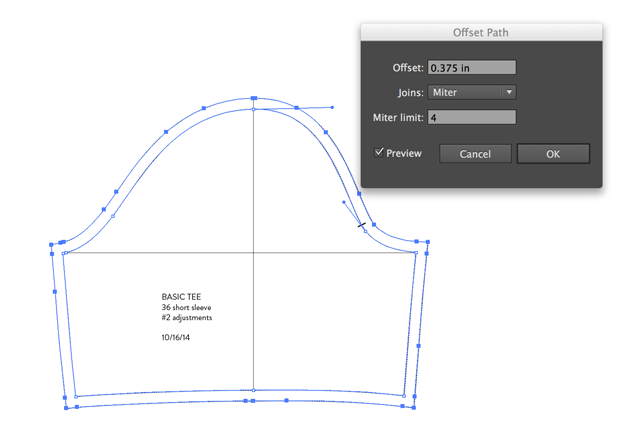
There are several methods of creating seam allowances. “Offset Path” is the easiest but all your paths have to be closed. Select your path, then go to Object > Path > Offset Path. Enter the seam you want in decimals:

Illustrator Drafting Tips | Cloth Habit

I also use a an Action that I made up to create bra seam allowances (very curvy seams need special seam allowance treament!). I’m not going to share it because honestly it is a totally hacky workaround and would take me too long to explain!

Further tips:

  • Keep your lines or strokes under 1 pt (point). I use .5 pt lines. Think of the difference between a sharp pencil and a sharpie marker—if you get thicker than 1 pt you are making your seam line almost a part of the seam allowance.
  • Use the text tool to write notes on your pattern with the date and any adjustments you make. I can’t tell you how many times I used to make multiple versions of a pattern and couldn’t remember which was the most recent! Now I have a practice of putting dates on everything.
  • Learn some shortcuts! There is a shortcut key for everything in Illustrator. The Pen Tool is P, Select Tool is A, and so on. When you start using one tool over and over there is a good chance it has a keyboard shortcut. You can actually make your own (go to Edit – Keyboard Shortcuts), and it will save you time from dragging your mouse over and over again.

Further Resources

(Please note: I am not affiliated with the courses nor have I taken them.)

Is there something you’d like to know how to do in Illustrator? I tried to think of the basics here, but if you have a question feel free to ask!

The post Pattern Drafting With Illustrator appeared first on Cloth Habit.

16 Nov 14:43

Wonder Woman: The Weird, True Story

by Sarah Kerr
Sarah Kerr

The Secret History of Wonder Woman
by Jill Lepore

Wonder Woman Unbound: The Curious History of the World’s Most Famous Heroine
by Tim Hanley

It’s Jill Lepore’s contention in The Secret History of Wonder Woman that the superheroine has all along been a kind of “missing link” in American feminism—an imperfect but undeniable bridge between vastly distinct generations.

16 Nov 14:41

Why Innocent People Plead Guilty

by Jed Rakoff
Jed S. Rakoff

The criminal justice system in the United States today bears little relationship to what the Founding Fathers contemplated, what the movies and television portray, or what the average American believes.

01 Nov 03:46

(Ethical Re-Meme… Because Halloween.) ETHICAL HALLOWEEN!...

Russian Sledges

via rosalind


(Ethical Re-Meme… Because Halloween.) ETHICAL HALLOWEEN! ^_^

31 Oct 20:21

Extra! Extra! Extra! It's the Great "Utena" Watch Party!

by villeashell
Russian Sledges

via otters

joseinextdoor:

Do you know? Do you know? Have you heard the news?

image

Inspired by Vrai’s series of Utena analyses, I’m trying to make Utena magic happen on the Interwebs, and I want each and every one of you to be a part of it. Hit the jump for the full story and how you can slip on your rose signet and join us in the arena.

Read More

31 Oct 20:05

What Kind of Librarian Are You?

by russiansledges
Russian Sledges

not entirely wrong

Virtual Librarian: People don’t always realize you exist; it’s like you’re doing some sort of magic making sure that they can get answers to life’s toughest questions at all hours of the day and night. You are tuned in to politics, pop culture, science, art and more. Your friends fight to have you on their bar trivia team, and it’s not just because you’re so good-looking. Your favorite color is the color of the sky you rarely see.
31 Oct 19:58

I've Been Everywhere, Man: Musicians on the Road

by russiansledges
Russian Sledges

incl. marissa nadler + some other local musicians I vaguely think I like

DATES: November 6–22, 2014 Opening reception: November 6, 2014, 6-8 Special Event: On the Road: Stories: November 12, 2014, 7-9 We elevate our heroes. The gods are in the clouds. Superheroes fly. Marbled idols stand on pedestals. And our cameras aim at musicians where they are at their best—on stage. But how do they get there? And, more importantly—with days dedicated to cramped cars, thin wallets, beat-up motels, loneliness—why do they follow that long and winding road from one venue to the next? 'I've Been Everywhere, Man: Musicians on the Road' is an intimate exhibition of the reflections, adventures, humor, and hardships of musicians on tour.
31 Oct 17:44

How to Make Creepy Glowing Jars Out of Household Items to Decorate for Halloween

by Rebecca Escamilla
Russian Sledges

via rosalind

Glowing jar
photo by Ashley Hackshaw

Offbeat Home offers a quick, last-minute idea to decorate for Halloween: creepy glowing jars. The process is simple. Fill a jar with water, activate and break open a glow stick, pour the contents of the glow stick carefully into the water, and put a lid on the jar. The glowing jars can be used inside for a party or outside to unnerve trick-or-treaters.

For those short on glow sticks, breaking open a highlighter and using a black light creates a similar effect.

Glowing jars
photo via Brooklyn Limestone

via Offbeat Home

30 Oct 21:53

Opinion: I Don’t Support Feminism If It Means Murdering All Men (by Katherine Adams)

By Katherine Adams


30 Oct 01:20

Actress from street harassment video now receiving rape threats

by Maggie Serota
Russian Sledges

via bernot ("actually it's about ethics in compliments")

Actress from street harassment video now receiving rape threats

On Tuesday, a viral video PSA commissioned by anti-street harassment organization Hollaback practically took over the internet. By now, most of us have seen the footage of actress Shoshana B. Roberts getting harassed over 100 times in the ten hours she roamed the streets of New York City. The video documents instances of the Roberts being told to smile, having her body commented upon and even having her personal space invaded when a stranger silently walks up beside her for five minutes.

In a horrifying, but unfortunately not unsurprising turn of events, Roberts was then inundated with rape threats in the comments section of the YouTube video page.

The subject of our PSA is starting to get rape threats on the comments. Can you help by reporting them? http://t.co/NMYCFd9YOm

— Hollaback! (@iHollaback) October 28, 2014

“The rape threats indicate that we are hitting a nerve,” Hollaback director Emily May told Newsday. “We want to do more than just hit a nerve though, we want New Yorkers to realize — once and for all — that street harassment isn’t OK, and that as a city we refuse to tolerate it.”

Although many of the rape threats have been deleted, Lane Moore from Cosmopolitan points out that plenty of ignorant and troubling responses remain:

“She definitely targeted an area where she could expect that kind of reaction. Not only that she wore a form fitting outfit that excited the imagination. I think she is a narcissists that just enjoyed the attention. Ignore her protestations, she loved the attention!” –DEREKinNYC

“OMG THIS HARASS IS SO BAD!!! My class mate harassed me today too! She said; “Hey how you doing?!”, CAN YOU BELIEVE THAT? Later the same day the store clerk did the same thing! He said; “Have a nice evening”, what a pervert! WHAT IS THIS WORLD COMING TO!?!?! I BETTER MAKE A VIDEO!!!”

Despite the threats of sexual violence and idiotic dismissive comments, the video’s popularity speaks to a heightened awareness and solidarity regarding the ways women are harassed and objectified when they are merely trying to exist.

Source: Newsday

30 Oct 01:18

What Do Classical Antiquities Look Like in Color?

by Jillian Steinhauer
"Cuirass Torso" (reconstruction), Acropolis, 460 BCE (2005), artificial marble, h: 57 cm, Stiftung Archäologie, Munich (all photos by Stephan Eckardt, Ole Haupt; all images courtesy Archaeological Institute Göttingen and Stiftung Archäologie, Munich)

“Cuirass Torso” (reconstruction), Acropolis, 460 BCE (2005), artificial marble, h: 57 cm, Stiftung Archäologie, Munich (all photos by Stephan Eckardt, Ole Haupt; all images courtesy Archaeological Institute Göttingen and Stiftung Archäologie, Munich)

Everyone knows that classical sculpture is white. Think of the gleaming marble of artworks like the Belvedere Torso and “Laocoön and His Sons” — the whiteness imparts a kind of purity, a sense of being the ground zero of Western culture, the original from which an entire civilization’s canon has sprung. Would we view these sculptures differently if they were in color?

An exhibition currently on view at the Ny Carlsberg Glyptotek in Copenhagen is making the case for polychromy. Transformations: Classical Sculpture in Colour argues that “Antiquity was anything but sceptical of colour” and that “the white marble of Antiquity was merely a tenacious myth.” The show features around 120 pieces: original sculptures alongside experimental, colored reconstructions.

Transformations grows out of the work of the Copenhagen Polychromy Network (CPN), an international and interdisciplinary research group that’s devoted to studying polychromy in ancient Greek and Roman sculpture. The network and its Tracking Colour project in turn were spurred by an initial exhibition examining polychromy at the Glyptotek in 2004. Ten years have passed since then, and considerable advances have been made.

"Young Roman," 3rd century CE, marble, h: 0.26m, Ny Carlsberg Glyptotek, alongside its reconstruction

“Young Roman,” 3rd century CE, marble, h: 0.26m, Ny Carlsberg Glyptotek, alongside its reconstruction

“Research in ancient sculptural and architectural polychromy is an interdisciplinary venture combining the humanities and natural sciences. Technological developments in science are therefore affecting our field at an increasing rate,” CPN project coordinator and Transformations curator Jan Stubbe Østergaard told Hyperallergic over email. He continued:

The examples are many. Multi spectral imaging (MSI) is becoming an important means of identifying pigments; isotopic analysis allows provenancing of lead based pigments; X-ray diffraction spectroscopy (XRF) and other spectroscopic analyses are providing us with evermore refined information. The combined result is that the complexity of ancient sculptural polychromy and its interfaces with the sculptural forms is gradually reemerging. But we are still at the beginning.

Østergaard explained that the myth of monochromatic classical sculpture began during the Renaissance, when sculptures like the Belvedere Torso and Laocoön Group were discovered. “They were understood to be from classical antiquity, were therefore regarded as exemplary models — and they were perceived as being monochrome white, simply because their polychromy had largely disappeared over time. So, it was not a case of suppression, but of a misunderstanding by a small, highly cultivated and influential minority which was subsequently codified in art academies and transmitted on.”

He went on to add, however, that “suppression — and repression — may come into it when studying 20th century reception of the fact established in the course of the 19th century that ancient sculpture had demonstrably been polychrome: this fact collided frontally with long established European aesthetical, ethical, ideological norms, ultimately with Western identity.”

So, scholars have known for at least a century that classical sculpture was colorful, but that knowledge has not become common.

So-called ‘Peplos Kore,’ original alongside reconstruction, Athens (540 BCE/2011), artificial marble, h: 130 cm, Stiftung Archäologie, Munich

So-called “Peplos Kore,” original alongside reconstruction, Athens (540 BCE/2011), artificial marble, h: 130 cm, Stiftung Archäologie, Munich

The Carlsberg exhibition may help change that. (Artist Francesco Vezzoli is also experimenting with the idea in his own but similar fashion at MoMA PS1, painting directly on marble busts.) But it’s admittedly a tough pill to swallow; looking at some of the before and after photos, what stands out (at least in this writer’s mind) is how … garish the color versions look, like a child might have painted the pigments on.

“The role of color in ancient sculpture is a decisive one,” Østergaard wrote. “It is decisive for the visual aesthetics of the sculpture, obviously; it is as clearly decisive for the legibility of a narrative in a variety of ways, from the painting in of sandal straps and horses reins to the blood oozing over the skin of a wounded Amazon, and on to the proper identification of subject of a sculpture — the Archaic Peplos Kore is not wearing a peplos and is therefore not a young girl (kore), but a goddess as evident from the dress parts shown only  by way of painting.”

Indeed, even without understanding those details, the color does bring the artworks to life in a particular way. It seems to undermine that sense of timelessness we often attach to them, instead anchoring the pieces in a specific context. In doing so, it makes them more human and, ironically, brings them closer to us.

Caligula, (37-41 CE),, marble, h: 28 cm, Ny Carlsberg Glyptotek

“Caligula” (37-41 CE), marble, h: 28 cm, Ny Carlsberg Glyptotek

Caligula (reconstruction), 37-41 CE (2011), marble. h: 28 cm, Archäologischen Institut der Universität Göttingen and Stiftung Archäologie, Munich

“Caligula” (reconstruction), 37-41 CE (2011), marble. h: 28 cm, Archäologischen Institut der Universität Göttingen and Stiftung Archäologie, Munich

"Lion from Loutraki," Greece (c. 570-560 BCE), limestone, h: 53 cm, l: 100 cm, Ny Carlsberg Glyptotek

“Lion from Loutraki,” Greece (c. 570-560 BCE), limestone, h: 53 cm, l: 100 cm, Ny Carlsberg Glyptotek

"Lion from Loutraki" (reconstruction), Greece, c. 570–560 BCE (2003), plaster, h: 53 cm, l: 100 cm, Ulrike Brinkmann and Glyptothek München Ny Carlsberg Glyptotek

“Lion from Loutraki” (reconstruction), Greece, c. 570–560 BCE (2003), plaster, h: 53 cm, l: 100 cm, Ulrike Brinkmann and Glyptothek München Ny Carlsberg Glyptotek

"The Byzantine Empress Ariadne" (c. 500 CE), marble, h: 70 cm, Museo della Basilica di San Giovanni in Laterno

“The Byzantine Empress Ariadne” (c. 500 CE), marble, h: 70 cm, Museo della Basilica di San Giovanni in Laterno

"The Byzantine Empress Ariadne" (reconstruction, 2008), painted plaster, h: 32 cm, Museo della Basilica di San Giovanni in Laterno

“The Byzantine Empress Ariadne” (reconstruction, 2008), painted plaster, h: 32 cm, Museo della Basilica di San Giovanni in Laterno

Transformations: Classical Sculpture in Color continues at Ny Carlsberg Glyptotek (Dantes Plads 7, Copenhagen) through December 7. For those who want to learn more, extensive information about objects and research methodology is available on the Tracking Colour website.

29 Oct 22:11

The Observatory | Robert Morris | Socks Studio The Observatory...

Russian Sledges

via firehose


The Observatory | Robert Morris | Socks Studio

The Observatory is a land-art piece by Robert Morris located in Flevoland, in the Netherlands. The first version of the project was created by the artist in 1971 for the open air exhibition “Sonsbeek buiten de perken” (“Sonsbeek out of bounds”) and built in the dunes near Velsen. A year later, the artwork was dismantled and then it was rebuilt in 1977 in Flevoland.

The Observatory (here on google maps) consists of two concentric earth mounds (the exterior measuring a diameter of 71 m) crossed by three V-span openings and divided by a ditch. The interior circle is made by a wood structure which supports earth covered in grass and includes four openings, one of them being the entry. Coming through a triangle-shaped tunnel it is possible to get through the exterior circle right through the middle of the land-art work through the East-West axe. The other three openings in the central circle are oriented in order to frame the sunrise in some specific times of the year. The middle steel visor shows the sunrise at the equinoxes. On the northest and southest sides of the circles are two stone wedges, through which the sunrise on the 21 June and on the 21 December are visible.

29 Oct 20:00

Freeware Garden: Masami – Sushi Ace

by Konstantinos Dimopoulos
Russian Sledges

via firehose

By Konstantinos Dimopoulos on October 27th, 2014 at 11:00 am.

One for relatively healthy food too.

It may have been a crucial part of Sega’s marketing strategy 20 years ago, but, inspired as it may have been, Columns never really came close to replicating the ridiculous success of Tetris. Chances are Masami – Sushi Ace won’t do much better either, despite it being a lovely take on the classic formula of the falling blocks arcade puzzler.

Masami – Sushi Ace is essentially an improved and transformed Columns that substitutes coloured blocks with falling sushi ingredients to be neatly arranged in threes. Oh, and, this being a game most appropriately and obviously set in a sushi restaurant, it adds the smart little twist of clients having particular preferences you have to tend to.

Just make sure people get their prawn/crab/fish/anything sushi when they ask for it and you’ll have scored an Ace.

Eggs! I love eggs. Well, I think they are eggs.

An Ace will grant you extra points in Masami’s high-score chasing arcade mode, whereas in the lovely story mode it will function as a more concrete goal.  Said story mode is a particularly inspired addition that breaks the game into smaller segments each with a specific task you’ll have to accomplish. Tasks such as getting four aces, or scoring a certain number of points in a set amount of seconds. These help non-high-score-obsessive players get into the game and, eventually, prepare them for competitive play.

Not that I’d expect Masami to become the next hit of the tournament scene, lovely as it may be, but it’s definitely worth a (Windows only) download and small office tournament, especially if you are into classic puzzlers. Being a carefully designed refinement of the original Columns with elegant NES visuals and tons of polish does help quite a bit too.

It’s not everyday when freebies come with in-game manuals, gamepad support, all sorts of graphical options, cute chiptune soundtracks and sleek retro-esque presentation.

columns, Foxy Boxy, free, Freeware Garden, Masami - Sushi Ace, puzzle.

29 Oct 17:43

How to Talk to Your Guy Friends About Not Threatening to Rape and Murder Women on the Internet

by russiansledges
I’m not gonna go all “wives, mothers, daughters, sisters” on your ass. Don’t do this shit for your mom. Don’t do it for your wife. Do it because you’re not a human scab.
29 Oct 17:23

Keytar Bear attacked again?

by adamg
Russian Sledges

jesus fucking christ people

via suburbankoala

Tue, 10/28/2014 - 19:00

Our favorite fuzzy musician reports on an incident last night in front of Faneuil Hall:

There was another attack by 2 guys and a girl this time this time they tried to stab me with a knife and they stole from me lm not upset because I realize god gives us problems in order to make us stronger these are the few dollars that l recovered lm hoping my Keytar still works because l used it to defend myself but my Bruins jersey is fucked up and that pisses me off because it had everyones signature tommorows another people.

Earlier:
People suck: Keytar Bear sucker punched in the face.

Free tagging: 

Neighborhoods: 

Topics: 

29 Oct 14:40

GET WITCH OR DIE TRYIN’: SURVEYING SALEM’S CRASS AND SURREAL TOURISM GAUNTLET

by RYAN WALSH
Russian Sledges

"Where this gets really interesting though is where the City of Salem has been forced to mediate between parties and to regulate what some consider to be fantasy. Beth Rennard, the city’s attorney, shows me an ordinance regarding the licensing of psychics and, it’s the most fascinating bureaucratic form I’ve ever seen. From section 14-72 A:

"'Fortunetelling shall mean the telling of fortunes, forecasting of futures, or reading the past, by means of any occult, psychic power, faculty, force, clairvoyance, cartomancy, psychometry, phrenology, spirits, tea leaves, tarot card, scrying, coins, sticks, dice, sand, coffee grounds, crystal gazing or other such reading, or through mediumship, seership, prophecy, augury, astrology …'

"This goes on for three pages, and I’m a bit taken aback by the language. Could an attorney really use these definitions in the court of law?"

WALSH TOP

Images by Ryan Walsh unless otherwise noted

It’s only the first weekend in October, but Essex Street is already hectic. The narrow sidewalk is a parade of people in costume, pedestrians whose everyday clothes you might categorize as costumes, and ordinary-looking folks in a vague hurry, off to get their witch fix.

They’re all in the right place. Salem is now offering more ways than ever to scratch that occultist desire. Outside of the Hex: Old World Witchery store, teenagers debate whether to venture inside for a tarot reading. On an adjacent corner, groups of friends and families pose with the “Bewitched” statue, a striking bronze replica of the show’s Samantha character riding her broom past a slender moon. At her feet, a plaque lets you know the statue was placed there by the TV Land network.

Further east, past Washington Street, Essex turns into a marketplace where cars are prohibited, but the stores offering witch paraphernalia and psychic readings become more plentiful. Inside a shop called Witch Tees, I overhear two psychic readers talking—one is complaining about tips. “I’ve done 14 readings and only made $15,” she tells her co-worker, shaking her head. “I spent it all on food,” she concludes, a note of disgust in her voice. Outside, the smorgasbord of walking tours promising everything from “ghost orbs” to the “one hundred percent true” scary stories of Salem begin to resemble flocks of birds, somehow instinctively avoiding one another. A pit bull trots by dressed like Batman.

The TV Land 'Bewitched' statue

The TV Land ‘Bewitched’ statue

At the popular Gulu Gulu Café, I ask a lifelong resident if the city’s witch tourism has always been a mainstay. “No,”” he says, “it definitely wasn’t anything like this when I was a kid. I don’t even think it was like this in the eighties.” Technically speaking, this all began in September 1692, when 14 women and six men from Salem were hanged (or in one case pressed to death) after being accused of witchcraft. How a national disgrace morphed into a big money tourism jackpot for a small North Shore port town is one of the more unknowable mysteries you’ll encounter in any of these shops selling glimpses of the supernatural.

According to Kate Fox, executive director of Destination Salem, “We estimate 30 percent of our tourism comes in October … Tourism generates more than $100 million spending annually in Salem and sustains more than 700 jobs.” Destination Salem is an initiative of Salem’s Office of Tourism, and Kate’s email answers to my questions are informative but succinct. The office’s motto, “Salem: Still making history” strikes me as perhaps the most passive aggressive way possible to acknowledge the city’s infamous dark history, which has quite literally made its bright, profitable present-day situation possible. But then again, how would you convey that sentiment in a motto?

WITCH

Looking for answers, I consult Christian Day, who owns two witchcraft shops in Salem, and who claims to be the “World’s Best-Known Warlock.” When Day picks up the phone, his first words are, “Yeah, hold on, I’m gonna give Brian my cape and hat.” Brian is a manager at one of his two Salem stores, Hex: Old World Witchery, and Day is aggravated that he isn’t dressed the part.

“I don’t care! It’s better than that thing that looks like you work at Staples,” Day tells Brian before resuming our interview. “My store manager comes in with a blue Polo shirt like he works at FedEx. And this is what I’m talking about here, our identity, you know people come here expecting a certain thing and this is the magic that we give them. They say it’s commercial and I think to a degree it is, but when you look back at history, at stories of mythology, the witch, the shaman, the medicine person, the healer of the tribe … they always looked different.”

An episode from 'Bewitched' from October 1970 titled 'The Salem Saga,' in which the cast visits the city, helped catapult local witch tourism

An episode from ‘Bewitched’ from October 1970 (pictured here) titled ‘The Salem Saga,’ in which the cast visits the city, helped boost local witch tourism

Day is charming, funny, charismatic. I enjoy his unpretentious takes on the very theatrical scene and lifestyle for which he’s become a ringleader in Salem. He runs through a condensed history of the city’s witch tourism: “It started in 1892 with the Daniel Low department store making a silver witch spoon. Then you had the Witch House open in 1948. I think the biggest burst of tourism was the late sixties or early seventies, when they had the episode of ‘Bewitched’ that was filmed in Salem, and that was absolutely huge. And then in 1992, the 300th anniversary of the trials, it just exploded. We’ve seen these growth spurts and it’s never really gone down.” I ask Day if there are residents who don’t care for the “growth spurts,” and he has little sympathy—especially for those who moved here after the tourism boom in the nineties. “If I didn’t like the smell of Chinese food,” Day quips, “I wouldn’t move to Chinatown.”

I arrive on Essex Street and park my car, just in time to witness the end of one of Salem’s many spooky walking tours. The guide is a young man in his mid-twenties, speaking through a small bullhorn. He leaves his tourgoers with parting words: “Thank you for coming out tonight. Now obviously tipping isn’t necessary, but it’s awesome. If you need to know anything about fake witchcraft, real witchcraft, or where to eat, just ask me.”

A small selection of the merch available

A small selection of the merch available

You can find plenty of all of those things just wandering down Essex Street by yourself. I walk slowly, thumbing a 63-page tourism guide called Haunted Happenings. There’s the “Psychic Fair and Witchcraft Expo,” an attraction that promises an amusingly specific “16 minute adventure,” a shop unfortunately called Salemdipity, and a place that holds a live séance on Friday and Saturday nights. I flip through the guide and read the bio of one psychic, whose lead-off credit is: “Seen on TLC’s ‘What Not to Wear.’” Almost every vendor sells t-shirts, whether it’s germane to their core business or not. Some shirts find playful ways to toy with the city’s history: One features a gaggle of witches on broom sticks and reads, “Girls Just Wanna Have Fun.” Others feature the basest puns imaginable: “I got a hand job at Bewitched in Salem” read one, accompanied by an image of palmistry—another just declares, “I got stoned in Salem,” which is one of the most direct instances I find of commerce tied to the idea of Witch Trials as a funny thing, and it’s depressing to behold.

On the one hand, this is all colorful, eccentric fun that is a boon for the municipal economy, a tourism juggernaut that few other locales around New England can compete with. Still, it’s hard to not keep remembering this is all born out of something horrific. Imagine if the premise of Disney World were a massacre conducted by a man dressed up in a mouse costume that occurred 300 years ago. American culture is no stranger to leveraging its darkest moments for comic relief, and my feeling is that this instinct is entirely healthy. At the same time, the distance between tragedy and processing it through humor has grown smaller and smaller. I can’t help but think about a Twitter thread in 1865: It’s moments after Booth assassinated Lincoln, and a slave-owning Southerner trolls, “Otherwise, what did you think of the play, Mrs. Lincoln?” Would any of Salem’s witch tourism be palatable if the trials happened 100 years ago? How about 50? What exactly is the equation for this kind of response’s appropriateness? And is that figure a moving target?

Looking for more local opinions, I call Stacy Tilney, director of communications for the Salem Witch Museum. “I can see how that might seem like competing or conflicting notions,” she says, “but they’re sort of not related. You know, they’re just kind of coincidentally finding themselves in Salem at the same time. I don’t think anyone celebrates the Salem Witch Trial history. You know what I’m saying?”

Sort of, but Christian Day’s whole take stands in somewhat stark contrast to Tilney’s. “Maybe they should celebrate these people’s lives as much as they cry over them,” he says. “I think both are important. I really do. There’s a way we can celebrate these people.”

These seemingly opposing statements represent hints of a city divided. Where this gets really interesting though is where the City of Salem has been forced to mediate between parties and to regulate what some consider to be fantasy. Beth Rennard, the city’s attorney, shows me an ordinance regarding the licensing of psychics and, it’s the most fascinating bureaucratic form I’ve ever seen. From section 14-72 A:

Fortunetelling shall mean the telling of fortunes, forecasting of futures, or reading the past, by means of any occult, psychic power, faculty, force, clairvoyance, cartomancy, psychometry, phrenology, spirits, tea leaves, tarot card, scrying, coins, sticks, dice, sand, coffee grounds, crystal gazing or other such reading, or through mediumship, seership, prophecy, augury, astrology …

This goes on for three pages, and I’m a bit taken aback by the language. Could an attorney really use these definitions in the court of law?

There have been protests in the past over the commercialization of witch tourism. Image via kareninboston

There have been protests in the past over the commercialization of witch tourism. Image via kareninboston

Day says he helped catalyze the altering of ordinances so the number of licensed psychics in town could grow from a few to the nearly 100 who operate here now. He is pleased with the plethora of operating psychics, and once told The New York Times in 2001 he wants Salem to be the “Las Vegas of psychics,” even if many clairvoyants-for-hire have complained the oversaturation makes it hard to earn. As a result, the prices for psychic readings are extraordinarily high—$40 for a 15 minute reading, which significantly outpaces the cost per minute of many therapists and strippers.

Fortunetelling l icenses cost $50, and do serve an important function that has only recently been necessary in Salem: the prohibition of hex removals. Last year, Fatima’s Psychic Studio lost all its licenses after a deluge of complaints, including one from a man who spent in excess of $16,000 trying to remove a curse that his reader identified. Other Fatima clients were told they were “full of evil” and were worked on for smaller, yet still significant, amounts of money. It’s strange to parse the reasons you’re allowed to lose millions at the Hard Rock or Foxwoods, but it’s illegal for a Salem fortuneteller to promises you a better future for a chunk of change.

Rennard declined to comment any further on the regulation of hex removals, but chances are some greater oversight will eventually be needed. As the Times noted in an article three years ago, tensions have risen to the point of fortuneteller infighting and accusations of dead animals being abandoned outside of storefronts. Meanwhile, I dream of the possibility of a surreal Supreme Court case that debates the legal definition of scrying and augury by coffee grounds.

WITCH

It’s early October and raining, and tours depart every hour on the hour from nearly a dozen locations. Nevertheless, they’re selling out, and I grab the last available ticket for a spooky walk.  Our tour guide steps outside to greet her new ghost-hungry tourists—her steampunk-approved outfit complete with tinted goggles on top of her head, which serve no functional purpose. She asks if everyone is ready, and being someone who always tries to empower those attempting to lead, I say, “Yeah!” and she immediately mocks me for being overenthused. “Whoa, watch out for this guy. He’s already too into it!” Meanwhile, one of my tourmates is having a cellphone dispute with a loved one next to me, and our guide’s attempt to shame her is far less mean-spirited than her takedown of my rally cry.

IMG_0574

Our guide encourages the group to take as many photos as we want, and advises us on how to distinguish between a supernatural capture and water on the lens. “Raindrops will appear semi-translucent in your photos,” she explains. “Ghost orbs,” meanwhile, “will look completely solid. A lot of people report getting great shots of ghost orbs on nights just like this.” Everyone looks at all the umbrellas on display and considers what she’s just said, and even the most dedicated believers look a bit skeptical.

We stomp up the street together while our guide moves at a casual pace through the rain. I step a few feet in front of her to maneuver around a puddle: “Uh, hey, you might wanna let the tour guide lead the tour.” It’s official, I don’t like our leader, but continue to follow.

Our first stop is 128 Essex Street, known as The Gardner-Pingree House. Our guide encourages us to gather in close and then proceeds to tell a murder-ghost story with the enthusiasm of someone ordering a sandwich. She spins a yarn about Captain Joseph White, who would drunkenly invite guests over to have a nightcap after blabbing about treasure he hid in the house. The crowd is already three steps ahead of her, probably already bored, but when she finally gets to the part about the haunting, gesturing with one arm to the window where the ghost is often seen, I’m alarmed by the speed at which my mates whip out their phones and start feverishly snapping pics of a dark window. She caps the story with a tidbit: “As you know, the Parker Brothers company originated in Salem. And it’s this very murder which would become the basis of their most famous board game: Clue.”

“Goodnight, Captain White" advertised on Destination Salem

“Goodnight, Captain White” advertised by Destination Salem

En route to the next spot, I fact-check her claim on my phone, and before our arrival at the next haunted location I’ve already learned that Clue was based on a game in the United Kingdom called Cluedo, and that the plot has nothing to do with the Gardner-Pingree House murder. For something closer to that story you’ll need a ticket to the theatrical show currently running in Salem called “Goodnight, Captain White,”which is described in ads as a “hysterical interactive whodunnit.”

At our next stop, I move to snap a photo. My iPhone case sports a Ouija board, and so when I pull it out the guide notices and points: “Hey cool phone case!” Everyone in the group turns to look, and I’m no longer an invisible journalistic presence: Now they’re photographing me and my phone case. An older woman next to me turns and asks, without irony—I swear this happened—“Are you a murderer?” The question is so bizarre, so inappropriate, so funny that my reply is a string of stammers and indistinct words. She exits the interaction more convinced I am a murderer than she was before it started.

Our guide tells another half-baked ghost story, points to a few more windows, and leads us all over downtown Salem, where we constantly intersect with other walking spook tours. I figure there must be some kind of schedule or pre-established routes so competing companies don’t run into each other and run the risk of tourists hearing contradictory versions of tall tales. We stop at the estimated location of the place where one of the men accused of witchcraft was pressed to death in 1692 (all the other 19 victims were hanged). Because he refused to register a plea of either innocent or guilty, Sheriff Corwin and some onlookers placed 32 boulders on Corey Giles’ stomach over two days, causing him to slowly die an extraordinarily painful death, but not before he cursed the entire city of Salem. This is the most somber (and true!) moment of the tour.

Site of the crushing of Giles Corey

Stone benches at the official Salem Witch Trial Memorial

Just as our guide finishes the tale and we’re left to ruminate on the terror in silence, she breaks to tells us that a lot of people report seeing Mr.Giles right before something awful happens in Salem. One online review I read of a walking tour reported that their guide suggested Giles appeared right before 9/11, which seems like a truly tasteless bit of mythology. It’s the perfunctory manner in which these details are delivered that make my tour so depressing. These stories aren’t even exciting or mysterious to our leader.

Our tour ends soon after at the official Witch Trial Memorial, dedicated by Nobel Laureate (and author of the Holocaust memoir Night) Elie Wiesel in 1992. This sober memorial consists of a rectangular patch of grass lined with trees; outside of the green is a dirt path dotted with concrete benches, each one memorializing an individual death during the trials. Tonight, someone has placed a single white rose on all of them. It’s a respectful acknowledgment of the heinous acts, marred by our guide’s seamless segues into anecdotes about the sighting of the ghost of a small boy nearby.

On the way back to my lodging in Salem that night, I encounter a short figure draped in black robes standing still on a street corner. There’s little foot traffic, and I think, “This is the kind of oddity I was hoping for, something strange for strange’s sake.” I get closer, only for the human underneath to pop out with a proposition, “Visit the Chambers of Terror!” He hands me a brochure for a nearby haunted house, and drops his plastic sickle in the process.

ICYMI

ICYMI

It occurs to me that one of the attractors of this type of offbeat tourism could be that the general public is starved for ritual. And in fact, recent scientific research has suggested that rituals, both small and large, can be extremely effective, enhancing the quality of a person’s life. I have a strong urge to end the night with a palm reading. On Essex Street, I ask one storefront psychic about getting a shorter reading for a smaller fee. She looks at me with disdain and tells me, “Try one of those places down by the wharf.” Settling for a ritual that will set me back $40 feels unappealing to me at the moment, and frankly, the way she refers to the wharf area worries me. I head off to bed instead.

WITCH

The next the morning, a local resident named Ed, who put me up for the evening, talks about the city he grew up in. “Salem is rich in literary, cultural, and marine history, with a world-class museum and historic sites,” he beams. He doesn’t particularly begrudge the witch tourism, but describes it as “set in relief to this history.” He also speaks of economic stimulus. “Salem was in a state of distress just a few decades ago” Ed says. “Now it thrives.”

Enter at your own risk

Enter at your own risk

Ed puts me in touch with Chris Sicuranza, the vice president of Go Out Loud, an organization promoting Salem’s cultural activities and “modern equality.” Sicuranza brings to my attention one of the more promising recent developments in Salem. “Earlier this year we passed our Non-Discrimination Act,” he explains, “which caused uproar later in the year when we terminated our contract with [Christian-centric] Gordon College over their anti-LGBT outlooks in a public domain.” This strikes me as a significant milestone in context, something in balance with the definition of modern witchcraft that people like Day describe, and an ideal counter-response to the intolerance that made Salem infamous.

There is little reason I can see to insist the relationship with Salem’s past become a significant national or even statewide cause. After all, there are countless present day horrors to account for. But this cauldron of reactions to one topic is an absurd mixture—the historical next to the commercial, the gruesome next to the memorial. All of it focused on a 322-year-old epicenter. There is a trajectory that points to Salem actually resembling a “haunted Las Vegas” in two decades. In this regard, surprisingly, Day and Tilney seem to be on the same page. Tilney views the circus of interests and expressions as part of an ongoing conversation happening in Salem right now. Likewise, Day explains, “I’ve seen this animosity between the different factions. Between the architecture people, the literary people, the art people, the maritime people, the witch people, the 1692 witch people, the haunted house people. But Salem is actually all of those things.”

On my drive out of town I pull over to the side of the road, going for a last try at authenticity by visiting the location of the hangings. The specific site is in dispute, but the Internet leads me to Gallows Hill. At the end of Witch Hill Road, there’s a quaint park at the bottom of a hill. I climb to the top of the small peak and look around. No markers, plaques, or landmarks.

It’s peaceful. There’s nothing to remind you of the atrocities of the past or the carnival of the present. While I’m considering that, I look up, and think about what it would be like to end here, this place the last thing you would see. In the distance, in black spray paint on a white water tower, is the silhouette of a witch riding a broom stick, her pointed hat the letter “A” in the word SALEM.

TOWER FINAL

FURTHER READING

THE PERKS OF BEING A GINGER: HALLOWEEN COSTUMES

UNOCCUPIED BOSTON: GET SCARED

29 Oct 14:05

The Other Very Important Cocktail Book Coming Out This Fall

by Camper English
Russian Sledges

via firehose

This has been a tremendous year for cocktail technique books, with The Bar Book by Jeffrey Morgenthaler out in the middle of the year and the Death & Co. book recently released. 

Dave arnold bookI haven't yet seen too much chatter about another book that will likely have a massive impact on cocktails around the world: Liquid Intelligence: The Art and Science of the Perfect Cocktail by Dave Arnold.

The book is due out November 10th.

Dave Arnold was a teacher/writer for the French Culinary Institute and is the guy behind the cocktail program at Booker & Dax in New York. He was the person responsible for bringing flash infusions to the cocktail world, has progressed juice clarification techniques to new levels, and is the person responsible for many sales of centrifuges to bartenders- all from the website he only occasionally wrote for, CookingIssues.com.

Now Arnold has put together those techniques and many others into a book. Many of the techniques will be familiar to those who have followed his work for years, such as the science of chilling/dilution in shaking vs. stirring; how many people prefer slightly aged citrus juice in cocktails; and nitro muddling.

There are sections on making clear ice (but you read all those methods here first), vacuum infusion, hot pokers, and fat-washing.

Big sections of the book center on chilling/dilution/temperature, bulk production/bottled cocktails, carbonation, and clarification. These techniques are explained and options are given for super high-tech and more easily doable versions. I expect to see these techniques used in global bartending contests for years to come. 

What's great about the book is that Arnold covers both the theoretical (why things are happening), and the practical (how to make them work best). So for people who aren't bartenders but are drink geeks, there is plenty of high-level nerditry to enjoy as well. And for people looking for an excuse to buy a vacuum sealer/centrifuge/rotovap, this will give the perfect excuse to commit. I know I did. 

The book is written in Arnold's distinct voice, with sections titled things like "Interesting Cocktail Physics that you can Ignore if you Don't Care" and other jokes throughout. The levity is important as there are very deep topics like a 17-page section on the Gin & Tonic, which doesn't include the sections from other chapters on lime juice clarification or the hand-built carbonation rig needed to make the "perfect" version. 

I don't often review books here on Alcademics as I can barely keep up with reading them all, but this was one I was really looking forward to and to a geek like me it didn't disappoint. 

Buy it here on Amazon.


29 Oct 13:46

dazzlingone: Gina Torres closes The Huntress Spring 2015 Show...

Russian Sledges

via firehose ("baller masterclass")


dazzlingone:

Gina Torres closes The Huntress Spring 2015 Show with Irish Wolfhounds

Are you serious right now.

29 Oct 12:42

October 26, 2014

Russian Sledges

via willowbl00


Thanks everyone for a glorious BAHFest West! Many people asked when we'll do more, and when we'll open up submissions. For that information, just stay tuned to our facebook page!
29 Oct 06:14

Billy & Charley’s Shadwell Shams

by the gentle author

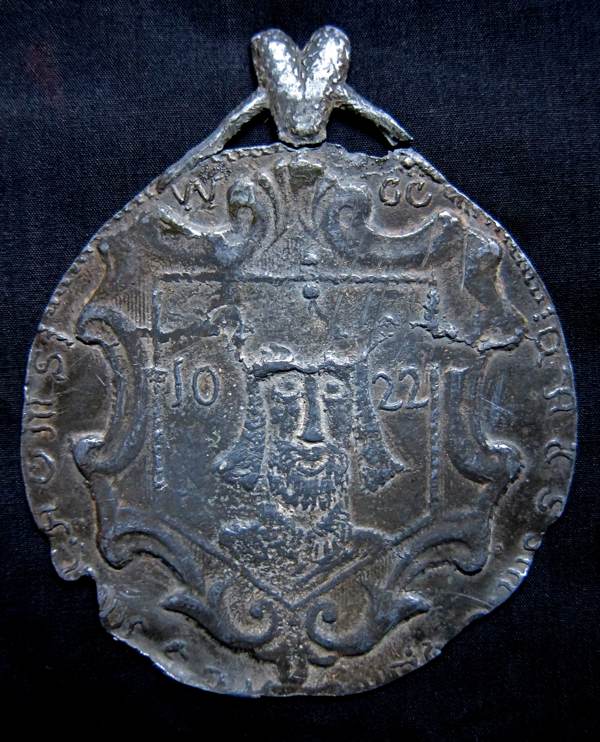
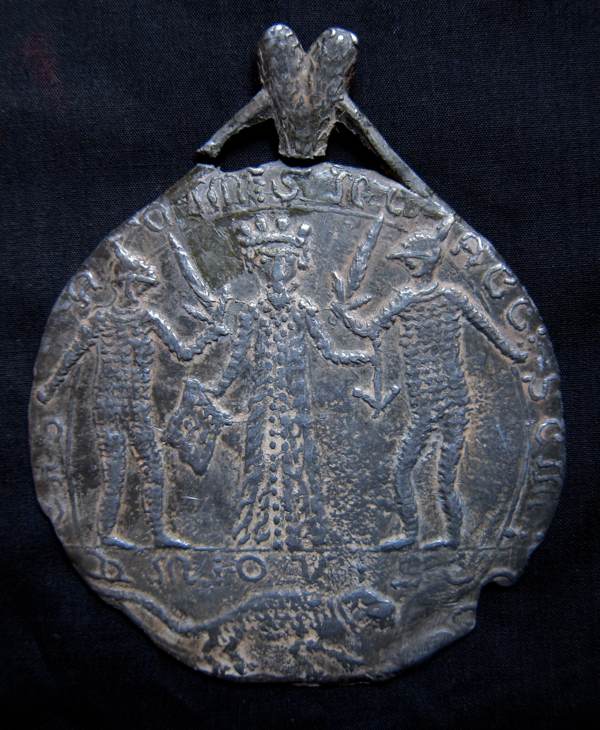
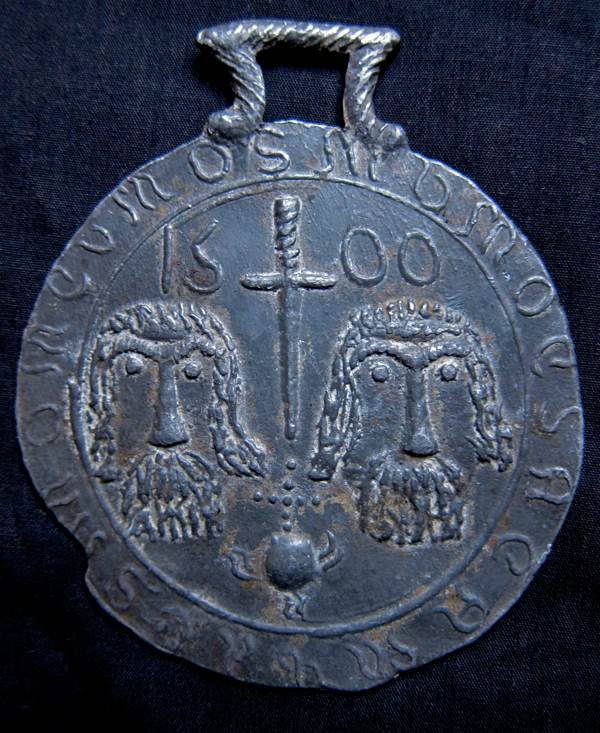
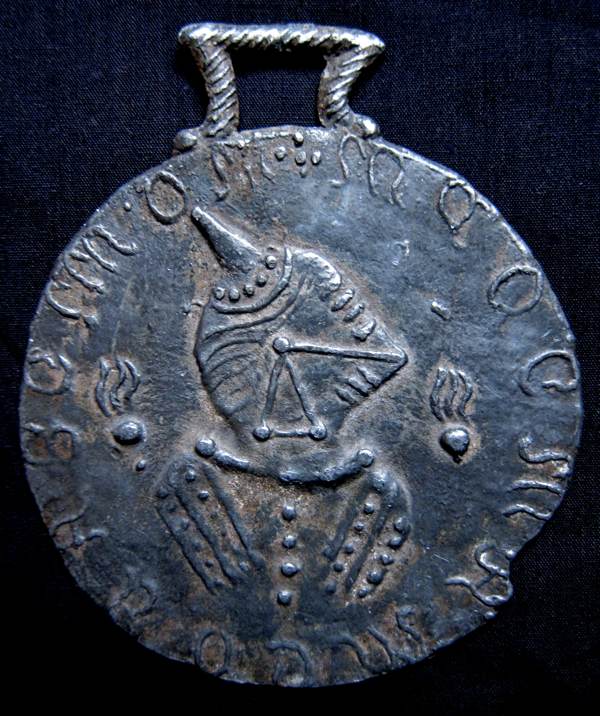
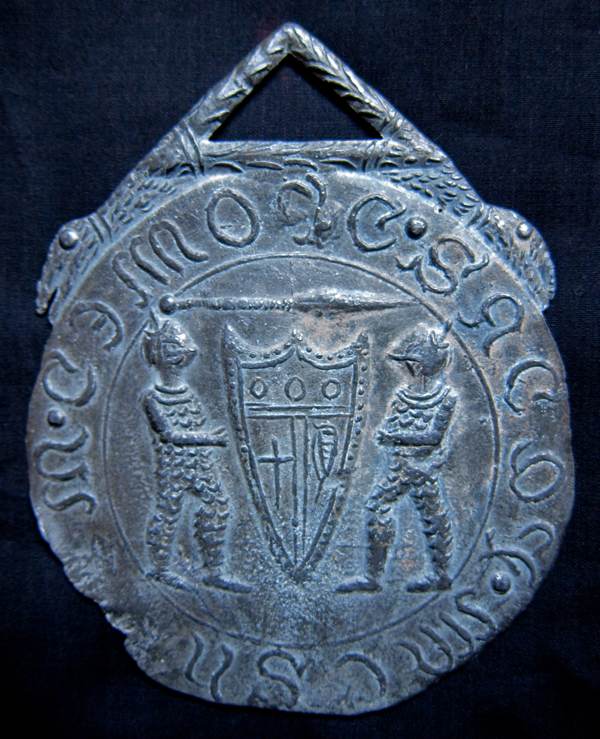
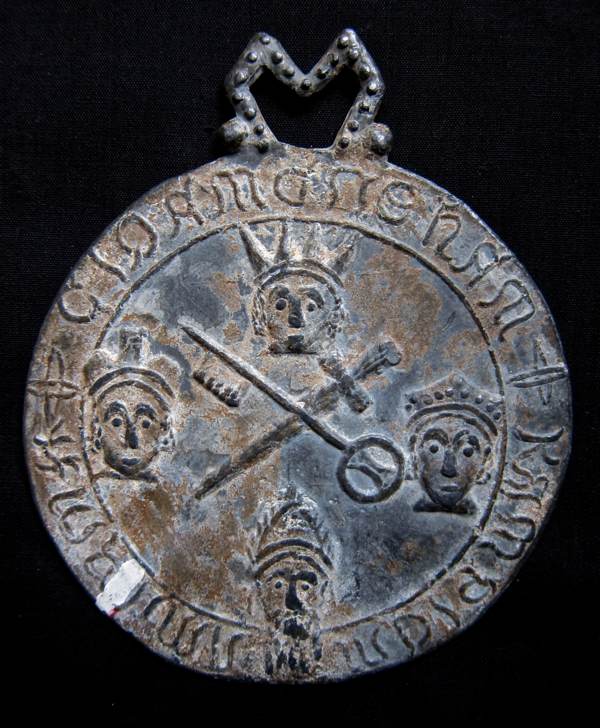
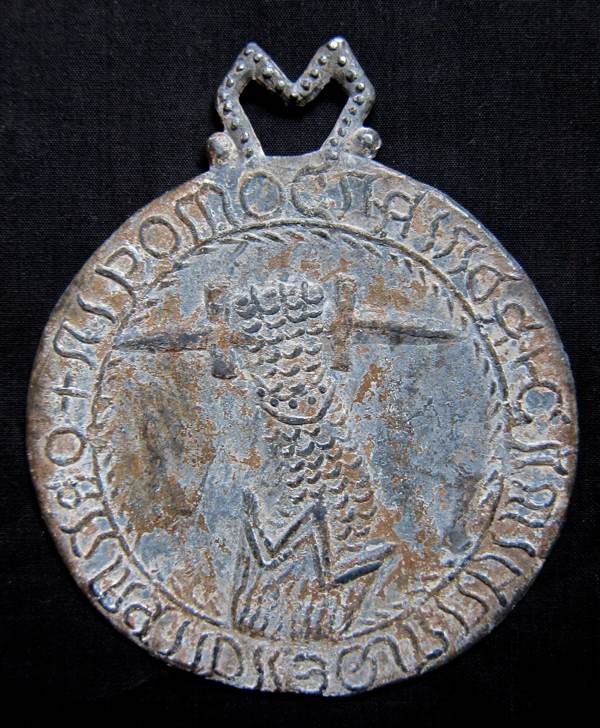
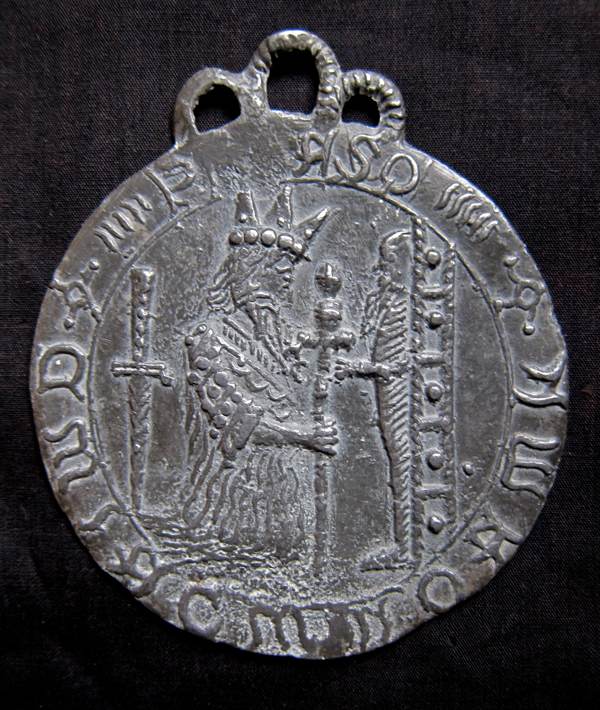
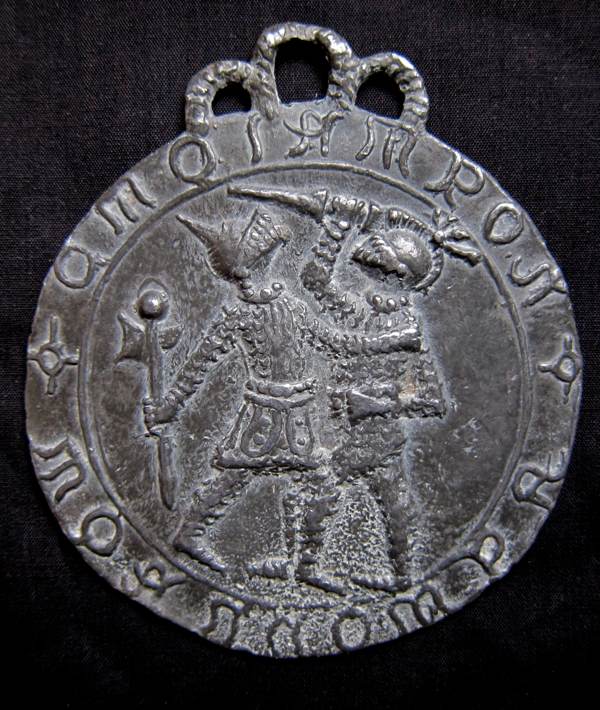
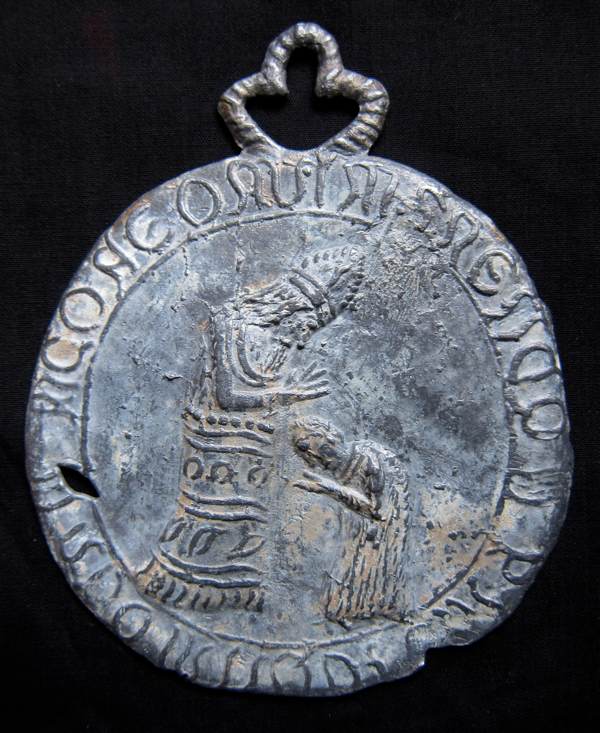
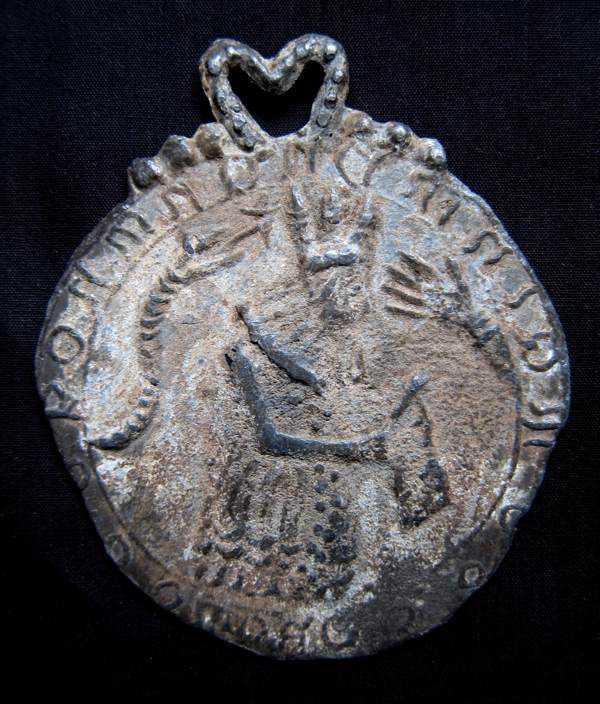
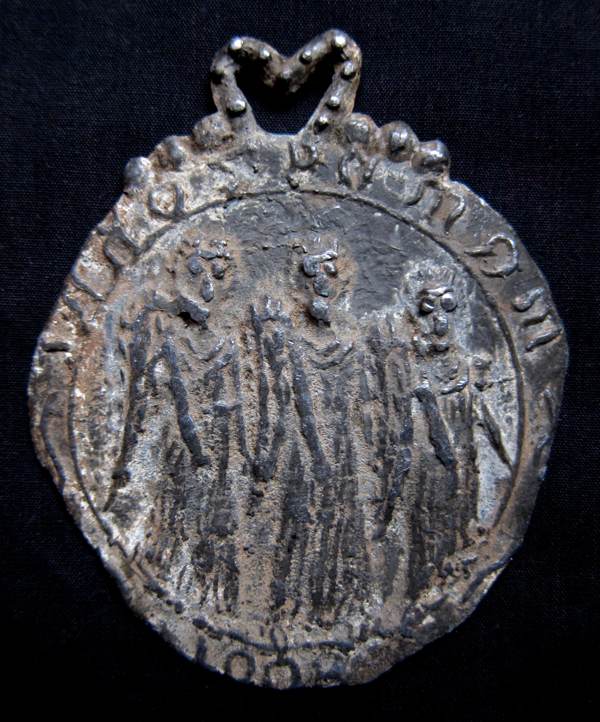
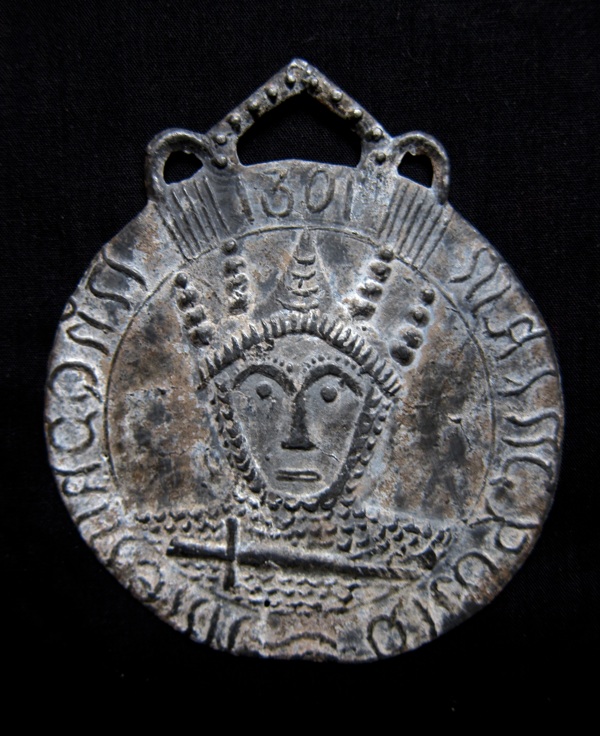
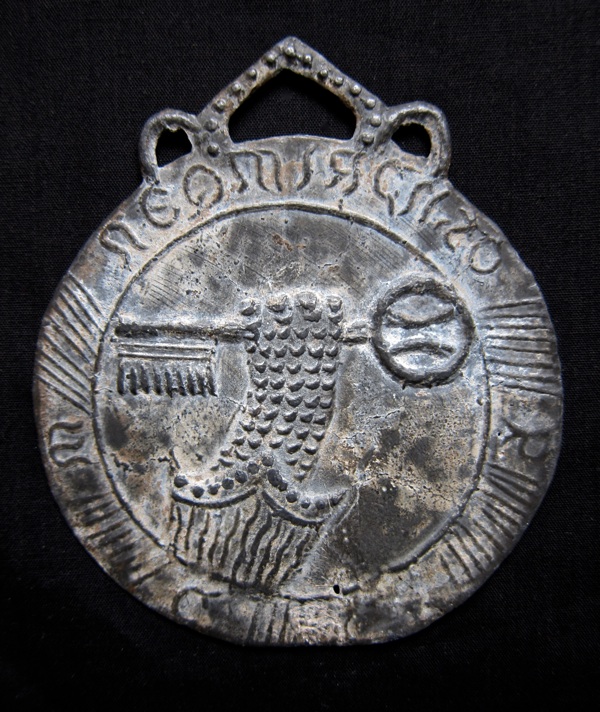
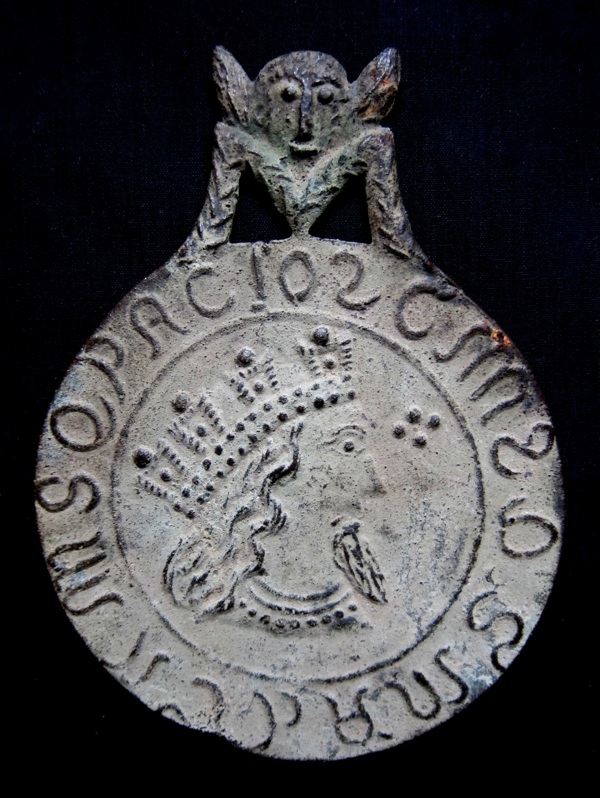
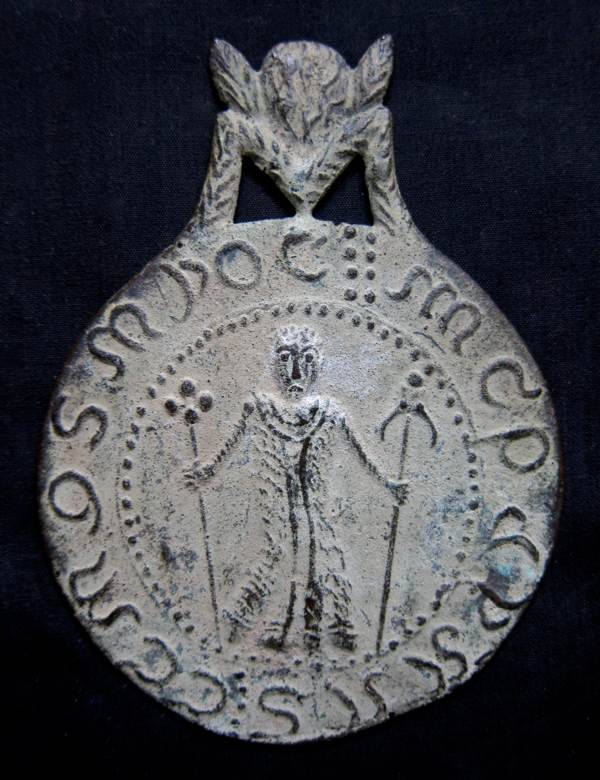
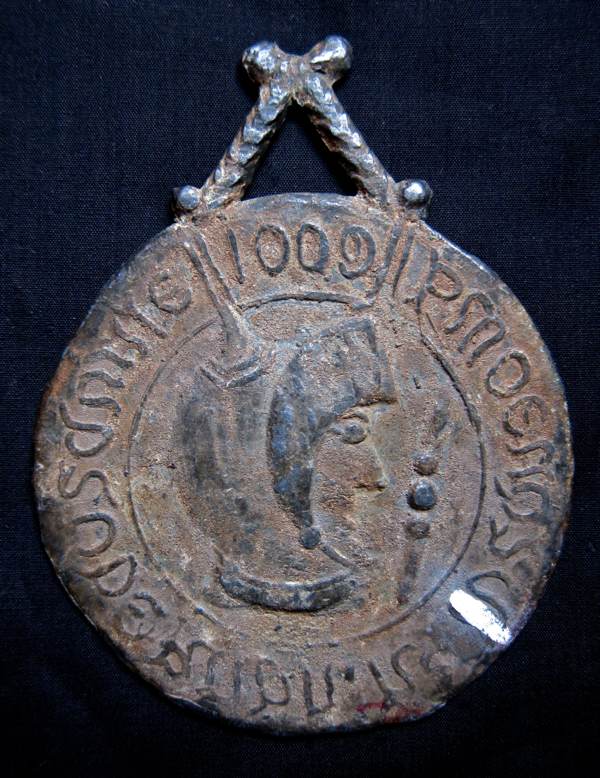
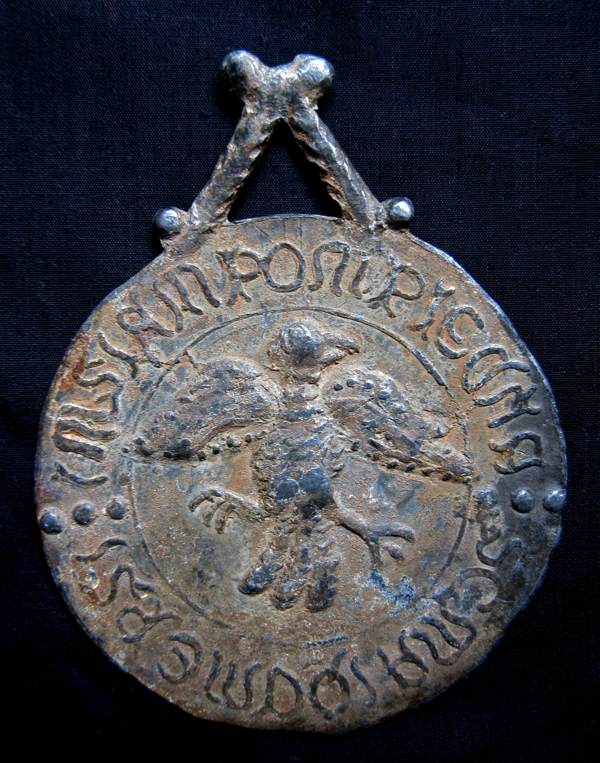
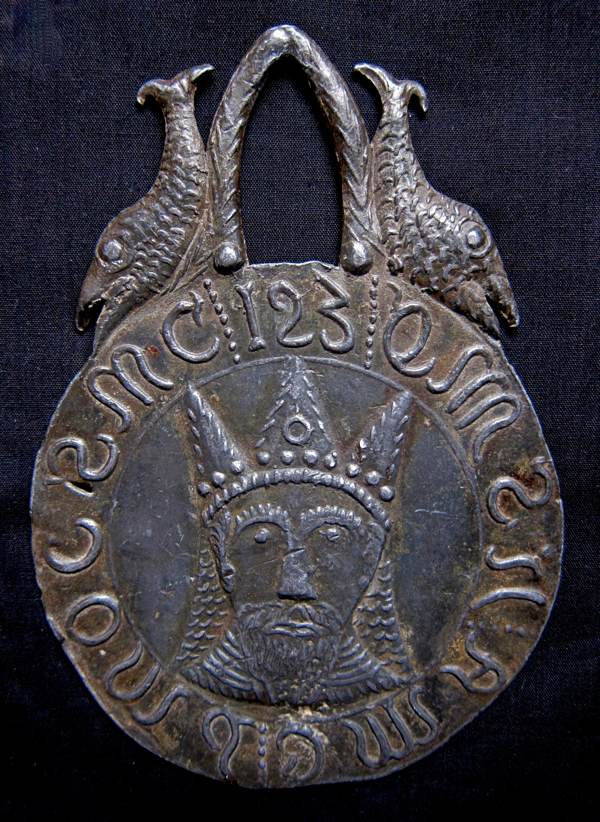
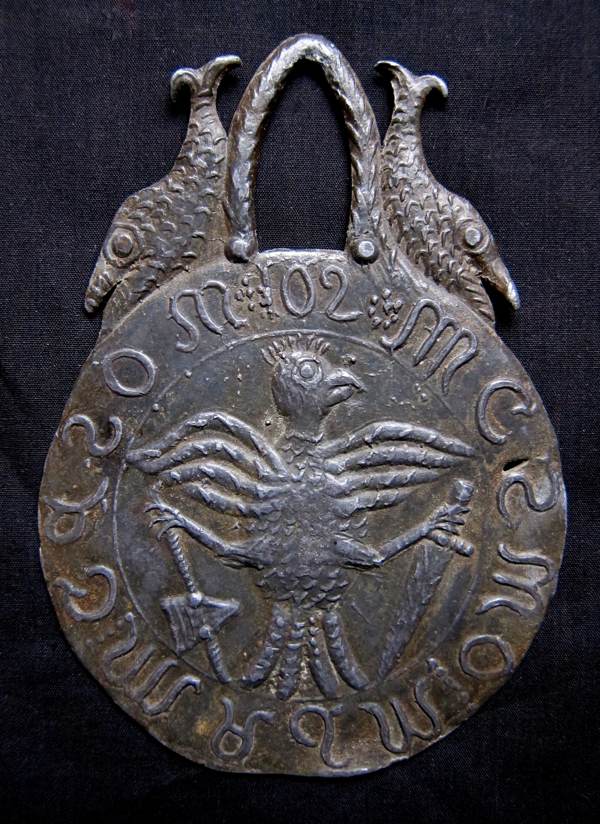
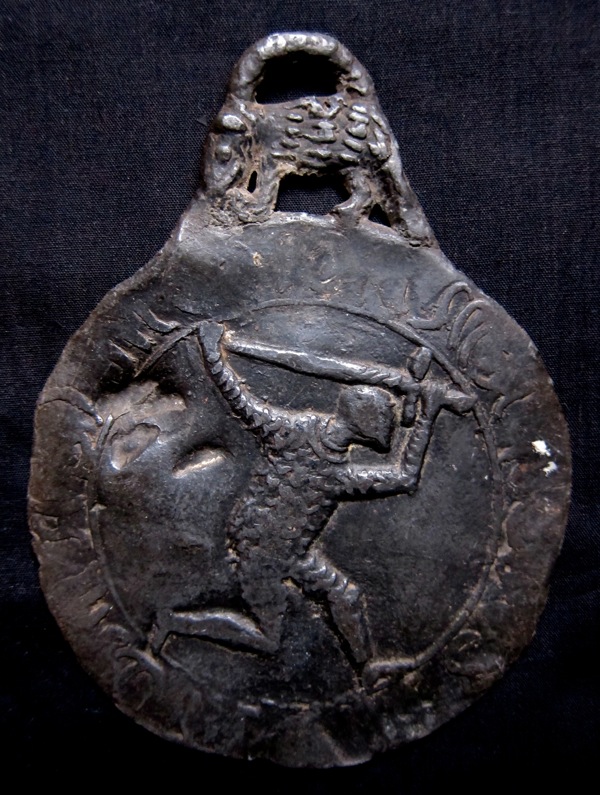
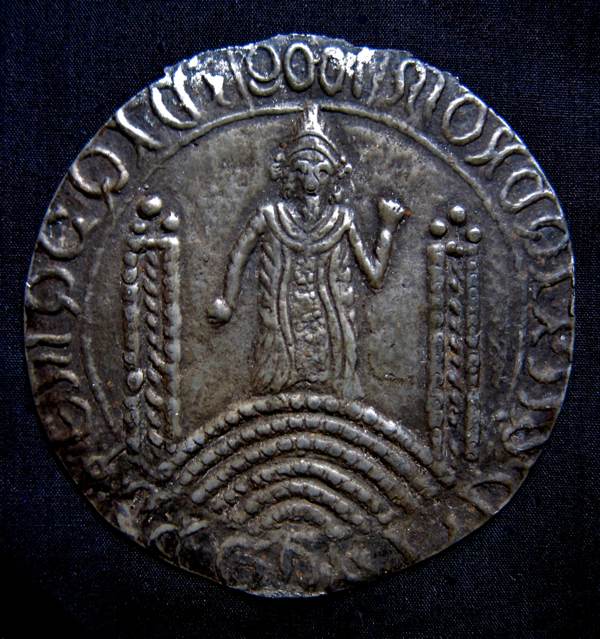
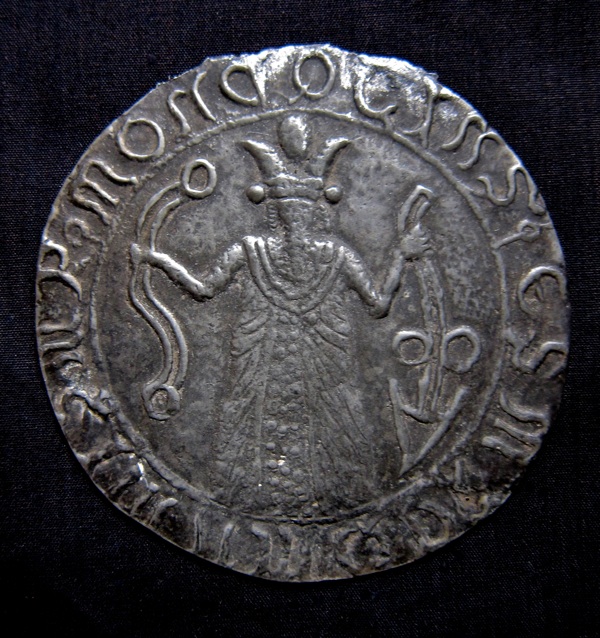
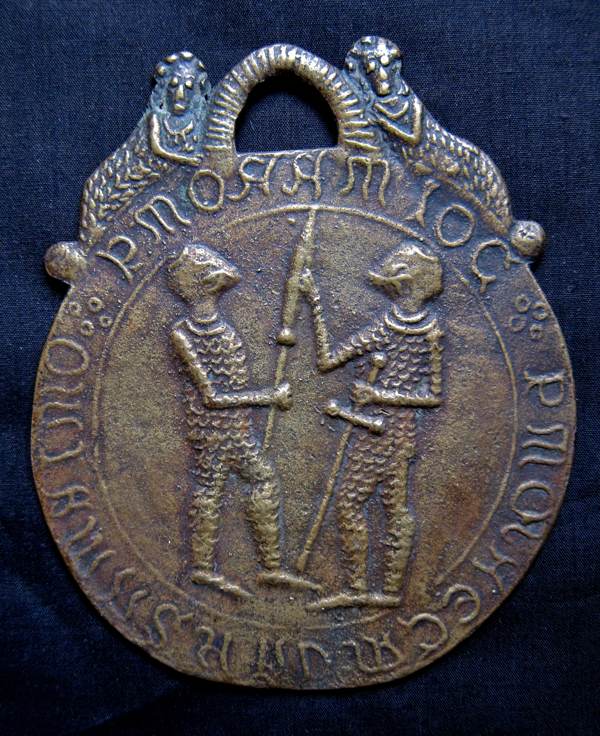
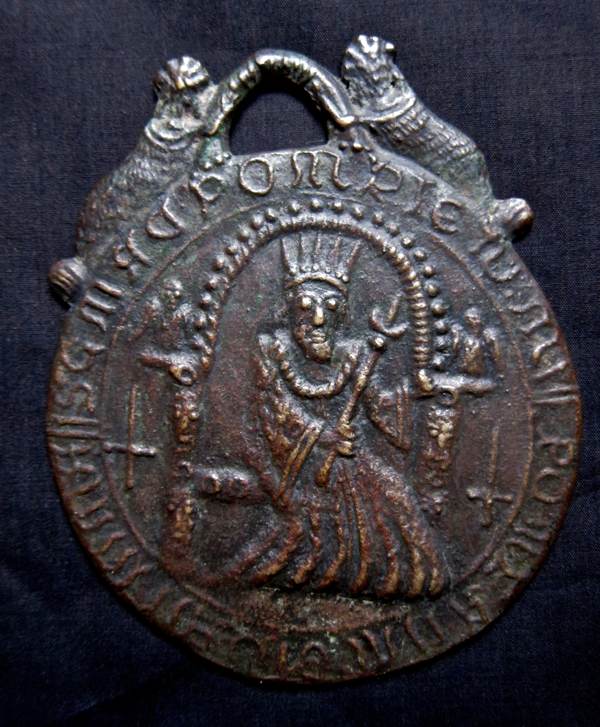
William Smith & Charles Eaton – better known as Billy & Charley – were a couple of Thames mudlarks who sold artefacts they claimed to have found in the Thames in Shadwell and elsewhere. Yet this threadbare veil of fiction concealed the astonishing resourcefulness and creativity that these two illiterate East Enders demonstrated in designing and casting tens of thousands of cod-medieval trinkets – eventually referred to as “Shadwell Shams” – which had the nineteenth century archaeological establishment running around in circles of confusion and misdirection for decades.

“They were intelligent but without knowledge,” explained collector Philip Mernick, outlining the central mystery of Billy & Charley, “someone told them ‘If you can make these, you can get money for them.’ Yet someone must also have given them the designs, because I find it hard to believe they had the imagination to invent all these – but maybe they did?”

Working in Rosemary Lane, significantly placed close to the Royal Mint, Billy & Charley operated in an area where small workshops casting maritime fixtures and fittings for the docks were common. Between 1856 until 1870, they used lead alloy and cut into plaster of paris with nails and knives to create moulds, finishing their counterfeit antiquities with acid to simulate the effects of age. Formerly, they made money as mudlarks selling their Thames discoveries to a dealer, William Edwards, whom Billy first met in 1845. Edwards described Billy & Charley as “his boys” and became their fence, passing on their fakes to George Eastwood, a more established antiques dealer based in the City Rd.

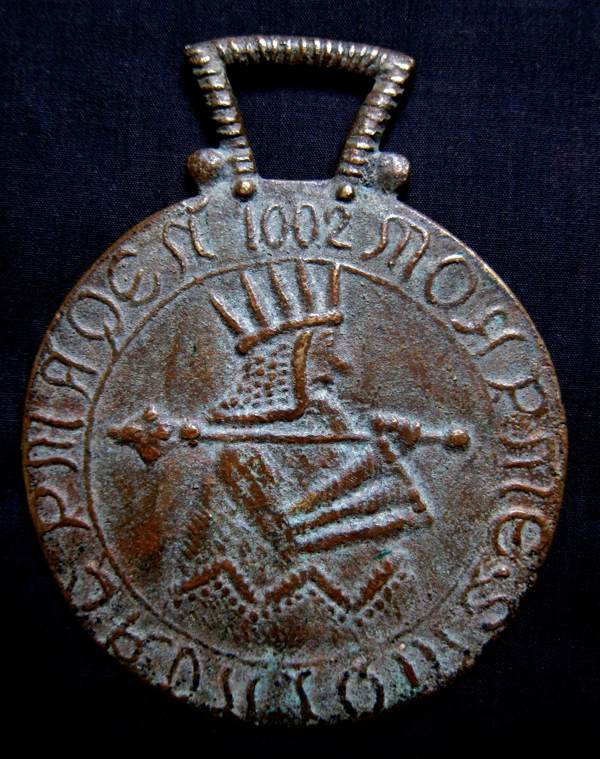
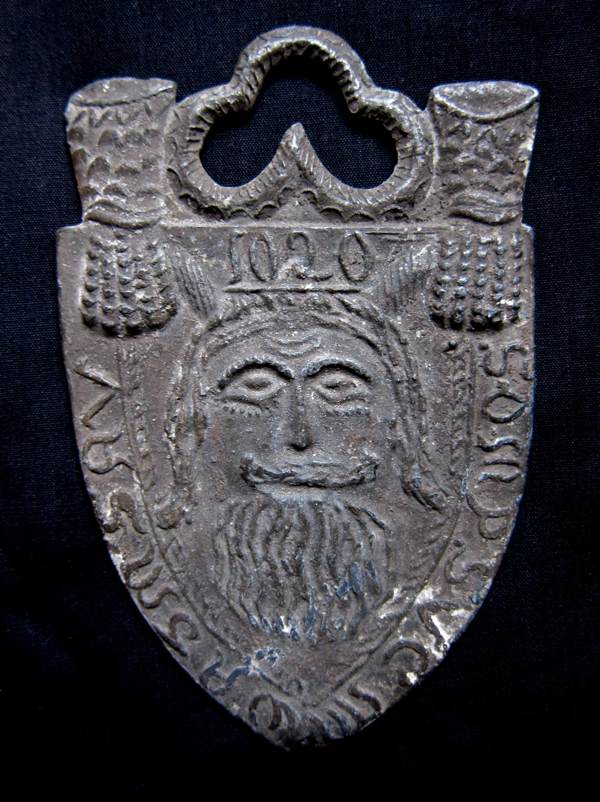
Badges, such as these from Philip Mernick’s collection, were their commonest productions – costing less than tuppence to make, yet selling for half a crown. These items were eagerly acquired in a new market for antiquities among the middle class who had spare cash but not sufficient education to understand what they were buying. Yet many eminent figures were also duped, including the archaeologist, Charles Roach Smith, who was convinced the artefacts were from the sixteenth century, suggesting that they could not be forgeries if there was no original from which they were copied. Similarly, Rev Thomas Hugo, Vicar of St Botolph’s, Bishopsgate, took an interest, believing them to be medieval pilgrims’ badges.

The question became a matter for the courts in August 1858 when the dealer George Eastwood sued The Athenaeum for accusing him of selling fakes. Eastwood testified he paid £296 to William Edwards for over a thousand objects that Edwards had originally bought for £200. Speaking both for himself and Charley, Billy Smith – described in the record as a “rough looking man” – assured the court that they had found the items in the Thames and earned £400 from the sale. Without further evidence, the judge returned a verdict of not guilty upon the publisher since Eastwood had not been named explicitly in print.

The publicity generated by the trial proved ideal for the opening of Eastwood’s new shop, moving his business from City Rd to Haymarket in 1859 and enjoying a boost in sales of Billy & Charley’s creations. Yet, two years later, the bottom fell out of the market when a sceptical member of the Society of Antiquaries visited Shadwell Dock and uncovered the truth from a sewer hunter who confirmed Billy & Charley’s covert means of production.

As they were losing credibility, Billy & Charley were becoming more accomplished and ambitious in their works, branching out into more elaborate designs and casting in brass. It led them to travel beyond the capital, in hope of escaping their reputation and selling their wares. They were arrested in Windsor in 1867 but, without sufficient ground for prosecution, they were released. By 1869, their designs could be bought for a penny each.

A year later, Charley died of consumption in a tenement in Wellclose Sq at thirty-five years old. The same year, Billy was forced to admit that he copied the design of a badge from a butter mould – and thus he vanishes from the historical record.

It is a wonder that the archaeological establishment were fooled for so long by Billy & Charley, when their pseudo-medieval designs include Arabic dates that were not used in Europe before the fifteenth century. Maybe the conviction and fluency of their work persuaded the original purchasers of its authenticity? Far from crude or cynical productions, Billy & Charley’s creations possess character, humour and even panache, suggesting they are the outcome of an ingenious delight – one which could even find inspiration for a pilgrim’s badge in a butter mould. Studying these works, it becomes apparent that there is a creative intelligence at work which, in another time, might be celebrated as the talent of an artist or designer, even if in Billy & Charley’s world it found its only outlet in semi-criminal activity.

Yet the final irony lies with Billy & Charley  - today their Shadwell Shams are commonly worth more than the genuine antiquities they forged.

You may also like to read about

Steve Brooker, Mudlark

Mud God’s Discoveries 1

Mud God’s Discoveries 2

Mud God’s Discoveries 3

29 Oct 02:57

Bernina Activa 125S Serger sewing machine (Acton MA) $450

Like New/Excellent Bernina Model 125S Serger Sewing machine. Mom, who was an avid seamstress, passed away last month. Great condition. Only used in summer months. This professional quality machine will last a lifetime. Extras including foot pedal, co [...]
29 Oct 02:09

Don't Even Think About Calling Your Bartender A Mixologist. Here's Why.

by russiansledges
Russian Sledges

will thompson

"A mixologist is a bartender who doesn't get invited to parties," Thompson kids before launching into a detailed explanation of the distinction. There are two ways to look at it, he says. One is that "mixology is a small subset of bartending... It's probably between 2 and 10 percent of what a bartender is doing on a given night." He boils it down to saying, "mixology is 'in the glass' and bartending is everything else going on that you, the guest, hopefully never have to notice." The other way to look at the distinction , Thompson told HuffPost Taste is that, "there is no such thing as a mixologist outside of a media construct." In six or seven years of being a bartending and traveling for work, Thompson has never come across anyone who refers to himself as a mixologist.
29 Oct 01:31

Death Becomes Her | The Metropolitan Museum of Art

Russian Sledges

via suburbankoala

#fieldtrip

Death Becomes Her | The Metropolitan Museum of Art:
This exhibition explores the aesthetic development and cultural implications of mourning fashions of the nineteenth and early twentieth centuries.
29 Oct 00:38

Breakfast of Champions: Why New Jersey is Crazy for Pork Roll

by Drew Lazor
Russian Sledges

via kellygo ("Hangover food of the gods. I can't wait to have another.")


Drive the length of Jersey Turnpike and jump off any exit and there's a very high probability you'll be close to a diner, street cart, or corner store selling something called pork roll. Why are New Jersey eaters crazy about this breakfast meat? Read on for the story behind the obsession. Read More
28 Oct 18:59

MARC 21 Format for Bibliographic Data: 385: Audience Characteristics (Network Development and MARC Standards Office, Library of Congress)

by villeashell
Russian Sledges

via otters ("thing I am serious about: can't wait to use this field in a record")

MARC 21 Format for Bibliographic Data: 385: Audience Characteristics (Network Development and MARC Standards Office, Library of Congress):
This field contains the (Network Development and MARC Standards Office, Library of Congress)
28 Oct 18:56

Feds accuse AT&T of throttling millions of 'unlimited' data plans

by Jason Abbruzzese
Russian Sledges

via kellygo

Att1
Feed-twFeed-fb

The FTC is suing AT&T for misleading millions of customers on "unlimited" data plans by throttling speeds by as much as 90%.

The Federal Trade Commission announced on Tuesday that it has filed a complaint in federal court against the telecommunications giant. The regulator claims that customers were not adequately informed that service could be seriously restricted if customer exceeded a certain amount of data in a particular billing cycle.

“AT&T promised its customers ‘unlimited’ data, and in many instances, it has failed to deliver on that promise,” said FTC Chairwoman Edith Ramirez in a press release. “The issue here is simple: ‘unlimited’ means unlimited.” Read more...

More about Att, Ftc, Business, Mobile, and Us
28 Oct 13:27

Elon Musk Warns Artificial Intelligence Is Like ‘Summoning the Demon’

by Dan Kedmey

Elon Musk warned in no uncertain terms recently that the invention of artificially intelligent machines could pose the “biggest existential threat” to mankind.

Musk, the CEO of Tesla and SpaceX, spoke with unusual force about the perils of a technology that could quickly spin out of its inventors’ control during an MIT symposium on Friday, the Washington Post reports. “With artificial intelligence we are summoning the demon,” he said.

“In all those stories where there’s the guy with the pentagram and the holy water, it’s like yeah he’s sure he can control the demon. Didn’t work out,” he added.

Musk called for an international regulatory framework to oversee advances in the technology. He has previously likened artificial intelligence to nukes on Twitter.

[Washington Post]

28 Oct 02:09

"how to go to shows alone"

by russiansledges
important zine I picked up the other day
27 Oct 22:05

subtlecluster: latinegrasexologist: the life. holy crap. i...


subtlecluster:

latinegrasexologist:

the life.

holy crap. i just started screaming when i saw this. intrigued and upset and impressed.

27 Oct 21:45

Oh no!

by Mark Liberman

Well, damn. Forget Earth. All of time and space is screwed. #DoctorWho has the Ebola virus. And went bowling! pic.twitter.com/aY53pNpvX5

— Chris C. (@CubedLink) October 24, 2014

[h/t Amy de Buitléir]