Shared posts

06 May 21:14

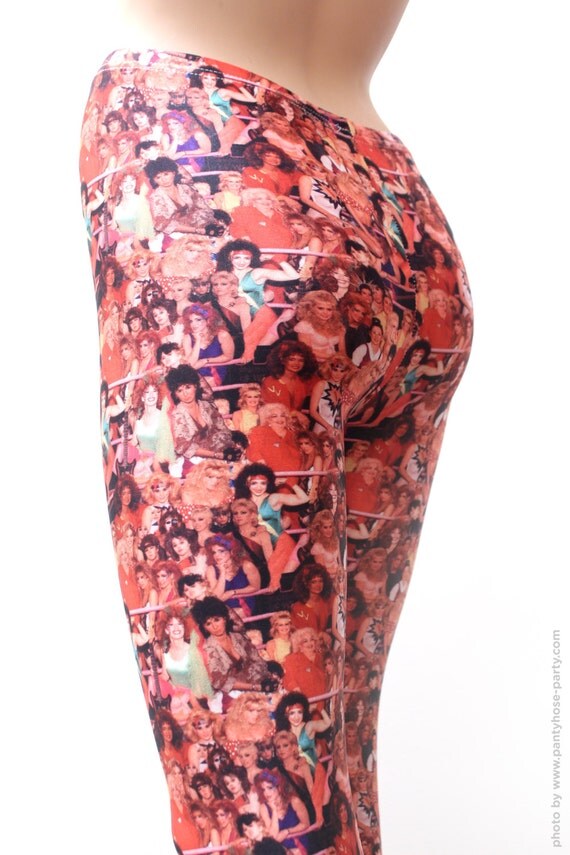
Gorgeous Ladies Of Wrestling Leggings by Shivura

30.00 USD

This repeated pattern features the incredible Gorgeous Ladies of Wrestling. These leggings are perfect for the days your legs are feeling weak and sickly and could use the support of some of the most courageous, professional, and entertaining wrestlers the world has ever known.

They are wonderfully detailed, incredibly smile-inducing, and by far the most powerful leggings in our collection.

The Small comfortably fits sizes 0-8slim and up to about 135 lbs.

They are 90% polyester and 10% spandex.

16 Jan 16:13

newberryprinting: Modeles de Lettres (approximately 1900) by N....


newberryprinting:

Modeles de Lettres (approximately 1900) by N. Glaise features some of the loveliest lettering we’ve come across.

Newberry call number: Case Wing oversize TT360 .G53 1900

Wow!

08 Jan 02:22

Anti-Vaxxers Are Idolizing the Amish, Inexplicably

by Olga Khazan

“When we think of Amish people we think of a simple life, free of modern advancements.” So begins a viral article, called “Why the Amish Don’t Get Sick,” which seeks to prove that Americans would be healthier if they lived more like the midwestern Anabaptists. The piece appears to have its roots in a site called LA Healthy Living, but it has recently bounced its way across the naturopathic Internet, ending up on the domains of quack doctors and, more recently, on a hippie news site called Earth We Are One, through which it landed in my Facebook feed.

Though it masquerades as “what we can learn from them”-style journalism, the piece is basically just catnip for the anti-GMO and anti-vax crowds. And sadly, it appears to have already spread its nonsense far and wide.

“Most of us view [the Amish] as foolish for not using the advantages of convenient technology,” it reads, “and even look down on them for not conforming to the norms of mainstream society.” (Yeah, you know how people are always like: “iPads are so great; the Amish are a bunch of idiots for not using them.”)

“But if we look at the statistics,” it continues, “the Amish are much healthier than the rest of America. They virtually have no cancer, no autism, and rarely get sick. What are they doing different from the rest of America?”

The first tip, according to this article, is not getting vaccinated: “In spite of constant pressure from the government, the Amish still refuse to vaccinate.”

Nope. Most Amish parents vaccinate, but even then, the relatively low overall vaccination rate in the community fueled a massive measles outbreak in Ohio’s Amish country earlier this year. The incident proved something that Amish and “English” parents alike should know by now: Vaccines don’t cause autism, but not getting a vaccine can cause outbreaks of nasty, 19th-century diseases.

The rest of the items in the listicle aren’t as terrible. Being physically active, not getting too stressed out, and eating a lot of vegetables are all “Amish” habits the article says other Americans would do well to adopt. However, its suggestion that Amish food contains no GMOs is bunk—some Amish farms do use genetically modified crops for financial and efficiency reasons. Besides, there's no evidence that genetically modified foods are detrimental to human health in any way.

But it’s the very premise of the article that’s bizarre. If you’re going to hype a community as “never getting sick,” use a place that’s actually remarkably healthy, like Minneapolis. Not only do Amish people get sick, they get some of the worst diseases in the world.

Almost all of the roughly 250,000 Amish people in the U.S. can trace their roots back to a few hundred Swiss farmers who immigrated to Pennsylvania in the 18th century. The centuries of isolation and intermarriage has forged tight-knit communities, sure, but it has also caused widespread genetic problems.

One example is Maple Syrup Urine Disease—so named for the smell of the sufferer’s urine and ear wax—which causes the body to be unable to metabolize protein. Most people with MSUD experience vomiting, seizures, and brain damage starting in infancy, and they die early.

Only one out of every 180,000 babies in the general population is born with the disease, but it strikes one out of every 358 Amish babies. Treatment usually involves avoiding meat and dairy entirely—which is tough to manage in the “all-natural” Amish lifestyle. Liver transplants are another option, but few Amish can afford them.

And that’s just one of the many virtually unheard-of genetic diseases that plague the Plain People.

Granted, one study found that the Amish do have a lower incidence of seven types of cancer—mostly because they don’t drink, smoke, or have unprotected sex with lots of different partners. They also reduce their risk of skin cancer by wearing wide-brimmed hats and covering their bodies from ankle to wrist. But you don’t see “LA Healthy Living” trumpeting the health perks of bonnets.

It’s tempting to brush this kind of thing off as a fringe piece of “content” that no one will read, but the version of the story on Earth We Are One garnered nearly 68,000 pageviews, according to its own counter. That site also has more than 600,000 fans on Facebook. Anyone with an audience that big who uses an insular religious sect to prop up their dangerous pseudo-science should be meidung—shunned.

This article was originally published at http://www.theatlantic.com/health/archive/2015/01/why-are-anti-vaxxers-rallying-behind-the-amish/384151/


08 Jan 01:00

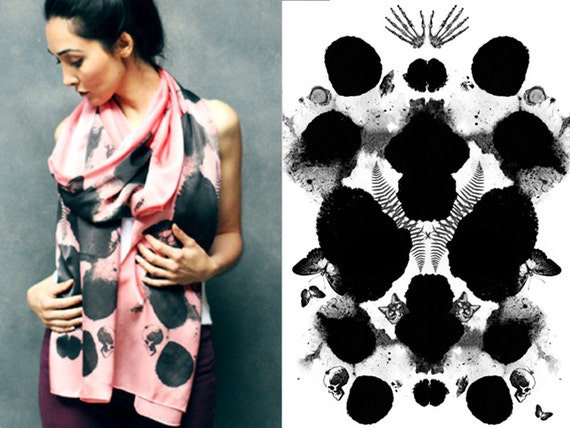
SILK SCARF - Rorschach by scoutandcatalogue

58.00 USD

Regularly $128

Butterflies, skulls, kitties and ferns all hide in this original inkblot illustration. Printed on thick soft silk and hand dyed a warm peach.

~ measures 21" x 90"
~ 100% silk hand dyed a warm peach - dye has textured quality
~ exclusive illustration by Scout & Catalogue featuring rorshach and hidden animals

CARE : dry clean or hand wash in cold and hang to dry

Find out more about the making of this scarf : http://scoutandcatalogue.blogspot.com/2012/02/behind-scenes-rorschach.html

Scout & Catalogue is heavily influenced by the bohemian beach culture of Mexico. We strive to make pieces that remind you of afternoons at secret beaches, sun kissed skin, and all day siestas.

As with any handmade item our pieces have slight inconsistencies which adds to their charm and makes every item unique.

Visit us at: http://scoutandcatalogue.com/

08 Jan 00:56

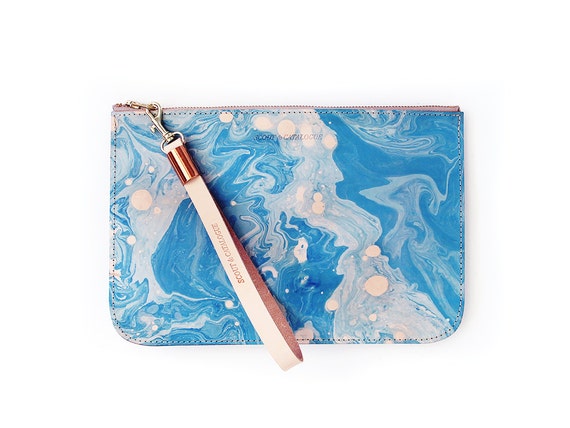
Tonala Media Clutch - Blue Marble by scoutandcatalogue

128.00 USD

Tonala is an artisan community in Guadalajara, Mexico's second largest city, known for it's diverse range of handmade wares. This series of simple soft leather goods is inspired from my time wandering Tonala's streets, learning from it's local makers.

~ Hand marbled leather in our Vancouver studio creating blue patterning unique to each clutch. Hand crafted in limited runs in Portland, OR. This leather will darken with light and wear.
~ gold YKK 8" zipper
~ measures 11.5" x 7.5"
~ beeswax treated edges
~ unlined
~ fits all your evening essentials
~ Removable natural 8oz vegetable tanned leather wristlet with copper accent. Your choice between a natural leather or black leather wristlet - please make your selection at purchase.

Scout & Catalogue is heavily influenced by the bohemian beach culture of Mexico. We strive to make pieces that remind you of afternoons at secret beaches, sun kissed skin, and all day siestas.

As with any handcrafted item our pieces have slight inconsistencies which adds to their charm and makes every item unique.

07 Jan 23:29

Free Gospel Tracts

Russian Sledges

"condition: new
size / dimensions: Tract size"

New England Gospel Tract & Bible Society Free Gospel Tracts! 82 Titles in English 54 Titles in Spanish Many other Languages! Tracts are Free! No Charge for Shipping. Please reply with Name and address to be shipped to. Also state preference o [...]
07 Jan 22:52

London’s Urban Beekeeping Scene Is Exploding

by Lauren Rothman

The next time you’re in downtown London shopping for a summer dress, keep an eye out for a giant, writhing mass of winged, stinging insects.

In the past five years, the number of beehives in London has roughly doubled, increasing the city’s supply of delicious, super locally-produced honey, but also irritating and alarming denizens with summertime bee swarms (more on those later). Those figures come from Mark Patterson, the forage officer for the London Beekeepers’ Association (LBKA). According to England’s National Bee Unit (NBU), which maintains a register of beekeepers and apiary locations, London currently has around 1,400 beekeepers and about 4,000 colonies. But, as Patterson clarifies, those figures are inexact; while beekeepers in many American cities must register with their respective local governments, English beekeepers only report to the Bee Unit if they want to. Only about 75 percent of beekeepers do, Patterson says, and he therefore estimates London’s numbers at about 2,000 beekeepers and around 5,000 colonies. And the NBU predicts that hive numbers will continue to increase, at a rate of about 11 percent per quarter.

Patterson attributes the rapid growth of London’s beekeeping scene to city dwellers’ desire to reestablish a relationship with the nature, even in a setting as densely packed as nine-million-strong London.

“There are many in the city who become disconnected from the natural environment, and beekeeping allows them to reconnect with nature in a very intimate way,” he says.

London is a city that on the surface would seem well-suited to keeping of bees, which require a significant amount of forage—nectar-rich pollinating plants—on which to feed. According to data from Green Space Information for Greater London, it contains 61 percent green space by land area, with tree canopy covering about 22 percent of the city. But look a little closer at the type of forage available, Patterson says, and you’ll see that not all of it is ideal for nourishing the city’s increasing number of hives.

“Some parts of the city’s green areas are little more than green deserts,” he writes in a report he compiled comparing London beekeeping with American urban beekeeping. Many of London’s trees are sterile, he notes, meaning they don’t flower and can’t provide nectar for the city’s hives. And because London’s bee population is increasing at a pace much faster than its greenery, trendy new bees might soon run out of food.

“In some areas of the city, we may have reached saturation point, where numbers of hives have reached the limits of what local forage can support,” he writes in his report.

Still, though, London’s got a lot going for it when it comes to urban beekeeping. Although bees might not have access to enough forage, the type of forage they have access to is both unique and incredibly pristine. Although rural areas are full of flowering crops that easily feed large numbers of bees, those agricultural crops are treated intensively with pesticides, increasing the potential for a tainted honey crop; Andrew Cote of the NYC Beekeepers Association pointed MUNCHIES toward a 2013 French study that confirmed this phenomenon. So in spite of some honey consumers’ misconception that city honey is somehow tainted, it might actually be the safer choice. Plus, Patterson notes, it tastes great.

“London bees make great tasting honey—it’s like nothing found anywhere else. The unique city microclimate—the mix of native and exotic plants—leads to a complex-tasting honey, often with a tangy aftertaste thanks to London’s lime trees.”

The single biggest challenge when it comes to urban beekeeping is finding the space for the hives, Patterson says. London’s got an advantage there, too, as its many rooftops and terraces provide ideal nooks for a small- to medium-sized hive.

A big problem for urban honey producers, though, is yield. Rural bees might produce tainted honey, but because of their access to so many crops they can produce a lot of it. Not so in London, Patterson says.

“Our honey yields are 30 percent below the UK average in most years,” he says. “In fact, over the past decade London has consistently had the lowest honey yields as indicated by the British Beekeepers’ Association.” On the flip side, honey’s rarity enables producers to charge a lot of money for it.

“Every year we are receiving more and more requests for honey,” Patterson says. “A typical one-pound jar has gone from £6 euros to £12 in the past five years.”

Though most Londoners seem quite enamored of the burgeoning honeybee scene—Patterson notes that LBKA’s membership has doubled in recent years, and that many members don’t even keep bees but simply want to support the association’s efforts—urban apiaries do occasionally run into a public image problem when bees swarm. Swarming season in the UK peaks around May, when bee colonies grow too large and the queen bee splits from her hive, taking about a third of her colony with her to establish a new one. As the bees search, they often land in highly public places, such as on the sides of buildings, and the sight of thousands of insects can alarm Londoners and even interfere with commerce, as happened at a Victoria Street Topshop last May.

“A real challenge can be swarm management,” Patterson says. “Swarms can cause panic among the public and distress to your neighbors. In recent years we have seen on several occasions swarms in central London causing loss of trade to shops and restaurants, because the swarms settle in inappropriate places.”

07 Jan 22:25

Redditor Horrifies World With Photo of ‘Cheese’-Flavored Starbucks Syrup

by Clint Rainey

This bottle simply labeled "cheese" that contains syrup the color of Cheetos consomme comes courtesy of a Starbucks partner in Australia. It's been making the rounds today on Reddit, ultimately ending up in the WTF subreddit because that pretty much sums up everyone's reactions, even if cheesecake was somehow implied and it's meant for Australia's dessertlike Strawberry Frappuccino. Starbucks just started serving flat whites, Australia's national espresso drink, in the U.S., so perhaps we just gave them an intense dose of Dorito-fied America in exchange?

[Reddit via Roast]

Read more posts by Clint Rainey

Filed Under: horrible things, cheese syrup, starbucks, the chain gang

07 Jan 22:18

Does Catholicism have a ‘man crisis,’ or is Cardinal Burke paranoid? (COMMENTARY)

by Kaya Oakes

(RNS) Many women will head to Mass this weekend and note that the priest, bishop and pope have something in common: They are all men, and the power they hold in institutional church structures hardly looks like marginalization.

The post Does Catholicism have a ‘man crisis,’ or is Cardinal Burke paranoid? (COMMENTARY) appeared first on Religion News Service.

07 Jan 22:12

Almost Nobody Shows Up for Connecticut Governor’s Sad, Lonely Parade

by Jessica Roy

Today, Connecticut governor Dan Malloy celebrated his inauguration with a fancy parade, complete with flag bearers and flashy cops on motorcycles and guys dressed in army fatigues pushing random wheelbarrows. Unfortunately, almost nobody showed up.

Business Insider reports that the streets were practically empty for the entire parade route, and the few spectators who did show were related to the governor or those who were marching in the parade.

To be fair, it's absolutely frigid on the East Coast today, but doesn't everybody in Connecticut own a North Face parka?

Read more posts by Jessica Roy

Filed Under: rain on your parade

07 Jan 22:09

Hotel That Inspired ‘The Shining’ Announces Contest to Design a 61,500 Square Foot Hedge Maze

by Christopher Jobson

maze-1

maze-2

The Stanley Hotel in Estes Park, Colorado, is famous for hosting celebrities, politicians and other notable figures over the last century, but perhaps no visitor was more significant than writer Stephen King, whose stay at the 140-room neo-Georgian hotel inspired him to write The Shining. While the movie adaptation wasn’t filmed at the Stanley, that hasn’t stopped the hotel from embracing their share of fame in association with the legendary book and 1980 horror film.

Now the Stanley plans to build a 61,500 square foot hedge maze, similar to the backdrop of the heart-pounding final moments in Kubrick’s adaptation. The maze will be built from 1,600 to 2,000 Alpine Currant hedge bushes, and the design will come from a (free) public contest. Anyone is invited to submit plans for the maze, they even have templates and detailed instructions about how to create your design. Submissions are open until January 31st, 2015. (via Neatorama)

07 Jan 22:07

Foie Gras Is Once Again Legal in California

by Hugh Merwin

Micah Wexler's foie gras terrine at Hollywood restaurant Mezze, which has since closed.

The ban on the sale and trade of foie gras, the luxury product made from duck livers enlarged by a process of force-feeding, has just been overturned in federal court. The details of the legal development will no doubt flummox animal-rights and welfare groups everywhere, but dozens of chefs have been euphorically tweeting the news. A lobbying group involved with the case says that U.S. District Court for California's Central District Judge Stephen Wilson ruled that the ban "went too far and encroached upon the domain of federal law."

Since July 1, 2012, any chef who wanted to serve foie gras in California had to get crafty with menu descriptors and sneaky promotions, such as giving away rounds of the controversial duck liver as a free side-order. Previous efforts to overturn the ban, which also outlawed in-state production of force-fed duck and goose liver, ended in failure. Three judges in federal appeals court unanimously upheld an earlier decision in 2013, and last fall, a group representing businesses in 13 states refocused on the constitutionality of interstate trade laws and importing the fatty organ from out of state. At the time, an attorney for the pro-foie constituents trying to get the case heard but the Supreme Court said the implications of the constraints were "an issue of extraordinary national importance."

The latest challenge came from a group that included Hudson Valley Foie Gras, a producer. The plaintiffs did not focus on issues of animal welfare — the bill's 2004 origins denounced the process of "enlarging the bird's liver beyond normal size" through the force-feeding technique known as gavage as inhumane — but instead questioned if existing regulatory rules could apply to gavage. Interestingly, the California's welfare-oriented ban on battery cages for chickens just went into effect on January 1.

European producers of the delicacy have also been targeted by animal rights groups in recent years. In 2013, a video comprised of segments shot at five farms in France depicted dead and injured ducks with open wounds. Shortly after it was made public, Gordon Ramsay dropped the supplier, and Joël Robuchon followed. Last month, a activist's video shot at another supplier's farms led Heston Blumenthal to sever ties with the company. The issue remains controversial.

Shortly before the 2012 ban went into effect, Grub Street marked the occasion with a veritable glut of the best foie gras dishes in New York, San Francisco, Los Angeles, Chicago, Boston, and Philadelphia. If you've been missing the high-end stuff, you'll no doubt want to take a look through the galleries.

There's no word on the exact timeline for foie's full-fledged return to restaurant kitchens, but chefs and industry figures are overjoyed:

BREAKING NEWS CHEF: FOIE GRAS IS BACK & LEGAL FOR SALE IN CALIFORNIA as of 10 minutes ago!

— David LeFevre (@ChefDLeFevre) January 7, 2015

We won !!!!!!! Foie gras ban is overturned in California!!!!!!!!!

— ArianeDaguin (@ArianeDaguin) January 7, 2015

GREAT NEWS about Foie Gras coming shortly!!!!!!!!!!!!!!!!!!!!!!!!!!!!!!!!!!!!

— Douglas Keane (@douglaskeane) January 7, 2015

Federal court just overturned the state court making it immediately legal to sell foie gras in CA @michesf @NorthForkd @forkmespoonme

— D'Artagnan (@DArtagnanFoods) January 7, 2015

THIS JUST IN: Courts have decided that foie gras is legal again in California!! #theworldmakessenseagain #FoieGras #happyday

— Pacific Gourmet (@PacGourmet) January 7, 2015

The California foie gras prohibition is apparently at an end, a US District Court judge has overturned it. More details as they come.

— Russ Parsons (@Russ_Parsons1) January 7, 2015

Now that #FoieIsLegal - look out for the return of our Foie Gras ice cream sammies #StayTuned pic.twitter.com/sCyojon3i3

— humphryslocombe (@humphryslocombe) January 7, 2015

@eatersf @Eater toMorrow Free cotton Candy Foie Gras to All!!!! @BazaarLA @SLSBeverlyHills just stop at the door from 5 to 7!!

— José Andrés (@chefjoseandres) January 7, 2015

Word that the state's foie gras ban has been struck down is making for very happy SF chefs. La Folie will have it on the menu tomorrow.

— Mike Simpson (@MikeSimpsonKGO) January 7, 2015

I have had a "gift" on my menu ever since foie gras was banned. I guess it is time to change the name of the dish. #FoieGras

— Jesse Mallgren (@madronachef) January 7, 2015

@GarySoup Gary did you hear about foie gras IM SO HAPPY 👬⬅️that's us

— Hapa Ramen (@haparamen) January 7, 2015

Foie Gras is legal again in California. On the menu tonight. #FoieIsLegal

— Ken Frank (@ChefKenFrank) January 7, 2015

Feel bad for all the cats that arent going to be dining on the good stuff anymore! Foie Gras Ban Repealed Eater SF http://t.co/gk9GUsK0kZ

— Chef Ben Ford (@ChefBenFord) January 7, 2015

[Eater SF, Chronicle]

* This post has been updated throughout.

Read more posts by Hugh Merwin

Filed Under: foiemageddon, bans, federal court, foie gras, lawsuits, news

07 Jan 17:58

Cardinal Raymond Burke: ‘Feminized’ church and altar girls caused priest shortage

by David Gibson
Russian Sledges

via overbey ('I’m just gonna let this quote speak for itself: “It requires a certain manly discipline to serve as an altar boy in service at the side of (a) priest, and most priests have their first deep experiences of the liturgy as altar boys.”')

(RNS) Why aren't more men entering the priesthood? A leading U.S. cardinal blames altar girls and a church that's become "too feminized."

The post Cardinal Raymond Burke: ‘Feminized’ church and altar girls caused priest shortage appeared first on Religion News Service.

07 Jan 13:58

Little Owl Naps Peacefully Next to His Long-Haired Bunny Buddy

by Lori Dorn
Russian Sledges

via rosalind

When he’s not hanging out with his best friend Cleo, a little owl named Forbi can be found napping peacefully in the shadows with his buddy Manu, a long-haired bunny, and their human Andre Costa close at hand.

Owl and Bunny

Bunny and Owl

images via GIFsBOOM

via GIFsBOOM, Tastefully Offensive

06 Jan 16:02

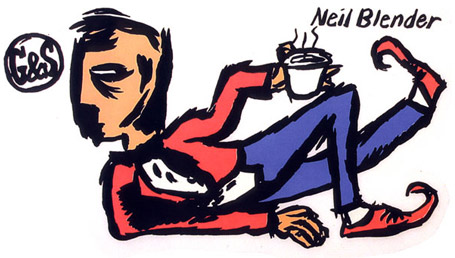
They have Nick Cave skateboards now? I want one


I was not cut out for skating. I tried, but no dice. In the mid ‘80s I had a G&S Neil Blender deck, the graphic on which I still think was freakin’ awesome, a friend of...

06 Jan 15:44

Artist creates dentures of David Bowie’s old teeth


Well someone had to do it, right? Painter and sculptor Jessine Hein has created dentures of David Bowie’s old teeth because why not? They’re made of denture acrylics, plaster and acrylic...

05 Jan 17:54

Completed: The Marlborough Bra

by LLADYBIRD
Russian Sledges

just made one of these yesterday. mine's a bit sloppier, but it works!

Omg, you guys! I made a bra!

Marlborough Bra

And not only that – it actually fits! It’s comfortable! And it’s PRETTY!
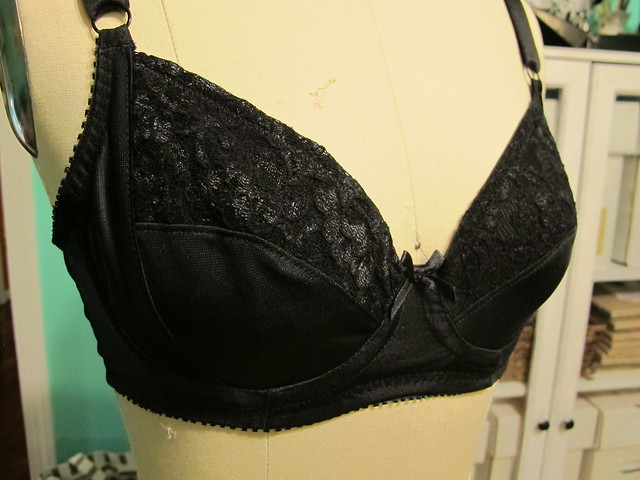
Marlborough Bra

Besides the little bralettes I played around with a couple months ago (which totally don’t count), this is actually the first bra I have ever made. The VERY first – it started as a wearable muslin, that is quite super duper wearable. In fact – wearing it as I type this! Can you tell how tickled I am with this turn of events? SUPER pleased with myself right now.

Ok, lemme back up a little bit and talk about the not-so-harrowing process of bra-making. The pattern I used to make this gorgeous gal is the Marlborough Bra from Orange Lingerie. I can’t even tell you how happy I am about the release of this pattern – after reading up on Norma’s (of Orange Lingerie) book Demystifying Bra Fitting and Construction after she sent me a copy a couple of months ago (as well as lurking hard on the beautiful custom lingerie she makes), I knew the pattern itself would be amazing, both in terms of fit and instruction, not to mention overall style. Spoiler: the pattern absolutely did not disappoint.

While I’ve had this pattern in my stash for a little while now, it took me a couple of months to muster up the energy to actually make it up. There is a LOT of info in the pattern – as well as on the Orange Lingerie blog – about choosing fabrics and notions. Orange Lingerie’s book, Demystifying Bra Fitting and Construction, is also a great resource, with whole chapters devoted to all the fine details. I ended up chatting Norma up via email for advice on what fabrics to buy, and she directed me to Bra Makers Supply (psst – the US version is Sweet Cups Bra Supply. It confused me at first, too, but the shipping is a bit more reasonable for those of us in America. You can click over to the US site from the main site, on the top right hand corner). They actually sell full bra kits that include everything you need to make a bra – the fabric & powernet, all the elastics and notions, even a tiny bow :) The Marlborough bra was designed to be made of a fabric that has no stretch, and specifically, designed for the fabric that comes in these kits. So I bought two kits right away. There are ways to manipulate any fabric to get it to work for this pattern (which is outlined here), but for my first bra, I wanted to Keep It Simple, Stupid.

A few of things I want to point out about these kits:
– They don’t come with underwires. You have to buy those separately. I bought them from the same site to save on shipping. If you don’t know your underwire size (I did not), get your best guesstimate based on your RTW size/measurements and buy the next size up or down. I bought both the 34 & the 36. I ended up using the size 34 for this bra.
– The kits also do not come with lace. You’ll need to supply that on your own. I was all set to make this bra with my red kit, until I realized I didn’t have any red lace! So I’ll be looking for red lace in London. In the meantime, the black lace leftover from my Georgia dress worked nicely for this bra :)
– While the kits do come with elastic strapping, be warned that it is NOT enough for this pattern (Maddie warned me to this, and I didn’t listen to her at all because I’m an asshole. Then I had to go back and buy more strapping. Except I bought it from a different supplier, and it was a MILLIMETER more wide than what I needed, so it’s kind of hard to slide the sliders and rings. Argh!). I think the kits are cut for bras with fabric straps. Anyway, you’ll want to buy more strapping – either from Bra Maker’s Supply, or another vendor entirely. You’ll need at least a yard and a half, and the kits come with something crazy like 15″.
– Be mindful of what size kit you are buying. My bra cups are preeeeetty small, so I bought the small kits since I wanted to save on shipping as they weigh a tiny bit less. That fabric yardage worked out great, however, I didn’t think about the fact that my size really needs a 3 hook hook and eye! The small only comes with the 2 hook size. It’s not the end of the world (my bra is perfectly supportive with the 2 hooks), but you will need to recut the back band to fit the smaller size if that’s the case. Just fyi!
– I’ll also mention that the fabric that came in the kits, at first glance, looked really cheesy and cheap. It was REALLY shiny and my first impression was that it looked like a crappy Halloween costume. Ha! For one, you can use either side of the fabric (my shiny side is on the inside, so my bra is more matte). Also, it’ll look better when it’s sewn up. Just looking at a flat, shiny piece of fabric… well, it’s gonna look shitty no matter what. So there’s that.
– Speaking of shipping, Bra Maker’s Supply did refund me about half my shipping costs after they sent my order out. That kind of ruled!
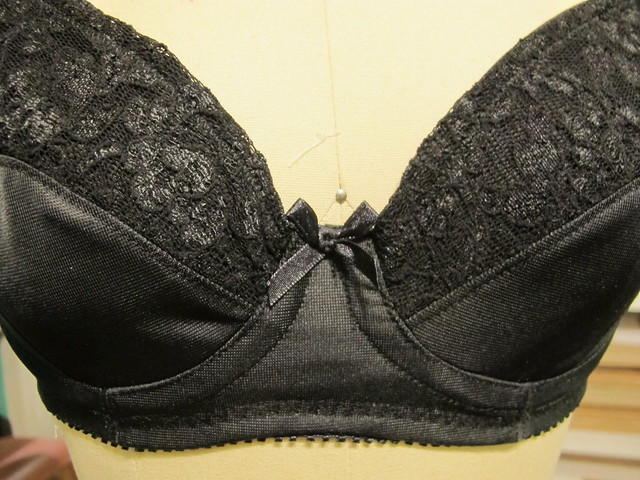
Marlborough Bra

Based on my measurements and Norma’s email advice, I decided to make the size 30D. I typically wear a size 28DD or 30D in RTW, so pretty much the same. I actually compared the pattern pieces to my favorite lace RTW bra to see if they were similar, and they were almost exactly the same. Fit-wise, things are very close. The upper cups on my handmade bra are a little more snug than the RTW one, but the RTW one also has stretch lace for the upper cup (whereas on the Marlborough, the lace is rigid), so that might have something to do with it.

The Marlborough Bra pattern is very well-written and covers every step of the process, which is super helpful if you’re like me and have never sewn a bra before. There are tips on where to add topstitching, how to sew in the underwire channels perfectly, what pieces to baste on first so they don’t slip when you zigzag them on. In itself, the pattern is absolutely sufficient for making a bra. However, I did find it incredibly helpful to have Norma’s book at my side during the process. Whenever I found a step in the pattern confusing (more so confusing because this was new and alien territory to me – and less because the instructions were lacking), the book answered it right away. It’s also helpful because there are actual photos of the steps in the book, so if the diagrams aren’t doing it for you, you have back-up. Of course, I don’t think it’s necessary to have the book to make a bra – but I was happy to have it on hand.
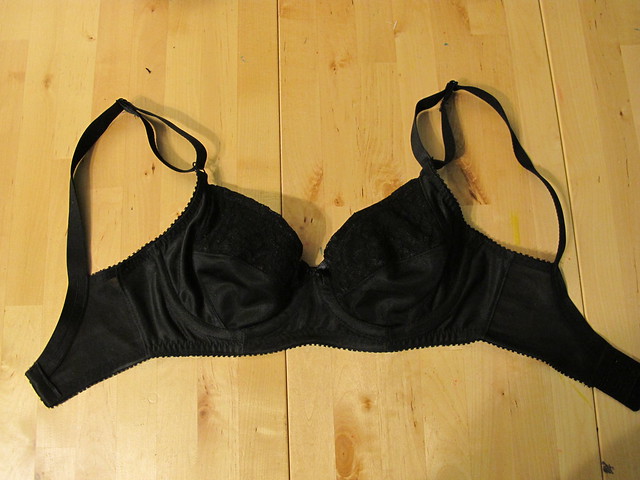
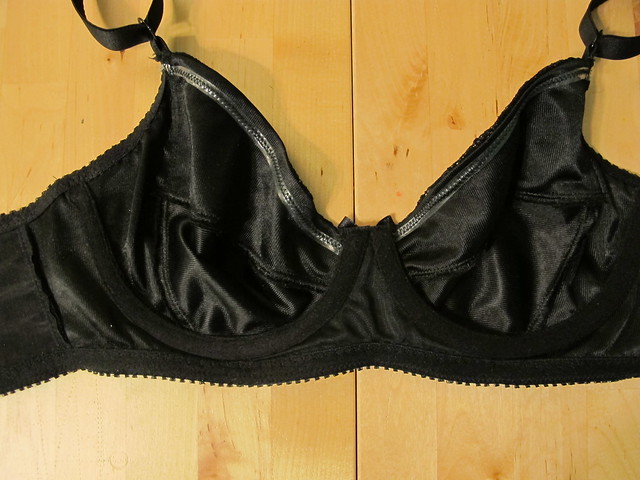
Marlborough Bra

Marlborough Bra

The one part about the pattern that I didn’t like was that it wasn’t super clear on what pattern pieces to cut from what fabric. This stalled me for a couple of hours, actually – there’s some general info in the pattern, but I’m the kind of person who needs clear-cut specifics. After googling as many Marlborough bras as I could find, pouring over Norma’s book, and referencing Maddie’s bra-making guide from her Sewing Party class, here’s what I came up with:
– The cups, bridge and frame are cut from the main fabric from my kit. I cut them according to the grainline, since there is a slight stretch in the fabric.
– The straps were cut out of powermesh, with the direction of greatest stretch (DOGS) running around my body.
– Since my lace is stretchy, I lined it with more of my black fabric so it would be rigid (as the pattern calls for)
– I lined the bridge with a second layer of the same black main fabric

The kits also don’t tell you which elastic is for what. I wish I’d bothered to figure that out BEFORE I started sewing – as there is actually a cute little 1/4″ scalloped/lace trim for the upper cup. Instead, I used clear elastic on the inside of my cups. Womp womp. At any rate, I figured out the rest of the elastics pretty easily – just measure them and check the widths against the pattern notions list. One thing to keep in mind, again, is that the small kit has narrower trims. Since my size is a D, I should have had the large kit (and wider elastics, including straps). I did not, but the bra turned out fine. I feel supported.

Oh, and I did not finish my seams. I felt that focusing on construction and fit was more important for this go. I do want to explore seam finishing for future bras, though!
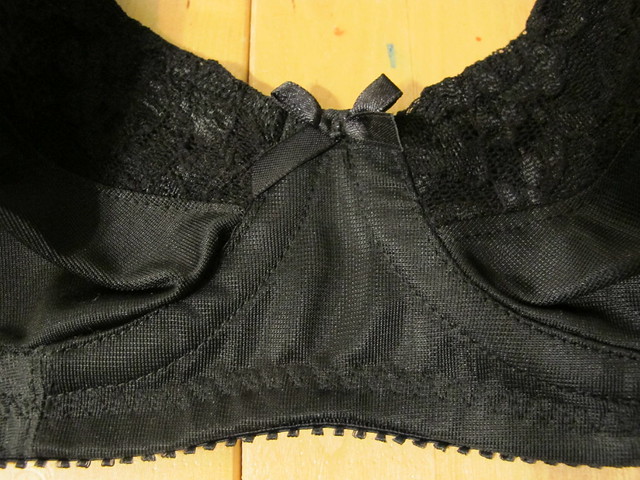
Marlborough Bra

All this aside, I had a LOT of fun putting this thing together! Omg! Once the cups were assembled, it really started to look like a bra and that’s when things got exciting. I got to usse all kinds of cool zigzag stitches (these are all covered in the pattern instructions) and play around with lace and trims. So fun! One tip I will give is to be careful with those 1/4″ seam allowances – if you’re not used to sewing them (I’m not), you might have issues with the machine trying to eat the edge of your fabric, especially if you’re sewing something delicate. I have found that by *very* gently pulling the thread tails away from you when you start each seam, it will guide the fabric along until your feed dogs have a good grip and you’re past the danger of your machine chomping a hole in your fabric. Just be sure to hold both thread tails and don’t force it.

Also, that favorite RTW bra that looks a lot like this one? I kept it on hand while I was sewing my Marlborough, so I could refer to it when needed. That was pretty helpful, especially when I needed to visualize how the elastic was supposed to look.

Marlborough Bra

Marlborough Bra

The only downside to bramaking is, unfortunately, it’s very hard to tell if the bra will fit until it’s mostly finished. Of course, you can mock-up with crappy elastics and temporary underwires, but because the fabric is so essential to determining fit, the mock-up needs to be of the same stuff (aka, not cheap muslin, or whatever). So it’s a bit of a gamble. I’m pretty thrilled that mine fits so well – although it can definitely use a little bit of tweaking before it’s perfect. I’ll let y’all know how that goes! In the meantime, here’s a somewhat awkward photo of how this one fits on me:
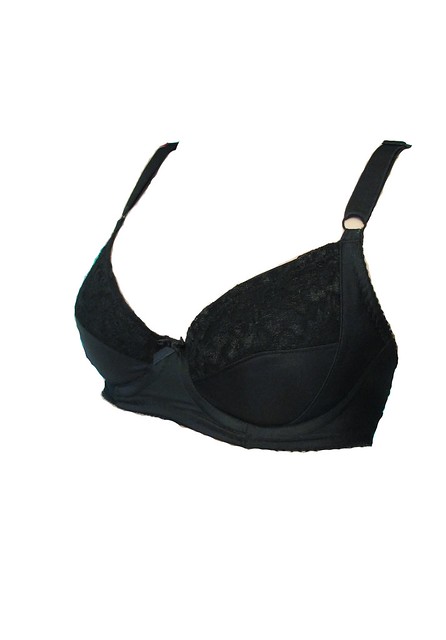
Marlborough Bra

Sorry that I had to totally erase my body (I’m not terribly shy, but, this is a public blog, after all), but this should give you an ok idea of how it looks. I’m actually pretty impressed! It’s supportive, it’s comfortable, and it’s SO pretty! Looks like a bra you’d buy in a store. Except better, because I made it :P As far as wearing it under clothes – it’s about the same as any seamed/lace bra. Not completely smooth (personally, that doesn’t bother me), but not super lumpy. Since this fabric is kind of thick, I’ve noticed that nipping isn’t too much of a problem, either.

I’m looking forward to making more of these! Once I tweak the fit, I want to try some different kits – I see that Grey’s Fabric has some beautiful kits, and I’ve also been eyeballing the ones from Hooks & Wires. Not to mention the famous Merckwaerdigh kits, the holy grail of all that is beautiful about handmade lingerie. I want to buy all white everything and try my hand at dying the whole set to match (there’s a short chapter on dying in Demystifying Bra Fitting and Construction, yes!). I want to explore trying new fabrics (I’m thinking this might be the PERFECT excuse to splurge on a tiny piece of Liberty fabric while I’m in London!), laces and trims, and mixing and matching for some cray combinations. I want to make matching underwear (yep). I also want to make a push-up bra, but that may require a different pattern :) Making this one bra just has me itching to sew more! It’s SO satisfying! Have I convinced you to make a bra yet? Have I? Huh? :)

Bloggy Disclaimer: Norma sent me a copy of Demystifying Bra Fitting and Construction as a gift. I did buy the pattern and kits with my own money, just in case that wasn’t clear!

Ooh, speaking of London – a couple more things -
For those who have asked – there will be a meet-up on Saturday the 22nd! If you emailed me previously, you should have received the details of the meet-up a couple of days ago. Anyone else who wants to join (whether you didn’t contact me, or are just hearing about it now :) ) – we will be meeting at Goldhawk Road at 10:00 AM. We will congregate outside the tube stop until 10 minutes after the hour, then we will be moving on to shop! If you would like to join the meet-up – please, come! You don’t have to email me to get an ~invite~ (nor do you need to have a blog to hang with us). If you can’t make it at 10:00 AM but would still like to try to find us later, you can either email me and I will give you my number (I plan on getting a SIM while I’m there, so it’ll be local!) so you can text me, or just tweet me. Come to buy fabric, come to eat and drink later – whatever works! This is an open invite :)

Also, the blog will probably be pretty quiet while I’m gone. I want to really enjoy my vacation and not be sitting at a computer all day! I will have access to the web and will respond to emails and comments as I can (and maybe squeeze a post in if I have downtime waiting at the airport or something), but I don’t have anything autoscheduled and I’m not bringing in guest posters or anything like that :) I’m taking a break and I’ll be back in December! :) In the meantime, if you want to lurk my trip – you can follow my Instagram and/or Twitter.

See y’all laterz!! ♥


05 Jan 16:36

Murty Classical Library Catalogs Indian Literature

by By JENNIFER SCHUESSLER
Russian Sledges

hottttttttttttt

In a complex undertaking, Harvard University Press is publishing translations of important Indian texts in a series called the Murty Classical Library.


05 Jan 16:27

Your Guide to Bra Making Materials

by Norma
Russian Sledges

"If you want to steer clear of manipulating your fabric for now but want to use something other than Duoplex, I have had good results using bias cut silk, bias cut Liberty Tana Lawn and even a double layer of stretch charmeuse"

= william morris undies are a thing that could happen

One of the potentially confusing parts of making a bra is choosing the fabric and in my book I provide general guidelines for selecting materials. With the release of my Marlborough bra pattern, I wanted to review the necessary materials and provide specific recommendations for my pattern.

Like many bras, the Marlborough requires four different fabrics; (1) cup, bridge and band fabric, (2) lace, (3) band fabric and (4) lining. I am going to tell you what you are looking for in each category and give you ideas on how to manipulate fabric to bring it into line with the desired characteristics for the Marlborough.

1) Cups, Bridge and Frame Fabric

When looking for bra making fabric you are most concerned the movement of the fabric. Movement refers to both stretch, which means the fabric contains Spandex fibers (also known as Lycra and elastane), and give, which means there is mechanical movement of the fabric based on its weave or knit.

The fabric for the bra cups should have little to no movement to contain and provide shape to the breasts. When you look for cup fabric think smooth, thin and strong because you want support and you want your clothing to move freely over the bra. You also want a fabric that is comfortable and washable.

Typical bra cup fabric fibers are nylon, polyester, cotton, Spandex and silk. Bra fabrics are usually a tricot, raschel or even jersey knit. Woven fabrics like stretch silk charmeuse (silk with Spandex) are used for luxury lingerie, as is 100% silk.

The bridge and frame also need to be made in a low to no movement fabric to keep the cups in the correct place on the body. Generally the same material that is used for the cups is used for these parts of the bra along with a stable lining for the bridge.

For creating the Marlborough, I used “Duoplex” fabric from Bra-makers Supply as my base fabric (swatches pictured above). It is a 100% polyester tricot knit fabric that has 10% movement lengthwise and no movement crosswise. I chose this fabric because it is supportive, easy to work with, wears well and comes in a lot of different colors.

Another great thing about using Duoplex as a base fabric is that it makes for easy substitutions. It is far easier to manipulate a fabric into low to no movement properties than it is to manipulate a fabric to into a specified movement factor like 30% lengthwise and 20% crosswise for example.

To manipulate a fabric to make it have low to no movement properties you can double it, line it, fuse it to a tricot interfacing or bond it to another fabric using fusible weft. If you are not sure how to go about manipulating your fabric, no worries! I will take you through the different fabric manipulation approaches in an upcoming post. Once you know how to adapt fabrics for bra making, it opens up a whole new world of possibilities!

If you want to steer clear of manipulating your fabric for now but want to use something other than Duoplex, I have had good results using bias cut silk, bias cut Liberty Tana Lawn and even a double layer of stretch charmeuse for the Marlborough. Remember to test any fabric changes in the muslin process before you sew up your final bra.

2) Upper Cup Lace

There are so many different types of laces that there are entire books on the subject. To keep the selection process simple, just refer back to the basic principles for bra cup fabric selection: thin, smooth and strong. Now clearly lace is going to deviate from the thin and smooth characteristics, but the point it to keep an eye on how much texture your lace has unless you do not mind it showing underneath your clothing. When it comes to strong, you are looking at the density of the lace. You want a lace that is not going to allow flesh to press through it, unless you plan to line it.

The Marlborough upper cup is drafted for a fairly dense and rigid (no movement) lace that uses a scalloped edge for the finished edge of the upper cup. You can substitute a stretch lace if you prefer. If your lace has stretch, is delicate or is not very dense, I recommend using a lining fabric underneath the lace for extra support and stability, especially in the D and DD cup size range.

Shopping for laces is easily one of my favorite parts of bra making. Laces are easy to find and are widely available on Etsy.

3) Band (aka Wings) Fabric

The fabric for the band must have stretch so you can comfortably breathe and move about while wearing the bra.

My pattern calls for a power mesh, also called power net. Power mesh comes in different densities, including double knit varieties (not pictured), and degrees of stretch in both the crosswise and lengthwise directions. In the picture above the upper swatches have greater density. For the Marlborough I used a power mesh with 50% lengthwise stretch and 30% crosswise stretch, the bottom swatches in the image above.

For more support, or a band that feels tighter, you can use a more dense and/or lower stretch power mesh or you can use a double layer of lighter weight power mesh. A quick note on doubling power mesh – you do get a bit of an optical effect as pictured below.

If you don’t like the look of power mesh, you can layer stretch lace or a stretch fabric over the top of it. Just be sure that the stretch of the upper layer of fabric is equal to or greater than the power mesh below it and that you test the combination of the two in the toile (a.k.a. muslin) process to be sure the band has enough stretch for your comfort. Depending on the fabrics involved, you may need to add to the band.

4) Lining Fabric

Lining fabric is used to stabilize the bridge of the bra. Lining can also be used in the fabric manipulation process to create a more stable fabric.

When you start shopping for bra making linings you will see the term “denier”. Simply put, denier is a measure of the density of the weave of the fabric. The lower the number, the more sheer and lightweight the fabric.

There is no need to line Duoplex but when I do line bra cups, the lining I like to use is a 15 denier nylon with 25% crosswise and 0% lengthwise movement (pictured at the bottom right in the image above). There are also nylon “sheer cup” linings with virtually no movement that I like to use for the bridge (the swatches pictured in the top row above).

Where to Buy

Because few of us can find bra making supplies in our local area, I have list of bra making materials suppliers on my resources page. If you are new to bra making or you just want to simplify the process of acquiring all the materials, you can always buy a bra making kit that has everything you need included all in one package.

In my next post I will review bra making notions including the elastics and other findings used in the bra making process. As always, if there is a bra making topic you want to learn more about, let me know!


05 Jan 15:55

teen-worf: dana scully kween of sass #mulder are you...

Russian Sledges

via rosalind

05 Jan 15:54

Photo

Russian Sledges

via rosalind


05 Jan 15:39

sixpenceee: During the Victorian Era, woman would wear these...

Russian Sledges

via rosalind


sixpenceee:

During the Victorian Era, woman would wear these mourning pins. Because of strict mourning rituals, a woman couldn’t wear or display anything bright or flashy, even shiny pins keeping her clothing together. So women would use these mourning pins to button their clothes. The pins resemble thin black nails.

Added to the list of “items I eventually want to add to my collection of weird Victorian things”.

04 Jan 20:21

A City in the Glacier

by Geoff Manaugh
Russian Sledges

via carnibore

[Image: Courtesy of Icecave Iceland].

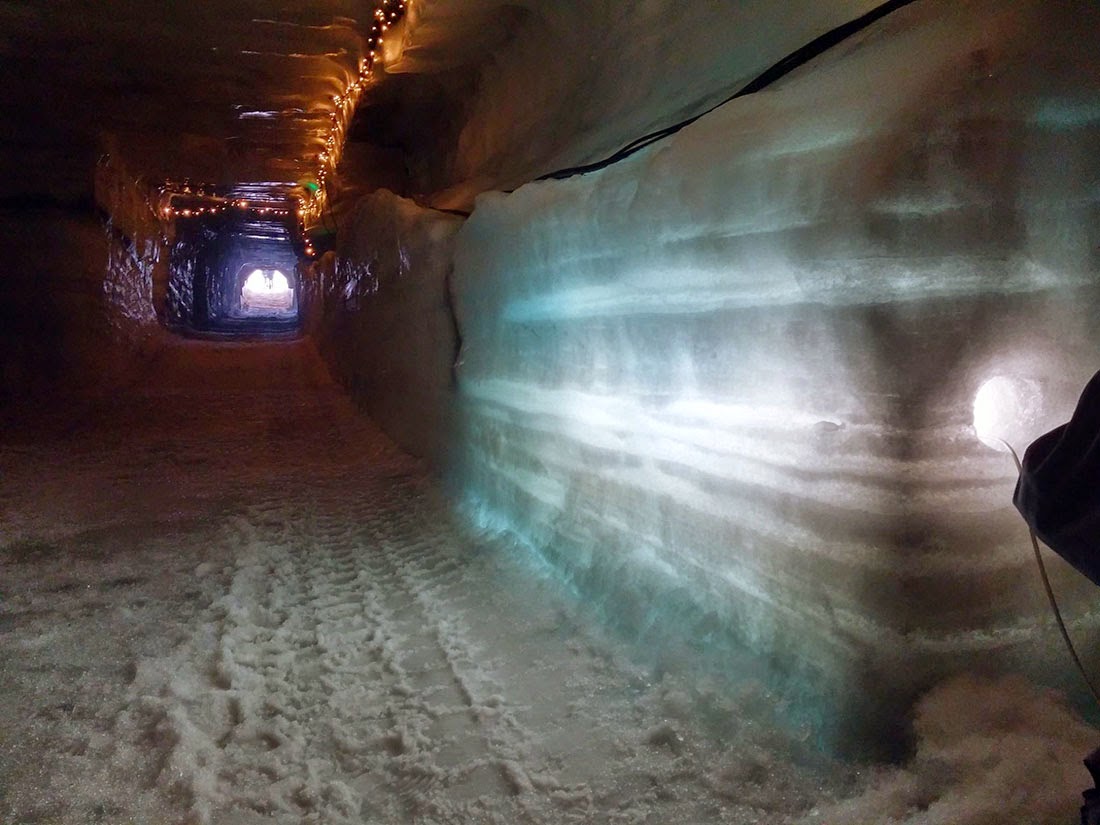
There's an interesting construction/excavation project going on over in Iceland right now: an artificial tunnel and cave complex being dug into the Langjökull Glacier.

When complete, the publicly accessible infra-glacial facility "will consist of numerous nooks and dens which will house exhibitions, information, restaurants and even a small chapel for those who would like to marry deep within an ice cap."

Bringing tourists nearly 100 feet below the surface of the glacier, the structure is expected to become semi-permanent, lasting through the summer months for years to come.

[Image: Courtesy of Icecave Iceland].

The so-called "Icecave" is set to open later this year, and is not far from Reykjavik; for now, its entrance consists only of some understated plywood framing, with no real indication of what awaits below—or within, as the case may be.

[Image: Courtesy of Icecave Iceland].

But tunnels, bays, and side chambers are currently under construction, being chipped down by excavation equipment and drills, and then further shaped by hand tools.

[Image: Courtesy of Icecave Iceland].

I love the idea that all of this is essentially doomed—that the chambers will eventually collapse or melt, even if only decades from now, and that the glacier itself will presumably someday refreeze, free of all these spatial abnormalities.

At which point, the architecture of subtraction could simply start all over again, like a 3-dimensional Etch-a-Sketch of brand new ramps, tunnels, and stairs, all burrowing down toward bedrock. A ritually renewed space, a kind of negative Ise Shrine in the ice.

Or perhaps we need a Mole Man of the Glacier.

In any case, lights are now being installed in the walls, giving the place an otherworldly glow that comes from within the structure itself—

[Image: Courtesy of Icecave Iceland].

—with the truly awesome effect that nearby rooms will seem to glow through the ice walls, revealing themselves as illuminated shapes, even appearing to shine through the floors and ceilings.

This same strategy, using frosted glass floors, walls, and ceilings, in a building otherwise made from dark-stained timber or masonry, would be beautiful.

[Images: Courtesy of Icecave Iceland].

Meanwhile, huge ducts like something out of a frozen warehouse or sub-glacial military base criss-cross the frozen ceilings and extend deeper into the glacier.

[Image: Courtesy of Icecave Iceland].

Indeed, I'm reminded of the incredible story of Camp Century—or Project Iceworm—a U.S. military city built under the ice of northwestern Greenland. Here's a video about it, if you're curious:


As explored on BLDGBLOG back in 2011, Camp Century was a sprawling complex of prefabricated architectural units and steel arches installed within the ice cap, and, astonishingly, it was powered by a portable nuclear reactor.

[Images: Camp Century under construction; photographs via Frank J. Leskovitz].

In any case, the Langjökull excavations are meant to finish up later this year; check back on the Icecave homepage for its opening date.
03 Jan 23:07

The Best (and Probably Only) Stargate Cosplay of All Time [Pic]

by Geeks are Sexy
Russian Sledges

(overbey asks: "where is james spader?")

stargate

A fantastic Stargate costume/dress by Hungarian cosplayer Nyima-chan.

[Source: Nyima-chan on Deviantart]

The post The Best (and Probably Only) Stargate Cosplay of All Time [Pic] appeared first on Geeks are Sexy Technology News.

03 Jan 19:30

Officials tell family to scale back luxe treehouse

by By Associated Press
Russian Sledges

'A noted national treehouse designer, Pete Nelson, built the Placer County masterpiece for more than $60,000.'

GRANITE BAY, Calif. — Northern California authorities are telling a Placer County couple to prune back their deluxe treehouse.

Mike and Pat Splinter's 500-square-foot treehouse features a full kitchen, a bathroom and all the plumbing. The Animal Planet cable network highlighted the structure last month in the show "Treehouse Masters." The episode featured the Splinter family making hard candy for Christmas in the treehouse kitchen.

03 Jan 19:29

Looking for a Winter Girlfriend (Boston) 26yr

I am looking for an intelligent, spontaneous and laid-back woman to be my girlfriend for the winter of 2014-15. If you're up for this gig read on...if not good luck with your search. Let's recognize something. The winter sucks, especially for us sin [...]
03 Jan 19:26

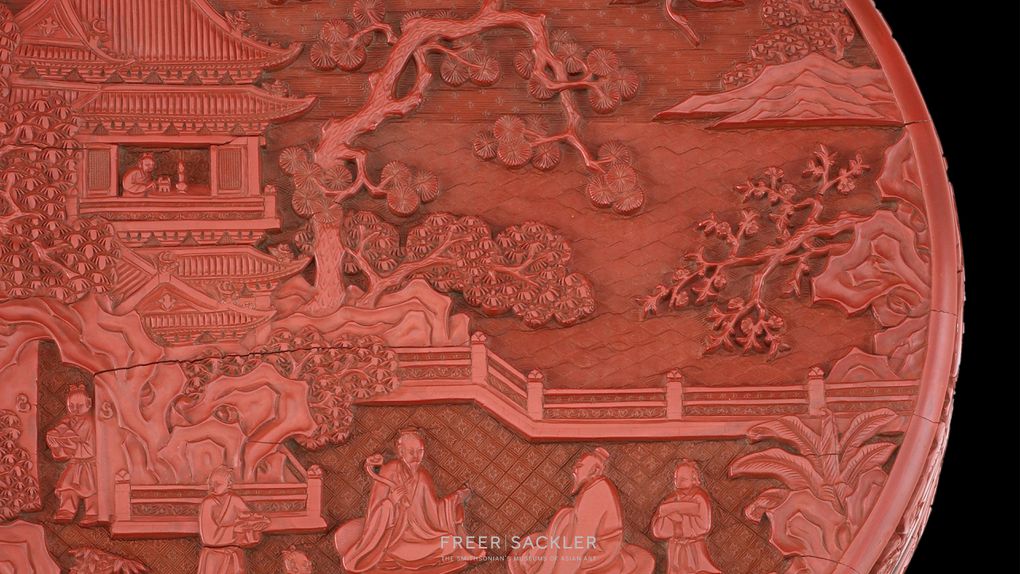
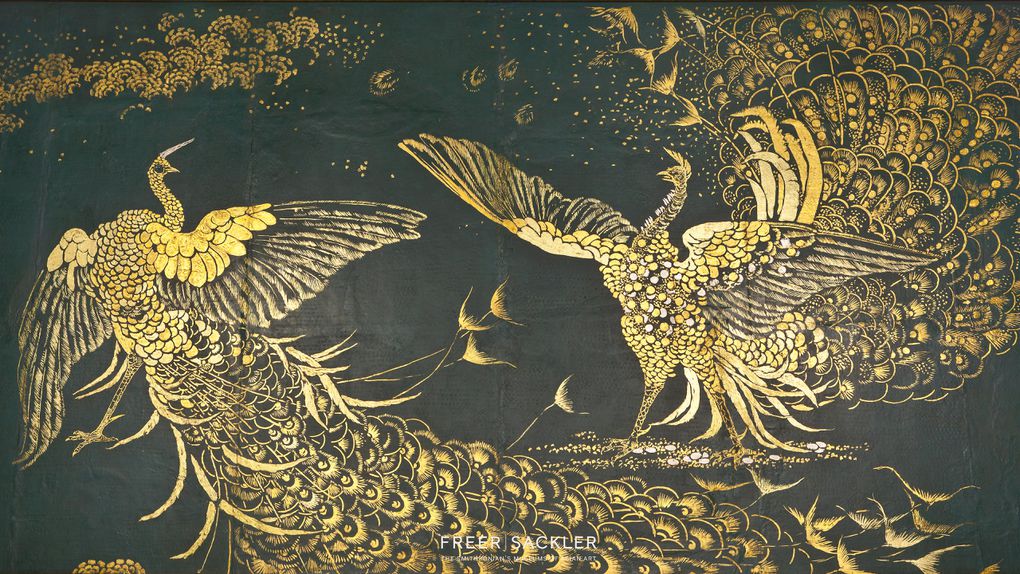
See the massive, stunning collection of art the Smithsonian just put on the web for free

by T.C. Sottek
Russian Sledges

via firehose

A total of 40,000 pieces including ancient Chinese jades and bronzes, Islamic art, paintings, and more

The Smithsonian's Freer Gallery of Art and Arthur M. Sackler Gallery have an amazing gift for the world in 2015: a newly available collection of 40,000 digitized Asian and American artworks. The Smithsonian says its vast collection has mostly never been seen by the public, and the institution is making the collection available for free public use. The art dates from the Neolithic period to present day; the Smithsonian says the collection includes "1,806 American art objects, 1,176 ancient Egyptian objects, 2,076 ancient Near Eastern objects, 10,424 Chinese objects, 2,683 Islamic objects, 1,213 South and Southeast Asian objects, and smaller groupings of Korean, Armenian, Byzantine, Greek and Roman works."

The release is part of an extensive effort by the Smithsonian to make its resources available beyond its prominent physical presence on Washington D.C.'s National Mall. The institution says the work resulted in more than 10 terabytes of data and 50,000 images.

"We're poised at a digital tipping point, and the nature of what it means to be a museum is changing," said Director Julian Raby. "We strive to promote the love and study of Asian art, and the best way we can do so is to free our unmatched resources to inspire appreciation, academic study, and artistic creation."

You can gawk at a portion of the impressive collection below, and check out the rest of the Smithsonian's stunning possessions

at its website

.

Hint: Use the 's' and 'd' keys to navigate

  • Plaque depicting a king offering wine; Egypt, possibly Ptolemaic dynasty, 305–30 BCE; soft limestone

  • Lacquer box; China, Ming dynasty, Yongle reign, 1403–24; carved red lacquer (tihong) on wood core

  • Thunder god; Katsushika Hokusai (1760–1849); Japan, Edo period, 1847; ink and color on paper

  • Vietnamese and Khmer ceramics from the Hauge Collection

  • Harmony in Blue and Gold: The Peacock Room; James McNeill Whistler (1834–1903); 1876–77; oil paint and gold leaf on canvas, leather, and wood

  • Shiva Nataraja; India, Chola dynasty, ca. 990; bronze

  • Woman with a spray of flowers; Iran, Safavid period, ca. 1575; opaque watercolor and gold on paper

The incredible (and incredibly expensive) world of high-end personal audio

How will we interact with computers in the future?

Withings Activite watch review

Blackberry Classic hands-on review

Biohacking: the cutting edge of messing with nature

  • The incredible (and incredibly expensive) world of high-end personal audio
  • How will we interact with computers in the future?
  • Withings Activite watch review
  • Blackberry Classic hands-on review
  • Biohacking: the cutting edge of messing with nature
See more videos

How NASA harnessed sunlight to revive its planet-hunting telescope

By Sean O'Kane

Alcatel looks to undercut everyone with cheap new smartwatch

By James Vincent

US places sanctions on North Korea for hacking Sony

By Chris Welch
[% if (data.comments.length > data.settings.autoUpdateAlertMaxShown) { %] [% } %] ]]>
03 Jan 19:25

Bono guitar fears after bike crash

Russian Sledges

shared for incomprehensible headline

U2 frontman Bono says he fears that he may never play guitar again following a bike accident last year.
03 Jan 19:21

A Shiburrito - Imgur

by russiansledges
Russian Sledges

no burrito only shiba

03 Jan 17:14

Fukuro no Mise, A Busy Cafe in Tsukishima, Japan That Allows Curious Patrons to Interact With Domesticated Owls

by Lori Dorn
Russian Sledges

via rosalind

BRING ME THERE

Owl on Arm

Fukuro no Mise is a busy cafe in the Central Tokyo, Japan neighborhood of Tsukishima that allows its patrons to interact with all kinds of domesticated owls while enjoying their tea. While there are numerous owl cafes within the city of Tokyo, travel writer Linda Lombardi chose to visit this particular cafe due to its internet presence, although getting in isn’t always convenient.

I chose Fukuro no Mise in Tsukishima, which seems to be the owl cafe most well-represented on the Internet. Their procedure can be inconvenient but doesn’t require any language skills. Get in line an hour before they open and they will give you a reservation for later that day and take your 2000 yen payment for the hour-long session. It’s all explained on the many posters on the windows in both Japanese and English. When I arrived a little after 1 on a weekday, I got the last seat for 3 PM, so you may have some time to kill. There are no refunds if you change your mind, and you need to come back five minutes before your reserved time or you might not get in.

Once inside, however, Linda found the cafe to be a fun experience.

I have to say that my initial skepticism totally vanished. It was amazing to be up-close with these wild animals that seemed totally un-fazed by the experience. Maybe they knew they had the upper hand, what with the sharp parts. And clearly they’re used to the adoration of the crowds. They were also quite beautiful and much more varied than I expected.

Owl Cafe Owl

Owl Cafe Rules

Owls in Cafe

Outside of Cafe

images by Linda Lombardi

via Tofugu, Geyser of Awesome