Colin Marshall recommends the series 8-Bit Philosophy, which combines deep thinking with the aesthetics of early Nintendo:
If you’ve put in the hours playing both eight-bit video games and reading the relevant philosophical texts, you’ll surely find these videos’ Nintendonian aesthetics as impeccable as their encapsulations of Kierkegarrd, Sartre, and Camus’ positions are concise. You can find more from 8-Bit Philosophy on Youtube, including their vintage gamer-friendly renditions of Friedrich Nietzsche on time as a flat circle and what science has to do with truth. They cover other areas of philosophy, too, but something about old video games themselves — with their endless cycles of death, regeneration, and not inherently meaningful challenges — leads my mind straight into existentialism every time.
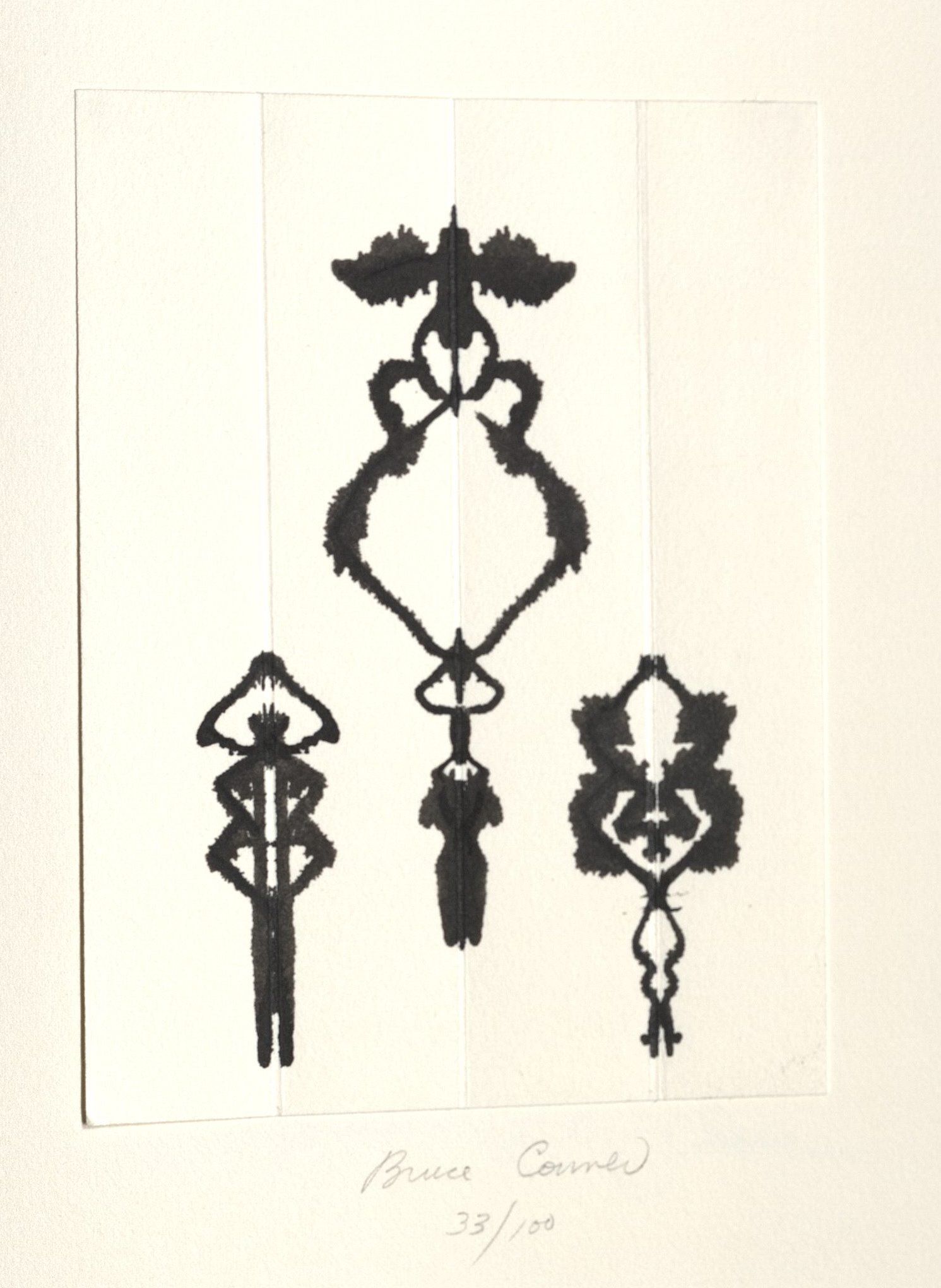
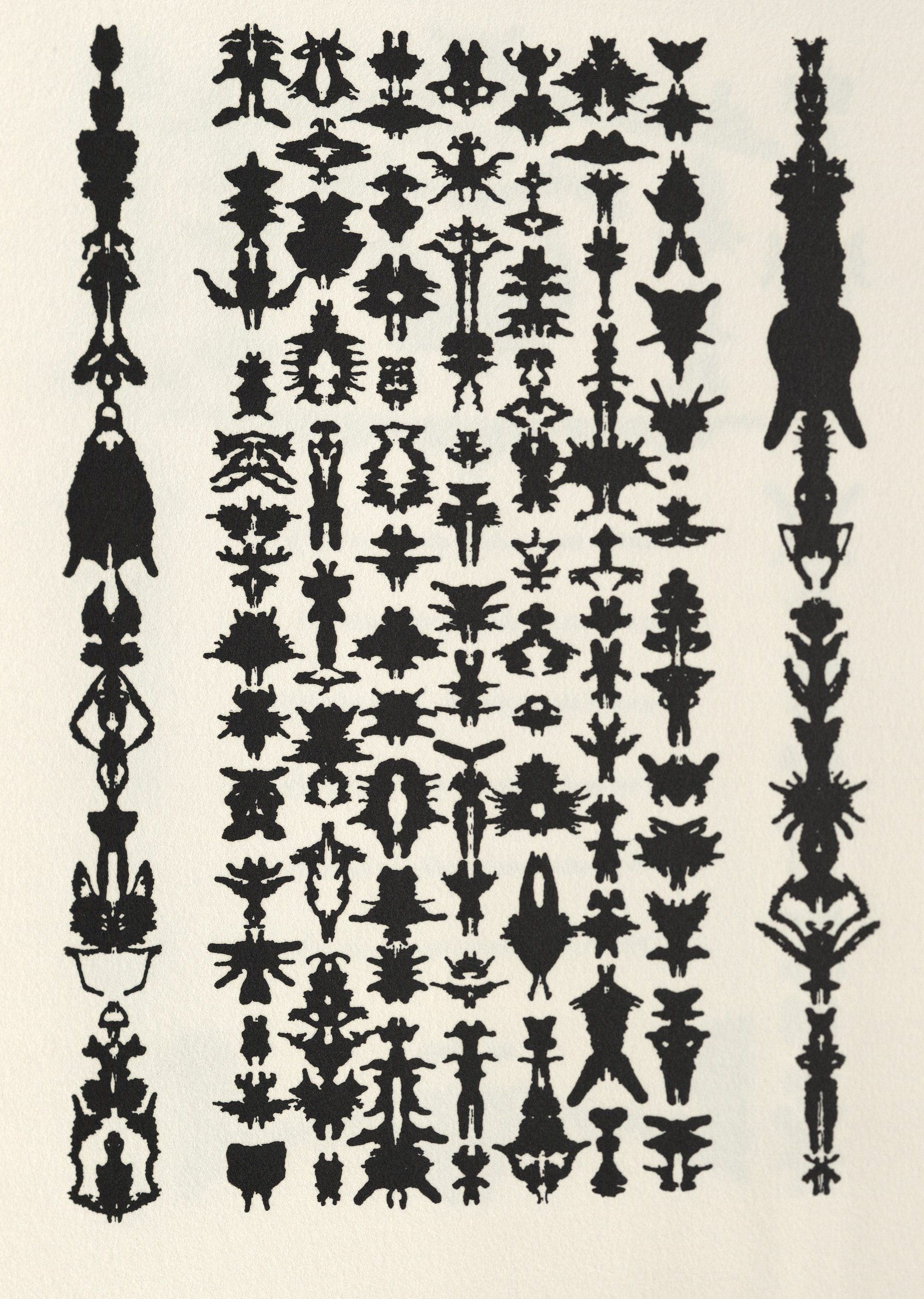
Or perhaps a giant winged insect? As always the truth lies in the interpretation of the viewer. Bruce Connor was a renowned American artist who worked in a variety of media including film, collage, painting, sculpture, drawing, photography, and the inkblot images seen here. Michael McClure is an American poet, novelist, and playwright who was a key member of the Beat Generation. This beautiful volume which combines the inkblot style illustrations of Conner with McClure’s text was printed in letterpress and is considered to be an important piece of San Francisco bookmaking. Signed by both men this copy is number 33 and is accompanied by an original ink drawing by Conner.
At the young age of 22 Michael McClure gave his first poetry reading at the famous Six Gallery event in San Francisco where Allen Ginsberg first read Howl. He is considered to be an important member of the 1960s Hippie counterculture. McClure is often said to have been a role model for Jim Morrison and encouraged him to explore his poetry. He also wrote the song “Mercedes Benz” which Janis Joplin famously sang. Houghton has some of McClure’s poetry typescripts and proofs like Jaguar Skies and Rebel Lions in the New Directions collection entitled Manuscripts and Proofs of New Directions Books, 1937-1997.
The adventures of a novel in four chapters / by Michael McClure ; illustrated by Bruce Conner. [California?] : Hine Editions, [1991?] (San Francisco : Limestone Press). PS3563.A262 A38 1991 can be found in Houghton Library.
Thanks to Alison Harris, Santo Domingo Project Manager and Ryan Wheeler, Rare Books Cataloger, for contributing this post.
Macdonald, John, 1759-1831. A treatise explanatory of a new system of naval, military and political telegraphic communication of general application, 1817.
Sleater-Kinney are fully back in action, and about to release No Cities to Love, their first album since 2005, next week (1/20) via Sub Pop. They've already released two of its songs, but they've now made the entire album available to stream over at NPR. It may have been ten years, but it sounds like Sleater-Kinney are picking up right where they left off and still pushing things forward. It's really good. Check it out here.
They also have several tour dates coming up, including two sold out NYC shows at Terminal 5. All dates are listed, with streams of two tracks from the LP, below...
This year, Rhode Island brewery Narragansett turns 125. And so would Rhode Island native H. P. Lovecraft, if he were still around. So the former decided to draw inspiration from the latter to celebrate.
"We’re celebrating our 125th anniversary here and this is kind of an extension of what we’ve been trying to do at the brewery, bringing back this great brand through a historical lens and local authenticity," Narragansett Beer President Mark Hellendrung told Boston Magazine. The special line will feature four different beers, each based on a different Lovecraft story.
The first—to be released on January 19, the birthday of Lovecraft’s biggest literary influence, Edgar Allan Poe—will be the Lovecraft Honey Ale, inspired by "The Festival." The beer, produced in collaboration with Revival Brewing, also located in Rhode Island, is brewed with Summit and El Dolorado hops, honey, and five different types of malt, including honey malt, and features a striking image of the late author by graphic designer A.J. Paglia.
The second brew, to be released sometime in April, will be an ale called "Innsmouth," an ode to Lovecraft's "The Shadow Over Innsmouth," and is projected to be much darker.
might try making one of these, but I am skeptical about designs that don't involve underwire
Well, I’ve gone and done it. I made a Watson Bra. It seems like everyone and their mother’s have made a Watson, so I hopped on that sewing train and rode it to bra heaven. Like everyone else who has reviewed the pattern, I am a convert. Amy, you are a sewing God for creating this beautiful pattern. Bra magic!
Inspired by the 1970s, this pattern closely resembles one of my favorite lingerie company’s signature piece. Wherever and whomever the pattern was inspired by, it is just like Anne expressed – the real deal. It offers a modern bra pattern that any sewer can whip up. Most amazing is how flattering it is for a wide range of body shapes. Tiny, skinny, medium, or large – everyone looks so damn good!
The instructions don’t hold your hand. Amy tells you what to do and then supplements with what she did. So, she says to attach the elastic using a zigzag stitch, but doesn’t instruct you to use a particular width or length. I like that because stitch width and length is machine dependent as well as dependent on the width of elastic, which I’m sure many sewers will change to their own liking.
The pattern is cleverly drafted so that for most sizes, you only have to print out the pages of your size set. For my size, 32A, I printed out less than 10 pages, including instruction.
Construction was straight forward. With no changes to the pattern, the fit was spot on too. The fabric was the same stretch lace I used on Amber Rosalind. As opposed to that bra, I used a micro mesh for the lining instead of a powernet (I lined all pieces). The power net provides a lot more support in comparison to the micro mesh. Although the bra fits and is super comfy, it’s not very supportive. On my next version, I’ll probably use a firmer lining. The elastic was gifted to me from my one of my best sewing buds, Natasha, who is beefing up her Etsy shop with bra fabrics, notions and kits. I originally dyed elastics using Dharma Tradings Acid Dye, but the color did not come out to liking. It was too blue. So, orange it was! I like the combination of light blue and orange. It has a midcentury modern vibe to it, right? My Florida Gator fans would be so proud.
I thought it was interesting that the first steps are to assemble the straps. Assembling straps at the beginning is like ironing the teeth of an invisible zipper at the onset of a project. But since straps are usually the last step, when you’re most likely at your wits end, making them at the beginning when you’re mind is sharp and your eager to start, is smart.
I eliminated the hook and eye closure and cut the back piece on the fold. The reason being I wanted a super comfy, every day bra. I didn’t add width to accommodate because even with the micro mesh, the fabrics stretched around 40%. The curve made it difficult to attach the strap elastic without it rippling. On body, it lays flat and smooth, but off body, it is flat and I’m not happy with the way it looks. Anyone have any suggestions?
Let’s talk about serging bra seams. Even though it doesn’t serve a purpose (since micro mesh and lace don’t fray), I like to serge the seam allowances. It totally goes again bra convention. Most instructions say to trim and leave raw (or cover with channeling/tricot binding), but something about leaving an edge raw is an eye sore to me. If I use a wooly nylon thread to serge, the overlock stretches with the fabric. Thoughts on this?
And since Heather was a total babe and showed what the Watson looks like on body, I’ll let her do the modeling this time.
A filmmaker and former MIT professor has been arrested after he allegedly robbed a Manhattan bank on New Year's Eve—and recorded it as part of an art project. Joseph Gibbons, 61, has been charged with robbery after allegedly stealing $1,002 from a Capital One branch at Bowery and Grand Street near Chinatown. [ more › ]
Addressing is a fertile ground for incorrect assumptions, because everyone's used to dealing with addresses and 99% of the time they seem so simple. Below are some incorrect assumptions I've seen made, or made myself, or had reported to me.
In the wake of the horrific murders at the satirical French magazine Charlie Hebdo, you may find dozens commentaries on free speech, on hate speech, on Islam, on integration, and what the killings tell us about all of that. (There are too many to list here, but this one featuring Claire Adida is notable because she’s a French political scientist who actually studies Muslim integration in France.)
This allegation of racism is problematic. It fundamentally misunderstands Islam, the challenges that Muslims face in Europe and elsewhere, and the role that race does play in shaping and supporting the grievances of Muslims in the West.
It is, of course, obvious that Islam is not a race. As a faith, Islam eschews racial categorization in favor of a humanity divided into believers and unbelievers. In my work on Muslim Southeast Asia, I have found it profitable to think explicitly about the ways in which perceptions of racial distinction shape interethnic relations. Doing so brings into relief the role of Islam in bridging these perceived racial differences. (Nowhere is this clearer than in Malaysia, where the fundamental prerequisite for becoming Malay [masuk Melayu] is to become Muslim.) At the same time, racism has long existed within the Muslim world based on place of origin, phenotype, or perceived descent.
But this point is almost too obvious. I imagine Canfield, Seymour, and others reading these words and rolling their eyes. “Of course Islam isn’t a race, but the way in which Islam is portrayed is racist.”
This reply also fails. We know from recent research that Muslims face conditions of discrimination that transcend their perceived race. More to the point, though, Charlie Hebdo’s mockery of Islam targets not the Muslim as a person, but a set of beliefs held by a subset of Muslims. That mockery has power because it forces readers, Muslim and non-Muslim, to examine the essence of religious belief. These cartoons play on the contested foundations of a spiritual identity. And those foundations are indeed contested, they are political, within Islam. That is how to “get” the cartoons, even if you find them offensive and inappropriate.
Eliding anti-Islam rhetoric with racism also obscures racism qua racism. It won’t do to label every instance of “whites punching down” as racism, because it prevents us from seeing that the mechanisms that produced hierarchies of race, class, and privilege really are different for Muslims and racial and ethnic minorities. They may be interrelated, of course. Nigerian Muslims in the United States are not merely Muslim, they are also Black. But my point is this: the narratives of the dangerous convert, the sleeper, the invisible cancer, all of which characterize the contemporary condition of Muslims in the West, none of those has a clear analogue in race. When racists imagine the problem of integration, they imagine a condition that stems from birth, a destiny inherited biologically. When Islamophobes imagine the problem of integration, they imagine a struggle of ideas, one in which all are vulnerable, in which the most frightening threat is the convert. (This is why commentary about Islamic radicals is so obsessed with pointing out that radicals, say, used to smoke marijuana or visit prostitutes. Even a “bad” Muslim is a dangerous one.)
The analogue for this kind of panic about Islam is not race. It’s communism. And the mockery of Islam by Charlie Hebdo is biting precisely because it targets a belief held sacred, not because it portrays all Muslims as having inherent, immutable attributes.
Note that I am not arguing that there is nothing racial about anti-Muslim attitudes, or the larger problem of Islam in Europe. There surely is. But the term that describes this phenomenon is the racialization of Islam in the West. The Tsarnaev brothers offer a compelling example from the U.S. But the racialization of Islam is an example of a broader racialization of poverty, of violence, of class. (A vivid example of these is Vinz, Vincent Cassel’s character in La Haine.)
Thinking through the racialization of Islam in France, and in the West in general, is obviously good, in a way that Edward Said (enlisted by Seymour as his first line of defense) would approve of. But understanding exactly how Charlie Hebdo’s mockery of Islam is not racist is the first step in taking the challenges of Charlie Hebdo seriously.
I had this moment of inspiration the other day that is going to drive Clover’s approach to Customer interaction in 2015 and beyond. We are going to try to get rid of friction. This is the year of the Clover Maglev.
I believe strongly that you can’t build something great without saying no and making trade-offs. And up ’til now I’ve thought of many of our customer decisions as trade-offs that support our larger goals. For example, some customers get upset when they can’t find a bathroom because we don’t have signage. Upside for us? We force people to actually talk to one another, something that I believe in a small way fosters community. So we’re trading off the clarity of navigation for additional interaction. There are thousands of other tiny things like this. No paper towels in the bathroom means less waste and labor (yeah!), but it also means some customers feel upset.
Up until the other week I thought I was doing the right thing with these decisions.
But then I started thinking of it differently. I’m afraid these miniature conflicts, some of which only impact our subconscious, are a drag on our mission to get close to our customers. I’m thinking of these little things as I think of friction. Friction is the result of many many tiny interactions between and object and its surrounding. These little interactions wouldn’t even be measurable one at a time, but together they create a very real drag. Friction turns your deliberate energy (e.g, moving a wheel) into waste (heat). And so when mechanical engineers are designing things meant to move they work hard to limit the friction.
I think Clover needs to focus our energies on removing friction from our store experience. I think we need to do this because I believe it’s limiting our potential to create meaningful relationships with folks who come in the door. We have these incredible successes, and such great friends as a result. But I think to date those relationships have been built despite the friction in our environment. I think we’ll be much better frictionless.
Have you had a small moment of “friction” at Clover that we could learn from?
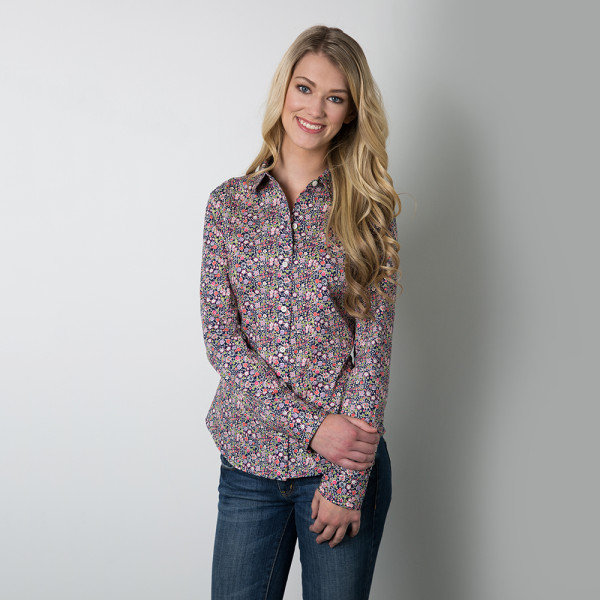
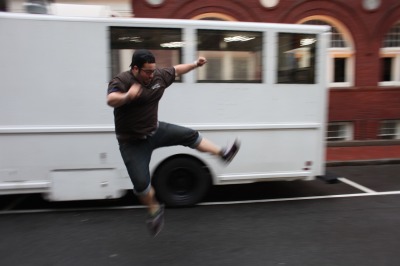
I just love this photo. Look at that crisp collar!
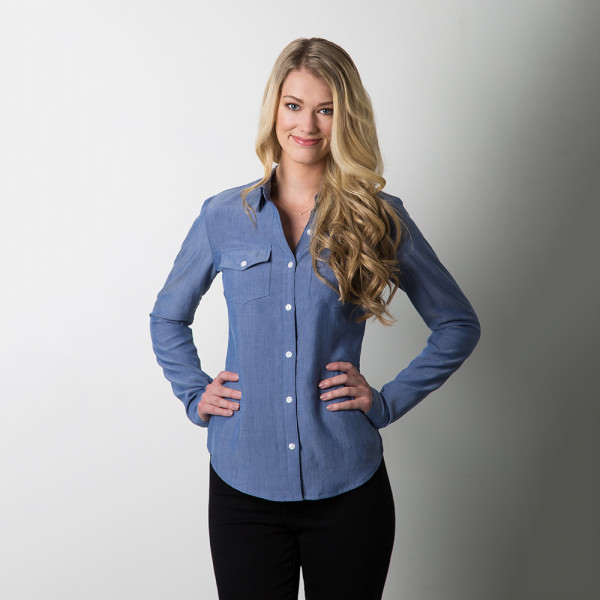
The Granville Shirt is a button-front collared shirt with a great fit. It’s got a two-piece collar and stand, self-lined yoke, tailored plackets and cuffs, and front button band. Basically, it’s that good, classic shirt pattern with all of the standard features that you can make over and over again!
When I designed this shirt, my goal was to create a fitted, flattering button-up shirt that looks good on curvy figures. It’s all about the fit and the shape of this shirt. I love the look of boxy shirts on others, but on me I prefer a shirt with shape. It nips it at the waist for a curvy effect, but isn’t overly snug.I wanted it to be slim-fitting but comfortable, with enough room over the hips to wear untucked over jeans and a belt buckle.
It’s designed to fit women, yet includes all of the great details you find on men’s dress shirts. A feminine take on a menswear staple.
One of the best design features is the princess seams along the back. Having back seams creates a great fit in the curve of the lower back and gives you a place to adjust if needed. It’s the part I always show people on my own Granville shirt. Anyone that has a narrow waist and curvy hips instantly gets excited to see shaping in this area!
The front features bust darts, and optional front pockets with flaps. I like the front pockets with flaps best of all, but on busy fabrics you may prefer to keep it simple. What’s nice about the pockets is that on smaller bustlines they draw attention to the bust. (Always a good thing in my books!)
The self-lined yoke is nicely finished, and gives you a place to put a big label. It’s also a great way to use up smaller pieces of fabric, especially fun prints that make you smile when you see the inside of your shirt. I have some Liberty lawn scraps that I’ve been saving specifically for beautiful inner yokes, or plackets, or inner cuffs. There’s no end to the possibilities when sewing your own perfect shirt.
We worked hard on the instructions for this shirt pattern, and I’m especially pleased with the collar construction technique.
I hope you like it! Personally, I’m pumped about this one. Super excited! I’ve already sewn myself a few versions and know there will be more in the future! We have sewn a ton of shirts in developing this pattern and I’m still not tired of sewing it. I figure when I’m this excited about a pattern, there’s going to be others that will love it just as much.
It works equally well in crisp shirtings as it does in drapier fabrics, like this royal blue viscose print.
The name Granville shows up a lot in the Vancouver area, so it was a good fit for a classic shirt. There’s a Granville Street, which runs north-south from the south end of Vancouver leading all the way downtown. There’s Granville Island, a popular attraction with a market and shops, art supplies and artist studios, a theatre and restaurants. We took art classes there as children, my sisters and I. In Richmond, a nearby city where I grew up, there’s also a Granville Avenue that leads to the mall. So it’s a popular name for a classic shirt pattern, I’d say!
Pattern improvements I mentioned them on Tuesday but thought I’d highlight them again quickly. Very excited that you’re excited about these updates!
We now haves size 0-20 included. (Previously we had sizes 0-16; we added 18 and 20.)
We now have metric AND imperial measurements on the envelope back.
We have a PDF and printed version available. Our PDF version includes a copy-shop version.
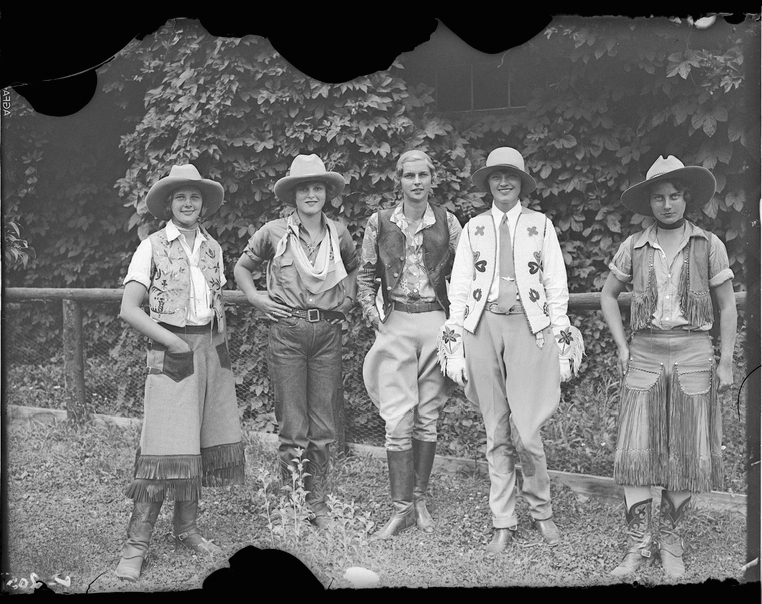
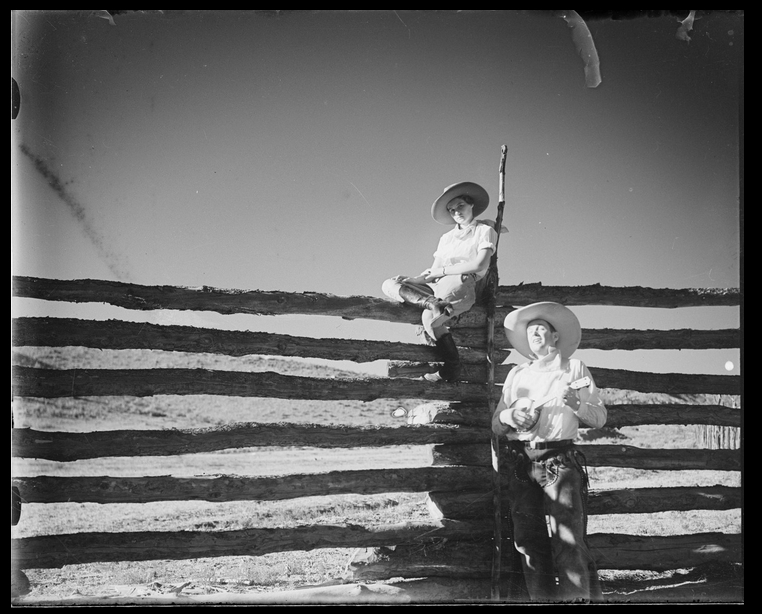
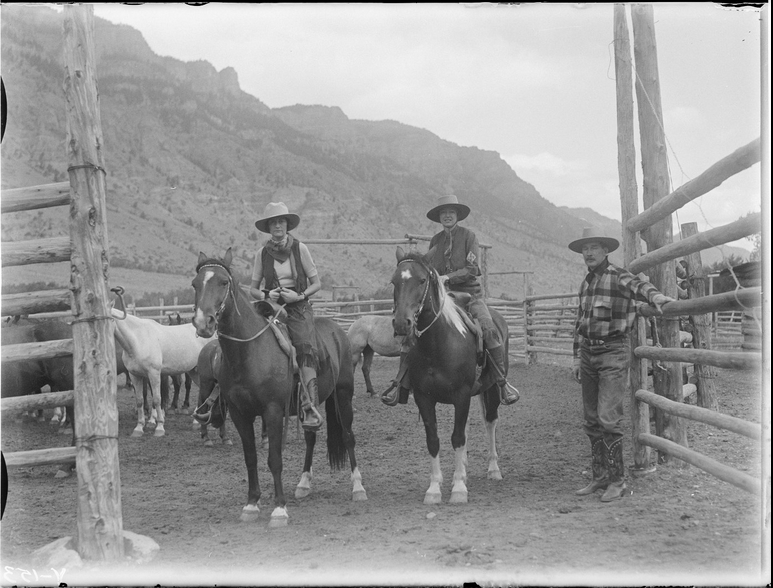
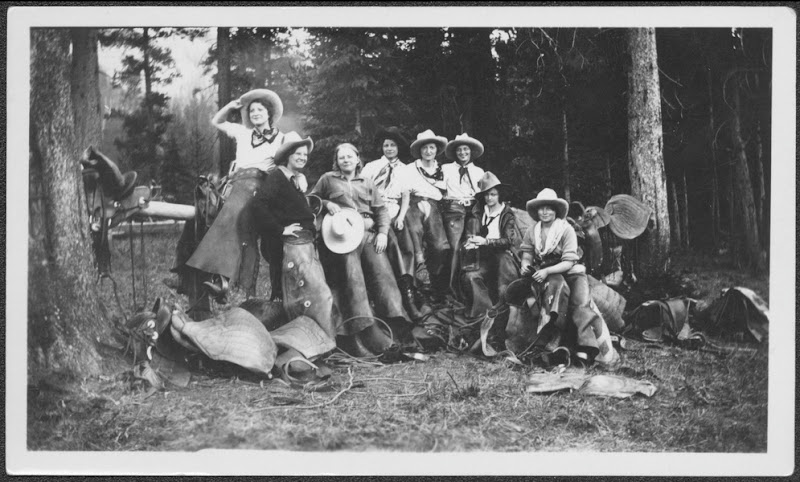
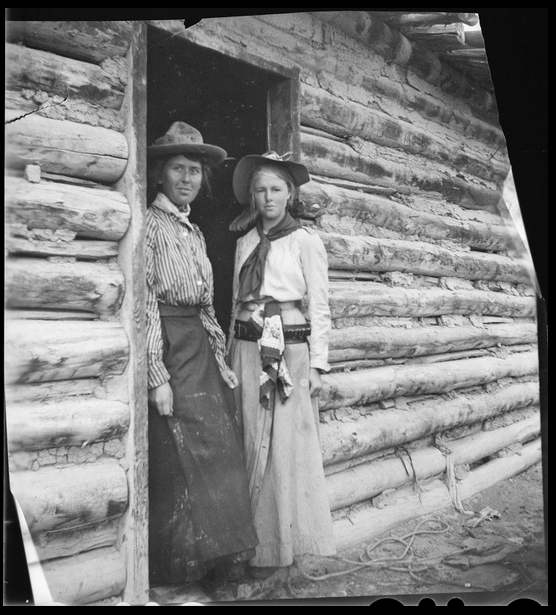
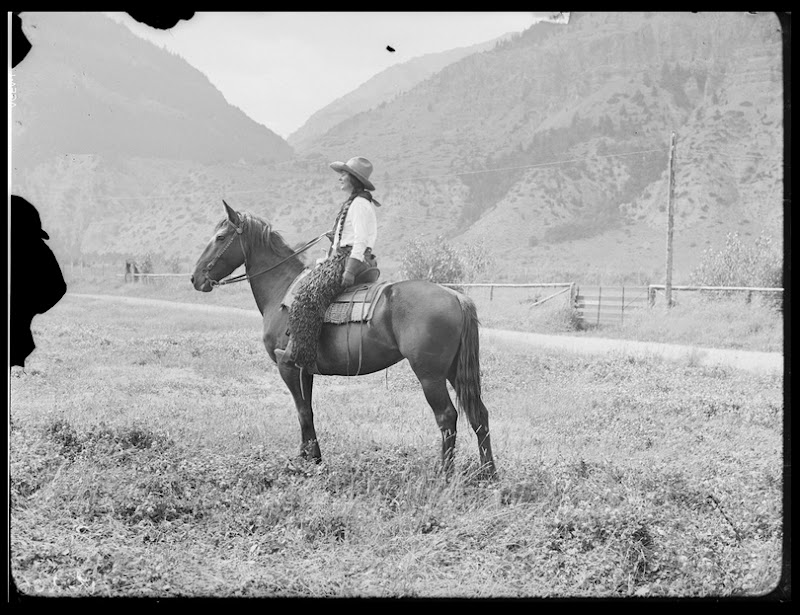
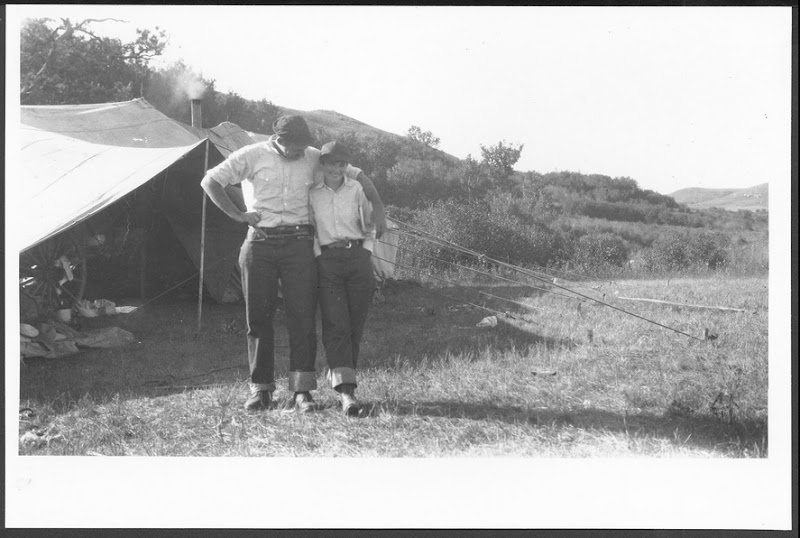
Lost in an Internet worm hole yesterday, I found myself in the University of Wyoming photo archives, which is impressive both in scope and size. Beyond all the photographic treasures, I found a term I'd never seen before: Dude Girl. Interestingly, the word dude may have derived from Scottish in the late 19the century as a term meant to mock how a woman was dressed as a "dud" or dude—a new word for dandy. The word dude evolved in this country to describe a tourist who attempts to dress like a local but fails. Obviously the word means a lot of things now, and although the word dude may have meant "city slicker" in the West, I think these dude girls in Wyoming look pretty authentic and capable, well, most of them. I also found a photo of Ernest and Pauline Hemingway that I had to include at the end. Keep up with Tomboy Style elsewhere: INSTAGRAM | TWITTER | FACEBOOK.
Mission cocktail haven Trick Dog debuted a new menu Thursday, this one a tribute to Chinese restaurant takeout menus.
As you’ll recall, the sharp wits at Trick Dog come up with an unusual menu design each six months, including a (much-heisted) Pantone color wheel and a one printed on vinyl records.
The Chinese menu arrives just in time for their second anniversary. It is notable not only for chef’s specialties that have taken a turn for the Asian (Chicken TrickNuggets come with Chinese mustard and sweet and sour sauce) but also for drink specialties that many readers will be ordering by number.
The names are written in Chinese characters, with pinyin spellings that may still be a challenge for many imbibers, especially if you’re on drink no. 3.
The Chronicle asked one of our Chinese-reading friends to help decipher the names, to wit:
Puerto Rican Frost
Christmas Tree
Celery and Pineapple
Caitlin No Like (grammar not seemingly a mistake; apparently Caitlin may not like harissa and green tea mixed with coconut-infused rum, apricot liqueur and lime)
Big Seller
Zang Martinez (not clear who/what Zang is, but it’s a gin-and-vermouth Martinez with extra flavors)
Tastes Like Biscuits
Hidden Carrot
Nuts For You (or Give You Nuts)
Sea Turtle Baby
Smells Like Grandma/Mistress of the House/Breasts (per our friend, it’s contextual, and not clear which; feel free to aid the translation efforts in comments below)
Coffee and Cigarettes
Consider yourself informed.
Here is the rest of the menu, including the food side:
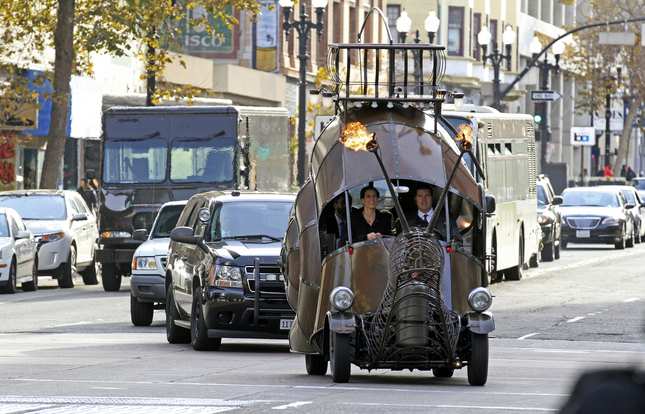
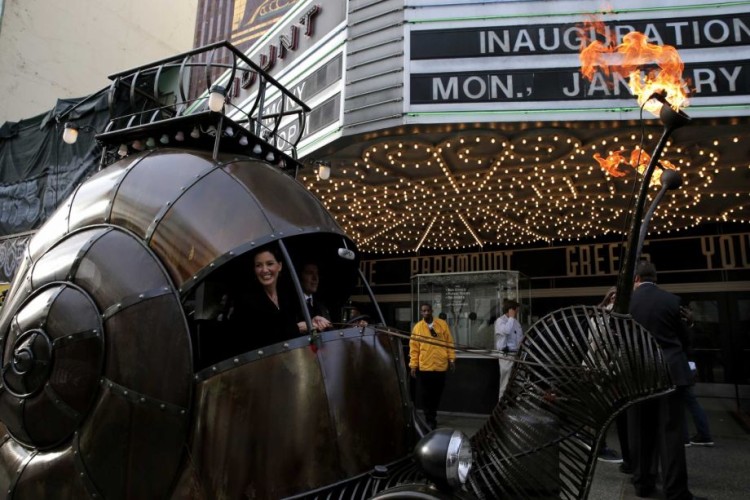
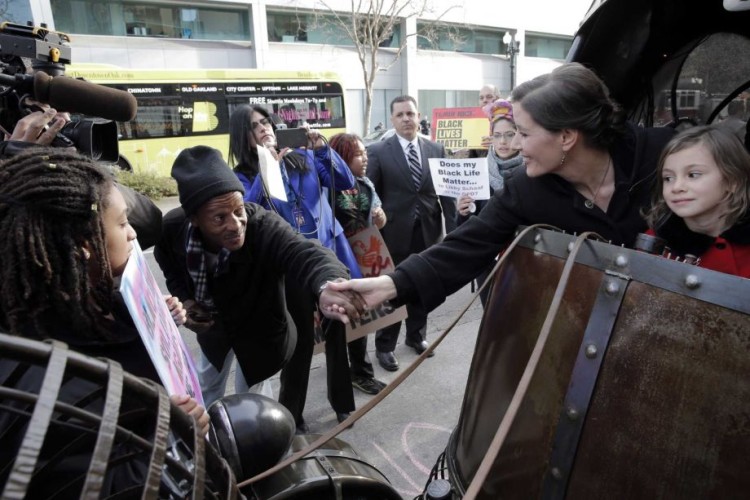
On Monday, January 5, 2015, Oakland, California’s new mayor Libby Schaff arrived for her inauguration at the Paramount Theater in a most striking vehicle. The mayor was driven to the theater aboard The Golden Mean (previously), a fire-breathing snail car created by Oakland artists (and couple) Jon Sarriugarte and Kyrsten Mate. Sarriugarte acted as driver while a chase car and a parade of additional vehicles filled out the motorcade.
As the year’s first blanket of snow coated the Washington, D.C. area today, giant panda Bao Bao spent much of the morning playing in it for the very first time.
From left: Sophia, Jung, and Charles Starrett play D&D at home.
By Ethan GilsdorfGlobe Correspondent
Ethan Gilsdorf
Some updated player’s and dungeon master’s guides for D&D.
As a teenager in the 1980s, Charles Starrett spent hours playing Dungeons & Dragons with his pals but stopped after high school. His interest was rekindled as a father when he introduced basic role-playing games to his two daughters when they were six years old, and he also persuaded his wife, Jung, to play.
“They just gobbled it up,” Jung Starrett says of her daughters’ interest in D&D.
Now the couple and their now 14-year-old daughters, Sophia and Julia, gather around their Brookline dining room table regularly on weekends to toss polyhedral dice, slay orcs and hobgoblins, and tell an unpredictable, unfolding fantasy story, together.
As it turns 40 this year, the pioneering role-playing game (or “RPG”) appears to be enjoying something of a renaissance after a period of decline. Once the province primarily of white, suburban teen boys and young men, D&D is drawing a more diverse group of players, owing in part to the widespread popularity of fantasy books, films, and television shows. And a new update of the game is renewing interest among veteran players.
An estimated 20 million people have played the game and spent at least $1 billion on its products since D&D’s early days. But the game, which experienced strong growth throughout the 1970s and ’80s, began a slump in the 2000s. The game’s publisher, Wizards of the Coast, does not make sales figures available, but analysts say that RPG sales have been declining for years, partly supplanted by the surge in video games and Internet culture.
In response, Wizards, a Washington subsidiary of Providence toy-and-game giant Hasbro, launched a revamp of the game’s rules this year, informally known as “Fifth Edition,” that returns D&D to its story-based roots. The response has been positive.
“Nearly every player I’ve spoken to says they like the new rules,” says David Ewalt, author of “Of Dice and Men: The Story of Dungeons & Dragons and the People Who Play It.” When one of the core rule books, the D&D “Player’s Handbook,” was published in August, it climbed to the top of Amazon sales charts and hit number one on both Publisher’s Weekly and Wall Street Journal’s hardcover nonfiction lists.
Distributors and retailers say the new edition is selling better than expected, says Milton Griepp, founder and CEO of ICv2, a publication that covers geek culture. “And expectations were high.”
Nationally, and locally, retailers are saying the new edition is doing well and drawing players to game nights. John Beresford, books manager at Pandemonium Books and Games in Cambridge, reports that the store’s weekly in-store D&D events have grown by at least 25 percent. “Fifth edition is getting a lot of nostalgia gamers back in to take a look and is also drawing in a number of new gamers,” he says.
Unlike the last edition, released in 2008, the new D&D focuses less on mimicking video game-like action and combat, and more on ease of play, role-playing, and narrative. Also making the game more accessible, the rules ask players to consider characters who do “not conform to the broader culture’s expectations of sex, gender, and sexual behavior.” Your 12th level wizard might be gay.
In addition to getting a boost from the game update, D&D and other RPGs are also finding fresh player bases.
“There’s been a real expansion of the audience in recent years,” says Ewalt. When Ewalt went to his first game convention 20 years ago, the attendees were largely white, male, ages 15 to 40. When he attended the massive role-playing game and tabletop game convention called GenCon this summer in Indianapolis, “there were men and women, kids and adults, and people of all races and cultures.’’
Liz Schuh, head of publishing and licensing for Dungeons & Dragons, agrees. “We are seeing a broad mix of ages playing D&D today,’’ she says. “The game spans generations, as parents introduce their kids to the game that inspired them as kids.’’
One reason new audiences are embracing D&D is that so many of its key concepts are already familiar to a generation steeped in video games. D&D spawned a legion of game designers and programmers, and the industry borrowed heavily from D&D tropes such as outfitting characters, leveling up, cooperative game play, representing character traits as statistics, fantasy battles, dungeon environments, and controlling avatars.
D&D also benefits from the popularity of fantasy entertainment such as the “Lord of the Rings,” “Hobbit” and “Harry Potter’’ books and movies, and hit TV shows like “Game of Thrones.” As in the case of video games, the appetite for consuming fantasy worlds is one that D&D actually had a role in nurturing.
A whole generation of screenwriters, novelists, directors, musicians, and actors who once played D&D — including Stephen Colbert, the late Robin Williams, Matt Groening, Vin Diesel, and George R. R. Martin — have proudly embraced their basement-dwelling days as a nerdy badge of honor.
“All those kids who were obsessed with the game in the early 1980s have grown up, and many of them entered creative pursuits because D&D got them excited about telling stories and creating adventures,” says Ewalt.
The game’s imaginative reach extends beyond popular entertainment. “Gaming certainly provided me with an imaginative praxis that helped prepare me for the imaginative praxis of being a writer,” says Junot Diaz, a Pulitzer Prize winning writer and MIT professor whose group played D&D in the 1980s. “The game was an important source of solace, inspiration, learning excitement and play for us.”
Chris Robichaud, author of “Dungeons & Dragons and Philosophy” and a D&D veteran since age 10, is bringing RPGs into the classroom as a learning tool. At the Harvard Kennedy School of Government, where he is a lecturer in ethics and public policy, Robichaud has been teaching D&D-like simulation called Patient Zero. “I wanted to give policymakers the creative, outside-the-box thinking opportunities that only a tabletop design with a gamemaster at the helm could really create,” says Robichaud, who believes his game “has the distinction” of being Harvard’s first “zombie pandemic tabletop simulation.”
The potential educational benefits are not lost on younger players. Back at the Starrett home, Julia and Sophia say they play primarily because it’s fun, but the game has also imparted valuable life skills.
“I have the reputation as a walking dictionary, which I got from playing D&D,” says Sophia, who has been blogging about “the benefits of playing D&D.” Beyond building your vocabulary, the two sisters reel off myriad other boons. The game improves critical thinking, decision-making, spatial intelligence, and team-building.
“In D&D, if you’re going to succeed,” says Julia, “you have to be part of a group of very diverse individuals all going for the same goal.”
Indeed, the role-playing game is a perfect tool for forging communities and connections “which can further knit our society together,” says dad Charles. “We can even explore living a life as someone who believes quite differently from how we actually believe, which increases understanding and empathy towards those who differ from ourselves.”
Like a warrior after an epic battle, D&D has survived to fight again — and its players hope it will keep on rolling for another 40 years.
MONTREAL — The CBC is reporting today on a growing social media trend for Canadians to use Prime Minister Harper’s name as a cuss word.
“Harper is being used as the new F Bomb,” CBC analyst Claude Perrault told news anchor Peter Mansbridge this morning.
“‘Harper off’ is a big one we’re seeing used alot on Facebook and Twitter. Often in all caps when someone’s really angry…as in ‘HARPER OFF!’”
“Calling someone a ‘Harpering Harper’ to mean either ‘f****** b****’ or ‘f****** c***sucker’ is also trending big for new slang.”
It's nice to see that there's a quantitative angle to the report as well:
In a social media word search conducted by CBC, the national broadcaster found ‘Harper’ being used as a verb in more than 12% of angry social media messages posted in Canada. (“Man, I just about Harpered my pants.”)
Adjective and noun usages were slightly lower at a 10% and 9% respectively. (“What a Harpering Harper hole.”)
The percentages are just as fake as the rest of the article — but still, it's a positive development that the author of a piece of semi-scatological satire feels that it's appropriate to make up some actual numbers.
The FCC’s map of 25 Mbps broadband deployment. Yellow areas are served; blue are unserved.
Rumors have been floating around for at least six months that the FCC might change the definition of “broadband” actually to mean the real high-speed connections we need access to in the real world — and now it looks like they finally are.
The FCC has to provide a report on the state of broadband deployment in the U.S. to Congress every year. FCC chairman Tom Wheeler circulated the draft of the most recent version to the rest of the Commission this week, and it finally ups the stakes, as Ars Technica reports, defining broadband as a connection that pulls a download speed of 25 Mbps or greater, and an upload speed of at least 3 Mbps.
Wheeler said in a speech back in September that the current benchmark of 4 Mbps is insufficient for modern use, so it’s not a surprise that he’s moving to increase the minimum threshold. However, it was unclear whether Wheeler would set the benchmark at 10 Mbps or shoot for the higher 25 Mbps standard. It appears the FCC is going with the latter.
In their draft report, the FCC also finds that broadband deployment across the U.S. is incredibly uneven, and that rural customers are the ones who suffer most, as the map above shows.
Roughly 55 million Americans lack access to 25 Mbps service, the FCC says. 22 million of those are rural customers, representing over half (53%) of the population of rural America. It’s not that folks on the farm don’t want to watch House of Cards just as much as their urban brethren do, though; it’s that the services are simply not provided where they live. The figures are even worse on Tribal lands, where 63% of residents don’t have access to 25 Mbps broadband.
Even for those of us who do already have access to 25 Mbps, though, there are still challenges. A government report released last month echoes the FCC’s findings, saying that roughly 86% of Americans have access to 25 Mbps speeds from at least one provider — but it also shows the bad news: only 37% of us have a choice between even two providers in a local duopoly, and only a bare 9% of the country lives in a place with at least three providers actually competing to provide service at that speed.
ISPs are not exactly all in favor of this move. AT&T and Verizon — both companies that run slower, older, DSL networks — both objected to Wheeler’s remarks earlier this fall, basically calling the FCC’s average usage estimates bunk. 4 Mbps is perfectly fine for almost everyone, the companies argued, despite the fact that even streaming your basic HD program on Netflix needs a 5 Mbps connection, to say nothing of a multi-user household with multiple devices.
The full draft report has not been made public, but the final version will be available once to the FCC has voted on it.
The MBTA reports it's putting as many Green Line trolleys as it can into car barns tonight so that they start out tomorrow nice and toasty, rather than so cold they just die on the tracks.




 A filmmaker and former MIT professor has been arrested after he allegedly robbed a Manhattan bank on New Year's Eve—and recorded it as part of an art project. Joseph Gibbons, 61, has been charged with robbery after allegedly stealing $1,002 from a Capital One branch at Bowery and Grand Street near Chinatown. [


 I just love this photo. Look at that crisp collar!