Fuck your stump on wheels.
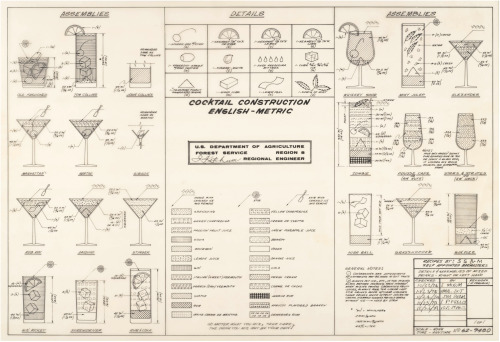
Cocktail Construction Chart, 1974
Item From: Record Group 95: Records of the Forest Service, 1870 - 2008
An instruction sheet for creating cocktails. Follow the drawings from the US Department of Agriculture Forest Service to learn how to make various alcoholic beverages from around 1974.

Chef Loretta Keller at Seaglass restaurant in the Exploratorium. The restaurant has begun serving cosmetically challenged produce that would otherwise go to waste. Photo: John Storey/The Chronicle

Apples with scars that make them unsellable in the supermarket.
Brutti Ma Buoni — “ugly but good” — is the name for lumpy, beige Italian almond cookies that don’t look pretty, but taste great.
That phrase also describes a lot of the produce grown in this country, except unlike the cookies, it rarely gets eaten. We waste 40 percent of our food, and the National Resources Defense Council reports that 20 percent of produce is wasted at the farm. Fruit and vegetables that don’t meet strict supermarket standards for size and appearance usually go to waste. Or, if the value of a crop suddenly drops and it costs more for the farmer to harvest it than to sell it, it rots in the field.
Palo Alto’s Bon Appetit Management Co. has now started a program that could make a dent on some of this waste on the farm, since it feeds vast numbers of people at the corporate, university and museum cafeterias it runs across the country, including at Google locations.

Odd-sized fingerling potatoes
Called Imperfectly Delicious Produce, the program connects with produce aggregators and farmers to bring items like just-barely scarred apples and broccoli fines (loose broccoli florets) into Bon Appetit kitchens.
Since launching in May, Bon Appetit’s Northern and Southern California sites have purchased 35,000 pounds of produce that might have otherwise been thrown out.
The chef at Dominican University of California in San Rafael, Joseph DeBono, uses those aforementioned apples in chutney and those tiny broccoli florets in soups.
Here in San Francisco, Loretta Keller — the chef at Seaglass restaurant in the Exploratorium — serves odd-size fingerling potatoes with the porchetta. At the same restaurant, scarred butternut squash from Coke Farms is roasted and seasoned with dukkah.
Meanwhile, in Los Angeles chef Robert Egger is launching L.A. Kitchen. It’s a nonprofit that’s totally unrelated to Bon Appetit but will forge a similar path by buying both cosmetically challenged and undervalued produce to serve meals to low-income seniors.
Not ugly. Just good.
Russian Sledges#butts

I drew butts!
I drew butts too!
WE ALL DREW BUTTS!
Russian Sledgesvia firehose

Flickr Tab is a simple but clever new Chrome extension from Flickr that brings big, beautiful images to the Google browser each time a new tab is opened. The curated shots are pulled from the Flickr community, delivering a different image each time.

images via Flickr
Russian SledgesI know the spectrogram thing's been done before (by, like, NIN) but I'm still charmed
Russian SledgesOssipee Road in Somerville
Russian Sledges"the obscene gesture known in German as the Stinkefinger"


We have two positions currently open here in Portland, OR. One is part time and one is a freelance position. Please take a look and pass this on to anyone you think might be interested!
Do you geek out over clothing construction? Are you passionate about sharing your knowledge with others? Do you want to bring sewing into more homes and lives?
Join us as a Technical Writer/Illustrator and help us create the kind of instructions that get people feeling excited and empowered about sewing. We’re looking for someone with strong apparel construction knowledge, great written communication skills, and the ability to create high quality vector illustrations.
This position begins at approximately half-time, with flexibility.
You can read more about the position and how to apply here.
We are also seeking a freelance Project Manager to help keep our production schedules running smoothly. If you are nerdy about designing processes, enjoy problem solving, and can keep teammates in line with grace and humor, we want to hear from you.
We are looking for a freelancer with 3-5 years of project management experience who is able to mostly work remotely with occasional face to face meetings in Portland, OR.
You can read more about the position and how to apply here.

Russian Sledgesvia rosalind

i really admire the design for these stairs and how they incorporate a wheelchair access ramp. in a world were barrier free design is essential to living a full and happy life, its amazing to see landscape architect Cornelia Oberlander has taken literal steps to design stairs AROUND a ramp, instead of the other way around.
This is beautiful.
Form AND function excuse me while I die
Russian Sledgesvia rosalind

Not for the first time, vandals are wreaking havoc in central Europe. Russian police say they're looking for the intellectually minded miscreants who graffitied "Kant is a moron"—along with a flower and heart—on the philosopher's home outside Kaliningrad.
With Arthur Schopenhauer dead for 155 years, however, authorities start off with few strong leads. They say no reason, pure or otherwise, was given for the crime. Whoever left the marking did not elaborate on their antipathy, though they reportedly used a relatively mild term.
Even the timing of the crime is unclear—journalists discovered the note, at once crude and rather refined, while exploring Kant's derelict home. Despite repeated promises of restoration, the house remains in sorry shape, according to The Telegraph.

Sex, Morality, and Modernity: Can Immanuel Kant Unite Us?
Kaliningrad is the capital of a small Russian exclave on the Baltic Sea, but in Kant's day it was Königsberg, a Prussian and German city. It was only at the end of World War II that it switched to Soviet control as the Nazi regime crumbled, and in 1946 the city was renamed.
Philosophy may have a reputation for impenetrability and for arid classroom discussion today, but for those who would reclaim the discipline's more raucous reputation of the past, the graffiti is perhaps a positive sign, and maybe the first salvo in a war between Situationists and Enlightenment thinkers. Indeed, a critic of Kant's ideas might feel a categorical imperative to take such direct action.
With his focus on the importance of space and time, Kant would surely want us to note that it appears the existing house was not the one he inhabited. Prior to his appointment as professor at the University of Königsberg in 1770, he taught in towns around the city, which is when he lived at the site. The original house seems to have been largely demolished at some point in the 19th century, with the present structure later constructed atop the same foundation.
We don't have any way of proving this to be true, of course—nor any way to prove that it is false. But for the sake of morality, it is perhaps enough to believe that the house is Kant's, and that the vandalism is therefore immoral. Fans of the philosopher are left hoping that police can determine who is behind the petty crime, and that they can be rehabilitated by the justice system. Yet as the great man warned, "Out of the crooked timber of humanity, no straight thing was ever made."

Russian Sledges#connecticut
Russian Sledgesvia firehose
El Lissitzky autoreshare


El Lissitzky. Had Gadya (A Single Kid). Kultur-Lige. 1919.
El Lissitzky illustrated this avant-garde version of the Passover song “Had gadya” early in his career, while immersed in the Jewish cultural renaissance that flourished in Russia from roughly 1912 to the early 1920s. Lithographs with Yiddish text, this is one of only a few copies known to exist. -Beinecke Rare Book & Manuscript Library
Russian Sledgesvia multitask suicide

Trousers are pretty straightforward, at least when compared to jackets. Except for what goes into the waistband, there’s no real internal construction to speak of – just pocket bags and lining, which are hidden underneath the garment’s shell. They’re also a lot easier to fit, which makes them nice for custom tailoring. Once your tailor has your pattern down – one for flat front pants, and another for pleats – you can order trousers straight-to-finish.
I recently received my first order from Salvatore Ambrosi, the famous (and at times infamous) tailor from the Spanish Quarters of Naples. Salvatore, for those unfamiliar, had a meteoric rise eight years ago when he was first introduced to the online community of bespoke tailoring enthusiasts. People were crazy for his stuff, but after a few good years, Salvatore couldn’t keep up with the increasing number of orders. Deliveries were delayed and emails went unanswered. As far as I know, everyone eventually got their trousers or money back, but people are still rightly sour about the experience. The last time I wrote about Salvatore, a well-respected menswear writer emailed me to say I was breaking iGent omertà. He was probably half joking, but also … probably half not.
Since that debacle five years ago, Salvatore has slowly rebuilt his business. He’s developed a healthy customer base in East Asia, partnered with boutiques to handle the logistics of his orders, and expanded his workshop. Instead of just the small workroom that he and his father used to occupy – and Michael Alden once filmed – his family’s operation now takes up two floors in the same building.


Things seem to be flowing pretty smoothly nowadays. I received my pants just a short month after my fitting, and I’m happy to say: they live up to their hype. As simple as trousers can be, Salvatore’s are exceptionally good. The pants fit perfectly clean through the legs and seat, and perhaps most importantly, they’re styled quite well. Unlike my English or other Neapolitan trousers, these are slimmer through the thighs, which allows the legs to be nicely pegged without making the hips look too wide. The rise comes to about my naval, but the pants don’t look frumpy because of the slim leg line and pleats. The pleats are subtle, but they help break up the swath of fabric that would otherwise stretch across the lap.
There’s also an impressive level of detailing. There’s handstitching throughout, including the outseam that runs down the leg (the seams are machine sewn, but the subtle handstitching adds a nice touch). The cuffs are cleverly finished with buttons, so that you can easily uncuff the trousers to get any dirt out. Additionally, the interiors of the all the pockets – including the coin pocket – are made with the cloth’s selvedge. Mine funny enough say “Savile” and “London” inside, as the cloth was woven for Holland & Sherry on Savile Row, although the pants were made in Naples.
When Salvatore was in San Francisco last, we went out for coffee. He admitted that he’s always been a tailor first, but over time, has also had to learn how to be a businessman. That learning process hasn’t come without some bumps on the road, but things do feel more promising now. And there’s no denying his tailoring skills. Even people who’ve complained about him in the past have had to admit – this guy makes really good pants.
Or as the Italians charmingly say, “pents."
(photos via Ethan Newton, Parisian Gentleman, The Armoury, and Ambrosi Napoli)


Russian Sledgesvia carnibore


While some might argue that there are better ways to wash one’s face and hands than with a reminder of our mortality and the transient nature of life in general, we think these beautifully macabre bars of skull-shaped soap are pretty awesome.They’re called the Art of Dying soaps and they’re the work of Monterey, CA-based artist Eden Gorgós.
Eden just launched a Kickstarter campaign to fund the creation of sets of skull-shaped Memento Mori soaps and lotions and the more ornate Vanitas bar soaps. All of these soaps and lotions are handmade in small batches using resin molds that Gorgós sculpted herself.
“Soaps are made with coconut oil, colored with natural clay/herb/flower, and formulated to moisturize without sacrificing lather. All but the white soaps are scented with a combination of essential oils. Solid lotions and unisex cologne are made with shea butter, beeswax, and calendula, arnica flower, and chamomile infused almond oil (and scented with a blend of essential oils).”
These delightfully creepy personal cleansing products come in a variety of tantalizing scents such as Roseclove, Lavender Musk, Sagebirch, Rosemarymint, Lemonginger, and Birch-Mint.
Visit the Art of Dying soaps Kickstarter page for additional photos and information.
[via Kickstarter]
Russian Sledgesvia firehosalind
Russian Sledgeshttp://www.tcm.com/mediaroom/video/570405/How-To-Steal-a-Million-Original-Trailer-.html

Twenty-five years ago, two thieves committed the greatest art heist in American history. Dressed as police officers, the pair entered the Isabella Stewart Gardner Museum in Boston at 1:24 a.m. via a side door by ringing the buzzer, persuaded the only security guard sitting at the main desk to step away from it (and from the sole button that could trigger an alarm), and then restrained him and the only other guard on duty before making off with 13 artworks worth an estimated $500 million. None of the stolen art—which included works by Vermeer, Rembrandt, Manet, and Degas—has ever been recovered. Although the FBI stated two years ago that it had identified who was responsible, no one has ever been apprehended for the crime, or even named as an official suspect.
The Gardner Museum heist occupies a unique place in American history thanks to its scale and its status as an unsolved mystery, but in many ways it’s fairly representative of art theft over the past half-century. Investigators don't think the thieves were art experts or sophisticates in the manner of a Thomas Crown or a Danny Ocean—or even master thieves like the Pink Panther gang. The stolen works were presumably difficult to offload thanks to their notoriety. And the loss of the art continues to have profound resonance for both the museum and the city of Boston, given the popular fascination with art theft, the cultural value of art, and the sense that great works belong to everyone. A quarter of a century later, the misappropriation of masterpieces continues to have a distinctive hold on the public imagination, even as it becomes a type of criminal activity that’s both misunderstood and increasingly hard to pull off.
For as long as humans have been making art and ascribing value to it, art has been understood as a kind of currency of power and prestige, from the looting of tombs in ancient Egypt several thousand years ago to the artifacts destroyed by ISIS in the Assyrian city of Nimrud and the Mosul Museum. Secretary of State John Kerry has described the latter group’s goal as an effort “to eviscerate a culture and rewrite history in its own brutal image”—similar to the efforts the Nazis made to devalue modern and expressionist art and rebrand it as “degenerate,” confiscating countless works from museums and destroying thousands. The regime also looted an extraordinary amount of art and precious objects from Europe during World War II, with art holding a particular significance for Adolf Hitler, a frustrated painter who’d been rejected twice by the Vienna Academy of Fine Arts. “His love of art led directly into the heart of evil,” the historian Birgit Schwarz told Der Spiegel in 2009. Without a strong conception of himself as a brilliant talent, Schwarz argues, Hitler “would never have been able to see himself as a genius. That’s why he constantly had to reaffirm his love for art.”
While historically the greatest art thieves have been governments and victorious parties in violent conflicts, the concept of the gentleman art thief is enshrined in popular culture. Steve McQueen’s Thomas Crown, a handsome millionaire who robs banks for sport, was reinvented in 1999 as a handsome millionaire who lifts Monets from the Metropolitan Museum of Art, just because he can. The specifics of Crown’s criminal activity were reportedly changed because audiences in the 90s would be less inclined to sympathize with a bank robber, whereas art theft implies a degree of sophistication and aestheticism in its perpetrators that makes it more palatable. 1999 also saw the release of Entrapment, a film starring Sean Connery as a master thief who lifts Rembrandts and Chinese masks to sell to shady buyers. That’s where truth and fiction diverge: In reality, it’s enormously difficult to find homes for purloined Old Masters and Impressionists. In an interview with The Atlantic in 2012, Robert Wittman, the founder of the FBI’s first art crimes investigation unit, described how even the most practiced criminals struggle when it comes to attracting buyers for stolen works.
The criminals who do these jobs, these heists, are good thieves, but they’re terrible businessmen. That’s what it comes down to. They read in the newspaper about the growing value of paintings and the new records that are set every year by Cezannes and Picassos, and then they think they can get a payday by going out and doing a heist. What they don’t understand is that the value of art is dependent on three things: authenticity, provenance—the history of the art—and legal title … If you don’t have one of those three things, you don’t have value.
Or, as Wittman told City AM last year, “the true art isn’t the stealing, it’s the selling.” A legitimately acquired version of "The Scream" by Edvard Munch (there are four in total) might sell for $120 million, but a stolen one will be almost impossible to unload, given the work’s recognition factor and the publicity such thefts incur (versions of “The Scream” were stolen in 1994 and 2004 and were soon recovered). Although the BBC estimates that gangs in Britain make up to £300 million annually by stealing works of art, it generally pays for criminals to go smaller in their ambitions, since lesser-known items will usually be covered by insurers, and governments only have the resources to investigate the most high-profile cases.
Donna Tartt’s Pulitzer Prize-winning novel The Goldfinch is perhaps the most realistic portrayal of what happens to a masterpiece after it’s purloined. The book captures the shuffling of a priceless artwork between various criminal gangs after the protagonist, Theo, removes it from the Metropolitan Museum of Art after being injured in a terrorist attack. The painting is eventually returned to the museum after Theo’s friend, Boris, strikes a deal with an art recovery team and even receives a reward after revealing the names of the people in possession of it. The journalist Stephen Kurkjian lays out a similar theory regarding the Gardner Museum heist in his new book, Master Thieves, proposing that one of the thieves was Robert Donati, the driver for the mobster Vincent Ferrara. Donati “reportedly told Ferrara that he had pulled off the Gardner robbery to try to gain Ferrara’s release from prison,” Kurkjian writes. But Donati was beaten to death in 1991, 18 months after the heist.
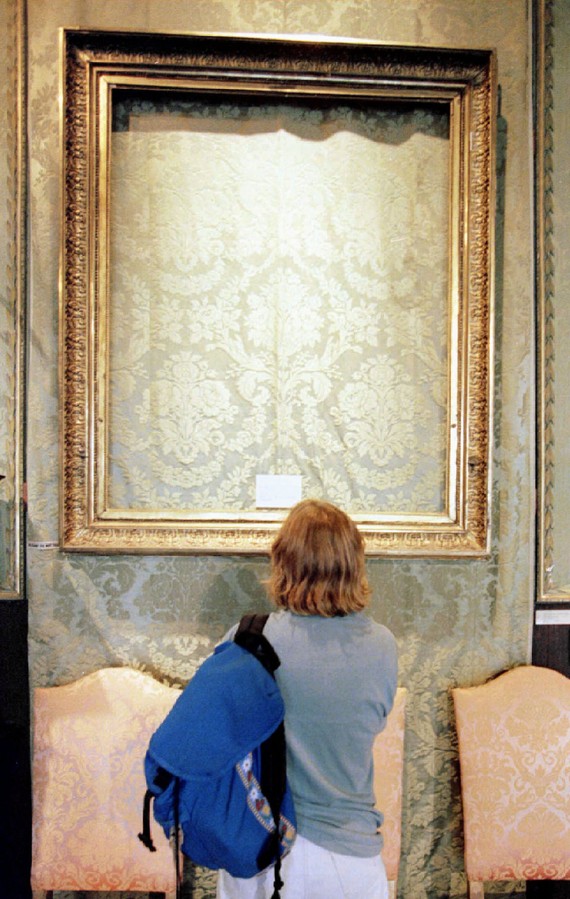
As for the items stolen that day, it’s possible that they’ll never be found. One of the more heartbreaking consequences of art theft—perceived by many to be a victimless crime, which is why sentences tend to be relatively mild—is when works are disposed of by people desperate to cover their tracks.
In 2012, two Romanian men, Radu Dogaru and Eugen Darie, plotted a heist at the Kunsthal museum in Rotterdam. The pair were petty criminals with little experience in the art world, but they managed to get away with seven paintings by artists including Gauguin, Matisse, Picasso, and Monet after using pliers to gain access to a side door. After the robbery, encouraged by the media’s estimation of the value of the missing artworks to be several hundreds of millions of dollars, the two men attempted to cash in on their haul, but found few people willing to pay significant cash for such hot items. When Dogaru was arrested in 2013, his mother told investigators that she’d burned the paintings in her stove after being frightened for her son’s welfare. She later retracted this claim, but Romanian museum experts found traces of primer, pigment, and canvas in the ashes that matched the stolen works.
In 2005, a two-ton bronze sculpture was stolen via truck from the Henry Moore Foundation in Hertfordshire, England. The reward offered by the institution for the return of the sculpture was £100,000, but police believe it was cut into pieces, melted, and sold to make electrical components, bringing the thieves less than £1,500.
When it comes to art, both the literal and metaphorical value of a work may be vastly different for one person than it is for another, but once destroyed, a masterpiece is gone for everyone. Perhaps the cultural preoccupation with art theft is as much to do with the precariousness of the items being stolen as it is with an inauthentic concept of a good-natured criminal with exquisite taste and an exceptional eye for draftsmanship. Museums can own works of art in a technical sense, but they have a sense of responsibility in terms of maintaining them for the generations of visitors to come. This is what makes the loss of masterpieces like the ones stolen 25 years ago in Boston both endlessly fascinating, and hard to bear.
This article was originally published at http://www.theatlantic.com/entertainment/archive/2015/03/why-art-heists-are-so-fascinating/388171/

Russian Sledgesvia firehose
SPOILERS

The genre of the supercut is at its best when it uses its format to reveal moments you might not otherwise notice. First And Final Frames by filmmaker Jacob T. Swinney is one of these superlative supercuts, taking the viewer on a meditative journey of the opening and closing shots of 55 films, from classics like 2001: A Space Odyssey to newer indie fare like Frank.
It’s an interesting little study in visual poetry in filmmaking, not to mention storytelling, where first impressions and a striking, satisfying finish are often more important (and compensate for) any flaws in the middle. Some of the films open and close with nearly identical shots–though not as many as you might think–while others are content with repeating visual themes in different contexts, or settling on separate shots altogether. A full list of films included in this supercut along with their timestamps ...
Russian Sledgesvia firehose
Religious Studies, Brown University
Russian Sledgesvia firehose

Russian Sledgesmy hero
College campuses are full of mysteries, and there’s a major one developing right now at the University of Wisconsin. Somebody has allegedly been using one of the campus libraries to photocopy a cat. But so far, nobody knows who is doing this.
A staffer at the university’s Badger Herald newspaper stumbled upon the following photo while studying at the Steenbock Library Tuesday:
Apparently someone keeps bringing their cat to the library to photocopy it. I'm serious. Here's a copy. pic.twitter.com/8mlYxZhZBx
— Amy Sleep (@SleepAmy) March 18, 2015
Apparently, these photos have been spotted several times at Steenbock, which is the library for agriculture and life sciences, human ecology and, wait for it, veterinary medicine. So maybe this mysterious photocopier is actually doing this for some kind of research purpose.
So far, it looks like only one person has been committing this strange act — but there could be some copycat crimes soon.

Republican presidential candidate Ben Carson said Wednesday that the roots of radical Islam are the biblical conflict between Jacob and Esau.
In an interview with conservative radio host Hugh Hewitt, the former pediatric neurosurgeon argued that the origins of groups such as the Islamic State of Iraq and Syria are the fight between two brothers described in the book of Genesis.
“Well first of all you have to recognize they go back thousands and thousands of years. Really back to the battle between Jacob and Esau,” he said. “But it has been a land issue for a very long period of time.”
Hewitt, who has a penchant for grilling Republican candidates in detail about foreign policy, pushed back at the comparison, noting that the prophet Muhammad died in 632, while the story of Jacob and Esau is from before the birth of Christ.
“The Islamic faith emanated from Esau,” Carson countered.
Another set of siblings described in the book of Genesis — Isaac and Ishmael — are more frequently described as the respective forefathers of Judaism and Islam.
Carson also said that he thinks the warring factions of Sunni and Shia Islam will one day unite against the United States.
“In the long run I think they would gladly unite against us in their attempts to destroy the United States., our way of life, and Israel,” Carson said, espousing a position viewed dimly by foreign policy experts.
Carson’s White House bid stems largely from his public speaking ability and willingness to challenge President Obama on the Affordable Care Act at the National Prayer Breakfast in 2013. But he has a long history of controversial statements, being forced earlier this month to apologize for saying homosexuality is a choice and that prison makes people gay.
But his support is already eroding as other presidential contenders enter the field.
Here’s a transcript of Carson and Hewitt discussing ISIS and Islamic extremism:
Hewitt: I don’t do ambush interviews, but I do believe that the most important job of the president is national security and defense related. Are you prepared to talk about some of those issues with me today?
Carson: Absolutely.
Hewitt: First question, and I always ask every candidate. Have you had a chance to read the Lawrence Wright book called The Looming Tower, which is sort of the history of al Qaeda and where it comes from?
Carson: I’ve not read that particular one, but I’ve had a chance to look at a lot of material not only on al Qaeda but the radical Islamic movement in general. The kinds of things that motivate and drive them.
Hewitt: What do you consider to be their taproot? What is the origin of their rage in your view?
Carson: Well first of all you have to recognize they go back thousands and thousands of years. Really back to the battle between Jacob and Esau. But it has been a land issue for a very long period of time. Possession is very important to them and one of the things that we’re doing I think incorrectly right now is not recognizing that they are expanding their territory. Not only the land that they’ve taken in Iraq, but what they’ve taken in Syria. They are creating an Islamic State. And we can bomb it all we want, but unless we actually can take the land back, we’re really not doing them any damage.
Hewitt: But Dr. Carson, Muhammad lives in 632 A.D., so it’s a 1,300, 1,400 year old religion. How do you go back to Jacob and Esau, which are B.C.?
Carson: I’m just saying that the conflict has been ongoing for thousands of years. This is not anything new is what I’m saying.
Hewitt: So it’s not specific to the Islamic faith or to the Salafist offshoot of the Islamic faith?
Carson: The Islamic faith emanated from Esau.
Hewitt: I would date it to 632, but you’ve got a biblical connection here that some people may share with you, but I think scholars dispute. I gather that. Let me ask you though in the current manifestation of the Islamic State, what is driving them to act as they are acting? Is it a particular variant of the Koran? What is it that you think animates their barbarism?
Carson: I believe first of all that they believe that they are the possessors of right and because of that anything that is in disagreement with them is wrong and needs to be destroyed. And whatever mechanism they use to destroy it is okay. And that includes some of the things that appear to be very barbaric acts: chopping off people’s heads, burning them. It doesn’t matter because they are infidels.

Russian Sledgesoverbey, was it you who was into A Winged Victory For The Sullen?