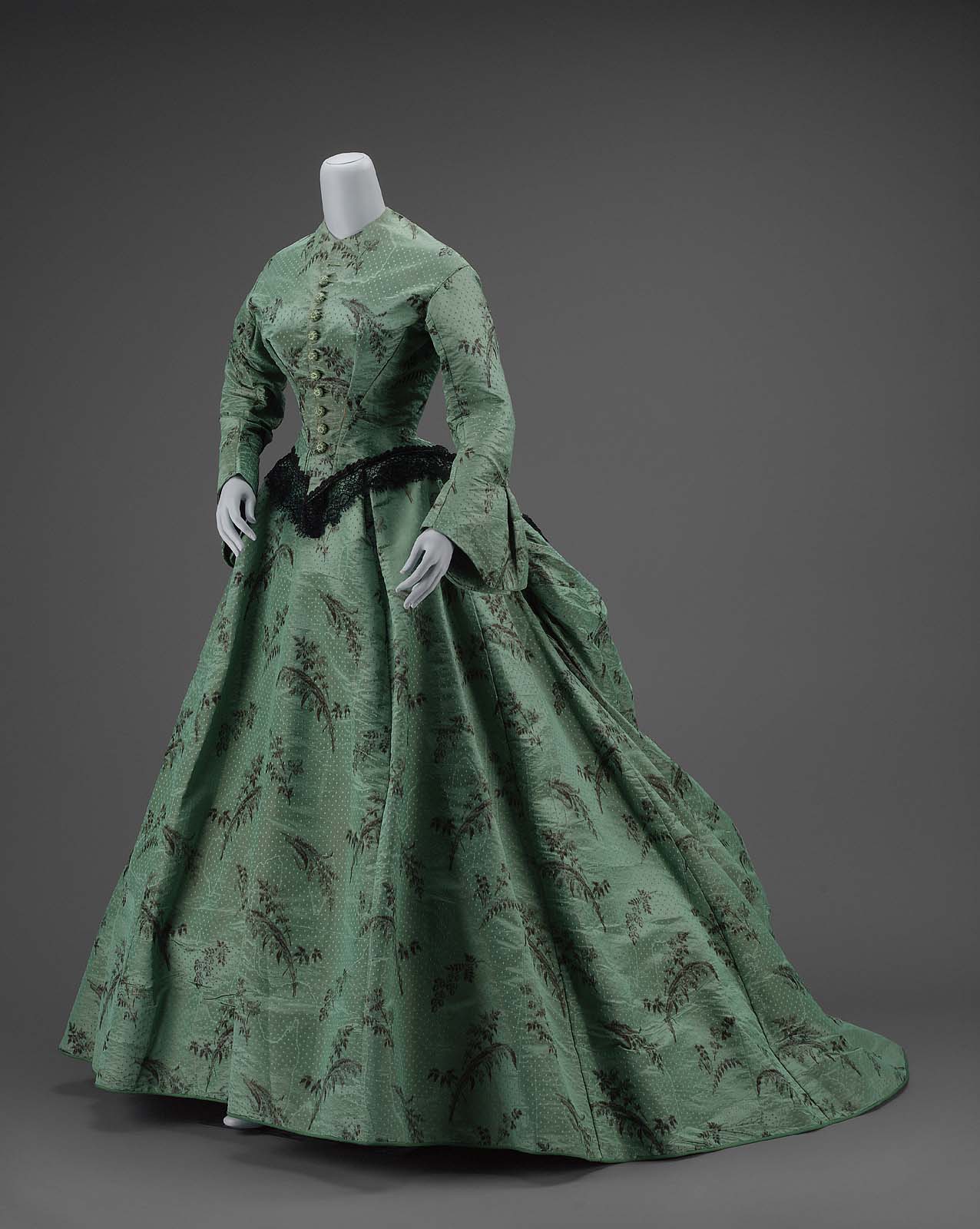
Draped and layered 1910s dresses just aren’t doing it for you are they? First the blue chiffon and lace frock was compared to curtains and kids dress-ups, and then last week’s pale paisley 1910s frock was given the exact same criticism (only this time you said tablecloths) by some. And quite a few of you thought it was nice but meh. But some of you thought it was fabulous, so it did score enough 10/10 to bring it up to a respectable 8.2 out of 10 – which is pretty much exactly what I’d give the dress!.
I’ve been doing a bit of research into 1860s fashions as a potential project for my HSF Heirlooms & Heritage challenge (not exactly a hint, because I’ve also discovered that thanks to some amazing family genealogy work I can trace a direct line of ancestors all the way back to Baldwin of Flanders in the 9th c (and, through Judith, all the way back to Charlemagne) so maybe I’ll get excited and do something early Medieval – or anywhere in between, because a lot is known about all the Sirs and Esquires that happened before you finally get a younger son who emigrates to America 800 years later), and I can across this dress.
The fabric is apparently a warp-printed moire silk taffeta, and the dress is a perfect example of the transition from the full crinoline silhouette, to the back-emphasis bustle silhouette.
Transitional styles are quite interesting: they can either be incredibly successful, combining elements of the more classic periods to create something unusual and unexpected, or they can be an awkward melding of disparate aesthetics.
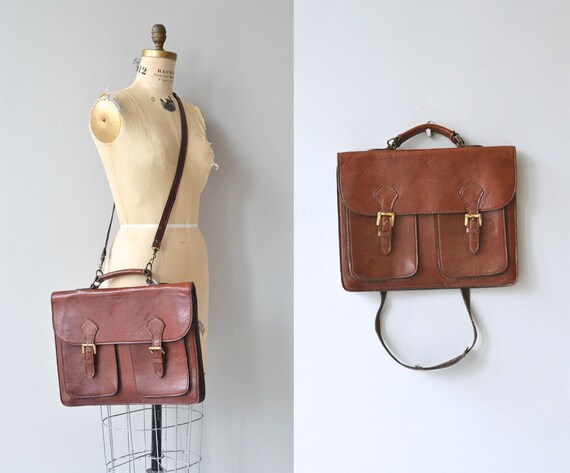
Vintage 1970s brown leather attache (large enough for 15" laptop or smaller), with two large compartments, front pocket compartments, section for pens, snap closures under the brass buckles and long cross-body strap.
--- M E A S U R E M E N T S ---
16" x 13" Accordion base extends to 6" 42" long strap maker/brand: n/a condition: some wear to the edges of the corners, see close up photo
➸ More vintage bags http://www.etsy.com/shop/DearGolden?section_id=10308208
➸ Visit the shop http://www.DearGolden.etsy.com _____________________
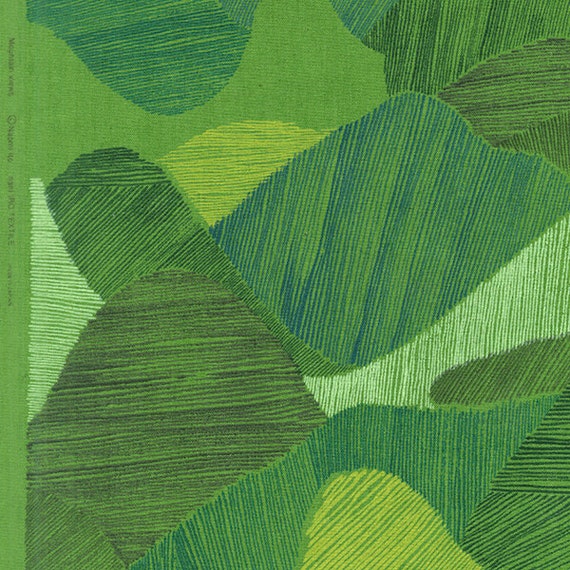
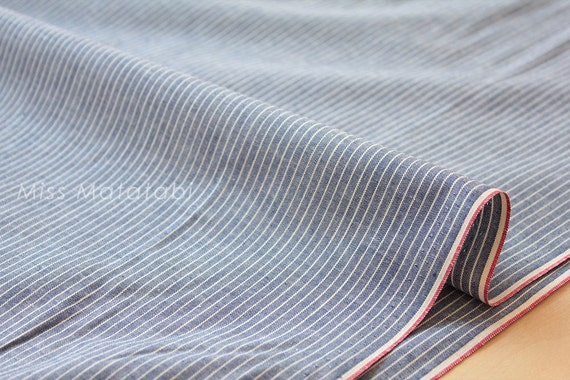
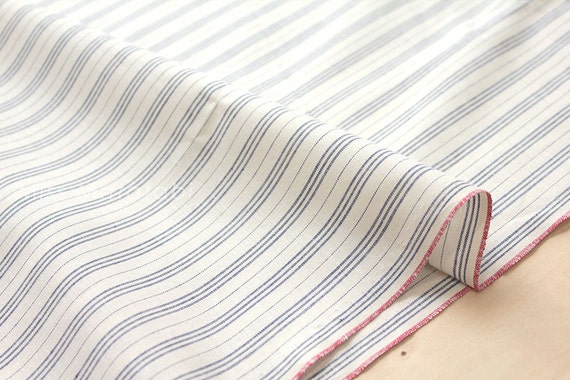
2015 Spring nani IRO collection by Naomi Ito for Kokka
85% cotton 15% linen lightweight canvas
1/2 metre (50cm x 108cm wide : 19" x 42" wide)
For continuous yardage please change the quantity at the checkout.
Parcels are shipped via small packet international airmail from Japan.
Japan Post does not provide tracking numbers for small packet airmail.
A shipping upgrade with a tracking number and insurance can be purchased for an additional $5. If you would like to upgrade to registered small packet airmail please let me know.
This is a glass ”murrine” made by artist Loren Stump. Each color in the piece was carefully layered to create this “loaf” which was then sliced. Each slice sold for $5000.
Murrini, specifically portrait murrini like the above, is a very cool process and it takes forever. It’s like glass pointillism. First, the artist pulls what are known as “stringers” from as many shades of different colors that they need, by melting a hunk of color and stretching it out as long as possible. Stringers are usually about as thick as a nylon guitar string, or sometimes as thin as cat whiskers.
Then, once the artist has pulled as many strings as they need (which can be THOUSANDS especially like in the picture above) they will take some sort of mold, usually cast out of some sort of kiln-safe plaster, and place each string into the mold, in order, working from the bottom up, until a picture is formed.
After the portrait is set in the mold, it is treated in the kiln for several hours, depending on the size of the piece, and the heat is brought up slowly to fuse the strings together.
THEN, a solid rod is placed at the top, with a molten glass “post” acting as the glue between the rod and the portrait. Sometimes the glass will slide right out of the mold, but one time my teacher actually had to BREAK the mold off of her piece, heat it quickly, and brush off any debris, which was a really tedious thing to watch.
Then, the glass is heated in what is known as a “glory hole” (hotter than the kiln but not as hot as the furnace). It’s basically a hole in the wall that is so bright it hurts to look at. This hole is used often as the glass constantly has to have its internal temperature stabilized or else it will crack. The temperature has to remain the same throughout the middle also, or else it will not pull evenly.
The portrait is (sometimes) wrapped in a layer of clear glass at this point. A second rod is taken, with a clear glass post, and it is stuck onto the open end of the portrait. Both rods are pulled apart to stretch the portrait as far as it can without messing up the portrait. According to the chunk of clear glass on the right side of the picture, you can see where it was pulled and distorted. Then, the portrait is removed from the pipes and placed back in the kiln, where the heat is gradually taken down to room temperature over the course of about a day.
Finally, the piece is taken into the cold shop, where it is grinded down and cut (that arched window shape in the photo has been polished to look crisp). The image is its clearest in the center, and will naturally become more distorted at the ends. Often, the end bits are sold for cheaper than the “pure” slices.
This is a closeup set of “component pieces” of the picture above. The stringers on the final piece were actually not all set in one go, she made individual faces and shapes and THEN put them together (so the mold/kiln/ pulling process had to be repeated numerous times). Note the size difference in one face vs the identical face next to it — the smaller one probably came from the end and the larger one from the center.
And here are some other examples:
(that is the Lord’s Prayer in TINY letters on a TINY pendant and is 100% glasss and if you don’t think that’s the coolest then get outta my face). Done by Richard Marquis.
This is a self portrait done by an artist named Suzanne Peck, at the glass studio I studied at ! This was the one I witnessed in person. The glass here is not orange in color, it is actually black and greyscale. It is just very hot.
Here is what the stringers look like. In this photo, Peck had decided to roll a fresh layer of strings on top of the mass that she already had on the pipe.
Peck herself said that the time it took her to sit and place the strings was about the length of “several seasons of House on Netflix”. The kiln/pulling process for this one was done in one go, but the piece is still pretty massive.
Sorry that was so long-winded, but I wanted to emphasize how unbelievable the amount of work that goes into these pieces actually is. I have only attempted portrait murrini once, and it was sloppy and simple. I still cannot fully comprehend how artists can put the amount of detail into works like the ones pictured. The Madonna one probably took a year to make, if not longer.
If you would like continuous yardage please change the quantity at the checkout.
Parcels are shipped via small packet international airmail from Japan.
Japan Post does not provide tracking numbers for small packet airmail.
A shipping upgrade with a tracking number and insurance can be purchased for an additional $5. If you would like to upgrade to registered small packet airmail please let me know.
If you would like continuous yardage please change the quantity at the checkout.
Parcels are shipped via small packet international airmail from Japan.
Japan Post does not provide tracking numbers for small packet airmail.
A shipping upgrade with a tracking number and insurance can be purchased for an additional $5. If you would like to upgrade to registered small packet airmail please let me know.
In handling most archival documents gloves are more of a hindrance than a help and they can actually pose a threat. The main reasoning behind wearing gloves was to protect document surfaces from marks made by oily or sweaty hands. In fact, if you clean and dry your hands before handling archival documents this risk is significantly reduced. Handling archival documents with gloves puts them at greater risk of damage for a number of reasons:
"My advice to any heartbroken young girl is to pay close attention to the study of theoretical physics. Because one day there may well be proof of multiple universes," he said. "It would not be beyond the realms of possibility that somewhere outside of our own universe lies another different universe. And in that universe, Zayn is still in One Direction."
The famed theoretical physicist responded perfectly to an audience question
City dwellers encounter pigeons every day. But have you noticed that you never see a baby? One big reason: they stay in the nest until they’re adult-sized, which is why pretty much the only people who see pigeon babies are those who raise them, or know somebody who does — like the person who snapped this pic.
As more savvy buyers use art to put off and sometimes avoid taxes under the like-kind exchange rule, the Obama administration wants to curb the practice.
The DiRT Directory is a registry of digital research tools for scholarly use. DiRT makes it easy for digital humanists and others conducting digital research to find and compare resources ranging from content management systems to music OCR, statistical analysis packages to mindmapping software.
Bands are usually hungry. Clover wants to feed them. The ever-expanding Clover Food Lab is set to open a new brick and mortar shop, dubbed CloverHFI, on Wednesday, and the 24-hour Central Square eatery revealed…
Everyone complains that Boston doesn't have its own homegrown music festival -- this year's Mayfair might just be the answer. The Harvard Square Business Association this morning announced Mayfair's May 3 music lineup lineup, and…
'Rhode Island hates Nickelback more than any other state in the country. In the Top 6 “hate” category are Massachusetts, Vermont, and Connecticut. New Hampshire has a “dislike,” and Maine came in “neutral.”'
People love to assume that everybody hates Nickelback, and after hearing that last shit-disco of a single, who can blame them? But the cold, hard truth remains that if everyone hated Nickelback, then Nickelback would…
A look inside the BBC Radiophonic Workshop with Dick Mills, Brian Hodgson, Verity Lambert and the late Delia Derbyshire and how they brought composer Ron Grainer’s Doctor Who theme to life using electronic music.
Taken from the special feature Masters of Sound on the Doctor Who: The Beginning Box Set DVD.
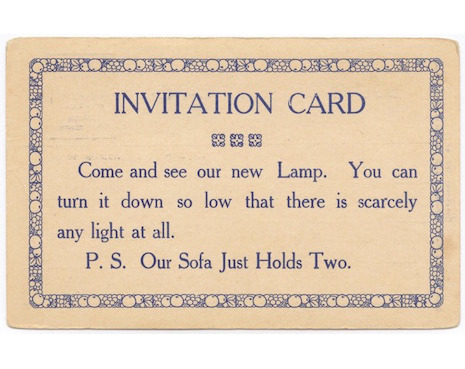
Acquaintance cards, a variety of calling cards, 1870s-80s. USA. Via dangerousminds. More to see: Mays / flickr. They were used “by the less formal male in approaches to the less formal female.”









 Super Opinionated.