India finally halted the practice of allowing tourists to ogle the native tribes of a secluded Island in the Andaman Islands. But with a growing tourism industry there, the battle might not be over.
Russian Sledges
Shared posts
02 Mar 16:31
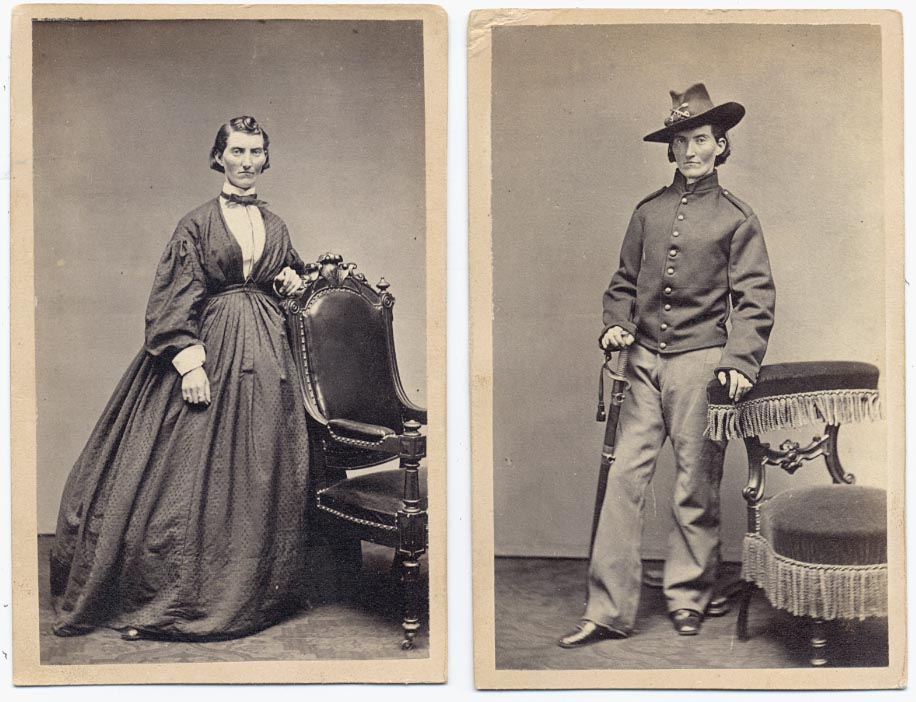


Oppression by Omission: Women Soldiers Who Dressed and Fought as Men in the Civil War
by Maria Popova
“Women lived in germ-ridden camps, languished in appalling prisons, and died miserably, but honorably, for their country and their cause just as men did.”
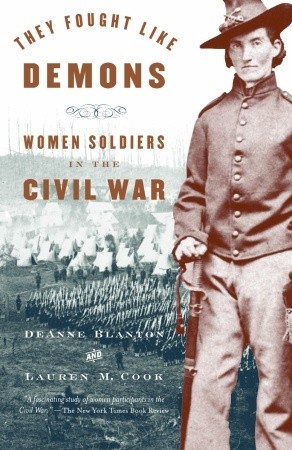 Conventional narrative has framed the Civil War as a man’s fight, with historical accounts focusing almost exclusively on the men who fought as Yanks and Rebs in the 1860s. But such commonly accepted accounts present, like all history, a revisionist history that excises the stories of the women who, despite the extraordinary obstructions of the era, took to the battlefields. In They Fought Like Demons: Women Soldiers in the Civil War (public library), historians DeAnne Blanton and Lauren M. Cook chronicle and contextualize more than 250 documented cases of women who served in the ranks of both the Union and Confederate armies dressed as men, “the best-kept historical secret of the Civil War” — an act at once rebellious and patriotic, using this usurped male social identity to claim full status as citizens of their nation and access male independence in an age when neither was available to women. Blanton and Cook write in the introduction:
Popular notions of women during the Civil War center on self-sacrificing nurses, romantic spies, or brave ladies maintaining their home front in the absence of their men. This conventional picture of gender roles does not tell the entire story, however. Men were not the only ones to march off to war. Women bore arms and charged into battle, too. Women lived in germ-ridden camps, languished in appalling prisons, and died miserably, but honorably, for their country and their cause just as men did.
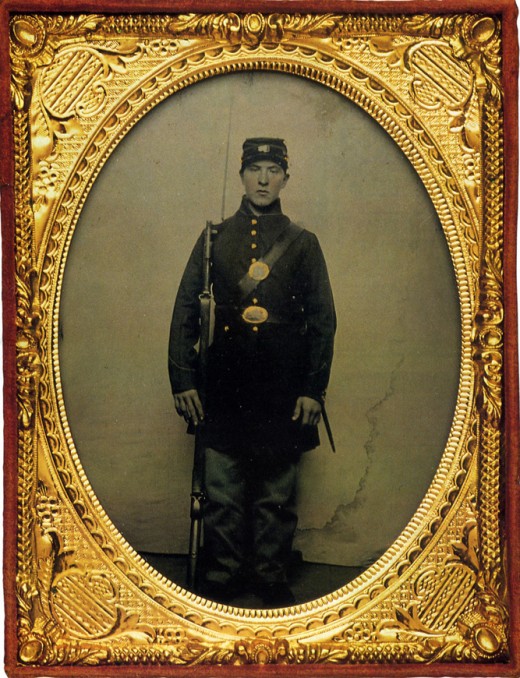
To pass as a man, Union soldier Frances Louisa Clayton, who enlisted with her husband in 1861 as 'Jack Williams,' took up gambling, cigar-smoking, and swearing.
Courtesy of the Trustees of the Boston Public Library
Sarah Edmonds Seelye, one of the best-documented female soldiers, served two years in the Union army as Franklin Thompson and received a military pension 25 years after the war ended.
Courtesy of the Trustees of the Boston Public Library
So why did women do this? For some, like their male counterparts, the motivation was purely patriotic. Others did if for love, taking to the battlefields in order to remain close to a husband, lover, fiancé, father, or brother. But for many, the reason was economic — an army private made $13 a month, roughly double what a seamstress, laundress, or maid would make. At the time of the Civil War, women, unable to vote or have bank accounts and still subject to Victorian ideals of homemaking and motherhood as the sole purpose of female existence, had neither personal nor political agency. In fact, these female soldiers tended to come from particularly marginalized groups — immigrants, the working class, farm girls, and women living below the poverty line. The freedom to make and spend their own money, Blanton and Cook argue, was a source of unprecedented, if private, empowerment as they gained access to social opportunities and privileges previously unavailable to them. Blanton and Cook write:
Society placed enormous restrictions on females. While upper-class and educated middle-class women might find a small measure of independence through employment as teachers, writers, or governesses, working- and lower-class women had few appealing options outside of marriage. Their employment prospects were usually limited to sewing, prostitution, or domestic servitude. Statistically, the majority of unmarried working-class women chose the latter. In New York City in 1860, maids received received between four and seven dollars a month, ‘good’ cooks earned seven or eight dollars a month, and laundresses might earn up to ten dollars per month. … On the other hand, three months’ service as a private in the Union army yielded a hefty sum of thirty-nine dollars in an age when most monthly salaries for men ranged from ten to twenty dollars.
Union soldier Albert Cashier, who was really Jennie Hodgers, fought in dozens of battles during the Civil War. In 1913, she made headlines upon being discovered as a woman in an old soldiers home.
Courtesy of the Trustees of the Boston Public Library
Though once found out, these female soldiers were discharged from the army for “congenital peculiarities,” “sexual incompatibility,” or the unambiguously termed offense of “unmistakable evidence of being a woman,” most of these women went undetected, at least for a while — a fact not all that astounding in the context of Victorian society where the single most revealing litmus test, nudity, was a rarity given bathing was a rare occurrence and people often slept in their clothes. (But today, in an age when the tip of the devastating iceberg that is sexual assault in the military is only beginning to emerge, one has to wonder what happened to the women who did get found out.)
Thanks to the poorly fitted uniforms, some women were even able to disguise their pregnancies until the very end, startling their male platoon mates with the delivery. Others chose to continue dressing as men after the end of the war, raising gender identity questions also not discussed in the book. But perhaps most interesting of all is the question of how women got the idea for this in the first place. Blanton argues that much of it had to do with cultural influence — cross-dressing female heroines permeated Victorian literature, with military and sailor women often celebrated in 17th-century ballads, novels, and poems.
They Fought Like Demons goes on to explore the complex motivations, realities, and untold stories of women who fought as, and fought like, men, reminding us that omission is as much a tool of political oppression in the construction of cultural mythology as propaganda.
Some images via Smithsonian Magazine
Donating = Loving
Bringing you (ad-free) Brain Pickings takes hundreds of hours each month. If you find any joy and stimulation here, please consider becoming a Supporting Member with a recurring monthly donation of your choosing, between a cup of tea and a good dinner:
| ♥ $7 / month♥ $3 / month♥ $10 / month♥ $25 / month |

You can also become a one-time patron with a single donation in any amount:
 Brain Pickings has a free weekly newsletter. It comes out on Sundays and offers the week’s best articles. Here’s what to expect. Like? Sign up.
Brain Pickings takes 450+ hours a month to curate and edit across the different platforms, and remains banner-free. If it brings you any joy and inspiration, please consider a modest donation – it lets me know I'm doing something right.

Russian Sledges, Tertiarymatt and -1 others like this
02 Mar 16:30
arsvivendi: Geometric Gifs by Matthew DiVito Acutely...


Russian Sledges, Tertiarymatt likes this

02 Mar 16:06
Editorial In ACM On Open Access Publishing In Computer Science
by Unknown Lamer
call -151 writes "An editorial appearing in the ACM notices complains about the effects of the Elsevier boycott particularly with respect to academics refusing to do unpaid review for for-profit journals, particularly the extortionate Elsevier journals. Mathematician Tim Gowers's post gave energy to this about a year ago and recently he reflected on progress in several directions, including developing new arXIv overlay journals. Not disclosed in the ACM editorial is that the author serves on three Elsevier editorial boards; I take it that his complaining about the difficulty of finding referees is an indication that the boycott is having some good effect. Open access issues in academic publishing have been discussed on Slashdot before and it's a good sign that the broader issue has been getting good exposure, including a reasonable White House directive in response to a strong petition effort." 


Read more of this story at Slashdot.
Tertiarymatt likes this
02 Mar 16:00


Music: Great Job, Internet!: Listen to David Bowie's new album, The Next Day, in its entirety now
by Marah Eakin
David Bowie’s new record, The Next Day, isn’t out until March 12, but interested and not-so-interested fans can stream the whole thing now for free on iTunes.
So far, the press for the record has been pretty positive, with Rolling Stone giving the record four stars, and Q saying it’s maybe “an equal to Low or a Heroes.” Listen here and judge for yourself.
Read more
02 Mar 15:51
"Shoot, my bangs set off a national conversation. My shoes can set off a national conversation...."
““Shoot, my bangs set off a national conversation. My shoes can set off a national conversation. That’s just sort of where we are. We’ve got a lot of talking going on,” the first lady said only somewhat jokingly Thursday before an appearance in Chicago, her hometown. “It’s like everybody’s kitchen-table conversation is now accessible to everybody else so there’s a national conversation about anything.””
- First lady: Not surprised by reaction to Oscars - Yahoo! News
- First lady: Not surprised by reaction to Oscars - Yahoo! News
firehose and -1 others like this
02 Mar 15:48
Tumblr do dia: Tilda Stardust
by Alexandre Matias
Russian Sledgesyes, but when will somebody finally cast her as doctor who?

E aproveitando o encontro de Bowie com Tilda no novo clipe do lorde inglês, o Calbuque desenterrou o tumblr Tilda Stardust, dedicado a mais que a simples apreciação da semelhança física entre estes dois belos espécimes da raça humana, mas a provar que Tilda e Bowie são a mesma pessoa. Veja abaixo:


E lá no tumblr original tem páginas e páginas dessas comparações.
Russian Sledges, Tertiarymatt and -1 others like this
02 Mar 15:48
Org Chart for the Manhattan Project
by EDW Lynch

This organizational chart outlines the people behind the Manhattan Project, the American-led World War II research and development project that produced the first atomic bombs. The chart dates from May 1946, nine months after two atomic bombs produced by the project were dropped on Japan, thus bringing World War II to a close. The Manhattan Project was disbanded in August 1947 and its work was taken over by the United States Atomic Energy Commission.
image via US Army
Thanks Lori Dorn!
Tertiarymatt, Russian Sledges and one other like this
02 Mar 15:40
Adjusting to Google Glass May Be Hard
by Soulskill
New submitter fluxgate writes "Steve Mann (whom you might know for his having pioneered wearable computing as a grad student at MIT back in the 1990s) writes in IEEE Spectrum magazine about his decades of experience with computerized eyeware. His article warns that Google Glass hasn't been properly engineered to avoid creating disorientating effects and significant eyestrain. While it's hard to imagine that Google has missed something fundamental here, Mann convincingly describes why Google Glass users might experience serious problems. Quoting: 'The very first wearable computer system I put together showed me real-time video on a helmet-mounted display. The camera was situated close to one eye, but it didn’t have quite the same viewpoint. The slight misalignment seemed unimportant at the time, but it produced some strange and unpleasant results. And those troubling effects persisted long after I took the gear off. That’s because my brain had adjusted to an unnatural view, so it took a while to readjust to normal vision. ... Google Glass and several similarly configured systems now in development suffer from another problem I learned about 30 years ago that arises from the basic asymmetry of their designs, in which the wearer views the display through only one eye. These systems all contain lenses that make the display appear to hover in space, farther away than it really is. That’s because the human eye can’t focus on something that’s only a couple of centimeters away, so an optical correction is needed. But what Google and other companies are doing—using fixed-focus lenses to make the display appear farther away—is not good.'" 


Read more of this story at Slashdot.
firehose likes this
02 Mar 15:14


Dreamcast wristwatch is a time machine Sega issued this amazing...
by 20xx
Dreamcast wristwatch is a time machine
Sega issued this amazing Dreamcast wristwatch, with a timepiece inside a little silver console, back in 2006 – when the Dreamcast was already good and dead.
Now, amazingly, after its even deader, Sega has reissued the watch, and I find myself interested in wearing a wristwatch for the first time in years.
The only problem is that it’s $168.90, which is quite a bit more than a full-size Dreamcast. If that’s not a problem for you, NCSX has the hookup.
02 Mar 14:17
The Other Google Glass Experience
by John Gruber
Mark Hurst:
The key experiential question of Google Glass isn’t what it’s like to wear them, it’s what it’s like to be around someone else who’s wearing them. I’ll give an easy example. Your one-on-one conversation with someone wearing Google Glass is likely to be annoying, because you’ll suspect that you don’t have their undivided attention. And you can’t comfortably ask them to take the glasses off (especially when, inevitably, the device is integrated into prescription lenses). Finally — here’s where the problems really start — you don’t know if they’re taking a video of you.
My hope is that restaurants and bars will ban them.
★
Russian Sledges, Tertiarymatt likes this
01 Mar 18:40
Tanner Galvin’s Noys Toise, Short Film About a Custom Electronic Instrument Maker
by EDW Lynch
Russian Sledgesaw;dw
“Tanner Galvin’s Noys Toise” is a short documentary about Tanner Galvin, a Portland artist who creates custom musical instruments out of old electronic toys and instruments in a process known as “circuit bending.” The documentary was directed by Craig Mederios. To see more of Galvin’s creations, check out his YouTube page.

photo by Tanner Galvin
video by Tanner Galvin
submitted via Laughing Squid Tips
Yoav, Russian Sledges likes this
01 Mar 07:06
 Enlarge image i
9()) Copyright 2013 NPR. To see more, visit http://www.npr.org/.
Copyright 2013 NPR. To see more, visit http://www.npr.org/.
Pastagate: Quebec Agency Criticized For Targeting Foreign Words On Menus
Pastagate: Quebec Agency Criticized For Targeting Foreign Words On Menus
Enlarge image i
In Quebec, a restaurant's use of the word "pasta" on its menu sparked a government agency into action. Officials who enforce rules that guard French as the official language now say "exotic" words can be allowed in some cases.
Timothy Hiatt/Getty ImagesA government agency in Quebec, Canada, has come under intense criticism after attempting to get pasta stricken from a restaurant's menu. The move had nothing to do with the food: Officials said Italian words such as pasta, calamari, and antipasto should be replaced with French words to conform with the law.
After Quebec's office that enforces the predominance of the French language sent an official notice of infractions against Quebec's Language Charter to the Buonanotte restaurant earlier this month, co-owner Massimo Lecas posted a photo of his menu, with "pasta" and other offending words circled.
The incident led to disbelief, outrage, a barrage of jokes, and eventually, a promise from Quebec Language Minister Diane De Courcy that her agency would review how it enforces a law requiring that no language takes precedence over French.
In a separate incident, officials also asked a Montreal restaurant named Brit Chips to rename its signature dish — fish and chips — poisson frit, et frites.
For its part, the Quebec government has admitted that its agents had acted with an "excess of zeal," although it maintained that they were responding to complaints from citizens. The agency now says Italian words such as "pasta" can be allowed on menus.
"If it's only the name of the dish, if it's an exotic name in the language of origin, that wouldn't be a problem," OQLF spokesman Martin Bergeron told the CBC. That could open the possibility of exceptions for some dishes, the report concludes, provided they have exotic names such as "fish and chips."
The flap sparked a flurry of news stories. And on Twitter, the #pastagate hashtag attracted everything from serious debate to jokes about the language police "gnocching" at people's doors.
To many of his supporters, Lecas tweeted a standard response: "Grazie...oooops MERCI!"
Monday, Lecas said that he received an official letter — in French, of course — notifying him that the inquiry into his restaurant's menu was now closed.
Despite the agency's retreat from its initial position, the publicity generated by "pastagate" led other restaurateurs to come out with their own stories of the government's efforts to cleanse them of languages other than French.
At Brasserie Holder, owner Maurice Holder tells the CBC that the Quebec agency faulted a grocery list, written on a kitchen chalkboard. While words such as salade, oeuf, and sucre passed muster, "steak" would need to be replaced by bifteck, he was told.
"The restaurateur said he was also asked to cover up print on a hot water switch that read 'on/off,'" the CBC reports."When a first layer of opaque tape failed to cover up the English words, Holder said he was told to add a second layer of tape."
"I love Quebec... but it's not getting any easier," David McMillan, owner of Montreal's Joe Beef, tells National Post. McMillan speaks both English and French. "My wife is French, my business partner is French, my children go to French school, but I just get so sad and depressed and wonder, what's wrong with these people?"
As Canada's CTV reports, an agency's analysis of media coverage of "pastagate" led to "60 times more coverage in news reports outside the province than a recent trip where Premier Pauline Marois tried to drum up foreign business for Quebec."
Copyright 2013 NPR. To see more, visit http://www.npr.org/. Copyright 2013 NPR. To see more, visit http://www.npr.org/.
firehose likes this

01 Mar 00:47


The Right And Marriage Equality: A Breakthrough
by Andrew Sullivan
[Re-posted from earlier today]
Forgive me a moment to absorb this news. I was tipped off something was imminent, reading my email on a flight to Portland, Oregon. I’m speaking there tonight and attending a class there today – on marriage equality and conservatism respectively (if you’re a local Dishhead, the event is at 7.30 pm at the Smith Auditorium 900 State Street, Salem, Oregon. Tomorrow, I’m at the University of Idaho for a debate on the same topic hosted by Peter Hitchens. That’s at 7.30 pm at the University of Idaho’s Student Union Ballroom, in Moscow, Idaho).
Over the years, after my 1989 conservative case for marriage equality, I must have given hundreds of these kinds of talks – in the late 1990s, it was basically all I 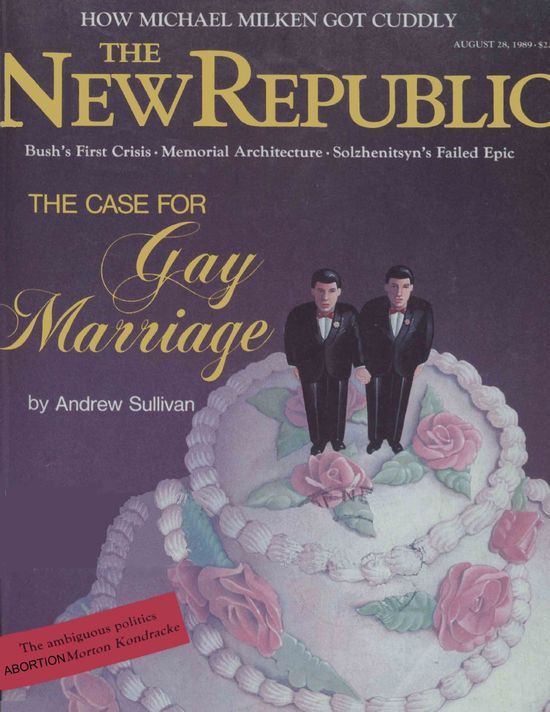 did. Today, I rarely show up on TV. Then I accepted any invite on marriage. And my goal was to persuade sometimes uncomfortable audiences (I’ll never forget the events at Notre Dame and Boston College on Catholicism and homosexuality) that there really was nothing radical about integrating a previously marginalized community into the options of family and commitment and mutual responsibility, and the social status those virtues rightly acquire.
In the early 1990s, I might as well have been speaking Swahili – and was assailed, attacked, picketed, demonized and smeared to the point of personal trauma by the gay left. By the early 2000s, I was demeaned, pitied, ignored, ostracized and mocked by the Republican right. They were both, in my view, misguided and panicked – because the truth is: marriage equality is both a liberal and a conservative project. It’s liberal because of its insistence on equality; it’s conservative because of its insistence on responsibility, and because the alternatives – domestic partnerships/civil unions – are actually damaging to a critical social institution, civil marriage, by providing a marriage-lite option for all.
This conservative case was buttressed by my fellow conservative writers – learned, decent, honest intellectuals like Jon Rauch and Bruce Bawer and Dale Carpenter and John Corvino and many others. We were no Democrats. Most of us loathed the Clintons for what they did to the gay community, our rights and dignity. But we became more and  more dismayed by our fellow conservatives, so many of whom did not simply remain on the fence but mounted a furious, passionate campaign against us. Bill Kristol’s response to this nascent movement was to bring legitimacy to the ex-gay movement; David Frum – back in the day – threatened to bring back enforcement of sodomy laws if we didn’t shut up. Republicans gleefully enshrined discrimination in many state constitutions – and bragged about it a little more loudly than Bill Clinton did the Defense of Marriage Act.
They decided, with Bill Clinton, on the most radical pushback to a fledgling movement imaginable: a Defense of Marriage Act that stripped our families of any rights under federal law, and, without Bill Clinton, a Federal Marriage Amendment that would single out gays as second-class citizens in the founding document of their own country for ever. And they used this hatred and fear of homosexuals quite openly as a way to win the 2004 election. It was crucial in Ohio that year. If Bush had lost it, Kerry would have been president. And Bush won it in large part by fear-mongering about gays.
For me, the FMA was the end of engagement and the beginning of war. You can read my reaction the day Bush endorsed it here. But I never stopped making the conservative case for marriage equality for the simple reason I believed in it. I never thought it would happen to me, but I knew it would have protected so many of my friends who didn’t have to just die agonizing deaths from AIDS but did so stigmatized and alone, their spouses treated often like dirt, their loves  publicly repudiated, their dignity grotesquely violated. This was, I believed, a matter of core humanity. It became for me the defining cause of my life.
A friend recalled visiting a man dying of AIDS at the time. A former massive bodybuilder, he had shrunk to 90 pounds. ‘Do I look big?” he asked, with mordant humor. In the next bed, surrounded by curtains, my friend heard someone singing a pop song quietly to himself. My friend joked: “Well not everyone here is depressed!” Then this from his dying, now skeletal friend: “Oh, that’s not him. He died this morning. That’s his partner. That was their song, apparently. The family took the body away, threw that guy out of the apartment he shared with his partner, and barred him from the funeral. He’s stayed there all day, singing their song. I guess it’s the last place he’ll ever see where his partner actually was. His face is pressed against the pillow. The nurses don’t have the heart to tell him to leave.”
You want to know why this became a life-long struggle? You have your answer. And I did this not despite being a Catholic, but because I am a Catholic. And I did this not despite being a conservative but because I am one.
This hideous cruelty in the midst of such shame demanded a Catholic and Christian response. This attack on people’s families, and their mutual responsibility (that man’s partner had cared for him for months, while his biological family kept their distance) was an attack on those institutions like civil marriage that are vital for a free society to keep its government in check. If that man’s husband hadn’t cared for him, the government would have had to. Why weren’t conservatives celebrating this man’s dedication rather than smearing him? Why could they not see in the gay community’s astonishing self-defense a Burkean model for social change from below – a dedication to saving our community independent of government that, if it happened in any other community, would have led the GOP to put those activists on the podium of the Republican Convention as exemplars of civil society at its best?
And that is what husband really means: to take care of someone. Why, I wondered, were conservatives actually doing all they could to prevent couples’ taking care of each other? Why would they barely tolerate it in a free society – but treat these responsible relationships as if they were threats to the very values they exemplified? Why would they want to discourage an emotional and domestic break against the huge force of testosterone that was and is bound to define a male-only community – and with a viral breakout helped wipe out 300,000 human beings in one generation? Why, for that matter, would they want to tear children from their lesbian mothers – or, even more sickeningly, recruit them to attack their own mothers, as NOM recently has?
It’s 24 years since I wrote that essay. But today, I see a phalanx of conservatives standing up for the equality of gay citizens. Here are some among the roster, which is now 75 and counting:
Meg Whitman, who supported Proposition 8 when she ran for California governor; Representatives Ileana Ros-Lehtinen of Florida and Richard Hanna of New York; Stephen J. Hadley, a Bush national security adviser; Carlos Gutierrez, a commerce secretary to Mr. Bush; James B. Comey, a top Bush Justice Department official; David A. Stockman, President Ronald Reagan’s first budget director; and Deborah Pryce, a former member of the House Republican leadership from Ohio who is retired from Congress.
Ken Mehlman, bete noir of the gay left for understandable reasons given his role in Rove’s gay-baiting 2004 campaign, was the key organizer. I’ve always believed that civil rights movements should be all about welcoming converts rather than hunting for enemies or heretics. And I think this is a huge achievement for Ken, morally, and politically. It is the right conservative thing to do. As the British Tory prime minister has put it:
I don’t support gay marriage in spite of being a conservative. I support gay marriage because I am a conservative.
Allahpundit is underwhelmed by the list. It does indeed lack, apart from Ros-Lehtinen and Hanna, current members of Congress. It lacks Dick Cheney, for example, a figure who holds this position but, as usual, does nothing about it – even when it directly affects his own family. It lacks Laura Bush – although she could still add her name. But, to her credit, Mary Cheney is there. So is my friend David Frum. The two strategists for the 2008 campaign, Steve Schmidt and Nicole Wallace are on it. Stephen Hadley and Israel Hernandez – two people very close to 43 – are there. Ken Duberstein, Alex Castellanos, Mike Murphy and Greg Mankiw are also on the list. These are not GOP lightweights. They are up there with Ted Olson.
The reason, to my mind, is quite simple. The Republican Party of Reagan who defended gay rights in the 1970s, of Bush 41 and even parts of Bush 43 is now emphatically and increasingly a party of the fanatical Christianist right, based in the South, and dedicated not to conservative politics but to dogma, theological and political. Some elements in the party may simply be wary of major change in a social institution – which is a perfectly legitimate worry. But as the statement notes:
Many of the signatories to this brief previously did not support civil marriage for same-sex couples; others did not hold a considered position on the issue. However, in the years since Massachusetts and other states have made civil marriage a reality for same-sex couples, amici, like many Americans, have observed the impact, assessed their core values and beliefs, and concluded that there is no legitimate, fact-based reason for denying same-sex couples the same recognition in law that is available to opposite-sex couples who wish to marry. Rather, we have concluded that the institution of marriage, its benefits and importance to society, and the support and stability it gives to children and families are promoted, not undercut, by providing access to civil marriage for same-sex couples.
So we now also have empirical data to reassure legitimate conservative concerns about damage to a vital institution. The first state with marriage equality continues to have the lowest divorce rate: 2.2 percent, compared with 2.5 percent before gays were allowed to marry. Compare that with the most anti-gay states: Alabama’s 4.4 percent – double Massachusetts – or anti-gay Virginia’s divorce rate of 3.7 percent, compared with marriage equality DC with 2.6 percent. More broadly, the divorce rate has come down in almost every state in the last decade – the very decade gays were allegedly going to destroy the Constitution. Stanley Kurtz was simply wrong. Gay marriage has entered our consciousness and reality as divorce rates have fallen. The linkage that Maggie Gallagher keeps talking about as a premise is a fantasy. If you can properly draw any conclusions from the data, the linkage works in the opposite way. Gay marriage has strengthened straight marriage – not the other way round.
Only prejudice and fundamentalist dogma now stand in the way. Whatever happens in the Supreme Court, exposing that matters. Showing that there is a debate among conservatives, as well as among people of faith, is a vital step forward.
I sometimes end optimistic posts with the Israeli saying, “Know hope.” But this is actually something a little different. It is knowing hope. And seeing it rise, finally and fitfully, above fear.
The full summary of the Amicus brief is below:
Amici are social and political conservatives, moderates, and libertarians from diverse religious, racial, regional, and philosophical backgrounds; many have served as elected or appointed federal and state office-holders. Many of the signatories to this brief previously did not support civil marriage for same-sex couples; others did not hold a considered position on the issue. However, in the years since Massachusetts and other states have made civil marriage a reality for same-sex couples, amici, like many Americans, have observed the impact, assessed their core values and beliefs, and concluded that there is no legitimate, fact-based reason for denying same-sex couples the same recognition in law that is available to opposite-sex couples who wish to marry. Rather, we have concluded that the institution of marriage, its benefits and importance to society, and the support and stability it gives to children and families are promoted, not undercut, by providing access to civil marriage for same-sex couples.
Amici do not denigrate the deeply held emotional, cultural, and religious beliefs that lead sincere people to take the opposite view (and, indeed, some amici themselves once held the opposite view). Whether same-sex couples should have access to civil marriage divides thoughtful, concerned citizens. Those who support and those who oppose civil marriage for same-sex couples hold abiding convictions about their respective positions. But a belief, no matter how strongly or sincerely held, cannot justify a legal distinction that is unsupported by a factual basis, especially where something as important as civil marriage is concerned. Amici take this position with the understanding that providing access to civil marriage for same-sex couples—which is the only issue raised in this case—poses no credible threat to religious freedom or to the institution of religious marriage. Given the robust constitutional protections for the free exercise of religion, amici do not believe that religious institutions should or will be compelled against their will to participate in a marriage between people of the same sex.
I. There Is No Legitimate, Fact-Based Justification For Different Legal Treatment Of Committed Relationships Between Same-Sex Couples
Laws that make distinctions between classes of people must have “reasonable support in fact.” New York State Club Ass’n, Inc. v. City of New York, 487 U.S. 1, 17 (1988). Amici do not believe that laws like Proposition 8 have a legitimate, fact-based justification for excluding same-sex couples from civil marriage. Over the past two decades, amici have seen each argument against same-sex marriage discredited by social science, rejected by courts, and undermined by their own experiences with committed same-sex couples, including those whose civil marriages have been given legal recognition in various States. Instead, the facts and evidence show that permitting civil marriage for same-sex couples will enhance the institution, protect children, and benefit society generally.
A. Marriage Promotes The Conservative Values Of Stability, Mutual Support, And Mutual Obligation
Amici start from the premise—recognized by this Court on at least fourteen occasions— that marriage is both a fundamental right protected by our Constitution and a venerable institution that confers countless benefits, both to those who marry and to society at large. … It is precisely because marriage is so important in producing and protecting strong and stable family structures that amici do not agree that the government can rationally promote the goal of strengthening families by denying civil marriage to same-sex couples.
B. Social Science Does Not Support Any Of The Putative Rationales For Proposition 8
Deinstitutionalization. No credible evidence supports the deinstitutionalization theory. … Petitioners fail to explain how extending civil marriage to same-sex couples will dilute or undermine the benefits of that institution for opposite-sex couples … or for society at large. It will instead do the opposite. Extending civil marriage to same-sex couples is a clear endorsement of the multiple benefits of marriage—stability, lifetime commitment, financial support during crisis and old age, etc.—and a reaffirmation of the social value of this institution.
Biology. There is also no biological justification for denying civil marriage to same-sex couples. Allowing same-sex couples to marry in no way undermines the importance of marriage for opposite-sex couples who enter into marriage to provide a stable family structure for their children.
Child Welfare. If there were persuasive evidence that same-sex marriage was detrimental to children, amici would give that evidence great weight. But there is not. Social scientists have resoundingly rejected the claim that children fare better when raised by opposite-sex parents than they would with same-sex parents.
C. While Laws Like Proposition 8 Are Consonant With Sincerely-Held Beliefs, That Does Not Sustain Their Constitutionality
Although amici firmly believe that society should proceed cautiously before adopting significant changes to beneficial institutions, we do not believe that society must remain indifferent to facts. This Court has not hesitated to reconsider a law’s outmoded justifications and, where appropriate, to deem them insufficient to survive an equal protection challenge. The bases on which the proponents of laws like Proposition 8 rely are the products of similar thinking that can no longer pass muster when the evidence as it now stands is viewed rationally, not through the lens of belief though sincerely held.
I. This Court Should Protect The Fundamental Right Of Civil Marriage By Ensuring That It Is Available To Same-Sex Couples
Choosing to marry is also a paradigmatic exercise of human liberty. Marriage is thus central to government’s goal of promoting the liberty of individuals and a free society. For those who choose to marry, legal recognition of that marriage serves as a bulwark against unwarranted government intervention into deeply personal concerns such as the way in which children will be raised and in medical decisions.
Amici recognize that a signal and admirable characteristic of our judiciary is the exercise of restraint. Nonetheless, this Court’s “deference in matters of policy cannot … become abdication of matters of law.” The right to marry indisputably falls within the narrow band of specially protected liberties that this Court ensures are protected from unwarranted curtailment.
Proposition 8 ran afoul of our constitutional order by submitting to popular referendum a fundamental right that there is no legitimate, fact-based reason to deny to same-sex couples. This case accordingly presents one of the rare but inescapable instances in which this Court must intervene to redress overreaching by the electorate.
Here are all the signatories so far:
—Ken Mehlman, Chairman, Republican National Committee, 2005-2007
—Tim Adams, Undersecretary of the Treasury for International Affairs, 2005-2007
—David D. Aufhauser, General Counsel, Department of Treasury, 2001-2003
—Cliff S. Asness, Businessman, Philanthropist, and Author
—John B. Bellinger III, Legal Adviser to the Department of State, 2005-2009
—Katie Biber, General Counsel, Romney for President, 2007-2008 and 2011-2012
—Mary Bono Mack, Member of Congress, 1998-2013
—William A. Burck, Deputy Staff Secretary, Special Counsel and Deputy Counsel to the
President, 2005-2009—Alex Castellanos, Republican Media Advisor
—Paul Cellucci, Governor of Massachusetts, 1997-2001, and Ambassador to Canada,
2001-2005—Mary Cheney, Director of Vice Presidential Operations, Bush-Cheney 2004
—Jim Cicconi, Assistant to the President & Deputy to the Chief of Staff, 1989-1990
—James B. Comey, United States Deputy Attorney General, 2003-2005
—R. Clarke Cooper, U.S. Alternative Representative, United Nations Security Council,
2007-2009—Julie Cram, Deputy Assistant to the President and Director White House Office of
Public Liaison, 2007-2009—Michele Davis, Assistant Secretary for Public Affairs and Director of Policy Planning,
Department of the Treasury, 2006-2009—Kenneth M. Duberstein, White House Chief of Staff and Assistant to the President,
1981-1984 and 1987-1989—Lew Eisenberg, Finance Chairman, Republican National Committee, 2002-2004
—Elizabeth Noyer Feld, Public Affairs Specialist, White House Office of Management and
Budget, 1984-1987—David Frum, Special Assistant to the President, 2001-2002
—Richard Galen, Communications Director, Speaker’s Political Office, 1996-1997
—Mark Gerson, Chairman, Gerson Lehrman Group and Author of The Neoconservative
Vision: From the Cold War to the Culture Wars and In the Classroom: Dispatches from
an Inner-City School that Works—Benjamin Ginsberg, General Counsel, Bush-Cheney 2000 & 2004
—Adrian Gray, Director of Strategy, Republican National Committee, 2005-2007
—Richard Grenell, Spokesman, U.S. Ambassadors to the United Nations, 2001-2008
—Patrick Guerriero, Mayor, Melrose Massachusetts and member of Massachusetts
House of Representatives, 1993-2001—Carlos Gutierrez, Secretary of Commerce, 2005-2009
—Stephen Hadley, Assistant to the President and National Security Advisor, 2005-2009
—Richard Hanna, Member of Congress, 2011-Present
—Israel Hernandez, Assistant Secretary of Commerce for International Trade, 2005-2009
—Margaret Hoover, Advisor to the Deputy Secretary of Homeland Security, 2005-2006
—Michael Huffington, Member of Congress, 1993-1995
—Jon Huntsman, Governor of Utah, 2005-2009
—David A. Javdan, General Counsel, United States Small Business Administration, 2002-
2006—Reuben Jeffery, Undersecretary of State for Economic, Energy, and Agricultural
Affairs, 2007-2009—Greg Jenkins, Deputy Assistant to the President and Director of Presidential Advance,
2003-2004—Coddy Johnson, National Field Director, Bush-Cheney 2004
—Gary Johnson, Governor of New Mexico, 1995-2003
—Robert Kabel, Special Assistant to the President for Legislative Affairs, 1982-1985
—Theodore W. Kassinger, Deputy Secretary of Commerce, 2004-2005
—Jonathan Kislak, Deputy Undersecretary of Agriculture for Small Community and Rural
Development, 1989-1991—David Kochel, Senior Advisor to Mitt Romney’s Iowa Campaign, 2007-2008 and 2011-
2012—James Kolbe, Member of Congress, 1985-2007
—Jeffrey Kupfer, Acting Deputy Secretary of Energy, 2008-2009
—Kathryn Lehman, Chief of Staff, House Republican Conference, 2003-2005
—Daniel Loeb, Businessman and Philanthropist
—Alex Lundry, Director of Data Science, Romney for President, 2012
—Greg Mankiw, Chairman, Council of Economic Advisers, 2003-2005
—Catherine Martin, Deputy Assistant to the President and Deputy Communications
Director for Policy & Planning, 2005-2007—Kevin Martin, Chairman, Federal Communications Commission, 2005-2009
—David McCormick, Undersecretary of the Treasury for International Affairs, 2007-2009
—Mark McKinnon, Republican Media Advisor
—Bruce P. Mehlman, Assistant Secretary of Commerce, 2001-2003
—Connie Morella, Member of Congress, 1987-2003 and U.S. Ambassador to the
Organization for Economic Co-operation and Development, 2003-2007—Michael E. Murphy, Republican Political Consultant
—Michael Napolitano, White House Office of Political Affairs, 2001-2003
—Ana Navarro, National Hispanic Co-Chair for Senator John McCain’s Presidential
Campaign, 2008—Noam Neusner, Special Assistant to the President for Economic Speechwriting, 2002-
2005—Nancy Pfotenhauer, Economist, Presidential Transition Team, 1988 and President’s
Council on Competitiveness, 1990—J. Stanley Pottinger, Assistant U.S. Attorney General (Civil Rights Division), 1973-1977
—Michael Powell, Chairman, Federal Communications Commission, 2001-2005
—Deborah Pryce, Member of Congress, 1993-2009
—John Reagan, New Hampshire State Senator, 2012-Present
—Kelley Robertson, Chief of Staff, Republican National Committee, 2005-2007
—Ileana Ros-Lehtinen, Member of Congress, 1989-Present
—Harvey S. Rosen, Member and Chairman, Council of Economic Advisers, 2003-2005
—Lee Rudofsky, Deputy General Counsel, Romney for President, 2012
—Patrick Ruffini, eCampaign Director, Republican National Committee, 2005-2007
—Steve Schmidt, Deputy Assistant to the President and Counselor to the Vice President,
2004-2006—Ken Spain, Communications Director, National Republican Congressional Committee,
2009-2010—Robert Steel, Undersecretary of the Treasury for Domestic Finance, 2006-2008
—David Stockman, Director, Office of Management and Budget, 1981-1985
—Jane Swift, Governor of Massachusetts, 2001-2003
—Michael E. Toner, Chairman and Commissioner, Federal Election Commission, 2002-
2007—Michael Turk, eCampaign Director for Bush-Cheney 2004
—Mark Wallace, U.S. Ambassador to the United Nations, Representative for UN
Management and Reform, 2006-2008—Nicolle Wallace, Assistant to the President and White House Communications
Director, 2005-2008—William F. Weld, Governor of Massachusetts, 1991-1997, and Assistant U.S. Attorney
General (Criminal Division), 1986-1988—Christine Todd Whitman, Governor of New Jersey, 1994-2001, and Administrator of
the EPA, 2001-2003—Meg Whitman, Republican Nominee for Governor of California, 2010
—Robert Wickers, Republican Political Consultant
—Dan Zwonitzer, Wyoming State Representative, 2005-present
Tertiarymatt likes this
28 Feb 15:35
Powerful Yogurt
by russiansledges
Russian SledgesPowerful Yogurt was created by a group of active, health-conscious, and time-strapped men who've been lucky enough to be part of this industry and really think we deserve to have more variety when it comes to eating healthy.
Our hope is that guys everywhere will find that this is exactly what they need for a healthy option in a world where it can be so difficult to eat right. We are not talking about Rocky Balboa but a regular dude like you and us, who works out now and then, who takes care of himself, who likes looking good but who also drinks beer and eats chicken wings.
For Men, By Men
28 Feb 01:23
Regal Rogue
by Lovely Package

Designed by Squad Ink | Country: Australia
“Regal Rogue is the first native Australian aromatic vermouth in the market.
Squad Ink was brought into the mix to create the brand identity, packaging and launch material for this innovative small batch vermouth. Vermouth is mostly a European tradition. Regal Rogue turns this upside down with a daring blend of native aromatics to flavour fortified Hunter Valley Semillon (Australian wine region) with bush lemons, finger limes, vanilla, basil and thyme: a new world vermouth that is thoroughly Australian.”

“Fact: Vermouth is the most overlooked and misunderstood drink around.
Our job: To make vermouth cool again while creating an attractive package for this brilliant drop of fortified aromatic wine at the same time as educating and exciting the consumer.”

“We knew that the handcrafted nature of this small batch vermouth was a key selling point, and more than that: its unique flavour. How can we let the world know just how good this drink is and how do we bring to light the story of the first native Australian vermouth?”
The Regal Rogue brand has received an amazing response, rejuvenating a dusty alcohol category with a fresh and innovative approach.”


“We adopted a traditional etching style to give a ‘new’ brand a sense of history and credibility. The ‘Regal’-themed illustrations were the start of a greater story – of a rogue knight and his roguish ways – that provided the opening to develop it further through supporting material, such as the “Etiquette of a Regal Rogue” launch booklet.”


“Regal Rogue packaging is environmentally sustainable, from its downsized glass bottle to its paper wrap, printed on 100% recycled carbon-neutral stock. This conveniently lends itself to the key message of its handcrafted style which is an integral part of the brand story, and something that fits perfectly with today’s commitment to sustainability: handmade not mass-produced; small not gigantic; and natural not artificial.”
28 Feb 01:21
We Buy White Albums, Artist Amasses Giant Collection of The White Album by The Beatles
by EDW Lynch

photo via Dust & Grooves
For the past seven years, artist Rutherford Chang has been collecting first pressings of the Beatles’ 1968 self-titled album, which is commonly known as The White Album. Chang says he is drawn to the album because of artist Richard Hamilton’s iconic white, nearly featureless cover design—the cover visibly displays age and weathering, and in some cases the artistic alterations of the album’s former owner. Chang’s collection, currently numbering 699 copies, is on display at his installation “We Buy White Albums,” at Recess gallery in New York City. The installation resembles a record store, complete with bins organized by serial number, and Chang is on site to buy (but never sell) copies of The White Album. In addition, he is recording albums in his collection and digitally layering them into scratchy compilations—here’s 100 copies played simultaneously:
For more on Chang’s curious collection, see his interview with Dust & Grooves and this New York Times article.

photo via Rutherford Chang

photo via Dust & Grooves
Russian Sledges, firehose likes this
28 Feb 01:20
Mocoro Robotic Fur Ball Vacuum Cleaner
by Rusty Blazenhoff
Russian Sledgesattn overbey

The Mocoro Robotic Fur Ball vacuum cleaner rolls around on the floor like a Roomba but is different because it’s cuter, more of a battery-powered dust mop than a powerful vacuum, and is made of a fuzzy & colorful microfiber material. I’m guessing kitties will love this device. Available at Japan Trend Shop.

via The Green Head, bookofjoe
firehose likes this
28 Feb 01:02
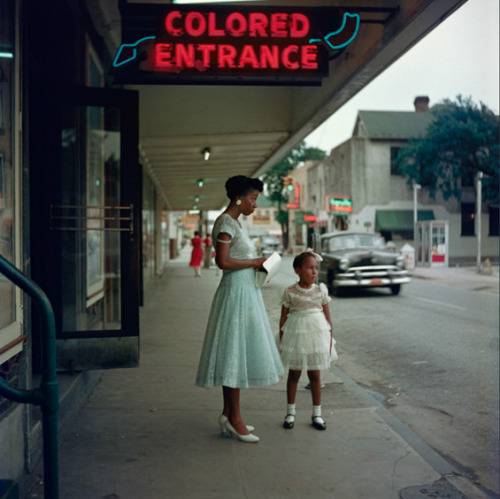



Recently The Gordon Parks Foundation discovered over 70...
Recently The Gordon Parks Foundation discovered over 70 unpublished photographs by Parks at the bottom of an old storage box wrapped in paper and marked as “Segregation Series.” These never before series of images not only give us a glimpse into the everyday life of African Americans during the 50′s but are also in full color, something that is uncommon for photographs from that era.
Russian Sledges, Tertiarymatt and 2 others like this
28 Feb 00:15
polarbearsarebrilliant: Russian Meteor Strike, February...






Christopher Lantz and -1 others like this
27 Feb 23:17
laughingsquid: Inside the Battle of Hoth, A Military View of...
by joberholtzer

Russian Sledges, Lindsay Oliver likes this
27 Feb 22:35
Functional Tiles: The Dutch Think of Everything
by Izabella Simmons
Leave it to the Dutch to figure out a way to integrate function into the concept of tiling. "We love tiles so much that we do not want to interrupt that grid for any reason," say the designers.
Dutch designers Peter van der Jagt, Erik Jan Kwakkel, and Arnout Visser invented DTile, a versatile tile system featuring built-in items for every day use. The functional tiles come with integrated fixtures, such as ceramic hooks, plugholes, and drawers. For more information and a list of dealers, go to DTile.

Above: A built-in tiled drawer.

Above: Have we found the perfect toilet paper holder? We think so. For another option, see Crisis in the Commode: Powder Room Edition.

Above: A tile square made into a vent.

Above: Tiled cubes that function as shelves.

Above: A Red Cross-tiled drawer.

Above: A 60-minute timer.
N.B. Looking for more tile inspiration? See 805 photos of tiled bathrooms in our Gallery.
Russian Sledges and -1 others like this
27 Feb 22:28

Second Floor Oval Study above Blue Room during the White House Renovation, 03/09/1950

View of the Northeast Corner of the White House during the Renovation, 11/06/1950

Renovation Work on the White House, ca. 1950

The Shell of the White House during the Renovation, 05/17/1950
What the White House Looks Like Completely Gutted VIA National...
Second Floor Oval Study above Blue Room during the White House Renovation, 03/09/1950
View of the Northeast Corner of the White House during the Renovation, 11/06/1950
Renovation Work on the White House, ca. 1950
The Shell of the White House during the Renovation, 05/17/1950
What the White House Looks Like Completely Gutted VIA National Jorunal
Harry S Truman inherited a White House that was in horrendous shape. After the British nearly burnt it to the ground in 1814, the construction of 20th-century innovations—indoor plumbing, electricity, and heating ducts—had also taken its toll on the structure. The building was nearly 150 years old, and it showed its age. In November 1948, the building was in a near-condemnable state, as The New York Times reported:
“The ceiling of the East Room, elaborately done in the frescoes of fruits and reclining women and weighing seventy pounds to the square foot, was found to be sagging six inches on Oct. 26, and now is being held in place by scaffolding and supports…. But it took the $50,000 survey authorized by Congress to disclose the fact that the marble grand staircase is in imminent danger. Supporting bricks, bought second hand in 1880, are disintegrating.”
So it had to be gutted. Completely. Every piece of the interior, including the walls, had to be removed and put in storage. The outside of the structure—reinforced by new concrete columns—was all that remained.
Billtron, Tertiarymatt and 2 others like this
27 Feb 19:36
DoJ Admits Aaron Swartz's Prosecution Was Political
by Soulskill
An anonymous reader sends this excerpt from a blog post by Taren Stinebrickner-Kauffman, founder of corporate watchdog SumOfUs.org and partner of the late Aaron Swartz: "The DOJ has told Congressional investigators that Aaron's prosecution was motivated by his political views on copyright. I was going to start that last paragraph with 'In a stunning turn of events,' but I realized that would be inaccurate — because it's really not that surprising. Many people speculated throughout the whole ordeal that this was a political prosecution, motivated by anything/everything from Aaron's effective campaigning against SOPA to his run-ins with the FBI over the PACER database. But Aaron actually didn't believe it was — he thought it was overreach by some local prosecutors who didn't really understand the internet and just saw him as a high-profile scalp they could claim, facilitated by a criminal justice system and computer crime laws specifically designed to give prosecutors, however incompetent or malicious, all the wrong incentives and all the power they could ever want. But this HuffPo article, and what I’m hearing from sources on the Hill, suggest that that’s not true. That Ortiz and Heymann knew exactly what they were doing: Shutting up, and hopefully locking up, an extremely effective activist whose political views, including those on copyright, threatened the Powers That Be." 


Read more of this story at Slashdot.
firehose likes this


