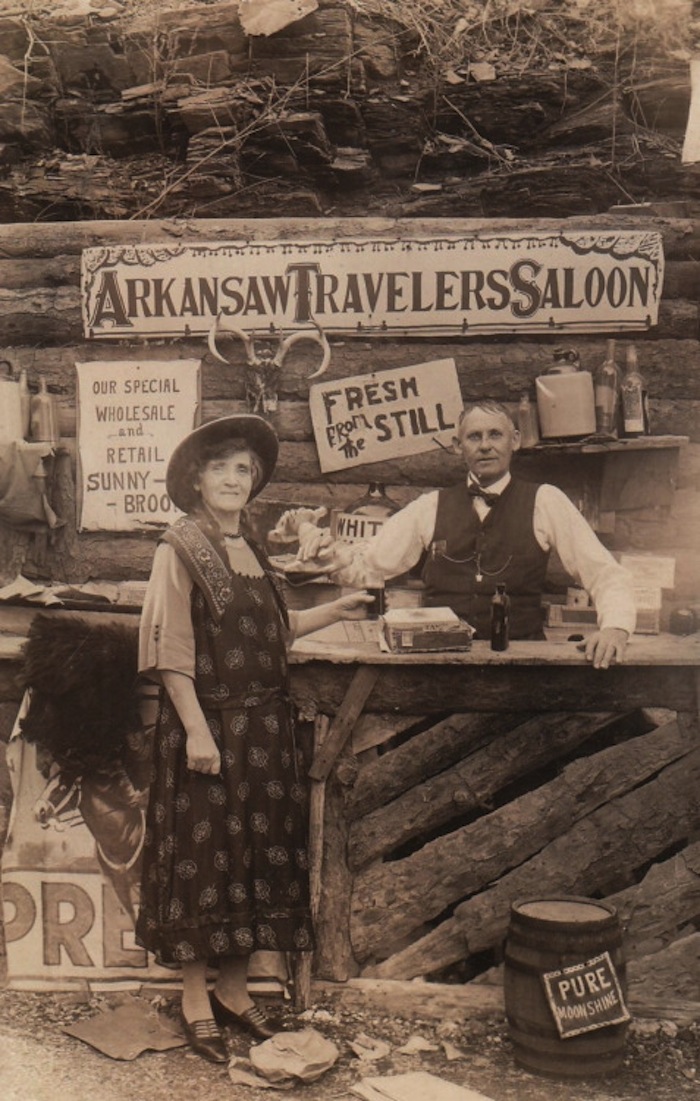
I found this picture on Pinterest a while ago and it’s always struck me as a little odd. Was it a real bar? First I searched “Arkansas Travelers Saloon” and began finding dozens of other photographs of people posing in front of the same backdrops. That’s bizarre, I thought with narrowed eyes…
But then today I found my answer, along with an ever bigger collection of similar photographs…
As it turns out, the Arkansas Traveler’s Saloon was sadly not a real bar, but in fact a popular photography set at the Happy Hollow amusement park in Hot Springs Arkansas. It was the area’s most popular tourist attractions from the late 1800s up until the 1940s, which initially began as a picture studio and gradually developed into an early amusement park. The park no longer exists today, but these photographs I found on a local Arkansas genealogical website give us a pretty good idea of a typical day at Happy Hollow…
Smile, you’re at the saloon!
I enjoyed reading all the little signs in each photograph…
This was one of the oldest looking photos in the collection and it really gave me the chills ↑
Harvard University this week sued several companies that sell training materials for students taking a Business School "Credential of Readiness" online exam.
The nation's oldest college charges the companies are violating Harvard copyrights by using actual questions from the exam - given at the end of a two-to-three month online course, called HBX CORe, "for individuals seeking to understand the fundamentals of business, and how business theories apply in real business settings."
The town's economic development director said his office brokered the deal to keep the growing business in Framingham. The agreement will net Jack's Abby a property tax break of about $225,000 over the next seven years, based on improvements it is making to the Dennison Manufacturing Co. building, which will house the new, 67,000-square foot facility. In exchange, Jack's Abby has committed to staying in Framingham with a 12-year lease, and it plans to hire 35 more employees in addition to its 19 current full-timers.
The company will still be on the hook for property taxes incurred by new growth, and it will take on full tax responsibility after the first seven years, the Daily News notes.
The Watertown restaurant has debuted a new dinner menu, offered Monday through Saturday from 5 p.m. to 9 p.m.
Strip-T’s owner Paul Maslow shares the restaurant’s new “izakaya”-inspired dinner menu, noting that some of the Watertown spot’s more “iconic” dishes — oxtail salad, Moxie wings, smoked miso burger, Japanese sweet potato wedges, and eggplant banh mi — are still available, not to mention the 29-year-old Caesar salad.
But now on the new side, look for ramen, offered in multiple varieties and with several different add-on toppings. There are also other Japanese-inspired snacks. (An izakaya is a casual Japanese venue where drinking is the focus and the food tends to be in the snacking realm.)
Former accountant Sarah Chester is almost ready to open her bakery's doors on Highland Avenue.
7ate9 Bakery, a cheesecake-focused shop coming soon to 199C Highland Ave. in Somerville’s Spring Hill neighborhood, passed its final inspection yesterday and will open “very, very soon,” after the team takes “a few days to learn [the] equipment and calibrate [the] ovens,” according to an update on Facebook.
The Frogmore will bring "classic lowcountry cuisine" to Jamaica Plain this summer.
Fairsted Kitchen owners Andrew Foster and Steve Bowman, along with former beverage manager Alex Homans, will open The Frogmore in the former Centre Street Sanctuary space in Jamaica Plain this summer, serving "lowcountry" cuisine (coastal South Carolina and Georgia) by executive chef Jason Albus, according to a press release. The menu will also draw inspiration from various parts of the Caribbean and Africa. Albus, a South Carolina native, will be moving over from his executive chef position at Fairsted.
The 85-seat restaurant (plus 20-seat patio) will feature lots of plants and a bit of a pineapple motif, Bowman tells the Boston Globe, with the pineapples representing Southern hospitality.
The Frogmore will serve weekend brunch and daily dinner (until 1 a.m.) with entrees in the low $20s, according to the release. On the drink side, co-owner Homans will also be filling the role of "beverage shaman," offering "traditional spirits driven by the flavors of the Southern table" and craft beers from America and Europe. Meanwhile, Bowman will be in charge of the wine list, featuring "small producers and farmers who represent the unique soils and climates of our country with a sense of balance and restraint."
And over at Fairsted in Brookline, head bartender Will Izasa has been promoted to "spirit whisperer," and he's changing up the beverage program to go along with the new extended hours — Fairsted is now open until 2 a.m. every day. As part of the program, he's now offering two bottled, carbonated cocktails that change each week (instead of one weekly bottled drink), and he's continuing to offer small-batch draft cocktails.
'According to Ingleby’s Twitter feed, one of the reviewers suggested to the two authors that they:
"…find one or two male biologists to work with (or at least obtain internal peer review from, but better yet as active co-authors), in order to serve as a possible check against interpretations that may sometimes be drifting too far away from empirical evidence into ideologically based assumptions."'
We’ve written quite a lot about the perks and pitfalls of the peer review system, but one thing we never really touched on was the risk that a reviewer might be … well, not to put too fine a point on it: a dope. But Fiona Ingleby can speak to that. Ingleby, a postdoc in […]
With the growing volume of user-generated classification systems arising from media tagging-based platforms (such as Flickr and Tumblr) and the advent of new crowdsourcing platforms for cultural heritage collections, determining the value and usability of crowdsourced, "folksonomic," or user-generated, "freely chosen keywords"[21st Century Lexicon] for libraries, museums and other cultural heritage organizations becomes increasingly essential. The present study builds on prior work investigating the value and accuracy of folksonomies by: (1) demonstrating the benefit of user-generated "tags" - or unregulated keywords typically meant for personal organizational purposes - for facilitating item retrieval and (2) assessing the accuracy of descriptive metadata generated via a game-based crowdsourcing application. In this study, participants (N = 16) were first tasked with finding a set of five images using a search index containing either a combination of folksonomic and controlled vocabulary metadata or only controlled vocabulary metadata. Data analysis revealed that participants in the folksonomic and controlled vocabulary search condition were, on average, six times faster to search for each image (M = 25.08 secs) compared to participants searching with access only to controlled vocabulary metadata (M = 154.1 secs), and successfully retrieved significantly more items overall. Following this search task, all participants were asked to provide descriptive metadata for nine digital objects by playing three separate single-player tagging games. Analysis showed that 88% of participant-provided tags were judged to be accurate, and that both tagging patterns and accuracy levels did not significantly differ between groups of professional librarians and participants outside of the Library Science field. These findings illustrate the value of folksonomies for enhancing item "findability," or the ease with which a patron can access materials, and the ability of librarians and general users alike to contribute valid, meaningful metadata. This could significantly impact the way libraries and other cultural heritage organizations conceptualize the tasks of searching and classification.
BOSTON — State regulators say a company that distributes much of the craft beer to Massachusetts bars and liquor stores has engaged in unfair trade practices that stifle competition.
The Alcoholic Beverages Control Commission says Craft Beer Guild LLC violated a state rule against offering incentives to retailers to stock its products. The commission says the Guild has also charged different prices for the same products.
Yet another lawsuit about beverage labeling. This time it’s Blue Moon beer. The class action lawsuit (Parent v. MillerCoors LLC) was filed April 24, 2015 in state court, in San Diego. It alleges that MillerCoors is tricking consumers about whether Blue Moon is craft beer.
There are now literally dozens of class action lawsuits, filed all around the country in just the past couple of years, in state and federal courts, against many of the most popular beer and spirits products in the country. Wine is notably absent, so far.
The complaint alleges that MillerCoors:
makes more than 2.4 billion gallons of beer a year — about 12 times what the prevailing Brewers Association definition, for a craft brewer, allows
falsely portrays the product as “artfully crafted,” when in fact it’s a macrobrew
hides the MillerCoors affiliation under various fake entities
misleads consumers into paying up to 50% more, via omissions and misrepresentations
For good measure, the suit alleges:
Defendant’s business practices are immoral, unethical, oppressive, and unscrupulous, and cause substantial injury to consumers, including Plaintiff and the other members of the Class. As a direct and proximate result of Defendant’s unlawful business practices, Class members suffered injury in that they paid a premium price for a product that would not ordinarily command a premium price, or purchased a product they otherwise would not have purchased, absent Defendant’s misrepresentations and omissions.
Notice that the lawsuit does not really mention labeling, and instead focuses on “false and deceptive marketing.” Notice also that the labels at issue don’t mention “craft.” TTB has approved the Blue Moon labels something like 300 times since the 1995 brand launch. Here is one of the very few Blue Moon labels that actually mentions “craft” as in “artfully crafted.” It’s a bit strange that the slogan would be rampant in advertising but barely there on labels. Sometimes TTB’s beer reviewer is a bit on the strict side, but here the government has been fairly lax. In fact, in the early days, Coors described this U.S.-made beer as “Belgian” rather than “Belgian-Style.” The real Belgian beer companies put this to a stop with another lawsuit.
Plaintiff is remarkably astute about when he purchased Blue Moon, and the BA parameters, but had a weak spot in his discernment, even when his friends tried to give him a clue:
From 2011 until mid-2012, Plaintiff frequently purchased Blue Moon beer… . Relying on its advertising, its placement among other craft beers, and the premium price it commanded, Plaintiff, who is also a beer aficionado and home brewer, purchased Blue Moon believing it was a craft beer, as the term is commonly used by beer consumers and the Brewers Association. [Eventually] Plaintiff was informed by friends that Blue Moon is not a craft beer, but rather a mass produced beer made by MillerCoors. Plaintiff was initially skeptical, but eventually verified the facts through his own research. As a result, Plaintiff has not purchased Blue Moon since approximately July 2012.
No word yet about whether Plaintiff has switched to Shock Top.
The tide is rising: Tito’s, Templeton, Breckenridge, Maker’s Mark, Jim Beam, Beck’s, Budweiser, Lime-A-Rita, Kirin, Skinnygirl, Tincup, Angel’s Envy, WhistlePig, and now Blue Moon. Google says Blue Moons come around every 2.7 years, but the suits are starting to pour in at a far faster rate.
This NASA/JPL news story plunges into Gothic territory as it describes deep space. The article describes X-ray emissions from the Sagittarius A* region, or as the headline puts it:
NASA's NuSTAR Captures Possible 'Screams' from Zombie Stars
Or, a touch more prosaically, yet still clinging to a horror perspective,
NASA's Nuclear Spectroscopic Telescope Array (NuSTAR) has spotted a mysterious glow of high-energy X-rays that, according to scientists, could be the "howls" of dead stars as they feed on stellar companions.
It's a very Lovecraftian take on possible pulsars. Call it the necrotic model of stellar decomposition:
Astronomers have four theories to explain the baffling X-ray glow, three of which involve different classes of stellar corpses. When stars die, they don't always go quietly into the night. Unlike stars like our sun, collapsed dead stars that belong to stellar pairs, or binaries, can siphon matter from their companions. This zombie-like "feeding" process differs depending on the nature of the normal star, but the result may be an eruption of X-rays.
Or the lyrical version:
Another theory points to small black holes that slowly feed off their companion stars, radiating X-rays as material plummets down into their bottomless pits.
The city council actually passed an ordinance that declared a certain amount of real estate to be drug-free zones. They literally declared maybe a quarter to a third of inner city Baltimore off-limits to its residents, and said that if you were loitering in those areas you were subject to arrest and search. Think about that for a moment: It was a permission for the police to become truly random and arbitrary and to clear streets any way they damn well wanted.
"I love my job and for the most part I love my students. I teach 250 students, they're not all like that," TAMUG professor Irwin Horwitz told Business Insider. "I'm doing this because I love it, or, I should say in the past tense — I loved it."
The professor recounted one instance this semester when he spent 40 minutes helping a student work on a problem for class. When Horwitz said he needed to head to another class and asked the student to review the material over the weekend, he said, the student "walked three feet and said, 'you're a f---ing moron.'"
"What am I supposed to do? I'm a human being," Horwitz said.
This was just one example of the widespread misconduct and apathy in his Strategic Management class this semester, according to the professor.
"I am a professional professor. I've been teaching for 20 years, I've taught thousands and thousands of students at all levels, and this class was completely unique," Horwitz said. "This belief, this entitlement, has been so ingrained in these students ... There was zero effort, there was nothing there, there was not even an attempt to try."
Even though the Strategic Management class was the "capstone course" of the business administration program, according to Horwitz, more than half the students in the course couldn't answer a question on the midterm about a break-even analysis. In business management, a break-even analysis is used to determine how much product you would need to sell to cover costs.
"More than a handful of them couldn't run a Kool-Aid stand," he said.
A student shouldn't be able to receive a degree in business administration and not be able to answer a "simple question" like a break-even analysis, he said.
"The degree has to mean something, it has to mean some level of competence," Horwitz said. "If I see a student who can't do a break-even analysis ... I don't want my stamp to be associated in any way with that student."
The professor first notified his students of their collective failing in an email sent to the entire class. In his email, Horwitz chastised them for lacking "the competence and/or desire to do the quality work necessary to pass the course."
Since his email went viral, Horwitz's students have come forward to defend themselves, claiming just a few bad students in the class contributed to the misconduct. The rest, they say, are being unfairly implicated by their professor.
"It was much more than two or three students," Horwitz said. "Was it every single student in the class? No it wasn't. But there were pockets and groups of students."
The email, Horwitz said, "was sent to all the students to give them a big wake up call, because most of them were failing the class."
“If our society really wanted to solve the problem, we could; it’s just that it would require everybody saying, ‘this is important; this is significant.’ And, that we don’t just pay attention to these communities when a CVS burns, and we don’t just pay attention when a young man gets shot or has his spine snapped, but we’re paying attention all the time because we consider those kids our kids.” —President Obama on the situation in Baltimore
He looks so fed up.
I really wish he would just say what he really wants to say! You got one year left Obama fuck it!
BALTIMORE—Calling it an emergency measure designed to ensure public safety and order, Baltimore officials held a press conference Wednesday urging all residents to stay indoors until the natural evolution of social progress takes shape over the next...
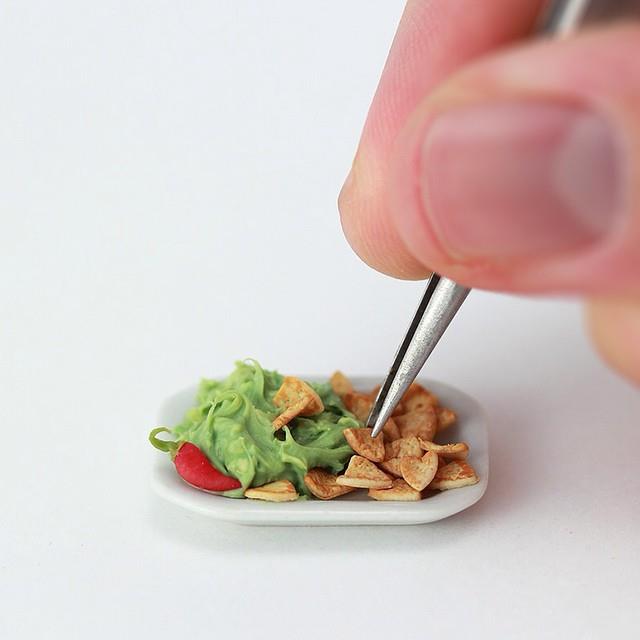
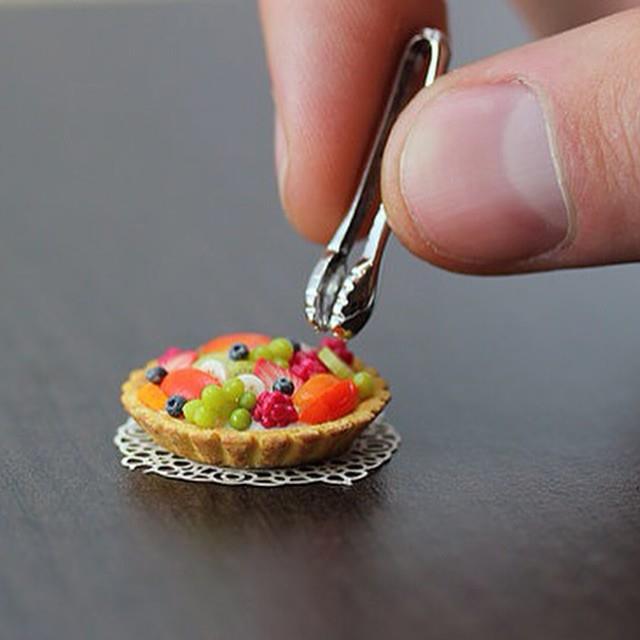
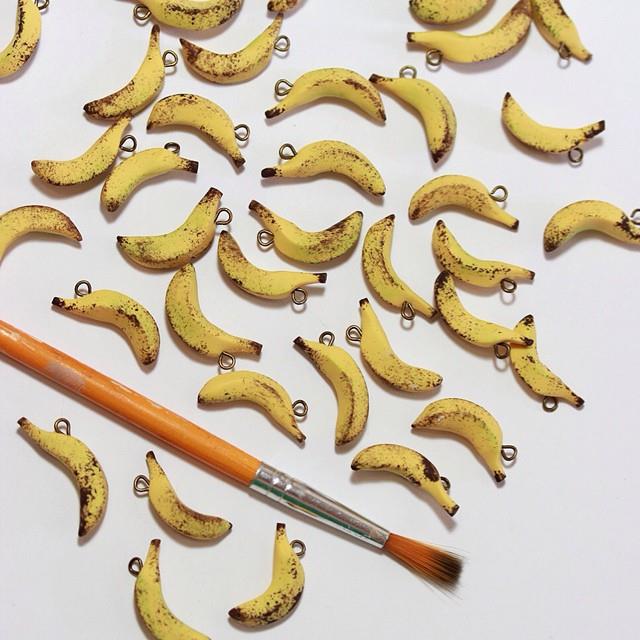
Tel Aviv-based miniaturist Shay Aaron has sculpted many new pieces of astonishingly realistic miniature food since our last post about his work. Each adorable piece is meticulously handcrafted in a 1:12 scale, sometimes using very tiny tools, such as a sewing needle.
Aaron sells the pieces as minatures or as jewelry at his Etsy store. More of his work can be seen on his Instagram feed.
Marissa Nadler released Sacred Bones debut, July, back in 2014, but she's kept busy since then by contributing to compilation records and covering well-known classics by likeminded artists. Last July it was Leonard Cohen's "Seems So Long Ago, Nancy," and at the beginning of the year, Nadler contributed a cover of Jason Molina's "More »
Monday night, as Baltimore erupted with riots and violence and anger, the city's mayor, Stephanie Rawlings-Blake, took to Twitter to share her thoughts on the events sweeping the city. The mayor talked about "the evil we see tonight." She promised that "we will do whatever it takes" to stop the destruction and restore "the will of good." Because "too many people," she said, "have invested in building up this city to allow thugs to tear it down."
To dismiss someone as a "thug" is also to dismiss his or her claims to outrage.
"Thugs." "Thug." The derision here—dismissive, indignant, willfully unsympathetic—is implied in the sound of the word itself. Spoken aloud, "thug" requires its utterer first to sneer (the lisp of the "th") and then to gape (the deep-throated "uhhhh") and then to choke the air (that final, glottal "g"). Even if you hadn't heard the word before, even if you had no idea what it meant, you would probably guess that it is an epithet. "Thug" may have undergone the classic cycle of de- and re- and re-re-appropriation—the lyric-annotation site Geniuscurrently lists 12,590 uses of "thug" in its database, among them 19 different artists (Young Thug, Slim Thug, Millennium Thug) and 10 different albums—but the word remains fraught. In a series of interviews before last year's Super Bowl, the Seattle Seahawks' Richard Sherman—who had been described by the media as a "thug," and who is African American—referred to "thug" as an effective synonym for the n-word. And in Baltimore over the past few days, the term has been flung about by commenters both professional and non-, mostly as a way of delegitimizing the people who are doing the protesting and rioting. To dismiss someone as a "thug" is also to dismiss his or her claims to outrage.
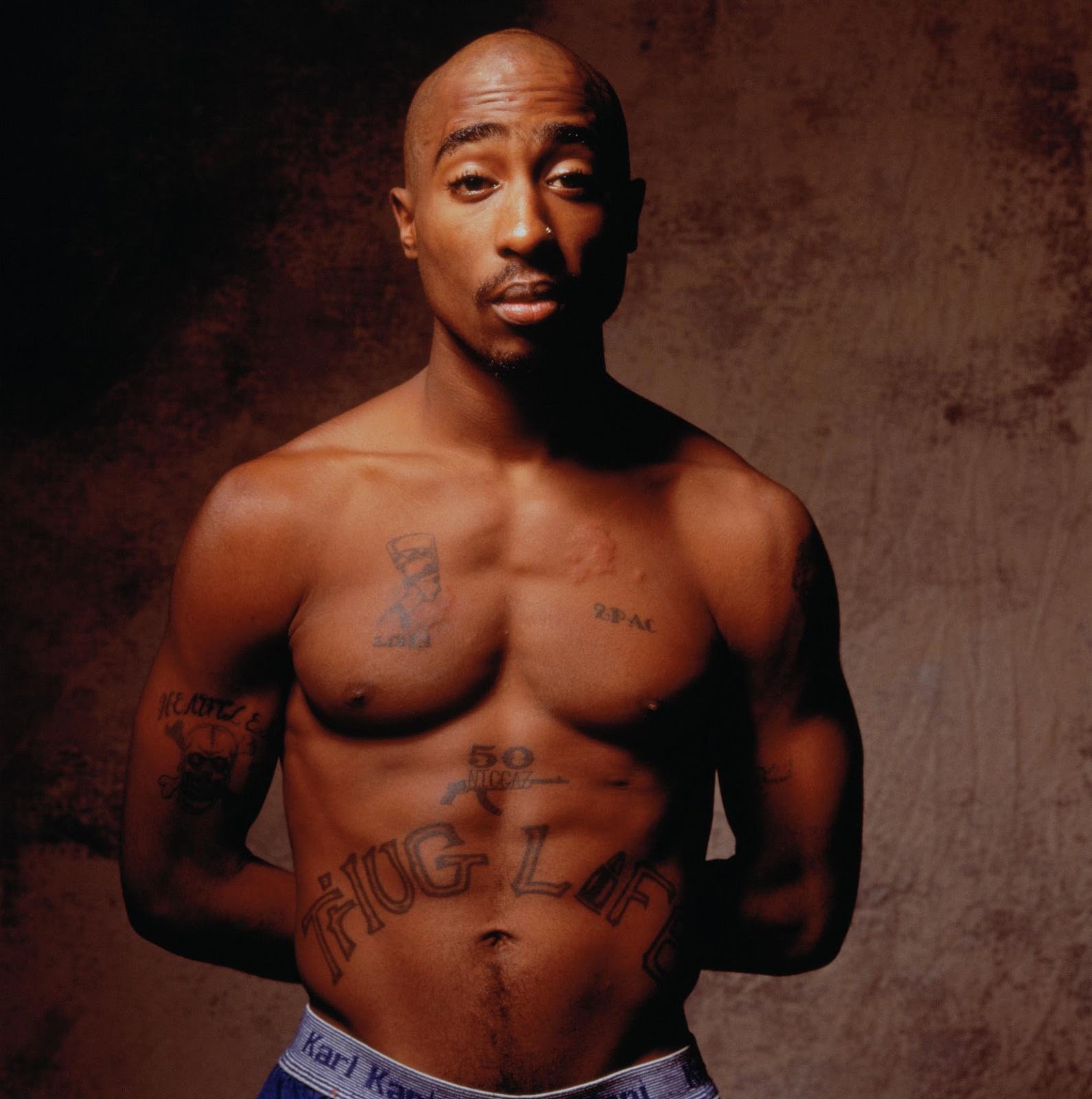
In all that, the history of "thug" goes back not just to the hip-hop scene of the 1990s, to Tupac Shakur and the "Thug Life" tattoo that stretched, arc-like, across his abdomen; it goes back to India—to the India, specifically, of the 1350s. "Thug" comes from the Hindi thuggee or tuggee (pronounced "toog-gee" or "toog"); it is derived from the word ठग, or ṭhag, which means "deceiver" or "thief" or "swindler." The Thugs, in India, were a gang of professional thieves and assassins who operated from the 14th century and into the 19th. They worked, in general, by joining travelers, gaining their trust ... and then murdering them—strangulation was their preferred method—and stealing their valuables.
The group, per one estimate, was ultimately responsible for the deaths of 2 million travelers. Mark Twain, reporting on the Thugs in his book Following the Equator: A Journey Around the World, called the collective a "bloody terror" and a "desolating scourge":
In 1830 the English found this cancerous organization embedded in the vitals of the empire, doing its devastating work in secrecy, and assisted, protected, sheltered, and hidden by innumerable confederates—big and little native chiefs, customs officers, village officials, and native police, all ready to lie for it, and the mass of the people, through fear, persistently pretending to know nothing about its doings; and this condition of things had existed for generations, and was formidable with the sanctions of age and old custom.
The Thugs, indeed, ran rampant in India until the British colonial period, when the governor-general, Lord William Bentinck, heard of them and made a concerted effort to prevent them from operating along India's roadways. According to this fantastic overview of Thuggee history from NPR's Code Switch blog, "nearly 4,000 thugs were discovered and, of those, about 2,000 were convicted; the remaining were either sentenced to death or transported within the next six years." The British overlords had successfully eradicated the network; as William Sleeman, Bentinck's deputy in charge of the effort, proudly declared: "The system is destroyed, never again to be associated into a great corporate body. The craft and mystery of Thuggee will not be handed down from father to son."
The Western fascination with the criminal collective, however, was only beginning. Through Twain's writings about them, and through 1837's vaguely anthropological Illustrations of the History and Practices of the Thug, and through Philip Meadows Taylor's 1839 novel Confessions of a Thug, "thug" entered the English language and the British and American consciousness. It came, through the authors' portrayals of systematized violence, to take on the connotation of "gangster"—a sense of the word that would get another moment of life in the popular culture through 1984's Indiana Jones and the Temple of Doom, which finds its hero rescuing a group of children who have been abducted by the Thugs.
Mark Twain noted that all of human history has found "Thugs fretting under the restraints of a not very thick skin of civilization."
More recently, as NPR notes, there have been attempts to reclaim (or re-reclaim, or re-re-reclaim) "thug" through heavy irony. There's the blog Thug Kitchen, which is dedicated to the sharing of healthy recipes and cooking tips. There's "thug lit" in publishing, which refers to fictional genres that have yet to break into the mainstream. There's the web series Thug Notes, which features a character named Sparky Sweet explaining classic works of English literature." (Sparky's summary of Heart of Darkness: "When it comes to swinging ivory for clean dollars, this fool Kurtz got the Congo sewn up.") There are all those "thug life" memes.
Given all that: Who is a thug? Who is nota thug? "The thug," the Brown University professor Tricia Rose writes in her book The Hip Hop Wars, "both represents a product of discriminatory conditions, and embodies behaviors that injure the very communities from which it comes." Thugs, in this conception, are both victims and agents of injustice. They are both the products and the producers of violence, and mayhem, and outrage. So it is fitting that, as the word's history suggests, there is—contrary to Mayor Rawlings-Blake's claims last night—a kind of universality to thuggery. Thugs are not necessarily "evil"; thugs are not necessarily opposed to "the will of good"; thugs are not necessarily unsympathetic. Which is another way of saying that thugs are human. And, being such, they evolve. Mark Twain, in Following the Equator, noted that all of human history, on some level, has found "Thugs fretting under the restraints of a not very thick skin of civilization."
We have no tourists of either sex or any religion who are able to resist the delights of the bull-ring when opportunity offers; and we are gentle Thugs in the hunting-season, and love to chase a tame rabbit and kill it. Still, we have made some progress—microscopic, and in truth scarcely worth mentioning, and certainly nothing to be proud of—still it is progress: we no longer take pleasure in slaughtering or burning helpless men. We have reached a little altitude where we may look down upon the Indian Thugs with a complacent shudder; and we may even hope for a day, many centuries hence, when our posterity will look down upon us in the same way.
Once men turned their thinking over to machines in the hope that this would set them free. But that only permitted other men with machines to enslave them.




/cdn0.vox-cdn.com/uploads/chorus_asset/file/3654546/Screen_Shot_2015-04-29_at_1.09.52_PM.0.png)





 Marissa Nadler released Sacred Bones debut, July, back in 2014, but she's kept busy since then by contributing to compilation records and covering well-known classics by likeminded artists. Last July it was Leonard Cohen's "