Chelonia (mydas) virgata, Schweiger, vulg. Carey. (1838-1857)
Russian Sledgeswhatever, this is awesome
Leave it to my state of California to head off in radical and expensive directions. Legislation has been filed that would require group insurance to cover gay and lesbian infertility treatments just as they do heterosexual. But, as I note elsewhere, AB 460 isn’t limited to a finding of actual infertility. Nor does it require that gays and lesbians have tried to conceive or sire a child using heterosexual means, natural or artificial. Rather–as with heterosexual couples–merely the inability to get pregnant for a year while having active sexual relations is sufficient to demonstrate need for treatment, meaning if the bill becomes law, it would require insurance companies to pay for services such as artificial insemination, surrogacy, etc. for people who are actually fecund. Indeed, since the bill prevents discrimination based on marital or domestic partnership status, theoretically every gay and lesbian in the state could be deemed infertile for purposes of insurance coverage merely by the fact that they don’t wish to engage in heterosexual relations.
That’s no way to contain health care costs! Moreover, I note that health care law is being used these days to promote social agendas other than access to a doctor, and I give examples, including the Free Birth Control Rule under Obamacare. I conclude my column with a warning:
Keep reading this post . . .
Les Legions Noires was a French black metal movement in the 90s.
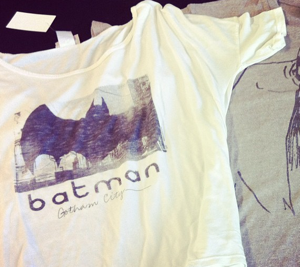
Our friends at Meltdown Comics in Los Angeles are now selling this excellent Batman/Bauhaus women's t-shirt by Junk Food Clothing. Meltdown tells me that a men's version is coming soon. These aren't on the Meltdown site so you'll have to contact them to grab one. (via @meltdowncomics on Instagram)
    
|
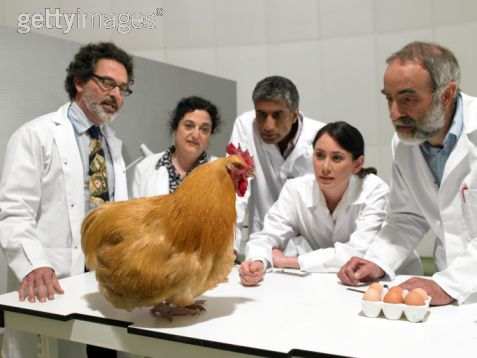
A collection of evidence suggesting that the people who take stock photographs have absolutely no idea what the process of science looks like, beyond a vague understanding that it probably involves white coats (and also beakers full of liquid).

|
|
Space Oddity, 1972
With the recent release of his new album “The Next Day,” legendary musician David Bowie also released a bunch of vintage videos online on Vimeo. They include greatest hits music videos like 1980s “Fashion” and “John I’m Only Dancing” from 1972, as well as a 1973 interview with Bowie by Russell Harty, and lots more. It’s really quite a fun trip down the memory lane of Bowie’s illustrious career.
Fashion, 1980
John I’m Only Dancing, 1972
1973 interview with Bowie by Russell Harty
Heroes, 1977
Let’s Dance, 1983
via Open Culture
Russian Sledgesautoreshare forever

[Photo: Yelp/Dave S.]
Quiet rumors have long been swirling regarding a possible new Area Four outpost in Somerville, potentially in the space of the short-lived Bearded Pig near Union Square, but this wishful thinking got temporarily drowned out by the very real launch of Area Four's food truck. Now that the truck is safely peddling piadini and breakfast sammies all around town, it's time to get excited once again about this expansion, which is starting to look a bit more real. A Chowhound poster reports seeing work orders signed by Michael Leviton/Area Four Partners in, yes, the old Bearded Pig space at 445 Somerville Ave. The poster adds that some work is going on inside. Another poster replies: "I believe this outpost was just going to be a smaller pizza/cafe type place, more akin to their cafe section." Due to the size constraints of the space, this seems likely. Got any more details on Somerville's potential new cafe and/or restaurant? Hit up the tipline!
· Area Four is apparently opening a second location in Somerville [BRT]
· March 2013 openings and closings [CH]
· All coverage of Area Four on Eater [~EBOS~]
Russian Sledgeswould watch

When Shane Carruth came out of nowhere—nowhere being the suburbs of Dallas, Texas—to win the 2004 Grand Jury Prize at Sundance with his exceptionally frugal brainteaser Primer, the story of its making got ahead of its significant accomplishment. And it was a great story: In the face of a still-nascent digital revolution, well before the technology caught up with the impulse to shoot on video, Carruth rejected the cheaper format and shot Primer on 16mm for $7,000, a near-impossible feat of planning and resourcefulness. Never mind that the time-traveling thriller, taken on its own merits, represented one of the few recent examples of serious, idea-driven science fiction to surface in a sea of pricey space adventures. This was El Mariachi redux, another Texan doing a lot with a little—and Carruth’s subsequent struggles to get another film off the ground seemed to resign him to outsider-artist ...
Read more


Read more of this story at Slashdot.

Russian Sledgesbig city closed?
 Luke O'Neil checks out the drinks at Patron's Mexican Kitchen & Watering Hole for the Metro, finding the new occupant of the former Big City space to be "a welcome change" on the condition that it might be able to "introduce the Allston nightlife crowd to the wider world of agave." $4 margaritas and $4 tapas are "likely to be the biggest draw." [Metro]
tywinning asked you:
2012-08-09 03:37As a professor, may I ask you what you think about fanfiction?
I think fanfiction is literature and literature, for the most part, is fanfiction, and that anyone that dismisses it simply on the grounds that it’s derivative knows fuck-all about literature and needs to get the hell off my lawn.
Most of the history of Western literature (and probably much of non-Western literature, but I can’t speak to that) is adapted or appropriated from something else. Homer wrote historyfic and Virgil wrote Homerfic and Dante wrote Virgilfic (where he makes himself a character and writes himself hanging out with Homer and Virgil and they’re like “OMG Dante you’re so cool.” He was the original Gary Stu). Milton wrote Bible fanfic, and everyone and their mom spent the Middle Ages writing King Arthur fanfic. In the sixteenth century you and another dude could translate the same Petrarchan sonnet and somehow have it count as two separate poems, and no one gave a fuck. Shakespeare doesn’t have a single original plot—although much of it would be more rightly termed RPF—and then John Fletcher and Mary Cowden Clarke and Gloria Naylor and Jane Smiley and Stephen Sondheim wrote Shakespeare fanfic. Guys like Pope and Dryden took old narratives and rewrote them to make fun of people they didn’t like, because the eighteenth century was basically high school. And Spenser! Don’t even get me started on Spenser.
Here’s what fanfic authors/fans need to remember when anyone gives them shit: the idea that originality is somehow a good thing, an innately preferable thing, is a completely modern notion. Until about three hundred years ago, a good writer, by and large, was someone who could take a tried-and-true story and make it even more awesome. (If you want to sound fancy, the technical term is imitatio.) People were like, why would I wanna read something about some dude I’ve never heard of? There’s a new Sir Gawain story out, man! (As to when and how that changed, I tend to blame Daniel Defoe, or the Modernists, or reality television, depending on my mood.)
I also find fanfic fascinating because it takes all the barriers that keep people from professional authorship—barriers that have weakened over the centuries but are nevertheless still very real—and blows right past them. Producing literature, much less circulating it, was something that was well nigh impossible for the vast majority of people for most of human history. First you had to live in a culture where people thought it was acceptable for you to even want to be literate in the first place. And then you had to find someone who could teach you how to read and write (the two didn’t necessarily go together). And you needed sufficient leisure time to learn. And be able to afford books, or at least be friends with someone rich enough to own books who would lend them to you. Good writers are usually well-read and professional writing is a full-time job, so you needed a lot of books, and a lot of leisure time both for reading and writing. And then you had to be in a high enough social position that someone would take you seriously and want to read your work—to have access to circulation/publication in addition to education and leisure time. A very tiny percentage of the population fit those parameters (in England, which is the only place I can speak of with some authority, that meant from 500-1000 A.D.: monks; 1000-1500: aristocratic men and the very occasional aristocratic woman; 1500-1800: aristocratic men, some middle-class men, a few aristocratic women; 1800-on, some middle-class women as well).
What’s amazing is how many people who didn’t fit those parameters kept writing in spite of the constant message they got from society that no one cared about what they had to say, writing letters and diaries and stories and poems that often weren’t discovered until hundreds of years later. Humans have an urge to express themselves, to tell stories, and fanfic lets them. If you’ve got access to a computer and an hour or two to while away of an evening, you can create something that people will see and respond to instantly, with a built-in community of people who care about what you have to say.
I do write the occasional fic; I wish I had the time and mental energy to write more. I’ll admit I don’t read a lot of fic these days because most of it is not—and I know how snobbish this sounds—particularly well-written. That doesn’t mean it’s “not good”—there are a lot of reasons people read fic and not all of them have to do with wanting to read finely crafted prose. That’s why fic is awesome—it creates a place for all kinds of storytelling. But for me personally, now that my job entails reading about 1500 pages of undergraduate writing per year, when I have time to read for enjoyment I want it to be by someone who really knows what they’re doing. There’s tons of high-quality fic, of course, but I no longer have the time and patience to go searching for it that I had ten years ago.
But whether I’m reading it or not, I love that fanfiction exists. Because without people doing what fanfiction writers do, literature wouldn’t exist. (And then I’d be out of a job and, frankly, I don’t know how to do anything else.)
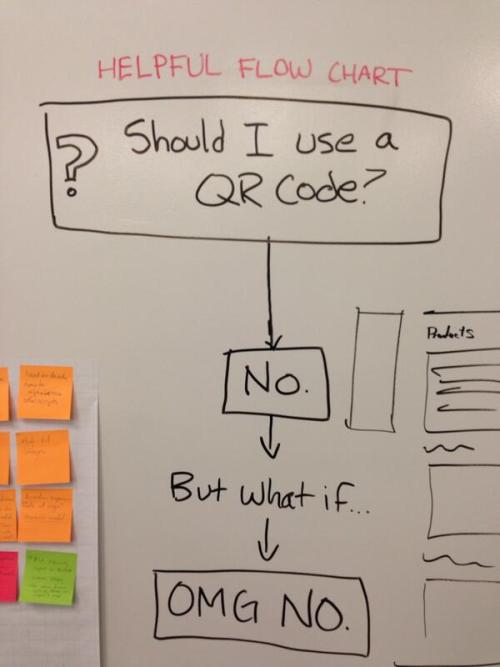
Should I use a QR Code?
Russian SledgesBYOP
A vegan New Jersey couple say they feel cheated after they supplied their own whole-wheat pasta for their restaurant meal, NJ.com reports, and the restaurant refused to give them a discount. Jack and Toby Litsky went meatless for health reasons last year, and while they quickly dropped some pounds and their cholesterol levels in the process, the site notes, they also got sick of explaining the details of their new diet when eating out — the Litskys avoid oil, for example, which is vegan, which is confusing. So, taking a page from the food allergy playbook, the married couple printed their restrictions on cards for cooks to use while preparing their food, which reportedly worked well for everyone, until Jack and Toby printed out a restaurants.com coupon, readied their rotini one recent Saturday night, headed for Monticello at Red Bank for a meal with some friends. They say they were shocked and outraged to learn that management had billed them $24 for each portion, instead of the $12 the couple had been charged in the past.
Litsky argued he was entitled to a discount because, you know, he brings the pasta: "We don’t ask for a discount but they usually give one," he tells the site, adding the restaurant had always given a discount in the past. On the night in question, however, Litsky says he was not only not given a break, but the portions were smaller — leading to a suspicion that the kitchen was holding on to some of his precious Shop-Rite brand 100 percent whole wheat rotini. Plus, his olives had pits.
When Monticello's owner was summoned, Litsky explained $24 for his pasta was unfair, especially because the restaurant had charged "a lot less than that on several occasions." The owner called the police, who instructed the table to pay the entire bill. After initiating a claim with American Express, Litsky says he's reached a compromise with the restaurant, whose owner confirms an accord has been reached. "I see he’s reasonable," she says, "and I don’t want a customer to be upset."
Despite the resolution, the story is really much less cut and dried. Take a look at the completely unclear and somewhat unspecific text of the Litsky's "instructions" for the kitchen:
We are vegans (no meat, fish or dairy), We also stay away from oil.
Extra Extra Red Tomato Sauce
Extra Extra Extra mushroom
Extra Extra Extra onions
Extra Extra Extra red bell pepper (not roasted pepper)
Black and green olives
Capers
PLEASE, NO OIL You can sautee the ingredients in white wine or in the red sauce. Thank you so much!
First, nothing about the word extra, especially when repeated three times in a row for a grand total of eleven instances, would seem to suggest a discount should be in order. Even if onions and red bell peppers are low-cost items, as we are told, a group of customers occupying a restaurant table on any given Saturday night means, at least in theory, that another group of customers won't be sitting there. It's the reason Alder has a "plating charge" of $8 per person for birthday cake slices if you elect, for example, to bring in your own Fudgie the Whale in lieu of its desserts. It's not that Wylie Dufresne really thinks you and your friends would be much better off by ordering the Banoffee tart (and you would); it's just that the 56-seat restaurant has significantly less of a chance of making a profit when customers don't buy the food that's been made there.
It's not actually reasonable to expect a discount just because you received one in the past for a special order without a fixed menu price, right? If so, does this mean the customer is sometimes wrong?
Bamboozled: Special order leads to special bill, vegan said [NJ.com]
Read more posts by Hugh Merwin
Filed Under: the spaghetti incident, injustice, monticello, toby litsky, vegan

Remember that great story from December, in which the dairy-smitten Serbian professional tennis champion Novak Djokovic had reportedly purchased the world's entire inventory of a precious (and pricey) kind of Serbian donkey milk cheese called pule, which was all pretty wonderful until it was revealed that a Daily Mail journalist stretched the story way out and Djokovic had in fact only received a courtesy sample of the stuff and hadn't even bothered to call back the donkey milk people, who were no doubt waiting anxiously by the phone for their big break? A million donkeys cried that day, and significantly fewer noted yet another blow to professional ethics. But now there's good news! That fake story has now inspired scientists and a cheesemaker from Oamaru, New Zealand, to start producing cheese from farmed red deer's milk. Deer cheese!
University of Otago Food Science Department lecturer Alaa El-Din Ahmed Bekhit says he saw the Djokovic-donkey-cheese news and thought, I could do this. He got together with some other like-minded thinkers and they sent some deer milk to a cheesemaker in Oamaru. There's no word on how the newly finished sample blocks taste, but they're now being aged for six months and will be auctioned off for charity. They are, however, apparently filled with immuno-boosting compounds and "bioactives," which may be good for you. We hope these deer cheese people take PayPal.
Farmed red deer milk goes for around $84 a liter, according to the scientists. Because each animal may produce up to 200 liters a season, the burgeoning New Zealand deer cheese scene could mean big bucks, in more ways than one.
Deer milk cheese offers health benefits [Stuff.co.nz]
Earlier: Novak Djokovic Now Controls the World’s Supply of Precious Donkey Cheese
Earlier: Novak Djokovic Does Not Actually Own Any Precious Donkey Cheese
Read more posts by Hugh Merwin
Filed Under: washed rind, alaa el-din ahmed bekhit, deer cheese, donkey milk cheese, novak djokovic
Russian Sledges"With Spencer McMinn, PhD, distiller at GrandTen Distilling; Amy Stewart, contributing editor, Fine Gardening magazine, cofounder of Garden Rant, and author of The Drunken Botanist"
There have been many nights where I have gone to bed hungry because the dining halls closed too early and I didn’t have any decent food sitting in my dorm. I honestly never thought that living away from home would bring up so many problems in my life.
The Digital Public Library of America is a beautiful idea. Take the physical-to-digital ambition of Google Books and wed it to the civic spirit of the US public library system, providing a centralized portal to a decentralized network of digital media from libraries, museums, universities, archives, and other local, regional, and national collections. Framed in this way, it all seems so logical, so proper, so clear — everything the internet as a public commons promised to be. Surely the messy reality of copyright law, limited local budgets, or the cat-herding that goes into any grand alliance of independent institutions was bound to foul it up somewhere.
The DPLA is in fact real, and will hold a launch event on April 18 at the Boston Public Library. In an essay in The New York Review of Books, Harvard University Librarian Robert Darnton describes how the DPLA's organizers overcame some of that messy reality to get the new nonprofit off the ground, and some of the obstacles (read: copyright) with which it's still grappling. (As a historian of the 18th century, Darnton also unsurprisingly places the DPLA within the overlapping traditions of the Enlightenment and the American Revolution.)
"Any reader [can] consult works that used to be stored on inaccessible shelves or locked up in treasure rooms."
Unlike Google Books, the DPLA doesn't hoover up institutions' documents to be stored on its own servers. Its primary goal is to support coordinate scanning efforts by each of its partner institutions, and to act as a central search engine and metadata repository. Most of these libraries and museums have been slowly scanning and cataloguing their collections for years; the DPLA helps make those materials aggregatable and interoperable. At least initially, it's not nearly as focused on printed books as Google has been, but rather gathers an eclectic mix of texts, photos, data, and art, especially rare documents. It also provides a sophisticated frontend portal for discovery and research.
Darnton describes the DPLA's goal well:
The user-friendly interface will therefore enable any reader — say, a high school student in the Bronx — to consult works that used to be stored on inaccessible shelves or locked up in treasure rooms — say, pamphlets in the Huntington Library of Los Angeles about nullification and secession in the antebellum South. Readers will simply consult the DPLA through its URL, http://dp.la/. They will then be able to search records by entering a title or the name of an author, and they will be connected through the DPLA’s site to the book or other digital object at its home institution.
The DPLA's partner institutions include the Smithsonian, the National Archives and Records Administration, Harvard University Library, the New York Public Library, ARTstor, and a number of state and regional digital library initiatives that will act as "service hubs" for local libraries and museums. The one glaring omission that would seem crucial to any "public library of America" is the Library of Congress; Darnton writes that "the sponsors naturally hope that the Library of Congress also will participate." The organization is fully funded for its first three years by grants from federal endowments and private foundations (Sloan, Arcadia, Knight, Soros, the NEH, the Institute of Museum and Library Services — or as DPLA Executive Director Dan Cohen affectionately calls them, "the usual suspects"). But continued fundraising and evangelizing remains a big part of Cohen's mandate going forward.
The DPLA as a repository, the DPLA as a platform
The competitive goal is to catch up with the rest of the world. "Europeana has aggregated 20 million cultural heritage objects from hundreds of sites," Cohen tells The Verge. But as a historian and digital humanist, Cohen is more excited about what he calls "the DPLA as a platform."
"The launch will showcase some transformative uses [of the archive] that show what you can do with a massive digital library that's been operationalized," says Cohen. The DPLA has been equipped with a rich API for developers, artists, and others to engage, adapt, and revisualize art and text. "The DPLA's terms, if you look at them, are extremely permissive," Cohen adds. "We are really fighting for a maximally usable and transferrable knowledge base. Everything, where possible, will be CC-zero licensed. If you're Google, you can come right in and take everything. It's just like Wikipedia. You can grab this stuff and use it as you want." Text mining, mapping, art projects — it's all open for business.
The DPLA as an advocate for open access and enrichment of the public sphere
Cohen also notes that the DPLA's "enrichment of the public sphere will be important from an advocacy role." He wants to create a platform where academic scholarship, whether in journals or monographs, can be disseminated and preserved in open formats for current and future generations. He wants to find ways for public libraries to engage in collective action with book publishers to make e-books as available as possible to US citizens. He wants the DPLA to explore alternative approaches to copyright that preserve authors' and publishers' chief profit window but also maximizing a work's circulation, including the "library license" that would allow public, noncommercial entities (like the DPLA) to have digital access to certain works in copyright after five years, or Knowledge Unlatched, a consortium that purchases in-copyright books for open access. The DPLA also wants to work directly with authors to donate their books to the commons.
So while the DPLA's holdings aren't limited to books, its inauguration could pose a real challenge to the current regime of publishers, booksellers, and search engines in the US. It aims to tilt knowledge repositories away from private control and toward a public commons. The only things the brand-new institution will have to navigate are getting money, finding talented developers, fostering public awareness, and balancing the interests of a wide range of stakeholders, both public and private, commercial and noncommercial, with the collected cultural heritage of a nation in the balance. But while those obstacles are formidable, they're small compared to the inertial forces that could have kept the DPLA from ever getting off the ground. The thing exists. That's the hardest part, and that's what matters.


Etsy shop Harmonden sells 8-bit crochet rugs featuring characters from popular video games like Super Mario Bros., Pokémon, The Legend of Zelda, Megaman, and Minecraft. The rugs are available to purchase in full-size and mini versions, and the creator also takes requests.


images via Harmonden
via It 8-Bit

“This is not a game” by artist Lorenzo Quinn is a large-scale sculptural installation of giant hands playing with a life-sized tank and toy soldiers. Exhibited on a floating platform at the 2011 Venice Bienalle, the installation featured a 37-ton Russian T-55 tank.
The human figure and especially hands show up frequently in Quinn’s work. In recent years he has created two other more playful installations of hands playing with life-sized toys. The 2010 installation “Vroom Vroom” features a giant hand playing with a Fiat Cinquecento car. “La Dolce Vita” is a 2011 installation of a giant hand playing with a Vespa scooter.


“Vroom Vroom”

“La Dolce Vita”