Shared posts

07 Dec 13:20

Here Be Monsters

by Marina Warner
Marina Warner

Sea Monsters on Medieval and Renaissance Maps
by Chet Van Duzer

Sea Monsters: A Voyage Around the World’s Most Beguiling Map
by Joseph Nigg

Witches and Wicked Bodies
an exhibition at the Scottish National Gallery of Modern Art, Edinburgh, July 27–November 3, 2013; and the British Museum, London, September 2014–January 2015

Monsters still fascinate precisely because they express what might lie beyond the light of common day. And as in the case of Goya’s dream of reason, the fear and awe monsters inspire can’t entirely be dispelled by enlightened investigations, neither in the past nor today. The ocean swirls in a condition of mythopoeic duality: it is there, it covers two thirds of the world, it is navigable and palpable and visible, but at the same time, unfathomable, stretching down in lightless space and into the backward abysm of time where every fantasy can be incubated.

30 Nov 20:57

Comet ISON Might Not Be Dead after All, Scientists Say

by Connor Simpson
Image AP AP

In a reversal that would make a comic book writer blush, scientists seem ready to resurrect Comet ISON after its untimely Thanksgiving demise. 

Over the holidays, NASA brought leading astronomers together to watch Comet ISON as the flying bundle of material made its first and only trip around the sun. But the viewing ended up being an astronomical snuff film: ISON seemed to die as it passed by the sun.

But, wait! There's hope on the horizon. New photos show ISON streaming past the sun. Some scientists noticed ISON's remnants brightly shining on the other side of the sun yesterday, and NASA admits now they may have been on to something. NASA, brimming with excitement, explains the fortunate turn of events

As ISON appeared to dim and fizzle in several observatories and later could not be seen at all by NASA's Solar Dynamics Observatory or by ground based solar observatories, many scientists believed it had disintegrated completely. However, a streak of bright material streaming away from the sun appeared in the European Space Agency and NASA's Solar and Heliospheric Observatory later in the evening. The question remains whether it is merely debris from the comet, or if some portion of the comet's nucleus survived, but late-night analysis from scientists with NASA's Comet ISON Observing Campaign suggest that there is at least a small nucleus intact.

Per Gizmodo, these GIFS shows why scientists were quick to declare ISON dead after its sun trip. When it emerged on the other side, ISON seemed to dim significantly on the other side. Scientists knew something would come out the other side, but weren't sure what. Initially they assumed what was showing on the telescopes was merely... what's left. But, as you can see, ISON gets brighter as it travels away from the sun, further confusing the professionals. 

Slate's Phil Plait is excited too, saying it "sure looks like something survived intact," according to the new evidence. Piatt explains why, really, the only strategy available to scientists is the "wait and see" approach:

 At this point all I can say is the same thing I've been saying all along: predicting comets is like predicting cats. Good luck with that. For those keeping score at home, it got bright, then it faded, then it got all smeared out, then it came around the Sun smeared out, and then it seemed to get its act together again. At this point, I refuse to make any further conclusions about this comet; it seems eager to confuse. I've been hearing from comet specialists who are just as baffled... which is fantastic! If we knew what was going on, there'd be nothing more to learn.

If ISON does survive its close call with the sun, earth will receive a magical show as it passes by our planet (hopefully without major incident) in December. Scientists have no idea what ISON is made of, lending to the confusion surrounding the mysterious comet. 


30 Nov 20:56

Sorry, America, but Rob Ford Probably Can't Cross the Border

by Connor Simpson
Image Reuters Reuters

The chances Rob Ford will ever successfully visit the U.S. now that Customs knows he smokes crack are slim. 

Toronto mayor Rob Ford is a huge sports fan. This has been well-established by now. (He was wearing a fifteen-year-old NFL tie when he admitted smoking crack for pete's sake.) His sports fandom, while probably his purest quality, brought a whole new problem to the forefront over the last two days. 

Ford's favorite hockey team, the Toronto Maple Leafs, play in the National Hockey League's annual New Year's Day outdoor extravaganza, the Winter Classic, against the Detroit Red Wings, in front of approximately 107,000 people at Michigan's Big House football stadium, this year. Ford told the Toronto Sun he "definitely" wants to attend the game, which means crossing the Canada-U.S. border. Thing is, people who admit smoking crack usually run into trouble at Customs. So the question presented itself: will Ford be allowed into the U.S.?

Considering the story involved Rob Ford, the Toronto Maple Leafs and American validation, Canadian media did a full court press to get the answer. “Under the law, (immigration officers) are supposed to bar, or at least ask him, because they’re now aware of it,” Henry Chang, an immigration lawyer at Blaney McMurtry, explained to the Toronto Sun. “My advice to Rob Ford would be, ‘Don’t leave town.’ The short version of a long story is yes, he has a border problem,” Joel Sandaluk, a lawyer with the Toronto firm Mamann, Sandaluk & Kingwell LLP, told the Toronto Star.

A Customs spokesperson very patiently confirmed Ford will have trouble crossing the border to the Toronto Star

In an email exchange, Customs and Border Protection public affairs officer Mike Milne quoted from the controlled substances section of the U.S. Immigration and Nationality Act, which says someone is “inadmissible” to the U.S. if he has either been “convicted of” or “admits having committed” a violation of drug laws in the U.S. or elsewhere.

When pressed to clarify, Milne highlighted the words “admits having committed” and “inadmissible” in bright yellow. Translation: the admission of crack use is itself grounds for refusing a foreigner entry.

But border guards are given some wiggle room, Michael Niren, an expert in both Canadian and U.S. immigration issues, told Yahoo Canada News. So there could be, seemingly, some hope for Ford, right? Wrong. "There is discretion for border officials to 'parole' him on humanitarian grounds, but that happens usually only in extreme cases," Nirren said. "Not sure the Winter Classic event would cut it."

The border guards probably won't care the Winter Classic is the biggest game ever.

Ford's best hope is to apply for a “waiver of inadmissibility” that will assure him safe passage. But the form takes up to a year to process and costs over $500 dollars. 

Of course, other admitted drug users pass over the border all the time. Another Canadian politician, federal Liberal party leader Justin Trudeau, visited Washington recently a few weeks after admitting he smoked weed once after getting elected. Snoop Dogg, a well-known fan of the chronic, loves Canada, and passes through the border quite regularly. 

Realistically, another legal expert explained, Ford sealed his fate long ago during his many infamous press conferences. “Even people who flippantly mention to a U.S. customs agent that they smoked a bit of weed in their life can have problems,” Sandaluk said the Star. “And I believe in Ford’s case, he said ‘a lot’ of weed. And then (he) spoke about smoking crack.” The spotlight, which Ford clearly enjoys, as he and and his brother are negotiating a reality show, will likely keep him from his beloved Maple Leafs. But in a year or two, if he files the right papers — files, not rolls— his problems may go away. 


30 Nov 15:26

Wolvserpent - Perigea Antahkarana

by noreply@blogger.com (Max Rotvel)
Russian Sledges

via snorkmaiden

Review by Aaron Sullivan.


When one thinks of hot beds of American metal Boise, Idaho isn’t exactly first on the list. But with the latest from Wolvserpent that all might change.

I was originally introduced to them in 2008 when they were called Pussygut with the song She Hid Behind Her Veil… . Admittedly, the band name was all that left an impression. By 2010 they had ditched the Pussygut name in favor of Wolvserpent. But up until seeing them live a few days ago I had paid them no mind. Not really sure why I even decided to go see them since I had not even heard any of their material since my first encounter. But I hadn’t been to a show in some time and figured why not. Man am I glad I did.

Photo by Taylor Keahey.

Wolvserpent is a two person band consisting of Blake Green on guitars/vocals and Brittany McConnell on drums/vocals/violin. They play what would be described as Drone/DOOM. Along with that are hints of Post-Rock, Ambient, Black Metal, and enough atmosphere to paint a picture by. Think Sunn O))) meets Godspeed while living in the woods with Wolves in the Throne Room. The drumming is bassy. Her toms are almost as big as her bass drum. They are played like rhythmic chants rather than keeping time. Blake’s guitar can go from post rockish drones to DOOM crushing riffs all in one song. What I love is that his heavy guitars are never overly distorted or distract from the atmosphere of the songs. Never trading one for the other but instead always keeping a balance. Vocals are shared. Brittany’s being clean and ethereal. Blake’s are anything but. A mix of throaty growls and blackened hisses.

Photo by Taylor Keahey.

This a two CD/L.P. album that is about total immersion. The atmospheres created within are all encompassing for the listener. With songs well over the 15 minute mark that is no easy task. But they pull it off masterfully. Since buying the album at the show it has been on a constant rotation. There is no doubt this will be on my year end list.


[Go to the post to view the Bandcamp player]

30 Nov 14:19

Government Connections: 1959

by Dave
Russian Sledges

via multitask suicide

January 27, 1959. Washington, D.C. "Women working at the U.S. Capitol switchboard. An average of 50,000 calls are placed through the board daily." Photo by Marion Trikosko for U.S. News & World Report. View full size.
30 Nov 14:07

matelate: doctorwinchesterin221b: lauradoesthings: Good Guy...

Russian Sledges

via snorkmaiden

while I would qualify some of these statements, I very much support #popememe


matelate:

doctorwinchesterin221b:

lauradoesthings:

Good Guy Pope Francis

That is what it means to be a good Christian/Catholic.

Take notes Westboro Baptist Church.

image

ahh yes good is being done in the world

i hope he stays for a long time. 

30 Nov 14:04

GIANT CAT SHAPED COUCH! GIANT CAT SHAPED COUCH!

by Meredith Woerner
Russian Sledges

#nottheonion

GIANT CAT SHAPED COUCH! GIANT CAT SHAPED COUCH!

Throw away your crappy regular shaped couch, and get a CAT COUCH. Finally a cat creation that will cuddle you back for hours, before you finally crawl away in a puddle of your own tears.

Read more...


30 Nov 04:02

justcarl: They’re at it again.

Russian Sledges

via snorkmaiden


justcarl:

They’re at it again.

30 Nov 04:00

1913 : Anastasia selfie

by Amanda
Russian Sledges

via snorkmaiden

Anastasia Selfie

29 Nov 17:59

Paleo Soup: It Doesn’t Really Exist

by drew
Russian Sledges

via multitasksuicide

paleo-soup

The paleo diet has become popular in recent years. It eliminates processed food and causes the average person to lose weight, as they consume fewer calories when they eat meat, vegetables, and fruit instead of ice cream and french fries. Unfortunately, the preponderance of “paleo recipe” books ignores the entire theory of paleo: that we were healthier in the paleolithic area, when humans had stone tools and had just figured out how to make tools out of stone.

Long story short: paleolithic man did not have cookware. So he did not have soup.

You can go looking for any one of dozens of “Paleo Soup” recipes, but my far-and-away favorite is “Paleo Crock Pot Soups And Stews.” Yes, before carving a rock with a rock to make a sharp rock and endurance-hunting a deer for twelve miles across a cold grassland, paleolithic man made sure to load up his crock-pot with tough meat, so it would be tender when he returned to his cave that evening. There’s also Paleo Crockpot Cookbook and Paleo Slow Cooker Recipes, for the discerning pre-Pleistoscene hominid.

No woolly mammoth recipes, unfortunately, despite evidence that paleolithic man hunted this species to extinction.

28 Nov 07:36

The only reason to be sorry Silvio Berlusconi is leaving parliament

by Jason Karaian
Russian Sledges

via firehose

What's good for the camera is good for the people.

After 19 years in parliament and nine years as prime minister, it looks like the end of the road for Silvio Berlusconi. Today Italy’s Senate voted to expel the 77-year-old billionaire due to his conviction of tax fraud last year. At a rally with supporters, the former prime minister, with typical bluster, called it “a day of mourning for democracy.”

The vote strips Berlusconi of his immunity to arrest, although most expect him to serve only a year of community service for the fraud conviction. But there are plenty of other legal cases pending against Berlusconi, who is now barred from holding office for six years.

Of course, Berlusconi has been counted out many times before. And having only relaunched and rebranded his political party last month, he is unlikely to fade away from the political scene completely. That, at least, is the hope among photojournalists, who have counted on the colorful, controversial at at times cartoonish figure for a steady stream of striking shots over the years. For others, too, the main reason to be sorry Silvio Berlusconi is leaving parliament is the photos. Here are a few:

Berlusconi attends a session at the Senate in Rome on Mar. 16. Reuters/Remo Casilli
Berlusconi listens to remarks by former US president George W. Bush in Dallas on Apr. 25. Reuters/Jason Reed
Berlusconi gestures as he appears as a guest on a television show on Jan. 9. REUTERS/Remo Casilli
Berlusconi next to Argentina’s president Cristina Fernandez de Kirchner during the G20 Summit on Nov. 3, 2011. Reuters/Yves Herman
Italy’s economy minister Giulio Tremonti arrives to attend a news conference with Berlusconi on Aug. 12, 2011. Reuters/Remo Casilli
Berlusconi is helped by police after he was attacked in Milan on Dec. 13, 2009. He was hit by a small model of a Milan cathedral hurled at him during a political rally. Reuters/Livio Anticoli/Italian Prime Minister's Press Office
Berlusconi greets US president Barack Obama and first lady Michelle Obama at the G20 Summit in Pittsburgh, Pennsylvania, on Sep. 24, 2009. Reuters/Jim Young
Berlusconi wears a railwayman’s hat as he speaks to journalists at the Termini rail station in Rome on Mar. 24, 2009. REUTERS/Alessandro Garofalo
Berlusconi with Turkish counterpart Tayyip Erdogan during a news conference on Nov. 12, 2008. Reuters
Berlusconi speaks with France’s president Nicolas Sarkozy and German chancellor Angela Merkel during a news conference at the Elysee Palace on Oct. 4, 2008. Reuters/Philippe Wojazer
Berlusconi jokes with US President George W. Bush during a meeting in Rome on Jun. 12, 2008. AP Photo/Andrew Medichini
Berlusconi plays the pirate with a knife before cutting a cake at the “No Tax Day” meeting organized by his political party on Dec. 11, 2004. AP Photo/Antonio Calanni
Russian president Vladimir Putin presents a book about his rural lodge in Zavidovo to Berlusconi on Feb. 3, 2003. AP Photo/Viktor Korotayev
Berlusconi addresses supporters during his electoral campaign on Mar. 19, 1996. AP Photo/Plinio Lepri
28 Nov 07:32

mughalshit: Painting of the Dodo by Mansur India, Mughal, 1610...

by ushishir


mughalshit:

Painting of the Dodo

by Mansur

India, Mughal, 1610 - 1625

According to Wikipedia, Mansur was the first person to paint the dodo bird.

28 Nov 05:46

Zardoz (1974)

Russian Sledges

I'm assuming the red parts are sean connery's codpiece

27 Nov 23:18

parlor - Marusa no Onna (Capcom - Famicom - 1989) requested by...

Russian Sledges

via firehose


parlor - Marusa no Onna (Capcom - Famicom - 1989)

requested by sighkingu

27 Nov 23:01

When mushrooms go to war

by Maggie Koerth-Baker
Russian Sledges

via multitask suicide

Fungus can fight. Using poisons and flesh-dissolving enzymes (think: mycological "meat" tenderizers), they can defend their turf from incursions by other fungi. Here, a sulfur tuft mushroom (top right) and Phanerochaete velutina (bottom left) hash it out.


27 Nov 21:29

$200,000 Bail Set For Man Accused Of Dunkin’ Thefts

by The Associated Press

CANTON, Mass. — A Dedham man investigated in connection with a string of robberies at Dunkin’ Donuts stores in eastern Massachusetts has been ordered held on $200,000 bail.

Isaiah Murphy pleaded not guilty at his arraignment on Wednesday in Stoughton District Court on armed robbery charges in two robberies that occurred in Canton.

Authorities continue to investigate whether the 23-year-old Murphy is linked to more than 20 robberies.

According to The Boston Globe, Norfolk County prosecutor Chris Meade told the court that Murphy once worked at a Dunkin’ Donuts in Westwood and left the job under “less than amiable” circumstances.

Murphy was arrested on Tuesday. Police said evidence found at his home linked him to the robberies.

Defense attorney Jim Gavigan said Murphy and his family were “devastated” by the charges.

27 Nov 21:18

Burberry has lost rights to its signature tan, black and red plaid in China

by Heather Timmons
Russian Sledges

via firehose

Expect to see a lot more bags like these in China (the real Burberry is on the right).

Burberry no longer holds exclusive rights to its iconic tan, black and red tartan known as the “Haymarket Check” in China, after the country’s national trademark office revoked the company’s copyright of the design last week.

The decision is the latest and most momentous in a long-running legal battle between Burberry and Polo Santa Roberta, a Chinese bag and apparel maker from Foshan which has also faced off against Burberry in Hong Kong and Taiwan courts for its look-alike bags. Burberry’s sales in China have been more buoyant this year than other, higher-priced luxury goods makers like Louis Vuitton, in part because the brand is still a novelty there. An influx of Haymarket Check-patterned goods, which seems likely after the recent court decision, might make that company seem a lot less novel.

The decision, from the Trademark Office of the State Administration for Industry & Commerce of the People’s Republic, came because Burberry had not used the “Haymarket” pattern in three years in China, lawyers for Polo Santa Roberta said in a press conference (link in Chinese) last week. By maintaining exclusive use of the pattern, Burberry was monopolizing part of Scotland’s cultural heritage, lawyer Tang Xiangyang explained during the press conference. Polo Santa Roberta is seeking $82 million in damages from Burberry as well.

The Scottish Register of Tartans, incidentally, refers to the pattern in question as “Burberry,” and says “it has become so much part of the Burberry image that it has been trademarked and can now be regarded as a Corporate tartan.”

In a statement, Burberry said it would fight the decision.

Burberry is appealing against a recent decision by the China Trade Mark Office in relation to the Burberry Check trademark. We are confident that our appeal will be successful. The Burberry Check remains a registered trade mark exclusively owned by Burberry and no other parties can use the mark without Burberry’s proper authorisation.

The company promised to use the “strongest possible action” against companies who use its trade markets “unlawfully.

27 Nov 21:15

Bilbo Baggins Is a Serial Middle-Finger Flipper

by Rob Bricken
Russian Sledges

via firehose ("first-ballot eternal auto-reshare hall-of-famer")

<3 martin freeman

Bilbo Baggins might be as pleasant a Hobbit as ever lived, but the clearly same can't be said of the actor who plays him, Martin Freeman. The evidence is in the above video, which reveals the many, many times Freeman constantly flipped the bird on The Hobbit set.

Read more...


27 Nov 21:12

Oregon Family Council Compares Gay Marriage to Neo-Nazis

by Paul Constant
Russian Sledges

via firehose

Oregon Jewish leaders are hopping mad over a statement by an anti-gay-marriage spokesperson who compared loving gay couples to neo-Nazis, according to the Oregonian's Jeff Mapes:

Teresa Harke, a spokeswoman for the [Oregon Family Council] made the remarks while explaining the rationale for a proposed ballot measure from the group that would allow businesses to refuse to provide services for same-sex weddings if they had religious objections.

"Would you expect a Jewish bakery to serve a neo-Nazi who wanted a cake with a swastika on it?" Harke said in an interview with The Oregonian.

They went and Godwinned. You should never Godwin before a public vote; it's bad form. You should go check out the article to read the responses to the Oregon Family Council, which includes statements that people should never have to say in a sentence. For example: "Here you're making a comparison between a hate group that supports the elimination of Jews in the world and a couple that wants to sanctify their marriage."

[ Subscribe to the comments on this story ]

27 Nov 21:11

Slideshow: 10 Photos Of Plus-Size Models We Deserve A Pat On The Back For Running

Russian Sledges

via firehose

"Another plus-size model, presented without comment. Can you believe that we’re even doing something so astonishing? Please share this slideshow and tell everyone how astonishing we are."

10 Photos Of Plus-Size Models We Deserve A Pat On The Back For Running


27 Nov 21:07

All this technology is making us antisocial - Imgur

by djempirical
Russian Sledges

via firehose

27 Nov 21:01

Convicted Mobster Bulger Moved To Brooklyn

by The Associated Press

BOSTON — Convicted former Boston crime boss James “Whitey” Bulger has been moved to another lock-up.

According the website of the Federal Bureau of Prisons, Bulger is now at the Metropolitan Detention Center in Brooklyn, N.Y. He had been held at the Plymouth County House of Correction since his capture in California in 2011.

The 84-year-old Bulger was sentenced earlier this month to life in prison. He was found guilty in August by a federal jury in 11 of the 19 killings he was accused of, and other crimes.

It’s not clear how long Bulger will stay at the Brooklyn facility. A message left with his attorney was not immediately returned.

The Metropolitan Detention Center is described on the bureau’s website as an administrative facility that houses male and female inmates.

27 Nov 18:25

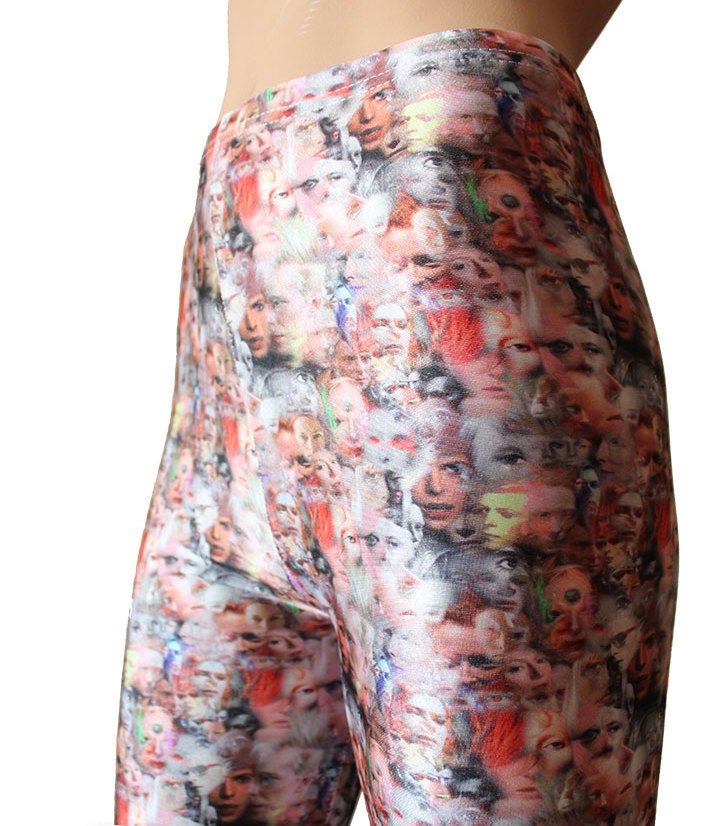
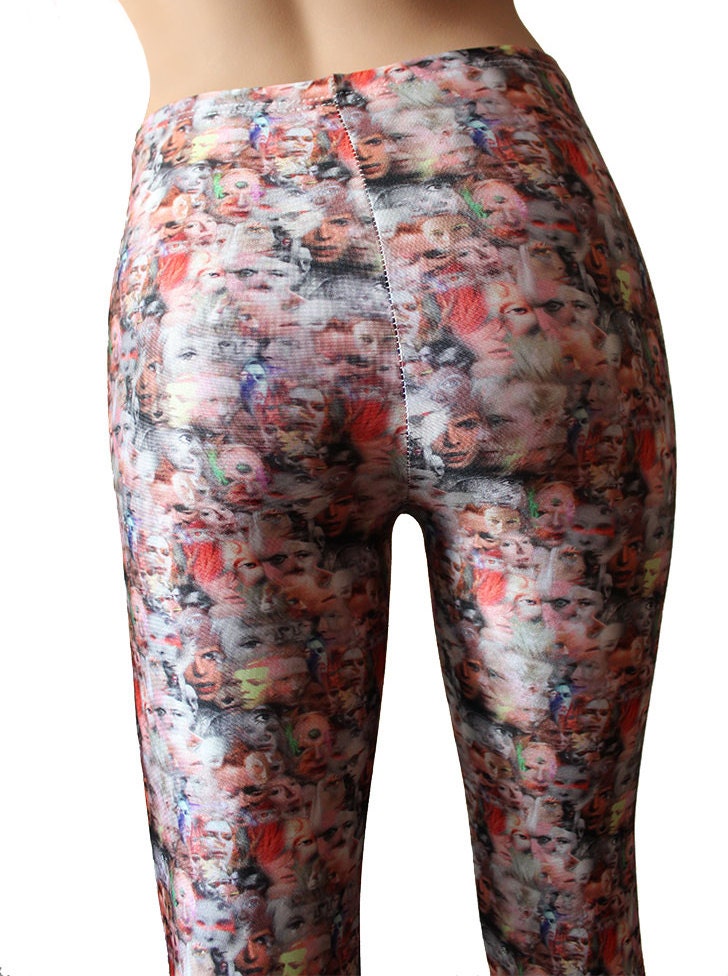
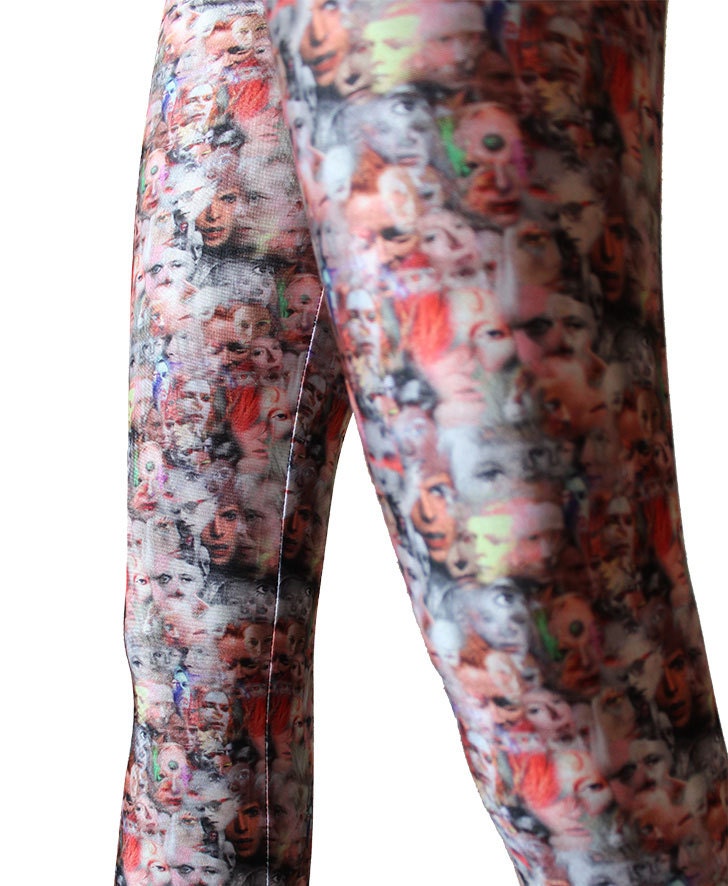
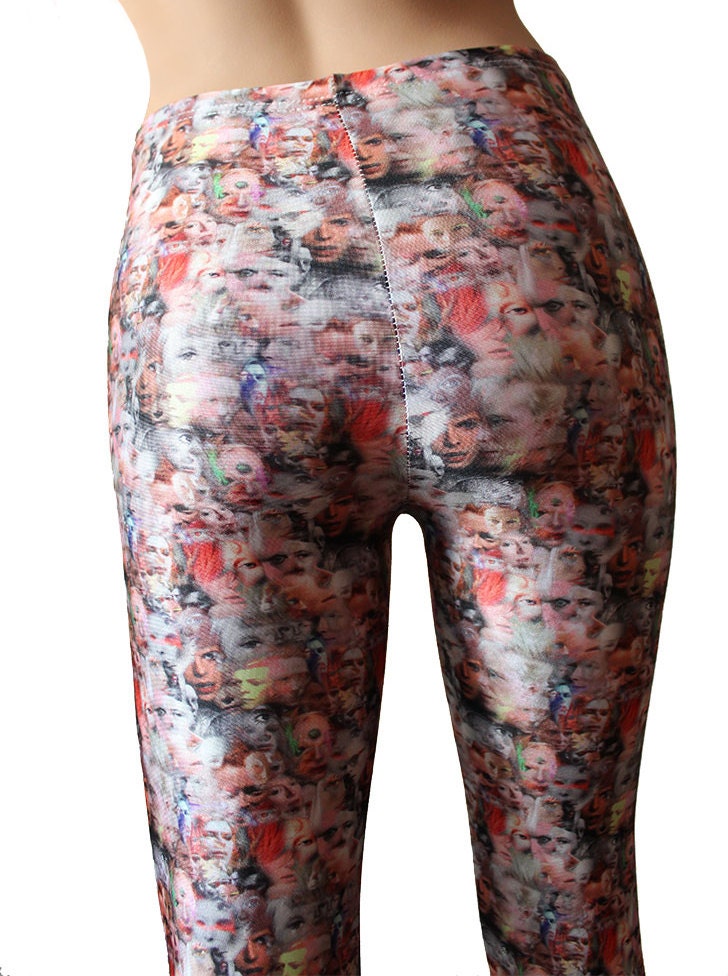
Limited Edition Tilda Stardust Leggings by Shivura on Etsy

by OnlyMrGodKnowsWhy

  • Limited Edition Tilda Stardust Leggings
***Just Sold out of the Larges, there are about 10 smalls left, plenty of Mediums which will fit up to 165ish***

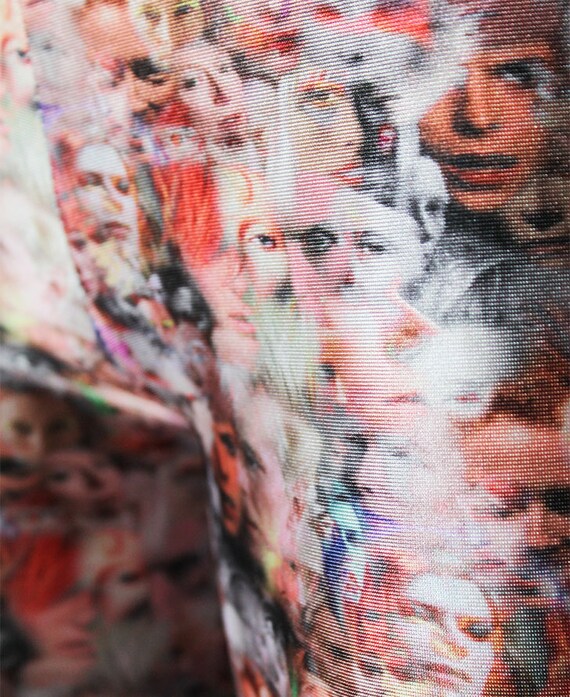
Plenty of Large upside-down Tildas for $20, they are great for lounging around the house because hundreds of Tilda/Bowies stare back at you constantly - much less creepy than it sounds.

For smalls, check out the Silva Stardust print, it is awesome, equally intriguing, I think, and much easier to match to an outfit than the originals.

Anyway...

I remember the day Nathaniel Baruch my best buddy and curator of the awesome tumblr tildastardust.tumblr.com suggested I use the legs of kindly folk to prove to the rest of the world that David Bowie and Tilda Swinton were, in fact, the same individual cleverly assuming at most two bodies, I initially had my doubts. But, after minutes of research on his blog, and a few extremely heartfelt conversations my doubts were nearly eliminated. Then I just gave in because what else can one do when faced with such an impassioned friend, I dared not dispassion him...

So, I present these to you, not as a colorful piece of comfortable legwear for the Bowie fanatics and Swinton swooners of your life, but rather, as semi-inconclusive evidence that David and Tilda have something up their singular sleeve; that there is a reason Bowie went out of his way to prove he and Swinton were NOT the same person in his last video for The Stars (Are Out Tonight); a reason that the statistical likelihood of two ultra-sexual, androgynous, charismatically uni-expressional people simultaneously "living" on Earth is next to nil.

From the lips of Nathaniel, "Tilda Swinton's emergence.....uh....persona came into the public eye due to the fact that David Bowie, the ever-changing man, needed...a new skin." Enough said.

Only 1000 will ever be made, don't not be a part of those 1000 eternally special people.

90% polyester and 10% spandex
Smalls fit sizes 0-8slim
Mediums fit sizes 6plus-10 130-160lbs
Larges fit sizes 10plus-16, 160-190lbs

"My Bowie/Tilda leggings arrived here in Australia today. I am absolutely thrilled with them. The detail in the print is even better than portrayed in the pics. Thanks"

"Excellent! Really cool design and a perfect gift for a Bowie fan. Arrived super quick with no issues. Thanks!"

"The leggings arrived yesterday... they are perfect! AMAZING! There is a big event being filmed at the V&A museum connected with the 'David Bowie Is....' Exhibition. I have been interviewed for the film and the big screening/party is coming up and I shall be there in my Bowie/Tilda leggings. THANKyou. They are amazing!"

"These are absolutely spectacular. I want to save them for special days but they are so comfortable and amazing I wish I could wear them every day! So glad I got them."

Original Source

27 Nov 18:06

How Academia Resembles a Drug Gang

by alexandreafonso
Russian Sledges

via facebook people

In 2000, economist Steven Levitt and sociologist Sudhir Venkatesh published an article in the Quarterly Journal of Economics about the internal wage structure of a Chicago drug gang. This piece would later serve as a basis for a chapter in Levitt’s (and Dubner’s) best seller Freakonomics. [1] The title of the chapter, “Why drug dealers still live with their moms”, was based on the finding that the income distribution within gangs was extremely skewed in favor  of those at the top, while the rank-and-file street sellers earned even less than employees in legitimate low-skilled activities, let’s say at McDonald’s. They calculated 3.30 dollars as the hourly rate, that is, well below a living wage (that’s why they still live with their moms). [2]

If you take into account the risk of being shot by rival gangs, ending up in jail or being beaten up by your own hierarchy, you might wonder why anybody would work for such a low wage and at such dreadful working conditions instead of seeking employment at Mc Donalds. Yet, gangs have no real difficulty in recruiting new members. The reason for this is that the prospect of future wealth, rather than current income and working conditions, is the main driver for people to stay in the business: low-level drug sellers forgo current income for (uncertain) future wealth. Rank-and file members are ready to face this risk to try to make it to the top, where life is good and money is flowing. It is very unlikely that they will make it (their mortality rate is insanely high, by the way) but they’re ready to “get rich or die trying”.

With a constant supply of new low-level drug sellers entering the market and ready to be exploited, drug lords can become increasingly rich without needing to distribute their wealth towards the bottom. You have an expanding mass of rank-and-file “outsiders” ready to forgo income for future wealth, and a small core of “insiders”  securing incomes largely at the expense of the mass. We can call it a winner-take-all market.

Academia as a Dual Labour Market

The academic job market is structured in many respects like a drug gang, with an expanding mass of outsiders and a shrinking core  of insiders. Even if the probability that you might get shot in academia is relatively small (unless you mark student papers very harshly), one can observe similar dynamics. Academia is only a somewhat extreme example of this trend, but it affects labour markets virtually everywhere. One of the hot topics in labour market research at the moment is what we call “dualisation”[3]. Dualisation is the strengthening of this divide between insiders in secure, stable employment and outsiders in fixed-term, precarious employment. Academic systems more or less everywhere rely at least to some extent on the existence of a supply of “outsiders” ready to forgo wages and employment security in exchange for the prospect of uncertain security, prestige, freedom and reasonably high salaries that tenured positions entail[4].

PPT_EUIMW

How can we explain this trend? One of the underlying structural factors has been the massive expansion in the number of PhDs all across the OECD. Figure 1 shows the proportion of PhD holders as a proportion of the corresponding age cohort in a  number of OECD countries at two points in time, in 2000 and 2009. As you can see, this share has increased by about 50% in 9 years, and this increase has been particularly pronounced in countries such as Portugal, Greece or Slovakia, where it nearly tripled, however from a low starting level. Even in countries with an already high share, the increase has been substantial: 60% in the UK, or nearly 30% in Germany. Since 2000 the number of OECD-area doctorates has increased at an average of 5% a year. [5a]

So what you have is an increasing number of brilliant PhD graduates arriving every year into the market hoping to secure a permanent position as a professor and enjoying freedom and high salaries, a bit like the rank-and-file drug dealer  hoping to become a drug lord. To achieve that, they are ready to forgo the income and security that they could have in other areas of employment by accepting insecure working conditions in the hope of securing jobs that are not expanding at the same rate. Because of the increasing inflow of potential outsiders ready to accept this kind of working conditions, this allows insiders to outsource a number of their tasks onto them, especially teaching, in a  context where there are increasing pressures for research and publishing. The result is that the core is shrinking, the periphery is expanding, and the core is increasingly dependent on the periphery. In many countries, universities rely to an increasing extent on an “industrial reserve army” of academics working on casual contracts because of this system of incentives.

Varieties of Dualisation

What I mention above is the broad dynamic that spans across a number of countries. However, the boundary of the insider and outsider group varies across countries. I can give a number of examples from different countries.

In the United States, numbers from the department of education reported in The Atlantic (Figure 2) show that more than 40% of teaching staff at universities are now part-time faculty without tenure, or adjunct lecturers paid per course given, with no health insurance or the kind of other things associated with a standard employment relationship.[5b] As you can see from the graph, the share of permanent tenured faculty has shrunk dramatically. This doesn’t mean that the absolute number of faculty has diminished, it has actually increased substantially, but it has been massively outpaced by the expansion of teaching staff with precarious jobs and on low incomes. The Chronicle of Higher Education recently reported about adjunct lecturers relying on food stamps.[6] The person mentioned in the article declares a take-home pay of 900$ per month, which is sadly not that far away from the 3$ hourly rate of the drug dealer, but for a much more skilled job.

Image

Germany is another case where there has traditionally been a strong insider-outsider divide, essentially because of the hourglass structure of the academic job market. On the one hand, there are relatively good conditions at the bottom at the PhD level, and opportunities have expanded recently because of massive investments in research programs and doctoral schools generating a mass of new very competitive PhDs. On the other hand, there are good jobs at the top, where full professors are comparatively well paid and have a great deal of autonomy. The problem is that there is nothing in the middle: for people who just received their PhD, there is just a big hole, in which they have to face a period of limbo in fixed-term contracts (wissenschaftliche Mitarbeiter) or substitute professor (Vertretungsprofessur) for a number of years, after which they can hope to get their first permanent job in their mid-40s, while this could happen ion their mid-30s in the 1970s.[7] Figure 3 shows the average age of the PhD, for the habilitation and the first professorship in political science between the 1970s and 1990s. The age of the PhD hasn’t changed that much but the age of the first professorship has increased substantially. Also, you have to take into account that there is a selection effect because the people in the sample are only those who have made it to the professorship, and doesn’t take into account all of those that have dropped out during the academic limbo. What is interesting is that the insiders (professors) who control the market have often been hired at a time when no such competition existed, and you may wonder if they themselves would have been hired if similar market conditions had been in place. A number or new types or positions in the middle, such as the Juniorprofessuren have ben created, but these are also limited in time and are not the equivalent of tenure-track positions. Germany is the country of financial prudence, and both regional and federal governments have been reluctant to commit themselves to fund programs and positions on a permanent basis.

Image

This academic limbo is accentuated by the fact that in some disciplines it has become common to apply for professorships even if you’re already a tenured professor so that you can negotiate your own working conditions with your home university. The result of this is that it is very difficult for recent PhDs to compete with established professors, and hiring processes tend to last a very long time as many candidates refuse and take time to bargain back and forth. Time, you may have it if you are tenured, but you don’t if you have an insecure position. You cannot wait two years when a university is negotiating with somebody who will eventually refuse if you have fixed-term contracts. This is a really perverse and insider-oriented system.

The United Kingdom is different from Germany in the sense that it does have intermediate permanent positions for people finishing their PhD. Britain is the biggest academic market in Europe and lectureships provide secure employment for relatively young academics even if the starting salary is relatively low if you take into account living costs, especially in London. However, this does not mean that UK higher education does not rely on a large industrial workforce of outsiders as well. Recently, the Guardian reported on the prevalence of so called “zero-hour contracts” at UK universities. [8] These are contracts which do not specify the number of hours one is supposed to give, and basically imply that the workers needs to be available to her employer when there is work. Compared to Continental Europe, what is striking is the pretty dismal situation of PhD students and teaching assistants who provide quite a large part of the teaching and whose employment conditions are much more casual than what one can see elsewhere. When I did my PhD in Switzerland, I was basically a public employee with a corresponding salary, pension contributions, welfare entitlements. A large proportion of PhD students in the UK do not have regular sources of funding, need to apply here and there to get scholarships, and when they teach they are paid per hour taught or a piece rate (exam/essay marked) that can vary across and even within universities.

The number of hours usually taught at UK universities is relatively moderate, at least at Russell-Group universities, because of a heavier focus on essays and independent work from students, but also partly because departments can rely on this flexible workforce. This has been accentuated by the strong constraints set on universities in terms of research and publication through the REF (Research Excellence Framework). This happens through two channels. First, as research is what is most valued, this creates incentives for established professors to retreat from teaching and secure research grants and publications instead, leaving teaching to casual teaching staff. On the other hand, some universities have advertised a number of temporary positions just because of the REF in order to use people’s publications in their submissions. There is no guarantee that universities are going to keep these people once they have “used” them.

Figure 4 summarizes in broad terms the differences outlined above. As I can see it, this form of insider/outsider divide exists everywhere and is probably expanding. The interesting thing is that these divides are largely structural in the sense that the system simply couldn’t work without this large supply of outsiders ready to accept any kind of employment contract. If you are mobile, strategic and concerned with employment conditions, you might want to exploit these differences and avoid the outsider boxes at different stages of your career. This would mean avoiding the UK for your PhD and avoiding Germany after your PhD.

 Image

This was presented on November 19 at the European University Institute’s Academic Careers Observatory Conference.


[1] Levitt, S.D., and S.A. Venkatesh (2000) “An Economic Analysis of a Drug-selling Gang’s Finances”, The Quarterly Journal of Economics 115(3): 755-789; Levitt, S.D., and S.J. Dubner (2006) Freakonomics: a Rogue Economist Explores the Hidden Side of Everything. NY: HarperCollins.

[3] Emmenegger, P., S. Häusermann, B. Palier, and M. Seeleib-Kaiser et al. (2012) The Age of Dualization: the Changing Face of Inequality in Deindustrializing Societies. Oxford: Oxford University Press.

[4] http://www.economist.com/node/17723223

[5a] NB: This paragraph has been amended to reflect more recent data. The data can be found here.

[7] Data for political scientists from Arendes, C., and H. Buchstein (2004) “Politikwissenschaft Als Universitätslaufbahn: Eine Kollektivbiographie Politikwissenschaftlicher Hochschullehrer/-innen in Deutschland 1949–1999”, Politische Vierteljahresschrift 45(1): 9-31; Armingeon, K. (1997) “Karrierewege Der Professoren Und Professorinnen Der Politikwissenschaft in Der Schweiz, Österreich Und Deutschland”, Swiss Political Science Review 3(2): 1-15.

Related articles

27 Nov 17:51

Pope Francis: “We can no longer trust in the unseen forces and the invisible hand of the market”

by Zachary M. Seward
Russian Sledges

via firehose

otters: "oh shit it is ON"

oh dang

Pope Francis waves as he leaves Guanabara Palace where he attended a welcoming ceremony in Rio de Janeiro, July 22, 2013. Pope Francis touched down in Rio de Janeiro on Monday, starting his first foreign trip as pontiff and a weeklong series of events expected to attract more than a million people to a gathering of young faithful in Brazil, home to the world's largest Roman Catholic population.

Pope Francis has issued his first apostolic exhortation (a lower-ranking document than an encyclical), entitled Evangelii Gaudium—an 84-page document that serves, in a sense, as the official platform of his papacy. You can read the whole thing in English here.

The exhortation covers a lot of ground, but we honed in on the pope’s critique of capitalism, a common theme of the Catholic Church. “How can it be that it is not a news item when an elderly homeless person dies of exposure, but it is news when the stock market loses two points?” Francis wrote. Below are relevant excerpts.

No to an economy of exclusion

53. Just as the commandment “Thou shalt not kill” sets a clear limit in order to safeguard the value of human life, today we also have to say “thou shalt not” to an economy of exclusion and inequality. Such an economy kills. How can it be that it is not a news item when an elderly homeless person dies of exposure, but it is news when the stock market loses two points? This is a case of exclusion. Can we continue to stand by when food is thrown away while people are starving? This is a case of inequality. Today everything comes under the laws of competition and the survival of the fittest, where the powerful feed upon the powerless. As a consequence, masses of people find themselves excluded and marginalized: without work, without possibilities, without any means of escape.

Human beings are themselves considered consumer goods to be used and then discarded. We have created a “disposable” culture which is now spreading. It is no longer simply about exploitation and oppression, but something new. Exclusion ultimately has to do with what it means to be a part of the society in which we live; those excluded are no longer society’s underside or its fringes or its disenfranchised – they are no longer even a part of it. The excluded are not the “exploited” but the outcast, the “leftovers”.

54. In this context, some people continue to defend trickle-down theories which assume that economic growth, encouraged by a free market, will inevitably succeed in bringing about greater justice and inclusiveness in the world. This opinion, which has never been confirmed by the facts, expresses a crude and naïve trust in the goodness of those wielding economic power and in the sacralized workings of the prevailing economic system. Meanwhile, the excluded are still waiting. To sustain a lifestyle which excludes others, or to sustain enthusiasm for that selfish ideal, a globalization of indifference has developed. Almost without being aware of it, we end up being incapable of feeling compassion at the outcry of the poor, weeping for other people’s pain, and feeling a need to help them, as though all this were someone else’s responsibility and not our own. The culture of prosperity deadens us; we are thrilled if the market offers us something new to purchase; and in the meantime all those lives stunted for lack of opportunity seem a mere spectacle; they fail to move us.

No to the new idolatry of money

55. One cause of this situation is found in our relationship with money, since we calmly accept its dominion over ourselves and our societies. The current financial crisis can make us overlook the fact that it originated in a profound human crisis: the denial of the primacy of the human person! We have created new idols. The worship of the ancient golden calf (cf. Ex 32:1-35) has returned in a new and ruthless guise in the idolatry of money and the dictatorship of an impersonal economy lacking a truly human purpose. The worldwide crisis affecting finance and the economy lays bare their imbalances and, above all, their lack of real concern for human beings; man is reduced to one of his needs alone: consumption.

56. While the earnings of a minority are growing exponentially, so too is the gap separating the majority from the prosperity enjoyed by those happy few. This imbalance is the result of ideologies which defend the absolute autonomy of the marketplace and financial speculation. Consequently, they reject the right of states, charged with vigilance for the common good, to exercise any form of control. A new tyranny is thus born, invisible and often virtual, which unilaterally and relentlessly imposes its own laws and rules. Debt and the accumulation of interest also make it difficult for countries to realize the potential of their own economies and keep citizens from enjoying their real purchasing power. To all this we can add widespread corruption and self-serving tax evasion, which have taken on worldwide dimensions. The thirst for power and possessions knows no limits. In this system, which tends to devour everything which stands in the way of increased profits, whatever is fragile, like the environment, is defenseless before the interests of a deified market, which become the only rule.

No to a financial system which rules rather than serves

57. Behind this attitude lurks a rejection of ethics and a rejection of God. Ethics has come to be viewed with a certain scornful derision. It is seen as counterproductive, too human, because it makes money and power relative. It is felt to be a threat, since it condemns the manipulation and debasement of the person. In effect, ethics leads to a God who calls for a committed response which is outside of the categories of the marketplace. When these latter are absolutized, God can only be seen as uncontrollable, unmanageable, even dangerous, since he calls human beings to their full realization and to freedom from all forms of enslavement. Ethics – a non-ideological ethics – would make it possible to bring about balance and a more humane social order. With this in mind, I encourage financial experts and political leaders to ponder the words of one of the sages of antiquity: “Not to share one’s wealth with the poor is to steal from them and to take away their livelihood. It is not our own goods which we hold, but theirs”.

58. A financial reform open to such ethical considerations would require a vigorous change of approach on the part of political leaders. I urge them to face this challenge with determination and an eye to the future, while not ignoring, of course, the specifics of each case. Money must serve, not rule! The Pope loves everyone, rich and poor alike, but he is obliged in the name of Christ to remind all that the rich must help, respect and promote the poor. I exhort you to generous solidarity and a return of economics and finance to an ethical approach which favours human beings.

No to the inequality which spawns violence

59. Today in many places we hear a call for greater security. But until exclusion and inequality in society and between peoples is reversed, it will be impossible to eliminate violence. The poor and the poorer peoples are accused of violence, yet without equal opportunities the different forms of aggression and conflict will find a fertile terrain for growth and eventually explode. When a society – whether local, national or global – is willing to leave a part of itself on the fringes, no political programmes or resources spent on law enforcement or surveillance systems can indefinitely guarantee tranquility. This is not the case simply because inequality provokes a violent reaction from those excluded from the system, but because the socioeconomic system is unjust at its root. Just as goodness tends to spread, the toleration of evil, which is injustice, tends to expand its baneful influence and quietly to undermine any political and social system, no matter how solid it may appear. If every action has its consequences, an evil embedded in the structures of a society has a constant potential for disintegration and death. It is evil crystallized in unjust social structures, which cannot be the basis of hope for a better future. We are far from the so-called “end of history”, since the conditions for a sustainable and peaceful development have not yet been adequately articulated and realized.

60. Today’s economic mechanisms promote inordinate consumption, yet it is evident that unbridled consumerism combined with inequality proves doubly damaging to the social fabric. Inequality eventually engenders a violence which recourse to arms cannot and never will be able to resolve. This serves only to offer false hopes to those clamouring for heightened security, even though nowadays we know that weapons and violence, rather than providing solutions, create new and more serious conflicts. Some simply content themselves with blaming the poor and the poorer countries themselves for their troubles; indulging in unwarranted generalizations, they claim that the solution is an “education” that would tranquilize them, making them tame and harmless. All this becomes even more exasperating for the marginalized in the light of the widespread and deeply rooted corruption found in many countries – in their governments, businesses and institutions – whatever the political ideology of their leaders.

[...]

The economy and the distribution of income

202. The need to resolve the structural causes of poverty cannot be delayed, not only for the pragmatic reason of its urgency for the good order of society, but because society needs to be cured of a sickness which is weakening and frustrating it, and which can only lead to new crises. Welfare projects, which meet certain urgent needs, should be considered merely temporary responses. As long as the problems of the poor are not radically resolved by rejecting the absolute autonomy of markets and financial speculation and by attacking the structural causes of inequality,[173]no solution will be found for the world’s problems or, for that matter, to any problems. Inequality is the root of social ills.

203. The dignity of each human person and the pursuit of the common good are concerns which ought to shape all economic policies. At times, however, they seem to be a mere addendum imported from without in order to fill out a political discourse lacking in perspectives or plans for true and integral development. How many words prove irksome to this system! It is irksome when the question of ethics is raised, when global solidarity is invoked, when the distribution of goods is mentioned, when reference in made to protecting labour and defending the dignity of the powerless, when allusion is made to a God who demands a commitment to justice. At other times these issues are exploited by a rhetoric which cheapens them. Casual indifference in the face of such questions empties our lives and our words of all meaning. Business is a vocation, and a noble vocation, provided that those engaged in it see themselves challenged by a greater meaning in life; this will enable them truly to serve the common good by striving to increase the goods of this world and to make them more accessible to all.

204. We can no longer trust in the unseen forces and the invisible hand of the market. Growth in justice requires more than economic growth, while presupposing such growth: it requires decisions, programmes, mechanisms and processes specifically geared to a better distribution of income, the creation of sources of employment and an integral promotion of the poor which goes beyond a simple welfare mentality. I am far from proposing an irresponsible populism, but the economy can no longer turn to remedies that are a new poison, such as attempting to increase profits by reducing the work force and thereby adding to the ranks of the excluded.

205. I ask God to give us more politicians capable of sincere and effective dialogue aimed at healing the deepest roots – and not simply the appearances – of the evils in our world! Politics, though often denigrated, remains a lofty vocation and one of the highest forms of charity, inasmuch as it seeks the common good.[174] We need to be convinced that charity “is the principle not only of micro-relationships (with friends, with family members or within small groups) but also of macro-relationships (social, economic and political ones)”.[175] I beg the Lord to grant us more politicians who are genuinely disturbed by the state of society, the people, the lives of the poor! It is vital that government leaders and financial leaders take heed and broaden their horizons, working to ensure that all citizens have dignified work, education and healthcare. Why not turn to God and ask him to inspire their plans? I am firmly convinced that openness to the transcendent can bring about a new political and economic mindset which would help to break down the wall of separation between the economy and the common good of society.

206. Economy, as the very word indicates, should be the art of achieving a fitting management of our common home, which is the world as a whole. Each meaningful economic decision made in one part of the world has repercussions everywhere else; consequently, no government can act without regard for shared responsibility.Indeed, it is becoming increasingly difficult to find local solutions for enormous global problems which overwhelm local politics with difficulties to resolve. If we really want to achieve a healthy world economy, what is needed at this juncture of history is a more efficient way of interacting which, with due regard for the sovereignty of each nation, ensures the economic well-being of all countries, not just of a few.

207. Any Church community, if it thinks it can comfortably go its own way without creative concern and effective cooperation in helping the poor to live with dignity and reaching out to everyone, will also risk breaking down, however much it may talk about social issues or criticize governments. It will easily drift into a spiritual worldliness camouflaged by religious practices, unproductive meetings and empty talk.

208. If anyone feels offended by my words, I would respond that I speak them with affection and with the best of intentions, quite apart from any personal interest or political ideology. My words are not those of a foe or an opponent. I am interested only in helping those who are in thrall to an individualistic, indifferent and self-centred mentality to be freed from those unworthy chains and to attain a way of living and thinking which is more humane, noble and fruitful, and which will bring dignity to their presence on this earth.

27 Nov 16:55

wonderous-world: Rescue Ink is a non-profit organization that...

by cultofkimber
Russian Sledges

via firehose


wonderous-world:

Rescue Ink is a non-profit organization that exists for the advocacy and protection of all animals. Based in New York, the team is compromised of a group of bikers along with an amazing group of volunteers including local police, private investigators, and lawyers. Rescue Ink is all about zero tolerance when it comes to animal abuse – and they’re not afraid to get a little in-your-face to prove it. This group of seemingly tough guys have a soft spot for all creatures and will stop at nothing, within the bounds of the law, to save animals from dire and desperate situations; they rescue fighting dogs, confront animal abusers, work to find abandoned and neglected animals loving homes, and investigate stolen animals.

Visit their Website | Volunteer |  Donate | Learn More

27 Nov 16:52

The smallest Armadillo species in the world: the Pink Fairy Armadillo

by Rachel Oakley

The smallest Armadillo species in the world: the Pink Fairy Armadillo

It looks more like a mythical creature but this is in fact the smallest armadillo in the world. It weighs in around 100 grams (3.5 oz) and fits into your hand (if you’d want to touch it, that is). It’s covered in silky, white hair and its hard outer covering is rich in blood vessels and can blush pink.

Pink Fairy Armadillo Armadillo on rock

The post The smallest Armadillo species in the world: the Pink Fairy Armadillo appeared first on Lost At E Minor: For creative people.

27 Nov 16:37

Look, It’s Every Death In A Song of Ice And Fire!

by Noelle Micarelli
Russian Sledges

#infographics

This is just what you need to brighten your day: every character death in George R.R. Martin‘s series, marked with post-its. I don’t know who is crueler: Martin, or whoever went through and counted them all up. It’s like a strange rainbow of murder.

(via: Kotaku)

Are you following The Mary Sue on Twitter, Facebook, Tumblr, Pinterest, & Google +?

27 Nov 16:25

The Backyard Bartender: Pink Lemons!

by russiansledges
Russian Sledges

I came back from berkeley with lemons in my backpack

pink lemons look like what normal lemons would look like if they were total badasses
27 Nov 16:15

‘And if We Ask You to Leave, for God’s Sake, Don’t Start Yelling About Your “Rights”. Just Shut Up and Get Out Before You Make Things Worse.’

by John Gruber
Russian Sledges

via overbey

Another restaurant makes a glasshole policy.