~Cathy Caruth


Tutorial: Station Labels Using the “Core Type Area” - Part 2: 45-Degree Angled Route Lines
Following on from last week’s tutorial, here’s how to use the Core Type Area to make your station labels align perfectly and consistently when you’re applying them to 45-degree angled route lines.
If you use the edges of the Core Type Area when you’re aligning labels to horizontal and vertical route lines, then it should make perfect sense that you use the corners of it when you’re labelling angled stations. The first GIF shows the defining setup — using the bottom right corner for labels above and to the left of the route line and the top left corner for labels below and to the right of the route line. I’ve shown this setup first because it always looks right: there’s always a capital letter in the former, and the bottom right edge of a lower-case letter in the latter.
The second image shows what happens when you apply the same rules to the opposite angle. That is, using the top right corner for names to the left and below the route line, and the bottom left corner for names above and to the right. When the route line is angled like this, it can be harder to see that you’ve got the placement right, because the letterforms are more varied.
In the first instance, the last letter of a word could be an “n” (as we have here) or a “d”. We need to allow space for the “d” to fit comfortably, hence the use of the Core Type Area, which shows us exactly that. Whatever you do, don’t nudge labels without a final ascender up until that letter aligns with the station marker: this is what leads to uneven and inconsistent baselines as seen on the recent Sydney Trains map redesign.
Labels to the right and above aren’t quite as bad, but there’s still some variance: the first letter could be a “T”, “B”, or “W”, all of which have a different visual relationship to that bottom left corner. Remember to use the Core Type Area — the box that defines the maximum size the label could take up — and not the letterforms themselves to align text to markers and you should always be okay.
The last image shows a mistake I see quite often when designers try to align their labels to 45-degree lines by simply moving the label sideways from the marker, instead of across and up/down an even amount. I personally prefer not to do this, as I think it creates uneven spacing, but it can look effective and interesting when done right.
However, be aware that labels that sit on the lower side of the route line need to hang from the top of the Core Type Area (by their cap height) or they’ll end up being too close to the route line, as shown in the image. Type that sits on the higher side of the route line can sit on its baseline.
Russian Sledgesvia snorkmaiden
This Soviet-era circus is one of the most eye-catching buildings in the Moldovan capital of Chisinau. Closed for repairs in 2004, the circus has remained out of use since. However, while this dilapidated building may give the impression of a faded monument to a forgotten regime, a deeper exploration of both the building and its history would suggest that the Chisinau Circus is not as dead as it seems - but rather, merely sleeping.

Moldova’s Chisinau Circus was built in 1981, back when the nation was known as the ‘Moldavian Soviet Socialist Republic’ under the USSR. Designed by architects S. Shoikhet and A. Kirichenko, it would stay open for the next 23 years – entertaining crowds in the Moldovan capital with a cast of clowns, trapeze artists, bears, lions and elephants.
In 1991 the Soviet Union collapsed, and the newly independent Republic of Moldova fell into an economic crisis. In 1992, a costly war against the breakaway state of Transnistria did little to help soaring rates of inflation. In 1993, Moldova finally saw the introduction of its own currency, the Moldovan Leu: replacing the temporary currency of ‘Cupons’ which had bridged the gap following the use of Soviet Rubles in Moldova. In these early years of independence the market was in freefall and in time Moldova would become known as the poorest country in Europe.

Nowadays just a drive through the hills and valleys of Moldova will reveal a landscape littered with abandoned factories, faded monuments and numerous towns that seem largely left to ruin; the turn of the twenty-first century may have welcomed in a steady economic growth, but the country still bears the scars of past hardships. It is interesting to note however, that despite the poverty which gripped Moldova throughout the 1990s (and unlike all the other industries which crumbled into ruin during those years), the grandiose Chisinau Circus never closed its doors.
Circuses were an important venue for entertainment in the Soviet Union. The Moscow State Circus was nationalised in 1919, later to be managed by the specially formed ‘Centralised Circus Administration’ (or ‘Soyuzgoscirk’). From 1929 onwards performers were formally trained at the Moscow Circus School, a state-run facility dedicated to promoting circus and performance skills. It was the first of its kind anywhere in the world.
Circus artists were able to enjoy many lifestyle benefits courtesy of the state, such as childcare, maternity leave, travel privileges, superior housing and improved retirement packages. It was a hard life, by all accounts – up to 20 hours of physical circus training per week – but the benefits put performers on a lifestyle par with government officials and other Soviet elite.

In 1956 the Moscow State Circus made its first tour of London and Paris; later touring the US as well, to gain huge popularity. While its Western counterparts tended to focus more on daredevil stunts and stand-alone set-pieces, the Soviet tradition was interwoven with Eastern European culture, dance, and performances were typically driven by one continuous storyline. This novel, exotic approach was a big hit with audiences in the West; and successes overseas only bolstered the USSR’s pride in its circus traditions, cementing these venues as a cornerstone of Soviet culture.
Perhaps this cultural significance explains why Chisinau Circus was kept in operation so long, even when other industries were failing in this threadbare nation. Even following independence, Moldova maintained close ties with Mother Russia – the Russian language is still widely spoken here – and it could be that the national circus offered a reminder of life and values in the days of the Moldavian Soviet Socialist Republic. For many during the early days of the independent Republic of Moldova, the Soviet years may well have felt preferable.
Whatever the case, Moldova’s national circus in Chisinau was to outlive the Soviet Union by 13 years. It wasn’t until 2004 that the venue was closed for extensive repair work... and it simply never reopened.

Fast forward through another nine years of decay and neglect, and cue my arrival in Chisinau in the summer of 2013.
The circus stands back from a main road, alone in paved courtyard now crumbling and giving way to weeds. The brutalist design of the building, its triangular prows and sharply angled dome, gave the impression of a vast stone crown. Above the sealed entrance, a metal crest is formed by the dancing figures of two clowns; one of them now missing a head. Some local youths were posing by the circus with a blue, yellow and red Moldovan flag which billowed in the wind. We asked them about entry to the building, but they said it was impossible: the circus closed a long time ago.
Five minutes later, I was inside.
In the main foyer I was careful to stay away from the tall glass windows that faced down to the boulevard; though perhaps I needn't have bothered, for all the dust and grime that had accumulated over the space of nine years of closure. The main entrance was blocked and barred, red Coca-cola stickers on the window glowing bright as the afternoon light filtered through. On either side, opulent staircases wound upwards to the higher floors.

Every detail of the interior was decked out in fine and lustrous fittings, from the marble floors to the surreally elegant lighting features which illustrated the socialist architectural style at its most dramatic. Set in the heart of the foyer was a wooden counter where patrons would have left their coats and jackets - the clothing racks and hangers spread out behind the desk in a strangely mesmeric pattern of symmetrical hooks and bars.
I hopped over the desk, opening a small wooden hatch in the wall behind. Ducking under the low lintel, I found myself in an engine room - a rusted staircase led down to a lower floor, where turbines like jet engines lined one wall and the concrete floor was littered with broken chairs and mismatched sections of long disused ducts.
Heading back up, in one corner of the foyer I found the ticket desk - a series of small windows set in a wood-panelled frame. Above it read the word "CASELE", with a string of posters for performances once held here; clowns, elephants, acrobats and bears all featured in the faded designs. A string of smaller rooms led off from here, working their way back to the staff areas situated behind the main circus building. Most were filled with the collected litter of almost a decade, with signs of inhabitancy and the musty smell of damp and decay.

I could have spent longer exploring these dressing rooms, store cupboards and utility corridors, but I was eager to see the main attraction; and so I headed back out to the foyer, eager to find an entrance to the ring itself.
The broad staircases with their polished wooden rails, marble-effect steps, twisted outwards and around following the natural contours of the building; their extravagant design gave the impression of leaning inwards, as if warped by the centrifugal force. From the first floor looking down, I was able to make out a large design in the marble approach to the foyer - a mural of a dancing chimpanzee, largely obscured now by the dust and grime.
I was just stepping off the staircase onto the first floor balcony when I heard the noises, causing me to duck and run for the nearest doorway. I waited a few moments here, hidden in the shadows leading into a cluttered storeroom, waiting as the two voices approached. That's when I realised they were speaking German.
Reassured that I wasn't being pursued by security, I decided to go and make friends. The pair turned out to be a father and son, both armed with cameras and just as fascinated as I was by this grandiose state monument fallen to decay. We chatted for a while - comparing notes, comparing cameras, the two of them recommending a list of places for me to visit around Berlin - before I made my farewells, and stepped into the circus ring.

Placed centrally on the grand first floor landing, flanked by colourful murals of circus performers, wild animals and mythical creatures, a square wooden passage led into the heart of the circus. Stepping through the polished portal I came face to face with the ring itself: a padded circle surrounded by a barrier of white washed brick, tiered seating rising up on all sides. The stillness of the dusty ring seemed so far removed from its original purpose, as to give the whole scene a dreamlike quality. The empty seats, fading into darkness above, still somehow heavy with the murmurs of a long-departed crowd.
I stepped into the ring itself, spent a few moments admiring the view from the very centre. This would have been a majestic venue when in use, its simple, bold designs and twisted symmetry encapsulating everything that was good and powerful about the brutalist architectural movement.
Crossing to the far side of the arena, now at the rear of the circus building, a broad corridor fed into the ring from the darkness beyond. This would have been the stage entrance, then; I followed the passage deeper into the bowels of the circus.

Here and there doors opened up from either side of the corridor, leading to bare concrete rooms, hard wooden floors lit either by small windows near the ceiling - or not at all. I guessed I was standing in cells once occupied by the brown bears who would dance and spin hula-hoops, juggling or riding bicycles around the ring. Was I imagining the faint musty smell of animals, almost imperceptible from the damp odours that clung to the rest of the decayed circus? Impossible to say.
At the far end of the passage the darkness lay thick about, and I was forced to pull out my torch as I explored. There was graffiti in places, Russian characters scratched deep into the plaster work. In one corner I pushed open a door, onto a bright, white-washed corridor which led upwards: up to the top floor of the circus building, to the dressing rooms and manager's office. Taking one last, long look at ring - that same square of distant light which had once beckoned performers to the stage - I made my way up the creaking stairs.
While the lower levels of the circus had felt dark and ominous, the higher I climbed the more bright and spacious my surroundings felt. At the top of the wooden stairs, passing through a corridor of crumbling white plaster, I came at last into a dressing room on the top floor.

A couple of broken, full-length mirrors lay propped against one wall while a cluster of work benches and desks had apparently been repurposed as an art studio. Here and there the walls had been used as a canvas, with blobs of paint and graffiti tags smeared over plaster, doors and across the faded faces of elephants peering out of old show posters. The room beyond was a bathroom; a tall, tiled space set right beneath the triangular eaves of the outer frame. A floor to ceiling window had been smashed, so that I was able to look down over the edge at the courtyard far below.
Another room here looked as though it had once served as an office: a broken desk and sheaves of old paper scattered to lie across the floor.

The rooms fed into a circular corridor that wound around the top of the crown. Chunky concrete bulkheads jutted out at each intersection, the outer walls in between broken up by a series of windows set with thick, bathroom glass.
Around a quarter of the way around the structure I came across the remains of a piano... the soundboard was leant up against the white plaster wall, its polished wood offering the only splash of colour in an otherwise bleached corridor. I scraped a coin across the strings and the mournful cascade rang out loud and clear, producing an eerie echo in the confined space.
Doorways were placed at regular intervals along my circular route, opening inwards to more rooms and store cupboards, or meeting staircases that descended back into the darkness. I stopped at one door, a wooden frame which seemed to look out over a void. As I stepped through the opening and my eyes became accustomed to the darkness, I found myself on a metal gantry raised high above the circus ring.
There were old cables scattered about, rusted ladders and rigging. It looked like the platform was designed to allow technicians access to the stage lights and canopy. It's possible that this vantage point also served a purpose in the aerial trapeze acts for which Soviet circuses were so famous. Rather than leave by the staircase, I decided it would be more interesting to climb down the metal scaffold, over the side of this platform and back to the seating below.

According to official specifications, the Chisinau Circus features seating for up to 1,900 spectators; the arena has a diameter of 13 metres, while the dome above is designed to be detachable for summer performances. I took a seat in the upper gallery, and spent a while just soaking up the atmosphere as I looked down on the ring below. In places such as this, it often isn't hard to picture the building in use and full of life. While the bustle and chatter of people comes to mind easily enough however, I was trying to see this ring as it had been just under a decade ago - a confusion of fire and lights and exotic performing animals.
In 2008, four years after the initial closure, a Cypriot company took up the lease on the property. They reserved ownership of the circus for a period of 29 years, vowing to renovate the structure and return it to use. By 2011 they had made no progress however, and the Moldovan government was impatient to see results.
The Prosecutor General filed a civil lawsuit against the firm for failure to deliver on their commitments. It passed, and on 31st March the contract was annulled by the Economic Court of Appeals. Now, Moldova's Ministry of Culture is keen to see the circus operational again at any cost. According to one source within the country, artists are already rehearsing for a grand reopening performance - and the event will go ahead even before the building has been fully renovated.

I wish them all the best. Chisinau's circus is a building quite unlike any I've explored before, and such a grand, elaborate monument to an inseparable thread of Moldovan heritage deserves to be seen and appreciated by the flocking crowds it was once built to accommodate.
On my way out of the circus I stopped to admire a finely detailed sculpture hung in the arch above a stairwell; a youth dressed in a jester's motley rode a pig headlong through an ambush of tigers, while an elephant and a monkey performed tricks behind him to the fanfare of trumpets and a fluttering of flags. The two lowest creatures, those within arm's reach, had sadly been defaced by vandals; it gave the illusion of bodies spilling out of the picture, only to crumble and fall to dust on touching reality.
I was startled from my thoughts when a sudden, loud crash rang out through the foyer... then moments later a second and a third. Discretely moving on towards the exit, I heard the sounds again for what they were: the sound of construction and repair work, echoing out from one of the internal chambers of the circus.
The unmistakable sound of progress.

Russian Sledgesvia multitask suicide

16th century German soldiery sure understood how to strike terror into their enemies' hearts: the rooster-headed armored visor (ca 1530) must have been a sight to behold. Now on display at the Met in NYC (Bashford Dean Memorial Collection, Bequest of Bashford Dean, 1928)
Close Helmet with Mask Visor (via Neatorama) 
    
|

Fendi, SS14, Milan.
In an era where designer collections are increasingly copied, textile innovation and signature textile designs become an important way for designers to separate their own work from the imitations.
At the Fendi collection for Spring-Summer 2014 a wide variety of textiles were on display with beautiful examples of laser cut layering, intricate fur appliqués, and brocades woven with custom designs. These textile ideas were worked into a variety of silhouettes and fabrications using a vibrant colour palette of scarlet and cobalt over graphic black, white and a soft grey.
It is interesting to consider the ways that the sheer layering was used in the collection. At times strong rich colours flowed to pastel tints, while at other times the same fabric was layered on itself to create varying depth of colour, or to simply create subtle textural effects.
What appears to be velvet flocking in the collection actually appears to be tiny cut patches of shaved fur that have been meticulously applied onto a sheer backing fabric.
A careful balance has also been struck between the fabrications and the use of angles in the collection. For example, the gradients of colour become less romantic when edged with a raw zig zag shaped hem, and rich brocades are rippled like a circuit board. The use of storm trooper style panels and leather facets also play into the hands of the designer when they can be used to absorb the body shaping that would otherwise require a dart or seam line.


Images from Vogue.co.uk»
Detail image from Style.com»
Russian Sledgesautoreshare
via otters ("if you don't love David Cross's shitty dancing and Bob Odenkirk's shitty singing then son, you're missing out on one of the great joys of this world")
(but it helps if you're familiar with jesus christ superstar)
palate cleanser
Russian Sledgesvia overbey ("I mean, I like Sam Amidon, but WTF.")
This article examines cultural manifestations of the sacred in the work of the indie-folk artists Sam Amidon and Alasdair Roberts. It places Jean-Yves Lacoste and Jacques Derrida’s contrasting conceptions of religious experience into conversation with one another through a discussion of the ways in which the creative practices of Amidon and Roberts draw into question distinctions between religious and secular experience. By focusing on the role of the musician as bard, this article highlights the extent to which the folk artist occupies a liminal space on the borders between religion and secularity. Consequently, it argues that the creative practices of Amidon and Roberts may serve as a model for articulating a more productive relationship between religious and secular life in what may currently be regarded as a post-secular age.
Russian SledgesI hate that "shelter in place" is now a phrase that I'm used to

|
|

|
|
Russian Sledgesattn: overbey
you & alan moore agree: "I don’t think the superhero stands for anything good. I think it’s a rather alarming sign if we’ve got audiences of adults going to see the Avengers movie and delighting in concepts and characters meant to entertain the 12-year-old boys of the 1950s.”
via firehose
Russian Sledgesthanks, otters
 A lifelong Raiders fan — a lot usually noted for their impish ways — is being called a hero today after breaking the fall of a woman who plunged from the Oakland Coliseum's upper deck shortly after Sunday's game. A woman apparently made her way up to a tarped-off area of the stadium to take her life. Fans pleaded with her not to jump, but she leapt anyway. [ more › ]
|
|
Russian Sledgesvia firehose ("buried lede: THERE'S DLC FOR TYPING OF THE DEAD")
!!!!!!!!!

 Typing of the Dead: Overkill gets classy with Shakespeare DLC pack originally appeared on Joystiq on Mon, 25 Nov 2013 11:45:00 EST. Please see our terms for use of feeds.
Russian Sledges"That feeling of worn velvet is as much a part of my memories as any of the singers I heard. But I no longer climb up and down those stairs with any frequency, because I don’t often end up in the Met’s upper tiers. The seats for reviewers from The New York Times are in the orchestra: Row L, Seats 1 and 3; come say hi!
"While this is, of course, a great privilege, I got it in mind to see what things were like up in my old stamping grounds, and perhaps to experience parts of the Met I’d never explored. What do different angles bring to watching an opera?"

|
|
Russian Sledgesvia firehose



The color of the Aurora depends on the altitude and the atom being struck by solar radiation (causing excitation). At higher altitudes, there is more Atomic Oxygen than Nitrogen, leading to the common color stratifications you see.
500-200 km altitude
— Atomic Oxygen — Red
200-100 km
— Atomic Oxygen — Greenish-Yellow
— Ionized Nitrogen — Blue/Purple
100-80 km
— Nitrogen (N2) — CrimsonOxygen only emits red at higher altitudes because once it’s excited, it takes a longer time to emit red than it does green. Why is that important? Well, at lower altitudes there is more Nitrogen for the Oxygen to bump into and absorb that excitation-energy before it gets a chance to emit red light. In this case, where the collision occurs, the Oxygen will emit Green and at low enough altitudes the Nitrogen-Oxygen collisions eventually prevent Oxygen from emitting any light at all.
During stronger storms, high energy solar particles will reach lower in the atmosphere and cause the Crimson emission from Nitrogen, creating a deep-red band at the lower edge of the aurora. Other elements emit light too, like Hydrogen (Blue) or Helium (Purple) which are at higher altitudes.
Sources and further reading:
WebExhibits, Exploratorium, Window2Universe, Wiki, Gif source
Russian Sledgesvia snorkmaiden
rhino autoshare
oh my god rhinos
WHAT RHINOS SOUND LIKE
CRYING
PERFECT SWEET BABIES
I love showing this video to people because no one knows what rhinos actually sound like.
THEY’RE SO CONVERSATIONAL.
#THEY SOUND LIKE BALLOONS
Russian Sledgesattn overbey: in case we ever make it to austin
i LOVE staying in hotels. i don’t travel often, so i don’t have that jaded traveller attitude to hotels and flying as if it’s all old hat. it’s always new hat to me. even the most boring, average hotel – i’m basically like, “wait, i get to sleep in this foreign place, i don’t have to make my bed, AND someone else is making me breakfast tomorrow? sign me up.” of course when a hotel is actually nice that feeling is multiplied by a thousand, which is what i imagine it would be like to stay at the Hotel San José in Austin, Texas. i have never had any inclination to visit Texas, but now i do.
Built in 1936 as an “ultramodern” motor court, the property has been transformed into a 40 room urban bungalow-style hotel tucked behind stucco walls and set amidst lush garden courtyards. More than just a unique place to sleep, the Hotel San Jose serves as a gathering place and occasional hub of community activity for locals and visitors alike. Dogs are always welcome.


Russian Sledgesvia snorkmaiden
here beginneth the season of krampus autoshares

 There are plenty of chefs who establish their reputations as ambitious young cooks in New York (e.g., Mario Batali, David Chang, Michael White, Tom Colicchio, April Bloomfield) and then go out into the greater world to build their international empires and prosper. But the days when the city was the exclusive kingmaker of aspiring cooks from around the globe are long gone. The late, lamented Charlie Trotter proved that you don’t ever have to set foot east of the Hudson to secure a lasting, even international, reputation in today’s Balkanized, locally grown fine-dining landscape. If you’re brave enough to try your luck in the big city, chances are you already have a successful business model in your pocket (Thomas Keller, Pok Pok’s Andy Ricker) and a James Beard Award or two on your wall. Like Vegas in its peak, New York is now a place where out-of-town chefs can monetize their gains, and if it doesn’t work out, they can always fold their tents and go back home.
Ken Oringer and Jamie Bissonnette’s stolid new battleship of a restaurant, Toro, which opened a couple of months ago on the western fringe of the meatpacking district, seems to have been conceived with this practical, mercenary principle in mind. The celebrated chefs came to town from Boston, where they collaborated on the original Toro tapas bar, in the South End, among other award-winning projects. Unlike the Boston branch of Toro, however, this industrial-size operation seats 120 people, not counting the hordes who mill around the cavernous bar area. Rows of cured Spanish hams are strung up here and there high in the gloomy rafters, and a large bull’s head affixed to a brick wall looks like it has been transported directly from one of the grim castle halls of Game of Thrones.
Of course, volume and booze consumption are the names of the game in this particular region of Westeros, and once we were herded to our seats at one of the long tables, our party was set upon by smiling waiters, eagerly describing all manner of elaborate Iberian cocktails. My sherry julep (sherry and Curaçao with mint) looked lovely in its frosty silver cup but tasted mostly of ice, so I suggest you go straight to the classics, like the sangria (white and red splashed with oranges, brandy, and a hint of tarragon), or that addictive Basque party drink calimocho, brewed with equal parts cheap Spanish wine and good old-fashioned American Coke. The latter goes very nicely with Oringer and Bissonnette’s slim version of pan con tomate (a scrim of tomatoes and garlic spread over thin, oiled toast), along with assorted other pinchos and tapas, which shortly began clattering down on our sturdy tabletop like giant hailstones.
Battle fatigue can be an occupational hazard when reviewing tapas joints, especially ones of this magnitude. But only a few of the dishes at Toro—in the blizzard of paellas, jamóns, and tapas a la plancha—were entirely forgettable, and many were quite delicious. Oringer and Bissonnette have a fondness for sea urchin (erizo in Spanish), which you can enjoy speckled with caviar, or as raw crudo in its spiky shell, or pressed in toasty tea sandwiches (bocadillo de erizos) with drippings of miso butter. Being card-carrying members of the nose-to-tail generation, they also have a facility with offal dishes, like mashed chicken livers (stuffed in fried packets of sage), crispy fried veal sweetbreads (flavored, in a faintly Asian, General Tso’s way, with peanuts and fermented black beans), and an elegant terrine made with ribbons of pig ear, which the chefs in the subterranean kitchen fix in aspic and finish on top with bits of king crab mingled with yuzu.
You can complement these interesting tapas creations with four kinds of less interesting paellas (if you get one, make it the classic Valenciana with chicken, chorizo, and assorted shellfish), which are hoisted to the table in smallish platters or great cast-iron pans. The numerous croquetas and cured jamóns we sampled began to blur together after a while, but if you can scrape together the cash, the soft, beautifully charred $90 bone-in rib eye for two to four people (aged for 40 days and scattered with garlic and crisped shallots) is almost worth the price of admission. Ditto the classic Mediterranean seafood options in the voluminous “A la Plancha” section of the menu, which includes a set of perfectly al dente razor clams garnished with chopped piquillo peppers and lemon, an almost unnaturally soft version of Galician-style octopus (with potatoes and charred onions), and a faithful iteration of baby cuttlefish, doused in its own ink.
As the decibel levels rose, and one watery cocktail succeeded another, I wondered what kind of impact this polished cooking would have in a smaller, more intimate space. But the talented chef-owners of Toro are less interested in intimate dining, at this stage of their successful careers, than in profits, and compared with many of the behemoth money machines in the neighborhood, this one has its charms. Once they stop pushing the house cocktails, the wait staff are both competent and courteous.
If you enjoy an old-world tipple after dinner, there are a decent number of Madeiras, ports, and ciders to choose from, along with a lean, decently priced list of mostly Spanish and French wines. There are three forgettable, premade desserts, but if you choose one, make it that old crowd-pleaser the fried churro, with its durable crunch.

Toro
15th St., nr. Tenth Ave.; 212-691-2360; toro-nyc.com
Hours: Dinner Monday through Wednesday 5:30 to 11 p.m. Thursday through Saturday until midnight.
Prices: Tapas and pinchos, $6 to $27; shared dishes, $60 to $90.
Ideal Meal: Bocadillo de erizos, pan con tomate, fried chicken livers or crispy veal sweetbreads, paella Valenciana and/or rib eye, octopus, cuttlefish, razor clams a la plancha.
Note: There are over twenty kinds of sherry to choose from, and you’re encouraged to enjoy them Spanish style, with your meal.
Scratchpad: The room could be more personal, but we’ll give one star for the fine “A la Plancha” section of the menu and another for the best of the rest.
*This article originally appeared in the December 2, 2013 issue of New York Magazine.
Read more posts by Adam Platt
Filed Under: restaurant review, jamie bissonnette, ken oringer, toro

|
|
Russian Sledgesvia snorkmaiden

Evening Dress
Charles James, 1948
The Metropolitan Museum of Art
Russian Sledgesvia firehose ("tech culture is conservative no matter what they say or do beat")
Russian Sledges#yitb

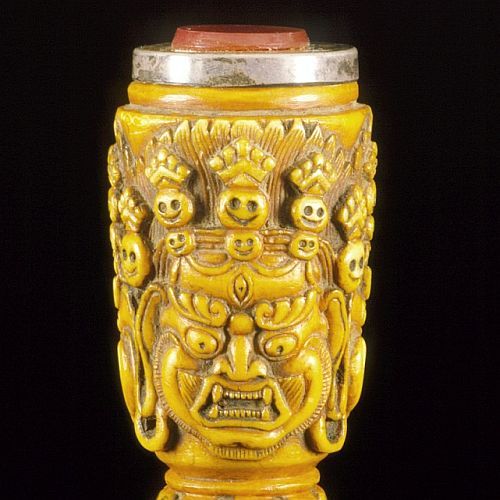
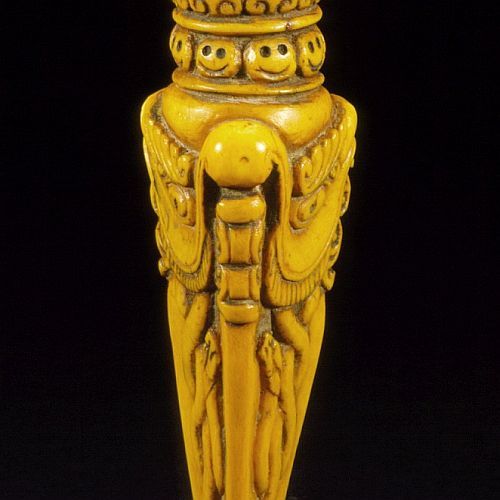
Ritual Dagger (Phurpa)
Source: Copyright 2013 © LACMA Museum
Russian Sledgesvia firehose

Joris Hoefnagel, illuminator, Georg Bocskay, scribe, 1591-1596.
Watercolor, gold and silver paint, ink on parchment.
Here have a gif of Matt Smith sneezing.((hE LOOKS LIKE HE GOT PUNCHED IN THE STOMACH))
OH MY GOD.
I CAN’T BREATHE.Do you remember the video of that momma panda that sneezed and scared it’s baby?
Matt is the momma panda and the baby.
Russian Sledges(shares from some feeds don't go to the top of my shares. what is up with that?)
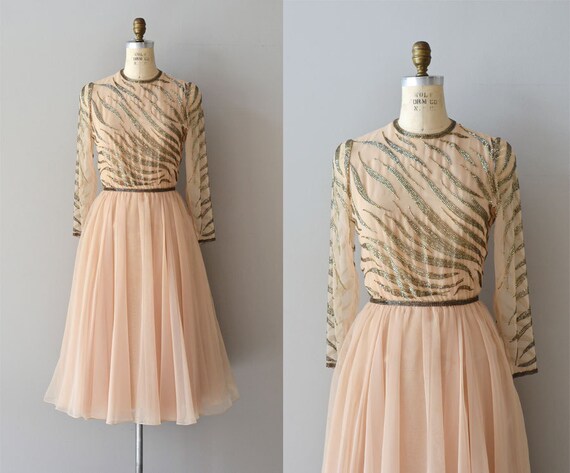
325,00 USD
Vintage 70er Jahre blass Chubby Rosa Seidenkleid mit silbernen Perlen Mieder, lange schiere beaded Ärmel, ausgestattete Taille mit Perlen "Gürtel" trim, vielschichtige chiffon Rock und hinteren Reißverschluss.
✂---Messungen
passt wie: Medium
Büste: 36 "
Taille: 28 "
Hüfte: 39 "Ärmel: 21"
Länge: 46 "
Marke/Hersteller: Victoria Royal Ltd. | gemacht in die britische Kronkolonie Hong Kong
Zustand: ausgezeichnet
um eine gute Passform zu gewährleisten, lesen Sie bitte den Sizing Guide:
http://www.Etsy.com/Shop/DearGolden/Policy
➸ Besuchen Sie den Shop-http://www.DearGolden.etsy.com
_____________________
➸ Blog | www.deargolden.com
➸ Twitter | deargolden
➸ facebook.com | deargolden
 The model who is suing Match.com for $1.5 billion says there's a dark underside to the lawsuit: a man was allegedly driven to suicide after being baited by a false profile using her photographs. [ more › ]
|
|