Shared posts

28 Jun 17:26

How we find those lovely, diverse, & gorgeous models for our patterns

by Sarai

01-mia-tyler

The first time I saw a model that looked like me in a magazine, it profoundly changed the way I looked at my body.

It was the late 90s and I was about 18. I’d never felt at home in my body. Like many women, and especially adolescent women, I had a habit of distilling my body down into a collection of faults: my too-fat belly, my oversized and uneven breasts, my puberty stretch marks, my ugly scars.

It was then that I came across a magazine spread of Mia Tyler, sister of Liv Tyler, looking unbelievably sexy in lingerie. She had curves and roundness like me. Her boobs looked like mine. And she was gorgeous. That’s a (different) photo of her above.

Yes, I had seen beautiful curvy women in real life before. But for a young girl, seeing that representation in a magazine caused a major shift in my thinking. And I could look back at those photos any time I felt those terrible feelings returning. They were concrete proof that beauty came in many shapes and sizes.

Since that time, I’ve been convinced that the most beautiful thing about women (and humanity in general) is our diversity. I am constantly astounded by how many kinds of beauty there are in the world, and equally astounded that people choose to only acknowledge a narrow selection of these forms of beauty.

Now that I’m a grown woman with my own company, that is the kind of beauty I’d like to express: diverse, strong, and happy.

IMG_0834

IMG_0829

Actually hiring diverse models can be tricky, especially because we are located in the northwestern part of the US, which is much less ethnically diverse than any other place I’ve lived. It’s also not exactly a fashion capitol, so there are fewer models to begin with than a city like New York or Los Angeles. But given those constraints, it’s still totally possible to seek out a wide variety of models.

At the same time, it’s important not to reduce the women who model for us to a single feature, such as their skin color. Too much focus on one aspect of someone’s identity or appearance can also be objectifying.

Much like seeking diversity in the workplace, it isn’t about working off a checklist. It’s about casting a wider net, and it’s about understanding the value that diversity brings to just about anything.

Where to find models

Our wonderful Art Director is Christine, and she is the person who conceptualizes photo shoots (for both Colette Patterns and Seamwork) and hires the lovely models you see. I spoke to her to help give a little more insight on how it all comes together.

briana-makeup

Agencies

The first place we look for models these days are at modeling agencies. Agency models can be expensive, but they often have a bit more experience and are easy to source and hire.

There are many kinds of models you can hire through an agency, and each agency classifies models a little differently.

  • Fashion: These tend to be your typical young, thin women – runway or editorial models.
  • Lifestyle: These models are often hired more for commercial shoots rather than fashion or editorial work. For example, advertising or catalogs. Because of this, there is more diversity in age and other characteristics. And they smile more!
  • Sports: Because of where we’re located and the presence of large activewear companies like Nike, there are a LOT of sports and fitness models. These models are athletic and tend to be ethnically diverse.
  • Plus: Some agencies have a small roster of plus size models. In our area, these rosters are tiny. Some cities with more apparel business (New York and Los Angeles) have many more agency-signed plus models, or even entire agencies that specialize in plus.

Christine says, “I like to hire models that make our readers think ‘Hey, I see myself in her.’ This is not an easy task, as there are only a couple modeling agencies in Portland, and their rosters are not very diverse.”

seamwork-issue04-cover-web

“The most difficult models to find and hire are plus size, medium size, and models over thirty,” Christine says. You’d probably expect the first and last categories are underrepresented, but you would be surprised how difficult it is to find models who are neither a size 0 nor in the plus size category.

You’ve probably also noticed that many so-called “plus-size” models are not exactly plus size in reality. I believe part of the reason is that there are so few categories of models that “plus” becomes a catch-all bucket for “not your typical size 0.”

At the same time, a lot of women are turned away from modeling because they aren’t large enough to be plus, and not small enough to be in the other categories (according to the agencies).

In other words, the way agencies choose to divide and categorize the women they represent has a huge impact on the diversity of models available. In talking with other business owners and designers, including bridal and lingerie, I know there is a market for models anywhere from size 6 to size 26 and up. But it is very difficult to find these women at your typical agency.

Independent models

Some models are not signed with agencies at all. These models can be a little trickier to find, and range in experience from the full-time professional models to the completely inexperienced.

IMG_0782

We’ve worked with independent models who are every bit as talented and experienced as agency models, and sometimes more so. Independent models also have more freedom to look like themselves, because they’re not trying to fit into as many different looks and styles as possible. If you want a model with wild hair, tattoos, or other highly distinguishing features, this is a good way to go.

It’s also a better bet for the hard-to-find models I mentioned above. Many of these women are filtered out of agencies because there is no place there for someone who is a size 10, for example. Many plus size models have difficulty signing with agencies too, because not all of them have a division that fits.

Non-models

Finally, there are people who are not models at all!

I’d like to point something out here. Many people seem to think that modeling is a matter of standing still and looking pretty.

The reality is that it’s skilled, creative work, much like acting. It involves emoting on cue, awareness of your body, and comfort in front of strangers and cameras. Not a lot of people have these abilities without practice and talent.

I’m sure that if you’ve ever felt uncomfortable in front of a camera, you can imagine what that’s like in front of a group of strangers. If you have any doubts about your abilities or the way you look, that is a very difficult thing to disguise when a lens is pointed at you and everyone is staring and telling you (hopefully kindly) how to walk and move and pose and look.

So using non-models can still be wonderful, but can also require a lot more work and direction. It’s been our experience that folks who have never modeled before find it really difficult and tend to be a bit stiff and self-conscious at first. But there are naturals too!

Choosing a model

Once Christine has a concept for the photo shoot, she begins working on the specifics, including hiring the model.

She asks herself the basic questions: What are the pattern designs? The monthly theme (for Seamwork)? The color story? “This will give me a good idea of the person I could see beautifully showcasing these looks.”

“I also try to keep in mind the models we have used in the past, and aim to represent the underrepresented, and show variation from month to month. Shooting a wide range of people that our Seamwork/Colette community can connect with is really important. I care deeply about showing that every woman is beautiful and unique just as she is.”

Once she starts looking through portfolios, there are several things she looks for, but the main thing is personality.

IMG_3441

“When I look through agency portfolios, I am drawn to models that have photos of themselves in a more relaxed state, laughing or smiling! In contrast to high fashion, serious, cold editorial shoots, my goal is to have fun, and capture the natural beauty of the model at ease, just being herself.”

Moving forward

The great thing about Seamwork is that it’s allowed us to bring in a wide variety of women to collaborate with us. Watching Christine work is fantastic, because she is such a naturally kind and gracious person and genuinely loves to hear about our models’ lives and other pursuits. She really believes in bringing out their individual personalities.

Christine adds, “Our models so far have been amazing people to work with, and I always love connecting with them during our shoots, hearing about their hobbies, families, and interests. They are hardworking, extremely talented women.”

But there’s more to do. Though we try to mix things up from month to month, we’d love to show the same style on more body types, especially for the Colette Patterns. Multiple models can be expensive and tricky to coordinate, but it would be fantastic for people to see a design on someone that looks like them even more often.

Any thoughts or questions about how we find our models? I’m happy to answer!

21 Jun 12:19

hirxeth: “All that mattered was that we loved them, and they...


hirxeth:

“All that mattered was that we loved them, and they didn’t hear our calls from in that room. For they were destined to be alone forever. And we would never find all the pieces to put the puzzle together.”

The Virgin Suicides (1999) dir. Sofia Cappola

21 Jun 12:17

thediaryoflaurapalmer: The angels will return. And when you see...


thediaryoflaurapalmer:

The angels will return. And when you see the one that’s meant to help you, you will weep with joy.

21 Jun 12:11

A Better Way to Cut Underwires

by Norma

Since writing my book, I have come up a new and improved way to cut underwires. There is nothing like having a large supply of long wires when I want regular wires to find a better way! Lucky for me I love tools and I was able to draw upon the skills I learned waaaay back when I worked in a hardware store. This method is really fast and easy and leaves no “Goop-y” reside.

Underwire Cutting Tools


First, assemble the tools:

Underwire Cutting Tools

Now to cut the wires:

  1. Use the sharpie to mark where you want to cut the underwires. Be sure you mark each side the same!
  2. Put on your eye protection to prevent cut wire from flying into your eyes – it could happen, why risk it?
  3. Put a wire – one at time – into the vice. I cut one at a time for the cleanest most accurate cut.
  4. Cut the wire at the sharpie mark using the wire cutter. Repeat for the second wire.Cut Wire
  5. Use a Dremel tool to smooth the cut edges of the wire. You don’t need to do a lot here, just round the edge a bit and smooth the top. Honestly, I have skipped this step and never had a problem so this is optional. Of course, if you like tools, like me, then you actually want to do this!
  6. Place a short length of the electrical tubing on the wire so that it extends over the cut wire tip and down the wire itself by roughly ½”.
  7. Aim the heat gun at the tubing and watch it shrink wrap to the wire.IMG_6813
  8. Wait a second and while the tubing is still warm, fold any excess over the wire. Be careful not to touch the wire with your hands when you do this. It will be hot!

I really like the ease and speed of this method. No waiting for sealed tips to dry and the seal is tight and lasting. While I have used this technique on spiral steel boning for smaller sizes, I have to admit that it makes me a bit nervous. I don’t like wondering if the tubing will hold up under extreme pressure. I recommend sticking with the more traditional steel re-tipping when cutting boning to a custom size.

Note: I used affiliate links in this post so if you click through and make a purchase, I will be compensated.

19 Jun 20:20

'They Will Strafe You,' Bird Expert Says Of Seattle's Dive-Bombing Crows

by Bill Chappell
It has become an annual process: Crows swoop down on unsuspecting Seattleites, who then call wildlife professor John Marzluff, who explains that it's simply the season for crows to dive-bomb people — and that they're mostly harmless.

The behavior, Marzluff tells member station KUOW, is tied to something many parents can understand: the empty nest.

"It really peaks about now, when the young crows are just starting to leave the nest on their own, and the parents are watching over them," he tells KUOW's Jeannie Yandel.

19 Jun 13:34

An NRA director has blamed the Charleston church shooting deaths on the pastor

by Lily Kuo
Russian Sledges

via firehose

“And he voted against concealed-carry. Eight of his church members who might be alive if he had expressly allowed members to carry handguns in church are dead. Innocent people died because of his position on a political issue.”

[shuts laptop now]

A memorial outside Emanuel African Methodist Episcopal Church in Charleston, South Carolina.

A National Rifle Association board director has blamed the deaths from the mass shooting at a mostly African-American church in South Carolina on the pastor’s anti-gun stance.

A 21-year-old man, who has now been arrested, opened fire midway through a bible study at Emanuel African Methodist Episcopal in Charleston on Wednesday night, reloading several times and reportedly telling his victims, “I have to do it. You rape our women and you’re taking over our country. And you have to go.” The church’s pastor, Clementa C. Pinckney, also a state senator, was among the nine people killed.

The gun advocacy group has issued no public statement since the shooting, but NRA board member Charles Cotton contributed this comment about Pinckney to a discussion thread on a firearm forum that he moderates:

“And he voted against concealed-carry. Eight of his church members who might be alive if he had expressly allowed members to carry handguns in church are dead. Innocent people died because of his position on a political issue.”

Pinckney was known for introducing legislation for stricter background checks on gun owners and last year voted against a South Carolina law allowing the concealed carrying of weapons in restaurants that serve alcohol. Under state law, guns are not allowed to be brought into churches.

A few hours before Cotton’s comments, president Obama delivered a speech calling for stricter gun control:

“At some point, we as a country will have to reckon with the fact that this type of mass violence does not happen in other advanced countries. It doesn’t happen in other places with this kind of frequency… I say that recognizing the politics in this town foreclose a lot of those avenues right now. But it would be wrong for us not to acknowledge it. And at some point it’s going to be important for the American people to come to grips with it, and for us to be able to shift how we think about the issue of gun violence collectively.”

Cotton’s comment about self defense is similar to the argument the lobbyist group made after 20 children were shot dead in 2012 at Sandy Hook Elementary school in Connecticut—schools, and perhaps now churches, should be armed.

The NRA is known for its less-than-sensitive approach to mass shootings. Last year, the group chose a reverend who blamed the Connecticut elementary school shooting on the separation of religion and public education to lead its annual prayer meeting. “This is what happens when a society turns its back on God,” the reverend said at the time.

18 Jun 10:13

daroross: Did you see some unexpectedly familiar faces in Yurikuma episode 11?Unnamed bullies in...

by villeashell
Russian Sledges

via otters ("pretty sure I saw them in Sailor Moon the other day too")

'Given their roles in each of these incarnations, I am pretty sure Ikuni means them to be Virgil’s Furies: Alecto (“unceasing”), Megaera (“grudging”), and Tisiphone (“vengeful destruction”)'

daroross:

Did you see some unexpectedly familiar faces in Yurikuma episode 11?

image

Unnamed bullies in Yurikuma Arashi

If something struck you as familiar, it’s probably because this is the THIRD time we’ve seen them, just not in this world.

image

Chizuru, Asami, and Yui in Mawaru Penguindrum

Guess who! And we’ve already established before that they are basically also…

image

Aiko, Keiko, and Yuko in Revolutionary Girl Utena

Just take a moment to realize that in every Ikuhara show, there are the same trio of girls who are up to no good. 

Given their roles in each of these incarnations, I am pretty sure Ikuni means them to be Virgil’s Furies: Alecto (“unceasing”), Megaera (“grudging”), and Tisiphone (“vengeful destruction”). I am constantly surprised by how much depth this man injects into even the slightest characters.

18 Jun 10:10

rosalarian: eastwoodwong: Ain’t nobody fresher than my...

by villeashell
Russian Sledges

via otters


rosalarian:

eastwoodwong:

Ain’t nobody fresher than my crew. 

Print available here

Yes!

18 Jun 10:07

"I used to think it was weird in Pokemon that Professor Oak didn’t have a full pokedex so he made you..."

Russian Sledges

via willowbl00

“I used to think it was weird in Pokemon that Professor Oak didn’t have a full pokedex so he made you go do it. But then I started grad school and now I understand that this is exactly how it works.”

- Me (via ailetra)
18 Jun 03:58

Beautiful Oppression: Tilda Swinton in I am Love

by Lord Christopher Laverty
Russian Sledges

yesssssss


From stills of this film alone you could easily be forgiven in thinking that I am Love (Io sono l’amore, 2009) was set during the 1960s. The designer clothes draped worn by lead members of the Recchi family, as selected by costumer Antonella Cannarozzi, are generally minimalist, in plain colours with little embellishment. I am Love is actually set in Europe around 2000, but its central characters are trapped as the well-heeled repressed of the sixties. Just as sexual, artistic and cultural expression was blossoming, the old guard struggled to make sense of this new world so regressed even more vehemently into their old one. The Recchi’s seem to live an intentionally separate existence to the rest of us. It is not just wealth either; they genuinely view themselves as our betters. It is the ethos of the class system. As such, when Emma Recchi (Tilda Swinton) indulges in an extra marital affair, she comes acutely alive through colour. Emma finally understands that true happiness is free of dependability on anything; class, religion, wealth, even family.

The film begins as Emma, her housekeeper, maids, servants and caterers prepare for a birthday party in honour of family patriarch Edoardo Sr. Despite the undoubted stress of getting everything ‘just so’, Emma, dressed casually in soft taupe knitwear and matching polo shirt, is genial with all the staff and her grown up children. She changes for dinner wearing a simple purple shift dress, her long blonde hair scraped back with an Alice band. Emma is immaculate and perfect; the perfect hostess, wife and mother. The colour of her dress reflects Emma’s status as Recchi royalty. She compliments her ensemble with a gold ring and thick gold bracelet. The ring and bracelet are placed on Emma’s wrist by husband Tancredi. Essentially he decorates her for show. Emma responds as she should, and has probably done a hundred times already, passively.

I am Love_Tilda Swinton purple dress top_cap

I am Love_Marisa Berenson fur coat rear_cap

At the dinner party we are introduced to Edoardo Sr.’s wife and grandmother to Emma’s children, Allegra (Marisa Berenson), an aristocratic sort in 1970s style Fendi furs, knitwear and wide leg pants. Even compared to Emma she is extremely slim. Emma is slight, but has the tinniest of bellies lumped beneath her clothes. This seemingly minor detail reveals why Emma lacks the discipline to be a true Recchi. Furthermore it demonstrates just how vanity free actress Tilda Swinton is not to hold her stomach in for even the most revealing of scenes. It is a pleasing paradox that someone dressed so immaculately can have such humility. Allegra would no doubt consider she is the most flawless woman in Milan, yet in reality she is one step away from vulgar. The ostentatious fur coat, the metallic threads, and later a studded leather handbag to match her colossal bracelet, reveal Allegra to be a wannabe fashionista to whom taste does not come naturally. Predictably for the locale, most of the male characters on screen are dressed comparably in stark grey suits with plain shirts and minimally patterned ties. All except Antonio Biscaglia (Edoardo Gabbriellini), the young and far ‘lower’ in status chef that Emma eventually initiates an affair with. Emma’s behaviour at the party is textbook ceremony, but her sexual frustration is exposed in close-up as she winds a strand of ribbon tightly around her fingers.

The story zips forward several months to find Emma running errands in Milan. She is wearing a somewhat peculiar combination of long, loosely structured lilac coat, pattern sweater, white slim leg cropped trousers, Hermès Kelly bag, brown and silver pearls, and black flats. All Swinton’s clothes in the film were provided by Raf Simons for Jil Sander, mostly a selection of deceptively mundane shifts and knits accompanied by a the Hermès. Note too Emma’s sweater here, it features a print that resembles the wrap she wears during the film’s final dinner party sequence, which in turn resembles work by abstract artist Sonia Delaunay, whose book, ‘Atelier Simultane’ she purchases while stalking Antonio through the streets of San Remo. Incidentally, Delaunay was Russian born but lived in central Europe, just like Emma. As Emma tells Antonio after they make love, she was brought over from Russia by Tancredi and given a new name; she does not even remember her birth one, that is how disconnected she is. At this point in the story Emma practically blends into her surroundings, but as the idea of an affair takes hold, perhaps inspired by discovering her daughter’s latent homosexuality, this soon begins to change.

I am Love_Tilda Swinton coat side_cap

I am Love_Tilda Swinton blue dress walking ladder_cap

Emma chooses a royal blue shift dress with short sleeves, large brown plastic sunglasses with gold trim, black high heels and black Kelly to visit Allegra at her home. Apart from the sleeves this dress is practically the same as the slightly flared brown shift worn by Catherine Deneuve as Séverine in Belle de Jour (1967), which is hardly surprising given this film’s obvious influence (themes of repression, desire, fate). Bold colour has crept into her life, even if Emma’s overall style remains as unfussy as ever. She returns home to find Antonio catering her daughter’s party. They have a moment, but it is momentary and playful, even if we can sense Emma’s attraction by the awkwardness of her body language. She then lounges at home in a soft white shift and jacket, as though colour has suddenly been drained from her. The change is brief, however, as the red sleeveless shift and Damiani earrings Emma wears next implies most obviously her feelings for Antonio. It is a specific kind of red too; not damson or blood, but fire-like; she is burning with passion. Her fever dream over a plate of Antonio’s prawns is pretty much the clincher.

Allegra and Emma greet her daughter Elisabetta (Alba Rohrwacher) at the train station, returning home from university in London. At this point both we and Emma know Elisabetta is a lesbian, although judging by her outfit Allegra might too be suspicious. It could be argued that Elisabetta’s ensemble of long pale pink shorts, blue shirt, black boots with thick socks, and, most significantly, cropped hair is something of a lesbian cliché. Yet her sartorial transition is more than for our benefit. Elisabetta has gone from being a conventional majority to an unconventional minority. She wants to imply this transition, even though she is not ready to announce it. This is Elisabetta’s attempt to step away from feminine gender conventions, the kind of which presently enslave her mother. Just witness how Elisabetta’s potential male suitor views her short hair, “What have you done?” he sighs. He cannot fathom why any women would want to reject her gender ideal.

I am Love_Alba Rohrwacher rear shorts_cap

I am Love_Tilda Swinton hair rear_cap

On the subject of hair, when Emma commits to her affair with Antonio, seemingly by following him around until they bump into each other, the film pays homage to Vertigo (1958) with Tilda Swinton in the James Stewart role. However the stiff curl of her up-do resembles that of Kim Novak as disturbed heiress Madeleine. Unsurprisingly, I am Love director Luca Guadagnino is a huge fan of Alfred Hitchcock’s classic mystery. Emma’s dress is basically a knee length orange wrap, but worn far looser than the style typically dictates and complimented by a lightly striped natural cashmere cardigan, and canvas and leather bag. The exposed back of the dress that is revealed when she accompanies Antonio to his farm is something of a shock. It provides a sudden burst of skin, glistening with sweat in the hot sun; a precursor to their making love.

Back home, Emma wears a long sheer white cardigan over a pale lilac wrap-over dress. This is actually her most blatantly sexual ensemble. It drapes across her almost exposed breasts, her lack of a bra implying a new sense of freedom and sexual awakening. Oddly enough the softness of the fabric gives off more of a 1970s Emmanuelle vibe. Yet in Antonio’s dream about Emma she is wearing her blue dress, maybe because it reminds him of their moment of closeness at Elisabetta’s party, or that destroying this persona is one of the things that attracts him to her. Notice too that Emma has short hair in the dream. She is the before and after version of his desire.

I am Love_Tilda Swinton lilac side_cap

I am Love_Tilda Swinton orange trousers top remove_cap

As the film’s enters its – for want of a better word – ‘sex’ sequence, Emma is wearing what may at first seem like a less than enticing outfit of orange slim leg trousers and light blue shirt. However what this ensemble allows Antonio to do in a way that a dress does not is gradually peel clothes away from Emma’s body. He undresses her one garment at a time. The anticipation is arousing and it demonstrates how habitually masculine dress can be even more sensual on a woman.

Emma’s next outfit is for another grand Recchi dinner party, although this one ends in disaster. Her pale pink sleeveless dress serves mostly to bring out the geometric wrap covering her right side. This wrap fulfils a narrative requirement because it features the same Sonia Delaunay print as the Atelier Simultane book found at Antonio’s father’s restaurant, allowing Emma’s son, Edoardo Jr. to put two and two together with the lock of blonde hair at the farm and his mother’s newly shorn bob. For us it shows a deeper connection to Antonio, even when Emma is on official best behaviour. This might have been Emma’s aim in context of the story; to feel closer to Antonio when figuratively they could not be father apart. Following the tragic events that occur at the party, Emma is awoken the next day and literally dressed by her housekeeper in correct black. After his son’s funeral, Emma opts to tell Tancredi that she loves Antonio. He rebukes that he no longer knows her, which is patently, and almost amusingly apparent, during the film’s final scene.

I am Love_Tilda Swinton print_cap

I am Love_Tilda Swinton tracksuit_cap

With an understanding smile from her daughter, Emma dashes from the Recchi home wearing a green zip-up tracksuit top and stone cotton pants, an outfit she was briefly seen in at Antonio’s farm, and that presumably belongs to him. This is the ultimate dismissal of her previous life, and something that those with such adorations for Tilda Swinton’s costumes might be failing to grasp. If anything, dispute their evident exquisiteness, I am Love is derisive of Emma’s clothes; that they represent not happiness but oppression. Guadagnino is rejecting the edicts of beautiful yet cold couture. During the end credits we can see that Emma has essentially gone ‘back to nature’, caressing Antonio inside a cave.

It is pleasing to note that I am Love is one of the only (almost) contemporary set films in recent years to receive an Oscar nomination for costume design. It didn’t win. We have to wonder if the Academy really understood the true, deeper meaning of the garments, or appreciated them purely for their striking artistic merit. Sadly, we imagine it was the latter.

NOTE: Images have been screencapped from DVD edition and cropped to better highlight costumes.

© 2015, Lord Christopher Laverty.

17 Jun 21:21

The Stunning Diversity and Detail of Vibrantly Colored New England Caterpillars

by Kate Sierzputowski
Russian Sledges

via Chelsea

cat-1
“Gravity” Hyalophora cecropia on buttonbush

Samuel Jaffe is getting close and personal with subject matter found right in our backyards— the furry, florescent, grubby little creatures we often find inching along our trees and sidewalks. Jaffe is fascinated by local environments, and aims to share the information he has collected about these backyard ecosystems so we can become more in tune with what’s right below our feet or hiding in the grass.

Jaffe has cataloged dozens of caterpillars in different settings, each with a blackened background to highlight their unique textures, colors, and patterns. Caterpillars dangle off branches, clutch onto leaves, and even play on grapevines within his photographs. Catching his subjects at specific moments, Jaffe gives each a little pop of personality, showcasing their playfulness when left alone in nature.

Jaffe grew up in Eastern Massachusetts, inserting himself within his surroundings, wading through ponds, and exploring the wildlife around him. Over the last five years he began to raise and photograph many of the more interesting native caterpillars. The project has grown to include exhibits, shows, talks, and finally in 2013 the Caterpillar Lab, a passionate program showcasing the diversity of northeastern caterpillars through educational programs, the arts, and sciences. Jaffe’s work is currently on display at the Franklin Park Conservatory in Columbus, Ohio in the exhibit “Life on the Leaf Edge.” Prints are available in his online shop. (via The Life Neurotic with Steve’s Issues)

cat-11
“Red Boots” Apatelodes torrifacta on cherry / “Three Swallowtails” Papilio glaucus, polyxenes, and troilus

cat-3
“Turbulent Abstract” – Phosphila turbulenta on smilax

cat-4
“Anatomy of a Caterpillar” – Nadata gibbosa on oak

cat-2
“Orange Red Green” Eumorpha achemon on grapevine / “Wild Lettuce” Autographa precationis on wild lettuce

cat-5
“Life on the Leaf Edge” – Nerice bidentata on elm leaf

cat-6
“Life on the Leaf Edge” Cerura scitiscripta on willow leaf

cat-8
“The Fawn” Sphinx kalmiae on ash

cat-9
“Early Kingdom” Lytrosis unitaria

cat-10
“Emerald Deception” Chlorochlamys chloroleucaria on goldenrod / “Cut Flowers” Eupithecia Pug on blue vervain

cat-12
“Father of Monsters” Eumorpha typhon on arizona grape

17 Jun 12:19

Philosophers on Rachel Dolezal (updated)

by Justin

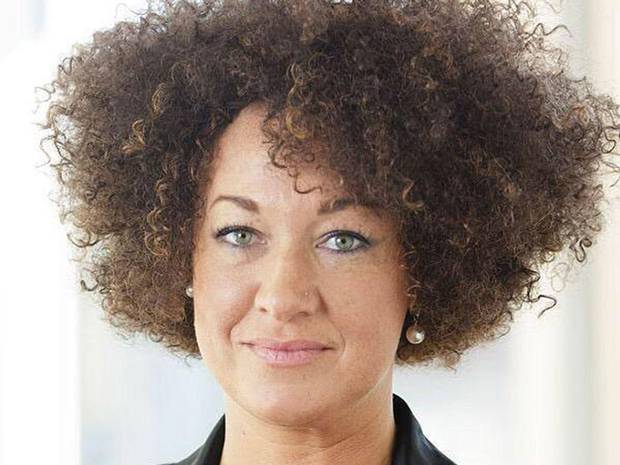
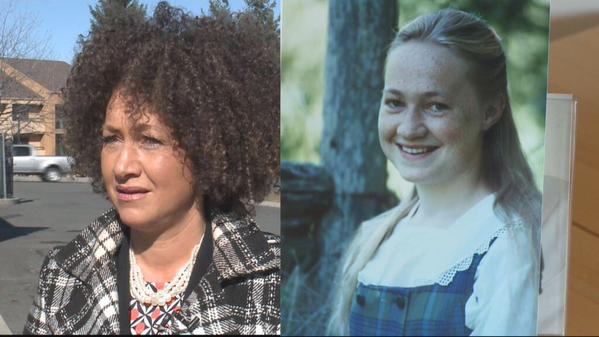
Rachel Dolezal, “in recent years… has portrayed herself physically, and on social media platforms, as a woman of black African-American heritage. However, her parents, Ruthanne and Larry Dolezal, who are both white and live in the Troy/Libby area in Montana, [say] their daughter is not African-American. They backed up the claim with a copy of their daughter’s birth certificate and photos. The images show a younger, pale, blonde-haired, blue-eyed Dolezal who looks much different than the woman with caramel-colored skin now leading the Spokane NAACP and helping review claims of police misconduct in that city.”

That is from the original news story on Dolezal in the Coeur d’Alene Press last Thursday. Since then, the basic outlines of her story have been shared and talked about all over the world. The story is fascinating on many levels. Since public discussions could benefit from the insight and carefulness of philosophical thinking, I invited several philosophers to share, briefly, some of their thoughts on the issues surrounding the Dolezal case. Their remarks are below. Others are, of course, welcome to join the conversation. Additionally, if you notice other philosophical commentary on the Dolezal case elsewhere on the web, please provide a link in the comments.

Let me thank the philosophers who, on short notice, took time out of their weekends to write up commentaries. They are: Esa Diaz-Leon (Manitoba), Meena Krishnamurthy (Michigan), Rebecca Kukla (Georgetown), Charles Mills (Northwestern), Daniel Silvermint (Connecticut), Quayshawn Spencer (U. Penn), and an anonymous professor who will go by the moniker Disembodied Inquiry. I’d also like to thank Kristina Meshelski  for suggesting a post like this. Now, without further ado…


Esa Diaz-Leon:

Is Rachel Dolezal black? In order to answer this question we first need to know what “black” means, and this is a question that philosophers of race can help us answer. It might seem at first sight that if we say that races are biologically grounded then it is clear that Dolezal cannot be black, whereas if races are socially constructed and “black” refers to a socially constructed property, then it is possible that Dolezal is black after all, given some of her social features such as self-identification, social position, cultural identity, and so on. But this is too quick. Here I want to discuss briefly some social constructivist views according to which she would count as black, and some according to which she wouldn’t, and draw some conclusions.

According to a social-historical account of races (defended by Chike Jeffers, Jorge Gracia and others), races are the shared historical properties that certain groups of individuals have in virtue of their common ancestries or common geographical origins. On this view, Dolezal wouldn’t count as black (insofar as she doesn’t have black ancestors), precisely because she lacks the relevant social-historical property. On the other hand, there are other versions of social constructionism about races, such as Sally Haslanger’s account, where being a member of a race amounts to occupying a certain social position of privilege or oppression along some dimensions, and someone is marked as being appropriately in that position in virtue of being perceived or imagined to have certain geographical origins (where it’s not necessary that one actually has those geographical origins, but just that one is taken to do so). On this view, Dolezal would count as black in some contexts, to the extent that she is assumed to have black ancestors, and occupies a position of subordination within certain social structures because of that. However, it’s reasonable to believe that there are or there have been contexts where she has not been assumed to have black ancestors and therefore she has not occupied the corresponding position of subordination. That is, I believe that according to Haslanger’s account, she would count as black in some contexts but not in others.

What should we say in response to this multiplicity of views? How can we decide which is the right account? In my view, the most important question is not about what “race” or “black” actually mean in our language (or what our current concepts are), but rather what the most useful concepts are, given our aims and purposes. What are our main goals when we talk about race, and what are the concepts that can better satisfy those goals? This is the relevant approach in order to answer questions such as “Is Rachel Dolezal black?”

In recent discussions of this issue in the media, some people have suggested that self-identification should play a role when it comes to determining what races are. In my view this is problematic. When it comes to the concept of gender, it seems clear to me that a concept of gender based on self-identification is the most politically useful in most (if not all) contexts, given the central aims of being maximally inclusive and fighting transphobia. I also believe, more controversially, that when it comes to sexual orientation, a concept based on self-identification is also very useful, given the moral duty of capturing people’s self-identities. However, when it comes to the concept of race, it’s not clear to me that our main aims and goals will give priority to a concept based on self-identification, given our current political context. The two social constructivist accounts of race sketched above, namely, one based on historical properties and another based on social position within a social hierarchy, can clearly satisfy crucial explanatory roles, such as explaining a history of racial discrimination and revealing different social structures of oppression. However, it’s not clear at the moment that a concept of race based (solely) on self-identification is politically useful to a similar extent. But we might envision situations where this might be different.


Meena Krishnamurthy:

As the current popular discussion illustrates, ordinary language makes use of a variety of concepts of race. Some are based on objective (mind-independent) facts such as ancestral ones (where one’s recent ancestors are from, geographically) and others are based on subjective (mind-dependent) facts such as self-identification (how one perceives oneself) or other-identification (how others perceive the individual).

This raises the question, which, if any, of these concepts of race should we use or appeal to when we refer to Dolezal? My own view is that, in contexts where such considerations are relevant, such as the public sphere, political considerations of justice ought to be given priority. They trump, so to speak, when it comes to concept selection in the public realm. Dolezal, as the president of her local NAACP and chairwoman of a municipal police oversight committee, is a public figure and political factors are of central importance. So, in asking whether we ought to refer to Dolezal as “black”, we have to ask ourselves, would doing so be consistent with and express a commitment to justice in the United States?

A just society is one that ensures that each individual, black or white, can participate in that society while also maintaining a secure sense of self-respect, that is, a secure sense of her equal worth. Referring to Dolezal as “black” is not consistent with the demands of self-respect or a just society.

If society broadly accepts the practice of referring to Dolezal as “black”, this would work to socially erase or make invisible the racial privilege that Dolezal experiences as someone who does not suffer from the downstream and long lasting effects of slavery. It would express the shared public sentiment that the national political history of racial oppression and the resulting differences in power can simply be cast away whenever a person of racial privilege desires to do so, for personal benefit or otherwise. Referring to Dolezal as “black”, would fail to publicly express respect for properly “black” people by failing to express an equal valuing and acknowledgment of the lived experiences and realities that such people experience. It would suggest that they and their experiences do not matter. Because of this, it is difficult for other properly “black” individuals to participate in a society that refers to Dolezal as “black” while also maintaining a secure sense of self-respect. In short, referring to Dolezal as “black” is inconsistent with political values of self-respect and, in turn, is inconsistent with the demands of justice. We ought not refer to Dolezal as “black”.

On what basis should we refer to people as “black”? When political considerations of self-respect and justice are taken into consideration, the ancestral concept of race ought to take linguistic priority in the public sphere. People who have sub-Saharan African ancestry are properly referred to as “black”. Ancestry is the appropriate basis for referring to people as “black” because it tracks politically relevant considerations such as oppression and slavery (historical political injustices), which are considerations that ought to be given weight to and taken into consideration when we interact with others in the public sphere. This is what self-respect and a just society require.


Rebecca Kukla:

First off, I am befuddled by how many people are interested in describing what was in Rachel Dolezal’s head and are willing to offer armchair diagnoses of her purported mental illness or condemnations of her motives. Not only do I not know what was in her head, but in fact, the more the conversation focuses on this particular person’s inner life, the less interesting I find the whole issue. The interesting question, I take it, is how to think and talk in general about people who identify and present as belonging to a race other than that assigned at birth, whatever their reasons and causes. I will focus on some meta-concerns about how we are talking about that question.

I am disappointed in how quickly almost everyone, including friends of mine who are strong anti-racist and trans allies, have been willing to engage in (1) ridicule and body-shaming – unabashedly mocking her hair and skin tone for instance; (2) confident descriptions of her as a liar who is choosing to pretend to be something she is not; and (3) fast and confident claims that she can’t claim black identity because she is appropriating a culture, hasn’t grown up with the black experience, can opt out at any time, etc. My main reaction to all this is that it’s surprisingly historically short-sighted and lacking in epistemic humility. So many times, ‘we’ (those of us with a recognizable and reasonably well-established embodied, socially positioned identity) have encountered a new way of being, and have responded with ridicule, shaming, and charges of lying. So often we think that forms of identity that have no clear social place are hilarious and clearly a pretense and that their bearers are fair game for humiliation. Honestly, I don’t know if Dolezal experienced herself as lying, or as making a voluntary choice to deceive, and more generally I don’t know whether or how there might be a legitimate place for transracial identities, as opposed to, in effect, race ‘drag,’ which is what almost everyone seems to assume is going on in Dolezal’s case. But I have learned from experience that body shaming and ridicule are always unhelpful and problematic, and that what we shame and dismiss one year we often come to understand and defend ten years later. I also know that people are driven to lie and deceive in seemingly incomprehensible ways when they find themselves without any socially recognizable way of being. As for the confident claims that Dolezal, or people like her, have no right to black identities because they didn’t have a lifetime of black experience, or because they are being appropriative of the experience and identity markers of an oppressed group, or because they want access to a community that their bodies preclude them from properly joining, or that their presence in black spaces threatens the integrity of those spaces for ‘real’ black people: well, I feel the pull of those arguments for sure, and I don’t want to dismiss them. But boy do they sound exactly analogous to ‘feminist’ arguments that were used to vilify and undercut the entire reality of trans women back in the not-too-long-ago day. I just don’t have the confidence that would allow me to proclaim immediately that this time the critique fits, that there is no real phenomenon here, no human need or way of being that requires understanding and a reconfiguration of my settled concepts. Can’t we learn from the past and proceed a little more slowly?

One final point: I’ve seen several philosophers online say that before we can settle what to think about the possibility of transracial identity, we need to know more about the metaphysics of race. I think this is exactly wrong. The question is not what race ‘really’ is, because whatever the difficult answer to that, we are all walking around with a phenomenological sense of self that does not hinge on or even include this answer, and race has a powerful social life independent of its proper metaphysics. Whether transracial identity is possible and should be given social uptake strikes me as a thoroughly political question about how various ways of claiming and recognizing identity do and don’t do harm to individuals and to communities. I can’t imagine how this hinges on metaphysics. Even if there was some real thingamajig in people that constituted their race, such that if they claimed to have a different one then they were saying something false (and does anyone think that, seriously?), I can’t see how that would settle any of the interesting questions about how people experience themselves and what sorts of identity-building we should acknowledge, support, or challenge.


Charles Mills:

The Rachel Dolezal case has it all—race as subjective (“I feel black; therefore I’m black”); race as intersubjective (“I need to start performing my blackness so these other folks will know I’m black”); and race as objective (“Rachel, honey, we’re white so you can’t be black”). The Dolezal parents know they’re objectively Caucasian (though the Caucasian race doesn’t exist), and perceive no absurdity in simultaneously declaring that they’re both part Native American (since by intersubjective consensus the one-drop rule only applies to blacks). The final proof is the eyeball test: presenting the photograph of their young daughter in her previous pristine blond blue-eyed incarnation. Walter White, another blond blue-eyed American, who was the (black) chair of the national NAACP from 1931 to 1955, might have quibbled: “Hate to break it to you folks, but back in the 1890s a whole bunch of octoroons headed up north—I believe some said they were going to Montana—after telling their kin: ‘Don’t call us, we’ll call you … Actually, then again, we probably won’t.’”


Daniel Silvermint:

Here are three options for conceptualizing this alleged act of passing [what follows is an excerpt from a longer piece posted at Feminist Philosophers]:

If ‘passing as privileged’ involves a member of an oppressed group passing as a member of a privileged group for the sake of some personal advantage, then a fit for this sort of alleged case might be ‘passing as disadvantaged’, where a member of a privileged group passes as a member of an oppressed group for the sake of some personal advantage. There are many such examples. A politician with a wealthy background might present himself as “a man of the people” in order to sway voters in a low-income district. Cultural appropriation in the music industry or within artistic communities is another example, such as when a person passes in order to sell “authentic” indigenous pieces or narratives. Someone might pass as a member of a marginalized group in order to obtain a scholarship or other diversity opportunity, or in order to feel somehow special in virtue of having suffered, overcome adversity, or challenged the status quo. Some simply fetishize otherness.

“Might” is the operative word here, and not just because this is an alleged case of passing. Other types of passing could end up providing even better explanations and bases for assessment. For one thing, this doesn’t appear to be simple case of appropriation – setting aside the interpersonal and institutional fallout such a reveal could bring, by all accounts Dolezal is an effective and dedicated advocate for change. If so, then she wasn’t the only person intentionally and directly advantaged by her alleged passing, meaning that the case might have more in common with ‘mutually-beneficial passing’ than with cases where the passing agent alone benefits. In other words, the deception might be wrong, but the passing wouldn’t necessarily be parasitic or exploitative in the same way that, say, passing yourself off as a long-lost relative in order to be written into a will would be wrong. Dolezal might have usurped a position or displaced a voice when being a staunch ally would have been more appropriate, but that is a different kind of wrong.

Alternatively—and quite controversially—this alleged case might be something akin to transracial passing. If she genuinely self-identifies as something other than her assigned racialized group, and is actively living the life of a person of color (including taking on the oppressive burdens that go along with such identifications), then it is at least not immediately, decisively obvious that she is engaged in wrongful deception, or that she owed it to anyone to disclose her birth identity. Many have protested that Dolezal is obviously white because she, unlike people of color, can voluntarily walk away from oppressive burdens and disadvantageous racialized treatment if she so chooses. But this objection overlooks the ongoing history of ‘passing as privileged’, where genuine victims of oppression (tenuously, and at great personal risk and cost) have done just that. Dolezal, if she is indeed passing as black, has apparently paid familial costs among others, and faces fresh costs now that she has allegedly been outed. This is fraught and uncertain terrain, and I’m not sure what to say. We don’t normally think of racialized group membership as something that one can genuinely transition into or out of, but perhaps that’s as socially determined as everything else.


Quayshawn Spencer:

Why “Is Dolezal Black or White?” is a Bad Question

There are few nationally representative empirical studies on what current Americans mean by ‘race’ that use reliable and valid instruments.  But the few that exist show a clear pattern.  American race talk is a mess.  By that I mean, for any description of what a race is that has been studied, there is a large amount of Americans who accept it and a large amount of Americans who don’t.  The most comprehensive nationally representative study to date is the US Census Bureau’s Alternative Questionnaire Experiment.    The focus group portion of that experiment revealed that there is nowhere near a consensus among Americans about what race is.  Visible physical features, ancestry, culture, etc. were all frequently used to define ‘race’.  Similar results have been found in all other nationally representative studies, such as this one and this one, and in studies that are close to nationally representative, such as this one.  Even more interesting is that there is not only widespread disagreement about how to describe a race among Americans, but also about which groups are races, which presents problems for even a referentialist account of what Americans mean by ‘race’.  For instance, a nationally representative survey of US Hispanic adults conducted by the Pew Hispanic Center in 2012 found that 75% of Hispanic Americans reject “Hispanic/Latino” as their race.  The most popular self-identity was “White”, at 40%.  So, do Whites include Hispanics?  Or is ‘Hispanic white’ an oxymoron?

The messiness of American race talk has motivated some race scholars, such as myself, to endorse a pluralist position on what race is in the contemporary US.  The pluralist position maintains that there are multiple, equally legitimate national meanings of ‘race’ in the contemporary US.  Also, by a “national” meaning, I mean a meaning that is one of the widest, competently used meanings in a nation.  Racial pluralism, as we can call it, can be particularly helpful when assessing a case like whether Professor Rachel Dolezal is Black, or, rather, is just a White person passing as Black.  From a pluralist viewpoint, this question is unanswerable until we add the additional context of a national racial discourse.

I’ve argued in a recent paper that one US racial discourse is something I call “census racial discourse,” which is the race talk currently used by the US Census Bureau, and is also the official race talk of the US government (it was introduced in 1997 by the OMB).  In this race talk, there are five races: American Indians, Asians, Blacks, Pacific Islanders, and Whites.  Furthermore, these groups are, roughly, just ancestry groups and individuals can have mixed racial membership.  For example, most Mexican Americans would be mixed people of predominantly American Indian and White ancestry according to census race talk.  The interesting thing about census racial discourse is that it permeates many important facets of American life.  It’s found on college applications, job applications, birth certificates, medical patient information forms, mortgage loan forms, childcare registration forms, etc.  So, all Americans are bound to run into it at multiple points in life.  Professor Dolezal might have run into census racial discourse when she applied to Howard University (she graduated with an MFA in 2002), when she filled out her job application for Eastern Washington University (she’s faculty in their Africana Studies Program), or when she reported being the victim of a hate crime to the Spokane police recently.  We do not yet know whether Dolezal racially identified as Black in these linguistic contexts.  However, if Dolezal did identify as Black in these contexts, and census racial discourse was being used in these contexts, then Dolezal misrepresented herself.  Given her ancestry, in census racial discourse, Dolezal is White.  However, Dolezal very well could be Black according to some other US racial discourse (perhaps one that emphasizes cultural affinity).

So, why does any of this matter?  Well, one reason is because linguistic competence and honesty about one’s racial membership(s) is presupposed in the execution of many social programs designed to promote social justice.  For instance, the preferential treatment of Blacks in college admissions and faculty hiring, the federally-mandated racial tracking of mortgage loan borrowers, the CIA’s racial tracking of hate crimes, and the Department of Health and Human Services’ racial tracking of health disparities all rely on Americans being linguistically competent and honest about their racial membership(s) in census racial discourse.


Disembodied Inquiry:

I have concerns that the Dolezal case raises issues too complex and fraught to be productively enough addressed, via this approach, for the general audience of Daily Nous.

Meta concerns aside, I’m more curious about than critical of Dolezal. She certainly appears to be down with the cause of Black political (and cultural) solidarity. Her ambitions seem to have been limited to making a life for herself and a difference around Spokane, WA. Bracketing the matter of deception about her family background, she seems to represent (what I argue elsewhere) is the real, if rare, possibility of a non-black person being a member in, not merely “ally” of, Black political solidarity. Still, Dolezal evidently has some substantial psychological challenges, which could explain why she gratuitously lied about easily enough confirmed facts about her immediate family.

But here’s what could get me in arguments that I don’t have time to deal with: I do think there is a parallel between this type of color-conscious “passing” and trans identity (an observation I make without prejudice, one way or the other). What I’ve read rejecting this parallel has been unconvincing and overly anxious–namely, in appealing to differences that don’t go to the heart of the matter. Also, I get the sense that whites are mainly the ones who seem outraged, while blacks mainly seem wryly bemused–an interesting issue unto itself.

Dolezal might deeply believe she is somehow black/African–regardless of knowing she was born to parents who are classified as and “look” white/European. Since the world is not yet ready to recognize this kind of identity change, she might have gratuitously lied in order to feel closer to–and be seen as–living what she experiences as her true, color-conscious political, cultural, and soul self. From the perspective, Dolezal is not merely a fraud or an opportunist; nor is she merely confused.


UPDATE (6/15/15): Laurie Shrage (Florida International University) was interviewed by BBC Newsnight last Friday about the Dolezal case. The interview prompted her to write the following, which she kindly agreed to share with Daily Nous readers:

Suppose a person is brought up in a white family and is treated from birth as a white person.  Imagine further that this person discovers that one of her parents or grandparents, with whom she has had no contact, is black.  Based on this new knowledge, if she were to “come out” as black, would we see her new identity as inauthentic, fraudulent, a kind of fakery, and an instance of cultural appropriation and opportunism?  If she didn’t begin to identify as black, would we now see her as trying to pass as white?

Now imagine a person who is brought up in a mixed black/white family.  No one in this family identifies as “mixed race,” instead they are all either black or white.  Suppose one of the white members begins to identify as black.  She has no known black ancestors, but she has black siblings.  To gain acceptance in this new identity, she cuts herself off from white members of her family, and she closets her past as a white person.  Should such a person be viewed as an imposter, fraud, liar, and fake?

The case of Rachel Dolezal, the former head of the Spokane NAACP, who was recently “outed” by her parents as a white person, is being treated in the media as a bizarre instance of deception and fraud.  This would make perfect sense if race was a genetically inherited trait.  But decades of scientific research has shown that there are no racial genes, and there is more genetic variation within any recognized racial group than between groups.  While there are genes for skin color, hair texture, and physiognomic traits, the classification of bodily traits as racial is culturally based and variable.

In the scientific community, race is regarded as a social construct because the rules for assigning people to racial categories are socially and historically created, and do not have any significance in a biological or genetic sense.  A person’s bodily features may tell us something about the human populations around the globe her ancestors swapped genes with, but they tell us little about her culture, personality, abilities, traditions, and so on.

Saying that race is social construct does not mean race is not a socially significant and real category.  Nor does it imply that racism is not real.  Indeed, one thing we might be able to infer correctly from people’s bodily appearance is that they have faced a history of social discrimination in one form or another—experiences that have shaped their social ties, perspectives, and understanding of themselves.

Given that one’s racial identity is socially created, can we change our racial identities or the rules for assigning people to racial categories?  For example, the “one-drop” rule assigns someone to the category “black” if they have one black ancestor.  This rule once served an exclusionary purpose that many today would regard as racist and oppressive.  Yet, if the person in our first example were to be accepted as a black person, it would be based on a “one-drop” understanding of blackness.  Shouldn’t we contest this understanding, given its historical purpose and consequences, and also the choice of someone to identify as black based on it?

A person who identifies as black based on a problematic and historically racist rule may have good reasons for self-identifying as black.  She may want to show her social solidarity with the black community, and she may feel that she cannot do so while she enjoys the privileges of whiteness.  She may feel that others will identify her as black, based on the one-drop rule, and so if she goes on identifying as white, others will perceive her as racist.

Rachel Dolezal’s racial identity does not follow the historically racist rules of race assignment.  Because of this, the media has treated her case as one of deception and fraud, and we see reporters trying to catch her in an outright misrepresentation of her familial relationships, and thereby publicly shame her.  The media has uncritically accepted her parents’ understanding of her racial identity—parents whose motives should be questioned for forcibly “outing” their daughter and potentially causing her significant harm.

Whether Rachel Dolezal is really black is not a question I can answer here.  Whether she can live a life as a black person depends to a significant degree on whether she can be accepted by others and by her community as a black person.  With most social identities, there’s a gate-keeping process in which other members of the group are invested with the authority to say who’s in and who’s out.  In the wake of the media storm, many black leaders and commentators have said she should be put out.  One reason seems to be that because she does not have the characteristic experiences growing up as a black person, she cannot truly understand what it means to be black.  This reason, of course, should exclude the person in my first hypothetical example too.

One difference though between the hypothetical case and this real one is that, once people find out that someone has a black ancestor, they will be viewed by others as black and begin to experience what life is like living as a black person.  In Rachel’s case, in order to experience this, she had to hide the fact that she has no known black ancestors, and therefore is not black by conventional criteria.   Importantly, Rachel has the choice not to be black, while someone with one drop of “black blood” does not.  While this is problematic, the problem seems to be with the exclusionary one-drop rule, and the inevitable social discrimination that someone in my hypothetical case would likely experience. That is, there is a genuine problem that someone like Rachel has a choice to retain or not the privileges of whiteness, while others are denied this choice, and more importantly, the privileges of whiteness.  These privileges include automatic social respect, trust, and inclusion.  The real problem is that white identity is still a source of social privilege, something that the many recent stories of police violence underscore.

The upshot is that we should focus less on whether Rachel Dolezal is a fake, and focus more on how her story illuminates our own still very troubled and unscientific understandings of race.


 (image: photo of Rachel Dolezal by Colin Mulvaney / Associated Press, modified)

17 Jun 10:11

Mad Max: Fury Road Makes Your Rape Arguments Invalid

by Carrie S

This post contains:

SPOILERS FOR: Game of Thrones, Outlander, and Mad Max: Fury Road

HUGE TRIGGER WARNING FOR: Discussion of rape, also brief mention of torture, murder, imprisonment. But mostly for rape.

Also a lot of words. But that’s a good thing!

Recently I saw Mad Max: Fury Road (Our extremely positive review is here). Mad Max: Fury Road, which I’ll henceforth refer to as Fury Road, involves women escaping from sexual slavery. Meanwhile, during the week that Fury Road opened, Game of Thrones aired an episode called “Unbowed, Unbent, Unbroken” during which a major character, Sansa, was raped. During the same week, Jamie, the hero of Outlander, was raped and tortured during the episode “Wentworth Prison.”


Medicinal Puppies are Medicinal


I have not seen either the rape of Sansa in Game of Thrones nor the rape of Jamie in Outlander. I have no opinion on the scenes themselves. I don’t always think that it’s a bad thing to depict rape and without having seen the shows, I can’t comment on how well it’s handled. What I do find interesting is that whenever rape is depicted, many people offer reasons for why they think that it is not only desirable but also necessary to include it, and of course with two shows in one week featuring rape people were quick to proffer the usual defenses.

This prompted a mind-blowing tweet from author Saladin Ahmed:

Note: FURY ROAD is an R-rated movie w/ a sexual slaver villain yet Miller & co. didn’t feel the need to include a rape scene.

Mind. Blown. It actually did not occur to me that Fury Road does not contain a rape scene, and now that Ahmed has brought it to my attention I can’t stop thinking about how powerful it is that it doesn’t. I do not always think that showing a graphic depiction of rape is a bad thing, but I do think that it’s over-used. Moreover, Fury Road shows why some of the most common arguments in favor of including rape scenes in fiction are flawed.

The plot of Fury Road is very simple. In the future, the world is a wasteland. A warlord, Immortan Joe, has five “wives,” women he keeps captive. He forces these women to have his babies – their only value is their fertility. Another woman, Imperator Furiosa, rescues the women with the goal of spiriting them to “The Green Place.” Max, a wanderer who is also trying to escape from Joe, allies with Furiosa. The entire movie is a road chase in which Immortan Joe hunts Max, Furiosa, and the wives in an attempt to reclaim his “property” (Joe’s word).

A shot of Fury Road captioned Hey Girl - toxic masculinity is killing us, too. Can we ride with you?
This moment of awesome brought to you by feministmadmax.tumblr.com!

If ever a movie seemed tailor-made to include a rape scene, it’s this one, an R-rated movie with rape at its core. Yet the director, George Millar, who has included rape in his earlier Mad Max movies, did not show a single scene of sexual violence in Fury Road.

Why not? Let’s look at some of the things people say in defense of rape scenes and explore how Fury Road deals with them. Again, this is a criticism of arguments in favor of rape scenes, not a criticism of any specific scene or show.

  1. “It’s important to show rape because it’s historically accurate (or because it would be realistic given a certain setting).”

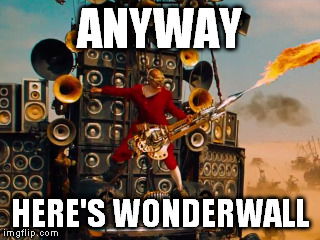
Fury Road is a science fiction movie that features a guy in long underwear on a giant truck made of speakers who plays a flaming guitar while hanging from bungee cords, so if ever a movie might be allowed a “realism” pass, it’s this one.

Dude in red longjohns holding a flaming guitar against a wall of speakers with the words ANYWAY HERE'S WONDERWALL captioning it. It's hilarious.

Still, the movie is realistic in suggesting that this is a world in which most power is wielded by men who rule by fear, and therefore rape is very much a part of this world. However, while rape is omnipresent, we (the audience) don’t have to see it. In fact, it’s BECAUSE it’s so omnipresent that we don’t need to see it occur. Of course it occurs. We know that rape exists in this world because the entire plot revolves around women trying to escape from rape.

Often, rape is used as shorthand for, “This person is vulnerable.” This is a criticism I have of Outlander, a show that I admire in many other respects. There are scenes of sexual assault in both the book and the TV show that are pivotal to the story and that arise organically from the characters and their surroundings. For instance, I have not seen the rape of Jaime so I cannot comment on how it is handled in the TV series, but I do understand why they chose to include that scene. In the book series, the rape and torture that Jamie experiences at the hands of Black Jack Randall is the outcome of a long character arc and has serious practical and emotional repercussions for everyone involved for years to come.

Rape is a problem in Outlander when it is used as an easy way to indicate that Claire is vulnerable. Yes, Claire is vulnerable to being raped. But that’s not the only way in which she is vulnerable. She has no money, no family, no clan nor connections. She has no way to travel or to provide for her own most basic needs. She doesn’t know the customs of the time and she doesn’t speak Gaelic. Sadly, the show tends not to explore these issues. Instead, every time Claire starts to think she’s got a handle on things, she’s threatened with sexual assault AGAIN.

The Devil’s Mark” was something of a relief because it explored a historically accurate way in which Claire is vulnerable that did not have to do with rape. When, at the culmination of being tried for witchcraft, Claire is publicly stripped, her partial nudity is shocking and upsetting because it is an organic part of the story we’ve seen unfold. This scene was so upsetting to me that I stopped watching the show, but I didn’t find it gratuitous or offensive. It was SUPPOSED to upset me and it worked in a way that several “Claire in Peril” scenes did not because it was a seamless part of the story that combined the various characters, the setting, and the plot in a way that felt horribly inevitable instead of shoe-horned in.

There are so many reasons why the “it’s historically accurate” argument doesn’t hold water that I could devote an entire post to this issue alone, but ultimately the question of accuracy is irrelevant. In fiction, the story is everything. This is not a documentary. Every single thing in a fictional piece has to fit the needs of the narrative. Does showing a character being raped advance the story? Is it a logical outcome of the characters’ decisions and personalities? If the answer to either of these questions is no, then it doesn’t need to be there, accurate or not.

In Fury Road, showing the effects of rape culture advances the story, but actually depicting rape would not, because it would be redundant and it would damage the flow of the movie, which relies on almost non-stop forward physical and narrative movement. Miller trusts the audience to get what has happened, in all its horror, without being walked through every step, which allows him to get on with making cars explode.

One of Jamie’s finest moments in Outlander. Please note the historically inaccurate teeth – not that I’m complaining.


  1. “It’s important to show a bad guy committing rape because it shows that he is the bad guy.”

Immortan Joe deprives women of freedom so that he can indulge in his own pleasure and procreation and he refers to them as his property. He tortures captives and turns them into eternal blood donors. He deprives people of water at his whim and distributes it wastefully so that everyone will cling to him in hope of abundance and stay weak because of deprivation. Also, see #1 – we know that he’s a rapist. Honestly, given the movie as it is, are you confused as to whether or not he’s the bad guy? Would actually seeing him rape The Splendid Angharad or Capable clear up some kind of ambiguity?

“Yes, I’m evil, but you have to admit that I look AMAZING,” says Immortal Joe from Fury Road!

In Game of Thrones, before raping Sansa, Ramsay Bolton flayed prisoners alive after they were promised mercy, tortured Theon, hunted a girl with dogs and watched the dogs kill her, flayed some other people, and said many horrible things. Some commenters have said in discussions elsewhere that we needed to see Ramsay rape Sansa so that we would know how awful Ramsay is. Really? After seeing him chase a woman through the woods with a pack of dogs, some members of the audience were still confused about his moral standing? I have more faith in humanity – well, most of humanity. I’m pretty sure the majority of viewers were clear on the idea that a guy who lets a woman be ripped to death by dogs is probably not a paragon of goodness.

Fury Road trusts the audience to come to conclusions without having their hands held.

More on that here:

  1. “You have to show rape so that the audience will understand how awful it is for the rape victim.”

Here’s where Fury Road most gloriously puts its faith in the audience and in the actors. How do we know that being raped was awful for the wives? We know because of their desperation to escape it. We know because of how they cling to each other, how Splendid risks her own life to save her sisters, how The Dag hisses at her pursuers, how Toast the Knowing learns to load weapons, how Cheedo the Fragile creates an opportunity for Furiosa, and how Capable allies with Nux because she knows all too well what it means to be seen as a tool and not a person.

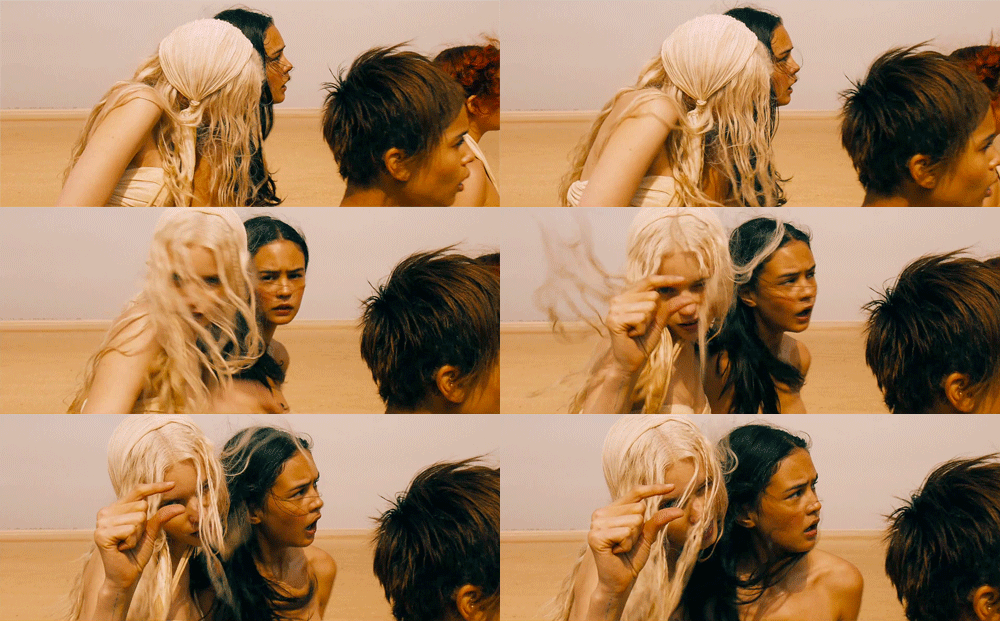
Dag, who is a very fair blonde, turns toward the audience and holds her fingers about an inch apart - he's this big.
The Dag is so over this patriarchal bullshit.


The wives in Fury Road are not hapless victims. They have agency. While they lack the combat skills of Furiosa and Max, they find ways to make themselves useful. Rape has affected them, but not destroyed them. It’s important that they are all affected differently, because in real life there’s not one single, universal response to being raped. They aren’t faceless tributes to Joe’s savagery. They are people. We know what they endured was terrible because we know what they will sacrifice to move beyond it physically and emotionally. It’s their story, not Joe’s. It’s not the story of how Joe is a bad guy, and it’s not the story of how they suffered. It’s the story of how they survive.


Max captioned Hey Girl, I don't need to see the pain and humiliation you suffered as a sex slave. I believe you.
This moment of awesome brought to you by feministmadmax.tumblr.com!

In short (too late) Fury Road’s omission of a rape scene highlights how unnecessary many rape scenes are. We don’t need to constantly show rape because of “historical accuracy” any more than we need to have heroes and heroines who are missing teeth and who have lice and nutritional deficiencies. We certainly don’t need to use rape to establish historical accuracy in a story that chooses to omit those other markers. We don’t need to use rape to show that someone is a villain if we have already established, either by showing or by telling, that they have done bad things. We don’t need to use rape as the only way to show someone’s vulnerability – it is one of many dangers that women (and men) face, but not the only danger. We also don’t need to show the rape itself to convey the impact of rape on a survivor. Rape deserves to be treated as an event that takes place in a certain context and which has powerful effects on the survivor, the rapist, and the people who surround them. It doesn’t deserve to be treated as a short-cut, a device, or a trick.

There are times when showing a rape is going to be the most artistically honest choice. But for this to be the case, artists need to stop falling back on the same excuses to use rape as a short-hand for “this person is vulnerable” or “this person is bad” or “this place and time is scary.” By choosing not to include a rape scene in Fury Road, Miller demonstrates how powerful a story can be when you trust the actors, the storytelling, and the audience, and when you keep the focus not on the actual moment of sexual assault but on the culture that permits it and on impact it has on survivors.

Well played, Fury Road, well played.

16 Jun 23:48

“Do not want”, Newly born Chameleon remains egg shaped

Russian Sledges

via firehose

16 Jun 20:57

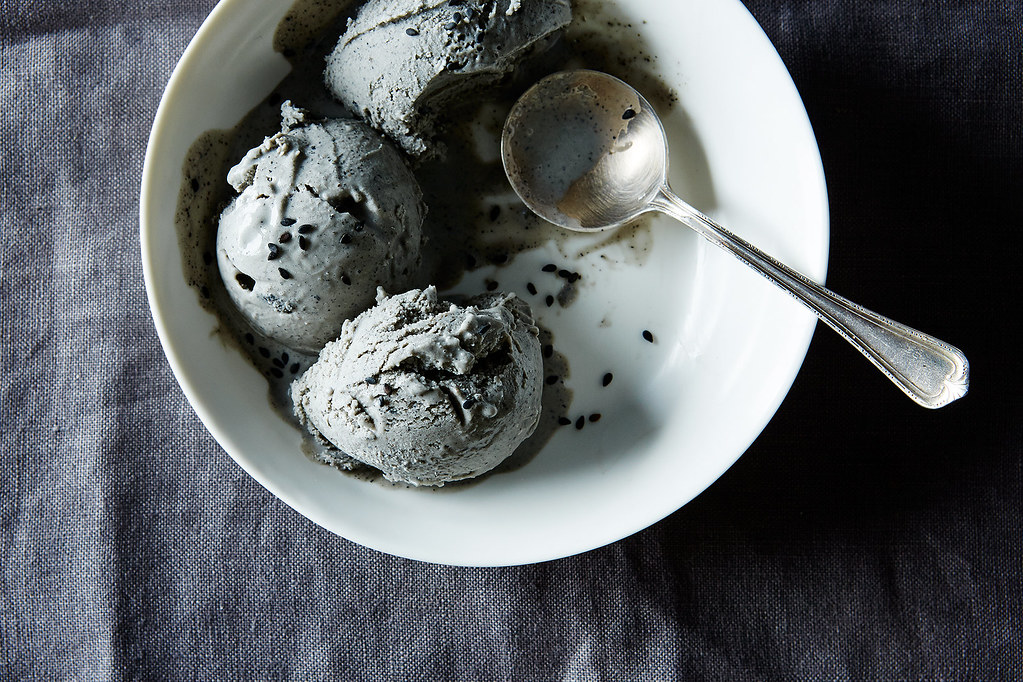
A Gray Ice Cream That's Anything But Drab

by Lindsay-Jean Hard
Russian Sledges

via SuburbanKoala

There are those things we eat, make, read, and gush over that are just too good to keep to ourselves. Here, we resist the urge to use too many exclamation points and let you in on our latest crushes.

Today: The case for loving a dessert that looks like wet concrete.

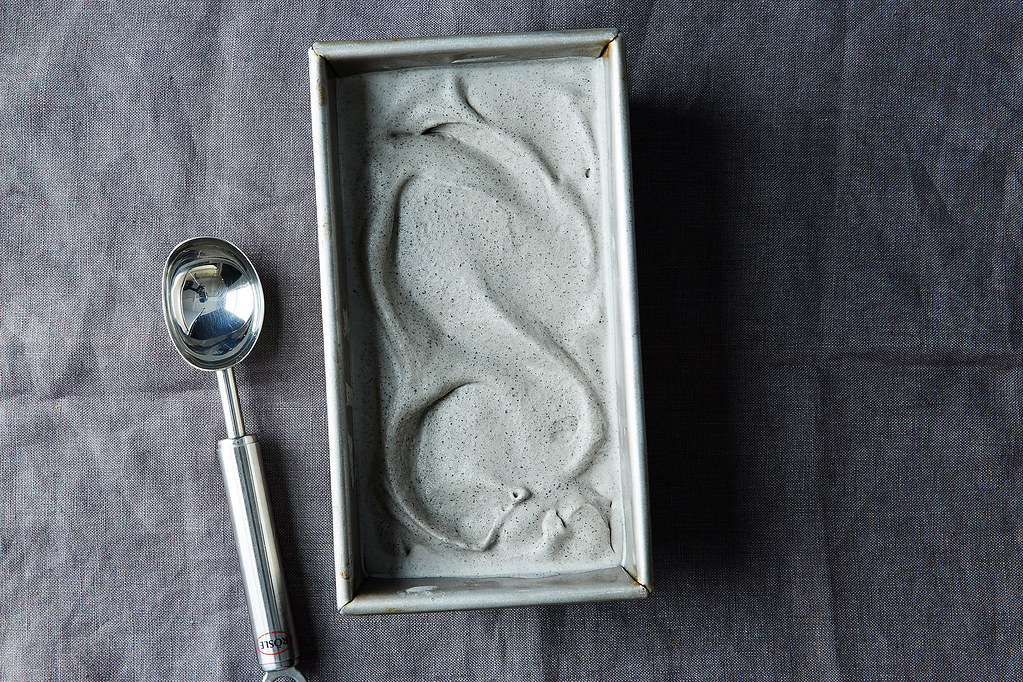
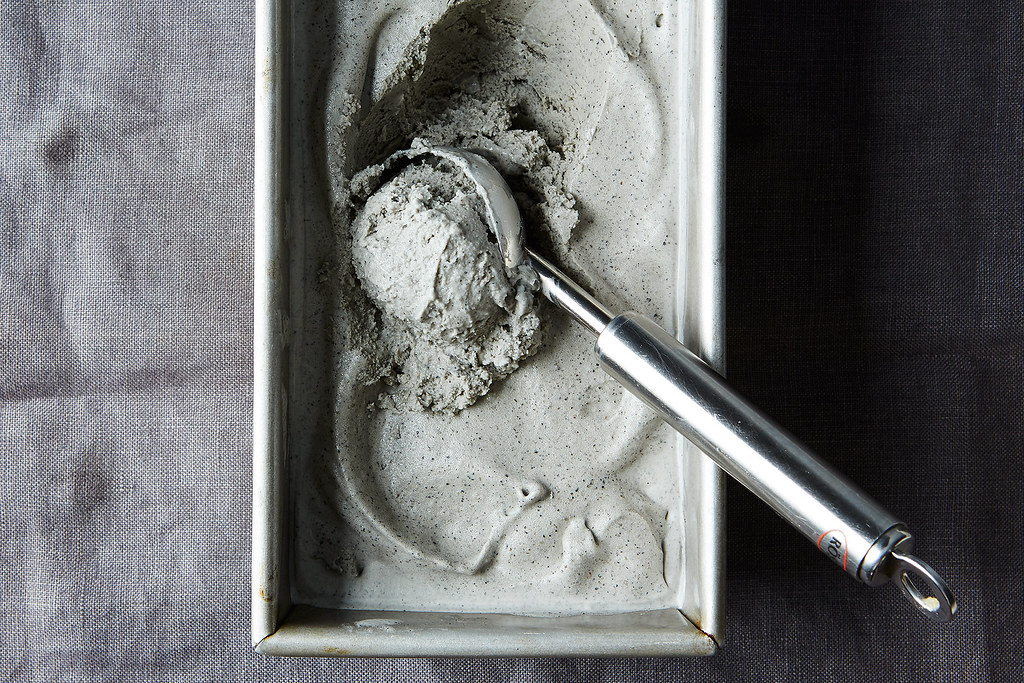
Black Sesame Seed Ice Cream

I don’t like smothering winter squash in brown sugar, and you will never catch me putting marshmallows on my sweet potatoes. I like fruits and vegetables to stand as they are, not disappear under a veil of cloying sweetness. This holds true for desserts just as much as it does produce, which is why I felt right at home in Japan—well, as far as desserts go anyway.

The average Japanese palate is accustomed to far less sugar in their sweets than we are: A run-of-the-mill (i.e. not one sprinkled with fancy flaky salt) American cookie or slice of cake is likely to elicit murmurs of ama sugi (too sweet) or “American taste.” (Not surprisingly, some of our technicolored candies elicit a number of less than complimentary comments as well, but I digress.) 

I like sweets with red bean paste and I love anything with matcha in it, but my Japanese dessert soulmate is anything of the black sesame-flavored variety (and I’m not the only member of the Food52 team that’s fallen under its spell). Like white sesame seeds, black sesame seeds have a pleasant nutty flavor, but taste again and you’ll see they’re a little bolder and more assertive. It’s like watching the quiet guy next door stand up to a neighborhood bully and realizing there’s more depth there than you thought.

Black Sesame Seed Ice Cream

If forced to choose one black-sesame-studded gray dessert, I’d admit my predilection for black sesame seed soft-serve (known as soft cream in Japan). Soft-serve shops are almost as prevalent in Japan as are their famed vending machines, so it was easy to feed my addiction wherever my family and I traveled. Visit a shrine, eat soft serve; feed sacred deer, eat soft serve. And yes, you can get vanilla, chocolate, or strawberry, but why would you when you can get soy milk, grape, kabocha squash, or any number of regional specialty flavors? 

In my home base of Nagoya, I went to the zoo and botanical gardens often, not just to visit the tanuki (both a real animal and a popular statue outside of bars and restaurants), but also because they had my favorite spot for soft serve.

I visited frequently (thanks to a very reasonably-priced annual pass) and could lose hours walking the grounds. On nice days I'd often treat myself to a black sesame soft-serve, but even ordering in Japanese I wasn't always convincing enough—sometimes the worker would come out of the stand, around to me, and physically point to the picture to make sure I really knew what I was getting myself into. Yes, yes I did. Black sesame, onegaishimasu

Black Sesame Seed Ice Cream

Back at home, where black sesame soft-serve is not as pervasive, I make a version that’s more ice cream than soft serve. I like not feeling like I have to be in such a rush to eat it before it melts into a gray puddle. It starts with a less sweet, more salty version of Jeni's Ice Cream Base with black sesame seeds (of course) and vanilla bean seeds. Yes, I'm sure you could substitute a small amount of vanilla extract for the vanilla bean seeds, but it makes my soul sing to know that some of the flecks are vanilla bean seeds are mixing in, becoming friends, with the sesame seeds—delight in the little things and all that.

Black Sesame Seed Ice Cream  

Makes about one quart

5 tablespoons black sesame seeds
1 1/2 ounces cream cheese, softened (3 tablespoons)
1/4 teaspoon fine sea salt
2 cups whole milk
1 tablespoon plus 1 teaspoon cornstarch
1 1/4 cups heavy cream
1/2 cup sugar
2 tablespoons light corn syrup
1 inch of a vanilla bean, split and scraped

See the full recipe (and save and print it) here.

Do you have a favorite food that tastes better than it looks? Tell us about it in the comments!

Photos by Mark Weinberg

16 Jun 19:33

New Laser Engraved Rolling Pins by Valek Imprint Elaborate Designs on Baked Goods

by Christopher Jobson
Russian Sledges

via Ibstopher

rolling-1

Last year around this time, Zuzia Kozerska of Valek Rolling Pins (previously) practically set the internet on fire with lasers, more specifically her laser engraved rolling pins that imprint different patterns in cookie dough. Kozerska has been hard at work creating increasingly more complex designs as well as special mini pins just for kids. You can see more in her Etsy shop.

rolling-2

rolling-3

rolling-5

rolling-6-new

rolling-7

rolling-8

16 Jun 18:20

About Rachel Dolezal the Undercover Sista and Performing Blackness

by Awesomely Luvvie
Russian Sledges

worth it for bob ross

Soooo about Rachel Dolezal… I am aware that I’m tardy for the party in throwing my hat in the ring but I’m just here so I don’t get fined. I might be a day late and a word count short but this lady has taken over our minds in the last 5 days because this is completely absurd.

About Rachel Dolezal the Undercover Sista and Performing Blackness | Awesomely Luvvie

My first reaction when I heard few details of the president of the Spokane NAACP being a white woman who has identified as Black for the last 15 years was to laugh to the high heavens. I cackled as I scrolled through pics of her on Google Images rocking every Black girl hairstyle ever.

She was like a poster hanging on the wall of Sheneneh’s Bump and Curl Salon where you get to pick what style you want by the numbers. I cackled as I learned that she went to Howard University and is currently a professor of Africana Studies at Eastern Washington University because she has really committed herself to this. She is Blacker than me on paper. Rachel is so down that they should be selling a 500-thread count version of a duvet called the Dolezal at Bed Bath and Beyond.

And then the #AskRachel hashtag happened on Twitter and I guffawed to the blue-corned moon as the streets of social media were littered with the edges of the Undercover Sista.

When a black preacher starts having asthmatic-like breaths, do you: A. Find an albuterol inhaler B. Scream "LET HIM USE YOU" #AskRachel

— EDIBLU (@EDIBLU) June 12, 2015

LMAOOOOO! “Let him use you!” laid me out!

Rachel Dolezal is a plum fool. The problem isn’t that she’s rocking hairstyles that she thinks Black women have. The problem isn’t that she’s the President of the NAACP. The problem isn’t that she loves Black people. The problem is that she’s trying to squeeze her white square peg into a black circle. The problem is that she insists that she goes to this Black ass school of life when she doesn’t. The problem is that her shenanigans have created a conversation that is now creating excuses for people who want to play hopscotch with their race. The problem is that she’s standing wrong and strong in all of this.

I was more amused than anything until I kept finding out about all the lies that Rachel has piled up over the years to make this fantasy work. She’s told people her father is a Black man, even taking Fake Black Daddy to some event. She’s reported that she’s been a victim of several hate crimes, even going as far as placing this in her bio. She says she has a Black son but he is actually her adopted brother from her real WHITE parents. At best, she’s a pathological liar and at worst, she might be suffering from delusions of grandeur, which means she might need to be on meds because isn’t that one of many symptoms of schizophrenia? Except she actually isn’t because her brother Ezra said she told him not to blow her cover. Rachel ain’t curling all the way over, like many of her weaves.

Rachel-Dolezal-2

I’m mostly offended by how dry her wig is. It’s like she ran through the desert and her coif loved the feel. Shit looks so dehydrated. Why didn’t one of her Black friends tell her about shea butter or coconut oil?

There’s layers and levels to this shit. There’s so many questions too, like “what is Blackness?” It surely isn’t about whether “nude” band-aids actually blend in with your skin. It surely isn’t just about loving a particular type of music. Blackness isn’t definable but I feel like we know it when we see it. It’s not about celebrating Kwanzaa like she did (which, don’t get me started), or performing “Phenomenal Woman” or eating collard greens. Blackness can be performed, though, and that is what Rachel has been doing for over a decade.

Besides that, why did Rachel feel the need to self-identify as a Black woman? Is it because she’s so committed to seeing Black people rise that she felt like the best way she could do this is by being in a play that only she knows about? Act 1: Rachel Dolezal, the daughter of two white parents who are of Czech, German and Swedish descent. Act 2: Rachel Dolezal, the tragic but empowered mulatto, daughter of a Black father and civil rights activist.

Rachel Dolezal After and Before

Why couldn’t she just be a very vocal white ally? I am a firm believer that we need them, because racism is not a system that Black people can “fix.” It has been created, upheld and perpetuated by Rachel’s skin folks so white people HAVE to be a part of the solution. She could have been active in the NAACP as a white woman and took her place as an anti-racism white activist. She could actually use her white privilege to create space and elevate other people of color. Instead, she is playing the part of the people she purports to be fighting for, appropriating the culture in a role that is full of mimicry of hairstyles and repetition of theory, as well as a dollop of stereotypes to make it really authentic. O____O

Her act 2 in the play has been interrupted by her parents, who dropped the dime on her and said she’s been lying like the babyhair of Chilli from TLC. Their child is not some mixed chick who has felt the struggles of being Black since she was little, but their blonde hair, blue-eyed daughter who was born in Montana. The Dolezals Kanye’ed her whole steeze, jumping on the stage in the middle of her play and snatched the mic. They didn’t even let her finish. HA!

Whatever their reasons are for snitching on her right now, I don’t even care. Rachel has spent a long time perpetrating and what’s done in the dark has come to the light (skinned). She has given speeches where she’s used “WE” when talking about the Black experience. She has created an entire career, where she’s been paid because people thought she was a Black academic. She has literally taken the spaces of Black women, and made money off a life that isn’t hers.

On top of that, reports have come out from people who said Rachel has even policed their own Blackness or their seats at the table as people of color. 3 or 4 people have come out to say they’ve had encounters where Rachel Dolezal has questioned how Black they are or whether they are worthy of speaking about white privilege in the black experience. You wanna talk about giant balls and nerve of steel. She is wearing a coat she tried on one day and decided she really liked the feel of it and then tells other people their coats aren’t worthy.  It is the pot calling the kettle unBlack and that takes some nerve and possibly some boldness that comes with white privilege.

So when the peanut gallery pipes up and says Rachel Dolezal has done more for Black people than some Black women, I wanna jump up and kick them in the chin because COMME DES FACKONS. Are you serious?? The amount of people who are defending her is scary. The amount of Black people, especially.

Cats giving epic side-eye

This cat is my spirit animal.

Let’s be SUPER ULTRA EXTRA clear. Black women have always been in the trenches, fighting for equality. Even as our contributions have been erased, we’ve been there. We are the backbone of every movement that has advanced our people so the idea that some white woman who is donning what is essentially behavioral blackface is doing more than we have is not only insulting but it’s untrue.

Rachel Dolezal has based her adult life on behaving like a certain type of Black woman. THAT woman gets props for inspiring her activism, not her for repeating it. I mean, sure. Rachel might have done some great work as president of the NAACP in Spokane. She might have gone to the marches and tweeted about white privilege. Hell, she might have been in the trenches shooting with us in the gym for the last 10-15 years. However, she is where she is BECAUSE she’s behaved like down ass fight for the cause Black women before her. Thank us later (and now).

Furthermore, the work that she thinks she’s doing has actually hurt actual Black women because as she profits off behaving like us, she’s taking the place and taking the money out of one of our pockets. Many of us are never placed in the positions to tell our authentic stories as she gets stages to tell her made up ones. This is not throwing hateration in her dancerie but when you build your livelihood off writing and speaking on things that you made up, you can call yourself a fiction writer or an actress. NOT whatever the hell Rachel is doing.

Also, by excusing and defending Rachel’s foolishness, people are setting a precedence that says to other white people that they can perform Blackness as convenient to them. It’s telling other white people that you can go get some braids and study Africana studies, have black friends and go to Howard and that makes you okay to call yourself Black. As long as you’re “doing the work.” No ma’am. No sir. No Bob. No Pam. People who’ve done great work can still be enormous assholes who are out of line and out of pocket. See: many historical figures. Oh and Gandhi was racist and didn’t like Black people. He did do a lot for India, doe.

Sips Tea Kerry gif

It is still important to point out that Rachel spent the last 36 years as a white woman, even under all that sun tan and dusty hair. All the privileges that comes with being a white woman are still there, and her fake ass perm twistout doesn’t preclude her from being whiter than white. She can take it on and off whenever she wants. That brings me to the next part of this.

There are people who are wondering how we can cheer on Caitlyn Jenner but not Rachel Dolezal. I want to start off by asking them to have a seat. You need to hear this and hear this well. TRANSRACIAL is not a thing. Well, not in the way it’s been used these last couple of days. Transracial actually refers to when families adopt children who are of another ethnicity or race as them. Transracial as it pertains to people feeling like they were born in the wrong skin is NOT A THING, and the comparison with people who identify as transgender needs to be deaded.

Although race is considered a social construct, it’s still very real. Socially constructed things become real when they’re embedded in the culture. Money and language are social constructs too. Santa Claus is too and we sit our yanshes down on December 25th every year and exchange gifts that we say are from him. Anywho, race is real because it has come to define our societal positions and it comes with very real and tangible consequences. The idea that you can move between races is only possible in one way: white to Black.

Rachel Dolezal 2

No Black person could ever be considered white. Even beyond the one drop rule, whiteness is considered the absence of color. I cannot wake up today and say I am white because I feel very strong towards white people or love music that I think is white. I could straighten my hair or bleach my skin but I’d still be BLACKITY BLACK BLACK. Rachel can play Black all she wants but it is not just about going natural and wearing weaves and telling people that you are being oppressed. If you have a way to opt out of it, you are not in it.

I was speaking with my girl Charlene Carruthers, a Black woman who has been organizing and working towards justice for 12 years (and National Director of the Black Youth Project 100). An actual Black woman. Because I wanted to explain carefully why the idea of transgender and whatever the hell Rachel Dolezal is doing cannot be conflated. She’s much smarter than me and she broke it down like this:

“What’s important to recognize is that someone can deliberately perform what they (or we) believe is the opposite of Blackness in America, live in a white neighborhood, have a white partner, even pass with appearance and will never have full access to whiteness. This same person can have a child that could turn out brown-skinned, could be outed as Black by a family member or actually still identify as Black. Who is white in America is defined by institutional power, and Black folks have never held that type of power. If transracialism even existed Black folks wouldn’t have access to it.“

Basically. It’s a one way street, and it’s really just another privilege that white people can claim. They could put on wigs and be Black because they listen to Jay-Z but we cannot be white no matter how much Barry Manilow we love. And no matter how straight we make our hair.

Also, as far as the transgender comparison. Gender and sex are two different things. One is social and fluid (gender) and the other is biological (sex). Transgender identity is about people who don’t identify as what they were assigned at birth. Rachel was putting on a costume but Caitlyn was taking one off to live her life in a way that was most comfortable. She did not create an entire falsified past on her way there either. The incredible Janet Mock chimes in with:

TWOC are attacked daily b/c of this pervasive myth that we are pretending to be someone we are not, and therefore should be extinguished.

— Janet Mock (@janetmock) June 14, 2015

People are outchea talmbout “Cisblack” and I want to tell the Earth to stop at the next station so I can get off. We have reached peak foolishness and I don’t wanna play anymore.

I’m not accepting Rachel Dolezal in any racial drafts because she’s a fraudulent summagoat who has gone to great lengths to do what? Chile… bye. She is not allowed at the Black People Meeting and she surely cannot come to our annual reunion. Now we gotta check EVERYBODY’s receipts at the door. Registration is gonna take forever. YOU GOT RACHEL TO THANK FOR THAT, LIGHT SKINNED FOLKS!

Oh and please stop comparing her to Michael Jackson. He had vitiligo and bleached his skin so it could all match in a milky white. Let’s be clear: MJ never identified as anything but a Black man. His possible body dysmorphic disorder aside, he was also never moving in spaces with the idea that he was white. Michael had A LOT of issues but that ain’t got nothing to do with the price of tea in China.

I’m just fascinated by how big her cheering section is. It doesn’t matter how badly white women behave; they will ALWAYS have a vocal chorus of supporters. This woman lied on her parents, lied about her background and lied about her experience. She lied about the core thing that she has used to define herself and there are people still saying “but she’s a down ass chick.” Are we that parched for white saviors that we’ll take it even when they come in fake ass packages like Rachel Dolezal?

If some of y’all borrowed from your special passion for defending white women to actually stand up for Black women, we might get somewhere.

sip straw side-eye gif

Now I’m wondering who will play her in the Lifetime biopic titled “The Rachel Dolezal Story: What’s Melanin Gotta Do With It?”

The moral of this story is that Rachel Dolezal did not have to lie to kick it. Not only did she lie, she prostrated at the Holy altar of Fallacies and then became a priest there. And Black women are supposed to be flattered. Not when she’s walking around with that dry ass hair of hers. Hmph. Black womanhood is not an alphet (outfit) to be taken on and off and it certainly ain’t a deficience of moisture. Maybe it was the spirits of Sojourner’s truth that has kept her hair from flourishing this whole time.


Join the Awesomely Luvvie Facebook page | Follow me on Twitter (@Luvvie)

Follow the Awesomely Luvvie FB page | The post About Rachel Dolezal the Undercover Sista and Performing Blackness appeared first on Awesomely Luvvie. Duplicating this content in entirety is expressly forbidden.

16 Jun 14:34

Mimi O Chun

by russiansledges
Russian Sledges

so specific

Stuffed Hipster Emblems is an experiment in media and meta-narratives — soft sculpture replicas of iconic goods using the very levers that invoke such fetishism among their artisanal, small-batch enthusiasts (scarcity, tactile materials, hand-made processes).
16 Jun 14:34

David Ramsay, A Sermon on Tea, essay, 1774 - ramsaysermontea.pdf

by russiansledges
Russian Sledges

"It is about 100 years since this herb, worse than Pandora’s Box, was introduced into Europe. In which time mankind have lost some inches of their stature, many degrees of their strength, and disorders have assumed a new complexion. The Histeriea, which as the derivation of the word imports, was peculiar to the fair sex [women], is now become common to both, and has reduced the robust masculine habit of men to a feminine softness.—In short, it has turned the men into women, and the women into ——— God knows what"

Published anonymously by Charleston physician David Rams a y soon after the “Boston Tea Party” of December 1773, A Sermon on Tea is n ot a clergyman’s oration but a physician’s exhortation to shun tea for physical and political health . T ea - drinking weakens the body and makes it vulnerable to disease. Tea - buying , and paying the hated taxes on the imported herb, enfeebles America and leaves it enslaved by Great Britain. The weak - willed culprit in Ramsay’s piece is Woman. Just as Eve led Adam in to sin through the forbidden fruit , tea - drinking women will lead America into soft swooning capitulation. For the white males who led the American Revolution , femininity meant dependence as did slavery. Independence was the proper state for the patriarchs of the Revolution, and by shunning tea, they would assert both their personal and political independence. Here Ramsay blends satire, medical directive, and stern political admonition into one short “sermon.” ( In 1789 Ram - say , who served as a p hysician in the C ontinental A rmy, would author one of the first histories of the period, The History of the American Revolution , 1789.)
16 Jun 12:51

Doctor Who Creator Considered a Female Lead as the Doctor Back in the ’80s - So get your s*** together already, 2015.

by Dan Van Winkle
Russian Sledges

via firehose ("old news, but forever")

doctorwho_103014_1600

Whether or not the Doctor should get a gender-swapped regeneration can be a divisive issue—quite literally dividing fans between people who are jerks and people who aren’t, generally—but the ultimate authority on the issue already weighed in before a lot of us were born, and he’s 100% cool with it. Can we have Tilda Swinton!Doctor now?

The idea of a female regeneration for the show’s eponymous Time Lord has been a frequent topic of discussion lately.

No, really.

Like, a lot.

All the time, practically. In fact, the discussion practically consumes more of time and space than the Time War itself, and late Doctor Who creator Sydney Newman would probably be confused as to why a good part of the fandom seems so upset at the idea.

If we jump in our Internet TARDIS and head back to the ’80s, during Colin Baker’s time as the Doctor, Newman didn’t like how the show was going and went so far as to call it “largely socially valueless, escapist schlock,” in a letter to then-BBC One Controller Michael Grade, according to CultBox. His solution to regenerate the Doctor into a woman didn’t just beat all the current discussion surrounding the show to the punch, but he also wanted to portray a non-idealized version of a woman long before pop culture really got into that conversation, writing,

At a later stage, Dr. Who would be metamorphosed into a woman

[T]his requires some considerable thought—mainly because I want to avoid a flashy Hollywood ‘Wonder Woman’ because this kind of hero(ine) has no flaws—and a character with no flaws is a bore.

Sadly, Newman’s ideas never came to pass, but fans who would look to the series’ history to back up their anti-lady-Doctor crusade should remember that the person who created the show already destroyed your entire argument long before you ever started it.

(via Den of Geek)

—Please make note of The Mary Sue’s general comment policy.—

Do you follow The Mary Sue on Twitter, Facebook, Tumblr, Pinterest, & Google +?

15 Jun 19:17

Choosing a New Serger

by Amy
Russian Sledges

"a nice hum that purrs more than chops"

It’s that time of year in Austin. It’s getting hotter and hotter and all I want to wear are knits! So this month I’ve been sewing up a bunch of knit projects, and decided it was about time to upgrade my serger.

Meet my new addition!

my new serger, a Juki MO 1000

I’ve been thinking about upgrading for awhile now. I bought my first serger, a Babylock Imagine, about 13 years ago. It is still a fantastic little machine. I bought it barely used on eBay for an absolute steal–I felt so lucky!

I loved how lightweight and easy it was to set up but over time a few specific things started driving me crazy. Two of them were fixable but others weren’t. I wanted a machine that had better lighting and wouldn’t bounce around my sewing table.

At first I thought it’d be natural to upgrade to another Babylock (you bet I love that jet air threading!). Then I started looking at Juki sergers. They get great reviews and I already own two awesome Juki sewing machines (an Exceed F600 and a TL-2010).

Testing the Juki MO 654DE

Over Christmas I bought and tried the Juki MO 654DE for about a week.

Juki MO-654DE

It’s a super quality serger for the low price, and I understand why the Juki portable series are so popular. It’s lightweight, easy to set up and makes great seams. Contrary to the horror stories I’d heard about threading sergers, I found manual threading to be quite a breeze! Juki machines are all very good about including thread guides with little guide dots so I never got confused about what went where.

However, the deal breaker was the lack of space around the foot and knife. There is a knife cover that goes right up to the edge of the foot and when you pull it away, the machine locks as a precaution.

Juki MO654DE knife cover

This made it impossible lift the presser foot and slip some materials just under the knife to give them a head start. This is a little trick I do for seams on some bulky or slippery knits. If I merely place some of these fabrics at the head of a serger foot and allow the feed dogs to pull them under, the top layer gets pushed back and the seam misaligns.

There were other things that bothered me, including how much I needed to tweak the presser foot pressure, thread tension and differential feed to get mesh knits to stop twisting. I sew these fabrics a lot. On my Imagine, I never had to adjust differential feed, and it also had automatic tension.

After this experience, I knew it might be a good idea to visit a dealer and do some test drives!

And the Winner is… Another Juki!

Before going into the dealer I researched a few machines, including a Babylock Enlighten and a Janome 1200D. I really liked the Janome, at least from what I read about it, but sadly the dealer did not have it in stock.

After looking at some Brother and Singer models I gravitated toward another Juki that I hadn’t heard about–the MO 1000. While pricier than the MO 654DE, it was less than the other two models I was considering.

What I brought with me to practice on: lightweight stretch mesh, sweatshirt knit, cotton jersey, rayon jersey, wool gabardine, and silk crepe. Even without changing needles it handled them all beautifully.

I loved this machine!

First, it is quiet, at least quieter than my Babylock and other machines I tried. It has a nice hum that purrs more than chops. And when it is going fast it does not move. The base is firm and stable.

It has push button threading! I think this is the first non-Babylock machine to offer this feature.

Juki MO-1000 push button threading

It has a nice removable waste catcher. I never thought about this as a feature but it will save me space. (I usually keep a plastic tub next to my serger.)

Juki MO-1000 waste catcher

It’s easy to clean on the front and the sides by swinging out the housing, and very important to me feature–a bright enough LED light.

Juki MO-1000 led light and insides

Overall I’ve been very pleased and more importantly I felt like I knew what I was doing as soon as I started sewing on it. That sort of thing is intangible but if you’ve been sewing for awhile, you know what I mean! I swear I’m not trying to stick with Jukis, but I keep gravitating toward them. They’re doing something right.

Final Thoughts on Machine Shopping

Those of you who are research fanatics like me, I can’t recommend highly enough visiting a dealer to try some machines if you want to upgrade. There’s a good chance you have favorite materials–bring a bag of those scraps with you. There’s no better test than sewing with your usual suspects.

Another plus for dealers–the price. Thankfully the dealer I often frequent is not a “hard seller” where I feel as if I’m being talked into something. I’m not a good haggler so I’ll usually take the price as given or ask to buy the floor model. But even with my meek ways, I got a better deal than the price that’s going on Amazon, for example.

In addition, the salesgirl who walked me through the machines also gave me some new priceless tips on serging I’d never tried before. I figured out a lot of things on my own over the last ten years but all through trial and error. Perhaps a course would have sped that process up!

What serger do you use? I’d love to hear!

The post Choosing a New Serger appeared first on Cloth Habit.

15 Jun 15:13

Stop Using 'Poet Voice' | City Arts

by russiansledges
“Poet Voice,” is the pejorative, informal name given to this soft, airy reading style that many poets use for reasons that are unclear. The voice flattens the musicality and tonal drama inherent within the language of the poem and it also sounds overly stuffy and learned. In this way, Poet Voice does a disservice to the poem, the poet and poetry. It must be stopped.
15 Jun 13:26

Photo


15 Jun 13:15

NETSL Executive Board openings and elections

by netsl
Russian Sledges

taking the train to worcester during non-peak hours is actually really wonderful

The NETSL Executive Board is currently looking for a Vice-President/President Elect, a Treasurer, an Outreach Coordinator, and an Archivist. Position terms run from October to October and officially begin at the NELA Annual Conference in late October. For a description of the NETSL Board positions, please see our Job Descriptions page at: https://netsl.wordpress.com/about/board/boardjobs/

The deadline for candidates’ name submissions is June 26, 2015. Elections will be held in July.

For more information, or to nominate or express interest, please email netslinfo@gmail.com


15 Jun 12:47

No, You Can’t Get a Fucking Neck Tattoo, Jane Marie.

by Rocky Rakovic

Screen Shot 2015-06-11 at 7.40.30 PM

This week blogger Jane Marie of Jezebel put tattooer Dan Bythewood “ON BLAST” for refusing to ink her neck. The reason Bythewood turned down the tattoo was because Marie is barely inked and so Bythewood was following the traditional tattoo honor code. As the population of tattooed people continues to grow we are happy to add to our community but hope that our new brothers and sisters respect the soul and traditions of tattooing.

Chief among our traditions is that quality tattoo artists are the custodians of the craft. What they say goes. Also, how dare she admonish him for refusing the tattoo on any grounds? A tattoo is a collaborative effort between the artist and the wearer, if the artist doesn’t want to take on a piece then he or she needn’t feel pressured. Tattoos are in a sense fashion. Cut-rate tailors will alter any dress to please a client but couture designers have the right to refuse clients whose wishes don’t work with their aesthetic and don’t want their name on the outcome. There is a saying that a tattoo artist is only as good as the latest piece in their portfolio and so if Bythewood had accepted the tattoo, Marie’s piece would be in his record. She is acutely aware of this because in her piece she attacked his work, sarcastically calling it “perfectly un-tacky.”

We were enraged by the piece for a number of reasons (the least being that we had to read something that used the term “luh-hiterally”—we bet that more than a few Jezebel readers are those who consider themselves rebellious because they have the Sex Pistols credit card in their handbags) and so we called Bythewood to give him the opportunity to respond. Below is his statement.


“I was targeted by a blogger via Jezebel.com who would like to see me out of business. The reason? I refused to tattoo her neck, as I regularly do when asked by a sparsely tattooed or un-tattooed customer. Where she really got it wrong is assuming that I refused her service for sexist reasons, even after I informed her that I refuse neck tattoos on men and women weekly. Her misguided attempt to make this a feminist issue is a disservice to true feminism. It trivializes it in a wolf cry and makes slanderous assumptions of my character (just ask my mother, three big sisters, three beautiful nieces, and all of my wonderful female friends). I am a far cry from a misogynist. Although I appreciate all of the support I have received from the tattoo community, I would also like to ask that all the harsh name-calling directed at “SeeJaneMarie” stop now. We strongly disagree with her opinion, but I also strongly disagree with calling women “b***hes” or “c**ts” for having strong opinions, even if those opinions are misguided.

As all tattooers know, a neck or hand tattoo is a big commitment, and traditionally are reserved for those heavily covered and ready to confront society on a daily basis as a heavily tattooed person. Although tattoos are more accepted now than ever, we are still judged daily for our appearance. A hand or neck tattoo may mean the difference between that next job or promotion, and also may spur daily judgmental looks and harassing comments from strangers as many of my friends have experienced. It’s not a thing to be taken lightly and I long ago drew an ethical line in the sand for myself as professional tattooer to turn down “job stoppers” on those who are not already committed to living as a heavily tattooed person. If I was to make the decision again today, I would still say no. I hope for her sake she does not get judged as harshly for her new neck tattoo as she judged myself and the staff of New York Adorned upon walking into our shop.

I myself am still collecting tattoos, and do not have hand or neck tattoos yet. I have been tattooing for eight years and will consider getting both hands done after 10 years of service. Why? I take this ancient art form seriously. I take my craft seriously. I take the time-honored traditions of tattooing seriously. Traditions and respect that we are losing daily to a new petulant culture screaming “gimme now!” and treating tattooers with the same disrespect they wrongly just waged at the last Starbucks barista who made their latte. I won’t be part of it and I refuse to support it. In the end, just know this “SeeJaneMarie”: Tattooing is my tribe. We will allow you to be a tourist, we will even welcome you to join, but don’t be surprised that in 2015 there are still some things that cannot be bought, just earned.

Please apologize to my customers whose tattoos you mocked in your failed attempt to hurt my career in order to bolster yours.

Sincerely,


Dan Bythewood


Below is a gallery of Bythewood’s work

The post No, You Can’t Get a Fucking Neck Tattoo, Jane Marie. appeared first on Inked Magazine.

15 Jun 12:43

New Public Database Shows all the People Killed by the Police This Year

by Maddie Stone

For every police killing that garners national attention, there are dozens that go unnoticed. And while the US government doesn’t keep an official record of police shootings, it’s becoming increasingly clear that such records are badly needed.

Read more...


15 Jun 12:37

Vatican Prosecutor Indicts Defrocked Priest On Pedophilia Charges

by Eyder Peralta
A Vatican prosecutor has indicted the Holy See's former ambassador to the Dominican Republic on charges that he sexually abused minors.

NPR's Sylvia Poggioli reports the trial of Jozef Wesolowski will begin July 11 at a Vatican court.

15 Jun 10:47

Afghanistan’s Destroyed Buddhas Given New Life As Holograms

by Andrew Liptak
Russian Sledges

via firehose

In March 2001, the Taliban destroyed the Buddhas of Bamiyan, a pair of giant statues dating to the 6th century in the Bamyan valley in central Afghanistan. Now, the statues have been resurrected with 3D light projection technology.

Read more...


15 Jun 10:45

The Addictive, Hilarious And Endearingly Sincere Fashion Guides Of WikiHow

Russian Sledges

via firehose

Author and archivist Emily Spivack fell down the rabbit hole of reading these guides, and has scraped them to create How to Dress Like, a digital archive of wikiHow’s dressing instructions.
15 Jun 02:44

Comet Lander Wakes Up, Calls Home, After Long Sleep

by Scott Neuman
The Philae lander beamed back images showing one of its three feet on the surface of Comet 67P/Churyumov-Gerasimenko. This photo is compiled from two images.

The Philae lander beamed back images showing one of its three feet on the surface of Comet 67P/Churyumov-Gerasimenko. This photo is compiled from two images.

ESA/Rosetta/Philae/CIVA

Last November, the European Space Agency wasn't sure if it would ever hear from its Philae lander again after the probe's unfortunate landing spot on Comet 67P/Churyumov-Gerasimenko left it in the shadow of a cliff, starving its solar panels of the faint sunlight needed to produce power.

But, suddenly, it's back on: "For 85 seconds Philae 'spoke' with its team on ground, via [Comet orbiter] Rosetta, in the first contact since going into hibernation in November," the ESA said in a statement.

"Philae is doing very well: It has an operating temperature of -35 degrees C (-31 F) and has 24 Watts available," DLR Philae Project Manager Dr. Stephan Ulamec said, referring to the power available. "The lander is ready for operations."

NPR's Geoff Brumfiel reports that after landing in shadow near a cliff on the comet, Philae's solar panels "couldn't get enough sunlight. But now as the comet moves closer to the sun, it appears that those solar panels are getting sunlight and the lander is powered back up and ready for research. This is really a minor miracle."

He said the ESA is "confident they are going to do some science with it."

According to the ESA statement: "Philae shut down on 15 November 2014 at 1:15 CET after being in operation on the comet for about 60 hours. Since 12 March 2015 the communication unit on orbiter Rosetta was turned on to listen ... for the lander."

Copyright 2015 NPR. To see more, visit http://www.npr.org/.