Shared posts

03 Mar 02:33

“But of course, only a fucking idiot would believe that”

by Rex
Tertiarymatt

More people doing anthropology serious.

Sometimes a blog entry comes along that just bowls you over. I almost always enjoy Jon Marks’s all-to-infrequent posts but his latest one  is really a work of art and now wins my awards for ‘best short explanation of why anthropologists think NAS jumped the shark when it elected Napoleon Chagnon’.

The fire works really start in the second half of the entry, where Marks asks “can we generalize from Napoleon Chagnon’s demonstration that murder and babies are correlated?” He writes:

What would it mean if Yanomamo murderers outbred non-murderers?  Well, if you believe that this is a bi-allelic system, then the Yanomamo murderer alleles would quickly swamp out the non-murderer alleles.  But of course only a fucking idiot would believe that. 

When Brian Ferguson (amongst others) made this point (without cursing) Chagnon said that “it looks as though [Ferguson's] hypothesis doesn’t hold up”. To which Marks replies:

No, Chagnon is the one with a hypothesis, and his data are statistically inadequate to either confirm or deny it.  Moreover, when Nicholas Wade writes, “Dr. Chagnon said he was familiar with those criticisms but called them invalid and said none had been published in a peer-reviewed journal”  he puts an unchallenged falsehood in Chagnon’s mouth in support of this poor scientific reasoning In science, if you make a claim, you have to demonstrate its validity and do the proper controls.  Or else shut up.  Really. That’s not an extravagant demand; it is an expectation.

Emphasis is in the original there folks.

Regarding the second issue in the Yanomami debate, “was Chagnon’s work rejected out of an anti-science ideological bias in anthropology?” Marks responds:

Are you fucking kidding me? Say that out loud and hear how stupid it sounds…The AAA voted not to strip the word “science” from its long range plan.  Yes, it was suggested (to emphasize the breadth of the scope of anthropology beyond the boundaries of science and encompassing the humanities as well); yes, it was put to a vote (because there was some feeling that it was a bad idea); and yes, it was voted down

Marks nails it right on the head when he writes:

It’s not that the opposition is against Darwinism; it’s that Darwinism is compatible with many understandings of human social behavior, including normative anthropology.  Nicholas Wade scowls at Marshall Sahlins, who recently resigned from the National Academy of Sciences partly over Chagnon’s election, by explaining that Sahlins opposes sociobiology, which Wade defines as “the idea that human social behavior is shaped by evolution and culture.” Actually… that’s not sociobiology, that’s anthropology!
In sum
It’s not that anthropology is against evolution, it’s that anthropology is against the perversion of evolution in support of idiosyncratic social theories, which recurs every generation.
And in the end
Science, evolution, and anthropology are all on the same side.  The other side is where the anti-intellectuals and ideologues are, and have always been, the ones who either don’t understand evolution themselves, or are knowingly misrepresenting its implications to the public.
All I can say it: ouch.


03 Mar 00:26

DON’T: live & raw & random, “an as yet...

Tertiarymatt

Jams on clickthrough


DON’T: live & raw & random, “an as yet unnamed genre of loud”.

02 Mar 08:17

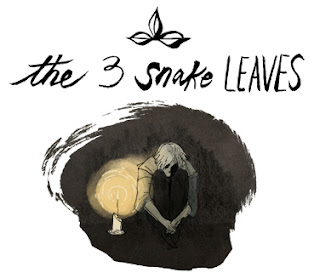
The Three Snake Leaves

by Emily Carroll

 The above is a link to my comic adaptation of The Three Snake Leaves, one of my favourite fairy tales. This was made over the last couple of weeks while I was running a comics assignment at Emily Carr University (I figured since I was having all these students make some web comics, I should probably do one too). It ended up being a sort of vacation from my regular comics work, a short project to clear my head and get back into the swing of working loose and intuitively. I tried some things that I hadn't tried before, but would like to experiment with more in the future (don't want to give anything away), so I hope you enjoy it.

ADDITIONALLY: I'm going to be at EMERALD CITY COMIC CON in Seattle this weekend! As in, tomorrow through Sunday. I'll be wandering around here and there, but my home base will be the Benign Kingdom table (check out that link for map & signing info if you're so inclined). I'll have copies of my new art book to sell, and will be happy to do some little drawings and say hello if you'd like to stop by. :)
01 Mar 21:15

Pi Day is coming! $13.14 Cherry Pi shirts this weekend.

Tertiarymatt

Annual share.

cherry pi shirt

Pi Day is March 14! Cherry Pi shirts are $13.14 this weekend until they run out. Lots of womens sizes back in stock!

01 Mar 04:06

Better IRL: The Best of n+1 Personals

by n+1 magazine

by Kaitlin Phillips

From the limited-edition ebook Bad Romance.

We launched the n + personals website in the  summer of 2011. It began, as many great things do, as a harebrained joke between interns. “Welcome to the golden age of internet dating!” announced the press release for our ad-hoc tumblr, foreshadowing, perhaps, the histrionics to come. To our surprise, people leapt for the bait. So earnest in their sarcasm! We had no choice but to take them seriously. Strange bedfellows n+1 readers do make—and were they really our readers? We didn’t want to know.

Submissions were filtered and inquiries dispatched, and titles—much to the chagrin of users—generated in-house. (Not even interns have the gravitas to stomach more than one request for “Madame Bovary, c’est moi.”) The New York Review of Books wrote in, seeking détente: “These ageist sallies deserve an elegant response . . . we envy the very inventive personals tumblr and seek an exchange with n+1.” The interns complied. We were finally getting published in print! 

Everyone wanted to know: did people actually find love? We couldn’t say. Certainly dates were procured, and emails—if not saliva—swapped. We interns, anyway, weren’t too interested in love. So we killed the site on its anniversary. However, in the name of bad romance, we’ve revived the best of the personals here, and done them a solid by coupling them according to our taste. If you’re out there, dear lonely hearts, you can still write us to meet your match: kphillips@nplusonemag.com.

Kaitlin Phillips

+ + +

The Writer Girl Seeking Random Play

For Your Consideration: Latter-day Aphra Behn seeks straight Kit Marlowe for a great reckoning in a little room.

The Male Edith Sitwell

Looks like he was dipped in glue and pushed around a barbershop floor. Excellent posture, 35.

+ + +

Nihilist Seeks Not Quite Nothing

Me: No bed of roses. Like waterboarding. The American way. Tooth decay. Facial imperfections. Squandered genius. Nasty reputation. Check out the thinning hair. Anti-this, anti-that, pro-not much. Morose. Morbid. Corrosive. Enemies list. Lives in the past. Megalomania. Limited palette. Horror of pets. Lapsed Catholic. Two years older than Jesus when he was crucified under Pontius Pilate, suffered, died and was buried. On the third day he rose again in fulfillment of the Scriptures to descant and yet again descant upon the supreme theme of art and song: the earth is an oyster with nothing inside it, and not to be born is the best for man. In other words, past “my prime.” Congenital tremor. Heart murmur. Insomnia. Vices. Nondomestic. Emotionally autistic “But you’re a very sweet person,” says someone else. Maybe. “[Not] ugly,” says someone else. Perhaps. Six foot four. London.

You: Knows how to read.

Extremist Seeks Not Quite Everything

Me: No bedstead of thorns. Likes wiretapping. The British way. Bare-toothed. Pale-faced. Untapped genius. Scandalous reputation. Slim-limbed and thin-haired. Anti-this, anti-that, pro-not much. Morose. Morbid. Embittered. Enemies list. Lives in the past. Fantasist. Selective palette. Horror of big pets. Non-Catholic. Possibly older than Jezebel if indeed she was eaten by large ravenous dogs. Likewise a defamed prophetess decrying artistic treason. To wit: Only Brodie had a prime. Congenital smoker. Insomnia. Vices. Domestically uncommitted. Emotionally intolerant. Five foot three. Portsmouth. New England.

You: Knows how to read what?

+ + +

Would Like To Avoid Worries About Autism (Ha!)

Alternately world-weary and childishly-delighted 25 year old, drug-and-disease free, non-smoking, Asian, female. Living by Central Park with 781 Fico in search of a clean, cuddly sex god like you to live happily, if fretfully, ever after with.

You: A sincere, deeply loving, overeducated-but-down-to-earth single male 24-35 in search of someone like me (Highly committed to the two languages, cultures, and cuisines that I was born into, but prone to life-changing flings with others. Too open-minded to care about what you did during university, but too well brought up to not eventually end up in a happily closed marriage with accomplished, over-privileged offspring. Would like to avoid worries about autism). On most days, you are some variant of genius that is nonetheless well adjusted, well groomed, well traveled, and well spoken in at least two languages and cultures. Passion for food, drinks, sex, and other performance arts a plus. Your most recent relationships were serious and monogamous in theory and practice. You have a vice-like grip over your personal finances and freedoms, or at least try to file your own taxes, plan for retirement, and vote on time, even if any trust fund and family influences are generally so over- or undersized as to render your individual actions rather moot. This is of course unless you have been planning a revolution à la Robespierre, which could also be fun.

The Man That Refers to Fitzgerald as “F.Scott,” holds fort in a “tea salon”

Why is pulchritude such an ugly word? Dapper 22-year-old writer with a penchant for aestheticism. As an American my taste in literature is decidedly continental: Du Côté de Chez Swann, Madame Bovary, et al. If the writer is not French then he is an American living abroad: F. Scott, Hemingway. My favorite novel that actually takes place in the States was written by a Russian émigré whose protagonist is a French expat. A theme emerges. Food is also a major source of fascination.

You: always stunning me with your insights into human behavior and the brisk speed with which you sail through tomes—not to mention your poise, which I cannot ever quite pull off. You like it when I cook for you, always offering to chop the onions when my eyes begin to water, I never allowing it. I suggest we begin by meeting in a tea salon: my true home. NB: straight male, still in university.

Do You Think He Can Play Rachmaninoff 
Mechanically?

Twenty-five-year-old who honors his elders and looks devastating in a dinner jacket. Student and teacher of history, classics, philosophy. Used to identify as a classical pianist. Can drink as much bourbon as the next hipster, but prefers champagne. Practices martial arts and enjoys hiking in the White Mountains. Boston now; England soon. Seeks another young man in his twenties who’s interested in beginning a correspondence.

“INFJ’s are Among the Rarest of the Sixteen 
Personality Types, Constituting Only 1-3% 
of the General Population”

Proudly bespectacled, mildly bearded early-mid-20s INFJ guy seekscompatible fellow to spend time with. Enjoys late-’80s house compilations, snapshots as high art, and every exclamation mark of Frank O’Hara’s poetry. Embraces dress aesthetic of a 1966 Harvard homophile. From the South (the better Carolina). Looking for someone who enjoys, say, early-’90s Detroit techno. Or, perhaps, Gerhard Richter. Or, even, Philip Larkin. But really, just looking for a gentle soul with broad interests and a tendency for excitement. Let’s cook grits together!

+ + +

Will You Go hunt, [With This] Lord? Perchance He’ll Steal Your Hart?

I descend from a long lineage of dukes. In my spare time, I like to play duke polo, which is similar to regular polo but instead of riding horses, we ride on exotic animals from the Orient or lesser-dukes. I am 23 years old and should the fifty-three people ahead of me die suddenly, I will ascend to true duke status. I have memorized all of Byron not because I care for the man’s verse, but because that is a requirement to graduate from duke primary school. Looking for someone who will unquestionably help plot the murders of fifty-three people.

Young Girl Sees Ghost Cats, Makes Gesture Towards Escaping Future as Crazy Harridan

Girl (neophyte, 21) seeks man (bright), girl (tall), or both (together), for spheres (public/private). Not as well-educated as you’d like, i.e., it’s funnier to tell, rather than show. Fixated on the pride of men, women, and children, but will settle for a late supper or dangerous winter sport. Concerned, sartorially, and so are you. Often mistakes slippers and chair legs for ghost cats. Wakes, but often does not rise, with the sun. Monolingual, because being understood in English is hard enough.

+ + +

The Editor

Promiscuous homosexual editor seeks ambitious intellectual top. Young and sweet or old and worldly—either does the trick.

The Cute Gay Reporter

Reporter, 23. Gay, really cute. Emotional slut. Not political, not religious, not judgmental. Prefer ’em quiet. Takers?

+ + +

Sister Wifedom in England!

Do you like rainy days for sitting on the couch with your man in front of a hot fire and a couple of cats, kids across the hall in their own living room? Could you live on a hill and walk to town? I am almost 33, a fundraising management consultant starting my practice, and planning to start a junior college in the next two years. My girlfriend is more than a decade older than me and we are concerned that eventually I will want a wife my own age. My marriage expects two “planners” a child told me. I live in England. If I were in America I would probably go raise investment for another tech company and try not to think of regrets.

Gotta Love Mistress Potential

Impoverished but ambitious artsy graduate student type seeks London-based man of means for spoilâge, frolics. Me: female, neither short, fat, nor dull. You: old-fashioned, wicked, and/or multi-lingual frequent traveler, possibly married.

+ + +

As Baudrillard Himself Would Say: “At the heart of pornography is sexuality haunted by its own disappearance.”

Vaguely commited whisp of smoke seeks window pane to sully with virtual nothings and real consequences. Imagine a three-dimensional axe in your Twitter feed, cleaving any trace of a humanism from the avatar’s uncircumcised lips. You read Dennis Cooper for the sex. Let’s talk poetry and Baudrillard. Every date is the end. 

Twenty-five, male for female, Brooklyn, graduate student.

You Will Undoubtedly Dress as Sherlock Holmes and, Turning to Her, Say: Now now, resident pervert, I can’t give away all my secrets, can I?

Well-dressed pervert seeks same for brown liquor, mystery solving.

+ + +

The Single White Male Who Doesn’t Want You To Die During Childbirth

Single, white male who lives by Central Park. I run an international NGO that aims to reduce the number of women and newborns that die from pregnancy and childbirth. Totally immersed in the fine and performing arts. Very active physically—squash, skiing—foodie and wine lover. Looking for female to take the journey with me!

Because You Want a Natalia in the Sheets, and a Tatiana on the Streets 

Woman of a not-quite-certain age who carries a portrait of Pushkin (hideously framed in plastic) wherever she wanders, seeks lighthearted dalliance-unfettered flirtation with unattached man who has no aversion to Schubert as far as he knows, is intellectually buoyant, conversant in Wodehouse (“she thought every time a fairy laughed a wee babe was born”), nineteenth-century German philosophy, quantum mechanics, topology, the mechanics of the bicycle—in short everything she knows nothing about, except the first instance, and in the last comes equipped with a can of WD-40, and a pocketful of charming, unpretentious blandishments.

+ + +

First Date, Pro Tip: Gesundheit Doubles as Cheers

Some other, off-line world, we hit it off:
A potluck with a swap of recipes?
A library, “gesundheit” to your cough?
A garden plot, and compliments on peas?
In this one, though, that hasn’t happened yet,
and so: I’m 34, male, Cambridge, MA;
IT, veggie, I seldom drink, no pet,
or car. Just cheap, it would be fair to say.
It once was principled simplicity,
but now, habit? I know I could do worse:
old books, and friends, familiarity . . .
Though to the new I couldn’t be averse.
Intrigued? Could write, if it is not a chore.
(Or not: I may have proved myself a bore.)

The Post-(Post?)-Intellectual-Slash-Farmer-Woman

Twenty-seven years old, well-acquainted with despair, modernism, German, dirt, downward dog. Exhausted of dreary academics with hunched shoulders, coke-and-cigarette diets, and acute amnesia about their bodies. Equally, achingly bored of liberal-hippie narcissists that can’t hold (compelling) conversations, let alone consider the oblique implications of Irigaray’s feminism. Prone to nostalgia, an affinity for second-hand wares, a recurring fantasy about growing food, reading, and living a simple life (which includes participating in the revolution, of course).

Seeking: Hyper-literatus with handyman leanings (possibly even pretensions, depending). Not afraid of or disgusted by dogs, dog hair, dog breath (dog poop forgivable). In touch with your body: yoga or meditation a super plus, habitual inspection of your own shit a must. Cook, cuddler, and owner of a pair of hiking boots and/or non-skinny jeans. Can hold up your end of the conversation on: art, literature, braising pork (or daikon, if you’re veg), capitalism, spiritual crisis, fixing things, your emotional state.

+ + +

Well, Google Stalking is on the Table

I’m your unfinished novel.
We’re both attractive and successful.
We’re young and wise and old and irreverent.
My book is open at FastOrbit.com.

The California Runner Girl* 

So I might try to pretend that I’m just lonely but otherwise totally normal, but to be totally honest, I’m alone and posting here mostly through my own doing. I’m righteously bad at relationships, clingy and vain, yet utterly terrified of real closeness or intimacy, like seriously crazy. On top of that, I’m incredibly picky. I like to pretend that i’m not and that I’m totally cool with normal guys, but frankly, I probably will only sleep with you if you’re taller than 6’2” and have a PhD. I’m just that shallow. The only thing that lends me any depth is the fear that people wouldn’t like me if they knew how cruel and judgmental I actually am. On the bright side though I am young and not hideous. I run a lot. 25 years old, 5’9”, 135 lbs, dark hair, light skin. Located in San Francisco. Despite my own Gallic features, I approve of Northern European features and accents even more strongly than advanced degrees. +

[*the first n + personal] 

Today is the last day to buy the limited-edition ebook Bad Romance.

Purchase print issue »

01 Mar 03:17

Manufacturing Techniques: Honda Figures Out How to Bond Steel with Aluminum

Tertiarymatt

I guess I don't see most of the advantage, here. True, the outer door will not rust, but it will also dent more easily, and will cost much more (especially if they're using a high strength Al alloy).

honda-steel-aluminum-01.jpg

Materials movement sucks, and it's our job as designers, engineers or craftspersons to learn tricks to deal with it. You'll put a slight arc in a plastic surface that's supposed to be flat, so that after it comes out of the mold and cools the surface doesn't get all wavy; a furniture builder in Arizona shipping a hardwood table to the Gulf states will use joinery that compensates for the humidity and attendant wood expansion; and similar allowances have to be made when joining steel and aluminum, as they expand at different rates when the temperature changes.

On this latter front, Honda's engineers have made a breakthrough that those who work with fabrics may find interesting: They've discovered that by creating a "3D Lock Seam"—essentially a flat-felled seam for you sewists—and using a special adhesive in place of the spot-welding they'd use with steel-on-steel, they can bond steel with aluminum in a way that negates the whole thermal deformation thing.

honda-steel-aluminum-02.jpg

Practically speaking, what this new process enables them to do is create door panels that are steel on the inside and aluminum on the outside. This cuts the weight of the door panels by some 17%, which ought to reduce fuel consumption. (Honda also mentions that "In addition, weight reduction at the outer side of the vehicle body enables [us] to concentrate the point of gravity toward the center of the vehicle, contributing to improved stability in vehicle maneuvering," but that sounds like spin to us.)

Unsurprisingly they're mum on how they've pulled this off or what exactly the adhesive is, but they do mention that "these technologies do not require a dedicated process; as a result, existing production lines can accommodate these new technologies." The language is kind of vague but it sounds like they're saying they don't require massive re-tooling, which is a manufacturing coup.

Honda's U.S. plants are the first to get this manufacturing upgrade, and we'll be seeing the new doors as soon as next month, on the U.S.-built Acura RLX.

(more...)


01 Mar 02:56

Addendum to Chagnon in the NYT

by Matt Thompson
Tertiarymatt

Some people actually anthropology seriously as a science.

In the fallout from Sahlins’ departure from the NAS and Rex’s coverage of it on Savage Minds, I noticed a conversation in a friend’s Facebook status about whether some biological anthropologist might write a letter to the editor contributing their voice and perspective. Letters had been written, it was alleged, but the papers had declined to publish them.

I emailed Agustin Fuentes and Jon Marks about the matter. Both were willing to have their comments reposted here. Though our own conversation surrounding the issues has evolved, I thought I would include them in a brief post nevertheless.

Jon wrote to the NYT,

Elizabeth Povinelli’s review certainly captured the judgment of most of the anthropological community, that Yanomamo violence is to be understood as the product of complex social and political history, rather than as the expression of their primordial nature. However, in the two other recent articles on the Yanomamo (Emily Eakin, “How Napoleon Chagnon became our Most Controversial Anthropologist” and Nicholas Wade, “Napoleon Chagnon’s War Stories”), we are exposed to several inaccuracies, among them: that Margaret Mead was hoaxed (a politicized claim that has been comprehensively falsified); that the American Anthropological Association voted to delete the word “science” from its long-range plan (it actually voted to reject the recommendation of the committee that suggested it); and that anthropologists have snubbed Napoleon Chagnon’s interpretations of the Yanomamo for irrational, political reasons. The scientific judgment, however, is that those interpretations were methodologically, epistemologically, and statistically flawed.

The suggestion that anthropology is under a delusional cloud is one that we are more accustomed to hearing from creationists and other anti-intellectuals. For example, in a letter published in the New York Times on October 24, 1962, two segregationists wrote that the “race-equality dogma” was part of a “socialistic ideology” promoted by a “cult” of anthropologists. Except that the “cult” was actually the mainstream science of anthropology, and that claim was a highly political and anti-intellectual dissimulation. It still is.

Agustin stated, “Mine was actually on a related post by Wade where he misrepresents and racializes a recent study in an essay a few days prior to the Chagnon one.” This reply was posted on the AAA site, but is shared again here.

Nicolas Wade’s article of Feb. 14th, 2013, presents erroneous notions of race and human biology. Wade distorts the findings of two studies on human genetic variation by couching the research in racialized terms not used by the scientists themselves. One of the studies proposes possible explanations for a genetic variant common in North-east Asian Han peoples (via human genes inserted into mice) and the other looks at patterns of genetic variation across 179 people from Nigeria, Utah, Beijing and Tokyo. Humans vary in complex and important ways, but Wade’s categories of “East Asian,” “African,” and “European” are not biologically valid groups. His assertions of what the two studies tell us ignore abundant genomic, morphological and physiological data and act to reinforce public misunderstandings of science. I urge the readership of the New York Times not to accept the myths offered by Wade, but rather to seek out what we actually know about human biology and evolution for themselves.

Thanks to both JM and AF. Perhaps someday a biological anthropologist will join the Savage Minds team!

01 Mar 01:10

W.H. Auden’s 1941 Literature Syllabus Asks Students to Read 32 Great Works, Covering 6000 Pages

by Josh Jones
Tertiarymatt

This is a lot of reading.

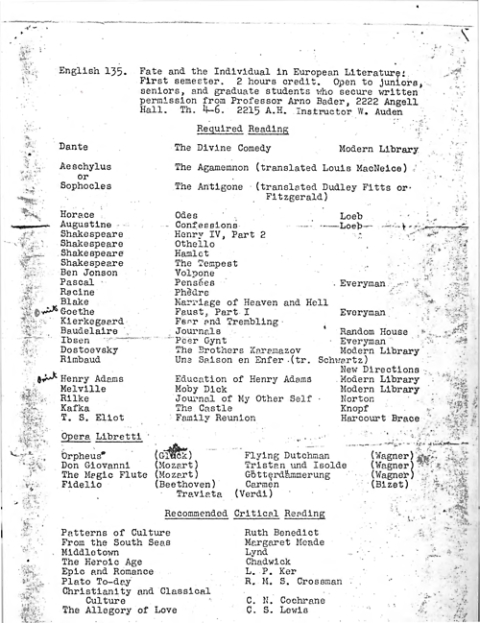
Auden Syllabus

According to Freud, neurotics never know what they want, and so never know when they’ve got it. So it is with the seeker after fluent cultural literacy, who must always play catch-up to an impossible ideal. William Grimes points this out in his New York Times review of Peter Boxall’s obnoxious 1001 Books You Must Read Before You Die, which ”plays on every reader’s lingering sense of inadequacy. Page after page reveals a writer or a novel unread, and therefore a demerit on the great report card of one’s cultural life.” Then there are the less-ambitious periodical reminders of one’s literary insufficiency, such as The Telegraph’s “100 novels everyone should read,” The Guardian’s “The 100 greatest novels of all time: The list,” the Modern Library’s “Top 100,” and the occasional, pretentious Facebook quiz etc. based on the above.

Grimes’ reference to a report card is relevant, since what we’re discussing today is the instruction in grand themes and “great books” represented by W.H. Auden’s syllabus above for his English 135, “Fate and the Individual in European Literature.” Granted, this is not an intro lit class (although I imagine that his intro class may have been punishing as well), but a course for juniors, seniors, and graduate students. Taught during the 1941-42 school year when Auden was a professor at the University of Michigan, his syllabus required over 6,000 pages of reading in just a single semester (and for only two credits!).

While a few days ago we posted a syllabus David Foster Wallace created around several seeming easy reads—mass market paperbacks and such—Auden asks his students to read in a semester the literary equivalent of what many undergraduate majors cover in all four years. Four Shakespeare plays and one Ben Jonson? That was my first college Shakespeare class. All of Moby Dick? I spent over half a semester with the whale in a Melville class. And then there’s all of Dante’s Divine Comedy, a text so dense with obscure fourteenth century Italian allusions that in some editions, footnotes can take up half a page. And that’s barely a quarter of the list, not to mention the opera libretti and recommended criticism.

Was Auden a sadistic teacher or so completely out of touch with his students that he asked of them the impossible? I do not know. But Professor Lisa Goldfarb of NYU, who is writing a series of essays on Auden, thinks the syllabus reflects as much on the poet’s own preoccupations as on his students’ needs. Goldfarb writes:

“What I find fascinating about the syllabus is how much it reflects Auden’s own overlapping interests in literature across genres – drama, lyric poetry, fiction – philosophy, and music…. He also includes so many of the figures he wrote about in his own prose and those to whom he refers in his poetry…

“By including such texts across disciplines – classical and modern literature, philosophy, music, anthropology, criticism – Auden seems to have aimed to educate his students deeply and broadly.”

Such a broad education seems out of reach for many people in a lifetime, much less a single semester. Now whether or not Auden actually expected students to read everything is another matter entirely. Part of being a serious student of literature also involves learning what to read, what to skim, and what to totally BS. Maybe another way to see this class is that since Auden knew these texts so well, his course gave students the chance to hear him lecture on his own journey through European literature, to hear a poet from a privileged class and bygone age when “reading English Literature at University” meant, well, reading all of it, and nearly everything else as well (usually in original languages).

If that’s the kind of erudition certain anxious readers aspire to, then they’re sunk. Increasingly few have the leisure, and the claims on our attention are too manifold. At one time in history being fully literate meant that one read both languages—Latin and Greek. Now it no longer even means mastering only “European literature,” but all the world’s cultural productions, an impossible task even for a reader like W.H. Auden. Who could retain it all? Instead of chasing vanishing cultural ideals, I console myself with a paraphrase from the dim memory of my last reading of Moby Dick: why read widely when you can read deeply?

via New York Daily News

Related Content:

W.H. Auden Recites His 1937 Poem, ‘As I Walked Out One Evening’

David Foster Wallace’s 1994 Syllabus: How to Teach Serious Literature with Lightweight Books

Nabokov Reads Lolita, Names the Great Books of the 20th Century

The Harvard Classics: A Free, Digital Collection

Josh Jones is a writer, editor, musician, and literary neurotic based in Washington, DC. Follow him @jdmagness

W.H. Auden’s 1941 Literature Syllabus Asks Students to Read 32 Great Works, Covering 6000 Pages is a post from: Open Culture. You can follow Open Culture on Facebook, Twitter, Google Plus and by Email.

28 Feb 21:31

Audi Vs. Audi Paintball Duel

Tertiarymatt

This amounts to an add, about it's a fucking cool idea.

audi-vs-audi.jpg

...And here's the second most awesome thing I've seen all week: The guys over at Audi UK came up with a fantastic way to test out the RS 4 Avant, using methods that have no applicability whatsoever to real-world driving. I'm a little disappointed that the guns don't swivel, and the ergonomic placement of the triggers seems poor, but I did enjoy the secondary/tertiary/quatenary paint-delivering devices. I won't spoil the surprise(s) for you:

You're likely wondering how they captured some of those aerial shots, as having a floor-mounted crane amidst those drifting cars doesn't seem feasible. The answer is: Drones to the rescue!

audi-vs-audi-2.jpg

(more...)


28 Feb 21:06

Why We Need a New and Hyper-Local Model for Design Activism, by Julie Kim

compostmodern_banner.jpg

needisneed.jpgThis is the second article in a series examining the potential of resilient design to improve the way the world works. Join designers, brand strategists, architects, futurists, experts and entrepreneurs at Compostmodern13 to delve more deeply into strategies of sustainablity and design.

We've all been there: it's another late night in the studio, and you've got hours of pixel-pushing and deck-polishing ahead. Your social life, if it exists, is under duress. The cramp in your mousing hand makes you wonder if it really is time to see that doctor.

Meanwhile your mind wanders from the task at hand to what you can do—what you can change about your "situation"—to close the gap between the seeming pointlessness of how you earn your living and the realization that your time and energy could be better spent doing something (anything!) more meaningful.

Like your brother who joined the Peace Corps in India. Or the industrial designer you read about who designed a new clean water system for a village in Tanzania. The architect who took a 6-month leave of absence from his job to build relief housing in Haiti.

socialconsciousness.jpg

It could be mere escapism to indulge such humanitarian fantasies but I think there's more to it, especially for designers. It's in our professional DNA to do stuff, to make things—and if we were trained well—to solve problems and have real impact on people's lives. Our hands feel tied when we're not putting them to good use.

Human need is everywhere
Humanitarian work shouldn't require quitting your job, uprooting your life and moving to another community. The eye of the storm for social injustice isn't always half way across the world—it's often right under your nose in the form of an urban food desert, children stuck in a cycle of poverty, a family who lives in your back alley.

Over the last 5-7 years, we've witnessed an explosion of programs dedicated to applying design methods to humanitarian issues in the developing world. Some have spun off as nonprofits; others are embedded in top design firms, universities or government. Philanthropic foundations are expanding their grant portfolios by underwriting innovative, designer-led initiatives that meet their programmatic interests. Both the design and mainstream media have caught on, helping to fuel more attention to the value of designers working in the developing world—amounting to more funding, more programs, and more opportunities.

(more...)


28 Feb 07:29

Hunter S. Thompson Runs for Aspen, Colorado Sheriff on the “Freak Power” Platform (1970)

by Dan Colman
Tertiarymatt

FREAK POWER

In 1970, Hunter S. Thompson was looking to become the new sheriff in town — the town being Aspen, Colorado. In a heated election, Thompson ran against a traditional, conservative candiate, Carrol Whitmire, on what he called the “freak power” platform, which mostly called for the legalization of marijuana and unconventional environmental protections.

freak power campaignAs Thompson later explained in his essay “Freak Power in The Rockies,” hundreds of Haight-Ashbury refugees moved to Aspen after the ill-fated “Summer of Love” in 1967, and they became part of the general population. In the town, registered Republicans historically outweighed registered Democrats by a two-to-one margin. But both camps were outweighed by independents, which included “a jangled mix of Left/Crazies and Birchers; cheap bigots, dope dealers, nazi ski instructors and spaced off ‘psychedelic farmers’ with no politics at all beyond self-preservation,” remembers Thompson. So, winning an election came down to registering indie voters and getting them to the polls — something that was easier said than done, it turns out.

In the short term, Hunter S. Thompson lost the “Battle of Aspen” by 300-500 votes, depending on whose accounts you read. In the long-term, he arguably won. 42 years after Thompson made the legalization of marijuana his central campaign promise, Colorado voters passed Amendment 64, legalizing marijuana for recreational use. Somewhere, the would-be gonzo politician is smiling.


Related Content:

Hunter S. Thompson Interviews Keith Richards, and Very Little Makes Sense

Hunter S. Thompson Calls Tech Support, Unleashes a Tirade Full of Fear and Loathing (NSFW)

Johnny Depp Reads Letters from Hunter S. Thompson (NSFW)

Hunter S. Thompson Runs for Aspen, Colorado Sheriff on the “Freak Power” Platform (1970) is a post from: Open Culture. You can follow Open Culture on Facebook, Twitter, Google Plus and by Email.

27 Feb 02:35

Real Talk: Am I Living Radically

by Katie West
Tertiarymatt

Because you should know about Katie West, if you don't.

the untitled mag screenshotI recently wrote an article for The Untitled Mag about living radically. I love The Untitled Mag so I felt very honoured that they chose to publish it (and make very graceful edits). I particularly like the author photo they chose for me! You can read it here.

A lot of what I wrote about was true but what I’m feeling lately is that living radically is hard. It’s hard to say Fuck You to anyone if I want to work and love and live in places where other people exist. It’s hard to be true when I’m expected to lie so often. It’s hard to try to be a better person when I don’t know what for.

It’s impossible to take pictures with your eyes closed. I just reached for my camera because I can feel that tightening in the back of my throat which means I’m about to cry and I just realized I don’t even know where it is.


27 Feb 01:48

With LAYWOO-D3 Filament, You Can 3D Print in Wood. Kind of.

Tertiarymatt

So this is pretty interesting.

laywoo-d3-01.jpg

Yeah, so this is nuts....

Thingiverse denizen Kaipa has created a partially wooden filament for 3D printers. Called LAYWOO-D3, the stuff is 40% recycled wood with the rest of it being a binding polymer. It's flexible but prints without warping and the stuff even smells like wood. It comes out light-colored at 180 Celsius and darker at 245, so you can vary the tone. And after being printed, the resultant object can reportedly be worked with woodworking tools.

laywoo-d3-03.jpg

MakerBot users, don't get too excited; for now the stuff is only compatible with RepRaps.

laywoo-d3-02.jpg

LAYWOO-D3 is for sale here, by a company called FormFutura. Despite the exciting nature of this development, they've managed to create the world's dullest video:

Just goes to show the future never turns out like you'd think it would. Imagine someone coming up to you ten years ago and saying "Someday, you'll be able to 3D print a wood-like material. And it will be more boring than watching paint dry."

(more...)


27 Feb 01:19

Norwegian Musician Creates Ice Instruments with a Chain Saw and Sub-Zero Weather

by Kate Rix
Tertiarymatt

#nordshare

Most professional musicians have a very special relationship with their instruments. Male guitarists treat their favorite guitars like girlfriends—maybe better in some cases. Traveling cellists buy airline tickets for instruments. It’s just too risky to put your livelihood in cargo.

Not so for Terje Insungset, a Norwegian musician who, among other things, carves instruments out of ice. His background is in jazz and traditional Scandinavian music, but he’s built a reputation as an artist who makes music on unconventional materials. Considering where he is from, it’s not surprising that he has turned his attention to ice and its musical potential.

Turns out the sound of an ice xylophone is lovely—soft, deep, tinkly. The ice horn sounds like a lonely beast calling out across the tundra. Insungset collaborates with vocalist Mari Kvien Brunvoll. Together they perform around the world, sometimes indoors and sometimes in the snow, with elaborate microphone cords draped around and beautiful lighting.

There’s even an ice guitar.

Insungset has also built instruments out of arctic birch, slate, cow bells and granite. His interest in ice as a material developed when he was commissioned to play music in a frozen waterfall at the 1994 Winter Olympics in Lillehammer, Norway.

Unlike most musicians, he has to build his instruments in situ, as he did for recent concerts in Canada where the temperature was 36 below zero with a light wind. Perfect weather for ice music.

Related Content:

Harry Partch’s Kooky Orchestra of DIY Musical Instruments

“Glitch” Artists Compose with Software Crashes and Corrupted Files

Kate Rix writes about digital media and education. Visit her website, katerixwriter.com.

Norwegian Musician Creates Ice Instruments with a Chain Saw and Sub-Zero Weather is a post from: Open Culture. You can follow Open Culture on Facebook, Twitter, Google Plus and by Email.

26 Feb 19:08

The Homosexual Atom Bomb

by n+1 magazine
Tertiarymatt

Odd projects, but interesting none the less.

by Sophie Pinkham

Image: Image: Yevgeniy Fiks, "Stalin's Atom Bomb a.k.a. Homosexuality," copyright (c) 2012


Yevgeniy Fiks, Homosexuality Is Stalin's Atom Bomb to Destroy America, Winkleman Gallery, February 15–March 16, 2013.
Yevgeniy Fiks, Moscow, Ugly Duckling Presse, 2012.

A six-foot cardboard cutout of a Soviet nuclear test explosion named “Joe-1” is the main character in Homosexuality Is Stalin’s Atom Bomb to Destroy America, Yevgeniy Fiks’s current exhibition at the Winkleman Gallery in New York.  Joe-1 stands forlornly on empty street corners and in green, empty parks, sometimes casting a shadow, sometimes not. He doesn’t seem like much of a threat. He is in Washington D.C., and he seems to be taking in the sights—always alone, always in an empty frame. Sometimes he seems to be waiting for someone; but no one ever comes. According to the titles of the photos, he’s cruising. But how can you cruise in an empty city? 

Fiks’s new book Moscow is a collection of simple photos of Moscow’s gay cruising sites of the Soviet period. (The word “gay” is anachronistic, but I’ll follow Fiks in using it anyway.) The pictures show contemporary Moscow—again, empty—and ask us to imagine men cruising there in the 1920s, 30s, 40s, and into the '80s. We see the garden in front of the Bolshoi Theater; Okhotny Rad metro station; Pushkin Square; the dormitories of Moscow University; a couple of bathhouses; a café; the Hermitage Gardens, and their toilets; the Nikitsky Gates, and their toilets; Gogol Boulevard, and its toilets; the Lenin Museum and the central department store, both popular for their toilets. The photographs are unremarkable, but maybe that’s the point: they’re meant to evoke isolation, loss, and an everyday life that was hidden, then erased. In his introduction, Fiks writes that his book “remembers the fates and celebrates the lives of those who, from the 1920s to the 1980s, reconstructed their city as a site of queer desire and subjectivity.” For him, the old cruising grounds are “sites of mourning.”

Soviet city-dwellers of all sexual orientations were accustomed to searching for privacy in public places, as Soviet policies left cities overcrowded and communal apartments overflowing. By 1940, the average number of inhabitants per room in Soviet towns was 3.91. Unless you were into voyeurism or group sex, this meant that you probably had to leave home to fulfill your carnal needs. In 1950, one Moscow man got into the habit of bringing younger men home for sex—in the room he shared with his wife. At first his wife would sit in the room, berating him and his partner, tearing off the sheets, trying to drive out the interloper; eventually she got fed up and called the police. 

Informers were a serious threat to anyone who lived in a communal apartment, but especially to someone engaged in an illegal activity. To have homosexual sex in a kommunalka was to take an almost insane risk. But the bars, clubs, cafés, and bathhouses where gay men had socialized before the revolution had been nationalized, and were now controlled by government functionaries unlikely to tolerate gay gatherings. This left few alternatives but the sites documented in Moscow: boulevards, public squares, parks, and public toilets. Cruising spots were selected on the basis of architectural features that afforded some measure of privacy, in a convenient location. 

Fiks suggests that the choice of certain cruising sites was also an act of political rebellion. He writes in his introduction:

Throughout the Soviet experience, queer Muscovite subjects were reclaiming sites of the Revolution—a revolution that had betrayed its promise of a dignified existence for them. In the atmosphere of six decades of silence and repression, this was a gesture of resistance and revenge for that betrayal. Homosexual activity in front of the monument to Karl Marx on Sverdlov Square, or in the public toilets of the nearby Lenin Museum, violently tore the fabric of a stagnant political culture. These expressions of queer sexuality effectively subverted the USSR’s claims of having achieved socialism.

This strikes me as an overstatement, especially in the absence of historical evidence that people understood their own behavior in this way. Did gay men really pick Lenin Square in an act of “political subversion,” or was it simply a convenient open place where you could stand and wait, meet new people, and come and go without attracting too much attention? When, in 1955, two men attempted to have sex in the bathroom of the Lenin Museum, after meeting in a department store nearby, were they really planning to “subvert the USSR’s claims of having achieved socialism,” or did they just want to fulfill a basic human need, in the nearest semi-private location? And when something is done in secret, in hope of never being discovered, can it really be interpreted as a political statement? Fiks is more convincing when he writes about how gay men appropriated not only public space, but also Communist symbols. In many provincial Russian cities, men cruising on their local Lenin Squares referred to Lenin statues as “Aunt Lena.” In the 70s and 80s, the statue of Karl Marx at a Moscow cruising site was referred to as “Director of the Pleshka.” (Pleshka is slang for cruising).

Homosexuality Is Stalin’s Atom Bomb to Destroy America explores how players on both sides of the cold war did their own appropriating, using the idea of homosexuality as a political weapon. The exhibition includes photos of atomic explosions printed with quotations from US politicians, for instance: “You can’t hardly separate homosexuals from subversives. Mind you, I don’t say every homosexual is a subversive, and I don’t say every subversive is a homosexual. But a man of low morality is a menace in the government, whatever he is, and they are all tied up together.” Such absurd equations show how homosexuality became a floating signifier, associated with whatever political tendency one most disliked. Rather than representing a certain group of people, it represented everything that was wrong—whatever that meant. America’s Red Scare bled into its Lavender Scare; the Soviets associated homosexuality with capitalism and fascism. But empty as it was, the political use of the trope of homosexuality had a devastating effect on real people from both countries.

Following the lead of the French revolutionaries, the Bolsheviks purged the Russian criminal code of all non-secular statutes, including the law against sodomy. But sodomy was banned again in 1934, with a three- to eight-year sentence. From then on, it was virtually impossible to discuss homosexuality in public; when it was discussed, it was as a disease and a crime. Sodomy was decriminalized in Russia in 1993, shortly after the Soviet Union dissolved; as late as 1991, a man received a three-year sentence for sodomy. (Fourteen US states still had sodomy laws in 2003, when the Supreme Court ruled them unconstitutional.) 

In 1986, a former Russian Deputy Health Minister said that Soviet people had no reason to fear AIDS, since homosexuality and drug addiction were criminal offenses in the Soviet Union. Soviet authorities believed that AIDS was a foreign problem that would never afflict the Soviet Union, and they did not take public health measures, such as syringe exchange, that were already helping to curb HIV transmission abroad. In the 1990s, many of the former Soviet states, including Russia, experienced explosive epidemics of HIV spread through contaminated syringes. The intense stigma of homosexuality, along with poor surveillance, makes it difficult to know exactly how HIV has affected gay men in Russia, but it is certain that repression has worsened the situation. In Russia, homosexuality may be even more stigmatized than injection drug use. In 2004, the staff at a Siberian AIDS organization that worked with drug users told me that they didn’t have any programs for gay men, because “we wouldn’t know where to find them.” Gay men were so hidden, they said, that they were impossible even to locate. 

The situation has not improved much for gay Russians; today, it seems to be getting worse. A 2010 survey found that 74 percent of respondents said gays and lesbians were "amoral" and "mentally defective," while only 45 percent said that gays and lesbians should enjoy the same rights as heterosexuals. Gay pride parades have been banned in Moscow for the next century, and attacks on gays are widespread. Perhaps most appalling is a law, still in process, that would make the dissemination of information on homosexuality to minors punishable by fines of up to $16,000. (Gay couples have been staging “kiss-ins” in front of the Russian parliament; when the couples were attacked by Orthodox activists, the police did not hurry to intervene.) A similar statute against “propaganda for narcotics” has been a major obstacle in efforts to provide health information about drugs or discuss drug policy reform. In recent years, prosecutors have brought charges against a doctor who ran a website on methadone treatment (which is illegal in Russia), and have blocked the website of a Russian drug policy reform organization. The drug propaganda law can be applied to anything that contains the word “drug,” and is therefore a perfect tool for suppressing any speech that the government considers undesirable. It is to be expected that a law on “propaganda for homosexuality” would be used in a similar way.

Moscow ends with a long letter to Stalin. (You can read the letter here.) It is the work of Harry Whyte, a gay British journalist and devout Communist living in Moscow. Alarmed by the passage of the new law against sodomy, Whyte wrote to Stalin directly, offering a case for why homosexuality should not be outlawed in a Communist society. In the letter, Whyte relies on a combination of Marxist-Leninist theory and scientific theories of “constitutional homosexuality”; he uses himself as an example of a homosexual who is also a good Communist. Stalin read Whyte’s letter, marked it with the words “an idiot and a degenerate,” and had it archived. When it was finally published by a Russian journal in 1993, it was with the sub-heading “Humor from the Secret Archives.” We do not know what happened to Harry Whyte, but it is unlikely that he met a happy fate. He was one of many who believed that it was all just a big misunderstanding, that Comrade Stalin wanted the best for his people, that a well-written, earnest letter could set things straight. I was reminded of Yevgenia Ginzburg’s memoir of her time in the Gulag, in which she writes about her firm belief that if only Stalin knew about the injustice of her arrest, he would put things right.

Harry Whyte’s letter is the only part of Moscow that deals with the experience of an individual. In his introduction, Fiks explains that there are no “queer subjects” in his work because he rejects “the commodification of desire and the practice of making a spectacle out of human sexuality.” I take his point, but I wish his project had incorporated more about real people and their lives—and not necessarily their sex lives. The empty photos are powerful, but they would have been even more so if the viewer could have imagined some of the specific people who haunted these places. Because of the illegal, invisible status of homosexuality in the USSR, there are very few relevant historical sources, especially primary ones; but as the historian Dan Healey’s work attests, there is some material. (Fiks thanks Healey in his acknowledgements.) What about Mikhail Kuzmin, author of what Healey calls “the world’s first homosexual coming-out narrative with a happy ending,” published in 1906? What about the poet Nikolai Kliuev, who refused to stop writing love poems to young men, denounced collectivization, and was shot in 1937? Driven outdoors, gay men appropriated and transformed public spaces, even as society tried to pretend that they didn’t exist. Fiks’s attempt to “restore the dignity of their connection to the city and add their histories to its collective history” is a noble one, but the places he depicts were never really empty; they were full of people and their lives.

Purchase print issue »

26 Feb 05:45

33 Oscar-Winning Films Online

by Dan Colman
Tertiarymatt

Open Culture again being The Shit.

Personally, I’d rather watch a good movie than an awards show about good movies. If you’re like me, then consider spending tonight watching a long list of Oscar-winning films on the web. 33 films, to be precise. The list includes many great short films, animated films, documentaries, and a few feature-length movies. We start you off above with Why Man Creates, the classic animated film by Saul Bass and his wife/collaborator Elaine, which won the 1968 Academy Award for Documentary Short Subject. You can get the full list of Academy Award winners on the web here. And don’t forget to peruse our ever-growing list of 500 Free Movies Online. It’ll keep you busy for weeks, if not months.

Please follow us on FacebookTwitter and Google Plus and share intelligent media with your friends! They’ll thank you for it.

33 Oscar-Winning Films Online is a post from: Open Culture. You can follow Open Culture on Facebook, Twitter, Google Plus and by Email.

26 Feb 05:38

Sahlins resigns from NAS as Chagnon enters

by Rex
Tertiarymatt

An old battle blows back up.

Since David Graeber’s widely cited tweet on Saturday, Savage Minds has been able to confirm (read: Marshall sent me an email) that Marshall Sahlins has resigned from the National Academy of Sciences and that his resignation has been accepted. As Sahlins tells it, his main reason for the resignation is Chagnon’s election to the US’s National Academy of Sciences:

By the evidence of his own writings as well as the testimony of
others, including Amazonian peoples and professional scholars of the
region, Chagnon has done serious harm to the indigenous communities
among whom he did research. (See my review of Tierney in the Washington
Post, 2000, below). At the same time, his “scientific” claims about
human evolution and the genetic selection for male violence–as in the
notorious study he published in 1988 in Science–have proven to be
shallow and baseless, much to the discredit of the anthropological
disciple. At best, his election to the NAS was a large moral and
intellectual blunder on the part of members of the Academy. So much so
that my own participation in the Academy has become an embarrassment.

Sahlins’s low opinion of Chagnon is as old as everybody else’s, and amply documented in his widely-cited review of Darkness in El Dorado. There, he writes that

The truth claims of the argument presented by Chagnon in Science may have had the shortest half-life of any study ever published in that august journal. Chagnon set out to demonstrate statistically that known killers among the Yanomami had more than twice as many wives and three times as many children as non-killers. This would prove that humans (i.e., men) do indeed compete for reproductive advantages, as sociobiologists claimed, and homicidal violence is a main means of the competition. Allowing the further (and fatuous) assumption that the Yanomami represent a primitive stage of human evolution, Chagnon’s findings would support the theory that violence has been progressively inscribed in our genes.

But Chagnon’s statistics were hardly out before Yanomami specialists dismembered them by showing, among other things, that designated killers among this people have not necessarily killed, nor have designated fathers necessarily fathered. Many more Yanomami are known as killers than there are people killed because the Yanomami accord the ritual status of man-slayer to sorcerers who do death magic and warriors who shoot arrows into already wounded or dead enemies. Anyhow, it is a wise father who knows his own child (or vice versa) in a society that practices wife-sharing and adultery as much as the Yanomami do. Archkillers, besides, are likely to father fewer children inasmuch as they are prime targets for vengeance, a possibility Chagnon conveniently omitted from his statistics by not including dead fathers of living children. Nor did his calculations allow for the effects of age, shamanistic attainments, headship, hunting ability or trading skill–all of which are known on ethnographic grounds to confer marital advantages for Yanomami men.

Supporters of Chagnon, and lately Chagnon himself, have defended his sociobiology by referring to several other studies showing that men who incarnate the values of their society, whatever these values may be, have the most sex and children. Even granting this to be true–except for our society, where the rich get richer but the poor get children–this claim only demonstrates that the genetic impulses of a people are under the control of their culture rather than the other way around. For dominant cultural values vary from society to society, even as they may change rapidly in any given society. There is no universal selective pressure for violence or any other genetic disposition, nor could genes track the behavioral values varying rapidly and independently of them. It follows that what is strongly selected for in human beings is the ability to realize innate biological dispositions in a variety of meaningful ways, by a great number of cultural means. Violence may be inherently satisfying, but we humans can make war on the playing fields of Eton, by sorcery, by desecrating the flag or a thousand other ways of “kicking butt,” including writing book reviews. What evolution has allowed us is the symbolic capacity to sublimate our impulses in all the kinds of cultural forms that human history has known.

Sahlins is particularly suited to analyze debates about Chagnon because Sahlins has examined in detail how micro histories become macro histories and vice versa. Debates about the quality of Chagnon’s work really are not about Chagnon himself. Rather, they are opportunities for politically engaged anthropologists and holier than thou Anthropological Scientists to have their favorite argument. Again. The result is what Sahlins calls the ‘structural amplification’ of local disputes:

Feuding local groups assume the identities of larger collectivities – the way Catalan villagers, for example, became Frenchmen and Spaniards – and thereby engage these collectivities in their own petty issues. The structural effect is a chiastic pattern of affinities and enmities, as the greater entities also enter the lists against the lesser factions of the other side. In the upshot, the local causes are prosecuted as larger oppositions, and  the larger oppositions as local causes

I expect pissed-off lefties like Terry Turner to be ready to take the fight to the enemy. What I always find so depressing about these periods of academic blood letting is how poorly the ‘scientists’ behave as they extol an ideal of dispassionate objectivity while simultaneously savaging anyone who suggests to them that they may not be living up to their own ego ideal.

I spend a lot of time thinking about Jared Diamond because, despite his empirical errors, he has a program for a science of humanity that he has thought a lot about, and which is worthy of consideration. I don’t agree with most of what he says, but it is worth engaging, because thinking through it makes one smarter. None of this is true of Chagnon. I think Jon Marks is right on the money when he writes:

Napoleon Chagnon is a sadder story [than Jared Diamond], because he is not a pseudo-anthropologist, but an incompetent anthropologist.  Let me be clear about my use of the word “incompetent”.  His methods for collecting, analyzing and interpreting his data are outside the range of acceptable anthropological practices.  Yes, he saw the Yanomamo doing nasty things.  But when he concluded from his observations that the Yanomamo are innately and primordially “fierce”  he lost his anthropological credibility, because he had not demonstrated any such thing.   He has a right to his views, as creationists and racists have a right to theirs, but the evidence does not support the conclusion, which makes it scientifically incompetent.

It’s hard for me to claim to give an objective response to Sahlins’s decision to resign. The man was my thesis advisor. He was a guest at my wedding. So when I applaud his decision to leave NAS you can decide for yourself how you want to take it. In my opinion, NAS is losing a great scholar and scientist, and gaining the Ward Churchill of anthropology.

After all is said and done, the facts about Chagnon are straightforward: just because some of your enemies distrust science doesn’t mean you’re any good at it.And just because some people dislike your work for political reasons doesn’t mean every criticism of your work is invalid. In the struggle to create a healthy, empirical, and robust anthropology for the twenty-first century, NAS has chosen the wrong side.

25 Feb 04:25

Hotter, Wetter Cimate Slashes Labor Capacity by 10 Percent

By Environment Correspondent Deborah Zabarenko

WASHINGTON (Reuters) - Earth's increasingly hot, wet climate has cut the amount of work people can do in the worst heat by about 10 percent in the past six decades, and that loss in labor capacity could double by mid-century, U.S. [More]

24 Feb 09:32

Holding Bad Cops Accountable

by Tim Lynch

From the Washington Post:

[W]hen I interviewed community members who had filed complaints against officers, I was disappointed to learn that, despite my reassurances and best efforts to conduct impartial inquiries, many complainants believed that a fair investigation was simply not possible. Nor do misconduct investigations satisfy a skeptical public. If an officer is exonerated, the community often believes that malfeasance is being covered up. …

And why shouldn’t every police contact with the community — every traffic stop, every interrogation — be recorded on video? If Dorner and his partner had had a cop-cam, his claim that his partner used excessive force might have been resolved the same day. There’s just no excuse for not recording police contacts with the public. Technology has made cameras effective and affordable. Some officers already record their arrests to protect themselves against false allegations of misconduct. This should be standard operating procedure.

Holding Bad Cops Accountable is a post from PoliceMisconduct.net

23 Feb 21:48

Swiss LSD Study in Final Stages

From February 17-19, 2011, in yet another stop on her whirlwind international tour, MAPS Clinical Research Associate Berra Yazar-Klosinski, Ph.D., met with Clinical Investigator Peter Gasser, M.D., in Switzerland to monitor the progress of our Swiss study of LSD-assisted psychotherapy for end-of-life anxiety. The study has completed recruitment, with 11 of 12 subjects having received LSD-assisted psychotherapy with either a full dose or a low dose of LSD. Preliminary data has been collected for an interim analysis. During her visit, Yazar-Klosinski also trained Christina Blank, a new study coordinator who will be conducting follow-up interviews with subjects in the Swiss LSD study. Blank previously worked with as a research associate with psychedelic researcher Franz Vollenweider, M.D. Subjects will be interviewed for at least 10 months after their final treatment session in order to gather qualitative and quantitative data about their anxiety symptoms and health. Results from the follow-up extension study will be compared with the quantitative data gathered during the treatment phase of the study.
23 Feb 16:22

A personal note to cranky old beekeepers

by Rusty
Tertiarymatt

A funny post, but also shows how much the landscape and ecology of bees has changed in the US in the last century. In case you couldn't guess: None of the changes are good.

Sometimes it is hard to be equable when people make ridiculous comments. For the most part I succeed until someone writes, “My grandfather kept healthy bees for 50 years. If that method worked for him, it will work for me.” Great. Fine. So why are you asking me how to fix your problem? Based on [...]
23 Feb 13:32

Production Methods: Spin Casting, a Low-Cost, Low-Run Alternative to Injection Molding

Tertiarymatt

An interesting small run reproduction method.

spin-casting-01.jpg

spin-casting-06.JPG

Image via PTI Prototype

Injection molding is awesome. It's also freaking expensive, with high tooling costs that keep it out of reach for your average independent designer, craftsperson or hobbyist. For those seeking to create smaller runs of smaller objects, the production method known as spin casting provides similar capability at a fraction of the cost.

To dumb it down a bit for the non-production-method-initiated, injection molding requires the mold—typically made from steel—be precision-machined, which is where the high cost comes in; obviously it depends on the size of what you're molding, but generally speaking you'll pay anywhere from high four to low six figures. Manufacturers offset these costs by producing high runs.

In contrast, with spin casting the tooling cost is absurdly low; if some of the spin casters', well, spin is to be believed, you'd pay in the tens or hundreds of dollars for what would cost the aforementioned four to six figures to tool for injection molding. That's because spin casting uses cured rubber molds that are cast around your initial object, providing good accuracy at a much lower cost (and an attendant shorter lifespan for the mold, though it's still capable of cycles in the thousands).

spin-casting-02.jpg

Image via Contenti Spin Casting

The way spin casting works is that your initial object(s), represented by the white circles in the image above, is surrounded in a circular vat by molten rubber, represented in blue. The rubber is then vulcanized, "locking in" what will be the negative space after your piece is removed. The vulcanized mold then has the gates and vents, or channels that the final molten material will flow through, cut into it as seen below. As opposed to a milling machine cutting channels into steel, this is done here by an expert wielding a knife.

spin-casting-03.jpg

Image via Contenti Spin Casting

Your object is removed, and the mold is placed into a spin caster, which is essentially an industrial turntable. Like VCRs of yore, they come in both top- and front-loading models.

spin-casting-04.JPG

Image via PTI Prototype

The turntable is spun up, and molten material is poured into the center of the mold through a hole at the top.

spin-casting-05.JPG

Image via PTI Prototype

(more...)


23 Feb 13:32

Start Your Startup with Free Stanford Courses and Lectures

by Dan Colman
Tertiarymatt

Shared for the link to their Free Course Archive

Last spring, Ken Auletta wrote a profile of Stanford University in the pages of The New Yorker, which started with the question: “There are no walls between Stanford and Silicon Valley. Should there be?” It’s perhaps an unavoidable question when you consider a startling fact cited by the article. According the university itself, five thousand companies “trace their origins to Stanford ideas or to Stanford faculty and students.” The list includes tech giants like Google, Hewlett-Packard, Yahoo, Cisco Systems, Sun Microsystems, eBay, Netflix, Electronic Arts, Intuit, Silicon Graphics, LinkedIn, and E*Trade. And stay tuned, there’s more to come.

Stanford is one of America’s leading incubators, and the rearing of young entrepreneurs doesn’t take place by mere osmosis. No, Stanford students can take courses focused on entrepreneurship, which give them access to seasoned entrepreneurs and financiers. If you head over to eCorner, short for Entrepreneurship Corner (WebiTunesYouTube), you can watch “2000 free videos and podcasts featuring entrepreneurship and innovation thought leaders” who have paid visits to Stanford. Perhaps you’ll recognize a few of the names: Mark ZuckerbergLarry PageMarissa Mayer? Reid Hoffman (above)?

Or, if you go to YouTube and iTunes, you’ll gain access to entire courses dedicated to teaching students the modern art of starting startups. Two courses (both housed in our collection of 650 Free Online Courses) warrant your attention. First, Chuck Eesley’s course, Technology Entrepreneurship (YouTube - iTunes Video) introduces students to “the process used by technology entrepreneurs to start companies. It involves taking a technology idea and finding a high-potential commercial opportunity, gathering resources such as talent and capital, figuring out how to sell and market the idea, and managing rapid growth.” The course features 28 video lectures in total.

Once you have a broad overview, you can dial into an important part of getting a new venture going — raising capital. Hence the course Entrepreneurship Through the Lens of Venture Capital (iTunes Video - YouTube), a course currently taking place at Stanford that “explores how successful startups navigate funding, managing, and scaling their new enterprise.” It features guest speakers from the VC world that fuels Silicon Valley.

It goes without saying that Stanford offers many world-class courses across other disciplines, from philosophy and physics to history and literature. You can find 68 courses from Stanford in our ever-growing collection of Free Courses Online.

Related Content:

Stanford Launches iPhone/iPad App Course on iTunesU

Biology That Makes Us Tick: Free Stanford Course by Robert Sapolsky

The Stanford Mini Med School: A Free Course Now Online

The Art of Living: A Free Stanford Course Explores Timeless Questions

Start Your Startup with Free Stanford Courses and Lectures is a post from: Open Culture. You can follow Open Culture on Facebook, Twitter, Google Plus and by Email.

23 Feb 03:37

Simulate the Damage Caused by Comet and Asteroid Collisions with Impact: Earth!

by Dan Colman
Tertiarymatt

BLOW SHIT UP

impact earthOn Friday, the world had its eyes focused on the big asteroid flyby. For weeks, we knew it was coming, and we watched it buzz by with mild curiosity. But, that same day, we were all caught off guard by a ten-ton meteorite that blasted into the Siberian town of Chelyabinsk, injuring 1,200 people and causing considerable structural damage. (Watch footage here.) This abrupt and unexpected event has given governments a reason to start taking the risk of asteroid impacts a bit more seriously. And it might renew interest in a tool created by scientists at Purdue University and Imperial College London in 2010.

In a nutshell, Impact: Earth! is an interactive tool that lets anyone calculate the damage a comet or asteroid would cause if it happened to collide with our planet. You can customize the size and speed of the incoming object, and then find out if mankind survives. (Usually it does.) A grainy primer appears below. You can enter the website and start running your own scenarios right here.

via @moseshawk

Simulate the Damage Caused by Comet and Asteroid Collisions with Impact: Earth! is a post from: Open Culture. You can follow Open Culture on Facebook, Twitter, Google Plus and by Email.

22 Feb 16:37

The Knee Defender: Industrial Design Gone Awry, or Just a Sign of Things to Come?

knee-defender-01.jpg

On my last flight out of JFK, I was in the final boarding group to be called. I observed the bulk of the passengers boarding before me all hewing to the current luggage trend: A roll-on bag topped with a little "buddy" bag that slides over the retractable handles.

Boarding the plane, the overhead bins were all filled, not only with roll-ons, but the "buddy" bags as well—along with people's coats. Person after person put both of their bags in the overhead in order to provide themselves with legroom by not having anything beneath the seat. As you can guess, a handful of us in the final boarding group thus had to check our carry-on luggage.

I can't speak for other countries, but in America the in-flight experience perfectly mirrors how we behave in public: We try to selfishly maximize our own comfort to the inconvenience of others. This is how we drive, this is how we ride the subway, this is how we behave in movie theaters, and even how we walk—I've been behind people who stepped off a moving escalator or through a revolving door and simply stopped to look around, heedless of the people trying to exit behind them.

Here's an example of this me-first approach embodied in a physical product design, one that's ten years old:

knee-defender-02.jpg

The Knee Defender is a pair of plastic gewgaws that you bring onto an airplane and slide onto the arms of your tray table, for the express purpose of preventing the person in front of you from reclining their seat.

knee-defender-03.jpg

I can't decide if this is good design combatting bad design, bad design versus good design or two bad designs that taste horrible together.

(more...)


22 Feb 08:19

How Important is the Barley?

by David Driscoll
Tertiarymatt

Stranahan's is absolutely a whiskey that tastes of the grain, even though it's aged in insanely charred barrels. It's wonderfully vegetal.

Goddamnit I need a still.

Single malt whisky is made from barley, just like Calvados is made from apples and Cognac from grapes. While my journeys to France have taught me much about the importance of agriculture in distillation, Scotland's distillers have never given much glory to their golden grain. Just how important is the barley to the ultimate flavor of a whisky, you ask? It all depends on how much the distillery allows the barley to speak. Is the quality of the apples important to the flavor of a Calvados? Do different types of apples have different flavors? The answer to both questions is "yes" and the more you visit different Calvados distillers, the more you'll see proof of this affirmation. However, the longer that the brandy spends time in a barrel, the more the Calvados becomes about the wood and less about the fruit. Single malt whisky works the same way, but while I've heard single malt producers call a whisky overly-wooded, it was never because the maturation was compromising the natural flavors of the barley.

When single malt whisky is aged in fresh Sherry barrels the richness of that sweet wine usually coats the inherent flavors of the white barley spirit. When it's aged in used Bourbon casks, however, or even refill Sherry butts, we can taste more of the barley itself. That being said, almost every distillery in Scotland is buying their barley from the exact same commercial maltsters, which means that every one of them is using the same base materials (like winemakers all starting from the same grapes). As a distillery, why focus on how unique or fantastic your barley is when it's really no different from everyone else's? Are there even superior types of barley anyway? Barley that, while more expensive to farm, malt, and mill, would result in a far tastier whisky?

Have you ever actually tasted a piece of malted barley? It's sweet, grainy, and mealy, but I never really think that translates over clearly into a whisky. There are a few whiskies that really taste like malted barley, Glen Garioch being one of them. However, where as eau-de-vie producers spend a lifetime trying to capture the essence of a pear, distilling the essential flavors out of barley is a conversation I've never once heard at a distillery. I've never heard Dr. Bill Lumsden say, "You know, David, we were really just trying to pay homage to that great Scottish barley we had at Glenmorangie last year." Single malt whisky has always been about the wood - the vanilla, the sweet sherry, the oak, and the richness that it provides to mellow the alcohol. The barley provides the creamier mouthfeel and texture. Bourbon is the same way. Who's really talking about that awesome crop of corn that came in last Fall and how you can taste it in Buffalo Trace's newest release? It's more of a canvass for the toasted wood.

Barley-specific whiskies are starting to gain notoriety in Scotland, but there have been local barley releases in the past. For the last few decades, Springbank distillery has been making limited releases of whisky using barley from local farmers. They've always been celebrated for their collectability, however, rather than their superior quality. Kilchoman has been releasing "100% Islay" single malt whiskies made from barley grown right next door to the distillery. The result has been exciting and quite different, but no one ever really told us why they tasted the way they did (and maybe we didn't really even care to know!). It was more of a novelty, about being able to say it's entirely Islay, through and through. Bruichladdich has also dabbled in the regional barley experiment with several micro-releases of localized barley expressions. They've been fun, educational, and even tasty and their organic barley whisky has been stabilized into a full-time item.

What totally blew my mind today, however, is the new "Bere" barley release from Bruichladdich - a 2006 vintage, six year old whisky aged in ex-Bourbon wood that has a creamy, full-bodied graininess unlike any other young single malt I have tasted. I sampled it along side the 2006 Islay Barley "Donlossit Farm" release (made and matured in the exact same way) and it was fascinating. Both were delicious, but the Bere barley was simply better in every way. It had an instant charm, a flavor that all whiskies should have, but making it wasn't easy from what I've heard. According to Bruichladdich, Bere barley is an ancient strain that was brought to Islay by Norse vikings back in the 9th century. It's a denser and thicker grain that flourishes in sandy, island soil, but results in crops less than half the size of what's being grown now in Scotland (hence, why no one is using it $$$$$). However, they also claim that Bere barley was used to make the early whiskies from Scotland's origin. They claim it gave their mill one hell of a beating, as well.

The Bere Barley from Bruichladdich will be coming into stock tomorrow (Friday) and we'll be getting every bottle we can get - about 150 total. It is something I think every whisky fan should consider investing in. It will be $70 and I'm going to limit it to one bottle per person so that we make them available to as many people as possible. Not only is this whisky freaking delicious (I'm serious, this is really good single malt whisky that anyone would enjoy), it's an example of what agriculture brings to our beloved booze. While I've waxed poetic about orchards and vineyards when it comes to brandy making, I've never tasted what quality barley can do to a whisky. The question is, however: is the Bere whisky so tasty because of the Bere barley, or was it simply a great batch by Jim McEwan? I want to know more. If this whisky tastes the way it does because of the grain, then I'm all for paying extra in the future to make it this way.

More Bere barley whisky please. I'll front you some cash to get it started.

-David Driscoll

22 Feb 01:42

From The Stooges to Iggy Pop: 1986 Documentary Charts the Rise of Punk’s Godfather

by Josh Jones

Now Little Johnny Jewel,
Oh, he’s so cool,
He has no decision,
He’s just trying to tell a vision

So go the first lines of “Little Johnny Jewel,” the first single from brilliant New York free-jazz punk band Television, written in tribute to James Newell Osterberg, better known as Iggy Pop. The song’s release in 1975 sadly coincided with the final breakup of Pop’s groundbreaking Detroit proto-punk garage band The Stooges, after which the self-destructive frontman checked himself into a mental institution to get clean. Maybe it seemed that the vision was spent, and might have been had David Bowie not stepped in, swept Pop away to Berlin, and helped him produce his first solo album, 1977’s The Idiot, quickly followed by the return to raw form, Lust for Life (with its demented cover art of a grinning Pop, looking for all the world like the high school yearbook photo of a burned-out future serial killer).

By 1986, Pop had cemented his status as a solo artist, Bowie collaborator, and esteemed forefather of punk and new wave, releasing the Bowie-produced Blah Blah Blah, with its single “Real Wild Child.” It’s at this point in his career that the Dutch film above, Lust for Life, caught up with him. The documentary opens with a captivating live performance of the title song from an ’86 show in Utrecht. Pop describes his sound as emanating from Motor City’s “industrial hum” and his encounter with Chicago blues. Later, Stooges guitarist Ron Asheton takes us on a tour of a University of Michigan ballroom where Elektra records scout, rock journalist, and punk impressario Danny Fields discovered and signed The Stooges in 1968. The late Asheton plays a significant role in the film, demonstrating the Stooges guitar sound and opening up about the band’s rise and demise. From there, we’re transported via some vintage, grainy footage to a Stooges gig, with a shirtless Iggy emerging from the crowd after a stage-dive (he gets credit for inventing the move).

The Stooges material provides crucial context for the emergence of Iggy Pop from the gritty Detroit garage-rock scene (which included another seminal proto-punk band, the MC5, with whom the Stooges often played). In one interview clip Pop explains in detail how he developed his songwriting with Asheton, drawing from Johnny Cash, the Rolling Stones, Velvet Underground, his own experiments with poetry, and the dull grind of Midwestern life. These animated interviews are priceless windows on the early influences of the so-called “godfather of punk,” situating The Stooges as emerging directly from late-sixties psychedelic rock. In some ways, Detroit bands like The Stooges and the MC5 (like Black Sabbath in England)—with their abrasive noise-rock cacophony, near-metal crunch, and minimalist blues foundations—provide the missing link between sixties rock and roll and punk. Stripping the former of its excesses and drawing on raw blues and country sentiment and loads of late-20th century disaffection, they took the nihilism in songs like The Stones’ “Street Fighting Man” to its logical conclusion. That seems, at least, the underlying premise of the film, and it makes a good case.

While the documentary’s few minutes of narration are in Dutch, the majority of Lust for Life is cut together from English-language interviews and old performance footage of Iggy and The Stooges. One rare clip has Pop in a black-and-white TV talk show interview comparing Johnny Rotten to Sigmund Freud, then standing and taking a bow to a guffawing audience. It’s a classic Iggy Pop moment, that alluring combination of erudition, showmanship, unsettling weirdness, and sheer taking-the-piss. Underneath the seemingly unhinged chaos and madness of Iggy Pop’s stage show has always lay a wicked intelligence, uncompromising work ethic, and pummeling drive to “tell a vision.”

Nearly thirty years after Television’s nod to Jim Osterberg, Henry Rollins—another usually-shirtless, hyperkinetic punk frontman—vividly described the qualities above in his spoken word tribute to Iggy, the survivor who still puts most rock stars to shame (from Rollins’ 2004 DVD Live at Luna Park). Rollins tells a hilarious story of how Pop blew his mind (and destroyed the stage) in a 1992 show opening for the Beastie Boys, which sparked Rollins many attempts to compete with his idol. After hearing the real thing, tell me what you think of Rollins’ Iggy Pop impression.

Related Content:

The Story of Ziggy Stardust: How David Bowie Created the Character that Made Him Famous

Christopher Walken, Iggy Pop, Debbie Harry & Other Celebs Read Tales by Edgar Allan Poe

Sid Vicious and Nancy Spungen Take Phone Calls on New York Cable TV (1978)

The History of Punk Rock

Josh Jones is a writer, editor, and musician based in Washington, DC. Follow him @jdmagness

From The Stooges to Iggy Pop: 1986 Documentary Charts the Rise of Punk’s Godfather is a post from: Open Culture. You can follow Open Culture on Facebook, Twitter, Google Plus and by Email.

22 Feb 01:37

Annual Obligatory Sherry Pitch

by David Driscoll

About once a year I try to write something about Sherry (or Jerez si vamos a hablar en Español) mainly because the crossover appeal between it and single malt is blatently obvious. Every year I write it and most people think, "Huh........Sherry, eh?" and that's about as far as it goes. I know plenty of Scotch drinkers who have made the transition to Bourbon, yet no one ever wants to learn more about the fortified wine that shapes their Macallan, Glenfarclas, Springbank, or Lagavulin whiskies. There are very few single malt producers that aren't using ex-Sherry barrels to mature their whisky, yet we seem to forget the huge influence these wine-soaked butts have over our beloved bottles. I get emails from customers all the time about how wonderful the Glendronach K&L single barrel they just purchased tasted. "How do they get all that rich, toffee-laden, fudgy flavor into that whisky?" they ask. "They must have really good distillers."

Distillers? No. Really good Sherry barrels? Yes.

Because that's what you're tasting when you taste our new Glendronach 19 year old Oloroso cask. You're tasting sherry. 95% of that whisky's flavor comes from the Oloroso. The other 5% is the alcohol and the eau de vie. If you should ever visit Glendronach distillery, that's where the majority of your visit will take place: in the barrel room. They're firm believers in the idea that most of whiskymaking takes place after distillation. They'll talk your ear off about cooperage and the influence that Jerez has over their malt. Yet, Scotch drinkers in search of something different still look to rum or Bourbon due to their "similar" flavor profiles. Not that you shouldn't enjoy rum or Bourbon. They're fantastic spirits. I just don't get why more people aren't interested in Sherry, considering that for those producers using Sherry wood, it is far and away the number one influence on their single malt whisky's ultimate flavor.

And it's delicious to drink on its own!!!!!!

Besides the deliciousness of its character, the relatively reasonable price tags, the fact that you can open a bottle and have it last for months, and the complexity of its different flavor profiles, there is one standout reason why Sherry is ripe for hipster exploitation: no other wine, beer, or spirit offers the potential for so much geekery. I mean, isn't that what hipster culture is about? Taking something completely phased out from our past and ressurecting it once again as the measurement of coolness? Turntables, beards, and carpentry! No other alcoholic beverage is as antiquated and associated with old people as Sherry. If you want to know more about something than someone else, Sherry is your key to pedantic bliss. All of us at the Redwood City store just purchased the book Sherry, Manzanilla, & Montilla in an attempt to increase our own collective knowledge. We're all committing to this movement.

Sherry is so complicated to produce and comes in so many different manifestations that it would take years to truly understand it. It can be briny and austere, yeasty and funky, nutty yet dry, nutty but sweet, raisined and chewy, chocolatey and earthy, and any other combination of these flavors already mentioned. You can serve it chilled as an aperitif with hard cheeses and nuts, or sip it after dinner like you would a glass of single malt. It combines viticulture, soil, winemaking, distillation, barrel-aging, and most importantly: flor.

What is flor you ask? It is to Sherry as peat is to whisky and as bret is to beer or cider, in that it offers a unique complexity of flavor that can take some getting used to. Flor is a veil of Saccharomyces yeast cells, which multiply and form a layer of film that covers the wine as it ages in barrel. The barrier on the surface prevents total oxidation by limiting the wine's contact with oxygen (flor also needs oxygen to survive, so what little leaks into the wine is immedately consumed by the yeast). Sometimes these layers can be very thin, other times extremely thick – how thick will affect their influence over the wine. Geography, temperature, and cellar conditions have everything to do with a flor's nature (bringing serious terroir to Sherrytown). The flor also consumes what sugar is left in the wine, which results in some seriously bone-dry fino and manzanilla sherries. Flor layers can last for years and they age with the sherry in the oak barrel. As yeast cells die off from the flor, they drop to the bottom of the wine where they become part of the lees, the dead yeast cells that bring a rich, savory note to many Sherry and Champagne wines. Those aging closer to the sea have different flors than those more inland and can be salty and briny much like Islay whiskies.

Then there's the barrel maturation. Jerez uses American oak and European oak. They use barriques and they use giant butts. Some wines are aged purely in a single barrel, others are added to a solera system that continuously marries younger wines with older ones to keep a consistent flavor (like marrying whiskies together in the Ardbeg Uigeadail). There are a few Sherry selections at K&L that have wines dating back to the 1800s floating around within them. What about distillation, too? Sherry uses brandy to fortify its wines and prevent them from oxidizing too quickly after the bottles are opened. It's crazy to think about all of these different facets.

So here we are. Another year is upon us. Another post about Sherry that will find its way into your RSS feed, but will likely be skimmed over and forgotten as fast as the other non-whisky-related pieces. However, for anyone who truly wants to understand single malt whisky, you can't do so without understanding Sherry. You can know everything about every distillery in Scotland – their barley sources, their fermentation times, their still size, and their cooperage program – but you won't understand why their whiskies taste the way they do unless you understand what Sherry is. If you're drinking Laphroaig 10, or any other Bourbon barrel-aged whisky, then you're exempt. However, there are few distilleries who don't use some Sherry as part of their ultimate formula. Springbank 15? Bowmore 15? Glenlivet 15? Queue the Frankie Valli hit!

Maybe it's time to give Sherry another look. Come to Redwood City and talk to our Sherry buyer Joe Manekin (any advice I give you will just be a repeat of what he tells me). I'll try and post some of my favorites, but I have to check our inventory first.

-David Driscoll

22 Feb 01:22

5 Ways To Use Coffee Grounds In The Garden

by Erica
Tertiarymatt

GOFFEE

At a certain point I might as well admit that we drink a rather obscene amount of coffee. It’s almost all frugal, brew-at-home type coffee, but still: that stuff ads up.

Luckily, the grounds are almost as valuable as the liquid coffee, and we save them for use in the garden, thereby getting the most bang for our fair-trade-coffee-buck.

5 Ways To Use Coffee Grounds In The Garden

These are my five favorite ways to use coffee grounds in the garden.

Sheet Mulch

The majority of our grounds get dumped out, directly on the soil, as sheet mulch around around our berries and fruit trees. The common assumption is that coffee grounds are acidic, but tests on the pH of grounds have shown results from mildly acid to mildly alkaline, and research indicates that the pH of the grounds tends towards neutral as it decomposes. I use coffee grounds as a mulch around blueberries, fruit trees, currants and cane fruit, all with good result.

When you mulch with coffee grounds, don’t pile it on. That’s a sure-fire way to get moldy mulch. A good half-inch thick layer atop your normal organic mulch in any one spot will do nicely. It will break down relatively quickly as worms and soil microbes go to work, and when it does you can add more. Coffee works like any other organic mulch, with a few added advantages discussed below.

Side-dressing for Heavy Feeders

You probably know that the main nitrogen component in DIY organic fertilizers, like Steve Solomon’s famous mix, is seedmeal. Well, if you think about it, a coffee bean is a processed seed. As you’d expect, coffee grounds are high in nitrogen, at about 10%. Depending on the exact beans and extraction process, “the carbon to nitrogen ratio of coffee grounds can be as low as 11:1, an ideal ratio for plant and soil nutrition,” according to WSU extension.

With nitrogen levels like that, pure coffee grounds make an excellent side-dressing for leafy greens and hungry fruiting veg, like tomatoes and squash, early in their growth. I particularly like side dressing spinach with used coffee grounds.

Natural Slug Deterrent

Slugs get the heebie-jeebies crawling over coffee grounds. I think it scratches their slimy underbellies in an unpleasant way. Do you have some veg, like Napa Cabbage, that seems like a total slug magnet? Try banding coffee grounds in a uniform circle around the plant as a seedling, and keep the band topped up. It helps. I’m not giving away my Sluggo just yet, but it helps.

Vermicomposting

I know some people say that you shouldn’t feed worms coffee grounds, but I have Seattle worms. They’re all holding teeny Starbucks cups and wearing fleece vests as they crawl around their worm bin, talking about Python hacks and when they’ll finally be able to get up to the mountains to go snowboarding.

Coffee grounds aren’t the only thing I put in my worm bin, of course, but mixed in as part of a balanced diet of cardboard, shredded paper, kitchen scraps, banana peels and the like, the worms seem to process coffee grounds without any issue.

Suppression of Fungal Diseases

Decomposing coffee grounds have their own fungal and mold colonies and those fungal colonies tend to fight off other fungal colonies. If this seems weird, just remember that the antibiotic penicillin was developed from a mold. The world of teeny, tiny things is fighting for space and resources just as fiercely as the world of big, visible things, and you can use that to your advantage.

The natural mold and fungus colonies on coffee “appear to suppress some common fungal rots and wilts, including Fusarium, Pythium, and Sclerotinia species,” according to research. It’s hard to quantify exactly how this all plays out in the big outside world with millions of variables, but incorporating coffee grounds into your compost may help to prevent build-up of nasty verticulum and fusarium wilt inoculates. I figure it’s worth a shot. If I have coffee grounds on hand, I will throw a handful of grounds into the transplant hole for tomatoes, peppers or eggplant, since these plants tend to be susceptable to various wilts.

How do you use coffee grounds in your garden?

22 Feb 01:18

How to attract bumbles to an artificial nest

by Rusty
If you’ve made or purchased a bumble bee box, you are probably wondering where to put it and how to attract tenants. I’ve scanned dozens of documents looking for the secret formula and learned that location is the most important criterion, followed by nesting material. Moisture control runs a close third. Even so, most bumble [...]