If you read a book, how many other related or similar books does it make you order? (Of wish to order, if you are budget constrained.) If the number is at least three or four, the book you read is almost certainly very interesting and worthwhile, if not always accurate.
Andrew Roberts’s biography of Napoleon made me want to read an additional biography of Napoleon, because it made his life to me more interesting. It made Napoleon’s period more interesting too. I might read a book on cavalry tactics as well, a topic I have never read on before.
Some books pretend to be the final word on a topic, but it is unlikely they succeed. If you don’t end your read with some additional book orders, maybe you need to ask yourself what exactly went wrong.
At times it is not a book order which is the appropriate follow-up. Say you read a book on Sri Lanka and you respond by going to Sri Lanka, well that counts too. Or a biography of Beethoven may lead you to more of his music, rather than to another book on his life.
Hofmann’s book wins additional points for chain effects, namely the books I ordered, as a result of reading Hofmann, in turn made me want to order further books. But chain effects are tricky. Following my read of Andrew Roberts, and then a follow-up Napoleon biography, will I read yet another life of Napoleon? That may depend on how good the follow-up is, and Roberts should not be held liable for that. Or should he? What should you think of a book which leads you to so-so follow-ups rather than to excellent follow-ups? A blog post which does the same?
What percentage of the value of a book is derived from the quality of the follow-ups it induces? Under plausible rates of discounting, for serial readers this could easily by eighty or ninety percent or more. (Could it be that actual book reviews are not consequentialist? Horrors.) How about a book review outlet which refuses to consider the books under consideration, but rather considers and evaluates what they will induce you to read next?
Another year over, and one which saw this blog move to a new home here on Patheos. Welcome to any new readers out there, and let’s get stuck in to the annual round up of the stories from 2014! There was some great research published this year on why people turn to religion (or turn [Read More...]
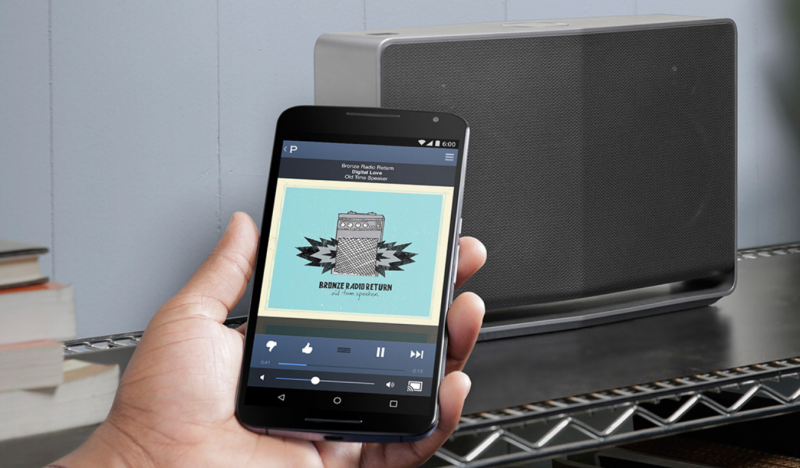
Google today announcedGoogle Cast for audio, a new music streaming technology in the vein of Chromecast that lets users stream sound from their smartphone, tablet, or Chrome-based web browser to Google Cast-ready speakers.
The service uses pre-existing apps like Pandora, iHeartRadio, and Google Play Music, amongst a sizable list of others, to play a user's songs on a selection of speakers from companies like Sony and LG. With the long list of supported apps and sites, Google Cast supports a wide variety of input devices from iPhone, iPad, Android Phones and tablets, to any Mac or PC with a Chrome browser.
While Google Cast at first glance appears similar to Apple's AirPlay in that it is a standard available to speaker manufacturers to ensure support for wireless audio streaming, Google Cast speakers stream content from the cloud rather than directly from the control device. As a result, Google promises users will receive the best sound quality and can multitask on their devices without disturbing the streams.
The company promises the first Google Cast-ready speakers from Sony, LG, and HEOS by Denon will be made available this spring. Alongside the promise of a wider array of brands supporting the service with their own speakers throughout 2015, Google states that these devices will accompany "a growing Google Cast ecosystem," which plans to include Android-based TVs, gaming consoles, and even set-top boxes.
Nessa tira de número 200 relatei algumas pérolas reais proferidas pelas senhorinhas que me inspiraram nessa série de tiras, que hoje é quase o carro chefe desse blog. Obrigado, vós!
Internautas de todo o país vêm reclamando da invasão de spams em suas caixas postais com fórmulas mágicas para aumento do pau de selfie em até 30 cm. Como uma praga a mensagem maldita vem se multiplicando de forma assustadora desde o advento da famosa ferramenta, também conhecida como “bengala de causar”, o gadget de maior penetração no mercado desde a invenção do vibrador modelo “coelhinho”.
Julieta de Souza, analista de sistemas de Belo Horizonte , MG, chegou a ficar uma semana sem acessar a Internet por não suportar mais a avalanche de mensagens que não a deixava sequer trabalhar. “Eu me sentia totalmente sufocada pelos emails que chegavam continuamente, propondo as mais variadas fórmulas para alongar o instrumento. E olha que eu nem tenho um pau! De selfie, então…”
Especialistas afirmam que não existe fórmula mágica de aumento do referido pau. Mesmo assim o Novo Ministro da Ciencia e Tecnologia já está estudando uma sobretaxa para os pais de selfie que excedam a média nacional histórica, que raramente excede os 20 centímetros.
Especialistas dizem que não importa o tamanho do pau de selfie mas sim as fotos que ele proporciona. Acredita-se que esses especialistas estejam abaixo da média.
No Brasil, uma pesquisa realizada pela consultoria Capgemini apontou que 47% dos brasileiros entrevistados estariam dispostos a adquirir um veículo novo utilizando a internet. O índice aumentou 2% em comparação com 2013. Foram ouvidas 10.571 pessoas no país.
O resultado surpreende, já que em alguns países de mercado consolidado e estrutura de internet mais sofisticada, os consumidores não tem a mesma disposição. Nos EUA, por exemplo, pesquisa semelhante apontou que somente 34% estariam confiantes em fechar negócio online.
Na Alemanha, 36% dos entrevistados trocariam o concessionário por um site de vendas. Na Rússia, 32% topariam mudar o método de compra e no Reino Unido, somente 28% apostariam em ideias como a da Hyundai Rockar, por exemplo.
No entanto, a coisa muda de figura na China, onde 61% optariam por trocar as chamadas “4S” por lojas virtuais na hora da compra. O índice chega a 55% na Índia e Indonésia. Franceses e sul-coreanos estariam igualmente propensos a fechar compras virtuais. A pesquisa indicou 48% do total nos dois países.
O motivo principal pelo interesse online é o preço, que geralmente é o de tabela e em alguns casos, com redução ou promoção. O perfil dos mais interessados nesse tipo de negócio figuram na faixa etária entre 19 e 34 anos com 49% do total, ficando outros 29% com maiores de 50 anos.
Outro dado interessante diz que 97% dos entrevistados fazem pesquisas na internet em busca de informações sobre seu próximo carro. No entanto, 55% ainda considera o vendedor como importante fonte de informações sobre o produto. Entre os brasileiros, 84% comentam sobre carros nas redes sociais.
China e Indonésia lideram com 97%. Já no Reino Unido, por exemplo, há mais discrição nesse caso e apenas 45% já fizeram algum tipo de comentário nas redes. Por fim, 57% dos brasileiros estariam dispostos a pagar mais para ter um pacote de mobilidade com acréscimo em segurança e experiência ao volante.
In June 2014, I was arrested for violating a court order. I bailed out on July 3. But because I had no money and an overworked public defender, I knew I’d have to serve time for my violation. That’s when my mentor, animator-director Ralph Bakshi, advised me to “document my exploits.” Jailed in the women’s division of the Los Angeles County jail system for two months, I was sent first to Century Regional Detention Facility (CRDF) in Lynwood and then to Twin Towers Correctional Facility in downtown Los Angeles for my final three weeks. Armed with nothing more than a golf pencil and whatever paper I could get my hands on, I drew the strange world into which I’d been dropped.
click to enlarge
One of the most difficult parts about jail is traveling to and from court. It’s a long, arduous day that begins at 4 a.m. and often doesn’t end until after midnight. After a bus ride spent in chains, you spend most of your time in a variety of holding cells with five to 50 other people. The cells are cold and filthy, and you drink from one scummy sink shared by everyone. The worst cell I experienced was strewn with toilet paper and moldy bread. When you finally return to jail (at 8 or 9 p.m. if you ride the afternoon bus), guards from the Los Angeles County Sheriff’s Department strip-search and shout at you. Needless to say, none of it is fun. In fact, it’s such a tiresome and draining process that those who can’t afford bail often end up pleading “no contest” instead of fighting their cases — just to avoid having to repeat the experience.
click to enlarge
Here’s an example of how draining the trip to and from court can be: On the way from CRDF in Lynwood to the far-off San Fernando Superior Court in the Valley, the bus stops downtown at Men’s Central Jail to pick up male inmates for their court appearances. I saw some ugly things on that bus: prostitution, nudity, profanity. A group of male prisoners ganged up on me and thought they could pressure me to show them my breasts — in exchange for crystal meth. I tried telling them to mind their manners, but it didn’t work. I just had to sit there and wait for it to be over. Even though they were all in handcuffs and blocked off by a barrier, they still succeeded in making me feel uncomfortable. I’m not sure if the guards knew what went on in the back of the bus, but I’m pretty sure they didn’t care.
click to enlarge
The dreaded squat-and-cough: You have to do it every time you enter the jail. In a room with about 40 other people, you strip naked, lift up your breasts, open your vagina, squat down and cough on command. If nothing falls out, you get up and put on your jail uniform as fast as you can. After the ordeal, they give each person an orange juice and a microwaved burrito. It’s the closest thing you get to compassion in jail.
click to enlarge
A few deputies were kind, but about a quarter of the L.A. County jailers were verbally abusive to inmates. We were called “stupid” and “bitches,” told to shut up, and were regularly humiliated in various ways, especially by the staff who checked us into jail. The story in this comic didn’t happen to me but to another woman in one of my pods, and it’s the perfect example of this behavior. When she returned from court, the deputy conducting her “property search” arbitrarily decided to throw away her court papers (jailers can just rip up and throw away whatever they please). When the woman protested, deputies placed her in handcuffs and put her in a cell alone, and then taunted her for being handcuffed.
click to enlarge
After my final court appearance, I went to “temporary housing.” You’re supposed to stay there for only a day or two but, likely due to overcrowding, CRDF was keeping people there for a week or more. We weren’t given clean clothes, and had no access to phones or showers. People started to get pissed. One lady, who hadn’t been allowed to shower for a week, began banging on her door, yelling at the guards. Others joined in, and the group became so vocal that deputies were unable to turn a blind eye any longer. Reluctantly, they sent a guy around to sign people up. He asked me how many days I’d gone without a shower. I told him four. He said it wasn’t long enough, as some women hadn’t showered in a week. This apathetic attempt to console me failed, and I banged on the door until I got a shower.
click to enlarge
After I left temporary housing, I went to what is known as "GP," or General Population. They put me in cellblock 2500, and for reasons beyond my understanding, the guards there had a habit of keeping the lights off until noon or 1 p.m.
click to enlarge
When you arrive in jail, you are (eventually) given an “indigent kit,” a little bag filled with a few packs of shampoo, a miniature toothpaste and toothbrush, a bar of soap, a comb and some foul-smelling deodorant cream. After that, beyond basic bar soap, you’re on your own. You have to order supplies through the commissary system, a sort of monopoly drugstore run by the Keefe Group out of Missouri. This is where you purchase everything from hygiene supplies and chips to a Styrofoam cup. You place orders once a week, and the following week a delivery guy shows up with a cart piled high with plastic bags of stuff. If nobody on the outside puts money on your “books” (inmate account), you can order a second indigent kit. But as soon as someone sends you money, Keefe deducts that cost. And with a 20-cent pack of ramen costing $1.18, just like most monopolies throughout history, goods are sold at an inflated rate.
click to enlarge
Every time you walk past a deputy, you are supposed to loudly say "passing," so you can't catch them off guard and stab them with a filed-down toothbrush or something. (I never saw one of those, by the way.) No one explained this to me, so after grabbing a golf pencil from my room one morning, I innocently ran past one of the guards on the way down the steps. She must have been having a bad day because she went off on me, saying the quote in the comic. She later became one of my favorite deputies because of how much she cared about inmates having healthy living conditions.
click to enlarge
We were cursed with little gnats that would fly out of a hole in the sink if you didn't plug it up or cover it with plastic. I never could understand how they survived in the pipes, but I do know that one time our plastic fell down in the middle of the night and it was not a pretty sight the next morning.
click to enlarge
At CRDF they did what was called "linen exchange" once a week. You got two pairs of clothes, two pairs of socks, a few sports bras and about four pairs of underwear. Used underwear.
click to enlarge
At Twin Towers you were only given cleaning supplies once a week, an event they called “double scrub.” They would spray our rooms down with cleaner and provide the whole pod of about 40 women with a single mop and bucket. If you didn’t hurry up and grab the mop right away, by the time you got the bucket, the water would be filthy and black.
click to enlarge
At CRDF it was fairly easy to get toilet paper and sanitary pads — all you had to do was flag down a trustee (an inmate worker). But for some reason, at Twin Towers they treated toilet paper as if it were a precious, nonrenewable resource. For a few days of my stay, we experienced a toilet paper crisis, yet for some reason the staff refused to bring us more. At Twin Towers, a popular response to inmate requests was, “Welcome to jail.” When someone finally came around with a garbage bag full of toilet paper, it felt like Christmas — and they were some kind of toilet paper Santa Claus.
click to enlarge
Jail has its myths and legends. This rumor never checked out in my book, but some people swore by it. Supposedly, if you flushed your toilet several times in a row, the water in the sink would get hotter and you could use it to make tea or coffee. It never worked for me, so I contented myself with lukewarm sink-tea in the morning. At Twin Towers, sometimes the water in the toilet was hot, so go figure.
click to enlarge
To escape the monotony of being locked in my cell for 23 hours a day (which is the practice at CRDF), I signed up for the Education Based Incarceration, or EBI, dorm. Once in EBI, people can get their high school diploma or take anger-management classes, parenting classes or drug counseling. In my opinion, EBI was the most humane part of the jail, and I saw it helping people. EBI was not without its jailhouse foibles, and one of them was that occasionally — and without warning — the doors would open an hour early for breakfast. You either had to wake up and run downstairs, or miss it and go hungry. A pretty funny scenario if you can laugh at yourself.
click to enlarge
I was around for a couple of birthday celebrations while in the EBI dorm, and it was an accepted tradition that the inmates would sing “Happy Birthday” at dinner. In a less accepted tradition, one lady would stand up and sing, “Hold up, wait a minute, let’s put some ghetto in it!” followed by a few more rounds of clapping and “Happy Birthday.” Once a new guard was on duty, and I think she thought we were about to riot or something.
click to enlarge
One day as I was innocently sitting in class, I got yanked out and shipped downtown to Twin Towers Correctional Facility, where they kept the AB-109 people — those who are sentenced to a year or more. This was not my classification and I still don’t fully understand why the Sheriff’s Department transferred me. Twin Towers is primarily a men’s facility, with women occupying only a single floor. One of the perks of this arrangement was that, if you drained the water out of the toilet and yelled at the top of your lungs, you could almost have a conversation with the men on the floor below. I never did this. But you could sure tell when someone was doing it, especially if you were trying to sleep.
click to enlarge
In jail it is extremely difficult to get accurate information about anything. You have no Internet, phone calls are expensive, and you may or may not get access to a newspaper or be able to watch the news on television. If you ask the guards about anything, they either ignore or yell at you, so most of the time all you can do is speculate with the other inmates. In L.A. County, the jails are so overcrowded that most people sentenced to “county time,” or less than a year, serve only 10 to 15 percent of their sentence. So if you get 180 days of county time, you most likely will serve 18 to 27 days. This magical percentage is ever-shifting and changes depending on a variety of factors, so inmates just sat around all day long guessing each other’s release dates. Naturally, everyone thought she was right.
click to enlarge
At Twin Towers they had this godawful practice of waking us at 4 a.m. every day for “count.” You had to be fully dressed, standing at your door, while they strolled through the pod with clipboards. After that, they either served breakfast or you were allowed to go back to bed for a few hours. Every day.
click to enlarge
In this downtown jail, we were locked inside a pod while the deputies watched us from a separate command center, through cameras. So for a decent portion of the day we were seemingly left on our own to self-govern. Within this system, the woman who yelled the loudest usually got her way. But if we yelled too loud, we got locked down (sent to our cells), so it was a delicate balance.
click to enlarge
Some people had money to shop and some didn’t, and then there were the people who spent $200 a week on chips and ramen and tried to lord it over everyone, like pre–French Revolutionary aristocracy. It’s just chips, folks, get over yourselves.
click to enlarge
At Twin Towers, the pads they gave us were paper-thin. One or two didn't really cut it on those extra special days of your period, so oftentimes you relied on your wits to hustle more.
click to enlarge
We would sweep the dust bunnies away with our homemade broom every night, and they would reappear every morning. It was a mystery.
click to enlarge
Another example of sass from the deputies serving no other purpose than to make your day a little worse.
click to enlarge
At Twin Towers, for several days the showers were ice-cold. After that, the water would sporadically turn from hot to cold without rhyme or reason. The shower was a big see-through window, so if you were one of the lucky ones to get hot water, the whole pod could see your celebration.
click to enlarge
What a glorious occasion it was when the library cart came around. A trustee pushed this wobbly, top-heavy cart up and parked it outside the pod to showcase the hodgepodge of books available for checkout. Everyone gathered around the window, banging on the glass, pointing frantically and at times stepping out of line. Sometimes it got heated. In the end, the women outside would hand you a book through the slot in the door and everyone walked away smiling.
click to enlarge
As you can imagine, it was damn difficult to get nail clippers. Someone was supposed to come around with them once a week but often didn’t show up. I watched my roommate frantically bite off all her nails in desperation. It’s actually quite a good metaphor for jail. Someone hands you a bunk situation … and then you freak out. And then you take care of it the best way you can.
Elana Pritchard is a cartoonist and animator in Los Angeles. Prior to her experience in jail, she worked on Ralph Bakshi’s film Last Days of Coney Island (coming in summer 2015). She has launched a Kickstarter campaign to produce her animated short The Circus. For more information, visitelanapritchard.com or follow her on Twitter.
…”the internet is now a major driver of the growth of cognitive inequality.” Or in simpler terms, “the internet makes dumb people dumber and smart people smarter.”
The post is here, Kevin’s earlier post on that theme is here.
I talked about this phenomenon in Average is Over, here are some recent developments:
In two nonfiction books, scheduled to be published in January, technology experts examine similar consumer-ranking techniques already in widespread use. Even before the appearance of these books, a report called “The Scoring of America” by the World Privacy Forum showed how analytics companies now offer categorization services like “churn scores,” which aim to predict which customers are likely to forsake their mobile phone carrier or cable TV provider for another company; “job security scores,” which factor a person’s risk of unemployment into calculations of his or her ability to pay back a loan; “charitable donor scores,” which foundations use to identify the households likeliest to make large donations; and “frailty scores,” which are typically used to predict the risk of medical complications and death in elderly patients who have surgery.
According to forecasts from Match.com and Plenty of Fish, two of the country’s largest dating sites, the single most popular time for online dating — the window when the most people sign up, log on and poke around — will be Jan. 4, from roughly 5 to 8 p.m. Zoosk, another data-focused dating site, backs that estimate up; in 2014, it’s most trafficked time was on the Sunday after New Year’s.
The full article is here, via Ninja Economics. Might it mean that a) online dating is a kind of palliative against holiday depression? Or that online dating is a kind of New Year’s resolution, a willingness to undergo a brutal experience for a supposed potential long-run benefit? Or a bit of both? Personally, I engage in some of my least productive work on Sunday evenings.
Your model, by the way, should not neglect these corollary facts:
Interestingly, this cycle doesn’t just play out on dating sites — in fact, it’s far broader than that. Researchers have also observed a post-holiday spike in searches for porn, for instance, and a 2012 study by Facebook’s data team found that people are far more likely to change their relationship status in January or February than they are at any other time of year. Offline, the holiday season tends to see a jump in both condom sales and conceptions.
“I feel like the best princess in the world,” said Paige, who celebrated her seventh birthday at Sweet and Sassy, a national chain of spas that boasts that its cosmetologists are specially trained to work with children. After the beauty treatments, Paige and her guests walked down a red carpet and disappeared into a hot pink limousine, which took the squealing children on a spin around the parking lot. One 6-year-old guest documented the revelry in a series of selfies.
Quoting from the ACCC website “…[Homeopathy Plus!] engaged in misleading and deceptive conduct and made false and misleading representations to the effect that there was an adequate foundation in medical science for the statement that homoeopathic treatments are a safe and effective alternative to the whooping cough vaccine, when in fact no such foundation exists..”
What coffee diluted homeopathically looks like. Ian Musgrave
Before we examine these claims, let me remind you that homoeopathy is based on two principles “like cures like” and extreme dilution, in most cases to levels so dilute that there is almost no chance of a single remaining molecule of original compound being present in the remedy. Thus caffeine diluted 1 in a hundred 30 times is used to treat insomnia and Uranium nitrate diluted 1 in a hundred 30 times is used to treat diabetes.
In the latter case it is fortunate at no uranium will actually be present, as uranium nitrate causes kidney failure. In uranium nitrate-induced kidney failure some glucose turns up in the urine, as the kidneys ability to reabsorb it is damaged. This is completely unlike what happens in diabetes, where high blood glucose overwhelms the kidneys capacity to reabsorb it (in uranium nitrate toxicity blood glucose is not elevated so it is not “like” diabetes at all). Thus the rationale for homoeopathic treatment is flawed at many levels.
But back to the draft report of the NHMRC’s review of homoeopathy. This represents the largest and most extensive recent review of homoeopathy research. The review looked at both systematic reviews of the use of homoeopathy in 61 heath conditions and submissions on behalf of interested parties, which contained a mix of systematic reviews and individual randomised controlled trials. All submissions and papers were carefully evaluated against strict criteria recognised internationally for this type of review. The Australasian Cochrane Centre independently reviewed the overview report to ensure that it was valid and high quality.
To remind you, the review found there was no good evidence that homeopathy was effective for any of the 61 medical conditions considered. In some cases, there was clear evidence that homoeopathy was ineffective; in others the evidence base was too weak to give a clear result. These findings are in concert with other large reviews of homoeopathy. Let’s look at the claimed “flaws”.
There Was No Adequate Explanation Of Why Randomised Controlled Trials (RCTs) Were Excluded.
They were not excluded. The main review focused on systematic reviews, which included randomised controlled trials (and other types of high level evidence). This is the best way to compare multiple studies. Randomised controlled trials are considered the highest level of evidence, but the results of a single randomised controlled trial may be misleading for many reasons.
Chance is one, if a therapy has no actual effect,by chance alone you will find some studies that appear to show an effect.
Thus it is far better to compare as many high quality trials as possible to get a clearer picture. Randomised trials were not excluded, but an integral part of the evidence through systematic reviews. Randomised controlled trials submitted by stakeholders that were not already part of systematic reviews were considered as well.
While there are limitations to this approach (specifically the most recent research may be excluded), it is widely used in making clinical decisions and in no way invalidates the findings of the report. One of the biggest limitations is that negative findings tend to be under-reported, so that systematic reviews tend to overestimate the effectiveness of a therapy. That homoeopathy cannot pass muster under these conditions is telling.
Three academics invited to comment on the review all broadly agreed there was no high quality evidence recommending homoeopathy for any disorder.
The Review Excluded Too Many Studies.
Of the 1367 publications considered in the main review, only 60 were finally considered. Not because of anything sinister, but because only those met the review criteria. 374 were duplicate citations, 729 were the wrong study type (not peer-reveiwed, not systematic reviews or metaanalyses, or not looking at controlled trials or high level evidence) or were not looking at the conditions considered in the review or did not report the outcomes (etc. etc.) (see the main review for details).
Of the reports submitted by stakeholders, only a few passed the inclusion criteria or were not already included. Pro tip, if the NHMRC asks you for peer-reviewed systematic reviews and randomised controlled trials in humans, don’t submit books on the life of Hahneman and studies of frogs exposed to thyroxine (yes, I went through the papers).
The Review Did Not Consider Any Publication Not In English.
While this excludes some studies, most high quality studies are published in the English language press. As well, the practicalities of translating foreign language papers to ensure there are no complicating errors in translation are avoided. Overall, the impact of this decision on the reliability of the report is marginal at best.
The NHMRC had not appointed a homeopathic expert to the panel.
These homoeopathic preparations are already in use in humans, so the appropriate studies are ones in humans in the first place. As well, the studies in animals suffer the same flaws as those in humans, too many are of poor quality and many are unable to be interpreted or make claims that cannot be supported. For example, one study submitted to the review that claimed to demonstrate that homoeopathic treatments kill breast cancer cells actually shows that the ethanol diluent is the lethal factor.
Summary
Overall, while there are some limitations to the study, this is a wide ranging, carefully interpreted study. While overall the broad conclusion is that there is no good evidence the homoeopathy being effective in the 61 studied conditions, in at least 13 studies there was good evidence that homoeopathy was ineffective (asthma for example). The results of this study are in broad agreement with previous studies of homoeopathy (see also this, and before you bring up the “Swiss Report” see here and here).
The NHMRC study conclusion that “…the assessment of the evidence from research in humans does not show that homeopathy is effective for treating the range of health conditions considered” cannot be ignored or dismissed.