Shared posts


What Fictional Languages Like Elvish, Dothraki, Klingon, and Na’vi Have in Common With Real Languages
Linguist John McWhorter explains how constructed languages (conlangs) like Elvish in The Lord of the Rings, Game of Thrones‘ Dothraki, Na’vi from Avatar, and Klingon in Star Trek are complete languages and explores what they have in common with real languages in this educational animation by Enjoyanimation.
video via TEDEd
via Boing Boing
Abandoned Baby Squirrel Rescued By Filmmaker, Becomes Best Friend
This is the story of Rob the Sri Lankan palm squirrel and how he was rescued after his mother left him alone in the wilderness.
Paul Williams, a filmmaker working with BBC Wildlife, found Rob as he was walking through the forest. He thought the baby squirrel was dead until he saw a twitch of life. After wrapping the squirrel up for warmth, he left it in a safe spot nearby tree, hoping that its mother would find it. When he checked in the morning, however, he was still there. It is unclear why his mother left him, but she may have been captured by a predator.
That‘s when Williams broke out the big guns, talking the rest of the BBC Natural History film crew into using their high-tech thermal imaging cameras to search the trees for potential squirrel nests. After they failed to find any, Rob joined the film crew.
In order to help Rob regain his strength, Williams has been feeding him with a syringe filled with formula. Baby palm squirrels feed from their mothers for up to 10 weeks, which is probably why Rob has been so trusting of the film crew, which provides him with food and cozy places to sleep. Williams, however, eventually had to say goodbye – he has returned to the UK, leaving Rob with a high-class hotel in Sri Lanka that will feed him until he is ready to leave.
Source: Paul Williams (via dailymail)


Abandoned Baby Squirrel Rescued By Filmmaker, Becomes Best Friend originally appeared on Bored Panda on October 7, 2013.
-
 Baby Elephant Cries Uncontrollably After His Mother Rejects Him
-
 Abandoned House in the Woods Taken Over by Wild Animals
-
 31 Haunting Images of Abandoned Places That Will Give You Goose Bumps
-
 I Found A Blind Baby Sparrow Below My Balcony After A Storm
The Daily Habits of Highly Productive Philosophers: Nietzsche, Marx & Immanuel Kant
Ever wonder how famous philosophers from the past spent their many hours of tedium between paradigm-smashing epiphanies? I do. And I have learned much from the biographical morsels on “Daily Routines,” a blog about “How writers, artists, and other interesting people organize their days.” (The blog has also now yielded a book.) While there is much fascinating variety to be found among these descriptions of the quotidian habits of celebrity humanists, one quote found on the site from V.S. Pritchett stands out: “Sooner or later, the great men turn out to be all alike. They never stop working. They never lose a minute. It is very depressing.” But I urge you, be not depressed. In these précis of the mundane lives of philosophers and artists, we find no small amount of meditative leisure occupying every day. Read these tiny biographies and be edified. The contemplative life requires discipline and hard work, for sure. But it also seems to require some time indulging carnal pleasures and much more time lost in thought.
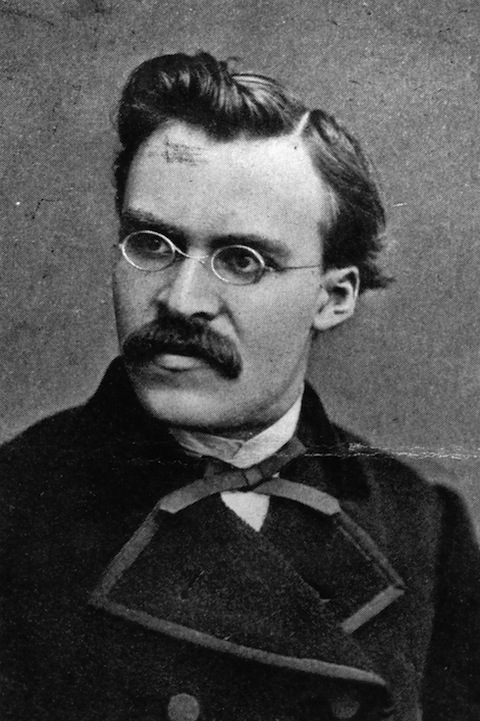
Let’s take Friedrich Nietzsche (above). While most of us couldn’t possibly reach the great heights of iconoclastic solitude he scaled—and I’m not sure that we would want to—we might find his daily balance of the kinetic, aesthetic, gustatory, and contemplative worth aiming at. Though not featured on Daily Routines, an excerpt from Curtis Cate’s eponymous Nietzsche biography shows us the curious habits of this most curious man:
With a Spartan rigour which never ceased to amaze his landlord-grocer, Nietzsche would get up every morning when the faintly dawning sky was still grey, and, after washing himself with cold water from the pitcher and china basin in his bedroom and drinking some warm milk, he would, when not felled by headaches and vomiting, work uninterruptedly until eleven in the morning. He then went for a brisk, two-hour walk through the nearby forest or along the edge of Lake Silvaplana (to the north-east) or of Lake Sils (to the south-west), stopping every now and then to jot down his latest thoughts in the notebook he always carried with him. Returning for a late luncheon at the Hôtel Alpenrose, Nietzsche, who detested promiscuity, avoided the midday crush of the table d’hôte in the large dining-room and ate a more or less ‘private’ lunch, usually consisting of a beefsteak and an ‘unbelievable’ quantity of fruit, which was, the hotel manager was persuaded, the chief cause of his frequent stomach upsets. After luncheon, usually dressed in a long and somewhat threadbare brown jacket, and armed as usual with notebook, pencil, and a large grey-green parasol to shade his eyes, he would stride off again on an even longer walk, which sometimes took him up the Fextal as far as its majestic glacier. Returning ‘home’ between four and five o’clock, he would immediately get back to work, sustaining himself on biscuits, peasant bread, honey (sent from Naumburg), fruit and pots of tea he brewed for himself in the little upstairs ‘dining-room’ next to his bedroom, until, worn out, he snuffed out the candle and went to bed around 11 p.m.
This comes to us via A Piece of Monologue, who also provide some photographs of Nietzsche’s favorite Swiss vistas and his austere accommodations. No doubt this life, however lonely, led to the production of some of the most world-shaking philosophical texts ever produced, perhaps rivaled in the nineteenth century only by the work of the prodigious Karl Marx.
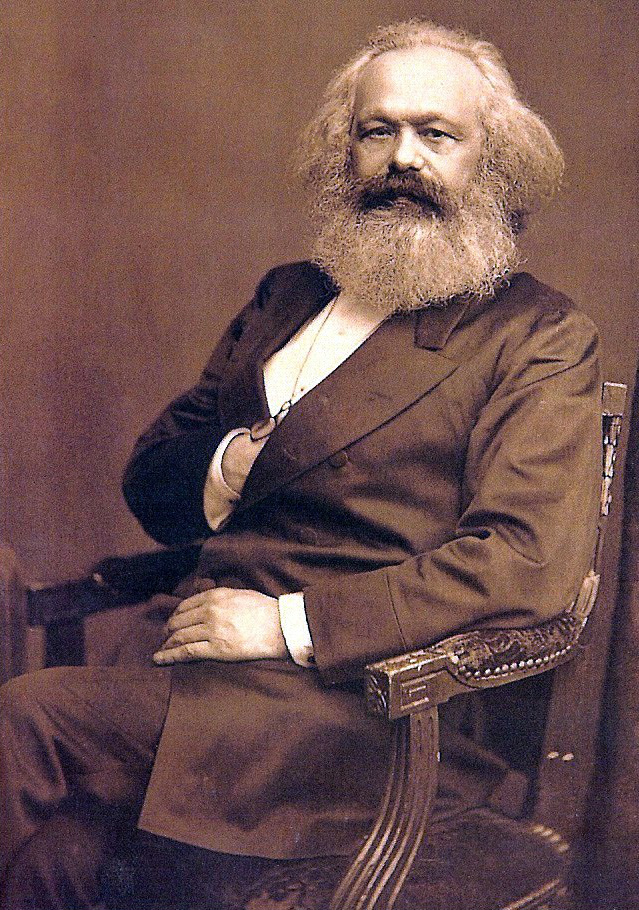
So how did Marx’s daily life compare to the morose and monkish Nietzsche? According to Isaiah Berlin, Marx also had his daily habits, though not quite so well-balanced.
His mode of living consisted of daily visits to the British Museum reading-room, where he normally remained from nine in the morning until it closed at seven; this was followed by long hours of work at night, accompanied by ceaseless smoking, which from a luxury had become an indispensable anodyne; this affected his health permanently and he became liable to frequent attacks of a disease of the liver sometimes accompanied by boils and an inflammation of the eyes, which interfered with his work, exhausted and irritated him, and interrupted his never certain means of livelihood. “I am plagued like Job, though not so God-fearing,” he wrote in 1858.
Marx’s money worries contributed to his physical complaints, surely, as much as Nietzsche’s social anxiety did to his. Not all philosophers have had such dramatic emotional lives, however.
 Smoking plays a significant role as a daily aid, for good or ill, in the daily lives of many philosophers, such as that of giant of 18th century thought, Immanuel Kant. But Kant suffered from neither penury nor some severe case of unrequited love. He seems, indeed, to have been a rather dull person, at least in the biographical sketch below by Manfred Kuehn.
His daily schedule then looked something like this. He got up at 5:00 A.M. His servant Martin Lampe, who worked for him from at least 1762 until 1802, would wake him. The old soldier was under orders to be persistent, so that Kant would not sleep longer. Kant was proud that he never got up even half an hour late, even though he found it hard to get up early. It appears that during his early years, he did sleep in at times. After getting up, Kant would drink one or two cups of tea — weak tea. With that, he smoked a pipe of tobacco. The time he needed for smoking it “was devoted to meditation.” Apparently, Kant had formulated the maxim for himself that he would smoke only one pipe, but it is reported that the bowls of his pipes increased considerably in size as the years went on. He then prepared his lectures and worked on his books until 7:00. His lectures began at 7:00, and they would last until 11:00. With the lectures finished, he worked again on his writings until lunch. Go out to lunch, take a walk, and spend the rest of the afternoon with his friend Green. After going home, he would do some more light work and read.
For all of their various complaints and ailments, throughout their most productive years these highly productive writers embraced Gustave Flaubert’s maxim, “Be regular and orderly in your life, so that you may be violent and original in your work.” I have always believed that these are words to live and work by, with the addition of a little vice or two to spice things up.
Related Content:
John Updike’s Advice to Young Writers: ‘Reserve an Hour a Day’
John Cleese’s Philosophy of Creativity: Creating Oases for Childlike Play
Reading Marx’s Capital with David Harvey (Free Course)
Walter Kaufmann’s Classic Lectures on Nietzsche, Kierkegaard and Sartre (1960)
Download 90 Free Philosophy Courses and Start Living the Examined Life
Sartre, Heidegger, Nietzsche: Three Philosophers in Three Hours
Josh Jones is a writer and musician based in Durham, NC. Follow him at @jdmagness
NY AG hits AirBnB with subpoena for user data on all hosts in NYC

    
|


The science of "new baby smell"

|
|
London School of Economics: piracy isn't killing big content; government needs to be skeptical of entertainment industry claims
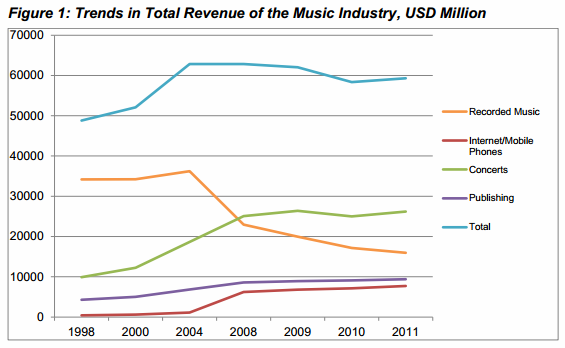
Copyright and Creation, a policy brief from a collection of respected scholars at the rock-ribbed London School of Economics, argues that the evidence shows that piracy isn't causing any grave harm to the entertainment industry, and that anti-piracy measures like the three-strikes provision in Britain's Digital Economy Act don't work. They call on lawmakers to take an evidence-led approach to Internet and copyright law, and to consider the interests of the public and not just big entertainment companies looking for legal backstops to their profit-maximisation strategies.
“Contrary to the industry claims, the music industry is not in terminal decline, but still holding ground and showing healthy profits. Revenues from digital sales, subscription services, streaming and live performances compensate for the decline in revenues from the sale of CDs or records,” says Bart Cammaerts, LSE Senior Lecturer and one of the report’s authors.
The report shows that the entertainment industries are actually doing quite well. The digital gaming industry is thriving, the publishing sector is stable, and the U.S. film industry is breaking record after record.
“Despite the Motion Picture Association of America’s (MPAA) claim that online piracy is devastating the movie industry, Hollywood achieved record-breaking global box office revenues of $35 billion in 2012, a 6% increase over 2011,” the report reads.
Even the music industry is doing relatively well. Revenue from concerts, publishing and digital sales has increased significantly since the early 2000s and while recorded music revenues show a decline, there is little evidence that piracy is the lead cause.
“The music industry may be stagnating, but the drastic decline in revenues warned of by the lobby associations of record labels is not in evidence,” the report concludes.
Piracy Isn’t Killing The Entertainment Industry, Scholars Show [Ernesto/TorrentFreak] 
|
|
Who's sinking Venice?
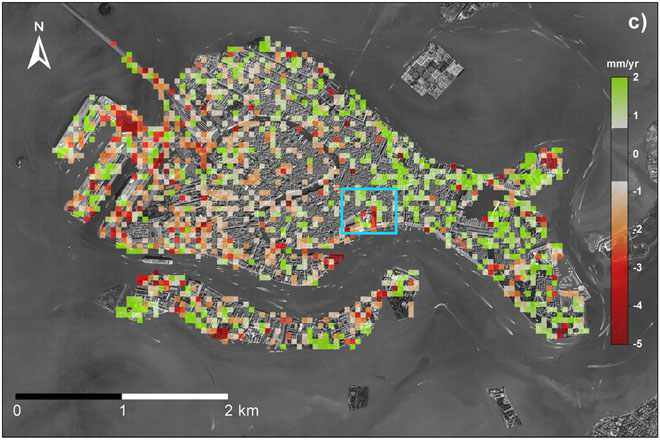
This map shows exactly which parts of Venice are falling into the water the fastest, and which ones are holding up--suggesting the who, what and where of blame and praise. Betsy Mason, at Wired, reports on what satellite imaging reveals about the sinking city:
They conclude that the average background sinking is around 1 millimeter per year. The more acute man-made sinking ranged up to 10 millimeters a year (shown in red on the map above on the first slide), but in some places human activity actually reduces the natural sinking (shown in green).

|
|
Clothes have power over your mind
David McRaney, author of You Are Now Less Dumb and the host of Boing Boing's podcast You Are Not So Smart, made this video about the effect your clothes have on the way you think and behave.

|
|
Listen to a story told in a 6000-year-old extinct language
English — along with a whole host of languages spoken in Europe, India, and the Middle East — can be traced back to an ancient language that scholars call Proto Indo-European. Now, for all intents and purposes, Proto Indo-European is an imaginary language. Sort of. It's not like Klingon or anything. It is reasonable to believe it once existed. But nobody every wrote it down so we don't know exactly what "it" really was. Instead, what we know is that there are hundreds of languages that share similarities in syntax and vocabulary, suggesting that they all evolved from a common ancestor.
Of course, that very quickly leads to attempts to reconstruct what said ancestral language might have sounded like. In the track above, you can listen to University of Kentucky linguist Andrew Byrd recite a fable in reconstructed Proto Indo-European. Archaeology magazine helpfully provides a translation:
A sheep that had no wool saw horses, one of them pulling a heavy wagon, one carrying a big load, and one carrying a man quickly. The sheep said to the horses: "My heart pains me, seeing a man driving horses." The horses said: "Listen, sheep, our hearts pain us when we see this: a man, the master, makes the wool of the sheep into a warm garment for himself. And the sheep has no wool." Having heard this, the sheep fled into the plain.
Obvious, right? So how does one produce a scholarly mashup of English, Hindi, Urdu, and more, while accounting for six millennia of invention, sharing, and remixing?
There are a couple of different techniques. In the comparative method, researchers take two or more languages and start lining up their features side by side. What sounds do they share? What words sound similar? What rules do they have in common? Then you use what you know about the history of those languages to look at which ones descended from others, and to weed out words that were borrowed completely from unrelated languages thanks to trade or travel. Following the lines of descent, you can get an idea of the sounds and alphabets that the parent language originally had to work with.
The other technique, internal reconstruction, basically takes a single language and starts trying to work it backwards in time through itself. How did English distinguish itself from older Germanic languages and how has it changed since AD 500.
When you put information that you gather from both these techniques together, you can start to get a handle on what some really ancient, never-heard-by-anyone-living languages might have sounded like.
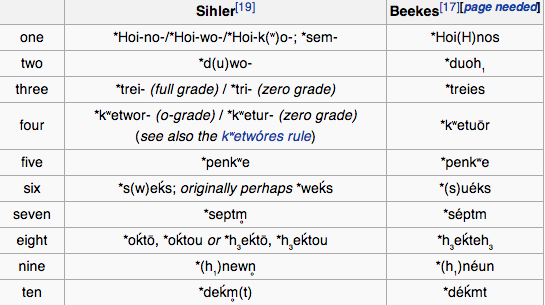
'For instance, Wikipedia has a chart showing two different versions of the Proto Indo-European numbers. If you speak one of the languages descended from Proto Indo-European, these will likely look or sound familiar.

|
|
You will soon be able to use gadgets on planes during takeoff and landing
The Federal Airline Administration's quixotic prohobition on the use of gadgets during takeoff and landing is to come to an end, reports Jad Mouawad at The New York Times. But they're digging their heels in on using internet connections, i.e. radios.
But the panel said that restrictions should remain on sending text messages, browsing the Web or checking e-mail after the plane’s doors have been closed. Passengers can do that only when the aircraft’s Wi-Fi network is turned on, typically above 10,000 feet. The use of cellphones to make voice calls, which was not part of the review, will still be prohibited throughout the flight.

|
|
Soviet plane-spotting head-gear
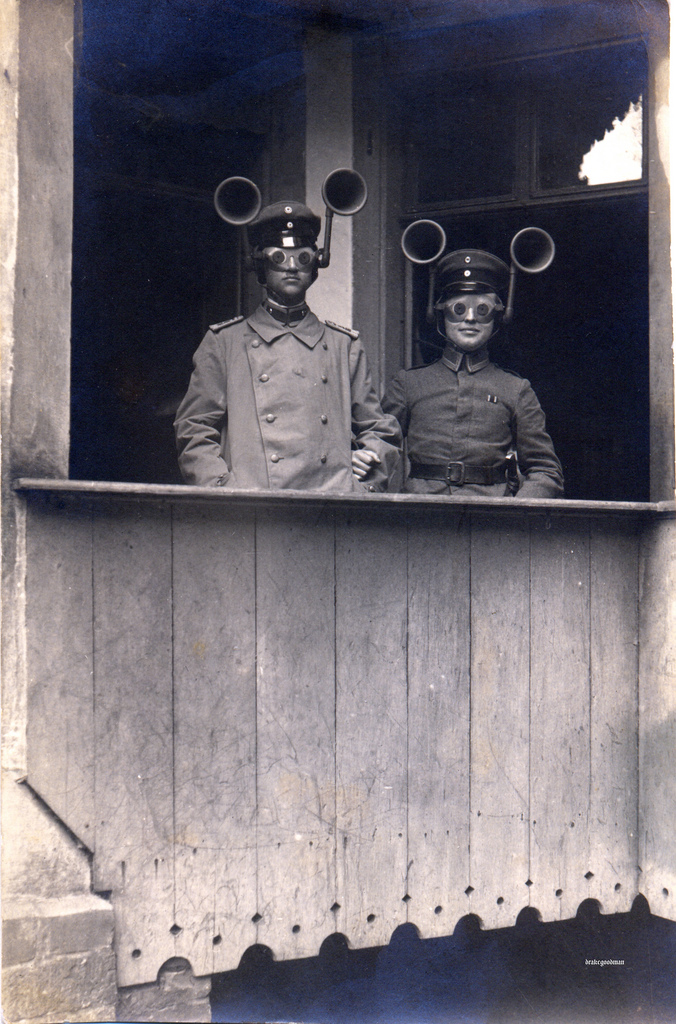
Drakegoodman scanned this 1917-ish photo of Soviet planespotters in exotic headgear; according to a commenter, the binox are focused at infinity "so that when you found the source of the sound by turning your head, you could see the aircraft creating that sound."
WTF (via Bruce Sterling) 
|
|
A rather horrible accounting of what happens if an astronaut floats off into space

|
|
The voices in your head are culturally specific

|
|
Whistling Vivaldi Won’t Save You
Last week, Jonathan Ferrell, a former Florida A&M football player who recently moved to the Charlotte, N.C., area to be with his fiancée, had a horrible car crash. The 24-year-old broke out the back window to escape and walked, injured, to knock on the nearest door for help. Now, Ferrell is dead. The neighbor he asked for aid called 911 (“He is trying to kick down my door,” she cried on the phone), and one of the responding police officers shot the unarmed Ferrell 10 times.
You know what the rest of the world has figured out? The metric system. It's time the US got on board.
-- Read more on ScientificAmerican.com
Easyjet tells law professor he can't fly because he tweeted critical remarks about airline
"You're a lawyer. You know u can't tweet stuff like that and expect to get on an @easyJet flight."
— Mark Leiser (@mleiser) September 24, 2013
Mark Leiser, a law professor who writes a tech law column for The Drum, says he was denied boarding on an Easyjet flight after he tweeted critical remarks about the airline (he said that a delayed flight had caused a soldier on his flight to miss a connection and that Easyjet had refused to help). According to Leiser, a member of staff told him, "You're not allowed to talk about Easyjet like that and then expect to get on a flight."
“I put out a tweet about it and then when I got in the queue, and a member of staff approached me and asked if she could have a quick word," Leiser explained. "She said she understood I’d said something on social media about easyJet and then told me they were not allowing me to board the flight.
“I said you’re kidding me; I asked where that had come from and she told me I should know I’m not allowed to do that. I was stunned. I told her I didn’t really understand what she was telling me and she said: ‘You’re not allowed to talk about easyJet like that and then expect to get on a flight’.”
“She then asked me to step out of the queue and repeated that she was not letting me on the flight. I told her she’d better get somebody down to discuss this and she told me the manager was on his way to speak to me. Then she told said she couldn’t believe I thought what I’d done was appropriate. I was just sitting there in disbelief.
“So the the manager arrived and told me that based on my tweet they couldn’t let me board the flight because I wasn’t allowed to do that and I should know better. He then called over to the girl on the counter to instruct my bags be taken off the flight. It wasn’t until I asked him if he’d heard of free speech that the tone changed. He asked me if I was a lawyer and I told him I taught law at Strathclyde.
"He quickly had a word with his staff and then told me I’d better get on the flight because they were waiting for me. If I hadn’t had my ID badge I don’t think he’d have let me on the flight."
EasyJet under fire after claims it refused to let The Drum columnist Mark Leiser on board for sending critical tweet [Angela Haggerty/The Drum]
(via Digg) 
|
|
B.F. Skinner totally geeks out over the box he built for his baby

The Skinner Box, as applied to human infants, was not what you think it was. Psychologist B.F. Skinner did not raise his daughter inside a box without human contact. Nor did she later grow up to be crazy and commit suicide because of said lack of contact. In fact, just a few years ago, Deborah Skinner Buzan wrote a column for The Guardian debunking those powerful urban legends herself.
Instead, what Skinner did was build his daughter the sort of crib that you might expect a scientist raised in the era of mid-20th-century Popular Science-style scientific futurism and convenience to build. He called it the "Air-Crib" and it was designed to maintain a perfectly comfortable temperature, provide baby Deborah with built-in toys to keep her entertained, be simple to clean, and make it easier to stick to the "cry it out" and heavily regimented feeding/sleeping schedules that were, at the time, standard parenting advice.
Also, Deborah Skinner wasn't the only baby to use one. In 1959, almost 15 years after he originally wrote about the Air-Crib in Ladies Home Journal, Skinner reported having heard from at least 73 couples who'd raised 130 babies using the same design. (In fact, you can find pictures of modern happy babies hanging out in their Air-Cribs on Flickr.)
I got to read some of Skinner's original writing on the Air-Crib recently and couple of things stuck out to me. First, it cracked me up. The article, published in 1959 in Cumulative Record, is written in the kind of extra-enthusiastic voice you're used to hearing Makers use to describe particularly exciting DIY projects. Which is pretty hilarious in context with the myths that sprung up about the thing later. Second, when it comes to reducing the risk of Sudden Infant Death Syndrome, the Air-Crib was (unintentionally) ahead of its time.
Here's how Skinner described the original development of the box, back in 1945.
When we decided to have another child, my wife and I felt that it was time to apply a little labor-saving intervention to the problems of the nursery. We began by going over the disheartening schedule of the young mother, step by step. We asked only one question: Is this practice important for the physical and psychological health of the baby? When it was not, we marked it for elimination. Then the "gadgeteering" began.
The result was an inexpensive apparatus in which our baby daughter has now been living for eleven months. Her remarkable good health and happiness and my wife's welcome leisure have exceeded our most optimistic predictions, and we are convinced that a new deal for both mother and baby is at hand.
Later, in 1959, Skinner would write that the advantages of the Air-Crib were so great that he was certain they could not be resisted much longer, despite the forces of cultural inertia and complicated building instructions.
I could almost see him and his wife grinning obliviously at their vaguely disturbed neighbors as they tried to explain, "But it's so efficient!"
One of the key features of the Air-Crib was also the thing that makes it look a little sketchy. The Skinners were dedicated to providing a comfortable, climate-controlled environment in which their baby could play and hang out in just her diaper. In order to do that, the crib had to also be a sealed environment, where the baby interacted with the outside world through windows on the side. Baby Deborah was taken out of the box regularly — to be fed, and changed, and played with — and Skinner is probably right in pointing out that there is, technically, nothing particularly different about leaving your baby for long periods in a crib compared to leaving them for long periods in an Air-Crib. But it does come across as a bit more problematic.
What stood out to me, though, was the fact that this temperature control system allowed Baby Deborah to sleep in ways that are much, much closer to the recommendations that new parents hear today. In order to reduce the risk of SIDS and suffocation, you're now told to put your baby to sleep in a space that looks pretty barren. No blankies. No crib bumpers. No stuffed animals or layers of sleep clothes. Ideally, you just want a mattress with a sheet on it and a baby that's wearing as little as possible. (Finland has one of the lowest infant mortality rates in the world, which is partially attributed to the fact that their babies sleep, quite literally, in boxes.)
That has not been the norm, historically. It certainly wasn't the norm that Skinner describes raising his first child with — "the usual solution [to cold] is to wrap the baby in a half-a-dozen layers of cloth," he writes. Instead, at 11 months, Deborah Skinner enjoyed a bed that was set around 78 degrees with a relative humidity of 50 percent. The Skinners weren't thinking of reducing SIDS risk. It's pretty clear from his writing that the primary motivations were: First, reduce the number of things that had to be regularly laundered and, second, make the baby comfortable enough that it cried less often and didn't need to use so much energy regulating its own body temperature. But the result was a relatively spartan crib environment that would not have looked out-of-place with today's SIDS-prevention guidelines.
Some other highlights of the Air-Crib that Skinner extolled in his articles: Sheets arranged on an "endless" loop system, similar to the roller towel unit in a gas station bathroom, which allowed his wife to "change" the sheets several times before she actually had to wash the sheets; insulated walls that helped maintain the temperature and also protected the sanctity of naptime; and a modified music box that the baby could play by pulling rings suspended from the Air-Crib's roof. (Frankly, I'm surprised that I've not seen a modern version of that last one in a post here before.)
There were, of course, objections. But Skinner assures the reader that they can all be easily shot down. In particular, he had some criticism for the folks who thought this all seemed just a wee bit, you know, unnatural.
It is not, of course, the favorable conditions to which people object, but the fact that in our compartment they are "artificial." All of them occur naturally in one favorable environment or another, where the same objection should apply but is never raised. It is quite in the spirit of the "world of the future" to make favorable conditions available everywhere through simple mechanical means.
[Insert Jetsons sound effects here.]
Image: Detail from October 1945 issue of Ladies Home Journal.

|
|
Fish caught offshore from Fukushima hit markets in Japan today

Photo: Mainichi
Fish caught off the Fukushima Prefecture coastline in Japan are being sold starting today, reports Mainichi, "after fisheries cooperatives here resumed test fishing" and after the fish themselves were tested for radiation. Over 5 tons of fish and cetaceans were caught yesterday, and after radiation screening, made their way into fish markets and grocery stores starting today.
|
|
Soon, you might be able to use certain electronic devices during takeoff and landing
Pilots are allowed to use iPads during takeoff and landing, but passengers aren't. That might change after an FAA advisory committee recommended yesterday that "passengers should be permitted to use smartphones, tablets, e-readers, and other personal electronic devices during taxi, takeoff and landing," says MacRumors.
Under today’s recommendation, passengers would be able to use most devices, though some, like Apple’s iPhone, would need to be switched to airplane mode. Downloading data, browsing the web, and talking on the phone would remain prohibited, though reading e-books, listening to music, watching movies, and playing games would be permitted during all phases of flight.
Next week, the advisory committee will deliver the recommendation to the FAA (does it take a week to deliver an electronic document?) and the FAA will then take its sweet time deciding which parts of the recommendation, if any, will be allowed.

|
|
Les dauphins sont aussi bêtes que les poulets
En Australie, pendant six ans, Gregg a travaillé sur les dauphins pour revenir sur les stéréotypes entendus habituellement à propos de ces animaux. Dans un article qu’il a lui-même écrit pour le Huffington Post, Gregg expose ses arguments. Morceaux choisis:
Les dauphins savent faire beaucoup de choses compliquées comme utiliser des outils, chasser en groupe, jouer à des jeux complexes... Mais ces comportements sont aussi observés chez d’autres espèces depuis les insectes jusqu’aux oiseaux en passant par les poissons. Bien que les dauphins réussissent des tests cognitifs incluant la résolution de problèmes etc, d’autres espèces (comme les pigeons, les perroquets et les chiens) ... Lire la suite

Pourquoi les femmes sont moins corrompues que les hommes dans les démocraties

How Google Has Turned Language Translation into a Math Problem
 Language translation is a notoriously difficult task for humans, let alone computers. But in trying to solve that problem Google has stumbled across a clever trick, that involves treating them like maps—and it really, really works.

|
|
Are You a Language Bully?
Can you recite the dictionary definition of peruse from memory? Do you have the etymology of short-lived stored in the recesses of your brain, available at a moment’s notice for impromptu punctuation lesson purposes? Are you an expert on the difference between rebut and refute? If you answered “yes” to all of these questions, then you may just be a language bully.
Portraits From the National Beard and Mustache Championships 2013
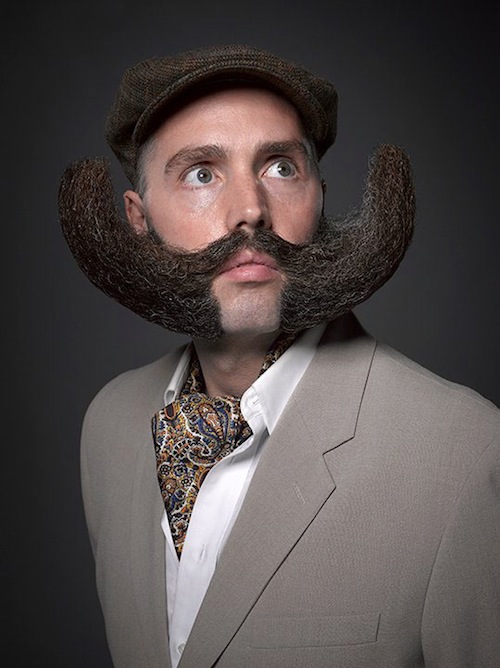
“I originally saw the National Beard and Mustache Championships in the local news paper in Vegas, where I currently live. I had missed the 2012 Championships by one day and it was only a mile or two from my studio, so I was kicking myself in the ass for the missed opportunity.” – Greg Anderson


Sponsored by MightyDeals - Amazing Deals for Web Professionals.

|
|
Ryanair vows to reduce fewer customers to tears

Ryanair (officially "the worst of the 100 biggest brands serving the British market") is changing its culture because the board are sick of seeing people weeping in the departure lounge and being harangued at dinner-parties by friends and relatives who hate the airline and refuse to fly it. The airline's latest scandal: charging a neurosurgeon £160 to change his ticket home from Dublin to Leeds, after he explained that he was flying home in a rush because his wife and children had been killed in a housefire.
They've never been quite that horrible with me, but they were bad enough on a 2008 trip to Berlin that I have never flown them since.
He told the Irish Daily Mail that tears were streaming down his face as he tried to explain to staff at Dublin airport why he needed to change to an earlier flight to Birmingham.
But the surgeon said he was told by check-in staff that he would have to pay to change his booking.
He told the newspaper: "I don't want to make a big deal about it but it did shock me. I really did not expect them to charge me.
"I thought, given the circumstances, they might just let me transfer flights, as I had already paid for a return fare."
Leicester fire deaths: Ryanair to refund grieving father
(Image: Staying classy, Ryanair..., Christian Heilmann, CC-BY) 
|
|

Implementing a Turing machine in Excel

Felienne describes how she, Daan van Berkel and some other friends went away for a weekend to hack a Turing machine out of Excel formulas. Lacking an infinitely long tape, they had to kludge around a bit, but the outcome is both cool and instructional (here's the machine itself). The Turing Machine is Alan Turing's "hypothetical device that manipulates symbols on a strip of tape," which formed the basis for modern, general-purpose computers.
Then, lets have a look at the machine itself. Since we are only using formulas, we cannot continuously change the tape. Therefore, we use one row in the spreadsheet to represent one state of the tape. Each following line represents the state of the tape after one transition. As Willem van de Ende poetically put it: “No state was harmed in the making of this Turing Machine”
This means the top most line of the spreadsheet (shown in yellow in the following screen shot) represents this initial state of the machine. C2 shows the row where we reach the halting state and D2 counts the number of 1′s from there. As the first line contains three 1′s, this machine indeed seems to be calculating the successor.
Now, how do we get from one state to the other? For this we need to do some administration. In column A, we save the column position of the head. In column B, we save the current state. With that we can calculate the value of one square on the tape, by looking at the state and the previous value on the tape, with the formula below:
Excel Turing Machine (via Hacker News) 
|
|
How to Understand the Deep Structures of Language
Yasutada.sudoA friend of mine wrote this article. As a consequence, I saw the bird and the bird saw me.
-- Read more on ScientificAmerican.com