Shared posts

22 Dec 23:02

A Blind Man Explains His Idea of Outer Space, Fog, the Grand Canyon, and Other ‘Intangibles’

by Kimber Streams

Tommy Edison, aka The Blind Film Critic, explains his idea of sunrises and sunsets, the Grand Canyon, outer space, fog, and other phenomena that sighted people may take for granted in this video. Previously, we’ve written about Edison’s explanation of colors and his answer to the question “What Do Blind People See?

video directed and edited by Ben Churchill

submitted via Laughing Squid Tips

04 Dec 20:07

How to Make a Paper Airplane Fly Forever

by Kimber Streams

ViralVideoLab demonstrates how to make a paper airplane fly forever using thermals produced by ordinary stove hot plates. If the airplane isn’t exactly in the middle of the hot plates it will fly off balance, making the feat a tricky one to pull off. According to ViralVideoLab, this video demonstration took about 87 takes to get right.

via Gizmodo

02 Dec 21:05

In Australia, what may be a 'new' indigenous language has been recorded

by Xeni Jardin
US-based Australian linguist Carmel O'Shannessy has documented what she believes are "the beginnings of what's been described as the world's newest known spoken language." Light Walpiri is described as a blend of one small indigenous Australian town's traditional Aboriginal language, Warlpiri, plus English and a form of Aboriginal English known as Kriol. Read more about Light Walpiri, and O'Shannessy's work, at the professor's academic website. And below, videos of an Aboriginal child reading a monster story in Walpiri, and in Light Walpiri. [SBS.com]


15 Oct 21:58

Annoying rally driver coach

by Mark Frauenfelder

[Video Link] Matthew says: "Here's a video taken from inside the Mitsubishi Evo 10 during the 2013 Coimbatore Rally, part of the Indian National Rally Championship. The car is being driven by Samir Thapar and his co-driver/coach, Vivek Ponnusamy."


09 Oct 23:31

American dialects mapped

by Rob Beschizza

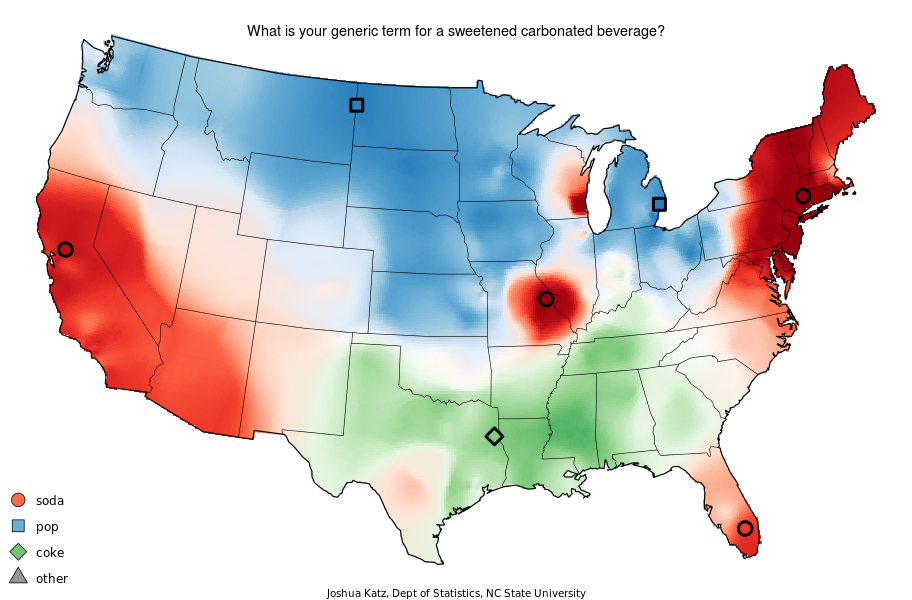
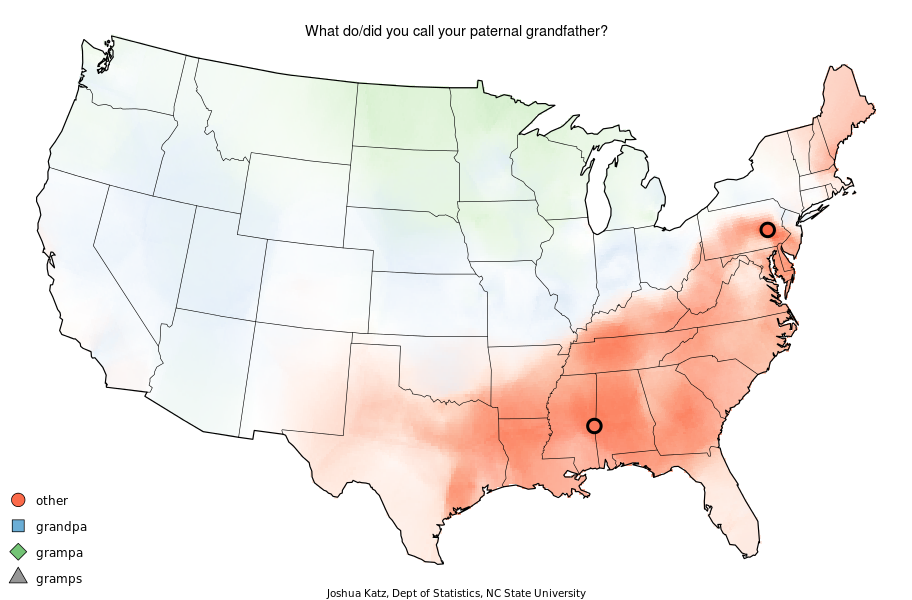
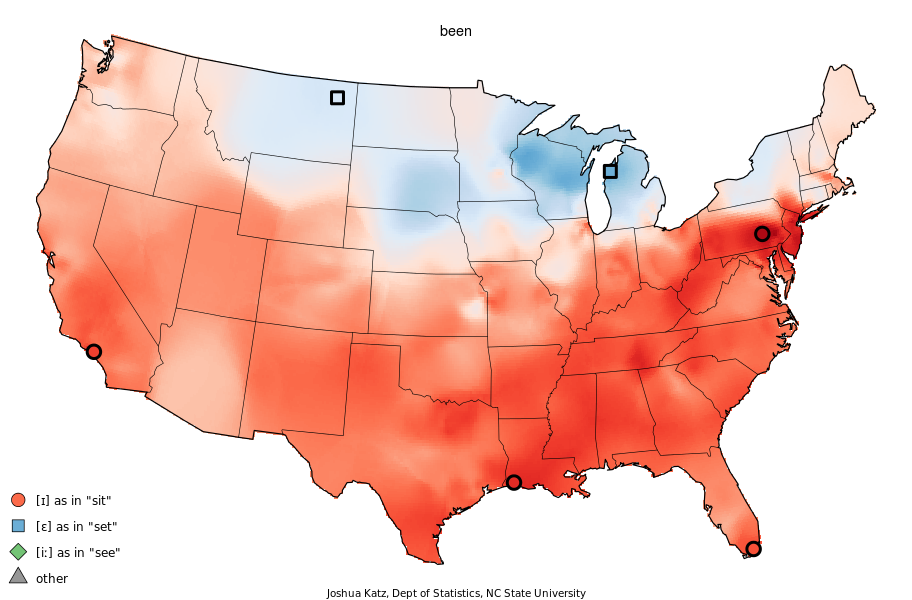
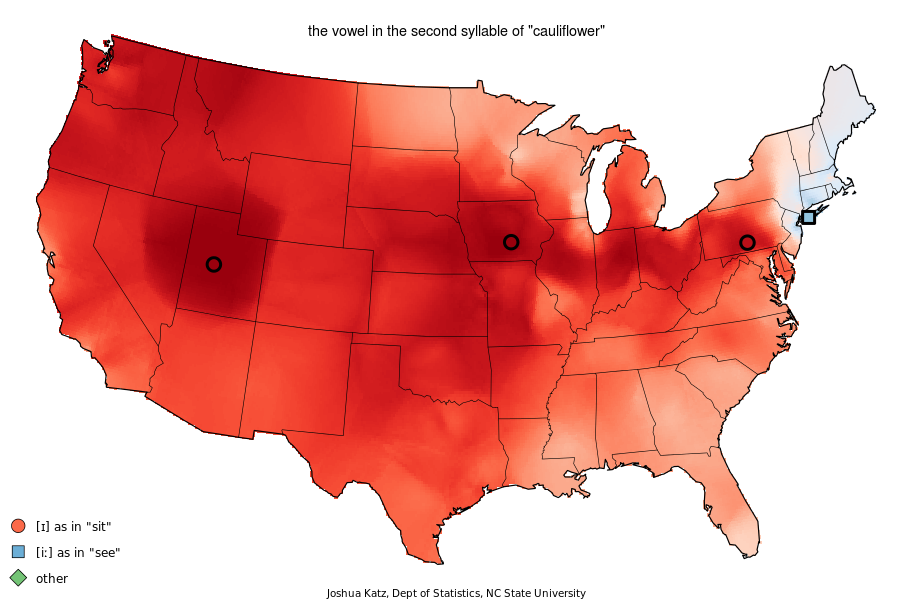
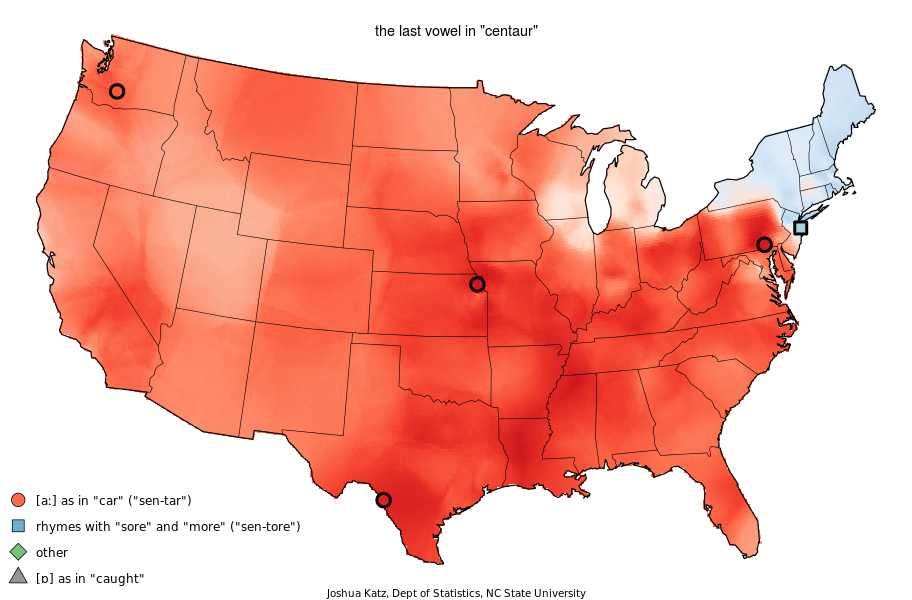
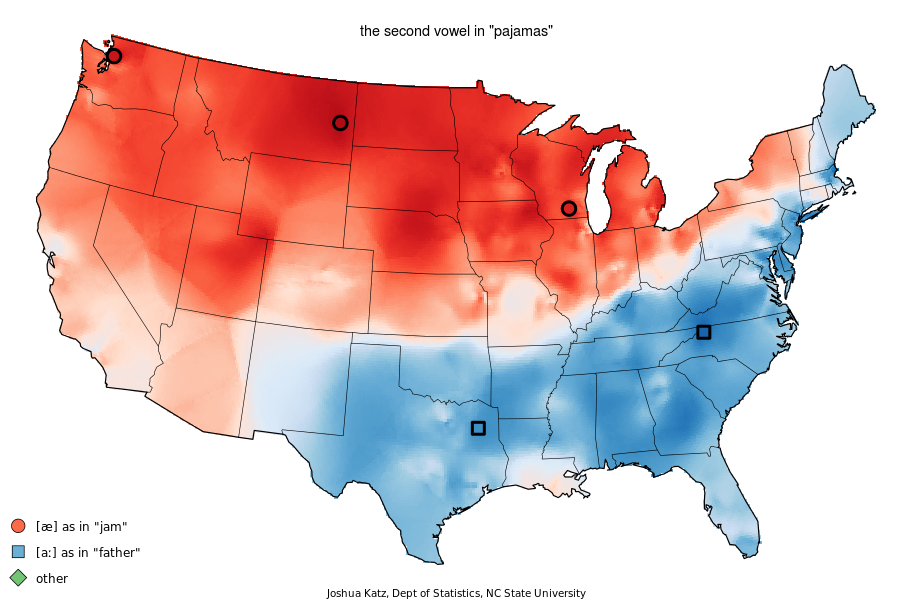
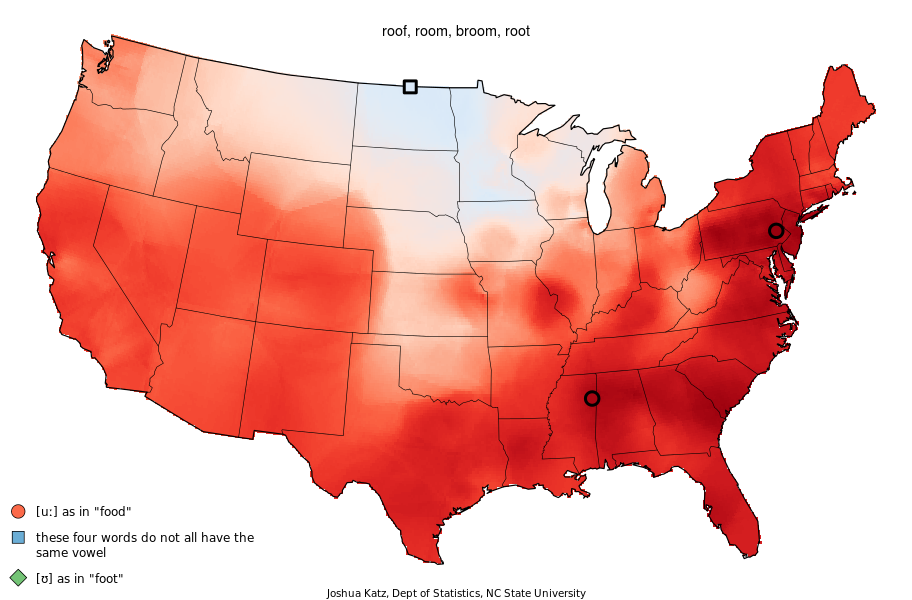
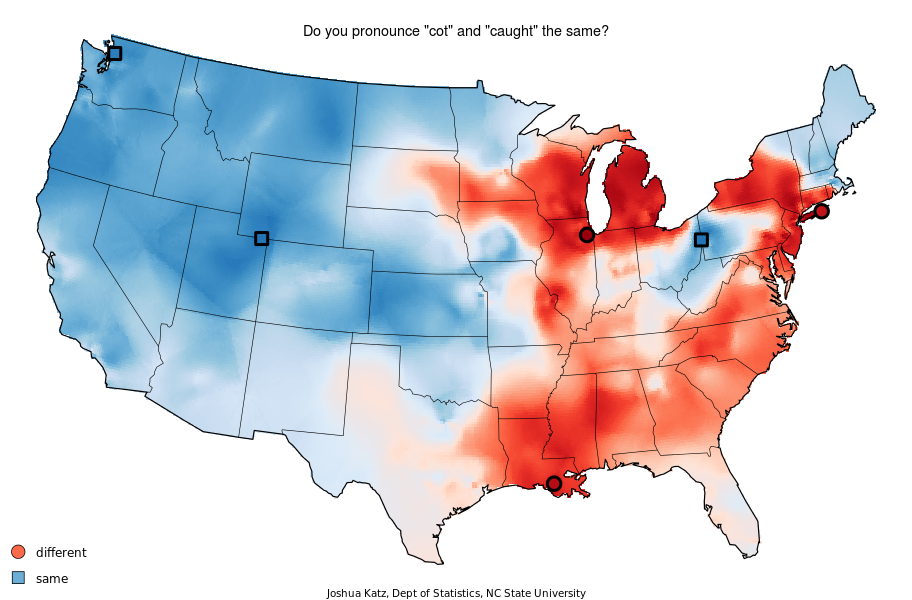
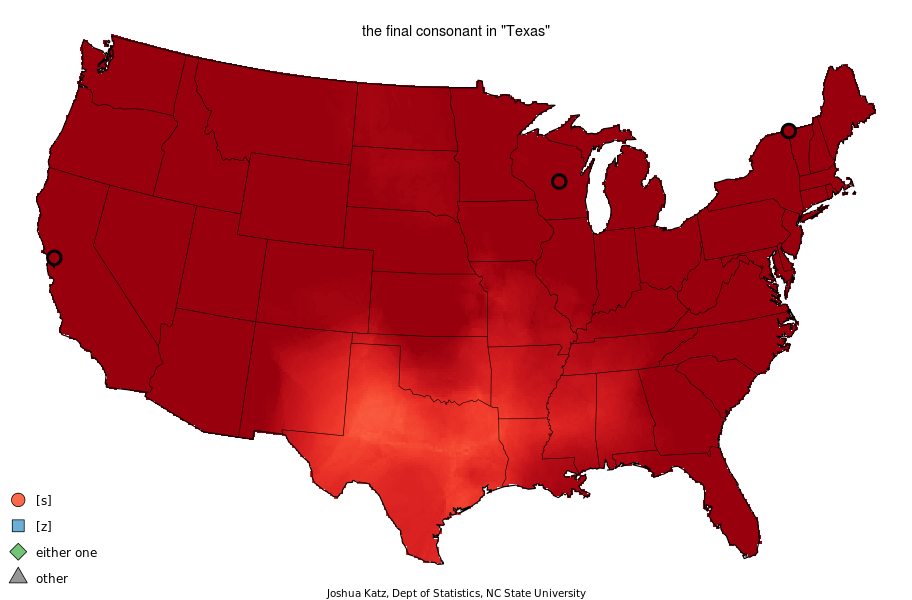
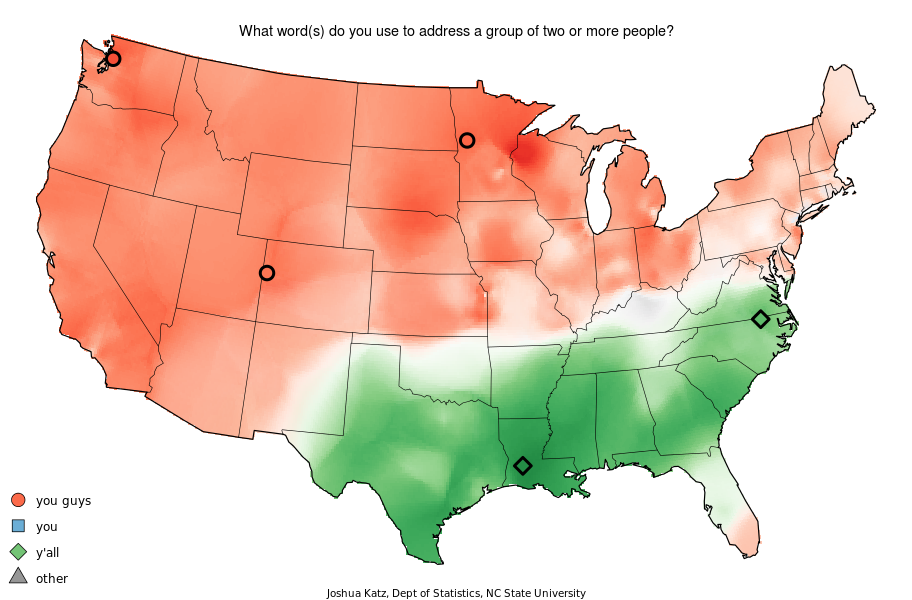
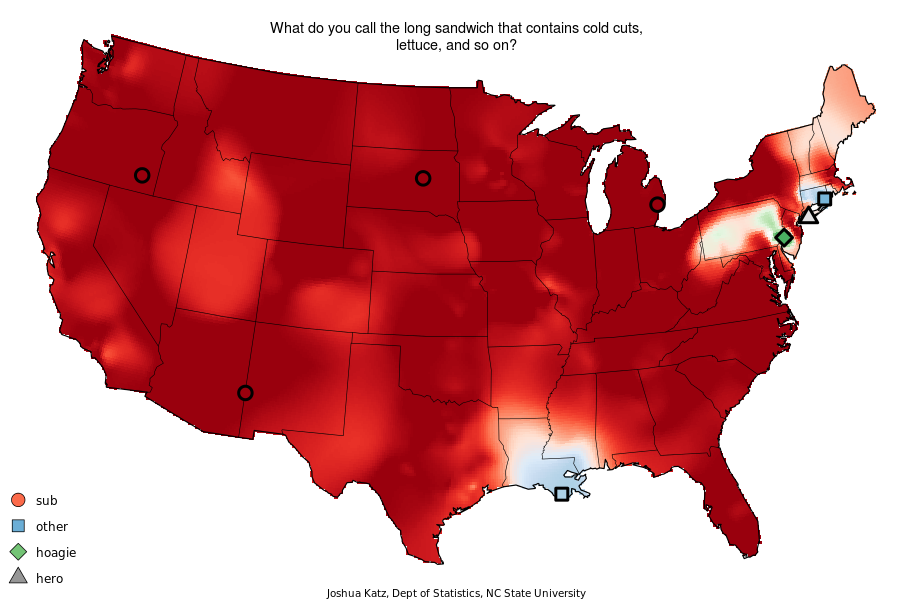
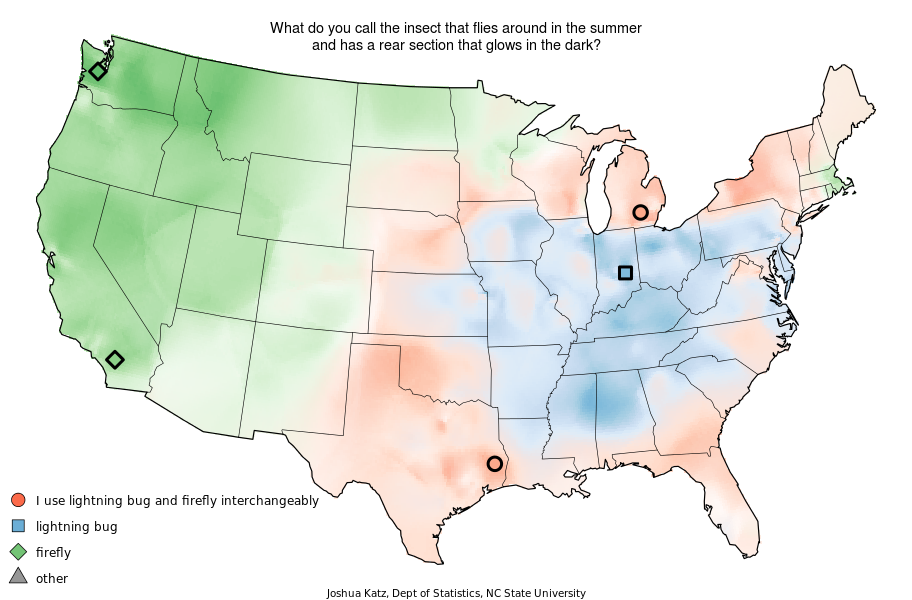
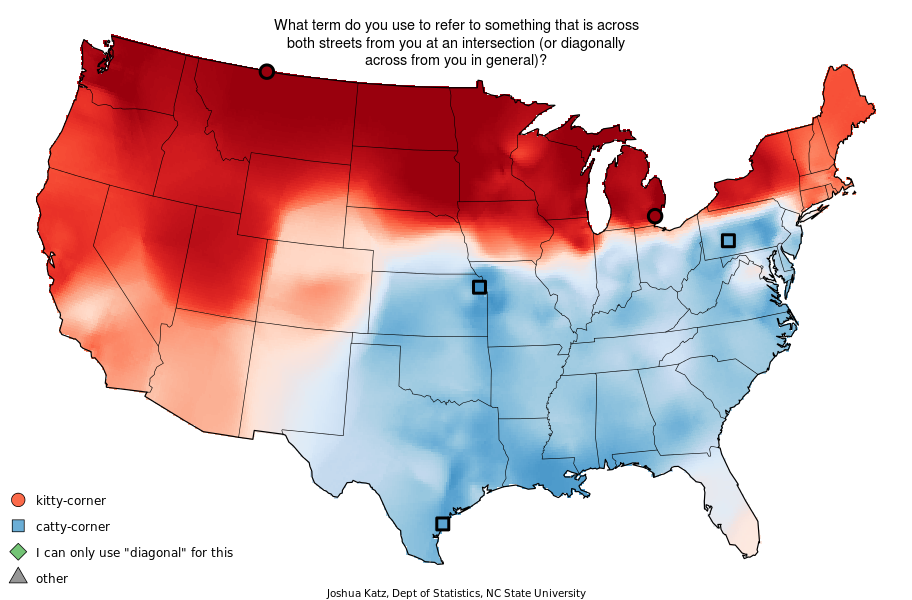
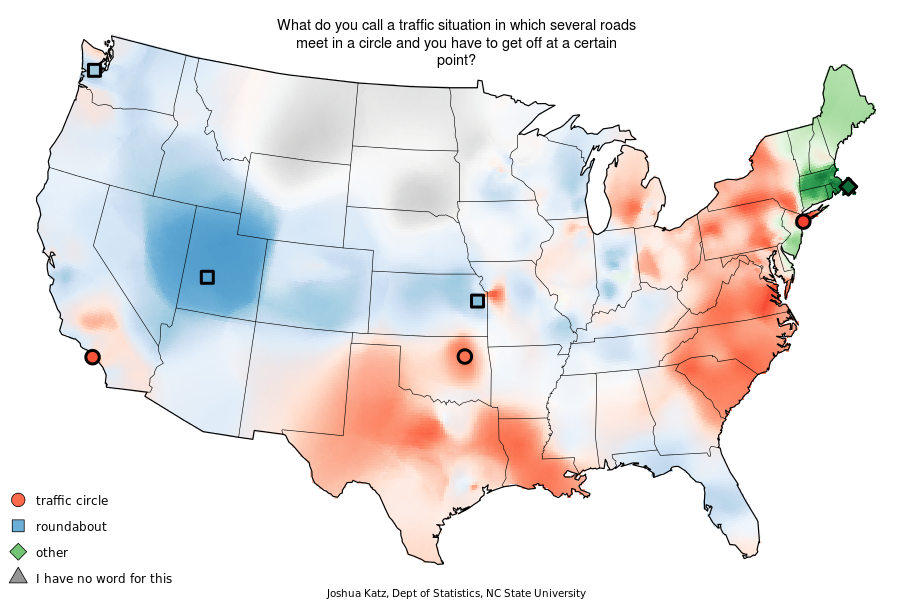
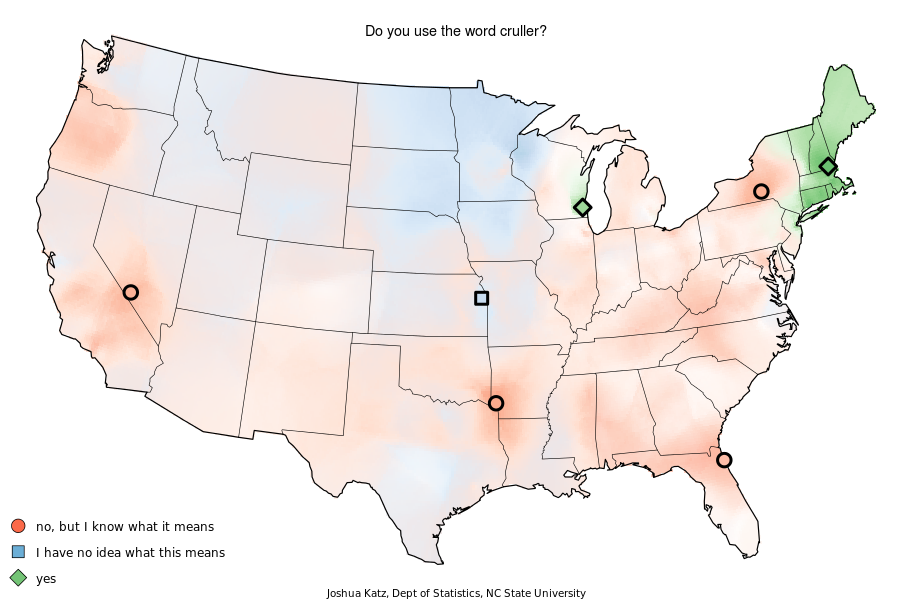
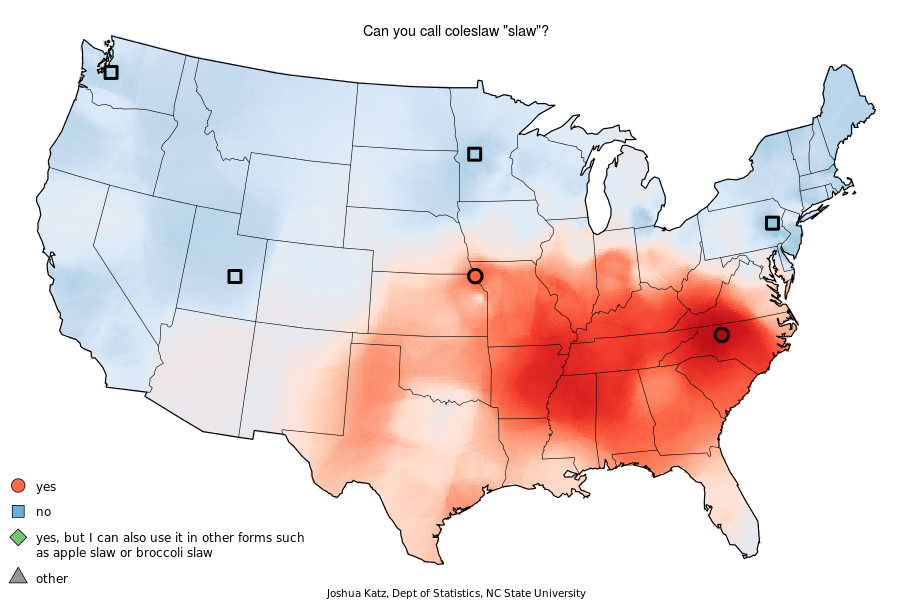
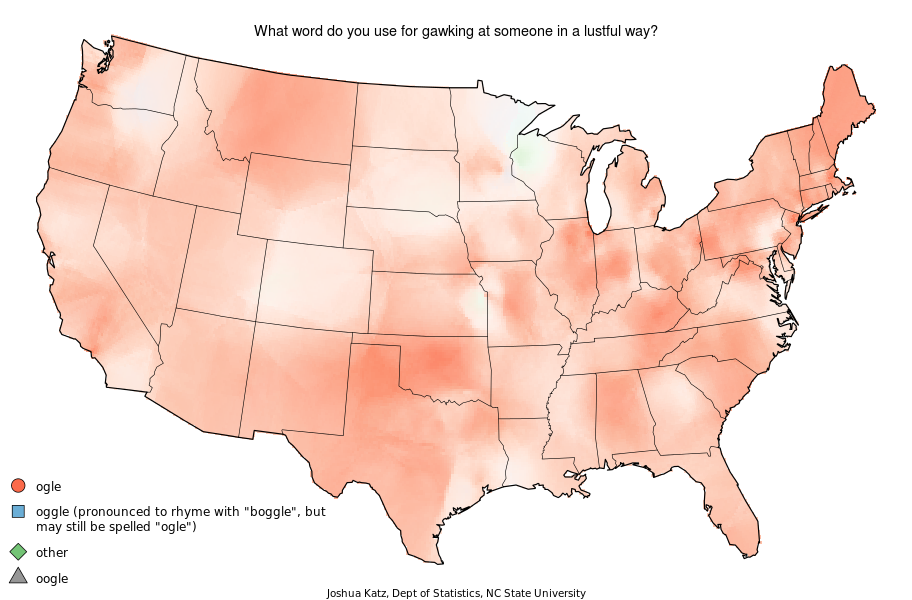
Joshua Katz, at NC State University's Department of Statistics, compiled a series of simple, striking maps that visualize the words Americans use—and where they use them. The data was compiled from a survey conducted by Bert Vaux at the University of Cambridge. Below are just a few to whet your appetite for the full set of 122.


09 Oct 23:05

CODE keyboard

by Rob Beschizza
"We couldn’t find a simple, clean, beautiful mechanical keyboard that we truly loved," write Weyman Kwong of WASD Keyboards and Jeff “Coding Horror” Atwood, " So we created the CODE keyboard. "

Ultra-rare Cherry MX Clear mechanical keyswitches are the heart of the CODE keyboard. These switches are unique in the Cherry line because they combine solid actuation force with quiet, non-click activation, and a nice tactile bump on every keystroke. These hard to find switches deliver a superior typing experience over cheap rubber dome keyboards – without deafening your neighbors in the process. We know you live and die by keyboard shortcuts. We do too. On the CODE keyboard, up to six keys can be pressed at once, which is known as 6-Key USB Rollover. Furthermore, Ctrl, Alt, and Shift do not count towards these six keys, making it possible to to hold up to nine keys simultaneously – sufficient for even the most arcane keyboard shortcuts.

It's LED backlit, gamer-friendly, convertible to alternative keyboard layouts (e.g. Dvorak and OS X), has 5-way cable routing channels on the underside, comes in 104- and 87-key models, and is $150.

CODEMechanical Keyboard (Ships 9/16-9/23) [WASD]

P.S. Another project of Jeff's is, of course, the new open-source forum software Discourse, which powers our own forums here at BB


09 Oct 23:02

Get Lucky in the style of a radio announcer and a lunatic

by Rob Beschizza
09 Oct 22:31

How publishers should learn to stop worrying and love library ebook lending

by Cory Doctorow

My latest Locus column, Libraries and E-books, talks about the raw deal that libraries are currently getting from the big five publishers on ebook pricing (libraries pay up to five times retail for their ebooks, and are additionally burdened with the requirement to use expensive, proprietary collection-management tools). I point out that libraries are effectively the last main-street "retailer" of books, and represent a valuable ally for publishing in the age of ebooks, where all the other major players are not just ebook vendors, but ebook publishers as well, and looking to take market-share from the publishers.

Unlike every other channel for e-books, libraries are not the publishers’ competitors. They don’t want to sell devices. They don’t want to win over customers to a particular cloud. They just want readers to read, writers to write, and publishers to sell. They deserve a better deal than they’re getting.

There’s a good case to be made for libraries getting discounts on e-books, rather than paying premiums. For one thing, they’re excellent customers and they make bulk-buys. For another, the e-books that libraries buy stay in their collection forever, unlike print books. When a library downsizes its stock of last-year’s print bestseller, it puts most of its copies in its booksale for a nominal sum, a dollar or two, and often those books end up in the used-book stream, being sold alongside the new books on Amazon at steep discounts, competing for readers’ dollars.

But e-books can’t be sold in the booksale. They don’t ever end up competing with new books – and they never generate revenue for libraries as used books. That is, even when priced at par, e-books make more money for publishers and less money for libraries.

Publishers should be courting libraries as neutral parties and potential allies in the e-book wars. Publishers are in direct competition with e-book companies like Amazon, who publish e-books as well as selling them. But when Amazon sells an e-book, it gets mountains of business intelligence from the transaction: who is buying, where, from which keywords, and with what other books (for starters). What does the publisher get? An aggregate sales figure, 90 days after the fact. Of course Amazon is running circles around the Big Five publishers: the publishers know nothing about their customers, and Amazon knows everything about them.

Libraries and E-books


04 Oct 23:52

How to: Read a scientific research paper and come away smarter

by Maggie Koerth-Baker
Anthropologist Jennifer Raff offers this great guide, aimed at laypersons, that will help you learn more from reading the scientific research papers you find online and prevent you from succumbing to common mistakes that often show up in Internet flame wars. Step 1: Don't rely on the abstract to tell you what's going on — read the introduction first, instead.


04 Oct 23:41

Global NSA fallout: Brazilian government wants to create secure email system to rival Gmail, Hotmail

by Xeni Jardin
After the revelations of broad spying by the NSA, Brazil's government seeks to create a new, surveillance-proof email system that provides citizens an alternative to Gmail and other free web-based services. [HT: Simon Romero]


04 Oct 23:09

Meet the bugs we smoosh to make natural red dye

by Maggie Koerth-Baker

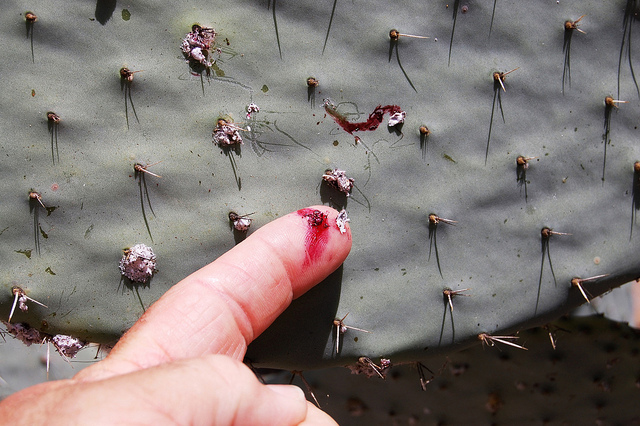
In this photo, you can see some kind of fluffy, white specks on the paddle of a cactus. Those are scale insects, microscopic bugs that like to cover themselves in balls of white wax and nibble on prickly pear. You can also see a fingertip smeared in bright red goo. That's what happens when you squish up scale insects. Humans have been doing this for hundreds of years, using the insects' bodies to create a striking, natural dye.

More commonly known as cochineal, the dye turns up in everything from sausage to yogurt. Typically, you'll hear scale insects described as "beetles". They aren't. And that had given me a totally incorrect mental image of what they looked like, so I thought it would be cool to share a couple of Flickr photos that show the insects in their natural habitat — both in their living and, er, more "processed" forms.

Here's a close-up shot of those white cocoons where scale insects live.

And here's a picture of scale insects ground up by hand into a dye powder. If you want to learn more about traditional Mexican dye-making techniques that use the bugs, there's a lot of good info in a travel diary by Amy Butler Greenfield.
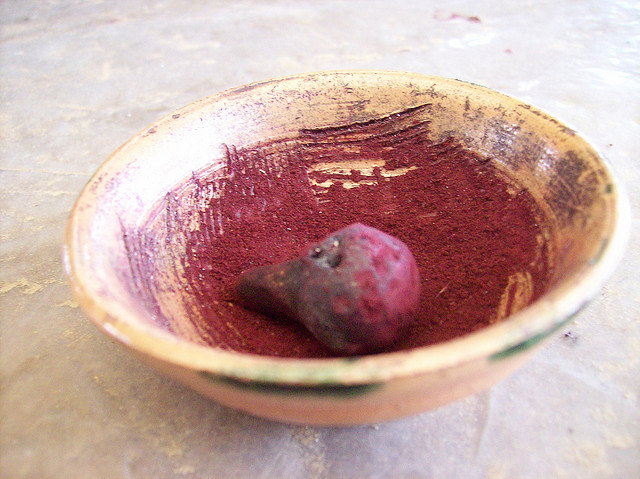
Periodically, somebody freaks out about the presence of smooshed bug in the American food supply and you'll see a flurry of outraged posts on Facebook and Twitter. (That's happened three times that I've noticed since I started writing for BoingBoing in 2009.) Now you know what those bugs look like. Want more? I'd recommend checking out an old post by blogger and entomologist Bug Girl that looks at the history and safety of cochineal dye and offers TONS of great links and further reading.

Image: DSC_3336, a Creative Commons Attribution (2.0) image from mhbishop's photostream

Image: Cochineal Bug larvae. Dactylopius cocchus, a Creative Commons Attribution (2.0) image from gails_pictures's photostream

Image: The Fine Cochineal , a Creative Commons Attribution Share-Alike (2.0) image from madame_furie's photostream


30 Sep 23:22

Psychology research is not a self-help manual

by Maggie Koerth-Baker
Psychology professor Jamil Zaki has a nice post explaining why the findings that come out of experimental psychology should not be taken as lessons to help you lead a better, happier, fuller life. The short version: That data is about population averages, not individuals. The goal is to better understand how the human mind works — not to categorically explain what your mind is doing.


30 Sep 23:18

Lego robot that strips DRM off Kindle books

by Cory Doctorow

Peter Purgathofer, an associate professor at Vienna University of Technology, built a Lego Mindstorms robot that presses "next page" on his Kindle repeatedly while it faces his laptop's webcam. The cam snaps a picture of each screen and saves it to a folder that is automatically processed through an online optical character recognition program. The result is an automated means of redigitizing DRM-crippled ebooks in a clear digital format. It's clunky compared to simply removing the DRM using common software, but unlike those DRM-circumvention tools, this setup does not violate the law.

He says he got the idea for using the Kindle and the Mindstorms kit for something neither were intended for. “It ended being a reflection on the loss of long-established rights when you buy an e-book. You make a copy of that book, but at eye-level, so that the result is not a stack of paper, but another e-book.”

It’s not intended as a statement against e-books, which he loves, he says, but rather what he considers a “dramatic loss of rights for the book owner. “The owner isn’t even an owner anymore but rather a licensee of the book,” he says.

Another thing: He’s only ever scanned one book, and that was just to prove the concept. And he hasn’t shared it anywhere “…since it would get me in deep trouble,” he says.

How a Man in Austria Used Legos to Hack Amazon’s Kindle E-Book Security [Arik Hesseldahl/AllThingsD]

(Thanks, Paul!)


30 Sep 23:16

A beloved Japanese day planner goes global

by Mark Frauenfelder

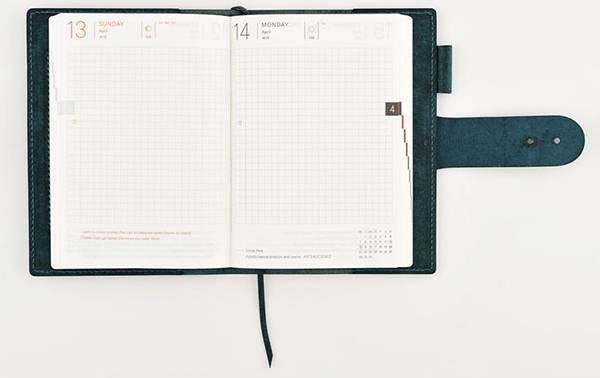
I'd not heard of the Hobonichi Techo day planner until I read this interview with the publisher. An English version is coming out soon and I want one.

[I]n Japan there is one planner that for some years has been gathering a huge following. The Hobonichi Techo. (Techo — pronounced “tetch-oh” — means “handbook”.) One thing that makes it unique is that it is produced by the web media site Hobo Nikkan Itoi Shinbun (or Hobonichi), but more than anything it is the sense of affection and camaraderie it has created amongst its users that has lifted it above the rest: “I use a Hobonichi Techo.” “So do I.” “Me too!” So the conversation goes.

And now, from this autumn, the English version of the Techo, the Hobonichi Planner, is due to go on sale worldwide. Tom Vincent sat down with the editor-in-chief of Hobo Nikkan Itoi Shinbun and the person who created the Hobonichi Techo, Shigesato Itoi, to learn all about how the planner came to be.

Hobonichi Planner going global — PingMag talks to Shigesato Itoi


30 Sep 23:13

The most popular coding fonts

by Rob Beschizza
Slant rounds up the most popular monospace fonts good for cranking code. Adobe's Source Code Pro is top of the pile, but Consolas is only a couple of votes off. My favorite? Orator 10 (not Orator Std), an oldie from the Selectric days. [via HN]


30 Sep 23:11

World's top 10 colleges all in US and UK

by Rob Beschizza

1. MIT
2. Harvard
3. Cambridge
4. University College London
5. Imperial
6. Oxford
7. Stanford
8. Yale
9. Chicago
10. Caltech

Via the BBC.


22 Sep 22:15

Wanted: Jobs for the New 'Lost' Generation

by Admin
|
Ben Casselman
Marcus Walker

Like so many young Americans, Derek Wetherell is stuck.

At 23 years old, he has a job, but not a career, and little prospect for advancement. He has tens of thousands of dollars in student debt, but no college degree. He says he is more likely to move back in with his parents than to buy a home, and he doesn't know what he will do if his car—a 2001 Chrysler Sebring with well over 100,000 miles—breaks down.

read more

22 Sep 22:11

Death of An Adjunct: A Sobering, True Story

by Dan Colman

DuquesneChapel

The Pittsburgh Post-Gazette ran a sad and galling story yesterday about Mary Margaret Vojtko who died of a heart attack at the age of 83. At the time of her death, Daniel Kovalik writes:

She was receiving radiation therapy for the cancer that had just returned to her, she was living nearly homeless because she could not afford the upkeep on her home, which was literally falling in on itself, and now, she explained, she had received another indignity — a letter from Adult Protective Services telling her that someone had referred her case to them saying that she needed assistance in taking care of herself.

Vojtko had ended up in poverty after spending 25 years working as an adjunct professor of French at Duquesne University, a Catholic school located in Pittsburgh, Pa. Until she was terminated last spring, she worked “on a contract basis from semester to semester, with no job security, no benefits and with a salary of between $3,000 and just over $3,500 per three-credit course.” When teaching three classes a semester and two during the summer, Vojtko never earned more than $25,000 a year. (A pittance compared to the pay package of Duquesne’s president — reportedly about $700,000 per year in salary and benefits.) Meanwhile, Duquesne thwarted attempts by adjuncts to unionize, claiming that the school should have a religious exemption.

As Kovalik goes on to note: “Adjuncts now make up well over 50 percent of the faculty at colleges and universities.” And that statistic is bound to increase. You can — and should — read the full story at the Post-Gazette. Read Death of an Adjunct here.

via @stevesilberman

3 comment(s)

22 Sep 21:48

Stephen Hawking backs assisted suicide

by Rob Beschizza
"We don't let animals suffer, so why humans?" [BBC]


22 Sep 21:43

Extreme Puritan baby-naming

by Cory Doctorow


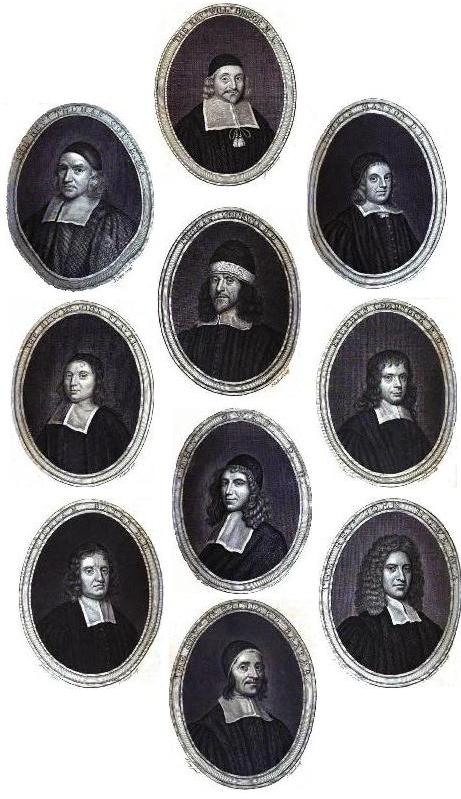
As found in Curiosities of Puritan nomenclature (1888), a collection of Puritan names chosen "to remind the child about sin and pain." My favorite? "Kill-sin Pimple."

20 Puritan Names That Are Utterly Strange

1. Dancell-Dallphebo-Mark-Anthony-Gallery-Cesar. Son of Dancell-Dallphebo-Mark-Anthony-Gallery-Cesar, born 1676.
2. Praise-God. Full name, Praise-God Barebone. The Barebones were a rich source of crazy names. This one was a leather-worker, member of a particularly odd Puritan group and an MP. He gave his name to the Barebones Parliament, which ruled Britain in 1653.
3. If-Christ-had-not-died-for-thee-thou-hadst-been-damned. Praise-God's son, he made a name for himself as an economist. But, for some inexplicable reason, he decided to go by the name Nicolas Barbon.
4. Fear-God. Also a Barebone.
5. Job-raked-out-of-the-ashes
6. Has-descendents
7. Wrestling
8. Fight-the-good-fight-of-faith
9, Fly-fornication
10. Jesus-Christ-came-into-the-world- to-save. Brother of "Damned Barebone". I can only imagine this name shortened to "Save."
11. Thanks
12. What-God-will
13. Joy-in-sorrow. A name attached to many stories of difficult births.
14. Remember
15. Fear-not. His/her surname was "Helly", born 1589.
16. Experience
17. Anger
18. Abuse-not
19. Die-Well. A brother of Farewell Sykes, who died in 1865. We can assume they had rather pessimistic parents.
20. Continent. Continent Walker was born in 1594 in Sussex.

A Boy Named Humiliation: Some Wacky, Cruel, and Bizarre Puritan Names [Joseph Norwood/Slate]

(Image: Gallery of famous Puritans, Wikimedia Commons/Book Academy, Public Domain)


22 Sep 21:40

The history of zits

by Maggie Koerth-Baker

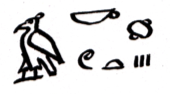
These are the ancient Egyptian hieroglyphs that are thought to refer to acne. They're part of a nifty piece by Hilda Bastian that looks at the history of our understanding about zits — where people thought they came from before we knew about their relationship to hormones and bacteria. And how some of the myths that originated in that pre-scientific understanding still affect our cultural attitudes about acne and the way anti-acne products are marketed to us today.


22 Sep 21:37

'Traces of You,' Anoushka Shankar feat. Norah Jones

by Xeni Jardin
"Traces of You," a pop-meets-tradition melody presented in a trippy kaleidescopic video from Anoushka Shankar's new album. The track features vocals by Norah Jones. Both women are daughters of the late Ravi Shankar. Video directed by Anoushka's husband Joe Wright.

"The video reminds me of Manoj Kumar's films, especially 'Shor' and 'Purab Aur Paschim," says my brother Carl, who is a deejay specializing in South Asian music.


21 Sep 20:40

Do you have what it takes to get in bed with NASA?

by Maggie Koerth-Baker
Are you the kind of person who could lie in bed for 70 days for science? If so, you could make $18,000 in a NASA study of microgravity. The catch (because lying on your back for 70 days wasn't already enough of a catch): The bed will be tilted 6 degrees towards your head, forcing bodily fluids upwards and replicating what happens to your cardiovascular system in microgravity environments.


21 Sep 20:37

Magnets! How do they work to relieve arthritis pain? LOL they don't.

by Xeni Jardin
In the NYT, an item on new research that reveals what many of us grumpy med-skeptics have self-righteously known all along: those copper bracelets and magnets your grandparents and arthritis-suffering friends are suckered into purchasing, to relieve their pain? Total quackery.


18 Sep 19:51

Decapitated copperhead bites self

by Maggie Koerth-Baker

"It finally quit movin' though, now that it bit itself," says our intrepid narrator.

And that, writes wildlife ecologist David Steen, could have something to do with the fact that a decapitated copperhead head can still inject venom. More importantly, if it did, the rest of the snake's body likely wouldn't have any special defense against that venom.

This isn't an area where there has been a lot of research and experimentation (just imagine the required permits!), but snakes do not have special immunity from their own venom. When venom is stored in a snake's body, it is located within specially-evolved glands that can safely contain it. This is the same basic idea that allows us to hold potentially harmful stuff in our appendix or gall bladder. If chemicals escaped from a snake's venom gland (or our appendix or gall bladder), it would be bad news.


18 Sep 19:48

An Animated Map of Europe, 1000 AD to the Present

by EDW Lynch

This animated map shows the ever-changing borders of European nations from 1000 AD to the present. The animation is based on Centennia Historical Atlas, an interactive historical map of Europe and the Middle East by Frank Reed.

via Motherboard

18 Sep 19:42

Vegan Calisthenics Expert Demonstrates His Amazing Superhuman Bodyweight Workout

by Justin Page

Los Angeles-based vegan calisthenics expert Frank Medrano inspires and amazes as he demonstrates his superhuman bodyweight workout. Bodyweight exercises are “strength training exercises that do not require free weights,” but use the resistance from your own body weight.

Here is another video in which Frank exercises alongside his training partner and girlfriend Antoniette Pacheco:

videos via Frank Medrano

via Kotaku

15 Sep 09:07

Utterly Insane Japanese Lighter Commercial

by EDW Lynch

A manic cartoon cigarette lighter dances and sings an alphabet-based jingle (“A B C D E F Jii!”) in this hellish fever dream of a commercial for Jii, a Japanese cigarette lighter. Be forewarned that once you watch it, it cannot be unseen.

via b3ta, Have You Seen This?!

15 Sep 09:01

A Compilation of Weird Japanese Commercials, Part Two

by Kimber Streams
10 Sep 07:05

Hot Ginger Ale by Canada Dry

by Rusty Blazenhoff

Hot Ginger Ale

Canada Dry Hot Ginger Ale is a new carbonated beverage by Coca Cola in Japan which warms up in its own can using technology developed by the company. The drink is a cinnamon and apple-flavored ginger ale and meant for adults. It will be available in Japan starting on October 21st, 2013.

image via Narinari

via Narinari, RocketNews24