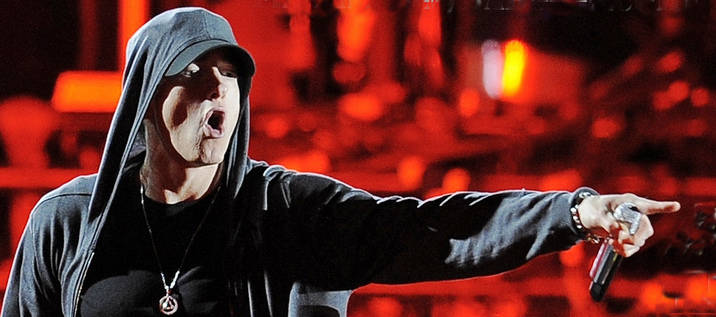
The National Party was instrumental in passing the harsh "strict liability" NZ copyright laws that offer no relief from liability, even for people who buy licenses that turn out to have been offered in error -- as appears to be the case in the National Party campaign ad that used Lose Yourself for bed music.
Read the rest
spriteleigh
Shared posts
18 Sep 01:38

NZ's National Party sued by Eminem for copyright infringement
by Cory Doctorow
18 Sep 01:22
The Best of the Joe Rogan Experience
by RemyCarreiro
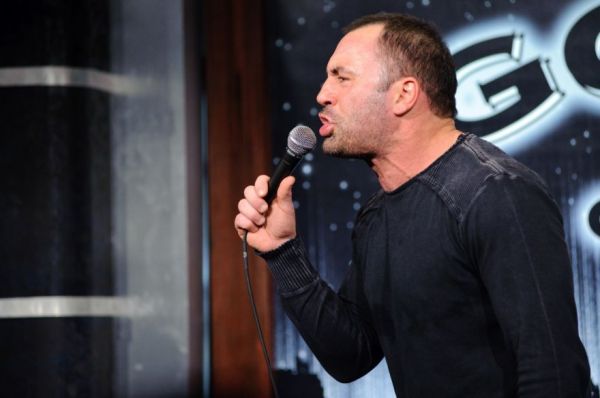
Image Credit: JoeRogan.net
It may have been easy for some people to write off comedian Joe Rogan as a meat head when they first saw him. A ripped guy who seems very manly, and is usually talking with glee about people's bones being broken in the UFC. Truth is, beneath his gruff exterior is a man who knows much, about some very intense and varying subjects. From the positive potential of psychedelics to the idea that we exist within and across multiple dimensions of reality, his Joe Rogan Experience podcast is quite a trippy ride that will open even the most cynical and clouded eyes.
But for those who have never listened before and have no idea just how deep the waters run, Adjust Your Perspective put together this awesome list of then ten best moment from the Joe Rogan Experience. All I ask is if you look at him as some characterization, take a moment to check the list out. Dude really is a genius, and has gift for shifting the way other people think as well. Do your brain a favor and give it a shot. You might just be surprised at how "third eye" opening it really is.
16 Sep 22:35
 Explore and shoot in the infra-red near-darkness of apocalyptic ruins filled with ancient monsters; the surprisingly terrifying GIF above says everything about this 2D, top-down action RPG. There's no demo, but it's very nearly reached its Kickstarter goal--I'll be right on top of it when it comes out next summer.
Noct, a scary, stylish monochrome video game
by Rob Beschizza
Explore and shoot in the infra-red near-darkness of apocalyptic ruins filled with ancient monsters; the surprisingly terrifying GIF above says everything about this 2D, top-down action RPG. There's no demo, but it's very nearly reached its Kickstarter goal--I'll be right on top of it when it comes out next summer.
Vvicked, Jmladenova and 2 others like this
16 Sep 22:35

Podcasting patent holder awarded $1.3m in legal win over CBS
by Rob Beschizza
Personal Audio LLC owns patents related to podcasting—"episodic content transmitted over the internet"—and a jury in Marshall, Texas has let CBS know it.
Read the rest
16 Sep 20:31

Rightscorp cuts-and-runs as soon as it is challenged in court
by Cory Doctorow
 Rightscorp -- a firm that asks ISPs to disconnect you from the Internet unless you pay it money for alleged, unproven copyright infringements -- was finally challenged in court by an ISP, Texas's Grande Communications; as soon as it looked like it would have the legal basis for its business-model examined by a judge, the company cut and ran, withdrawing its threats.
Read the rest
Rightscorp -- a firm that asks ISPs to disconnect you from the Internet unless you pay it money for alleged, unproven copyright infringements -- was finally challenged in court by an ISP, Texas's Grande Communications; as soon as it looked like it would have the legal basis for its business-model examined by a judge, the company cut and ran, withdrawing its threats.
Read the rest
16 Sep 20:26

Giant net-neutrality videoboard at FCC's front doors wants YOUR videos
by Cory Doctorow

Evan from Fight for the Future writes, "Fight for the Future and Namecheap just parked a truck directly across the street from the FCC with a huge video billboard mounted on top facing the agency's main entrance; we're playing net neutrality videos all day today and tomorrow."
Read the rest
16 Sep 11:38
Movie scenes recut from stock footage
by David Pescovitz
Iconic movies and movie scenes recreated using stock footage. My favorite is The Shining, at 22 seconds in. (Thanks, Gil Kaufman!)
16 Sep 11:34

Kevin Weir takes public domain photographs from The Library of Congress and makes them into surreal and sometimes creepy animated gifs. He gives new life to old photos, but it’s not like any life we’ve ever seen. Don’t blink or you’ll miss ..a possible spark for your nightmares tonight. We’ve featured Weir’s works before, but I thought this one was particularly worth sharing. See more of his imaginative gifs at Flux Machine. -via HuffPo
The Ruins
by Miss Cellania
Kevin Weir takes public domain photographs from The Library of Congress and makes them into surreal and sometimes creepy animated gifs. He gives new life to old photos, but it’s not like any life we’ve ever seen. Don’t blink or you’ll miss ..a possible spark for your nightmares tonight. We’ve featured Weir’s works before, but I thought this one was particularly worth sharing. See more of his imaginative gifs at Flux Machine. -via HuffPo
16 Sep 11:33

Kim Dotcom accuses NZ PM Key of conspiring with Warner to extradite him to US
by Cory Doctorow
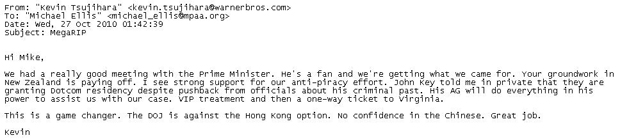
Dotcom claims he has emails between New Zealand Prime Minister John Key and Warner exec Kevin Tsujihara in which Tsujihara explains that Dotcom was followed by private security in Hong Kong and that Key had made the extradition promise to Warner as part of the deal to shoot The Hobbit in NZ (the MPAA, Warner and Key's office all dispute the email's authenticity).
Read the rest
13 Sep 01:42
Why We Love Repetition in Music
by RemyCarreiro
We may all want to pretend we don't like repetition in pop music, but obviously, it works and has worked for decades for a reason. Believe it or not, like many things, there is a science to why music affects us the way it does. Our brains react to repetition by memorizing and retaining, even if we don't want them to. So even if you hate a certain song, notice how after some radio exposure, you still somehow know every word? Guess what? That is repetition winning. Almost like classical conditioning, but with music as a variable.
As in most cases, there are people who can explain this to you far more delicately and accurately than I can, thankfully for both of us.

So even those pop songs that you rally against, too bad. Seems your brain is going to take them in and learn them anyway. It's nice to finally understand the science behind that a little better.
12 Sep 01:10
One Chance Might Be the Bleakest Game You Have (Never) Played
by RemyCarreiro

Image Via AwkwardSilenceGames
One Chance is a game quite unlike any you have ever played online. It is about a scientist who created a pathogen that is inadvertantly wiping out all mankind on Earth. You then have six in-game days to decided how you will spend the rest of your life. Will you stay at the office and do all you can to find a cure? Will you finally step away from the office and spend some time with the family you have been neglecting? Or will the madness and impending doom jusr cause you to lose your mind?
What really sets One Chance apart is that you really only have One Chance to play it. The game picks up on your I.P and unless you have multiple computers with multiple I.P's, you really only do get one chance in One Chance, which is part of what makes it so spectacular.
Quick warning, though. It is also quite bleak, so make those choices carefully. Games like this prove why you don't need sixty dollar video games and next-gen machines to be blown away by the medium.
12 Sep 00:50

Meet the anti-Net Neutrality arms dealers who love network discrimination
by Cory Doctorow
 IBM, Cisco, Intel, and Sandvine make huge bank selling ISPs the networking gear needed to discriminate against online services that haven't paid bribes for access to the "fast lane" -- but it's totally a coincidence that they've told the US government to make sure that the FCC doesn't ban the corrupt practice.
Read the rest
IBM, Cisco, Intel, and Sandvine make huge bank selling ISPs the networking gear needed to discriminate against online services that haven't paid bribes for access to the "fast lane" -- but it's totally a coincidence that they've told the US government to make sure that the FCC doesn't ban the corrupt practice.
Read the rest
10 Sep 22:09

BBC tells Australian govt to treat VPN users as pirates
by Cory Doctorow
 BBC Worldwide, the commercial arm of the UK public broadcaster, has told an Australian government proceeding that people who use VPNs a lot should be assumed to be engaged in piracy, that ISPs should surveil their users, that websites should be censored by Chinese-style national firewalls, and that the families of people accused of watching TV the wrong way should be disconnected from the Internet.
Read the rest
BBC Worldwide, the commercial arm of the UK public broadcaster, has told an Australian government proceeding that people who use VPNs a lot should be assumed to be engaged in piracy, that ISPs should surveil their users, that websites should be censored by Chinese-style national firewalls, and that the families of people accused of watching TV the wrong way should be disconnected from the Internet.
Read the rest
09 Sep 18:55

Amazon vs Hachette is nothing: just WAIT for the audiobook wars!
by Cory Doctorow

In my latest Locus column, Audible, Comixology, Amazon, and Doctorow’s First Law, I unpick the technological forces at work in the fight between Amazon and Hachette, one of the "big five" publishers, whose books have not been normally available through Amazon for months now, as the publisher and the bookseller go to war over the terms on which Amazon will sell books in the future.
Read the rest
Luke.stirling likes this
06 Sep 14:59
Silicon Valley's "most hated patent troll" promises reform
by Rob Beschizza
Intellectual Ventures fired 140 employees from the shakedown beat and is allegedly going to invest in actual products.
06 Sep 14:57
 April 13, 2011 - 8:03pm
The Time John Fogerty Was Sued for Ripping Off John Fogerty
by Ethan
In 1993, former Creedence Clearwater Revival singer John Fogerty found himself at the center of a case being argued before the United States Supreme Court. The country’s highest court wasn’t debating whether Bayou Country or Green River was the superior CCR album. Instead, Fogerty was in the middle of an important, somewhat obscure corner of copyright law.
The seeds for Fogerty’s day in court traced back 23 years to 1970. That April, CCR released the Fogerty-penned “Run Through the Jungle” as a single that would eventually be certified gold by the RIAA. “Run Through the Jungle” is a solid tune, but it didn’t really grab headlines until 1985 when Fogerty released a solo track called “The Old Man Down the Road.”
“The Old Man Down the Road” is a pretty nice song, too; it even cracked the top 10 on the singles charts. One person wasn’t a fan, though. Saul Zaentz, who owned CCR’s old label Fantasy Records, also owned the copyright to “Run Through the Jungle.” Zaentz felt that “The Old Man Down the Road” was simply “Run Through the Jungle” with different words. In other words, John Fogerty had plagiarized a John Fogerty song to which he didn’t own the copyright.
Zaentz felt he had a case, so he sued Forgerty in federal court for copyright infringement.
(It’s worth noting that Zaentz and Fogerty weren’t on the best of terms in the first place. The same 1985 album that featured “The Old Man Down the Road,” Centerfield, also included the tracks “Mr. Greed” and “Zanz Kant Danz.” Critics and fans saw these songs as pointed attacks on Zaentz, and the label head initiated a separate $144 million defamation lawsuit that claimed Fogerty portrayed him as “a thief, robber, adulterer, and murderer.” The two sides settled that suit out of court.)
Defamation aside, was there any merit to the copyright claims? Have a listen and decide for yourself:
"Run Through the Jungle"
“The Old Man Down the Road”
The case ended up before a jury in Federal District Court in San Francisco in late 1988. The two-week trial featured Fogerty taking the witness stand with guitar in hand to explain that yes, the two songs may have sounded somewhat similar, but they were both variations on his signature “swamp rock” style. Simply put, of course two John Fogerty songs sounded the same.
This logic seemed pretty sound to the jury. It only took two hours of deliberation for the jury to determine that the two songs didn’t meet the legal standard of being “substantially similar” that would have constituted copyright infringement. The Fogerty camp let out a collective “huzzah!”
Encore!
The real legal action was just warming up, though. Since Fogerty had successfully defended himself against Fantasy Records’ suit, he sought reimbursement for his attorney’s fees. No dice. If the plaintiff, Fantasy, had been successful in its suit against Fogerty, the label would have been able to seek its lawyer fees from the musician. Since Fogerty had been a prevailing defendant, though, the court ruled that he could only seek fees if he could show that Fantasy’s suit was frivolous or had been made in bad faith. Fantasy’s suit may not have panned out, but it didn’t fit those criteria.
This decision put Fogerty in a sticky spot. Sure, he had won the case, but he was on the hook for $1.09 million in fees for his attorneys and those of his current label, Warner Brothers. Fogerty and his team didn’t think this arrangement was very fair, so they appealed the decision. In 1993 the United States Court of Appeals for the Ninth Circuit shot down that appeal, though, on the same grounds—the original suit had been neither frivolous nor brought in bad faith.
After that failed appeal, Fogerty v. Fantasy – which would be an awesome title for a Fogerty concept record about battling elves, by the way – ended up in front of the Supreme Court. Fogerty’s camp made the same argument: that it made no sense to have a dual standard for plaintiffs and defendants seeking reimbursement for lawyer fees under the Copyright Act of 1976.
In March 1994, the Supreme Court issued a 9-to-0 decision in favor of Fogerty. Chief Justice William H. Rehnquist wrote that there was nothing in the Copyright Act of 1976 that implied that Congress wanted anything other than a level playing field when it came to awarding attorney’s fees to the prevailing party. (Rehnquist also hinted at a bit of Creedence fandom, writing that CCR "has been recognized as one of the greatest American rock and roll groups of all time.")
05 Sep 02:25

Net Neutrality video: don't flush our rights away!
by Cory Doctorow
Teddy from Namecheap domain registrar sez, "Net Neutrality is a super complex issue and we wanted to create a video that makes it a bit more accessible. Don't Flush Our Rights Away is a stop-motion music video with a pretty chill catchy beat. We hope that we can get people to take action and tell their friends how important it is to have a free and open Internet." Read the rest
05 Sep 01:57
Hot Summer Blockbusters 2014 Mashup
by RemyCarreiro
This summer has certainly seen its share of big movies, from Guardians of the Galaxy to Godzilla. Right about now is when movies start to release a little slower and tend to be a little smaller in scope and have its sights set on awards season. But undeniably, summer is the greatest time to see "fun" films. Movies that take us out of our lives for a moment and transport us somewhere fantastic (and sometimes wonderfully absurd).
The Movie Clips Trailer page on YouTube put together a nice little mashup of some of this summer's biggest movies, and squashed it all down to two minutes for easy viewing satisfaction. Keep in mind, if you haven't seen these due to a busy summer, it is like seeing a dozen films in two minutes. Not too shabby. Also, dancing baby Groot for the win.

So what was your favorite movie of the summer? Hit up our comments section and let us know!
05 Sep 01:25

Canada's anti-counterfeiting bill stalled by US demand for removal of humanitarian safeguards
by Cory Doctorow
Michael Geist writes, "Last year, the Canadian government trumpeted anti-counterfeiting legislation as a key priority. The bill raced through the legislative process in the winter and following some minor modifications after committee hearings, seemed set to pass through the House of Commons. Yet after committee approval, the bill suddenly stalled with little movement throughout the spring. Why did a legislative priority with all-party approval seemingly grind to a halt?" Read the rest
05 Sep 01:19

Negativland's "All in Your Head": illegal art about religion, packaged in a Bible
by Cory Doctorow
 The upcoming 2-CD set, the band's first studio album in six years, deals with "monotheism, Christianity,
Islam, Judaism, neuroscience, suicide bombers, 9/11, colas, war, and shaved chimps," and is packaged as CD inserts glued to the inside covers of a "found" copy of the King James Bible.
Read the rest
The upcoming 2-CD set, the band's first studio album in six years, deals with "monotheism, Christianity,
Islam, Judaism, neuroscience, suicide bombers, 9/11, colas, war, and shaved chimps," and is packaged as CD inserts glued to the inside covers of a "found" copy of the King James Bible.
Read the rest
30 Aug 01:29
Not Cool: ALS Association files trademark for Ice Bucket Challenge, but didn't create campaign
by Xeni Jardin
Now that 2014's biggest viral charity campaign has poured nearly $100 million into the ALS Association, greed is setting in. Read the rest
28 Aug 00:53

Open Intellectual Property Casebook: free, superior alternative to $160 textbook
by Cory Doctorow
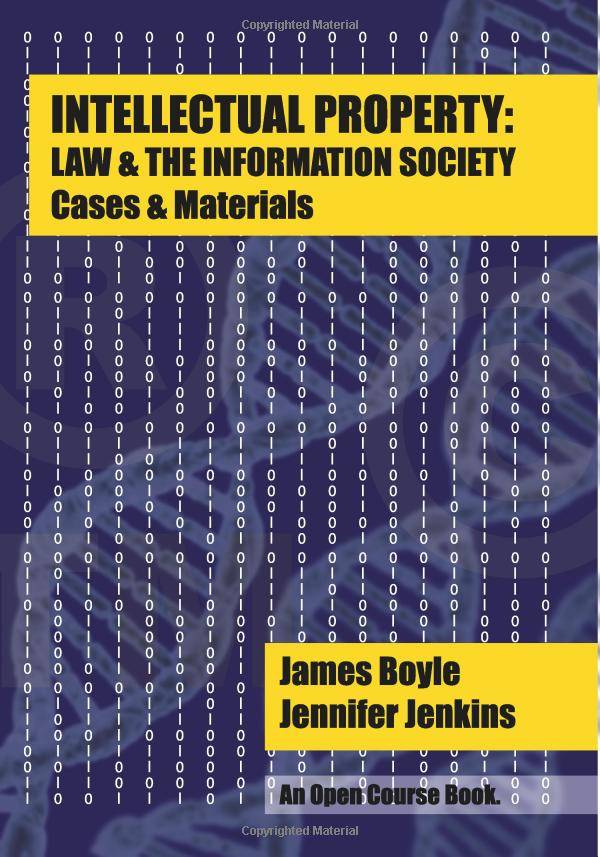
James Boyle and Jennifer Jenkins, eminent copyright scholars at the Duke Center for the Public Domain, have released their 788-page Open Intellectual Property Casebook as a free, open, CC-licensed download, replacing textbooks that normally sell for $160 (you can get a hardcopy is $24); it's not just a cheaper alternative, either -- it's a better one, enlivened with sprightly writing, excellent illustrations (including comics in the vein of Boyle and Jenkins's Bound By Law).
Read the rest
Sam.cone and -1 others like this
28 Aug 00:47
Snappy response to sexist harrasser
by Cory Doctorow
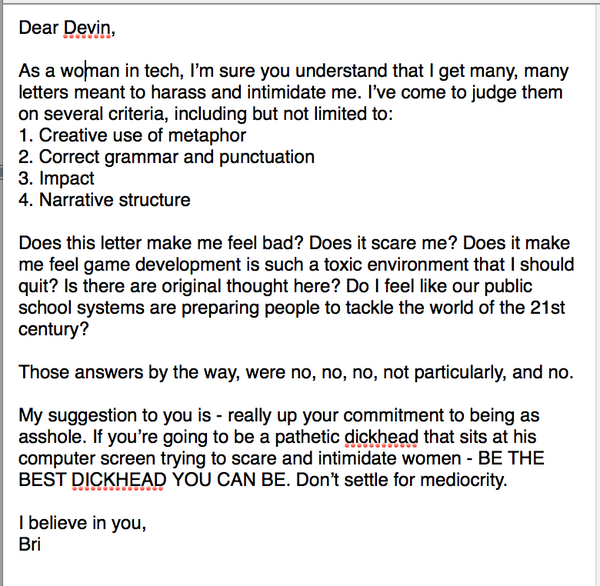
Frank Wu writes, "Brianna Wu is a game developer and a frequent writer about gender issues in tech. As such, she frequently receives harassing, unpleasant emails. She got pissed off and wrote an awesome response to one here."
I got a harassing email today, and decided to respond with this letter.
(Thanks, Frank!)
28 Aug 00:13

City of London Police reject FOIA request for their dealings with copyright lobbyists
by Cory Doctorow
They say they have so much correspondence with the industry, and are apparently so incompetent at searching their own records, that they can't fulfil the request without being unduly burdened, and thus they are not required to comply with the Freedom of Information request. Read the rest
28 Aug 00:09

Copyright troll abuses DMCA in bid to censor his previous life as a troll-fighter
by Cory Doctorow
DC attorney Mike Meier once worked with EFF to fight copyright trolls, whom he called "bill collectors for the movie industry...extorting money" -- now he's joined the trolls as a professional "bill collector," and now he wants evidence of his past life censored and is prepared to send outrageously bogus copyright threats to get his way. Read the rest
27 Aug 23:56

Google Images hacked
by Cory Doctorow
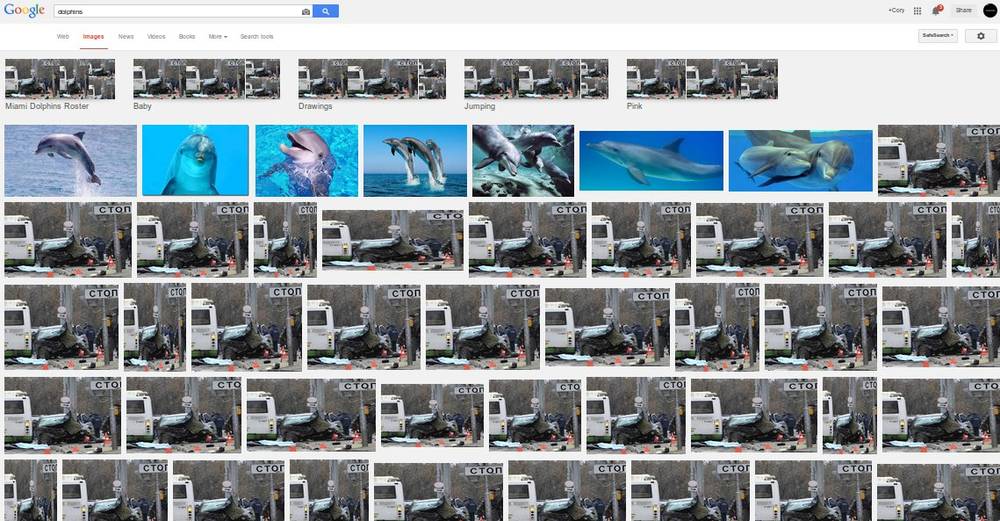
Google's Image Search has apparently been hacked. All queries return a line or two of normal images, followed by thousands of differently-sized versions of the image above, depicting a grisly car-crash ganked from a Ukrainian news site's coverage of the wreck.
Read the rest
27 Aug 23:55

Koch-affiliated astroturfers call Net Neutrality "Marxist"
by Cory Doctorow
 American Commitment, a Koch-brothers-associated fake grassroots group whose previous campaigns include support for Keystone XL and the coal industry, has been circulating an alarmist petition against FCC action to preserve net neutrality, calling it "a Federal Internet takeover," that "sounds more like a story coming out of China or Russia."
Read the rest
American Commitment, a Koch-brothers-associated fake grassroots group whose previous campaigns include support for Keystone XL and the coal industry, has been circulating an alarmist petition against FCC action to preserve net neutrality, calling it "a Federal Internet takeover," that "sounds more like a story coming out of China or Russia."
Read the rest
27 Aug 21:25
Artist Places Modern Magazine Covers over Classic Paintings
by John Farrier
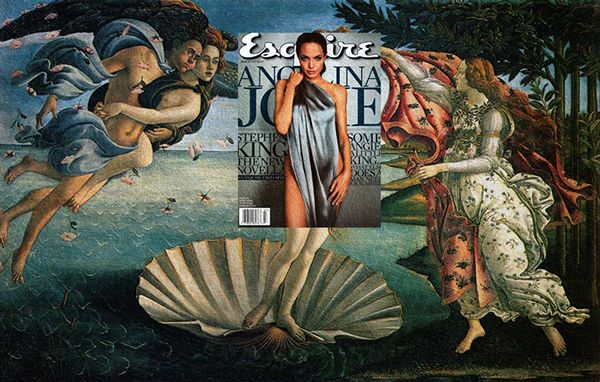
In his most famous painting, Sandro Botticelli showed Angelina Jolie rising from the sea on a half shell. That at least is this interpretation by Eisen Bernard Bernardo, an artist in Los Baños, the Philippines. For his series Mag + Art, he takes photos of celebrities from magazine covers and places them neatly over the images of people in famous works of Western art.
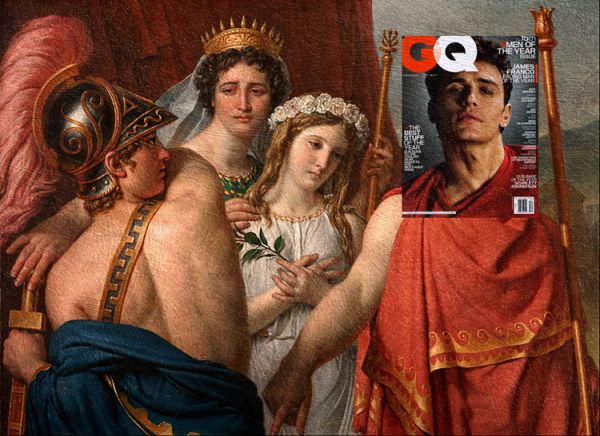

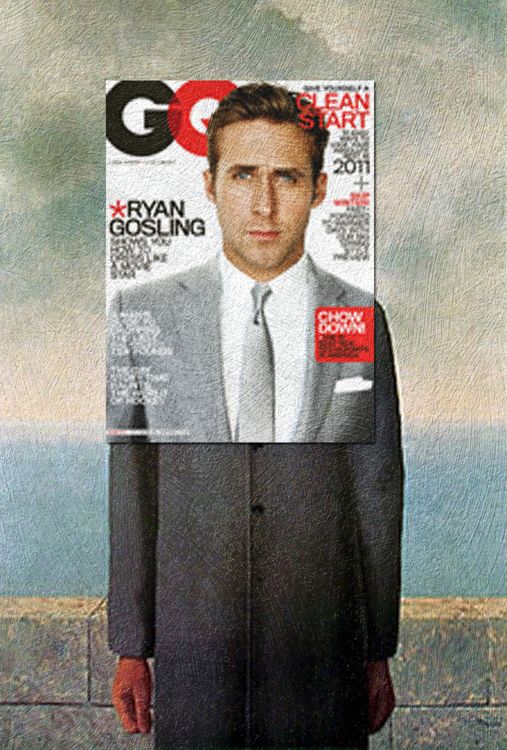
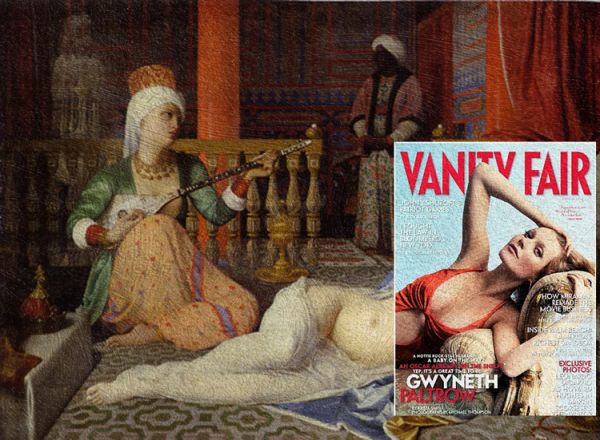
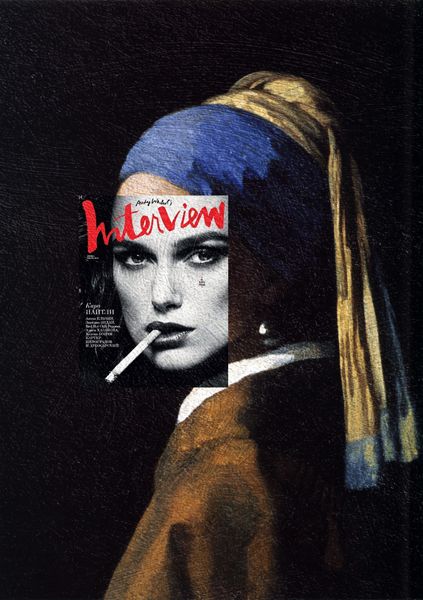
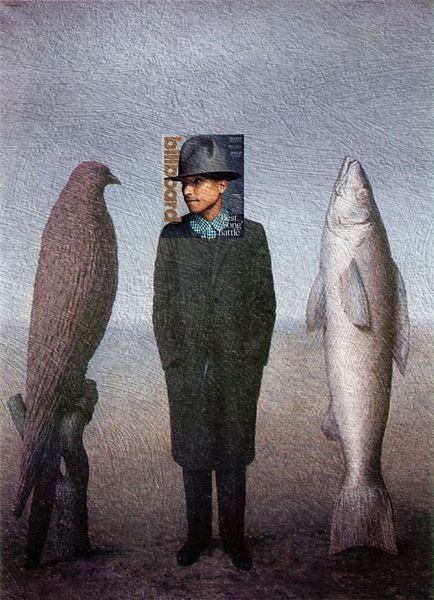
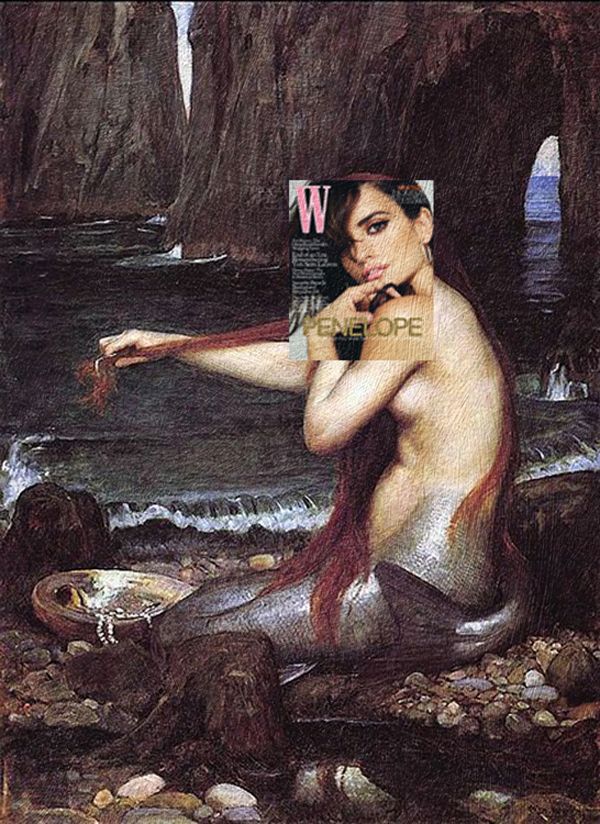
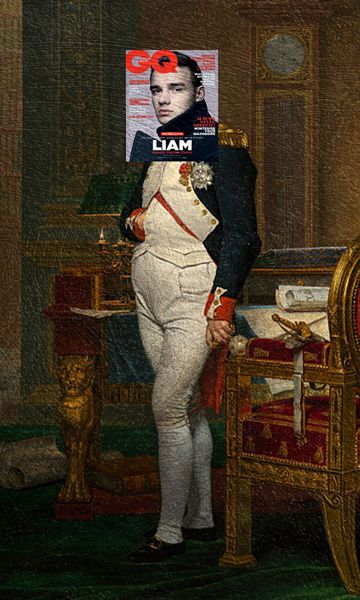
-via Visual News
Corey likes this