Apple and Google both announced today that the companies have each developed fixes to help protect users against the newly revealed 'Freak' security flaw, which affects mobile devices and Mac computers.
Read the restspriteleigh
Shared posts
04 Mar 21:26

Apple, Google plan fixes for 'Freak' security bug resulting from US ban on strong crypto
by Xeni Jardin
04 Mar 21:26
 Matt Novak and James Burke help us understand why we are to terrible at predicting the future Read the rest
James Burke on the coming age of scarce scarcity and abundant abundance
by David McRaney
Matt Novak and James Burke help us understand why we are to terrible at predicting the future Read the rest
Kires, Erectlocution and -1 others like this
04 Mar 21:16

Pulp Fiction 'Say What Again' scene with a baby goat and Samuel L. Jackson
by Xeni Jardin
Goat, motherfucker, do you speak it! (more…)
04 Mar 21:02

Three steps to save ourselves from firmware attacks
by Cory Doctorow

Following on the news that the (likely NSA-affiliated) Equation Group has developed a suite of firmware attacks that target the software embedded in your hard-drive and other subcomponents, it's time to expand the practice of information security to the realm of embedded software.
Read the rest
Luke.stirling, Rschuler likes this
04 Mar 20:40
3DPL: a remix license for 3D printed things
by Cory Doctorow
Joris Peels writes, "We've developed a license for sharing 3D printed things. We think it's important to have a good license that lets people remix, share and create in a 3D printed world. We'd like to ask the maker and 3D printing community to help us by giving us feedback on what about the 3DPL should be changed so we have a broadly accepted license for 3D printing."
04 Mar 20:30

Help the UK Pirate Party write its 2015 election manifesto
by Cory Doctorow
A reader writes: "The UK Pirate Party is launching their 2015 crowdsourced policy platform for their manifesto leading to the 2015 general election." Read the rest
01 Mar 14:52

 February 26, 2015 - 4:31pm
What the FCC's Net Neutrality Decision Means
by Chris Higgins
Today, the Federal Communications Commission (FCC) voted to regulate broadband companies (including wireless companies) in much the same way that landline telephone companies have been regulated for decades. (This is a regulatory scheme known as "Title II" that reclassifies broadband providers as "common carriers." For more on what that means, see our previous coverage or check out what the ACLU has to say.)
For proponents of Net Neutrality, this is a great victory. For deregulators (and broadband companies), this is just the beginning of a series of court challenges and Congressional action that will attempt to overturn (or weaken) the new regulations.
The Short Video Version
If you're not into reading the details, or what the various voters actually said, here's an overview of the issue from Consumer Reports:
Specifically, What Happened Today?
A five-member FCC committee held a vote on whether to implement a new policy to regulate broadband internet providers. The vote was 3-2, split along party lines, with Republicans Michael O'Rielly and Ajut Pai voting against the new policy.
FCC Chairman Tom Wheeler (who voted in favor of the new regulations) said, in part:
The Internet is the most powerful and pervasive platform on the planet. It is simply too important to be left without rules and without a referee on the field. Think about it. The Internet has replaced the functions of the telephone and the post office. The Internet has redefined commerce, and as the outpouring from four million Americans has demonstrated, the Internet is the ultimate vehicle for free expression. The Internet is simply too important to allow broadband providers to be the ones making the rules.
This proposal has been described by one opponent as "a secret plan to regulate the Internet." Nonsense. This is no more a plan to regulate the Internet than the First Amendment is a plan to regulate free speech. They both stand for the same concepts: openness, expression, and an absence of gate keepers telling people what they can do, where they can go, and what they can think.
Commissioner Ajut Pai, one of the dissenting voters, said, "The Internet is not broken. There is no problem for the government to solve." Commissioner Michael O'Rielly, the other dissenting voter, prepared a written statement. He omitted the first two paragraphs of this statement when he spoke during the meeting:
Let me start by issuing apologies. First, I am just sick about what Chairman Wheeler was forced to go through during this process. It was disgraceful to have the Administration overtake the commission’s rulemaking process and dictate an outcome for pure political purposes. It is so disturbing to know that those efforts were about illegitimately pushing a larger political cause mostly unrelated to technology. This administration went so far beyond what has ever been attempted, and its inappropriate interference in the commission’s activities will forever change this institution.
Additionally, I am sorry to the staff members that were forced to prepare a half-baked, illogical, internally inconsistent, and indefensible document. For an institution that prides itself on quality of work and legal and technical expertise, this document is anything but. I guess that an artificial deadline to meet the radical protestors’ demands means that it is more likely that this item gets overturned by the courts because the work and thoughtful analysis needed to actually defend this completely flawed agenda is not included in the text.
Today, a majority of the commission attempts to usurp the authority of Congress by re-writing the Communications Act to suit its own “values” and political ends.
Clearly, there is a strong divide within the FCC about the core issue here.
FCC Chairman Tom Wheeler on February 26, 2015. Photograph by Getty Images.
Does This Change My Broadband Service Today?
No. The full regulations haven't been published yet, and consumers should expect no change, which is kind of the point. Further, the FCC has said it will not seek to regulate the rates consumers pay for broadband, nor impose any new taxes or fees.
What Happens Next?
Long story short, there will be plenty of court challenges. ATT has already talked about what it plans to do, and FCC Chairman Tom Wheeler has said, "We are going to be sued." (Meaning the broadband companies do not wish to be regulated this way, and will certainly sue the FCC in an attempt to stop it.) The issue of Net Neutrality now heads (back) to the courts, and it may take years for the legal framework to be fully settled.
It's also certain that Congress will get involved, with legislation that might accomplish some of the same goals but reduce the FCC's ability to oversee broadband providers. Stay tuned, folks. Meanwhile, the Internet Archive and the Electronic Frontier Foundation are holding a celebration tonight in San Francisco.
01 Mar 14:43

Companies should never try to intercept their users' encrypted traffic
by Cory Doctorow
 Lenovo's disgraceful use of Superfish to compromise its users' security is just the tip of the iceberg: everywhere we look, companies have decided that it's a good idea to sneakily subvert their users' encryption.
Read the rest
Lenovo's disgraceful use of Superfish to compromise its users' security is just the tip of the iceberg: everywhere we look, companies have decided that it's a good idea to sneakily subvert their users' encryption.
Read the rest
01 Mar 14:40

Net Neutrality wins
by Rob Beschizza
In a 3 to 2 party-line vote, the FCC decided today that broadband internet access will be classified as a "telecommunications service under Title II," a utility like telephone service.
Read the rest
01 Mar 14:36
Nerdcore Net Neutrality rap
by Cory Doctorow
Nerdcore rapper Dan Bull recorded this Net Neutrality rap today and crowdsourced an excellent video for it in three hours, with the help of his Twitter friends.
01 Mar 14:02
Youtube is 10 Years Old, so Let's Take a Look Back at All the Viral Hits From the Decade!
24 Feb 02:33

The Tory war on science in Canada: a chronology
by Cory Doctorow
Nine years of cuts; muzzlings; bad science, retaliatory firings, burned libraries, layoffs, closed investigations, censorship, withdrawal from international accords; Read the rest
24 Feb 02:32

EFF: Here's how to fix patents in America
by Cory Doctorow
Two years in the making, Defend Innovation is a whitepaper by Electronic Frontier Foundation attorneys, setting out a program for fixing America's horribly busted patent system. Read the rest
24 Feb 02:17
10 Years of YouTube
by Miss Cellania
 (
(YouTube just celebrated it’s tenth anniversary. The Daily Conversation put together a retrospective of their biggest hits over the years. It begins with YouTube’s very first upload, which hardly anyone saw, but quickly gets to videos you know and love, from cute kittens to the Arab Spring. You’ve seen almost all of them on Neatorama, since this site is coming up on ten years as well. Which one is your favorite? -via Daily of the Day
Corey likes this
21 Feb 19:33

Canada's new surveillance bill eliminates any pretense of privacy
by Cory Doctorow
Michael Geist writes, "Canada's proposed anti-terrorism legislation is currently being debated in the House of Commons, with the government already serving notice that it plans to limit debate. That decision has enormous privacy consequences, since the bill effectively creates a 'total information awareness' approach that represents a radical shift away from our traditional understanding of public sector privacy protection."
Read the rest
21 Feb 19:21
Lenovo pre-installed malware on laptops
by Rob Beschizza
PC maker Lenovo reportedly sold laptops preinstalled with Superfish, a hidden malware package that injects advertising into browser sessions: "it can basically intercept everything and it could be really misused."
21 Feb 18:46

Net neutrality jumbotron to be parked outside FCC: get your message on it!
by Rob Beschizza
Net neutrality advocates StopTheSlowDown want your messages to put on a jumbotron outside the FCC, which will issue a historic ruling on February 26 concerning how the internet works.
Read the rest
21 Feb 18:41

Telegraph's lead political writer resigns because of censorship of criticism of advertisers, especially HSBC
by Cory Doctorow
 Peter Osborne was the head political writer at the Telegraph, a rock-ribbed conservative paper owned by the shadowy Barclay brothers; he quit after seeing the paper soft-pedal and downplay scandals involving its major advertisers, and broke his silence once he learned that the paper had squashed stories of illegal tax-avoidance schemes run by HSBC.
Read the rest
Peter Osborne was the head political writer at the Telegraph, a rock-ribbed conservative paper owned by the shadowy Barclay brothers; he quit after seeing the paper soft-pedal and downplay scandals involving its major advertisers, and broke his silence once he learned that the paper had squashed stories of illegal tax-avoidance schemes run by HSBC.
Read the rest
21 Feb 18:09

Fair use: a guide for artists
by Cory Doctorow
 Pat from American University's Center for Media and Social Impact writes, "Can an artist use images from Facebook in her collage? Can an art teacher show pictures he took at an exhibition in class? Can a museum put a collection online?"
Read the rest
Pat from American University's Center for Media and Social Impact writes, "Can an artist use images from Facebook in her collage? Can an art teacher show pictures he took at an exhibition in class? Can a museum put a collection online?"
Read the rest
21 Feb 18:00

Listen: A chiptunes album by the Ninja Gaiden composer
by Laura Hudson

Keiji Yamagishi, aka the composer of the music for the original Ninja Gaiden, just released a chiptunes album that sounds like an alternate dimension soundtrack to the best NES game that never existed. Listen to Retro-Active Pt. 1 for free here, or download your own copy for $8.
Jvitak likes this
19 Feb 23:44
How to Make Getting Out of Bed in the Morning Easier
by Alan Henry
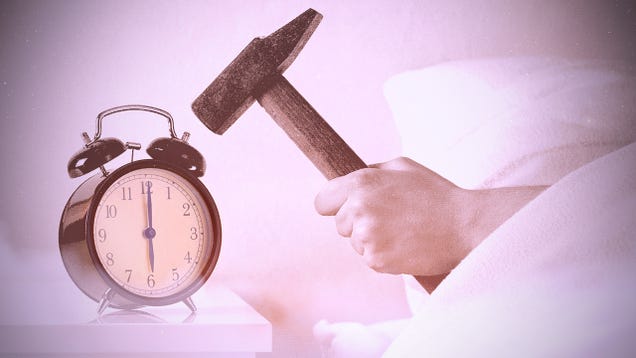
Getting out of bed can be tough. The alarm goes off and for a moment, you just stay in bed, warm and cozy, wishing that you didn't have to move. Of course, we get up anyway, usually because we have to, but it sucks, it's uncomfortable, and sometimes it's painful. Here are some tips to make that moment—getting up—suck less.
15 Feb 00:47
 February 14, 2015 - 5:00pm
Celebrating YouTube’s 10-Year Anniversary With The Most Popular Video From Each Year
by Rebecca OConnell
On an otherwise regular Monday in February 2005, video file sharing website YouTube was launched. At the time, founders Chad Hurley, Steve Chen, and Jawed Karim just wanted to find an easier way to share videos between them and their friends, but YouTube has turned into arguably the most popular video sharing site on the Internet. In honor of its 10th birthday (yes, YouTube was launched on Valentine’s Day!), here are the most popular YouTube videos released each year since.
1. “Touch of Gold” by Nike // 2005
Some of YouTube’s original hits have been taken down and re-uploaded over time, making it hard to exactly figure which ones from which year are the most popular. But this video—originally uploaded in 2005—is a good bet: The Nike commercial, centered on popular soccer star Ronaldinho, was the very first YouTube video to pass one million views.
2. “Evolution of Dance” by Judson Laipply // 2006
A perennial favorite on the viral video circuit, stand up comedian Judson Laipply’s “Evolution of Dance” first hit the video sharing site in 2006, where it quickly became the site’s most popular video. Racking up over 70 million views in just eight months, it was a long-time contender for top dog, and even though it no longer appears on even the top thirty list, it’s a long-time favorite. Laipply released a follow-up in 2009, and he promises a third video is still in the making.
3. “Charlie bit my finger—again!” by Harry and Charlie Davies-Carr // 2007
The only non-music video to break the all-time top ten, the 56-second long video about inter-sibling finger-biting was, at one time, the number one video on the site. Originally posted on May 22, 2007, the video didn’t take the top spot until over two years later, when it pushed “Evolution of Dance” out of the way (perhaps with great grace and style?) in October of 2009. The video is—somehow—still the number five video on the site, and the channel that hosts it has nearly 300,000 subscribers.
4. “An Experiment” // 2008
If aliens came to Earth and wanted to understand viral videos, this is the clip to show them. A 24 second video of what appears to be the Coke and Mentos experiment got over 274 million views and is in the top 150 videos of all time. For comparison, Katy Perry (who we'll be seeing a lot more of in a bit) released "Hot and Cold" in 2008, which has managed a feeble 222 million views.
5. “Bad Romance” by Lady Gaga // 2009
This video—Gaga’s highest entry into the annals of YouTube popularity—was uploaded in November 2009, eventually pulling in over 614 million viewers (it’s currently seventeenth overall). It is also the only video on the site’s 30 most popular videos that is set at a Russian bathhouse and involves its protagonist killing someone, so points to Gaga for always going her own way.
6. “Baby” by Justin Bieber // 2010
Canadian pop sensation Justin Bieber was already well on his way to meteoric superstardom by the time the music video for “Baby” hit the Internet on February 19, 2010. With his debut album “My World 2.0” just a month away from release, the so-called “Beliebers” were already starting to assemble—they just needed something to really get behind. They found it in the bowling alley-set music video, a sweet ode to young teen love, with extra hair-tossing to spare. The video stayed number one on the site for over two years, until yet another pop video—“Gangnam Style”—usurped it, eventually earning nearly double its views.
7. “Party Rock Anthem” by LMFAO // 2011
The club banger earworm of the decade, trussed up with a surprisingly inventive music video. “Party Rock Anthem” the song may be about the good times, but “Party Rock Anthem” the music video somewhat oddly pulls from the horror film 28 Days Later for its inspiration. Party until you … die? Then keep partying? That’s actually the thrust of the entire video, as LMFAO members Redfoo and Sky Blu party so hard that they actually fall into a coma, only to wake up to a world that can only “shuffle” to their own hit single all day, every day. The video was released on March 8, 2011, and though it has yet to break a billion views (it hovers just under the 819 million mark), it’s still the number four most-viewed video on the site.
8. “Gangnam Style” by Psy // 2012
Uploaded in the middle of an otherwise ordinary summer, South Korean pop star Psy’s 2012 music video for his smash hit “Gangnam Style” didn’t set out to change the YouTube landscape, but that’s exactly what the dance-heavy video ended up doing. Not only did “Gangnam Style” become the most popular YouTube video of 2012, it became the most popular YouTube video of all-time. By November 2012, “Gangnam Style” secured the top spot by ousting the previous number one video (Justin Bieber’s “Baby”). By December, it became the first YouTube video to cross the billion-view mark. Two years later, in December of 2014, the video “broke” YouTube’s view counter, which had previously used a 32-bit integer to measure video views. Once “Gangnam Style” crossed 2,147,483,647 views, YouTube was forced to change their view counter to use a 64-bit integer to keep track of its video views.
9. “Roar” by Katy Perry // 2013
YouTube may not be a video-sharing site that exists solely to provide the masses with hot, fresh music videos, but it might as well be. After all, nine of the top ten viewed videos of all time are music vids for various pop songs (with Perry and Psy leading the pack with two each). The most-viewed video of 2013, Perry’s “Roar” is hovering around the 800 million view mark. The video’s popularity was aided by all sorts of teases before it even appeared on the site in September of 2013. Two weeks before release, a 21-second teaser was available online. The day before, Nokia pushed out a two-minute “behind the scenes” look at the jungle-themed video. Sound like a lot of work? Well, it panned out—“Roar” is now the biggest video to come out of 2013 and is just ahead of Psy’s "Gentleman."
10. “Dark Horse” by Katy Perry, featuring Juicy J // 2014
It’s a two-fer for Perry, who not only has the most popular YouTube video from 2013, but also the most popular YouTube video of 2014. First uploaded in February of 2014, the “Dark Horse” video is also third most popular video overall, passing “Party Rock Anthem” yesterday, and trailing “Baby” by 300 million.
14 Feb 21:25


Estonian programmer for Megaupload pleads guilty, sentenced to year in U.S. prison
by Xeni Jardin
Andrus Nõmm
Andrus Nõmm "was aware that copyright-infringing content was stored" on site, according to U.S. prosecutors. The Estonian programmer was today sentenced to a year and one day in prison after pleading guilty to felony copyright infringement. Read the rest
14 Feb 21:15

If dishwashers were Iphones
by Cory Doctorow
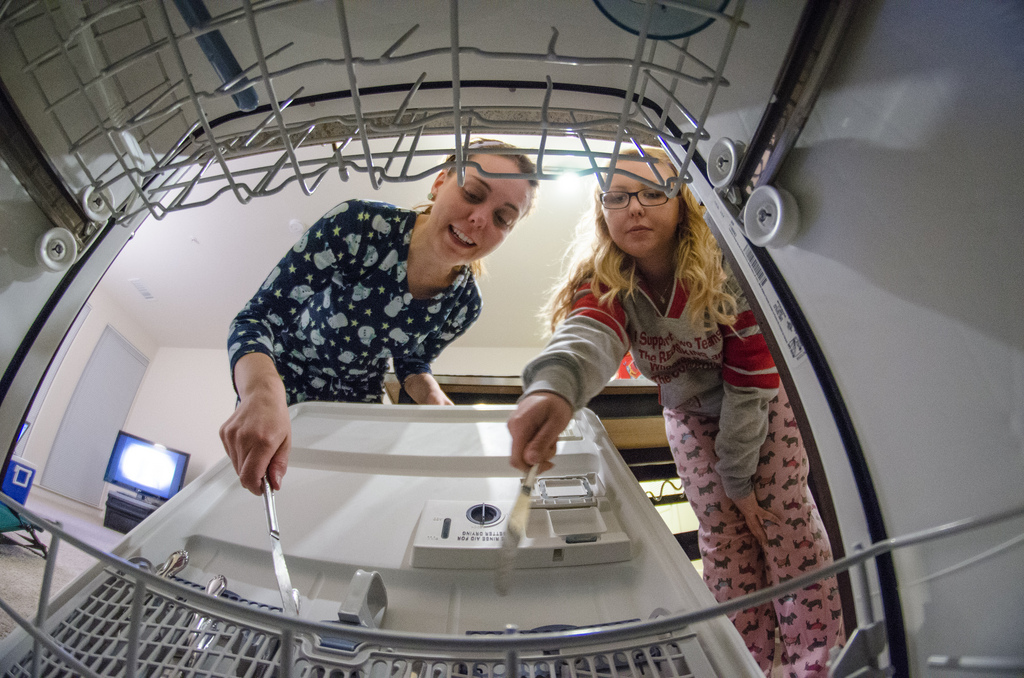
My latest Guardian column is design fiction in the form of an open letter from a dishwasher company whose kitchenware marketplace and Dish Rights Management system is under fire.
Read the rest
14 Feb 20:42
EMI claims it owns copyright to videos of cats purring
by Cory Doctorow
Hugh writes, "YouTube's automated takedown tool is known for its flaws, but this week it crossed a line by attacking a purring cat. According to YouTube's Content-ID system both EMI Publishing and PRS own the rights to a 12 second purring loop. The cat in question, Phantom, has filed a dispute and hopes to reclaim his rights." (Thanks, Hugh!)
Luke.stirling likes this
14 Feb 20:37

How one stupid tweet blew up Justine Sacco’s life
by Mark Frauenfelder
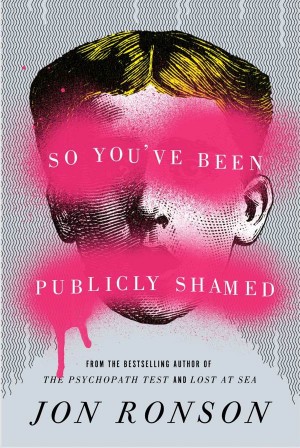 The NY Times Magazine has an excerpt from Jon Ronson's forthcoming book, So You've Been Publicly Shamed. I got an advance copy of the book. It's about people who've had their lives ruined from online shaming.
Read the rest
The NY Times Magazine has an excerpt from Jon Ronson's forthcoming book, So You've Been Publicly Shamed. I got an advance copy of the book. It's about people who've had their lives ruined from online shaming.
Read the rest
Luke.stirling likes this
14 Feb 16:21
 February 11, 2015 - 7:30am
What Is Net Neutrality?
by Chris Higgins
You may have heard that Net Neutrality is in the news again. If you're wondering, "What is Net Neutrality?" or, "Why do I care?" or, "Does this mean my cable bill goes up or down?" we've got answers to (most of) your questions.
What's Net Neutrality? (Explain It To Me Like I'm 10 Years Old)
If you don't like reading things, here's a good video explanation:
Okay, Explain Net Neutrality To Me Like I'm Five Years Old
The internet is a series of tubes.
YouTube has many tubes coming out of it, so the video can get out.
YouTube's tubes go to lots of other big companies like Comcast and Verizon.
Comcast and Verizon have small tubes that come to our house and our neighbors' houses, and hook up to our wifi thingies. That's how the video gets into our house—it goes through tubes from YouTube to Comcast and Verizon, then through little tubes to us.
So let's look at a hypothetical—I mean, uh, "imaginary"—situation.
The trouble is, we watch a lot of YouTube. You know it. Admit it. Okay, it's okay, stop crying. It's not your fault. It's our whole family watching YouTube.
No, see, the trouble is that because we like YouTube so much, Comcast and Verizon might want YouTube to pay them extra money to make sure they keep those tubes flowing nicely so our video keeps coming in. After all, it costs money to keep all those tubes flowing. And they like money.
But what if YouTube doesn't pay up? Then Comcast and Verizon could block those tubes, or maybe slow them down. Then we don't get to watch our John Green videos anymore, or they just buffer...all...the...time. That's bad. And for a long time now, it looks like the U.S. government was going to say that was okay. I know, that's scary!
But let's keep going for a minute. What if YouTube does pay Comcast and Verizon for a nice fast tube? Well, that money has to come from somewhere, so it probably means YouTube puts more ads on the videos. Yeah, I know, there are already a lot of ads. But somebody would have to pay for this, right? Maybe Comcast and Verizon could just charge us more if we want YouTube on our internet. Right now, we just get YouTube because it's part of the internet...but the government has been saying maybe it's okay to let Comcast and Verizon and the other companies change that.
But the scarier thing is, what if Comcast and Verizon decided that they liked Vimeo better than YouTube? What if they bought Vimeo because they liked it so much? And then what if they decided that the Vimeo videos would always flow smoothly, but the YouTube videos would be slow and get stuck in that weird buffering thing? It would be hard for us to watch YouTube. And Vimeo doesn't have very many John Green videos. So we'd probably end up paying extra just to get our YouTube back.
And what if somebody comes out with a new site that's better than YouTube and Vimeo combined? Let's call it FutureTube. How is FutureTube, a startup based in your cousin's garage, going to afford to pay to get videos into the tubes when the big sites are already set up with these special paid pipes that make video flow smoothly? What if the next John Green (we'll call her Jane Blue) starts making all her videos on FutureTube, but Comcast and Verizon don't like FutureTube because FutureTube doesn't have much money yet? That would be bad. Jane Blue would be really blue.
"Net Neutrality" is an idea that should stop all of these bad tube-related things from happening. The idea is, lots of Americans want the government to make strong laws saying that all the tubes should be treated equally, no matter what Comcast or Verizon or YouTube or FutureTube or Vimeo or anybody says. All the tubes should work the same way.
Okay, Knock It Off and Explain It To Me Like I'm a Grownup
So here's the boring truth: "Net Neutrality" is a cool term representing one idea for "How we should regulate Internet Service Providers (ISPs)." That's it. A lot of people cast this debate in terms of freedom, neutrality, equality, free-market competition, and so on—and that's one way to look at it, sure—but it comes down to the details of how the Federal Communications Commission (FCC) is going to regulate (or not regulate) ISPs in the future. To a great extent, we currently have Net Neutrality, so the discussion lately has been mostly about whether we should preserve it, extend it, or remove it (after all, plenty of people are into deregulation). Net Neutrality advocates are mostly saying, "Make it keep working like it does now, but let's please make sure that's legally enforceable."
The explanation of the internet above as a series of tubes isn't technically correct or complete in plenty of ways. For one thing, it's messy sorting out who pays whom in the equation—because consumers pay ISPs for broadband service, and ISPs have peering agreements with each other (basically, shared access to each other's networks, which can be paid), and there are many special cases like Netflix's OpenConnect (a way to put Netflix servers in ISP data centers to reduce the amount of "distance" between streaming server and clients, among other things). To some extent, everybody is paying everybody to make it all work. But we should probably put aside the technical details and just get to the heart of the question: What exactly is the FCC planning to do?
Last Wednesday, FCC Chairman Tom Wheeler said he plans to classify broadband ISPs using the FCC's "Title II authority." This is a big deal. This means that the ISPs can be regulated much like phone companies have been, because the internet is as important to Americans' daily lives as landline phone companies used to be. The Title II regulation of phone companies led to a stable network of interoperating phone systems that worked pretty well. Many geeks feel that when you have the near-monopolies that represent the broadband ISPs in the U.S., regulation is the only way to make them play nice. (Where I live, I have a grand total of two choices for broadband, and one is deadly slow. Um. So I guess I'll stick with the not-slow one?)
(If you're interested in Title II in detail, read this explainer.)
Wheeler's move to embrace Title II (after previously supporting a very different legal scheme) was likely influenced by two very public factors: President Obama supporting it, and literally millions of public comments from geeks (and non-geeks) who responded to stuff like John Oliver's video on the topic, which has been viewed 7.8 million times as of this writing (not to mention all those who saw it on his HBO show Last Week Tonight):
President Obama's video, viewed 0.8 million times, is less compelling, but still:
Does This Mean Net Neutrality Is Here Now?
Yes and no; like I said above, we have a form of Net Neutrality now, but we lack a strong set of laws to enforce it. The big news is that the FCC Chairman and President Obama think Title II regulation is the right way to go. What comes next is a long process of rule-making, probably lots of court cases initiated by broadband providers, and so on. Also, just because Tom Wheeler says a thing doesn't necessarily mean he'll do it—but I'm willing to give him the benefit of the doubt, given the intense public scrutiny on this issue. I mean, John Oliver already called him a dingo (Wheeler was surprisingly cool about that one).
From a geek's perspective, getting national leaders onboard with the concept of Net Neutrality at all is a big deal, and having them specifically adopt Title II is what most geeks have been asking for (by the way, the ISPs hate Title II—and you know when a regulated entity hates a particular regulation, it probably works).
Why Should I Care?
There's a nice visual explanation of why you should care, over at A Guide To the Open Internet.
As you scroll on that site, note all the crappy add-on packages in the "What ISPs Want" section. Does that look familiar to you? It looks just like the junk that comes with my cable internet bill. Do I want to add phone service? How about a security package? How about premium channels? Maybe I'd like a DVR? Or a bundle of everything for just $10 a month (tiny print: price goes up to $200 a month starting in six seconds; two-year contract required)? Nope. I just want internet service, and I want to pay for it like I pay for my phone. I pick a plan from the available providers in my area, I pay a single fee, and then I make phone calls. I don't want my ISP controlling how I use my data, as long as what I'm doing is legal. Seems fair, right?
Will This Reduce My Bills?
In the short term, no, because nothing has actually changed yet. In the long term, maybe, though it's hard to predict.
It's important to remember that this whole issue isn't about reducing costs for consumers; it's about how the internet works in terms of getting information from one point to another. While we have reason to hope that there will be positive side effects like increased competition or increased innovation (like "FutureTube" above), those are not the core reasons to protect how the internet works.
07 Feb 22:48
 February 7, 2015 - 9:00am
The Geometry of a Movie Scene
by Chris Higgins
If you can't afford film school, Tony Zhou's online video series Every Frame a Painting is a good place to start for free.
Zhou presents brief explanations of how films work (often how they work visually) and shows scenes to illustrate his points. In last week's episode, he explored the geometry of staging actors within a scene—the idea is that if actors are doing something onscreen, the director can place them in the "frame" of the screen in a way that demonstrates what's going on visually, adding to what we get from the scene beyond what they say. This is in stark contrast to what director Alfred Hitchcock derided as "photographs of people talking," the visually boring alternative, in which people stand around and talk without doing anything.
If you've got three minutes and any interest in how movies are made, check this out:
And if you're curious about the context of that Hitchcock quote, here's the full 18-minute interview from 1964. (It's fantastic; he also says, "If possible, tell the story visually and let the talk be part of the atmosphere," among other smart thoughts.)
Also highly pertinent: Steven Soderbergh's Raiders of the Lost Ark, an examination of how well Raiders is staged visually, with no need for dialogue or even color.
07 Feb 16:14

Youtube ditches Flash, but it hardly matters
by Cory Doctorow
 A year ago, the news that the world's biggest video site was abandoning proprietary software would have been incredible, but thanks to the World Wide Web Consortium's Netflix-driven DRM work, this changes very little.
Read the rest
A year ago, the news that the world's biggest video site was abandoning proprietary software would have been incredible, but thanks to the World Wide Web Consortium's Netflix-driven DRM work, this changes very little.
Read the rest
07 Feb 15:46
Video: "Hearing Tarantino"
by David Pescovitz
Jacob T. Swinney's supercut celebrates the sounds of Tarantino films.