A couple of years ago I spent a week making panties from my knit scraps. I was on a real knit kick, making everything from dresses, to tanks, to pajamas. I ended up with a huge pile of knit scraps. I was dedicated to the making the most of these unused pieces of fabric. I ordered several yards of plush-back picot elastic.
This is the type of lingerie elastic I was most familiar with, and thus seemed like the obvious choice.I set to work, drafting patterns and planning fabric combinations, by the time my elastic arrived I was more than ready to get started.
In one afternoon I whipped through 4 pairs of underwear. That is when tragedy struck. I was out of elastic. I drove to the nearest fabric store only to find no picot elastic. This wasn’t going to stop me. I grabbed several yards of fold over elastic and 1/4″ braided elastic.
This happy accident led me to experiment with different elastic applications that I would have otherwise not used. I still like to make use of my scrap pieces of knit fabric by making pretty under-things. These are the three elastic techniques that I use regularly.
Picot Edge Elastic
This is the most widely used lingerie elastic, and with good reason. It is so cute! Picot elastic comes in a variety of scalloped and decorative edges. It is also incredibly easy to use.
1) Pin elastic to edge of fabric right sides together, aligning plain edge of elastic with raw edge of fabric.
2) Sew 1/8 away from the decorative edge using a zigzag stitch set at length 2 width 3.
3) Trim excess fabric using small trimming scissors.
4) Fold elastic towards the wrong side of the garment. Topstitch using a 3-step zigzag with a length of 1 and width of 4.
Fold-over Elastic
The results of this technique are both pretty and comfortable to wear. I love using bright colored elastic to liven up a more neutral self fabric. The popularity of fold-over elastic in crafts has made this notion especially easy to get your hands on in recent years.
1) Place fabric and fold over elastic wrong sides together, lining up edge of elastic with the edge of the fabric.
2) Use a zigzag stitch to baste along the innermost edge of the elastic.
3) Trim back any excess fabric on the right side.
4) Fold the elastic along the fold-line towards the right side of garment. Top stitch using a zigzag stitch.
1/4″ Knit Elastic
This is easily the most accessible technique, given the wide availability of woven and braided elastic, but beware, not all elastic is created equally! Check to make sure elastic is not rigid and stiff before purchasing. My local fabric shop carries swimwear elastic that has a high cotton content. This makes the elastic plush and perfectly suited to more delicate purposes.
1) Pin elastic to wrong side of fabric, lining the edge of the elastic up with the raw edge of the fabric. Pin along the length of the elastic for extra control.
2) Baste elastic to the wrong side of fabric using a zigzag stitch.
3) Fold elastic under, towards the wrong side if garment.
4) Topstitch using a zigzag stitch.
I like that now I have a broader arsenal of lingerie elastic techniques. If I hadn’t run out of elastic that fateful day, I would probably have never experimented with different options. Do you have any sewing crutches? Have you ever learned a valuable sewing lesson when you reached passed your comfort zone?
"Scheiße! Divergence in West Germanic faecal vocabulary."
It’s a while since I wrote a proper post here: time has been scarce. To make up for it, here’s a bumper set of links on swearing from around the internet.
A teacher who was suspended for making fun of a curse word in a student’s name has lost her appeal.
‘Fuck de Koning’, and a field day for satirists in the Netherlands.
Swearing at someone on WhatsApp in the UAE (or even sending a middle finger emoji) could get you jailed or heavily fined.
A Porsche owner who parked close to the line has Fuck scratched into it in retaliation. (The news report uses the following terms to avoid fuck: swear word, expletive, a word, the F word, four-letter expletive, not-so-pretty word, and bad words.)
Thanks to all who voted for us in Bab.la’s recent poll – we made the top 25 Language Learning blogs. So if anyone reprimands you for reading Strong Language, tell them it’s damned educational. And for more sweary links, follow @stronglang on Twitter.
A disabled trans lesbian explains how the U.S.'s 'marriage penalty' on disability benefits prices out some of the most vulnerable LGBT people, despite Friday's ruling.
"I did it for all the fierce black women on the front lines of the movement and for all the little black girls who are watching us. I did it because I am free."
'Instead of binge-drinking in short bursts, Americans often imbibed all day long. “Right after the Constitution is ratified, you could see the alcoholic consumption starting to go up,” said Bustard. Over the next four decades, Americans kept drinking steadily more, hitting a peak of 7.1 gallons of pure alcohol per person per year in 1830. By comparison, in 2013, Americans older than 14 each drank an average of 2.34 gallons of pure alcohol—an estimate which measures how much ethanol people consumed, regardless of how strong or weak their drinks were. Although some colonial-era beers might have been even weaker than today's light beers, people drank a lot more of them.'
Early America was a much, much wetter place than it is now, modern frat culture notwithstanding. Instead of binge-drinking in short bursts, Americans often imbibed all day long.
a friend did this; she is brilliant and if you happen to know anyone in boston who can give her a job in public radio or documentary film, seriously get in touch with me, because I want her to move back here for a variety of selfish reasons
After less than a year in the country, Kathem’s mother kicked him out of the house. At age 16, Katham became a foster youth through the Unaccompanied Refugee Minors program, or URM.
Nationwide, there are about 1300 unaccompanied minors in the URM program. About 150 are here in California. These young people are at the intersection of two already overworked systems: refugee resettlement and foster care.
Uber France CEO Thibaud Simphal and Uber Europe GM Pierre-Dimitri Gore-Coty were both taken into custody today in Paris. The police started investigating on Uber in November 2014 and raided Uber’s office in Paris in March 2015.
COLUMBIA, S.C. (AP) — Federal authorities say they are investigating recent fires at predominantly black churches, though the blazes do not appear to be related.
Sirs Ian McKellen and Derek Jacobi were the grand marshals of New York City’s Pride parade this year. Judging by these photos, they clearly had an absolutely miserable time.
See more scenes from Sunday’s celebrations over at The Guardian.
Let us take a moment to remember Princess Gloria von Thurn und Taxis, aka “Princess TNT” - German royalty/punk icon of the 80s. After her husband Johannes (an openly bisexual libertine who scandalized much of Europe with his pranks and sex-positive lifestyle) died, she was left a young uneducated mother of three - with mountains of debt.
She got her act together right quick, learned to invest, and turned things around. She traded on her “punk princess” image, turning her castle into a tourist destination (and source of income). Now middle-aged, she’s become a successful businesswoman and put her wilder days behind her. But the world may never forget “Princess TNT.”
(and on a last note, her birth name is actually, and I’m not making this up: Mariae Gloria Ferdinanda Gerda Charlotte Teutonia Franziska Magarethe Frederike Simone Johanna Joachima Josefine Wilhelmine Huberta Countess of Schönburg in Glauchau and Waldenburg)
"Federal workplaces introduced separate bathroom and eating facilities for African-American employees. But in many cases it was simply not possible to create the physical infrastructure of segregation quickly enough or at all, a fact which lead to bizarre workarounds. According to W.E.B. Du Bois, in workplaces where black employees could not be separated from white employees because of the nature of the work, special cages were built for black employees within white workplaces. Really."
Maria had made the above 3D layered landscape collage a few months ago as a mockup and this was the starting point for the design of this release.
TRS053 comes in two distinct versions as usual. The first limited deluxe version in an edition of just 75 copies comes in the form of a mysterious “shroud” wrapped hardback book cover. We ripped apart some nice clean blank books to use the covers.
Colin took out the pretty mask and spray glued a tight cover for the books.
In each book is a fold open, sewn 3D collaged layered landscape.
This is an ancient Italian book how to run your own Diocese! Its amazing how you can feel the quality of the paper… practically linen!
The 150 year old hand written musical scores I (Maria) had found back in 1999 at a Paris Flea Market. Even the lines are drawn by hand.
The pictorial engravings are from a book on Rome.
Also included in each is a vintage religious medallion, and a factory pressed picture disc on hub.
There is also a lovely digipak version in an edition of 150 copies with collages we made and scanned.
this post has plenty of sensible ideas in it, but:
"5. DON’T SEW FOR AN EVENT."
we are very different people
Sewing can sometimes feel like a chore, right? I know I’m not the only one that thinks this. I’ve recently had a few conversations with friends where they expressed that pulling out their sewing machine and getting to work seems like such a big task. I totally get it! Up until last year, when I decided to really focus on my sewing, I dreaded sitting down to my machine. I have no idea why! I loved sewing and hated sewing at the same time. Over the course of the year, I made a few changes with my sewing habits and found that I loved sewing again! I look forward to any moment I can sit down with my machine. Here’s my tips for how to love sewing:
1. YOUR SEAM RIPPER IS YOUR FRIEND, NOT YOUR ENEMY. Often times, when we use our seam rippers, we think it’s because we messed up. This needs to stop! When you pull out your seam ripper, think to your self. “I can do better, so I’m going to try this again.” When you watch a toddler learn to walk, and they fall down over and over again after a few steps, you applaud them, you don’t get mad at them. Give yourself the same encouragement with sewing! Sure, you may mess up over and over again, but don’t get frustrated with yourself! Keep going, grab the seam ripper, and be nice to yourself.
2. WHEN YOUR PATIENCE LEAVES THE ROOM, LEAVE WITH IT. I can’t tell you how many times, I’ve been working on a sewing project, got frustrated, continued sewing, and messed up what I was working on. As soon as you feel yourself growing impatient, stop sewing. Take a break then go back when you’re up for it again.
3. ACCEPT AND APPRECIATE IMPERFECTIONS. It doesn’t matter how hard I try, every single item I’ve made so far has not been perfect. It’s impossible to make a perfect garment, and it’s okay! Instead of noticing all the things that you “messed up,” take note of the things you’ve done well. Appreciate the small skills that you’re improving on: notice that you sewed the buttons on straighter than you ever have before, appreciate that the first time you tried to match up the fabric pattern along the seam lines didn’t turn out half bad. Sure, the zipper may be wavy, but you think you know why and can work on that on your next project.4. ONLY SEW WHAT YOU WANT TO SEW. I used to see other bloggers posting about the clothes they made for their kids and feel bad that I wasn’t doing the same. Currently, I only sew for myself. For a long time it made me feel selfish. I finally realized, that sewing what I wanted to sew wasn’t selfish. Sewing what I wanted and not feeling bad about it has really helped me to love sewing again. It’s a treat for me and not mean to my child that I don’t sew for him. I do plenty to show him that he is loved, I don’t have to sew for him to show it. Now that I love sewing again, I’m kinda itching to sew some things up for my little guy, like some superhero capes or a few bow ties. Funny how that all works out.
5. DON’T SEW FOR AN EVENT. Say you have a big work party coming up, and you think to yourself, “I should make a new dress for it!” Great idea! Until the party is tomorrow night, all you’ve done is cut out your fabric, and you find yourself in a panic. So now you stay up all night, swearing at your sewing machine, and hastily sewing this dress together only to have it not turn out the way you wanted it to. In the end, you decide to not wear your handmade dress, then panic about what you’re really going to wear, and just end up wearing something you already own but aren’t completely satisfied with. Ugh. This all makes for a horrible sewing experience. Here’s my tip: Don’t sew for events. But sometime sewing for an event is fun, you say. So here’s part two of this tip: Make your handmade dress your backup plan. Start by picking out an outfit for your party out of your closet that you already love. Plan on wearing it. Now, start making your handmade dress. You know that no matter what happens, you will go to the party looking amazing. You will not be rushed to make your dress and it will have less mistakes and will turn out much better. On the night of your party, if your dress in complete, wear it! If not, wear the outfit your picked out first.
6. SEW FOR FIFTEEN MINUTES A DAY UNTIL YOU LOVE IT! If you’re really struggling to get in the sewing groove, set aside fifteen minutes everyday to sit down at your sewing machine. Set a timer, turn on your favorite CD, sew until the timer goes off, then be done. After some time, you will find yourself looking forward to those fifteen minutes, and when the timer goes off, you’ll be sad your time is up. Slowly, you will find yourself loving the time you’ve spent sewing and look forward to it everyday.
7. STOP COMPARING YOURSELF TO OTHER SEWERS! There will always be someone that sews better than you. Always. It’s only going to bring negative feelings if you compare yourself to someone that’s more skilled that you. So stop it. The people who you compare yourself to are better than your for two reasons. First, they have been sewing longer than you. After you put in your time, you’ll be as skilled as they are. Second, they have developed skills that make sewing easier for them to pick up. For example, I’m not athletic and I don’t participate in sports. I have a sister that is athletic. If both of us try volleyball for the first time together, she’s going to pick it up much quicker than I will because she’s done things similar and her muscle memory will help her be good at volleyball. But if we both try knitting for the first time together, I will probably get the hang of it more quickly. Now, does this mean that I shouldn’t try volleyball, that my sister should give up on knitting, or that you shouldn’t try to push yourself to improve your sewing skills? Of course not! We all just may have to try a little harder, but the reward of finally getting down something that is really hard will be so much sweeter.
There you have it! My tips for how to love sewing! I hope this helps you get your sewing mojo going. What have you done to learn to love sewing? Are there any tips you would add to the list?
Yesterday, I wrote that a Black president singing “Amazing Grace” at a Black church on national TV was the Blackest thing that has ever happened. I said it passed peak Blackness and entered gravitational time dilation Blackness. Dark matter, event horizon Blackness. Undiscovered dimension Blackness, redefining our understanding of how Black Blackness could be.
A woman identified as Bree Newsome was arrested Saturday after climbing the flagpole at the South Carolina Statehouse in Columbia, S.C., about 6:30 a.m. and removing the Confederate flag, Rashad Robinson, executive director of ColorOfChange.org, said in a statement.
JSC discussions on the Fast Track proposal from ALA to add the term “transgender” to the RDA Gender vocabulary have identified the need to review the treatment of personal data in RDA. The broader issues will be discussed more substantively at the the JSC’s meeting in November 2015. Following JSC policy, the ALA proposal must be withheld from the Fast Track process for the next release of RDA Toolkit.
The JSC will discuss the impact of recommending a specific vocabulary for the element in RDA Toolkit on the international, cultural heritage, and linked data communities that are the focus of the future strategy for the development of RDA. At the same time, the RDA Development Team is interested in the need for extensions and refinements of RDA vocabularies for “local” communities, and would be keen to collaborate with ALA in using its requirements as a case study to inform the JSC. This would also build on the updates made to the RDA Registry to accommodate the RDA/ONIX Framework. The JSC would welcome a report on these topics before the middle of October 2015. It would be useful if the report considered issues of vocabulary management as well as content.
The Oxford English Dictionary is a historical dictionary, which means that when its editors add a phrase such as hot mess to their reference—as they did this week—they add every definition of the word they can find. The editors are like detectives, following phrases back to times when Anglo-Saxons were jabbering about peasants and overlords.
The quarterly update reveals that in the 1800s, for instance, a “hot mess” was a warm meal, particularly one served to a group like troops. In the 1900s, people used hot mess to refer to a difficult or uncomfortable situation. And in the 2000s, one used it to refer to Amy Schumer (or, as they put it, something or someone in extreme confusion or disorder).
Twerk, another new addition, might have been made famous by Miley Cyrus and a foam finger in 2013, but the editors traced its meaning back to 1820, when twirk referred to a twisting or jerking movement. The precise origin of the word is uncertain, the editors say, but it may be a blend of twist or twitch and jerk. Their definition: “To dance to popular music in a sexually provocative manner, using thrusting movements of the bottom and hips while in a low, squatting stance.”
Here is a selection from the hundreds of words OED just added to its ranks, along with the earliest known usage and context provided by TIME.
autotune (v., 1997): to alter or correct the pitch of (a musical or vocal performance) using an auto-tune device, software, etc. The word has meant “to tune automatically” since 1958, when people were tuning radio transmitters rather than hilarious local news interviews.
backronym (n., 1983): a contrived explanation of an existing word’s origin, positing it as an acronym. When some guy tries to say that golf is an acronym of “gentlemen only, ladies forbidden,” that is a backronym (and clever nonsense). It more likely comes from the Dutch word kolf, which describes a stick used in sports.
boiler room (n., 1892): a place used as a center of operations for an election campaign, especially a room equipped for teams of volunteers to make telephone calls soliciting support for a party or candidate. This phrase has been used to describe an actual room that contains boilers, as on a steamship, since 1820.
bridge-and-tunnel (adj., 1977): of or designating a person from the outer boroughs or suburbs of a city, typically characterized as unsophisticated or unfashionable. The phrase was first used by Manhattanites to describe people they thought unworthy of their island.
cisgender (adj., 1999): designating someone whose sense of personal identity corresponds to the sex and gender assigned to him or her at birth. This word exists to serve as an equal and complement to transgender. You can read all about it here.
FLOTUS (n., 1983): the First Lady of the United States. This is a true acronym, which appears to have been first applied to Nancy Reagan.
fo’ shizzle (phr., 2001): in the language of rap and hip-hop this means “for sure.” Shizzle,as a euphemism for sh-t, dates back to the ’90s. One can also be “the shizzle,” which is the best or most popular thing.
half-ass (v., 1954): to perform (an action or task) poorly or incompetently; to do (something) in a desultory or half-hearted manner. One can also insult someone by calling them an “ass,” referring to the horse-like creature who has appeared in stories as the type who is clumsy or stupid since the time of the Greeks.
koozie (n., 1982): an insulating sleeve that fits over a beverage can or bottle to keep it cold. Fun fact: that little cardboard thing one slips around a cup of coffee to keep it from burning one’s hand is known as a zarf.
Masshole (n., 1989): term of contempt for a native or inhabitant of the state of Massachusetts. This is what is known as a blended word, which Lewis Carroll called portmanteaus, naming them after a suitcase that unfolds into two equal parts.
sext (n., 2001): a sexually explicit or suggestive message or image sent electronically, typically using a mobile phone. Back in the 1500s, when someone referred to a “sext,” they were talking about a Christian worship ritual that involved chanting around midday.
stanky (adj., 1972): having a strong (usually unpleasant) smell. The OED editors offer the comparison to skanky, which means unattractive or offensive, as well as janky, which refers to something that is untrustworthy or of poor quality.
"a film potentially titled Defense Of Marriage and probably written by Tony Kushner"
WASHINGTON—Shortly after turning in dissenting opinions in landmark federal rulings today that struck down the Defense of Marriage Act and conferred full federal benefits to married same-sex couples, Supreme Court justices Antonin Scalia, Clarence Thomas, John G. Roberts, and Samuel Alito reportedly realized today that they would someday be portrayed as villains in an Oscar-winning film about the fight for marriage equality. “Oh, God, the major social ramifications, the political intrigue, all the important people involved in the case—I’m going to be played by some sinister character actor in a drama with tons of award buzz, aren’t I?” said Scalia, joining his fellow dissenting justices in realizing they would be antagonists in a film potentially titled Defense Of Marriage and probably written by Tony Kushner. “I’m going to be portrayed as a closed-minded Neanderthal and the very symbol of backward thinking. And at the end of the movie, when my character realizes he’s on the wrong side of history, the audience will feel emotionally fulfilled because the hero attorney, probably played by George fucking Clooney, will have won. Great.” While they added that they aren’t looking forward to being vilified on screen, Scalia, Roberts, Alito, and Thomas all agreed that the movie would probably be pretty good, and that they could see Paul Dano getting his first Academy Award nomination for his supporting role as a gay rights crusader.
As you likely know by now, the Supreme Court has voted 6-3 to reject a challenge to the Affordable Care Act a.k.a. Obamacare, over a strong dissent by Justice Scalia. The opinion in King v. Burwell involves important issues of federalism, separation of powers, and statutory interpretation, but most importantly it is the first time the phrases "pure applesauce" and "jiggery-pokery" have been used in any Supreme Court opinion.
What's that? You're more interested in federalism? Wow, are you in the wrong place.
The use of "pure applesauce" to mean "nonsense," as Scalia uses it, was new to me but does show up in the Google Books database. A completely unscientific eyeballing of those results suggests it was most popular, if "popular" is the right word, during the last century. In this biography of P.G. Wodehouse, for example, the author mentions it as an example of the "Pooterish Edwardian slang" Wodehouse used in the 1910 book Psmith in the City, along with "perfect rot" and "give me the pip" (to irritate). In 1970, Time magazine described an author as "a colloidal suspension of William Buckley, William Blake and Herbert Marcuse in pure applesauce," which was not at all a compliment, but in the last few decades "pure applesauce" has generally been used to mean just pure applesauce.
So, I don't know who had a problem with applesauce to begin with, but there is literary precedent for Scalia's use of the term in this way. But it hasn't been used in a U.S. court opinion, so far as I can tell.
"Jiggery-pokery" is slightly more common. It's actually listed in the Oxford English Dictionary, defined as a colloquial term (originally Scottish) for "deceitful or dishonest manipulation; hocus-pocus, humbug." It shows up in just one other U.S. opinion (according to Google Scholar), which not too surprisingly was written by Judge Selya of the First Circuit. That's not too surprising because Judge Selya, though a perfectly good judge otherwise, seems to have a form of Tourette's that forces him to use the most arcane terms he can possibly find.
In the same opinion where he uses "jiggery-pokery," for example—just in this one opinion—he uses "eschatocol," "exegetic," "peregrination," "imbrication," "anent" (x2), "independentista" (x3), "spavined," "underbrace," "asseverate," and "jeremiad." He has said he does this to make his opinions more "interesting," but personally I think that's pure applesauce and it gives me the pip. Legal writing is hard enough to read without sending people to the dictionary every other paragraph.
"Jiggery-pokery" doesn't really require that, of course, but I thought I'd complain anyway.
Also originally Scottish, it turns out, is "argle-bargle," which Scalia used a couple of years ago to describe Justice Kennedy's opinion on the Defense of Marriage Act. SeeUnited States v. Windsor, 133 S. Ct. 2675, 2710 (2013) (Scalia, J., dissenting; criticizing the "disappearing trail of its legalistic argle-bargle"). Here he was on slightly firmer ground: I found three previous uses of that term in case law (and two others after Windsor). Interestingly, all three are in opinions by the same court, the first two written by the same judge (not Selya). See, e.g., Mech v. Hearst Corp., 496 A.2d 1099, 1099 (Md. Ct. App. 1985) (beginning, "This argle-bargle was precipitated by these facts."). The last of the three starts the same way, perhaps in tribute. See Oakhampton Ass'n, Inc. v. Reeve, 637 A.2d 879, 879 (Md. Ct. App. 1994) (noting that the term comes "from the Scotch—argy-bargy, to argue, wrangle, haggle"). The OED confirms that, by the way, as well as the dismissive connotation.
Finally, as you can see from this Google Ngram, none of these terms have been especially prevalent in literature, but their use has been generally declining. I have no idea what caused the spike in "argle-bargle" during the 1990s. Maybe somebody who was using "jiggery-pokery" decided he liked "argle-bargle" instead?
The Globe reports on Mayor Walsh's plans for "an ambitious multimillion-dollar plan to end homelessness among veterans this year and to end chronic homelessness by 2018."


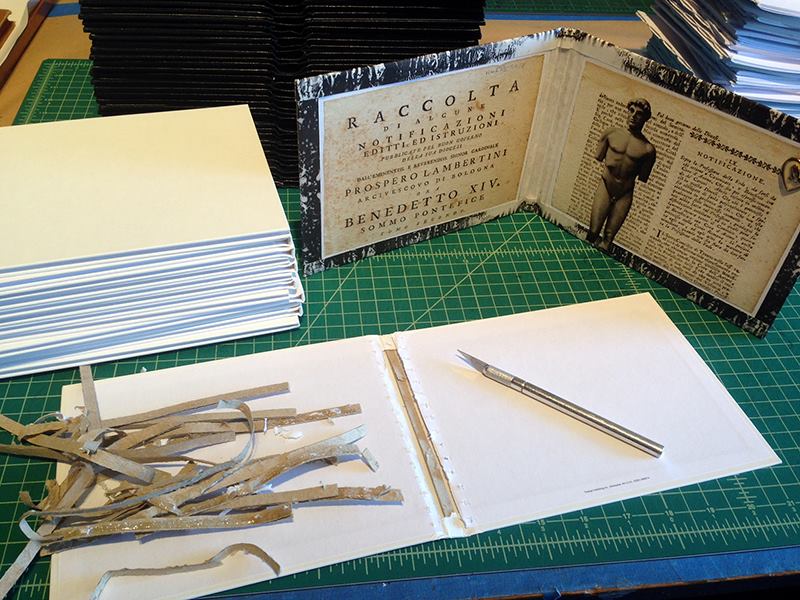 We ripped apart some nice clean blank books to use the covers.
 In each book is a fold open, sewn 3D collaged layered landscape.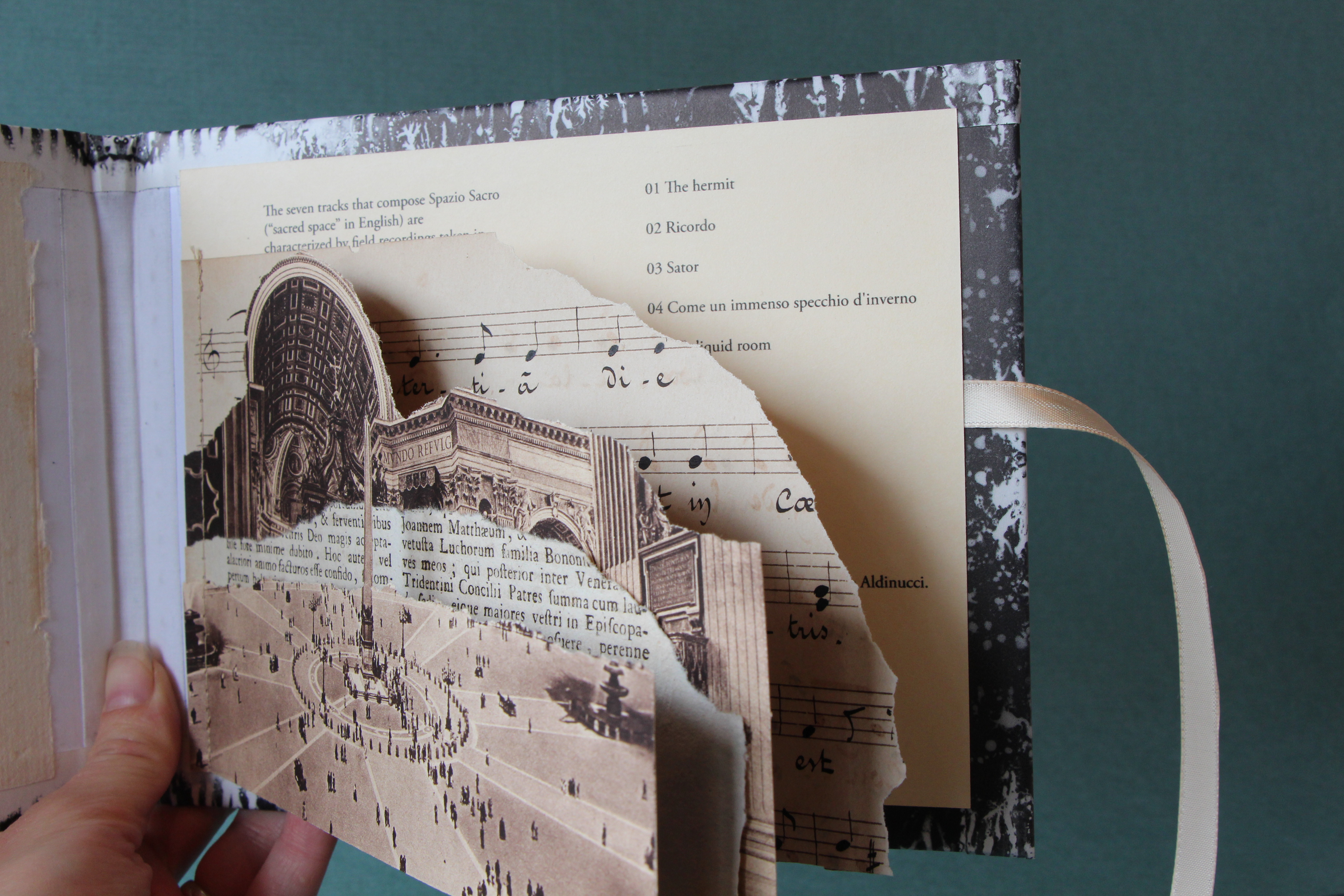
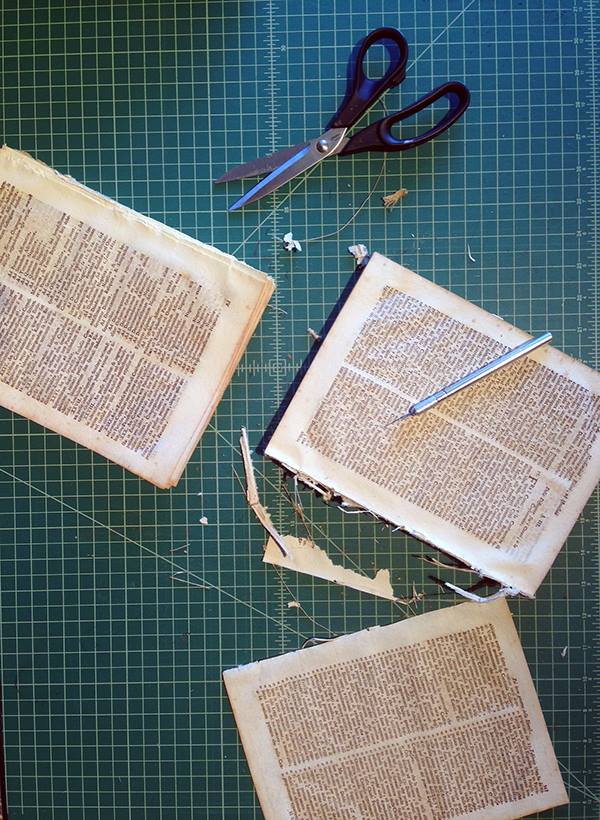 This is an ancient Italian book how to run your own Diocese! Its amazing how you can feel the quality of the paper… practically linen!
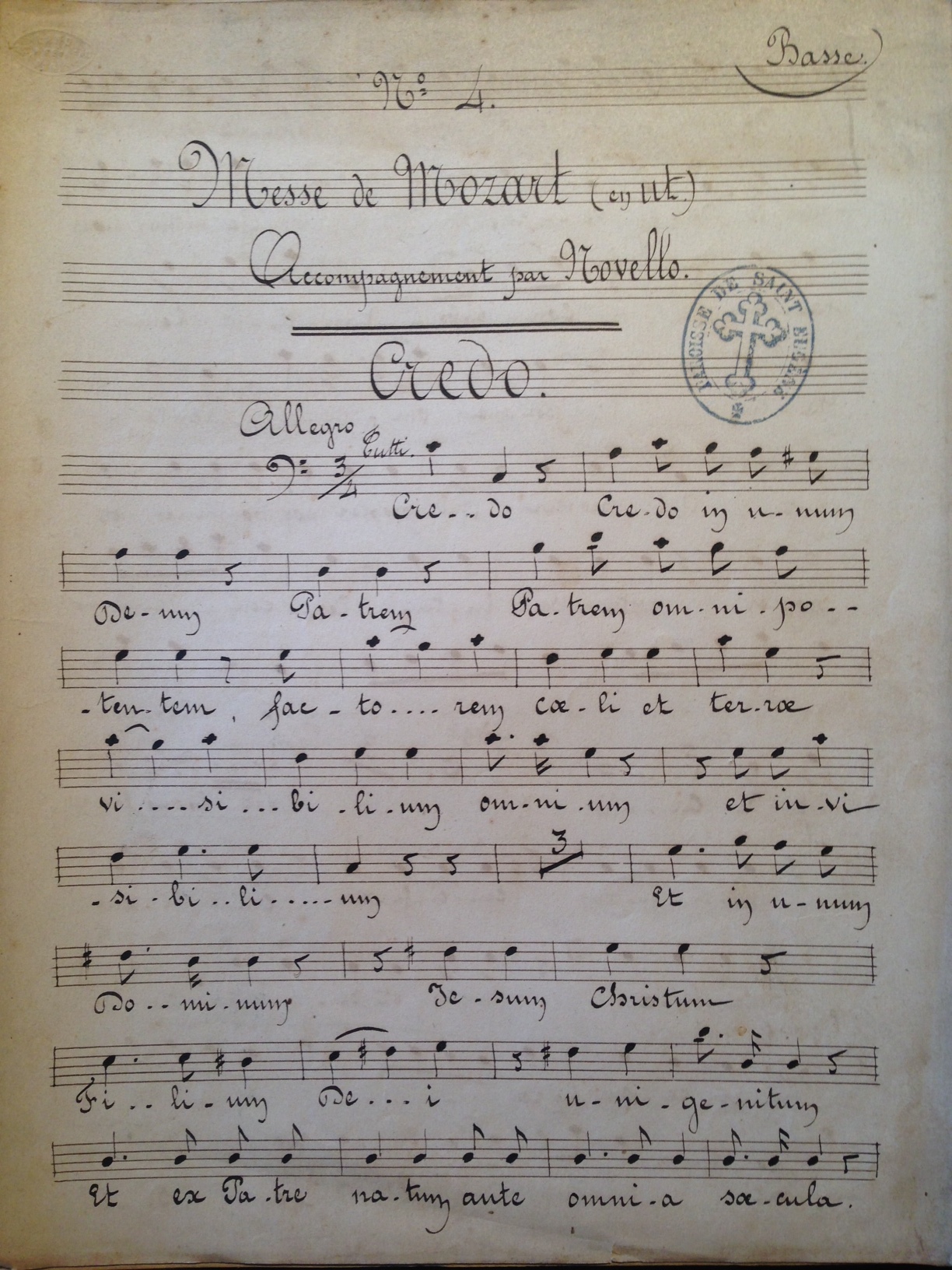 The 150 year old hand written musical scores I (Maria) had found back in 1999 at a Paris Flea Market. Even the lines are drawn by hand.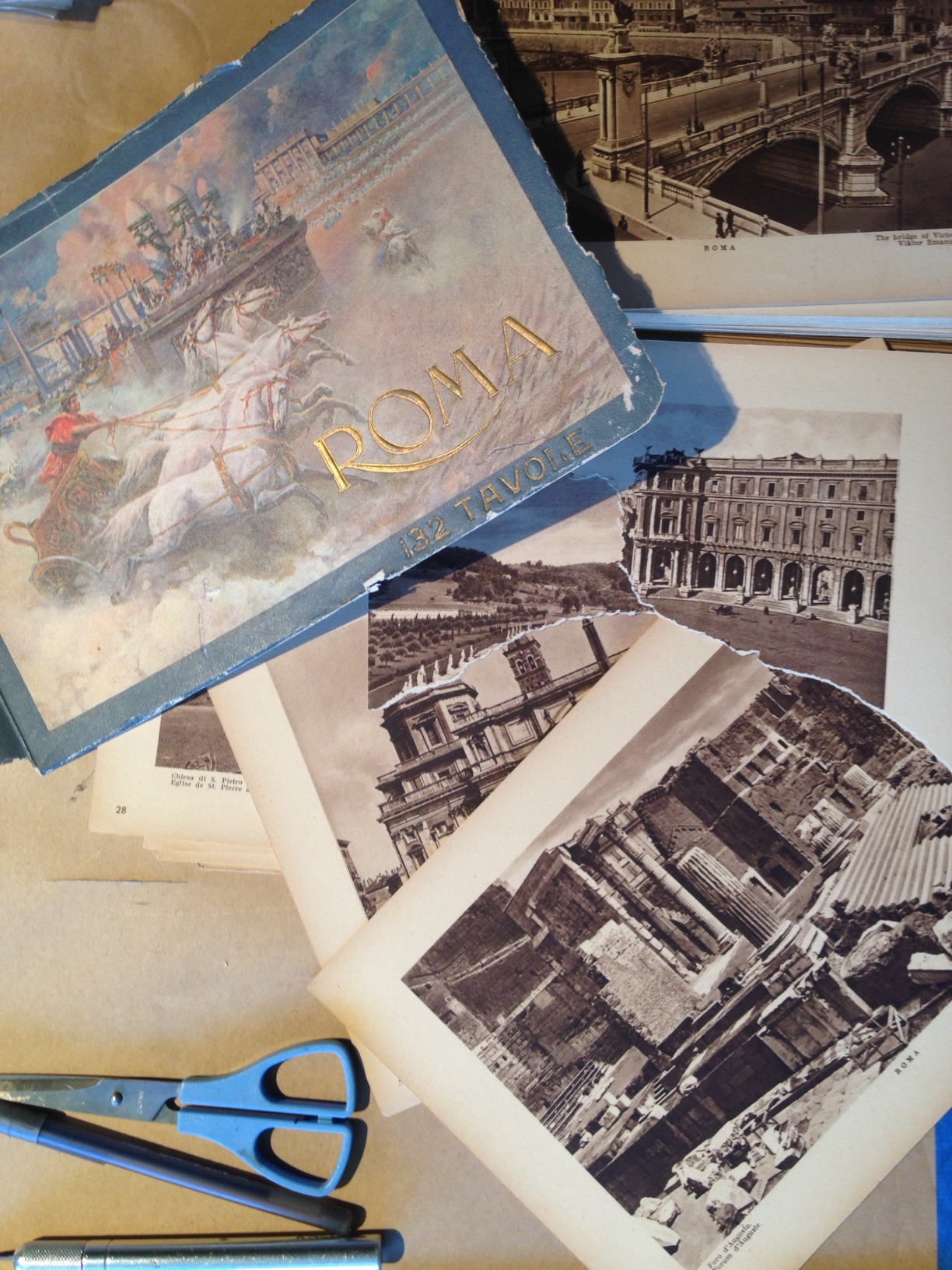

 Sewing can sometimes feel like a chore, right? I know I’m not the only one that thinks this. I’ve recently had a few conversations with friends where they expressed that pulling out their sewing machine and getting to work seems like such a big task. I totally get it! Up until last year, when I decided to really focus on my sewing, I dreaded sitting down to my machine. I have no idea why! I loved sewing and hated sewing at the same time. Over the course of the year, I made a few changes with my sewing habits and found that I loved sewing again! I look forward to any moment I can sit down with my machine. Here’s my tips for how to love sewing:
 4. ONLY SEW WHAT YOU WANT TO SEW. I used to see other bloggers posting about the clothes they made for their kids and feel bad that I wasn’t doing the same. Currently, I only sew for myself. For a long time it made me feel selfish. I finally realized, that sewing what I wanted to sew wasn’t selfish. Sewing what I wanted and not feeling bad about it has really helped me to love sewing again. It’s a treat for me and not mean to my child that I don’t sew for him. I do plenty to show him that he is loved, I don’t have to sew for him to show it. Now that I love sewing again, I’m kinda itching to sew some things up for my little guy, like some superhero capes or a few bow ties. Funny how that all works out.


