Riccardo Sapienza
Shared posts
[Report] On-chip noninterference angular momentum multiplexing of broadband light
Semiconductor nanowire lasers
Semiconductor nanowire lasers
Nature Reviews Materials, Published online: 4 May 2016; doi:10.1038/natrevmats.2016.28
Recent research into semiconductor nanowire lasers has resulted in the advent of new materials, a broader wavelength selection and effective electrical pumping schemes, thereby bringing these nanoscale lasers much closer to application in fields like communications, computing, sensing and imaging.
How IBM’s new five-qubit universal quantum computer works
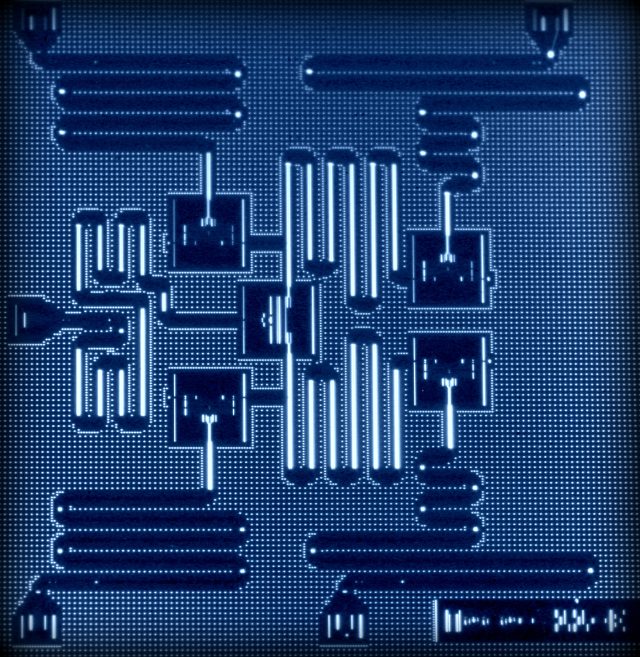
The five qubits in IBM's quantum computer. (credit: IBM)
In the wee hours of Wednesday morning, IBM gave an unwary world its first publicly accessible quantum computer. You might be worried that you can tear up your passwords and throw away your encryption, for all is now lost. However, it's probably a bit early to call time on the world as we know it. You see, the whole computer is just five bits.
This might sound like some kind of publicity stunt; maybe it's IBM's way of clawing some attention back from D-Wave's quantum computing efforts. But a careful look shows that serious science undergirds the announcement.
The IBM system is, on a very superficial level, similar to D-Wave's. Both systems use superconducting quantum interference devices as qubits (quantum bits). But the similarity ends there. As IBM emphasizes, its quantum computer is a universal quantum computer—which D-Wave's is not.
Conical Diffraction and Composite Lieb Bosons in Photonic Lattices
Author(s): Falko Diebel, Daniel Leykam, Sebastian Kroesen, Cornelia Denz, and Anton S. Desyatnikov
An array of optical waveguides bestows light waves with three spin-like states, which are observable in cone- and vortex-shaped diffraction patterns.

[Phys. Rev. Lett. 116, 183902] Published Wed May 04, 2016
Nanostructure-based plasmon-enhanced Raman spectroscopy for surface analysis of materials
Nanostructure-based plasmon-enhanced Raman spectroscopy for surface analysis of materials
Nature Reviews Materials, Published online: 26 April 2016; doi:10.1038/natrevmats.2016.21
Assisted by rationally designed novel plasmonic nanostructures, surface-enhanced Raman spectroscopy has presented a new generation of analytical tools (that is, tip-enhanced Raman spectroscopy and shell-isolated nanoparticle-enhanced Raman spectroscopy) with an extremely high surface sensitivity, spatial resolution and broad application for materials science and technology.
Super-Dispersive Off-Axis Meta-Lenses for Compact High Resolution Spectroscopy

Il Governo non ha capito a cosa servono i Dottorati
Riceviamo e pubblichiamo da Gherardo Vita, dottorando in Fisica al MIT
“Il governo si prepara a stanziare oltre 16 milioni di euro per un programma di inserimento nel mondo del lavoro di chi è in possesso di un PhD, ossia un dottorato di ricerca.
Già questo da solo dovrebbe far ridere. O piangere. Detta in breve per chi non lo sapesse, il PhD è il livello più alto di formazione che una persona possa ottenere e si ottiene dopo una laurea e un master. Dopo il PhD tipicamente la metà si dedica full-time a fare ricerca in enti o università (academia), mentre l’altra metà entra nel mondo del lavoro.
Vista l’altissimo livello di formazione e il numero tutto sommato limitato di coloro che detengono un PhD, essi sono merce pregiatissima per le aziende. Infatti di solito li strapagano.
Gli stipendi variano molto da settore a settore, ma in generale negli Stati Uniti uno con un PhD al primo impiego in azienda guadagna in media più di 80.000$ l’anno, cifre che aumentano notevolmente fino a più che raddoppiare se si va nei settori più richiesti (computer science, finance, economics e consulting) e/o si esce da università prestigiose.
Ad esempio lo stipendo medio al primo impiego di uno che ha preso un phd in informatica ad MIT nel 2014 era di 140.000$, 215.000$ per quelli di matematica. (dati qui)
Cose analoghe ci sono anche senza andare oltre oceano, in Germania è piuttosto facile trovare posti a 5-6.000€ al mese se si ha un PhD in ingegneria o informatica.
Per sintetizzare tutto in un solo dato, basta dire che il tasso di disoccupazione di chi ha un phd in America oscilla tra l’1% e il 2%. Sostanzialmente, rumore di fondo. Quindi che in Italia serva aiutare con soldi pubblici chi ha un PhD a trovare lavoro è quanto meno allarmante.
Ma se si va oltre il titolo, le cose sono ancora più tragicomiche.
Inizialmente mi sarei aspettato che un programma del genere servisse a colmare il gap tra gli stipendi molto alti che i PhD prendono sul mercato del lavoro internazionale e quelli del lavoratore medio di un’azienda italiana. D’altronde si sa, per varie ragioni, le aziende italiane investono poco o nulla in R&D e spesso coloro che devono assumere sono altamente più incompetenti del candidato da assumere.
Pertanto poteva starci che il governo dicesse «Guardate care aziende, in tutto il mondo i PhD portano un grosso valore aggiunto alle aziende in cui vanno quindi sarebbe bene che ne assumeste un po’, anche perchè se no se ne vanno all’estero. E’ vero costano, ma ci crediamo così tanto che siamo disposti a darvi dei soldi per farveli “provare” ad un costo per voi che è come quello di un lavoratore normale».
Invece:
“Da bando, il contratto di lavoro prevederà un minimo salariale di 30 MILA EURO LORDI annuali fino ad un massimo salariale di 35 mila euro.
Il Miur finanzierà l’80% dello stipendio per il primo anno di contratto, il 60% per il secondo anno e il 50% per il terzo, per un investimento complessivo di oltre 16 milioni di euro.
Le posizioni riservate ai dottori di ricerca sono principalmente concentrate su due aree tematiche: Information Technology (il 49%) e Salute e scienze della vita (il 21%). “
Cioè praticamente il programma serve a cofinanziare l’inserimento in azienda di possessori PhD a 1.500€ al mese, con un costo per l’azienda ridotto fino all’80%.
E’ vergognoso anche solo pensare una cosa del genere.
Con l’80% pagato dallo stato all’azienda questi lavoratori costano 6.000€ l’anno, meno di uno stagista, meno di un contratto di collaborazione occasionale, cioè niente.
Potete pertanto immaginare la tragicomicità delle offerte.
Una tra le più belle credo sia quella del Salumificio che cerca un “Visual Designer – Responsabile Marketing”.
D’altronde chiamali scemi. Quando ti ricapita di metterti in casa un PhD al prezzo di uno stagista del liceo?“
Nanophotonics: Momentum in metamaterials
Nature Photonics 10, 291 (2016). doi:10.1038/nphoton.2016.81
Author: Brandon A. Kemp
Optical forces are increasingly relevant in nanoscale optical science and engineering, but optical momentum in materials is still not fully understood. It is now shown that microstructure details as well as macroscopic optical parameters are important in determining optical momentum.
[Perspective] A fresh eye on nonequilibrium systems
Physics: Cold coffee beans grind smaller
Physics: Cold coffee beans grind smaller
Nature 532, 7600 (2016). doi:10.1038/532417b
Roasted coffee beans that are ground when cold give smaller particles than those ground at room temperature, which could affect the drink's flavour.Christopher Hendon at the Massachusetts Institute of Technology in Cambridge and his colleagues ground coffee beans (grinding burr pictured) and measured
AI will frag each other with rocket launchers in 'Doom'
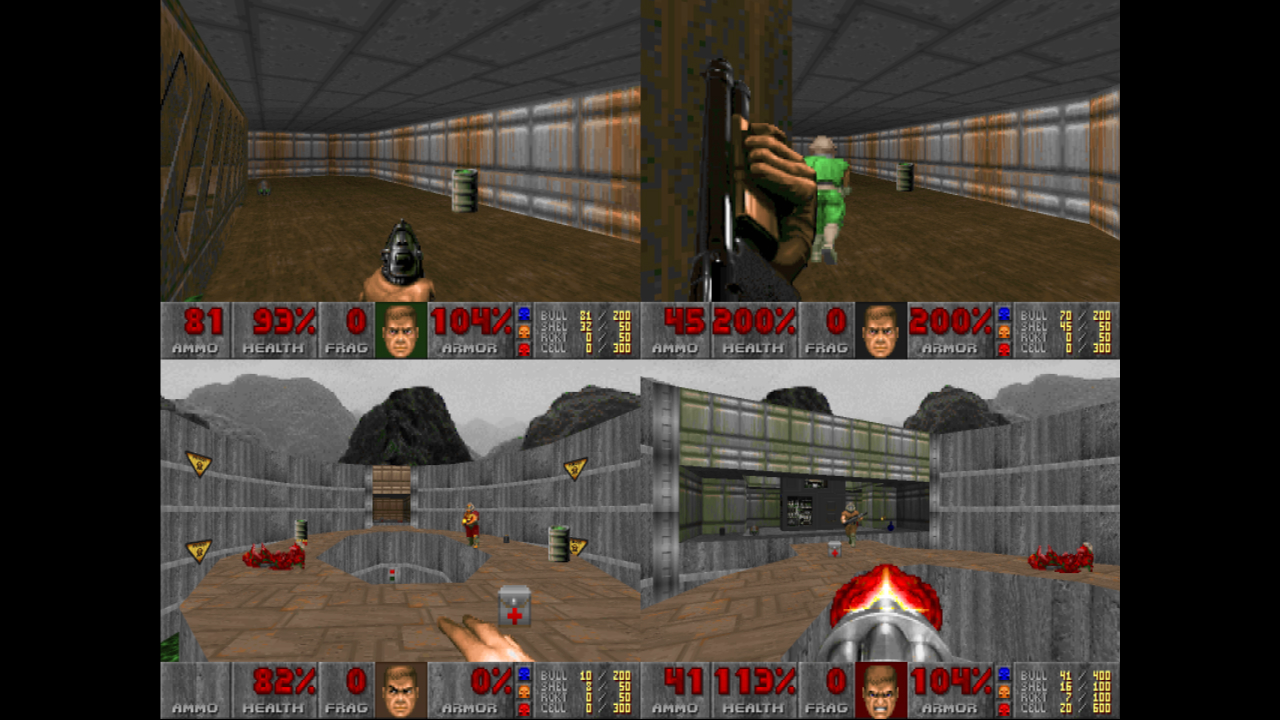 An AI learning to walk through a Doom-inspired maze by sight is one thing, but how can it handle live multiplayer mayhem? That's what the "Visual Doom AI" competition this September hopes to discover. The first set of matches are limited to a dozen 1...
[Letter] Instituting recruiting meritocracy in Italy
Riccardo Sapienzasurprising that such a defence is needed... I applied few years ago and never got a reply... :)
Imaging techniques: A tale of two dipoles
Imaging techniques: A tale of two dipoles
Nature Reviews Materials, Published online: 19 April 2016; doi:10.1038/natrevmats.2016.27
From precision polymers to complex materials and systems
From precision polymers to complex materials and systems
Nature Reviews Materials, Published online: 19 April 2016; doi:10.1038/natrevmats.2016.24
The polymer materials of the twenty-first century will be complex chemical systems that can respond and adapt to their environment. Such materials can be attained by synthesizing precision macromolecules with controlled architectures, and by mastering polymer interactions and self-organization.
Multibillion-euro innovation hub slammed by auditors
Multibillion-euro innovation hub slammed by auditors
Nature 532, 7599 (2016). http://www.nature.com/doifinder/10.1038/nature.2016.19753
Author: Quirin Schiermeier
Damning report blames failure to deliver on goals on management problems and funding issues.
Harvesting, Coupling, and Control of Single-Exciton Coherences in Photonic Waveguide Antennas
Author(s): Q. Mermillod, T. Jakubczyk, V. Delmonte, A. Delga, E. Peinke, J.-M. Gérard, J. Claudon, and J. Kasprzak
We perform coherent nonlinear spectroscopy of individual excitons strongly confined in single InAs quantum dots (QDs). The retrieval of their intrinsically weak four-wave mixing (FWM) response is enabled by a one-dimensional dielectric waveguide antenna. Compared to a similar QD embedded in bulk med…
[Phys. Rev. Lett. 116, 163903] Published Fri Apr 22, 2016
Biocompatible Label-Free Detection of Carbon Black Particles by Femtosecond Pulsed Laser Microscopy

High-Operation-Temperature Plasmonic Nanolasers on Single-Crystalline Aluminum

Slack software for labs
Slack is very useful team coordination software. It’s been such a help in my own lab, that I suspect that given a properly configured Slack account, I could simultaneously run GE, Google, Intel, and the US Federal Government.
It’s easy to dismiss Slack. To a large extent, it’s basically a bunch of chat rooms. I wasn’t interested in it at first, when my marketing executive sister first told me about it (around 2013, shortly after it was first released). She liked it for coordinating her team. At the time, my lab was small, and I didn’t need another channel of communication. But recently I’ve taken it on, and it has been an exceptionally positive thing for my lab.
I needed to push out several papers in a short period of time, and emailing people was clumsy and slow. Slack was perfect. I started using it then and it was transformative for that little bit of last minute dotting i’s and crossing t’s. We could exchange figure files, images, data, comments, etc. and it was all categorized by project, and had a nice timeline/history layout for browsing back through it. It’s also nice to search-by-project, rather than searching my entire email archive. Slack made it so much better.
I can tell you a few reasons why Slack is useful, and I will below. But really, you should just try it yourself. It’s free to try. See if you find it useful. Maybe you will, maybe you won’t.
It’s basically a team communications platform. You can set up as many channels as you like, for example, one channel per project. Within each channel, you can exchange messages. In practice, they tend to be brief and text message-like, but they can be longer. You can also exchange images, files, links, etc.
I like it for several reasons:
Here are some basic rules I follow right now. I have no great basis for these, it’s just what seems to work now:



Dispersion and shape engineered plasmonic nanosensors
Article
Sensors based on localized surface plasmon resonance suffer from low figures of merit. Here, the authors achieve high refractive index sensitivities and figures of merit by introducing a chiral shape and the idea of engineering the material dispersion function.
Nature Communications doi: 10.1038/ncomms11331
Authors: Hyeon-Ho Jeong, Andrew G. Mark, Mariana Alarcón-Correa, Insook Kim, Peter Oswald, Tung-Chun Lee, Peer Fischer
Emergence, Coalescence, and Topological Properties of Multiple Exceptional Points and Their Experimental Realization
Author(s): Kun Ding, Guancong Ma, Meng Xiao, Z. Q. Zhang, and C. T. Chan
Understanding the physics in multiple-state open systems is critical in many fields of physics. A study of an ensemble of connected lossy cavities shows how eigenstates can coalesce to produce new higher-order singularities.

[Phys. Rev. X 6, 021007] Published Tue Apr 12, 2016
Optical-nanofiber-based interface for single molecules. (arXiv:1604.04259v4 [physics.optics] UPDATED)
Optical interfaces for quantum emitters are a prerequisite for implementing quantum networks. Here, we couple single molecules to the guided modes of an optical nanofiber. The molecules are embedded within a crystal that provides photostability and, due to the inhomogeneous broadening, a means to spectrally address single molecules. Single molecules are excited and detected solely via the nanofiber interface without the requirement of additional optical access. In this way, we realize a fully fiber-integrated system that is scalable and may become a versatile constituent for quantum hybrid systems.
Scalable photonic network architecture based on motional averaging in room temperature gas
Article
Cold atomic ensembles have been considered suitable platforms to realize quantum memories, but their scalability is limited by the cooling apparatuses. Here, the authors show how room temperature atomic microcells can be used for discrete variable ensemble-based quantum information processing.
Nature Communications doi: 10.1038/ncomms11356
Authors: J. Borregaard, M. Zugenmaier, J. M. Petersen, H. Shen, G. Vasilakis, K. Jensen, E. S. Polzik, A. S. Sørensen
[In Depth] Dutch push for a quantum leap in open access
Exploring the quantum speed limit with computer games
Exploring the quantum speed limit with computer games
Nature 532, 7598 (2016). doi:10.1038/nature17620
Authors: Jens Jakob W. H. Sørensen, Mads Kock Pedersen, Michael Munch, Pinja Haikka, Jesper Halkjær Jensen, Tilo Planke, Morten Ginnerup Andreasen, Miroslav Gajdacz, Klaus Mølmer, Andreas Lieberoth & Jacob F. Sherson
Humans routinely solve problems of immense computational complexity by intuitively forming simple, low-dimensional heuristic strategies. Citizen science (or crowd sourcing) is a way of exploiting this ability by presenting scientific research problems to non-experts. ‘Gamification’—the application of game elements in a non-game context—is an effective tool with which to enable citizen scientists to provide solutions to research problems. The citizen science games Foldit, EteRNA and EyeWire have been used successfully to study protein and RNA folding and neuron mapping, but so far gamification has not been applied to problems in quantum physics. Here we report on Quantum Moves, an online platform gamifying optimization problems in quantum physics. We show that human players are able to find solutions to difficult problems associated with the task of quantum computing. Players succeed where purely numerical optimization fails, and analyses of their solutions provide insights into the problem of optimization of a more profound and general nature. Using player strategies, we have thus developed a few-parameter heuristic optimization method that efficiently outperforms the most prominent established numerical methods. The numerical complexity associated with time-optimal solutions increases for shorter process durations. To understand this better, we produced a low-dimensional rendering of the optimization landscape. This rendering reveals why traditional optimization methods fail near the quantum speed limit (that is, the shortest process duration with perfect fidelity). Combined analyses of optimization landscapes and heuristic solution strategies may benefit wider classes of optimization problems in quantum physics and beyond.
Microstructured Air Cavities as High-Index Contrast Substrates with Strong Diffraction for Light-Emitting Diodes

Extraordinary Light-Induced Local Angular Momentum near Metallic Nanoparticles

Saturday Morning Breakfast Cereal - A Severe Disorder
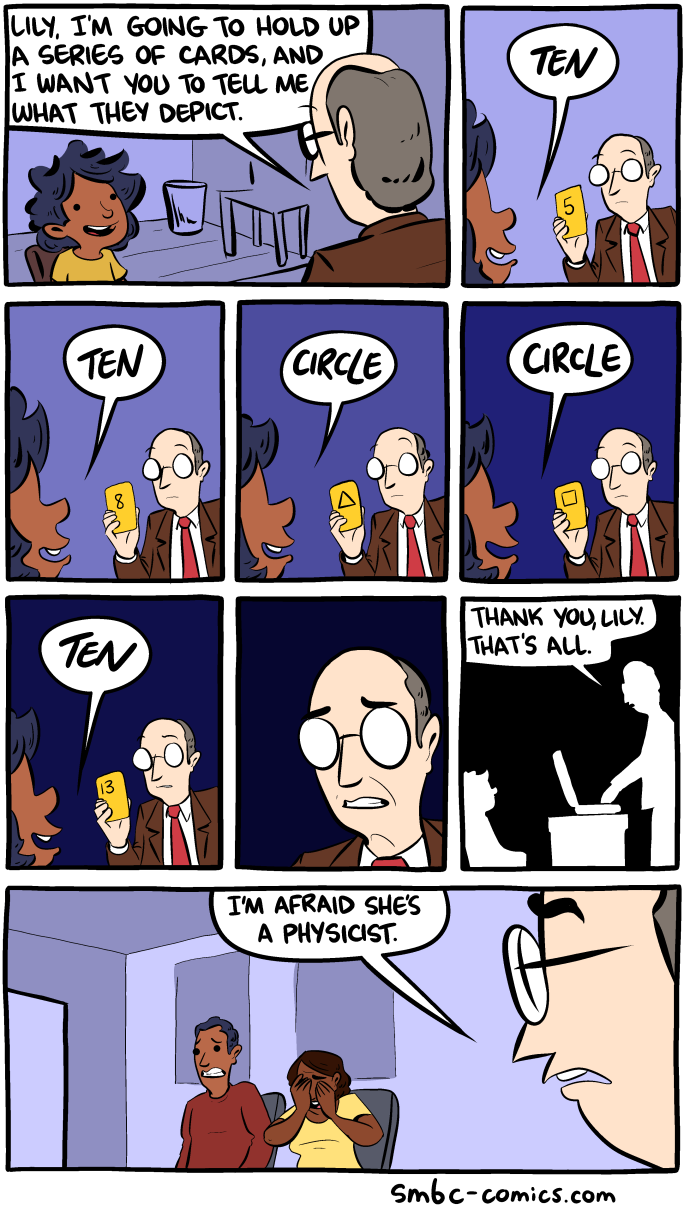
Hovertext: Keep her out of direct sunlight and if she gets fussy give her a trebuchet.
New comic!
Today's News:
Two days ago, I went downstairs to check on our crying toddler. Turns out she left a wooden toy on the bottom step. Long story short, fractured my fifth metatarsal. Readers should notice no difference, except for my planned 6 weeks of jokes focusing exclusively on metatarsals.