
Nano Letters
DOI: 10.1021/acs.nanolett.5b05183
Nature Nanotechnology 11, 325 (2016). doi:10.1038/nnano.2015.285
Authors: Xiaolong Zhu, Christoph Vannahme, Emil Højlund-Nielsen, N. Asger Mortensen & Anders Kristensen
Colour generation by plasmonic nanostructures and metasurfaces has several advantages over dye technology: reduced pixel area, sub-wavelength resolution and the production of bright and non-fading colours. However, plasmonic colour patterns need to be pre-designed and printed either by e-beam lithography (EBL) or focused ion beam (FIB), both expensive and not scalable processes that are not suitable for post-processing customization. Here we show a method of colour printing on nanoimprinted plasmonic metasurfaces using laser post-writing. Laser pulses induce transient local heat generation that leads to melting and reshaping of the imprinted nanostructures. Depending on the laser pulse energy density, different surface morphologies that support different plasmonic resonances leading to different colour appearances can be created. Using this technique we can print all primary colours with a speed of 1 ns per pixel, resolution up to 127,000 dots per inch (DPI) and power consumption down to 0.3 nJ per pixel.

Author(s): Pranjal Bordia, Henrik P. Lüschen, Sean S. Hodgman, Michael Schreiber, Immanuel Bloch, and Ulrich Schneider
Many-body localization in chains of cold atoms with identical disorder is unstable with respect to inter-chain coupling.
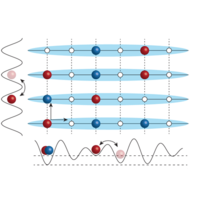
[Phys. Rev. Lett. 116, 140401] Published Mon Apr 04, 2016
Author(s): Christoph Reinhardt, Tina Müller, Alexandre Bourassa, and Jack C. Sankey
Accurately measuring extremely small forces is important in many fields of physics, materials science, and engineering. Researchers demonstrate tiny “trampoline’’ mechanical sensors that are exquisitely sensitive to attonewton forces at room temperature.

[Phys. Rev. X 6, 021001] Published Fri Apr 01, 2016
Author(s): Toni Vallès-Català, Francesco A. Massucci, Roger Guimerà, and Marta Sales-Pardo
Multiple interaction layers are a fact of life in real-world networks. Scientists model how well networks can be represented using superpositions of layers assembled using either AND or OR logic.

[Phys. Rev. X 6, 011036] Published Thu Mar 31, 2016
Nature Materials. doi:10.1038/nmat4609
Authors: Kandammathe Valiyaveedu Sreekanth, Yunus Alapan, Mohamed ElKabbash, Efe Ilker, Michael Hinczewski, Umut A. Gurkan, Antonio De Luca & Giuseppe Strangi

#/media/File:Green%27s_windmill.jpg "Green's Windmill")
Picture of Green’s Windmill by Kev747 at the English language Wikipedia.
In 1828, an English corn miller named George Green published a paper in which he developed mathematical methods for solving problems in electricity and magnetism. Green had received very little formal education, yet his paper introduced several profound concepts that are now taught in courses on advanced calculus, physics, and engineering. My aim in writing this post is to give a brief biography of this great genius and provide an introduction to GreenFunction, which implements one of his pioneering ideas in Version 10.4 of the Wolfram Language.
George Green was born on July 14, 1793, the only son of a Nottingham baker. His father noticed young George’s keen interest in mathematics, and sent him to a local school run by Robert Goodacre, a well-known science popularizer. George studied at Goodacre Academy between the ages of eight and nine, and then went to work in his father’s bakery. Later he ran a corn mill built by his father in Sneinton, near Nottingham. He is said to have hated his work at the bakery and the corn mill, and regarded it as annoying and tedious. In spite of his onerous duties, George appears to have continued studying mathematics in his spare time, retreating to the top floor of the 16-meter-high mill, shown above, for this purpose. In 1828, he published the results of his rigorous self-study in “An Essay on the Application of Mathematical Analysis to the Theories of Electricity and Magnetism,” one of the most influential mathematical papers of all time.
Green’s paper of 1828 introduced the potential function, which is well known to students of physics. He also proved a form of Green’s theorem from advanced calculus in this paper. Finally, he introduced the notion of a Green’s function that, in one form or another, is familiar to students of engineering, and is the theme for this post. By sheer chance, Sir Edward Bromhead, a founder of the Analytical Society, purchased and read a copy of Green’s paper. With his encouragement, Green entered Gonville and Caius College in Cambridge University at the age of forty, and eventually became a fellow of the college. He continued to publish papers until his untimely death in 1841, possibly due to lung complications arising from his work at the corn mill. Sadly, recognition for his mathematical work had to wait until 1993, when a plaque was dedicated to his memory in Westminster Abbey. Today, the Green’s Mill and Science Centre in Nottingham carries on the work of promoting George Green’s reputation as one of the greatest scientists of his age.
I will now give an introduction to GreenFunction using concrete examples from electrical circuits, ordinary differential equations, and partial differential equations.
The basic principle underlying a Green’s function is that, in order to understand the response of a system to arbitrary external forces, it is sufficient to understand the system’s response to an impulsive force of the DiracDelta type.
As an illustration of the above principle, consider a circuit that is composed of a resistor R and an inductor L, and is driven by a time-dependent voltage v[t], as shown below:
![Circuit that is composed of a resistor R and an inductor L, and is driven by a time-dependent voltage v[t]](http://blog.wolfram.com/data/uploads/2016/03/greenfunction-image.png "Circuit that is composed of a resistor R and an inductor L, and is driven by a time-dependent voltage v[t]")
The current i[t] in the circuit can then be computed by solving the differential equation:
L i´(t)+R i(t)==v(t)
Let’s assume that the voltage source is a battery supplying a unit voltage. Next, suppose that you close the switch S for a fleeting moment at time t = s and then quickly throw it open again. The current induced in the circuit by this impulsive action can be computed by applying GreenFunction to the left-hand side of the above differential equation:

The initial value of the current is assumed to be zero, since the switch was open until time t = s:

Here is the result given by GreenFunction for this example:

The following plot for s = 1 shows that the current is 0 for all times t t = 1, and finally decreases to 0 with the passage of time:

The behavior of the circuit in the above situation is usually called its impulse response, since it represents the response of the circuit to an impulsive voltage.
Next, suppose that you close the switch at time t = 0 and leave it closed at all later times. Thus the voltage steps up from its initial value 0 to a constant value 1, and can be modeled using the HeavisideTheta function:

The step voltage can be visualized as follows:

You can now compute the current in the circuit by performing the following integral involving the voltage and the Green’s function:

The integral computed above is essentially a weighted sum of the Green’s function with the voltage source at all times s prior to a given time t, and is called a convolution integral.
As the plot below shows, the current for the step voltage source gradually increases from its value 0 at t = 0 to a steady-state value:

The behavior of the circuit in the above situation is usually called its step response, since it represents the response of the circuit to a step voltage.
Finally, suppose that the voltage source supplies an alternating voltage—for example:

You can once again compute the current in the circuit by performing a convolution integral of the voltage with the Green’s function, as shown below:

You can also obtain the result using DSolveValue as follows:

As the plot below shows, the current settles down to a steady alternating pattern for large values of the time:

To summarize, the Green’s function encodes all the information that is required to study the response of the circuit to any external voltage. This magical property makes it an indispensable tool for studying a wide variety of physical systems.
The two-step procedure for solving the differential equation associated with a circuit, which I discussed above, can be applied to any linear ordinary differential equation (ODE) with a forcing term on its right-hand side and homogeneous (zero) initial or boundary conditions. For example, suppose you wish to solve the following second-order differential equation:

Assume that the forcing term is given by:

Also, suppose that you are given homogeneous boundary conditions on the interval [0,1]:
![Homogeneous boundary conditions on the interval [0,1]](http://blog.wolfram.com/data/uploads/2016/03/GreenFunction-IN-15-16.png "Homogeneous boundary conditions on the interval [0,1]")
As a first step in solving the problem, you compute the Green’s function for the corresponding differential operator (left-hand side) of the equation:

The following plot shows the Green’s function for different values of y lying between 0 and 1. Each instance of the function satisfies the zero boundary conditions at both ends of the interval:

You can now compute the solution of the original differential equation with the given forcing term using a convolution integral on the interval [0,1], as shown below:
![Computing the solution of the original differential equation with the given forcing term using a convolution integral on the interval [0,1]](http://blog.wolfram.com/data/uploads/2016/03/GreenFunction-IN-19.png "Computing the solution of the original differential equation with the given forcing term using a convolution integral on the interval [0,1]")
Here is a plot of the solution, which shows that it satisfies the homogeneous boundary conditions for different values of the parameter a:

Green’s functions also play an important role in the study of partial differential equations (PDEs). For example, consider the wave equation that describes the propagation of signals with finite speed, and that I discussed in an earlier post. In order to compute the Green’s function for this equation in one spatial dimension, use the wave operator (left-hand side of the wave equation), which is given by:

Here, x denotes the spatial coordinate that ranges over (-∞,∞), t denotes the time that always ranges over [0,∞), and u[x,t] gives the displacement of the wave at any position and time.
You can now find the Green’s function for the wave operator as follows:

The following plot of the Green’s function shows that it becomes 0 outside a certain triangular region in the x-t plane, for any choice of y and s (I have chosen both these values to be 0). This behavior is consistent with the fact that the wave propagates with a finite speed, and hence signals sent at any time can only influence a limited region of space at any later time:

The Green’s function obtained above can be used to solve the wave equation with any forcing term, assuming that the initial displacement and velocity of the wave are both zero. For example, suppose that the forcing term is given by:

You can solve the wave equation with this forcing term by evaluating the convolution integral 

The following plot shows the standing wave generated by the solution:

Finally, I note that the same solution can be obtained by using DSolveValue with homogeneous initial conditions, as shown below:

Green’s functions of the above type are called fundamental solutions and play an important role in the modern theory of linear partial differential equations. In fact, they provided the motivation for the theory of distributions that was developed by Laurent Schwartz in the late 1940s.
The ideas put forward by George Green in his paper of 1828 are stunning in their depth and simplicity, and reveal a first-rate mind that was far ahead of the times during which he lived. I have found it very inspiring to study the life and work of this great mathematician while implementing GreenFunction for Version 10.4 of the Wolfram Language.
Download this post as a Computable Document Format (CDF) file.
Nature Photonics 10, 208 (2016). doi:10.1038/nphoton.2016.42
Author: Guillaume Schull
An optoelectronic prototype based on a self-assembled molecular junction to controllably excite propagating surface plasmons has been developed.
Article
Reconstruction of super resolution structured illumination microscopy (SR-SIM) datasets typically relies upon commercial software. Here Müller et al. present an open-source ImageJ plugin to facilitate reconstruction of SR-SIM data from a broad range of microscopy platforms.
Nature Communications doi: 10.1038/ncomms10980
Authors: Marcel Müller, Viola Mönkemöller, Simon Hennig, Wolfgang Hübner, Thomas Huser
Scientists say ‘no’ to UK exit from Europe in Nature poll
Nature 531, 7596 (2016). http://www.nature.com/doifinder/10.1038/531559a
Author: Daniel Cressey
Most researchers in Britain and the wider EU think that the union benefits science.
Author(s): V. Huet, A. Rasoloniaina, P. Guillemé, P. Rochard, P. Féron, M. Mortier, A. Levenson, K. Bencheikh, A. Yacomotti, and Y. Dumeige
Introducing a slow-light medium into an optical microresonator extends the lifetime of a photon circulating in the device by several orders of magnitude.
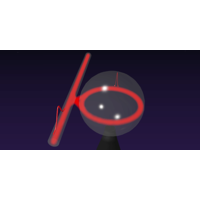
[Phys. Rev. Lett. 116, 133902] Published Tue Mar 29, 2016

Author(s): Camille Aron, Manas Kulkarni, and Hakan E. Türeci
Light-mediated interactions are commonplace in both the laboratory and nature, and now researchers show how to harness them to generate and sustain large-scale quantum entanglement in extended networks of qubits.

[Phys. Rev. X 6, 011032] Published Wed Mar 23, 2016
Author(s): Hyoungsoo Kim, François Boulogne, Eujin Um, Ian Jacobi, Ernie Button, and Howard A. Stone
As a whisky drop dries, a combination of molecules in the liquid ensure a spatially uniform deposition—a finding that could inspire coating technologies.
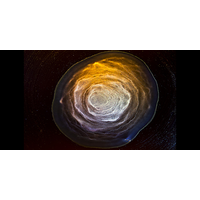
[Phys. Rev. Lett. 116, 124501] Published Thu Mar 24, 2016

Deterministically integrating semiconductor quantum emitters with plasmonic nano-devices paves the way towards chip-scale integrable, true nanoscale quantum photonics technologies. For this purpose, stable and bright semiconductor emitters are needed, which moreover allow for CMOS-compatibility and optical activity in the telecommunication band. Here, we demonstrate strongly enhanced light-matter coupling of single near-surface ($<10\,nm$) InAs quantum dots monolithically integrated into electromagnetic hot-spots of sub-wavelength sized metal nanoantennas. The antenna strongly enhances the emission intensity of single quantum dots by up to $\sim16\times$, an effect accompanied by an up to $3.4\times$ Purcell-enhanced spontaneous emission rate. Moreover, the emission is strongly polarised along the antenna axis with degrees of linear polarisation up to $\sim85\,\%$. The results unambiguously demonstrate the efficient coupling of individual quantum dots to state-of-the-art nanoantennas. Our work provides new perspectives for the realisation of quantum plasmonic sensors, step-changing photovoltaic devices, bright and ultrafast quantum light sources and efficent nano-lasers.

Impulsive interband excitation with femtosecond near-infrared pulses establishes a plasma response in intrinsic germanium structures fabricated on a silicon substrate. This direct approach activates the plasmonic resonance of the Ge structures and enables their use as optical antennas up to the mid-infrared spectral range. The optical switching lasts for hundreds of picoseconds until charge recombination red-shifts the plasma frequency. The full behavior of the structures is modeled by the electrodynamic response established by an electron-hole plasma in a regular array of antennas.


Author(s): Andrea Fortini, Ignacio Martín-Fabiani, Jennifer Lesage De La Haye, Pierre-Yves Dugas, Muriel Lansalot, Franck D’Agosto, Elodie Bourgeat-Lami, Joseph L. Keddie, and Richard P. Sear
Small particles suspended in a liquid separate out by size as the liquid evaporates, an effect that could lead to techniques for making layered structures.

[Phys. Rev. Lett. 116, 118301] Published Fri Mar 18, 2016
The red-hot debate about transmissible Alzheimer's
Nature 531, 7594 (2016). http://www.nature.com/doifinder/10.1038/531294a
Author: Alison Abbott
A controversial study has suggested that the neurodegenerative disease might be transferred from one person to another. Now scientists are racing to find out whether that is true.
Author(s): T. Zhang, Duanduan Wan, J. M. Schwarz, and M. J. Bowick
Sheets of liquid droplets can spontaneously and reversibly change their shape.
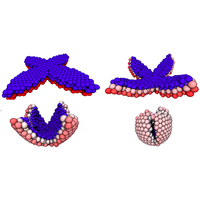
[Phys. Rev. Lett. 116, 108301] Published Wed Mar 09, 2016

Parallel Practices: Making for Medicine 2016 – Learning through making – unique R&D collaborations between craft makers and medical professionals, exploring and testing the benefits of craft-based learning for science and health students, led by partners Crafts Council and Cultural Institute at King’s.
I have secured one of the Crafts Council’s Parallel Practices Residencies at King’s College London, based in the Maker Space or as it is better known in the Faculty of Natural and Mathematical Science, the Wheatstone Innovation Lab. This new space, developed for students to synthesise technological thought with making, is the brainchild of Dr Riccardo Sapienza and Dr Matthew Howard, both believe in the value of creative skills within science (see sapienzalab.org) and have created the area so students can engage in messy making, risk taking and inventiveness, outside of their taught curriculum.
I am sharing the space with glass-maker Shelley James and the two of us are supporting this culture of making by providing workshops in our respective disciplines. In parallel we are using the residency to engage in a period of research and development in order to progress our own practice. My project ‘Hacking the Enlightenment’ explores the shared history of eighteenth century automata between science and craft, and will, by colliding analogue and digital worlds; making, mechanics and user interaction; bring innovation to my enamel automata.

Week 1 of the residency (2nd and 3rd March) focused on the development and delivery of two workshops in low-tech automata making. Students from undergraduate to doctoral level took time away from the academic challenges of their studies to engage in a very different kind of experience. By experimenting with cutting and sticking, exploring converting horizontal motion into vertical using kebab skewers as axels combined with cardboard cams and followers, the students made twelve simple automatons, and not being able to fully extricate themselves from the scientific field, set about making sense of it all by articulating the mechanical process at work using scientific terminology.


The week ended with an invitation to join ‘The Robot Atelier’, KCL’s Robotic Society’s build a line follower robot event taking place the following week. The society, run by students for students for the advancement of all things robotic, are running a project where members make a robot that will follow a black line on the lab floor using a light sensor! I was sent away with ‘homework’ to purchase an Arduino Uno Programmable Logic Controller and get my head around coding!


Week 2 (9th March) was amazing, Arduino in hand, coding software downloaded on to my Mac I turned up to the event feeling very nervous, but I shouldn’t have been as the students were amazing, so free with their time and tolerant of my very limited (well actually non existent) understanding of electronics and computer coding. By the end of the day I had constructed two sets of light sensors using an Infrared LED and a Photo Diode, apparently my robot will use these to follow the line! And, not only did they work when tested but my soldering was excellent! As I left The Strand Campus sparks of an idea for new work started to emerge, but it is too early to divulge at the minute… watch this space.


Author(s): Seonghoon Kim, Bo Zhang, Zhaorong Wang, Julian Fischer, Sebastian Brodbeck, Martin Kamp, Christian Schneider, Sven Höfling, and Hui Deng
The emission from a polariton laser shows the coherence that is common to conventional lasers, a step toward using them as high-efficiency alternative light sources.

[Phys. Rev. X 6, 011026] Published Fri Mar 11, 2016
Author(s): J. M. Soto-Crespo, N. Devine, and N. Akhmediev
Numerical simulations of the nonlinear Schrödinger equation demonstrate how rogue waves form for different levels of initial random noise.
[Phys. Rev. Lett. 116, 103901] Published Wed Mar 09, 2016
Article
Many living systems, such as bacterial colonies, exhibit collective and dynamic behaviours that are sensitive to the change in environmental conditions. Here, the authors show that a colloidal active matter system switches between gathering and dispersal of individuals in response to a disordered potential.
Nature Communications doi: 10.1038/ncomms10907
Authors: Erçağ Pinçe, Sabareesh K. P. Velu, Agnese Callegari, Parviz Elahi, Sylvain Gigan, Giovanni Volpe, Giorgio Volpe