16 Apr 12:47
by Adam Nahum, Sagar Vijay, and Jeongwan Haah
Author(s): Adam Nahum, Sagar Vijay, and Jeongwan Haah
A new analysis obtains hydrodynamic descriptions for the spreading of quantum information through many body-systems and for the “quantum butterfly effect.”
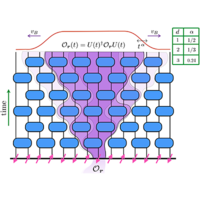
[Phys. Rev. X 8, 021014] Published Wed Apr 11, 2018
11 Apr 08:26
by sebastien.popoff@telecom-paristech.fr (Sébastien Popoff)
OIP'21 : Optics for information processing in the 21th century
May 23th - May 26th 2018
Villa Finaly
Florence, Italy
Hosted by: Sylvain Gigan (LKB, Sorbonne Université Paris, Paris), Rafael Piestun (University of Colorado, Boulder, USA)

10 Apr 07:54
by Sergii Morozov, Michele Gaio, Stefan A. Maier, Riccardo Sapienza

Nano Letters
DOI: 10.1021/acs.nanolett.8b00557

06 Apr 20:52
by Ivo Straka
Ivo Straka, Jaromír Mika, Miroslav Ježek
We propose and experimentally demonstrate a device for generating light with arbitrary classical photon-number distribution. We use programmable acousto-optical modulation to control the intensity of light within the dynamic range of more than 30 dB and inter-level transitions faster than 500 ns. ... [Opt. Express 26, 8998-9010 (2018)]
05 Apr 09:50
by Noel H. Wan, Brendan J. Shields, Donggyu Kim, Sara Mouradian, Benjamin Lienhard, Michael Walsh, Hassaram Bakhru, Tim Schröder, Dirk Englund

Nano Letters
DOI: 10.1021/acs.nanolett.7b04684

03 Apr 19:59
by Gangcheng Yuan, Daniel E. Gómez, Nicholas Kirkwood, Klaus Boldt, Paul Mulvaney

ACS Nano
DOI: 10.1021/acsnano.7b09052

02 Apr 21:38
by Alex Krasnok, Denis G. Baranov, Andrey Generalov, Sergey Li, and Andrea Alù
Author(s): Alex Krasnok, Denis G. Baranov, Andrey Generalov, Sergey Li, and Andrea Alù
A technique involving wave interference may improve the practicality of charging a phone wirelessly at some distance from the power source.
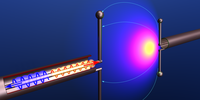
[Phys. Rev. Lett. 120, 143901] Published Mon Apr 02, 2018
01 Apr 20:12
by Anshuman Singh, Pablo M. de Roque, Gaëtan Calbris, James T. Hugall, Niek F. van Hulst

Nano Letters
DOI: 10.1021/acs.nanolett.8b00239

01 Apr 20:11
by Godofredo Bautista, Christoph Dreser, Xiaorun Zang, Dieter P. Kern, Martti Kauranen, Monika Fleischer

Nano Letters
DOI: 10.1021/acs.nanolett.8b00308

31 Mar 09:40
by Sergii Morozov, Michele Gaio, Stefan A. Maier, Riccardo Sapienza
Quantum emitters radiate light omni-directionally, making it hard to collect
and use the generated photons. Here we propose a 3D metal-dielectric parabolic
antenna surrounding an individual quantum dot as a source of collimated single
photons which can then be easily extracted and manipulated. Our fabrication
method relies on a single optically-induced polymerization step, once the
selected emitter has been localized by confocal microscopy. Compared to
conventional nano-antennas, our geometry does not require near-field coupling
and it is therefore very robust against misalignment issues, and minimally
affected by absorption in the metal. The parabolic antenna provides one of the
largest reported experimental directivities (D=106) and the lowest beam
divergences ({\Theta}=13.5 deg), a broadband operation over all the visible and
near-IR range, together with more than 96% extraction efficiency, offering a
practical advantage for quantum technological applications.
29 Mar 16:22
by Mykola Kadobianskyi
Mykola Kadobianskyi, Ioannis N. Papadopoulos, Thomas Chaigne, Roarke Horstmeyer, Benjamin Judkewitz
Manipulating the propagation of light through scattering media remains a major challenge for many applications, including astronomy, biomedical imaging, and colloidal optics. Light can be focused through inhomogeneous media into any desired point with wavefront shaping techniques. However, ... [Optica 5, 389-394 (2018)]
29 Mar 14:45
by Peter Schnauber, Johannes Schall, Samir Bounouar, Theresa Höhne, Suk-In Park, Geun-Hwan Ryu, Tobias Heindel, Sven Burger, Jin-Dong Song, Sven Rodt, Stephan Reitzenstein

Nano Letters
DOI: 10.1021/acs.nanolett.7b05218

28 Mar 20:19
by Seungwon Jeong
Focusing of light energy inside a scattering medium by controlling the time-gated multiple light scattering
Focusing of light energy inside a scattering medium by controlling the time-gated multiple light scattering, Published online: 26 March 2018; doi:10.1038/s41566-018-0120-9
The use of a time-gated reflection matrix of a scattering medium, in particular via using singular value decomposition and injecting light into the largest time-gated eigenchannel, can lead to a more than tenfold enhancement in light energy delivery in comparison with ordinary wave diffusion cases.

26 Mar 17:05
by Sophie Meuret, Toon Coenen, Steffi Y. Woo, Yong-Ho Ra, Zetian Mi, Albert Polman

Nano Letters
DOI: 10.1021/acs.nanolett.7b04891

26 Mar 17:05
by Lisa V. Poulikakos, Prachi Thureja, Alexia Stollmann, Eva De Leo, David J. Norris

Nano Letters
DOI: 10.1021/acs.nanolett.8b00083

26 Mar 17:05
by Tomáš Neuman, Ruben Esteban, David Casanova, Francisco J. García-Vidal, Javier Aizpurua

Nano Letters
DOI: 10.1021/acs.nanolett.7b05297

26 Mar 17:03
by tech@thehiveworks.com
.png) Click here to go see the bonus panel!
Click here to go see the bonus panel!Hovertext:
Also it didn't want to destroy the city because it mostly feeds off of aquatic insects.
New comic!Today's News:
21 Mar 09:30
by Nicolas Le Thomas
Nicolas Le Thomas, Ashim Dhakal, Ali Raza, Frédéric Peyskens, Roel Baets
To improve the detection limit of optical sensors, it is of paramount importance to understand light–matter interaction processes at a fundamental level. At room temperature, the ultimate detection limit is governed amongst others by fundamental thermodynamic fluctuations. Their effect on ... [Optica 5, 328-336 (2018)]
20 Mar 09:57
by Simone Atzeni
Simone Atzeni, Adil S. Rab, Giacomo Corrielli, Emanuele Polino, Mauro Valeri, Paolo Mataloni, Nicolò Spagnolo, Andrea Crespi, Fabio Sciarrino, Roberto Osellame
Photon entanglement is at the basis of many protocols in photonic quantum technologies, from quantum computing to simulation and sensing. The generation of entangled photons in integrated waveguides is particularly advantageous due to the enhanced stability and more efficient nonlinear interaction. ... [Optica 5, 311-314 (2018)]
19 Mar 13:50
by Stephen Sanders and Alejandro Manjavacas

ACS Photonics
DOI: 10.1021/acsphotonics.8b00225
19 Mar 13:48
by Yuanqing Yang, Vladimir A. Zenin and Sergey I. Bozhevolnyi

ACS Photonics
DOI: 10.1021/acsphotonics.7b01440
19 Mar 13:48
by Midya Parto, Steffen Wittek, Hossein Hodaei, Gal Harari, Miguel A. Bandres, Jinhan Ren, Mikael C. Rechtsman, Mordechai Segev, Demetrios N. Christodoulides, and Mercedeh Khajavikhan
Author(s): Midya Parto, Steffen Wittek, Hossein Hodaei, Gal Harari, Miguel A. Bandres, Jinhan Ren, Mikael C. Rechtsman, Mordechai Segev, Demetrios N. Christodoulides, and Mercedeh Khajavikhan
We report the first observation of lasing topological edge states in a 1D Su-Schrieffer-Heeger active array of microring resonators. We show that the judicious use of non-Hermiticity can promote single edge-mode lasing in such arrays. Our experimental and theoretical results demonstrate that, in the...
[Phys. Rev. Lett. 120, 113901] Published Thu Mar 15, 2018
19 Mar 13:47
by Michela F. Picardi, Anatoly V. Zayats, and Francisco J. Rodríguez-Fortuño
Author(s): Michela F. Picardi, Anatoly V. Zayats, and Francisco J. Rodríguez-Fortuño
A proposed dipole source of electromagnetic waves can selectively couple its emission into either of two neighboring waveguides.

[Phys. Rev. Lett. 120, 117402] Published Thu Mar 15, 2018
19 Mar 13:47
by Semyon Chervinskii, Kalle Koskinen, Sergey Scherbak, Martti Kauranen, and Andrey Lipovskii
Author(s): Semyon Chervinskii, Kalle Koskinen, Sergey Scherbak, Martti Kauranen, and Andrey Lipovskii
Second-harmonic generation from Au metal nanoislands is significantly enhanced by covering the nanoislands with a thin dielectric film of titanium dioxide.
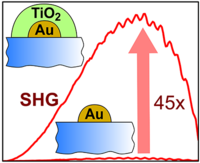
[Phys. Rev. Lett. 120, 113902] Published Thu Mar 15, 2018
19 Mar 13:47
by Dalmeet Singh Chawla
The undercover academic keeping tabs on ‘predatory’ publishing
The undercover academic keeping tabs on ‘predatory’ publishing, Published online: 16 March 2018; doi:10.1038/d41586-018-02921-2
Blacklists that warn against questionable publishers are in demand.

19 Mar 09:38
by Bandres, M. A., Wittek, S., Harari, G., Parto, M., Ren, J., Segev, M., Christodoulides, D. N., Khajavikhan, M.
Physical systems exhibiting topological invariants are naturally endowed with robustness against perturbations, as manifested in topological insulators—materials exhibiting robust electron transport, immune from scattering by defects and disorder. Recent years have witnessed intense efforts toward exploiting these phenomena in photonics. Here we demonstrate a nonmagnetic topological insulator laser system exhibiting topologically protected transport in the cavity. Its topological properties give rise to single-mode lasing, robustness against defects, and considerably higher slope efficiencies compared to the topologically trivial counterparts. We further exploit the properties of active topological platforms by assembling the system from S-chiral microresonators, enforcing predetermined unidirectional lasing without magnetic fields. This work paves the way toward active topological devices with exciting properties and functionalities.
19 Mar 09:38
by Harari, G., Bandres, M. A., Lumer, Y., Rechtsman, M. C., Chong, Y. D., Khajavikhan, M., Christodoulides, D. N., Segev, M.
Topological insulators are phases of matter characterized by topological edge states that propagate in a unidirectional manner that is robust to imperfections and disorder. These attributes make topological insulator systems ideal candidates for enabling applications in quantum computation and spintronics. We propose a concept that exploits topological effects in a unique way: the topological insulator laser. These are lasers whose lasing mode exhibits topologically protected transport without magnetic fields. The underlying topological properties lead to a highly efficient laser, robust to defects and disorder, with single-mode lasing even at very high gain values. The topological insulator laser alters current understanding of the interplay between disorder and lasing, and at the same time opens exciting possibilities in topological physics, such as topologically protected transport in systems with gain. On the technological side, the topological insulator laser provides a route to arrays of semiconductor lasers that operate as one single-mode high-power laser coupled efficiently into an output port.
14 Mar 08:55
by Maryam Landi, Jiajun Zhao, Wayne E. Prather, Ying Wu, and Likun Zhang
Author(s): Maryam Landi, Jiajun Zhao, Wayne E. Prather, Ying Wu, and Likun Zhang
We observe that our experimentally measured emission power enhancement of a speaker inside a previously proposed metacavity agrees with our numerically calculated enhancement of the density of states (DOS) of the source-cavity system. We interpret the agreement by formulating a relation between the ...
[Phys. Rev. Lett. 120, 114301] Published Tue Mar 13, 2018
13 Mar 21:03
by M. E. J. Newman
Network structure from rich but noisy data
Network structure from rich but noisy data, Published online: 12 March 2018; doi:10.1038/s41567-018-0076-1
A technique allows optimal inference of the structure of a network when the available observed data are rich but noisy, incomplete or otherwise unreliable.

13 Mar 09:57
by Wang, J., Paesani, S., Ding, Y., Santagati, R., Skrzypczyk, P., Salavrakos, A., Tura, J., Augusiak, R., Mancinska, L., Bacco, D., Bonneau, D., Silverstone, J. W., Gong, Q., Acin, A., Rottwitt, K., Oxenlowe, L. K., OBrien, J. L., Laing, A., Thompson, M. G.
The ability to control multidimensional quantum systems is key for the investigation of fundamental science and for the development of advanced quantum technologies. We demonstrate a multidimensional integrated quantum photonic platform able to generate, control and analyze high-dimensional entanglement. A programmable bipartite entangled system is realized with dimension up to 15 x 15 on a large-scale silicon-photonics quantum circuit. The device integrates more than 550 photonic components on a single chip, including 16 identical photon-pair sources. We verify the high precision, generality and controllability of our multidimensional technology, and further exploit these abilities to demonstrate key quantum applications experimentally unexplored before, such as quantum randomness expansion and self-testing on multidimensional states. Our work provides an experimental platform for the development of multidimensional quantum technologies.
