11 Mar 21:43
by Vishal Soni, Leopoldo R. Gómez, and William T. M. Irvine
Author(s): Vishal Soni, Leopoldo R. Gómez, and William T. M. Irvine
Conformal crystals, arrangements of interacting particles subject to an external field, appear in many contexts but are not well understood. Establishing a projection from these inhomogeneous crystals to homogeneous crystals on curved surfaces, however, reveals new patterns in these materials.
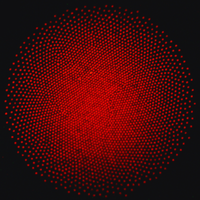
[Phys. Rev. X 8, 011039] Published Thu Mar 08, 2018
11 Mar 21:42
by Thomas Sinkjær
Fund ideas, not pedigree, to find fresh insight
Fund ideas, not pedigree, to find fresh insight, Published online: 06 March 2018; doi:10.1038/d41586-018-02743-2
Anonymous applications free scientists to make bold proposals; ‘golden tickets’ free reviewers to bet on them, says Thomas Sinkjær.

09 Mar 16:43
by Evgeny Ostrovsky
Evgeny Ostrovsky, Kobi Cohen, Shai Tsesses, Bergin Gjonaj, Guy Bartal
Optical singularities have attracted much interest in the past decades, enabling advancements in nano-manipulation, bio-sensing, and quantum optics, owing to their ability to carry and transfer angular momentum on the nano scale. Optical vortices (OVs), in this respect, are phase singularities ... [Optica 5, 283-288 (2018)]
08 Mar 08:53
by Dianjing Liu, Yixuan Tan, Erfan Khoram and Zongfu Yu

ACS Photonics
DOI: 10.1021/acsphotonics.7b01377
07 Mar 21:48
by Fortunato, S., Bergstrom, C. T., Börner, K., Evans, J. A., Helbing, D., Milojevic, S., Petersen, A. M., Radicchi, F., Sinatra, R., Uzzi, B., Vespignani, A., Waltman, L., Wang, D., Barabasi, A.-L.
Identifying fundamental drivers of science and developing predictive models to capture its evolution are instrumental for the design of policies that can improve the scientific enterprise—for example, through enhanced career paths for scientists, better performance evaluation for organizations hosting research, discovery of novel effective funding vehicles, and even identification of promising regions along the scientific frontier. The science of science uses large-scale data on the production of science to search for universal and domain-specific patterns. Here, we review recent developments in this transdisciplinary field.
06 Mar 19:54
by Henri Thyrrestrup, Gabija Kiršanskė, Hanna Le Jeannic, Tommaso Pregnolato, Liang Zhai, Laust Raahauge, Leonardo Midolo, Nir Rotenberg, Alisa Javadi, Rüdiger Schott, Andreas D. Wieck, Arne Ludwig, Matthias C. Löbl, Immo Söllner, Richard J. Warburton and Peter Lodahl

Nano Letters
DOI: 10.1021/acs.nanolett.7b05016

05 Mar 10:39
by Yuhan Wang, Yangguan Guo, Huimin Liao, Zhi Li, Fengyuan Gan, Chengwei Sun and Jianjun Chen

ACS Photonics
DOI: 10.1021/acsphotonics.8b00019
01 Mar 10:04
by Douglas Natelson
Fictional materials can be a fun starting point for thinking about and maybe teaching about material properties. Back in 2015 I touched on this
here, when I mentioned a few of my favorite science fictional materials (more
here,
here, and
here).
With the release of
Black Panther (BP), we now have much more information about the apparent properties of
vibranium in the Marvel Cinematic Universe.
Vibranium is pretty amazing stuff - like many fictional materials, it sometimes seems to have whatever properties are necessary to the story. As a physicist I'm not qualified to talk about its putative medicinal properties mentioned in BP, but its physical properties are fun to consider. Vibranium appears to be a strong, light, silvery metal (see
here), and it also has some remarkable abilities in terms of taking macroscopic kinetic energy (e.g., of a projectile) and either dissipating it (look at the spent bullets in the previously linked video) or, according to BP, storing that energy for later release. At the same time, Captain America's vibranium shield is able to bounce around with incredibly little dissipation of energy, prompting the Spider-Man quote at right.
In the spirit of handwaving physics, I think I've got this figured out.
In all solids, there is some coupling between the deformation of the atomic lattice and the electronic states of the material (here is
a nice set of slides about this). When we talk about lattice vibrations, this is the electron-phonon coupling, and it is responsible for the transfer of energy from the electrons to the lattice (that is, this is why the actual lattice of atoms in a wire gets warm when you drive electrical current through the material). The e-ph coupling is also responsible for the interaction that pairs up electrons in conventional superconductors. If the electron-phonon coupling is really strong, the deformation of the lattice can basically trap the electron - this is
polaron physics. In some insulating materials, where charge is distributed asymmetrically within the unit cell of the crystal, deformation of the material can lead to big displacements of charge, with a corresponding buildup of a voltage across the system - this is
piezoelectricity.
The ability of vibranium to absorb kinetic energy, store it, and then later discharge it with a flash, suggests to me that lattice deformation ends up pumping energy into the electrons somehow. Moreover, that electronically excited state must somehow be metastable for tens of seconds. Ordinary electronic excitations in metals are very short-lived (e.g., tens of femtoseconds for individual excited quasiparticles to lose their energy to other electrons). Gapped-off collective electronic states (like the superconducting condensate) can last
very long times. We have no evidence that vibranium is superconducting (though there are some interesting maglev trains in
Wakanda). That makes me think that what's really going in involves some
topologically protected electronic states. Clearly we need to run experiments (such as
scanning SQUID,
scanning NV center, or
microwave impedance microscopy) to search for the presence of edge currents in percussively excited vibranium films to test this idea.
01 Mar 08:48
by Chang-Hwan Yi, Julius Kullig, and Jan Wiersig
Author(s): Chang-Hwan Yi, Julius Kullig, and Jan Wiersig
One of the interesting features of open quantum and wave systems is the non-Hermitian degeneracy called an exceptional point, where not only energy levels but also the corresponding eigenstates coalesce. We demonstrate that such a degeneracy can appear in optical microdisk cavities by deforming the ...
[Phys. Rev. Lett. 120, 093902] Published Wed Feb 28, 2018
28 Feb 22:21
by Javier Cambiasso, Matthias König, Emiliano Cortés, Sebastian Schlücker and Stefan A. Maier

ACS Photonics
DOI: 10.1021/acsphotonics.7b01604
28 Feb 22:21
by Bingkun Qi, Lingxuan Zhang, and Li Ge
Author(s): Bingkun Qi, Lingxuan Zhang, and Li Ge
We show the existence of a flatband consisting of photonic zero modes in a gain and loss modulated lattice system as a result of the underlying non-Hermitian particle-hole symmetry. This general finding explains the previous observation in parity-time symmetric systems where non-Hermitian particle-h...
[Phys. Rev. Lett. 120, 093901] Published Tue Feb 27, 2018
25 Feb 20:46
by Cheng Guo
Cheng Guo, Meng Xiao, Momchil Minkov, Yu Shi, Shanhui Fan
Spatial differentiation is important in image-processing applications such as image sharpening and edge-based segmentation. In these applications, of particular importance is the Laplacian, the simplest isotropic derivative operator in two dimensions. Spatial differentiation can be implemented ... [Optica 5, 251-256 (2018)]
22 Feb 21:50
by Wen-Bo Shi, Lian-Zi Liu, Ruwen Peng, Di-Hu Xu, Kun Zhang, Hao Jing, Ren-Hao Fan, Xian-Rong Huang, Qian-Jin Wang and Mu Wang

Nano Letters
DOI: 10.1021/acs.nanolett.7b05191

22 Feb 21:48
by M. Tyloo, T. Coletta, and Ph. Jacquod
Author(s): M. Tyloo, T. Coletta, and Ph. Jacquod
In network theory, a question of prime importance is how to assess network vulnerability in a fast and reliable manner. With this issue in mind, we investigate the response to external perturbations of coupled dynamical systems on complex networks. We find that for specific, nonaveraged perturbation...
[Phys. Rev. Lett. 120, 084101] Published Thu Feb 22, 2018
22 Feb 10:33
by Y. Wang (王扬), S. Subhankar, P. Bienias, M. Łącki, T-C. Tsui (崔子俊), M. A. Baranov, A. V. Gorshkov, P. Zoller, J. V. Porto, and S. L. Rolston
Author(s): Y. Wang (王扬), S. Subhankar, P. Bienias, M. Łącki, T-C. Tsui (崔子俊), M. A. Baranov, A. V. Gorshkov, P. Zoller, J. V. Porto, and S. L. Rolston
Lasers trap cold atoms in a lattice of potential barriers much narrower than the lasers’ wavelength.
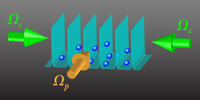
[Phys. Rev. Lett. 120, 083601] Published Tue Feb 20, 2018
22 Feb 10:32
by Sergey Belan
Author(s): Sergey Belan
Starting over can increase the chances of reaching a desired outcome among many possibilities, as demonstrated by a new statistical analysis.

[Phys. Rev. Lett. 120, 080601] Published Wed Feb 21, 2018
20 Feb 11:27
by Taira Giordani
Experimental statistical signature of many-body quantum interference
Experimental statistical signature of many-body quantum interference, Published online: 19 February 2018; doi:10.1038/s41566-018-0097-4
An experimental protocol to discern true multi-particle interference is demonstrated in a boson sampling device without dynamic reconfiguration. Statistical features of three-photon interference were evaluated in a seven-mode integrated interferometer.

20 Feb 11:26
by Liang, Q.-Y., Venkatramani, A. V., Cantu, S. H., Nicholson, T. L., Gullans, M. J., Gorshkov, A. V., Thompson, J. D., Chin, C., Lukin, M. D., Vuletic, V.
Bound states of massive particles, such as nuclei, atoms, or molecules, constitute the bulk of the visible world around us. By contrast, photons typically only interact weakly. We report the observation of traveling three-photon bound states in a quantum nonlinear medium where the interactions between photons are mediated by atomic Rydberg states. Photon correlation and conditional phase measurements reveal the distinct bunching and phase features associated with three-photon and two-photon bound states. Such photonic trimers and dimers possess shape-preserving wave functions that depend on the constituent photon number. The observed bunching and strongly nonlinear optical phase are described by an effective field theory of Rydberg-induced photon-photon interactions. These observations demonstrate the ability to realize and control strongly interacting quantum many-body states of light.
19 Feb 09:40
by Stefan Fasold, Sebastian Linß, Trideep Kawde, Matthias Falkner, Manuel Decker, Thomas Pertsch and Isabelle Staude

ACS Photonics
DOI: 10.1021/acsphotonics.7b01460
13 Feb 09:07
by N. Fayard, A. Goetschy, R. Pierrat, and R. Carminati
Author(s): N. Fayard, A. Goetschy, R. Pierrat, and R. Carminati
We study theoretically the mutual information between reflected and transmitted speckle patterns produced by wave scattering from disordered media. The mutual information between the two speckle images recorded on an array of N detection points (pixels) takes the form of long-range intensity correla...
[Phys. Rev. Lett. 120, 073901] Published Mon Feb 12, 2018
13 Feb 09:04
by Sarun Atiganyanun, John B. Plumley, Seok Jun Han, Kevin Hsu, Jacob Cytrynbaum, Thomas L. Peng, Sang M. Han and Sang Eon Han

ACS Photonics
DOI: 10.1021/acsphotonics.7b01492
12 Feb 08:55
by Falko Schmidt, Alessandro Magazzù, Agnese Callegari, Luca Biancofiore, Frank Cichos, and Giovanni Volpe
Author(s): Falko Schmidt, Alessandro Magazzù, Agnese Callegari, Luca Biancofiore, Frank Cichos, and Giovanni Volpe
A micrometer-sized sphere trapped by optical tweezers in a liquid, under the right conditions, orbits rapidly around the laser beam—creating a potential micromixing device.
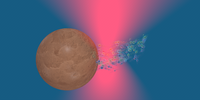
[Phys. Rev. Lett. 120, 068004] Published Fri Feb 09, 2018
12 Feb 08:53
by Vampa, G., Hammond, T. J., Nesrallah, M., Naumov, A. Y., Corkum, P. B., Brabec, T.
Amplification of femtosecond laser pulses typically requires a lasing medium or a nonlinear crystal. In either case, the chemical properties of the lasing medium or the momentum conservation in the nonlinear crystal constrain the frequency and the bandwidth of the amplified pulses. We demonstrate high gain amplification (greater than 1000) of widely tunable (0.5 to 2.2 micrometers) and short (less than 60 femtosecond) laser pulses, up to intensities of 1 terawatt per square centimeter, by seeding the modulation instability in an Y3Al5O12 crystal pumped by femtosecond near-infrared pulses. Our method avoids constraints related to doping and phase matching and therefore can occur in a wider pool of glasses and crystals even at far-infrared frequencies and for single-cycle pulses. Such amplified pulses are ideal to study strong-field processes in solids and highly excited states in gases.
09 Feb 09:08
by Juan Pablo Vasco and Stephen Hughes

ACS Photonics
DOI: 10.1021/acsphotonics.7b00967
09 Feb 09:08
by Sunkyu Yu, Xianji Piao and Namkyoo Park

ACS Photonics
DOI: 10.1021/acsphotonics.7b01532
09 Feb 09:06
by Valentin V. Volchkov, Michael Pasek, Vincent Denechaud, Musawwadah Mukhtar, Alain Aspect, Dominique Delande, and Vincent Josse
Author(s): Valentin V. Volchkov, Michael Pasek, Vincent Denechaud, Musawwadah Mukhtar, Alain Aspect, Dominique Delande, and Vincent Josse
The first direct measurements of the spectral functions of ultracold atoms in a disordered potential could enable future exploration of the critical regime around the Anderson transition.
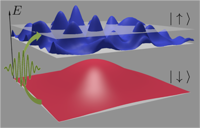
[Phys. Rev. Lett. 120, 060404] Published Thu Feb 08, 2018
08 Feb 10:19
by A. Rodríguez Echarri, Joel D. Cox, Renwen Yu and F. Javier García de Abajo

ACS Photonics
DOI: 10.1021/acsphotonics.7b01562
07 Feb 10:57
by Jiho Noh, Sheng Huang, Kevin P. Chen, and Mikael C. Rechtsman
Author(s): Jiho Noh, Sheng Huang, Kevin P. Chen, and Mikael C. Rechtsman
An optical version of a topological insulator exhibits edge states that could be used to reduce scattering losses in optical waveguides.
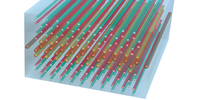
[Phys. Rev. Lett. 120, 063902] Published Tue Feb 06, 2018
06 Feb 09:35
by Anna Lombardi, Mikołaj K. Schmidt, Lee Weller, William M. Deacon, Felix Benz, Bart de Nijs, Javier Aizpurua, and Jeremy J. Baumberg
Author(s): Anna Lombardi, Mikołaj K. Schmidt, Lee Weller, William M. Deacon, Felix Benz, Bart de Nijs, Javier Aizpurua, and Jeremy J. Baumberg
New experiments on molecules trapped in an ultrasmall optical cavity reveal details of how molecular bonds interact with light and how this can eventually lead to their ultimate breaking, potentially providing access to new regimes of optical chemistry.
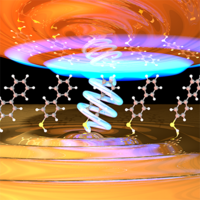
[Phys. Rev. X 8, 011016] Published Fri Feb 02, 2018
06 Feb 09:34
by Sandro Mignuzzi, Mónica Mota, Toon Coenen, Yi Li, Andrei P. Mihai, Peter K. Petrov, Rupert F. M. Oulton, Stefan A. Maier and Riccardo Sapienza

ACS Photonics
DOI: 10.1021/acsphotonics.7b01404

