×You need to sign in to continue.

Shared posts

11 Sep 23:16

News Organizations Finally Realize Obama’s War Plan Is a Hot Mess

by Dan Froomkin

President Obama’s plan to “degrade and destroy” the Islamic State counts on pretty much everything going right in a region of the world where pretty much anything the U.S. does always goes wrong.

Our newspapers of record today finally remembered it’s their job to point stuff like that out.

The New York Times, in particular, calls bullshit this morning — albeit without breaking from the classic detached Timesian tonelessness.

Mark Mazzetti, Eric Schmitt and Mark Landler (with contributions from Matt Apuzzo and James Risen) start by pointing out the essential but often overlooked fact that “American intelligence agencies have concluded that [the Islamic State] poses no immediate threat to the United States.”

And then, with the cover of “some officials and terrorism experts,” they share a devastating analysis of all the coverage that has come before:

Some officials and terrorism experts believe that the actual danger posed by ISIS has been distorted in hours of television punditry and alarmist statements by politicians, and that there has been little substantive public debate about the unintended consequences of expanding American military action in the Middle East.

You’ve got to love these quotes:

Daniel Benjamin, who served as the State Department’s top counterterrorism adviser during Mr. Obama’s first term, said the public discussion about the ISIS threat has been a “farce,” with “members of the cabinet and top military officers all over the place describing the threat in lurid terms that are not justified.”

“It’s hard to imagine a better indication of the ability of elected officials and TV talking heads to spin the public into a panic, with claims that the nation is honeycombed with sleeper cells, that operatives are streaming across the border into Texas or that the group will soon be spraying Ebola virus on mass transit systems — all on the basis of no corroborated information,” said Mr. Benjamin, who is now a scholar at Dartmouth College.

(For a taste of alarmist statements by politicians, please read my recent post: The Congressional Hyperbole Caucus.)

A few paragraphs later, “some American officials” return, warning “of the potential danger of a prolonged military campaign in the Middle East, led by the United States” and saying “there are risks that escalating airstrikes could do the opposite of what they are intended to do and fan the threat of terrorism to American soil.”

The Times writers raise the very legitimate concern that Obama may be playing right into the Islamic State’s hands:

Even a limited air campaign could play into an ISIS narrative that American infidels were intervening on behalf of apostate governments in Iraq and Syria.

In the Washington Post this morning, Rajiv Chandrasekaran focuses on all the implausible things that have to go right beyond “U.S. bombs and missiles hitting their intended targets”:

In Iraq, dissolved elements of the army will have to regroup and fight with conviction. Political leaders will have to reach compromises on the allocation of power and money in ways that have eluded them for years. Disenfranchised Sunni tribesmen will have to muster the will to join the government’s battle. European and Arab allies will have to hang together, Washington will have to tolerate the resurgence of Iranian-backed Shiite militias it once fought, and U.S. commanders will have to orchestrate an air war without ground-level guidance from American combat forces.

Meanwhile, in Syria, prospects are way worse:

The strategy imagines weakening the Islamic State without indirectly strengthening the ruthless government led by Bashar al-Assad or a rival network of al-Qaeda affiliated rebels — while simultaneously trying to build up a moderate Syrian opposition…

“Figuring out where we can strike ISIL so that it weakens them and empowers a more moderate Sunni group instead of the government — you have to think that one through,” said Michele Flournoy, a former U.S. undersecretary of defense. “I’m not sure we know yet how to pull that off.”

And Chandrasekaran reports that Obama’s approach “was not the U.S. military’s preferred option.”

Responding to a White House request for options to confront the Islamic State, Gen. Lloyd Austin, the top commander of U.S. forces in the Middle East, said that his best military advice was to send a modest contingent of American troops, principally Special Operations forces, to advise and assist Iraqi army units in fighting the militants, according to two U.S. military officials. The recommendation, conveyed to the White House by Gen. Martin Dempsey, the chairman of the Joint Chiefs of Staff, was cast aside in favor of options that did not involve U.S. ground forces in a front-line role, a step adamantly opposed by the White House.

It’s a classic damned-if-you-do, damned-if-you-don’t scenario: “Supporters of the president’s approach” point out that putting U.S. ground troops in the lead would encourage the Iraqi soldiers to hang back, while “Austin’s predecessor, retired Marine Gen. James Mattis, says “the decision not to send ground troops poses serious risks to the mission.”

The Associated Press’s Julie Pace writes a bold first paragraph:

For a president criticized as overly cautious and reluctant to lead, Barack Obama is taking a huge risk. He is thrusting U.S. fighting forces into a growing military operation with clear dangers, unknown costs, an indefinite length and unpredictable consequences.

Meanwhile, AP colleagues Zeina Karam and Vivian Salama make the previously almost-unheard argument that maybe the Islamic State isn’t worth all the fuss. There “has been an inclination to exaggerate the group’s capabilities,” they write.

The Islamic State group is often described as the most fearsome jihadi outfit of all: a global menace outweighing al-Qaida, with armies trembling before its advance.

But while the group has been successful at seizing parts of Iraq and Syria, it is no unstoppable juggernaut. Lacking the major weaponry of an established military, it wields outsize influence through the fanaticism of a hard core of several thousand, capitalizing on divisions among its rivals, and disseminating terrifying videos on social media.

And they offer up some numbers:

Most analysts… estimate the number of Islamic State fighters in both Iraq and Syria to be about 20,000…

The Iraqi military and police force are estimated at more than 1 million. The Syrian army is estimated at 300,000 soldiers. There are believed to be more than 100,000 Syrian rebels, including the al-Qaida-linked Nusra Front and the powerful Islamic Front rebel umbrella group, currently fighting the Islamic State group in Syria. Tens of thousands of Kurdish Peshmerga forces are fighting the group in Iraq.

Julian E. Barnes and Siobhan Gorman write in the Wall Street Journal:

A cornerstone of the expanded U.S. military campaign against Islamic State militants will be reliance on U.S.-trained local forces to confront the group head on.

But good luck with that:

In Iraq, Libya, Afghanistan and elsewhere, results have been mixed at best in U.S. efforts to push local forces to the forefront of fights against extremists. U.S. military campaigns conducted with little or no local ground support—such as those in Pakistan and Yemen—have met with some success but have lasted for years. Success, officials and experts say, is especially difficult when American troops are prohibited from serving alongside local units on the front lines or without a yearslong U.S. presence to train, advise and mentor the partner forces.

There’s also that little problem of giving weapons and training to precisely the wrong people:

In Syria, officials have repeatedly raised the problem of adequately vetting rebels to ensure the people trained and armed by the U.S. don’t join the ranks of Islamic State. In Iraq, the U.S. believes that many of the Shiite-dominated military forces have been penetrated by Iranian agents.

The McClatchy Newspapers Washington bureau , finally no longer alone in expressing skepticism about Obama’s plans, goes all Buzzfeed with a Hannah Allam story: “5 potential pitfalls in Obama’s plan to combat the Islamic State“.

Allam notes that Yemen and Somalia are hardly examples of success; that the new Iraqi government is hardly “inclusive”; that training of Iraqi soldiers hasn’t worked in the past; that in Syria it’s unclear which “opposition” Obama intends to support; and that it may be too late to cut off the flow of fighters and funds.

Even USA Today gets into the game, with Jim Michaels pointing out some of the “risks” involved.

Attacks on Islamic State militants in Syria could inadvertently help President Bashar Assad, whom the Obama administration has been trying to oust. Islamic State militants have been the most effective force in fighting the Assad regime…

Another worry with airstrikes is the risk of civilian casualties, which can quickly undermine public support. As airstrikes increase, Islamic State militants are likely to mingle more among the population, making targeting more difficult and increasing the risks of civilian casualties.

It’s great our leading mainstream news organization are finally pointing out the flaws of a president’s plan to bomb Iraq. Last time around, they waited until over a year after the invasion to suddenly pile on.

But nobody has the understanding of the region, the writing chops, and the moral standing of Andrew J. Bacevich, the Boston University political science professor and former Army colonel who lost his son in the Iraq war in 2007. He writes today for Reuters Opinion:

Even if Obama cobbles together a plan to destroy the Islamic State, the problems bedeviling the Persian Gulf and the greater Middle East more broadly won’t be going away anytime soon.

Destroying what Obama calls the Islamic State of Iraq and the Levant won’t create an effective and legitimate Iraqi state. It won’t restore the possibility of a democratic Egypt. It won’t dissuade Saudi Arabia from funding jihadists. It won’t pull Libya back from the brink of anarchy. It won’t end the Syrian civil war. It won’t bring peace and harmony to Somalia and Yemen. It won’t persuade the Taliban to lay down their arms in Afghanistan. It won’t end the perpetual crisis of Pakistan. It certainly won’t resolve the Israeli-Palestinian conflict.

All the military power in the world won’t solve those problems. Obama knows that. Yet he is allowing himself to be drawn back into the very war that he once correctly denounced as stupid and unnecessary — mostly because he and his advisers don’t know what else to do. Bombing has become his administration’s default option.

Rudderless and without a compass, the American ship of state continues to drift, guns blazing.

Photo of U.S. mortar fire in Iraq in 2004: Aaron Allmon II/U.S. Air Force via Getty Images

The post News Organizations Finally Realize Obama’s War Plan Is a Hot Mess appeared first on The Intercept.

11 Sep 18:10

kateordie: archiemcphee: Simply watching Adventure Time is...


kateordie:

archiemcphee:

Simply watching Adventure Time is often enough to make us hungry for sweets, but now we have an actual edible Candy Kingdom to tantalize our tastebuds. This mouthwateringly awesome Gingerbread Candy Kingdom was made by Redditor IHaveAFluffyCat (who actually does have an adorable fluffy cat).

The amount of time, effort, and candy that went into this work of edible art is amazing. It’s beautifully detailed from top to bottom, but we’re particularly impressed by the Gumball Guardians, whose sugar glass heads contain real gumballs.

Click here to see a complete gallery of step-by-step process photos.

[via Reddit]

Wooooaaaaaaahhhh!

A+ would eat

11 Sep 17:57

Tiny Toadstool Tesla on a Teacup (sorry)


Tiny Toadstool Tesla on a Teacup (sorry)

10 Sep 23:41

Quote For The Day II

by Andrew Sullivan

“[It is] easy for us to provoke and bait this administration. All that we have to do is to send two mujahidin to the furthest point east to raise a piece of cloth on which is written al-Qaeda, in order to make the generals race there and cause America to suffer human, economic, and political losses. … This is in addition to our having experience in using guerrilla warfare and the war of attrition to fight tyrannical superpowers, as we, alongside the mujahidin, bled Russia for 10 years, until it went bankrupt and was forced to withdraw in defeat,” – Osama bin Laden, 2004.

10 Sep 21:34

Someone's Got Some Splainin

by Josh Marshall

So apparently NFL got the Rice video three months ago.

10 Sep 20:39

Next Up, Chastity Belts

by Josh Marshall

A Missouri lawmaker is citing the Hobby Lobby decision in a lawsuit demanding a personal exemption from Obamacare that will prevent his insurance from paying for birth control for his daughters.

10 Sep 18:29

Martial arts and the cycle of bullshit

by Tricia Sullivan

Hello, everyone. Charlie has kindly invited me to post here because I am a science fiction writer. But for the next four guest posts I'm going to be talking about fighting, martial arts, the media, and women. I have a lot to say. In this first post I'll give you an idea of where I'm coming from when I'm talking about fighting.

So you need to know that I started martial arts training when I was thirteen because as a young woman I was always being told I was a potential victim; I wanted to move past that. It was kind of ironic how at sixteen, studying karate in Okinawa, I was singled out for 'special training' by one of the higher ranks, who then felt me up liberally and eventually propositioned me in front of his wife. She was translating for him!

But don't worry--we won't be going there.

I just want to establish my background. I was kicked out of my first school for insubordination because while preparing to test for black belt I refused to train with the women and children, but other than that I was well-behaved. I dabbled in various arts off and on throughout my teens and twenties. When I was 28 I started training with Steve Morris, who is known in Britain for his deep knowledge of fighting and its training methods. Steve taught me to hit. Hard. Eventually we hooked up and we are still together. Through sixteen years as Steve's website administrator, camera guy and partner I have learned a lot about martial arts from a technical, historical, political and personal perspective.

Most people think of martial arts and fighting as being more or less synonymous. I see them as a Venn diagram of two sets that overlap by a tiny margin. This is because most martial artists don't fight and their training isn't directly based on what happens in a fight.

There are reasons for this. The problem of training for a fight is a tricky one. If an instructor puts students in an actual fight (as opposed to highly controlled drills with restricted moves), they might get seriously hurt. But if instructors can't create an accurate representation of a fight in the gym, trainees will never really be tested. To make up for the lack of fighting, martial arts typically focus on displays of fake combat that illustrate the combative moves that have been passed down through history. They may have non-contact or light contact fighting, but this only tests your ability to touch the other person with the techniques you have been taught--not your ability to hurt them for real much less take a beating yourself.

Most people who study martial arts study a system. Whether the system is historical (like kung fu and karate) or modern (like Systema and Krav Maga) the techniques are taught formally, with ranks, with semi-compliant drilling between members of the same school, and with a heavy dose of hierarchy that keeps everybody in their place. With a few exceptions (Gracie Barra jiu-jitsu is one system that grades predominantly through hard competition) the idea of all-out fighting is a theoretical one, kept well in the background.

But fighting is chaotic. It's often unpredictable. It doesn't systemize well and it's difficult to pass on as a body of knowledge. What people don't realize is that no matter how effective the founder of a discipline may have been in his (or in the case of Wing Chun, her) day, unless the practices of that system involve rigorous testing in realistic fighting conditions against non-compliant opponents from outside your system, you can never really know whether you can make their moves work for you.

It's not a big leap to get from martial arts to religion. To a greater or lesser degree, you are expected to take what's being taught to you on faith.

There are a lot of problems with this, but perhaps the most offensive to me is the fact that a person can rise to high rank and great influence without possessing any fighting ability whatsoever. Thus is born a cycle of bullshit. You have someone teaching you (allegedly) to fight, but they have no fighting experience themselves let alone the know-how to help you. If you go along with this long enough, you can aspire to turn around and teach others one day. Ad infinitum; ad nauseum.

I've been a part of that cycle. When you realize what's going on, it's disheartening. And the more heavily you are invested in the hierarchy, the deeper the disillusionment, and the more difficult to throw away your investment. Even if your investment turns out to be shite. For years, even after I saw karate guys biting the dust against trained grapplers in the UFC cage, I believed that the great karate masters from my former school's lineage had some special combative power that was too dangerous for the UFC. I thought that if they weren't fighting in these contests it must be because they were too spiritual--not because they'd be shit-scared to try.

This is what happens when you have a powerful imagination. Fundamentally, I'm a nerd. And I swallowed a lot of bullshit because I wanted to be a part of a warrior culture (groping notwithstanding). I later learned that many people have made the same mistakes that I did.

By contrast to me, my partner was an athlete and street fighter from a very young age. In his youth Steve was kicked out of Kyokushin Kai for excessive contact so he moved to Japan, where he trained so hard he earned a third degree black belt from Yamaguchi Gogen within a year. When he got back from Japan he ran a martial arts club in central London for many years while researching global fight training methods and their history. Around 1973 Steve started an 'anything goes' fight class where all methods and techniques were allowable--it was a kind of proto fight club. He told me that the immediate result was that the white belts started beating up the black belts and the black belts fled the club in droves.

Steve's not famous, but people in the know are aware of him and what he does. Over the years a lot of higher ranks have walked through his door looking for guidance, and I personally observed any number of black belts come undone under even mild pressure. They realized painfully that their system had failed them.

Many made an initial effort to change. A few threw away what they'd learned and worked very hard to start over with a fight-centred approach. These guys did improve massively, and they developed self-reliance and self-respect--one became a successful professional MMA fighter. Some quit the martial arts. Many others--I'd say the majority--soon realized how hard it was going to be to deal with the challenges of fight training, and went back to their systems. They seemed chagrined, embarrassed--but not enough to let go of their status in a recognized hierarchy. Some of these guys are quite highly ranked teachers with respected credentials.

I could never understand this last response. Before I realized I was crap at fighting it was maybe understandable that I placed faith in my karate training. But once you see something, you can't very well un-see it. Unless you are an ostrich. Or you run a dojo.

Which brings me at last to the parallels between science fiction and the martial arts. Over the years I've formed the opinion that both are most commonly used as means of escape from reality. Nothing wrong with escapism as a thing--you need to be honest about it, though, and martial arts tend to fail big in that department.

Of course, science fiction doesn't only have to be a way out--it can also be a way in. For me, both martial arts and science fiction are the most rewarding when they engage with reality in all its depth and complexity.

But what does engaging with reality even mean? That's a question for next time, when I'll talk about personal combat as we see it depicted in popular media. Headsup: it's usually absurd.

10 Sep 18:24

Unschooled kids more likely to go into the arts, tech, science

by Cory Doctorow


Maria writes, "Could 'unschooling' be the best route to an entrepreneurial STEAM career? Two new studies of grown unschoolers show that a disproportionately high percentage have gone into science, technology and creative arts careers. They are also much more likely to be self-employed." Read the rest

10 Sep 17:49

warpedinside: cynicalskin: Dollhouse 24 CSI: Crime Scene...


warpedinside:

cynicalskin:

  • Dollhouse
  • 24
  • CSI: Crime Scene Investigation
  • CSI: NY
  • NCIS
  • Monk
  • Medium
  • Bionic Woman

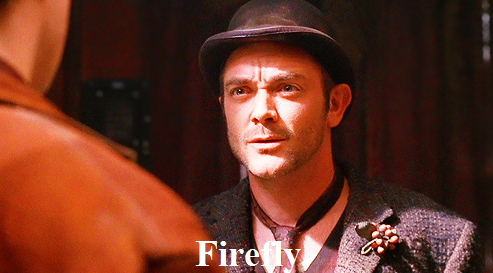
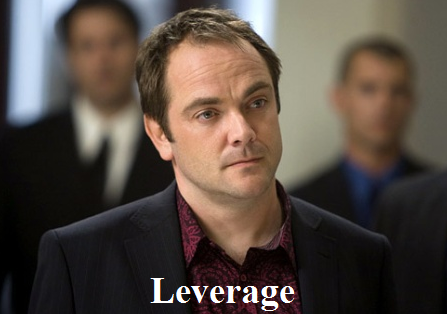
Mark Sheppard: Acting in every nerdy show since 1993.

 White Collar

Step 1: Surprise Mark Sheppard in a suit!

Step 2: ???

Step 3: Profit!

10 Sep 00:56

WSJ: Microsoft Near Deal to Buy Minecraft

by John Gruber

The WSJ:

Microsoft Corp. is in serious discussions to buy Mojang AB, the Swedish company behind the popular “Minecraft” videogame, according to a person with knowledge of the matter.

The deal would be valued at more than $2 billion and could be signed as early as this week, this person said.

Believe it or not, this might be the biggest tech news of the day in the Gruber household.

09 Sep 23:19

Seemingly intoxicated Rob Ford gives subway press-conference

by Cory Doctorow
Zephyr Dear

He has a good shot to win re-election.

In theory, he's completed rehab, has stopped his substance abuse, and is ready to serve another term as mayor [Link] (via Accordion Guy)

09 Sep 17:52

hornyteen1936: the baby boomer culture: how an entire...


hornyteen1936:

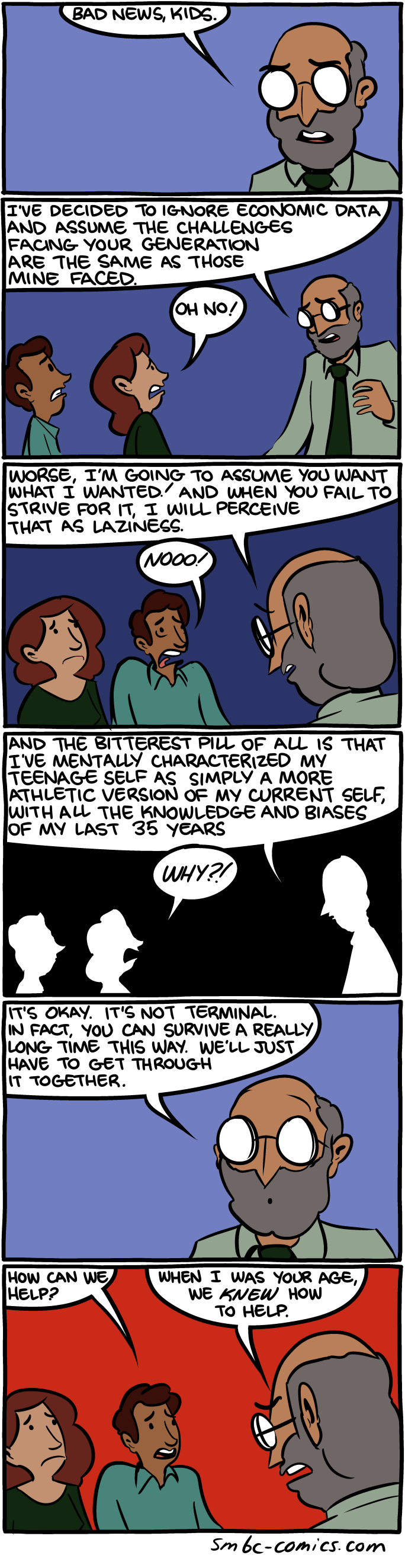
the baby boomer culture: how an entire generation literally will not shut up about young people doing things they enjoy

the rainbow party, jelly bracelet, sexting, vodka tampon, hook-up culture: how an entire generation turned their weird sexual fantasies about young people into righteous moral outrage

09 Sep 17:39

Yea, to every nerd, the tv show they make their significant...


Yea, to every nerd, the tv show they make their significant other watch 

08 Sep 22:05

Relevance

Zephyr Dear

I've felt for a long time that a social network that reeally delivered on signal-to-noise could score massively...

Last week there were a bunch of great posts expounding on the staying power of blogs and RSS. It seems we’re not the only people comparing social media platforms to the open web and we gained a lot of valuable new insight.

All weekend I’ve been thinking about relevance. When Twitter first took off, it delivered. So much of my Twitter feed was filled with timely, interesting material that it became addictive.

But over time Twitter became more of a platform for self-promotion, corporate advertisement, and random, passive-aggressive posts from college roommates. It went from “check out this amazing article I read” to “look at me because I said so.” That’s just not relevant to me.

Facebook never really delivered on relevance, but it was at least new and fresh for a while. Now it feels like an obligation. Happy Birthday. Yes, I like your new hat. Congratulations on your anniversary. Oooh, she’s so cute. And, of course, buy this stuff from Nordstrom.

But blogs and RSS, like email and websites, remain. They are solely focused on delivering relevant information. Could they be better? Heck yes. Check out my queue after I spent several hours reading yesterday:

image

Yikes, that’s a lot of reading left to do. But that’s 2,619 posts with the highest signal to noise ratio I’m going to see all day. We’re hard at work with ideas to make that even better. And we believe that social is going to be the key in improving that ratio.

We’ll have more on that in the future. But for now, let’s all get back to blogging and reading. May your screen be filled with relevance.

08 Sep 21:02

Itchy Taser Trigger Fingers

by Andrew Sullivan

Dara Lind takes a broad look at how cops are trained to use force. A smart point about Tasers:

Thomas Nolan, a criminologist at Merrimack College of Massachusetts, was a police union official in the late 1990s and early 2000s, when Tasers and similar weapons were first being marketed to police officers. He remembers that they were initially sold as an alternative to lethal force — something that could be used in the same situations as lethal force would be, but with a better result. “What vendors were saying, and what policymakers accepted as truth, was ‘You’re going to avoid wrongful-death lawsuits because you don’t have to use deadly force anymore to incapacitate someone, you can use Tasers.'”

That’s not how Tasers are actually used by departments. They’re now, says Nolan, “the default option. Cops are not considering that this is an escalation of force. The Tasers are coming out pretty quickly. Instead of ratcheting down the instances of deadly force, they’re ratcheting up instances of nonlethal force.”

08 Sep 19:40

Alameda Sheriff boots reporter from SWAT show for "unauthorized photos"

by Cory Doctorow

Read the rest

08 Sep 19:35

Victory is Sweet!

by Josh Marshall

Virginia GOP succeeds in denying Medicaid benefits to 375,000 people.

08 Sep 19:21

The referendum question

by Charlie Stross

(I've been under the weather due to a chest bug picked up in Dublin, so haven't had time to write the lengthy article I promised a while ago. Here's it's truncated summary version. Please don't bring up the referendum debate in discussions under other blog posts, okay?)

"Should Scotland be an independent country?"

I have a postal vote. I already voted "yes".

For what is probably an unusual reason ...

Forget all the short term arguments advanced by both sides about what currency Scotland will use, about whether we'll be economically better or worse off, the nature of post-independence Scottish defense policy, whether we remain a monarchy or become a republic, what passport we'll carry, and so on. That stuff is all short-term and will be resolved within a generation.

No, seriously: 95% of the discussion in the referendum debates and on the street has been about short term issues that can be resolved one way or the other in the coming days and months (occasionally, months or single-digit years). There's a remarkable amount of FUD—fear, uncertainty, and doubt—flying around. Many folks seem to think that if Scotland opts for independence on September 18th then on the 19th they'll be stripped of their existing British citizenship, armed border checkpoints will show up on the M76 and A1, and the Queen will be given the boot by the end of the month. (Needless to say, none of this is going to happen.)

In making my mind up, I looked at the long term prospects.

In the long term I favour a Europe—indeed, a world—of much smaller states. I don't just favour breaking up the UK; I favour breaking up the United States, India, and China. Break up the Westphalian system. We live today in a world dominated by two types of group entity; the nation-states with defined borders and treaty obligations that emerged after the end of the 30 Years War, and the transnational corporate entities which thrive atop the free trade framework provided by the treaty organizations binding those Westphalian states together.

I believe the Westphalian nation-state system isn't simply showing its age: it's creaking at the seams and teetering on the edge of catastrophic breakdown. The world today is far smaller than the world of 1648; the entire planet, in travel terms, is shrunk to the size of the English home counties. In 1648 to travel from the south of Scotland (from, say, Berwick-upon-Tweed, the debatable walled border city) to the far north-west would take, at a minimum, a couple of weeks by sea; to travel that distance by land was a harsh journey of hundreds of miles across mountains and bogs and through still-forested glens, on foot or horseback. Today it's a couple of noisy hours on board a turboprop airliner. Distance has collapsed under us. To some extent the definition of the Westphalian state as being able to control its own internal territory was a side-effect of distance: a foreign army couldn't rapidly and easily penetrate the inner lands of a state without fear of retaliation. (Tell that to the residents of the tribal provinces in Pakistan.)

Moreover, our nations today have not only undergone a strange geographical implosion since the 17th century: they have exploded in population terms. The population of the American Colonies in 1790 is estimated at roughly 2.7 million; the United States today has over 300 million inhabitants. In 1780 England and Wales had around 7.5 million inhabitants; they're now at 57 million. So we have a 1-2 order of magnitude increase in population and a 2-3 order of magnitude decrease in travel time ... and possibly a 3-5 order of magnitude decrease in communications latency.

Today we're seeing the fallout from this problem everywhere. Westphalian states can't, for the most part, control their own territory to the extent of keeping intruders out; just look at the ghastly situation in Ukraine right now. Non-state actors play an increasingly huge role in dictating our economic conditions. And it seems to me that something goes badly wrong with representative democracy in polities that grow beyond somewhere in the range 5-15 million people; direct accountability vanishes and we end up with what I've termed the beige dictatorship. Beige isn't the worst colour‐some of the non-beige contenders are distinctly alarming—but their popular appeal is a symptom of an institutional failure, a representational deficit: many voters feel so alienated by the beige that they'll vote for the brownshirts.

My feeling is that we'd be better served by a group of much smaller nations working in a loose confederation or treaty structure. Their job should be to handle local issues (yes, this is localism) while compartmentalizing failure modes: the failure modes of a gigantic imperial power are almost always far worse than those of a smaller nation (compare the disintegration of the Soviet Union with that of Czecheslovakia). Rather than large monolithic states run by people at the top who are so remote from their constituents that they set policy to please lobbyists rather than their electors, I'd prefer to see treaty organizations like NATO and the EU emerging at consensus after discussions among numerous smaller stakeholder entities, where representatives are actually accountable to their electors. (Call me a utopian, if you will.)

Yes, this is also an argument for Wales, the North of England, and London itself all becoming independent nations. But they aren't on the ballot. So Scottish independence is a starting point.

One final note: what about left-internationalism? Isn't nationalism the enemy of the working class? (And to the extent that all of us who aren't in the 0.1% are "working class"—if you have to work to earn a living, you're working class, even if you're a brain surgeon or an accountant—the enemy of all of us?) Well yes: but the kind of nationalism that brought us the Great European War (for the Second World War may best be viewed with the perspective of long-term history as simply a flare-up of the war that began in 1914, after the combatants time out to breed a new generation of cannon-fodder) is pretty much dead. As dead as the Westphalian states that had territorial integrity they could defend, because getting from one to the other still took days or weeks by railway or steam ship, and invading another from the one took days or weeks of marching infantry divisions. Nor is the working "class" still obviously an entity you can point at, with which people share a strong sense of solidarity: where is the solidarity between lawyer and street-sweeper, nursing home care worker and robot designer? Yes, capitalism and the crisis of capitalism is still with us: but the continuing and ongoing recomplication of the world around us makes the traditional movement of masses one of questionable relevance. We need better structures, it's true. But I don't see them emerging from the kind of monolithic, territorially hegemonic state that thinks its place in the world is best secured by building bigger aircraft carriers. Firepower doesn't build external stability, as the past decade in Iraq demonstrates beyond a shadow of a doubt. We need consensus, and we need a finer granularity of constitutional decision making. Hence smaller nation-states.

08 Sep 17:40

Are We Being Baited?

by Andrew Sullivan

Here’s another thing I missed last month: the horrific beheadings of James Foley and Steve Sotloff. Jonah made, I thought, a key point:

Foley and Sotloff are but two among nearly 70 journalists killed while covering the conflict in Syria, hundreds who have been brutally murdered by ISIS jihadists in similarly gruesome fashion, and nearly 200,000 casualties of a civil war gone hopelessly off the rails.

And yet the two beheadings seem to have turned public and elite opinion in ways that none of this previous horror has. In a month, the Daily News Front Page James Foleydiscourse has shifted from whether to counter ISIS to how to do so. In a month, everyone has agreed, it appears, that ISIS is a menace and that there has to be a US-led coalition to degrade and defeat it. The slippery slope toward the logic of war – which would be, by any estimation, a mere continuation of the war begun in 2003 – has been so greased there seems barely any friction.

This is the striking new fact of America this fall: re-starting the war in Iraq is now something that does not elicit immediate and horrified rejection by the president or the Congress. The GOP is daring Obama to go all-in as GWB, Round Two.

We should be wary of this! David Carr has a typically rich assessment of the production values and staging of the two beheading videos by ISIS, and it seems quite clear why they were made:

The executioner is cocky and ruthless, seemingly eager to get to the task at hand. When he does attack his bound victim, only the beginning is shown and then there is a fade to black. Once the picture returns, the head of the victim is carefully arranged on the body, all the violence of the act displayed in a bloody tableau. There is another cutaway, and the next potential victim is shown with a warning that he may be next.

“It is an interesting aesthetic choice not to show the actual beheading,” Alex Gibney, a documentary filmmaker, said. “I can’t be sure, but they seemed to dial it back just enough so that it would get passed around. In a way, it makes it all the more chilling, that it was so carefully stage-managed and edited to achieve the maximum impact.”

Like the horrifying images of 9/11, these images scramble our minds. And they are designed to. They are designed to awake the primordial instincts and the existential fear that Salafist fundamentalists thrive on. The direct spoken message to Obama puts this unbalanced British loser on a par with the president of a super-power – and, by reacting so comprehensively to it – the president has unwittingly given these poseurs a much bigger platform. More to the point, by already committing the United States to ultimately destroying ISIS, the president has committed this country to a war he was elected to avoid. Don’t tell me about “no ground troops”. If your mission is destroying something, and ground troops become at some point essential to that mission, the mission will creep – or they will claim victory.

I will wait and give the president a chance to make his best case Wednesday night. But let me say upfront: I deeply distrust wars that are prompted by this kind of emotion, however justified the emotion may be.

I lost my judgment completely as 9/11 coursed through my frontal cortex – and made errors that helped spawn more terror (like the current ISIS-dominated Sunni insurgency in Iraq). Many, many of us did. And when these slick, cartoonish nihilists press buttons designed to generate a reaction that they can then leverage some more, they are pulling the strings, not us.

The struggle in the Middle East right now is an infinitely complex series of overlapping civil wars, religious wars, and sectarian passions, exacerbated by demography, water, and the breaking of Iraq in 2003. It seems clear they are going to rage for years if not decades. What’s happening in Sunni Iraq right now is exactly what happened during the first insurgency: Salafists taking advantage of Sunni resentment to build an insurgency. But the fissures are obvious: even now, ISIS is murdering fellow Sunnis as well as Shiites and Turkmen and every other kind of infidel. The regional actors – placing bets and money and arms on various factions – pull all sorts of strings that can make any American initiative moot. And if we prevail, we will win no friends, merely new enemies. Notice this important nugget in a recent NYT story on the desperate, besieged Shiite Turkmen of Amerli, who finally defeated ISIS with the help of US air-strikes:

The fact that American air power had helped was not as celebrated. Some of the militiamen had fought the Americans after the invasion of Iraq in 2003. Mr. Abdullah spoke for many when he said, “We do not like the Americans, and we didn’t need their airstrikes.”

And that’s if we save them from imminent death. I’m with James Medaille on this:

Allow me to offer one hard and fast rule: to Americanize a civil war is to lose it. Not immediately, alas. In the short term, you get “mission accomplished”; in the long term, you get defeat. As soon as America takes over, America loses. The Vietnam War was going to be won or lost by the Vietnamese. The only question was which faction would triumph. When one faction entrusted their responsibilities to the Americans, they felt less need to defend themselves. Their defense became an American responsibility. When you outsource your defense, you become defenseless.

If we didn’t learn by now that trying to control or effect change in that part of the world by proxy or directly is a mug’s game, our amnesia truly is debilitating.

I await a full explanation of the actual, specific threat that ISIS poses to the US that requires a declaration of war; I certainly expect that the president should go to the Senate for a declaration of war after a robust debate; and I want an airing of all the many unintended consequences of entering into that vortex again.

What is happening in Iraq right now isn’t a war of Islam against the West. It is Islam against itself. And by making it our war, we may simply be endorsing a self-fulfilling prophesy. If any president were elected to avoid that, it was Obama.

08 Sep 04:30

americansaiko: [最高]ᵗʳᵃᶰᶳᵖᵃʳᵉᶰᵗ [x]ᵒʳᶤᵍ


americansaiko:

[最高]ᵗʳᵃᶰᶳᵖᵃʳᵉᶰᵗ 
[x]ᵒʳᶤᵍ

07 Sep 22:39

September 06, 2014


The slow descent into madness continues...
07 Sep 22:24

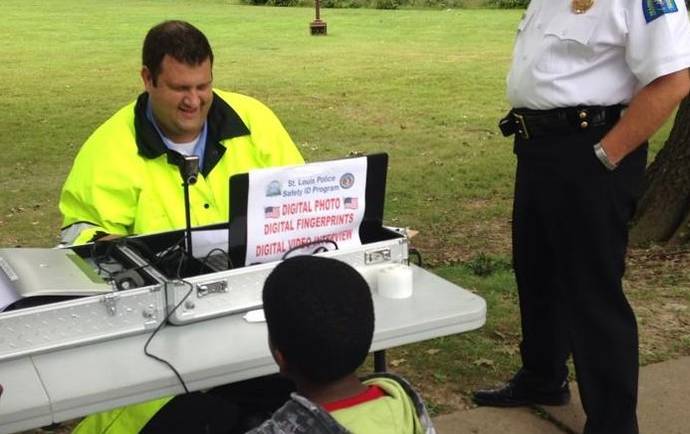
St Louis police offer to fingerprint all the children in #Ferguson

by Cory Doctorow


The free fingerprinting kits are part of the long-running national push to fingerprint children in the name of public safety, and are a new tone-deaf low from the region's cops. Read the rest

07 Sep 22:09

"What it was going to be, we were trying to complicate the relationship between Cap and his..."

“What it was going to be, we were trying to complicate the relationship between Cap and his S.H.I.E.L.D agent friends. If Hawkeye got a call from S.H.I.E.L.D saying Captain America is a fugitive, would he listen to that call or not listen to that call? That sequence actually was heartbreaking for us to cut it. I think it ultimately might have been a conflict with Renner’s schedule. But there was a great sequence where Hawkeye was chasing Cap through Washington D.C. there was an awesome sequence where they confronted each other in a ravine on the outskirts of D.C. and Hawkeye was shooting a series of arrows closing in on Cap, Cap closing in on him. And then Cap took him down and he realized for the first time that Hawkeye was trying to trick S.H.I.E.L.D, where he whispered something into Cap’s ear that Cap had a tracker on his suit and to punch Hawkeye to make it look real, because there was a Quinjet hovering above where they were watching the feedback back at S.H.I.E.L.D. So it was a cool sequence.”

-

Details on the cut Hawkeye sequence from Captain America: The Winter Soldier. (via iputabirdonmyhead)

WHY WAS THIS CUT OMG

(via stuffimgoingtohellfor)

Well now we all know where Hawkeye was during Cap 2.

(via liamdryden)

NOOOOO

07 Sep 22:08

“I recently went to Comic-Con in London, I was invited without...


“I recently went to Comic-Con in London, I was invited without the white male counterpart of my cast. And it was packed. They knew it was just gonna be me. So that shook me. I went back to the green room and I was like… I’ve always been told, and I believed, that this doesn’t work without him.” (x)

05 Sep 21:45

The Road To Democracy May Be Literal

by Dish Staff
by Dish Staff

Christian Caryl makes an interesting argument to that effect:

In Rwanda, decent roads stand for the official commitment to provide everyone with equal access to the fruits of development – concrete evidence, if you will, of the determination to overcome the ethnic divides that led the country into mass slaughter just two decades ago. Every part of the country is relatively close to a good road; no group is excluded. (Nor do you have to have a car to get around; members of Rwanda’s growing middle class can simply hop on one of the country’s ubiquitous minibuses.) Northern Malians can only dream of such conditions.

Roads don’t just enable the movements of goods; they also enable the flow of ideas. … As such, roads are also crucial ingredients of state-building.

Soon after toppling the Taliban in 2001, the U.S.-led coalition that occupied Afghanistan set out to rebuild Highway 1, the ring road linking Kabul with the country’s major urban centers (including Kandahar, the Taliban’s unofficial capital). The idea was to restore a sense of unity to a country that had virtually fallen apart during the long years of civil war. Taliban insurgents immediately vowed to sabotage the project for just the same reason. Today, the dismal story of Highway 1, which is falling apart after $4 billion of Western investment, offers a perfect microcosm of Afghanistan’s roller-coaster struggle to reinvent itself. Afghanistan isn’t unusual in this respect. Take a look at many failed states around the world and you’ll probably be struck by how many of them have bad (or no) roads.

But building too many roads means, in the words of Mark Buchanan, that “wildlife habitats will suffer huge losses and ecosystems will be destroyed, ultimately undermining Earth’s capacity to support human life as well.” Buchanan’s advice on how to minimize the harm:

New research by a group of environmental scientists suggests that better coordination could go a long way toward avoiding this disaster. The key is that vast tracts of settled land, where ecological damage is already significant and probably irreversible, still aren’t very productive. Better access to fertilizers and modern farming technologies would greatly boost the productivity of such areas, thereby reducing the need for development in more sensitive areas.

The researchers have produced a global map showing places on Earth where new roads or road upgrades could have big human benefits, and others where little benefit would be expected despite large environmental costs.

05 Sep 17:55

Investigating Motivation

by Shambhala Times Editor

prairie sunrise, photo by S.LiptonDharma Teaching

by Sakyong Mipham Rinpoche

In Buddhism, it is motivation that defines us what kind of practitioner we are. Simply put, the greater our motivation on the path, the greater our potential.

Traditionally, there are said to be three kinds of motivation: small, medium, and large. Within the small, there are three categories: the small of the small, the middle of the small, and the great of the small. This is also a way of describing our evolution as practitioners, and a teaching about how we relate to our lives.

There is motivation in whatever we do. In general, small motivation is when our goal is simply to be happy and content in this lifetime. When this is our motivation, we are not particularly concerned about what happened before we were born or what happens after we die. Our goal is simply to make ourselves comfortable in this lifetime.

If our motivation is the small of the small, we are worldly people who are not engaged in a spiritual path of any kind. The world is the way it is, and there is no need for further exploration. We’re here and we’re going to try to have a good life. Our thinking revolves around getting what we want, and we use purely worldly means to make ourselves content and happy.

If our motivation is a little bigger than that — the middling of the small — we add some spiritual elements to the project of making ourselves content. Some interest or faith arises: perhaps happiness is deeper than just getting what we want from the world. There is something about hearing spiritual teachings that quenches our thirst, so we turn our mind in that direction. However, our basic motivation is still wanting to be satisfied in this life, and we are very much interested in worldly endeavors.

People with the large of the small motivation operate within the same basic framework — we are primarily interested in personal happiness. However, we’ve seen the pitfalls of samsara. We’ve discovered that on the wheel of suffering, all our attempts to make ourselves happy are thwarted. Passing through one relationship after another, being sick, losing friends and family to death — all these have opened our eyes. And we realize it’s not just us. Pain, suffering, and karma are the basic nature of samsara.

At this point we are starting to be concerned about the next lifetime. We see there is more to life than just satisfying our immediate desires. We think, “At first I just cared about this lifetime, but maybe there’s something more than that. If that’s true, maybe I should start practicing. If I am the product of a previous lifetime, maybe I should do something now that will benefit future lifetimes.” We do not want to plant bad karmic seeds, so we stop creating situations that take us in that direction. We no longer denigrate our mind and body, or cause harm to others.

At this point we have entered the medium motivation. The cyclic nature of samsara has taught us a few lessons. It’s not that samsara is always bad, but it goes on forever. Things may be good for awhile, but then they get worse, so the mind can never really rest. So we are intent on getting out of that cycle. We understand that it inevitably brings pain, and we seek liberation from the round of birth and death. However, at this stage we do not care for others in the way that we care for ourselves. We see suffering, we have renunciation, and we seek liberation — but only for ourselves.

Finally, we have great motivation. Seeing that all sentient beings suffer in the same ways that we do, we seek release from the misery of cyclic existence not only for ourselves but for them as well. We realize that only people who are free from confusion themselves can help others achieve ultimate happiness. We take the welfare of all beings as our responsibility. We strive for unsurpassed enlightenment as the means to bring about that same enlightenment in all sentient beings. This is the view, meditation, and conduct of the Mahayana. This motivation is what it means to be a bodhisattva.

In this culture it can be hard for us to believe in the reality of multiple lifetimes. However, we can ask ourselves, “What if it is true?” Exploring the possibility of past and future lifetimes begins to shift how we look at things. We see how expansive the mind can be. We have seen the horrors of samsara, and the whole situation has become very vivid. We ask ourselves, “Where am I coming from? What do I think is real? Do I think samsara is real, and do I really think it is going to last forever?” Unless we ask questions like this now, we won’t know what to believe at the moment of death. So we turn our mind toward doing something in this lifetime that will help the next life.

Sakyong Mipham Rinpoche, photo by Karen Iglehart

Sakyong Mipham Rinpoche, photo by Karen Iglehart

In meditation there’s sometimes a tendency to regard thinking as no good. However, contemplative meditation, in which we focus on particular concepts such as karma or suffering, can change how we think, literally. By contemplating motivation, we slowly but surely change our mental and emotional approach to what we are trying to accomplish in life. If we get up from our meditation session and find nothing has changed, we have to ask ourselves if we are doing the practice correctly. There is no point to practice if we continue thinking in the same way.

Since we’re bound to be thinking anyway, we might as well be thinking about motivation. That can be very constructive, because as we contemplate our motivation, it grows bigger. The bigger the motivation, the bigger our heart and mind become. As our motivation grows, we become less speedy, less needy, less determined; we’re a little less worried about everything going wrong. We’re able to help others. Whether we believe in past and future lifetimes or not, it is always true that the bigger the motivation, the greater our potential for true happiness.

~~
Learn more about Sakyong Mipham Rinpoche here: www.sakyong.com

Read this article in Spanish (thanks to Luz Rodriguez!).

05 Sep 17:25

What's wrong with your website?

by Seth Godin
Zephyr Dear

relevant to A Little Bit of Personality

Or your Facebook page or your tweets?

Not much.

In real life, it's not unusual for one in four people who walk into your store to buy from you. Not unusual for every friend you call on the phone to have an actual conversation with you. Not surprising that most people you ask on a date say yes, or at least politely decline.

In direct mail, you're doing well if only 99 people out of a hundred say no. Not 25%, but 1% success.

Online, though, the numbers are far worse. It's not unusual for a thousand people to visit your website before someone buys something. It's not news if you ask 5,000 Twitter followers to do something and they all refuse to take action.

Too much noise, too many choices, and most of all, too many people asking for everything, all the time.

People won't click all the things they can click, ever. They won't get three or four or nine clicks into your site no matter how responsive, webkitted and user tested your site is.

Sure, you can probably make it better.

Someone who's really good at it can probably make it measurably better.

But don't beat yourself up that it's not converting. By real-life definitions, nothing online converts. 

The secret is maximizing the things that can't work in real life. The viral effects, the upside of remarkable products and services, the horizontal movement of ideas, from person to person, not from you to the market.

       
05 Sep 17:23

Bravely Leading Us Into The 21st Century

by David Kurtz

After publishing a book review that disdained treating African American slaves as "victims," The Economist "apologises" and concedes that "slavery was an evil system."

Postscript: I'm thinking there's one person especially who's really happy this morning that The Economist still doesn't use bylines. -jm

05 Sep 17:23

No, Really ...

by Josh Marshall

The Economist notes that we can't take the testimonials of slaves who say slavery sucked at face value. Because, did they really speak for all slaves?

05 Sep 17:20

A Ruling Worth Reading

by Dish Staff
by Dish Staff

Yesterday, Judge Richard Posner stuck down the marriage equality bans in Wisconsin and Indiana. His ruling is getting rave reviews from the pro-equality crowd. Dale Carpenter finds “some gems in the opinion that make it good reading for lawyers and non-lawyers alike”:

In short, the opinion is a tour-de-force Posner special. It avoids constitutional-law jargon in favor of substance, omits unnecessary string citations (indeed, whole pages are free of anycitations), and eschews footnotes altogether. It doesn’t hurt the cause of same-sex marriage that, after Learned Hand, Posner is the most influential and prolific federal judge never to serve on the Supreme Court. He’s not always right, but he’s always formidable.

Tisinai loves this part of the opinion:

Heterosexuals get drunk and pregnant, producing unwanted children; their reward is to be allowed to marry. Homosexual couples do not produce unwanted children; their reward is to be denied the right to marry. Go figure.

Dan Savage, who calls the ruling “amazing”, highlights this meatier section of Posner’s:

The harm to homosexuals (and, as we’ll emphasize, to their adopted children) of being denied the right to marry is considerable. Marriage confers respectability on a sexual relationship; to exclude a couple from marriage is thus to deny it a coveted status. Because homosexuality is not a voluntary condition and homosexuals are among the most stigmatized, misunderstood, and discriminated-against minorities in the history of the world, the disparagement of their sexual orientation, implicit in the denial of marriage rights to same-sex couples, is a source of continuing pain to the homosexual community. Not that allowing same-sex marriage will change in the short run the negative views that many Americans hold of same-sex marriage. But it will enhance the status of these marriages in the eyes of other Americans, and in the long run it may convert some of the opponents of such marriage by demonstrating that homosexual married couples are in essential respects, notably in the care of their adopted children, like other married couples.

Garrett Epps wonders how Justice Kennedy will react to Posner’s arguments:

Posner’s major appeal is to an issue dear to Kennedy’s heart: the welfare and dignity not of gays and lesbians but of their children. “Formally these cases are about discrimination against the small homosexual minority in the United States,” Posner writes. “But at a deeper level, as we shall see, they are about the welfare of American children.” Allowing same-sex marriage will allow the adopted children of gay couples equal status with their schoolmates; it will increase their material welfare by allowing benefits and tax deductions; it will increase the number of loving families available to adopt unwanted children; and it will reduce abortion: “The more willing adopters there are, not only the fewer children there will be in foster care or being raised by single mothers but also the fewer abortions there will be.”

It is a roaring steam engine of an opinion, at times exhilarating and at other times puzzling. Is it likely to change minds? No. Its flip dismissal of the political process argument makes it less persuasive than it could have been; Feldman did have a point, even if Posner (and I) think the counterargument is much stronger.

But Ari Ezra Waldman thought the ruling was fitting:

When we started on this journey, states were arguing that gay marriage would do manifest, irreparable damage to the institution of marriage. No one was ever sure what that meant, but even that argument has been sidelined to the trash. By now, the arguments make literally no sense.

Judge Posner, a lion of the appellate judiciary, has had enough. His playful opinion is his way of expressing frustration at the continued life of these anti-equality bromides.

Reflecting on the slew of recent marriage equality decisions, Marc Solomon hopes SCOTUS to rule in favor of equality, and soon:

Just last week, Arizonan Fred McQuire lost his life partner of 45 years—and husband of less than one—to pancreatic cancer. But because Arizona continues to discriminate, he wasn’t allowed even to submit the paperwork for his deceased husband’s VA burial benefits, nor would the state issue him a death certificate for his husband, let alone let him be identified on it as the spouse. Instead, the state insists on listing each of them as “never married.” As a result, McQuire—even as he grieves his profound loss—was forced to file a lawsuit to fight for what the Constitution says he deserves, the dignity and legal respect of marriage.

Every day that goes by while discrimination persists means children throughout the country whose families are denied protections and treated as second-class, and parents and grandparents who don’t live to see the chance to dance at their child’s wedding.