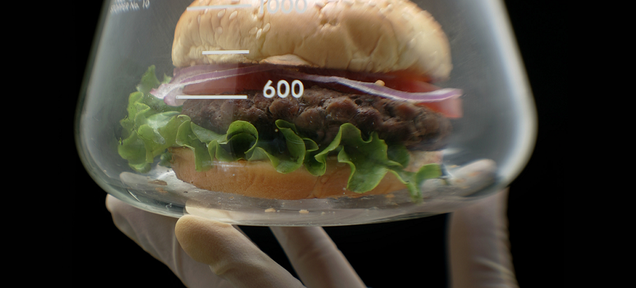
Isaac Asimov and other classic sci-fi writers envisioned a future in which great vats of yeast or bacteria could feed humanity. We’re not there yet, but today’s startups are using yeast cultures to produce milk, egg whites, and even coffee. And if you’re not sure about yeast-brewed egg whites, you can always try lab-grown cultures of beef, produced by a company whose other line of work is “bioprinted leather.”
Think your deliberate, guiding, conscious thoughts are in charge of your actions? Think again. In a provocative new paper in Behavioral and Brain Sciences, a team led by Dr. Ezequiel... read more
In the last half a year or so, we’ve gotten not one but two epic western fantasy RPGs in the form of Dragon Age: Inquisition and The Witcher 3: Wild Hunt. It’s only natural that we’d want to compare them.
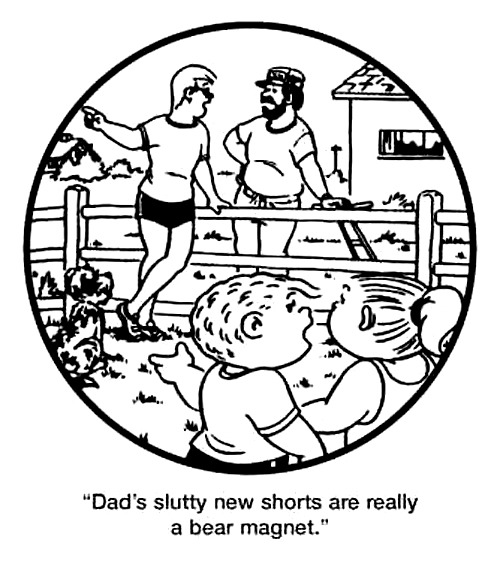
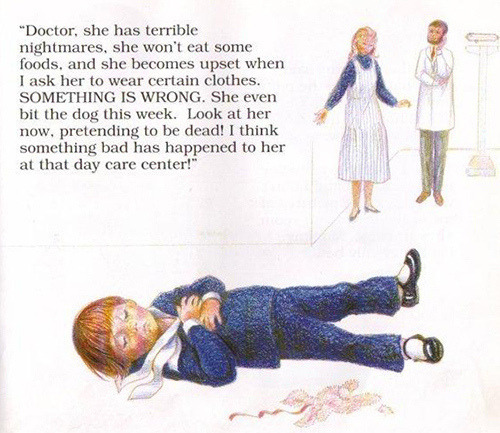
In 1990, in the middle of the moral panic over Satanic ritual abuse (an almost entirely imaginary phenomenon), Doris Sanford published “Don’t Make Me Go Back, Mommy,”
which was “based on months of intensive research into the nature and
practice of satanic ritual abuse.” Sanford claimed that “Any child who
has been ritually abused will recognize the validity of this story.”
The story is a lurid, freakish illustrated tale
ripped from tabloids and sensationalist memoirs, which was supposed to
help parents, teachers and social workers help kids who’d been victims
of this nonexistent epidemic.
by NICHOLAS CONFESSORE, SARAH COHEN and KAREN YOURISH
Presidential candidates have grown deeply dependent on the contributions of a tiny slice of the richest Americans as “super PACs” have raised money much more quickly than hopefuls could have on their own.
If you’ve been to a natural history museum lately, you’re familiar with the glass-walled laboratories where paleontologists and archaeologists give the public a glimpse of their work. It sounds as though Apple is banking on the same level of interest in its day-to-day operations.
Working with yeast and worms, researchers found that incorrect gene expression is a hallmark of aged cells and that reducing such "noise" extends lifespan in these organisms. The team published their findings this month in Genes & Development.
Scarfolk Council was no stranger to invading the privacy of ordinary families. Back in December we introduced you to the council Christmas Boy (see HERE) who strictly monitored the contentment of families during the festive season. We've since received letters asking how the council kept households in check during the rest of the year.
In 1973 the council engineered a genetically modified creature called Roy. He was the result of cross-breeding barn owls with surplus human infants raised by prying, judgemental, lower-middle-class parents. Roy was cloned and delivered to every family in Scarfolk. His job was to oversee domestic affairs, and, if any family member deviated from officially sanctioned activity, Roy was to berate them by tutting and shaking his head.
Unfortunately, there had been a clinical oversight. Volatile poltergeist DNA had accidentally contaminated Roy's genes when a careless scientist left open a lab window which looked out onto a supernatural-energy processing plant. Instead of the envisioned tutting and head-shaking, Roy flew into violent rages, triggering major telekinetic events. There were reports of Roys decimating entire families and, in one case, allegedly annihilating an entire housing estate.
The council was under pressure to recall the defective owls, but because there had been a sudden drop in the numbers of families claiming benefits, it announced instead that Roy was a resounding success and millions more of the human-owl hybrid were commissioned by the police and social services.
Tracking and understanding the complex connections within the brain may finally reveal the neural secret of cognitive ability.
A series of black-and-white snapshots is splayed across the screen, each capturing a thin slice of my brain. The gray-scale pictures would look familiar to anyone who has seen a brain scan, but these images are different. Andrew Frew, a neuroscientist at the University of California, Los Angeles, uses a cursor to select a small square. Thin strands like spaghetti appear, representing the thousands of neural fibers passing through it. A few clicks of the cursor and Frew refines the tract of fibers pictured on the screen, highlighting first my optic nerve, then the fibers passing through a part of the brain that’s crucial for language, then the bundles of motor and sensory nerves that head down to the brain stem.