Rosamund Pike, who stars in Amazon Prime’s forthcoming take on Robert Jordan’s fantasy series, says his female characters are role models. Really?
What is going on with Amazon Prime’s characterisation of The Wheel of Time? I ask this as a fantasy fan, someone who not only adores the classy stuff (NK Jemisin, Guy Gavriel Kay etc) but has also devotedly ploughed her way through The Belgariad, most of Terry Goodkind (until it got too crazy even for me) and Simon R Green. And how many people involved with the forthcoming adaptation have actually marathoned their way through all of the books?
My eyebrows were first raised back when the deal to adapt Robert Jordan’s extremely long series was announced in 2018, when head of Amazon Studios Jennifer Salke praised its “timely narrative featuring powerful women at the core”. Now, I read these books in my late teens, but my resounding memory of them was not of “powerful women”. In fact, I remember thinking Jordan’s depiction of women was pretty dismal – he might have packed in far more female characters than Tolkien ever did, but they’re constantly objectified, forever hoisting their bosoms around, adjusting their skirts – even getting spanked as punishment.
Russia’s latest antisatellite test has created more than 1,500 pieces of space junk. | Getty Images/iStockphoto
The ISS seems fine after a Russian weapons test blew up a defunct satellite, but these incidents could become more common.
Russia shot down one of its Soviet-era satellites in a weapons test on Monday, sending more than 1,500 pieces of trackable debris into space. This forced astronauts on the International Space Station to shelter for about two hours in two spacecraft that could return them to Earth in the event of an imminent collision. While the ISS appears to be in the clear for now, experts say the situation is still dangerous. Satellite operators will likely need to navigate around this new cloud of space junk for several years and possibly decades.
In fact, Russia’s latest missile test may have increased the total amount of space junk, including discarded pieces of rockets and satellites in Earth’s orbit, by as much as 10 percent. These shards are spinning at incredibly fast speeds and risk hitting active satellites that power critical technologies, like GPS navigation and weather forecasting. Space debris like this is actually so dangerous that national security officials are worried it could be used as a weapon in a future space war. In fact, the State Department has already said the Monday missile test is evidence that Russia is more than willing to create debris that jeopardizes the safety of all countries operating in low-Earth orbit, and even risks disrupting the peace in space.
These risks have only heightened concerns that we’re far from solving the space junk problem, especially as private companies and foreign governments launch thousands of new satellites into orbit — inevitably creating even more space junk.
Monday’s events, however, were more politically fraught than your average space debris incident. The Russian government launched a so-called antisatellite test (ASAT), which, as the name implies, is designed to destroy satellites in orbit. Launched from a site a few hundred miles north of Moscow, the missile struck a non-operational Russian spy satellite called Kosmos-1408 that had been orbiting the Earth since 1982. The satellite has now been broken into thousands of pieces that are currently whizzing around Earth at about 17,000 miles an hour, passing the International Space Station approximately every 90 minutes. While astronauts no longer need to shelter, the threat to the ISS or other satellites has not gone away.
“I’m outraged by this irresponsible and destabilizing action,” NASA administrator Bill Nelson said in a statement. “With its long and storied history in human spaceflight, it is unthinkable that Russia would endanger not only the American and international partner astronauts on the ISS, but also their own cosmonauts.” Nelson added that Russia’s actions were “reckless and dangerous” and also imperiled those aboard China’s Tiangong space station.
While Russia admitted to destroying a satellite in the recent test, its defense ministry insisted the event did not put the ISS at risk.
Russia is one of four countries, including India, the US, and China, to blow up its own satelliteusing an antisatellite missile. This trend is alarming because governments with ASAT systems could use the tech to attack other countries’ satellites, turning space into a battlefield. But even if countries only target their own space objects, Russia’s missile test shows how governments can also use antisatellite missiles to create debris that endangers every country, company, or person operating in orbit. And again, once this debris is created, it can remain a threat for years. Just last week, the ISS had to adjust its altitude by about a mile to avoid hitting space debris from a satellite that China shot down in 2007.
The space junk problem is only getting bigger, too. Right now, there are more than 100 million pieces of space trash larger than a millimeter orbiting Earth, according to NASA. And as of May, the Department of Defense tracked more than 27,000 larger pieces of orbital debris, but even smaller pieces can still pose a massive danger to other satellites and space stations because of the incredibly high velocity at which they travel.
“I don’t think you can overstate the danger of space debris at this point,” Wendy Whitman Cobb, a professor at the US Air Force School of Air and Space Studies, told Recode. “As you create more debris, the chances of that debris hitting other things and creating more debris kind of just grows.”
What makes the space junk problem especially difficult is that no one has taken responsibility for it. According to the Outer Space Treaty, the foundation of international space law, countries remain the proprietors of whatever objects they send into space, so Russia still technically owns all the satellite fragments created by its Monday missile test. There isn’t a global consensus on what the penalties for creating space junk should be, and tracking and attributing different pieces of debris to different countries’ space operations is still difficult.
Government agencies and private space companies are developing technology to remove space junk, like nets that could catch debris in orbit and devices that would push satellites into the atmosphere to disintegrate. But there’s concern that governments could use the very same tools to take down another country’s satellites. At the same time, the cost of creating space junk — and removing it — is rarely factored into the decision to launch a vehicle or satellite into space.
“In a lot of ways, this is the same type of problem, an environmental issue that we’ve been dealing with on Earth in many, many forms,” Akhil Rao, an economist at Middlebury who has studied space debris, told Recode. “We’ve struggled with fisheries collapse, we’ve struggled with atmospheric pollution, [and] we’ve struggled with ozone depletion.”
Right now, the best way we have right now to ameliorate the many risks of orbital debris is to not create space junk in the first place. That might happen through better international cooperation or creating new economic incentives for private companies, but the sooner it happens, the better. While we’re generally able to navigate around the space junk that already exists, that will get more and more difficult as more debris builds up. And if we don’t figure out a solution in time, we could end up in a situation where low-Earth orbit is so packed with space trash that it’s unnavigable.
Enlarge / Bethesda's logo as carried by the publisher's growing roster of mascots. (credit: Sam Machkovech)
Since Microsoft purchased Bethesda Softworks (via parent company ZeniMax Media) last September, the question of Bethesda games on non-Xbox consoles has been on everyone's minds. This week, Microsoft put probably the final nail in that conversational coffin, with Xbox chief Phil Spencer confirming in an interview with British GQ magazine that the upcoming Elder Scrolls VI will be available only on Xbox consoles and the PC.
In a quote that doesn't seem likely to soothe many PlayStation owners, Spencer said the exclusivity is "not about punishing any other platform, like I fundamentally believe all of the platforms can continue to grow." Instead, Spencer was focused on "be[ing] able to bring the full complete package of what we have" with the company's games, meaning integration with Xbox Live, Game Pass, Xbox Cloud Gaming, etc. "And that would be true when I think about Elder Scrolls VI," he added. "That would be true when I think about any of our franchises."
An announcement 14 months in the making
The confirmation ends over a year of coyness and mealymouthed statements about the exclusivity of major Bethesda games. The ordeal started with a Bloomberg interview last September in which Spencer said future Bethesda titles would be considered for non-Xbox consoles "on a case-by-case basis." An in November, Xbox CFO Tim Stuart was saying publicly that Microsoft wanted Bethesda content to be "first or better or best" on Xbox rather than necessarily exclusive to the platform.
Just hours after Mayor Muriel Bowser announced the end of DC’s indoor mask mandate, Montgomery County officials announced that the county’s indoor mask mandate will be return on Saturday. According to health officials, the county has seen seven consecutive days of “substantial transmission” of coronavirus. As of Tuesday, November 16, the county reported about 60 people […]
Mayor Muriel Bowser announced this morning that the city will lift the current indoor mask mandate on Monday, November 22. Bowser says that coronavirus vaccines are working, and they are preventing people from getting severely ill and dying from Covid. According to DC Health, almost 80 percent of DC residents have received at least one […]
David Leonhardt for The New York Times looked at the partisan gap for Covid deaths and cases. It keeps getting wider:
The brief version: The gap in Covid’s death toll between red and blue America has grown faster over the past month than at any previous point.
In October, 25 out of every 100,000 residents of heavily Trump counties died from Covid, more than three times higher than the rate in heavily Biden counties (7.8 per 100,000). October was the fifth consecutive month that the percentage gap between the death rates in Trump counties and Biden counties widened.
Enlarge / Biogen Inc. headquarters in Cambridge, Massachusetts. Biogen Inc. shares soared after its controversial Alzheimer's disease therapy was approved by US regulators. (credit: Getty | Bloomberg)
Seniors throughout the US will see a hefty increase to their health care premiums next year thanks in large part to Biogen's Alzheimer's drug, Aduhelm, which is priced at $56,000 per year and is not proven to be clearly effective at treating Alzheimer's.
The Centers for Medicare & Medicaid Services (CMS) announced Friday that the standard monthly premium for Medicare Part B will rise from $148.50 in 2021 to $170.10 in 2022, an increase of $21.60 or roughly 14.5 percent. It is the largest increase ever in terms of dollars and among the largest percentage increases in recent years.
CMS officials said Friday that Aduhelm was responsible for about half of the rise in Part B premiums, according to the Associated Press. Though the CMS is still determining how it will cover Aduhelm under Part B, the agency said the prospect of paying for Aduhelm at all required "additional contingency reserves."
The semiconductor industry lives at the cutting edge of technological progress. So why can’t it churn out enough chips to keep the world moving?
Nearly two years into pandemic-caused disruptions, a severe shortage of computer chips—the components at the heart of smartphones, laptops, and innumerable other products—continues to affect manufacturers across the global economy.
Enlarge / FLORIDA, 11/09/2021: A boy gives a nurse a high-five before receiving a shot of the Pfizer COVID-19 vaccine at a vaccination site for children aged 5 to 11. (credit: Getty | SOPA images)
The White House touted the success of COVID-19 vaccine mandates Wednesday as more of the country's unvaccinated are rolling up their sleeves.
In the last seven days, the country has averaged 300,000 first doses per day, White House COVID-19 response coordinator Jeff Zients noted in a press briefing today. The weekly total is the highest in nearly a month, Zients added.
Overall, the number of unvaccinated people eligible for a COVID-19 vaccine (people ages 12 and up) has dropped 40 percent since July. That is, the number of unvaccinated fell from about 100 million to less than 60 million.
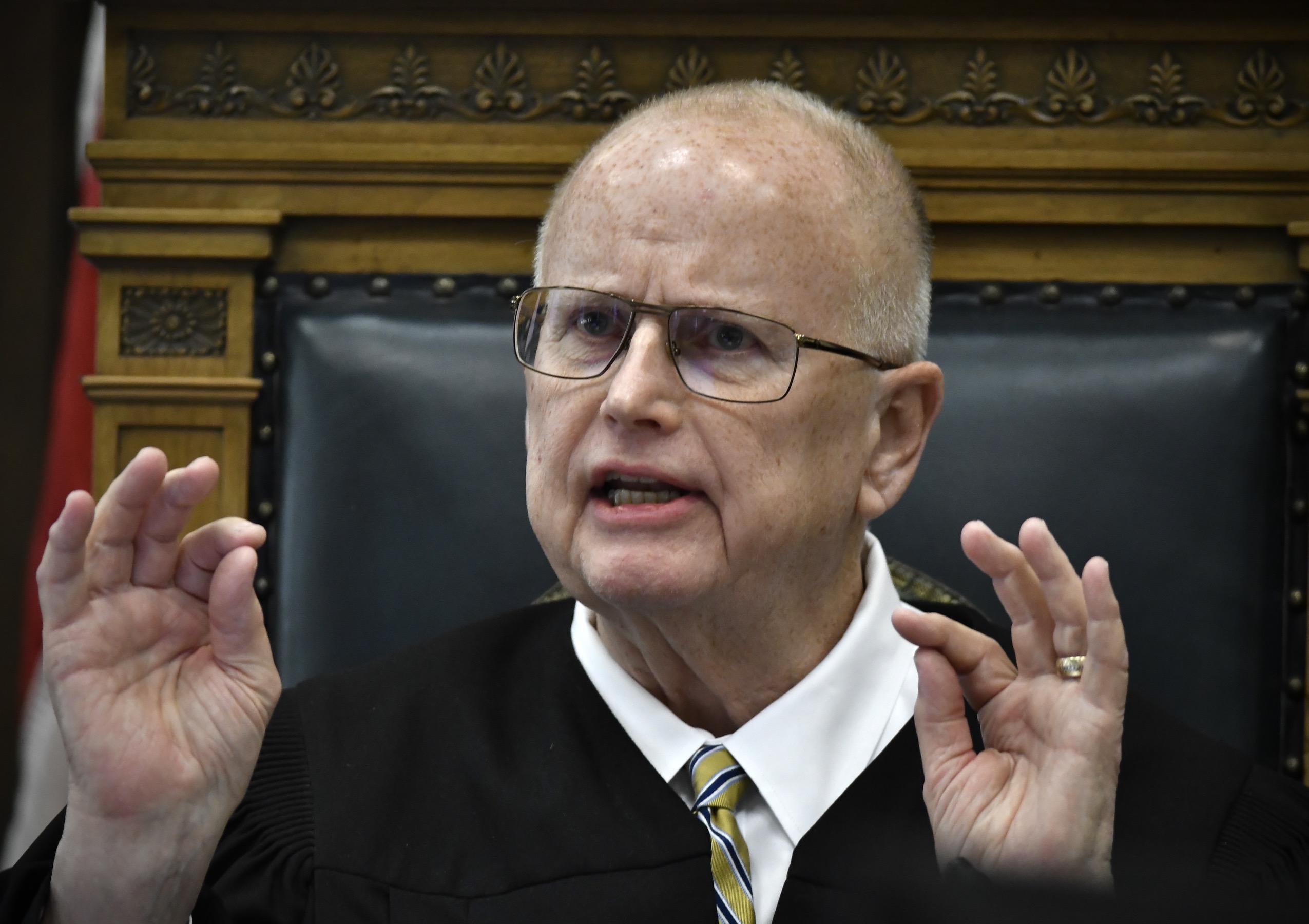
Enlarge / Judge Bruce Schroeder reprimands Assistant District Attorney Thomas Binger during cross-examination of Kyle Rittenhouse at the Kenosha County Courthouse in Wisconsin on November 10, 2021. (credit: Getty Images | Pool)
When Kenosha County prosecutor Thomas Binger cross-examined murder suspect Kyle Rittenhouse yesterday, he wanted to show Rittenhouse video on an iPad and use a touchscreen feature that phone and tablet owners around the world use every day: pinch-to-zoom.
Judge Bruce Schroeder's ruling? You shall not pinch.
Schroeder prevented Binger from pinching and zooming after Rittenhouse's defense attorney Mark Richards claimed that when a user zooms in on a video, "Apple's iPad programming creat[es] what it thinks is there, not what necessarily is there." Richards provided no evidence for this claim and admitted that he doesn't understand how the pinch-to-zoom feature works, but the judge decided the burden was on the prosecution to prove that zooming in doesn't add new images into the video.
Janet Jackson was able to transcend America’s misogynoir — until the Super Bowl.
In the Purity Chronicles, Vox looks back at the sexual and gendered mores of the late ’90s and 2000s, one pop culture phenomenon at a time. Read more here.
There was something in the air in the 2000s. It was as though American culture was obsessed with ripping away women’s clothes and then blaming them for it. Paris Hilton, Britney Spears, Kim Kardashian. Upskirt photos, leaked sex tapes, leaked nudes; teary-eyed apologies, snide jokes on late-night television, righteous op-eds in the newspapers. Every day we were acting out literally what was happening in the cultural marketplace, where women faced commercial and structural pressures to market themselves with highly sexualized images and then were called whores and sluts for doing so.
Perhaps no event more clearly captures this moment in cultural history than what happened to Janet Jackson after the Wardrobe Malfunction of 2004.
The Wardrobe Malfunction (also known as Nipplegate) occurred on February 1, 2004, during the Super Bowl 38 halftime show live on CBS. Pop supernova Janet Jackson had finished performing her 1989 classic “Rhythm Nation,” and the young up-and-comer Justin Timberlake had just joined her onstage to croon his new single “Rock Your Body.” As Timberlake arrived at his final line — “Gotta have you naked by the end of this song” — he reached for Jackson’s black leather bustier and tugged. The leather collapsed, and Jackson’s breast, partially obscured by a silver nipple shield, appeared on TV for nine-sixteenths of a second.
For that fraction of a second, the FCC would receive a record 540,000 complaints and fine CBS a record $550,000 (the fee was later voided by a federal appeals court, which noted that advocacy groups may have been behind many of the complaints). Jackson would see her career go into a tailspin from which it would never truly recover.
She was disinvited from the Grammys. Her new album was panned. When she showed up on TV for interviews and performances, many stations made a point of announcing they had adopted a five-second delay, lest she be tempted to show her breasts to America again. Her songs stopped playing on the radio, on MTV, on VH1. Sales of her music plummeted.
The consensus at the time was that Jackson brought all this on herself on purpose — that she had cunningly plotted to expose her bare breast on TV in a tacky publicity stunt, a sleazy demand for attention from an aging pop star past her prime.
Jackson herself maintained otherwise. What actually happened, she said, was that Timberlake was supposed to have removed part of her bustier to reveal a red bra in a sort of PG-13 striptease — but he ended up accidentally ripping the bra along with the rest of her top.
This story made little impact. Neither did photographs of the aftermath of the so-called Malfunction, which saw Jackson huddling into her torn clothing and trying desperately to cover herself, with the face of a woman who very much did not intend to show America her nipple.
Kevin Mazur/WireImage
Janet Jackson covers herself post-Malfunction as Justin Timberlake looks on at the 2004 Super Bowl halftime show.
Everyone seemed to instinctively know, back then, that when a woman’s body and sexuality were violated, the person to blame was the woman, especially if she was a woman of color. She brought it on herself by having a body.
From the vantage point of 2021, the racial and gender overtones of that credo look fairly clear. Even Timberlake, who despite doing the actual clothes-ripping received almost none of the blame for the malfunction, acknowledged as much. “America’s harsher on women” and “ethnic people,” he explained to MTV in 2006. (Earlier this year, Timberlake offered an apology to Jackson for letting her take the fall.)
But it’s worth taking a closer look at how the controversy interacted with what had been Jackson’s image up until the 2004 Super Bowl. For much of her career, Janet Jackson was an exemplar for an unusually carefree model of the sexuality of Black women, an icon of a Black woman whose sexuality was neither predatory nor shameful but only unapologetically focused on her own pleasure. The Wardrobe Malfunction ripped that image to shreds, in ways that still have consequences today.
“She’s one cool girl, this Janet Jackson”
Janet Jackson debuted her first album in 1982. She was 16 years old, managed by her father Joe Jackson, and at Joe’s insistence just beginning to transition away from her child star acting roles into the sort of music Joe approved of for a young lady: sweet bubblegum pop.
Two weeks after Janet Jackson came out to modest critical and commercial success, another Jackson dropped a record. Janet’s older brother Michael released the instantly iconic Thriller, and from then on it looked as though the story of Janet Jackson was set. She would be one of the also-ran Jacksons, one of the siblings who wasn’t Michael. She was, the public seemed quick to conclude, riding on his coattails to fame with a passable voice, admittedly impressive dance skills, and a few forgettable tunes.
Instead of accepting this second-rate status, Janet Jackson changed the narrative. She fired her father, brought in new producers and a new image consultant, and in 1986 she released the album that would be her commercial breakthrough. It was called Control, as in Janet Jackson is in... . It sent the message that Janet Jackson was no longer an also-ran. She was one of the Jacksons to watch.
Control, for which Jackson took a co-writer and co-producer credit, was her first bestseller. It would go on to sell over 10 million copies and earned Jackson approving press blurbs about how she was “more than a little sister.” Along with its 1989 follow-up Rhythm Nation (12 million copies), Control established the paradox that would come to underly Jackson’s star image for the next decade.
Jackson seemed to represent coolness. With her sharp, confident dancing, her swagger, her style, she was right at the cutting edge of all that was in vogue. But the second she stepped off a stage, her screen presence would turn in on itself. All of a sudden, she would become utterly reserved, sweetly shy and apparently eager to please.
That quality was endearing, a New York Times critic wrote in a 1990 review of a Janet Jackson concert. It kept her from seeming threatening. “Miss Jackson herself is clearly diligent and eager to please,” critic Jon Pareles wrote. “She’s pushing herself onstage — she sweats — and her relative inexperience keeps her from seeming arrogant. Trying to replicate the unearthly perfection of a longtime trouper like her brother may be impossible, and it’s not exactly a good long-term strategy. But in her first tour, she works hard enough and comes close enough to make a listener want to root for her.”
“She’s cool and very self-possessed,” wrote a reporter for Spin in 1987, in a paragraph that conflated Jackson’s social restraint with her refusal to eat during a photo shoot. “Janet gives off the kind of keep-your-distance signals that can chill any attempt at overfamiliarity. … While everyone else stuffs his face over the course of the three-hour shoot, Janet doesn’t eat much. Just an apple, an occasional grape. She’s one cool girl, this Janet Jackson.”
If you like, you could read Spin’s both approving and somewhat mystifying argument that Jackson’s cool temperament and cool appetite are connected as a way of talking about a different appetite: a sexual appetite. The classic racist trope in American pop culture is to imagine Black women as sexually voracious and predatory, their bodies lustful and out of control. But it was clear early on that Janet Jackson kept a firm lid on her desires: She was one cool girl. That would be important when she began developing her image further.
With 1993’s Janet (officially stylized janet.), Jackson introduced a major new element to the star image she had begun to build: sex. Jackson’s early albums had included chastity ballads about waiting for marriage, but Janet featured songs about oral sex, masturbation, and general good old-fashioned fucking (within the confines of a monogamous heterosexual relationship of mutual affection and respect).
“Sex has been an important part of me for several years,” Jackson explained to Rolling Stone, in a cover story that showed her then-husband René Elizondo Jr. cupping her bare breasts with his hands. “But it just hasn’t blossomed publicly until now. I’ve had to go through some changes and shed some old attitudes before feeling completely comfortable with my body. Listening to my new record, people intuitively understand the change in me.”
Improbably, the critics went wild. Even in 1993, it was clear that Jackson’s move was a very big deal. American culture was rarely willing to see Black women as fully sexualized and fully human at the same time — but Jackson had managed to pull off the balancing act without letting anyone rob her of her dignity in the process.
“Janet.’s Janet is a more complete sexual being than most of pop’s black women are allowed or allow themselves to be,” Rolling Stone acknowledged in its review. “A significant, even revolutionary transition in the sexual history and popular iconography of black women — who have historically needed to do nothing to be considered overtly sexual — is struck as the what-have-you-done-for-me-lately? girl declares herself the what-I’ll-do-to-you-baby! woman. The princess of America’s black royal family has announced herself sexually mature and surrendered none of her crown’s luster in the process. Black women and their friends, lovers and children have a victory in Janet.”
Jackson’s transition from sweet teenybopper to sexual woman was a game changer. It established the template that generations of pop stars would follow in the decades to come: not just Beyoncé and Rihanna, but also white singers like Britney Spears and Miley Cyrus. They know what to do as they set themselves up to perform maturity because they saw Janet Jackson successfully pull it off first.
And part of what made Jackson’s unapologetic sexuality in her albums and on the dance floor so palatable to critics was that she was so shy whenever she wasn’t performing.
In the Rolling Stone cover story, journalist David Ritz describes watching Jackson shoot the music video for her new single “If,” which features some mock cunnilingus. “I’m stimulated,” Ritz admits — but he finds to his apparent dismay that he is unable to say as much to Jackson’s face.
“As silly as it sounds, I sense myself protecting her from the brashness of my own balls-out approach,” Ritz muses. “What is it? Wholesomeness — that’s what it is. Femininity. Up close, in the flesh, she’s being so damn sincere, I question my own sincerity; Janet Jackson gives off a good-girl vibe that only a cad would challenge. Despite this new album and its preoccupation with carnal knowledge, despite this battery of sizzling videos, Janet silently demands decorum on the part of an interviewer.”
Embedded in this passage is the general idea that by dancing in an overtly sexual manner, Jackson has put sex on the conversational table. But what Ritz calls Jackson’s “good-girl vibe” has prevented that transition from actually taking place. Her endearing diligence — that underdog A-student good girl reserve the New York Times spotted in Jackson in 1990 — seems to be somehow protecting her from any prurience.
It was this contradiction, Ritz would conclude, this “tension between the erotic and the innocent” that was “the essence of Janet Jackson.”
Perhaps no one without the status of a Jackson, part of R&B’s royal family, could have walked such a fine line. Regardless, Janet Jackson did it. She managed to unapologetically perform a Black female sexuality that was joyous and unashamed, and the critics didn’t even try to condemn her for it.
Ron Galella, Ltd./Ron Galella Collection via Getty Images
Janet Jackson at a children’s charity gala at the Century Plaza Hotel in Los Angeles in 1991.
Richard Corkery/NY Daily News Archive via Getty Images
Janet Jackson performs in concert at Madison Square Garden in 1993.
They didn’t feel the need to, because Jackson’s image when she wasn’t performing was so icily pure, so wholesome, so palpably flinching away from the spotlight. No one could consider soft-spoken Janet a predator when her eyes went wide and her voice shook every time she gave an interview. Her shyness seemed to give her plausible deniability: It turned the sexuality of her music into a fantasy, something playful and fictional and largely theoretical.
Then her bra ripped on national television, and Jackson’s body and sexuality were catapulted into the realm of the real. Immediately, everything changed.
“Something about Jackson — her impenetrable demeanor, her candy-apple face — doesn’t jibe with her image at its sauciest”
Because it was a cardinal belief of the press in the 2000s that any woman who was the victim of a sexual violation did it on purpose, for the attention, observers of any given scandal could demonstrate their savviness by loudly proclaiming this opinion. The rule held as true for the Wardrobe Malfunction as it did for anything else.
Jackson issued a public apology for what had happened, but it seemed to have little effect. Rapidly, conventional wisdom emerged: Janet Jackson shamelessly arranged to have her clothes ripped off on national TV as a cunning, hyper-sexualized ploy for attention, which she needed because at 37 she was a dried-up old hag whose career was failing. As such, she was proof of the degradation of our cultural values and had personally violated the innocence of America’s children.
“You can argue that Ms. Jackson is the only honest figure in this Super Bowl of hypocrisy,” wrote Frank Rich in the New York Times, in a column ostensibly written in Jackson’s defense but with a sneering, condescending tone. “She was out to accomplish a naked agenda — the resuscitation of her fading career on the eve of her new album’s release — and so she did.”
“Of course, Janet was baiting us with that ‘costume reveal,’” argued the Washington Post knowingly, “and just as obviously she didn’t realize at the time how much chum she was throwing in the water.” The Post, like Rich, thought that Jackson had planned the whole thing to promote her new album, Damita Jo — slated for release the month after the Super Bowl — in an attempt to compete with R&B’s younger singers as she neared 40. “Janet has decided that the only way to fight her imitators is get even racier than they get,” the Post concluded. “Even if that might cost her a little dignity.”
“One of the reasons it is difficult to believe in the ‘wardrobe malfunction’ story is because, on the evidence of this album, Jackson is an extremely savvy operator,” mused the Guardian in a review of Damita Jo. “You can see what Jackson is straining for on [the songs] Warmth and Sexhibition, just as you can see why, at 38 years old, she would feel the need to flash her nipple at a television audience of 90 million. The world of R&B is obsessed with novelty and packed with lubricious ladies and lothario lovermen. Jackson is trying to send out a signal: you may be younger than me, but I am prepared to go further.”
Before the Super Bowl, Jackson’s palpable shyness had signaled that her sexuality was not a threat. After the Super Bowl, her shyness became proof that she was dishonest. “In retrospect, the most startling aspect of Janet Jackson’s Super Bowl-flasher moment was how unstartling it was,” argued EW. “As amply demonstrated that evening, she works so hard at being sexy and provocative that she’s rarely either. Something about Jackson — her impenetrable demeanor, her candy-apple face — doesn’t jibe with her image at its sauciest.”
This theory that Jackson had intentionally flashed the audience in an attempt to juice up a fading career doesn’t hold up under much examination. Jackson was invited to perform at the Super Bowl halftime show precisely because she was at the top of her career. Her most recent album, 2001’s All for You, had debuted at No. 1 on Billboard, tallied one of the biggest opening sales weeks of any of Jackson’s albums, earned three Grammy nominations, and gone double platinum. Her career wasn’t flagging, and she didn’t need extra attention. She was at the top. She was the establishment.
Moreover, the carefully fine line that Jackson had been walking for the past decade proved that she was very savvy indeed: far too savvy to think that a Black woman flashing her breast on live TV would ever work out well for her.
Predictably, it didn’t work out well. Les Moonves, then newly installed as CEO of CBS Corporation, apparently considered the Wardrobe Malfunction a personal embarrassment. According to a report in HuffPost in 2018, Moonves gave Timberlake a pass because Timberlake called him in tears to personally apologize. Jackson, meanwhile, only apologized publicly, never in private — and so Moonves, declaring her insufficiently unrepentant, vengefully blacklisted her.
Moonves was forced to step down from CBS in 2018, after multiple accusations of sexual harassment, sexual assault, and abuse. But in 2004, his word was law at CBS Corporation, whose sister companies at the time included Viacom properties VH1, MTV, and BET, as well as multiple radio stations and the book publisher Simon & Schuster. All of them were instructed to stop working with Jackson.
According to HuffPost, when a Simon & Schuster imprint signed Jackson’s memoir True You in 2011, Moonves was furious. “How the fuck did she slip through?” he demanded.
“She’s morphing into an aging porn starlet of the most tragic type”
Whether Jackson planned the Wardrobe Malfunction or not, those nine-sixteenths of a second at the Super Bowl destroyed her carefully guarded plausible deniability. Her body and sexuality surged past the boundaries of performance to become something viscerally present, potentially threatening. Simultaneously, her body and sexuality became laughable, ridiculous, an object of mockery. That narrative would spread to the reception of Jackson’s 2004 album, Damita Jo.
In 1990, the sexuality of Janet had been a revelation, a liberation, something to celebrate. In 2004, critics considered the sexuality of Damita Jo to be self-evidently something to mock.
“It’s not just that there’s no depth to her boudoir insights and philosophical musings, or that the bulk of her lyrics manage the unimpressive feat of being explicit and banal,” opined the LA Weekly, “but that she’s morphing into an aging porn starlet of the most tragic type — chasing relevance with ever bigger hair, ever bigger boobs, and a willingness to fall to her knees in mirthless, monotonous mimicry of sexual ecstasy. It’s like, after all the fucking and talking about fucking that she’s done, she has almost no idea what true liberation — or even pleasure — really is.”
The world was determined to see Jackson as shameless, past her prime, clawing desperately for attention and relevance she had not earned
“A youngster can get X-rated and come across as a wayward kid who has plenty of time to straighten out her act. Ms. Jackson is 37,” tsked the Washington Post. “When she moans and boasts through ‘Warmth’ — one of the more explicit paeans to oral sex you’ll ever hear on a major label — she sounds like she knows better and is pretending that she doesn’t.”
In the time since 2004, Damita Jo has enjoyed a critical reevaluation. After Jackson’s fan base pushed #JusticeForDamitaJo to trend on Twitter in 2019, a new narrative emerged that argues for Damita Jo’s status as a landmark album within Jackson’s storied career, and as another chapter in her long history of celebrating Black women’s sexuality without apology.
“Damita Jo deserves our attention and, yes, justice, not just as a reparative formality but because its specific depiction of sexuality in a mainstream forum — a superstar’s major-label, highly anticipated album — is extraordinary,” declared Pitchfork in 2019. “Damita Jo is not just rare for being a piece of mainstream erotica authored by a black woman — it’s also mainstream erotica that isn’t mired in darkness or shame.”
That Pitchfork reevaluation was part of a larger post-Me Too redemption of Janet Jackson. In 2019, she entered the Rock & Roll Hall of Fame and launched a well-received residency in Las Vegas. She continues to tour and release albums, and she has lasted long enough to see the popular consensus on the Wardrobe Malfunction shift from “She did it on purpose” to “It’s a shame that happened to her.”
Still, Jackson has never again achieved the height of ubiquity, the understanding that her albums would as a matter of course be played on every Top 40 radio station out there, that she had before the 2004 Super Bowl. That level of fame and success was forever stripped away.
And within the context of 2004, Damita Jo existed not as an album worthy of critical appraisal but as evidence for Jackson’s supposed sex-mad deviance. The world was determined to see Jackson as shameless, past her prime, clawing desperately for attention and relevance she had not earned with tacky, trying-too-hard attempts at shocking sex appeal. Damita Jo, along with the rest of Jackson’s career to that point, was all interpreted to fit the argument.
It is worth remembering that this argument was molded by, among others, a white man with a reported history of sexual harassment. And in order to mold that argument, he allowed the white man who actually ripped Jackson’s clothes off to skate through the controversy with minimal consequences. But the overall narrative was produced and disseminated by a culture in which the bodies of Black women are considered inherently sexual, inherently threatening, and inherently humiliating.
It took all of Janet Jackson’s star power combined with all her fiercely held private reserve to force America to treat her as an exception to that rule. The moment her reserve broke — even when Jackson was not the one to break it — she became subject to the normal rules of racism and misogyny once again.
Enlarge / Sorry to anyone who expected Steam Deck to launch by the end of 2021. (credit: Aurich Lawson vs DC Comics)
The Steam Deck, Valve's first "Switch-like" portable PC, has officially been delayed from its original December 2021 launch window. The company's Wednesday announcement confirmed that all orders have been "bumped two months," which means the SteamOS device will reach customers no earlier than February 2022.
"We’re sorry about this—we did our best to work around the global supply chain issues, but due to material shortages, components aren’t reaching our manufacturing facilities in time for us to meet our initial launch dates," the company wrote in an update on the Steam Deck's official store page. Though Valve's statement doesn't say which materials caused the delay, it's likely that the global chip shortage is to blame.
Valve says it still plans to fulfill purchases for all three Steam Deck models in the order they were received. The company has already updated the system's Steam store page to inform customers of new shipment estimates, and Ars Technica can confirm that a previous "Q4 2021" order is now listed as coming in "Q1 2022."
In the small world of Metrorail obsessives, the Rosslyn Tunnel Bottleneck is kind of a big deal. So when a September report commissioned by the transit system recommended a new tunnel under the Potomac, transit advocates exulted: Many of the system’s current delays can be traced to the fact that there’s only one tube into […]
In September, US District Judge Yvonne Gonzalez Rogers ruled that Apple must allow iOS developers to direct users to external content-purchasing mechanisms outside of the App Store's built-in In-App Purchases. Tuesday night, Rogers refused Apple's request to stay that ruling, setting the stage for it to go into effect December 9 pending further appeal.
In a blunt four-page ruling, Judge Rogers said Apple's motion for a stay, filed last month, is "fundamentally flawed" and "based on a selective reading of this Court’s findings and ignores all of the findings which supported the injunction, namely incipient antitrust conduct including supercompetitive commission rates resulting in extraordinarily high operating margins and which have not been correlated to the value of its intellectual property."
Apple's anti-steering provisions, which prevent app makers from telling users about alternate payment methods inside of the apps themselves, "are one of the key provisions upon which Apple has been able to successfully charge supracompetitive commissions untethered to its intellectual property," Judge Rogers writes. Those provisions depress royalty rates for Epic's Unreal Engine specifically and "in the industry generally" she continues.
The North Carolina state seal outside the state legislature. | Al Drago/CQ Roll Call/Getty Images
New election maps passed into law could be worse for Democrats than their recent loss in Virginia.
Last week, while the political world was transfixed on Virginia, something arguably more consequential took place in the state just south of it: North Carolina’s Republican-controlled statehouse passed new political maps based on the 2020 census that give the GOP a significant leg up in congressional elections.
In a state split nearly evenly between Republicans and Democrats — Trump won it in 2020 with 49.9 percent of the vote — the new map of districts for House elections would likely give the GOP at least 10 House seats out of 14 (71 percent). North Carolina law does not allow Democratic Gov. Roy Cooper to veto the maps, which means they will be used in 2022 unless courts intervene.
The Princeton Gerrymandering Project, an academic group that grades political maps based on a set of mathematical metrics of fairness, gave the North Carolina map an “F” for extreme partisan bias — marking it as one of the very worst proposals anywhere in the country. Two separate analyses, from a Duke University professor and the Campaign Legal Center, also found that the map was unusually tilted in the GOP’s direction.
“Ten years ago, North Carolina’s legislature drew an extremely gerrymandered congressional map. It was so gerrymandered that they were ordered to redraw it. Twice,” says Will Adler, an expert on gerrymandering at the Center for Democracy and Technology think tank. “This map appears to be at least as extreme as the ones drawn in the last cycle.”
Whether North Carolina’s newly passed maps will survive legal review — the activist group Common Cause has already filed a suit to stop them — remains to be seen. But challenges to the map may face an uphill climb: a 2019 Supreme Court ruling defanged federal anti-gerrymandering protections, making it easier for North Carolina Republicans to get away with twisting the maps.
In recent years, North Carolina’s Republican legislative majority has been on the cutting edge of anti-democratic activity — going further than other legislatures and even pioneering new tactics for cementing their hold on power that have been picked up by Republicans elsewhere. What happens there is a leading indicator of where our political system is heading.
That’s why this isn’t just about one hyperpartisan statehouse. As states across the country draw new lines in the wake of the census, governments controlled by a single party have a once-in-a-decade opportunity to give themselves a massive leg up. While some Democratic-controlled legislatures like Illinois are abusing this power, Republicans are both better equipped and have proven more willing to draw undemocratic lines that favor themselves.
The GOP’s ruthless redistricting is part of an even bigger pattern of state-level sabotage of democracy. Gerrymandering is one tool the GOP uses, together with voter suppression bills and institutional power grabs, to tilt the electoral playing field toward their side.
Given the key role states play in setting the rules for national elections, this represents an existential threat to our political system. If American democracy dies, it’ll die in the states.
Why North Carolina’s new maps are so unfair
To get a good baseline for what happened in North Carolina, it helps to start with the 2020 House election results. Using a map drawn in accordance with court rulings against the gerrymandered map used in 2018, Republicans still won eight of 13 House seats despite Democratic candidates receiving slightly more votes overall.
This result, as you can see in the map below, reflects differences in where Democratic and Republican voters live. Because Democrats are concentrated in and around cities like Charlotte and Greensboro, while Republicans are more spread out across the state, even more neutral maps can yield some degree of GOP advantage.
Tim Ryan Williams/Vox
But now take a look at how a similarly close election would play out under the proposed 2022 map, which has one more seat thanks to North Carolina’s population growth.
Instead of winning eight seats, Republicans win about 10 — a degree of advantage that can’t only be explained by Democrats clustering in cities.
Tim Ryan Williams/Vox
The new map reflects the twin hallmarks of any gerrymander, called “packing” and “cracking.” Gerrymanders work by concentrating a large number of the opposing party’s voters in a handful of districts (“packing”), while spreading out the rest of their supporters across districts where they’re consistently outnumbered (“cracking”).
The new map’s lines are drawn in strange ways in order to pack and crack Democratic voters. Democrats in Charlotte, for example, are packed in a very small district where they outnumber Republicans by a roughly 3 to 1 margin. By contrast, Greensboro and the nearby area is cracked in such a way as to create several different districts with comfortable Republican majorities.
One way to measure the degree of unfairness is to look at what gerrymandering experts call “responsiveness”: the extent to which the outcome of elections changes based on shifts in votes. Duke mathematician Jonathan Mattingly ran an analysis of the new maps testing their responsiveness, looking at how many seats each party would get using statewide popular vote totals from previous elections (e.g., the Democrats’ US Senate win in 2008, the GOP’s gubernatorial victory in 2012).
The following chart shows his results. The orange blocks show the frequency of different House outcomes under various hypothetical maps, with the peaks representing the most common vote outcomes. The yellow dots show the outcome using the map Republicans just passed.
In the hypothetical maps, Democrats generally do better as they start winning bigger and bigger majorities — depicted by the orange peaks shifting to the right. But for the 2022 map’s yellow dots, that’s not the case: Republicans continue to maintain a 10-4 advantage even when Democrats win solid statewide majorities.
Jonathan Mattingly/Duke University
A model showing expected outcomes if past statewide elections were House races on North Carolina’s new map. The circles on the histograms show that in all but the most left-leaning electorates, Democrats would likely only win about 4 or 5 House seats out of 14.
It would take an absolute blowout, over 7 percentage points in the statewide popular vote, for Democrats to even get half of the state’s congressional delegation.
The Princeton Gerrymandering Project did a similar exercise, running over a million simulations of various possible maps. In the vast majority of these maps, Democrats average six or seven seats in House elections — half or a little under the total. Under the new Republican-drawn map, Democrats average just four.
The size of this GOP advantage in the new map, the consistency of its wins with different vote totals, and the lines of the districts themselves are all very strong evidence of an extreme partisan gerrymander.
“All the political scientists are sort of coming to the same conclusion: this doesn’t look happenstance. It looks planned,” says Adam Podowitz-Thomas, a senior legal strategist on the Princeton team.
North Carolina and the state-level threat to democracy
The North Carolina gerrymander, on its own, doesn’t guarantee that Republicans control Congress. On net, it’s likely to shift two or three House seats into the GOP’s column in 2022 — a nice advantage, especially given how closely divided Congress is at present, but not an insurmountable one.
The issue is that, across the country and over the last few years, Republicans have been systematically more willing and able to redraw lines in their favor than Democrats. An analysis of the past three elections, conducted over the summer by the Associated Press, found that gerrymandering has given Republicans “a greater political advantage in more states than either party had in the past 50 years.”
This GOP advantage is likely to increase in the current redistricting cycle. In the 2020 elections, Republicans swept key statehouse races in states where legislatures control redistricting — North Carolina, obviously, but also Florida, Texas, and Georgia. All four are larger states, so a lot of seats are in play. They’re also all fairly competitive, which means that there are more Democrats to pack-and-crack into political oblivion than there are in a deep-red state like Alabama.
Some Democratic state legislatures appear willing to play the same game in 2021. The new Oregon and Illinois maps appear to be heavily biased in Democrats’ favor; New York’s map, while not yet released, may come out quite tilted to the left.
But in recent history, Democratic-controlled states have been less likely to engage in extreme gerrymandering than their Republican peers. And even if Democrats wanted to totally change that in 2021, they couldn’t: The party just doesn’t have enough power in enough states. Some of the large states Democrats control, like California and Virginia, have delegated redistricting to independent commissions.
The asymmetry in gerrymandering speaks to a deeper difference between the parties. Republicans are more willing to rewrite the rules of the political game in their favor than Democrats — to undermine foundations of the democratic system in order to cement their hold on power.
In this sense, North Carolina’s gerrymandering is less an undemocratic one-off than part of a bigger pattern of undemocratic behavior.
In a 2021 working paper, the University of Washington’s Jake Grumbach attempted to quantitatively measure the health of democracy in all 50 states — and to figure out what correlated with its declines in certain places. He found that Republican control over state government — and only Republican control — is strongly correlated with large and measurable downturns in democracy.
“Results suggest a minimal role for all factors except Republican control of state government, which dramatically reduces states’ democratic performance,” he writes.
North Carolina is one of the key examples in Grumbach’s paper: Its democracy score starts to plunge in 2011, the last time Republicans had control of the redistricting process. The maps they came up with that time were struck down in state courts; there’s already a case pending about the new maps.
But there’s no guarantee the outcome will be the same. In the 2019 case Rucho v. Common Cause, the Supreme Court ruled that the federal judiciary does not have the power to block unfair partisan gerrymanders. Rucho is one in a series of recent Supreme Court cases gutting voting rights protections, which have made it much easier for state legislatures to get away with extreme gerrymanders. Similarly, Republicans in Congress, in thrall to Trump, have become more willing to engage in anti-democratic practices — culminating with the events of January 6.
This broad-spectrum Republican turn against democracy does not mean that the American political system is doomed. But what happened in North Carolina last week should remind us that we are in the midst of a rolling political crisis — the authoritarian radicalization of one of our two major parties.
Karl wrote a bit about how the new antitrust bill from Amy Klobuchar and Tom Cotton pretends that the only industry that has competition issues is the internet industry -- despite evidence suggesting other industries are much worse off -- and briefly mentioned the fact that their bill conveniently excludes Walmart and Target. But the setup of the bill and those particular exclusions are so nefariously done, and so obviously corrupt, that they deserve a second post to call it out.
First off, when the House version of this bill came out, we highlighted that the $600 billion threshold seemed curiously specific, since it seemed specifically drawn just above a ton of politically powerful companies -- including Walmart, Disney, AT&T, Verizon, Visa, Mastercard, JP Morgan Chase, Disney, Bank of America and others. But notably the House version of the bill would put down the $600 billion line as a marker, and if those companies reached that threshold, then they too would be subject to the same rules, and prevented (or, significantly hindered) from buying other companies.
And that's where the Senate version is so nefarious. Under the terms of the Klobuchar/Cotton bill, it only applies to companies who are over the $600 billion line on the day the bill is signed. In other words, while the House version would eventually impact Walmart (largest employer in Tom Cotton's state) and Target (largest employer in Klobuchar's state), Klobuchar and Cotton conveniently changed the rules in the bill so that they would not impact the biggest companies in their home states.
There is no way to look at that other than as corrupt.
And, as Pat Hedger points out, Walmart has been growing like crazy over the last five years or so (which seems odd, considering we keep hearing that Amazon has "monopolized" commerce and is driving out all the competition):
So, as I type this Walmart is valued at a little over $400 billion. That might seem far off from $600 billion, but as recently as 2016 Walmart was valued below $200 billion. $600 billion in the next few years is not at all out of the question. And if this bill passes, it won't matter for Walmart.
So both of those companies -- which compete fairly directly with Amazon -- have been growing like gangbusters, and their own Senators are introducing a bill that will block Amazon from acquiring companies, but has a built-in exemption that keeps both of these competitors from being limited in the same way Amazon is being limited.
Is there honestly any way to view this setup other than out and out corruption by Klobuchar and Cotton? Protecting the largest employer in each of their states by shackling the major competitor to each, and making sure their own companies are exempted from the law no matter how large they grow?
Enlarge / A Comcast Xfinity service van in Sunnyvale, California, in November 2018. (credit: Getty Images | Sundry Photography)
There appears to be a widespread Comcast outage affecting customers in multiple parts of the country this morning. News reports have described large outages in Chicago, Philadelphia, and southern New Jersey. "Xfinity's own outage tracker is currently down, displaying the error message: 'We are experiencing abnormal traffic to our network or… the service or servers on it are not currently available,'" The Philadelphia Inquirer wrote.
There were also reports of a large Comcast outage in the San Francisco Bay Area last night, leading to a message from the Marin County Sheriff's office that said, "Please do not call 911 to ask why your Internet is out. Call your Internet service provider." That outage may be resolved, as "Comcast tells NBC Bay Area late Monday its systems show Xfinity services are starting to come back online following widespread Internet outages across the Bay Area," the news site reported. Comcast outages in other regions are ongoing.
"Some customers are experiencing intermittent service interruptions as a result of a network issue. Our teams are actively working to bring impacted customers back online as we continue to investigate. We apologize to those who have been affected," Comcast's Xfinity Support account wrote in a tweet just after 11 am ET. In another tweet responding to a customer who complained about an outage, Xfinity Support wrote, "Unfortunately, due to unforeseen circumstances, we are experiencing widespread interruptions to the Xfinity services."
So for years we pointed out how the trend of news websites killing off their comment section (usually because they were too cheap or lazy to creatively manage them) was counterproductive. One, it killed off a lot of local, community value and engagement created within your own properties. Two, it outsourced anything vaguely resembling functional conversation with your community -- and a lot of additional impressions and engagement -- to Facebook. Despite the downsides everybody ran with the idea that comment sections were utterly irredeemable and unnecessary.
Turns out, much of the conventional wisdom driving those decisions wasn't so grounded in fact. This Poynter piece does a really good job revisiting whether killing the comment section was a good idea ten years on. It's true that negative comments in the comment section can tarnish a visitor's perception of the quality of an outlet's brand. But it's also true that the discussions outsourced to Facebook continue to also do that, they're just doing that over at Facebook. So many researchers argue that if you're going to have a discussion, you're probably better off having at locally at your site:
"Conversations on Twitter, Facebook and Instagram won’t stop. And the same research premise holds true — negative comments on those platforms will have a negative impact on the outlet’s credibility. So is it better to at least keep one forum where the outlet has control and the potential to monetize commenters into subscribers? And how do we make that forum as good as it can possibly be?"
If you recall, when most news empires over the last decade announced they were killing their comment sections, it was usually accompanied with some form of gibberish about how the decision was made because they just really "valued conversation" or wanted to "build better relationships." Sometimes newsroom managers would be slightly more candid in acknowledging they just didn't give enough of a shit to try very hard, in part because they felt news comments were just wild, untamable beasts, outside of the laws of physics and man, and irredeemable at best.
But again, as it turns out, none of that was true.
One recent experiment worked collaboratively with 24 Gannett newsrooms giving them four options: to turn off comments, to keep existing commenting systems in place, to use Vox Media’s "Coral" commenting system, but to use Coral’s commenting system and only allow subscribers to comment. You'll never guess what the study found:
"Turning off comments actually lowered the average time readers spent on the site, according to Stroud’s research.
And journalists, who have the most to lose from a harsh comment, didn’t have increased job satisfaction or feel differently about how the newsroom served the community when comments were eliminated."
While yes, many readers are often incoherent trolls, many other readers actually (gasp!) know what they're talking about, and their input and conversations can actually improve journalism. As is often evident here at Techdirt, sometimes the resulting conversation can correct something the author has gotten wrong, or give reporters insights into trends and ideas they'd never previously even considered. If modern news is actually a conversation, quality comments are a helpful extension of that conversation:
The Detroit Free Press’ Delgado sees involving reporters more routinely in the process as a potential solution. Having the journalist in the space with commenters can create a conversation between the newsroom and the community. It’s beneficial not just to readers, but to the reporters themselves.
“I know when I moderate comments, I’m a smarter, better journalist,” Delgado said. “I know what people are talking about, and you can start to see a lot of the ideas and theories that are resonating."
The problem wasn't so much the comment section, it was poor managers running news organizations in a country that doesn't properly fund journalism. And the study above does show that if you're not going to run a comment section well, you're better off not trying. But at the same time, a lot of these organizations did have the resources to do a better job at managing on-site community, it was just easier and cheaper to pretend comment sections were some irredeemable, malicious force we were all better off without to justify their corner cutting. That was always a narrow oversimplification.
The untapped irony is that many of these same major outlets that outsourced all discourse to Facebook over the last five to ten years, now complain incessantly about how Facebook has too much power over discourse, ad markets, and everything else. It's pretty rare you'll see anybody acknowledge that the decision to muzzle local communities and outsource all discourse to Facebook helped create at least some of the problems they're now complaining about.
A pedestrian walks his dog past a door depicting the Puerto Rican flag in Old San Juan, Puerto Rico, in 2017. | Carolyn Cole/Los Angeles Times via Getty Images
The Court takes up a difficult case about colonialism and democracy.
United States v. Vaello-Madero is a case about an impoverished American citizen, forced to repay a debt to the federal government that he only learned about fairly recently and that he cannot possibly afford.
It is also a case about colonialism and the legacy of the US government’s discriminatory treatment of Puerto Rico. And it is a case about the ways American democracy functions, and whether insulating that democracy from an ideological judiciary is worth allowing callous laws to remain in place.
The central figure in this case is Jose Luis Vaello-Madero, the man staring down the impossible-to-repay debt. The government says he is doomed to this fate because of a seemingly unimportant decision he made several years ago: He moved to Puerto Rico.
Supplemental Security Income (SSI) is a welfare program for many of the most vulnerable people in the nation: aged, blind, or disabled individuals who lack the means to support themselves. It is not an especially generous program — maximum annual benefits for an eligible individual are currently little more than $9,500. But, after Vaello-Madero became seriously ill in 2011 and was unable to work, SSI was his lifeline against destitution.
About a year after he started receiving SSI benefits, Vaello-Madero moved from New York to Puerto Rico so that he could be closer to family. For several years, the government continued to deposit his SSI checks in his bank account. But when Vaello-Madero filed for additional Social Security benefits in 2016, the government learned that he’d left the mainland for Puerto Rico — and Vaello-Madero learned, for the first time, that his decision to be with his family had catastrophic consequences.
By law, SSI benefits are only available to people living in the 50 states, the District of Columbia, or the Northern Mariana Islands. Puerto Ricans are eligible for a program called Aid to the Aged, Blind, and Disabled (AABD), but this program pays only a small fraction of what Vaello-Madero received under SSI, according to his lawyers. “Puerto Rico residents receive an average monthly payment of $58” under AABD, while “under SSI an estimated 354,000 Puerto Rico residents would receive an average monthly benefit of $418” if they were eligible.
The Justice Department's primary argument in favor of this regime is that Congress’s decision to allocate welfare benefits in this way is none of the judiciary’s business — and that’s a much more potent argument than it may initially seem to be.
In defending the discriminatory treatment of Vaello-Madero and of similarly vulnerable Puerto Ricans, the Justice Department points to a legal rule known as the “rational basis” test — and here’s the part where Vaello-Madero becomes a difficult case. This rational basis test defines much of the relationship between an elected Congress and an unelected judiciary. It is the reason why much of the New Deal and the Great Society survived contact with the Supreme Court.
Indeed, the rational basis test is probably the single most important check on judicial power. It is not something to be cast aside lightly, especially in an era when the Supreme Court’s conservative supermajority would love to get its hands on more power.
Vaello-Madero’s lawyers argue that this is one of the rare cases where the rational basis standard, which I will explain in more detail below, should not apply. They tell a story in their brief about how Puerto Ricans were systematically denied the full rights of citizenship, and how this denial justifies giving them heightened constitutional protection.
So Vaello-Madero is a case about a very poor man who seeks only a pittance from the most powerful nation on Earth. But it asks some of the most fundamental questions that a person can ask about their nation. Does the federal government owe certain obligations to all Americans, or can it vary those based on where someone lives? And is Vaello-Madero’s suffering the price of democracy?
Rational basis, briefly explained
Vaello-Madero is not the first time the Supreme Court considered whether it is unconstitutional to deny SSI benefits to people living in Puerto Rico. In Califano v. Torres (1978), the Court rejected a similar lawsuit challenging the program’s discrimination against Puerto Rican residents.
“We deal here with a constitutional attack upon a law providing for governmental payments of monetary benefits,” the Court explained in its unsigned opinion in Torres. Such a law, the opinion continued, “is entitled to a strong presumption of constitutionality.” As long as Congress’s “judgments are rational, and not invidious, the legislature’s efforts to tackle the problems of the poor and the needy are not subject to a constitutional straitjacket.”
This judgment may seem cruel, but it is the product of one of President Franklin Roosevelt’s most hard-fought victories against a reactionary Supreme Court that actively pushed the poor and the vulnerable into desperation.
In the end, the Court blinked. Roosevelt’s undelivered speech was filed away in an archive, and the Court reversed course on many of its anti-worker decisions. It even upheld a New Deal law protecting workers’ right to organize.
The culmination of the Court’s turn toward restraint was United States v. Carolene Products (1938), which held that, with a handful of important exceptions, economic legislation “is not to be pronounced unconstitutional unless in the light of the facts made known or generally assumed it is of such a character as to preclude the assumption that it rests upon some rational basis within the knowledge and experience of the legislators.”
This is the “rational basis” test that forms the core of the DOJ’s argument in Vaello-Madero. It establishes that nearly all policy questions are none of the judiciary’s business and that the courts should be especially reluctant to strike down legislation touching on fiscal and economic policy.
This doctrine emerged not as an excuse to uphold cruel policies but as a safeguard against cruelty and overreach by judges. Especially as the Court became dominated by Roosevelt’s own appointees, its members wanted to prevent a repeat of the early 20th-century decisions harming workers and undercutting Roosevelt’s efforts to lift the nation out of the Great Depression. And so the Court decided to check itself.
In the decades that followed the Court’s decision to take its foot off the neck of democracy, the United States became the richest and most powerful nation in the world. But democracy also comes at a price, for a democratically elected legislature can enact laws that favor some groups and disfavor others. They can, for example, vote to deny an economic safety net to people in Puerto Rico.
The case for judicial intervention
Although Carolene Products held that Courts should begin every constitutional case with a presumption in favor of democracy, deferring to elected legislatures in nearly all cases, it did lay out a few exceptions to this rule. If a law violates a “specific prohibition of the Constitution,” such as the right to free speech or the right to be free from unreasonable searches and seizures, then it should still be struck down. So too should laws that undermine democracy itself, such as voter suppression laws or partisan gerrymanders (although the Roberts Court has largely abandoned this pro-democracy prong of Carolene Products).
J. Scott Applewhite/AP
The US Supreme Court building is seen at dusk in Washington, DC, on October 22.
Additionally, Carolene Products said that laws rooted in “prejudice against discrete and insular minorities” are also constitutionally suspect and should ordinarily be struck down. Such laws, the Court explained, are suspect because they tend “to curtail the operation of those political processes ordinarily to be relied upon to protect minorities.” If a minority group is transformed into a legal underclass, like African Americans in the Jim Crow South, then they are unlikely to wield enough political power to lobby for the repeal of laws that disfavor them.
This last prong of the Carolene Products framework forms the bulk of Vaello-Madero’s legal argument.
The Constitution forbids the government from denying “any person within its jurisdiction the equal protection of the laws.” As the Court explained in City of Cleburne v. Cleburne Living Center (1985), this Equal Protection Clause primarily protects groups that have “experienced a `history of purposeful unequal treatment’ or been subjected to unique disabilities on the basis of stereo-typed characteristics not truly indicative of their abilities.” Thus, courts view discrimination on the basis of characteristics like race and gender with great skepticism, because racial minorities and women have historically faced the kind of unequal treatment described in Cleburne. Before former President Donald Trump remade the Supreme Court, the Court also hinted that discrimination on the basis of sexual orientation is also the kind of “unequal treatment” disfavored by Cleburne.
Vaello-Madero’s lawyers spend the lion’s share of his brief arguing that people residing in Puerto Rico have also experienced a “history of purposeful unequal treatment” and been subject to discrimination rooted in racial stereotypes. Although Puerto Rico became a United States territory in 1898, the federal government has historically treated it as “outside the United States,” Vaello-Madero’s brief explains, and even held that certain constitutional rights do not apply in Puerto Rico.
Puerto Rico, the Philippines, and Guam were all annexed by the United States as part of the Spanish-American War, and this annexation produced a political crisis in the minds of the racist leaders who still dominated American politics and the legal profession in the late 19th century. Many American elites, including members of Congress, presidents, and Supreme Court justices, viewed the people of these new territories as too alien from American culture and too unfamiliar with our system to be subject to the same laws or afforded many constitutional rights.
These sentiments culminated in a group of Supreme Court decisions known as the “Insular Cases,” which divided the United States’ territorial possessions into two categories. Residents of “incorporated” territories enjoyed full constitutional rights, and incorporated territories were often understood to be on a path to statehood. “Unincorporated” territories, meanwhile, were deemed too foreign in character to enjoy the full blessings of the Constitution.
At least some of the justices who heard these cases were quite open about their racism. Justice Henry Billings Brown, best known as the author of the pro-segregation decision Plessy v. Ferguson(1896), wrote that the United States’ acquisition of Puerto Rico raised “grave questions” about the “differences of race, habits, laws, and customs of the people” of this island from the people of the mainland. And that these questions justified denying Puerto Ricans “the rights to citizenship, to suffrage, and to the particular methods of procedure pointed out in the Constitution which are peculiar to Anglo-Saxon jurisprudence.”
Although Congress made Puerto Ricans US citizens in 1917, the Court embraced Brown’s view of the Puerto Rican people five years later, in Balzac v. Porto Rico [sic]. Written by Chief Justice William Howard Taft, a former US president and colonial governor of the Philippines, Balzac held that Puerto Ricans were not protected by the constitutional right to a jury trial because “the jury system postulates a conscious duty of participation in the machinery of justice which it is hard for people not brought up in fundamentally popular government at once to acquire.”
In so holding, Taft distinguished Puerto Rico from the incorporated territory of Alaska. Alaska, he claimed, “was an enormous territory, very sparsely settled and offering opportunity for immigration and settlement by American citizens,” and thus it “involved none of the difficulties which incorporation of the Philippines and Porto Rico presents.” Alaska, in other words, was sufficiently empty that it could be filled up with white settlers who would bring with them American sensibilities. But the people already living in Puerto Rico were simply too alien to be afforded full constitutional rights.
Vaello-Madero’s brief draws a straight line from these decisions treating Puerto Ricans as legally inferior to other Americans, to Congress’s decision to exclude people living in Puerto Rico from SSI benefits. And it also makes another, closely related, argument that is firmly grounded in Carolene Products. “Because of Puerto Rico’s ‘unique’ status and ‘unparalleled’ relationship with the United States” — it is an island of United States citizens with no representation in the federal government — “Congress can discriminate against the island’s residents without regard to the heightened protection ordinarily afforded to politically powerless groups that have experienced a history of discrimination.”
Puerto Ricans, Vaello-Madero argues, are the very sort of people that the Equal Protection Clause protects. They’ve experienced a history of purposeful discrimination, been subject to racial stereotypes, and have little recourse to the political process. It’s an elegant argument, rooted in longstanding legal doctrines.
So how should this case turn out?
The government’s strongest argument against Vaello-Madero is that, while residents of Puerto Rico bear some resemblance to other groups that have been afforded special protection under the Constitution, it is not a perfect fit. The Equal Protection Clause, the DOJ notes, prohibits the government from denying equal rights “to any person.” It has been ordinarily understood to prevent “unequal treatment of classes of persons, not unequal treatment of regions.”
SSI’s exclusion for people living in Puerto Rico does not disable people of Puerto Rican descent from receiving SSI benefits. Vaello-Madero received those benefits when he lived on the mainland. Similarly, a white Nebraskan who moves to Puerto Rico would also be ineligible for SSI.
A similar concern animated the Court’s decision in Torres, the 1978 decision denying SSI benefits to people in Puerto Rico. A court decision requiring equal benefits for all Americans, regardless of where they live, “would apply with equal force to any benefits a State might provide for its residents, and would require a State to continue to pay those benefits indefinitely to any persons who had once resided there.”
And there’s also good reason why liberals and leftists should recoil from a court decision requiring the same legal rules to be applied to every American, regardless of where they live. The Court’s decision in Shelby County v. Holder (2013), which struck down a provision of the Voting Rights Act imposing special obligations on states with a history of racist election practices, was rooted in similar concerns that the rules in one part of the country should be the same as the rules in other parts.
Similarly, Democrats in Congress appear likely to pass legislation permitting poor people in states that refused the Affordable Care Act’s Medicaid expansion to receive cost-free insurance through a different government program. But that means that a poor person in, say, Florida, would receive different federal benefits than a poor person, in say, Virginia. Such a regime could be vulnerable if the Court determines that geographic discrimination can violate the Constitution.
It’s easy to see, in other words, how a conservative Supreme Court could wield a legal doctrine requiring geographic equality to do considerable violence to progressive legislation.
Carolene Products’ core insight is that an unelected judiciary should not be trusted with too much power. We saw, in the Court’s early-20th-century decisions, how democracy can spin off its axis if the courts are too powerful. The rational basis test exists to prevent that from happening again.
Ultimately, the correct answer to the Vaello-Madero comes down to an extraordinarily difficult question. Mr. Vaello-Madero is the victim of a terrible injustice. The question is whether, if a conservative Supreme Court steps in to cure that injustice, it can be trusted not to seize even more power in the process.
Carlos Fuentes Maldonado, a Honduras immigrant seeking asylum, holds his daughter Mia, 1, after they were reunited in 2018, in San Antonio, Texas. Mia and her 4-year-old sister had been taken to a shelter in Arizona shortly after the family had tried to cross the Rio Grande about two months earlier. | Eric Gay/AP
Both Republicans and Biden say $450,000 payouts are too high.
President Joe Biden suggested this week that paying immigrant families separated by the Trump administration $450,000 in compensation per separated person — as the Department of Justice is reportedly currently discussing in settlement talks — is too much to ask the federal government. The White House has noted it hasn’t ruled out some form of payout altogether.
Some 5,600 families were intentionally separated in immigration detention under former President Donald Trump in 2017 and 2018 after they tried to cross the southern US border without authorization, and about 1,000 families have yet to be reunited. Children taken from their parents were placed in foster care, the homes of relatives in the US, and federal detention centers, while their parents were detained separately. About 940 claims have been filed so far that would potentially be part of the settlement.
For those families, the $450,000 figure reflects the price of dealing with what could be lifelong psychological and health consequences of the trauma of separation, as well as, in some cases of separated children, physical and sexual abuse they experienced while in foster care and in US custody. Many advocates question whether this amount is really sufficient given the depth of the families’ trauma — and how long-term its effects could be.
“There’s no amount of money, or anything really, that is ever going to make something like that okay,” said Conchita Cruz, co-executive director of the Asylum Seeker Advocacy Project, which has represented separated families and is part of the ongoing negotiations.
But to some US officials, $450,000 seems too high a price.
While eager to make amends for the family separation policy on the campaign trail, Biden said Wednesday that settlements of that size were “not going to happen” and admonished reporters for “sending that garbage out.” White House deputy press secretary Karine Jean-Pierre later clarified that Biden supports settling with separated families if it is less costly than continuing litigation, but not for the amount of $450,000. The DOJ has said that price is too steep as well.
Republicans have seized on the issue, seeking to weaponize it against Biden. Nearly a dozen Republican senators recently argued in a letter to the White House that a settlement “would financially reward aliens who broke our laws” and “encourage more lawlessness” at the southern border, where the Biden administration has continued to uphold hardline Trump-era enforcement policies, which facilitate the mass expulsions of migrants.
Texas Sen. Ted Cruz has ridiculed the idea.
So @JoeBiden wants to give $450k to every illegal immigrant.
And Hunter Biden paintings “sell” for $500k each.
Perfect solution: give a Hunter Biden painting to every illegal immigrant.
But while Republicans — and Biden — have dismissed the efforts to secure what might seem like a very large settlement for separated families, it’s important to put that number in context. The federal government has compensated victims of its own policies before, including those subject to Japanese American internment during World War II, under which some 120,000 American citizens and residents of Japanese ancestry were sent to camps in the US following the bombing of Pearl Harbor by Japanese forces.
And advocates argue $450,000 is not an unreasonable amount given what separated families have endured, and will continue to suffer, as a result of their separation.
“There is robust evidence from pediatricians, mental health and public health experts that family separation causes significant trauma that can impact a child for years to come,” said Amy Fischer, Americas advocacy director at Amnesty International USA. “The trauma in this case was the point, explicitly used as a tactic by the US government to try and deter families from seeking safety in the United States. The US government then bears the responsibility to compensate families for this trauma that was caused.”
Separated families experienced intense trauma
Family separation carries long-term psychological and health impacts that might not manifest until years later, or worsen over time — outcomes that the US government predicted even before implementing the family separation policy.
Commander Jonathan White, who previously oversaw the government’s program providing care to unaccompanied immigrant children, told Congress that he repeatedly warned the officials who concocted the policy that it would likely have “significant potential for traumatic psychological injury to the child.”
A September 2019 government watchdog report confirmed that immigrant children who entered government custody in 2018 frequently experienced “intense trauma” and that trauma was even more acute for those who were “unexpectedly separated from a parent.”
Each child reacts to family separation differently. But psychologists have observed three main kinds of effects: Disruptions to their social attachments, increases in their emotional vulnerability, and (in some cases) post-traumatic stress disorder, said Lauren Fasig Caldwell, director of the American Psychological Association’s children, youth, and families office.
Children may face difficulty establishing relationships, resulting in social isolation. They may show signs of anxiety and depression, aggression, and difficulty regulating their emotions or coping with stress. Stress can hinder memory, attention span, and an individual’s abilities to plan, make decisions, and process information.
Fasig Caldwell added those symptoms could be only short-term or persist in the long run — or not even manifest until a child enters their teen years or adulthood. All of them could significantly hinder a child’s later success in school and in the workplace. Suicidal ideation stemming from PTSD and bipolar disorder may also crop up later in life, as might high-risk and self-destructive behaviors.
Beyond those psychological effects, some children were also subjected to physical and sexual abuse while separated from their parents. For instance, one 6-year-old child was hit in his foster home while separated from his father for months.
And when Honduran immigrant Daniel Paz was separated from his 7-year-old daughter Angie in May 2018, she was sent to a detention facility for children, where he says an immigration officer sexually abused her and told her that if she told anyone, she would never see her parents again. Angie said she also saw the same officer sexually abuse two girls who were even younger than her.
“The Angie the U.S. government returned to me is not the same girl they took out of my arms in that detention center,” Paz wrote in Newsweek after their reunification.
Craig Ruttle/AP
Yeni Gonzalez, a Guatemalan mother who was separated from her three children at the US-Mexico border, is embraced by volunteer Janey Pearl, during a news conference in 2018, in New York.
Separated families should be compensated for the extensive trauma they faced
While the money won’t undo the harms caused by US government officials, it would begin to help separated families move forward and serve as a public statement that what happened to them was wrong.
Settlement negotiations are still ongoing, and it’s not clear what framework might be used to determine how much compensation each family would get. But Fischer said that, in devising such a framework, lawyers should consider the long-term social, emotional, and physical impacts on the child, the age of the child at the time of separation, as well as what might be sufficient for families to secure long-term care and recovery from the trauma.
There are also historical models for administering compensation to victims of US government policies that could guide that framework. In 1983, a high-profile class action lawsuit demanded that the US government pay $27.5 billion in damages to survivors of Japanese American internment or their descendants, to redress, among other things, their psychological distress. The suit argued that the internment program was not militarily necessary as the government had claimed, but rather was motivated by “race prejudice, war hysteria and a failure of political leadership.”
The case advanced through the appellate courts, including the Supreme Court, inspiring vigorous political debate before it was finally dismissed on a technicality. Though the litigation did not prevail, it galvanized political pressure to rectify past wrongs and ultimately led Ronald Reagan to sign the Civil Liberties Act in 1988, giving $20,000 in compensation to each survivor; around $46,000 in 2021 dollars.
There are other ways that the US government could help separated families, aside from compensating them.
Conchita Cruz said that there has been a push to get affected families free access to medical and mental health care and social services. That’s especially important given that many of them are noncitizens and might not be eligible for public health insurance programs, including Medicaid and the Children’s Health Insurance Program. Without insurance, continuous care often becomes prohibitively expensive. Though individuals who have been granted asylum are eligible for those programs, the process of obtaining asylum can take months or even years.
Lawyers have also been advocating for a more immediate legal pathway for separated families to remain in the US without fear of deportation, though it’s not clear whether Biden would support such a pathway.
Advocates believe that dismissing these potential solutions, as some Republicans have, is a way of trivializing the trauma of the separated families.
“The government can choose to defend instances of government officials abusing children in their custody or not,” Conchita Cruz said. “That’s really where we are.”
The lethal injection chamber at the Ellis Unit, a maximum security prison in Huntsville, Texas, in 1991. | Paul Harris/Getty Images
A new religion case forces the Supreme Court to confront the legacy of one of its cruelest decisions.
Dunn v. Ray(2019) is the kind of Supreme Court decision that a comic book supervillain might write. Widely denounced, even by prominent conservatives, when it was handed down, Ray held that a Muslim inmate in Alabama could be executed without his imam present — even though the state permitted Christian inmates to have a spiritual adviser present during their execution.
As Justice Elena Kagan wrote in dissent, one of the Constitution’s “clearest command[s]” is that “one religious denomination cannot be officially preferred over another.” But that’s exactly what the Court permitted in Ray.
After witnessing the bipartisan backlash to this decision — the conservative National Review’s David French labeled it a “grave violation of the First Amendment” — the Court eventually started to slink away from it. InMurphy v. Collier (2019), decided only a few months after Ray, the Court temporarily blocked the execution of a Buddhist inmate in Texas — unless that state “permits Murphy’s Buddhist spiritual adviser or another Buddhist reverend of the State’s choosing to accompany Murphy in the execution chamber during the execution.”
Most recently, in Dunn v. Smith (2021) the Court seemed to suggest that all people who are being executed, regardless of their faith, must be allowed to have a spiritual adviser present. Although there was no majority opinion in Smith, even some of the dissenting justices conceded that they’d been beaten. “It seems apparent that States that want to avoid months or years of litigation delays,” Justice Brett Kavanaugh wrote in a brief dissenting opinion, “should figure out a way to allow spiritual advisers into the execution room.”
And yet, while the Court’s treatment of Domineque Ray, the inmate in Ray, appears to be discredited, the Court has yet to tie up several loose ends left over from that decision, including questions about which procedural barriers can be erected between death row inmates and their spiritual advisers, and questions about what such advisers may do to comfort a dying prisoner.
These issues are front and center in Ramirez v. Collier, which will be argued before the justices on Tuesday. Texas permits John Ramirez, the death row inmate at the center of this case, to have his pastor present during his execution. But the state neither permits the pastor to lay hands on Ramirez nor to audibly pray over him.
The fundamental question in Ramirez, in other words, is whether a death row inmate is allowed to actually receive spiritual comfort during his execution — or whether Ramirez’s pastor must simply stand there, doing little to ease a dying man’s final moments.
Ramirez wants this to be a case about religious liberty. Texas wants it to be a case about process.
Federal judges have a ghoulish duty. Whenever an execution draws nigh, judges are inundated with motions from capital defense lawyers trying to save their client’s life — or at least to ensure that the execution is performed as humanely as possible.
Because the Supreme Court is the nation’s court of last resort, many of these disputes eventually reach the justices. And so the justices must contend with a steady stream of emergency death penalty cases, often with only a few hours to review them.
The burden of spending years deciding who lives and who dies weighs differently on different justices. Some proclaim, as Justice Harry Blackmun did a few months before his retirement in 1994, that they “no longer shall tinker with the machinery of death.” Blackmun — and more recently, Justices Ruth Bader Ginsburg and Stephen Breyer — concluded, after decades of hearing last-minute capital appeals, that the death penalty is unconstitutional.
“Factual, legal, and moral error gives us a system that we know must wrongly kill some defendants,” Blackmun wrote.
In Ray, five conservative justices took the polar opposite approach. They attempted to quell the tidal wave of emergency death penalty motions by cutting off many inmates’ ability to file them in the first place. Domineque Ray’s error, these justices claimed, was that he waited too long to bring a lawsuit insisting that his imam be present at his execution.
It was a singularly unpersuasive claim — so unpersuasive that many observers accused the Court of offering a pretextualexcuse to deny relief to a Muslim. Ray had filed his lawsuit just five days after a prison warden formally denied Ray’s request to have his imam comfort him during his execution. The Court’s explanation for its decision was quite literally unbelievable.
No doubt with the Court’s decision in Ray in mind, Texas spends the lion’s share of its brief in Ramirez accusing Ramirez of making minor procedural errors that supposedly doom his case. The brief spends an entire subsection, for example, arguing that Ramirez should lose because, when he filed a grievance asking to have his pastor present at his execution, he didn’t specifically state that the pastor should be allowed to speak.
Indeed, Texas spends only about a dozen pages of a 62-page brief arguing that its policy of forbidding a death row inmate’s spiritual adviser from speaking or touching the inmate can be justified under federal civil rights law.
The specific law at issue in this case is the Religious Land Use and Institutionalized Persons Act. It forbids prisons from imposing a “substantial burden” on an inmate’s faith, unless that burden is “in furtherance of a compelling governmental interest” and the prison uses “the least restrictive means of furthering that compelling governmental interest.”
That should be a difficult burden for Texas to carry in this case. Among other things, as Ramirez’s lawyers argue in his brief, until fairly recently, Texas permitted pastors to touch and speak to death row inmates while they were being executed. It even quotes from a book, authored by a former Texas criminal justice official, that recount past executions where chaplains placed their hands on the dying man’s knee. So it’s tough for Texas to argue that its current policy uses the “least restrictive” method of executing inmates, when it used to have a less restrictive policy.
To the extent that Texas even tries to defend its current policy, much of its defense rests on unlikely scenarios that could only occur if Texas’s own death chamber is run by rank incompetents. Texas argues, for example, that Ramirez’s pastor must not be allowed to touch him “in the event the inmate escaped his restraints, smuggled in a weapon, or otherwise became a threat in the chamber.” The fear is that “a spiritual adviser standing close enough to touch the inmate would be in harm’s way or in a position to assist the inmate.”
Texas, in other words, offers only a weak defense of its actual policy. It rests most of its argument on a hope that a majority of the justices will repeat their performance in Ray and rely on a procedural reason to deny Ramirez the relief he seeks.
So how is this case likely to come out?
The case for pessimism, if you are Ramirez’s lawyers, is fairly straightforward. In Smith, only the three liberals, plus conservative Justice Amy Coney Barrett, took a clear position in favor of religious freedom on death row. Roberts, Thomas, and Kavanaugh all dissented. That means that either Justice Samuel Alito or Justice Neil Gorsuch (or maybe both) silently voted in favor of the inmate in Smith.
But Alito and Gorsuch are both die-hard supporters of the death penalty. If you are a capital defense attorney and you are counting on their vote, you’re normally in trouble.
That said, there are also a few reasons for Ramirez’s lawyers to be optimistic that they can secure five votes.
One notable difference between Ramirez and Ray is that Ray arose on the Court’s shadow docket, a mix of emergency motions and other expedited requests that are typically decided in short order without full briefing or oral argument. Ramirez, by contrast, will be heard on the Court’s regular docket and will receive an oral argument.
That distinction matters because the Supreme Court ordinarily reserves full briefing and argument for cases that have either divided lower court judges or that involve unusually important questions of federal law. It’s unlikely that the Court would have agreed to hear Ramirez’s case if it thought that the correct answer turned on a minor procedural error that is unique to just this one case.
Although Smith did not produce a majority opinion, four justices — including Barrett — joined an opinion by Kagan that lays out a possible path forward in Ramirez. Kagan argued that states with restrictive policies governing spiritual advisers can simply adopt the practices used in other states. “In the last year, the Federal Government has conducted more than 10 executions attended by the prisoner’s clergy of choice,” Kagan noted — the implication being that states could copy the federal government’s procedures and do the same.
A state that fears a particular member of the clergy may present a security risk “can do a background check on the minister; it can interview him and his associates [and] it can seek a penalty-backed pledge that he will obey all rules,” Kagan wrote. But it can’t root its policy in speculative fears that a pastor may help an inmate stage a daring escape in the middle of their execution.
So while the outcome of this lawsuit is not entirely certain, Ramirez has good reason to hope that, in his final moments, he will receive spiritual comfort.
High school students attend the first day of classes on September 7, 2021, in Novi, Michigan. | Emily Elconin/Bloomberg via Getty Images
Schools and other officials can try persuasion first, but — eventually — they should be ready to do more.
All of America’s school-aged children can now get the Covid-19 vaccine. But should kids be required to get it?
Schools in every state, after all, already mandate vaccines for a range of diseases. These mandates have a long history in the US, with some states requiring immunization in schools as early as the 19th century. One goal of the mandates is to stop the spread of potentially deadly diseases, but another is to prevent outbreaks from disrupting the classroom as kids get sick and stay home.
Covid-19 has very much disrupted schools in the past year and a half. And while the coronavirus’s risk to kids is relatively low, it’s still killed nearly 600 children in the US, according to federal data. Kids can also spread the virus to people who are more vulnerable, including parents, grandparents, teachers, and other school staff.
The research on past school and other mandates, meanwhile, suggests that mandates successfully increase vaccination rates among children. More than 80 percent of kids are inoculated for other diseases, including polio, measles, and chickenpox, by age 2 — so serious outbreaks are very rare and almost never disrupt schools.
All of that, plus the high effectiveness of the Covid-19 vaccines, adds up to a compelling case that schools should require Covid-19 vaccines for students.
Yet there are reasons that schools might want to wait. The Pfizer/BioNTech Covid-19 vaccine is authorized for kids only for emergency use. It’s not fully approved, which creates some legal uncertainty around school mandates. There are also legitimate questions about the possible side effects for kids, including myocarditis (inflammation of the heart muscle). And while the research generally supports mandates, it also suggests that mandates are less effective if there’s not sufficient public buy-in.
To date, only California has said it will require Covid-19 vaccines for schoolchildren once the vaccines get full approval from the Food and Drug Administration.
“I don’t expect schools to move totally in this direction until [full approval],” Jen Kates, director of global health and HIV policy at the Kaiser Family Foundation, told me. “Some may, but they’ll get pushback.”
The process could ultimately work like an expedited version of what we saw earlier this year: When the shots were approved for adults, officials, by and large, relied on enthusiasm for the inoculations and persuasion to get people vaccinated. Then they tried to incentivize shots through financial payouts and other benefits, albeit with disappointing results. Only once those measures proved to be not enough (about 70 percent of people 18 and older in the US are fully vaccinated) did employers, businesses, and different levels of government start mandating the vaccines.
Schools should be ready for this same chain of events. They should want to get kids vaccinated — it’s the best way to guarantee Covid-19 will stop disrupting the classroom. Chances are, though, that persuasion and incentives won’t be enough. And if that’s the case, mandates are a proven way to get vaccination rates up.
School mandates work
The empirical research on school vaccine mandates isn’t very expansive. But there are some studies, and they’re consistently positive for vaccination requirements.
A review of the research published in CMAJ Open in 2019 found that school mandates are “largely associated with increased vaccination coverage.” The review called for more studies, particularly with methodology that can better discern causation from correlation. But the studies reviewed, in elementary and middle school settings, showed that mandates seem to boost vaccination rates.
The chickenpox vaccine offers a recent example. The vaccine was approved in 1995, but initial uptake among children wasn’t great — in part because, like the coronavirus in kids, chickenpox carries a relatively low risk of death or serious complications for younger children. So in the late 1990s and 2000s, as vaccination rates stagnated, states began mandating the shot.
It worked. A 2005 study in Vaccine found that states with chickenpox vaccination requirements for day cares and school entry had greater coverage: 85 percent in the states with mandates compared to 77 percent for those without. The researchers also found that states with mandates didn’t appear to have higher vaccination rates prior to the requirements, suggesting the mandate is what made the difference.
A 2011 study in the Journal of Health Economics looked at the impact of school and day care mandates, broken down year by year. They found that the mandates increased vaccination rates, with the strongest effect in the second year after the mandate began.
German Lopez/Vox
Studies have also found evidence for mandates in other settings. A 2015 review of the research in Human Vaccines and Immunotherapeutics found that mandates in health care settings were the most effective intervention for boosting vaccination rates compared to softer requirements, increased awareness, and better access.
In recent weeks, there’s also been real-world evidence that Covid-19 vaccine mandates in particular are effective. As more workplaces and government agencies have mandated the shots, the requirements have consistently pushed up vaccination rates — to 90 percent or more in specific settings — while leading to very few, if any, resignations.
One telling example: Novant Health in North Carolina initially suspended 1 percent of its workforce — nearly 400 people — for not getting the vaccine, only for more than half of those workers to get the shot and go back to work within a week. What was once vaccine hesitancy and apathy quickly melted away as people got immunized.
Schools might want to wait
Despite the evidence, some experts remain skeptical that schools nationwide will embrace mandates — and note that there are some legitimate reasons to wait.
First, there’s the legal concerns. Since the vaccines are only authorized for emergency use for kids and lack full approval, there’s a worry that mandates now would fall to legal challenges.
Second, there are genuine concerns about the side effects of the vaccines. While all the experts I spoke to said they would get their kids vaccinated, they acknowledged legitimate concerns about the Pfizer vaccine causing myocarditis, particularly in boys. Coupled with the data showing that kids are at relatively low risk of Covid-19 to begin with, it’s not unreasonable for parents to wonder if the benefits of vaccines outweigh the risks.
An analysis by the Food and Drug Administration estimated that once Covid-19 is under greater control — which is not the case today but will be in the future — the vaccine could lead to higher hospitalization rates for children than the SARS-CoV-2 virus itself. The FDA suggested that the vaccine would still be worth it even in that scenario; the vaccine-linked myocarditis cases are almost all minor and resolve with very few, if any, lasting problems, while Covid-19 is far more likely to cause serious myocarditis and other significant health issues, including death, in the first place.
Still, the data presents a genuine challenge for school mandates. “You’re going to get pushback from parents that you’re actually putting their child at more risk by requiring them to be vaccinated,” Céline Gounder, an epidemiologist at New York University, told me.
The experts I spoke to said their own concerns were addressed by Pfizer moving to use a smaller vaccine dose for kids — those ages 5 to 11 get one-third of the dose given to people 12 and up. But myocarditis cases and other side effects continue to be something to watch for as vaccines are administered and more real-world data comes in.
Finally, there’s public buy-in. A recent survey from the Kaiser Family Foundation found just 27 percent of parents of kids 5 to 11 are eager to get their kids vaccinated, with 33 percent planning to wait and how the vaccines work and 30 percent saying they “definitely won’t” get their kids vaccinated. That’s more than six in 10 parents unwilling to get their kids vaccinated right away.
The level of skepticism can make mandates less effective. CMAJ Open’s 2019 research review found that mandates for HPV vaccines — which, like the Covid-19 vaccines, have been caught up in political controversy and safety concerns — “were notably ineffective.”
One way to build public support may be to tie vaccination rates or access to the vaccines — after a certain period of time — to the end of Covid-related restrictions, such as closures and masking. Some research suggests people are more likely to get vaccinated if it allows them to ease up on restrictions.
Monica Gandhi, a doctor and an infectious disease expert at UC San Francisco, told me that she rescinded her support for California’s school vaccine mandate after finding out it wasn’t linked to the end of school masking requirements. But she’d support a vaccine mandate if it came with an off-ramp for other restrictions.
“It’s not that I think children shouldn’t be vaccinated, because I do,” Gandhi said. But “there needs to be an off-ramp for children masking in schools.”
The vaccines are still the way out of the pandemic, and the ability to vaccinate kids is a crucial step to getting the world back to something closer to the pre-Covid normal. But the authorization of vaccines for kids is only the first part of that final step — and mandates will very likely be needed to finish the job.
Enlarge / Demis Hassabis, CEO of Google's artificial intelligence (AI) startup DeepMind, speaks during a press conference on March 8, 2016 in Seoul, South Korea. (credit: Getty Images)
Google owner Alphabet has launched an artificial intelligence company to discover new drugs.
UK-registered Isomorphic Labs will use technology from its sister company DeepMind “to accelerate drug discovery, and ultimately, find cures for some of humanity’s most devastating diseases,” said Demis Hassabis, the head of DeepMind, in a blog post. He added that he would also become the chief executive of Isomorphic Labs.
Scientists around the world were awed in July when DeepMind unveiled how its AlphaFold2 technology could be used to predict the shape of every protein in the human body with almost perfect accuracy.
An antiviral pill developed by Pfizer reduced COVID-19 hospitalizations and deaths by about 89 percent in a trial involving 774 newly infected people at risk of developing severe disease. That's according to a press release posted Friday by the company; the full data has not yet been released, published, or peer-reviewed.
Still, Pfizer said the results looked promising enough that an independent data-monitoring committee recommended the trial end early. Pfizer said it now plans to submit its data as soon as possible to the Food and Drug Administration for an Emergency Use Authorization (EUA).
Last year when a bunch of the biggest publishing houses sued the Internet Archive, in the midst of a pandemic, over their digital library program, I was a bit surprised that the announcement about the lawsuit came not from any of the publishers themselves directly, but rather from the Association of American Publishers (AAP), which is officially not a party in the lawsuit. That alone felt a bit... sketchy.
And, now it may be an issue in the lawsuit itself. Last week, the Internet Archive asked the judge for a hearing because the AAP is attempting to withhold various responsive documents on the discovery requests that were made to the publishers themselves regarding their communications with the AAP, and a separate subpoena served on the AAP. And it appears the AAP really doesn't want that stuff to get into the hands of the Internet Archive's legal team.
This dispute concerns documents (i) responsive to the Internet Archive’s requests for production served
on Plaintiffs and (ii) responsive to the Internet Archive’s subpoena served on the AAP. These withheld
documents are critical to the Internet Archive’s fair use defense—specifically the fourth factor, market
harm. The varying views of publishers regarding whether they objected to the Internet Archive’s
activities, whether they regarded themselves as having been harmed by those activities, and whether that
harm was of a large or of a small magnitude are key pieces of evidence as to whether Internet Archive’s
nonprofit library lending causes any substantial market harm.
There's also a hint in the letter suggesting that the Internet Archive is suggesting that the only real "harm" caused by its Open Library was that it made it more difficult for the big publishers to collude (as they did with Apple regarding ebook prices) to jack up the prices on ebooks sold (but not really sold) to libraries.
And publishers’ communications
regarding the source of that harm—for example, if the Internet Archive’s activities simply make it more
difficult for publishers to agree among themselves on ebook prices, as they did in United States v. Apple,
Inc., 791 F.3d 290 (2d Cir. 2015)—will shed light on whether that harm is cognizable under the fourth
factor. Further, the Internet Archive is entitled to explore whether Plaintiffs and other publishers
conspired here as they did in the Apple case; if so, such anticompetitive conduct here may support an
additional defense which could preclude infringement liability. See Saks Inc. v. Attachmate Corp., No.
14-civ-4902-CM, 2015 WL 1841136, at *12 (S.D.N.Y. Apr. 17, 2015) (“[H]istorically, the defense of
copyright misuse has been successfully asserted most often in cases where anticompetitive effects were
alleged.”). Finally, withheld documents are likely to be relevant to the Internet Archive’s laches
defense. The requested documents will shed light onto why the AAP (and Plaintiffs), despite being
aware for years of the Internet Archive’s digital lending library, waited until the summer of 2020 to sue.
The AAP is trying to argue that its communications with the publishers is protected by attorney-client privilege, which is made difficult by the fact that the AAP is not acting as the publishers' lawyers here, but rather as lobbyists.
Plaintiffs have not demonstrated
beyond conclusory statements in their privilege logs that communications with the AAP were exchanged
to solicit, receive, or give legal advice rather than to discuss business concerns and interests....
.... One of Plaintiffs’ justifications for withholding their communications with the AAP is that
some AAP staff members are attorneys. But AAP employees who happen to be attorneys wear many
hats. For example, the President and CEO of the AAP is also a lawyer, as is AAP’s Senior Vice
President of Global Policy. While it is conceivable that these executives do legal work for the
organization, the burden is on AAP to justify why particular documents are privileged, given these
executives’ predominant business roles.
Also, generally speaking, if documents are attorney-client privileged, it means you don't share it with anyone who is not on the legal team. But, that's not what happened here:
Plaintiffs’ privilege logs also suggest that AAP employees who were not attorneys were copied on
withheld documents, including communications staff—which suggests that the predominant purpose of
the document may not have been to secure legal advice. United States v. IBM Corp., 66 F.R.D. 206, 213
(S.D.N.Y. 1974) (“no protection attaches to a document prepared for simultaneous review by legal and
nonlegal personnel.”). Finally, several entries on Plaintiffs’ privilege logs reference communications
either (i) solely between non-party third parties or (ii) between Plaintiffs and third parties (like authors
and literary agents). Plaintiffs have not met their burden to show that privilege extends to any of these
third parties.
There's some more in the letter, but it does seem pretty clear that the AAP desperately doesn't want the Internet Archive to know what it was talking about with the publishers regarding the plans around dealing with the Open Library.
Democrats in Congress may finally deliver on a years-old campaign promise to let Medicare negotiate drug prices. | Samuel Corum/Getty Images
A win for Democrats on prescription drugs has been decades in the making.
Democrats in Congress have managed to revive a prescription drug reform proposal that would allow the party to finally deliver on a campaign promise they’ve been making for 15 years: letting Medicare negotiate drug prices and lowering drug costs for patients.
The breakthrough was the result of negotiations with a few moderate members of the Democratic conference who were uneasy with an earlier version. That version was briefly dropped from the Build Back Better Act, Democrats’ wide-ranging social spending bill.
Nothing can be considered final until both the House and the Senate pass the legislation, but the new draft of the Medicare drug negotiations proposal appears to make some concessions to centrists who share the drug industry’s concerns about the effect of price controls on medical innovation.
Still, the new plan would also be a rare loss for the pharmaceutical industry, which fervently opposes every version of such a proposal and has lobbied aggressively to stop it.
Under the revised plan, the maximum price Medicare would pay would be 75 percent of what commercial US insurers pay on average for drugs that have been on the market between 9 and 12 years, with the maximum decreasing the longer the drug has been available. Democrats had originally set a maximum price of 120 percent of the average of what other wealthy nations pay for the same drug. The change should lead to drug makers losing less revenue, the goal of moderates, though no CBO score is yet available.
Fewer drugs would also be subject to negotiation. Under the new plan, the government would start by negotiating the cost of 10 drugs in 2025, before gradually ramping up to 20 after a few years. Under the original plan, the government would have negotiated the price of 25 drugs immediately and that number would have eventually increased to 50.
The plan now also includes a moratorium on negotiations for drugs that have been on the market for less than 9 years (for small-molecule drugs) or 12 years (for biologics). Drug companies would be penalized for price hikes that are higher than inflation under the new proposal, a holdover from prior versions of the plan.
Overall, the new plan would save the government about half as much money ($250 billion, by the White House’s estimates) as the original plan ($450 billion). That has forced Dems to cut down their health care spending plans, for example, by nixing a progressive proposal to add dental and vision benefits to Medicare. Nevertheless, Democrats can take the savings from their new drug pricing plan and use it to lower drug costs for seniors.
The Build Back Better Act would set a hard cap on how much seniors who enrolled in Medicare’s prescription drug benefit pay for prescription drugs: $2,000 out of pocket annually. It would also require private Part D plans to cover more of the cost of expensive drugs, which experts say may motivate those plans to try to extract lower prices from drug makers on medications not included in the new government-led negotiations.
The new proposal also adds a provision that requires all insurers to cover insulin, so patients pay only $35 a month of their own money for the medication.
Democrats have finally built sufficient momentum to approve Medicare negotiations for the first time. They have wanted to do this since at least 2003, when Medicare Part D was first created. While the party still has a long way to go on figuring out what comes next in its health care agenda, this was one priority they knew they wanted to get done.
And with the moment of truth upon us, it looks like they will.
Why Democrats are so hellbent on passing Medicare drug negotiations
Medicare negotiations looked dead a week ago. I was on the White House press call when Biden administration officials laid out the new framework for Build Back Better and, at the time, acknowledged the drug pricing proposal did not have enough support in Congress to pass.
So what happened? Both progressive Democrats and more moderate members in competitive districts — a broad coalition within the party — urged Democratic leaders to get a drug pricing deal across the finish line. Even some of the Democrats who voted against the plan in committee were intent on finding a deal. That buy-in reflected years of work to build a consensus on lowering drug prices.
Negotiations had been a feature of President Bill Clinton’s proposal to introduce a prescription drug benefit to Medicare in the 1990s. In 2003, when a Republican-led Congress was debating their own version of such a plan, many Democrats and even some Republicans wanted to allow the program to negotiate the prices it would pay for drugs under the new program. But Republican leaders insisted on including the provision that currently prohibits the government from negotiating prices directly.
By 2006, Democrats started trying to turn Medicare negotiations into a political winner. They campaigned on allowing Medicare negotiations in those midterm elections and won back control of Congress for the first time since the ’90s. They tried to pass such a bill with their new power, but could not overcome the Senate filibuster (and the Bush White House was waiting with a veto pen anyway).
The issue took a back seat during the debate over the Affordable Care Act, but became resurgent as a number of drug pricing scandals popped up in the Obama administration. The price-gouging of malaria drugs, EpiPens and other medications, sky-high introductory prices for new breakthrough drugs, and growing out-of-pocket costs for US patients gave the issue new life. By 2016, even Donald Trump was running on Medicare drug negotiations.
The facts on the ground had become impossible to ignore. The United States accounts for between 64 and 78 percent of the drug industry’s profits across the world. Americans pay about 3.5 times more on average per dose of medication, brand-name and generic, than Europeans. Some of that is borne directly by patients, through out-of-pocket costs, and some of the cost is paid instead by insurers, who then pass on those costs in the form of higher premiums. Many Americans already say they skip necessary medications because of the cost, likely with deleterious effects to their health.
Medicare drug negotiations surged back to the forefront of Democrats’ campaign messaging, becoming a reliable talking point for candidates in competitive races. Polls showed that more than 80 percent of Americans support allowing Medicare to negotiate with drug makers.
The policy’s popularity had led to bafflement from left-leaning political commentators and progressives in Congress when it looked as if the proposal would be cut from the final version of Build Back Better; “popularism” had been a unifying theme of the legislation since its inception. It appeared a small group of Democrats, recipients of generous pharma donations, might hold up a bill that almost nine in 10 voters support.
But the groundwork laid over the last 15 years finally, in a rare exception to the rule of pharma’s powerful influence on Capitol Hill, appears to have overcome their objections. That it was swing-district Democrats who joined with progressives to reach a deal shows how important that long, fitful debate had been. Much like when they’d come into power under Obama intent on passing health care reform, Democrats took new majorities this year committed to prescription drug reforms.
It looked for a while like they might come up just short — again. But then the tide turned. Such a political resurrection was made possible only by the many years of frustration and failure that had come before it.
Voting machine maker Smartmatic yesterday filed lawsuits against Newsmax and the owner of One America News Network (OANN), claiming the conservative news organizations conducted a "disinformation campaign against Smartmatic" and "acted with actual malice and ill will" by falsely claiming "that Smartmatic fixed, rigged, and stole the 2020 US election for Joe Biden and Kamala Harris."
Smartmatic is seeking financial damages in the defamation lawsuits filed against OANN owner Herring Networks in US District Court for the District of Columbia and against Newsmax in Delaware Superior Court.
"OANN falsely stated and implied that Smartmatic's election technology and software were compromised or hacked during the 2020 US election and sent votes to foreign countries to be compromised or hacked," that "Smartmatic was founded and funded by corrupt dictators from socialist and communist countries," and that "Smartmatic's election technology and software were designed to and have fixed, rigged, and stolen elections before," the lawsuit against OANN said. Smartmatic made largely identical allegations in the lawsuit against Newsmax.
Enlarge / Boeing office building in Arlington, Virginia. (credit: Getty Images | Olivier Douliery)
The Federal Communications Commission today gave Boeing permission to launch 147 broadband satellites. While that's a fraction of the number of satellites approved for other low Earth orbit (LEO) constellations, the decision allows Boeing to compete in the emerging LEO satellite broadband market.
"As detailed in its FCC application, Boeing plans to provide broadband and communications services for residential, commercial, institutional, governmental, and professional users in the United States and globally," the FCC said in its announcement approving the license.
The 147 planned satellites include 132 low-Earth satellites orbiting at an altitude of 1,056 km and 15 "highly inclined satellites" that would orbit at altitudes between 27,355 and 44,221 km. The FCC authorized Boeing to conduct space-to-Earth transmissions in the 37.5–42.0 GHz frequency bands and Earth-to-space operations in the 47.2–50.2 GHz and 50.4–51.4 GHz bands.




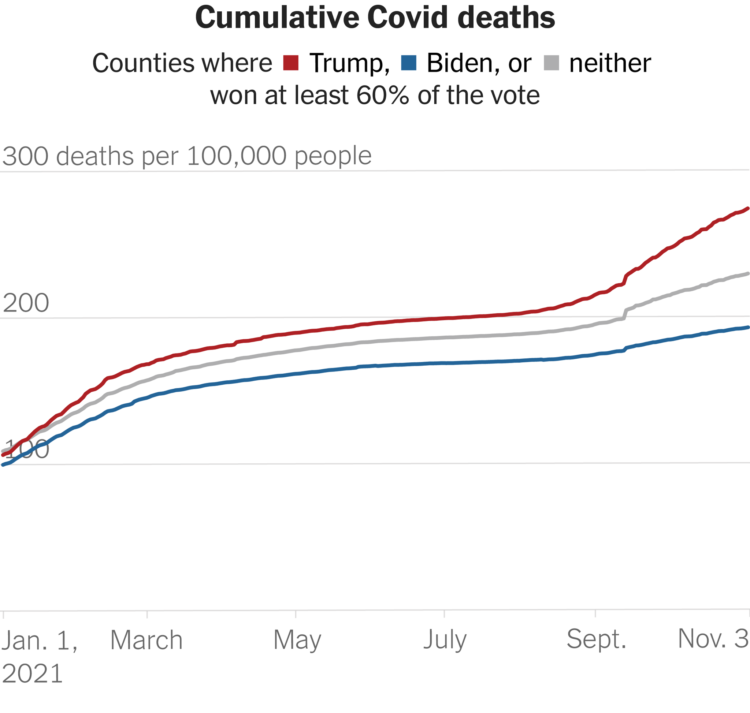



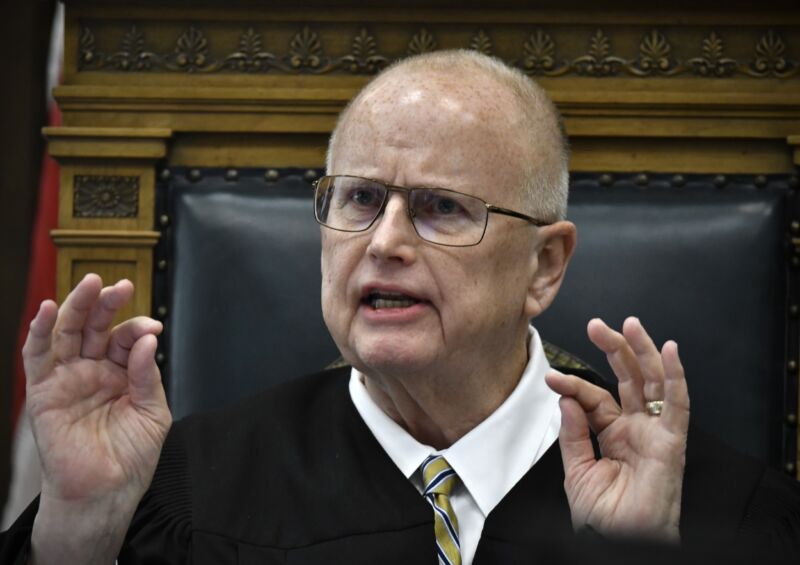

/cdn.vox-cdn.com/uploads/chorus_asset/file/22977529/77185742.jpg) Kevin Mazur/WireImage
Kevin Mazur/WireImage
/cdn.vox-cdn.com/uploads/chorus_asset/file/22986936/originalJackson1.jpeg) Ron Galella, Ltd./Ron Galella Collection via Getty Images
Ron Galella, Ltd./Ron Galella Collection via Getty Images
/cdn.vox-cdn.com/uploads/chorus_asset/file/22986932/97284727.jpeg) Richard Corkery/NY Daily News Archive via Getty Images
Richard Corkery/NY Daily News Archive via Getty Images





/cdn.vox-cdn.com/uploads/chorus_asset/file/23000620/8G1kF_north_carolina_s_2020_house_map_br_favored_republicans__2_.png) Tim Ryan Williams/Vox
Tim Ryan Williams/Vox
/cdn.vox-cdn.com/uploads/chorus_asset/file/22999521/xxWi9_north_carolina_s_new_house_map_for_2022_br_favors_republicans_even_more.png) Tim Ryan Williams/Vox
Tim Ryan Williams/Vox
/cdn.vox-cdn.com/uploads/chorus_asset/file/22996001/Screen_Shot_2021_11_08_at_1.01.32_PM.png) Jonathan Mattingly/Duke University
Jonathan Mattingly/Duke University


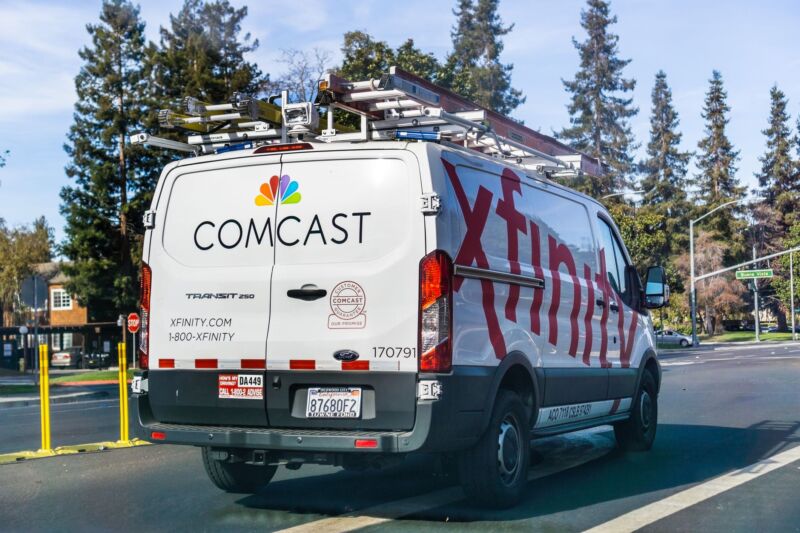

/cdn.vox-cdn.com/uploads/chorus_asset/file/22982972/AP21302769032917.jpg) J. Scott Applewhite/AP
J. Scott Applewhite/AP

/cdn.vox-cdn.com/uploads/chorus_asset/file/22988809/AP18184575215171.jpg) Craig Ruttle/AP
Craig Ruttle/AP


/cdn.vox-cdn.com/uploads/chorus_asset/file/22987163/2m8Vw_how_childhood_mandates_affected_chickenpox_vaccine_rates__4_.png) German Lopez/Vox
German Lopez/Vox