Enlarge / The new "booking page" UI. This is a URL you can create and send to anyone. (credit: Google)
Google Calendar's latest update promises to take a lot of the back-and-forth out of booking appointments. Google announced Friday that users will soon be able to create a "booking page" UI they can send to anyone they want. You present the periods you're willing to have a meeting, and the other user will be able to pick a time.
Workspace users will soon be able to pick the "Appointment Schedule" from the "create" appointment button. This will fire up a UI that can be used to create an appointment webpage. Workspace users highlight the times they would be willing to have a meeting, then enter the appointment duration and location (or a Google Meet room) and add a title and description.
Once everything is filled out, Calendar will generate a Google-hosted "booking page" website, and the creator can send the URL to someone else. The other person can then easily pick a time and add the meeting to a calendar. A similar time slot feature was previously available if both users were inside the same Workspace organization, but you can now show this time-slot UI to anyone you want, even users without a Google account.
We’ve covered some of the difficulties Trump’s Truth Social is having getting users to actually use the platform, and the same appears to be true for the various other Trumpist Twitter wannabes like Parler and GETTR. NBC News has a somewhat hilarious story in which its reporters went to talk to “conservative influencers” to get their thoughts, and they all seem unenthusiastic about those other platforms, whining that they’re all just “echo chambers.”
That buzz was tempered by influencers who said while they do use these platforms, they don’t see them as a replacement for the wide reach of the mainstream options. Many of them used the phrase “echo chamber” when discussing their concerns about the platforms.
“I think the challenge that a lot of these newer ones have is to not be an echo chamber for people who hold similar beliefs,” said Alex Weber, a content creator who was embraced by conservatives online after posting videos criticizing mask mandates, vaccine mandates and the mainstream media. “I think why Instagram and Facebook and all these are so impactful is because you’ve got all different types of people.”
This is amusing (and telling) on multiple levels. First of all, considering how much time they spent whining about how Twitter, Facebook, Instagram, etc. were their own “echo chambers” they actually know, deep down, that those sites actually have “got all different types of people.” That’s because contrary to the Trumpist narrative, none of those sites actually ban people based on ideology. They only do so if you violate their rules. The narrative of viewpoint-based discrimination is bullshit. And conservatives know it.
It’s also amusing in that it emphasizes that these “influencers” are only doing this because they want to engage in culture wars. They get clout by “owning the libs” or whatever other nonsense, and you can’t do that unless you can rile people up.
But, most importantly, it should put into stark relief what many of these pretend “free speech” battles are about. It’s not about the right to speak — because they have that on all these other platforms. What they’re really demanding is a right to an audience, and no matter what Elon Musk says, “free speech principles” have never included that.
The “People’s Convoy” that’s been parked in Hagerstown for weeks will finally leave the Washington region alone, Zachary Petrizzo reported for the Daily Beast Sunday night. Its numbers had dwindled, authorities mostly prevented them from causing any substantial havoc in DC itself, and it was never clear what they hoped to accomplish besides annoying area […]
President Joe Biden salutes Marines outside the Marine Barracks as he makes a surprise walk down Barracks Row in Washington, DC, on January 25, 2022. | Saul Loeb/AFP via Getty Images
The judiciary cannot be part of the chain of command.
The Supreme Court on Friday evening decided, no, it was not going to needlessly insert itself in the military chain of command above President Joe Biden.
The Court’s decision in Austin v. U.S. Navy SEALs 1-26 largely halted a lower court order that permitted certain sailors to defy a direct order. A group of Navy special operations personnel sought an exemption from the Pentagon’s requirement that all active duty service members get vaccinated against Covid-19, claiming that they should receive a religious exemption.
A majority of the Court effectively ruled that, yes, in fact, troops do have to follow orders, including an order to take a vaccine.
The decision is undeniably a win for the balance of power between the executive branch and the judiciary that has prevailed for many decades. But the fact that the Court had to weigh in on this at all — not to mention that three justices, Justices Clarence Thomas, Samuel Alito, and Neil Gorsuch, dissented from the majority — is a worrisome sign about America’s judiciary.
As Justice Brett Kavanaugh explained in a brief opinion laying out why the lower court erred, this court “in effect inserted itself into the Navy’s chain of command, overriding military commanders’ professional military judgments.” Had the Court ruled the other way in SEALs, it would have effectively placed itself at the apex of the military’s chain of command, displacing Biden as commander-in-chief.
But as Kavanaugh correctly notes in his concurring opinion, there is a long line of Supreme Court precedents establishing that courts should be exceedingly reluctant to interfere with military affairs.
In Gilligan v. Morgan (1973), for example, the Court held that “the complex, subtle, and professional decisions as to the composition, training, equipping, and control of a military force are essentially professional military judgments,” and that “it is difficult to conceive of an area of governmental activity in which the courts have less competence.”
Nevertheless, Judge Reed O’Connor, a notoriously partisan judge in Texas who is best known for a failed effort to repeal the Affordable Care Act, ruled in favor of the service members who refused to follow a direct order. And the conservative United States Court of Appeals for the Fifth Circuit refused the Navy’s request to stay key parts of O’Connor’s order.
That left the responsibility of restoring the military’s proper chain of command to the Supreme Court. Though the Court’s order does not wipe out O’Connor’s decision in its entirety, it temporarily blocks that decision “insofar as it precludes the Navy from considering respondents’ vaccination status in making deployment, assignment, and other operational decisions.”
But the astonishing thing about the SEALs order is that the Supreme Court needed to intervene in this case at all.
Order prevailed, but several justices wanted to upend things
The most astonishing thing about the SEALs order is that at least three justices dissented. (While it is likely that six justices sided with the Navy here, only four justices — the three dissenters plus Kavanaugh — chose to reveal how they voted. So it is possible that one other justice silently dissented.)
Thomas did not explain why he dissented, but Alito published a brief opinion, joined by Gorsuch, which lays out why he thinks that judges should be allowed to countermand orders handed down to military personnel by their commanders. Among other things, Alito complains that the Navy did not provide service members with a meaningful process they could use to request a religious exemption from the vaccination requirement.
The Navy provided the Court with several statements from high-ranking officers explaining why it requires nearly every sailor to be vaccinated, and why it generally considers unvaccinated special warfare personnel undeployable.
According to Adm. William Lescher, the Navy’s second-highest-ranking officer, Navy vessels have only limited medical facilities. So, if one of the ship’s crew becomes seriously ill, that “would require a return to port or an emergency medical evacuation by helicopter” — potentially forcing the whole ship to abandon its mission to accommodate one unvaccinated service member.
Special warfare personnel, moreover, often deploy in very small units. So one member becoming sick is a big blow to the team. And, the Navy argued, special operations “are often conducted in hostile, austere or diplomatically sensitive environments” where a severely ill service member might not be able to obtain local medical care and may need to be evacuated by the Navy — an operation that is itself dangerous and that could force the sick service member’s fellow sailors to risk their lives on his or her behalf.
To these concerns, Alito essentially said, “Prove it.”
“In order to win at trial,” Alito wrote in response to the Navy’s warnings, “it would not be enough for the Government to posit that sending an unvaccinated Seal on such a mission might produce such consequences.” Rather, the Navy would have to prove that requiring vaccination “is the least restrictive means of furthering the interest it asserts in light of the present nature of the pandemic, what is known about the spread of the virus and the effectiveness of the vaccines, prevalent practices, and the physical characteristics of Navy Seals and others in the Special Warfare community.”
I want to emphasize the sheer enormity of what Alito is suggesting here. Once the Supreme Court permits a single servicemember to defy a direct order, that opens the door to any member of the armed services who disagrees with an order running to court to seek an exemption.
Think of the kinds of orders that military personnel have to obey — “take that hill,” “guard this prisoner,” “cease fire.” And even if Alito did not intend for his dissent to apply to such battlefield orders, his dissent could effectively neutralize major military assets while religious liberty cases brought by service members are being litigated. Imagine, for example, if the captain of an aircraft carrier is ordered to deploy his ship close to Ukraine — but the captain refuses because, for religious reasons, that captain believes that Vladimir Putin should prevail in his war against Ukraine.
The Court has understood for many decades that the military simply cannot function if its members think orders may be optional. As the Supreme Court held in Goldman v. Weinberger (1986), “the essence of military service ‘is the subordination of the desires and interests of the individual to the needs of the service.’”
Permitting service members to seek exemptions from the courts, Goldman explains, would undermine service members’ “habit of immediate compliance with military procedures and orders” — a habit that “must be virtually reflex with no time for debate or reflection.”
At the end of the day, every service member must know who their commander is, and everyone must respect the chain of command. There can only be one person at the apex of that chain, and it can either be Joe Biden or Samuel Alito.
Enlarge / Eugene Kaspersky, CEO and founder of Moscow-based Kaspersky, at the 2020 World Internet Conference (WIC) at Wuzhen, China. (credit: Getty Images)
The Federal Communications Commission on Friday determined that security products from Kaspersky posed an unacceptable risk to US national security and added the company to a covered list of other firms not eligible for FCC funds.
The move adds Kaspersky to the same covered list that Huawei and ZTE landed on in 2021. Besides its Moscow headquarters, the company’s founder, Eugene Kaspersky, attended a KGB-sponsored technical college and has long been accused of having ties to Russian military and intelligence services.
Kaspersky, which was already banned from all US government networks, was one of three firms added to the covered list on Friday. China Mobile and China Telecom were the other two.
Enlarge / A 13-year-old celebrates getting the Pfizer-BioNTech COVID-19 vaccine in Hartford, Connecticut, on May 13, 2021. (credit: Getty | JOSEPH PREZIOSO )
So-called "natural immunity" against COVID-19 has always been a dodgy argument for avoiding vaccination during the pandemic. But amid omicron, natural immunity is clearly rubbish.
Unvaccinated people who recover from an omicron coronavirus variant infection are left with paltry levels of neutralizing antibodies against omicron. They also have almost no neutralizing antibodies against any of five other coronavirus variants, including delta. People who were vaccinated before getting an omicron infection, however, have strong protection against all five variants, and they have some of the highest levels of neutralizing antibodies against omicron.
That's all according to a new study surveying neutralizing antibody profiles in people who have all recovered from an omicron infection, with or without pre-existing immunity. The study was published Wednesday in The New England Journal of Medicine by a team of Austrian researchers. The researchers were led by virologist Janine Kimpel of the Medical University of Innsbruck.
Hackers backed by North Korea's government exploited a critical Chrome zero-day in an attempt to infect the computers of hundreds of people working in a wide range of industries, including the news media, IT, cryptocurrency, and financial services, Google said Thursday.
The flaw, tracked as CVE-2022-0609, was exploited by two separate North Korean hacking groups. Both groups deployed the same exploit kit on websites that either belonged to legitimate organizations and were hacked or were set up for the express purpose of serving attack code on unsuspecting visitors. One group was dubbed Operation Dream Job, and it targeted more than 250 people working for 10 different companies. The other group, known as AppleJeus, targeted 85 users.
Dream jobs and cryptocurrency riches
"We suspect that these groups work for the same entity with a shared supply chain, hence the use of the same exploit kit, but each operate with a different mission set and deploy different techniques," Adam Weidemann, a researcher on Google's threat analysis group, wrote in a post. "It is possible that other North Korean government-backed attackers have access to the same exploit kit."
Those are words universally recognized as an expression of respiratory distress.
Unless you’re a cop.
Then they’re perceived as, at best, non-compliance. At worst, they’re perceived as active resistance.
“I can’t breathe,” many people have told the officers currently choking the life out of them. In most documented cases, these people have ended up dead. Law enforcement refuses to see the connection between these cries for help and the corpses they created, ranging from Eric Garner’s killing by NYPD officer Daniel Pantaleo to George Floyd’s murder by Minneapolis police officer Derek Chauvin.
And they have refused to accept any responsibility for the protests and riots their actions have touched off for decades, preferring to accuse the public of being incapable of understanding the nuances of excessive force deployment or complaining that doing their jobs lawfully is just too difficult.
Mr. Bronstein was driving in Burbank around 1 a.m. on March 31, 2020, when he was pulled over, Mr. Carrillo said. He was about five minutes from the house in Burbank where he lived with his father, Ms. Palomino said.
The officers gave him a breathalyzer test, which showed that he was under the legal limit, but they suspected that he was under the influence of a narcotic and obtained a warrant to draw his blood, according to a police report.
They placed him in handcuffs and brought him to the station parking lot near Pasadena. The video, which was filmed by a police officer using what appeared to be a hand-held camera, showed Mr. Bronstein kneeling before the officers, his arms behind his back.
“This is wrong,” Mr. Bronstein said.
“You’re bringing the fight to this, not us,” an officer told him.
“I’m not fighting at all,” he responded.
The officer told him to take a seat and provide his arm.
“This is your last opportunity,” the officer said. “Otherwise you’re going face down on the mat and we’re going to keep on going.”
Mr. Bronstein sighed and then said, “I just need a minute, OK, please?”
His face crumpled.
“I can’t do it,” he said, and then quickly added, “I’ll do it willingly.”
But by that point, the officers had grabbed him and forced him down on the mat.
“Please don’t,” Mr. Bronstein said, repeating over and over again that he would cooperate.
“It’s too late,” one of the officers said. For nearly two minutes, Mr. Bronstein screamed and gasped, telling the officers at least a dozen times, “I can’t breathe.”
The entire recording can be seen here. Content warning: contains murder.
The video shows Bronstein was unresponsive as early as four minutes into the recording. It goes on for another 14 minutes after that as officers check his pulse, slap him in the face, and otherwise make it appear they haven’t just killed someone. It’s not until nearly the end of the recording — a full ten minutes after Bronstein stops moving — that officers attempt to give the man oxygen, shortly before deciding it’s too late for that and begin CPR.
No officers were disciplined for this. It was not captured on their dashcams, which might have led to this incident coming to light earlier. It was apparently captured by a camera (or cell phone) operated by someone present. The lawyer for the family speculates it may have been recorded for training purposes.
If so, no one’s learning anything from it yet, other than it is possible to obtain recordings not captured on on-board equipment through discovery. From what’s been reported, no officers were disciplined and the recording was filed away someplace the California Highway Patrol thought no one would ever find it.
The coroner proved useful as well, aligning the cause of death with the official narrative. (To be fair, the coroner would have had no access to the recording and would have to rely solely on reports created by officers as to the events leading up to Bronstein’s death.)
The Los Angeles County Medical Examiner-Coroner’s office later determined Bronstein died from “acute methamphetamine intoxication during restraint by law enforcement.” It listed the manner of death as “undetermined.”
Perhaps this might be revised now that it’s clear there were at least six uniformed contributing factors.
The Los Angeles County District Attorney’s Office says it’s “reviewing the case,” which doesn’t exactly sound like an investigation. And, to be fair to the DA’s office, it’s not as though CHP officials approached them after the incident occurred to see if criminal charges might be warranted.
It’s another senseless killing and another one committed by officers who refuse to believe anyone is truly compliant until they’re “unresponsive.” And it’s one more data point showing that being asphyxiated is about the only guaranteed outcome when officers are informed by the person they’re choking the life out of that they can’t breathe.
In this screenshot from the DNCC’s livestream of the 2020 Democratic National Convention, Hunter Biden, son of Democratic presidential nominee Joe Biden, addresses the virtual convention. | DNCC handout via Getty Images
A recent New York Times story has made it the subject of discussion again.
Hunter Biden’s laptop has returned to the discourse.
The president’s son remains under investigation for matters related to tax payments and his foreign work, the New York Times reported last week. And that report cites emails that, per the Times, are “from a cache of files that appears to have come from a laptop abandoned by Mr. Biden in a Delaware repair shop.”
This is a reference to a controversial “October surprise” that came out just before the 2020 election. Trump lawyer Rudy Giuliani gave those files to the New York Post, and they circulated to other conservative outlets too, resulting in negative stories about Hunter Biden’s business and personal life. Democrats and their allies cried foul, arguing that the materials may have been faked, stolen, or leaked as part of a foreign interference campaign akin to the Russian government’s hacking and leaks of Democratic emails in 2016. The mainstream media generally treated the material with caution — and, perhaps most controversially of all, Twitter and Facebook blocked or restricted links to the Post’s story.
Now, conservatives interpreted last week’s Times report as a belated concession that the leaked material was authentic, and they’re taking a victory lap. “The Times finally admits: Hunter’s laptop is real,” the New York Post editorial board crowed.
Technically, the Times only vouched for certain emails they’d “authenticated” with the help of “people familiar with them and with the investigation.” But the Times reporters also said the cache of files “appears” to have come from a laptop Hunter abandoned at a computer shop — leaning toward, without quite endorsing, a long-questioned account of how the material got out.
So, nearly a year and a half later, it’s worth revisiting what happened back in the heat of the 2020 campaign. Some decisions and claims look dubious in retrospect. Twitter briefly blocked links to the story for potentially containing hacked material and Facebook briefly restricted it as possible “misinformation” — but it may have been neither. And no evidence has emerged to back up suspicions from former intelligence officials, backed by Biden himself, that the laptop’s leak was a Russian plot.
But the emails were indeed being put out as part of an orchestrated campaign by Trump’s team to try to drive negative media coverage toward Joe Biden shortly before the election. And whatever the revelations about Hunter, claims from conservatives that the leaked emails proved Joe Biden acted corruptly in some way were false — they proved no such thing.
“The laptop from hell”
In October 2020, the New York Post began publishing some of Hunter Biden’s texts, emails, and other documents. As for how they got this information, the following story soon emerged, from a Delaware computer repair store owner, John Paul Mac Isaac.
In April 2019, someone dropped off three water-damaged laptops with him for repair, Mac Isaac claimed. He couldn’t say for sure who dropped them off, because he is legally blind, but he said the person identified himself as Hunter Biden and signed a receipt with what appears to be Hunter’s name.
One of the laptops had a Beau Biden Foundation sticker. No one ever returned to pick up the laptops, so Mac Isaac (an enthusiastic Trump supporter) started looking at what’s on one of them. He saw what he thought was lots of scandalous material, so he called authorities and handed it over — but also kept a copy of its material on a hard drive. At some point, he gave that hard drive to Rudy Giuliani’s lawyer, Robert Costello, and they gave it to the New York Post (and circulated it among other Trump supporters like Steve Bannon).
The Post and other conservative media outlets’ coverage of Hunter’s files partly involved lurid material about Hunter’s personal life. Hunter’s struggles with drug addiction were already a matter of public record, but the files contained further embarrassing details, as well as sexual material. The other focus of coverage was Hunter’s lucrative foreign work, most notably with a Ukrainian gas company and Chinese business interests. Trump allies had long claimed this work proved not just Hunter’s but Joe Biden’s corruption, and they combed through Hunter’s emails to try to make that case.
The Post’s coverage was controversial, including inside the paper — per the New York Times, one reporter refused to put his name on the story due to credibility concerns, and other Post staff “questioned whether the paper had done enough to verify the authenticity of the hard drive’s contents.” But Trump cited what he dubbed “the laptop from hell” constantly. And conservatives began to argue that the mainstream media and social media companies were suppressing the story to help Biden win.
The response from social media companies
The modern leak genre of mass disclosure of a person’s emails, texts, and other electronic material presents challenges for journalists. How do you prove the material’s authenticity? In a large dump of emails, must every email be individually authenticated? Are there ethical concerns with publishing stolen material being released with a certain agenda? What is genuinely newsworthy in a dump of private information, and what is an invasion of privacy?
There are different schools of thought about these questions, which all came up when leading Democrats’ emails were posted by WikiLeaks in 2016. Democrats claimed they’d been hacked by the Russian government, but media outlets generally concluded the information was authentic and gave the leaked material, both substantive and non-substantive, ample coverage. Then Trump won the election, more evidence about Russia’s complicity piled up, and some in the media had second thoughts, wondering whether they’d been used.
Meanwhile, social media companies were facing their own second-guessing about the 2016 election from outside critics and their own employees. Many argued that misinformation spreading unchecked (or algorithmically assisted) on these platforms, some circulated by Russia, helped Trump win. So they, like many journalists, hoped to do things differently should a similar situation arise in 2020.
The New York Post’s Hunter Biden story seemed to be the situation they had feared, and so Twitter and Facebook swung into action. Twitter went the furthest, blocking links to the Post story from being shared on its platform at all, and then taking down the New York Post’s account for 16 days. They said this was because the material might have been hacked. Facebook also announced they were “reducing its distribution on our platform” while fact-checkers examined whether it was “misinformation.”
These responses, though they came in a fast-moving and confusing situation, were heavy-handed and arguably ill-judged. The challenges posed by hacked material are so thorny in part because it often isn’t misinformation — its power comes from its accuracy.
It’s also not clear that any hack happened here at all. Even though the story of the abandoned laptop is bizarre, speculation that there’s more to it remains just speculation. And if a hack did occur, it’s hard to set a hard and fast rule that no articles based on stolen material are allowed — what about the Pentagon Papers? It’s also fair to be skeptical of whether social media companies would have responded so strongly if a Trump family member had been the victim of a suspected hack that October.
The mainstream media’s response
Media outlets, for their part, didn’t block anything — there was ample coverage of all this in the conservative press and, albeit more slowly, in mainstream media outlets. There is no obligation for media outlets to run with conveniently timed opposition research pushed by one presidential candidate’s team shortly before an election. (For example, most media outlets did not cover the Steele dossier allegations before the 2016 election — only Mother Jones and Yahoo! News did. The dossier itself was eventually published by BuzzFeed News after Trump won, the following January.)
Some commentators didgo too far in asserting that this was part of a Russian plot, when the evidence hasn’t emerged to back that up. The Biden campaign similarly sought to cast doubt on the story by alluding that it could be Russian misinformation — when the underlying emails appear to be authentic. But in general, major journalism outlets did try to assess whether there was genuine news there.
And here’s where we come to the real dispute, which wasn’t just about whether the emails were fake or real, but about what they show. Trump allies have insisted the leaked material proves that Joe Biden was corrupt. If you think that’s what’s being covered up, of course it seems outrageous that the mainstream media wasn’t devoting more attention to it.
But that case is weak.
There were two supposed “smoking guns” about Joe Biden that conservatives touted in the materials. The first was an email the Post called a “blockbuster,” in which an executive at the Ukrainian gas company Burisma thanked Hunter for the “opportunity to meet your father” in 2015. If you’re steeped in Trumpworld lore, this was damning because of the theory that Biden had the corrupt prosecutor general of Ukraine fired to benefit Burisma, and Biden had said he knew nothing about Hunter’s Ukrainian work, but look, a meeting! (Apparently, it was a dinner at Cafe Milano that Hunter had organized, with about a dozen people.) This appears to amount to Vice President Biden seemingly going to one dinner.
The second involved a business venture that Hunter tried to set up with a Chinese energy tycoon in 2017 (after Joe Biden was no longer vice president). One email mentions that the equity split would include “10 held by H for the big guy ?” A former business partner of Hunter’s named Tony Bobulinski came forward to claim “the big guy” was Joe Biden. But a subsequent email from Hunter says his “Chairman” gave him “an emphatic no,” and a further email clarifies that the chairman is his dad. So this amounts to Joe Biden apparently refusing some deal Hunter tried to enmesh him in.
All of this was indeed covered in the press in October 2020 (I wrote about it at the time). So the real objection from conservatives is that they didn’t get the narrative they liked out of the mainstream media.
Hunter’s emails contained a whole lot of embarrassing and arguably newsworthy material about himself, and the shady foreign business interests of the son of the potential next president are certainly a worthy topic of media coverage. But as for the Biden who was actually on the ballot, there was very little from him personally in those messages (other than an exchange where he comforts his despondent, drug-addicted son). The emails didn’t dominate mainstream media because, at least so far, they didn’t have the goods.
The parade of immersive exhibits coming to DC continues this summer with an installation made for anyone dreaming about visiting Egypt’s Great Pyramid of Giza. In June, the National Geographic Society will premiere Beyond King Tut: The Immersive Experience to celebrate the 100th anniversary of the discovery of Tutankhamun’s tomb. The exhibit will run at the […]
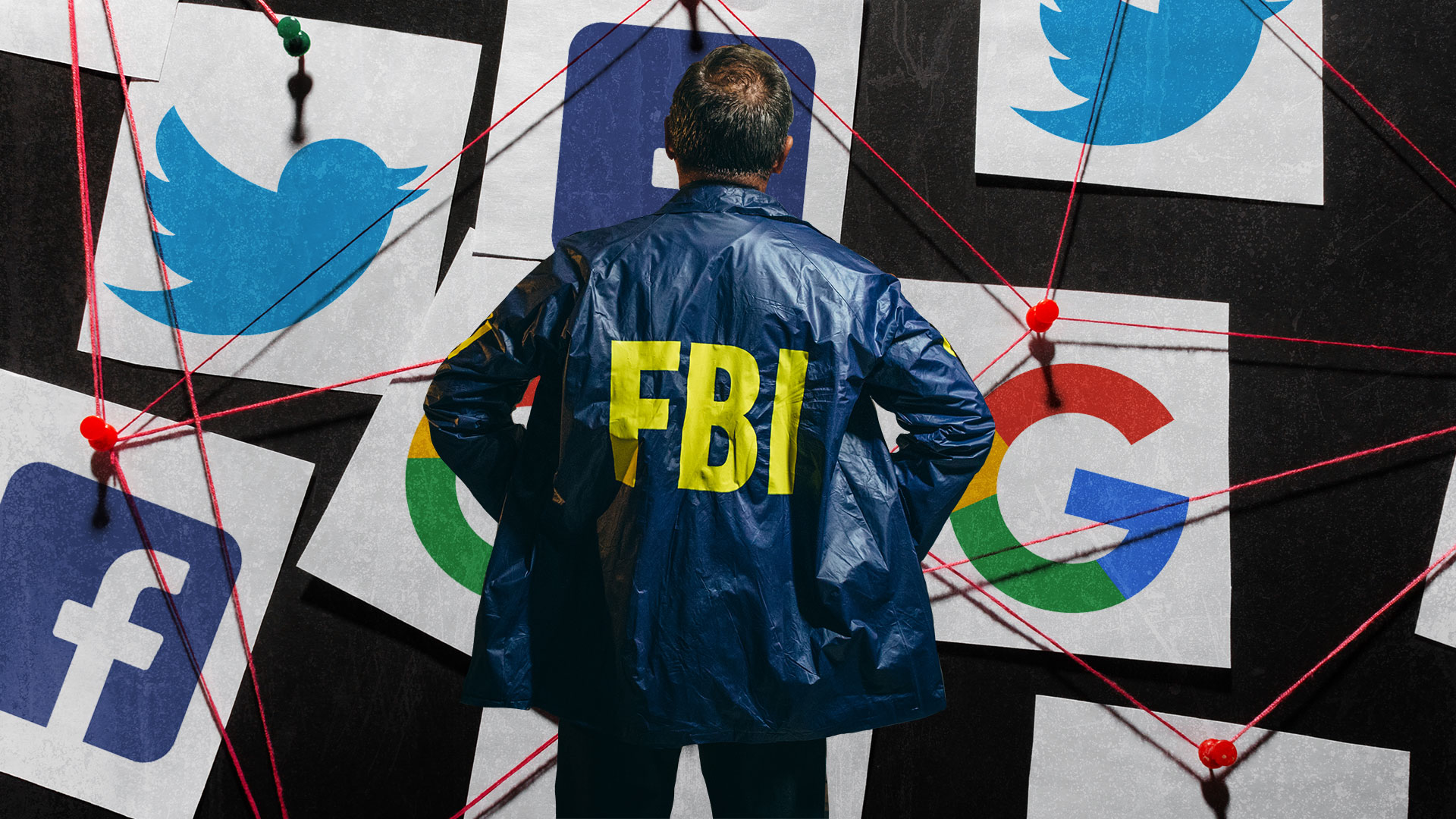
The FBI’s latest counterintelligence operation against Russia is hardly secretive—you just have to be standing in the right place.
In the wake of Russian President Vladimir Putin’s unprovoked invasion of Ukraine, the FBI stepped up its recruiting efforts in the US, hoping to attract Russians who are dissatisfied or disillusioned with the war. People standing in close proximity to the Russian embassy in Washington, DC, can see the ads, which appear in Russian, on Facebook, Twitter, and Google.
One ad appeared in a Washington Post reporter’s Facebook feed when he was standing on the sidewalk next to the embassy’s walls on Wisconsin Avenue NW, but none appeared in his feed when he crossed the street.
If you want a new car right now, it’s going to cost you. | DigitalVision via Getty Images
Car dealers are charging way over sticker price — and consumers are paying.
It’s a wild time out there in the car market. Wild in a good way if you’re a car dealer trying to sell a car. Wild in a less good way if you’re a consumer looking to buy, which is the spot Richie Iglar recently found himself in.
In the fall, he and his wife were in the market for an SUV and made an appointment at a Mercedes dealer in New Jersey. The salesman was “super nice” throughout most of the process, Iglar explained … until it came to the price. The dealership wanted to charge them $20,000 over the manufacturer’s suggested retail price (or MSRP).
“We were both shocked and politely declined, saying while we would like to have the car, we can’t justify over-spending for it,” he said. Iglar emailed another dealer trying to get a sense of what their markups were, and a week later they responded they were adding on $15,000. He decided to put a pause on buying. “I can’t justify spending that much over sticker.”
Iglar is hardly alone. Tens of thousands of dollars over the sticker is something of an outlier, but across the country, people on the hunt for a new vehicle are being met with significant dealer markups, thanks to supply shortages and high consumer demand. New car dealers have the upper hand at the moment, and some of them are willing to use it.
“At the end of the day, it’s saying, ‘Look, if you don’t buy this, the guy right behind you or the gal three people behind you is going to, and they’re going to pay me $1,000, $2,000 more than you’re willing to, so I have to go with them.’ It’s one of the first times in history where the dealer has so much demand that they can actually do that,” said Ivan Drury, senior manager of insights at Edmunds, a consumer research company. “If there are five people raising their hand to buy the exact same product, you just go with whoever is bidding the highest.”
According to Kelley Blue Book, the average new car price in the United States was $46,085 in February, $5,000 more than it was a year ago. Going by the Consumer Price Index, which measures what consumers pay for goods and services, new vehicle prices are up 12.4 percent over the past year. (Used car prices are up a ton, too, but for this story, we’re focusing on new ones.)
How much are dealer markups contributing to this average price increase? The answer is certainly not all of it, or maybe even most of it. But they’re not helping, either. “It comes down to if someone’s willing to pay it, and they can sell it and keep selling it, I think they’re going to ride that train as long as they can,” Iglar said.
Amid the current inflationary environment, there’s a broader debate going on about what’s causing prices to rise. Some Democrats and economists argue that corporate greed is playing a role, basically saying that companies are taking advantage of the moment to boost their profits even when it’s not necessary, and contributing to higher inflation overall. Other economists have dismissed this, saying it’s a flimsy excuse, and that other factors, among them supply chain problems, increased demand, and commodity prices, have much more of an impact. After all, corporate greed wasn’t invented in the pandemic.
I am not going to litigate whether profiteering — which is generally legal in the US — is driving up inflation. But it’s hard not to recognize that in some corners, businesses and CEOs and salespeople are likely looking at the current economic landscape and thinking, “Eh, why not bump that price tag up a little more?” And who can blame them? That’s capitalism.
“Are they taking advantage of the situation? Yeah,” Drury said with regard to dealers. “I think they’re doing exactly what anyone else would if they were selling something too.”
This is capitalism. Welcome.
In an environment where goods are scarce, intermediaries can push up the prices to pocket the money. We are in an environment where goods are scarce, and where, because of inflation, people sort of expect prices to go up anyway, and so in some corners, there’s a little bit of padding going on.
Even in a moment like this, with inflation on the rise, the point of companies is to make money. Many executives have been pretty open that they’re able to pass on price increases to consumers and keep their margins up, or do a little bit better. Procter & Gamble, for example, has hiked prices on a variety of items over the past year, including diapers, razors, and feminine care products. It has helped them deal with rising costs but also has helped them increase revenue.
Are these price increases along the margins creating broad-based inflation across the economy? Many economists say probably not. But in the system we live in, when businesses big and small are in a position of power, they use it, and that’s certainly not helping.
“We need to be honest that price changes are complex, and I don’t think it’s fair to boil it down to a single cause. Saying that profiteering is playing a role and profiteering is driving inflation are two different arguments,” said Mark Paul, an assistant professor of economics and environmental studies at New College of Florida. “The degree of price increases we’ve seen today are absolutely in line with a story where car companies are charging consumers above and beyond what should be considered a reasonable markup due to these market disruptions.”
Eventually — and hopefully — the current supply/demand mismatch the automotive industry is seeing will sort itself out. The semiconductor shortage will subside, other production and supply chain bottlenecks will settle, there will be more new cars available, which should also help the used car market settle down. And that, again eventually and hopefully, will help cool inflation down. (New and used cars are a pretty significant factor in current inflation numbers.)
In the meantime, consumers like Iglar can bide their time and wait for things to settle back down. Or they can bite the bullet and pay much more than they’d like to for a new car.
If you want a new car right now, you have to really ($$$) want it
Previously, it’s been pretty rare for shoppers to pay above sticker price for new cars. Now, it’s pretty common.
According to Edmunds, 82 percent of customers paid above sticker price for a new car in January of this year. For some perspective, that figure was 2.8 percent in January 2021 and 0.3 percent in 2020. On average, transaction prices for a new car in January were $728 above the sticker price. In the same month in 2021 and 2020, they were more than $2,000 below it. For some higher-end vehicles, like the one Iglar was in the market for, dealers are charging tens of thousands of dollars above what manufacturers suggest.
In more normal times, it’s car dealers that are often trying to undercut one another on prices to attract customers and compete. Now, with inventories so low, it’s customers who are competing with each other for vehicles.
Bill Brunner, vice president and general manager at Paramus Chevrolet in New Jersey, told me that right now he has about 80 cars on his lot compared to what used to be 300, 400, or even 600 vehicles available. The scenario has created what he describes as a “balancing act” on pricing. “Our prices have definitely adjusted based on availability,” he said. “Having said that, we still need to be conscious of our customer base.” He knows some people have a budget. He also wants customers to come back next time their lease is up or they want to buy a new car.
Brunner said he’s starting to see some vehicles come through with more volume now, which will allow his dealership to be more competitive with the pricing. But it all really just depends on what they have. “There were some vehicles that we made better gross profits on than we would have if we had 100 of them in stock. It’s just supply and demand. If we had two of a particular model instead of 100, our pricing structure is different. It’s just the way it is,” he said. Brunner also noted the pandemic has been tough on dealerships, as it has been on a lot of businesses.
Still, some auto manufacturers aren’t loving the situation and have told dealers to knock it off on some egregious price hikes out of concern it will hurt their brands. (A lot of people don’t realize it’s the dealer that ultimately sets the price, not, say, GM or Ford.) Traditional auto manufacturers are also dealing with competition from companies such as Tesla, which sell direct to consumers. Plus, a number of car companies are launching electric vehicle products that they hope will expand their customer base, and many of those vehicles already come with long wait times.
“You figure somebody’s trying out your brand for the first time and it’s an EV product, you don’t want to ruin that relationship by saying, one, you’re going to wait, and two, you might pay more than you expected,” Drury said.
In a February earnings call, Ford CEO Jim Farley said that the automaker believes 10 percent of its dealers over the last year had charged above-MSRP prices and warned that “future allocation” of their models would be impacted by those policies, meaning the dealers in question might not be getting their most popular cars. The Wall Street Journal reported that GM also told dealers in a letter it might take action against a “small minority of bad actors” selling and leasing far above sticker price.
The Wall Street Journal has also reported that Toyota and Honda have talked to individual dealers about charging above MSRP, too. Jack Hollis, Toyota Motor North America’s senior vice president of auto operations, told the publication he thinks dealers thinking only about the short term are making a mistake. “If that customer experience is great during this time, they’ll be with you,” he said. The Journal noted that many dealers aren’t happy with the practice, either, because they worry it could damage the entire sector’s reputation.
To be sure, dealer markups are not the only thing contributing to price increases. “A whole slew of things” are making cars more expensive, said Stephanie Brinley, principal automotive analyst at IHS Markit. The pandemic has tossed the car industry into chaos over the past couple of years. Semiconductor shortages and supply chain woes have caused major setbacks in production, and the costs of making and moving the cars have gone up as well. Brinley pointed out that many consumers also want more, costlier features, which drives prices, too. “It’s a combination of trying to maintain margin and keep profitability up, but it can’t be done if consumers don’t want it,” she said.
Many of the vehicles with the highest markups are ones that are already pricey to begin with. “If you have $50,000 to spend on a car, how bad can someone feel for you when they can’t afford a $15,000 used car?” Drury said. “I don’t feel bad for certain people when they can bid up the price.”
Brinley pointed out it’s pretty easy to figure out what manufacturers suggest the price should be on a new car — the information is readily available on the internet. If you’re in the market for one, she suggests looking it up and then going from there. “Figure out what you’re willing to pay, and if you’ve got a dealership that is charging more than you might be willing to pay, you might not get a car in the next two hours, it might be a bit more complicated, but move on,” she said.
In the current landscape, you might have to be in “move on” mode for a while.
We live in a world that’s constantly trying to sucker us and trick us, where we’re always surrounded by scams big and small. It can feel impossible to navigate. Every two weeks, join Emily Stewart to look at all the little ways our economic systems control and manipulate the average person. Welcome to The Big Squeeze.
Google Play Movies & TV—and the Google Play brand in general—seems doomed. Google already pulled the Play Movies & TV app from Rokus and other smart TV platforms last year, and it will now remove the Movies & TV section from the Play Store. The Play Store, which used to offer a large collection of content, now only sells apps and books.
Google posted a message to the Google Play Help community saying that the Movies & TV Play Store section will shut down in May 2022 and that the Google TV app will be the new home for buying movie and TV content from Google on phones and tablets. The company also sells video content through YouTube, and when it shut down the Google Play Movies & TV app on smart TVs, Google pitched the YouTube app as its replacement for purchased content.
So when you buy video content from Google, you use the Google TV or Google Play Movies & TV app to play content on Android, the Google Play Movies & TV app on iOS, and the YouTube app on third-party smart TVs like Roku. "Google TV" isn't just the name of the phone app and video content store; it's also the new name of Android TV OS, which you can get on the new Chromecast (it's also integrated into some Sony and TCL television sets). On those devices, your purchases are built into the operating system. Google Play Movies & TV will be completely dead if Google chooses to shut down the phone apps, and that seems inevitable at this point.
Enlarge / Avery, 6, and Aidan, 11, got their second Moderna COVID-19 vaccine doses at Kaiser Permanente Los Angeles Medical Center on Friday, June 25, 2021, as part of the KidCOVE study evaluating the safety and efficacy of the Moderna vaccine in young children. (credit: Getty | MediaNews Group)
Wednesday brought some potentially positive news for the parents and caregivers of young children who have endured an agonizing wait for an effective COVID-19 vaccine. Moderna announced Wednesday that its two-dose vaccine for children ages 6 months to under 6 years appeared safe and produced strong antibody levels that correlate with effectiveness in adults. The company plans to ask the Food and Drug Administration to authorize the vaccine in the coming weeks.
The trial, a randomized, observer-blind, placebo-controlled study called KidCOVE, involved 6,700 children under 6 years old (4,200 children six months to 2 years and 2,500 children 2 years to under 6 years). Vaccinated children received two 25-microgram doses of vaccine—a quarter of the adult dose—which were given 28 days apart. Neutralizing antibody levels in the vaccinated children met or exceeded those seen in adults ages 18 to 25, for which vaccine is already approved.
Omicron hit
Though the primary objective of the trial was to reach those antibody levels seen in adults—a process called an immunobridging study—the trial also looked at efficacy against infection and severe disease amid the wave of omicron coronavirus variant infections. Phase III trial data indicated that the vaccine was about 44 percent effective at preventing an omicron infection in children ages 6 months to 2 years and 37.5 percent effective against an omicron infection in children ages 2 years to under 6 years.
Enlarge / It can be tough to run a business when your loading dock is under water. (credit: Getty Images)
On Monday, the US Securities and Exchange Commission (SEC) announced new rules about disclosing climate risks for companies listed on US-based stock exchanges. The rules are meant to give investors a clearer sense of how companies manage present and future challenges posed by climate change and by attempts to reduce greenhouse gas emissions. The rules will be published in the Federal Register for public comment shortly. A final version is expected later this year, and the lawsuits are likely to begin afterward.
In the announcement, SEC Chair Gary Gensler said the new rules adhere to the organization's mission. "Our core bargain from the 1930s is that investors get to decide which risks to take," he said, "as long as public companies provide full and fair disclosure and are truthful in those disclosures." Typically, risk disclosure occurs in required formal filings that companies make with the SEC, like quarterly financial statements.
Some companies disclose their risks voluntarily, but the absence of standards allows them significant leeway over what to reveal. And many other companies choose not to disclose anything related to climate.
Enlarge / A pharmacist at the Community Pharmacy of Saco demonstrates how Abbott's BinaxNow COVID-19 Ag Card Home Test works by using a nasal swab and a solution onto a test strip. (credit: Getty | Portland Press Herald)
To quickly confirm an asymptomatic case of COVID-19, a second rapid test within an hour of a positive result can boost the accuracy of the result from 38 percent to 92 percent, according to a new study in JAMA Network Open.
The finding could guide future use of rapid tests for quick-turnaround decisions on interventions, as well as in situations where lab-based PCR testing is too costly or unavailable entirely.
View more stories
Currently, rapid tests are considered most accurate when used on people who are suspected of having COVID-19 and are within the first seven days of having COVID-19-related symptoms. Abbot's BinaxNow rapid test, for example, accurately identified infections in about 82 percent of symptomatic people (102/125 cases) and provided accurate negative results in about 98 percent of symptomatic people (227/231 cases).
Defining forgiveness is still a matter of great debate, but philosophers ground the concept in two things: Forgiveness requires one person to have caused another harm and for the victim to forswear revenge or bad feelings toward their transgressor.
That leaves a lot more unsaid than it clarifies. Is the purpose of forgiveness to get back to normal? What are the power relations inherent in asking for and granting forgiveness? Who has the authority to forgive? Most importantly, why is forgiveness necessary?
The rise ofrestorative justice programs has introduced the concept of forgiveness — usually kept far away from America’s courtrooms — to the criminal justice system. While forgiveness is not the focus of these programs, its potential fills the air as victim, offender, and community members all meet in the same place.
These programs are alternatives to the traditional sentencing models and offer an opportunity for victims, offenders, and members of their respective communities to meet and, ideally, repair harm, answer lingering questions, and restore broken bonds.
But restorative justice’s answers to forgiveness’s thorniest questions and its relationship to the concept more broadly are up in the air. While forgiveness is widely seen as both virtuous and healing, the specter of forgiveness that hangs above restorative justice proceedings can be a hollow and fragile imitation of the real thing, and it carries with it the potential to reinforce cycles of violence.
What is restorative justice?
There is no one definitive answer to this question. Restorative justice is a burgeoning philosophical framework that asks people to rethink the best way to respond to harmful behavior.Perhaps the most expansive definition comes fromGriffith University criminologist Kathleen Daly, who calls restorative justice “a set of ideals about justice that assumes a generous, empathetic, supportive, and rational human spirit.”
Restorative justice is “a set of ideals about justice that assumes a generous, empathetic, supportive, and rational human spirit”
Criminologist Howard Zehr, the “grandfather of restorative justice,” began his work in the 1970sfor two main reasons: The harsh, punitive, and counterproductive ways that the criminal justice system often responds to offenders and the growing anger that victims are often entirely shut out of the criminal justice process.
“We were really concerned that victims were not only being left out of the justice process, but they were re-traumatized by it. So we wanted to provide a better experience and more options for victims,” Zehr explained in an interview published by Eastern Mennonite University, where he founded the Center for Justice and Peacebuilding in 2015. “Accountability is understanding the harm you’ve caused and doing something to make it right.”
Restorative justice has spurred the development of private and public programs within schools and universities that seek to apply restorative justice principles to conflicts that arise within these institutions. Even more crucially, there are restorative justice programs that seek to replace or reform existing practices within the criminal justice system; state-sanctioned programs now exist in the vast majority of American states.
Restorative justice is not a fact-finding process and so it cannot in its current form replace the adversarial justice system, which seeks to determine whether the accused is guilty. Its role generally comes after someone’s guilt has already been determined, either through a plea agreement or a trial. Then comes sentencing.
The sentencing process generally follows this pattern: An offender is convicted of a crime, the judge sets a date for sentencing, and then the judge conducts a pre-sentence investigation to determine the appropriate sentence. According to the American Bar Association, this investigation “may consider the defendant’s prior criminal record, family situation, health, work record, and any other relevant factor.” In the vast majority of cases, the sentence is solely up to the judge.
Restorative justice programs in operation throughout the country — some of which explicitly label themselves as such and some of which are clearly influenced by its principles — seek to upend the post-conviction process. The programs are run by different groups, some by state and local governments and others by independent or even for-profit organizations. Participation in these programs varies, with some states allowing these programs to exist as alternatives only for certain crimes or certain offenders (e.g., juveniles). These programs are generally opt-in for offenders in qualifying cases, and so, the vast majority of offenders still go through the traditional sentencing process.
Rich Pedroncelli/AP
California state Sen. Steve Glazer discusses a state-funded restorative justice program during a news conference in Sacramento, California, in 2019. Glazer’s measure, SB 678, which was co-authored by Assemblymember Susan Eggman, left, created a pilot program where the victims of crimes can deal directly with their offenders.
According to research by Occidental College law professor Thalia González, as of July 2020, “The only states that have not codified restorative justice into criminal law are North Dakota, Rhode Island, South Dakota, South Carolina, and Wyoming.” (Restorative justice programs can be found outside the US too, from Canada to Ireland to Australia.)
Impact Justice, a criminal justice reform group, lays out a simple model for understanding restorative justice when it comes to criminal proceedings. Instead of asking what law was broken, who broke it, and what punishment is warranted — as our punitive system does — restorative justice asks who was harmed, what do they need, and whose obligation is it to meet those needs.
Typically, these programs involve what practitioners call a “conference” where the victim, offender, and community members (often friends or family of both parties) sit down. The offender will apologize or take responsibility for the harm they have caused and seek to make amends, and the victim is given the opportunity to ask questions and make clear all the ways the crime has impacted them and their community.
While these conferences vary widely, restorative justice facilitator sujatha baliga explained for Vox what session results can look like: “At the end of the process, which typically ends with one or more face-to-face sessions with the entire circle, a plan to meet the survivor’s self-identified needs is made by consensus of everyone present. The responsible person is supported by family and community to do right by those they’ve harmed. For example, if joining a sports team is a part of the responsible person’s plan to help them stay out of trouble after school, people in his circle agree to take him to practice, or pay for the enrollment fees.”
It’s notable that the majority of these programs are for juvenile offenders; Gonzalez found that 91 laws in 33 jurisdictions are related to restorative justice programs aimed at minors, while just 42 laws in 15 jurisdictions are related to adult offenders. While the research is mixed, there is good evidence thatprograms focused on minors have been found to reduce recidivism.
“Accountability is understanding the harm you’ve caused and doing something to make it right”
A 2017 meta-analysis of restorative justice programs, which looked at dozens of research projects and studies, found “a moderate reduction in future delinquent behavior relative to more traditional juvenile court processing.” The authors, however, were wary as to the reliability of these results since reductions were smaller for the “more credible random assignment studies.”
Encouragingly, one recently released paper looked at offenders ages 13 to 17 that were randomly assigned to either go through a restorative justice program or the traditional process. After six months, the former group was rearrested at a rate 19 percentage points fewer than those in a control group prosecuted in the ordinary juvenile justice system.
What restorative justice can — and cannot — do for victims
Restorative justice is perhaps overly optimistic about what it expects. It imagines a world where victims can be magnanimous about some of the most heinous transgressions, guilty offenders can be truly apologetic, and the broader community is positioned and able to help both parties.
According to University of New South Wales Sydney criminologist Julie Stubbs, there is disagreement over whether restorative justice programs actually prioritize victims. Participants cite high levels of satisfaction,but it’s unclear how much of this can be attributed specifically to the programs as opposed to selection effects (are the types of people ending up inrestorative justice programs somehow different from people who aren’t?), the effects of time, or support from their communities. She also notes that satisfaction has been conceptualized and measured inconsistently, making it hard to be definitive about victims’ experiences.
Cymone Fuller, co-director of the Restorative Justice Project at Impact Justice, told Vox that victims often come to restorative justice conferences looking for answers: “They might be asking for very practical things like, ‘I want my car back,’ and then sometimes they really are looking for a fuller narrative for what happened to them.”
One study by Fuller’s organization of 100 cases that were diverted to a restorative justice program in Alameda County, California, found that 91 percent of the victim participants who completed the survey would be willing to participate in another conference, and the same percentage would recommend the process to a friend.
When asked about the role of forgiveness in these encounters, Fuller argues that “it’s so important to disentangle this assumption or this requirement that people assume it’s necessary for restorative justice to equal forgiveness. There is no expectation that at the end of this it becomes this huge moment of forgiveness.”
Matt Jonas/Digital First Media/Boulder Daily Camera via Getty Images
A letter written by a shoplifter is seen tacked to the wall at the Longmont Community Justice Partnership in Longmont, Colorado. The restorative justice program there includes apology letters from offenders.
There are some practical problems with seeking forgiveness within a criminal justice system, even one purporting to be “restorative.”
While there may be those among us who can forgive an unrepentant offender — if forgiveness is even the right word for such an act — for most of us, forgiveness requires a sincere apology. There isn’t extensive research on the question, but a set of interviews in 1999 with minors who went through a restorative justice program indicated that while 61 percent of offenders said they really were sorry, just 27 percent of their victims thought the offenders were sincerely apologetic.
This could be because in some restorative justice programs, facilitators require participants to apologize. Victims can feel as though the apology is only happening because the perpetrator is being prompted to give it, not because they truly feel contrition.
Even with a sincere apology, the coercive environment extends to the victim as well.
“Forgiving under government pressure is not really forgiveness, and it places further burdens on people already victimized,” former Harvard Law School dean Martha Minow wrote in her book When Should Law Forgive?
It’s uncomfortable not to accept someone’s apology, especially in front of other people. In most restorative justice settings, victims are not only in front of a facilitator but also the offender’s family or friends and members of their community.Some research has shown that in these communal conference situations, victims will say they forgive the offender simply to avoid the embarrassment of not doing so.
It is bad for victims to feel forced to accept their perpetrator’s apology in and of itself, but the larger concern is that it could lead to further abuse.
“There is no expectation that at the end of this it becomes this huge moment of forgiveness”
“There’s a danger about pressures to forgive, particularly on some victims more than others,” York University philosophy professor Alice MacLachlan cautions. It’s helpful to think about this in terms of intimate partner violence and the cycle of abuse, as that cycle includes reconciliation. Following a period of building tension, an incident will occur, perhaps physical violence, after which the perpetrator — overcome with guilt or simply scared that their partner will reveal the crime to the community or law enforcement — will attempt to reconcile. This reconciliation process often includes pleas for forgiveness and, if the victim relents, can bring the two closer together and lay the groundwork for continued abuse.
Restorative justice conferences could unwittingly play a role in this cycle of abuse by facilitating apologies and eliciting forgiveness, potentially laying the groundwork for further harm. As Stubbs writes, because “domestic violence is commonly recurrent” and the “threat of violence may be ongoing and not reducible to discrete incidents,” restorative justice programs that seek to find closure for a specific offense are inappropriately theorizing how this crime functions.
“I came to this whole workout of concern about mass violence, genocide, atrocities, and seeing cycles of violence,” Minow told the New Yorker’s Isaac Chotiner about her work on forgiveness in the criminal justice system. “And the cycles of violence are perpetuated by resentments because of the way the last cycle of violence was resolved. I fear that that’s where we are living right now, and that there are many justified resentments. And maybe some unjustified ones, but, because there’s a perception that some people are treated better than others, we are laying the seeds for further conflict.”
Forgiveness and power
At its root, forgiveness is about letting go of justified negative emotions and a desire for retribution. It is also about giving up a certain form of social power that victims hold.
Paul Marotta/Getty Images
Martha Minow at Harvard University in 2013.
“Expectations of forgiveness are raced and gendered,” Minow argued on the Brennan Center for Justice’s podcast. “They’re also about class. They’re about power, but that’s partly because forgiveness is one of the powers of the weak. To claim the ability to forgive — and let’s be clear, to not forgive — is to claim the position of equality and dignity. And that’s a power that we shouldn’t actually ever take away from people.”
Before forgiving, victims can try and gain necessary concessions from society or from offenders, but after, forgiveness implies that the victim has moved on and society has permission to do so as well. But a community getting over the impact of a specific crime without addressing the underlying systemic reasons why the wrong happened in the first place can just make things worse.
Put another way, with forgiveness, victims provide society a catharsis and relief from the tension of recognizing that a wrong must be rectified.
It’s therefore not surprising that there is a notable tension in left-leaning political spaces between calls for leniency and restorative justice for criminal offenses, and calls for punitive measures against sexual abusers as the Me Too movement gained traction.
Georgetown University philosophy professor Alisa Carse has seen her students’ reluctance to bring restorative justice programs to their college campus for the purpose of resolving sexual misconduct cases. “I was so surprised,” she told Vox. “But a lot of the students felt like it would convey that we think these crimes are less important.”
“We tend to think of forgiveness in very transactional, dyadic terms,” she adds, “but often it’s the broader community that’s playing a very important role both in bolstering the wronged party and in validating that what was done counted as a wrong.”
If that is lacking, Carse argues, and you have a culture that valorizes forgiveness, it leads to isolation of the wronged party — creating a “toxic” situation.
At first glance, it can seem like a simple case of hypocrisy: liberals that support less punitive measures for criminals who are unlikely to hurt them, but more punitive measures for criminals when they view themselves as more likely to be potential victims. But perhaps there’s more than that going on; it’s not difficult to see how sexual assault cases are distinct. Unlike a murder or a robbery where society regularly recognizes a clear victim and clear aggressor, in cases of sexual misconduct, society has so often shown indifference — shrugging at the problem, as if adjudicating “he said/she said” is only possible when sexual violence isn’t involved.
Restorative justice asks who was harmed, what do they need, and whose obligation is it to meet those needs
However, as baliga wrote for Vox in 2018, restorative justice has been shown to work in some sexual violence cases. In one promising example, baliga recounts a conference she helped facilitate between a young woman, Sofia, who had been assaulted by a classmate, Michael.
“Sofia’s transformation was breathtaking — she found her voice that day. And by the end of our time together, it felt like Michael had gained an understanding of consent. As we moved into creating a plan to repair the harm, Michael offered to clear up Sofia’s reputation by posting on social media a public apology to her, which included the words ‘she didn’t lie.’ Michael also agreed with Sofia’s request for him to spend a month of school at home to give Sofia space. Afterward, everyone except for Michael and Sofia hugged.”
Baliga writes that Sofia’s self-confidence returned to her in the weeks following the conference and that, following graduation, Michael wrote a research paper on sexual violence.
Restorative justice can, then, help restore both individuals to a community. But the expectations may be too high. In encouraging these interactions between offender and victim, restorative justice makes the potential for forgiveness much more real, which may play a part in why many victims of violent crime reject the idea of entering into a conference with their offender.
“If we’re going to think about forgiveness in terms of restorative justice, the only morally and politically careful way to do that is to recognize the legitimacy of the unforgiving victim,” MacLachlan told Vox. “Not forgiving is a legitimate response to being seriously harmed.”
Millions of Ukrainians (over three million as of this writing) have left their homes for other countries in a relatively short period of time. Sara Chodosh, Zach Levitt and Gus Wezerek for NYT Opinion put the total as of March 13 into perspective. Over just an 18-day period, Ukraine refugee counts have surpassed counts during those of other refugee crises over one-year periods, since 1975.
The United Airlines Rock ‘n’ Roll Half Marathon and 5K returns to DC on Saturday, March 26 for the second time within a year after its pandemic-induced hiatus. The 5K race will start 8 AM, kicking off at C Street, NE and ending at RFK Stadium. Meanwhile, the scenic half marathon will kick off downtown […]
Enlarge / Portal 2 is one of the games Google recommends trying. (credit: Google)
After prematurely announcing that Steam on Chromebooks was ready for testing last week, Google is making the release official today. The alpha version of Steam on Chrome OS is currently available in the Chrome OS 14583.0.0 Dev channel, as announced via a post in Google's Chrome Developers Community.
Not all Chromebooks will be able to run Steam, however. Google said only the following machines can try the alpha:
Acer Chromebook 514 (CB514-1W)
Acer Chromebook 515 (CB515-1W)
Acer Chromebook Spin 713 (CP713-3W)
Asus Chromebook Flip CX5 (CX5500)
Asus Chromebook CX9 (CX9400)
HP Pro c640 G2 Chromebook
Lenovo 5i-14 Chromebook
"Because many games have high performance demands, we’ve focused our efforts thus far on a set of devices where more games can run well," Google said.
For The Washington Post, Andrew Van Dam, Youjin Shin and Alyssa Fowers plotted the value of imports to Russia by country and whether that country has imposed sanctions or not.
The bumpy alluvial diagram shows values and rank over time with “other countries” split out on the bottom. I wonder if it would’ve been worth splitting no-sanction and sanction countries for the top and bottom instead.
In a kaleidoscopic display of wings and tails, kites of all sizes and colors will soon flock the sky near the Washington Monument, as part of the annual Blossom Kite Festival. The festival returns March 26-27 following a two-year hiatus due to the pandemic. “If it’s breezy and warm enough for people to want to […]
An elderly patient is transferred out of an ambulance at Princess Margaret hospital in Hong Kong on March 16. This month, Hong Kong faced the highest death rate from Covid-19 of any part of the world, despite earlier success in controlling cases. | Marc Fernandes/NurPhoto via Getty Images
Why countries with strong Covid-19 policies are now getting hammered.
Across the world, the omicron phase of the Covid-19 pandemic is now piling up towering case counts in places that have largely managed to keep the disease in check until this point. This troublingrise may signal that another wave of Covid-19 is rising in countries just coming out of their own omicron shadows, including the United States.
Mainland China is also seeing major outbreaks in metropolises like Shenzhen and Shanghai, putting millions of people under lockdown and halting production in major international manufacturing centers. These outbreaks are testing China’s stomach for its zero-Covid approach to the pandemic, a costly but effective approach where entire cities grind to a halt to control outbreaks.
Our World in DataCovid-19 cases are now spiking in countries that have managed to hold the virus at bay until now.
There are some common factors among these outbreaks. The biggest one is that the virus itself has changed. The mutations in the omicron variant of the virus that causes Covid-19, first detected in November 2021, make it the most contagious version of the virus known to date and allowed it to evade immunity — both from vaccines and from previous infections — better than other variants. Many of the earlier omicron waves were caused by a subvariant known as BA.1. Another omicron subvariant known as BA.2 is even more transmissible and is now driving a distinct spike in new cases.
However, there are also variables that make each of these outbreaks unique, namely how leaders in these regions deployed their public health strategies — testing, contact tracing, travel restrictions, vaccination — and when they relaxed them.
As the world enters the third year of the pandemic, these surges are a tough lesson about the perils of complacency. But for countries watching from afar that may be on the cusp of another round of infections, the latest series of outbreaks abroad also offer policy lessons on the best ways to dampen Covid-19’s worst effects.
How Hong Kong ended up with the world’s highest death rate from Covid-19
It’s a stark shift from how well Hong Kong weathered much of the pandemic, building on its experience with other coronaviruses like the 2003 SARS outbreak. Hong Kong has also maintained strict border controls. Visitors face a 14-day quarantine requirement with location-tracking wristbands, when they are allowed to enter the city at all. City health officials also maintained a robust contact tracing system.
Kin Cheung/AP
Medical workers help residents get tested for the coronavirus at a temporary testing center in Hong Kong on March 14.
“We had a period of about six months without a community outbreak of Covid in Hong Kong in the second half of 2021, but I think it was inevitable that an outbreak would occur sooner or later,” said Benjamin Cowling, chair of epidemiology at the University of Hong Kong’s public health school, in an email.
What’s changed now is that the BA.2 subvariant, which is driving the current wave of infections, is very, very easy to contract. Viruses like SARS-CoV-2, which causes Covid-19, are prone to mutation. The more people they infect, the more likely it is that they will change, and some of those changes can make the virus more transmissible, cause more severe illness, or better evade the immune system. (A variant is a category of a virus with a distinct grouping of mutations. But if two strains of a virus have only a handful of differences between them, they may be classified as subvariants like BA.1 and BA.2.)
BA.2’s reproductive number — how many other people each infected person goes on to infect on average — is around 10. With stringent public health measures like social distancing, frequent testing, and quarantining, the reproductive number dropped to 2 or 3, “which is a very substantial reduction, but not enough to prevent an outbreak from occurring,” Cowling said. As long as the virus’s reproductive number says above 1, it will continue to spread. But BA.2’s raging transmission also means that it quickly runs out of people to infect, leading to a sharp rise and rapid decline in cases.
Covid-19 vaccines have helped cushion the blow. More than 80 percent of Hong Kong’s population received at least one dose of a vaccine, and more than 30 percent have received a booster. Hong Kongers received Pfizer/BioNTech’s mRNA vaccine and Sinovac’s inactivated virus vaccine. The Chinese-made Sinovac vaccine was more popular among older adults, but it appears to be less effective than other vaccines against omicron. The current BA.2 is cresting months after the initial vaccine rollout, so some of the protection they provide is declining as well.
But Hong Kong’s vaccination rate is just 37 percent for people over the age of 80, one of the groups that is most vulnerable to severe Covid-19. The rate at which Hong Kong is vaccinating its elderly has fallen by 85 percent in recent weeks, according to the South China Morning Post.
“Almost all of the severe cases and deaths have occurred in unvaccinated people, so it doesn’t seem that declining immunity is playing a major role,” Cowling said.
Dale de la Rey/AFP via Getty Images
Patients are treated in a holding area outside the accident and emergency department of Princess Margaret hospital in Hong Kong on March 11, as the city is facing its worst-ever Covid-19 coronavirus outbreak and has since seen overflowing hospitals and morgues, shortages of medics and ambulances, and a frantic expansion of the city’s spartan quarantine camp system.
Why are older Hong Kongers not getting vaccinated as much? There are a number of factors, explained Hsiu-Hwang Ho, a retired philosophy professor living in the city.
“Their families are worried about the risks as there are rumours around, mistrust in government, government did not do well in the vaccination campaign (neither professional nor educative enough to convince people), government inertness in reaching out to the elderly with mobility problems,” Ho, 83, told Vox in an email. He recently tested positive for Covid-19, though he received the Pfizer/BioNTech vaccine after being convinced by his daughter, a doctor.
Another factor in Hong Kong’s outbreak is that its earlier successes may be working against it now. By keeping cases down, there are fewer people with immunity acquired through infection with SARS-CoV-2. “Therefore those people who are unimmunized are vulnerable, and there are more of them in a place like Hong Kong than here because of the lack of prior infections,” said William Hanage, an associate professor of epidemiology at Harvard University, in an email.
Though cases and deaths are rising, they are far lower now than they would have been earlier in the pandemic
Many of the forces driving Hong Kong’s Covid-19 outbreak are also playing out in other countries like South Korea, which did well earlier in the pandemic, but are seeing spikes in cases now. Dampening earlier waves of infection left people in some areas more vulnerable to future outbreaks. Since fewer people were infected in these countries, fewer people acquired immunity to Covid-19. This is a good thing because preventing the virus from running rampant avoided an enormous death toll, but it makes vaccination all the more critical.
Otherwise, people who were neither vaccinated nor infected by a prior strain are now facing the most dangerous or contagious variants of the virus with immune systems that have no experience with SARS-CoV-2.
One caveat is that while the vaccines do a good job of preventing people from ending up in the hospital, they aren’t as effective at preventing infections. Many SARS-CoV-2 infections produce mild symptoms or none at all, which can allow the virus to spread undetected. So countries need a combination of vaccinations plus other public health measures to keep a lid on Covid-19 cases.
“Given the limited effectiveness of vaccines against omicron ‘infection,’ the room for community spread or population susceptibility could be quite high, compared to other countries that had experienced a large surge in the previous months,” said Young June Choe, a clinical associate professor of pediatrics at Korea University Anam Hospital, in an email.
As for why the cases are surging now, that is partly a function of the recent emergence of BA.2, but also because governments are starting to relax.
Our World in DataSouth Korea and Vietnam have seen big spikes in Covid-19 cases fueled by the BA.2 subvariant of omicron as they relaxed restrictions on travel and gatherings
“International-travel quarantine measures were enforced, and the new social distancing had been in place in December 2021 through January 2022, which are now getting loosened after all,” said Choe.
While the rise in new Covid-19 cases and deaths is worrying, Choe notes that many of these countries show how a successful “flatten the curve” public health strategy can play out. By taking aggressive measures to limit infections, South Korea, Hong Kong, New Zealand, and others prevented their hospitals and clinics from being overwhelmed.
“They’ve managed to flatten the curve through the whole pandemic, and that’s probably helped with taking the burden off their health care system and reducing overall mortality,” said Davidson Hamer, a professor of global health at Boston University.
That helped ensure there were enough beds, doctors, and nurses to treat Covid-19 patients while also meeting other routine health care needs. These regions also bought themselves time to distribute vaccines that drastically reduce the chances of being hospitalized with Covid-19. So even though cases are spiking now, they’re far less deadly than they would have been earlier in the pandemic.
South Korea, Australia, New Zealand, and Singapore are reporting case fatality ratios — the number of deaths per 100 confirmed Covid-19 cases — of just 0.1 percent or less, compared to 0.8 percent in the United Kingdom and 1.2 percent in the US.
“In short, the main purpose of public health measures in S. Korea was to minimize death, and the statistics still meet the goal,” Choe said.
The recent rise in infections did push back plans in South Korea to reopen businesses like gyms and hair salons, and many countries facing spikes snapped back limits on gatherings and travel. It’s not clear, however, how much of an effect such tactics will have at this point.
Taken together, these outbreaks show that Covid-19 vaccines are a powerful tool for reducing the harm of the disease, but they work best in concert with a suite of public health tactics for controlling infection.
The United States should pay close attention
The United States is coming out of its deadliest phase of the pandemic and new Covid-19 cases are dropping sharply from their winter high. But more than 1,000 people in the US are still dying every day from the disease. Meanwhile, much of the country is relaxing requirements to wear face masks, testing is declining, and Covid-19 vaccination rates are leveling off. The US has not seen a wave of infections fueled by BA.2 just yet, but one may be looming. Western Europe is now starting to see another wave of infections and, throughout the pandemic, a rise in US cases has followed behind.
And for those of you in the US looking at that last chart and saying "what resurgence? everything seems fine here", here’s a closer look at what’s happening beneath the surface of that apparently flat trend.
“It’s inevitable that we’re going to get some level of resurgence,” said Roger Detels, a distinguished research professor of epidemiology at the University of California Los Angeles.
That countries with robust pandemic Covid-19 policies are seeing a tsunami of infections is not a reason to give up. A strong public health response led by vaccinations can prevent a great deal of suffering.
Yet the White House is warning that it will run out of money for Covid-19 vaccines, treatments, and surveillance without a cash infusion from Congress. Surveillance is particularly important for tracking BA.2. While conventional Covid-19 PCR tests can detect the subvariant, many of them can’t distinguish it from other variants like delta, so health officials may be missing crucial signs of a looming wave. Keeping track of BA.2 requires genomic surveillance, which is a more involved process than simply testing for the virus. The US’s genomic surveillance capacity has improved in recent months, but reporting and coordination remain spotty.
US health officials are also increasingly looking at wastewater surveillance as an early warning sign of a Covid-19 outbreak.
How severe the next Covid-19 wave will be also hinges on how much the public is willing to take precautions, and many people are already putting masking and social distancing behind them. But as the pandemic has shown over and over, Covid-19 sets its own schedule.
Ukrainian President Volodymyr Zelenskyy gestures as he addresses applauding members of Congress at the US Capitol on March 16. | J. Scott Applewhite/AFP via Getty Images
Zelenskyy’s moving appeal to Congress papered over a difficult fact: Ukraine’s interest may not be America’s.
Ukrainian President Volodymyr Zelenskyy’s speech to Congress on Wednesday morning was, in the main, an incredibly moving appeal to stop the killing of Ukrainians by the Russian military. But it was also an argument to Congress and President Joe Biden that doing more to help the Ukrainian war effort was in America’s interests, too.
“Today the Ukrainian people are defending not only Ukraine. We are fighting for the values of Europe and the world,” Zelenskyy said. “Peace in your country doesn’t depend anymore only on you and your people. It depends on those next to you, on those who are strong.”
There is a sense in which this appeal rings true: It is strongly in America’s interest for Putin to lose the war and be deterred from future military adventurism on the European continent. But there is another sense in which it isn’t quite right, especially when Zelenskyy ties his argument to a specific ask: that the US and its allies impose a no-fly zone over Ukraine.
Some commentators have proposed such a policy as a tool for alleviating suffering, to carve out areas in Ukraine where civilians and humanitarian aid can move safely. But let’s be clear on what that really means: A no-fly zone is a commitment to use force to shoot down military aircraft over Ukrainian skies. It would, with near certainty, lead to direct combat between American and Russian forces. Once that happens, the risk of an apocalyptic nuclear war becomes disturbingly high.
For Zelenskyy, taking on that nuclear risk makes sense because his country is already at existential risk: Putin’s invasion is intended to bring about the end of Ukraine as an independent country, and there is no more pressing crisis for Ukraine than the shelling and targeting of its cities and civilians.
But for America, the risk calculus is a little different — as the Biden administration’s actions so far suggest. As much as America wants Ukraine to win the war, the conflict does not at present imperil the American homeland. A war with Russia threatens not only the United States but the entire world, which is why the Biden administration has repeatedly and adamantly ruled out any kind of direct US intervention — a no-fly zone included.
So far, only a handful of legislators have supported a no-fly zone, with domestic pressure for the policy mostly coming from hawkish think tankers and cable news commentators. The question now is whether Zelenskyy’s speech moves the political needle — and what the implications of that shift might be if it happens.
Where American and Ukrainian interests diverge
The concept of a “national interest” is, as a philosophical matter, much more complicated than most people think. Some foreign policy decisions — like, say, trade agreements — help some citizens and hurt others, making it quite tricky to pinpoint whether signing the agreement is in the “national interest” as a whole.
But if anything is unquestionably in the national interest, it is national survival. A country cannot do anything if it ceases to exist — and nothing less is at stake in the war in Ukraine.
Genya Savilov/AFP via Getty Images
Neighbors examine the remains of a missile in the yard of a house hit by shelling in the Osokorky district of southeastern Kyiv on March 15.
From the Ukrainian point of view, it’s easy to see how hypothetical fears of a broader US-Russia war would feel like a secondary concern. Russian forces are slaughtering Ukrainian civilians with artillery right now. They are besieging Mariupol right now. They are attempting to encircle Kyiv right now. For Ukrainians, it makes all the sense in the world to demand as much as they can from the West.
“Nobody knows whether it [World War III] may have already started,” Zelenskyy reportedly told NBC’s Lester Holt in an interview airing Wednesday evening. “And what is the possibility of this war if … Ukraine will fall? It’s very hard to say.”
But American policymakers are also concerned with their national survival. Typically, such fears don’t play a major role in everyday foreign policy: With the world’s strongest military and generally friendly neighbors, America’s homeland is one of the safest of any on the planet.
Weapons of mass destruction — mostly nuclear, though also potentially biological agents — are pretty much the only methods of attack a foreign power could employ with a chance to do massive damage to the American homeland. A shooting war between Russia and America, which together possess roughly 90 percent of the world’s nuclear arsenal, threatens not only both countries but the planet itself.
Given the apocalyptic stakes, the Biden administration has — quite rightly, in my view — decided that the (oft-overstated) benefits of a no-fly zone in Ukraine simply aren’t worth it compared to the absolutely enormous risks.
“We will not fight a war against Russia in Ukraine,” the president said on Friday. “Direct conflict between NATO and Russia is World War III, something we must strive to prevent.”
Where do US and Ukrainian interests converge?
Zelenskyy’s speech seems calculated to put political pressure on Biden to shift his stance, to get Congress and the American public to demand more from the US government.
There’s some reason to think this might happen, partly due to partisan incentives of Republicans to paint Biden as weak. After Zelenskyy’s address, Senate Minority Leader Mitch McConnell told CNN that it was an “incredibly effective speech,“ adding that “the message to President Biden is that he needs to step up his game.”
But step up how, exactly?
Virtually everyone in the Biden administration has been crystal clear that it views any kind of direct intervention as a nonstarter due to the risks, and it’s hard to see political pressure from Congress changing that particularly weighty calculation. The US has already taken tremendous steps, including sweeping economic sanctions that are likely also hurting America’s economy, in the name of punishing Russian aggression. So what more could the US do that doesn’t exceed the administration’s tolerance for risk?
Aris Messinis/AFP via Getty Images
A crane removes a ruined car in front of a destroyed apartment building after it was shelled in the northwestern Obolon district of Kyiv, on March 14.
Zelenskyy’s speech suggests several specific answers, including new sanctions targeting every member of the State Duma (the lower house of Russia’s legislature). In the speech’s savviest section, he positions the US provision of air defense systems — specifically, fighter jets and the S-300 surface-to-air missile launcher — as a direct alternative to a no-fly zone:
Is this a lot to ask for, to create a no-fly zone over Ukraine, to save people? Is this too much to ask? Humanitarian no-fly zone. Something that Ukraine, that Russia should not be able to terrorize our free cities. If this is too much to ask, we offer an alternative.
You know what kind of defense systems we need, S-300 and similar other systems. You know how much depends on the battlefield, the ability to use aircraft. Powerful, strong aviation to protect our people, our freedom, our land. Aircraft that can help Ukraine, help Europe. You know that they exist, and you have them. But they are on Earth, not in Ukrainian sky.
Here he is obliquely referencing the recent mess surrounding the transfer of Polish MiG-29 fighters via a US airbase in Germany, which Washington vetoed on grounds that it would be seen as dangerously provocative in Moscow (though Poland could still offer the MiGs unilaterally). Zelenskyy’s argument appears to be: If you won’t help us protect our skies directly, why not do so indirectly?
Here there seems to be more room for compromise.
Again, US and Ukrainian interests really do converge on the question of defeating Putin’s invasion — the Ukrainians want to protect their land, and America wants to make sure Putin never tries something similar against a NATO state. And both states agree (at least in theory) that there’s a moral obligation to protect civilians and states from unjust military aggression.
If there is some kind of escalated US military commitment to Ukraine’s air defense, I would expect it there: through military assistance rather than US Air Force sorties. As powerful as Zelenskyy’s appeal to Congress was, America’s interest in staying out of the war has proven stronger to date.
Two Democratic lawmakers introduced a new bill on Wednesday that would institute a host of new regulations to scrutinize mergers, including a prohibition of those valued at more than $5 billion.
The Prohibiting Anticompetitive Mergers Act, sponsored by Sen. Elizabeth Warren (D-Mass.) and Rep. Mondaire Jones (D-N.Y.), would also prevent mergers and acquisitions that would increase market share among sellers and buyers beyond certain thresholds and would give regulators additional tools to unwind mergers.
While the $5 billion threshold, indexed to inflation, may capture headlines, this bill is perhaps most notable because it attempts to limit companies’ dominance as an employer, too, by preventing any one firm from controlling more than 25 percent of a labor market.
If you work for the government and the government is leaning towards more power and less accountability, why wouldn’t you be supportive of the government, no matter who’s running the joint? That’s what happened in the Intelligence Community, according to a whistleblower who oversaw the IC’s internal chat services for nearly a decade.
An internal U.S. intelligence messaging system became a “dumpster fire” of hate speech during the Trump administration, a veteran National Security Agency contractor says. And it’s “ongoing,” another Defense Department contractor tells SpyTalk.
Dan Gilmore, who was in charge of overseeing internal chat rooms for the Intelink system for over a decade starting in 2011, says that by late 2020 the system was afire with incendiary hate-filled commentary, especially on “eChirp,” the intelligence community’s clone of Twitter.
None of this is surprising. People get into government work for a number of reasons, but those deeply involved in law enforcement and surveillance rarely get into it to make the world a better place. Law enforcement has long been home to racists and bullies — a culture it has cultivated since its inception as an entity charged with tracking down escaped slaves.
The Intelligence Community isn’t much better. It saw a massive expansion of power following the 9/11 attacks. It was given free rein to track down people who worshipped a different god and had too much pigmentation. If it wasn’t white and Christian, it was suspect — an attitude supported by many Americans who believed anything they didn’t immediately understand or relate to must be dangerous.
Donald Trump didn’t win the popular vote, but he won the votes that mattered. His ascension to power became a justification for all the hatred and bigotry regular people felt they couldn’t express publicly. With Trump in power, hatred for all things not white and presumably “unamerican” became acceptable. Trump’s version of “draining the swamp” consisted of eliminating anyone opposed to his authoritarian dreams and the expansion of power for law enforcement and national security agencies.
Dan Gilmore saw this self-interest unfold in real time. By the time the 2020 election was underway, IC members were openly supporting the Trump supporters who raided the Capitol building and attacked law enforcement officers who defended the Capitol building.
Fast forward to late 2020. Hate speech was running rampant on our applications. I’m not being hyperbolic. Racist, homophobic, transphobic, Islamaphobic, and misogynistic speech was being posted in many of our applications.
On top of that, there were many employees at CIA, DIA, NSA, and other IC agencies that openly stated that the January 6th terrorist attack on our Capitol was justified.
Gilmore apparently tried several times to inform IC management about the hate speech being distributed by IC internal chat channels. Other IC members were also concerned with what they were seeing. But they were apparently in the minority. And they could be safely ignored because the man (temporarily) in power was publicly supportive of racism, misogyny, and insurrection.
For his attempts to curb this hatred — and for informing other concerned IC members he was doing what he could — Gilmore was fired.
On July 9th, 2021, I was called into a meeting with my company team lead, and he said “We’re going to have to let you go”. I asked why, and he said, “You were told to not give internal information to folks outside the organization, and you did”.
They had chatroom transcripts of what I had said to people outside my organization in reference to internal information in our ticketing system. Keep in mind, all this information is completely unclassified. The information I was providing these government employees was for them to take to their own agencies’ Inspector General. They didn’t trust Intelink to do the right thing, so they were taking their complaints to the next level.
None of this is surprising. The government hates people who point out its wrongdoing. And support for insurrectionists isn’t government employees arguing against their own best interests. In Trump, these employees saw a leader who valued power over accountability, a sentiment they firmly agreed with. And if it meant destroying democracy to ensure a lifetime of employability without the irritation of oversight, so be it. Those who stood in their way — including other government employees not so willing to become part of an authoritarian regime — had to go. By serving Trump, they were setting themselves up for a massive influx of power unrestrained by constitutional checks and balances.
That’s why so many law enforcement officials and officers made the trip to Washington, DC on January 6th to participate in an attempt to deny an elected president his new position. There are few things more perverse than unfettered self-interest, especially when it involves people who are supposed to be servants of the public.
Trump encouraged bigotry and hatred with his statements, policies, and directives. The “war on terror” is largely predicated on the assumption that Muslims are violent and untrustworthy. Anti-immigration efforts are supported by bullshit claims that immigrants are more dangerous than US citizens. The “war on drugs” combines an inherent distrust of foreigners with “too big to be accountable” government thinking — something that has been sustained without meaningful interruption for nearly 50 years.
What was observed by Gilmore was the government freely speaking its mind. It has very little respect for the general public. It has even less for those it considers to be undeserving of rights and protections. The election of Joe Biden meant questions might be asked and powers might be slightly curtailed. That was apparently unacceptable, so IC members cheered on insurrectionists, apparently hoping it would eliminate the lawfully elected interloper from rolling back some of the powers granted by a president who mobilized a base loaded with bigots to move America closer to embracing the ideals of authoritarianism.
Gilmore’s exit and his subsequent blacklisting by the US government means that, despite the regime change, no one’s really interested in ejecting racists and misogynists from government positions, even when they openly call for the overthrowing of the same government that employs them. Gilmore is gone but these assholes are still operating surveillance programs and curating collected intel to ensure it aligns with their worldview. The problem hasn’t gone away. It’s simply no longer being observed by someone who finds it problematic.
You don’t have to brave the crowds at the Tidal Basin to enjoy the glories of cherry blossom season, which kicks off next week (peak bloom runs from March 22 to March 25). The delicate pink, violet, and white blooms bedazzle across the entire District—and DC-based nonprofit Casey Trees has a detailed map of where […]
A year after an Evergreen container ship clogged the Suez Canal, halting billions of dollars in global trade and inspiring anthropomorphic jokes across the internet, another vessel owned by the same company is stuck—only this time, closer to home. The latest ship, 1,095-feet long and regrettably named the Ever Forward, has been stuck in the […]
You may have noticed a whole bunch of stories about copyright lawsuits lately against famous musicians for having songs that sound just kind of like some other songs. I’d been meaning to write up something talking about all of these stories about how Ed Sheeran is supposedly a “magpie” who “borrows” songs, or about how Dua Lipa was sued not once, but twice, claiming her song “Levitating” infringes on the copyrights of others. Or maybe about how it took Katy Perry eight years to finally have an appeals court note that she didn’t actually infringe on someone else’s copyright.
But then I came across this moderately infuriating Guardian article talking about a few of these cases, and saying that “music industry figures” are claiming that all of these lawsuits show how copyright needs to change because “making music is so different to how it was 50 years ago.”
Hayleigh Bosher, associate dean of intellectual property law at Brunel University, who researches the music industry, said “the law needs to move with the times” as “making music is so different to how it was 50 years ago”.
She added: If Sheeran loses, I imagine we will see even more cases. I don’t think copyright is doing its job properly if songwriters are afraid, that’s stifling creativity.”
And, yes, obviously, copyright law needs to change. These lawsuits are crazy, and we’ve been saying that for a long while now.
But there seems to be something worth noting when the industry is only starting to come around on this because of a bunch of lawsuits targeting famous white songwriters. Because for all the talk about how “music is so different” today, we went through another period of time when a whole bunch of brilliant musicians were sued over copyright infringement… and the response from the industry was a lot more muted.
Back in the late 80s and early 90s there was a flood of sampling lawsuits — almost all of which were targeting hip hop artists. And then you had crazy legal rulings like Bridgeport Music v. Dimension Films in which a court announced “get a license or do not sample” and (ridiculously) “we do not see this as stifling creativity in any significant way.”
But did we see the music industry screaming about how we needed to fix copyright laws back then? Nope. If you haven’t seen it, I highly recommend watching Kembrew McLeod’s one hour documentary Copyright Criminals (which, apparently, is now available on YouTube), which does such a great job of showing how copyright basically destroyed a whole genre of hip hop music, but the industry didn’t much care, because hip hop involved mostly artists of color, rather than white pop music.
One great line in that documentary is that after someone says that hip hop artists sampling other musicians is “lazy,” someone notes that it’s not that different than saying a photographer is lazier than a painter because they just snap a picture of what’s already there, rather than painting it from scratch.
The simple fact is that copyright law has gotten in the way of creativity for ages. Creativity has always been based on building on the works of people who came before you. Sometimes it’s homage. Sometimes it’s appropriation. Sometimes it’s just because there are only so many ways certain notes can be played together.
But if people are getting sued over creating new music, and musicians are now afraid of getting sued for making music, then it’s a huge problem. And it was a huge problem in the 80s, 90s, 2000s and today. Perhaps it’s good that more people are realizing how broken the system is and how it’s stifling creativity, but it does seem at least slightly infuriating that it’s only once it’s famous white pop singers are facing the same thing that black hip hop artists faced in the 80s and 90s that its treated as a “real” problem.
Enlarge / World Health Organization (WHO) Director-General Tedros Adhanom Ghebreyesus (L) and WHO Technical Lead Maria Van Kerkhove attend a daily press briefing on COVID-19 at the WHO headquarters on March 2, 2020, in Geneva. (credit: Getty | Fabrice Coffrini)
After weeks of decline, the global tally of COVID-19 cases is now ticking back up. This uptick is raising concerns that we could see yet another surge amid relaxed health measures and the rise of the omicron subvariant BA.2, the most highly transmissible version of the virus identified to date.
According to the latest COVID-19 situation report by the World Health Organization, the global tally of new weekly cases increased 8 percent for the week ending on March 13, totaling over 11 million cases. Cases are increasing in the Western Pacific, European, and African regions. Korea, Vietnam, Germany, France, and the Netherlands reported the highest numbers of new cases.
View more stories
"These increases are occurring despite reductions in testing in some countries, which means the cases we are seeing are just the tip of the iceberg," Director-General of the World Health Organization Dr. Tedros Adhanom Ghebreyesus said in a press briefing Wednesday.




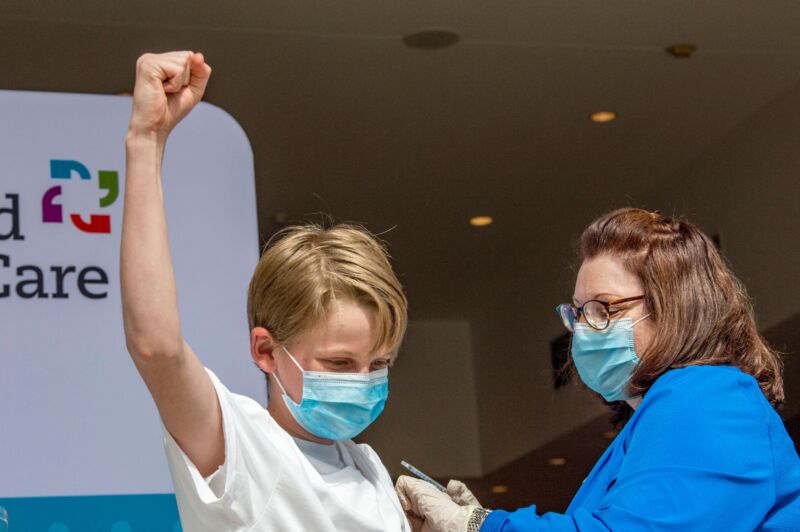





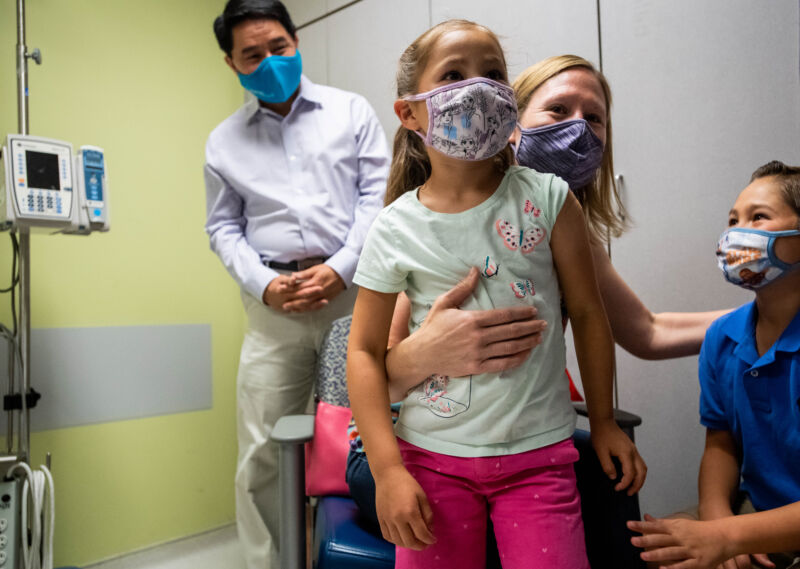



/cdn.vox-cdn.com/uploads/chorus_asset/file/23324463/AP19189728856963.jpg) Rich Pedroncelli/AP
Rich Pedroncelli/AP
/cdn.vox-cdn.com/uploads/chorus_asset/file/23324482/GettyImages_1094080892.jpg) Matt Jonas/Digital First Media/Boulder Daily Camera via Getty Images
Matt Jonas/Digital First Media/Boulder Daily Camera via Getty Images
/cdn.vox-cdn.com/uploads/chorus_asset/file/23324381/GettyImages_182949796.jpg) Paul Marotta/Getty Images
Paul Marotta/Getty Images
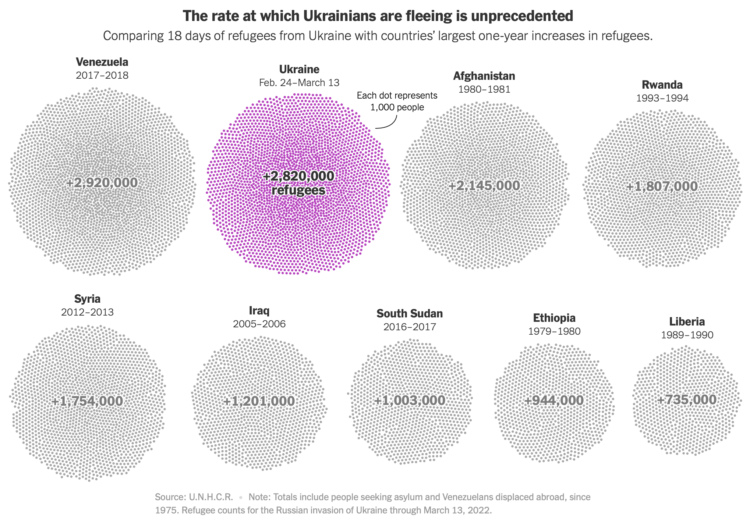


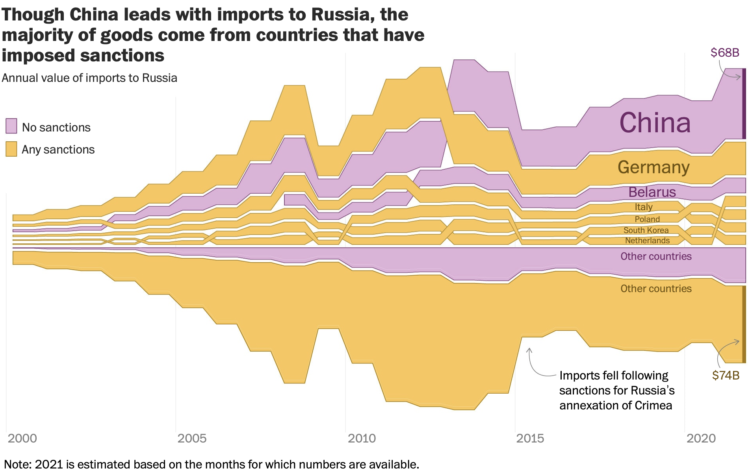


/cdn.vox-cdn.com/uploads/chorus_asset/file/23327212/Screen_Shot_2022_03_18_at_9.43.36_AM.png)
/cdn.vox-cdn.com/uploads/chorus_asset/file/23327395/AP22073195374407.jpg) Kin Cheung/AP
Kin Cheung/AP
/cdn.vox-cdn.com/uploads/chorus_asset/file/23327359/GettyImages_1239093148.jpg) Dale de la Rey/AFP via Getty Images
Dale de la Rey/AFP via Getty Images
/cdn.vox-cdn.com/uploads/chorus_asset/file/23327217/Screen_Shot_2022_03_18_at_9.41.48_AM.png)

/cdn.vox-cdn.com/uploads/chorus_asset/file/23320865/GettyImages_1239206605.jpg) Genya Savilov/AFP via Getty Images
Genya Savilov/AFP via Getty Images
/cdn.vox-cdn.com/uploads/chorus_asset/file/23320803/GettyImages_1239187463.jpg) Aris Messinis/AFP via Getty Images
Aris Messinis/AFP via Getty Images






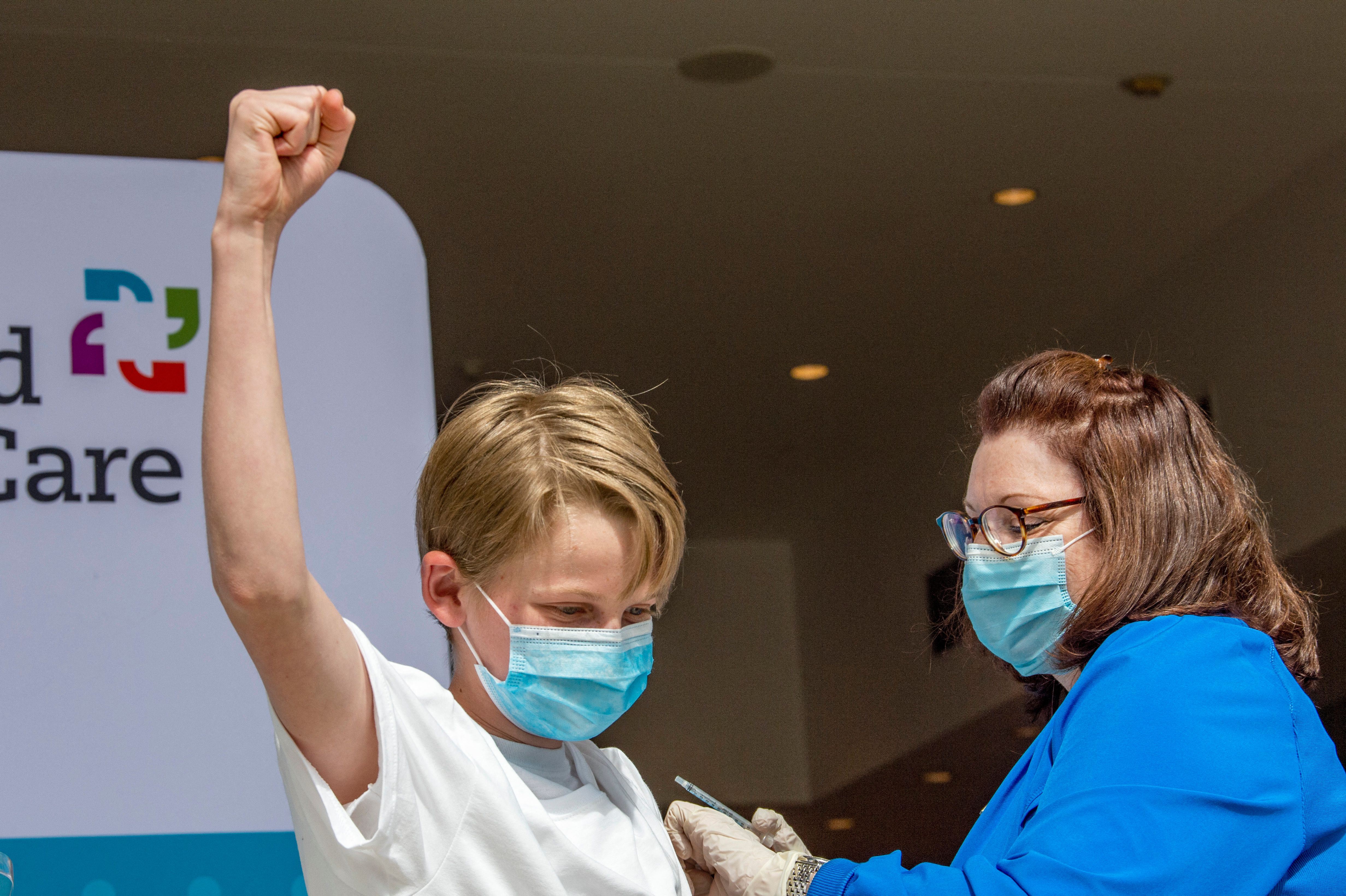

:format(webp):no_upscale()/cdn.vox-cdn.com/uploads/chorus_asset/file/21980796/Screen_Shot_2020_10_22_at_6.20.15_PM.png)