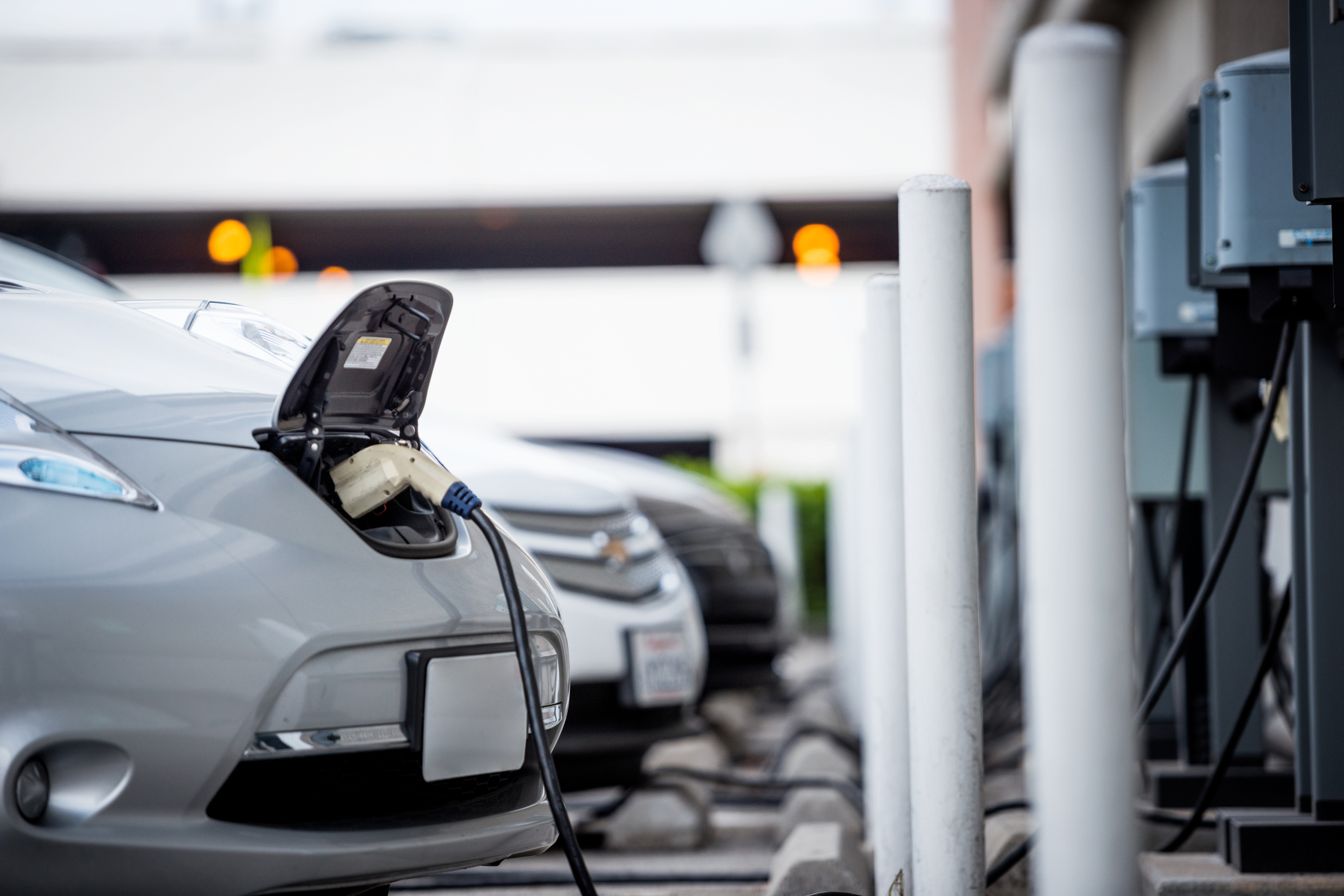
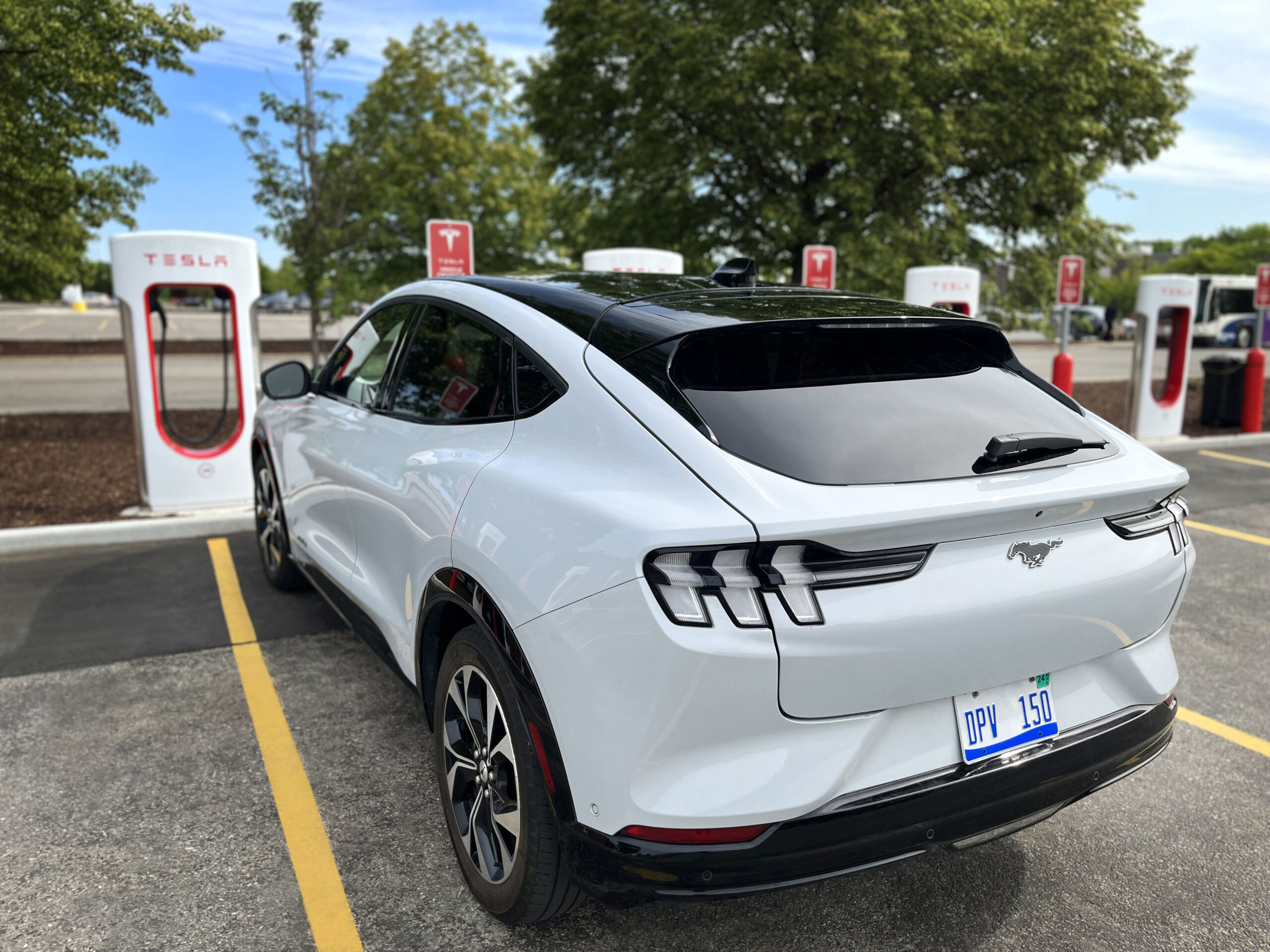
Electric-vehicle market share has soared in the last decade, but there has been no measurable change in the share of consumers who want to buy an EV just because it’s an EV.
This finding, from a recent paper in Proceedings of the National Academy of Sciences, indicates that the growth in demand for EVs is largely due to the appeal of the models’ technology and features, not a deeper attachment to the idea of owning an EV than in the past.
The results were surprising to Kenneth Gillingham, a Yale University economist and co-author of the study. “I went into it actually expecting to see some pretty notable changes in consumer preferences,” he said.
Enlarge / This box on wheels is capable of charging several EVs at once. (The press release says five, but the text on the side of the trailer says four.) (credit: Lightning eMotors)
One unanswered question about the shift to electric vehicles is how we'll bring EV charging to existing parking infrastructure. Between permitting delays and shortages of qualified workers, charger installation is often a slow endeavor. But that doesn't mean people aren't trying to find solutions.
Dallas-Fort Worth International Airport, for example, is testing a number of ideas over the next few months. One of them is a new mobile DC fast-charger from Lightning eMotors, which will be put through its paces June 19–23 charging EVs for staff and customers.
Regular readers might be feeling a sense of deja vu, as we just reported on a mobile charger being tested at DFW in the coming weeks. In that case, it was a robot charger on wheels called Ziggy, which can shuttle between EVs in a parking lot.
Enlarge / The Downtown Manhattan skyline stands shrouded in a reddish haze as a result of Canadian wildfires on June 6, 2023. (credit: Lokman Vural Elibol/Anadolu Agency via Getty Images)

2:45 pm ET Update: Air quality along the Atlantic Coast of the United States, and particularly in New York City, worsened substantially on Wednesday due to smoke from Canadian wildfires being transported south by atmospheric currents.
Webcams and images of the New York region showed the city essentially disappearing behind a wall of smoke and haze, with orange skies. The air was so choked with wildfire particulates on Wednesday afternoon that the city turned on its streetlights at 2 pm ET, at a time when the Sun is almost directly overhead.
As of 2:44 pm ET, the IQ Air website measured New York's Air Quality Index at 342, far above the threshold of 301 denoting "hazardous" air quality. The large city with the next-worst air in the world, Delhi, India, had a rating of 168 at the time. Flights were delayed into, and out of, La Guardia and Newark airports on Wednesday afternoon due to the prevalence of smoke and haze reducing visibilities.
We loved Prime Video's 2019 TV adaptation of Good Omens, the classic 1990 satirical fantasy novel by Neil Gaiman and the late Terry Pratchett. Stars David Tennant and Michael Sheen were perfectly cast as a demon and angel joining forces to avert Armageddon. But is it possible to recapture that magic in a second season, especially when it was originally meant to be a six-part limited series? The official trailer just released, and we're hopeful that the answer might just be yes.
(Spoilers for S1 below.)
As I've written previously, Good Omens is the story of an angel, Aziraphale (Sheen), and a demon, Crowley (Tennant), who gradually become friends over the millennia and team up against the forces of both Heaven and Hell to save Earth from destruction. They've come to be rather fond of the Earth and all its humans with their many foibles, you see—not to mention the perks that come with our big blue orb, like sleek electronics and quaint little restaurants where they know you. The supernatural pair doesn't really want the Antichrist—an 11-year-old boy named Adam (Sam Taylor Buck) who has grown up unaware of his pivotal role in the coming apocalypse—to bring an end to all of that.
The US has been urged to disclose evidence of UFOs after a whistleblower former intelligence official said the government has possession of “intact and partially intact” alien vehicles.
The former intelligence official David Grusch, who led analysis of unexplained anomalous phenomena (UAP) within a US Department of Defense agency, has alleged that the US has craft of non-human origin.
Information on these vehicles is being illegally withheld from Congress, Grusch told the Debrief. Grusch said when he turned over classified information about the vehicles to Congress he suffered retaliation from government officials. He left the government in April after a 14-year career in US intelligence.
Jonathan Grey, a current US intelligence official at the National Air and Space Intelligence Center (Nasic), confirmed the existence of “exotic materials” to the Debrief, adding: “We are not alone.”
The disclosures come after a swell of credible sightings and reports have revived attention in alien ships, and potentially visits, in recent years.
In 2021, the Pentagon released a report on UAP – the term is preferred to UFO by much of the extraterrestrial community – which found more than 140 instances of UAP encounters that could not be explained.
The report followed a leak of military footage that showed apparently inexplicable happenings in the sky, while navy pilots testified that they had frequently had encounters with strange craft off the US coast.
In an interview with the Debrief journalists Leslie Kean and Ralph Blumenthal, who previously exposed the existence of a secret Pentagon program that investigated UFOs, Grusch said the US government and defense contractors had been recovering fragments of non-human craft, and in some cases entire craft, for decades.
“We are not talking about prosaic origins or identities,” Grusch said. “The material includes intact and partially intact vehicles.”
Grusch told the Debrief that analysis determined that this material is “of exotic origin” – meaning “non-human intelligence, whether extraterrestrial or unknown origin”.
“[This assessment is] based on the vehicle morphologies and material science testing and the possession of unique atomic arrangements and radiological signatures,” Grusch said.
Grey, who, according to the Debrief, analyzes unexplained anomalous phenomena within the Nasic, confirmed Grusch’s account.
“The non-human intelligence phenomenon is real. We are not alone,” Grey said. “Retrievals of this kind are not limited to the United States. This is a global phenomenon, and yet a global solution continues to elude us.”
The Debrief spoke to several of Grusch’s former colleagues, each of whom vouched for his character. Karl E Nell, a retired army colonel, said Grusch was “beyond reproach”. In a 2022 performance review seen by the Debrief, Grusch was described as “an officer with the strongest possible moral compass”.
Nick Pope, who spent the early 1990s investigating UFOs for the British Ministry of Defence (MoD), said Grusch and Grey’s account of alien materials was “very significant”.
“It’s one thing to have stories on the conspiracy blogs, but this takes it to the next level, with genuine insiders coming forward,” Pope said.
“When these people make these formal complaints, they do so on the understanding that if they’ve knowingly made a false statement, they are liable to a fairly hefty fine, and/or prison.
“People say: ‘Oh, people make up stories all the time.’ But I think it’s very different to go before Congress and go to the intelligence community inspector general and do that. Because there will be consequences if it emerges that this is not true.”
The Debrief reported that Grusch’s knowledge of non-human materials and vehicles was based on “extensive interviews with high-level intelligence officials”. He said he had reported the existence of a UFO material “recovery program” to Congress.
“Grusch said that the craft recovery operations are ongoing at various levels of activity and that he knows the specific individuals, current and former, who are involved,” the Debrief reported.
In the Debrief article, Grusch does not say he has personally seen alien vehicles, nor does he say where they may be being stored. He asked the Debrief to withhold details of retaliation by government officials due to an ongoing investigation.
Start the day with the top stories from the US, plus the day’s must-reads from across the Guardian
Privacy Notice: Newsletters may contain info about charities, online ads, and content funded by outside parties. For more information see our Privacy Policy. We use Google reCaptcha to protect our website and the Google Privacy Policy and Terms of Service apply.
after newsletter promotion
He also does not specify how he believes the government retaliated against him.
In June 2021, a report from the Office of the Director of National Intelligence said that from 2004 to 2021 there were 144 encounters between military pilots and UAP, 80 of which were captured on multiple sensors. Only one of the 144 encounters could be explained with “high confidence” – it was a large, deflating balloon.
Following increased interest from the public and some US senators, the Pentagon established the All-domain Anomaly Resolution Office, charged with tracking UAP, in July 2022.
In December last year, the office said it had received “several hundred” new reports, but no evidence so far of alien life.
The publication of Grusch and Grey’s claims comes after a panel that the US space agency Nasa charged with investigating unexplained anomalous phenomena said stigma around reporting encounters – and harassment of those who do report encounters – was hindering its work.
The navy pilots who in 2021 shared their experiences of encountering unexplained objects while conducting military flights said they, and others, had decided against reporting the encounters internally, because of fears it could hinder their careers.
“Harassment only leads to further stigmatization of the UAP field, significantly hindering the scientific progress and discouraging others to study this important subject matter,” Nasa’s science chief, Nicola Fox, said in a public meeting on 31 May.
Dr David Spergel, the independent chair of Nasa’s UAP independent study team, told the Guardian he did not know Grusch and had no knowledge of his claims.
The Department of Defense did not immediately respond to a request for comment.
In a statement, a Nasa spokesperson said: “One of Nasa’s key priorities is the search for life elsewhere in the universe, but so far, NASA has not found any credible evidence of extraterrestrial life and there is no evidence that UAPs are extraterrestrial. However, Nasa is exploring the solar system and beyond to help us answer fundamental questions, including whether we are alone in the universe.”
Pope said in his work investigating UFOs for the MoD he had seen no hard evidence of non-human craft or materials.
“Some of our cases were intriguing,” Pope said. “But we didn’t have a spaceship in a hangar anywhere. And if we did, they didn’t tell me.”
Still, Pope said, Grusch’s claims should be seen as part of an increasing flow of information – and hopefully disclosures – about UFOs.
He said: “It’s part of a wider puzzle. And I think, assuming this is all true, it takes us closer than we’ve ever been before to the very heart of all this.”
Countries are negotiating a new global treaty to drastically reduce the plastic waste that has been poisoning the world.
Plastic recycling doesn’t work, no matter how diligently you wash out your peanut butter container. Only about 15 percent of plastic waste is collected for recycling worldwide, and of that, about half ends up discarded. That means just 9 percent of plastic waste is recycled.
The rest — some 91 percent of all plastic waste — ends up in landfills, incinerators, or as trash in the environment. One report estimated that 11 million metric tons of plastic trash leaked into the ocean in 2016, and that number could triple by 2040 as the global population rises and lower-income countries develop. Plastic is now simply everywhere: at the deepest depths of the ocean, on the tallest mountains, in hundreds of species of wildlife, and even in human placentas.
Bhushan Koyande/Hindustan Times via Getty Images
A man walks on a plastic-covered shore in Mumbai, India, on May 31.
It’s hard to imagine meaningful solutions to a problem of such epic proportions. Campaigns to ban things like plastic straws almost seem like a joke when compared to the staggering amounts of waste produced by everything else we use — including the plastic cups those straws go in.
Now, however, there might actually be a reason to feel hopeful. Late last year, world leaders, scientists, and advocates started working on a global, legally binding treaty under the United Nations to end plastic waste. The second round of negotiations concluded last week in Paris with a plan to produce an initial draft of the deal.
This treaty could be huge. Although it will take months of negotiating for any of the details to become clear, the agreement — set to be finalized by the end of 2024 — will require countries to do far more than just fix their recycling systems. Negotiators will discuss a menu of options including a cap on overall plastic production, bans on certain materials and products including many single-use plastics, and incentives to grow an industry around reusable items. This treaty could literally transform entire chunks of the global economy.
As with any global deal, an ambitious agreement will face several roadblocks, some of which have already appeared. Certain countries, such as Saudi Arabia and the US, for example, are pushing for voluntary terms that would allow them to continue investing in their petrochemical industries (plastic is a petrochemical).
Then again, the fact that global talks are happening at all is in itself a big deal and reveals a shift in the politics around waste. “There’s a true willingness to tackle this problem,” said Erin Simon, vice president and head of plastic waste at the World Wildlife Fund, a large environmental group. “We’ve never seen so much progress.”
Here’s what a global plastic treaty could do, and why anti-waste advocates are so hopeful.
Lan Zitao/VCG via Getty Images
A worker at a PVC pipe factory in China’s Sichuan Province on November 30, 2022.
The plastic treaty will target the root of the problem
Even if recycling weren't such a failure, it wouldn’t put an end to plastic waste. Many items can’t be — or are not meant to be — recycled.
There’s no real way to fix the plastic problem without simply producing less of it, said Nicky Davies, executive director of the Plastic Solutions Fund, a group that funds projects to end plastic pollution. “The first thing we need to do is turn off the tap,” Davies said.
That’s why this treaty is so significant: By conception, the agreement is meant to focus on the design and production of plastics, not just on what happens to plastic items after we use them. In other words, the treaty targets the full life cycle of plastics.
What does that mean in practice? The agreement could, for example, include an overall cap on plastic. This would be a global target for reducing the production of new, virgin plastic (which has no recycled content).
Such a target could mandate that, by a certain year, total annual plastic production cannot exceed the amount of plastic produced in some baseline year. It’d be kind of like targets to slash fossil fuel production in order to curb climate change — but for plastic polymers.
Bye-bye plastic takeout containers, probably
Regardless of whether or not the treaty includes an explicit limit on plastic production, it will almost certainly contain bans or restrictions on some materials.
Certain chemicals used in plastics are especially problematic and could be targeted by bans. Some flame retardants, for example, are linked to cancers and endocrine disruption; they can also make plastics hard to recycle. A number of other additives and materials are similarly dangerous to humans or ecosystems, or they make recycling difficult, such as polyvinyl chloride (PVC) and various kinds of PFAS (the so-called forever chemicals).
The treaty may also ban or restrict a whole bunch of common, problematic products — namely, packaging and other single-use items, such as cups and cutlery.
These are an enormous part of the plastic problem, said Carroll Muffett, president and CEO of the Center for International Environmental Law, an environmental advocacy group. Roughly 40 percent of all plastic waste comes from packaging alone, and nearly two-thirds of it is from plastics that have a lifespan of fewer than five years, according to the Organisation for Economic Co-operation and Development.
“These are materials that come into people’s lives that are often unnoticed, and they have useful lives measured in minutes or moments or at best months,” Muffett told Vox.
Getty Images
A biker in Neihuang, China, carries balloons to sell during a bout of heavy smog.
The most immediate bans or restrictions on single-use plastics, researchers say, should apply to products that are most likely to leak into the environment and cause harm and yet are relatively unnecessary. These include takeaway containers, chip bags, balloons, cotton swabs, disposable e-cigarettes, and tea bags. (A number of environmental organizations including WWF have lists of products that the treaty should prioritize.)
Speaking of unnecessary: The treaty may also restrict the use of certain microplastics. These are plastic pieces that are under 5 millimeters in length, which are either deliberately put in some products like face wash or are emitted unintentionally by things like car tires and clothing. Scientists have found them everywhere they look including in our blood and lungs, water bottles, and Antarctic snow.
Restricting these sorts of plastics isn’t a far-fetched idea. Several US states already ban some plastic bags, including New York and California. The US, Canada, the UK, and other countries, meanwhile, prohibit companies from selling shower gels and many other personal care products with plastic “microbeads” in them. And the EU — home to some of the world’s strictest plastic regulations — prohibits a wide number of single-use items from entering the market, including plastic cutlery and straws.
Yet these bans are not global, they’re not always enforced, and they don’t go far enough, experts say. That’s where the treaty could help.
Building out the “reuse economy”
Plastic is widespread for a few obvious reasons. It’s lightweight, durable, and easily shaped, making it useful for a large number of applications. Plastic is also incredibly cheap (even if government subsidies help offset some of the costs).
Should countries try to phase out single-use plastics, whether by a treaty or not, a key question is: What will replace it? In some cases, other materials like paper might be appropriate, although, of course, they can produce waste as well.
A more sustainable solution, Davies said, is to build out what she calls the reuse economy: a system in which many single-use items, like plastic cups, are replaced by containers that are used over and over again.
This model offers clear value where consumers buy and eat food in the same place, such as food courts, movie theaters, or music festivals. In a reuse economy, vendors would give customers a reusable cup, which they would then place in a bin before leaving the venue, not unlike how you return trays at some food courts. There’d be central facilities on site to clean the cups and make them available to the next customer. (That means dishwashing would have to become more widespread.)
Jeffrey Greenberg/Universal Images Group via Getty Images
A drain in Miami Beach, Florida, clogged with plastic waste.
Transforming some other parts of the economy is more challenging, including the food delivery industry. Consider, however, that restaurants often use the same kinds of plastic food containers across large cities like New York. Imagine if those containers were meant to be truly reusable; instead of throwing them out or recycling them, consumers could return them (via some kind of bin, for example) to a central system that cleans the containers and restocks them at restaurants.
Obviously, this would require major investments in infrastructure by governments, private funders, and companies — not to mention some changes in behavior among consumers — but there are plenty of examples of these sorts of reuse systems already working successfully. They’ve been around for decades. In Europe and parts of Africa, Asia, and Latin America, restaurants and other retailers commonly sell beer and soda in refillable glass containers. Customers will typically get a small deposit back when they return those items.(An organization called Upstream maintains a list of reuse policies in the US and abroad.)
The treaty could help fuel this approach by mandating global targets related to reusing containers, some of which already exist at a country level (in France and elsewhere). For example, it could set a minimum percentage of drinks that must be sold in reusable containers. The treaty could also help set standards for what a good reusable system looks like and define what “reuse” actually means — considering that many plastic bags and other disposable items say they’re “reusable” even though most of us throw them out.
Davies says the reuse economy is essential to fixing the plastic problem — as essential as renewable energy is for curbing climate change. “We actually need to build the reuse economy in the same way as we have built the renewable energy economy,” Davies said.
Better recycling will help, but it’s only a small part of the solution
The treaty won’t spell the end of recycling. Plenty of plastics aren’t easily cleaned or reused by other people, such as toothbrushes or plastics used in hospitals, so countries will still need recycling — but it requires major improvements.
Some cities and countries lack sufficient, conveniently located recycling bins or facilities to process plastic. Even where that infrastructure does exist, recycling runs into all kinds of problems. Plastics in a bin of recyclables typically contain a slew of polymers, dyes, and other chemicals that don’t necessarily mix well together or, when combined, form low-quality plastic, according to a report by the Pew Charitable Trusts, a research organization. Some of those chemicals can also make the recycling process itself unsafe for waste workers, Davies said.
“Today’s plastic recycling system is failing us,” authors of the Pew report wrote.
Beyond eliminating harmful chemicals in plastics, a key solution is to encourage or mandate that companies design for recycling from the beginning. That means phasing out dyes and other additives that make recycled plastic worth less, using fewer types of polymers that can contaminate recycling streams, and so on. Better labeling is important, too: You shouldn’t have to spend time Googling to figure out how to recycle something.
To encourage recycling, cities, and countries can also build out what are called “deposit return systems,” or DRS. In these schemes, customers pay a deposit when they buy a drink in a to-go bottle and get it back if they return the container (you may have seen these return machines by the entrance of some grocery stores). The treaty could mandate that countries require DRS for certain kinds of plastic containers.
Getty Images
A customer places bottles in a recycling machine to receive her deposit in a grocery story in Slovakia.
The treaty could also set a minimum percentage for the amount of recycled plastic in a given product. That would make recycled plastic more valuable and, in turn, encourage more recycling. Again, such targets are not unprecedented: The EU requires that, by 2025, PET plastic drink bottles are made with at least 25 percent recycled plastic.
(Treaty negotiators will consider a wide range of other ideas, such as eliminating subsidies for fossil fuels, setting standards for landfilling plastic, including those pertaining to the health of workers, and weeding out misleading claims about compostable or biodegradable plastics.)
What countries will fight about
Treaty negotiations have only just begun, yet some issues are already a source of tension. Perhaps the biggest one is whether targets under the treaty should be globally mandated — and apply to all countries — or voluntary and set by each nation individually.
A group of countries including all members of the EU, Japan, and Chile, known as the high ambition coalition, is pushing for global targets, whereas the US, Saudi Arabia, and other big plastic-producing nations are advocating for national voluntary targets. (Those voluntary targets would be similar to those under the 2015 Paris climate agreement, which set the goal of limiting global warming to 1.5 degrees Celsius to combat climate change.)
“The number one thing I want is global rules,” saidSimon of WWF. “Plastic pollution is so integrated into all of our lives, and through these massive world markets. If we continue to address it in a fragmented way, we will never be successful.”
Mohd Samsul Mohd Said/Getty Images
A blue plastic polymer inside a factory near Kuala Lumpur, Malaysia.
A number of other core issues will likely divide countries along similar lines, such as whether the treaty should cap virgin plastic production and what specific materials it should ban. Generally, major oil-producing nations and other petrochemical interests, such as chemical companies, like to talk up the benefits of recycling instead of taking steps to curb plastic production.
Funding will almost certainly be a divisive issue, as well. There’s a common tension during negotiations for global environmental treaties between wealthy and poor nations. In this case, lower-income countries are likely to argue that they should pay less — or be paid — to implement the treaty because they’ve contributed relatively little to the problem of plastic waste (and in some cases suffer most from it).
Could this treaty really work?
Delegates from 175 countries finished up the last round of negotiations in Paris with a clear objective: To develop a draft of the plastic treaty before November, when they’ll meet again, in Nairobi, Kenya, for round three. The idea is to discuss the terms of the treaty in detail then, using the text (which they call a “zero draft”) as a starting point.
While UN treaty processes are often confusing and bogged down by bureaucracy, they’re one of our best defenses against global crises. And plastic pollution is indeed a global crisis. It’s everywhere — in our forests, our mountains, our oceans, our wildlife, our bodies, our children’s bodies. At least 85 percent of all marine waste is plastic. Hundreds of chemicals in plastics pose potential risks to human health.
It remains unclear whether negotiators will be able to craft an ambitious treaty. Then there will be questions about implementation. But the good news is that something similar has been done before, albeit on a smaller scale.
In 1987, nearly 200 countries agreed to a global deal called the Montreal Protocol designed to phase out chemicals called CFCs that were found in all sorts of products, from aerosol cans to refrigerators, which had put a hole in Earth’s ozone layer. The treaty worked. Today, 99 percent of ozone-destroying chemicals have been phased out and the ozone hole is almost fully repaired.
While the plastic problem is much bigger, global rules to phase out harmful materials can work. “This has been done before,” Muffett said. If world leaders take the problem of plastic pollution seriously, he said, “fundamental transformation is very, very possible.”
Former President Donald Trump watches from a box on the 18th green during day one of the LIV Golf Invitational at Trump National Golf Club on May 26, 2023 in Sterling, Virginia. | Rob Carr/Getty
A tape of Trump. His lawyer’s voice memo. A pool flood. What else does special counsel Jack Smith know about?
Multiple reports indicate that special counsel Jack Smith’s investigation of Trump for the classified documents held at Mar-a-Lago is wrappingup, and some experts expect an indictment of Trump as soon as this week.
On Wednesday, multiplenews outlets reported that investigators had recently told Trump’s legal team he was a target in the documents investigation. The Washington Post also reported that prosecutors were planning to bring “a significant portion of any charges” in federal court in South Florida (rather than in Washington, DC, where the investigation has been headquartered).
If Trump is charged in the documents probe, it would be his first federal indictment — but potentially not his last. He’s already facing charges from state prosecutors in New York, and there are two other investigations pending into whether he tried to unlawfully subvert the result of the 2020 election (one federal probe, and one in Georgia).
But the documents probe, which first broke into public view when the FBI searched Mar-a-Lago last August, is the one that’s apparently coming to a head now.
And as it does, a series of stories have leaked out with new revelations about evidence Smith has obtained.
Last week, CNN reported that Smith had a 2021 tape in which Trump claimed to have a classified document related to Iran in his possession. This weekend, the New York Times revealed Smith had obtained a detailed voice memo from a key period in which a Trump attorney recounted the team’s private deliberations. And on Monday, another CNN report revealed that prosecutors had suspicions about a pool draining at Mar-a-Lago that flooded a room with servers for the property’s surveillance footage.
Though Trump’s team has asserted these leaks come from the special counsel, that seems unlikely given how these stories are written — they all cite what Smith’s team has asked grand jury witnesses about but seem to be lacking a fuller picture of his theory of the case. That piecemeal aspect suggests that grand jury witnesses, their attorneys, and Trump’s own attorneys may be the sources, as they’re trying to piece together what Smith has.
The key fact at the center of the case is clear enough: Trump had classified documents at Mar-a-Lago at the time of that search that were the property of the US government, and that had not been returned to the government despite requests and subpoenas.
But many of the bigger questions remain mysterious: Why did Trump keep the documents? What happened to the documents while he had them? What’s the evidence that he knew he was breaking the law? And did he knowingly try to deceive the government about whether he still had classified material — something that could open him up to an obstruction of justice charge?
Whatever the answers, all signs are currently pointing toward a federal indictment of a former president.
Prosecutors have a recording in which Trump discussed a document about Iran
If prosecutors charge Trump, prosecutors will be looking to tell a larger story about why they believe what he did with the documents was so nefarious.
That’s particularly important because both Joe Biden and Mike Pence also ended up with classified documents in their respective homes after leaving the vice presidency. Pence’s investigation was closed without charges, and there hasn’t been much news of late on the Biden investigation (being carried out by a separate special counsel, Robert Hur). How was Trump’s conduct worse?
That’s where one newly revealed piece of evidence comes in. CNN learned that, in the summer of 2021, Trump had a discussion with people working on a memoir for his former chief of staff, Mark Meadows — a discussion that was taped by one of Trump’s aides.
On the tape, per CNN, Trump objected to recent media claims that General Mark Milley, his Joint Chiefs of Staff chair, stopped him from attacking Iran in his final months in office. Trump argued that Milley was the one urging him to attack Iran, and claimed to have a document with Milley’s own plan to that effect, but that he couldn’t show it to others.
That’s significant for a few reasons — because it’s Trump claiming to have a specific document, and because he acknowledges he’s not allowed to show it.
Trump’s allies have floated a dubious defense that he had already used his presidential powers to declassify all the documents in question, but his comment on the tape could be interpreted to suggest otherwise. And apparently, Trump’s claim to have this document was not just hot air — the New York Times has reported that the document does exist, though wasn’t actually Milley’s plan, since it predated his tenure.
The lawyer’s voice memo and the Mar-a-Lago pool flood are relevant to an obstruction charge
Moving on in the timeline, prosecutors also want to trace whether Trump lied to government officials when they demanded he return documents.
During a months-long back and forth with the government, Trump eventually returned 15 boxes of documents, some 184 of which were marked classified. He then was subpoenaed again because officials doubted he’d returned everything.
In June, DOJ investigators visited Mar-a-Lago to talk with Trump’s attorneys, who handed over another 38 documents, but claimed that was the end of it: Trump had no more. They also showed investigators a storage room which they said only had non-classified records.
The latest leaks flesh out two intriguing threads from this period.
One involves Trump’s attorney Evan Corcoran, who during that June visit gave investigators a letter claiming Mar-a-Lago had been diligently searched and all remaining classified records had been returned. As later revealed in the FBI’s search, this was not true, and more than 100 documents remained on the property, including in a basement and in Trump’s own office.
So how did the false letter get put together? Smith wanted to find out, and a judge ruled this year that Corcoran had to testify and hand over documents, holding that attorney-client privilege doesn’t apply here because of the “crime-fraud exemption” (that there was evidence the attorney was used by the client to commit a crime).
Last weekend’s Times report revealed one thing Corcoran handed over: a lengthy voice memo in which, during a long drive, he’d recapped to himself his interactions with Trump’s team during this period.
Per the Times sources, Corcoran said Trump had asked him if he had to comply with the subpoena, and Corcoran responded that he did. Corcoran also said that Mar-a-Lago employees had told him everything he needed was in the storage room, not elsewhere on the property. An earlier report from the Guardian claimed Corcoran had told others that Trump aides had waved him off from searching elsewhere on the property.
So were those Trump aides actively conspiring to hide certain documents from Trump’s own attorneys? Many previous reports have described prosecutors’ intense interest in surveillance footage of the storage room, which reportedly shows Trump aides moving boxes out of it around the time of investigators’ visit. Other recent reports have described new testimony from low-level Mar-a-Lago workers and refer to an insider witness.
That brings us to Monday night’s CNN leak, which claims that prosecutors had suspicions about an October 2022 pool flood at Mar-a-Lago, in which water got into a room with servers for the surveillance videos. Per CNN, one witness testified that no footage was actually lost, but prosecutors had questions about whether there was a deliberate effort to hold back subpoenaed surveillance footage from the government.
Does Jack Smith think there was a conspiracy to hold back classified documents and evidence from the government? If so, does he have evidence Trump ordered it? He appears to be seriously delving into both topics — but we don’t yet know what he has concluded.
Update, June 8, 9:45 am ET: This story was originally published on June 6 and has been updated to note new reporting about the investigation.
Thousands of people and human rights activists gather on the Dam Square to attend a rally for abortion rights worldwide on May 7, 2022, in Amsterdam. | Pierre Crom/Getty Images
Yes, even the 12-week ones.
Republicans scrambling toaddress mounting backlash to abortion bans havelanded on what they hope they can market as a moderate political compromise: limiting abortion after 12 weeks of pregnancy.
Over the last month, Republicans in North Carolina and Nebraska have passed 12-week abortion bans, a dramatic reduction in access for states that previously allowed abortion up until 20 weeks and 22 weeks, respectively.
Republican politicians are casting these new 12-week bans as “mainstream,” comparing them to even more extreme GOP-led states that have banned virtually all abortion, and pointing to other countries, particularly in Europe, that also impose gestational age limits at 12 weeks.
The rhetorical strategy of invoking other countries to justify banning abortion will sound familiar to those who followedthe overturn of Roe v. Wade. In that case, Dobbs v. Jackson, Mississippi lawmakers defended their 15-week abortion ban by pointing out that most European countries have even earlier restrictions.
In the Dobbs Supreme Court hearing itself, Justice John G. Roberts claimed the proposed 15-week ban mirrors “the standard that the vast majority of other countries have.” In his majority opinion, Justice Samuel Alito cited a study published by a leading anti-abortion group that argued the US was out of step with the rest of the world in terms of abortion after 20 weeks.
The study, published by the think tank arm of the Susan B. Anthony Pro-Life America, said 47 out of 50 European nations limit “elective” abortion before 15 weeks, meaning before then doctors are not required to attest to a particular justification for the abortion.
But differences between the US and European countries are more complex than that simple comparison suggests. In practice, abortion limits in the United States are far more restrictive than what exists in most of the Western world, including in nations with gestational age limits at 12 weeks, like Germany, Denmark, Belgium, and Italy.
This distinction between “elective” abortions (or “abortion on demand,” as it’s more provocatively called) and “therapeutic” abortions, which are done for medical reasons, might seem like a key distinction between the US and Europe. But in practice, the line is much blurrier. All abortions are ultimately elective — no one is forced to end a pregnancy, even if a doctor recommends it. Plenty of elective abortions are done for therapeutic reasons.
Moreover, European countries that have 12-week limits on “elective” abortions still make it fairly easy for women to get abortions later on, with relatively broad exceptions for mental health or socioeconomic circumstances. Republicans have aggressively fought against similar exceptions, and in particular have worked to bar consideration of mental health risk — even the risk of suicide if a pregnancy continues — as a factor.
And in other ways, European countries make it easier to get an abortion than in even relatively permissive jurisdictions in the United States.Across Europe, abortion services are coveredunder national health insurance, meaning the cost of accessing care is a far lower barrier for pregnant people facing time constraints.
By contrast, in the US, cost is one of the biggest hurdles to ending a pregnancy. Even though more than90 percent of abortions occur within the first 13 weeks, roughly 75 percent of all US abortion patients are low-incomeaccording to 2014 numbers, and researchers find Americans needing care in the second trimester tend to be those with less education, Black women, and women who have experienced “multiple disruptive events” in the past year, such as losing a job.
Republican lawmakers are also bucking international trends in working to aggressively restrict access to telehealth abortion care and medication abortion generally — which allows patients, especially those who live in remote and rural areas, to get the abortion services they seek on a faster timeline. Both North Carolina and Nebraska have fully banned abortion via telehealth, despite research affirming its safety and efficacy.
Across the globe, the clear trend has been to expandaccess to abortion, decriminalizethe procedure, and loosenrestrictions. While restrictive policies, including earlier gestational limits, still present barriers for international abortion care, per the Center for Reproductive Rights, nearly 60 countries have liberalized their laws and policies on abortion since 1994. Only four — the US, El Salvador, Nicaragua, and Poland — have further restricted rights.
Even with earlier gestational limits, abortion in Europe is broadly affordable and accessible. This is not the paradigm Republicans are proposing in the United States. They are fighting to keep abortion expensive, particularly for low-income patients who rely on Medicaid; to limit the reasons like mental health for which patients can access legal abortion; and to restrict access to care, all while imposing bans on telemedicine, ramping up criminal penalties for providers, and shortening the legal timeline for pregnant people to raise funds, arrange travel, and book mandatory medical appointments.
Understanding international abortion access in practice
Republicans have been eager to point to countries that restrict “elective” abortion after 12 weeks to justify the supposedly mainstream nature of their new bans. But across Europe, the cost of abortion care is fully paid for by federal governments, making first-trimester abortions simply easier to do. Abortions in the US can easily exceed $500 out of pocket, and only 17 states currently cover abortion under their Medicaid programs, which they must do with state funds, not federal dollars, as Congress prohibits it.
Another difference is that abortion exceptions for “health of the pregnant woman” in Europe take into account mental health, too. In Germany, for example, while abortion is permitted upon request throughout the first 12 weeks, someone can seek legal abortion through 22 weeks if it would help them “avert the danger of grave impairmentto [their] physical or mental health.”
In Britain, which allowslegal abortion up to 24 weeks, it’s similarly clarified that a pregnant person can access careif it’s determined that ending the pregnancy would cause less damage to the patient’s physical or mental health than continuing to carry.
“This is always granted [by doctors] under the correct assumption that continuing a pregnancy is always more dangerous than terminating, and that continuing an unwanted pregnancy is always detrimental to a person’s mental health,” said Maria Lewandowska, a reproductive and sexual health researcher at London School of Hygiene and Tropical Medicine.
Any doctor can provide this authorization, she said, and in practice, patients often get approval directly from doctors at abortion clinics. Advocates in the UK have been encouraging the government to authorize nurses and midwives to grant this permission, too.
Some countries don’t explicitly state “mental health” in their statute, but recognize that maternal health includes psychological health. The author of France’s 1975 abortion law clarified during legislative hearings that “the very term ‘health’ covers, it seems to me, the mental aspect as well as the physical aspect.” The World Health Organization’s definition of “health” includes “mental health.” In Canada, leaders make no formal distinction between physical and mental health, which Joyce Arthur, executive director of the Abortion Rights Coalition of Canada, says allows providers to “better integrate abortion care into the broader health care system.”
Meanwhile, research on the psychological harm associated with carrying unwanted pregnancies continues to mount. The Turnaway Study, a longitudinal study on the effects of unwanted pregnancy on patients’ lives, found that the mental health of women able to end unwanted pregnancies was significantly better than that of women forced to carry to term. Another report published in 2022 found that suicide is a leading cause of death for pregnant people during pregnancy and the first year following it.
Anti-abortion activists in the US, for their part, continue to dismiss these studies. “Having an abortion will not mitigate mental health issues,” said Laura Echevarria, a spokesperson for the National Right to Life Committee, which has lobbied state legislatures to exclude mental health.
In addition to providing exceptions for mental health and paying for abortion care, pregnant people in European countries can also seek legal abortion beyond their country’s 12- or 14-week limit for broad socioeconomic reasons, like feeling too young or too old to have children, feeling consumed by existing children, being a single parent, or lacking a stable housing or financial situation. The Center for Reproductive Rights counts at least 16 European countries that permit abortion on socioeconomic grounds.
In Denmark, for example, though the country has a 12-week ban on paper, it’s considered relatively feasible for residents to get approval for abortion beyond that. In 2021, 803 pregnant people applied to get an abortion in Denmark beyond 12 weeks, and 750 were approved.
Thousands of pregnant women living in countries with 12-week abortion bans travel internationally to end their pregnancies
Even with broader grounds for legal exceptions and greater financial assistance available in countries with earlier gestational age limits, first-trimester bans in Europe still force thousands of pregnant people to travel internationally every year to end their unwanted pregnancies. (A French parliamentary report from 2020 estimated that as many as 4,000 French women traveled abroad for abortion annually due to gestational limits. In 2022, French legislators extended their limit to 14 weeks.)
One study published in March looked at people who traveled from countries like Austria, Bulgaria, France, Germany, and Italy to the Netherlands or England for later abortion care. Over half of the pregnant people surveyed hadn’t learned they were even pregnant until they were at least 14 weeks along, when they had already surpassed the limits in their home countries.
The reasons participants cited for not knowing they were pregnant hold strong relevance for pregnant people in the US living in states with new 12- or six-week bans. The participants all said they would have preferred earlier abortion care but didn’t know they were pregnant due to reasons like irregular periods, lack of clear pregnancy signs, misinformation by doctors about contraception, or their gestational age.
While European passports make travel to other EU countries relatively easy, pregnant people then have to shoulder the cost of travel and the abortion, as national governments only fund abortion care for their own residents. Feminist activists help fundraise for pan-European surgical abortion, as well as the distribution of medication abortion to regions where it’s illegal, but second-trimester abortions for non-Dutch residents can cost up to 1,100 euros. Abortion travel also delays care, which increases a pregnant person’s health risks.
Twelve-week bans in the US won’t end the need for abortion care in the second trimester, because there will always be women who lack the knowledge that they’re pregnant before then. But if Republicans wanted to reduce the need for abortion after 12 weeks, they could back straightforward policies to make the procedure more accessible and affordable.
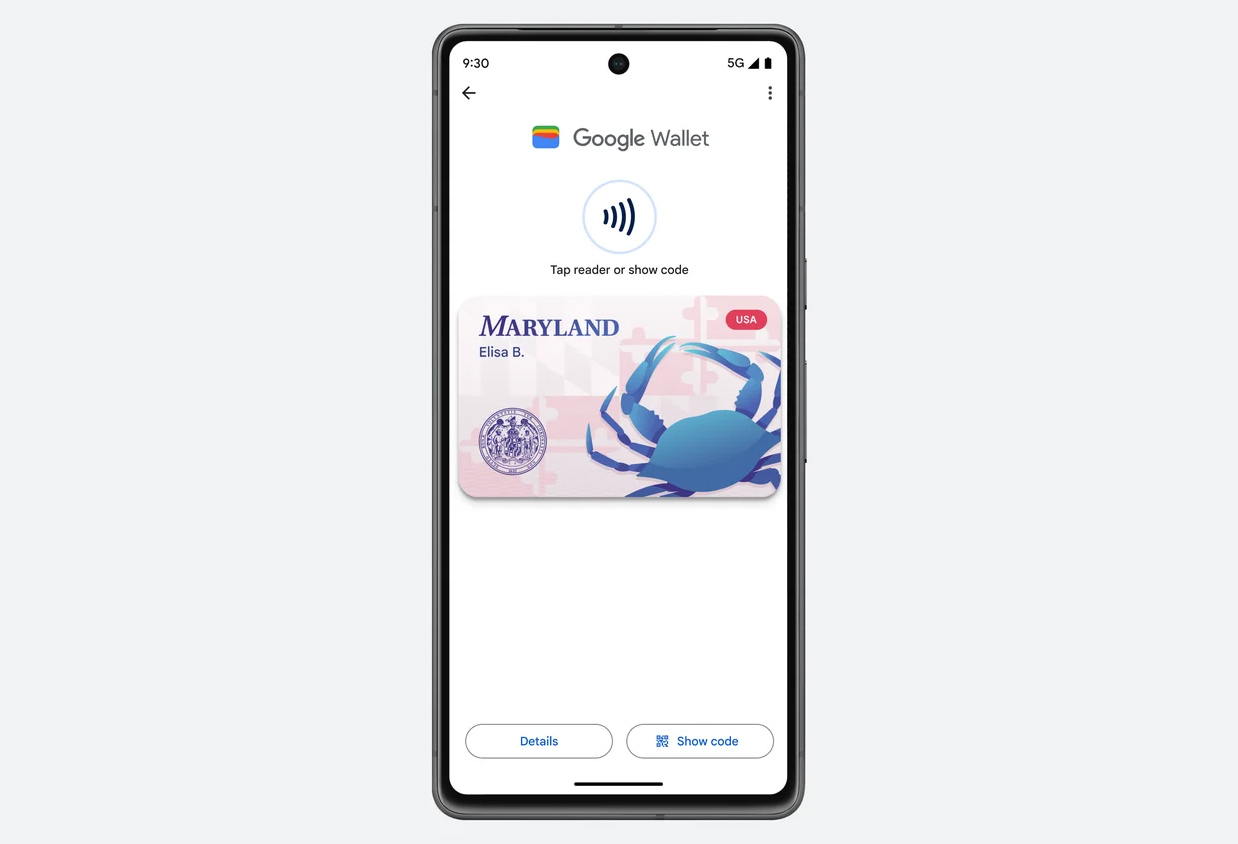
Google Wallet on Android is finally getting ready for your digital driver's license and other US state IDs. Google says the feature is rolling out this month, and it will slowly start bringing states online this year. Of course, your state has to be one of the few that actually supports digital IDs. Google says Maryland residents can use the feature right now and that "in the coming months, residents of Arizona, Colorado and Georgia will join them."
The road to digital driver's license support has been a long one, with the "Identity Credential API" landing in Android 11 in 2020. Since then, it has technically been possible for states to make their own ID app. Now Google Wallet, Google's re-re-reboot of its payment app, is providing a first-party way to store an ID on your phone. Some parts of the Identity Credential API landed in Google Play Services (Google's version-agnostic brick of APIs), so Wallet supports digital IDs going back to Android 8.0, which covers about 90 percent of Android devices.
Maryland has supported Digital IDs on iOS for a while, which gives us an idea of how this will work. An NFC transfer is enough to beam your credentials to someone, where you can just tap against a special NFC ID terminal and confirm the transfer with your fingerprint. Wallet has an NFC option, along with a "Show code" option that will show the traditional driver's license barcode.
Law enforcement officials in Washington state have finally apprehended a Tacoma woman with tuberculosis who has refused treatment and isolation for over a year and has spent the past several months actively evading the sheriff's department's efforts to execute a civil arrest warrant against her.
She is now being held in the Pierce County Jail, Nigel Turner, division director of Communicable Disease Control for the Tacoma-Pierce County Health Department, said in an update late Thursday.
"She will be housed in a room specially equipped for isolation, testing, and treatment. We are hopeful she will choose to get the life-saving treatment she needs to treat her tuberculosis," he added. He also thanked local law enforcement who "supported public health with this necessary intervention."
Enlarge / Amazon Ring indoor cameras displayed during an event at company headquarters in Seattle on September 25, 2019. (credit: Getty Images | Bloomberg)
A Federal Trade Commission lawsuit filed yesterday accused Ring, the home security camera company owned by Amazon, of invading users' privacy by "allowing thousands of employees and contractors to watch video recordings of customers' private spaces."
Until September 2017, every employee of Ring and a Ukraine-based contractor had access to customer videos, which were stored without encryption, the FTC said. "Ring gave every employee—as well as hundreds of Ukraine-based third-party contractors—full access to every customer video, regardless of whether the employee or contractor actually needed that access to perform his or her job function," the FTC said.
Violations did not stop in 2017 despite new access controls, according to the lawsuit, which alleges privacy invasions both before and after Amazon bought Ring in 2018. The FTC's lawsuit in US District Court for the District of Columbia also alleged that Ring failed to promptly implement basic privacy and security protections, making it easier for hackers to take over customers' accounts and cameras. A settlement that is pending a judge's approval would require Ring to pay $5.8 million for customer refunds, delete certain types of data, and implement privacy and security controls. Amazon did not admit any wrongdoing.
Section 230: not just for those irascible tech giants politicians keep grandstanding about. We all may have a love/hate/really hate relationship with various social media services, but Section 230 also protects the little guys. So, while it might be momentarily satisfying to cheer on the latest comeuppance attempt by political opportunists, remember it’s going to be the little guys who get hurt the most.
That’s just one of several lessons that can be learned from this legal victory obtained by OPRAmachine, an online portal for sending Open Public Records Acts (the OPRA in the machine) requests to New Jersey government agencies.
A user of OPRAmachine requested records from the city of North Wildwood. Those records were delivered by the city’s clerk, who failed to redact city employees’ social security numbers from the document before it was sent to the requester and automatically uploaded to OPRAmachine. Once notified of this redaction failure, OPRAmachine took down the documents, redacted them, and once again made them available to the public.
The legal action came after North Wildwood City Clerk W. Scott Jett released the social security numbers and other personal identifiers of police officers in an unredacted OPRA request they fulfilled.
Among those named in the lawsuit was Gavin Rozzi, the creator of OPRAmachine. His website acts as a third-party platform to file public records requests. In turn, the results of the OPRA request are publicly available.
The three police officers sued the city and OPRAmachine under the Identity Theft Protection Act as part of a class action lawsuit.
That’s right. Three cops decided to sue a third party content host because the city failed to properly redact their social security numbers. If any violation of the law actually took place, it was committed by the city of North Wildwood. But cops won’t often bite the hand that (indirectly) feeds them. Instead, they thought they could sue OPRAmachine into paying them for an error made by one of their fellow city employees.
On May 17th, 2023, Superior Court Judge Ralph A. Paolone granted OPRAmachine and Rozzi’s motion for reconsideration, dismissing all remaining counts against the company that operates OPRAmachine and affirming the platform’s immunity under Section 230 of the Communications Decency Act from liability related to third-party content which includes public records uploaded to the website.
Simple enough and certainly the correct decision. But that’s the dry stuff which, while certainly important, isn’t nearly as entertaining as OPRAmachine founder Gavin Rozzi verbally smacking the cops and their litigation team around for engaging in such obviously stupid litigation.
Rozzi also highlighted the spurious nature of the plaintiffs’ claims, saying, “It is intriguing that despite the City of North Wildwood offering free identity theft monitoring to the plaintiffs, they chose not to take advantage of it. Now, they claim they are at risk. These inconsistencies raise doubts about the credibility of their claims and ability to serve as class representatives.”
That’s not even the best part. This is:
“This case should have never been brought as it flew in the face of federal law. The unprofessional behavior exhibited by Barry and Lezama-Simonson throughout this case is deeply disappointing. They cited an overturned district court case in their briefs in a cavalier attempt to mislead the court and repeatedly missed deadlines, displaying a lack of diligence and disregard for legal procedure. It was clear that they were both out of their depths here. This outcome totally disproves the malicious lies about myself and OPRAmachine contained in their complaint.”
A resounding loss, albeit one that required OPRAmachine to convince a judge to take a second look at his own decision. But it all turned out for the best, generating more precedent that will help ensure even smaller sites like OPRAmachine aren’t turned into settlement fodder for disingenuous opportunists like these three officers.
Enlarge / Emergency braking systems have been on the road for some years, but now the federal government wants them to be mandatory equipment on all new light trucks and passenger cars. (credit: Volvo)
On Wednesday, the National Highway Traffic Safety Administration issued a notice of proposed rulemaking that would see automatic emergency braking become a standard feature on all new light passenger vehicles. If adopted, NHTSA says it would save 360 lives and prevent 24,000 crashes each year. The feature uses a forward-looking sensor—usually radar but in some cases a camera—to detect whether a vehicle in front is slowing rapidly, alerting the driver if so and, should it be necessary, activating the brakes to slow the car.
"Today, we take an important step forward to save lives and make our roadways safer for all Americans," Transportation Secretary Pete Buttigieg said. “Just as lifesaving innovations from previous generations like seat belts and airbags have helped improve safety, requiring automatic emergency braking on cars and trucks would keep all of us safer on our roads."
NHTSA added automatic emergency braking to its list of recommended safety features in 2015. At the time, it started noting the presence or absence of this advanced driver assistance system when determining a car's rating under the New Car Assessment Program (NCAP), which is aimed at giving consumers safety information about new vehicles.
US House Speaker Kevin McCarthy speaks to members of the media at the US Capitol in Washington, DC, on May 30, 2023. Republican and Democratic leaders scrambled on May 29 to secure congressional support for a bill aimed at avoiding a US debt default. | Mandel Ngan/AFP via Getty Images
How the legislation to avert an economic crisis would affect student loans, food aid, the IRS, and more.
House Republicans took the debt ceiling hostage — but Speaker Kevin McCarthy agreed to set the hostage free for a relatively small ransom payment.
The deal struck by negotiators for President Biden and McCarthy, which has now been passed by both houses of Congress, is no major overhaul of American public policy. The White House managed to avert sweeping cuts to domestic spending, which will instead effectively be held at something close to the status quo (though a cut when accounting for inflation). And on a set of other policy issues where Republicans made big demands, Democrats granted only some limited concessions.
The deal certainly includes some policy changes progressives do not like — they’d prefer domestic spending not be cut at all, and they dislike new work requirements for food stamp beneficiaries ages 50 to 54, among other things.
But if you keep in mind that Democrats and Republicans were always going to have to negotiate over spending levels at some point this year (to avert a government shutdown this fall), it’s not clear that Republicans’ use of the debt ceiling as a bargaining chip even got them anything they wouldn’t have won later anyway.
Rather than an extremist GOP’s attempt to force Democrats into unthinkable concessions or else trigger an economic crisis, the outcome here ultimately looked a whole lot like an ordinary congressional deal reached with the help of an imminent deadline.
While there was some grumbling from the right, the bill ultimately passed by a wide margin — in the House, 314-117, with 71 Republicans and 46 Democrats voting against. In the Senate, the vote was 63-36.
The measure marks a shift in the Republican Party compared to the last major debt ceiling showdown in 2011. Back then, the GOP majority brought to power in the Tea Party wave sought extreme spending cuts, including big changes to Medicare and Social Security. That GOP conference also proved chaotic and nearly ungovernable by its leaders.
Yet true-believing anti-spending ideologues have seen their influence dwindle in the Trump and post-Trump eras. GOP leaders decided early on not to demand any Medicare and Social Security cuts in these talks, and the eventual deal leaves Medicaid untouched, too.
Most in the party would still like to be seen as spending cutters, but in practice the energy is around culture war fights. That made the current deal — which uses various gimmicks and accounting tricks that will let Republicans claim they made substantial cuts to domestic spending, while letting Democrats avert many of the actual consequences of those cuts — possible.
The Biden White House, meanwhile, deflated liberal commentators’ and activists’ pleas that the president use executive authority in some way to effectively raise the debt ceiling on his own. Officials sawvarious practical, legal, and political drawbacks that made them very reluctant to go down that road. Instead — after climbing down from an initial stance that they wouldn’t negotiate at all — Biden’s team engaged with Republicans in hopes they could get a reasonable deal. And they think they’ve succeeded.
Here’s what’s in the deal. —Andrew Prokop
How big are the budget cuts?
The deal negotiated by the Biden White House and House Republicans cuts some domestic programs in 2024 and limits spending growth to 1 percent in fiscal year 2025. That will still amount to a cut, after accounting for inflation.
Almost two-thirds of the $6 trillion federal budget is mandatory spending on programs like Social Security, Medicare, and Medicaid that will happen without any action by Congress. The rest is determined by Congress, and that is the bucket that will be affected by the debt limit deal.
The cuts are going to land disproportionately on programs that help the poor and on administration, which also affects the people who rely on government programs. Some discretionary spending — on the military and for veterans — is actually going to increase. But the rest, including funding for child care, low-income housing, the national parks, and more, will be subject to a cut for the next two years.
The exact cuts are supposed to be set by legislation that Congress will pass later this year. Should lawmakers fail to pass those spending bills, automatic spending cuts of 1 percent across the board would occur instead. (The incentive for Congress to pass the spending bills is that these automatic cuts would include the military, which all parties involved want to exempt.)
Assorted accounting tricks could also reduce the actual spending cuts and hold federal spending effectively flat — though in a time of inflation, flat spending is really a cut when considering the purchasing power of each dollar.
This might sound familiar: In 2011, an earlier debt limit crisis led to the Budget Control Act of 2011, which set spending caps for the rest of the decade. In this case, the spending limits apply only for two years.
And while this cut is shallower than the automatic cuts of the last decade, it applies to programs that already have been feeling the squeeze: According to the Center on Budget and Policy Priorities, spending for discretionary domestic programs (excluding veterans’ health care) is 10 percent below 2010 levels when adjusted for inflation and increases in the US population.
The long-running neglect has led to shortages in the services they provide. Child care assistance has fallen for the better part of two decades. The primary grant program served 373,000 more children in 2006, even though now there are an additional 1 million American children living in poverty. Likewise, 3 out of 4 US families that should be eligible for federal housing assistance don’t actually receive any aid because there is no funding available. Cuts to the Social Security Administration have been going on for years, while wait times for assistance have been increasing. Investments in water infrastructure have been stagnant, even after clean water crises in Flint, Michigan, and Jackson, Mississippi.
Cuts were inevitable — even to social programs that were already underfunded — once Republicans took control of the House and therefore the appropriations process. The question was always how much of the major programs Democrats could protect given Republican threats to hold the debt ceiling hostage. —Dylan Scott
What are the new work requirements, and what are they likely to do?
The debt ceiling deal includes increased work requirements for the Supplemental Nutritional Assistance Program (SNAP, commonly known as food stamps) and Temporary Assistance for Needy Families (TANF, or cash welfare), both of which already include substantial work requirements.
SNAP has a set of general work requirements, and a narrower set of requirements for nondisabled adults without dependents. The changes in the new deal concern the latter. Currently, childless adults between the ages of 18 and 49 who do not have a physical or mental condition affecting their ability to work are generally required to work or volunteer for 80 hours a month. If they fail to, they face a time limit: They can only receive SNAP benefits for a maximum of three months over a three-year period. The debt ceiling deal expands the age range for these rules to apply to 50- to 54-year-olds.
Offsetting these changes are new exemptions from work requirements for houseless people, veterans, and former foster children. The Congressional Budget Office estimates that, taken as a whole, the deal’s changes to SNAP will result in 78,000 more people receiving benefits, and add $2.1 billion to the program’s 10-year cost.
TANF, meanwhile, was created by the 1996 welfare reform law, replacing a program that offered guaranteed cash for low-income parents with a block grant giving $16.5 billion annually to states to spend on anti-poverty programs (though in practice the money is used for all manner of things). Because its appropriation has never been adjusted for inflation over its 27 years of existence, the program has effectively been cut in half over time, and now only about 21 percent of poor families with children get help from it.
States getting money from TANF have to meet a work-participation standard, requiring that 50 percent of families and 90 percent of two-parent families receiving benefits are working. However, these percentages can be reduced if the state has seen its TANF caseload fall over time (or if the state reports spending more of its own funds than is required by federal law), which is known as a “caseload reduction credit.” Thirty-two states have used these credits to reduce the work participation percentage they have to hit on TANF to 0 percent, as of fiscal year 2021.
Currently, these credits are calculated by seeing how much caseloads have fallen relative to fiscal year 2005, meaning states can get credit for nearly two decades of reductions. The debt ceiling deal changes this baseline to fiscal year 2015, which is laxer than what Republicans wanted (fiscal year 2022).
While in theory this could incentivize states to push TANF recipients toward work, the last time a change like this was tried in 2005, it did not result in a higher share of recipients due to states exploiting other loopholes. In other words, while the new policy undoubtedly tries to chip away at the welfare state, its actual impact may be a bit muted. The CBO estimates the provision will only save $5 million over 10 years, for a 0.003 percent total reduction in TANF spending. —Dylan Matthews
What does the student loan provision mean for borrowers?
Here’s the bottom line: You’re probably going to need to start paying back your student loans again at the end of this summer. The pause on loan payments, and the hold on interest accruing on that debt, is set to end after August 29, with interest on loans beginning to accrue again on August 30, if the current proposal becomes law. That’s 60 days after June 30 — the same deadline that the president and the Education Department had set for repayments to begin, if the Supreme Court had not made a final decision on the Biden administration’s student loan forgiveness plan by then.
The Court still hasn’t made a pronouncement on that plan, though a decision is expected in June — and it’s not likely to be positive for the nearly 43 million Americans who owe some kind of student debt. Should they rule against the plan, the debt ceiling deal would prevent the president from issuing a ninth extension of the payment pause, which began in March 2020. —Christian Paz
What actually changes about energy permitting?
The biggest surprise of the deal might be its approval of the 300-mile Mountain Valley Pipeline, which will carry natural gas from West Virginia to southern Virginia.
The pipeline, held up for years by federal lawsuits, has long been a top priority for Sen. Joe Manchin. But the pipeline’s role in debt ceiling talks largely flew under the radar. The deal would give a green light to outstanding permits for the pipeline and shields its construction from court intervention, to the frustration of environmentalists worried about the pipeline’s impact on rural and low-income areas and the 1,000 streams and wetlands along its way.
There are a few other modest changes to permitting for energy projects in the deal, mostly affecting the bedrock 1970s-era environmental protection law, the National Environmental Policy Act. It sets a one-year deadline for agencies to complete an environmental assessment, and a two-year deadline for the more thorough environmental impact statement, an expensive review requiring community input. (Progressives argue that, rather than time limits, federal agencies need more staffing to complete reviews quickly.)
Neither Democrats nor Republicans are going to walk away from the debt ceiling compromise feeling satisfied. House Republicans didn’t get a majority of their demands, such as fast-tracking fossil fuel infrastructure and repealing clean energy tax credits in the Inflation Reduction Act. Democrats didn’t get any major wins in expanding transmission lines, an important piece of infrastructure for the clean energy grid. Instead, the deal agrees to a study on transmission, punting the bigger issues holding back transmission lines to another time. —Rebecca Leber
What’s up with unspent Covid aid?
Republicans have been fixated for a while on clawing back money that Congress authorized during the pandemic but that has not yet been spent. They secured a win in the debt limit deal, with the White House agreeing to reclaim some of that funding in the name of reducing spending.
The deal exempts some of the remaining Covid funding, including money set aside to fund a next generation of vaccine development as well as funding that pays for Covid vaccines and treatment for uninsured Americans. “It is really important that these were protected,” said Jennifer Kates, director of global health at KFF.
Obviously, billions of dollars have been spent over the past three years on assistance to people and businesses, as well as funding for vaccines and other public health efforts. So what’s left? There has not been a thorough public accounting for what money is left for specific projects, according to Kates. But with the pandemic winding down and important funding streams unaffected, public health experts don’t sound too worried about this aspect of the deal. —DS
Are the IRS cuts symbolic or significant?
The scope of the IRS funding cuts in the debt ceiling deal was notable: Roughly $20 billion of $80 billion that Congress previously approved will be repurposed for other programs in 2024 and 2025. This will help Democrats offset some of the deal’s cuts to domestic spending.
White House officials have told Reuters that the short-term impact could actually be minimal, however, since the funding for the agency was approved over 10 years. Effectively, that means that the IRS might not feel these funding cuts in the near term, and that lawmakers could put in more requests for agency funding when needed in the future.
Making these cuts, though, allows Republicans to claim a win on the issue: They’ve long targeted the IRS and argued that its resources should be clawed back. —Li Zhou
Update, June 1, 11:30 pm: This story was originally published on May 30 and has been updated multiple times, most recently with the result of the Senate vote on the debt ceiling deal.
We had just recently written about the American Psychological Association’s very thorough and detailed report going through much of the research about the impact of social media on the mental health of kids. That report was careful, and nuanced, and basically said that there is little evidence that social media is inherently bad for kids. It noted that studies suggested social media actually seems to be beneficial for many kids, and in the cases where it’s harmful, there are often other, extenuating circumstances. It had many recommendations, focused mainly on better educating children about how to use social media appropriately, rather than any sort of moral panic about it (of course, as we noted, the media still misrepresented the study and claimed it “warned of social media’s potential harm to kids.”)
A few months ago, we also wrote about the giant Pew study on teens and social media, which further found that most teens get real value out of social media, and only a really small percentage of them struggled with social media.
It was nice to see these reports and their thorough, detailed findings, as they pushed back on the growing moral panic that is enveloping much of the media and the political world regarding social media and kids.
So I was curious earlier this week when Surgeon General, Vivek Murthy, released his Social Media and Youth Mental Health report. Nearly all the reporting I saw on it suggested that it was like the opposite of the APA release, and that it talked up how social media was absolutely putting kids at risk and something needed to be done.
But… that’s not exactly what the report says.
Indeed, somewhat bizarrely, it reads kinda like the off-brand version of the APA report, with fewer details, less nuance, and a less clear plan. It cites some of the same studies.
Like the APA report, it also says the evidence of a causal impact is lacking, and (like the APA report) it says that it appears social media is good for some and not good for others. Like the APA report, it clearly lays out the benefits of social media for kids:
Social media can provide benefits for some youth by providing positive community and connection with others who share identities, abilities, and interests. It can provide access to important information and create a space for self-expression. The ability to form and maintain friendships online and develop social connections are among the positive effects of social media use for youth. , These relationships can afford opportunities to have positive interactions with more diverse peer groups than are available to them offline and can provide important social support to youth. The buffering effects against stress that online social support from peers may provide can be especially important for youth who are often marginalized, including racial, ethnic, and sexual and gender minorities. , For example, studies have shown that social media may support the mental health and well-being of lesbian, gay, bisexual, asexual, transgender, queer, intersex and other youths by enabling peer connection, identity development and management, and social support. Seven out of ten adolescent girls of color report encountering positive or identity-affirming content related to race across social media platforms. A majority of adolescents report that social media helps them feel more accepted (58%), like they have people who can support them through tough times (67%), like they have a place to show their creative side (71%), and more connected to what’s going on in their friends’ lives (80%). In addition, research suggests that social media-based and other digitally-based mental health interventions may also be helpful for some children and adolescents by promoting help-seeking behaviors and serving as a gateway to initiating mental health care.
Then it also notes that for some, it might be negative. The same thing Pew and the APA report said. But even there, the report notes that there isn’t necessarily any evidence of a causal link, just “reasons for concern about the potential negative impact.”
And, even there, it looks like Murthy is doing some cherry-picking in how the data is presented. It quotes the Pew study (which again, focused on how only a small percentage of teens had negative experiences with social media, and a larger percentage found it helpful), but just to say that more than a third of those aged 13 to 17 use social media “almost constantly.” This “almost constantly” is trotted out frequently (including in school district lawsuits) without putting it into context. First, social media covers lots of tools. Kids use Discord to communicate with each other (and to track predator teachers), which is way different than just staring at images and videos all day. And again, there are lots of things that kids do “almost constantly” — such as attending school — that we don’t consider to be problematic.
The question is whether this usage is a problem or not, and all of these reports are saying that for most kids, the answer is no. For a very small percentage, however, there are real risks. And efforts should be focused on those individuals, rather than taking away all of the benefits that these reports describe social media as providing kids.
And the report then notes that there are many areas where we just don’t have enough information to say one way or another what’s a good approach and what’s bad. That’s also useful, as hopefully it will lead to even more research on this stuff.
Unfortunately, though, after this opening, the report basically says “well, even though we don’t really have enough evidence that social media is bad for kids, and a bunch of evidence of how it’s good, we should stop kids from using it just in case it turns out to be bad.” Which is… a really weird takeaway, unless, you are writing to a foregone conclusion that the details of your report don’t actually support:
Our children and adolescents don’t have the luxury of waiting years until we know the full extent of social media’s impact. Their childhoods and development are happening now. While social media use can have positive impacts for some children, the evidence noted throughout this Surgeon General’s Advisory necessitates significant concern with the way it is currently designed, deployed, and utilized. Child and adolescent use of platforms designed for adults places them at high risk of “unsupervised, developmentally inappropriate, and potentially harmful” use according to the National Scientific Council on Adolescence. At a moment when we are experiencing a national youth mental health crisis, now is the time to act swiftly and decisively to protect children and adolescents from risk of harm.
It is difficult to see how you get to this paragraph and think it makes any sense given all of the other statements. It’s like saying: “Cars are beneficial to people because they help people traverse long distances which has many benefits. Cars are also dangerous because they can crash and kill people. So, while there are benefits and negatives, we have to ban all cars to stop the negatives.”
Life is about tradeoffs. This report highlights all the tradeoffs… and then throws them in the garbage to say “but we can’t worry about the benefits, we just need to focus on stopping the negatives.”
The actual recommendations in the report are a little better, but it includes very dangerous suggestions like age verification (which is a privacy nightmare). It does (like the APA report) talk about how parents have to take on responsibility for educating their kids on the proper use of social media, and how more tools should be provided to them. Those are perfectly good suggestions.
But, of course, with the framing of “we must protect the children” the media had a fucking field say with the report, highlighting only the claims of the harms to children, and totally ignoring how much of the report actually talks about the benefits.
So, uh, yeah. The report says that there are clear benefits, that there may be some risks, but that the research isn’t really there to prove it, and then has a little moral panic saying we need to overprotect before we know what’s happening for sure, and every news org runs with the scare tactic headline.
If it bleeds, it leads, I guess.
Of course, as a separate NY Times article highlights, these Surgeon General advisories have happened a bunch of times over the past few decades, some for good causes, and some have marked real turning points, such as around smoking and drunk driving. However, it also details some pretty embarrassing ones that were total jokes, such as the attempts by Surgeon Generals to insist that TV and video games were damaging to children, both of which were later debunked as moral panics.
What’s almost hilarious is that the 1972 report on the negative effects of TV has many similarities to this new report. It kicks off saying this:
But then immediately says “nevertheless” and immediately just starts listing out studies that claim that watching TV leads to aggression.
So, just like this latest study, there are nods towards the more nuanced position, but then that just gets bowled over by the “but moral panic and fear” part.
Maybe the next Surgeon General can issue an advisory on the impact of moral panics.
For as long as the United States Postal Service (USPS) has had scanners, the government has been able to obtain information about senders and recipients. Under the Third Party Doctrine, information shared with third parties (in this case, shared with the government directly) is the government’s to have. No warrant needed.
The USPS has been in the “mail cover” business for as long as people have written addresses on envelopes and packages that senders hoped to have delivered to recipients. Automated scanning wasn’t meant to increase surveillance of Americans. It was a necessity for sorting mail.
But just because the USPS is scanning to/from addresses to make mail delivery more efficient isn’t supposed to be a direct invitation to other government agencies to access information collected for the sole purpose of allowing the USPS to better perform its tasks.
But that’s what it became: yet another way for the government to indiscriminately collect data on citizens without ever having to inform courts or US mail customers this information was being collected at will by other government agencies.
Stamp prices continue to rise as fewer people than ever feel the USPS is essential to their communications. While this does make “mail covers” less useful to law enforcement agencies, it will continue to exist as long as the USPS remains in business. There is no oversight of the government’s use of mail cover information. Agencies just ask for scans of mail and the USPS hands it over. And now, long after this program has had the ability to affect millions of Americans, federal legislators are seeking to end it, as Dell Cameron reports for Wired.
The letter, first obtained by WIRED, is signed by an equal number of Republicans and Democrats, including senators Ron Wyden, Rand Paul, Edward Markey, Cynthia Lummis, Elizabeth Warren, Mike Lee, Cory Booker, and Steve Daines. It opens with a warning about a request devised by the postal service known as a “mail cover,” which the lawmakers say “threatens both our privacy and First Amendment rights.” The lawmakers equate mail covers with the “unchecked government monitoring” of Americans’ mail.
All of this is true. And all of this has long been part of the (barely) secret history of the post office. It’s not that the program shouldn’t be terminated or at least subjected to more rigorous oversight. It’s that the program is of such limited utility in this day and age, it’s likely to be relinquished without a fight.
Preventing government agencies from gathering to/from snail mail metadata in bulk isn’t going to prevent more serious incursions on rights, like bringing in drug dogs to sniff mail without even the barest minimum of reasonable suspicion, or interdicting packages just because the government thinks certain packages seem a bit sketchy.
That being said, bulk collection of to/from addresses allows the government to infer personal connections — something that can wander into First Amendment territory, even if the collection/distribution avoids the Fourth Amendment by utilizing the Third Party Doctrine. For sure, the program should be terminated, if for no other reason than there’s no legal mandate forcing the USPS to perform this collection, much less share it with other government agencies wielding nothing more than a piece of paper demanding access — a data request requiring no review by the judicial system, much less any officials in the agencies making these requests.
There is no federal statute requiring the post office to allow mail covers. The Postal Service authorizes this through its own regulations, conforming to interpretations of what is most permissive under the Fourth Amendment. Those protections were strengthened in 1967 as a result of a US Supreme Court ruling that established a legal test still used known as “expectation of privacy.” And while intercepting electronic metadata, as the senators note, generally requires a court order—because the courts have decided Americans do reasonably expect that information to be private—they haven’t exactly ruled the same way in cases involving physical pieces of mail. There are many intricacies involved, but in at least one major case, judges pointed to another legal test known as the “plain view doctrine,” which applies to evidence investigators can clearly see.
The mail cover program is definitely problematic. But it would have been way more useful to terminate it years ago, rather than now, when most data collected is going to be generated by junk mail senders and their unwilling recipients. By all means, kill the program. But then take aim at the far more disturbing rights violations aided and abetted by third parties handling US citizens’ mail and packages.
Everyone likes an easy day at the office. Cops are no exception. They like easy excuses to disregard the Fourth Amendment. Pretextual stops are how cop business has been done for years. Any missing tail light or (subjectively) too dark window tint is enough to initiate a traffic stop and apply pressure on drivers to submit to a so-called “consensual” search of their car.
Traffic enforcement is never consistent. It’s always opportunistic. And one of the favorite ploys of cops is to assert they “smelled” marijuana. Admittedly, it’s the controlled substance with the most recognizable odor. The problem is that there’s almost no way of disproving a cop’s olfactory testimony in court, so challenges to unconstitutional searches tend to fall flat in court when cops are granted deference and alleged weed smokers are given The Shaft.
While cops continue to rely on the alleged odor of marijuana to bypass the Supreme Court’s Rodriguez decision along with what’s left of the Fourth Amendment, more and more states are declaring weed legal, complicating a matter already complicated by law enforcement’s disingenuous assertions and opportunistic violations of constitutional rights.
While cops may love their dogs (and actively-to-the-point-of-killing them hate your dogs), they love their constitutional violations even more. Marijuana legalization makes excusing warrantless searches much more difficult. So, when push came to legislative shove, the state’s cops simply pretended they couldn’t comprehend the new legalization laws.
That’s the depressing upshot of this report by Jacob Sullum for Reason. The Maryland state legislature legalized recreation marijuana. But despite being told twice, Maryland cops are still pretending they can’t comprehend any law that restricts them from treating the odor of marijuana as anything other than a reason to engage in warrantless search.
As of July 1, thanks to a ballot initiative that Maryland voters overwhelmingly approved last November, state law will allow adults 21 or older to publicly possess up to 1.5 ounces of marijuana. In anticipation of that development, Maryland legislators last month passed H.B. 1071, which will bar police, also effective July 1, from treating the smell of cannabis as sufficient grounds for stopping or searching pedestrians or cars.
The state legislature recognized it needed to go further than simply legalizing marijuana to prevent cops from treating marijuana as illegal. Those of us who have neither badges nor power will immediately understand the law. But that’s why we don’t have badges or power. We’re the chumps (and chumpettes) expected to oblige officers who willingly misunderstand laws when hassling residents. The cops get to decide how the law is interpreted. Even if the cops are wrong, they’re only held to the “village idiot” standard of law interpretation established by the Supreme Court via multiple bad rulings.
At least, the state of Maryland had the foresight to interpret the law for cops who would certainly (and deliberately) get it wrong. And now the state’s cops — represented by their unions — are arguing the law goes too far.
H.B. 1071 clarifies this confusing situation in light of legalization: It says the smell of marijuana is not enough, by itself, to justify a warrantless search or a stop. Although the logic of that reform seems clear, the bill’s opponents argued that such a categorical rule goes too far. Cops wanted to continue stopping and searching people for marijuana even after they are legally allowed to possess it.
The Maryland Chiefs of Police Association and the Maryland Sheriffs’ Association noted that some marijuana-related conduct will remain illegal in Maryland, including possession by people younger than 21, possession of more than 1.5 ounces, driving under the influence, and unlicensed distribution. Since the smell of pot still could be evidence of a crime, they said, “using odor of cannabis alone as grounds to briefly detain a person or to search a vehicle will not violate the Fourth Amendment and would be reasonable.“
Sure, we still want cops to keep a tab on drivers that might be under the influence of legal drugs. But very few drunk driving arrests result in officers engaging in extensive searches of vehicles, much less suggesting any cash the drunk driver might be carrying on them is the proceeds of illegal activity. Cops want to treat another legal intoxicant like a DEA-scheduled drug, despite clear legislative intent stating the opposite. If cops could be trusted to treat alcohol and marijuana impairment equitably, the state wouldn’t have needed to reiterate itself legislatively. But everyone knows cops treat these differently, even if laws now make marijuana as legal as alcohol.
In short, the cops can’t be trusted. Hence the repetition. And, just as importantly, the state’s clear declaration of its intent in passing these laws makes it that much more difficult for courts to claim (in support of abusive cop behavior) no one knew what the legislature actually meant when it crafted these laws.
Rather than wait to see where the Maryland Supreme Court might come down on these questions, state legislators made a policy choice that obviates the need for further litigation and adjudication. And in making that choice, they eliminated one of the many excuses that police use to hassle people who pose no threat to public safety.
The government demands that we, the taxpayers, abide by all laws. Asking cops to do the same thing shouldn’t be considered something worth challenging by cops and their union reps. They’re in the business of law enforcement. The very least they should be expected to do is respect the laws, even if they don’t agree with them.
Baseball games grew longer over the decades, with the average length well over three hours in recent years. Ben Blatt and Francesca Paris, for NYT’s The Upshot, show how a few rule changes this season keep the ball moving for shorter games.
Enlarge / A long COVID patient sits with her daughter in her wheelchair while receiving a saline infusion at her Maryland home on Friday, May 27, 2022. (credit: Getty | The Washington Post)
Tens of millions of people worldwide are thought to have developed long-term symptoms and conditions in the wake of a SARS-CoV-2 infection. But this sometimes-debilitating phenomenon, often called long COVID, remains a puzzle to researchers. What causes it? Who gets it? And, perhaps, the most maddening one: What is it?
Long COVID patients have reported a wide spectrum of more than 200 symptoms. Some are common, like loss of smell, while others are rarer, like tremors. Some patients have familiar constellations of symptoms, others seem to have idiosyncratic assortments.
Researchers hypothesize that long COVID may simply be an umbrella term for a collection of variable—and potentially overlapping—post-COVID conditions that may have different causes. Those causes might include autoimmunity, immune system dysregulation, organ injury, viral persistence, and intestinal microbiome imbalances (dysbiosis).
The German publication Handelsblatt is in possession of more than 23,000 internal files and documents from Tesla after an employee leaked the data. The files include personal information on more than 100,000 current and former employees, as well as thousands of reports of problems with Tesla's advanced driving assistance systems, Autopilot, and "Full Self-Driving."
The earliest complaints in the data trove date back to 2015, and the most recent to March 2022. Most of the complaints arise from the US, although European and Asian customer problems are also reflected in the data.
More than 2,400 complaints allege sudden unintended acceleration problems. Although Autopilot and FSD have been the focus of headlines for the last few years, during the mid-2010s there were plenty of reports of Teslas taking off on their own accord—at least 232 cases have been reported in the US, although (as often turns out in cases like these) the National Highway Traffic Safety Administration found no evidence for a hardware or software problem, instead blaming driver error.
Photo Illustration by Luis G. Rendon/The Daily Beast/The Nintendo Company
After more than 25 years, the Pokémon anime is making some big changes. Perpetual 10-year-old protagonist Ash Ketchum is headed off with Pikachu to make room for new stars, sparking a wave of nostalgic sadness among multiple generations of fans. But just as heartbreaking has been the farewell to the long-time villains of the show—and, for many parts of the internet, a set of beloved queer icons.
In the Pokémon games, Team Rocket is an evil organization dedicated to exploiting Pokémon. But in the anime, it’s usually only a trio of bumbling, loveable field agents, scheming up ways to separate Pikachu and Ash. Jessie, James, and Meowth appear in the second-ever episode, and they’ve been a fixture of every season since.
AdChoices
Advertisement
Despite being nominally the show’s main antagonists, the group has long been popular with viewers. For starters, they’re more comic relief than villains. Their incompetence means they never really pose a threat to Pikachu; instead, the whole affair is played for laughs, thanks to their constant failures.
And although they work for an evil organization, the trio is not really shown to be bad people. As early as Episode 14, Jessie, James, and Meowth are shown briefly taking Ash and Pikachu’s side, as Pikachu tries to defeat gym leader Lt. Surge. At first, the trio is disappointed that Pikachu is struggling and wondering if he’s worth stealing at all. But they quickly find themselves caught up in the drama of whether or not Pikachu will be forced to evolve into Raichu against his will in order to win. The group ends up supporting Ash and Pikachu at the Gym, and at the end of the episode, James realizes: “Drat! We wasted this episode cheering the good guys!” Since then, they pretty regularly end up supportive of, or at least not actively hostile toward, Ash and the other heroes.
They also each have a sympathetic backstory, with the show fleshing out their backstories and motivations over the years. None of them is particularly ideologically invested in Team Rocket; instead, they each fell into a life of crime and ended up sticking together, because of their lack of alternative options as well as their growing friendship.
Photo Illustration by The Daily Beast/The Nintendo Company
As the first generation of Pokémon anime fans grew up, Team Rocket became more and more of a cultural touchstone. Suddenly, the struggling twenty-somethings who couldn’t quite find their place in the world or succeed at their ambitions felt more relatable than the plucky, eternally optimistic kid protagonists. A sub-fandom of the larger Pokémon fanbase sprang up, dedicated to the trio. And where there’s fandom, there’s always going to be queer interpretations of the text—of which there are plenty around Team Rocket.
But in Team Rocket’s case, the readings had a pretty solid foundation in canon. Perhaps the most obvious example was James’ repeated crossdressing. The trio often appeared in disguise, and these often involved James wearing clothes that are traditionally considered feminine. Often he and Jessie both appeared in skirts or dresses, but other times, they both subverted traditionally gendered expectations. In one scene, for example, they disguised themselves as a couple on their way to their wedding ceremony. Jessie wore a tuxedo, while James was the bride in the white dress.
AdChoices
ADVERTISING
In another notable episode, “Beauty and the Beach,” Jessie and James (as well as Ash’s friend Misty) appear in bikinis, with James apparently using “inflatable breasts” to get the effect. (You might not remember this from your childhood experience of the show—the episode was originally banned during the show’s U.S. run, but was later released with the scene omitted.)
There are subtler implications of their queerness, too. All three of the villains’ backstories show them as misfits and outcasts, something that’s easy for LGBTQ+ fans to latch onto. But the story of James’ childhood in particular can also easily be read as an allegory for growing up gay. An early episode depicted him as running away from home to avoid an arranged marriage with a woman. This was ostensibly because she was mean and overbearing, but then, that didn’t stop him from getting close to the domineering Jessie. Later, in Pokémon the Movie 2000, Jessie says that “getting involved with the opposite sex” is “only asking for trouble.” James replies that that’s “the kind of trouble I stay out of.”
The canonical evidence for Jessie being a member of the LGBTQ+ community may be thinner on the ground, but her subtler rejection of gender roles and proximity to James (queer people stick together, after all) have often led fans to assume that both of Team Rocket’s human members belonged to the community. And though that means that Meowth is sometimes cast as the token straight friend, it’s also crucial to note that the talking cat Pokémon was voiced for much of the show’s run by a groundbreaking intersex and trans voice actress, Maddie Blaustein.
Of course, the elements of Team Rocket that verge on canonical queerness probably weren’t intended to be particularly positive. James’ fluid gender presentation was seemingly a major part of the comic relief of the series, rather than a meaningful attempt at representation. It also leans close to tropes around effeminate, gay, or trans feminine villains, a trend which grew out of the Hays Code in 1934, a US standard for media that forbade positive portrayals of homosexuality until the late 1960s. Instead, bad guys would portray a subtextually implied LGBTQ+ identity This is known as queer coding, which became a way to make them appear more untrustworthy or even threatening. Due to its common use for decades, queer coding continues to be an overused trope.
But Pokémon mostly managed to sidestep this trope-filled storytelling in all but the broadest terms. James’ multifaceted, often sympathetic portrayal helped queer fans latch onto him. In the media landscape of the ’90s, James’ queer-coded presentation was perhaps better than expected; as internet fandom grew and successive generations of kids became teens and adults, more and more people were able to put their spin on their childhood faves in a considered, authentic way.
Twitter users have claimed them. Queer publications have celebrated them. And although Jessie and James are often shipped together (and even depicted as married and with a child on the way in one unlocalized manga volume), it’s commonly accepted among fans that both are bisexual or similar. There’s no consensus, however—it’s more of a general acceptance that Team Rocket could be anything other than cisgender and heterosexual. They’ve even been cosplayed by drag artists, echoing back to those early boundary-pushing James moments.
But that only makes it sadder that they’ve potentially bowed out of the series, alongside Ash, Pikachu, and friends. Their adoption as queer icons isn’t something that can be easily replicated. At the very least, it would need another long collaboration, with kids growing up on the series building their own fanworks on its foundations. But it’s simply unlikely that a new Pokémon show in the 2020s would introduce a flamboyant, crossdressing bad guy to set that spark in motion.
Team Rocket’s adoption by the LGBTQ+ community may have been a one-off that we never see again. But as we bid them farewell, there is at least once solace: We’ll always have the memories—and the fanfiction.
Enlarge / This may become an increasingly common sight from next year. (credit: Ford)
Ford CEO Jim Farley took to a Twitter Space on Thursday afternoon with some pretty big news. Ford and Tesla have agreed to give Ford EVs access to Tesla's Supercharger network. Ford, like most of the industry, uses the CCS plug for fast charging, but Tesla has a proprietary port and cable, one that's noticeably smaller and lighter than the cumbersome CCS plug. Current Ford EVs will require an adapter to connect what Tesla is now calling the "North American Charging Standard" (NACS) cable to its Combined Charging System (CCS) ports. But Ford's next series of EVs will feature native NACS ports, removing the need for an adapter.
"This is great news for our customers who will have unprecedented access to the largest network of fast-chargers in the US and Canada with 12,000-plus Tesla Superchargers plus 10,000-plus fast-chargers already in the BlueOval Charge Network," Farley said. "Widespread access to fast-charging is absolutely vital to our growth as an EV brand, and this breakthrough agreement comes as we are ramping up production of our popular Mustang Mach-E and F-150 Lightning, and preparing to launch a series of next-generation EVs starting in 2025."
Many words have been written these past few years about the poor state of the US's DC fast-charging infrastructure. EV drivers of all stripes have horror stories about inscrutable charger errors, out-of-order stations, and hours-long delays to road trips... except Tesla drivers, who have access to an expansive DC fast-charging network that seems to just work.
Enlarge / Minnesota's right-to-repair bill is the first to pass in the US that demands broad access to most electronics' repair manuals, tools, and diagnostic software. Game consoles, medical devices, and other specific gear, however, are exempted. (credit: Getty Images)
It doesn't cover video game consoles, medical gear, farm or construction equipment, digital security tools, or cars. But in demanding that manuals, tools, and parts be made available for most electronics and appliances, Minnesota's recently passed right-to-repair bill covers the most ground of any US state yet.
The Digital Right to Repair Bill, passed as part of an omnibus legislation and signed by Gov. Tim Walz on Wednesday, "fills in many of the loopholes that watered down the New York Right to Repair legislation," said Nathan Proctor, senior director for the Public Interest Research Group's right-to-repair campaign, in a post.
New York's bill, beset by lobbyists, was signed in modified form by Gov. Kathy Hochul late last year. It also exempted motor vehicles and medical devices, as well as devices sold before July 1, 2023, and all "business-to-business" and "business-to-government" devices. The modified bill also allowed manufacturers to sell "assemblies" of parts—like a whole motherboard instead of an individual component, or the entire top case Apple typically provides instead of a replacement battery or keyboard—if an improper individual part installation "heightens the risk of injury."
Halle Bailey as Ariel is the only thing in The Little Mermaid remake that’s better than the original. | Disney
The original Little Mermaid is a perfect movie. Disney thought it could make improvements.
This article contains light spoilers for The Little Mermaid.
The problem when recreating a beloved, classic movie like The Little Mermaid is that more things can go wrong than right. That’s what happens when the source material is pretty close to perfection. Each change feels glaring, and implicitly comes with a question: Does this tweak actually improve what was there before? If the answer is no, then there’s another question, an existential one: Why does this change exist?
Unfortunately for director Rob Marshall, most of the script and score modifications in his and Disney’s live-action animated remake of The Little Mermaid don’t better its predecessor. Marshall and his crew cleaved away some of songwriter Howard Ashman’s lyrics, added new songs, and sanded down the romantic undertone of the first movie. Examining these choices one by one can make you question the directive that Disney and Marshall were going for. Examined in full, it raises the bleaker question of why this movie exists in the first place.
For good or bad, here’s what’s different from the 1989 classic and the 2023 live-action remake:
The new Little Mermaid has three new songs
The Little Mermaid is arguably the best animated musical Disney has created. The movie won two Oscars in 1990 for Best Original Score and Best Original Song for “Under the Sea,” written by Ashman and composer Alan Menken. Ashman and Menken actually had to beat themselves in the song category, as “Kiss The Girl” was also nominated. And if not for the Oscar rule that limits nominations to two songs per movie, Ashman and Menken probably could have seen nods for “Poor Unfortunate Souls” and “Part Of Your World.”
Ashman died in 1991, and in his absence his songwriter partner Menken teamed up with Lin-Manuel Miranda to steer the music of the remake. Menken and Miranda have created three full new songs (as well as an additional “Part of Your World” reprise) featured in the movie.
The major songs are “Wild Uncharted Waters” (sung by Jonah Hauer-King, playing Prince Eric), “For The First Time” (sung by Halle), and a rap called “The Scuttlebutt” (sung by Awkwafina as Scuttle and Daveed Diggs as Sebastian). All of the tunes are designed to give the characters more insight, like Eric’s adventurous spirit, Ariel’s inner monologue, and Scuttle’s complete confusion about the human world. The downside is that, despite Halle’s gorgeous voice, they’re all pretty much inconsequential.
Ashman’s lyrics had a way of giving you an entire character’s backstory in a three-minute song, while not sacrificing cleverness or even a sense of daring. Those things are sorely missing in these new songs. “Wild Uncharted Waters” is essentially Eric doing a Les Mis impersonation. Ariel liveblogs her human experience in the musical monologue “For the First Time.” And “Scuttlebutt” — Awkwafina honking and screaming a Lin-Manuel Miranda rap — is aural terrorism.
The nicest thing I can say about the new songs on Little Mermaid is that the songs are songs — words set to music — and they are indeed new.
“Poor Unfortunate Souls” remains but Ursula’s “body language” verse is out
“Poor Unfortunate Souls” is as vital to Little Mermaid as any song on the soundtrack. As iconic as Ursula — the brooding, busty sea witch — is, she doesn’t really have a lot of screen time. That puts pressure on the song to do double duty; not just move the plot along, but also give insight into Ursula as a character.
Is Ursula smart? Is she a liar or a truth-teller? Why doesn’t Ursula hang out with the merfolk? What does she truly want?
“Poor Unfortunate Souls” (sung by Pat Carroll in the original) answers all those questions, crystallizing the evil but astonishingly shrewd character into a five-minute jaunt. Ashman and Menken’s song is largely intact, but omits a crucial part: the denouement, where Ursula arguably tells a harsh truth about land people.
quite literally the best part of the entire song that crystallizes cynical ursula's worldview and, at the same time, shows us how she's tricking ariel. c'monnnnnnnn pic.twitter.com/6LTGik4Ktx
In the second half of the original song, Ursula goes over the payment of her deal: In exchange for turning Ariel human, she wants Ariel’s voice. This is right after telling Ariel that in order to stay permanently human, Eric needs to kiss her with the intent of true love. Ariel starts to piece together the impossibility of Ursula’s predatory deal — that it would be impossible for her to get her love to kiss her without being able to speak.
Seeing that Ariel isn’t as foolish as she thought, Ursula tries one more trick. She tells her that men who live on land are actually superficial, and that all she needs is — basically — to look hot and “never underestimate the importance of body language.”
Ursula continues.
“The men up there don’t like a lot of blabber. They think a girl who gossips is a bore,” she sings. “Come on, they’re not all that impressed with conversation. True gentlemen avoid it when they can! But they dote and swoon and fawn on a lady who’s withdrawn, it’s she who holds her tongue who gets a man!”
Ursula’s urging gets Ariel to sign her deal, but it also gives a vivid peek into how Ursula sees the world. Yes, the song and dance operate as a trick on the naive Ariel, making the impossible sound easy and making the sexist way some men treat women seem natural and inevitable. But at the same time, since we aren’t Ariel, we’re meant to acknowledge that Ursula’s grim view of the human world actually has a lot of truth to it — that the world is full of men who don’t value women’s voices or their brains. Ursula and Triton aren’t that far off in their hate for the human world, but Ursula also sees the way their world operates within the patriarchy. (Who could possibly say why this isn’t one of the complaints held by King Triton, who again is a king and controlling father to Ariel.)
Menken told Vanity Fair in March that there would be changes to “Poor Unfortunate Souls” and that it was done because Ursula’s song “might make young girls somehow feel that they shouldn’t speak out of turn.” Scrubbing the lyrics of a song, sung by someone who’s very clearly a villain and has a realistic view of how sexism operates, might not have accomplished all that he and Miranda intended.
Ursula changes the terms of the deal and true love’s kiss
In a passing scene, Ursula talks about how she snuck in one secret clause into her deal with Ariel. She cast a spell that makes it so that Ariel won’t remember that she needs true love’s kiss to stay a human forever.
This switch seems to really highlight how villainous Ursula is, making an already-impossible deal even more impossible now that Ariel can’t remember the terms and conditions. But it also seems to function as a way for Disney to make a safer movie.
Disney
If you’re going to enter a legally binding contract with Ursula (Melissa McCarthy) please read the terms and conditions carefully.
Now that Ariel isn’t actively seeking out a kiss, the relationship that develops between her and Eric becomes ever that much more organic. Without knowing that the kiss is looming over her, Ariel’s motivation for getting to know Eric as a person is her own. It just so happens that she falls in love with that person. The new plot twist is also reflected in “Kiss The Girl,’’ as the lyrics of the original song have been modified to make Ariel’s desire for a kiss more unsure, and underline that Eric’s pursuit of one is dependent on him asking for consent from Ariel.
The change also allows Disney to elide that the original movie operated with the subtext that this was a sexual awakening for a 16-year-old mermaid. In the classic, she falls in love with Eric because she’s physically attracted to him, seeing him first as a literal statue, not a walking, talking, thinking human man. If you watch that movie, she’s really, really into that statue! By rewriting Ariel’s desire for a kiss, it makes Ariel’s attraction to Eric more wholesome and ultimately less complicated. Disney and Marshall don’t have to explore what Ariel’s pure physical attraction to Eric means.
“Les Poissons” is gone which means no more “hee hee hee haw, haw haw”
“Poor Unfortunate Souls” is clearly the standout villain song from Little Mermaid, which maybe lets the maniacal and anti-French “Les Poissons” (sung by Rene Auberjonois who played Chef Louis) fly under the radar. “Les Poissons,” which translates to “the fishes” is all about Eric’s French chef who loves to not only cook fish but to sing, in a whimsical way, about how he loves to decapitate, gut, slice, and eat them — all while chasing Jamaican crab Sebastian.
The bloody fish murder waltz was omitted from the remake, probably because of the movie’s commitment to CGI accuracy. Including “Les Poissons” with real-looking fish, real-looking fish blood and guts,and strangely realistic Sebastian,probably would’ve been a tad too gruesome for audiences.
Prince Eric gets a parent and King Triton isn’t just a monarch who loves when his girls do musicals
Every time I re-watch the original Little Mermaid, one of the biggest questions that wiggles its way into my brainis: Why does King Triton, ruler of the seas and perhaps the most powerful being in existence, care so much about his daughters performing in musicals?
The group musical number featuring Ariel and her sisters is the impetus for the primary conflict of the first movie. Ariel has the standout role for which there is no understudy. When she no-shows, this angers King Triton, who retaliates by blasting her special collection cove into smithereens. This sends his daughter into the refuge of an exploitative contract with a frightening marine sorceress.
Having Triton be a helicopter musical theater parent is camp! In a striking blow against camp lovers, that’s all rewritten in the remake.
Disney
In the remake, King Triton (Javier Bardem) doesn’t possess an enthusiasm for musical theater.
Instead of being deeply emotional about show tunes, King Triton — through clunky exposition — explains that his daughters don’t live at home but actually throughout the seas.
Theyreturn each year for what’s known as the Coral Moon Festival, to tell him what’s going on. Said festival is the one that Ariel skips, upsetting the sea king. Triton is double pissed at Ariel because screenwriter David Magee has added that her mother was killed by humans, though there is no further explanation of why or how that happened.
The changes mirror the new backstory that Eric is given. Previously, he was a prince with a statue, basically end of story. Now, he’s an adopted orphan under the watch of his mother, Selina (Noma Dumezweni), the queen of their unnamed country. Like Triton, Selina forbids Eric from going to uncharted waters because of the danger that lurks. This, of course, makes Eric more curious about the world that his mother doesn’t want him to see.
Despite my love of Triton’s irrational love of Busby Berkeley-esque set pieces featuring his many daughters, this shift actually works within the story. It gives Eric and Ariel a commonality, and their stories make sense together. They’re drawn to each other not just because she happened to save him or even mutual attraction, but because both are attracted to this idea of adventure and feel out of place in the world they’re born into. It’s an addition that’s very much in the spirit of the original movie and, unlike its cohort, maybe even enhances it.
George Washington University announced today the school’s new nickname is the Revolutionaries. The moniker replaces the now-defunct name, the Colonials. The new nickname is three years in the making. The university has been ruminating on a moniker change since summer 2020 (a period of renamings across the DC area), forming a special committee to discuss […]
Many Americans have been shocked by the frequency with which people who claim to love our democracy have supported blatantly undemocratic efforts to limit people's ability to vote or to selectively discard votes already cast. Unfortunately, this sort of democratic backsliding is far from a US-specific problem. Despite widespread support for democracy in countries like Venezuela and Hungary, people have turned out in large numbers to vote for autocrats.
A new study performed in the US suggests at least one explanation for the problem: People across the political spectrum appear to believe their political opponents are likely to take anti-democratic action if given the opportunity. And the strength of this belief correlates with a slightly increased willingness to take those actions first.
Nobody says they like this stuff
The finding, from a University of California, Berkeley-Massachusetts Institute of Technology collaboration, is based on demographically representative survey populations, which were asked about several potential anti-democratic actions. For example, those surveyed were asked if they agreed with reducing the number of voting facilities in towns that support the opposing party. Similar questions got at things like banning rallies, limiting freedom of expression, ignoring court rulings, or resorting to violence. After being asked for their own opinions, people were then asked whether they thought their political opponents supported these anti-democratic approaches.
A woman with an untreated infectious case of tuberculosis and a months-old civil warrant out for her arrest continues to evade the sheriff's department in Tacoma, Washington, drawing local frustration.
On Friday, the woman failed to show up to yet another court hearing, to which she has been summoned on a roughly monthly basis since January 2022. That's when the county health department began using court orders to try to compel her to get her deadly respiratory infection treated and/or remain in isolation to protect the public until she is no longer infectious.
Pierce County Superior Court Judge Philip Sorensen ruled once again Friday that the woman—known only by the initials "V.N." in court documents—was in contempt of those court orders. Sorensen had initially issued a civil arrest warrant on March 2, 2023, ordering her to involuntary detention for testing and treatment. He extended the warrant Friday.
The extremely colored Dyson 360 Vis Nav. [credit:
Dyson ]
Swanky vacuum manufacturer Dyson has had a turbulent relationship with robovacs. The company's first swing at the idea came in 2016 with the Dyson 360 Eye, which sported a weird tall and stumpy form factor that didn't fit under furniture. A 2020 sequel, the Dyson 360 Heurist, kept the ultra-tall form factor and wasn't even released in the US as a result. This new robovac, the "Dyson 360 Vis Nav," opts for a more typical low, wide body design, making it look like a normal robot vacuum. Or at least, it's as normal as a Dyson product can ever look—it still has a screaming metallic purple paint job and what looks like a silver Alien-like facehugger on the top deck.
Old Dyson robovacs were around 9 inches wide and 4.7 inches tall, so the company previously opted for a robot with a small footprint and a tall body. That theoretically allowed it to maneuver into tighter places than your average short, flat disk vacuum, but it can't kill the dust bunnies under the couch. Dyson says this new model can fit under a 99 mm (3.9 inch) tall gap, which is right in line with the normal height of a Roomba. It's also D-shaped now, like a Neato vac or high-end Roomba, which allows for a wider coverage path and to really get into those corners.
Edge coverage is normally done by a spinning brush, but you won't find one here. Instead, there is what looks like an extendable, L-shaped red squeegee just behind the brush bar. When the robot detects a wall, the squeegee extends to connect with the wall, and Dyson says this will "redirect suction" and pick up everything.
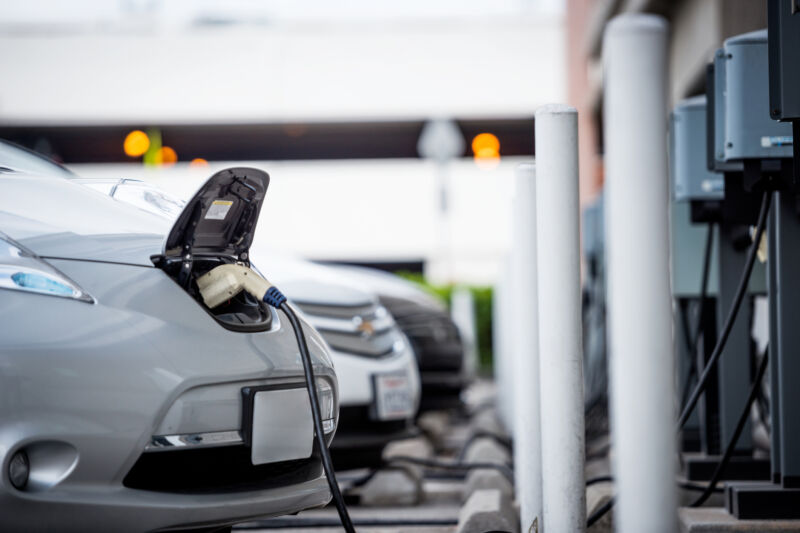
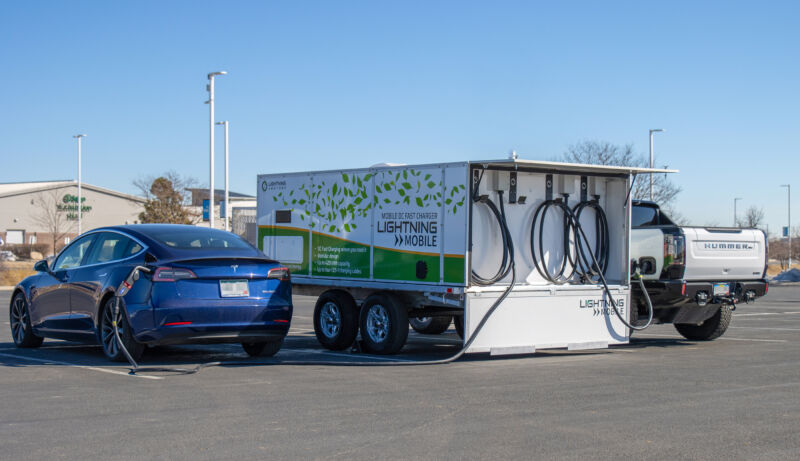
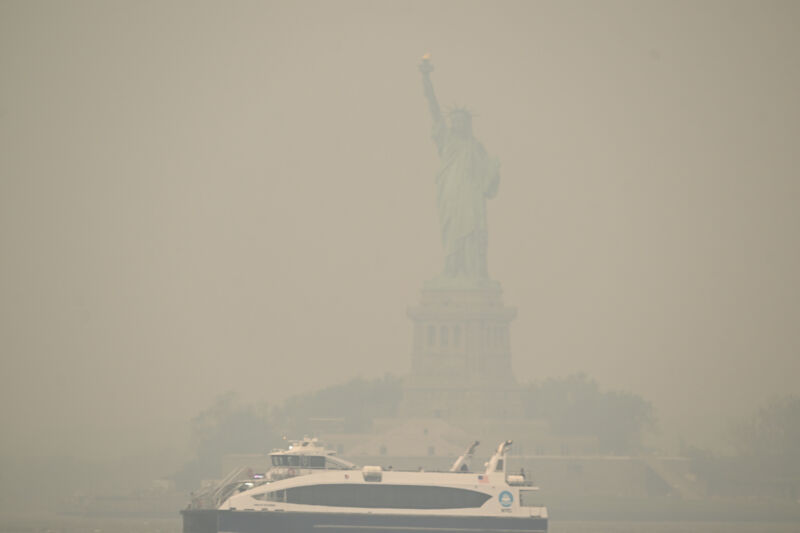

/cdn.vox-cdn.com/uploads/chorus_asset/file/24705139/GettyImages_1258348665.jpg) Bhushan Koyande/Hindustan Times via Getty Images
Bhushan Koyande/Hindustan Times via Getty Images
/cdn.vox-cdn.com/uploads/chorus_asset/file/24705162/GettyImages_1445742586.jpg) Lan Zitao/VCG via Getty Images
Lan Zitao/VCG via Getty Images
/cdn.vox-cdn.com/uploads/chorus_asset/file/24705167/GettyImages_459352807.jpg) Getty Images
Getty Images
/cdn.vox-cdn.com/uploads/chorus_asset/file/24705166/GettyImages_1492374558.jpg) Jeffrey Greenberg/Universal Images Group via Getty Images
Jeffrey Greenberg/Universal Images Group via Getty Images
/cdn.vox-cdn.com/uploads/chorus_asset/file/24705168/GettyImages_1437961414.jpg) Getty Images
Getty Images
/cdn.vox-cdn.com/uploads/chorus_asset/file/24705169/GettyImages_1082167576.jpg) Mohd Samsul Mohd Said/Getty Images
Mohd Samsul Mohd Said/Getty Images


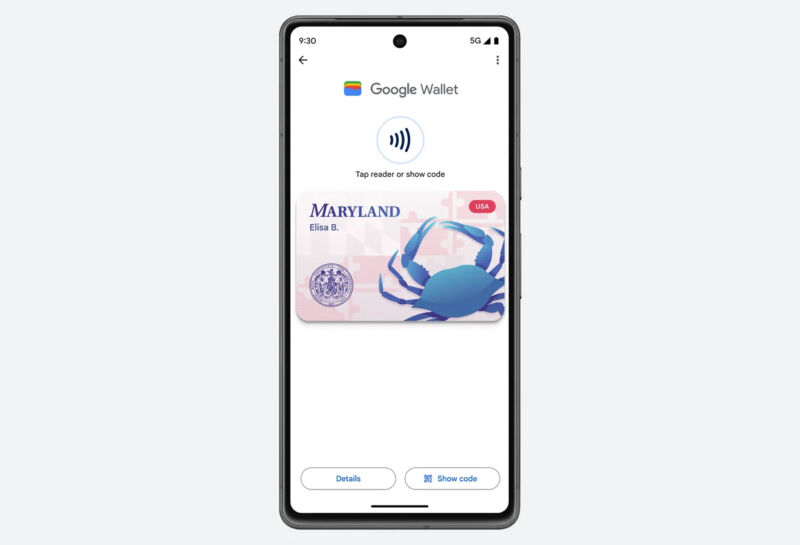



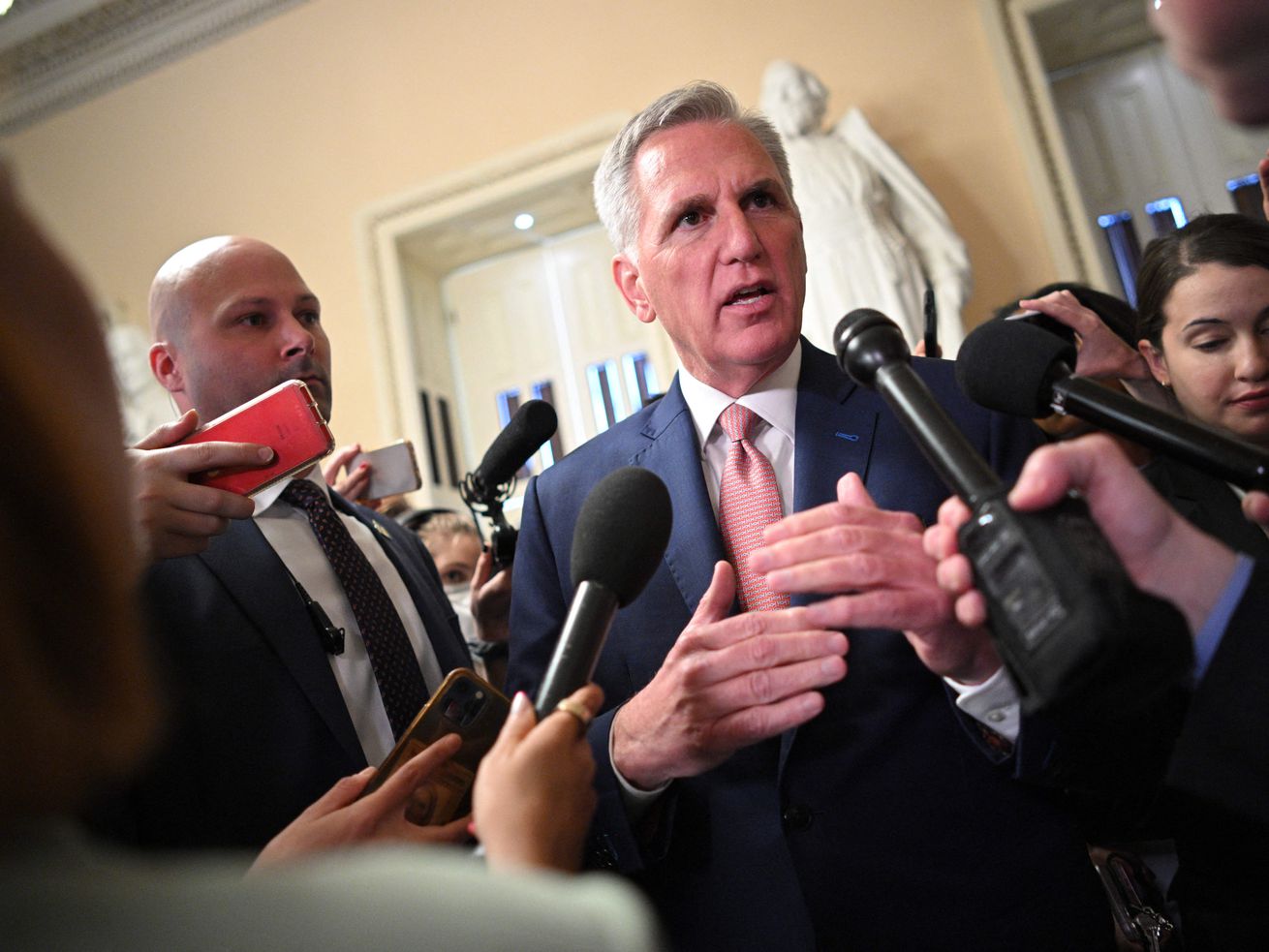


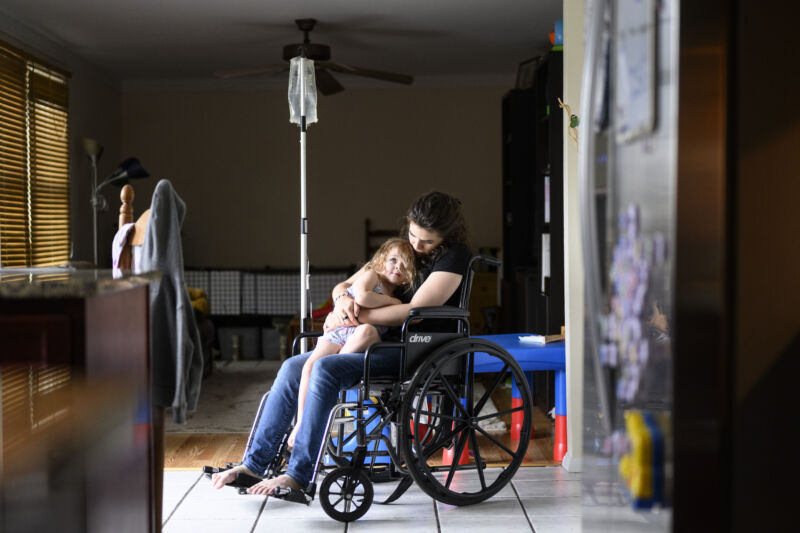





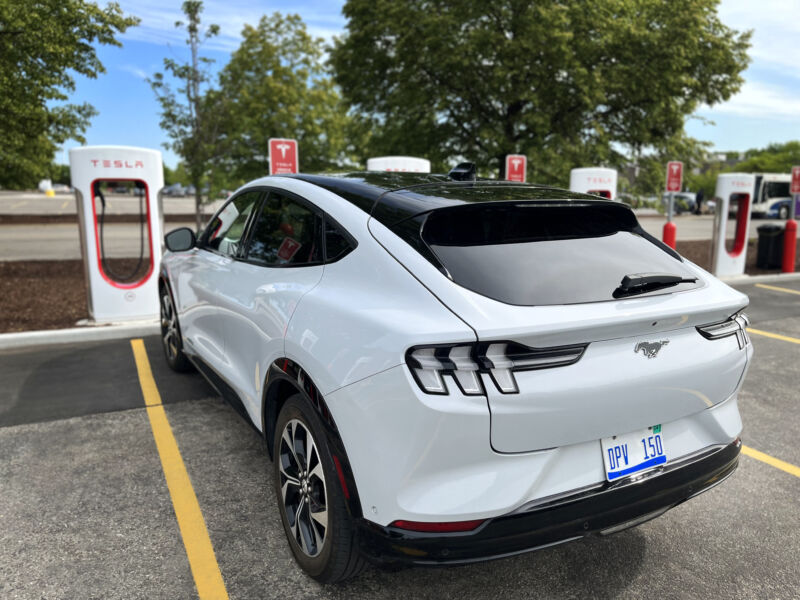


/cdn.vox-cdn.com/uploads/chorus_asset/file/24677021/TLM_marketing_stills_v5_241_B.jpg) Disney
Disney
/cdn.vox-cdn.com/uploads/chorus_asset/file/24677031/TLM_dt2_stills_request_4K_rec709_20230228.0020.jpg) Disney
Disney