The fight over the future of AM radio got a little more heated this week as organizations representing the auto and technology industries told Congress that its plan to mandate this mode of radio wave reception is poorly conceived and will hinder progress.
AM radio has seen almost every other in-car entertainment option come and go—vinyl, 8-tracks, cassettes, CDs—and it might predate just about everything other than playing "I Spy," but time is catching up with this old broadcast technology. It is starting to get left behind as new models—many of which are electric vehicles—drive off into the sunset, streaming their audio instead of modulating its amplitude.
Our long national wait for how the Supreme Court would rule regarding Section 230 is over, and the answer is… we need to keep waiting. The headlines note, correctly, that the court punted the matter. But there are other elements of the actual rulings that are kind of interesting and could bode well for the future of the internet and Section 230.
As you’ll likely recall, back in October, the Supreme Court surprised a lot of people by taking two sorta related cases regarding the liability of social media sites, Gonzalez v. Google, and Twitter v. Taamneh. Even though both cases were ruled on by the 9th Circuit in the same opinion, and had nearly identical fact patterns (terrorists did an attack overseas, family of a victim sued social media to try to hold them liable for the attacks because social media allowed terrorist organizations to have accounts on social media), only one (Gonzalez) technically dealt with Section 230. For unclear reasons, even though there was some discussion of 230 in the Taamneh case, the ruling was more specifically about whether or not Twitter was liable for violating JASTA (the Justice Against Sponsors of Terrorism Act).
Both cases sought cert from the Supreme Court, but again in an odd way. The family in Gonzalez challenged the 9th Circuit’s ruling that their case was precluded by Section 230, but kept changing the actual question they were asking the Supreme Court to weigh in on, bouncing around from whether recommendations took you out of 230, to whether algorithms took you out of 230, to (finally) whether the creation of thumbnail images (?!?!?!?) took you out of 230. For Taamneh, Twitter sought conditional cert, basically saying that if the court was going to take Gonzalez, it should also take Taamneh. And that’s what the court did. Though I’m still a bit confused that they held separate oral arguments for both cases (on consecutive days) rather than combining the two cases entirely.
And the end result suggests that the Supreme Court is equally confused why it didn’t combine the cases. And also, why it took these cases in the first place.
Indeed, the fact that these rulings came out in May is almost noteworthy on its own. Most people expected that, like most “big” or “challenging” cases, these would wait until the very end of the term in June.
Either way, the final result is a detailed ruling in Taamneh by Justice Clarence Thomas, which came out 9 to 0, and a per curiam (whole court, no one named) three pager in Gonzalez that basically says “based on our ruling in Taamneh, there’s no underlying cause of action in Gonazalez, and therefore, we don’t have to even touch the Section 230 issue.”
The general tenor of the response from lots of people is…. “phew, Section 230 is saved, at least for now.” And that’s not wrong. But I do think there’s more to this than just that. While the ruling(s) don’t directly address Section 230, I’m somewhat amazed at how much of Thomas’s ruling in Taamneh, talking about common law aiding and abetting, basically lays out all of the reasons why Section 230 exists: to avoid applying secondary liability to third parties who aren’t actively engaged in knowingly trying to help someone violate the law.
Much of the ruling goes through the nature of common law aiding and abetting, and what factors are conditions are necessary to find a third party liable, and basically says the standards are high. It can’t be mere negligence or recklessness. And Justice Thomas recognizes that if you make secondary liability too broad it will sweep in all sorts of innocent bystanders.
Importantly, the concept of “helping” in the commission of a crime—or a tort—has never been boundless. That is because, if it were, aiding-and-abetting liability could sweep in innocent bystanders as well as those who gave only tangential assistance. For example, assume that any assistance of any kind were sufficient to create liability. If that were the case, then anyone who passively watched a robbery could be said to commit aiding and abetting by failing to call the police. Yet, our legal system generally does not impose liability for mere omissions, inactions, or nonfeasance; although inaction can be culpable in the face of some independent duty to act, the law does not impose a generalized duty to rescue.
The crux then:
For these reasons, courts have long recognized the need to cabin aiding-and-abetting liability to cases of truly culpable conduct. They have cautioned, for example, that not “all those present at the commission of a trespass are liable as principals” merely because they “make no opposition or manifest no disapprobation of the wrongful” acts of another.
Those statements are actually the core of why 230 exists in the first place: so that we put the liability on the party who actively and knowingly participated in the violative activity. Thomas spends multiple pages explaining why this general principle makes a lot of sense, which is nice to hear. Again, Thomas concludes this section by reinforcing this important point:
The phrase “aids and abets” in §2333(d)(2), as elsewhere, refers to a conscious, voluntary, and culpable participation in another’s wrongdoing.
If that language sounds vaguely familiar, that’s because it’s kind of like the language the 9th Circuit used in saying that Reddit didn’t violate FOSTA last fall, because it wasn’t making deliberate actions to aid trafficking.
Having established that basic, sensible, framework, Thomas moves on to apply it to the specifics of Taamneh, and finds it clear that there’s no way the plaintiffs have shown that social media did anything that gets anywhere within the same zip code as what’s required for aiding and abetting. Because all they did was create a platform that anyone could use.
None of those allegations suggest that defendants culpably “associate[d themselves] with” the Reina attack, “participate[d] in it as something that [they] wishe[d] to bring about,” or sought “by [their] action to make it succeed.” Nye & Nissen, 336 U. S., at 619 (internal quotation marks ommitted). In part, that is because the only affirmative “conduct” defendants allegedly undertook was creating their platforms and setting up their algorithms to display content relevant to user inputs and user history. Plaintiffs never allege that, after defendants established their platforms, they gave ISIS any special treatment or words of encouragement. Nor is there reason to think that defendants selected or took any action at all with respect to ISIS’ content (except, perhaps, blocking some of it).13 Indeed, there is not even reason to think that defendants carefully screened any content before allowing users to upload it onto their platforms. If anything, the opposite is true: By plaintiffs’ own allegations, these platforms appear to transmit most content without inspecting it.
From there, he notes that just because a platform can be used for bad things, it doesn’t make sense to hold the tool liable, again effectively making the argument for why 230 exists:
The mere creation of those platforms, however, is not culpable. To be sure, it might be that bad actors like ISIS are able to use platforms like defendants’ for illegal—and sometimes terrible—ends. But the same could be said of cell phones, email, or the internet generally. Yet, we generally do not think that internet or cell service providers incur culpability merely for providing their services to the public writ large. Nor do we think that such providers would normally be described as aiding and abetting, for example, illegal drug deals brokered over cell phones—even if the provider’s conference-call or video-call features made the sale easier.
I’ve seen some people raise concerns that the language in the above paragraph opens up an avenue for SCOTUS to pull a “social media is a common carrier, and therefore we can force them to host all speech” but I’m not sure I actually see that in the language at all. Generally speaking, email and “the internet generally” are not seen as common carriers, so I don’t see this statement as being a “social media is a common carrier” argument. Rather it’s a recognition that this principle is clear, obvious, and uncontroversial: you don’t hold a platform liable for the speech of its users.
From there, Thomas also completely shuts down the argument that “algorithmic recommendations” magically change the nature of liability:
To be sure, plaintiffs assert that defendants’ “recommendation” algorithms go beyond passive aid and constitute active, substantial assistance. We disagree. By plaintiffs’ own telling, their claim is based on defendants’ “provision of the infrastructure which provides material support to ISIS.” App. 53. Viewed properly, defendants’ “recommendation” algorithms are merely part of that infrastructure. All the content on their platforms is filtered through these algorithms, which allegedly sort the content by information and inputs provided by users and found in the content itself. As presented here, the algorithms appear agnostic as to the nature of the content, matching any content (including ISIS’ content) with any user who is more likely to view that content. The fact that these algorithms matched some ISIS content with some users thus does not convert defendants’ passive assistance into active abetting. Once the platform and sorting-tool algorithms were up and running, defendants at most allegedly stood back and watched; they are not alleged to have taken any further action with respect to ISIS.
Again, I’ve seen some concerns that this language opens up some potential messiness about AI and “neutrality,” but I’m actually pretty pleased with the language used here, which avoids saying “neutral” (a completely meaningless word in the context of algorithms whose entire purpose is to recommend stuff) and talks about providing general tools that just try to provide any user with results that match their interests.
Basically, my read on this is that the court is effectively saying that if you create algorithms that are just designed to take inputs and provide outputs based on those inputs, you’re in the clear. The only hypothetical where you might face some liability is if you designed an algorithm to deliberately produce violative content, like an AI tool whose sole job is to defame people (defAIMe?) or to take any input and purposefully try to convince you to engage in criminal acts. Those seem unlikely to actually exist in the first place, so the language above actually seems, again, to be pretty useful.
The ruling again doubles down on the fact that there was nothing specific to the social media sites that was deliberately designed to aid terrorists, and that makes the plaintiff’s argument nonsense:
First, the relationship between defendants and the Reina attack is highly attenuated. As noted above, defendants’ platforms are global in scale and allow hundreds of millions (or billions) of people to upload vast quantities of information on a daily basis. Yet, there are no allegations that defendants treated ISIS any differently from anyone else. Rather, defendants’ relationship with ISIS and its supporters appears to have been the same as their relationship with their billion-plus other users: arm’s length, passive, and largely indifferent. Cf. Halberstam, 705 F. 2d, at 488. And their relationship with the Reina attack is even further removed, given the lack of allegations connecting the Reina attack with ISIS’ use of these platforms.
Second, because of the distance between defendants’ acts (or failures to act) and the Reina attack, plaintiffs would need some other very good reason to think that defendants were consciously trying to help or otherwise “participate in” the Reina attack. Nye & Nissen, 336 U. S., at 619 (internal quotation marks omitted). But they have offered no such reason, let alone a good one. Again, plaintiffs point to no act of encouraging, soliciting, or advising the commission of the Reina attack that would normally support an aidingand-abetting claim. See 2 LaFave §13.2(a), at 457. Rather, they essentially portray defendants as bystanders, watching passively as ISIS carried out its nefarious schemes. Such allegations do not state a claim for culpable assistance or participation in the Reina attack.
Also important, the court makes it clear that a “failure to act” can’t actually trigger liability here:
Because plaintiffs’ complaint rests so heavily on defendants’ failure to act, their claims might have more purchase if they could identify some independent duty in tort that would have required defendants to remove ISIS’ content. See Woodward, 522 F. 2d, at 97, 100. But plaintiffs identify no duty that would require defendants or other communication-providing services to terminate customers after discovering that the customers were using the service for illicit ends. See Doe, 347 F. 3d, at 659; People v. Brophy, 49 Cal. App. 2d 15, 33–34 (1942).14 To be sure, there may be situations where some such duty exists, and we need not resolve the issue today. Even if there were such a duty here, it would not transform defendants’ distant inaction into knowing and substantial assistance that could establish aiding and abetting the Reina attack.
Is there the possibility of some nonsense sneaking into the second half of that paragraph? Eh… I could see some plaintiffs’ lawyers trying to make cases out of it, but I think the courts would still reject most of them.
Similarly, there is some language around hypothetical ways in which secondary liability could apply, but the Court is pretty clear that there has to be something beyond just providing ordinary services to reach the necessary bar:
To be sure, we cannot rule out the possibility that some set of allegations involving aid to a known terrorist group would justify holding a secondary defendant liable for all of the group’s actions or perhaps some definable subset of terrorist acts. There may be, for example, situations where the provider of routine services does so in an unusual way or provides such dangerous wares that selling those goods to a terrorist group could constitute aiding and abetting a foreseeable terror attack. Cf. Direct Sales Co. v. United States, 319 U. S. 703, 707, 711–712, 714–715 (1943) (registered morphine distributor could be liable as a coconspirator of an illicit operation to which it mailed morphine far in excess of normal amounts). Or, if a platform consciously and selectively chose to promote content provided by a particular terrorist group, perhaps it could be said to have culpably assisted the terrorist group….
In those cases, the defendants would arguably have offered aid that is more direct, active, and substantial than what we review here; in such cases, plaintiffs might be able to establish liability with a lesser showing of scienter. But we need not consider every iteration on this theme. In this case, it is enough that there is no allegation that the platforms here do more than transmit information by billions of people, most of whom use the platforms for interactions that once took place via mail, on the phone, or in public areas.
And from there, the Court makes a key point: just because some bad people use a platform for bad purposes, it doesn’t make the platform liable, and (even better) Justice Thomas highlights that any other holding would be a disaster (basically making the argument for Section 230 without talking about 230).
The fact that some bad actors took advantage of these platforms is insufficient to state a claim that defendants knowingly gave substantial assistance and thereby aided and abetted those wrongdoers’ acts. And that is particularly true because a contrary holding would effectively hold any sort of communication provider liable for any sort of wrongdoing merely for knowing that the wrongdoers were using its services and failing to stop them. That conclusion would run roughshod over the typical limits on tort liability and take aiding and abetting far beyond its essential culpability moorings.
Thus, based on all this, the court says the 9th Circuit ruling that allowed the Taamneh case to move forward was clearly mistaken, and sends it back to the Court. Specifically, it dings the 9th for having “misapplied the ‘knowing’ half of ‘knowing and substantial assistance.’”
At the very very end, the ruling does mention questions regarding Google and payments to users, and whether or not that might reach aiding and abetting. But, importantly, that issue isn’t really before the court, because the plaintiffs effectively dropped it. It’s possible that the issue could live on, but again, I don’t see how it becomes problematic.
Overall, this was kind of a weird case and a weird ruling. SCOTUS seems to have recognized they never should have taken the case in the first place, and this ruling effectively allowed them to back out of making a ruling on 230 that they would regret. However, instead, Justice Thomas, of all people, more or less laid out all of the reasons why 230 exists and why we want that in place, to make sure that liability applies to the party actually making something violative, rather than the incidental tools used in the process.
Separately, it does seem at least marginally noteworthy that, while not directly addressing Section 230 (and explicitly saying they wouldn’t rule on the issue today), Thomas didn’t also file a concurrence with the Gonzalez ruling begging for more 230 cases. As you may know, Thomas seemed to skip no opportunity to file random concurrences on issues unrelated to 230 to muse broadly on 230 and how he had views on the law. And here, he didn’t. Rather he wrote a ruling that sounds kinda like it could be a defense of Section 230. Maybe he’s learning?
In the end, this result is probably about as good as we could have hoped for. It leaves 230 in place, doesn’t add any really dangerous dicta that can lead to abuse (as far as I can tell).
It also serves to reinforce a key point: contrary to the belief of many, 230 is not the singular law that protects internet websites from liability. Lots of other things do as well. 230 really only serves as an express lane to get to the same exact result. That’s important, because it saves money, time, and resources from being wasted on cases that are going to fail in the end anyway. But it doesn’t mean that changing or removing 230 won’t magically make companies liable for things their users do. It won’t.
Finally, speaking about money, time, and resources, a shit ton of all three were spent on briefs from amici for the Gonzalez case, in which dozens were filed (including one from us). And… the end result was a three page per curiam basically saying “we’re not going to deal with this one.” The end result is good, and maybe it wouldn’t have been without all those briefs. However, that was an incredible amount of effort that had to be spent for the Supreme Court to basically say “eh, we’ll deal with this some other time.”
The Supreme Court might not care about all that effort expended for effectively nothing, but it does seem like a wasteful experience for nearly everyone involved.
Michael Hanschke/picture alliance via Getty Images
The new breast cancer screening recommendations for women over 40 are surprisingly fraught.
On May 9, the US Preventive Services Task Force (USPSTF) released a draft of their new guidelines on who should be screened for breast cancer. The biggest change: recommending that women with average breast cancer risk start getting mammograms every two years beginning at 40, instead of starting at age 50.
According to the recommendation’s authors, the reasons for the change included a noticeable increase in breast cancer cases among women in their 40s between 2015 and 2019, as well as a higher likelihood of late cancer diagnoses — and of dying due to breast cancer — among Black women in particular.
“The most important thing for women to know is to begin screening at the age of 40, because it just might save your life,” said USPSTF chair Carol Mangione in a video on the USPSTF website. (Before the new recommendations, USPSTF encouraged women to start screening between 40 and 50 based on their individual choice.)
But a number of experts say the new guidance isnot that simple. For a test so often touted as lifesaving, there’s a surprising lack of consensus about how much mammography actually prolongs lives, and whether the unnecessary medical care mammograms sometimes lead to is worth their benefits.
Breast cancer causes more than 42,000 deaths in the US each year, and about 40 percent more Black women die due to breast cancer than do white women. The causes of this disparity are complex — and recommending more mammograms to all Americans as the solution comes with increased physical, emotional, and economic costs.
Will they be worth it? Let’s get realistic about what these recommendations can and can’t do.
The new recommendations can increase rates of breast cancer diagnosis and treatment — which is both good and bad
The USPSTF’s recommendations offer guidance on how to use mammograms for screening average-risk people. That’s worth keeping in mind for a couple of reasons. First, higher-risk people — like those with family histories of breast cancer — may need to be screened differently.
Additionally, not every mammogram that gets done is for screening: These recommendations do not apply to, for example, someone who detects a lump in their breast. (In that scenario, because the person has a symptom before they get the test, the mammogram is a diagnostic test — and the procedure and what follows are a little different.)
When screening tests work, they find medical problems early, before people have any indication that they might have that problem. Mammograms can do this, flagging tiny changes associated with many types of breast cancer. Some breast cancers are slow-moving while others grow quickly; some are treatment-responsive and others are resistant to treatment; some readily invade other tissues and others resolve on their own. Mammograms can help spot them all.
But they can also detect lots of breast changes that aren’t actually abnormal, like benign texture differences in the breast tissue called fibrocystic changes. Trouble is, they’re not great at distinguishing what’s harmful from what’s benign. For that reason, abnormal mammograms are generally followed by a cascade of other evaluations to help determine what’s going on, depending on what they’ve found.
Increasing the number of mammograms people get can increase the number of abnormalities that get diagnosed and will lead to more follow-up ultrasounds, biopsies, and other procedures. It can also increase the number of people getting treated for conditions judged to be cancerous, with a range of surgeries, chemotherapies, and radiation treatments.
But how much more premature breast cancer death can all this added care prevent? That’s not a simple question to answer.
The thing about breast cancer is that most types are so slow-moving and so responsive to therapy that even if people don’t get breast cancer treatment until they first notice a lump, they’re still highly likely to survive the cancer.
Yes, diagnosis in the early stages of these cancers leads to better outcomes than late-stage diagnoses — but those early stages last a while, with the median time around 10 years altogether.
(About one in 10 breast cancers diagnosed in the US are very aggressive and resistant to treatment, and they usually move too quickly to be caught by a mammogram done only once every two years.)
That means that for people who are vigilant about changes in their bodies and have decent access to health care, the value-add of mammograms over simply being aware of your body is actually pretty small.
“The better we get able to treat a disease, the less important it becomes to find it,” said Gilbert Welch, a senior researcher at Brigham and Women’s Hospital in Boston who studies cancer overdiagnosis. In other words, when we find treatments that work at many different stages of disease, the benefits of early diagnosis shrink dramatically. For breast cancer, those treatments are the anti-hormonal therapies that emerged in the 1990s and dramatically changed breast cancer survival rates.
A recent analysis by the Lown Institute, a nonprofit health care think tank, highlighted some key USPSTF figures that show the limits of mammograms in a helpful way.
The analysis imagines a world without screening mammograms, in which women seek evaluation for breast cancer only when they notice a breast lump or other concerning symptoms. According to the USPSTF’s models, about 28 out of every 1,000 women in this world would die from breast cancer at some point in their lives.
Then, let’s look at what the previous guidelines — recommending regular mammograms starting at age 50 — can accomplish. If all women adhered to those guidelines, then seven of those breast cancer deaths would be prevented.
However, the USPSTF estimates those mammograms would also result in 1,021 false-positive mammograms and148 biopsies that turn out to be benign. It would also lead to 10 cases of overdiagnosis — that is, treatment of a cancer that never would have harmed them to begin with.
That’s bad. False-positive mammograms are associated with psychological consequences, such as anxiety and sleep issues, that persist for years afterward. And the unnecessary surgeries, medications, and radiotherapies that follow breast cancer overdiagnosis cost the US an estimated $4 billion a year.
Now, what can we expect under the new guidelines, with the mammogram age starting at 40? The USPSTF projects that would save an additional two of those 1,000 women from a breast cancer death (technically, one and a half; the authors rounded up). But significant added harms would come with all of those extra positive mammograms: This scenario leads to an additional 62 benign biopsies and two additional overdiagnosed cases.
What all of this means is thatthe new recommendations can potentially lead to a lot of unnecessary, and potentially harmful, care. To some people, those trade-offs, even if they harm hundreds of people, are worth saving even one extra life.
What complicates things even further is that these are calculations set in the ideal world of a statistical model. The complexity of the real world leads to some changes in the math, especially for Black women.
The new recommendations can give Black women in particular an on-ramp to breast cancer care — but they can’t map the rest of the route
These models assume that every one of these 1,000 hypothetical women is equally watchful and attentive to changes in their bodies, and seek medical evaluation and care when they notice something’s off. They also assume that each has equal access to a medical system that provides the same quality of care to all of them.
But we know that latter part isn’t the American reality. Decades of economic and residential segregation mean Black Americans are more likely to be uninsured and to live in areas without readily available health care providers and facilities. Furthermore, the legacy of medical racism translates to high levels of distrust in medical providers among Black Americans. And Black women with breast cancer receive lower doses of breast cancer chemotherapy compared with white women.
As a result, even if Black women notice breast changes that may be associated with cancer, they may be less likely to seek and receive evaluation for those changes, and to get appropriate care when they do.
That delay means many Black women only start treatment in the later stages of disease, once the cancer is more likely to have spread beyond their breasts. These kinds of treatment differences explain, at least in part, whyeven Black women with treatable breast cancers have worse outcomes than do women of other racial and ethnic groups.
Black women also more often have the rarer, particularly aggressive triple-negative breast cancers, so named because their cells don’t carry any of the three targets at which the most effective treatments take aim. These cancers, which make up around 20 percent of all US breast cancers and have lower survival rates than other types, are at least twice as likely to be diagnosed in Black women than in white women, especially at younger ages.
The role of mammograms in improving these cancers’ outcomes is unclear: Triple-negative breast cancers are generally harder to see and progress far more quickly than other cancer types, making them hard to catch at early stages by a test done only every one or two years. Although magnetic resonance imaging (MRI) is better at diagnosing these cancers, its cost and resource demands are barriers to using it as a population-wide screening tool.
The more common and more treatable breast cancers are where the new recommendations could potentially help by giving Black women an on-ramp to earlier cancer care. In this sense, regularly scheduled mammograms — which are covered by all US insurance plans and are often available free for uninsured people — could make an end-run around some of the many reasons women might let a breast lump go unevaluated for years.
Because routine mammograms could help improve access to care among Black women with treatable cancers who’d otherwise lack a treatment entry point, this group could have more to gain than lose from getting more mammograms. In USPSTF’s models, the number of Black women’s lives saved by routine mammograms was slightly higher than in the general population, no matter at what age they started.
What the recommendations don’t (and can’t) do is plot out a route for after the on-ramp.
More mammograms aren’t the solution to the biggest problems in breast cancer
The USPSTF didn’t restrict its new recommendations to Black women alone: It recommended it for all women. That also means more mammograms for women who have already effectively maxed out the benefit they could get from the screening test. In that group, the recommendation will likely lead to more benign biopsies, more overdiagnoses, and more harm.
Some researchers have suggested starting screening mammograms at different ages in different racial and ethnic groups based on these considerations. However, the USPSTF opted not to do that.
USPSTF member and internist John Wong told Vox in an email that rising rates of breast cancer among younger women of all racial and ethnic backgrounds provoked the choice. Younger women stand to have more years of life saved when a mammogram diagnoses a breast cancer in them than in an older person, he said. “Fundamentally, with more women being diagnosed at younger ages, each life that is saved from dying of breast cancer means even more years that women have to live after a diagnosis,” he said.
That’s true — if the early diagnosis is what saved their life. But it’s possible these younger women would’ve survived the same duration even with a later diagnosis.
Shannon Brownlee, a special adviser to Lown’s president, said the new recommendations mean “exposing a large population of women to overdiagnosis and overtreatment — which is harmful, we know that — in order to fix the fact that poor women and Black women have poor access to health care.”
Furthermore, they don’t actually fix the health care access disparities at the root of the problem, she said, because they do nothing to address barriers to getting timely care for cancers identified during those screenings.
“Maybe it’ll help some women who really didn’t have access” to health care, she said, “but they still don’t have access: You can get your mammogram now for free, but then you can’t get treated because your insurance isn’t adequate.”
It “just seems like a really dumb way to fix that problem,” she said. “This is really a travesty. Frankly, I think it’s going to harm a lot of women.”
Instead of increasing the number of mammograms, it would be far more beneficial to research and identify the environmental, genetic, and other potential causes of triple-negative breast cancers that create added risk for Black women, said Brownlee.
Also critical, she said, is addressing racial inequities in health care access.
Many studies have documented how differences in environment, insurance coverage, and treatment likely contribute to breast cancer mortality inequities and also drive Black Americans’ dramatically worse mortality more broadly. Fixing these inequities is generationally important work that urgently demands the attention of American policymakers, scholars, and health care institutions.
But more mammograms won’t solve these problems, said Welch. “You can’t screen your way out of health disparities.”
What’s a person with breasts to do?
The new recommendations are still just in draft form and will be open for public comment through June 5. But things might not get much clearer even once they’re finalized. Meanwhile, what’s a woman with average breast-cancer risk to do?
Welch urges viewing the recommendations in a bigger context. “No one should think this is the most important thing they do for their health,” he said. Instead, people should do “what their grandmother would have told them 40 years ago: Eat your fruits and vegetables, go play outside, run around, find things that give your life meaning, exercise.” he said. “And don’t smoke. Whatever you do, don’t smoke.”
Even if you opt out of mammograms, being aware of your body and seeking care for early warning signs and for other general preventive care makes sense. (The USPSTF officially recommended against clinicians teachingbreast self-exams in 2009, but some research suggests the practice still has value, especially in high-risk groups, like those with personal or family breast cancer histories or who carry certain genetic mutations.)
It’s understandable if, even knowing all of this, some people still want regular screening mammograms.If he had to write the mammography guidelines, Welch would tell people that getting a mammogram is a choice. Although women who notice a breast lump should seek care immediately, viewing their breasts as ticking time bombs can itself create a sense of unwellness, he said.
“You develop a new problem, come see the doctor,” said Welch. “But this whole question of to what extent you should see your body as a laboratory, you need to be testing it every other day — I think that’s a recipe for a sick society.”
Clarification, May 19, 3 pm ET: This story has been updated to clarify USPSTF’s earlier recommendations on screening and self-exams.
A recent move by Google to populate the Internet with eight new top-level domains is prompting concerns that two of the additions could be a boon to online scammers who trick people into clicking on malicious links.
Frequently abbreviated as TLD, a top-level domain is the rightmost segment of a domain name. In the early days of the Internet, they helped classify the purpose, geographic region, or operator of a given domain. The .com TLD, for instance, corresponded to sites run by commercial entities, .org was used for nonprofit organizations, .net for Internet or network entities, .edu for schools and universities, and so on. There are also country codes, such as .uk for the United Kingdom, .ng for Nigeria, and .fj for Fiji. One of the earliest Internet communities, The WELL, was reachable at www.well.sf.ca.us.
Since then, the organizations governing Internet domains have rolled out thousands of new TLDs. Two weeks ago, Google added eight new TLDs to the Internet, bringing the total number of TLDs to 1,480, according to the Internet Assigned Numbers Authority, the governing body that oversees the DNS Root, IP addressing, and other Internet protocol resources.
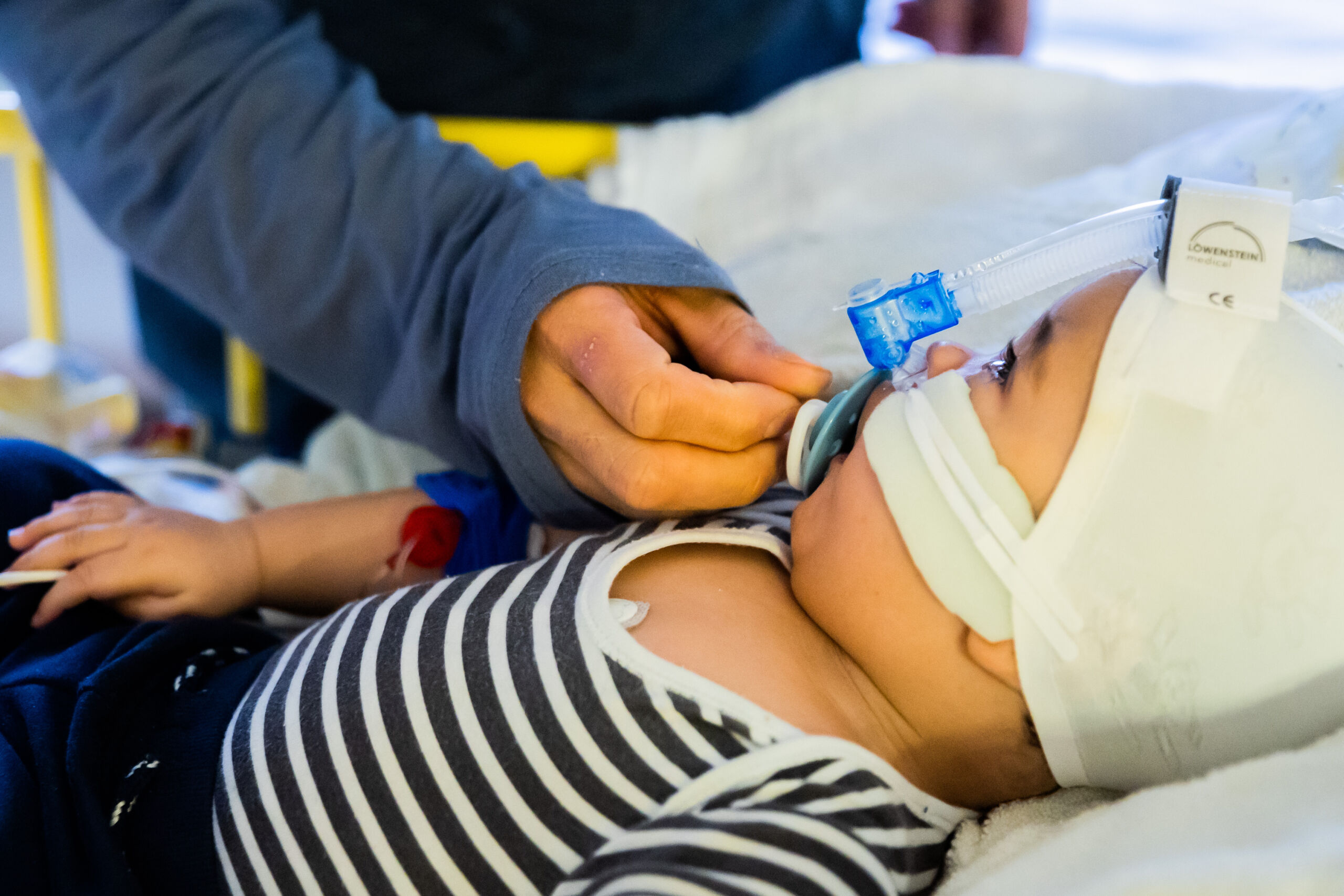
Enlarge / A father cares for his 8-and-a-half-month-old son, who is in the intensive care unit of the pediatric clinic at St. Joseph Hospital in Berlin with a respiratory infection and is receiving non-invasive ventilation (CPAP ventilation). (credit: Getty | Christoph Soeder)
The vaccine, provisionally dubbed Abrysvo, is given to pregnant people between 24 and 36 weeks of pregnancy, allowing protective antibodies to develop and then cross the placenta to protect the fetus.
In a phase III trial involving nearly 7,400 pregnant people in 18 countries, the vaccine was nearly 82 percent effective at preventing severe RSV disease in the first 90 days of a baby's life. It was 69 percent effective at 180 days. In terms of protecting against non-severe respiratory disease from RSV, the trial results didn't meet the statistical criteria to find efficacy at 90 days, but data from 180 days suggested an efficacy of around 51 percent.
There’s been a lot of talk lately about the role of AI and copyright, with much of it focused on fretting by various copyright maximalists about how things created by AI need more copyright or how AI systems are violating the copyright of artists, both of which seem to be fairly questionable claims at best.
But, copyright law professor Brian Frye recently participated in a Copyright Office “listening session” regarding copyright and AI, and he suggested an entirely different way that everyone (including the Copyright Office) should be thinking about. As he notes, the questions everyone seems to be fretting about appear to be easily answered:
I think we are asking the wrong questions about AI and copyright. Everyone is asking whether copyright protects AI-generated works and whether training an AI algorithm infringes copyright. The obvious answer is no and no.
Copyright only protects works created by people. AI doesn’t even create works, it generates content, which we consumers interpret as works. Roland Barthes predicted the death of the author, and AI has written the author’s obituary.
Likewise, training an AI algorithm doesn’t and shouldn’t infringe copyright. AI algorithms don’t copy works, they merely catalog rhetorical conventions and then deploy them to create conventional content.
Instead, he notes, everyone is missing the much bigger picture in that we could be (and arguably should be) using AI to tell us which other works (of the ones created by humans) even have enough creativity to deserve copyright protection in the first place:
We should be asking what AI can tell us about what copyright should protect and why. Copyright can only protect “creative” works. But courts and the Copyright Office have struggled to define “creativity.” Maybe AI can help?
An AI algorithm is essentially a nonsense generator, designed to produce banalities. In other words, AI is uncreative by design. An AI algorithm is a machine for regurgitating conventional wisdom. Indeed, we are amused when an AI “hallucinates” and fails to satisfy our pedestrian expectations.
But we can be just as boring as any AI. And there’s no point in copyright protecting banalities. Maybe AI can help us limit copyright to works that are actually creative. It’s easy, just ask AI to evaluate the “creativity” of works produced by people, to determine whether they deserve copyright. No one knows a fake like a faker, and AI is designed to identify banality. That’s what makes it a killer app.
We don’t know how to identify creativity. But AI can tell us what isn’t creative. Maybe that’s good enough to tell us what is creative, if anything.
Of course, the likelihood of this happening is basically nil, but it’s still a point worth thinking about. In the copyright world, there have long been arguments over what counts as being creative enough to get copyright’s protections. This may have been most notable in the realm of photography, where some (somewhat reasonably!) argued that the photographer, especially in outdoors/landscape photography, was merely capturing a scene created by nature, and therefore had little, if any, creative input into it.
The courts have generally side stepped this issue by arguing that the photographer gets copyright on the artistic decisions in terms of things like “where to point the camera” and “how to frame the photograph.” But that’s often felt like a cop out.
It’s intriguing to think of AI in a different way, as a much more impartial observer of whatever works are seeking copyright, with the ability to say whether or not a give work has the requisite creativity to get copyright. It may seem like a silly (or even trollish) suggestion, but it’s difficult to argue it’s any worse than how things are currently done.
Google's new inactive account policy already has people up in arms. The company announced on Tuesday that accounts that have gone unused for two years will be deleted, and a lot of people are asking what exactly this means for YouTube content. There are probably millions of videos out there from dead and inactive YouTube creators—would Google's new data policy mean deleting nearly two decades of online history?
Google's blog post yesterday certainly gave that impression, "If a Google Account has not been used or signed into for at least 2 years, we may delete the account and its contents—including content within Google Workspace (Gmail, Docs, Drive, Meet, Calendar), YouTube and Google Photos." That policy would mean wiping out things like the first YouTube video, official YouTube accounts of former US presidents, and tons of content from retired YouTubers and music artists. That would be awful.
A day later, Google now says there will be no digital burning of Alexandria. YouTube's creator liaison, Rene Ritchie, clarified on Twitter that Google has "no plans to delete accounts with YT videos." 9to5Google heard the same statement from a Google spokesperson. That is great news, but that's also very vague and runs contrary to what all of Google's current documentation says, including the blog post. Can people keep a Google account alive forever with a single video? We've had an email out to Google since Tuesday night asking for some kind of formal policy regarding YouTube videos, but we haven't heard anything yet. It seems like the company is still figuring this out.
There is a long history of trademark silliness concerning the phrase “Taco Tuesday.” As with many trademark stories, the original sin in all of this was committed by the USPTO , which in the ’80s somehow managed to grant the Taco John’s chain a trademark on the term, despite it being both very descriptive and, after years of lax enforcement, absolutely generic at present. What you will find missing in the stories that we’ve done on this topic in the past is an entity with real weight behind it attempting to invalidate Taco John’s trademark entirely. Sure, everyone from restaurant trade associations to LeBron James (seriously!) have gotten involved, but what we need here is a good old fashioned Goliath to come and stamp out David when he’s misbehaving.
Enter Taco Bell. The largest player in the Americanized Mexican food market has finally entered the fray and has petitioned the Trademark Office directly to invalidate the mark.
The taco chain filed a petition Tuesday (naturally) with the US Patent and Trademark office to cancel the trademark, owned by rival Taco John’s for 34 years, because Taco Bell claims the commonly used phrase “should be freely available to all who make, sell, eat and celebrate tacos.”
The use of the phrase “potentially subjects Taco Bell and anyone else who wants to share tacos with the world to the possibility of legal action or angry letters if they say ‘Taco Tuesday’ without express permission from [Taco John’s] — simply for pursuing happiness on a Tuesday,” the filing said.
It’s a little cheeky, to be sure, but the meat of the requests relies on solid complaints about the mark. The term is at least partially descriptive: deals for tacos on Tuesdays. And even if it isn’t descriptive enough to be denied a trademark, the term certainly has become so widely used and generic at this point, at least in part due to lax policing from Taco John’s, that it should be invalidated.
The very idea that a taco joint anywhere in America cannot run sales, advertising, or promotions for their own “taco Tuesdays” is a blatant violation of the purpose of trademark law. Nobody is going to see an advertisement for Taco Tuesdays at Taco Bell and somehow think Taco John’s is involved. That is purely due to how the public sees the term. Again, this is a clear indicator that the mark should be done away with.
Taco John’s has 40 days to file a response, and if the two chains can’t reach an agreement, the case will move to a discovery period where each company can make document requests and present evidence stating their case. Following that would be a trial and oral arguments presented in front of the board’s judges.
According to Gerben, Taco Bell has a “strong case” because US trademark law “prevents the registration of common phrases or phrases that become commonplace after a registration is granted.” In this instance, the slogan “has become a cultural phenomenon with a long history of being used by individuals and companies other than the current owner of the trademark,” he told CNN.
And therefore never send to know for whom the Taco Tuesday bell tolls, Taco John’s; it tolls for thee.
Florida Gov. Ron DeSantis responds to a local TV reporter’s question in May 2021 in Miami. | Carl Juste/Miami Herald/Tribune News Service via Getty Images
Dozens of videos on social media show empty construction sites and farms even before a new law goes into effect.
The videos from Florida aren’t hard to find: Dozens of clips of empty fields, abandoned construction sites, and scores of truck drivers calling for boycotts of the state have racked up hundreds of thousands of views on TikTok and Twitter over the last month. The common thread? Fear and frustration over the state’s newest anti-immigrant law, signed a week ago by Republican Gov. Ron DeSantis, which mandates that businesses with 25 or more employees verify the citizenship status of workers through the federal online portal E-Verify or face stronger penalties, among other new restrictions.
The new law, which goes into effect on July 1, is the latest move by DeSantis to capitalize on immigration politics as he prepares for a likely but as-yet-unannounced 2024 presidential campaign. The law, one of the most stringent state immigration measures in the US, seems intended to contrast President Joe Biden’s handling of immigration policy as the controversial pandemic-era health rule Title 42 expired last week. But the impact of the bill, critics say, will amount to a wide-ranging and intrusive crackdown on the state’s large immigrant communities, which stand to face the brunt of the new rules.
Florida is home to about 800,000 undocumented immigrants, and many work in the kinds of businesses that would be impacted by the law, known as SB 1718. Many of those affected are also members of mixed-status families — where a son or daughter, for example, might be a US citizen while their parents are not. The bill’s impact extends beyond the workplace to health care and highways: Even family members could be targets of law enforcement under a new provision that punishes anyone who transports an undocumented person “knowingly and willfully” into Florida across state lines.
The law also requires Florida hospitals that accept Medicaid to collect the immigration status of patients and calculate and report the cost of health care for undocumented people to the state; it no longer permits undocumented people to use driver’s licenses issued from other states and prohibits state ID cards to be issued to them.
Combined, these provisions may also deal a devastating blow to Florida businesses that rely on migrant labor, as it may force workers and their families to flee Florida, Samuel Vilchez Santiago, the Florida state director of the American Business Immigration Coalition, told Vox.
“The narrative that immigrants are not welcome here is going to have a huge impact on our business community — in particular industries such as construction, hospitality, health care, and agriculture — because they rely solely or primarily on migrant labor. As fear becomes the norm in immigrant communities, a lot of these migrant workers will start leaving the state and looking somewhere else,” Vilchez Santiago said. “And there is a lot of fear in migrant communities across the state.”
Acres and acres, tons and tons, of rotting food in Florida fields. FARM WORKERS ARE NO LONGER SHOWING UP TO WORK. LET’S STAND IN SOLIDARITY AND BOYCOTT FLORIDA, BOYCOTT FLORIDA’S ORANGE JUICES AND PRODUCE!! #Florida#boycottflorida#floridastate#farmworkers
The law was already causing panic across Florida before DeSantis signed it. In South Florida, reporters with a local CBS News affiliate tracked empty construction sites across Miami-Dade County and spoke with construction workers who said that many of their coworkers were not showing up to work because they feared deportation. An NBC affiliate interviewed farmworkers in South Florida considering moves out of the state because of fear of persecution.
DeSantis’s office referred Vox to comments the governor made during a press conference this week. “When we have something like an E-Verify, that’s a tool to make sure that longstanding Florida law is enforced,” DeSantis said. “You can’t build a strong economy based on illegality.”
Gina Fraga, an immigration attorney in Palm Beach, told Vox that she knows of many families preparing moves out of the state because of “panic” over the law. Undocumented workers she knows in the construction, landscaping, and agricultural business are now receiving notices of termination because of the law, which includes strict human trafficking punishments that don’t make exceptions for mixed-status families, or for those who came to the US as children and are covered under the Deferred Action for Childhood Arrivals program.
The penalties under SB 1718 are severe: Businesses that fail to use E-Verify would be fined $1,000 per day and the state would suspend an employer’s license if they are caught employing an undocumented person. The law also enhances human trafficking and smuggling penalties for people, including US citizens, making it a second-degree felony, punishable by a $10,000 fine and up to 15 years in prison, to transport five or more undocumented people or an undocumented minor into the state of Florida.
DeSantis has called it an “honor to usher this bill through the process” and said it should serve “as the model for the nation to combat this crisis created by our very own President.”
Fraga, who volunteers with the Farmworker Coordinating Council, a nonprofit advocacy group for agricultural workers, said that the harsher punishment for crossing state lines is a direct attack against farmworkers because of the seasonal nature of their jobs. “Depending on the veggies, they travel to South Carolina, to Georgia — so they’re scared now, and a bunch of them are moving to Georgia, and they’re planning on not coming back to Florida,” she said. “That means everyone is going to be affected in our grocery stores in terms of price because nobody wants to do these jobs.”
And all this fear and confusion has been recorded online, through various kinds of clips showing workers leaving their jobs after learning of the new law’s restrictions. Other videos show truck drivers calling for boycotts of Florida because of the threat crossing a state border would mean for them.
Those calls for boycotts have been compiled by independent journalist Arturo Dominguez on Twitter, and have been shared by Democratic politicians criticizing the new state law: “Ron’s ‘woke’ war will cause prices to increase on all goods and services. Congrats Ron on tanking Florida’s economy and creating inflation,” Florida Democratic Party Chair Nikki Fried, a former agriculture commissioner, tweeted over the weekend.
New York Rep. Alexandria Ocasio-Cortez also shared Dominguez’s thread, arguing that “the US has such deep needs right now, particularly in labor. Yet policymakers (of ALL stripes) take our immigrant communities for granted. No más. Time to stop biting the hands that feed.”
Still, the law isn’t in effect just yet, and there may be legal challenges raised against it, Fraga said. And just how much of an economic effect this new law will have on Florida is unknown — though anecdotally, business owners and employers seem to be bracing for significant churn in the labor force at a time when Florida has a near record-low unemployment rate and tight labor market. “The reality is Florida needs workers,” Vilchez Santiago said. “The only way we can keep our economy moving is by ensuring that our businesses have access to the labor they need.”
We appreciate Lee Hutchinson's efforts toward situational archaeology in his initial Drobo FS review. Historians one day will know that, at a minimum, this device was released after 1999's The Matrix. (credit: Lee Hutchinson)
You don't hear nearly as much about Drobo boxes as you used to, especially on sites like Ars Technica. We now have some news, but it isn't good.
StorCentric, the holding company for the Drobo and Retrospect brands, filed for Chapter 11 bankruptcy in late June 2022. Now, AppleInsider reports that, based on an email sent by StorCentric, the bankruptcy shifted from reorganization-minded Chapter 11 to liquidation-focused Chapter 7 in late April.
The writing for Drobo was on the wall, or at least on its website. Text at the top of the homepage notes that, as of January 27, 2023, Drobo products and support for them are no longer available. "Drobo support has transitioned to a self-service model," the site reads. "We thank you for being a Drobo customer and entrusting us with your data."
Striking teachers are joined by parents and students on the picket line outside Dahlia Heights Elementary School in the Eagle Rock section of Los Angeles on January 16, 2019. | Robyn Beck/AFP via Getty Images
Eric Hanushek’s influential arguments on school funding shaped policy for four decades. Has he changed his mind?
Eric Hanushek, a leading education researcher, has spent his career arguing that spending more money on schools probably won’t make them better.
His latest research, though, suggests the opposite.
The paper, set to be published later this year, is a new review of dozens of studies. It finds that when schools get more money, students tend to score better on tests and stay in school longer, at least according to the majority of rigorous studies on the topic.
“They found pretty consistent positive effects of school funding,” said Adam Tyner, national research director at the Fordham Institute, a conservative education think tank. “The fact that Hanushek has found so many positive effects is especially significant because he’s associated with the idea that money doesn’t matter all that much to school performance.”
The findings seem like a remarkable turnabout compared to prior research from Hanushek, who had for four decades concluded in academic work that most studies show no clear relationship between spending and school performance. His work has been cited by the US Supreme Court and pushed a generation of federal policymakers and advocates looking to fix America’s schools to focus not on money but ideas like teacher evaluation and school choice.
Despite his new findings, Hanushek’s own views have not changed. “Just putting more money into schools is unlikely to give us very good results,” he said in a recent interview. The focus, he insists, should be on spending money effectively, not necessarily spending more of it. Money might help, but it’s no guarantee.
Hanushek’s view matters because he remains influential, playing a dual role as a leading scholar and advocate — he continues to testify in court cases about school funding and to shape how many lawmakers think about improving schools.
“Does money matter?” The decades-long debate, explained
Hanushek began studying schools as a doctoral student in economics at MIT in 1966, when he attended an academic seminar to pore over a bombshell new study. The Coleman Report, published by the federal government, claimed that schools did not matter much for students’ academic success. More money for education wouldn’t improve things either, argued the report, which was influential but shot through with methodological flaws.
Hanushek couldn’t believe the conclusion that schools didn’t matter. By 1981, then an economics professor at the University of Rochester, he had found a way to make sense of the report’s vexing findings: Schools really did make a difference, but you couldn’t tell which ones were good based on how much money they spent. Hanushek published a manifesto-like academic paper laying out this case titled: “Throwing Money at Schools.”
Eventually the debate became “Does money matter?” as the Brookings Institution put it in a book that Hanushek contributed to. He always described this framing as simplistic, but Hanushek essentially became the captain of team “not really.”
Hanushek hammered home this point with the message discipline of a politician and the data chops of an economist. He wrote updated versions of the same academic paper again in 1986 and then in 1989, 1997, and 2003. He also made the case in numerous reports and articles, as well as in testimony in increasingly prevalent school funding lawsuits. In 2000, he became a fellow at Stanford University’s Hoover Institution, a conservative think tank, where he remains based today.
Hanushek’s basic claim was that most studies of school “inputs” — like per-pupil spending, teacher salaries, and smaller class sizes — did not show a clear link between those resources and student outcomes. His 2003 paper showed that only 27 percent of the findings on spending were positively and significantly related to student performance. “One is left with the clear picture that input policies of the type typically pursued have little chance of being effective,” Hanushek wrote.
The basis for this conclusion was far more tenuous than Hanushek let on, though. Some researchers reanalyzed Hanushek’s data, and found that there actually was a link between spending and performance because his approach for summarizing studies was flawed. More importantly, the studies he relied on weren’t able to clearly isolate the impact of money.
“They were very poorly done by current standards,” said Martin West, a Harvard education professor. Nevertheless, Hanushek’s summary of these older studies, all published before 1995, is still sometimes cited today, including in legal proceedings.
Starting in the early 1990s, the economics discipline began focusing more on teasing apart cause and effect, using so-called “natural experiments,” an idea that recently won the Nobel Prize in economics. This eventually upended the school spending debate: A slew of newer papersusing these methods came out showing a positive link with student outcomes. A recent overview paper by Northwestern University’s Kirabo Jackson and Claire Mackevicius combined the results of numerous prior studies. They found that on average, an additional $1,000 per student led to small increases in test scores and a 2 percentage-point boost in high school graduation rates.
The view that money matters now appears to be conventional wisdom among education researchers, although some still question whether the newer methods can convincingly show cause and effect.
Hanushek has downplayed this newer research linking spending to outcomes. Last year he even testified in a Pennsylvania school funding case that, “The majority of the studies that have been done to look at this relationship don’t give any statistically significant relationship.” This line was later cited in a trial brief by lawyers for the state.
The new paper found most studies do show a link between funding and performance
Hanushek’s most recent paper, posted online several months after his Pennsylvania testimony, comes to a different conclusion.
Along with Stanford predoctoral fellow Danielle Handel, Hanushek reviewed rigorous studies released since 1999. Of 18 statistical estimates of the relationship between spending and test scores, 11 were positive and statistically significant. A separate set of 18 estimates examined the link with high school completion or college attendance; 14 of those were positive and significant. (The other four leaned positive but were not significant.) These findings appear much more favorable for school spending than Hanushek’s prior work indicated.
Hanushek and Northwestern’s Jackson have publicly debated the relationship between funding and outcomes, including in a recent Maryland court case. But their most recent papers are surprisingly aligned in results, if not interpretation.
“The findings reported by these studies were remarkably similar,” said Matthew Springer, a professor at the University of North Carolina who has testified on the side of states in a number of funding cases. Both show positive effects of money, he said.
Still, Hanushek insists this is the wrong takeaway. Don’t look at the typical effect, he argues; Look at the variation from study to study.“A thorough review of existing studies, however, leads to conclusions similar to those in the historical work: how resources are used is key to the outcomes,” he and Handel wrote. “The range of estimates is startling.”
The context matters, they say. Sometimes money is spent well; sometimes it’s spent poorly. Sometimes the effects are big; other times they are small or nonexistent. Just focusing on the overall effect masks this variation.
To Hanushek, this aligns with what he’s been saying for decades: Throwing money at schools is a bad bet. “I still don’t think that that’s good policy — that you have 61 percent of very diverse studies [finding a relationship between spending and test scores] and you say I’ll bet the next billion dollars on that,” he said.
Jackson agrees that how money is spent matters. But he also thinks that Hanushek is missing the obvious conclusion from his own results.
“The vast majority of the time whatever school districts choose to spend the money on tends to improve outcomes,” he said. “I don’t see how you can look at that and then say therefore we don’t have enough evidence to suggest we should just increase the funds.”
Other researchers agreed that the variation in results is important, but that shouldn’t mean ignoring the overall impact. “The average effect still matters,” said West, the Harvard professor.
The new research has not stopped Hanushek’s advocacy work outside of academia. He is still testifying on behalf of states in court cases about whether schools should get more money, including in ongoing lawsuits in Arizona and Maryland. (Recently, he’s been paid $450 an hour for his time in these cases. Jackson was paid $300 an hour as an expert on the other side of the Maryland case.) “More often than not the academic research indicates no significant improvements in student outcomes despite increased funding,” Hanushek wrote last year in an expert report for the Maryland case.
Now, though, Hanushek’s own work contradicts his claim that most studies don’t show a positive relationship. “When I gave that testimony, I didn’t have this summary,” Hanushek said, referring to similar comments as a witness in Pennsylvania. “I wouldn’t answer it in that way” if asked again, he said. But ultimately, his thrust would be the same: “I would say that there is no consistent effect.”
The Pennsylvania judge didn’t buy Hanushek’s claims, and ruled for plaintiffs who sued the state. Other judges and politicians may be persuaded though. Some policymakers, including former Education Secretary Besty DeVos, continue to claim that money will not improve schools. This mantra may grow louder. Schools have received $190 billion in Covid relief since 2020, and although there has been little rigorous research on the money’s effects, many commentators have already argued that the funding has been ill-spent.
Meanwhile, despite the impression left by four decades of his work and legal testimony, Hanushek says he’s not actually against more funding for schools. “I have never said that money shouldn’t be spent on schools,” he said recently. He simply thinks it needs to be used more effectively. For instance, he would like to see extra resources earmarked to attract and retain good teachers in high-poverty schools, a policy he found worked in Dallas.
So should policymakers spend more dollars on public schools, attached to certain requirements? Hanushek’s answer: “Yes.”
Matt Barnum is a Spencer fellow in education journalism at Columbia University and a national reporter at Chalkbeat.
Chalkbeat is a nonprofit news organization covering public education.
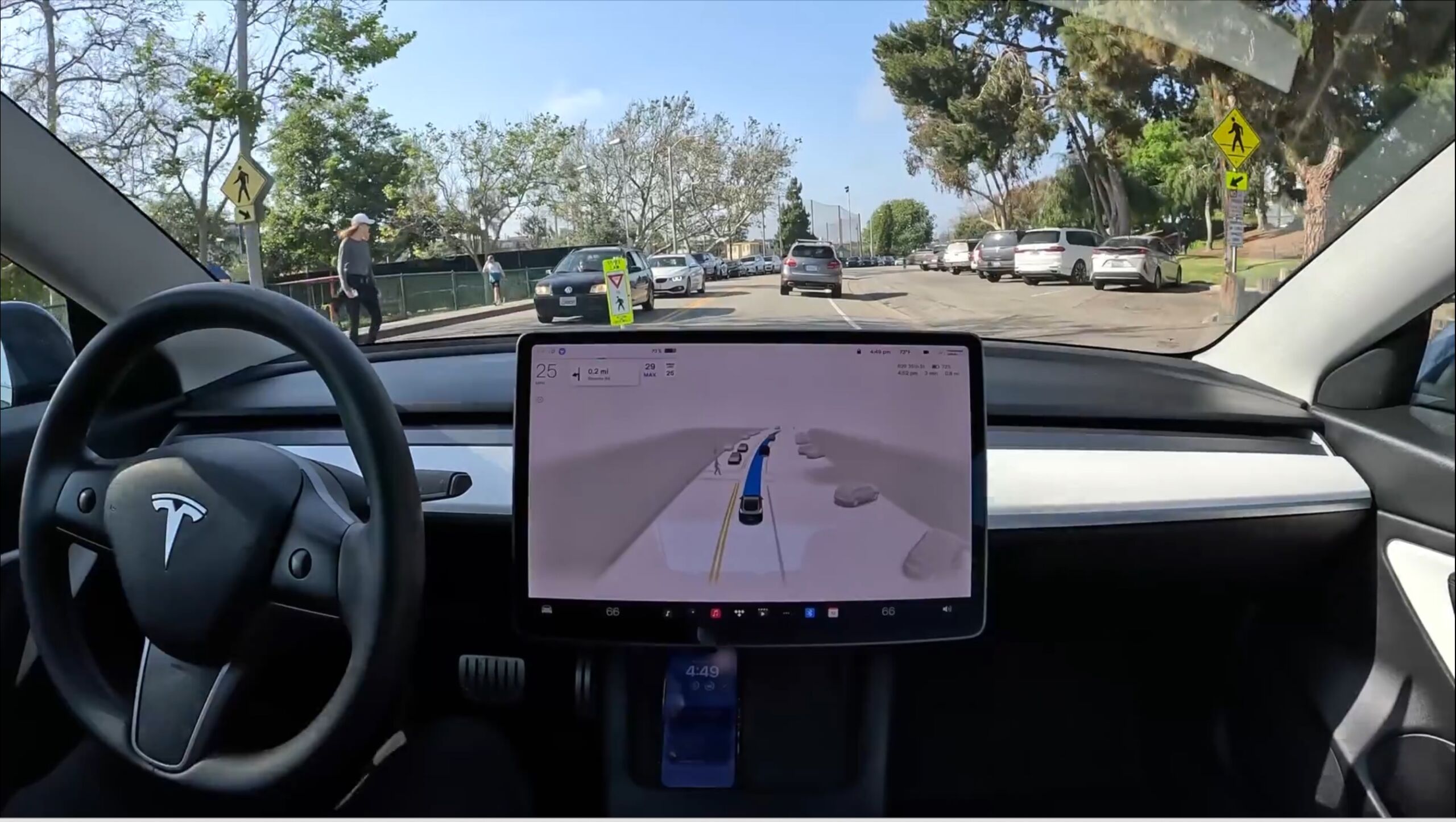
Enlarge / This Tesla can clearly detect the pedestrian as they appear on the infotainment display. But the car continues past them, only slowing from 26 mph to 24 mph after it passes the crosswalk. California law requires drivers to come to a complete stop for pedestrians at crosswalks. (credit: Twitter/Whole Mars Blog)
Tesla released a new version of its controversial "Full Self-Driving Beta" software last month. Among the updates in version 11.4 are new algorithms determining the car's behavior around pedestrians. But alarmingly, a video posted to Twitter over the weekend shows that although the Tesla system can see pedestrians crossing the road, a Tesla can choose not to stop or even slow down as it drives past.
The video was posted by the Whole Mars Catalog account, a high-profile pro-Tesla account with more than 300,000 followers. The tweet, which has been viewed 1.7 million times, featured a five-second video clip with the accompanying text:
One of the most bullish / exciting things I've seen on Tesla Full Self-Driving Beta 11.4.1.
It detected the pedestrian, but rather than slamming on the brakes it just proceeded through like a human would knowing there was enough time to do so.
The person posting the video then clarified that it was filmed in San Francisco and that anyone not OK with this driving behavior must be unfamiliar with city life. (As someone who has lived in big cities all his life, I am definitely not OK with cars not stopping for pedestrians at a crosswalk.)
The Federal Railroad Administration, which is the main federal agency responsible for Union Station, released 300 pages of revised plans for the station’s multibillion-dollar renovation. The renovation, first proposed in 2012, would be the first major improvement project at the 115-year-old station—which serves 37 million riders each year—in more than 30 years. The project comes with […]
To show the scale of tax cuts and Australia’s budget, ABC News takes the long, vertical unit chart approach, and the squares just keep coming. This is one of those scrollers that works best on mobile.
Enlarge / Look at that! A Google Drive spam folder! (credit: Google)
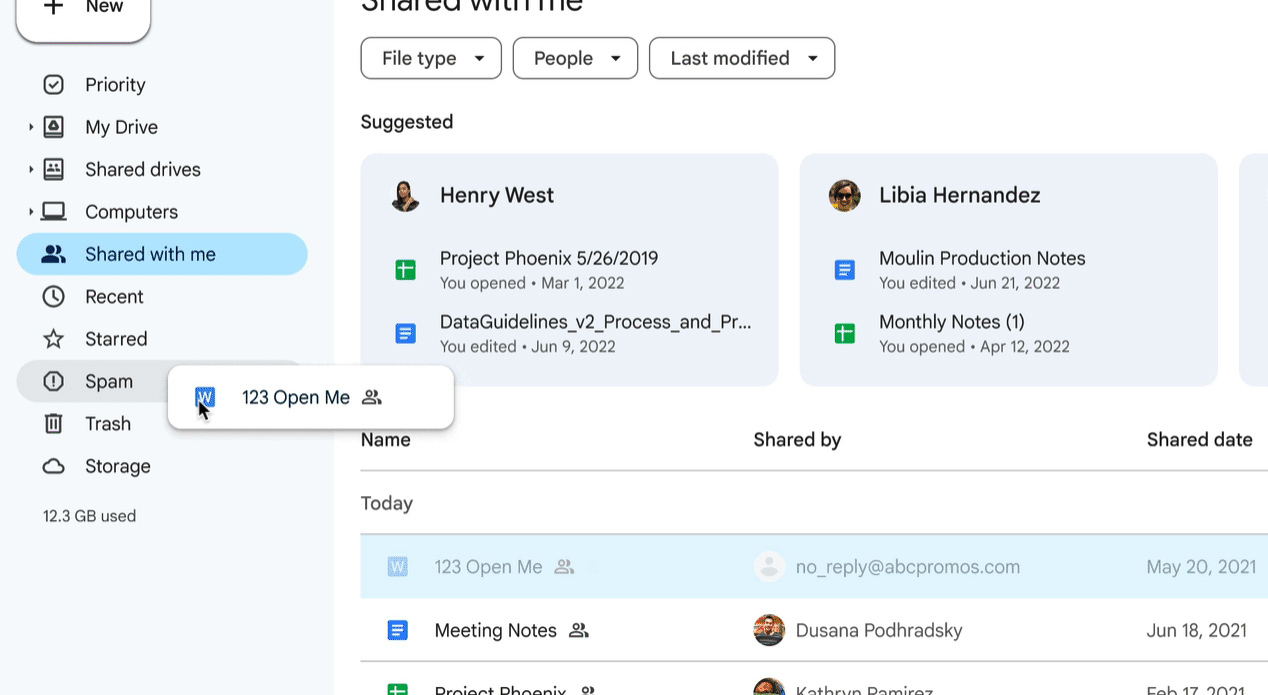
Fifteen years after launching Google Docs and Sheets with file sharing, Google is adding what sounds like adequate safety controls to the feature. Google Drive (the file repository interface that contains your Docs, Sheets, and Slides files) is finally getting a spam folder and algorithmic spam filters, just like Gmail has. It sounds like the update will provide a way to limit Drive's unbelievably insecure behavior of allowing random people to add files to your Drive account without your consent or control.
Because Google essentially turned Drive file-sharing into email, Google Drive needs every spam control that Gmail has. Anyone with your email address can "share" a file with you, and a ton of spammers already have your email address. Previously, Drive assumed that all shared files were legitimate and wanted, with the only "control" being "security by obscurity" and hoping no one else knew your email address.
Drive shows any shared files in your shared documents folder, notifies you of the share on your phone, highlights the "new recent file" at the top of the Drive interface, lists the file in searches, and sends you an email about it, all without any indication that you know the file sharer at all. For years, some people in my life have been inundated with shared Google Drive files containing porn, ads, dating site scams, and malware. For a long time, there was nothing you could do to support affected users other than disabling Drive notifications, telling them to ignore the highlighted porn ads at the top of their Drive account, and warning them to never click on the "shared files" folder. (Sorry, Mom.)
Enlarge / Tesla has been making right-hand drive versions of the Model S for a decade, but has now decided it's too complicated to continue. (credit: Edward Wong/South China Morning Post via Getty Images)
Tesla is no longer making a right-hand drive version of its Model S and Model X electric vehicles. The decision means that customers in countries that drive on the other side of the road, like the UK, have had orders canceled, and potential buyers are being told to buy a different model, a car from inventory, or try a left-hand drive version.
About 30 percent of the world's nations drive on the left side of the road, known confusingly as right-hand drive, as the driver's seat is on the right side of the car. The UK is probably the best-known right-hand drive country, along with most of its former colonies. While most of these are small countries, the list also includes highly populous countries like Japan, Indonesia, and India.
Ars was contacted by a reader from New Zealand who ordered a right-hand drive Model X SUV almost three years ago because Tesla reached out to him yesterday to cancel his order:
“It’s happening Saturday, in Adams Morgan. Join us for DC’s oldest (began in 1987!) and largest community yard sale: The Mother of All Yard Sales. This year, so far, we have 29 households participating! And after a two-year hiatus because of COVID, folks have lots of extra stuff to sell!
All of the homes are walking distance from each other, and Metro-accessible. Each sale begins at 9AM-ish and runs until that particular house gets bored.”
This lineup, from left to right, shows the Pixel 7 Pro, Pixel 7, Pixel 7a, and then the Pixel Fold. It's very short and very wide. [credit:
Google ]
So far, the Pixel Fold looks like an impressive first foldable from Google but, wow, is it expensive. It would be nice to knock at least a few dollars off that sky-high $1,799 price tag. You can actually do that at Google Fi where, with a two-year service commitment, you can get $700 off a Pixel Fold. That could go up to $1,000 off if you trade in an eligible phone.
There aren't too many catches to this deal. Google says you have to activate your new Pixel Fold on Fi within 30 days, keep your account active for 24 months, and it's open to new and existing Fi customers in the US. You'll still have to pay the $1,799 upfront or take the $75 a month (plus service) payment plan, and you'll eventually get that $700 back as 24 monthly service credits of $29.17. The offer expires "July 4, 2023, at 11:59 PM PDT or while supplies last."
If you weren't plugged in yesterday, the Fold was officially announced as a real-life product after about three years of rumors. Google is not necessarily known for cutting-edge hardware, but the Fold looks great. In the US market, it can claim the titles of "thinnest foldable" and "biggest foldable battery" which is a neat trick. Google's push into foldables also hopefully contains some Android and Google app software work, but we'll have to investigate that when the phone finally launches on June 27.
Because California is such a large state — its residents buy approximately 13 percent of all pork sold in the United States — the pork industry claimed that this law would require pork farms throughout the country to change their practices to ensure that their products would not be excluded from the California market, and that this would drive up the price of pork nationwide. Indeed, the industry claimed that Prop 12 would “increase farmers’ production costs by over $13 per pig, a 9.2% cost increase,” and those costs will need to be passed on to the consumer.
Jo-Anne McArthur / We Animals Media
Breeding sows are often housed in “gestation crates” like those pictured here, photographed in Canada by animal rights documentary group We Animals Media in 2022. California’s Prop 12 sought to regulate the minimum size of these crates.
To save itself from paying these predicted costs, the pork industry sued, invoking a doctrine known as the “Dormant Commerce Clause,” which places some limits on each state’s ability to enact laws that impact other states.
The problem with this legal theory, however, is that all state laws will have some impact on other states. If one state legalizes recreational marijuana, for example, residents of nearby states where cannabis remains illegal will inevitably cross the border to buy weed and bring it back to their home state. If a state raises its minimum wage, that could lead residents of neighboring states to cross the border and work for businesses there instead. If it lowers the speed limit on its highways, that could marginally depress commerce in other states because it will take slightly more time for people and goods to travel in those states.
If the Supreme Court had read the Dormant Commerce Clause aggressively, in other words, it could have given itself an effective veto power over nearly any state law — because it will virtually always be possible to argue that a state law will have economic impacts on other states.
Instead, the Court shrank the Dormant Commerce Clause considerably, freeing states to enact animal welfare laws — and, indeed, laws of any kind — with minimal oversight from federal courts, at least with respect to those laws’ impacts on other states. California’s Prop 12 will stand.
Unfortunately, National Pork also produced a hodgepodge of competing opinions. Briefly, Justice Neil Gorsuch wrote the Court’s primary opinion, which would have shrunk the Dormant Commerce Clause into a simple shield against economic protectionism. Under Gorsuch’s opinion, California may not pass a law that discriminates against goods produced in other states — perhaps by imposing a tariff on those goods or otherwise trying to make them more expensive than in-state goods — but states would be otherwise free to regulate as they choose.
Not all of Gorsuch’s opinion was joined by a majority of the justices, however, And Justice Sonia Sotomayor wrote a separate concurring opinion, which might allow residents of one state to challenge another state’s laws if those laws had truly extraordinary impacts on other states.
The overall thrust of the Court’s decision, however, is that a majority of the Court chose caution over a more imperial desire to resolve every policy question that creates a political controversy.
The Dormant Commerce Clause, briefly explained
The Constitution provides that Congress may “regulate commerce ... among the several states.” On its face, this is an affirmative grant of authority to the national legislature, not a restriction on states’ ability to enact protectionist legislation. Nevertheless, the Supreme Court has long held that this provision of the Constitution, known as the “Commerce Clause,” implicitly prohibits states from enacting laws that could impede free trade throughout the Union — hence the term “Dormant Commerce Clause.”
As the Supreme Court explained in Hughes v. Oklahoma (1979), the Commerce Clause addresses “a central concern of the Framers that was an immediate reason for calling the Constitutional Convention”: the framers’ belief that “the new Union would have to avoid the tendencies toward economic Balkanization that had plagued relations among the Colonies and later among the States under the Articles of Confederation.”
But the Court has often struggled to articulate where, exactly, the Dormant Commerce Clause kicks in and state laws that impact the economies of other states must fall. In Pike v. Bruce Church (1970), for example, the Court held that a state law should be struck down if its impact on interstate commerce “is clearly excessive in relation to the putative local benefits” produced by the law.
Pike stuck down an Arizona rule that required cantaloupes grown in Arizona to also be packed into crates in that state, and Gorsuch’s National Pork opinion agrees that this Arizona rule went too far. As he notes, Arizona violated the rule against protectionism, because it tried to “insulate in-state processing and packaging businesses from out-of-state competition.”
But Gorsuch also rejects Pike’s “clearly excessive” standard as too vague. After all, how excessive is too excessive? Would California’s animal welfare law be invalid if it caused the price of bacon in Iowa to rise by 3 percent? What if it rose 12 percent? Or 70 percent? Worse, how is a court supposed to determine what “benefits” a state garners from its own laws, and how should it weigh them against the predicted economic costs of that law?
As Gorsuch writes in a part of his opinion that is not joined by a majority of the Court, the pork industry argues that “they will face increased production expenses because of Proposition 12.” Meanwhile, the state argues that “Californians voted for Proposition 12 to vindicate a variety of interests, many noneconomic” — such as preventing animal cruelty and ensuring that pork sold in California is safe to eat.
How is a court supposed to weigh the “benefits” of preventing animal cruelty against the “costs” of higher pork prices? As Gorsuch says, that’s like asking judges to weigh “whether a particular line is longer than a particular rock is heavy.”
Though this portion of Gorsuch’s opinion is not part of the Court’s majority decision, it is echoed by Justice Amy Coney Barrett, who writes in her brief concurring opinion that “California’s interest in eliminating allegedly inhumane products from its markets cannot be weighed on a scale opposite dollars and cents—at least not without second-guessing the moral judgments of California voters or making the kind of policy decisions reserved for politicians.”
Gorsuch’s opinion would effectively remove courts altogether from the task of deciding when a state law can impact the economy of other states, except when states engage in outright protectionism. But his sweeping argument against weighing moral concerns against economic impacts was embraced by only three justices — himself and Barrett, plus Justice Clarence Thomas.
Justice Sotomayor, meanwhile, wrote a concurring opinion joined by Justice Elena Kagan, which argues that Pike should be read narrowly but not abandoned altogether. Sotomayor warns that “federal courts are well advised to approach the matter with caution,” but that they are not “incapable of balancing economic burdens against noneconomic benefits.”
Sotomayor’s opinion, in other words, leaves open the possibility that, in some future case, a majority of the Court might determine that a state law with hugely consequential economic impacts on other states violates the Dormant Commerce Clause. But she also urges “caution.” And she rejects the pork industry’s argument that Proposition 12 is such a law.
The bottom line, in other words, is that the Court barely left the door open to future Dormant Commerce Clause lawsuits similar to the National Pork case. While it is likely that lawyers will try to walk through that barely cracked door in upcoming cases, they won’t have an easy time of it.
National Pork is a rare display of judicial humility by this Court
The idea that the Court would give itself a broad power to examine the interstate impacts of state laws, and to strike down those laws if it deems those impacts excessive, may seem unusual to observers unfamiliar with this Supreme Court. After all, the Court has never rooted its power to block protectionist laws in the text of the Constitution. Instead, the Dormant Commerce Clause is rooted in a constitutional provision that explicitly does nothing more than give Congress the power to regulate.
But this Supreme Court so rarely exercises judicial restraint that the National Pork decision is a welcome departure from much of the rest of the Court’s jurisprudence. In Shelby County v. Holder (2013), for example, the Court struck down a key provision of the Voting Rights Act because it claimed that provision violates the “‘fundamental principle of equal sovereignty’ among the States” — a principle that is mentioned nowhere in the Constitution.
Similarly, the Court invented a doctrine known as “major questions,” which allows it to veto any regulation handed down by a federal agency, despite the fact that this major questions doctrine is also mentioned nowhere in the Constitution or in any federal statute. The Court’s decision in Whole Woman’s Health v. Jackson (2021) effectively immunized a Texas anti-abortion law from judicial review — based on a legal argument that, if taken seriously, would permit any state to nullify any constitutional right simply by enacting an unconstitutional law that can only be enforced by private bounty hunters.
National Pork is a break from this pattern. Given the opportunity to give itself a broad veto power over state laws, the Supreme Court instead chose humility. Thursday’s decision reduces the judiciary’s authority to block state laws that federal judges deem to have too much impact on other states.
Notably, however, National Pork does not prevent the pork industry (or any other industry, for that matter) from seeking a federal solution if it believes that a state law is too burdensome. As Gorsuch writes in a portion of his opinion that is joined by a majority of the Court, “Everyone agrees that Congress” may exercise its authority over interstate commerce “to regulate the interstate trade of pork, much as it has done with various other products.”
If the pork industry does not like Prop 12, in other words, it may lobby Congress to enact a federal law preempting California’s animal welfare laws. But it cannot run to the courts just because California imposed costs on pork producers that they’d rather not pay.
Google I/O is clearly the "We're extremely jealous of ChatGPT" show, and the first hour was packed with Google announcing generative AI features for every input box the company has control over. The company's most important input box is the one on the homepage of Google.com, and wouldn't you know it, that's getting generative AI, too.
But didn't Google already release a generative AI thing? It did, but that was Bard, and Bard is not part of Google Search. Bard is just its own chatbot system, sequestered away in its own little sandbox at bard.google.com. Bard was Google's answer to ChatGPT. Putting generative search on Google.com, with its billions of daily users, is Google's answer to Bing.
Part of the reason Bard wasn't integrated into Google Search right away was that 1) Google is cautious about generative AI, and 2) generative AI is very expensive to run at scale. So the company is taking a slow approach to all of this, as opposed to what Microsoft is doing. So, for Google.com, the "Search Generative Experience" will be an opt-in setting from a new "Search Labs" feature.
A panel of independent medical experts for the Food and Drug Administration voted unanimously on Wednesday in favor of allowing the hormonal birth control pill Opill (norgestrel) to be sold over the counter rather than by prescription.
The 17-0 vote by the panel came after a two-day meeting in which the experts reviewed data and analyses from the pill's maker, Laboratoire HRA Pharma, and FDA scientists, as well as heard public comments on the potential switch.
Opill is a once-a-day pill containing only progestin. It was first approved in 1973 and has shown to be remarkably safe in the five decades since then, proving safer than combination hormone pills that have risks of blood clots. Experts estimate Opill is about 93 percent effective at preventing pregnancy in real-life use, higher than the real-life efficacy of other easily accessible birth-control methods, such as condoms (around 87 percent).
Five months ago, a small San Francisco startup called OpenAI upended the tech industry — and the rest of the world — when it released ChatGPT. The app showed millions of people the immense capabilities of generative AI, how it can do everything from write original poetry to churn out working lines of code, all in a matter of seconds.
It quickly became clear that AI technology like ChatGPT had the potential not only to radically change the way we consume and create information but to transform every aspect of our daily lives. And it threatened Google’s business to its core.
It’s against that backdrop that Google invited journalists like me to visit Shoreline Amphitheatre in Mountain View, California, for the company’s much-anticipated annual I/O developer conference. The keynote presentation on Wednesday was Google’s chance to recapture the excitement it lost to OpenAI and the startup’s main investor, Microsoft, which ate Google’s lunch in February by releasing AI-powered search features in Bing and a corresponding chatbot, BingGPT.
Google is now facing the possibility of losing its dominance in the search market and reputation as a leader in AI, a technology many feel is as revolutionary as the mobile phone or the internet itself. Now, in order to reclaim its place as the company leading the charge on this rapidly developing technology, Google is putting AI into virtually all of its most popular products — despite the technology’s known flaws.
It was clear from the start of Google’s big event on Wednesday that AI was the star. Before executives presented onstage, electronic artist Dan Deacon played clanging music generated by Google’s AI technology as he recited poetic lyrics with psychedelic-looking AI-generated illustrations behind him. After Deacon wrapped his musical AI mystery tour, Google CEO Sundar Pichai took the stage.
“Seven years into our journey, we are at an exciting inflection point. We have an ability to make AI even more helpful,” he said onstage at Wednesday’s presentation. “We are reimagining all our core products, including search.”
But underneath the buzz was an air of nervousness about what Google is about to unleash on the world. In the coming weeks, billions of people will see generative AI in everything from Google search to Gmail to services powered by Google’s cloud technology. The update will, among other things, let people use AI to compose emails in the Gmail mobile app, create new Google Docs presentations with AI-generated images based on a few keywords, and text their friends on Android in Shakespearean-style prose spun up by AI. While these new generative AI applications could supercharge Google’s products and give better productivity and creativity tools to the masses, the technology is also prone to error and bias, and if executed poorly, it could damage Google’s core mission to serve its users reliable information.
Of the many ways Google is changing its apps with AI, search is the most meaningful. In the coming weeks, a limited group of beta testers will experience a new, more visual Google search experience. It looks familiar in many ways to the old Google search, but it works in some fundamentally different ways.
In the new Google search, when you enter a search query, you don’t just get a long list of blue links. Instead, Google will show you a few results in gray boxes before serving up a large, AI-generated block of text inside a light-green box that takes up a majority of the screen. This result is supposed to give you the information you’re looking for, gathered from disparate sources across the web and written in an approachable tone. To the right of the AI-generated result, you’ll also see a few links most relevant to your search. There are also some green boxes underneath the AI result, in which Google prompts you to go deeper by asking suggested follow-up questions, or come up with your own. And if you click into the actual text of the AI result, you’ll find links to the websites that Google pulled the information from. If you don’t like the new search experience, you can toggle back to the old one.
It’s by far the most drastic change to Google’s search engine that has been the backbone of the web for over 20 years. In fact, Google seems to be moving away from the term “search” and toward “converse.
Google’s AI search runs, in part, on a new, underlying technical model called PaLM2, which was also released on Wednesday. While it works much like Google’s old model, PaLM, Google says it’s better at language, reasoning, and code, and can run more quickly. Building on that technology, Google’s new search generative experience, or SGE, is supposed to be more conversational, more natural, and better at answering complicated questions than regular search. Google says the new search experience can help people with everything from planning a vacation to answering complex questions about the news of the day.
When I briefly tested SGE at Google’s offices on Tuesday, I asked a series of questions about whether WhatsApp was listening to my conversations, a topic about which Elon Musk recently raised questions, and it gave pretty reasonable answers.
First, the new Google tech told me that WhatsApp’s messages are secured with end-to-end encryption, a basic fact I could have found by doing a traditional Google search. But when I asked a follow-up question about whether Musk was right to question our trust in WhatsApp, it also gave some extra context that I might not have seen in a traditional search. SGE mentioned a known bug in Android that likely contributed to the confusion about when WhatsApp is accessing people’s microphones. But it also wrote that while WhatsApp is encrypted, it’s owned by Meta, a company that “historically monetizes personal information for advertisers,” and under certain circumstances, like political investigations, complies with government requests for data about you. Those are all correct statements and could potentially be relevant background information if I were to write an article on the topic.
Google
A screenshot of Google’s new AI search experience it’s starting to test in the coming weeks
In my few minutes using the tool, I could see the potential of a more conversational version of search that stitches together disparate data sources to give me a fuller picture of whatever I’m writing about. But it also presents major risks.
Soon after its release in March, Google’s experimental AI chatbot, Bard, was generating incorrect or made-up answers. Known in the AI field as “hallucinations” — when an AI system essentially invents answers it doesn’t know — these types of errors are a common issue with large language model chatbots.
The threat of a user encountering these hallucinations could harm Google’s reputation to deliver on its core mission to reliably organize the world’s information. After Bard incorrectly answered a factual question about the history of telescopes in one of its first public demos, Google lost $100 billion in market value. And although Bard was built with safeguards to avoid producing polarizing content, outside researchers found that with a little goading, it could easily spit out antisemitic conspiracy theories and anti-vaccine rhetoric.
In my demo on Tuesday, Google VP of Search Liz Reid said that Google has trained SGE to be less risky than Bard, since it’s a core part of Google’s flagship product and should have a lower margin of error.
“We need to push more on factuality, even if it means sometimes you don’t answer the question,” said Riedy.
Google also says its new AI search engine will not answer queries when it’s not confident about the trustworthiness of its sources or when it comes to certain subject matters, including medical dosage advice, information about self-harm, and developing news events. Google says it’s gathering feedback from users, and the company emphasized that it’s still being refined as it gets rolled out through Google’s new experimental search product group, Search Labs.
In the coming weeks, as early adopters pressure test Google’s new search experience and the other AI features in other Google products, they may wonder if these products are ready for primetime, and whether the company is rushing these public AI experiments. Some Google employees have been outspoken about these same concerns.
But Google, whose mission is to make the world’s information more universal and accessible, now finds itself in the unfamiliar position of hurrying to keep pace with its competitors. If it doesn’t get these new features out, Microsoft, OpenAI, and others could eat away at its core business. And at this point, the generative AI revolution seems all but inevitable. Google wants everyone to know it’s no longer holding back.
A version of this story was first published in the Vox technology newsletter. Sign up here so you don’t miss the next one!
In the past year, the Android team made significant improvements to on-device machine learning to help developers create smarter apps with more features to process images, sound, and text. In the Google I/O talk Build smarter Android apps with on-device Machine Learning, David Miro-Llopis PM on ML Kit and Thomas Ezan Android Developer Relation Engineer review new Android APIs and solutions and showcase applications using on-device ML.
Running ML processes on-device enables low-latency, increases data-privacy, enables offline support and potentially reduces cloud bill. Applications such as Lens AR Translate or the document scanning feature available in Files in India, benefit from the advantages of on-device ML.
To deploy ML features on Android, developers have two options:
ML Kit: which offers production-ready ML solutions to common user flows, via easy-to-use APIs.
Android’s custom ML stack: which is built on top of Tensorflow Lite, and provides control over the inference process and the user experience.
ML Kit released new APIs and improved existing features
Over the last year, the ML Kit team worked on both improving existing APIs and launching new ones: face mesh and document scanner. ML Kit is launching a new document scanner API in Q3 2023, that will provide a consistent scanning experience across apps in Android. Developers will be able to use it only with a few lines of code, without needing camera permission and with low apk size impact (given that it will be distributed via Google Play Services. In a similar fashion, Google code scanner is now generally available and provides a consistent scanning experience across apps, without needing camera permission, via Google Play Services.
Additionally, ML Kit improved the performance of the following APIs: barcode detection (by 17%), text recognition, digital ink recognition, pose detection, translation, and smart reply. ML Kit also integrated some APIs to Google Play Services so you don’t have to bundle the models to your application. Many developers are using ML Kit to easily integrate machine learning into their apps; for example, WPS uses ML Kit to translate text in 43 languages and save $65M a year.
Acceleration Service in Android’s custom ML stack is now in public beta
To support custom machine learning, the Android ML team is actively developing Android’s custom ML stack. Last year, TensorFlow Lite and GPU delegates were added to the Google Play Services which lets developers use TensorFlow Lite without bundling it to their app and provides automatic updates. With improved inference performance, hardware acceleration can in turn also significantly improve the user experience of your ML-enabled Android app. This year, the team is also announcing Acceleration Service, a new API enabling developers to pick the optimal hardware acceleration configuration at runtime. It is now in public beta and developers can learn more and get started here.
Posted by Alex Musil, Senior Director of Engineering and Product, Google Play
Over the past year, our teams have built exciting new features and made major changes to help you thrive with us. These updates have focused on:
Being the best partner to help you grow your audiences across the lifecycle of your business,
Being the best platform to help you effectively monetize your users at scale, and
Being the safest place to publish and distribute your hard work with Android.
Watch our video for more details, or keep reading to get the highlights.
More store listing enhancements designed to drive growth
Attracting users is the foundation of any app business, and it all starts with your store listing. These updates can help you craft better and more personalized content to drive more audience growth.
Last year, we gave every title the ability to create at least 50 custom store listings. Now, in addition to tailoring by country and pre-registration status, you can also customize your listing for inactive users, highlighting why they should give your app or game another chance.
Soon, we’ll launch custom store listings for Google Ads App campaign ad groups. These will allow you to serve custom listings to users coming from specific ads on AdMob and YouTube so you can create a more seamless user experience from Google Ads to Google Play.
All these new tools mean managing more listings, so we’re launching store listing groups to streamline the process. Now you can design for different audiences by simply creating a base listing, then overriding specific elements.
Create a base listing as your primary template and modify elements for different audiences with store listing groups.
To help you connect with people in their native language, we just launched new machine translation models for 10 languages from Google Translate in Play Console. It can translate your app and store listing in minutes, at no cost.
AI-powered features to highlight the best of your app
We’re bringing the benefits of AI to Google Play to make it easier for you and your users to get things done. From helping you showcase your app or game in the best possible light to helping users discover your title, these AI-powered features help you highlight the best of your app experience with ease.
Starting today, you can use Google’s generative AI technology to help you get started with store listings in English. This is an experimental feature to help you draft content with less effort. Just open our AI helper, enter a couple of prompts like audience and key theme, and it will generate a draft you can edit, discard, or use. You’re always in complete control of what you submit and publish.
Draft an AI-generated store listing with just a few prompts
To help users learn from each other about what makes your app or game special at a glance, we’re launching review summaries powered by Google’s generative AI technology. Starting with an experiment in English, and expanding later this year.
Review summaries highlight what users are saying about your app or game at a glance
New opportunities to boost user discovery
Google Play can also help you grow your audience by partnering with you to promote important events, new content, or exciting offers. Use Promotional content to let us know when these are happening so we can amplify your growth. Almost 25,000 apps and games already have access to Promotional content, and we’re rolling out to more titles later this year.
We’re launching multiple new, dedicated high-traffic surfaces to showcase your most exciting content, including via Play notifications. Participating games are seeing a median 20% uplift in store-wide acquisitions and reacquisitions, driven by increases of over 60% from organic Explore traffic.
New Play surfaces showcase your most exciting content
To enhance how and where your Promotional content is viewed on Play, we’re updating our reporting so you can track and optimize your events’ direct performance. Check it out in Play Console under “Promotional content performance reports.”
To be eligible for these new growth opportunities, your app or game needs to be of high quality and deliver the great experiences your users expect. Because it’s so important, we’re sharing more insights into how we think about quality and improving our tooling to help you meet these goals.
Today, we launched a unified framework for app and game quality that explains how we evaluate quality across a number of dimensions for promotion and featuring. Learn more with this article and I/O session, “What great quality looks like on Play.”
More effective monetization features
We’re also rolling out new features that leverage Play’s reach, expertise, and technologies to help you more effectively generate revenue.
Soon, you’ll be able to run price experiments for in-app products right within Play Console. Experiment with different price points across markets and identify when you may be pricing yourself out of a sale or undervaluing your in-app products.
Find the right price point for your in-app products with our experiments tool in Play Console
Also coming soon is a new type of Promotional content called “featured products” that will allow you to sell your in-app items directly on Play. Feature specific in-app items in different countries or offer discounts to excite users and increase conversions.
Feature in-app products on your store listing and nominate them for further promotion across Play surfaces
We’ve also made new updates to subscriptions to help you expand your reach, increase conversions, and improve retention. This year, we launched multiple prices per billing period so you can provide different auto-renewing and prepaid plan prices as desired, like giving “VIP” users recurring discounts.
Our commerce platform continues to evolve by improving access to buyers with new payment methods, exploring expanded billing options through our user choice billing pilot, and investing in secure purchase experiences that prevented over $2 billion in fraudulent and abusive transactions in 2022.
Finally, we’re also working to increase the effectiveness of your marketing-to-sales funnel.
Last year, we launched a Play Console page dedicated to deep links. This page flags broken deep links and provides contextual guidance on how to fix them. Coming soon, we’ll make it easier for you to rationalize your web-to-app mapping with a convenient way to review your top website URLs alongside their deep link status. To help you validate your deep links, we're adding a simple way to compare your app to your web experience for a given URL, side-by-side.
Enhanced privacy and security protection for developers and users
Protecting your users and your work is critical to a successful ecosystem, so we’ve continued to strengthen our platform-wide protections and roll out more tools to help you protect your apps.
Play Integrity API lets you check that user actions and server requests come from unmodified versions of your app, running on genuine Android devices. We’re rolling out a new beta integration option which gives Play Integrity API verdicts 10x faster. We launched status.play.google.com so you can monitor Play Integrity API service status and be notified of any issues.
We’re also expanding access to Automatic integrity protection for apps and games so anti-tamper and anti-piracy protection can be applied in “one-click” with no need to integrate an API in a backend server. Developers who use these products see a reduction in unauthorized usage of 80% on average.
Finally, we are building new tools to help you steer users away from broken app versions with prompts to update. First, automatic update prompts for crashing apps are triggered if your app crashes in the foreground and a more stable version is available. And second, you can prompt users on specific app versions to update. No prior integration is required and it will be available to all apps built with app bundles in the coming months.
We’re also continuing to improve Google Play and Play Console to help you provide safe, trustworthy experiences to users.
Last year, we launched the Data safety section to help explain what data your app may collect or share, and why. Since the launch, we’ve seen millions of users engaging with this feature every day, and it’s become an important way for users to evaluate an app’s safety before installing it.
Now, we're enhancing this feature with new data deletion options both inside and outside an app, and policy requirements to help you build trust and empower users with greater clarity and control. You also have the option to give users the choice to clean up their account and request that data like activity history, images, and videos be deleted, rather than their entire account.
The redesigned App content page makes outstanding tasks clearer, so you can quickly identify what you need to do to comply with our policies. And soon, you’ll see upcoming declaration requirements and deadlines, so you have more time to plan.
Finally, we rebuilt the Play Console App around modern developer needs. The new app is more customized, so you can tailor the homepage with the metrics you care about most, and integrates Inbox so you can stay up to date with key messages from Google Play. Join the open beta and let us know what you think.
We understand how exciting and challenging building and running a mobile business can be, and our teams are dedicated to building the tools and opportunities you need to succeed across your app lifecycle. Thank you for partnering with us, and please continue to share your feedback as we work together to build the future of Google Play.
Today, coinciding with Google I/O, we're releasing the second Beta of Android 14. Google I/O includes sessions covering many of Android 14's new features in detail, and Beta 2 includes enhancements around camera and media, privacy and security, system UI, and developer productivity. We're continuing to improve the large-screen device experience, and the Android 14 beta program is now available for the first time on select partner phones, tablets, and foldables.
Android delivers enhancements and new features year-round, and your feedback on the Android beta program plays a key role in helping Android continuously improve. The Android 14 developer site has lots more information about the beta, including downloads for Pixel and the release timeline. We’re looking forward to hearing what you think, and thank you in advance for your continued help in making Android a platform that works for everyone.
Now available on more devices
The Android 14 beta is now available from partners including iQOO, Lenovo, Nothing, OnePlus, OPPO, Realme, Tecno, vivo, and Xiaomi.
Premium camera and media experiences
Android devices are known for premium cameras, and Android 13 added support for recording vivid high dynamic range (HDR) video supporting billions of colors, camera extensions that device manufacturers use to expose capabilities such as night mode and bokeh, stream use cases for optimized camera streams, and more. Android 14 builds on these capabilities.
Ultra HDR for images
Android adds support for 10-bit high dynamic range (HDR) images, retaining more of the information from the sensor when taking a photo, enabling vibrant colors and greater contrast. The Ultra HDR format Android uses is fully backwards compatible with JPEG, allowing apps to seamlessly interoperate with HDR images, displaying them in standard dynamic range as needed. Rendering these images in the UI in HDR is done automatically by the framework when your app opts in to using HDR UI for its Activity Window, either through a Manifest entry or at runtime by calling Window.setColorMode.
You can also capture10-bit compressed still images on supported devices. With more colors recovered from the sensor, editing in post can be more flexible. The Gainmap associated with Ultra HDR images can be used to render them using OpenGL or Vulkan.
Zoom, Focus, Postview, and more in Camera Extensions
Android 14 upgrades and improves Camera Extensions, allowing apps to handle longer processing times, enabling improved images using compute-intensive algorithms like low-light photography on supported devices. This will give users an even more robust experience when using Camera Extension capabilities. Examples of these improvements include:
Dynamic still capture processing latency estimation provides much more accurate still capture latency estimates based on the current scene and environment conditions. Call CameraExtensionSession.getRealtimeStillCaptureLatency() to get a StillCaptureLatency object, which has two latency estimation methods. The getCaptureLatency() method returns the estimated latency between onCaptureStarted() and onCaptureProcessStarted(), and the getProcessingLatency() method returns the estimated latency between onCaptureProcessStarted() and the final processed frame being available.
Support for capture progress callbacks so that apps can display the current progress of long running still capture processing operations. You can check if this feature is available with CameraExtensionCharacteristics.isCaptureProcessProgressAvailable(), and if it is, you implement the onCaptureProcessProgressed() callback, which has the progress (from 0 to 100) passed in as a parameter.
Android 14 gains support for lossless audio formats for audiophile-level experiences over USB wired headsets. You can query a USB device for its preferred mixer attributes, register a listener for changes in preferred mixer attributes, and configure mixer attributes using a new AudioMixerAttributes class. It represents the format, such as channel mask, sample rate, and behavior of the audio mixer. The class allows for audio to be sent directly, without mixing, volume adjustment, or processing effects. We are working with our OEM partners to enable this feature in devices later this year.
More graphics capabilities
Android 14 adds advanced graphics features that can be used to take advantage of sophisticated GPU capabilities from within the Canvas layer.
Custom meshes with vertex and fragment shaders
Android has long supported drawing triangle meshes with custom shading, but the input mesh format has been limited to a few predefined attribute combinations. Android 14 adds support for custom meshes, which can be defined as triangles or triangle strips, and can, optionally, be indexed. These meshes are specified with custom attributes, vertex strides, varying, and vertex/fragment shaders written in AGSL. The vertex shader defines the varyings, such as position and color, while the fragment shader can optionally define the color for the pixel, typically by using the varyings created by the vertex shader. If color is provided by the fragment shader, it is then blended with the current Paint color using the blend mode selected when drawing the mesh. Uniforms can be passed into the fragment and vertex shaders for additional flexibility.
Hardware buffer renderer for Canvas
To assist in using Android's Canvas API to draw with hardware acceleration into a HardwareBuffer, Android 14 introduces HardwareBufferRenderer. It is particularly useful when your use case involves communication with the system compositor through SurfaceControl for low-latency drawing.
Privacy
Android 14 continues to focus on privacy, with new functionality that gives users more control and visibility over their data and how it's shared.
Health Connect
Health Connect is an on-device repository for user health and fitness data. It allows users to share data between their favorite apps, with a single place to control what data they want to share with these apps.
Health Connect is currently available to download as an app on the Google Play store. Starting with Android 14, Health Connect is part of the platform and receives updates via Google Play system updates without requiring a separate download. With this, Health Connect can be updated frequently, and your apps can rely on Health Connect being available on devices running Android 14+. Users can access Health Connect from the Settings in their device, with privacy controls integrated into the system settings.
We're launching support for exercise routes in Health Connect, allowing users to share a route of their workout which can be visualized on a map. A route is defined as a list of locations saved within a window of time, and your app can insert routes into exercise sessions, tying them together. To ensure that users have complete control over this sensitive data, users must allow sharing individual routes with other apps.
That's not all that's new! We have a separate blog post with more detail on Health Connect and more in What's new in Android Health.
Data Sharing Updates
Users will see a new section in the location runtime permission dialog that highlights when an app shares location data with third parties, where they can get more information and control the app’s data access. This information is from the Data safety form of the Google Play Console. Other app stores will be able to provide a mechanism to pass along this information as well. We encourage you to review your apps’ location data sharing policies and make any applicable updates to your apps' data safety information to ensure that they are up to date. This change will be rolling out shortly.
In addition, users will get a periodic notification if any of their apps with the location permission change their data sharing practices to start sharing their data with 3rd parties.
The new location data sharing updates page will be accessible from within device settings.
Secure full screen Intent notifications
With Android 11 (API level 30), it was possible for any app to use Notification.Builder#sendFullScreenIntent to send full-screen intents while the phone is locked. You could auto-grant this on app install by declaring the USE_FULL_SCREEN_INTENT permission in the AndroidManifest.
Full-screen intent notifications are designed for extremely high-priority notifications demanding the user's immediate attention, such as an incoming phone call or user-configured alarm clock settings. Starting with Android 14, we are limiting the apps granted this permission on app install to those that provide calling and alarms only.
This permission remains enabled for apps installed on the phone before the user updates to Android 14. Users can turn this permission on and off.
With the Android 14 Beta 2 release, we've added multiple improvements and new guidance for developers to have more seamless animation when moving between activities within an app.
With Android 14 Beta 2, all features of Predictive Back remain behind a developer option. See the developer guide to migrate your app to predictive back, as well as the developer guide to creating custom in-app transitions.
App compatibility
With Beta 2, we're just a step away from platform stability in June 2023, when we'll have the final Android 14 SDK and NDK APIs and final app-facing system behaviors. Now that more devices will be running the Android 14 beta, In the weeks ahead, you can expect more users to be trying your app on Android 14 and raising issues they find.
To test for compatibility, install your published app on a device or emulator running the Android 14 Beta and work through all of the app’s flows. Review behavior changes to focus your testing. After you’ve resolved any issues, publish an update as soon as possible.
It’s also a good time to start getting ready for your app to target Android 14, by testing with the app compatibility changes toggles in Developer Options.
App compatibility toggles in Developer Options
Get started with Android 14
Today's Beta 2 release has everything you need to try the Android 14 features, test your apps, and give us feedback. For testing your app with tablets and foldables, you can test with devices from our partners, but the easiest way to get started is using the 64-bit Android Emulator system images for the Pixel Tablet or Pixel Fold configurations found in the latest preview of the Android Studio SDK Manager. You can also enroll any supported Pixel device here to get this and future Android 14 Beta and feature drop Beta updates over-the-air.
For the best development experience with Android 14, we recommend that you use the latest release of Android Studio Hedgehog. Once you’re set up, here are some of the things you should do:
Try the new features and APIs – your feedback is critical as we finalize the APIs. Report issues in our tracker on the feedback page.
Test your current app for compatibility – learn whether your app is affected by default behavior changes in Android 14. Install your app onto a device or emulator running Android 14 and extensively test it.
Test your app with opt-in changes – Android 14 has opt-in behavior changes that only affect your app when it’s targeting the new platform. It’s important to understand and assess these changes early. To make it easier to test, you can toggle the changes on and off individually.
We’ll update the beta system images and SDK regularly throughout the Android 14 release cycle.
The plastics industry has long hyped recycling, even though it is well aware that it’s been a failure. Worldwide, only 9 percent of plastic waste actually gets recycled. In the United States, the rate is now 5 percent. Most used plastic is landfilled, incinerated, or winds up drifting around the environment.
Now, an alarming new study has found that even when plastic makes it to a recycling center, it can still end up splintering into smaller bits that contaminate the air and water. This pilot study focused on a single new facility where plastics are sorted, shredded, and melted down into pellets. Along the way, the plastic is washed several times, sloughing off microplastic particles—fragments smaller than 5 millimeters—into the plant’s wastewater.
A Virginia-based nonprofit has cleared the latest hurdle in its effort to build a first-of-its-kind memorial honoring journalists who’ve lost their lives while covering the news. The Fallen Journalists Memorial Foundation received Congressional authorization in 2020 to construct the memorial—using private funds—on federal land. Now, it has the go-ahead from the U.S. Commission of Fine […]
ProPublica is a nonprofit newsroom that investigates abuses of power. Sign up to receive our biggest stories as soon as they’re published.
One year ago, all 50 states and the District of Columbia announced a $141 million settlement with Intuit, the maker of TurboTax. The investigation, led by New York Attorney General Letitia James, centered on how the company had steered customers into paying for tax preparation even though they qualified for a free government program. The attorney general said the probe was sparked by ProPublica’s reporting in 2019.
About 4.4 million low-income Americans will receive payments under the agreement. On Thursday, James announced that the process of actually mailing checks to all those people will begin next week.
“TurboTax’s predatory and deceptive marketing cheated millions of low-income Americans who were trying to fulfill their legal duties to file their taxes,” she said. “Today we are righting that wrong and putting money back into the pockets of hardworking taxpayers who should have never paid to file their taxes.”
The payments range from $29 to $85, depending on how many years each eligible consumer used TurboTax. (A number of people cited in ProPublica’s articles said they had paid over $100 for what they had thought would be free services.) The agreement covered 2016 through 2018. Those eligible for payments will be contacted by email and will not need to file a claim.
As ProPublica documented in story after story, TurboTax for years lured consumers with the promise of “free” tax filing and then deployed a range of tricks and traps to steer them to paying products.
Meanwhile, Intuit has lobbied for decades to prevent the government from developing a free tax filing system. One result of that fight, 20 years ago, was the IRS Free File program: In exchange for the IRS agreeing not to develop a free filing system, the tax prep industry agreed to offer something similar. On paper, the program allowed 70% of taxpayers to file for free. But only a tiny percentage of people ever used Free File — in part because Intuit, H&R Block and others actively sought to prevent taxpayers from finding out about it while pushing their own “free” products.
In addition to the investigation by the state attorneys general, the Federal Trade Commission also sued Intuit, claiming the company deceived consumers with its “free” marketing. Intuit defended the accuracy of its ads but said it voluntarily ceased broadcasting its “free, free, free” TV ads in a “spirit of cooperation.” That case is ongoing.



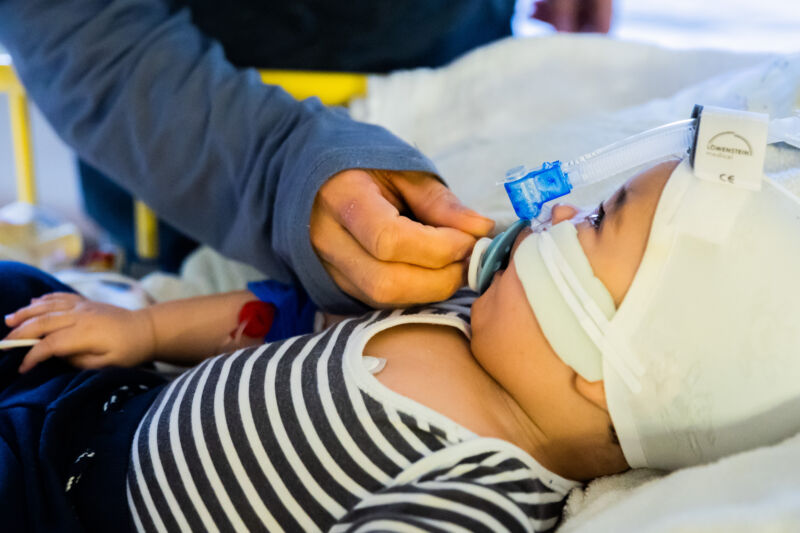



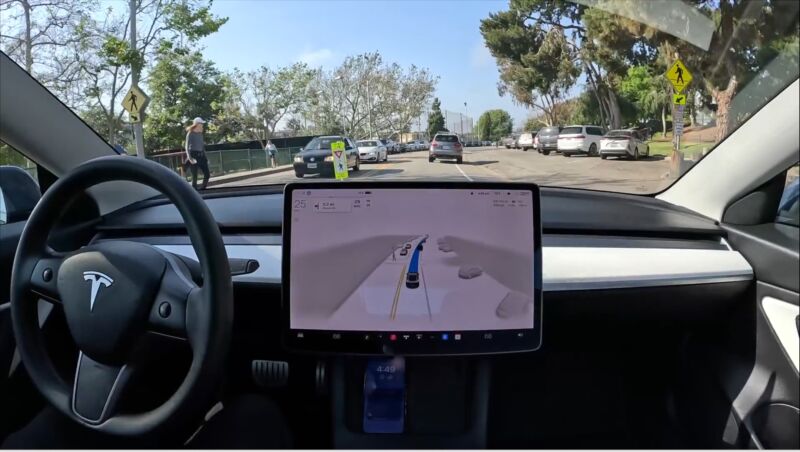

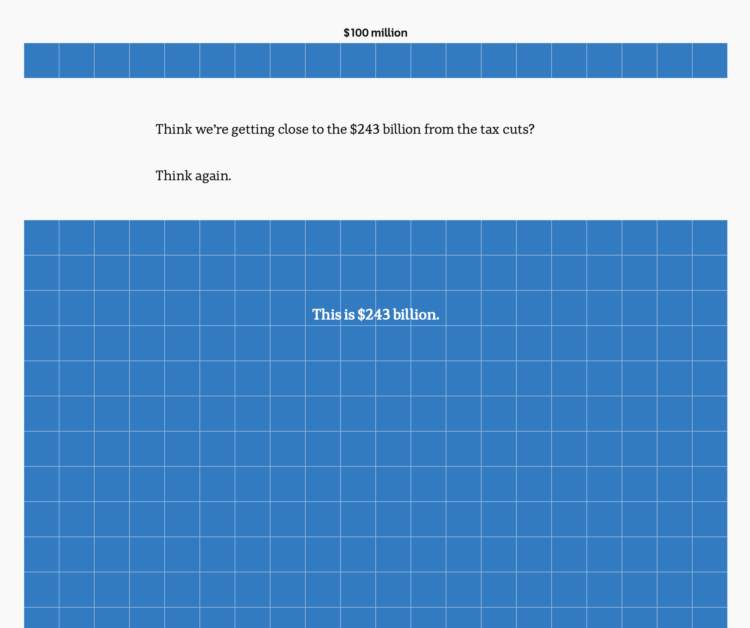
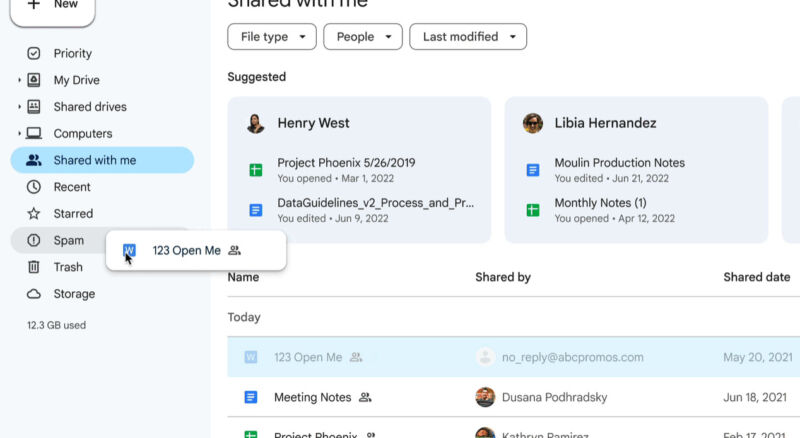

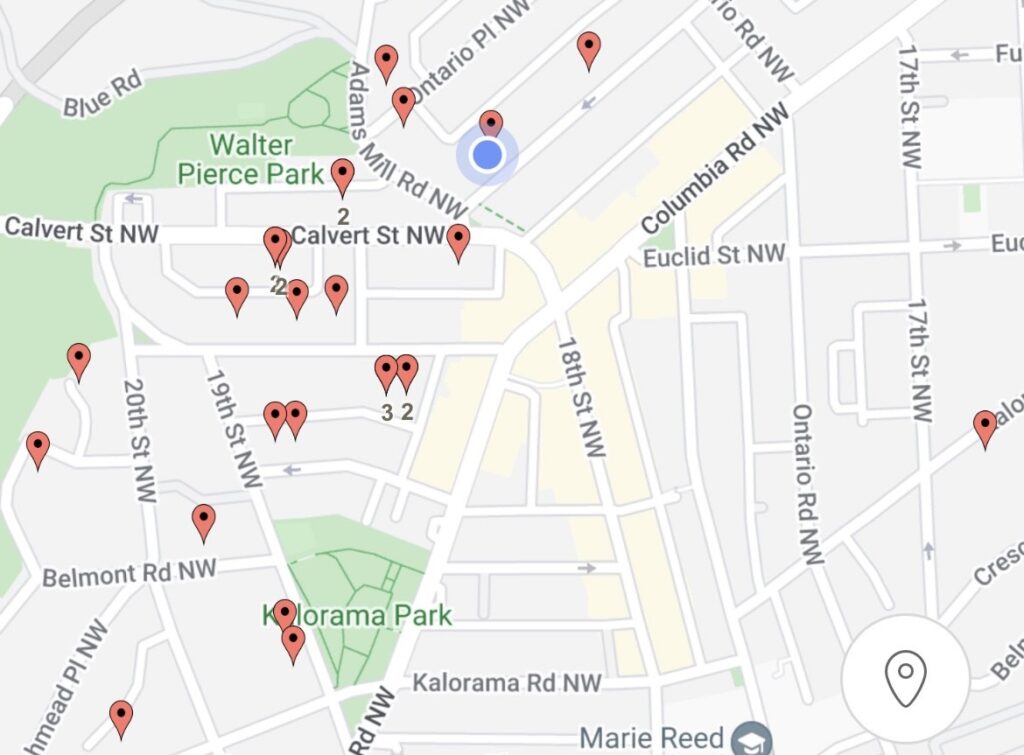
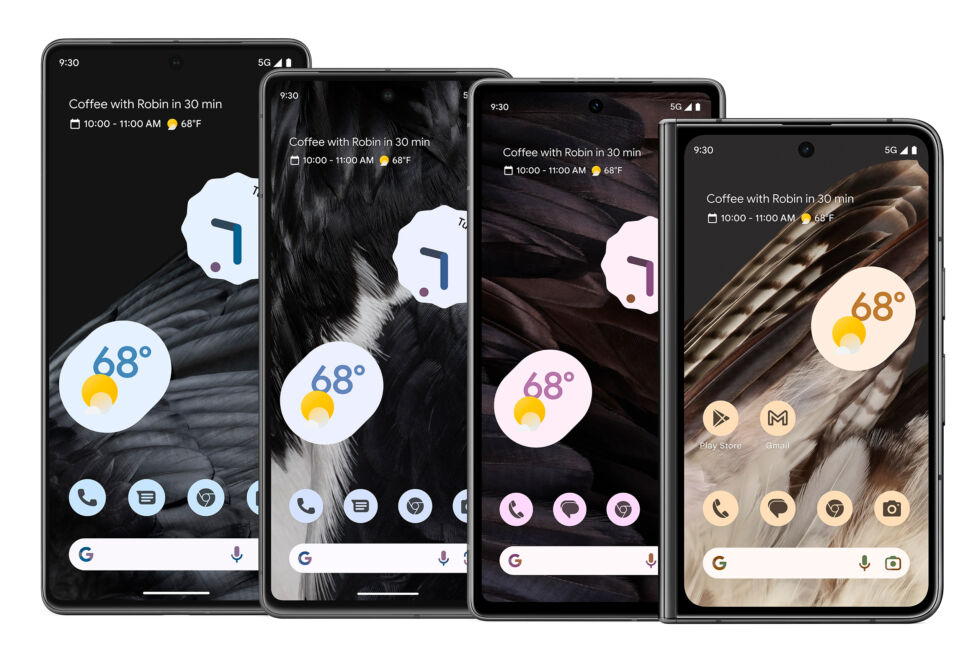

/cdn.vox-cdn.com/uploads/chorus_asset/file/24650213/WAM26911.jpg) Jo-Anne McArthur / We Animals Media
Jo-Anne McArthur / We Animals Media
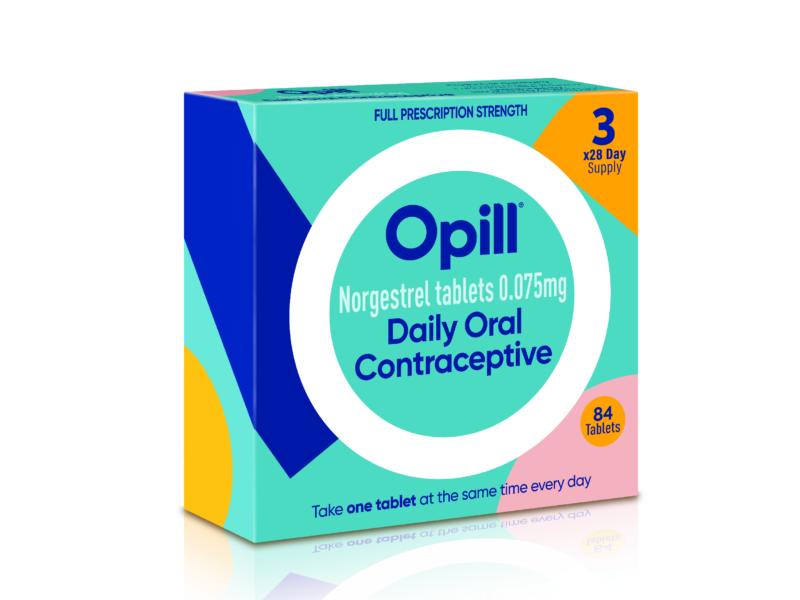

/cdn.vox-cdn.com/uploads/chorus_asset/file/24648524/SGE___Bryce_Canyon_Image.png) Google
Google
 Posted by Thomas Ezan, Developer Relations

 Posted by Alex Musil, Senior Director of Engineering and Product, Google Play


 Posted by Dave Burke, VP of Engineering