Shared posts

02 Oct 15:01

Heritage Foundation Staffers Flood Federal Agencies With Thousands of Information Requests

by by Sharon Lerner and Andy Kroll

by Sharon Lerner and Andy Kroll

ProPublica is a nonprofit newsroom that investigates abuses of power. Sign up to receive our biggest stories as soon as they’re published.

Three investigators for the Heritage Foundation have deluged federal agencies with thousands of Freedom of Information Act requests over the past year, requesting a wide range of information on government employees, including communications that could be seen as a political liability by conservatives. Among the documents they’ve sought are lists of agency personnel and messages sent by individual government workers that mention, among other things, “climate equity,” “voting” or “SOGIE,” an acronym for sexual orientation, gender identity and expression.

The Heritage team filed these requests even as the think tank’s Project 2025 was promoting a controversial plan to remove job protections for tens of thousands of career civil servants so they could be identified and fired if Donald Trump wins the presidential election.

All three men who filed the requests — Mike Howell, Colin Aamot and Roman Jankowski — did so on behalf of the Heritage Foundation’s Oversight Project, an arm of the conservative group that uses FOIA, lawsuits and undercover videos to investigate government activities. In recent months, the group has used information gleaned from the requests to call attention to efforts by the Defense Counterintelligence and Security Agency to teach staff about gender diversity, which Fox News characterized as the “Biden administration’s ‘woke’ policies within the Department of Defense.” Heritage also used material gathered from a FOIA search to claim that a listening session the Justice Department held with voting rights activists constituted an attempt to “rig” the presidential election because no Republicans were present.

An analysis of more than 2,000 public-records requests submitted by Aamot, Howell and Jankowski to more than two dozen federal offices and agencies, including the State Department, the Department of Homeland Security and the Federal Trade Commission, shows an intense focus on hot-button phrases used by individual government workers.

Those 2,000 requests are just the tip of the iceberg, Howell told ProPublica in an interview. Howell, the executive director of the Oversight Project, estimated that his group had submitted more than 50,000 information requests over the past two years. He described the project as “the most prestigious international investigative operation in the world.”

Among 744 requests that Aamot, Jankowski and Howell submitted to the Department of the Interior over the past year are 161 that seek civil servants’ emails and texts as well as Slack and Microsoft Teams messages that contained terms including “climate change”; “DEI,” or diversity, equity and inclusion; and “GOTV,” an acronym for get out the vote. Many of these FOIAs request the messages of individual employees by name.

Trump has made clear his intentions to overhaul the Department of the Interior, which protects the nation’s natural resources, including hundreds of millions of acres of land. Under President Joe Biden, the department has made tackling climate change a priority.

Hundreds of the requests asked for government employees’ communications with civil rights and voting rights groups, including the ACLU; the Native American Rights Fund; Rock the Vote; and Fair Count, an organization founded by Democratic politician and voting rights advocate Stacey Abrams. Still other FOIAs sought communications that mention “Trump” and “Reduction in Force,” a term that refers to layoffs.

Several requests, including some sent to the Department of Defense, the Department of Homeland Security and the Office of the Director of National Intelligence, focus on personnel. Some ask for “all employees who entered into a position at the agency as a Political Appointee since January 20, 2021,” the first day of the Biden administration. Others target career employees. Still other FOIAs seek agencies’ “hierarchy charts.”

“It does ring some alarm bells as to whether this is part of an effort to either intimidate government employees or, ultimately, to fire them and replace them with people who are going to be loyal to a leader that they may prefer,” Noah Bookbinder, president and CEO of Citizens for Responsibility and Ethics in Washington, or CREW, said of the FOIAs.

Asked whether the project gathered the records to facilitate the firing of government workers, Howell said, “Our work is meant to just figure out who the decision-makers are.” He added that his group isn’t focused on simply identifying particular career employees. “It’s more about what the bureaucrats are doing, not who the bureaucrats are,” he said.

Howell said he was speaking on behalf of himself and the Oversight Project. Aamot requested questions in writing, but did not respond further. Jankowski did not reply to a request for comment.

Bookbinder also pointed out that inundating agencies with requests can interfere with the government’s ability to function. “It’s OK to make FOIA requests,” said Bookbinder, who acknowledged that CREW has also submitted its share of requests. “But if you purposely overwhelm the system, you can both cause slower response to FOIAs … and you can gum up other government functions.”

Indeed, a government worker who processes FOIAs for a federal agency told ProPublica that the volume of requests from Heritage interfered with their ability to do their job. “Sometimes they come in at a rate of one a second,” said the worker, who asked to remain anonymous because they were not authorized to speak to the press. The worker said they now spend a third of their work time processing requests from Heritage, including some that seek communications that mention the terms “Biden” and “mental” or “Alzheimer’s” or “dementia” or “defecate” or “poop.”

“They’re taking time away from FOIA requesters that have legitimate requests,” said the worker. “We have to search people’s accounts for poop. This isn’t a thing. I can’t imagine a real reporter putting in a request like that.”

Asked about the comment, Howell said: “I’m paying them, so they should do their damn job and turn over the documents. Their job is not to decide what they think is worth, you know, releasing or not.” He added that “we’re better journalists by any standard than The New York Times.”

Project 2025, which is led by Heritage, became politically toxic — with Trump disavowing the endeavor and Kamala Harris seeking to tie her opponent to the plan — in part for proposing to identify and fire as many as 50,000 career government employees who are deemed “nonperforming” by a future Trump administration. Trump attempted to do this at the end of his first term, issuing an executive order known as “Schedule F” that would have allowed his administration to reclassify thousands of civil servants, making them easier to fire and replace. Biden then repealed it.

Project 2025’s 887-page policy blueprint proposes that the next conservative president reissue that “Schedule F” executive order. That would mean a future Trump administration would have the ability to replace tens of thousands of career government employees with new staffers of their choosing.

To fill those vacancies, as ProPublica has reported, Project 2025 has also recruited, vetted and trained future government employees for a Republican administration. In one training video obtained by ProPublica, a former Trump White House official named Dan Huff says that future government staffers should prepare to enact drastic policy changes if they join the administration.

“If you’re not on board with helping implement a dramatic course correction because you’re afraid it’ll damage your future employment prospects, it’ll harm you socially — look, I get it,” Huff says. “That’s a real danger. It’s a real thing. But please: Do us all a favor and sit this one out.”

Howell, the head of the Oversight Project and one of the FOIA filers, is a featured speaker in one of Project 2025’s training videos, in which he and two other veteran government investigators discuss different forms of government oversight, such as FOIA requests, inspector general investigations and congressional probes. Another speaker in the video, Tom Jones of the American Accountability Foundation, offers advice to prospective government employees in a conservative administration about how to avoid having sensitive or embarrassing emails obtained under the FOIA law — the very strategy that the Oversight Project is now using with the Biden administration.

“If you need to resolve something, if you can do it, it’s probably better to walk down the hall, buttonhole a guy and say, ‘Hey, what are we going to do here?’ Talk through the decision,” Jones says.

“You’re probably better off,” Jones says, “going down to the canteen, getting a cup of coffee, talking it through and making the decision, as opposed to sending him an email and creating a thread that Accountable.US or one of those other groups is going to come back and seek.”

The records requests are far reaching, seeking “full calendar exports” for hundreds of government employees. One FOIA submitted by Aamot sought the complete browser history for Interior Secretary Deb Haaland, “whether exported from Chrome, Safari, Windows Explorer, Mozilla.” The most frequent of the three requesters, Aamot, whose online bio describes him as a former psychological operations planner with the Army’s Special Operations Command, submitted some FOIAs on behalf of the Heritage Foundation and others for the Daily Signal. The publication spun off from the Heritage Foundation in June, according to an announcement on the think tank’s website, but another page on the site still seeks donations for both the foundation and the Daily Signal.

ProPublica obtained the Department of Interior requests as well as tallies of FOIAs from the Centers for Disease Control and Prevention, the Environmental Protection Agency and the Health Resources and Services Administration through its own public records requests.

Several of the Heritage Foundation’s requests focus on gender, asking for materials federal agencies presented to employees or contractors “mentioning ‘DEI’, ‘Transgender’, ‘Equity’, or ‘Pronouns.’” Aamot sent similar requests to the Office of the Director of National Intelligence, the Office of Management and Budget, Americorps and the Chemical Safety Board, among other agencies. Howell said he believes that the group has uncovered evidence that “unpopular and just frankly sexually creepy and sexually disordered ideas are now being translated into government jargon, speak, policies, procedures and guidance documents.”

Heritage’s FOIA blitz has even sought information about what government employees are saying about Heritage and its employees, including the three men filing the thousands of FOIAs. One request sent to the Interior Department asks for any documents to and from the agency’s chief FOIA officer that mention Heritage’s president, Kevin Roberts, as well as the names of Aamot, Howell and Jankowski.

Irena Hwang contributed data analysis. Kirsten Berg contributed research.
01 Oct 12:09

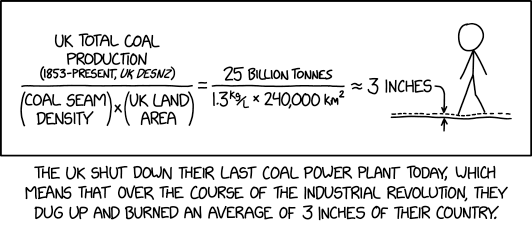
UK Coal

The Watership Down rabbits removed an additional 0.1 nanometers constructing their warren, although that was mostly soil. British rabbits have historically mined very little coal; the sole rabbit-run coal plant was shut down in the 1990s.
30 Sep 15:15

Flaw in Kia’s web portal let researchers track, hack cars

by WIRED
car center console with the word HACKED

Enlarge (credit: Chesky_w via Getty)

When security researchers in the past found ways to hijack vehicles' Internet-connected systems, their proof-of-concept demonstrations tended to show, thankfully, that hacking cars is hard. Exploits like the ones that hackers used to remotely take over a Chevrolet Impala in 2010 or a Jeep in 2015 took years of work to develop and required ingenious tricks: reverse engineering the obscure code in the cars’ telematics units, delivering malicious software to those systems via audio tones played over radio connections, or even putting a disc with a malware-laced music file into the car’s CD drive.

This summer, one small group of hackers demonstrated a technique to hack and track millions of vehicles that’s considerably easier—as easy as finding a simple bug in a website.

Read 22 remaining paragraphs | Comments

26 Sep 19:32

Do You Like

by Reza
26 Sep 19:00

Most Amazon workers considering job hunting due to 5-day in-office policy: Poll

by Scharon Harding
Amazon corporate office building in Sunnyvale, California.

Amazon corporate office building in Sunnyvale, California. (credit: Getty Images)

An overwhelming majority of Amazon employees are “dissatisfied” with Amazon killing remote work and requiring them to be in the office five days a week next year. That's according to a survey of 2,585 employees by Blind, an online community where verified employees can discuss their work culture anonymously.

Since May, Amazon employees have been able to work remotely up to twice per week—a policy that Amazon has reportedly enforced by keeping track of badge swipes and how many hours workers spend in offices.

On September 16, Amazon CEO Andy Jassy sent a memo to employees stating that Amazon would require most workers to come into the office five days a week at the start of 2025. "We’ve observed that it’s easier for our teammates to learn, model, practice, and strengthen our culture; collaborating, brainstorming, and inventing are simpler and more effective,” the memo said.

Read 12 remaining paragraphs | Comments

24 Sep 18:13

Calif. Governor vetoes bill requiring opt-out signals for sale of user data

by Jon Brodkin
A closeup photo of California Governor Gavin Newsom's face

Enlarge / California Governor Gavin Newsom at a press conference in San Francisco on September 19, 2024. (credit: Getty Images | Anadolu )

California Gov. Gavin Newsom vetoed a bill that would have required makers of web browsers and mobile operating systems to let consumers send opt-out preference signals that could limit businesses' use of personal information.

The bill approved by the State Legislature last month would have required an opt-out signal "that communicates the consumer's choice to opt out of the sale and sharing of the consumer's personal information or to limit the use of the consumer's sensitive personal information." It would have made it illegal for a business to offer a web browser or mobile operating system without a setting that lets consumers "send an opt-out preference signal to businesses with which the consumer interacts."

In a veto message sent to the Legislature Friday, Newsom said he would not sign the bill. Newsom wrote that he shares the "desire to enhance consumer privacy," noting that he previously signed a bill "requir[ing] the California Privacy Protection Agency to establish an accessible deletion mechanism allowing consumers to request that data brokers delete all of their personal information."

Read 8 remaining paragraphs | Comments

24 Sep 12:34

Bird flu is spreading rapidly in California; infected herds double over weekend

by Beth Mole
Bird flu is spreading rapidly in California; infected herds double over weekend

Enlarge (credit: Getty | Matthew Ludak)

The H5N1 bird flu appears to be stampeding through dairy farms in California, the country's largest milk producer. Over the weekend, the total number of confirmed infected cow herds stunningly doubled, going from 17 last Thursday to 34 Monday morning, according to state and federal officials.

With the new tally, California now ranks second among all affected states for having the most herds with avian influenza. Only Colorado, which has adopted bulk milk-tank surveillance, has more, with 64 herds confirmed. California's high ranking is despite the fact that it only reported its first three infected herds on August 30, while the dairy outbreak was first confirmed on March 25 and thought to have begun late last year.

To date, 232 herds in 14 states have been infected with the bird flu.

Read 6 remaining paragraphs | Comments

22 Sep 22:20

The Supreme Court rules that state officials can engage in a little corruption, as a treat

by Ian Millhiser
US President Donald Trump shakes hands with US Supreme Court Justice Brett Kavanaugh before delivering the State of the Union address at the US Capitol in Washington, DC, on February 5, 2019. (Photo by MANDEL NGAN / AFP) (Photo credit should read MANDEL NGAN/AFP via Getty Images)

On a 6-3 party-line vote, the Supreme Court ruled on Wednesday that state officials may accept “gratuities” from people who wish to reward them for their official actions, despite a federal anti-corruption statute that appears to ban such rewards.

Justice Brett Kavanaugh wrote the opinion in Snyder v. United States for the Court’s Republican-appointed majority. Justice Ketanji Brown Jackson wrote the dissent on behalf of the Court’s three Democratic appointees.

Snyder turns on a distinction between “bribes” and “gratuities.” As Kavanaugh writes, “bribes are payments made or agreed to before an official act in order to influence the official with respect to that future official act.” Gratuities, by contrast, “are typically payments made to an official after an official act as a token of appreciation.” (Emphasis added.)

If that seems like a negligible difference, the facts of this case will probably only underscore that sentiment.

The case involves James Snyder, a former mayor who accepted a $13,000 gratuity from a truck company after the city purchased five trash trucks from that company for $1.1 million. Snyder claims that the money was a consulting fee, but federal prosecutors nonetheless charged him with violating an anti-corruption statute.

That statute prohibits state officials from “corruptly” accepting “anything of value from any person, intending to be influenced or rewarded” for an official act.

As Jackson writes in her dissent, the most natural reading of this statute is that it targets both bribes (payments that “influenced” a future decision) and gratuities (payments that “rewarded” a past decision). As Jackson writes,

Everyone knows what a reward is. It is a $20 bill pulled from a lost wallet at the time of its return to its grateful owner. A surprise ice cream outing after a report card with straight As. The bar tab picked up by a supervisor celebrating a job well done by her team. A reward often says “thank you” or “good job,” rather than “please.”

Jackson argues that the statute should be read to prohibit “rewards corruptly accepted by government officials in ways that are functionally indistinguishable from taking a bribe,” much like the payment at issue in this case appears to be.

Kavanaugh’s majority opinion, meanwhile, relies heavily on policy arguments and other claims that go beyond the statute’s text. He does attempt to make a textual argument — Kavanaugh notes that the statute at issue in Snyder, like a different statute that only concerns bribes, uses the word “corruptly” — but his best arguments are atextual. 

Kavanaugh’s strongest argument is that the law makes it a very serious crime, punishable by up to 15 years in prison, for a federal official to accept a bribe, but federal officials who accept gratuities only risk two years in prison. Meanwhile, the statute at issue in Snyder, which only applies to state officials, applies a 10-year sentence across the board. So Kavanaugh argues that it would be odd to read the law to draw a sharp distinction between bribes and gratuities given to federal officials but to make no distinction when state officials accept a gift.

In any event, the decision in Snyder is narrow. It does not rule that Congress could not ban gratuities. It simply rules that this particular statute only reaches bribes. That said, the Court’s Republican majority also has a long history of imposing constitutional limits on the government’s ability to fight corruption and restrict money in politics.

It’s also notable that neither Justice Clarence Thomas nor Justice Samuel Alito, both of whom have accepted expensive gifts from politically active Republican billionaires, recused themselves from the case. Thomas and Alito both joined Kavanaugh’s opinion reading the anti-corruption statute narrowly.

20 Sep 17:43

Re-opened Three Mile Island will power AI data centers under new deal

by Kyle Orland
Cooling towers at Three Mile Island.

Enlarge / The Three Mile Island Nuclear Plant is seen in the early morning hours March 28, 2011, in Middletown, Penn. (credit: Jeff Fusco/Getty Images)

Microsoft and Constellation Energy have announced a deal that would re-open Pennsylvania's shuttered Three Mile Island nuclear plant. The agreement would let Microsoft purchase the entirety of the plant's roughly 835 megawatts of energy generation—enough to power approximately 800,000 homes—for a span of 20 years starting in 2028, pending regulatory approval.

The actual electricity from the Three Mile Island plant—which would be renamed Crane Clean Energy Center—wouldn't be earmarked for any specific use and would go to local interconnections rather than directly to Microsoft facilities. But the deal comes as Microsoft and large swaths of the tech industry seek new energy sources for data centers that power everything from generative AI models to cloud computing and streaming services.

A new nuclear dawn?

Pennsylvania's Three Mile Island plant rose to infamy in 1979 when a partial meltdown in Unit 2 helped ignite panic over nuclear safety across the country. The new Microsoft deal would re-open the adjacent Unit 1, which was shuttered in 2019 "due to poor economics," according to Constellation. If and when the plant reaches its planned 2028 re-opening, it would be among the first wave of shuttered nuclear plants being put back into service.

Read 8 remaining paragraphs | Comments

20 Sep 16:49

Congress Poised To Bring Back Unfettered Patent Trolling

by Mike Masnick

Have you been missing patent trolls destroying innovation and making products you like more expensive? Have you felt that, maybe, some lawyers who did nothing but send extortionate shakedown letters weren’t getting rich enough? Well then, good news for you, Congress is looking to bring all that back!

In the early years of Techdirt, we spent a lot of time talking about patent trolling, and how terrible, ridiculous patents that never should have been granted were being used as a shakedown mechanism against actual innovators. Greedy, shameless lawyers would get or buy extremely broad and vague patents, where there was no intention to actually bring a product to market, and then they’d threaten, extort, or otherwise shakedown, companies who actually built successful products, often totally unrelated to the patents in question.

Thankfully, a decade or so ago, the worst aspects of patent trolling were limited (though certainly not eliminated). Changes to the law made it easier to challenge bad patents, and the Supreme Court ran through a series of cases that made it clear that terrible concepts like business models and pure software were not patent-eligible subject matter. Both have been hugely important.

And the Senate is looking to roll back both of them.

In 2012, the America Invents Act had some issues, but among its good ideas was the Patent Trial and Appeals Board (PTAB), which enabled “Inter Partes Review” (IPR) of patents. This allowed anyone to challenge the validity of a patent by showing prior art to the PTAB, allowing the PTAB to say that the original patent examiner made a mistake and shouldn’t have granted a patent.

This process has been hugely important in stopping dangerous and bad patents. In the early 2000s, scholars detailed part of the reason the patent system was so broken was the lack of an antagonistic process in the granting of patents. You have the party applying for the patent, and then you have the examiner. The examiner may challenge the applicant on certain points, but there is no such thing as a “final” no (even if there is something called a final rejection), such that the applicant can keep trying. And there’s no one pushing back on the other side and pointing out why something doesn’t deserve a 20-year monopoly.

That resulted in plenty of patents that shouldn’t have been granted becoming weapons of mass litigation. The IPR process allowed people to challenge these patents, to show that the sole patent examiner who handled the case got it wrong, and to get rid of the dangerous and unnecessary monopoly.

Patent trolls have long hated the IPR system. They’ve challenged it multiple times, but so far, the concept has held up in court, including the Supreme Court.

The other major change that helped stop terrible patents was the Supreme Court repeatedly taking cases about people patenting things that should never have been patentable, and calling out the patent office and the lower courts for allowing this nonsense. One of these cases, Alice v. CLS Bank, from a decade ago, effectively said that software and business models weren’t patentable (though not as clearly as it should have). This followed on similar rulings saying that medical diagnostics and genes shouldn’t be patentable either.

But, of course, some people in Congress love patents and patent trolling. Senators Chris Coons (who, for years, worked for W.L. Gore, a company known for its patent enforcement, though which was also on the receiving end of many patent lawsuits) and Thom Tillis have long been supporters of ever more troll-friendly IP laws.

They have two bills that may get voted on today that seek to wipe out all of the good things discussed above. EFF has a summary of each:

The Patent Eligibility Restoration Act (PERA, S. 2140) would overturn Alice, enabling patent trolls to extort small business owners and even hobbyists, just for using common software systems to express themselves or run their businesses. PERA would also overturn another 2013 Supreme Court case that prevents most kinds of patenting of human genes.

Meanwhile, the PREVAIL Act (S. 2220) seeks to severely limit how the public can challenge bad patents at the patent office. Challenges like these are one of the most effective ways to throw out patents that never should have been granted in the first place. 

Both of these would be horrific for the future of innovation and would bring back into the foreground more patent trolling shakedowns over completely bogus patents that never should have been granted. It would literally set innovation back a decade. And for what? To help a few lawyers shakedown more innovators? Who wants that other than the patent trolls?

Over the last decade, patent trolling hasn’t gone completely away, but it has become less of an existential threat for innovators than it was for the first ten to fifteen years of the 2000s. These two bills would destroy that and bring us back to an era of less innovation and more shakedowns.

The EFF link has ways to contact your senators to vote against these bills, and I hope that many of you will do so.

18 Sep 14:07

Zynga owes IBM $45M after using 1980s patented technology for hit games

by Ashley Belanger
Zynga owes IBM $45M after using 1980s patented technology for hit games

Enlarge (credit: via Zynga)

Zynga must pay IBM nearly $45 million in damages after a jury ruled that popular games in its FarmVille series, as well as individual hits like Harry Potter: Puzzles and Spells, infringed on two early IBM patents.

In an SEC filing, Zynga reassured investors that "the patents at issue have expired and Zynga will not have to modify or stop operating any of the games at issue" as a result of the loss. But the substantial damages owed will likely have financial implications for Zynga parent company Take-Two Interactive Software, analysts said, unless Zynga is successful in its plans to overturn the verdict.

A Take-Two spokesperson told Ars: "We are disappointed in the verdict; however, believe we will prevail on appeal."

Read 19 remaining paragraphs | Comments

18 Sep 14:05

Tesla’s Superchargers open up to GM EVs today—adapters needed

by Jonathan M. Gitlin
A white GMC Hummer EV drives past a stadium

Enlarge / The Hummer EV and its gargantuan 205 kWh pack is among the GM EVs that gain access to the Tesla Supercharger network today. (credit: GMC)

Starting today, electric vehicles made by General Motors gain access to the Tesla Supercharger network for the first time. GM signed a deal with Tesla last June to allow its customers access to more than 17,000 DC fast chargers around North America, following a similar deal by archrival Ford.

"Enabling access to even more publicly available fast chargers represents yet another way GM is focused on further improving the customer experience and making the transition to electric more seamless," said Wade Shaffer, VP of GM Energy.

GM's EVs, which include the bestselling Chevrolet Bolt as well as more recent Ultium-based EVs from Chevy, Cadillac, and GMC, will require an adapter to connect the Tesla J3400 (originally NACS) plug to their CCS1 charge ports.

Read 2 remaining paragraphs | Comments

15 Sep 00:21

Here’s why you shouldn’t freak out about lead in your cinnamon

by Beth Mole
Cinnamon buns.

Enlarge / Cinnamon buns. (credit: Getty | Christoph Schmidt)

Consumer Reports on Thursday reported the concentration of lead it found in 36 ground cinnamon products, leading to a round of startling headlines. The testing is particularly nerve-racking given that it closely follows the tragic poisoning of at least 519 US children, who were exposed to extremely high levels of lead from purposefully tainted cinnamon in applesauce snack pouches.

With that horrifying event in mind, parents are likely primed to be alarmed by any other lead findings in cinnamon. So, how concerning were the concentrations Consumer Reports found? And does one need to strictly adhere to the limits the organization recommends? By my calculations, not very and probably not. It's really not an alarming report.

Similar to the outlet's chocolate testing before it, the lead concentrations found in cinnamons were largely within standard ranges. In all, the report is more of a reminder that trace amounts of heavy metals are present in various common foods. And such watchdog testing can play a crucial role in keeping consumers safe, especially with underfunded and underpowered regulators.

Read 32 remaining paragraphs | Comments

15 Sep 00:19

Exclusive: Former federal building near National Mall becomes apartments…

13 Sep 13:30

BurgerFi is bankrupt

by Store Reporter

Fast casual chain BurgerFi filed Chapter 11 bankruptcy this week after months of declining sales and other financial issues. The Ft. Lauderdale-based company also owns Anthony’s Coal-Fired Pizza & Wings, which closed its Bethesda location earlier this month. All BurgerFi restaurants, including the one at Pike & Rose, are expected to remain open while the company attempts to reorganize.

The post BurgerFi is bankrupt appeared first on Store Reporter.

10 Sep 16:41

Feds want vehicles to be safer for pedestrians’ heads; new regs proposed

by Jonathan M. Gitlin
crash test dummy heads

Enlarge (credit: Getty Images)

America has been getting more and more dangerous for pedestrians over the past few years. It's a trend with several contributing factors—our built environment prioritizes passenger vehicle traffic and encourages speeding, and traffic enforcement is virtually absent in many cities. But it's undeniable that vehicle design—particularly of large pickup trucks and SUVs—has been causing excess casualties. For example, a study published in January found that an increase in hood height of four inches (100 mm) translated to a 28 percent increase in pedestrian deaths.

Today, the National Highway Traffic Safety Administration announced that vehicle design needs to change to reduce the number of pedestrians killed or seriously injured in crashes. The notice of proposed rulemaking, which is open for public comment for the next 60 days, wants to harmonize federal motor vehicle safety standards (FMVSS) with a global standard already in effect in many countries around the world.

"We have a crisis of roadway deaths, and it’s even worse among vulnerable road users like pedestrians. Between 2013 and 2022, pedestrian fatalities increased 57 percent, from 4,779 to 7,522. This proposed rule will ensure that vehicles will be designed to protect those inside and outside from serious injury or death. We will continue to work to make our roads safer for everyone and help protect vulnerable road users,' said Sophie Shulman, NHTSA’s deputy administrator.

Read 4 remaining paragraphs | Comments

10 Sep 16:40

You can buy a diamond-making machine for $200,000 on Alibaba

by Benj Edwards
CLOSE UP: Jeweler looking a diamonds on the work table - stock photo

Enlarge (credit: eugenekeebler via Getty Images)

In an age when you can get just about anything online, it's probably no surprise that you can buy a diamond-making machine for $200,000 on Chinese eCommerce site Alibaba. If, like me, you haven't been paying attention to the diamond industry, it turns out that the availability of these machines reflects an ongoing trend toward democratizing diamond production—a process that began decades ago and continues to evolve.

The history of lab-grown diamonds dates back at least half a century. According to Harvard graduate student Javid Lakha, writing in a comprehensive piece on lab-grown diamonds published in Works in Progress last month, the first successful synthesis of diamonds in a laboratory setting occurred in the 1950s. Lakha recounts how Howard Tracy Hall, a chemist at General Electric, created the first lab-grown diamonds using a high-pressure, high-temperature (HPHT) process that mimicked the conditions under which diamonds form in nature.

Since then, diamond-making technology has advanced significantly. Today, there are two primary methods for creating lab-grown diamonds: the HPHT process and chemical vapor deposition (CVD). Both types of machines are now listed on Alibaba, with prices starting at around $200,000, as pointed out in a Hacker News comment by engineer John Nagle (who goes by "Animats" on Hacker News). A CVD machine we found is more pricey, at around $450,000.

Read 11 remaining paragraphs | Comments

09 Sep 15:55

FTC Pushed To Crack Down On Companies That Ruin Hardware Via Software Updates Or Annoying Paywalls

by Karl Bode

We’ve noted for years how you no longer really own the things you buy. Whether it’s smart home hardware that becomes useless paperweights when the manufacturer implodes, or post-purchase firmware updates that actively make your device less useful, you simply never know if the product you bought yesterday will be the same product tomorrow.

Now a coalition of consumer groups, activists, and lawmakers are pushing the FTC to crack down on “smart” device manufacturers that suddenly pull support for products or make them less useful — either by simply removing features or hiding them behind annoying new subscription paywalls.

In a letter sent last week to key FTC officials, a coalition of seventeen different groups (including Consumer Reports, iFixit, and US PIRG) requested that the agency take aim at several commonplace anti-consumer practices, including “software tethering” (making hardware useless or less useful later via firmware update), or the act of suddenly locking key functionality behind subscriptions:

Both practices are examples of how companies are using software tethers in their devices to infringe on a consumer’s right to own the products they buy. While the FTC has taken some limited actions with regard to this issue, a lack of clarity and enforcement has led to an
ecosystem where consumers cannot reliably count on the connected products they buy to last.

The letter cites numerous instances of consumer harms Techdirt has covered at length, ranging from Peloton’s recent decision to charge used bike owners a $95 fee for no coherent reason, to the “smart” baby bassinet maker that recently decided to paywall most of the device’s most popular features.

The letter correctly points out that this environment, where consumers are constantly shelling out significant money for devices that can be killed or rendered less useful (often without clear communications to end users), is resulting in a “death by a thousand cuts” for consumer rights. And, the groups note, it’s likely to only get worse without clear guidance and enforcement by the FTC.

The FTC has occasionally made inquiries in this space, but often only superficially. For example the FTC launched an investigation into Google’s decision to turn Revolv smart home hardware into useless crap but then took no substantive action and implemented no meaningful consumer reforms.

But the (intentionally) underfunded, understaffed, and endlessly embattled agency only has so many resources, and struggles to tackle even far more pressing issues like widespread monopolization or privacy violations. Still, some federal guidance and a few warnings would probably go a long way in a “smart” hardware sector that’s become a hot mess in the cloud computing age.

08 Sep 18:57

After seeing Wi-Fi network named “STINKY,” Navy found hidden Starlink dish on US warship

by Nate Anderson
A photo of the USS Manchester.

Enlarge / The USS Manchester. Just the spot for a Starlink dish. (credit: Department of Defense)

It's no secret that government IT can be a huge bummer. The records retention! The security! So government workers occasionally take IT into their own hands with creative but, err, unauthorized solutions.

For instance, a former US Ambassador to Kenya in 2015 got in trouble after working out of an embassy compound bathroom—the only place where he could use his personal computer (!) to access an unsecured network (!!) that let him log in to Gmail (!!!), where he did much of his official business—rules and security policies be damned.

Still, the ambassador had nothing on senior enlisted crew members of the littoral combat ship USS Manchester, who didn't like the Navy's restriction of onboard Internet access. In 2023, they decided that the best way to deal with the problem was to secretly bolt a Starlink terminal to the "O-5 level weatherdeck" of a US warship.

Read 15 remaining paragraphs | Comments

06 Sep 18:29

What’s New

by Reza
05 Sep 22:15

Meet DDOT’s Robot, Which They Promise Won’t Give You a Parking Ticket

by Kate Corliss

This week, we learned that when DC residents see a literal robot meandering down the sidewalk on a random Tuesday, the immediate assumption is that it’s handing out parking tickets. Soo, are robots giving parking tickets now in washington DC? I saw a @DDOTDC robot today . I have enough @WashProbs ! Perhaps we need […]

The post Meet DDOT’s Robot, Which They Promise Won’t Give You a Parking Ticket first appeared on Washingtonian.

05 Sep 18:55

Common food dye found to make skin and muscle temporarily transparent

Researchers have peered into the brains and bodies of living animals after discovering that a common food dye can make skin, muscle and connective tissues temporarily transparent.

Applying the dye to the belly of a mouse made its liver, intestines and bladder clearly visible through the abdominal skin, while smearing it on the rodent’s scalp allowed scientists to see blood vessels in the animal’s brain.

Treated skin regained its normal colour when the dye was washed off, according to researchers at Stanford University, who believe the procedure opens up a host of applications in humans, from locating injuries and finding veins for drawing blood to monitoring digestive disorders and spotting tumours.

“Instead of relying on invasive biopsies, doctors might be able to diagnose deep-seated tumours by simply examining a person’s tissue without the need for invasive surgical removal,” said Dr Guosong Hong, a senior researcher on the project. “This technique could potentially make blood draws less painful by helping phlebotomists easily locate veins under the skin.”

The trick has echoes of the approach taken by Griffin in HG Wells’s 1897 novel, The Invisible Man, in which the brilliant but doomed scientist discovers that the secret to invisibility lies in matching an object’s refractive index, or ability to bend light, to that of the surrounding air.

When light penetrates biological tissue, much of it is scattered because the structures inside, such as fatty membranes and cell nuclei, have different refractive indices. As light moves from one refractive index to another, it bends, making tissue opaque. The same effect makes a pencil look bent when dropped in a glass of water.

Dr Zihao Ou and his colleagues at Stanford theorised, counterintuitively, that particular dyes could make certain wavelengths of light pass more easily through skin and other tissues. Strongly absorbing dyes alter the refractive index of tissues that absorb them, allowing scientists to match the refractive indices of different tissues and suppress any scattering.

Before and after images of the use of the dye on a rodent. In the second image the internal images can be seen in red.
Before and after images of the use of the dye on a rodent. Photograph: handout

In a series of experiments described in Science, the researchers show how a fresh chicken breast became transparent to red light minutes after being immersed in tartrazine solution, a yellow food dye used in US Doritos, SunnyD drink and other products. The dye reduced light scattering inside the tissue, allowing the rays to penetrate more deeply.

The team then smeared the yellow dye on a mouse’s underbelly, making the abdominal skin see-through and revealing the rodent’s intestines and organs. In another experiment, they applied dye to a mouse’s shaved head and, with a technique called laser speckle contrast imaging, saw blood vessels in the animal’s brain.

“The most surprising part of this study is that we usually expect dye molecules to make things less transparent. For example, if you mix blue pen ink in water, the more ink you add, the less light can pass through the water,” Hong said. “In our experiment, when we dissolve tartrazine in an opaque material like muscle or skin, which normally scatters light, the more tartrazine we add, the clearer the material becomes. But only in the red part of the light spectrum. This goes against what we typically expect with dyes.”

The researchers describe the process as “reversible and repeatable”, with skin reverting to its natural colour once the dye is washed away. At the moment, transparency is limited to the depth the dye penetrates, but Hong said microneedle patches or injections could deliver the dye more deeply.

The procedure has not yet been tested on humans and researchers will need to show it is safe to use, particularly if the dye is injected beneath the skin.

Others stand to benefit from the breakthrough. Many scientists study naturally transparent animals, such as zebrafish, to see how organs and features of disease, such as cancer, develop in living creatures. With transparency dyes, a much wider range of animals could be studied in this way.

In an accompanying article, Christopher Rowlands and Jon Gorecki, of Imperial College London, say there will be “extremely broad interest” in the procedure, which, when combined with modern imaging techniques, could allow scientists to image an entire mouse brain or spot tumours beneath centimetre-thick tissues. “HG Wells, who studied biology under TH Huxley, as a student would surely approve,” they write.

05 Sep 12:38

AI Checkers Forcing Kids To Write Like A Robot To Avoid Being Called A Robot

by Mike Masnick

Can the fear of students using generative AI and the rise of questionable AI “checker” tools create a culture devoid of creativity? It’s a topic that is curiously one worth delving into a bit more deeply, in part because of something that happened this weekend.

Earlier this year, we had a post by Alan Kyle about California bill SB 942. That bill would require AI companies to offer a free AI detection tool, despite the fact that such tools are notoriously unreliable and prone to nonsense. As Kyle wrote, the bill takes a “nerd harder” approach to regulating technology its backers don’t understand.

SB 942 has continued to move forward just passed in the California Assembly. It’s now on Governor Newsom’s desk to potentially sign.

I was thinking about that this weekend after a situation at home. One of my kids* has an English homework assignment. They had to read Kurt Vonnegut’s famous short story, Harrison Bergeron, and write a short essay about it. Since I do a fair bit of writing, my kid asked me to review the essay and see if I had any pointers. I gave a few general suggestions on how to think about improving the flow of the piece, as it read very much like a standard first draft: a bit stilted. My kid went off to work on a rewrite.

If you’re unfamiliar with the story of Harrison Bergeron, it’s about a society that seeks to enforce “equality” by placing “handicaps” on anyone who excels at anything to bring them down to the least common denominator (e.g., ugly masks for pretty people, having to carry around extra weights for strong people). One of the morals to that story is on the perils of seeking to force equality in a manner that limits excellence and creativity.

Later in the day, the kid came by with their school-issued Chromebook, which has Grammarly Pro pre-installed. The students are encouraged to use it to improve their writing. One thing that the tool has is an “AI Checker” in which it tries to determine if the submitted text was written by AI.

This is similar to “plagiarism checkers” that have been around for a few decades. In fact, Grammarly’s “check” covers both AI and plagiarism (or so it says). Those systems have always had problems, especially around false positives. And it seems that the AI checkers are (unsurprisingly) worse**.

It turns out that Grammarly only just introduced this feature a few weeks ago. Thankfully, Grammarly’s announcement states pretty clearly that AI detection is pretty iffy:

AI detectors are an emerging—and inexact—technology. When an AI detector definitively states whether the analyzed content contains AI, it’s not acting responsibly. No AI detector can conclusively determine whether AI was used to produce text. The accuracy of these tools can vary based on the algorithms used and the text analyzed.

Anyway, the kid wanted to show me that when the word “devoid” was used, the AI-checker suggested that the essay was “18% AI written.” It’s a bit unclear even what that 18% means. Is it a “probability this essay was written by AI” or “percentage of the essay we think may have been written by AI”? But, magically, when the word “devoid” was changed to “without” the AI score dropped to 0%.

In Grammarly’s announcement, it claims that because these tools are so flaky, it “does things differently” than other AI checker tools. Namely, it says that its own tool is more transparent:

Grammarly’s AI detection shows users what part of their text, if any, appears to have been AI-generated, and we provide guidance on interpreting the results. This percentage may not answer “why” text has been flagged. However, it allows the writer to appropriately attribute sources, rewrite content, and mitigate the risk of being incorrectly accused of AI plagiarism. This approach is similar to our plagiarism detection capabilities, which help writers identify and revise potential plagiarism, ensuring the originality and authenticity of their work.

I can tell you that this is not true. After the kid continued to work on the essay and reached a point where they thought it was in good shape, the AI checker said it was 17% AI, but gave no indication of what might be AI-generated or why.

Now, to be clear, the essay can still be turned in. There is no indication that the teacher is relying on, or even using, the AI checker. When I mentioned all this on Bluesky, other teachers told me they know to basically ignore any score under 60% as a likely false positive. But my kid is reasonably flustered that if the AI checker is suggesting the essay sounds like AI wrote it, that it might mean there’s a problem with the essay.

At that point, the hunt began to figure out what could possibly be causing the 17% score. The immediate target was more advanced vocabulary (the issue that had already been identified with “devoid.”)

The essay did use the word “delve,” which has now become something of a punchline as showing up in every AI-generated work. There’s even a study showing the massive spike in the use of the word in PubMed publications:

A chart from the study showing a massive increase in the word "delve" after ChatGPT launched in November 2022. Chart is basically flat and then curves straight up.

Even crazier is the use of both “delve” and “underscore.” However, my kid’s essay did not use “underscore.”

A chart from the study showing a massive increase in the word "delve" and "underscore" after ChatGPT launched in November 2022. Chart is completely flat and then curves straight up on the date ChatGPT launches.

The main theory I’ve seen is that the reason “delve” is so popular in AI works is that some of the training and data commonly used in AI systems was done in Nigeria and Kenya, where the word “delve” is more common. This has resulted in some arguments online, such as when online pontificator Paul Graham tweeted out how receiving an email with “delve” in it indicated it was written by ChatGPT, leading a bunch of Nigerians to call him out by mocking him, and highlighting that other cultures use language differently than he might.

Either way, the “delve” in my kid’s essay was not written by AI. But, just to be safe, the word was replaced. As were some other words. It made no difference. The AI checker still said 17%.

At one point, we looked at a slightly oddly worded sentence and tested removing it. The score went up to 20%. At that point, the kid just started removing each sentence, one at a time, to see what changed the score. Nothing actually seemed to do it, and despite Grammarly’s promise of transparency and clarity, no further information was provided.

All of this struck me as quite a series of lessons. First, it points out the absolute stupidity of bills like SB 942 which will only increase, rather than decrease, this kind of AI dousing rod woo woo divination.

But, the bigger lesson has to do with AI and schools. I know that many educators are terrified of generative AI tools these days. Plenty of educators talk about how they know kids today are turning in essays generated by ChatGPT. Sometimes it’s obvious, and sometimes less so. And many are not sure what to do about it.

I’ve seen a few creative ideas (and forgive me for not remembering where I saw these) such as having the students create a prompt to get ChatGPT to write an essay related to a class topic. Then, the real homework is having the student edit and correct the ChatGPT output. The students are then told to hand in the prompt, the original ChatGPT essay, and also their corrections.

A similar idea was to have the students write their own essay and then also have ChatGPT write an essay on the same prompt. Then, the students had to hand in both essays, along with a short explanation of why they thought their own essay was better.

In other words, there are some ways of approaching this, and as time goes on, I expect we’ll hear of more.

But, simply inserting a sketchy “AI checker” in the process seems likely to do more harm than good. Even if the teacher isn’t guaranteed to be using the tool, just the fact that it’s there creates a challenge for my kid who doesn’t want to risk it. And it’s teaching them to diminish their own writing skills in order to convince the AI-checker that the writing was done by a human.

And that seems, ironically, quite like the lesson of what “Harrison Bergeron” was supposed to teach us to avoid. Vonnegut was showing us why trying to stifle creativity is bad. Now my kid feels the need to stifle their own creativity just to avoid being accused of being a machine.

I’m not against AI as a tool. I’ve talked about how I use it here as a tool to help edit my (human) writing, to challenge me, and to push me to be a better (human) writer, even as those tools tend to be awful writers themselves. But I fear that with there being such a fear about “AI writing,” the end result might actually make people write less with the creativity of humans, and more to simply avoid being called out as a machine.

* In case you’re wondering, I checked first to make sure they were okay with me writing about this before telling this story and have kept details to a minimum to protect their privacy.

** After reading through a draft of this piece, kid suggested we should run this through an AI checker as well, and it tells me (falsely) that 3.7% of this article appears to be written by AI (it specifically calls out my description of Harrison Bergeron as well as my description of plagiarism checkers as likely written by AI).

05 Sep 12:30

Jack Black stars as expert crafter Steve in A Minecraft Movie teaser

by Jennifer Ouellette

Jason Momoa and Jack Black star in A Minecraft Movie.

Minecraft is among the most successful and influential games of the early 21st century, winning many awards and selling over 300 million copies (so far) since its 2011 release. So it was only a matter of time before Hollywood gave us a feature film based on the 3D sandbox game, simply titled A Minecraft Movie. Sure, one might have reservations about yet another video game-based movie, but on the plus side, we've got Jason Momoa and Jack Black co-starring. And the first teaser is full of eye-popping candy-colored cubic visuals and sly references to the game that should please fans.

Within a year of Minecraft's initial release, Mojang Studios was fielding offers from Hollywood producers about making a TV series based on the game, but the company wanted to wait for "the right idea." There was a 2014 attempt to crowd-source a fan film, but game creator Markus "Notch" Persson didn't agree to license that effort since he was already negotiating with Warner Bros. about developing a film based on the game. Thus began a long, convoluted process of directors and writers being hired and leaving the project for various reasons.

When the dust finally settled, Jared Hess (who worked with Black on Nacho Libre) ended up directing. The COVID pandemic and 2023 SAG-AFTRA strike delayed things further, but filming finally wrapped earlier this year in Auckland, New Zealand—just in time for a spring 2025 theatrical release. Per the official synopsis:

Read 2 remaining paragraphs | Comments

05 Sep 12:29

Internet Archive’s e-book lending is not fair use, appeals court rules

by Ashley Belanger
Internet Archive’s e-book lending is not fair use, appeals court rules

Enlarge (credit: tunart | iStock / Getty Images Plus)

The Internet Archive has lost its appeal after book publishers successfully sued to block the Open Libraries Project from lending digital scans of books for free online.

Judges for the Second Circuit Court of Appeals on Wednesday rejected the Internet Archive (IA) argument that its controlled digital lending—which allows only one person to borrow each scanned e-book at a time—was a transformative fair use that worked like a traditional library and did not violate copyright law.

As Judge Beth Robinson wrote in the decision, because the IA's digital copies of books did not "provide criticism, commentary, or information about the originals" or alter the original books to add "something new," the court concluded that the IA's use of publishers' books was not transformative, hobbling the organization's fair use defense.

Read 39 remaining paragraphs | Comments

05 Sep 12:28

FTC urged to make smart devices say how long they will be supported

by Scharon Harding
Spotify car thing

Enlarge / Spotify released the Car Thing to the general public in February 2022. It's bricking them in December. (credit: Spotify)

For some of us, few things are more infuriating than a gadget that stops working due to a software change. As we've frequently covered here at Ars, startups and Big Tech companies are guilty of rendering hardware obsolete and/or stripping it of core functions. Consumer groups are urging the Federal Trade Commission to get involved.

In a letter sent today to Samuel Levine, director of the FTC's Bureau of Consumer Protection, and Serena Viswanathan, associate director of the FTC's Division of Advertising Practices, representatives from 17 groups, including Consumer Reports, the US PIRG, and iFixit, urged the FTC for "clear guidance" around software tethering. Software tethering, per the letter, is "making functions of a device reliant on embedded software that ties the device back to a manufacturer’s servers.” As it stands, the practice is hurting customers with "unfair and deceptive practices," such as suddenly locking features behind a subscription—like the Snoo smart bassinet recently did—or bricking already-purchased devices, which Spotify did with its Car Thing.

The letter to the FTC argues that such practices hinder owners' ability to own their hardware.

Read 15 remaining paragraphs | Comments

04 Sep 15:05

Appliance, Tractor, And Irrigation Companies Lobby Against Military ‘Right To Repair’ Reforms

by Karl Bode

Despite the best efforts of automakers and companies like Apple, states continue to push forward with popular “right to repair” reforms that make it easier and more affordable for consumers to repair tech they own.

While they vary in potency, New York, Oregon, California, Massachusetts, Colorado, Maine, and Minnesota have all now passed some flavor of right to repair laws. Colorado just got done passing its third such bill. The first two ensured that consumers had access to the parts, tools, and documentation they needed to repair agricultural equipment and powered wheelchairs.

The push has even started to expand into the military, and some appliance and tractor manufacturers aren’t happy about it. The fine folks at 404 Media obtained documents showcasing how both industries are lobbying hard against new legislation that could make it easier for the U.S. military to fix the equipment they buy.

As usual, baseless fearmongering is the name of the game, with both industries claiming that more affordable and easier repair would somehow hurt small companies, and might even pose security risks:

The letter argues that the legislation “would undermine the principle underpinning existing technical data rights statutes, which are designed to balance the government’s technical data needs against contractors’ need to protect sensitive proprietary and trade secret information.”

The claim that easier and more affordable repair poses some kind of unacceptable privacy and security risk is always the first one made by companies looking to lock down their lucrative repair monopolies. Apple for years falsely claimed such reforms would create a dangerous surge in nefarious hackers. Automakers claim such reforms will be a boon to sexual predators.

A 2021 bipartisan FTC report showcased how these claims are routinely false. In reality, right to repair reforms not only help make repair more affordable (a boon to military-funding taxpayers) but drive greater availability of manuals, parts, and tools, making tech safer.

In this case the lobbying and policy organizations trying to scuttle military right to repair reforms range from the “Institute of Makers of Explosives” and Aerospace Industries Association to the Irrigation Association, all of which are clearly getting nervous about the potential for even broader federal reforms.

02 Sep 16:27

City of Columbus sues man after he discloses severity of ransomware attack

by Dan Goodin
A ransom note is plastered across a laptop monitor.

Enlarge (credit: Getty Images)

A judge in Ohio has issued a temporary restraining order against a security researcher who presented evidence that a recent ransomware attack on the city of Columbus scooped up reams of sensitive personal information, contradicting claims made by city officials.

The order, issued by a judge in Ohio's Franklin County, came after the city of Columbus fell victim to a ransomware attack on July 18 that siphoned 6.5 terabytes of the city’s data. A ransomware group known as Rhysida took credit for the attack and offered to auction off the data with a starting bid of about $1.7 million in bitcoin. On August 8, after the auction failed to find a bidder, Rhysida released what it said was about 45 percent of the stolen data on the group’s dark web site, which is accessible to anyone with a TOR browser.

Dark web not readily available to public—really?

Columbus Mayor Andrew Ginther said on August 13 that a “breakthrough” in the city’s forensic investigation of the breach found that the sensitive files Rhysida obtained were either encrypted or corrupted, making them “unusable” to the thieves. Ginther went on to say the data’s lack of integrity was likely the reason the ransomware group had been unable to auction off the data.

Read 9 remaining paragraphs | Comments

30 Aug 17:07

New Trump Book Threatens To Jail Zuckerberg, Putting Zuck’s Groveling Letter In New Light

by Mike Masnick

Was Mark Zuckerberg’s cringey spinelessness just an attempt to grovel before Donald Trump to avoid a vindictive criminal lawsuit? Given the timing of the letter coming out just before Trump’s new book that threatens to imprison Zuckerberg in a bout of authoritarian vindictiveness, it sounds like the reason Zuck is feeding the MAGA conspiracy theories is to try to appease Trump.

Earlier this week, I wrote about Mark Zuckerberg’s preposterously spineless letter to Jim Jordan, in which he repeats a bunch of things that were already public knowledge about the White House suggesting that Facebook could help save lives by not promoting dangerous anti-vax information. However, he did so in a manner that would allow people like Jim Jordan and Donald Trump to pretend that he moderated content because the Biden White House ordered him to, and that this was a big scandal that Meta would not let happen again.

In that post, I noted a key part of Zuckerberg’s letter: the claim that now he would stand up to government coercion. But that’s laughable, given that the letter itself is him caving in to threats of coercion by Jim Jordan.

Multiple people saw the news of the letter and claimed that it was an admission by Zuckerberg that he wanted Donald Trump to win. I don’t know if that’s true, but it seemed pretty clear that the entire intent of the letter was to position himself as a suck-up to Trump in case Trump wins.

Now there’s a bit more evidence for that. Politico reported that Donald Trump has a new book coming out next week in which he not only blames Mark Zuckerberg for apparently trying to rig the election against him, but also talks about wanting to put Zuckerberg in jail for the rest of his life if he dares do anything to influence this election.

This is ridiculous (and dangerous) on multiple levels. The claim that he helped rig the election is nonsense, based on Zuck’s charity spending a bunch of money on better election infrastructure. As Zuckerberg said in his spineless letter, that was on a non-partisan basis.

The only way spending on secure election infrastructure is biased towards one party is if the other party was planning to abuse insecure voting infrastructure to steal an election. So one way to read this is a Trump admission that Zuckerberg’s effort to make the election more secure foiled his plans to steal it.

Either way, part of Zuckerberg’s attempt to get back in the good graces of Trump was to claim he wouldn’t do that again merely because some people thought it looked biased in one direction.

One of those “some people” appears to be Trump:

Trump writes that Zuckerberg “would come to the Oval Office to see me. He would bring his very nice wife to dinners, be as nice as anyone could be, while always plotting to install shameful Lock Boxes in a true PLOT AGAINST THE PRESIDENT,” Trump added, referring to a $420 million contribution Zuckerberg and his wife, Priscilla Chan, made during the 2020 election to fund election infrastructure.

So, first off, funding election infrastructure is not plotting against the President. I mean, that’s simply unhinged. But then he claims that if it happened again, he’d put Zuckerberg in jail:

“He told me there was nobody like Trump on Facebook. But at the same time, and for whatever reason, steered it against me,” Trump continues. “We are watching him closely, and if he does anything illegal this time he will spend the rest of his life in prison — as will others who cheat in the 2024 Presidential Election.”

The problem with basically all of this is that it’s made-up nonsense, pushed by the MAGA faithful to try to make sure that no one ever calls them on their bullshit.

Facebook did not “steer against” Trump. Multiple studies showed the exact opposite. Reports showed that Facebook actually had a different, more lenient, set of rules for top Republicans because they so frequently violated the policies on the site. Other studies showed that Trumpist content spread better on Facebook, and that the top interactions on Facebook were almost entirely from Trump and friends. Indeed, it was leaked that there were different rules put in place to limit the reach of left-leaning sites.

And the “thanks” that Zuckerberg gets for all that is to be accused of interfering against Trump in the election and being threatened with a vindictive criminal trial.

Zuckerberg was likely aware of this book when he sent the letter earlier this week, which makes that letter so much more pathetic. It’s not even that Zuckerberg can’t stand up to the lies and bullshit framing of Jim Jordan — which is only there to pressure Zuckerberg to again favor Trump & Friends over Democrats — but that Zuckerberg feels the need to do this fake show of groveling to appease Trump, because Trump is so stupid he believes the made up theory that Zuckerberg was against him all this time.

Of course, lots of billionaires support one candidate or another. Elon, obviously, has gone all in for Trump, leading ExTwitter to becoming a non-stop campaign ad for Trump while pushing nonsense conspiracy theories (often pushed by Elon himself) against Harris and Walz.

The hypocrisy is staggering. If Zuckerberg deserves life in prison for supposedly favoring Biden (despite plenty of evidence to the contrary), then by that logic, doesn’t Musk deserve the same for openly turning ExTwitter into a 24/7 Trump propaganda machine? Of course not. In Trump’s world, it’s only a crime when the other side does it. But last I checked, billionaires on both sides of the aisle have the right to free speech and political preferences – even if Zuck is too spineless to stand up for his.

But, really, the timing of Zuck’s letter suggests it was done on purpose to try to get back in Trump’s good graces at the same time this book was coming out. It just reinforces that Zuckerberg is willing to cave to political pressure. And that pressure is from Trump.

At the same time, Trump’s claims in the book suggest this latest pathetic political ploy won’t even work. Imagine being as rich and as powerful as Zuckerberg, and feeling the need to feed a nonsense conspiracy theory, which you know is a nonsense conspiracy theory, just in the hopes that maybe Trump and his crew will stop falsely claiming you rigged the election (another nonsense conspiracy theory).

It’s a masterclass in spinelessness: groveling to appease a conspiracy theory that you yourself know is baseless, all in the vain hope of avoiding the wrath of a vindictive ex-president.

30 Aug 14:06

Rockville’s newest Japanese sweet spot

by Store Reporter

Okaeri Japanese Cafe, the second of five new Asian businesses heading to The Shops at Congressional Village, opened its doors this week off Rockville Pike. The made-for-Instagram menu features a colorful array of flavored teas and lattes, lemonades, matcha drinks, Japanese pancakes, mochi donuts, rice balls, sandwiches and savory dishes. Last month this shopping center also welcomed Kajiken, a “soupless ramen” restaurant where you mix your noodles with customized sauces and toppings. What else is on the way to The Shops at Congressional Village? Kanpai, an Asian BBQ and shabu shabu hotpot restaurant; Uzu, a revolving sushi bar; and Teso Life, a Japanese variety store.

The post Rockville’s newest Japanese sweet spot appeared first on Store Reporter.