Shared posts

01 Nov 13:59

Russia Issues Fine To Google For More Money Than Exists Over Banned YouTube Channels

by Dark Helmet

Here are two things that are not secrets, but play into this story. First, it’s known that Google and Russia have had an acrimonious relationship for some time. Between various threats from the Russian government to ban Google and/or YouTube here and there, typically because the country doesn’t like Google’s decisions over what content to block or allow, and Russia’s more general heartburn over speech it doesn’t like, the two entities tend to butt heads frequently. Second, Putin’s stranglehold on his government, forcing it to operate at levels high and low according to his own personal whims can produce government actions so absurd that they would be funny were it all not so terrifying.

So, it’s a mixture of those two truths that generate absurd activities such as the Russian government issuing a fine on Google for literally more money than even exists in the world.

Google reportedly owes the Kremlin more than 2 undecillion rubles — a 2 followed by 36 zeroes — after refusing to pay fines that are now accruing for blocking pro-Russian channels on YouTube. The virtually unpronounceable penalty amounts to $20 decillion — or around $20 billion trillion trillion. That dwarfs the size of the global economy.

At $110 trillion, according to International Monetary Fund figures, world gross domestic product looks modest in comparison. Google parent Alphabet, meanwhile, has a market value of around $2 trillion.

There’s a Dr. Evil joke in there somewhere, but I’m not going to bother. The problem with a fine like this is that it’s so absolutely absurd, so over the top, that it is rendered meaningless. To be clear, Google is not under any kind of actual monetary threat here. Google has had a relatively muted presence in Russia after the country’s unilateral invasion of Ukraine. Google’s child-company in Russia filed for bankruptcy long ago, due to the Russian government seizing its money and assets. YouTube and Google search still work in Russia as of today, though this fine appears to be a step towards restricting access to Google sites in Russia in the future.

Even the Kremlin kreatures have acknowledged that this fine has no practical application when it comes to hurting the company.

Asked about the lawsuit during a call with reporters Thursday, Kremlin spokesman Dmitry Peskov admitted that he “can’t even pronounce this figure right” but said that the eye-watering sum was “filled with symbolism.” Google “should not be restricting the actions of our broadcasters on its platform,” he added.

CNN has contacted Google for comment. In quarterly earnings published this week, the company referred to “ongoing legal matters” relating to its business in Russia.

“Civil judgments that include compounding penalties have been imposed upon us in connection with disputes regarding the termination of accounts, including those of sanctioned parties,” Google said. “We do not believe these ongoing legal matters will have a material adverse effect (on earnings).”

Which is how, in the end, this fine serves to do nothing beyond being a public demonstration as to just how completely corrupt the Russian government has become. The fine is meaningless, save as a justification to further restrict the internet access of Russian citizens.

01 Nov 13:59

Study: 76% Of U.S. Residents Want Government To Do Something About Soaring Broadband Prices

by Karl Bode

A new U.S. News And World Report survey of 2,500 Americans across the five most populous U.S. states (PA, TX, NY, CA, and FL) found that U.S. broadband prices continue to soar for most users. Most of the survey’s findings aren’t surprising; broadband access costs are reaching $100 for most users, and Americans continue to pay some of the highest rates for access in the developed world.

As usual the study doesn’t bother to actually explain why (lest industry get offended): regional monopolies, protected by regulatory capture and corruption, routinely carve out uncompetitive regional fiefdoms, from where they face little real pressure to compete on price, speeds, availability, or quality. This lack of competition also incentivizes bad behavior like privacy and net neutrality abuses.

One interesting part of the survey: 76 percent of Americans want the federal government to cap the cost of broadband access. Such “rate regulation” is routinely portrayed as the most extreme sort of draconian anti-free-market overreach by U.S. telecoms and libertarian types, though I can’t recall any point in the last thirty years where it’s been seriously considered by even the more regulation-enthused Democratic party.

“Rate regulation’s” primary function in U.S. telecom policy has been a telecom lobbyist and libertarian think tank bogeyman leveraged to fend off any competent consumer protection enforcement. For example, see how telecoms are using the threat of it to suggest that the FCC’s effort to crack down on harmful and pointless broadband usage caps is somehow “radical rate regulation.”

Once they were informed what it actually is, the survey also found that 86 percent of Americans think the government should restore the FCC’s Affordable Connectivity Program (ACP), which provided a $30 discount off the broadband bills of low-income Americans.

The ACP, formalized by the 2021 infrastructure bill, was killed last April when House Republicans refused to continue funding it, leaving 22 million struggling Americans suddenly facing higher broadband bills. When most press outlets explained why the program was killed, they oddly avoided making it clear it was a Republican decision (again, you wouldn’t want to upset industry by explaining causation clearly).

Now there are multiple (and probably better) ways to fix America’s expensive broadband without restoring to price caps and rate regulation, which, to be clear, are difficult to define, implement, and enforce.

Policymakers could, for example, take direct aim at the roots of consolidated monopoly power by boosting antitrust enforcement, blocking pointless mergers, broadly supporting community owned broadband networks, not letting AT&T dictate the entirety of U.S. policy, and adequately funding federal consumer protection efforts. But most U.S. policymakers can’t even admit monopoly power is a problem, much less propose a solution.

Seriously: find me the last time an FCC official even publicly acknowledged that consolidated power at the hands of AT&T and Comcast harms competition and consumer welfare. Instead, the “solutions” usually involve regulatory performances fixated on “transparency.” Such as the FCC’s new “nutrition labels” that help you clearly see you’re being ripped off, but do nothing about you actually being ripped off.

Republicans have spent the last 40 years crushing any and all consumer protection efforts and letting AT&T, Comcast, and Verizon dictate all state and federal policy, with the expected results. Democrats have spent most of that time saying all the right things about “bridging the digital divide,” yet repeatedly failing to fixate on the core source of the problem: corruption-coddled, consolidated monopoly power.

Democratic FCC regulators, worried about imperiling future political or industry think tank employment opportunities, absolutely adore politely nibbling around the fringes of the actual cause of shitty U.S. broadband. At some point I’d love to live to see an FCC that can even admit that corruption-coddled monopoly power is a serious problem, but I long ago stopped holding my breath.

01 Nov 13:18

Trader Joe’s moves forward at Rockville Town Square

by Store Reporter

In the weeks since we wrote about Trader Joe’s being the likely successor to Dawson’s Market, an official announcement has yet to be made — but other news outlets have followed with reports of their own, and construction has been moving forward at Rockville Town Square. The addition of Trader Joe’s will be a game-changer for the long-struggling Square, which has suffered since its inception from the lack of a compelling anchor store. As of this week, the former Dawson’s space has been completely gutted and a Trader Joe’s-affiliated construction company is poised to begin building out the new interior. Projected opening: spring or summer 2025.

The post Trader Joe’s moves forward at Rockville Town Square appeared first on Store Reporter.

31 Oct 19:37

Generative AI is coming to Google Maps, Google Earth, Waze

by Jonathan M. Gitlin

Google revealed today how it plans to use generative AI to enhance its mapping activities. It's the latest application of Gemini, the company's in-house rival to GPT-4, which the company wants to use to improve the experience when searching for something. Google Maps, Google Earth, and Waze will all get feature upgrades thanks to Gemini, although in some cases only with Google's "trusted testers" at first.

Google Maps

More than 2 billion people use Google Maps every month, according to the company, and in fact, AI is nothing new to Google Maps. "A lot of those features that we've introduced over the years have been thanks to AI," said Chris Phillips,VP and general manager of Geo at Google. "Think of features like Lens and maps. When you're on a street corner, you can lift up your phone and look, and through your camera view, you can actually see we laid places on top of your view. So you can see a business. Is it open? What are the ratings for it? Is it busy? You can even see businesses that are out of your line of sight," he explained.

At some point this week, if you use the Android or iOS Google Maps app here in the US, you should start seeing more detailed and contextual search results. Maps will now respond to conversational requests—during a demo, Google asked it what to do on a night out with friends in Boston, with the app returning a set of results curated by Gemini. These included categories of places—speakeasies, for example—with review summaries and answers from users.

Read full article

Comments

30 Oct 19:45

Google CEO says over 25% of new Google code is generated by AI

by Benj Edwards

On Tuesday, Google's CEO revealed that AI systems now generate more than a quarter of new code for its products, with human programmers overseeing the computer-generated contributions. The statement, made during Google's Q3 2024 earnings call, shows how AI tools are already having a sizable impact on software development.

"We're also using AI internally to improve our coding processes, which is boosting productivity and efficiency," Pichai said during the call. "Today, more than a quarter of all new code at Google is generated by AI, then reviewed and accepted by engineers. This helps our engineers do more and move faster."

Google developers aren't the only programmers using AI to assist with coding tasks. It's difficult to get hard numbers, but according to Stack Overflow's 2024 Developer Survey, over 76 percent of all respondents "are using or are planning to use AI tools in their development process this year," with 62 percent actively using them. A 2023 GitHub survey found that 92 percent of US-based software developers are "already using AI coding tools both in and outside of work."

Read full article

Comments

29 Oct 19:54

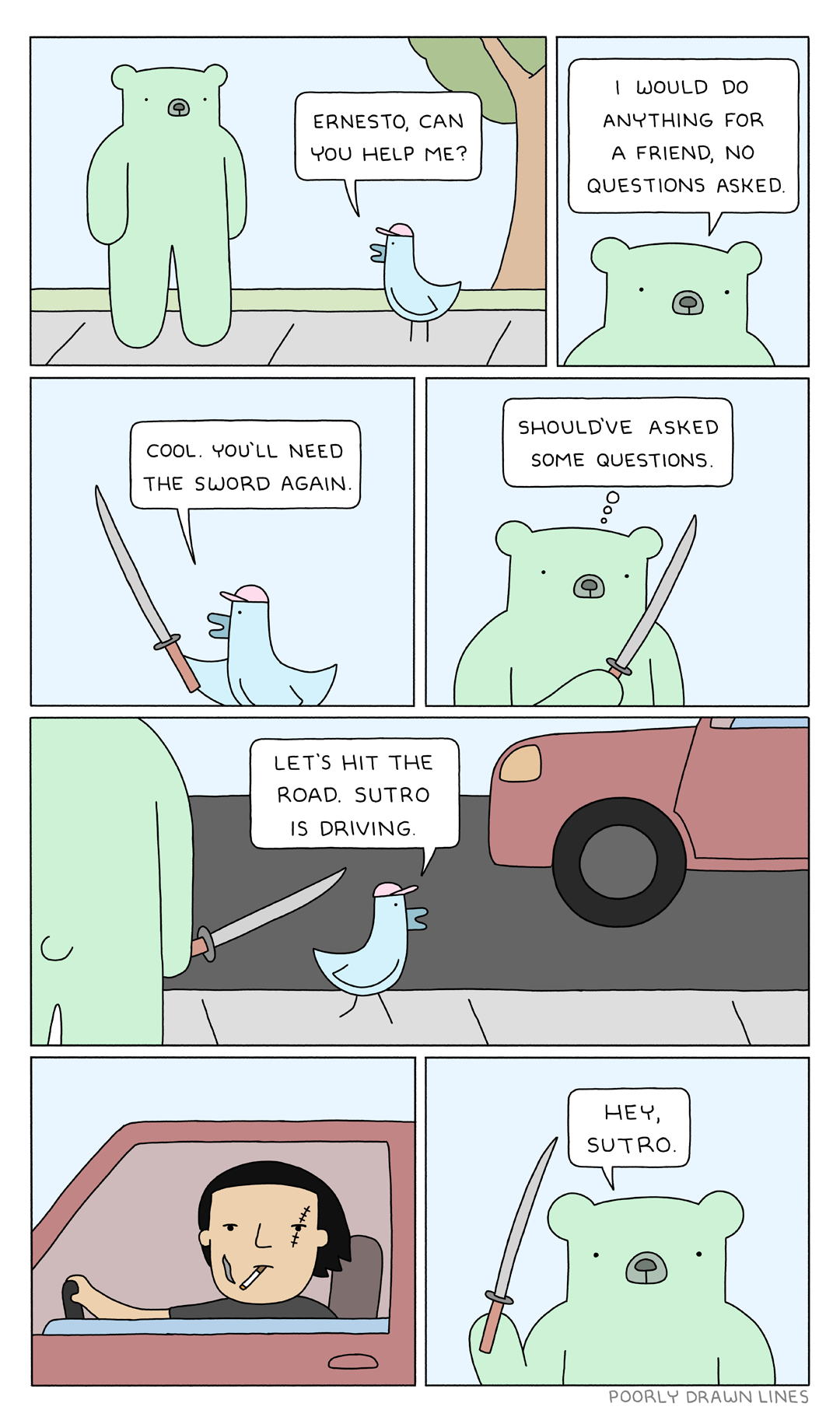
For a Friend

by Reza
27 Oct 13:39

US Copyright Office “frees the McFlurry,” allowing repair of ice cream machines

by Jon Brodkin

Consumer advocacy group Public Knowledge today hailed a decision by the US Copyright Office to "grant an exemption specifically allowing for repair of retail-level food preparation equipment—including soft serve ice cream machines similar to those available at McDonald's."

The group, which teamed with iFixit to request the exemption last year, said the government ruling will "free the McFlurry." Public Knowledge Senior Policy Counsel Meredith Rose called the decision a victory for "franchise owners, independent repair shops, and anyone who's had to bribe their kids with a chilly treat on lengthy road trips."

The change should "spark a flurry of third-party repair activity and enable businesses to better serve their customers," Rose said. "While we are disappointed that the Register recommended a narrower exemption than we had proposed, this does not soften our enthusiasm. We will continue to chip away at half-baked laws blocking the right to repair, sprinkling consumer victories as we go. Today's win may not be parfait, but it's still pretty sweet."

Read full article

Comments

25 Oct 16:53

Good Omens will wrap with a single 90-minute episode

by Jennifer Ouellette

The third and final season of Good Omens, Prime Video's fantasy series adapted from the classic 1990 novel by Neil Gaiman and Terry Pratchett, will not be a full season after all, Deadline Hollywood reports. In the wake of allegations of sexual assault against Gaiman this summer, the streaming platform has decided that rather than a full slate of episodes, the series finale will be a single 90-minute episode—the equivalent of a TV movie.

(Major spoilers for the S2 finale of Good Omens below.)

As reported previously, the series is based on the original 1990 novel by Gaiman and the late Pratchett. Good Omens is the story of an angel, Aziraphale (Michael Sheen), and a demon, Crowley (David Tennant), who gradually become friends over the millennia and team up to avert Armageddon. Gaiman's obvious deep-down, fierce love for this project—and the powerful chemistry between its stars—made the first season a sheer joy to watch. Apart from a few minor quibbles, it was pretty much everything book fans could have hoped for in a TV adaptation of Good Omens.

Read full article

Comments

25 Oct 12:01

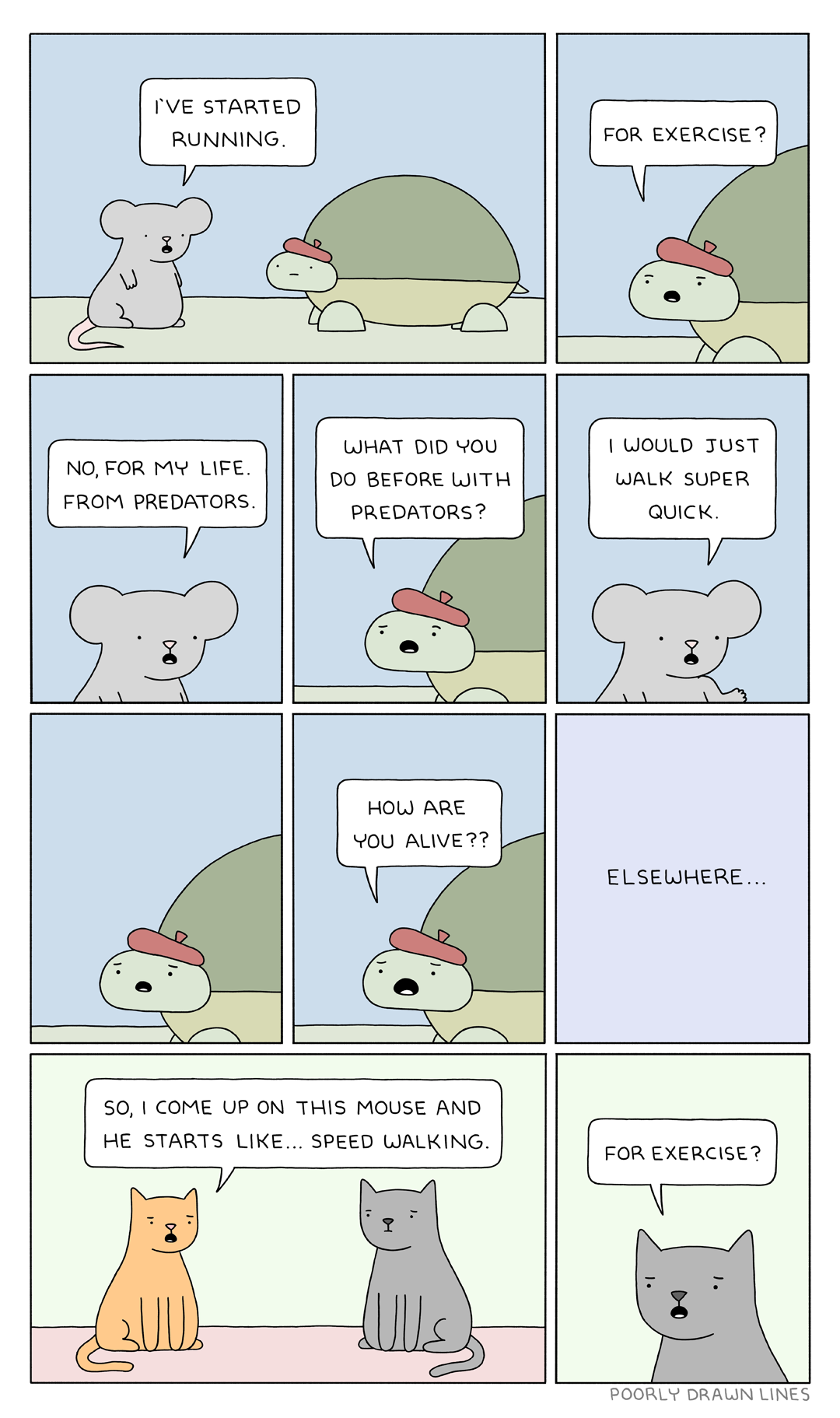
Started Running

by Reza
24 Oct 13:27

New York PD Is Training Officers That Someone Saying ‘I Can’t Breathe’ Is Just ‘Excited Delirium’

by Tim Cushing

Excited delirium just won’t go away. No medical association recognizes this condition as factually true. And no cop shop will ever move away from using it as a handy excuse for in-custody killings, at least not until forced to by state legislators.

Excited delirium actually pre-dates its current status as the go-to excuse for cops when they kill someone. Even then, it was questionable. But it really took off when Taser started supplying officers with tasers, which were immediately linked to several in-custody deaths, despite being advertised as a “less-than-lethal” force option. Taser’s lawyers (and supposed medical experts) offered testimony claiming people restrained or electrocuted to death were actually dying of a completely unrelated medical condition.

This was taken as gospel by cops who didn’t want to be held accountable for killing people — especially people who were suffering from mental health issues and, in most cases, were unarmed when multiple officers delivered electric shocks and/or piled on top of their prone bodies until they suffocated.

One of the most infamous murders committed by a cop — the murder of George Floyd by Minneapolis police officer Derek Chauvin — had its own “excited delirium” nexus. Officer Thomas Lane, who watched Chauvin kneel on Floyd’s neck for nine minutes, put on this performance for his body camera as he did nothing to prevent the killing he was witnessing:

I am worried about excited delirium or whatever.

“Or whatever.” And define “worry,” since it clearly didn’t mean offering any medical assistance whatsoever to the person this cop exoneratively declared might be suffering from a medical condition only cited by cops in the aftermath of an in-custody killing.

Four years ago, documents obtained by a public records requester showed the Charlotte-Mecklenburg PD was filling officers’ heads with disinformation — not only claiming “excited delirium” was a legitimate medical condition, but also that people who literally could not breathe due to officers’ restraint tactics were just informing officers of this so-called medical condition when they said they were having difficulty breathing. Listed among the “symptoms” of “excited delirium” were these:

Says “I can’t breathe”, “I’m dying”, “You’re killing me.”

Since then, some things have changed. Officer Chauvin murdered George Floyd and, in an unexpected development, was actually convicted of murder. In a few localities, officials have passed laws forbidding officers or coroners from citing excited delirium as the cause of death.

The last holdouts in the medical profession have finally agreed “excited delirium” is a BS diagnosis, primarily because the only people who ever make this medical conclusion wear badges and have recently killed people, almost all of them unarmed.

But the Rochester, New York Police Department still wants to treat excited delirium as a legitimate medical condition. Of course, that’s only because it gives officers an out when they’ve killed someone and definitely not because anyone on or off the force actually believes it’s anything more than a handy excuse for police brutality.

Training materials obtained by Jenny Wadhwa and uploaded to MuckRock contain the usual excited delirium bullshit, along with a PowerPoint slide [PDF] that says the same thing the Charlotte PD’s training materials say: people saying “I can’t breathe” are just in the (life-threatening) throes of an excited delirium episode:

Also fun to note is that the term “unlimited endurance” is declared a symptom when all it actually means is that the person being restrained managed to tire out some of the out-of-shape cops who responded to the scene. And I’m not just making generalizations about cops, donuts, and the fact that most of them spend most of their hours sitting in cars. It’s a fact: most cops can be worn down by anyone in semi-decent physical shape.

Although the physical requirements of police work suggest the importance of maintaining a healthy weight status, recent research suggests that 40.5% of American police officers are obese3),which is a prevalence rate above the national average of 35.5% for adult men and 35.8% for adult women4)

In this context, “superhuman strength” and “unlimited endurance” should probably just be read as “regular human strength” and “regular human endurance.”

In fact, the so-called “training” is best read as an exhortation to commit violence while providing officers with an exonerative cover story. The slides say it can be triggered by the use of either illegal or legal drugs.

Death usually follows a bizarre behavior episode and/ or use of illegal drugs or prescription medication

In practice, this means literally any chemical substance found in the body during a coroner’s examination can be used to buttress “excited delirium” claims.

It also claims there are four stages in the “excited delirium” progression, with the end result being apparently inevitable.

  1. Elevated body temperature
  2. Agitation
  3. Respiratory arrest
  4. Death

But that does nothing to explain why people only die of “excited delirium” after being tased/restrained/brutalized by cops. No one has ever reported someone just died of “excited delirium” without the application of force by police officers. So, even if we were so careless as to accept the theory of “excited delirium” as a legitimate medical condition, it would be even more careless to immediately discount this outside factor that is present in 100% of excited delirium deaths.

This isn’t training — at least not in the sense those of us in the private sector are used to. What’s being imparted here is a justification for excessive force deployment and a preconceived narrative for in-custody killings. We would be legitimately upset to discover companies are training employees how to dodge regulatory oversight and provide them with immediate plausible deniability for their actions. We should be way more upset that people paid with our tax dollars are literally encouraging police brutality by preemptively providing police officers with a pseudo-scientific explanation for the killings they may decide to commit.

23 Oct 15:11

“I am still alive”: Users say T-Mobile must pay for killing “lifetime” price lock

by Jon Brodkin

T-Mobile promised users who bought certain mobile plans that it would never raise their prices for as long as they lived—but then raised their prices this year. So it's no surprise that 2,000 T-Mobile customers complained to the government about a price hike on plans that were advertised as having a lifetime price lock.

"I am still alive and T-Mobile is increasing the price for service by $5 per line. How is this a lifetime price lock?" one customer in Connecticut asked the Federal Communications Commission in a complaint that we obtained through a public records request.

"I am not dead yet," a customer in New York wrote bluntly, saying they had bought a plan with a "guarantee for life."

Read full article

Comments

23 Oct 14:17

Giant catapult defies gravity by launching satellites into orbit without the need of rocket fuel…

18 Oct 15:27

US vaccinations fall again as more parents refuse lifesaving shots for kids

by Beth Mole

Measles, whooping cough, polio, tetanus—devastating and sometimes deadly diseases await comebacks in the US as more and more parents are declining routine childhood vaccines that have proved safe and effective.

The vaccination rates among kindergartners have fallen once again, dipping into the range of 92 percent in the 2023–2024 school year, down from about 93 percent the previous school year and 95 percent in 2019–2020. That's according to an analysis of the latest vaccination data published today by the Centers for Disease Control and Prevention.

The analysis also found that vaccination exemptions rose to an all-time high of 3.3 percent, up from 3 percent in the previous school year. The rise in exemptions is nearly entirely driven by non-medical exemptions—in other words, religious or philosophical exemptions. Only 0.2 percent of all vaccination exemptions are medically justified.

Read full article

Comments

18 Oct 15:26

Opponents of Missouri Abortion Rights Amendment Turn to Anti-Trans Messaging and Misinformation

by by Jeremy Kohler

by Jeremy Kohler

ProPublica is a nonprofit newsroom that investigates abuses of power. Sign up for Dispatches, a newsletter that spotlights wrongdoing around the country, to receive our stories in your inbox every week.

The billboards have popped up along both Interstates 55 and 170 around St. Louis. They’re along I-70 between Columbia and St. Charles, in central Missouri. And there’s one across from a shopping center in Cape Girardeau, along the Mississippi River in the state’s southeast corner.

In fact, as the Nov. 5 election approaches, motorists can see the billboards all over Missouri.

Each one spreads claims designed to undermine support for an abortion rights amendment that was placed on next month’s ballot through the state’s initiative petition process. Some billboards warn voters to “STOP Child Gender Surgery,” even though the amendment doesn’t mention gender-affirming care. Other billboards say it would permit abortions in the ninth month of pregnancy, though a state appeals court ruling in a case challenging the wording of the amendment’s summary on the ballot said that was not true.

Missouri’s abortion law, which bans nearly all abortions except in cases of medical emergencies, with no exceptions for rape or incest, was put into effect in June 2022 after the U.S. Supreme Court overturned Roe v. Wade. Amendment 3 would enshrine reproductive freedom in the state constitution, nullifying any law that restricts abortion before fetal viability, typically around the 24th week of pregnancy. The amendment would also safeguard other reproductive rights, such as access to in vitro fertilization and birth control. Polls show the measure is likely to pass — a recent survey showed 52% in favor and 34% opposed.

But abortion opponents, saddled with poll numbers that show their argument is losing even with the state’s largely conservative voters, are taking steps to undermine support for the amendment.

“Abortion rights are broadly popular all across the country, even in red states,” said Matthew Harris, an associate professor of political science at Park University, just outside Kansas City. “If you’re going to lose on the substance of that issue, you sort of have to try to make it about something else.”

The opponents have poured about $1 million into a late-hour misinformation campaign that has paid for radio ads and at least some of the billboards. The goal appears to be to sink the effort, or at least to try to redefine what it means to support it. Among the biggest contributors are John Sauer, the Missouri solicitor general from 2017 to 2023 who has served as a lawyer for former President Donald Trump.

Sauer, who has a long history of anti-abortion activism and represented Trump before the U.S. Supreme Court in his immunity case, has put $100,000 into a new political action committee — Vote “No” on 3 — that is funding many of the billboards, according to campaign finance reports. Sauer did not respond to voice and text messages to his cellphone. The PAC’s treasurer, Jim Cole, a longtime official with Missouri Right to Life, declined to comment.

Opponents are trying to capitalize on polls showing that Missourians oppose gender-affirming medical care for minors, which is already illegal for transgender children in the state, and allowing athletes to compete outside their birth gender. By combining the issues, political observers say, opponents are banking on confusing voters and building a broader base against the amendment.

The anti-transgender messaging in Missouri is part of a national trend, where Republicans are leveraging cultural issues like transgender rights to rally conservative voters in the 2024 campaigns.

Opponents are also strategizing about next steps if they lose at the ballot box. They are ready to shift their efforts to a more receptive audience: a state legislature dominated by deeply conservative politicians who have frequently acted against public opinion.

The Missouri General Assembly has a history of using “ballot candy,” where lawmakers add politically charged language they support to amendments to undo voter-approved measures that they don’t like. Some legislators have vowed to keep on fighting the abortion-rights amendment if it passes.

In 2018, for instance, voters overwhelmingly approved the Clean Missouri initiative, which aimed to reform some of the worst abuses of legislative redistricting. Two years later, Republican lawmakers introduced new ballot language that reframed the issue, focusing on minor ethics reforms while quietly seeking to reverse many of the changes in the Clean Missouri initiative. That repeal effort narrowly passed.

A similar tactic is evident in Missouri’s Amendment 7, which the legislature placed on this year’s ballot. While it is dressed up as a measure to ensure that only U.S. citizens can vote, something already required by law, its real impact would be to ban ranked-choice voting in the state, a move strongly supported by Republicans in the General Assembly.

Benjamin Singer, the former communications director for the Clean Missouri campaign, called the legislature’s action to undo Clean Missouri “brazen” and said the effort on Amendment 7 is part of a pattern. Singer, now chief executive officer of Show Me Integrity, a group focused on promoting democracy reforms in Missouri, said voters shouldn’t underestimate the lengths legislators will go to reverse popular measures.

“Think of the dirtiest trick in Missouri political history,” Singer said, “and plan for worse.”

State Rep. Brian Seitz, a Republican from Branson, said abortion-rights proponents were the ones playing tricks by trying to protect transgender men playing women’s sports and sex changes for minors. “What is Amendment 3 actually talking about? I say it’s a multisubject amendment that should not even be on the ballot. So might we look at those individual subjects? Of course, we will.”

Seitz said that if conservative lawmakers weren’t adequately representing the will of the people, “Why are we continuously elected?”

But while Missouri voters tend to elect conservative leaders into a legislative majority, many of the issues that resonate with voters tell a different story. Voters have rejected a law that would have allowed employees to opt out of paying union dues, legalized recreational marijuana and expanded Medicaid — policies at odds with the priorities those lawmakers have championed.

Those leaders this year tried to limit the ability of citizens to file amendments to directly change the constitution. Republicans wanted to include ballot candy in the measure that would have added unrelated issues about immigrants voting and foreign fundraising. But that measure went down to defeat after an all-night Democratic filibuster.

“Missouri voters don’t love the idea of government interference generally, but at the same time, they support conservative principles,” said Beth Vonnahme, associate dean in the School of Humanities and Social Sciences and professor at University of Missouri-Kansas City. “So when you have a candidate who’s advocating conservative principles, they win. But when you have amendments that are progressive but focus on government interference, they also tend to do pretty well.”

Before the abortion amendment made it on the ballot, it survived a number of legal challenges. In September, the Missouri Supreme Court ruled 4-3 to keep Amendment 3 on the ballot, rejecting claims that the initiative failed to list all laws it might affect.

Still, state Sen. Mary Elizabeth Coleman, a Republican from Jefferson County and an architect of the Missouri abortion ban — and one of the plaintiffs in the state Supreme Court case — said amendment proponents are lying “by saying it won’t do some things that it very obviously will do.” She said that if Amendment 3 passes, the only way for lawmakers to undo the damage would be to put a new amendment on the ballot to overturn it.

Marcia McCormick, a Saint Louis University law professor who specializes in sexuality and the law, called the billboard claims highly misleading “straw man” arguments. She emphasized that while Amendment 3 ensures reproductive freedom, it is narrowly focused on fertility and childbirth.

Michael Wolff, a retired chief justice of the Missouri Supreme Court, said he was confident anti-abortion lobbyists are already working with legislators on a new amendment. Wolff, who helped advise the Amendment 3 proponents on ballot language, said he anticipated that the effort would lead with the transgender medical care issue, as the billboards have done.

He said lawmakers might lead a new amendment “the same way they started out with Clean Missouri — they started out with something that people would agree with,” adding, “Everybody with any resources that puts together ballot propositions is going to poll on what the voters will find attractive.”

17 Oct 15:21

Meta fires staffers for using $25 meal credits on household goods

by Hannah Murphy and Stephen Morris, Financial Times

Meta has fired about two dozen staff in Los Angeles for using their $25 meal credits to buy household items including acne pads, wine glasses, and laundry detergent.

The terminations took place last week, just days before the $1.5 trillion social media company separately began restructuring certain teams across WhatsApp, Instagram, and Reality Labs, its augmented and virtual reality arm, on Tuesday.

The revamp has included cutting some staff and relocating others, several people familiar with the decisions said, in a sign that chief executive Mark Zuckerberg’s recent efficiency drive is still under way.

Read full article

Comments

17 Oct 14:19

Sustainable building effort reaches new heights with wooden skyscrapers

by Kurt Kleiner, Knowable Magazine

At the University of Toronto, just across the street from the football stadium, workers are putting up a 14-story building with space for classrooms and faculty offices. What’s unusual is how they’re building it — by bolting together giant beams, columns, and panels made of manufactured slabs of wood.

As each wood element is delivered by flatbed, a tall crane lifts it into place and holds it in position while workers attach it with metal connectors. In its half-finished state, the building resembles flat-pack furniture in the process of being assembled.

The tower uses a new technology called mass timber. In this kind of construction, massive, manufactured wood elements that can extend more than half the length of a football field replace steel beams and concrete. Though still relatively uncommon, it is growing in popularity and beginning to pop up in skylines around the world.

Read full article

Comments

17 Oct 13:31

FTC “click to cancel” rule seeks to end free trial traps, sneaky auto-enrollments

by Ashley Belanger

It will soon be easy to "click to cancel" subscriptions after the US Federal Trade Commission (FTC) adopted a final rule on Wednesday that makes it challenging for businesses to opt out of easy cancellation methods.

“Too often, businesses make people jump through endless hoops just to cancel a subscription,” FTC chair Lina Khan said in a press release. “The FTC’s rule will end these tricks and traps, saving Americans time and money. Nobody should be stuck paying for a service they no longer want.”

The heart of the new rule requires businesses to provide simple ways to cancel subscriptions. Under the rule, any subscription that can be signed up for online must be able to be canceled online. And cancellation paths for in-person sign-ups must be just as easy, offered either by phone or online.

Read full article

Comments

15 Oct 19:15

Pandas Bao Li and Qing Bao Will Meet the Public on January 24

by Andrew Beaujon

The National Zoo’s new pandas, Bao Li and Qing Bao, arrived in the DC area Tuesday. The zoo closed Tuesday to accommodate its new residents, the Washington Post reports.

The pandas will quarantine for 30 days, the zoo says in a press release. Then, they’ll have a few months to adapt to their new home: The David M. Rubenstein Family Giant Panda Habitat, Bird House and Asia Trail will be closed until January 24, 2025, when the pandas are scheduled to make their public debut. The zoo’s Giant Panda Cam will return at that time as well.

The post Pandas Bao Li and Qing Bao Will Meet the Public on January 24 first appeared on Washingtonian.

15 Oct 13:57

It’s Happening: Pandas Are on Their Way to the National Zoo

by Kate Corliss

This is not a drill: Two giant pandas are on their way to the National Zoo, CNN reports. Bao Li and Qing Bao are set to board the Panda Express within the next few hours, flying from China to their new home in DC. The three-year-old bears departed a research base in Dujiangyan on Monday night. 

It’s been nearly five months since the Zoo announced the return of giant pandas. Despite the “Pandas Are Coming” merch, there was still a question of when exactly that would be. The new bears will arrive almost a year after Mei Xiang, Tian Tian, and Xiao Qi Ji departed for China. Their exit marked the end of “panda diplomacy” in Washington and left three bear-shaped holes in our hearts.

Bao Li and Qing Bao are flying in style on a FedEx Boeing 777, the same type of roomy freighter plane that shuttled their predecessors last year. The plane is stocked with “corn buns, bamboo shoots, carrots, water, and medicine,” according to a statement from the China Wildlife Conservation Association. 

One of our newest residents already has ties to the city. Bao Li’s mother Bao Bao was born at the National Zoo in 2013, and his grandparents are Mei Xiang and Tian Tian. One could say Bao Li is a panda nepo baby of sorts. His female counterpart Quing Bao has no known connections to Washington.

It might be a moment before you get to greet DC’s newest VIPs (that’s Very Important Pandas). In May, the Zoo told the Washington Post that the incoming pandas will be quarantined in their habitat for at least 30 days to mitigate the chances of introducing diseases or parasites to other animals. The bears also won’t make their public debut until zookeepers feel they’ve fully adjusted to their new living quarters and are ready to welcome what will surely be a crush of visitors.


The post It’s Happening: Pandas Are on Their Way to the National Zoo first appeared on Washingtonian.

12 Oct 19:42

Over 86% of surveyed health care providers are short on IV fluids

by Beth Mole

More than 86 percent of healthcare providers surveyed across the US are experiencing shortages of intravenous fluids after Hurricane Helene's rampage took out a manufacturing plant in western North Carolina that makes 60 percent of the country's supply.

IV fluids are used for everything from intravenous rehydration to drug delivery. The plant also made peritoneal dialysis fluids used to treat kidney failure.

Premier, a group purchasing organization for medical supplies that counts thousands of hospitals and health systems among its members, surveyed 257 such providers earlier this week. The poll makes clear that supplies are unsurprisingly imperiled.

Read full article

Comments

11 Oct 11:31

The FBI Has Apparently Spent A Year Trying To Crack NYC Mayor Eric Adams’ Personal Phone

by Tim Cushing

The spectacular collapse of the Mayor Adams’ administration is still in progress. Pretty much everyone with ties to the ex-cop, current mayor has either been informed of an ongoing investigation or managed to infer that following multiple raids by the FBI.

The mayor’s handpicked police commissioner, Edward Caban, resigned shortly after these raids occurred, most likely because he was on the receiving end of one of these raids. So were First Deputy Mayor Sheena Wright, Deputy Mayor for Public Safety Phil Banks, Phil Banks’ brother, David Banks, who is the schools chancellor, and Timothy Pearson, the mayor’s adviser.

Edward Caban issued a “get out of accountability free” missive to the NYPD as he left the building. He was replaced by former FBI Special Agent Michael Donlon… whose own house was also raided by the FBI.

In the middle of all this raiding and resigning, the Mayor’s PR people came forward to say the mayor was shocked, shocked! to discover there might be some sort of corruption-laden city government with himself at the center of all of it. The issued statement wasn’t quite the exoneration it was meant to be:

“As a former member of law enforcement, the mayor has repeatedly made clear that all members of the team need to follow the law.”

You know who doesn’t have to say that kind of thing repeatedly? Someone who oversees a bunch of people who have expressed no interest nor engaged in acts that might potentially violate the law. No honest politician/advisor/political appointee/police chief needs to be “repeatedly” reminded to “follow the law.” It just comes naturally to most people.

But Mayor Adams’ people are not most people. A lot of them are also former cops. Perhaps that explains all the corruption.

Mayor Adams himself isn’t immune to this ongoing investigation. In fact, he experienced his own personal raid a year before the onslaught of recent raids that have made headlines around the nation. Now that the mayor is under indictment, court filings are starting to expose a lot of details that were deliberately kept out of public view as the FBI engaged in its investigation.

One of those details is the fact that the FBI executed a search warrant targeting multiple phones used by Mayor Adams. However, his personal phone was not among those seized. A subpoena was issued ordering the mayor to turn over his personal phone (which is alleged to be the device the mayor used to “communicate about the conduct described in this indictment”). Mayor Adams complied. Sort of. He gave the FBI his phone. What he didn’t give the FBI was a way to see the phone’s contents, according to this report by Gaby Del Valle for The Verge.

When Adams turned in his personal cellphone the following day, charging documents say, he said he had changed the password a day prior — after learning about the investigation — and couldn’t remember it.

Sure looks like an attempt to withhold and/or destroy evidence. The fact that this happened the day after the FBI seized the mayor’s other phones isn’t going to work out well for him in court. His excuse — that he couldn’t remember it — is no more believable than his office’s assertion that everyone engaged in legal behavior because they were repeatedly told not to violate the law.

But both of those statements are far more believable than the mayor’s explanation of the post-FBI visit password changing:

Adams told investigators he changed the password “to prevent members of his staff from inadvertently or intentionally deleting the contents of his phone,” the indictment alleges.

LOL

Keep in mind, this was the mayor’s personal phone. Pretending staffers had routine and easy access to it or its contents beggars belief. And the simplest way to prevent staffers from “accidentally” deleting evidence of alleged criminal actions would be to maintain possession of the phone on your person or throw it in a safe or lock it in a desk drawer or do literally anything other than change a password and immediately “forget” what it was.

Again, none of this is going to reflect well on the mayor as he faces these charges in court. Any judge will see it the way the rest of us see it: a deliberate attempt to thwart a federal investigation.

Even so, let’s hope this doesn’t result in any stupid precedent motivated by the mayor’s apparently willful attempt to obstruct this investigation. There’s some potential here for rulings that might negatively affect Fifth Amendment rights and/or give the feds leverage to agitate for compelled assistance from phone manufacturers.

Because there’s a chance it might do any of these things. The FBI has had the phone for a long time. And it still hasn’t managed to access its contents. The FBI insists (without supporting evidence, obviously) that this is a BIG DEAL that might BREAK THE CASE.

During a federal court hearing, prosecutor Hagan Scotten said the FBI’s inability to get into Adams’ phone is a “significant wild card,” according to a report from the New York Post.

I want to believe that might be true. But only because I want the feds to deliver a ton of incriminating evidence that takes down Mayor Adams and anyone else in his administration who engaged in corruption. On the other hand, the FBI always claims any phone it can’t get into must be loaded with incriminating evidence capable of producing slam-dunk prosecutions. The FBI’s anti-encryption agitation relies on its fervent belief that the best and most incriminating evidence is always found on encrypted devices, therefore courts should force companies (or accused persons) to decrypt the contents so special agents can open and close investigations without ever leaving their desks.

I’m definitely here for the fallout. I’m guessing these raids will lead to a string of resignations, a cooperating witness or two, and a few wrist slaps for ex-law enforcement officials. But if someone’s going to burn for this, it should be the person at the top of the city food chain. And as much as I’d like to see that happen, I’d much rather it was accomplished without collateral damage to Ccnstitutional rights or the security and privacy provided by strong encryption.

11 Oct 11:28

Is Trader Joe’s heading to the Square?

by Store Reporter

There’s still no official word about who’s replacing Dawson’s Market at Rockville Town Square, but we’re ready to place our bet on Trader Joe’s. The specialty grocer has been mentioned as a possible successor since Dawson’s closed last summer, with Aldi being the other leading contender. But the more time passes, the more we’re hearing that it’s going to be Trader Joe’s. As far as we know, this new location would be in addition to the one on Rockville Pike — not a replacement. Trader Joe’s would be a huge “get” for Rockville Town Square, where the food scene has been steadily improving with the recent additions of Little Miner Taco, Kusshi Sushi, Kung Fu Kitchen (formerly Peter Chang) and the upcoming Dirty Dough cookie shop. Look for an announcement about Trader Joe’s very soon, with a possible opening in early 2025.

The post Is Trader Joe’s heading to the Square? appeared first on Store Reporter.

10 Oct 16:49

Cloudflare Destroys Another Patent Troll, Gets Its Patents Released To The Public

by Mike Masnick

Three years ago, we updated Vizzini’s list of “classic blunders” from The Princess Bride to include “never try to patent troll Cloudflare.” That was when the company announced that patent troll Sable Networks had made that mistake and now needed to be taught a lesson. That lesson is now complete, and Cloudflare has successfully destroyed a patent troll (and embarrassed it along the way) so much that the troll has agreed to declare its entire patent portfolio open and free for the public to use.

First, some history: over a decade ago, the e-commerce site Newegg was getting sick of patent trolls and decided that it needed to take a “never settle” approach to fighting them. The thing with patent trolling is that it’s asymmetric warfare. Trolls get low quality patents and then shake down companies, knowing that it’s cheaper to just pay some smaller amount to settle than to take the matter to court and win. But, as Newegg’s leadership surmised at the time, settling only leads to more patent trolls and more shake down payments. Making it clear you’ll never ever settle (and being very public about that) should eventually lead patent trolls to look elsewhere.

Image

Since then, a few other companies have embraced this strategy, but none has done so with quite the same gusto, zeal, and commitment to absolutely crushing the souls of patent trolls as Cloudflare.

In 2017, Cloudflare announced its plan to completely destroy a patent trolling firm, Blackbird. It launched something it called Project Jengo, which offered up rewards to anyone helping them to completely obliterate Blackbird’s patents. The campaign was a huge success. Cloudflare won in court (and on appeal) and it appeared it greatly limited Blackbird’s ability to keep trolling.

Sable Networks didn’t bother to educate itself on this before trying its trolling efforts on Cloudflare. Cloudflare opened up the same playbook on Sable (owners of a bunch of old terrible Caspian Networks patents that it bought for a song). Cloudflare fought back and won in court earlier this year.

And it wasn’t just a “you didn’t infringe” kind of win. They actually got a jury to invalidate the patent at issue (the lawsuit had started with many claims over multiple patents, but by the time it went to trial, it had been narrowed down to one claim on one patent, and Sable couldn’t even make that one stick).

Juries very rarely invalidate patents. They are much, much, much more primed to believe that any patent is legit and not realize how many junk patents there are. They also are generally unaware of patent trolling and abusive behaviors by patent trolls that amount to little more than extortion. But here, the jury was convinced that the patent was bogus:

Image

Perhaps it was because Cloudflare dug in during the trial and made Sable look like the extortionate troll it is. From the transcript, you see that Cloudflare’s lawyers got Sable to admit that its only actual business was suing people:

Q. I mean, that’s your business. Let’s don’t beat around the bush. You’re in the business of filing lawsuits, true?

A. Yes.

Q. And you would agree with me that you’ve been in that business for a while, right?

A. Yes.

Also, Cloudflare got Sable to admit that it does little to no research before filing its lawsuits.

Q. You believe it would be responsible, reasonable business practice to sit down and talk to folks before you sue them, right?

A. Yes.

Q. You didn’t do that here, did you, sir?

A. No.

Q. And you don’t do that as your practice, right?

A. That’s correct.

Q. You told this jury not 20 minutes ago that you sue every time. You don’t talk to anybody. That’s what you told them, fair?

A. Fair.

Q. And what you stood up here and told this jury is everybody in this industry, including me, sues first and talks later, correct?

A. Correct.

Q. But that’s just not true, is it, sir? The responsible business people in this business actually sit down and talk to folks before they sue them, fair?

A. Fair.

Q. And you don’t do that, do you, sir?

A. No.

I mean, that’s a thing of beauty.

Anyway, beyond just winning the case, Cloudflare has gotten Sable to (1) pay Cloudflare $225k for having to defend this nonsense lawsuit and (2) much more importantly, agree to release its entire patent portfolio to the public for anyone to use so that Sable can never sue over them again:

Image

If you can’t see that screenshot from the agreement, it says:

DEDICATION TO THE PUBLIC OF THE SABLE PATENTS; ROYALTY FREE LICENSE AND RELEASE; PAYMENT BY SABLE TO CLOUDFLARE

2.1 Dedication To The Public Of The Sable Patents. Within twenty-one days of the Effective Date, the Sable Parties shall dedicate the Sable Patents to the public, including by filing and recording the appropriate document(s) and paying any applicable fee(s) with the United States Patent and Trademark Office pursuant to 35 U.S.C. § 253. For the avoidance of doubt, this Section 2.1 requires the Sable Parties to disclaim and dedicate to the public the entire term, or any terminal part of the term, of the Sable Patents granted or to be granted.

Now, I believe many of Sable’s patents are close to running out anyway. But still, what a huge victory, and one that should be celebrated. Cloudflare has truly gone past NewEgg’s “don’t settle” standard, to this impressive “don’t settle, and we will make you regret patent trolling, and do everything possible to stop you from ever patent trolling ever again, and we’ll make you feel bad too, because you deserve it.”

07 Oct 14:13

Helene ravaged the NC plant that makes 60% of the country’s IV fluid supply

by Beth Mole

Hurricane Helene's catastrophic damage and flooding to the Southeastern states may affect the country's medical supply chain.

Hospitals nationwide are bracing for a possible shortage of essential intravenous fluids after the cataclysmic storm inundated a vital manufacturing plant in North Carolina.

The plant is Baxter International's North Cove manufacturing facility in Marion, which is about 35 miles northeast of Asheville. Helene unleashed unprecedented amounts of rain throughout the western part of the state, killing dozens and ravaging numerous communities, homes, and other structures, including the plant.

Read full article

Comments

04 Oct 11:00

Kura Revolving Sushi makes the rounds

by Store Reporter

Kura Revolving Sushi Bar opens its doors this Saturday (Oct. 5th) on Rockville Pike, taking over half of the former Chuy’s space at Federal Plaza. The dining experience here is both automated and interactive: The dishes spin around on conveyer belts, the drinks are delivered by roving robots, and kitschy prizes are dispensed each time your party consumes 15 plates of sushi. This is the first Maryland location for Kura, opening just a week after the debut of next-door neighbor Torchy’s Tacos.

The post Kura Revolving Sushi makes the rounds appeared first on Store Reporter.

03 Oct 18:03

EVgo gets $1.05B loan to build 7,500 DC fast chargers

by Jonathan M. Gitlin

The electric vehicle charging company EVgo has secured conditional approval for a $1.05 billion loan from the US Department of Energy, the company revealed this morning. EVgo has applied to DOE's Title 17 program, which exists to provide US Treasury-backed loans or loan guarantees for clean energy projects. If the deal is finalized, the money will be used to build around 7,500 DC fast chargers, with powerful 350 kW chargers its priority, EVgo said.

EVgo said the charger build-out will be concentrated in Arizona, California, Florida, Georgia, Illinois, New York, New Jersey, Michigan, Pennsylvania, and Texas and should be completed by 2030.

Since the federal government is already spending billions on a network of DC fast chargers along highway corridors, EVgo is instead focusing on creating community charging stations, particularly in areas with a high density of multifamily developments and other communities where EV drivers have to rely on public chargers.

Read full article

Comments

03 Oct 14:41

NASA is working on a plan to replace its space station, but time is running out

by Eric Berger

The next year is crucial for the future of NASA and its plans to extend human activity in low-Earth orbit. For the first time in decades, the US space agency faces the not-too-distant prospect of failing to have at least one crew member spinning around the planet.

Over the next several months, NASA will finalize a strategy for its operations in low-Earth orbit after 2030. Then, toward the end of next year, the space agency will award contracts to one or more private companies to develop small space stations for which NASA and other space agencies will become customers rather than operators.

But none of this is certain, and as NASA faces a transition from its long-established operations on the International Space Station to something new, there are many questions. Foremost among these is whether NASA really needs to continue having a presence on low-Earth orbit at all, especially as the space agency's focus turns toward the Moon with its Artemis Program.

Read full article

Comments

03 Oct 14:38

New Map Shows Community Broadband Networks Are Exploding In U.S.

by Karl Bode

The Institute For Local Self Reliance (disclosure: I have done writing and research for them) has released an updated interactive map of every community-owned and operated broadband network in the U.S.

All told, there’s now 400 community-owned broadband networks serving more than 700 U.S. towns and cities nationwide, and the pace of growth shows no sign of slowing down.

Some of these networks are directly owned by a municipality. Some are freshly-built cooperatives. Some are extensions of the existing city-owned electrical utility. All of them are an organic, popular, grass-roots community-driven reaction to telecom market failure and expensive, patchy access.

A breakdown of the new mapping data from the folks at ILSR notes that the number of community broadband networks has been increasing at about a rate of fifteen per year, up from the 8 per year cadence the organization saw between 2001 and 2008. The number of communities served by larger, popular community networks (like Chattanooga’s EPB and Utah’s UTOPIA) continue to grow.

Data routinely notes that community-owned broadband networks provide faster, cheaper, better service than their larger private-sector counterparts. Staffed by locals, they’re also more directly accountable and responsive to the needs of locals. They’re also just hugely popular across the partisan spectrum; routinely winning awards for service.

Many such deployments (like UTOPIA) involve building open access fiber infrastructure that numerous competitors (private, public, or otherwise) come in and compete over. In many of these areas, locals have the option of more than a dozen different ISPs to choose from, all providing broadband at a lower rate than what you’re used to from Comcast, AT&T, Verizon, or Charter.

That’s not to suggest community-owned broadband networks are some mystical panacea; they require smart leadership, strategic planning, and intelligent financing. But if done well, they not only drive significant fiber improvements directly to local markets, they incentivize lumbering regional private sector monopolies — long pampered by federal government corruption and muted competition — to actually try.

Widespread frustration with substandard U.S. broadband drove a big boost in such networks during COVID lockdowns. Since January 1, 2021, more than 47 new networks have come online, with dozens in the planning or pre-construction phases. Many are seeing a big financial boost thanks to 2021 COVID relief (ARPA) and infrastructure bill (IIJA) legislation funding (the latter of which hasn’t even arrived yet).

In response to this popular grass roots movement, giant ISPs have worked tirelessly to outlaw such efforts, regardless of voter intent. 16 states still have protectionist state laws, usually ghost written by giant telecom monopolies, prohibiting the construction or expansion of community broadband. House Republicans went so far as to try and ban all community broadband during a pandemic.

Lumbering regional monopolies like Comcast, AT&T, and Charter could have responded to this movement by lowering prices and improving service. Instead in many cases they found it cheaper to lobby politicians, sue fledgling networks, or create fake “consumer groups” tasked with spreading lies about the perils of community-owned broadband networks among local communities.

But based on the growth rate of such networks, these efforts have backfired, and locally-owned and operated broadband networks appear to be more popular than ever.

02 Oct 19:30

Popular Juicebox EV home chargers to lose connectivity as owner quits US

by Jonathan M. Gitlin

Owners of the popular home EV chargers made by Juicebox are about to lose a whole lot of features. Its owner, the energy company Enel X, has just announced that it is leaving the North American market entirely as of October 11.

Enel X says its strategy will be to pursue "further growth by providing bundled offers, including private charging solutions, to its electricity customers as well as by developing public charging infrastructure in countries where it has an electricity retail business." And since it does not have an electricity business in the US, merely a charging hardware and software one, it makes little sense to remain active here.

The company also blames high interest rates and a cooling EV market as reasons for its exit.

Read full article

Comments

02 Oct 15:02

Taylor Swift: Singer, Songwriter, Copyright Innovator

by Mike Masnick

Taylor Swift is in the news, and not just because she has become the most decorated solo artist of all time. The fact that Taylor Swift has already been mentioned multiple times on Walled Culture underlines that she is also an important – if surprising – figure in the world of copyright. That’s because Swift has been re-recording her albums in order to gain full control over them. She lost control because of the way that copyright works in the music industry, where it is split between the written song and its performance (the “master recording”). Record label contracts typically contain a clause in which the artist grants the label an exclusive and total license to the master. By re-recording her albums, Swift can add control of the master to her control of the written songs.

Swift’s long battle is well-known in the industry. But an article on the Harvard Law Today site from a few months back adds an important detail to this story that I have not seen reported anywhere else. It draws on comments made by Gary R. Greenstein, a “technology transactions partner” at Wilson Sonsini, one of the top US law firms. It concerns a common legal requirement in contracts to wait a certain number of years before artists are allowed to re-record an album:

It’s significant, Greenstein said, that the first Taylor’s Version wasn’t released until she’d been off [record label] Big Machine for three years. Until then, she was legally bound not to re-record any of the material, and this time frame was typical of record deals in the past. But this is the part of the equation that Swift likely changed for good.

According to Greenstein, the major record labels used to be fairly reasonable in terms of the length of the prohibition they imposed on on re-recording. But he says that’s no longer the case as a result of Swift’s successful project to regain full control of her own works:

record companies are now trying to prohibit re-recordings for 20 or 30 years, not just two or three. And this has become a key part of contract negotiations. “Will they get 30 years? Probably not, if the lawyer is competent. But they want to make sure that the artist’s vocal cords are not in good shape by the time they get around to re-recording.”

In other words, as soon as a creator finds a way to take back control from intermediaries that have routinely derived excessive profits from the labor of others, the copyright world fights back with new legal straitjackets to stop other artists daring to do the same. That’s yet another reason for creators to retain full control of their works, and to shun traditional intermediaries that try to impose one-sided and unfair contracts.

Follow me @glynmoody on Mastodon and on Bluesky. Originally published to Walled Culture.