Lindsey
Shared posts
The New York City Subway Is Using Google Pixels to Listen for Track Defects
Musk’s USAID Cuts May Hand China The AI Race
How do you win the global AI race? If you asked Elon Musk or his supporters in the Trump administration, they’d probably talk about deregulation, or getting government out of the way, or maybe something about GPU clusters and massive power consumption. What they probably wouldn’t mention is USAID, the US government’s primary foreign aid agency. And yet, it turns out that killing USAID might be one of the most effective ways to lose the AI race to China.
Many people in the AI world believed that having Donald Trump in the White House, along with Elon Musk (who owns an AI company) and surrounded by other supporters who are big on AI, like Marc Andreessen and David Sacks (who has been appointed AI czar, despite having little experience with AI), would mean a huge boost for US AI.
The irony here is rich: while Musk’s xAI and other American AI companies are desperately seeking new markets and training data, his crusade against USAID is systematically dismantling one of America’s most powerful tools for securing both. As Kat Duffy explains in a compelling Foreign Policy essay, killing USAID may have just kneecapped America’s AI ambitions. The connection? USAID has been America’s secret weapon in opening up and maintaining crucial global markets:
The United States’ untapped superpower in the AI race is not the so-called innovation economy, or an unregulated market. Those have been leveraged. Rather, it is the sheer scale of the U.S. government’s global presence, and how that could be used to turbocharge America’s global leadership in the AI race.
Moreover, the ability to build markets—not just individual AI models—will determine which nation’s technology dominates globally. Supporting the early and successful deployment of basic, useful AI systems across global markets will be key to protecting market entry opportunities for American AI technologies for decades to come.
The United States’ sturdy global presence provides a ready-made distribution network for AI innovation and adoption, particularly in critical sectors such as global health, food security, and climate resilience—areas where AI can drive immediate and transformative change.
This isn’t just about general market access — it’s specifically critical for AI development:
Broad reach also ensures that the United States’ scale is being used to benefit broader U.S. private sector interests. AI incumbents and Big Tech can hire local offices, lawyers, and lobbyists to support their expansion into new markets (and the new sources of data they offer for model training). Key benefits of the U.S. government’s scale accrue to “Little Tech.” The country’s start-ups and innovators are better equipped to balance the scales when taxpayer investments do the heavy lifting of building awareness of U.S. business, developing trust with local governments, and supporting broad private-public partnerships that facilitate rapid scaling.
While U.S. foreign assistance was not designed to support the expansion of these emerging technologies, it will be far faster to optimize for such expansion over this existing infrastructure. Financing structures, legal registrations, banking agreements, compliance protocols, training programs, public-private partnerships, growth strategies, and expert staff: These mechanics are core to foreign assistance implementation, and they could be adapted with relative speed to support AI deployment across markets. Notably, 11 of the United States’ top 15 export markets have been the recipients of U.S. foreign assistance funding to support their development.
While Musk is busy dismantling USAID in the name of efficiency, China is eagerly moving to fill the void. And not because they’re feeling particularly charitable. No, they’ve figured out something that seems to have escaped Musk’s first-principles thinking: development aid is actually a pretty clever way to build a global tech advantage.
Chinese President Xi Jinping understands that assignment. For more than a decade, the Chinese government has demonstrated how deeply it appreciates the competitive advantage that global presence confers in the digital age. Between 2013 and 2022, China invested $679 billion in infrastructure projects through its Belt and Road Initiative across nearly 150 countries. These investments have not only bolstered China’s global influence but also created dependencies with long-term strategic implications.
In particular, China’s Digital Silk Road initiative has invested billions in 5G, fiber-optic cables, and data centers across Africa, Latin America, and Southeast Asia. Those investments, notably, have also created unsustainable debt in many recipient nations, giving China greater influence over local decisions.
As a result, many governments around the world are less than eager to lean on Chinese development support. But in a vacuum of U.S. offerings—and with limited domestic capacity to grow absent foreign support—they may see no alternative.
The supreme irony here is that Musk — who has admitted to getting things wrong while continuing to spread completely false claims about USAID — is actively undermining his own AI company’s future market opportunities. It’s a masterclass in the dangers of oversimplified thinking masquerading as strategic vision.
You see this pattern a lot with the Musk and DOGE crew. They love talking about “first principles thinking,” which sounds very sophisticated and scientific. But here’s the thing about first principles: they’re only useful if you actually understand the system you’re analyzing. What we’re getting instead is what you might call “first impressions thinking” — taking whatever pops into your head after scrolling ExTwitter for five minutes and declaring it a fundamental truth of the universe. What we’re seeing is the dangerous oversimplification of intricate global relationships, amplified by an echo chamber of ExTwitter 4chan-brained yes-men who mistake contrarianism for insight.
Here’s the thing about winning technology races: Sometimes the winning strategy isn’t actually about the technology at all. China seems to understand this. They’re out there building relationships, creating dependencies, establishing presence — all the boring infrastructural stuff that doesn’t get you viral tweets or machine learning breakthroughs, but can get you actual market access and, eventually, dominance.
Meanwhile, Musk and his allies are playing a different game entirely. They’ve convinced themselves that government programs like USAID are just inefficient bureaucracy getting in the way of American innovation. It’s a view that plays well on ExTwitter, where everything can be reduced to a spicy meme about government waste and crying woke libs. But in the real world — you know, the one where actual AI companies need access to actual markets and actual data — it turns out that having a global network of diplomatic and economic relationships is kind of important.
The dumbest part is that this isn’t even a particularly complicated insight. It’s the sort of thing you might figure out by, say, looking at how America became a technology superpower in the first place. But that would require actually studying history instead of just retweeting ChudLord69. And it would require admitting that sometimes government programs actually serve a purpose beyond providing material for outrage posts.
So here we are, watching in real time as America’s AI ambitions get kneecapped by the very people claiming to champion them. It’s like a masterclass in unintended consequences, except the students are too busy tweeting “government bad” memes to notice they’re failing the course.
The tragedy isn’t just that we’re probably going to lose this particular race. It’s that by the time Musk and his allies figure out what went wrong, they’ll have already dismantled the very infrastructure they needed to win it. But hey, at least they’ll have their memes and tweets.
Elon Musk’s Takeover Is Being Aided by a Trumpworld Power Couple
COVID shots protect kids from long COVID—and don’t cause sudden death
COVID-19 vaccines cut the risk of long COVID by between 57–73 percent in kids and teens, according to a study published today in JAMA Network Open. And there's more good news: A second study published today in the journal offered more data that the now-annual shots are not linked to sudden cardiac arrest or sudden cardiac death in young athletes—a claim that gained traction on social media and among anti-vaccine groups during the acute phase of the pandemic.
Together, the studies bolster current recommendations that children and teens should stay up to date on their COVID-19 vaccines, which are estimated to have prevented more than 3 million deaths and more than 18 million hospitalizations in the first two years of their use. So far, the recommendations for kids have largely gone unheeded; only 14 percent of children ages 5 to 17 are up to date on their 2024–2025 COVID shot. Surveys suggest that parents largely think the vaccines are unnecessary, given that most children only have mild COVID infections.
Still, not all infections are mild, and even mild cases can lead to long COVID, according to the authors of the first study. An estimated 1 percent to 3 percent of children infected with SARS-CoV-2 will develop long COVID, defined as having symptoms that continue or develop four or more weeks after the initial phase of infection. With tens of millions of kids getting infected with the pandemic virus, a large number of them are at risk of developing the condition.

Brewing tea removes lead from water
That comforting hot cup of tea—or refreshing glass of iced tea on a hot summer day—could help reduce the amount of toxic metals in drinking water, according to a new paper published in the journal ACS Food & Science Technology.
“We’re not suggesting that everyone starts using tea leaves as a water filter,” said co-author Vinayak Dravid, who studies sorbent materials at Northwestern University. “Our goal was to measure tea’s ability to adsorb heavy metals. By quantifying this effect, our work highlights the unrecognized potential for tea consumption to passively contribute to reduced heavy metal exposure in populations worldwide.”
Some 2 billion people drink tea on a daily basis worldwide, and numerous studies have suggested various health benefits from regular tea consumption. Most nutrition studies focus on things like polyphenols, caffeine, or other chemicals released during brewing, but such research overlooks a unique aspect of tea: unlike most food and drink, tea leaves are not directly consumed, and the brewing process allows tea leaves to adsorb chemicals as well as release them—most notably heavy metal toxins like lead, arsenic, or cadmium. (Adsorption is when a substance adheres to the surface of something; absorption is when a material takes in a substance.)

Qualcomm and Google team up to offer 8 years of Android updates
Qualcomm and Google have joined forces to extend software updates on Android devices. With Google's assistance, the chipmaker has committed to providing extended vendor support to any OEM building on its most powerful chips, pushing the theoretical lifespan of Android devices to eight years. There are plenty of caveats, but this move could make your next phone more useful for longer.
The extended support window only applies to Android devices with the latest Qualcomm chipsets. To start, the eight-year support timeline will be extended to devices running the new Snapdragon 8 Elite mobile platform, which has powered devices like the OnePlus 13 and Galaxy S25. Later this year, the same policy will be applied to the company's new Snapdragon 8 and Snapdragon 7-series chips, and you can expect the same deal for at least the next five generations of Qualcomm silicon.
"Through this collaboration, OEMs can more seamlessly update the software and security on their devices, ensuring a more secure and long-lasting Android experience for our users," said Google's Android Platform manager Seang Chau.

DOGE Is Inside the National Institutes of Health’s Finance System
Oversight agency finds Trump’s federal worker firings unlawful, asks for some employees to be reinstated
An independent federal oversight agency has deemed at least some of President Trump’s mass firings of probationary period employees unlawful, creating a pathway for those employees to regain their jobs.
The Office of Special Counsel, the agency responsible for investigating illegal actions taken against federal employees, issued its decision for six employees, each at different agencies. While the decision was technically limited in scope, it could have immediate impact on all terminated staff at those six agencies and could set a wide-ranging precedent across government. It has not been made public and was provided to Government Executive by a source within the government. OSC, which did not provide the document to Government Executive, verified its authenticity.
OSC has turned the case over to the quasi-judicial Merit Systems Protection Board for enforcement of its findings and is so far requesting a 45-day stay on the firing decisions. The agency said it will use that time to further investigate the dismissals and determine the best way to mitigate the consequences from the apparent unlawful actions.
MSPB has three business days to issue a decision on the stay request. If it does not act by that deadline, the stay will go into effect. Henry Kerner is thought to have recused himself from the case as he previously led OSC.
Differing Violations
Before the expiration of the stay, OSC can issue a request for a corrective action to the employees’ agencies. That would likely seek to get the employees reinstated with back pay. If the agencies refuse OSC’s request, it can initiate corrective action litigation before MSPB. OSC can also seek disciplinary action against the individuals responsible for taking the unlawful personnel actions against the employees.
Special Counsel Hampton Dellinger, who leads OSC, found differing violations for the complainants on the case: for one set, he said, the government has violated the federal statute that governs the termination of employees in their probationary periods. For the second set, Dellinger said in the decision that was co-signed by Deputy Special Counsel Bruce Fong that the Trump administration had essentially issued layoffs without engaging in the government's reduction-in-force procedures.
“In accordance with its legal responsibility to safeguard the merit system, OSC seeks this stay because the probationary terminations at issue in this matter appear to have been effectuated in a manner inconsistent with federal personnel laws,” the agency said in its decision.
Trump earlier this month fired Dellinger from his job, but a federal court reversed that decision and reinstated him to his post. The Trump administration has challenged that ruling up to the Supreme Court, but justices there last week declined to overturn Dellinger’s reinstatement. A federal court has also reinstated MSPB Chair Cathy Harris to her role after Trump attempted to fire her.
Probationary Firings
The Trump administration earlier this month began firing thousands of federal employees who are in their probationary periods, typically those hired within the past one-to-two years depending on their hiring mechanism. Such workers have weaker civil service job protections. The administration has, in some cases, included longtime government employees that were recently hired or promoted into new positions, though the legal rationale for quickly dismissing those workers is less clear.
The firings are ongoing and will likely eclipse at least 25,000 this week. The agencies named in the case now before OSC are the departments of Veterans Affairs, Housing and Urban Development, Education, Energy and Agriculture, as well as the Office of Personnel Management.
After publication of this story, OSC released a statement confirming its findings and suggesting Dellinger is actively contemplating expanding them to include far more federal workers.
"The special counsel believes other probationary employees are similarly situated to the six workers for whom he currently is seeking relief," OSC said. "Dellinger is considering ways to seek relief for a broader group without the need for individual filings with OSC."
By law, agencies terminating employees in their probationary periods must do so because their “performance or conduct demonstrates that they are unfit for federal employment.” OSC found, however, that agencies had mass fired their employees without specifying what performance or conduct issues individual employees presented. In some cases, agencies did not cite performance or conduct at all. It noted the language agencies used in their termination notices were “quite similar” to one another and none of the firing letters “provide any detail or individualized assessment.”
OSC investigated the backgrounds of the employees who made the complaint to the agency and found none of them had any indication of poor performance or conduct in their histories and instead had received only exemplary evaluations.
“Based on public statements, the agencies’ decision to terminate large numbers of probationers was to accomplish reorganizations and cost savings,” OSC said. “In other words, a RIF.”
Agencies improperly firing their employees have denied them of pay, benefits, possible accrual of tenure and due process rights, OSC said. Some employees, due to their high performance marks and federal layoff procedures, would not necessarily lose their jobs under a RIF.
Some of the probationary firings more specifically violated rules surrounding those dismissals, OSC said. Agencies must use the “trial period” to earnestly assess employees’ performance.
“This requirement is not a simple bureaucratic technicality—compelling agencies to assess the specific fitness of each employee prior to terminating them ensures that outstanding employees are not arbitrarily lost and that terminations are truly in the best interests of the federal service and consistent with merit system principles,” OSC said.
'Chaos and Suffering'
The employees’ cases were brought to OSC by Democracy Forward and Alden Law Group. They had sought to have the case heard as a class action, a proposition MSPB can still consider. If MSPB grants the stay request, according to federal personnel experts who reviewed the case, it could immediately apply to all fired employees at least at the six named agencies.
“Today’s news from the Office of Special Counsel confirms what we have long known: the mass termination of federal workers is unlawful and Trump’s only plan here seems to be to inflict chaos and suffering on the American people and the federal workers who serve them as opposed to using our government to better the lives of working Americans, families, and communities across the country," said Democracy Forward President Skye Perryman. "It is among the many harmful and unlawful actions being taken by this Administration without regard for impact or purpose."
The group is asking MSPB to move swiftly to reinstate the employees.
“It’s common sense that if you want to remove someone for poor performance, you actually have to look at that person’s performance in the job. And if they looked, they’d see the value that these workers bring,” said Rob Shriver, former Acting OPM director and managing director of Democracy Forward’s Civil Service Strong program. “The mass terminations of probationary employees are flatly illegal and we urge the MSPB to move swiftly to implement this recommendation.”
The White House and OPM did not immediately respond to request for comment.
This story has been updated with comment from OSC.
Judge: US gov’t violated privacy law by disclosing personal data to DOGE
A federal judge today blocked DOGE from accessing personal data held by the US Department of Education and Office of Personnel Management (OPM). Today's ruling follows one on Friday in a different court that blocked DOGE's access to Department of Treasury information.
The American Federation of Teachers and other "plaintiffs have shown that Education and OPM likely violated the Privacy Act by disclosing their personal information to DOGE affiliates without their consent," said the order issued today by US District Judge Deborah Boardman in the District of Maryland.
"This continuing, unauthorized disclosure of the plaintiffs' sensitive personal information to DOGE affiliates is irreparable harm that money damages cannot rectify," she wrote.

Big Tech data center buildouts have led to $5.4 billion in public health costs
Big Tech’s growing use of data centers has created related public health costs valued at more than $5.4 billion over the past five years, in findings that highlight the growing impact of building artificial intelligence infrastructure.
Air pollution derived from the huge amounts of energy needed to run data centers has been linked to treating cancers, asthma, and other related issues, according to research from UC Riverside and Caltech.
The academics estimated that the cost of treating illnesses connected to this pollution was valued at $1.5 billion in 2023, up 20 percent from a year earlier. They found that the overall cost was $5.4 billion since 2019.

Lawmakers to DOGE: Use a scalpel, not a sledgehammer at the Pentagon
“I welcome the audit. I welcome the transparency,” Rep. Don Bacon, R-Neb., said in Feb. 14 remarks at the Honolulu Defense Forum. “We've always wanted a successful audit of the Pentagon, and we've not had a good audit of the Pentagon that's passed. So I’m glass-half-full on that. All I ask is…don’t throw the baby out with the bath waters…because we’ve been doing that in some of these agencies.”
Bacon used the example of cuts to U.S. foreign aid that could have had significant consequences: “We put a foreign-aid freeze out there, and we realized at the last minute—thankfully, if we had gone another couple minutes it would have been too late—that we prevented the funding of the Kurds that were detaining 10,000 ISIS terrorists. We were within a day or two of releasing these guys because the funding was pulled.”
Rep. Pat Ryan, D-NY, shares Bacon’s concern, and noted in his remarks and in an interview with Defense One that the U.S. military “cannot afford to have any blinks or any pauses” in successful programs.
“I think the focus [of the Trump administration] on driving defense innovation and understanding the urgency, specifically in INDOPACOM, presents a real opportunity,” Ryan said. “The worry I have is: so much of the momentum we have established in things like Replicator, we can’t take our foot off the gas on that… The biggest mistake we can make is: new administration comes in, says ‘Oh, the old guys did this. Everything’s bad that they did,’ and that would dramatically hurt the warfighters and hurt our national security.”
While Ryan said he is in favor of “creative disruption,” he hopes the Pentagon can avoid “destruction.”
On the topic of reform, Ryan and Bacon both praised the Defense Innovation Unit and said the rest of the DOD should take a page from their playbook as the Pentagon works to change its acquisition culture.
“There is no doubt that we’re finding innovations and some new ideas, but we’re having a hard time fielding that at a level that will have an impact [in a] fight with China or a fight with Russia,” Bacon said. “There’s a lot of talk. We’ve got to figure out how to get things into mass production and get things fielded at the unit level, at a level that makes a difference.”
Ryan said the Pentagon has a tendency to engage in “innovation theater,” meaning a loud display of ineffective effort. He said Indo-Pacific Command leader Adm. Sam Paparo “so clearly can articulate where he sees the adversary, what the needs are, what his sort of operational concept is. And yet, if you look at what we’re doing and where dollars are flowing and where programs of record are, and even where leaders’ attention is, it is nowhere near in alignment there, which is incredibly scary and dangerous, given again, the urgency moment that we’re at.”
]]>
SpaceX engineers brought on at FAA after probationary employees were fired
Engineers who work for Elon Musk’s SpaceX have been brought on as senior advisers to the acting administrator of the Federal Aviation Administration (FAA), sources tell WIRED.
On Sunday, Sean Duffy, secretary of the Department of Transportation, which oversees the FAA, announced in a post on X that SpaceX engineers would be visiting the Air Traffic Control System Command Center in Virginia to take what he positioned as a tour. “The safety of air travel is a nonpartisan matter,” Musk replied. “SpaceX engineers will help make air travel safer.”
By the time these posts were made, though, according to sources who were granted anonymity because they fear retaliation, SpaceX engineers were already being onboarded at the agency under Schedule A, a special authority that allows government managers to “hire persons with disabilities without requiring them to compete for the job,” according to the Office of Personnel Management (OPM).

The US Is Considering a TP-Link Router Ban—Should You Worry?
Trump order declares independent US agencies aren’t independent anymore
President Trump yesterday issued an executive order declaring sweeping power over agencies that were created to operate independently from the White House. The order declares that "officials who wield vast executive power must be supervised and controlled by the people's elected President," and that "it shall be the policy of the executive branch to ensure Presidential supervision and control of the entire executive branch."
An accompanying fact sheet issued by the White House said the order applies to "so-called independent agencies like the Federal Trade Commission (FTC), Federal Communications Commission (FCC), and Securities and Exchange Commission (SEC)." The Federal Election Commission is also expected to be affected by the order.
The White House said it will require independent agencies to submit draft regulations for review, except for the monetary policy functions of the Federal Reserve. Independent agencies are also ordered to "consult with the White House on their priorities and strategic plans." The order claims more White House control over how agencies spend their budgets.
These Are the SpaceX Engineers Already Working Inside the FAA
Some fired probationary feds are receiving unexpected emails: 'You're re-hired'
The employee was out on medical leave so it was not until that Feb. 11 call that she saw the termination notice. She was in her probationary period and, like many others at SBA, had been let go. She and her manager were shocked. She had only recently received a monetary award for her work and was now being fired ostensibly for poor performance.
“I really loved my job,” she said. “I went home every day with a sense of satisfaction that I was giving my all to the success of my small businesses and my community.”
A week later, she received an email to her personal account from the SBA she again did not expect. The agency only had that address so her manager could contact her when she was on medical leave.
“I have decided to reinstate your employment, effective immediately,” SBA acting Director Everett Woodel wrote.
She would be retroactively placed on administrative leave from the time of her initial firing through Tuesday, Feb. 18. She was told to start working again on Wednesday.
SBA has handled the firing process clumsily from the start. Earlier this month it rescinded all of its terminations, only to re-fire most of those employees days later. The employee who was just rehired also received that series of three emails—the firing, the rescission of the firing and the re-firing, only to be re-hired this week. The agency did not respond to multiple requests for comment and it is not yet clear how widespread this week’s revocations are, though the impacted employee said the same thing happened to at least one other person in her regional office.
An Energy Department employee in her probationary period went through a similar, though more expedited experience last week. The employee received a termination notice on Feb. 14. She was devastated. Some of the employees she managed were also impacted. About 12 hours later, she received another email.
“I have received amplifying guidance indicating you should not have been on the list for termination and you may disregard the previous email,” it said. “You have not been terminated.”
That was the entirety of the notice. The employee has received no further guidance as to why she was un-fired, but knows of one colleague who went through the same process.
That employee did not work at the Bonneville Power Administration, which manages parts of the power grid in the Pacific Northwest, where Energy also rescinded firings this week. Those rescissions were first reported by Politico. Nor was she at the National Nuclear Security Administration, where, according to multiple reports, the Energy has is looking to roll back all of its firings.
The Trump administration last week began firing thousands of federal employees who are in their probationary periods, typically those hired within the past one to two years depending on their hiring mechanism. Such workers have weaker civil service job protections. The Trump administration has, in some cases, included longtime government employees that were recently hired or promoted into new positions, though the legal rationale for quickly dismissing those workers is less clear.
Other agencies throughout government have also walked back some of their firings. As it continues to respond to the avian flu outbreak, the Agriculture Department has exempted positions from the firings including veterinarians, animal health technicians and other emergency response personnel. Over the weekend, however, it sent termination notices to some of those employees.
“We are working to swiftly rectify the situation and rescind those letters,” a department spokesperson said. The rescissions were first reported by NBC News.
USDA’s Food Safety Inspection Service will continue to hire to meet its needs, the spokesperson added, though FSIS has faced some roadblocks to onboarding new staff thanks to President Trump’s hiring freeze. An FSIS employee told Government Executive on Wednesday some staff there received emails looking to confirm they would like to take the administration’s “deferred resignation” offers, though the employees had never indicated an interest in the first place. Those employees had an option to respond that they were not interested.
The Indian Health Service was set to fire 950 employees last week and told those workers by phone they would be let go, according to Indian Country Today, but the Health and Human Services Department intervened at the 11th hour and canceled the terminations.
Employees caught in the back and forth expressed relief to have their jobs back, but uncertain of what the future would hold.
“Honestly I’m just waiting to be re-fired,” the Energy employee said.
The SBA employee who has now been fired and re-hired on two separate occasions in the last two weeks said she was not clear why she is back at the agency, speculating it could be because they realized her value or were worried about their lack of a justification.
“I'm grateful to have my job back, but I do not feel any stability,” the employee said. “It's bittersweet that I will go back to the work that I love with the thought that, with no notice, my life may be turned upside down. Again.”


The Elon DOGE Emperor Has No Clothes
Here’s a silly thing that happens sometimes: A powerful person says something obviously false, and everyone pretends not to notice. This is the plot of “The Emperor’s New Clothes,” where an entire kingdom maintains a collective delusion until one child (who, importantly, hasn’t yet learned the sophisticated art of lying to yourself) points out that hey, the emperor is naked.
The story endures because it captures something fundamental about institutional lies, they don’t actually require sophisticated deception. They just require everyone to agree, collectively, to not say the obvious thing. (George Orwell had some thoughts about this too — in Nineteen Eighty-Four, the ultimate flex of authoritarian power isn’t making you believe lies, it’s making you actively deny what your own eyes tell you.)
Here’s the thing about institutional lies though: They can go on for quite a while, but they tend to have a breaking point. And that breaking point often comes when someone says something so obviously, comically false that it forces everyone to confront the absurdity.
This is probably why authoritarian regimes tend to get more ridiculous over time, not less — they keep having to make increasingly outlandish claims to maintain the fiction.
Which brings us to DOGE, Elon Musk, and what might be the most brazen example of institutional gaslighting we’ve seen in recent memory.
Yesterday, the Justice Department filed a declaration claiming Elon Musk isn’t running or employed by DOGE. The audacity of this claim would be almost comical if it weren’t so dangerous. As Cathy Gellis just pointed out a little while ago, this declaration actually makes their potential Computer Fraud and Abuse Act (CFAA) violations worse, but that’s almost beside the point given the sheer brazenness of the lie.
Let’s go through some of the receipts.
On November 12, Donald Trump clearly announced that Elon Musk would run DOGE:
I am pleased to announce that the Great Elon Musk… will lead the Department of Government Efficiency (“DOGE”). [DOGE] will pave the way for my Administration to dismantle Government Bureaucracy, slash excess regulations, cut wasteful expenditures, and restructure Federal Agencies – Essential to the “Save America” Movement. “This will send shockwaves through the system, and anyone involved in Government waste, which is a lot of people!” stated Mr. Musk.
Sure, some things have changed since that November announcement — Vivek Ramaswamy, mentioned in the same release, was kicked off the project before inauguration. But Musk’s leadership of DOGE? That’s been constant, obvious, and repeatedly demonstrated through both his actions and his own statements.
And then there are DOGE’s day-to-day operations. Just last week, Rolling Stone reported on how DOGE’s staff — a collection of what can only be described as extremely online wannabe edge lords — have been running around Washington with all the subtlety of a kid who just discovered 4chan and thinks it’s actually cool. Their go-to move when they don’t get what they want? Threatening to call their boss. And who might that boss be? Well:
When security officials, for instance, at several departments and agencies have responded that they need to check to ensure these young Musk allies have proper clearance to view sensitive databases, DOGE staff have routinely erupted in fury. Some have told these security officials that if they don’t give them what they want immediately, they’ll call Musk’s cell phone and give him the officials’ names — and have the richest man in the world call and yell at them, or get them reprimanded or fired.
“Do I need to call Elon?” one DOGE member barked at a federal security official while demanding access to sensitive information at one agency this month, a source familiar with the exchange tells Rolling Stone.
This has happened repeatedly since the dawn of the second Trump administration — at the U.S. Agency for International Development (USAID), the Treasury Department, at the Office of Personnel Management, and elsewhere. It has become a cruel punchline within the federal bureaucracy, four sources familiar with the matter tell Rolling Stone, that “some child” from the DOGE team “will threaten to call Elon Musk, if you don’t do what the child wants,” as one federal career official describes it.
This isn’t the behavior of staff working for an “advisor” or someone uninvolved with DOGE. This is the conduct of employees who know exactly who their boss is. And who (rightly assume) that everyone they’re talking to also knows who their boss is.
Which, by the way, creates an interesting situation: If the Justice Department’s declaration is true and Elon really isn’t running DOGE, then federal employees should immediately stop bowing down to these threats. After all, why would anyone need to worry about a call from someone who (according to the DOJ) has no official role or authority over the DOGE team? In fact, given this declaration, shouldn’t security officials be asking DOGE staff who actually has the authority to override their security protocols? (Good luck getting an answer to that one.)
But of course, everyone knows exactly who’s really in charge. And Musk hasn’t exactly been subtle about it. I mean, when Elon gave his White House briefing last week, he spoke so much about DOGE and what he was doing via DOGE that the Elon fanboy account “Elon Clips” listed out 17 “DOGE actions” that Elon discussed. And then Elon retweeted it.

Just days ago, Elon tweeted a picture of himself sitting behind a “D.O.G.E” sign, in response to a Congressional Rep expressing concerns about DOGE:

And now we’re supposed to believe he has no role with DOGE? This isn’t just a lie — it’s an insult to our collective intelligence, a demand that we deny what we’ve all witnessed with our own eyes.
Like the emperor parading naked through the streets, this lie is both absurd and revealing. The Justice Department isn’t just asking us to believe a falsehood — they’re demanding we participate in an obvious fiction, testing who will stay silent and who will speak up.
Of course, Trump/Musk trolls will celebrate this as the ultimate troll, as if deliberately lying to a federal court is just another epic meme. But that’s exactly the point: this isn’t about humor or owning the libs or whatever excuse they’ll manufacture. It’s about whether we’ll collectively accept a lie so brazen it makes a mockery of truth itself.
This declaration isn’t just an attempt to shield Musk from accountability for DOGE’s actions — it’s a test of our willingness to deny reality itself. And like that child in Andersen’s tale, we need to state the obvious: Elon Musk runs DOGE. Everyone knows it. He knows it. His staff knows it. Donald Trump knows it. The Justice Department lawyers who filed this declaration know it. The federal judges who will read it know it. And they know we know it too.
That’s what makes this moment so clarifying. It’s not just about whether Elon runs DOGE (he does). It’s about whether we’re willing to pretend he doesn’t. Whether we’ll nod along as the emperor parades down the street, stark naked, insisting he’s wearing the finest clothes anyone has ever seen.
You can choose to believe the lie if that’s important to you. But I think I’ll stick with the kid in the story. The emperor is naked, Elon runs DOGE, and no amount of legal paperwork can change what we’ve all seen with our own eyes.
Charting data that might disappear soon
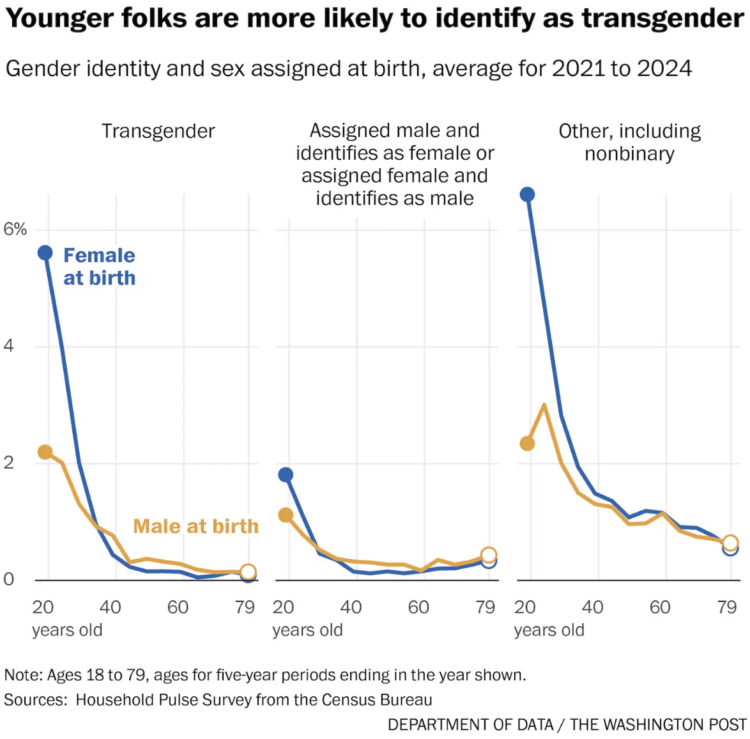
The administration continues its takedown of data that it doesn’t agree with. To get ahead of the wave, if by just a little, Andrew Van Dam for Washington Post’s Department of Data charted datasets that might disappear soon.
Tags: government, takedown, Washington Post
DOGE’s ‘Genius’ Coders Launch Website So Full Of Holes, Anyone Can Write To It
If you want to write something on the U.S. government’s official DOGE website, apparently you can just… do that. Not in the usual way of submitting comments through a form, mind you, but by directly injecting content into their database. This seems suboptimal.
The story here is that DOGE — Elon Musk’s collection of supposed coding “geniuses” brought in to “disrupt” government inefficiency — finally launched their official website. And what they delivered is a masterclass in how not to build government infrastructure. One possibility is that they’re brilliant disruptors breaking all the rules to make things better. Another possibility is that they have no idea what they’re doing.
The latter seems a lot more likely.
Last week, it was reported that the proud racist 25-year-old Marko Elez had been given admin access and was pushing untested code to the US government’s $6 trillion/year payment system. While the Treasury Department initially claimed (including in court filings!) that Elez had “read-only” access, others reported he had write access. After those reports came out, the Treasury Dept. “corrected” itself and said Elez had been “accidentally” given write privileges for the payments database, but only for the data, not the code. Still, they admitted that while they had put in place some security protections, it’s possible that Elez did copy some private data which “may have occasionally included screenshots of payment systems data or records.”
Yikes?
Now, you might think that having a racist twenty-something with admin access to trillion-dollar payment systems would concern people. But Musk’s defenders had a compelling counterargument: he must be a genius! Because… well, because Musk hired him, and Musk only hires geniuses. Or so we’re told.
The DOGE team’s actual coding prowess is turning out to be quite something. First, they decided that government transparency meant hiding everything from FOIA requests. When questioned about this interesting interpretation of “transparency,” Musk explained that actually DOGE was being super transparent by putting everything on their website and ExTwitter account.
There was just one small problem with this explanation. At the time he said it, the DOGE website looked like this:

That was it. That was the whole website.
On Thursday, they finally launched a real website. Sort of. If by “real website” you mean “a collection of already-public information presented in misleading ways by people who don’t seem to understand what they’re looking at.” But that’s not even the interesting part.
These supposed technical geniuses managed to build what might be the least secure government website in history. Let’s start with something basic: where does the website actually live? According to Wired, the source code actually tells search engines that ExTwitter, not DOGE.gov, is the real home of this government information:
A WIRED review of the page’s source code shows that the promotion of Musk’s own platform went deeper than replicating the posts on the homepage. The source code shows that the site’s canonical tags direct search engines to x.com rather than DOGE.gov.
A canonical tag is a snippet of code that tells search engines what the authoritative version of a website is. It is typically used by sites with multiple pages as a search engine optimization tactic, to avoid their search ranking being diluted.
In DOGE’s case, however, the code is informing search engines that when people search for content found on DOGE.gov, they should not show those pages in search results, but should instead display the posts on X.
“It is promoting the X account as the main source, with the website secondary,” Declan Chidlow, a web developer, tells WIRED. “This isn’t usually how things are handled, and it indicates that the X account is taking priority over the actual website itself.”
If you’re not a web developer, here’s what that means: When you build a website, you can tell search engines “hey, if you find copies of this content elsewhere, this version here is the real one.” It’s like telling Google “if someone copied my site, mine is the original.”
But DOGE did the opposite. They told search engines “actually, ExTwitter has the real version of this government information. Our government website is just a copy.” Which is… an interesting choice for a federal agency? It’s a bit like the Treasury Department saying “don’t look at our official reports, just check Elon’s tweets.”
You might think that a government agency directing people away from its official website and toward the private company of its leader would raise some conflict-of-interest concerns. And you’d be right!
But wait, it gets better. Or worse. Actually, yeah, it’s worse.
Who built this government website? Through some sloppy coding, security researcher Sam Curry figured out it was DOGE employee Kyle Shutt. The same Kyle Shutt who, according to Drop Site News, has admin access to the FEMA payments system. The same Kyle Shutt who used the exact same Cloudflare ID to build Musk’s America PAC Trump campaign website. Because why maintain separate secure credentials for government systems and political campaigns when you can just… not do that?
But the real cherry on top came Thursday when people discovered something amazing about the DOGE site database: anyone can write to it. Not “anyone with proper credentials.” Not “anyone who passes security checks.” Just… anyone. As 404 Media reported, if you know basic database operations, you too can be a government website administrator:
The doge.gov website that was spun up to track Elon Musk’s cuts to the federal government is insecure and pulls from a database that can be edited by anyone, according to two separate people who found the vulnerability and shared it with 404 Media. One coder added at least two database entries that are visible on the live site and say “this is a joke of a .gov site” and “THESE ‘EXPERTS’ LEFT THEIR DATABASE OPEN -roro.”
While I imagine those will be taken down shortly, for now, the insertions are absolutely visible:


Look, there’s a reason we called this whole thing a cyberattack. When someone takes over your computer systems and leaves them wide open to anyone who wants to mess with them, we usually don’t call that “disruption” or “innovation.” We call it a cybersecurity breach.
“Feels like it was completely slapped together,” they added. “Tons of errors and details leaked in the page source code.”
Both sources said that the way the site is set up suggests that it is not running on government servers.
“Basically, doge.gov has its codebase, probably through GitHub or something,” the other developer who noticed the insecurity said. “They’re deploying the website on Cloudflare Pages from their codebase, and doge.gov is a custom domain that their pages.dev URL is set to. So rather than having a physical server or even something like Amazon Web Services, they’re deploying using Cloudflare Pages which supports custom domains.”
Here’s the thing about government computer systems: They’re under constant attack from foreign adversaries. Yes, they can be inefficient. Yes, they can be bloated. But you know what else they usually are? Not completely exposed to the entire internet. It turns out that some of that inefficient “bureaucracy” involves basic things like “security” and “not letting random people write whatever they want in federal databases.”
This isn’t some startup where “move fast and break things” is a viable strategy. This is the United States government. And it’s been handed over to people whose main qualification appears to be “posts spicy memes on 4chan.” The implications go far beyond embarrassing database injections — this level of technical negligence in federal systems creates genuine national security concerns. When your “disruption” involves ignoring decades of hard-learned lessons about government systems security, you’re not innovating — you’re inviting disaster.
Trump’s DOJ Corruption Laid Bare… By His Own Conservative Prosecutors
Updated: make sure you read the update at the end of this story.
Here’s a fun thing about corruption investigations: Usually when prosecutors uncover one quid pro quo, they don’t resolve it by offering an even bigger quid pro quo. And yet, that appears to be exactly what’s happening with NYC Mayor Eric Adams, who was indicted last fall for allegedly trading favors with Turkish officials, and is now watching those charges evaporate in exchange for helping the Trump administration with its immigration agenda.
The twist — and there’s always a twist — is that the people most effectively pointing out this corruption aren’t the usual suspects. Instead, it’s coming from a bunch of dyed-in-the-wool conservative prosecutors at SDNY who are resigning en masse rather than participate in what they see as a perversion of justice. When the Federalist Society crowd starts quitting over corruption, you know something interesting is happening.
The apparent corruption here isn’t just brazen — it’s documented in black and white. The Justice Department’s order to drop the case doesn’t even pretend to assess the merits of the charges. Instead, Acting Deputy Attorney General Emil Bove explicitly tied the dismissal to Adams’ willingness to assist with federal deportation efforts — a textbook example of weaponizing prosecutorial discretion for political ends.
Even more disturbing is the mechanism: the dismissal is “without prejudice,” meaning charges could be refiled at any time. This isn’t just prosecutorial discretion — it’s prosecutorial extortion. The Trump administration has effectively created a sword of Damocles to hang over Adams’ head, ensuring his continued compliance with their immigration agenda. The message is clear: step out of line, and those charges might suddenly become relevant again. It’s the kind of institutional corruption that would make a banana republic blush.
It means that Adams’ personal freedom now outweighs the best interests of the people of New York City.
The system’s response to this corruption has been revealing. For several days after the initial order, an unusual silence descended over the Southern District office — a silence that spoke volumes about the internal struggle taking place. Then came something remarkable: a scathing letter from Acting US Attorney Danielle Sassoon to Attorney General Pam Bondi. Sassoon — a Federalist Society stalwart and former Scalia clerk who’s about as far from a “progressive prosecutor” as you can get — laid bare the rot at the core of this decision in a document that reads like a conservative legal scholar’s manifesto against institutional corruption.
Because the law does not support a dismissal, and because I am confident that Adams has committed the crimes with which he is charged, I cannot agree to seek a dismissal driven by improper considerations. As Justice Robert Jackson explained, “the prosecutor at his best is one of the most beneficent forces in our society, when he acts from malice or other base motives, he is one of the worst.” The Federal Prosecutor, 24 J. Am. Jud. Soc’y 18 (“This authority has been granted by people who really wanted the right thing done—wanted crime eliminated— but also wanted the best in our American traditions preserved. “). I understand my duty as a prosecutor to mean enforcing the law impartially, and that includes prosecuting a validly returned indictment regardless whether its dismissal would be politically advantageous, to the defendant or to those who appointed me. A federal prosecutor “is the representative not of an ordinary party to a controversy, but of a sovereignty whose obligation to govern impartially is as compelling as its obligation to govern at all.” Berger v. United States, 295 U.S. 78, 88 (1935).
For the reasons explained above, I do not believe there are reasonable arguments in support of a Rule 48(a) motion to dismiss a case that is well supported by the evidence and the law. I understand that Mr. Bove disagrees, and I am mindful of your recent order reiterating prosecutors’ duty to make good-faith arguments in support of the Executive Branch’s positions. See Feb. 5, 2025 Mem. “General Policy Regarding Zealous Advocacy on Behalf of the United States.” But because I do not see any good-faith basis for the proposed position, I cannot make such arguments consistent with my duty of candor. N.Y.R.P.C.3.3; id. cmt. 2 (“A lawyer acting as an advocate in an adjudicative proceeding has an obligation to present the client’s case with persuasive force. Performance of that duty while maintaining confidences of the client, however, is qualified by the advocate’s duty of candor to the tribunal. ” ).
In particular, the rationale given by Mr. Bove—an exchange between a criminal defendant and the Department of Justice akin to the Bout exchange with Russia— is, as explained above, a bargain that a prosecutor should not make. Moreover, dismissing without prejudice and with the express option of again indicting Adams in the future creates obvious ethical problems, by implicitly threatening future prosecution if Adams’s cooperation with enforcing the immigration laws proves unsatisfactory to the Department. See In re Christoff, 690 N.E.2d 1135 (Ind. 1997) (disciplining prosecutor for threatening to renew a dormant criminal investigation against a potential candidate for public office in order to dissuade the candidate from running); Bruce A. Green & Rebecca Roiphe, Who Should Police Politicization of the DOJ?, 35 Notre Dame J.L. Ethics & Pub. Pol’y 671, 681 (2021) (noting that the Arizona Supreme Court disbarred the elected chief prosecutor of Maricopa County, Arizona, and his deputy, in part, for misusing their power to advance the chief prosecutor’s partisan political interests) . Finally, given the highly generalized accusations of weaponization, weighed against the strength of the evidence against Adams, a court will likely question whether that basis is pretextual. See, e.g. , United States v. Greater Blouse, Skirt & Neckwear Contractors, 228 F. Supp. 483, 487 (S.D.N.Y. 1964)(courts “ should be satisfied that the reasons advanced for the proposed dismissal are substantial and the real grounds upon which the application is based”)
I remain baffled by the rushed and superficial process by which this decision was reached, in seeming collaboration with Adams’s counsel and without my direct input on the ultimate stated rationales for dismissal. Mr. Bove admonished me to be mindful of my obligation to zealously defend the interests of the United States and to advance good-faith arguments on behalf of the Administration. I hope you share my view that soliciting and considering the concerns of the U.S. Attorney overseeing the case serves rather than hinders that goal, and that we can find time to meet.
But wait, it gets better! There’s a footnote in Sassoon’s letter that tells you everything you need to know about how modern corruption works. The old-school way was to have your shady meetings in smoke-filled back rooms. The new way, apparently, is to have them in official conference rooms while actively preventing anyone from taking notes:
I attended a meeting on January 31, 2025, with Mr. Bove, Adams’s counsel, and members of my office. Adams’s attorneys repeatedly urged what amounted to a quid pro quo, indicating that Adams would be in a position to assist with the Department’s enforcement priorities only if the indictment were dismissed. Mr. Bove admonished a member of my team who took notes during that meeting and directed the collection of those notes at the meeting’s conclusion
Nothing quite says you know you’re engaging in some shady ass shit like demanding you collect the notes of anyone in attendance.
What makes this story particularly significant is who’s blowing the whistle. Sassoon isn’t some “woke prosecutor” that the MAGA world can easily dismiss. She’s a card-carrying member of the conservative legal establishment who, until this week, was seen as a rising star in those circles. Her willingness to sacrifice her standing in that world to uphold basic constitutional principles reveals just how far the corruption has spread — and perhaps offers a glimmer of hope that some institutional guardrails still hold.
Sassoon’s stand has triggered a cascade of resignations within SDNY, with seven prosecutors (and counting) choosing to walk away rather than participate in this corruption of justice. The latest resignation letter, a scorching indictment from lead prosecutor Hagan Scotten, is particularly noteworthy. Scotten — who clerked for both Justices Roberts and Kavanaugh and explicitly states his support for the Trump administration — makes it clear that this isn’t about politics; it’s about fundamental principles of justice being trampled for political gain.
There is a tradition in public service of resigning in a last-ditch effort to head off a serious mistake. Some will view the mistake you are committing here in the light of their generally negative views of the new Administration. I do not share those views. I can even understand how a Chief Executive whose background is in business and politics might see the contemplated dismissal-with-leverage as a good, if distasteful, deal. But any assistant U.S. attorney would know that our laws and traditions do not allow using the prosecutorial power to influence other citizens, much less elected officials, in this way. If no lawyer within earshot of the President is willing to give him that advice, then I expect you will eventually find someone who is enough of a fool, or enough of a coward, to file your motion. But it was never going to be me.
Scotten’s prediction proved grimly prophetic. As reported just hours ago, Bove and Bondi found their willing executioner — though the circumstances reveal yet another layer of institutional corruption:
The prosecutor acquiesced to file the motion in an attempt to spare other career staff from potentially being fired by Emil Bove, the acting US deputy attorney general and former personal lawyer to Trump, sources briefed on the matter told Reuters. The news agency named the lawyer as Ed Sullivan, a veteran career prosecutor, who agreed to alleviate pressure on his colleagues in the department’s public integrity section of 30 attorneys, two sources said, after his team was given an hour by Bove to decide between them who would file the motion.
“This is not a capitulation – this is a coercion,” one of the people briefed on the meeting later told Reuters. “That person, in my mind, is a hero.” The whole section had reportedly discussed resigning en masse.
The cruel irony of forcing the Public Integrity Section to compromise its own integrity isn’t lost on anyone. This is how institutions die — not with a bang, but with an ultimatum.
There’s a special kind of institutional poetry here: The Public Integrity Section was given an hour to decide who would compromise their integrity. And someone did, not out of cowardice or foolishness, but to protect their colleagues. “A hero,” his colleague called him, and maybe that’s right. But it’s the kind of heroism that only exists in broken systems.
The NY Times has revealed even more disturbing details about the behind-the-scenes machinations. In what reads like a playbook for corrupting justice, Bove apparently coached Adams’ legal team (including Alex Spiro, better known as Elon Musk’s go-to counsel) in a wink-wink-nudge-nudge fashion on exactly what political commitments would make the charges disappear.
During the meeting, Mr. Bove signaled that the decision about whether to dismiss the case had nothing to do with its legal merits.
Instead, Mr. Bove said he was interested in whether the case was hindering Mr. Adams’s leadership, particularly with regard to the city’s ability to cooperate with the federal government on Mr. Trump’s crackdown on illegal immigration.
Mr. Bove also said he was interested in whether the case, brought by the former U.S. attorney, Damian Williams, was a politically motivated prosecution meant to hurt Mr. Adams’s re-election prospects.
In her letter to Ms. Bondi, Ms. Sassoon said that she was “baffled by the rushed and superficial process by which this decision was reached, in seeming collaboration with Adams’s counsel and without my direct input on the ultimate stated rationales for dismissal.”
There’s something almost elegant about it, in a horrifying sort of way. The Justice Department has managed to transform a corruption prosecution into what amounts to a compliance manual for corruption. It’s like they’ve created a template: “Here’s how to trade criminal charges for political favors while maintaining plausible deniability.” And the really wild part? This is all happening after years of the MAGA world screaming about supposed “lawfare” against conservatives. Turns out they weren’t complaining about weaponized justice — they were planning how to do it themselves.
History rhymes: While mass resignations of principled lawyers helped topple Nixon’s presidency, in Trump’s second term they’ve become just another item in the daily digest of institutional erosion. The difference this time? It’s not the usual suspects sounding the alarm. Instead, it’s career conservatives — products of the Federalist Society pipeline — who are putting their careers on the line to preserve what’s left of prosecutorial independence.
As we’ve previously discussed, any path through this constitutional crisis requires principled conservatives to find their voice. The fact that it’s taking career prosecutors to do what elected Republicans won’t speaks volumes about where the real courage in conservative circles resides.
The question now isn’t just whether our institutions can survive this assault, but whether these acts of principled resistance can inspire others before the machinery of justice is fully converted into a tool of political control. The American experiment has survived previous challenges through the courage of individuals willing to place principle above party. We’re about to find out if enough of those individuals still exist.
Update: Incredibly, that report that a prosecutor had agreed to file the dismissal turned out to not be accurate. Many hours later, after no such filing was actually made a few very bizarre things happened. First, Emil Bove filed a notice of appearance in the case. That is… not normal.
Next, all of the remaining line prosecutors withdrew from the case.
Finally, the “nolle prosequi” (a notice saying “we no longer want to prosecute”) was filed. But even the way it was filed is weird and somewhat unprecedented. Two lawyers, including Ed Sullivan (who was mentioned above as effectively agreeing to be the fool to protect his coworkers) signed most of the document, but they did not sign the final statement. Instead, there was a further “order” from the DOJ, signed by Bove alone, telling the Court to effectively dismiss the case:

Even the language here is bizarre. The prosecutors don’t get to “direct” the Court to do anything. That’s likely why Bacon and Sullivan signed the part about “respectfully requests” that the Court issue an order. But Bove leaps in, acting like he gets to order around the judge, and separately signs that part.
Kinda shocking.
What will be interesting now, is to see what Judge Dale Ho does.
Wheel of Time S3 trailer tees us up for Last Battle
We've finally got a full-length trailer for Prime Video's epic fantasy series The Wheel of Time, adapted from the late Robert Jordan's bestselling 14-book series of epic fantasy novels. (Ars has been following the series closely with regular recaps through the first two seasons.)
(Some spoilers for the first two seasons below.)
As previously reported, the series centers on Moiraine (played by Oscar-nominee Rosamund Pike), a member of a powerful, all-woman organization called the Aes Sedai. Magic, known as the One Power, is divided into male (saidin) and female (saidar) flavors. The latter is the province of the Aes Sedai. Long ago, a great evil, called the Dark One, caused the saidin to become tainted, such that most men who show an ability to channel that magic go mad. It's the job of the Aes Sedai to track down such men and strip them of their abilities—a process known as "gentling" that, unfortunately, is often anything but. There is also an ancient prophecy concerning the Dragon Reborn: the reincarnation of a person who will save or destroy humanity.

H5N1 testing in cow veterinarians suggests bird flu is spreading silently
Three veterinarians who work with cows have tested positive for prior infections of H5 bird flu, according to a study released today by the Centers for Disease Control and Prevention.
The finding may not seem surprising, given the sweeping and ongoing outbreak of H5N1 among dairy farms in the US, which has reached 968 herds in 16 states and led to infections in 41 dairy workers. However, it is notable that none of the three veterinarians were aware of being infected, and none of them worked with cows that were known or suspected to be infected with H5N1. In fact, one of them only worked in Georgia and South Carolina, two states where H5N1 infections in dairy cows and humans have never been reported.
The findings suggest that the virus may be moving in animals and people silently, and that our surveillance systems are missing infections—both long-held fears among health experts.

Man offers to buy city dump in last-ditch effort to recover $800M in bitcoins
James Howells, the IT pro who lost about 8,000 bitcoins in a landfill more than a decade ago, thinks he has one last chance to dig up his buried treasure before it's lost forever.
He wants to buy the landfill.
In January, Howells lost a court battle with Newport City Council in Wales, which many expected would be his last shot at excavating the dump. But soon after, the Newport council revealed that it would be closing the landfill, arousing in Howells a new hope that the bitcoins—today worth nearly $800 million—might still be found.

“The country is less safe”: CDC disease detective program gutted
The cadre of elite disease detectives at the Centers for Disease Control and Prevention is expected to be left in ruin today as the Trump administration continues to slash the federal workforce.
Many members of the CDC's Epidemic Intelligence Service, EIS—a globally revered public health training program—were informed earlier Friday that they were about to be fired, according to reporting from Stat News. Multiple sources told CBS News that half of EIS officers are among the ongoing cuts.
The Trump administration is ousting thousands of probationary federal workers in a wide-scale effort to dramatically slim agencies.
From 900 miles away, the US government recorded audio of the Titan sub implosion
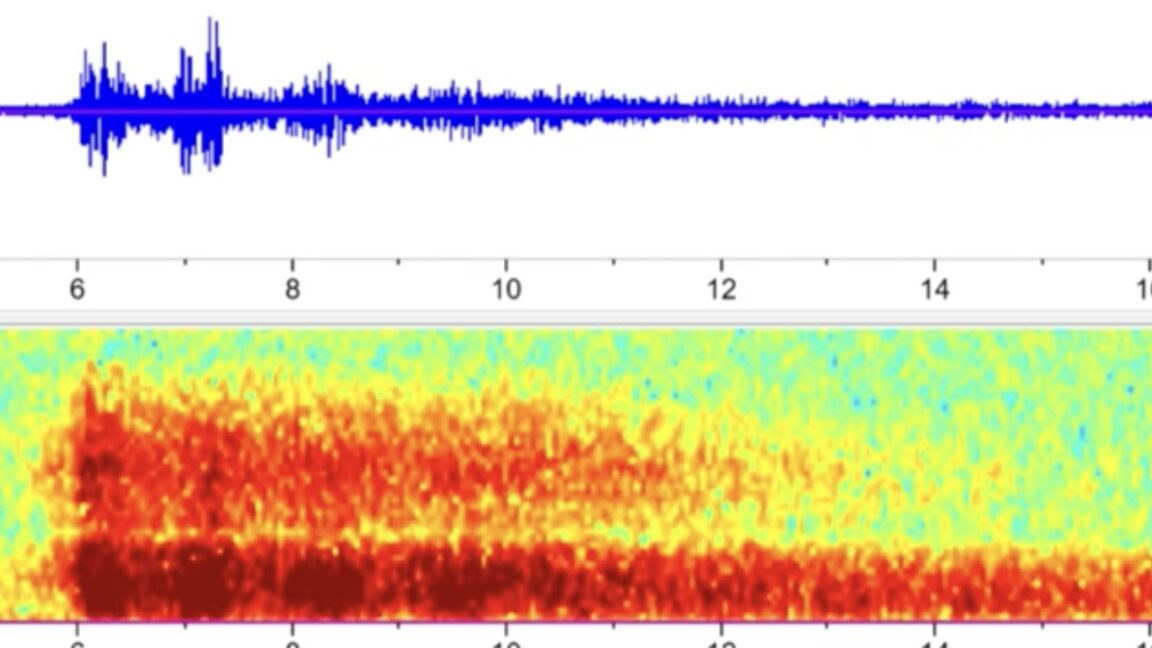
Thanks to being an incompressible medium, water transmits vibrations both farther and faster than the air. (Here's a good video explainer on the subject.) This fact helps to explain how a US government-owned "moored passive acoustic recorder" was able to hear and record the 2023 implosion of the doomed Titan submersible—even though the recorder was 900 miles away from the dive site.
That implosion, during an attempted dive to the wreckage of the Titanic, killed five people, including Stockton Rush, the CEO of the company that built and operated the Titan.
The implosion audio was just released publicly by the US Coast Guard's Titan Marine Board of Investigation, which has been investigating the disaster in enormous detail. As part of that investigation, the Coast Guard obtained the audio from the National Oceanic and Atmospheric Administration (NOAA), part of the US Department of Commerce.
22 states sue to block new NIH funding policy—court puts it on hold
On Friday, the National Institutes of Health (NIH) announced a sudden change to how it handles the indirect costs of research—the money that pays for things like support services and facilities maintenance. These costs help pay universities and research centers to provide the environment and resources all their researchers need to get research done. Previously, these had been set through negotiations with the university and audits of the spending. These averaged roughly 30 percent of the value of the grant itself and would frequently exceed 50 percent.
The NIH announcement set the rate at 15 percent for every campus. The new rate would start today and apply retroactively to existing grants, meaning most research universities are currently finding themselves facing catastrophic budget shortfalls.
Today, a coalition of 22 states filed a suit that seeks to block the new policy, alleging it violated both a long-standing law and a budget rider that Congress had passed in response to a 2017 attempt by Trump to drastically cut indirect costs. The suit seeks to prevent the new policy or its equivalent from being applied—something that Judge Angel Kelley of the District of Massachusetts granted later in the day. While that injunction only applies to research centers located in the states that have joined the suit, a separate suit was filed in the same district by a group of medical organizations, some of them (such as the Association of American Medical Colleges), have members throughout the country. As a result, Judge Kelley issued a separate ruling that extended the injunction to the remaining states.

Musk Promised Government Transparency, DOGE Delivers Maximum Secrecy
Before the election, Elon Musk declared:
“I think that the strong bias with respect to government information should be to make it available to the public. Let’s be as transparent as possible. Fully transparent.”
When one of his fanboys tweeted that quote, Elon responded by making an even bigger claim, saying: “There should be no need for FOIA requests. All government data should be default public for maximum transparency.”

As big believers (and users) of the FOIA system, that actually sounded good to us, and I would have supported any actual effort to make more government information and documents public by default.
Right after the inauguration, Lauren Harper at the Freedom of the Press Foundation noted that this was an opportunity for Elon to put “his documents where his mouth is, and make DOGE’s records public.” But, she noted, the early indications didn’t look good, including the fact that one of their first orders of business was to shut down the OMB FOIA portal. It’s still down as I type this.
Of course, if Musk was living up to his words that we wouldn’t even need FOIA because he’d just make everything public, well, that would be one explanation.
But that’s not what is actually happening. Just as when he took over Twitter, we’re learning that Musk’s promises and Musk’s reality are wholly different things. When he promises to make things better for “the people,” he always means “make things better for Elon.”
As you can see, he said those things two days before Elon Musk was elected alongside Donald Trump to (apparently) rip out every bit of accountability from the government of the United States of America. Now that he has near total control over the systems that make the US work, he apparently wants them to be pretty damn secret.
We first heard about this last week when the always excellent 404 Media reported that the DOGE boys were told to stop using Slack, because someone realized the conversations were accessible by FOIA.
Employees working for the agency now known as DOGE have been ordered to stop using Slack while government lawyers attempt to transition the agency to one that is not subject to the Freedom of Information Act, 404 Media has learned.
“Good morning, everyone! As a reminder, please refrain from using Slack at the moment while our various general counsels figure out the best way to handle the records migration to our new EOP [Executive Office of the President] component,” a message seen by 404 Media reads. “Will update as soon as we have more information!”
Sounds like someone’s got something to hide, huh?
Given that not one, not two, but three of the DOGE boys have been outed as having terrible fucking judgment (either blatantly racist tweets or being involved with a fucked up cybercrime group built around Discord and Telegram chat channels) you have to imagine that some shit is going on in those Slack chats.
And thus, it was announced late last week that DOGE has been reorganized outside of OMB (subject to FOIA) and now under the Executive Office of the President, which is subject to the Presidential Records Act instead, allowing such records to be hidden for at least a decade.
The White House has designated Mr. Musk’s office, United States DOGE Service, as an entity insulated from public records requests or most judicial intervention until at least 2034, by declaring the documents it produces and receives presidential records.
And that, of course, is only if the Trump admin abides by the PRA, something he was famous for ignoring in his first administration, including when he took classified documents with him to Mar-A-Lago when he left office.
So, again, what is Elon hiding? After all, when he said everything should be public, he said the only exceptions should be things like “how to make a nuclear bomb.”
Seems like an admission that he’s doing some crazy shit.
Which is actually a problem if he’s claiming to be protected by the Presidential Records Act. After all, the reason there is secrecy like that under the PRA is because it’s supposed to cover advice to the President. The fear was if that advice would become public too quickly, advisors wouldn’t be able to be honest with the President. But the reason most of the rest of the executive branch is subject to FOIA is because they’re actually doing stuff, not just advising. And that information is required, under law, to be public.
I recognize, again, that the Trump administration sees laws only as things they get to use to punish those they hate, rather than anything that binds them, but I’m guessing that lawsuits are about to be filed (if they haven’t been already) challenging this designation.
So, maybe we’ll actually find out what kinds of messages Elon is trading with the guy who calls himself “Big Balls” and the guy who claimed he “was racist before it was cool.”
But only after a court gets involved. So much for “maximum transparency.”
Musk’s version of government efficiency appears to mean efficiently hiding what he and his crew are doing inside our government.
Access previous versions of government websites with GovWayback
You can use the Internet Archive to access historical versions, but GovWayback makes it even more straightforward:
GovWayback is a simple tool to quickly access archived versions of government websites from before January 20, 2025 – just add “wayback.com” after “.gov” in any government URL. GovWayback automatically redirects you to that page’s archived version from the Internet Archive.
For example, you can enter cdc.govwayback.com, and it’ll take you the archived version of cdc.gov.
Tags: archive, government, Internet Archive
Trump fires one-third of federal employee appeals board
President Trump has removed a Democratic member of the quasi-judicial federal agency that hears appeals to firings and other disciplinary actions the government takes against its employees, clearing the way for the White House to install a Republican majority to the board as it seeks to push through efforts to upend the civil service.
The White House notified the Merit Systems Protection Board on Monday evening that it had terminated Cathy Harris’ position on the agency’s central, three-member board. Ray Limon, another Democrat, had his position of vice chair stripped. On his first day in office, Trump named Henry Kerner, a Republican, as acting chair of the board.
Most federal employees maintain statutorily protected rights to appeal firings, layoffs, suspensions and other adverse actions agencies take against them to MSPB. The matters first go to a regional administrative judge and agencies or employees can then appeal further to MSPB’s central board to determine whether the agency actions violated any legal prohibitions to the merit-based civil service.
The three-member panel, which issues precedent-setting rulings, is made up of presidentially appointed, Senate-confirmed individuals. The Senate first confirmed Harris to the board in 2022 and as chair in 2024. She and Limon helped reconstitute the agency after it operated without a quorum for five years.
MSPB board members serve seven-year terms and, per federal statute, can only be removed for “inefficiency, neglect of duty or malfeasance in office.”
With Limon and Kerner still in place, the board will maintain its quorum. By law, the board cannot have more than two members of the same party.
Harris’ firing comes as Trump in recent days removed other key federal workforce oversight leaders, namely Hampton Dellinger at the Office of Special Counsel and David Huitema at the Office of Government Ethics. Dellinger has temporarily won his role back after a temporary restraining order in federal court prevented his firing from taking effect, though the Trump administration has appealed that ruling.
The MSPB shakeup also comes as the Trump administration is taking unprecedented actions to remove federal workers for alleged insubordination or because it is seeking to wholesale shutter agencies. Most employees subject to reductions in force hold appeal rights to MSPB.
Trump can now nominate a third member to the board, someone who presumably will be friendly to his and Elon Musk’s efforts to recast and shrink the federal workforce.
Tom Devine, legal director at the Government Accountability Project, said MSPB is one of the few entities designed to protect federal employees and Harris' firing marked another assault on the civil service.
“The merit system exists to ensure government service is about taxpayers—not politics," Devine said. "Undermining its ability to function through unjust firings doesn’t prevent waste and fraud: it is waste, and it is fraud.”
Bill Spencer, MSPB’s executive director, said the agency has no further comment on the firing at this time.
This story has been updated with additional comment.