Shared posts

20 May 22:53

Under RFK Jr., COVID shots will only be available to people 65+, high-risk groups

by Beth Mole

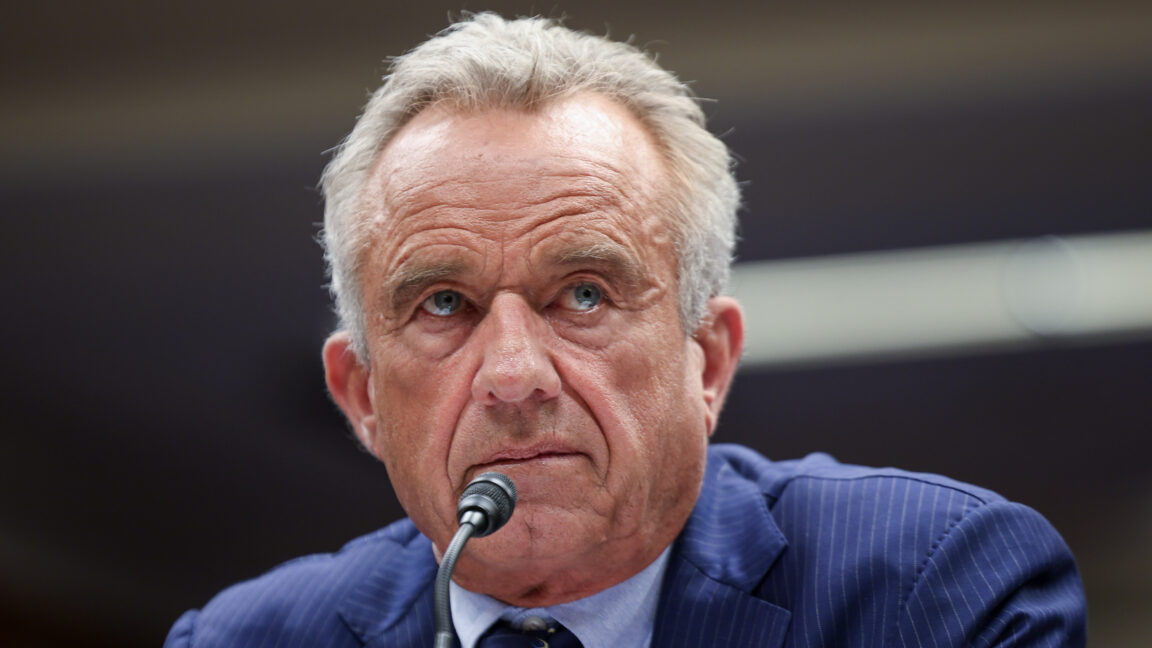
Under the control of anti-vaccine advocate Robert F. Kennedy Jr., the Food and Drug Administration is unilaterally terminating universal access to seasonal COVID-19 vaccines; instead, only people who are age 65 years and older and people with underlying conditions that put them at risk of severe COVID-19 will have access to seasonal boosters moving forward.

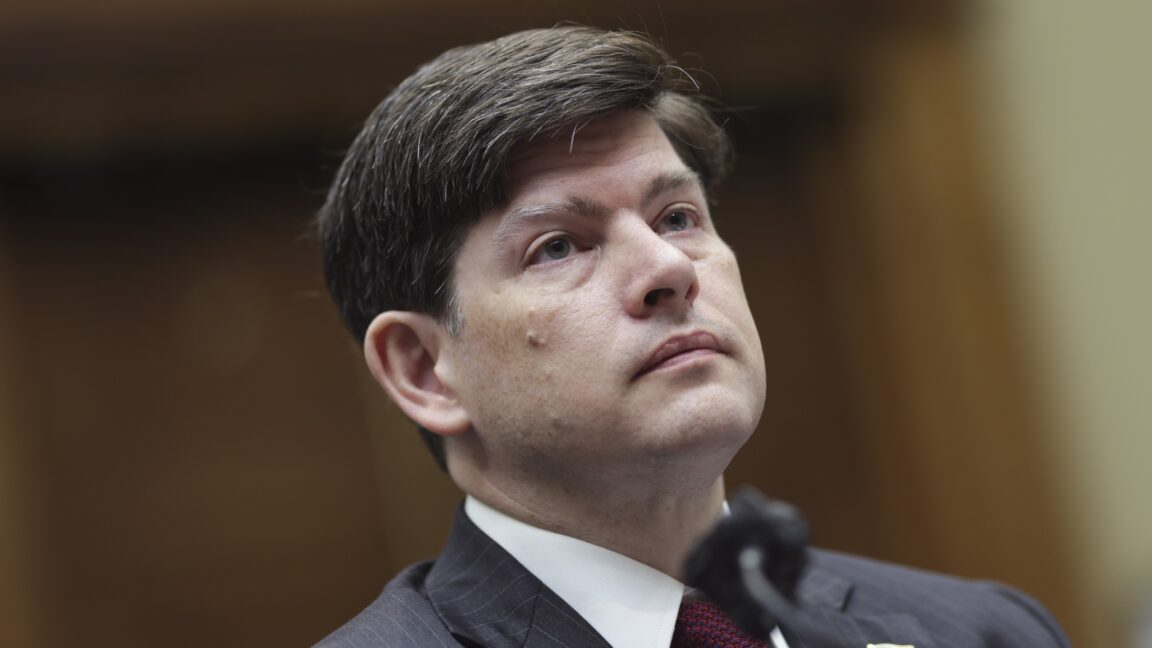
The move was laid out in a commentary article published today in the New England Journal of Medicine, written by Trump administration FDA Commissioner Martin Makary and the agency's new top vaccine regulator, Vinay Prasad.

The article lays out a new framework for approving seasonal COVID-19 vaccines, as well as a rationale for the change—which was made without input from independent advisory committees for the Food and Drug Administration and the Centers for Disease Control and Prevention.

Read full article

Comments

20 May 22:53

Everything Google Announced at I/O 2025

by Boone Ashworth
Artificial intelligence is now in everything Google touches, including its Android XR mixed-reality glasses, a revamped search experience, and Gemini’s new agentic capabilities.
20 May 19:36

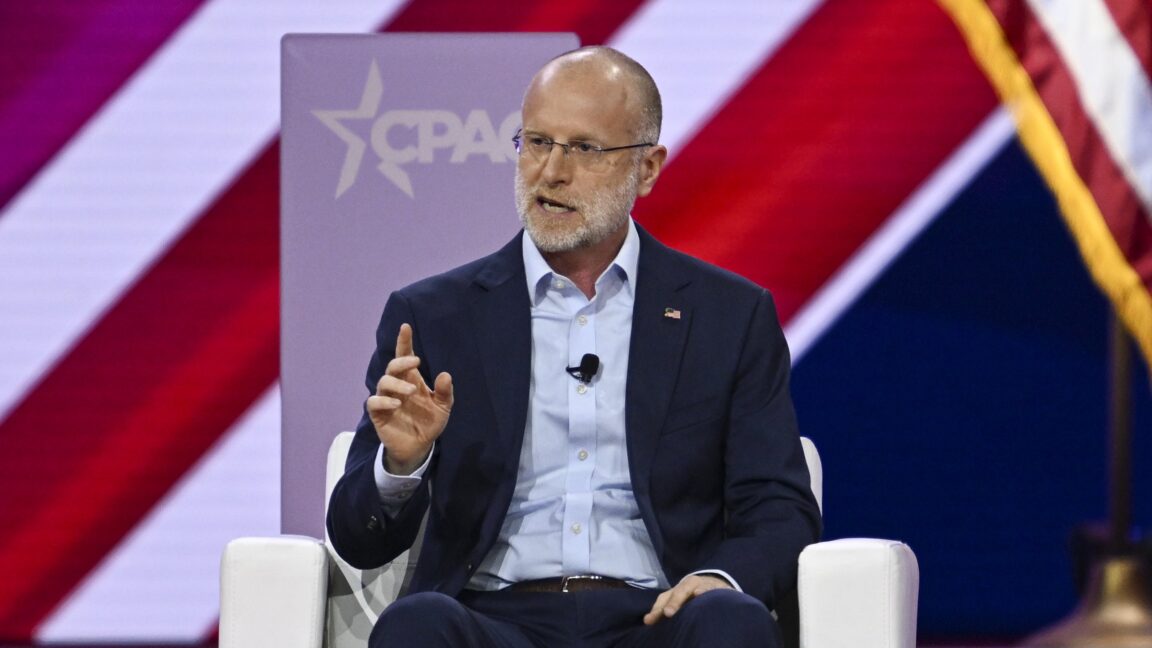
FCC Chair Brendan Carr is letting ISPs merge—as long as they end DEI programs

by Jon Brodkin

It's shaping up to be a big year for telecom mergers, and it appears the Federal Communications Commission is eager to approve the deals—as long as companies involved drop any DEI (Diversity, Equity, and Inclusion) policies criticized by FCC Chairman Brendan Carr. Verizon just got a big merger approved, and cable giant Charter is seeking permission to buy Cox.

The FCC on Friday announced approval of Verizon's purchase of Frontier, one day after Verizon committed to end DEI policies in a filing with the commission. Carr previously sent letters to Verizon and other companies alleging that their diversity policies are "invidious forms of discrimination" that violate federal law and threatened to block mergers pursued by firms that enforce such policies.

"Verizon has now agreed to end its DEI policies as specified in a new FCC filing," Carr wrote in a post on X. "These changes are effective immediately. A good step forward for equal opportunity, nondiscrimination, and the public interest."

Read full article

Comments

20 May 19:29

CERN gears up to ship antimatter across Europe

by John Timmer

There's a lot of matter around, which ensures that any antimatter produced experiences a very short lifespan. Studying antimatter, therefore, has been extremely difficult. But that's changed a bit in recent years, as CERN has set up a facility that produces and traps antimatter, allowing for extensive studies of its properties, including entire anti-atoms.

Unfortunately, the hardware used to capture antiprotons also produces interference that limits the precision with which measurements can be made. So CERN decided that it might be good to determine how to move the antimatter away from where it's produced. Since it was tackling that problem anyway, CERN decided to make a shipping container for antimatter, allowing it to be put on a truck and potentially taken to labs throughout Europe.

A shipping container for antimatter

The problem facing CERN comes from its own hardware. The antimatter it captures is produced by smashing a particle beam into a stationary target. As a result, all the anti-particles that come out of the debris carry a lot of energy. If you want to hold on to any of them, you have to slow them down, which is done using electromagnetic fields that can act on the charged antimatter particles. Unfortunately, as the team behind the new work notes, many of the measurements we'd like to do with the antimatter are "extremely sensitive to external magnetic field noise."

Read full article

Comments

20 May 16:18

Labor dispute erupts over AI-voiced Darth Vader in Fortnite

by Benj Edwards

On Monday, SAG-AFTRA filed an unfair labor practice charge with the National Labor Relations Board against Epic subsidiary Llama Productions for implementing an AI-generated Darth Vader voice in Fortnite on Friday without first notifying or bargaining with the union, as their contract requires.

Llama Productions is the official signatory to SAG-AFTRA's collective bargaining agreement for Fortnite, making it legally responsible for adhering to the union's terms regarding the employment of voice actors and other performers.

"We celebrate the right of our members and their estates to control the use of their digital replicas and welcome the use of new technologies," SAG-AFTRA stated in a news release. "However, we must protect our right to bargain terms and conditions around uses of voice that replace the work of our members, including those who previously did the work of matching Darth Vader's iconic rhythm and tone in video games."

Read full article

Comments

20 May 16:16

NIH director bemoans RIFs, mocks ‘5 things’ email and says agency shoulders blame for COVID outbreak in first address

by Eric Katz
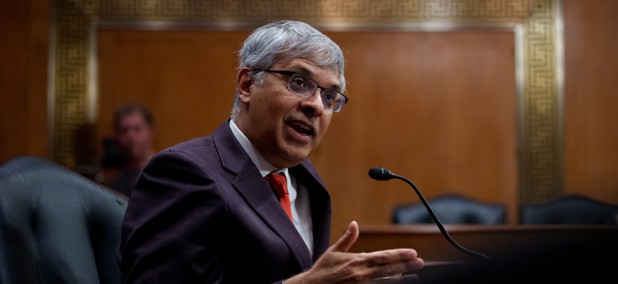
The National Institutes of Health may soon unwind some of its widespread layoffs, the agency’s new director said in his first town hall address to employees, during which he questioned the organization’s role in the COVID-19 pandemic and whether it should conduct research related to racism. 

Jay Bhattacharya, President Trump’s pick to lead the agency who was confirmed to the role in March, said he did not play a role in the recent layoffs of 1,200 NIH employees. The reductions in force went into effect on the day of his swearing in, but Bhattacharya said he had no input on them. The director expressed remorse that he was not able to weigh in on those cuts, according to employees present for the meeting. 

He added that he hopes to bring people back from RIFs as needed, including those working in contracting. Bhattacharya noted there is a shortage of supplies at labs and medical centers and he is working to correct that. In his fiscal 2026 budget, President Trump proposed slashing NIH funding by around 40%. 

NIH has also recalled employees on a limited basis, according to an official there, but has required that a new RIF for each person brought back so the total impacted would remain unchanged.

Early in his presentation, according to employees who tuned into the talk, a small group of employees stood and walked out. Bhattacharya acknowledged the group and said dissent was welcome. 

The director mocked the previously required email in which employees throughout government were required to submit five things they had worked on the prior week, calling it silly and unnecessary. NIH has not required that email, first instituted by Elon Musk and the Department of Government Efficiency, of employees in several weeks.

Bhattacharya suggested he and others believed NIH-funded research may have contributed to the outbreak of the COVID-19 pandemic and the resulting lockdowns throughout the country. The director alluded to the theory that the virus originated from a laboratory in China and subsequently “leaked” to the general public, a view backed by President Trump and his administration. It was supported by the FBI but has received pushback from other intelligence agencies and international scientific organizations. 

The NIH chief addressed the COVID-19 origins while laying out his top priorities for the agency, one of which was research safety and transparency. 

Bhattacharya was asked about structural racism and said NIH should not conduct any research that advances an ideology, adding the question may not be scientific in nature. Research projects at NIH must be replicable and able to be disproven, he said. NIH has canceled hundreds of millions of dollars in grants since Trump took office because they were deemed related to diversity, equity and inclusion. 

Employees submitted 1,200 questions for the town hall, according to Seana Cranston, NIH’s chief of staff, though Bhattacharya only answered a handful. They greeted the director, a sharp critic of the agency he now leads during the pandemic while serving as a professor at Stanford University, apprehensively. Employees described Bhattacharya as nervous during his presentation, particularly when he came out to silence rather than the usual applause.

]]>
16 May 13:59

A Baby Received a Custom Crispr Treatment in Record Time

by Emily Mullin
Scientists were able to create a bespoke treatment for KJ Muldoon’s rare genetic disorder within six months. It could be a blueprint for potentially life-saving, gene-editing Crispr therapies.
16 May 13:27

AI Is Making Many People Rethink Copyright

by Glyn Moody

For the last hundred years or so, the prevailing dogma has been that copyright is an unalloyed good, and that more of it is better. Whether that was ever true is one question, but it is certainly not the case since we entered the digital era, for reasons explained at length in Walled Culture the book (free digital versions available). Despite that fact, recent attempts to halt the constant expansion and strengthening of copyright have all foundered. Part of the problem is that there has never been a constituency with enough political clout to counter the huge power of the copyright industry and its lobbyists.

Until now. The latest iteration of artificial intelligence has captured the attention of politicians around the world. It seems that the latter can’t do enough to promote and support it, in the hope of deriving huge economic benefits, both directly, in the form of local AI companies worth trillions, and indirectly, through increased efficiency and improved services. That current favoured status has given AI leaders permission to start saying the unsayable: that copyright is an obstacle to progress, and should be reined in, or at least muzzled, in order to allow AI to reach its full potential. For example, here is what OpenAI’s proposals for the US AI Action Plan, which is currently being drawn up, say about copyright:

America’s robust, balanced intellectual property system has long been key to our global leadership on innovation. We propose a copyright strategy that would extend the system’s role into the Intelligence Age by protecting the rights and interests of content creators while also protecting America’s AI leadership and national security. The federal government can both secure Americans’ freedom to learn from AI, and avoid forfeiting our AI lead to the [People’s Republic of China] by preserving American AI models’ ability to learn from copyrighted material.

In its own suggestions for the AI Action Plan, Google spells out what this means:

Balanced copyright rules, such as fair use and text-and-data mining exceptions, have been critical to enabling AI systems to learn from prior knowledge and publicly available data, unlocking scientific and social advances. These exceptions allow for the use of copyrighted, publicly available material for AI training without significantly impacting rightsholders and avoid often highly unpredictable, imbalanced, and lengthy negotiations with data holders during model development or scientific experimentation. Balanced copyright laws that ensure access to publicly available scientific papers, for example, are essential for accelerating AI in science, particularly for applications that sift through scientific literature for insights or new hypotheses.

Although developments in the world of AI are giving companies like OpenAI and Google an opportunity to call into question the latest attempts to strengthen copyright’s intellectual monopoly, they are not the only voices here. For example, some of the biggest personalities in the tech world have gone even further, reported here by TechCrunch:

Jack Dorsey, co-founder of Twitter (now X) and Square (now Block), sparked a weekend’s worth of debate around intellectual property, patents, and copyright, with a characteristically terse post declaring, “delete all IP law.”

X’s current owner, Elon Musk, quickly replied, “I agree.”

It’s not clear what exactly brought these comments on, but they come at a time when AI companies, including OpenAI (which Musk co-founded, competes with, and is challenging in court), are facing numerous lawsuits alleging that they’ve violated copyright to train their models.

Unsurprisingly, that bold suggestion provoked howls of outrage from various players in the copyright world. That was to be expected. But the fact that big names like Musk and Dorsey were happy to cause such a storm is indicative of the changed atmosphere in the world of copyright and beyond. Indeed, there are signs that the other main intellectual monopolies – patents and trademarks – are also under pressure. Calling into question the old ways of doing things in these fields will also weaken the presumption that copyright must be preserved in its current state.

There’s another important way in which copyright is losing its relevance. It involves AI once more, but not because of how today’s AI systems are trained, but as a result of their output. The ease with which generative AI can turn out material has had a number of important knock-on consequences. For example, as a post on the Creative Bloq site explained:

Some designers who use stock image libraries to source photos, illustrations and vectors for their projects are finding that they have to wade through more unusable [AI-generated] content to find an image that suits their needs, adding more time to their workflows.

The same is happening in other fields. An article on the NPR site last year explored the growing problem of “AI-generated scam books”:

“Scam books on Amazon have been a problem for years,” says Mary Rasenberger, CEO of the Authors Guild, a group that advocates for writers. But she says the problem has multiplied in recent months. “Every new book seems to have some kind of companion book, some book that’s trying to steal sales.”

It’s also becoming a serious issue for music streaming services:

Deezer, the global music streaming platform, is receiving over 20,000 fully AI-generated tracks on a daily basis. It equals over 18% of all uploaded content, an increase from the previously reported 10% in January, 2025, when Deezer launched its cutting edge AI-music detection tool.

These AI-generated images, books and music tracks have one thing in common: they are probably not protected by copyright in any way. This is an evolving area of law, but a recent report by the US Copyright Office seems to confirm that material generated purely by AI, with minimal human input — for example, in the form of prompts — is not eligible for copyright protection:

Copyright law has long adapted to new technology and can enable case-by-case determinations as to whether AI-generated outputs reflect sufficient human contribution to warrant copyright protection. As described above, in many circumstances these outputs will be copyrightable in whole or in part—where AI is used as a tool, and where a human has been able to determine the expressive elements they contain. Prompts alone, however, at this stage are unlikely to satisfy those requirements.

Assuming this approach is confirmed both in the US and elsewhere, the net effect is likely to be that vast swathes of AI-generated text, images and sounds found online today are in the public domain, and can be used by anyone for any purpose. Once people understand this, and start using AI-generated outputs that they find online freely, without any fear of legal action being taken against them, there will be important knock-on effects. First, people may well seek out such AI-generated material, since it is legally unproblematic compared to complicated licensing schemes for copyright material, assuming the latter are even available. And secondly, people will as a result grow increasingly accustomed to re-using anything they find online, to the point that they simply ignore copyright niceties altogether.

Follow me @glynmoody on Mastodon and on Bluesky. Originally published at Walled Culture.

14 May 11:08

If Congress actually cancels the SLS rocket, what happens next?

by Eric Berger

The White House Office of Management and Budget dropped its "skinny" budget proposal for the federal government earlier this month, and the headline news for the US space program was the cancellation of three major programs: the Space Launch System rocket, Orion spacecraft, and Lunar Gateway.

Opinions across the space community vary widely about the utility of these programs—one friend in the industry predicted a future without them to be so dire that Artemis III would be the last US human spaceflight of our lifetimes. But there can be no question that if such changes are made they would mark the most radical remaking of NASA in two decades.

This report, based on interviews with multiple sources inside and out of the Trump administration, seeks to explain what the White House is trying to do with Moon and Mars exploration, what this means for NASA and US spaceflight, and whether it could succeed.

Read full article

Comments

13 May 16:05

GOP sneaks decade-long AI regulation ban into spending bill

by Benj Edwards

On Sunday night, House Republicans added language to the Budget Reconciliation bill that would block all state and local governments from regulating AI for 10 years, 404 Media reports. The provision, introduced by Representative Brett Guthrie of Kentucky, states that "no State or political subdivision thereof may enforce any law or regulation regulating artificial intelligence models, artificial intelligence systems, or automated decision systems during the 10 year period beginning on the date of the enactment of this Act."

The broad wording of the proposal would prevent states from enforcing both existing and proposed laws designed to protect citizens from AI systems. For example, California's recent law requiring health care providers to disclose when they use generative AI to communicate with patients would potentially become unenforceable. New York's 2021 law mandating bias audits for AI tools used in hiring decisions would also be affected, 404 Media notes. The measure would also halt legislation set to take effect in 2026 in California that requires AI developers to publicly document the data used to train their models.

The ban could also restrict how states allocate federal funding for AI programs. States currently control how they use federal dollars and can direct funding toward AI initiatives that may conflict with the administration's technology priorities. The Education Department's AI programs represent one example where states might pursue different approaches than those favored by the White House and its tech industry allies.

Read full article

Comments

13 May 16:01

Trump Appointees Blocked From Entering US Copyright Office

by Kate Knibbs
The two men appeared at the US Copyright Office days after the Trump administration fired its leader, who had just published a report about the use of copyrighted materials for AI training.
13 May 12:07

FCC commissioner writes op-ed titled, “It’s time for Trump to DOGE the FCC“

by Jon Brodkin

A Republican member of the Federal Communications Commission is proposing a DOGE-style overhaul of the agency's operations, including large cuts to the Universal Service Fund that subsidizes broadband deployment and access.

FCC Commissioner Nathan Simington said the fund should reduce spending on fiber networks and give money to Starlink—helping Elon Musk, the man in charge of President Trump's DOGE initiative. Simington also argued that the FCC is using too many staff hours on reviewing license applications and should instead use automated systems to approve most license requests.

In a Daily Caller op-ed titled, "It's Time For Trump To DOGE The FCC," Simington and his chief of staff, Gavin Wax, wrote that "President Trump's vision for restoring constitutional government is finally taking shape, and nowhere is that more urgently needed than at the Federal Communications Commission."

Read full article

Comments

10 May 04:49

Why Do Americans Pay More for Prescription Drugs?

by by David Armstrong

by David Armstrong

ProPublica is a nonprofit newsroom that investigates abuses of power. Sign up to receive our biggest stories as soon as they’re published.

In the U.S., the price of Revlimid, a brand-name cancer drug, has been increasing for two decades. It now sells for nearly $1,000 a pill. In Europe, the price has been consistently lower — in some countries by two-thirds.

I started reporting on Revlimid after I was prescribed the drug following a diagnosis of multiple myeloma, an incurable blood cancer. Stunned by the high price, I found that the drugmaker, Celgene, had used Revlimid as its own personal piggy bank for more than a decade, raising the price in the U.S. whenever it saw fit.

Even with lower prices in Europe, Celgene still made a profit there, a former executive told Congress. That added to the more than $21 billion in net earnings the company made after Revlimid was introduced in 2005.

Of course, Revlimid isn’t the only drug with a price disparity. Americans pay more in general for prescription drugs than people in other wealthy countries. And costs keep going up, saddling patients with crippling debt or forcing them to choose between filling prescriptions or buying groceries. So why do we pay so much more? And is anything being done about it?

In most other wealthy countries, governments set a single price for a drug that is usually based on analysis of the therapeutic benefit of the medicine and what other countries pay. In the U.S., drug companies determine what to charge for their products with few restraints. Insurance companies can refuse to cover a drug to try to negotiate a lower price, but for some diseases like cancer, that poses a risk of public backlash. Cancer is a “very politically charged disease,” said Dr. Aaron Kesselheim, a Harvard Medical School professor who studies drug pricing and regulation. Some states also mandate that insurers cover certain cancer drugs.

Pharmaceutical companies have consistently argued that American drug prices reflect the cost of research and development. Americans may pay more, but they also benefit from having first-line access to cutting-edge treatments. (Celgene has since been acquired by Bristol Myers Squibb, which says its price for Revlimid, which it increased in the U.S. last year by 7%, “reflects the continued clinical benefit Revlimid brings to patients, along with other economic factors.”)

Dr. Hagop Kantarjian, a leukemia specialist at MD Anderson Cancer Center who studies drug pricing, said that pharmaceutical companies often overstate the cost of developing drugs and that many drug discoveries originate in hospital and academic labs funded through government grants. Funding from the U.S. National Institutes of Health contributed to all but two of the 356 drugs approved by the Food and Drug Administration from 2010 to 2019, according to a Bentley University study. Companies also don’t spend all their profits on innovation: The 14 largest drug companies in the world spent more on stock buybacks and dividend payments to investors than on research and development, according to a 2021 analysis by the U.S. House Oversight Committee.

One possible solution to bring down costs: tie American prices to what drugmakers charge in other wealthy countries. The Congressional Budget Office found last year that this would have the biggest impact on reducing costs of seven proposals it studied. It’s an idea with bipartisan support.

Sens. Josh Hawley, R-Mo., and Peter Welch, D-Vt., introduced a bill this week that would penalize pharmaceutical companies that sell their drugs at higher prices than the average of the prices in Canada, France, Germany, Japan, Italy and the United Kingdom. Companies that sell above the average would face civil penalties equal to 10 times the difference between the U.S. list price and the average price in those other countries.

President Donald Trump has advocated for similar actions. During his first term, he issued an executive order directing the Medicare program to employ a “most favored nation” approach in paying for drugs. The administration later developed a rule directing Medicare to select the lowest price from a basket of similar countries and make that the maximum amount the agency would pay for 50 drugs administered by doctors. A court blocked the rule from being implemented in the last days of the first administration.

Now, according to reports this week, the administration is pushing plans to tie Medicaid and Medicare prices to lower prices charged in other countries.

Linking U.S. prices to those in other countries is opposed by industry groups who say it would leave decisions on medications to the government rather than doctors and patients.

“Government price setting in any form is bad for American patients,” said Alex Schriver, a spokesperson for the Pharmaceutical Research and Manufacturers of America, an industry group. He said efforts should be focused on fixing “the flaws in the U.S. system,” including money that flows to intermediaries such as pharmacy benefit managers.

Some critics also warn so-called international reference pricing can be gamed and allows foreign governments to essentially set the value of medicines sold in the U.S.

The Trump administration is expected to announce drug pricing plans as early as next week, according to a report. The White House did not respond to a request for comment.

10 May 04:46

House Committee Leader to Investigate Agency for Preferential Treatment of Politically Connected Startup

by by Christopher Bing and Avi Asher-Schapiro

by Christopher Bing and Avi Asher-Schapiro

ProPublica is a nonprofit newsroom that investigates abuses of power. Sign up to receive our biggest stories as soon as they’re published.

The ranking member of the House Oversight Committee is launching an investigation into whether the General Services Administration has given preferential treatment to a technology startup competing for a lucrative government contract. The startup is backed by some of President Donald Trump’s most influential Silicon Valley allies.

The committee’s action follows reporting by ProPublica last month that revealed the GSA was eyeing New York-based payments company Ramp to remake a massive, $700 billion federal credit card program known as SmartPay. Our reporting showed that senior GSA officials met with Ramp executives at least four times before publicly opening up a SmartPay contract opportunity.

Ethics experts flagged the early meetings as unusual and potentially problematic. Insiders at the GSA told ProPublica that, internally, Ramp was seen as the clear favorite for an initial $25 million pilot contract, which could act as an introduction to larger SmartPay work. The contract for the pilot program hasn’t been awarded yet.

A letter sent Friday to the GSA by Rep. Gerald Connolly, D-Va., and reviewed by ProPublica says Democrats on the committee want information about the GSA’s dealings with “Ramp, a company with zero federal contracting experience that is backed by prominent Trump supporters, Trump family connections, and allies of Elon Musk.”

Connolly’s letter demands an array of GSA documents, including “all communications between any GSA official, contractor or subcontractor and any representative of Ramp.”

Ramp did not respond to a request for comment about the investigation.

The GSA did not respond to questions Friday. Asked about Ramp for a previous article, a GSA spokesperson told ProPublica that the agency “refutes any suggestion of unfair or preferential contracting practices” and that the “credit card reform initiative has been well known to the public in an effort to address waste, fraud, and abuse.”

SmartPay, which provides Visa and Mastercard charge cards to government employees, enables the federal workforce to purchase office supplies and equipment, book travel and pay for gas. The cards typically are used for purchases up to $10,000.

Sources within the GSA say Trump appointees at the agency, including acting Administrator Stephen Ehikian and Commissioner Josh Gruenbaum, the nation’s top procurement officer, came into their roles saying SmartPay and other government payment programs were rife with fraud or waste.

Yet both GOP and Democratic budget experts call this view inaccurate, saying SmartPay has implemented effective safeguards and monitoring tools.

SmartPay has been worth hundreds of millions of dollars in fees for the financial institutions that currently operate it, U.S. Bank and Citibank. The GSA will decide by year’s end whether to extend SmartPay with the current contract or to remake the program more fundamentally.

Ramp’s investors include some of Silicon Valley’s most powerful figures, such as Peter Thiel, the billionaire venture capitalist who provided crucial early support to Trump and spent millions on Vice President JD Vance’s Ohio Senate run. Other major backers include Keith Rabois of Khosla Ventures, who sits on Ramp’s board; Thrive Capital, founded by Joshua Kushner, the brother of Trump’s son-in-law Jared Kushner; and 8VC, a firm run by Musk and Trump allies.

In late April, as the GSA received a flurry of business pitches on the SmartPay pilot program, Ramp’s CEO, Eric Glyman, and Rabois appeared at a high-profile conference in Washington that brings together tech entrepreneurs, lawmakers and other senior government officials.

During a livestreamed panel titled “First Principles for a Smarter, Leaner Government,” the pair touted Ramp as a transformational solution for government payments. Later, during an interview, Rabois pointed to the fact that SmartPay issues more charge cards than there are total government employees as evidence of fraud.

But SmartPay experts say this betrays a fundamental misunderstanding of how the program works. Employees are issued separate cards for different types of purchases and often hold multiple cards at once.

Rabois did not respond to questions from ProPublica on Friday. In his response for an earlier story, Rabois said he had “no involvement in any government-related initiatives for the company.”

In the oversight committee’s letter to the GSA, Connolly writes that “the Trump Administration’s false claims about the SmartPay program may be an attempt to discredit the program to provide a new, Trump-affiliated contractor with a lucrative contract.”

07 May 16:46

Yet Again, The Data Shows Migrants Are More Law-Abiding Than US Citizens

by Tim Cushing

This has always been the truth. And it has always been ignored by people like Donald Trump, who combine “if it bleeds, it leads” media narratives with the always-exploitable fear of “others.”

Whether a migrant is in this country legally or illegally, the odds of them committing criminal acts are much lower than those for US citizens. And it makes sense. Any criminal act committed by a migrant — even one here legally — can provide grounds for deportation. US citizens, however, don’t need to worry about that. All they have to worry about is this Leader of the Free World’s ranking on the incarcerations-per-capita leader boards — one that puts a whole lot of autocratic nations to shame.

Sure, other nations might use homosexuality, being female, blasphemy, or simply adhering to the “wrong” religion as an excuse to lock up people en masse. Our kink happens to be drugs, which doesn’t make us any better than our rivals. In fact, it might make us worse because we’re not comfortable openly proclaiming we’re locking up minorities just because they’re minorities.

Anyway, back to the bullshit about immigrants being innately criminal. It’s never been true. And it’s still just as false, even if the anti-immigrant rhetoric has been amplified considerably during the Trump years. Ilya Somin directs us to the latest report on migrant crime rates compiled by the Cato Institute. What the report [PDF] says will come as no surprise to anyone — not even those who continue to deliberately ignore this evidence.

Our consistent finding is that legal immigrants have the lowest incarceration rates, followed by illegal immigrants, and that native-born Americans have the highest. Illegal immigrants are half as likely to be incarcerated as native-born Americans, and legal immigrants are 74 percent less likely to be incarcerated….

Here’s more of the data, which the Cato Institute agrees is somewhat stymied by the fact that the government generally doesn’t do much to track the residency status of arrestees unless it serves their political purpose. For most of the last decade, though, pushing the “immigrants are criminals” narrative has been at the forefront of immigration discussions, so it makes sense there might be more of this specific data recently. Even so, the data contradicts the narrative.

An estimated 1,617,197 native-born Americans, 67,813 illegal immigrants, and 58,515 legal immigrants were incarcerated in 2023. The incarceration rate for native-born Americans was 1,221 per 100,000; 613 per 100,000 for illegal immigrants; and 319 per 100,000 for legal immigrants in 2022. […] If native-born Americans were incarcerated at the same rate as illegal immigrants, about 806,000 fewer natives would be incarcerated. Conversely, if natives were incarcerated at the same rate as legal immigrants, about 1.2 million fewer native-born Americans would be incarcerated.

Look at that! A solution to jail overcrowding. Just allow more immigration! And if you think crime rates are still too high, this will do the trick as well, as Somin notes in his post:

In sum, immigration – including the illegal kind – is actually reducing our crime rate, not raising it. 

Cato even has an answer for the racists who continue to believe the only reason US citizens commit more crimes than immigrants is because the US is home to a lot of Black people. Please read through this entire quote because the last sentence is worth the wait.

A persistent criticism of Cato’s paper in this series is that the native-born incarceration rate is only higher because black native-born Americans have a high incarceration rate (see Table 1 from our paper). It’s certainly true that black native-born Americans have the highest incarceration rates of any ethnic or racial group in any immigrant category. However, the high black American incarceration rate does not overturn our results. It merely narrows them. Immigrants have lower incarceration rates even without considering black native-born rates….

Excluding black native-born Americans and black immigrants reduces the native-born incarceration rate by 27 percent, from 1,221 to 891 per 100,000 in 2023 (see Table 1 for reference). Excluding black immigrants barely reduces the legal immigrant incarceration rate to 312 per 100,000, but increases the illegal immigrant incarceration rate to 626 per 100,000. Excluding blacks increases the illegal immigrant incarceration rates because their rate is below that of the rest of the population. The legal and illegal immigrant incarceration rate gap with natives also narrows to 65 percent and 30 percent lower, respectively. Excluding only black native-born Americans and keeping black immigrants in the sample, which doesn’t make sense but critics have brought it up, produces almost identical results.

LOL. It’s truly a pleasure to watch bigots be informed that compounding their bigotry doesn’t suddenly make them right. It only makes them as wrong as they’ve always been, give or take a few percentage points.

Not that this matters to the bigots. They’ll continue to insist the facts aren’t the facts and their gut feelings about immigrants and non-white US citizens are what really matters. And they definitely love a government similarly compelled by ignorance but with the power to make their delusions a reality.

For the rest of us, this simply says what we’ve always known. Immigrants are a positive addition to this nation and have always been. That they’ve managed to survive wave after wave of hatred and government infliction of misery shows how much they’re willing to sacrifice just to give their offspring a better shot at living a meaningful life.

Those of us born in the US are just lucky to be here. We didn’t have to do anything and we’re still treated like we’ve done the most to secure what is now considered to be an exalted status. It’s not that the immigrants are trying to steal a nation from us. It’s that we’re too complacent to fully appreciate the freedoms we have. And under this administration, complacency is going to result in a nation that doesn’t provide hope for anyone, no matter where they’re from.

07 May 15:53

Trump and DOJ try to spring former county clerk Tina Peters from prison

by Jon Brodkin

President Donald Trump is demanding the release of Tina Peters, a former election official who parroted Trump's 2020 election conspiracy theories and is serving nine years in prison for compromising the security of election equipment.

In a post on Truth Social last night, Trump wrote that "Radical Left Colorado Attorney General Phil Weiser ignores Illegals committing Violent Crimes like Rape and Murder in his State and, instead, jailed Tina Peters, a 69-year-old Gold Star mother who worked to expose and document Democrat Election Fraud. Tina is an innocent Political Prisoner being horribly and unjustly punished in the form of Cruel and Unusual Punishment."

Trump said he is "directing the Department of Justice to take all necessary action to help secure the release of this 'hostage' being held in a Colorado prison by the Democrats, for political reasons."

Read full article

Comments

07 May 15:53

Trump administration releases first wave of acquisition regulation changes

by Nick Wakeman
The Trump administration is moving quick on its promise to conduct a massive overhaul of the Federal Acquisition Regulation, a project being called Revolutionary FAR Overhaul.

FAR is the subject of one of two executive orders President Trump signed in mid-April to reform how the federal government buys goods and services.

In documents released Friday, the administration is proposing the elimination of significant portions of the FAR. What would remain are only those provisions required by law or are “essential to sound procurement.”

[[Related Posts]]

The first set of changes focus on Part 1, which describes the federal acquisition regulation system; Part 34, which covers major system acquisitions; and Part 52, which covers solicitation provisions and contract clauses.

The Office of Federal Procurement Policy and the FAR Council are leading the overhaul effort.

From what has been released so far, Part 34 has been reduced to about 20% of its original length and Part 53 also is significantly smaller.

The changes are being implemented immediately as the government issues several class deviations for procurement shops at agencies, which can begin using these proposed regulations while final rules go through a formal rulemaking process.

The government is also asking for “informal” feedback on Part 34 ahead of the formal rulemaking process. Follow this link to share your thoughts.

For contractors, the idea is to reduce the amount of paperwork and compliance documentation. Several examples of eliminated provisions revolved around the use of Earned Value Management Systems.

One significant cut from Part 34 involves several paragraphs detailing specific documentation for EVMS. Those paragraphs were replaced with a single sentence: “When an EVMS is required, the agency will conduct an integrated baseline review.”

The proposed regulations also emphasize business judgment of the acquisition teams.

Contracting officers “have wide latitude to exercise business judgment,” according to the proposed changes, while acquisition team members will “exercise personal initiative and sound business judgment.”

The proposed regulations also seek to push more decision making authority down. Contracting officers “must have the authority, to the maximum extent practicable and consistent with law, to determine how and when to apply rules, regulations, and policies on a specific contract.”

In other words, the new approach shifts the tone of the FAR from compliance to more of a risk management approach. Acquisition teams and contracting officers would have more freedom to exercise their own judgment.

Part 1 encourages acquisition teams to follow strategies that are in the best interest of the government, even if they aren’t specifically addressed in the FAR.

“They are allowed to use the strategy, practice, policy or procedure” as long as it is not prohibited by the FAR, by law or by an executive order or other regulation.

The regulations also promote the idea of continual innovation. The new FAR “encourages acquisition team members to pursue new approaches, and document successes and lessons learned.”

The proposed changes to the FAR also include a sunset provision. All requirements not required by law that remain in the FAR will expire four years after the effective date of the final rule unless the FAR Council renews the provision.

The formal rulemaking process will not begin until OFPP and the FAR Council have posted changes to all parts of the FAR, including model deviation text.

Agencies will begin their quarterly reports on July 15 to describe how they are implementing the deviations released to date, as well as efforts to streamline their acquisition processes.

]]>
07 May 15:50

Trump’s Illegal Effort To Defund Public Broadcasting Stumbles Forward

by Karl Bode

As recently noted, authoritarian assholes don’t like public broadcasting. Because they don’t like the idea of untethering U.S. journalism from the perverse financial incentives inherent in our consolidated, billionaire-owned, ad-engagement based media system. If we bolstered real independent journalism or public broadcasting, you might see journalism more interested in telling people the truth. Yuck!

That’s at the heart of the Trump administration’s assault on public broadcasting and the Corporation for Public Broadcasting (CPB), which uses a modest amount of taxpayer funds to help support organizations like PBS and NPR. As we noted recently, U.S. “public broadcasting” is a shadow of the true concept after years of being undermined. But it’s a major ideological enemy of authoritarian zealots all the same.

Clearly incapable of getting the votes needed to take action in Congress, Trump signed an executive order on May 1 calling for an end of taxpayer funding of U.S. public broadcasting. The claim is that both PBS and NPR exhibit a “left wing bias”:

“The CPB Board shall cease direct funding to NPR and PBS, consistent with my Administration’s policy to ensure that Federal funding does not support biased and partisan news coverage.  The CPB Board shall cancel existing direct funding to the maximum extent allowed by law and shall decline to provide future funding.”

Except the “maximum extend allowed by law” isn’t very much. NPR and PBS are funded by CPB through 2027, and it requires an act of Congress to change that. So the EO tries to tap dance around the law by demanding the CPB rewrite grant eligibility rules by June 30 to ban funding for either NPR or PBS. This is, CPB President Patricia Harrison tells Ars Technica, very clearly illegal:

“CPB is not a federal executive agency subject to the president’s authority. Congress directly authorized and funded CPB to be a private nonprofit corporation wholly independent of the federal government,” statutorily forbidding “any department, agency, officer, or employee of the United States to exercise any direction, supervision, or control over educational television or radio broadcasting, or over [CPB] or any of its grantees or contractors.”

Not only is the U.S. right wing starving public broadcasting of funding forcing them to embrace more traditional commercialization, Trump’s earlobe nibbler over at the FCC, Brendan Carr, is now launching sham investigations into public broadcasting’s reliance on commercials. Carr claims, without evidence, PBS and NPR are violating on-air sponsorship or “underwriting” rules.

Trump’s efforts to dismantle the US Agency for Global Media haven’t fared particularly well in the courts, and it’s likely courts will intervene here as well.

This is all an extension of decades of right wing claims that any criticism of right wing ideology has a “left wing bias” and is to be immediately discredited. One irony is that NPR’s coverage (like CBS, WAPO, the LA Times, and countless others) has folded to this bullying by being friendlier to Republicans than ever, which actively helped normalize authoritarianism this last election season. And they are still being bullied.

The $535 million that Congress currently allocates to the CPB covers roughly 1 percent of NPR’s and 15 percent of PBS’s budget. So even calling this “public funding” is generous (especially in comparison to public media funding in Europe), and yet they’re still being bullied.

That’s because this has nothing to do with government efficiency or saving taxpayers money. It has everything to do with authoritarians controlling the flow of information and the shape of modern media, which they prefer to be a combination of right wing propaganda and feckless, obedient, oligarch controlled mush terrified of having too pointed a relationship with the truth.

06 May 18:54

Data centers say Trump’s crackdown on renewables bad for business, AI

by Martha Muir, Financial Times

The US data center industry has warned that the Trump administration’s crackdown on renewable energy could slow its growth and undermine Washington’s goal to win the global artificial intelligence race.

Renewables have become a flashpoint since Donald Trump re-entered the White House, with his administration suspending clean energy developments on federal land, pausing federal loans, and last month canceling high-profile projects such as Equinor’s $5 billion Empire Wind site.

For tech companies struggling to secure reliable energy supplies to power and train AI, a clampdown on renewables could create power bottlenecks, drive up costs, and push operators towards dirtier energy, experts said.

Read full article

Comments

06 May 11:56

The Future of Manufacturing Might Be in Space

by Jonathan O’Callaghan
Products made in space—and used on Earth—could be a reality in the coming years.
06 May 11:43

Trump’s Tariffs Are Threatening America’s Apple Juice Supply Chain

by Kate Knibbs
Most of the apple juice Americans drink is imported, with a large share coming from China. Experts say families should expect to start paying higher prices for the beloved beverage.
06 May 11:39

Notice How

by Reza
06 May 11:37

OpenAI scraps controversial plan to become for-profit after mounting pressure

by Benj Edwards

On Monday, ChatGPT-maker OpenAI announced it will remain under the control of its founding nonprofit board, scrapping its controversial plan to split off its commercial operations as a for-profit company after mounting pressure from critics.

In an official OpenAI blog post announcing the latest restructuring decision, CEO Sam Altman wrote: "We made the decision for the nonprofit to stay in control after hearing from civic leaders and having discussions with the offices of the Attorneys General of California and Delaware."

The move represents a significant shift in OpenAI's proposed restructuring. While the most recent previous version of the company's plan (which we covered in December) would have established OpenAI as a Public Benefit Corporation with the nonprofit merely holding shares and having limited influence, the revised approach keeps the nonprofit firmly in control of operations.

Read full article

Comments

06 May 11:36

Push to revoke certain Biden-era rules intensifies as congressional Republicans race against deadline

by Sean Michael Newhouse
Republicans in Congress are moving quickly to take advantage of the Congressional Review Act before a deadline hits that effectively blunts the law’s usability. 

The law enables Congress and the president, if they are in agreement, to overturn by simple majority regulations that were promulgated during the 60 Senate session days or 60 legislative House days before a session of Congress adjourns, whichever is earlier. In this case, President Donald Trump, who is pursuing a deregulatory agenda, and congressional Republicans can use the CRA to override rules finalized during the Biden administration on or after Aug. 16, 2024

Under the law, however, the Senate’s “fast track” procedures for considering CRA resolutions without the filibuster are only available for a 60-day period, which stakeholder groups expect will end around May 8

Congress last week approved eight CRA resolutions to repeal regulations ranging from energy conservation standards for commercial refrigerators and freezers (H.J. Res 75) to a rule that limits the use of off-road vehicles in certain areas of Glen Canyon National Recreation Area in northern Arizona and southeastern Utah (H.J. Res 60). 

There are now six CRA resolutions the House and Senate have approved that are awaiting the president’s signature, including the commercial refrigerator and freezer measure, according to a tracker from the Coalition for Sensible Safeguards — a group of more than 200 research, good government and public interest organizations.  

Trump has, so far, signed three resolutions. Most recently, he enacted a measure (H.J. Res 25) to revoke an IRS rule that would have required more information to be reported about digital asset sales. Congress approved that resolution with bipartisan support, garnering 76 Democratic backers in the House and 17 in the Senate

On Monday evening, the Senate is scheduled to begin consideration of a House-approved resolution (H.J. Res 61) regarding emissions standards for the rubber tire manufacturing industry. 

During Trump’s first administration, Republicans used the CRA to revoke 16 regulations issued under President Barack Obama. 

Among the CRA resolutions approved by the House last week, there are three (H.J. Res 87; H.J. Res 88; H.J. Res 89) that would rescind EPA notices which let California set vehicle emissions standards that are stricter than national regulations. 

The House voted on these measures, even though the Government Accountability Office in March and Senate parliamentarian in April determined that such waivers don’t qualify as rules that are subject to repeal under the CRA. 

Senate Majority Leader John Thune, R-S.D., has not yet given an indication as to whether the Senate would vote on the trio of resolutions. 

A March letter sent by about 80 advocacy groups, including CSS, AFL-CIO and Sierra Club, to congressional leadership warned that using the law to revoke these notices “will lay the groundwork for future attempts to misuse, expand and abuse the CRA.”

“We would expect to see the CRA used to attack other ‘orders,’ potentially including energy infrastructure permit approvals, approvals of corporate mergers or approvals of particular drugs,” the groups wrote. “These examples likely only scratch the surface of the possible consequences of ignoring the CRA’s procedures with impunity. This means open season on the commonsense safeguards that keep us safe and healthy.”

]]>
04 May 14:19

Charts for Trump’s first 100 days

by Nathan Yau

News outlets tend to highlight the first 100 days of a new administration, and they like to show the changes with charts. It gives a feel for a true direction instead of empty claims and where we might be headed for the next few years. This time around was no exception.

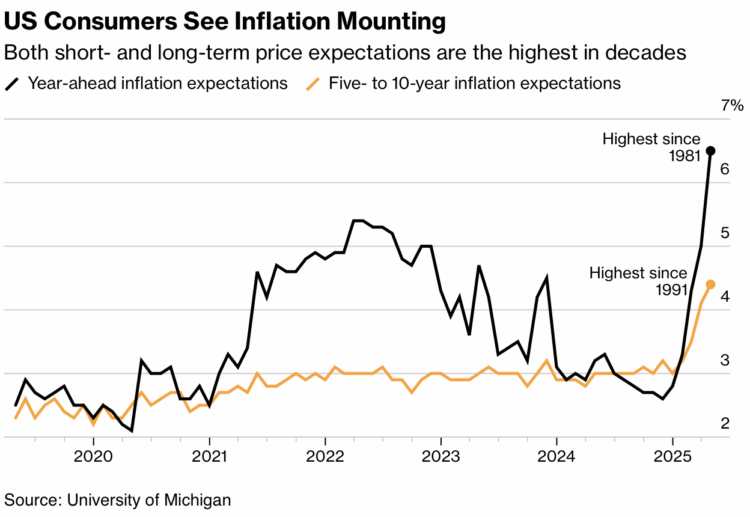
For Bloomberg, Mark Niquette and Gregory Korte charted the economy, which is complex and can’t be shown with a single metric, so they showed several, such as inflation expectations:

For Axios, Jacque Schrag and Natalie Daher used a timeline of events, color coded by type:

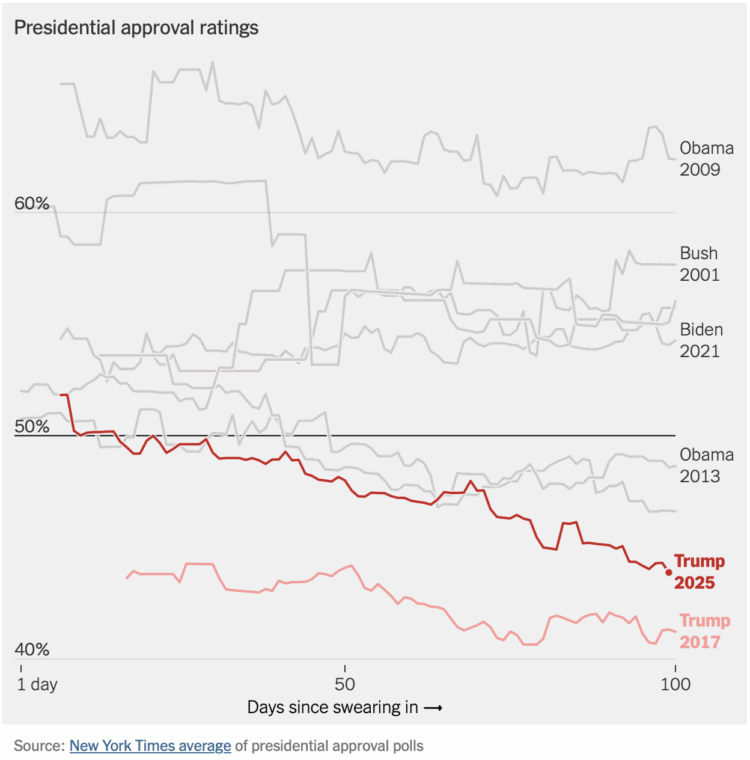
Irineo Cabreros and Aatish Bhatia, for NYT’s the Upshot, used eight charts, closing with approval rating:

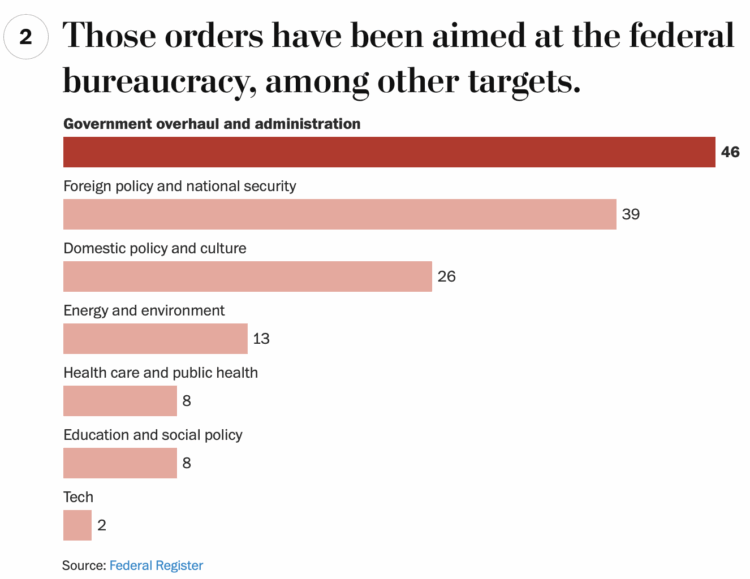
Not to be outdone, the Washington Post used ten charts and made sure to number them. On executive orders aimed at the bureaucracy:

Financial Times (paywalled) also went with ten charts to show the first 100 days. Reuters used 47 photos instead.

I am sure there were many more, but you get the picture.

Tags: economy, government

04 May 14:17

North Korea Stole Your Job

by Bobbie Johnson
For years, North Korea has been secretly placing young IT workers inside Western companies. With AI, their schemes are now more devious—and effective—than ever.
04 May 14:15

Texas Senate Approves Legislation to Clarify Exceptions to Abortion Ban

by by Cassandra Jaramillo and Lizzie Presser

by Cassandra Jaramillo and Lizzie Presser

ProPublica is a nonprofit newsroom that investigates abuses of power. Sign up to receive our biggest stories as soon as they’re published.

The Texas Senate has unanimously passed legislation that aims to prevent maternal deaths under the state’s strict abortion ban.

Written in response to a ProPublica investigation last year, Senate Bill 31, called The Life of the Mother Act, represents a remarkable turn among the Republican lawmakers who were the original supporters of the ban. For the first time in four years, they acknowledged that women were being denied care because of confusion about the law and took action to clarify its terms.

“We don’t want to have any reason for hesitation,” said Republican state Sen. Bryan Hughes, who authored the state’s original abortion ban and sponsored this reform with bipartisan input and support. Just last fall, he had said the law he wrote was “plenty clear.”

The bill stops short of removing what doctors say are the ban’s biggest impediments to care, including its major criminal penalties, and doesn’t expand abortion access to cases of fetal anomalies, rape or incest. Sen. Carol Alvarado, the Democratic lawmaker who co-authored the bill, said that its limits were a “real hard pill to swallow” but that it could still make a difference. “I believe this bill will save lives,” she said.

ProPublica’s reporting showed how doctors in states that ban abortion have waited to intervene in cases where women ultimately died of high-risk complications.

To address that problem, Senate Bill 31 states that a life-threatening medical emergency doesn’t need to be “imminent.” It also says doctors can terminate ectopic pregnancies, which occur when the fertilized egg implants outside of the uterine cavity. It would allow for a pregnant patient to receive cancer treatment, Hughes said, even if doing so threatened the viability of a fetus.

The bill also clarifies that medical staff or hospital officials can discuss termination with patients without violating a provision of the law that criminalizes “aiding and abetting” an abortion. It had been unclear to doctors whether simply discussing the option could lead to steep criminal penalties; patients have reported not being able to get straight answers from their providers about their prognosis and options for treatment.

It remains to be seen how the bill, if made law, would be interpreted by doctors and hospitals, and whether risk-averse institutions would still delay care during pregnancy complications.

Many reproductive rights advocates are skeptical given that the bill does not explicitly address many high-risk pregnancy complications. The most common one in the second trimester, previable premature rupture of membranes, or PPROM, occurs when someone’s water breaks early. In these cases, the chance of the fetus surviving is low, but delaying a pregnancy termination leaves the patient at risk of infection, which can lead to sepsis, a potentially deadly condition. Since the state banned abortion, lawyers at many hospitals across Texas have advised physicians not to empty the uterus until they can document signs of infection — an indication of a life-threatening emergency.

The death of Josseli Barnica, which ProPublica reported last year, reveals the dangers of forcing miscarrying patients to wait for care. Diagnosed with an “inevitable” miscarriage at 17 weeks, she showed symptoms similar to PPROM without an official diagnosis — her water had not yet broken. While stable, she was made to wait 40 hours until the fetal heartbeat ended before doctors induced delivery. She later died of sepsis, which medical experts say she likely developed because of the wait.

In addition to documenting cases in which women died of sepsis, ProPublica has shown how rates of the potentially deadly complication spiked by more than 50% statewide in second-trimester pregnancy-loss hospitalizations after Texas banned abortion.

Officials with the Texas Medical Association, the Texas Hospital Association and major anti-abortion groups — Texas Right to Life, Texas Alliance for Life and the American Association of Pro-Life OB-GYNs — told ProPublica they believed that this bill would now allow doctors to offer a termination at the point of a PPROM diagnosis, before infection set in.

Dr. Zeke Silva, chair of the Texas Medical Association’s Council on Legislation, included PPROM on a list of potentially life-threatening conditions he believed may fall under the bill’s clarified exception. The list, which is not exhaustive, includes preeclampsia, renal failure, liver failure, cardiac disease, pulmonary hypertension and neurological conditions. He added that decisions to intervene because a medical condition could be life-threatening “are, by definition, subjective, based on multiple clinical considerations” and must be based on “sound medical judgment.”

However, ProPublica spoke with six legal experts who said they were unsure whether hospitals, wary of litigation or penalties, would interpret the bill to mean that doctors can offer a termination to patients with PPROM.

Some PPROM patients can remain pregnant for weeks and not develop infections, while others can contract an infection and deteriorate very quickly, noted Molly Duane, a senior staff attorney at the Center for Reproductive Rights. “I could see some doctors saying this means, ‘I have more leeway to intervene in all PPROM cases,’ and others saying, ‘I still don’t know, so I’ll wait until signs of infection.’”

The largest association of OB-GYNs, the American College of Obstetricians and Gynecologists, said in an emailed statement that it did not support the bill: “This bill would keep Texas’ abortion ban in place and we strongly oppose the abortion ban and will continue to do so.”

Yesterday, the Texas Senate also passed Bill 2880, which would authorize civil lawsuits against anyone in or outside of Texas who distributes or provides abortion medication to someone in the state. It is expected to face pushback in the state House.

The Life of the Mother Act now goes to the House, where it must be voted out of committee before it heads to the House floor. Both chambers would need to agree on a final version before the governor could sign it into law.
03 May 20:16

Eric Schmidt apparently bought Relativity Space to put data centers in orbit

by Eric Berger

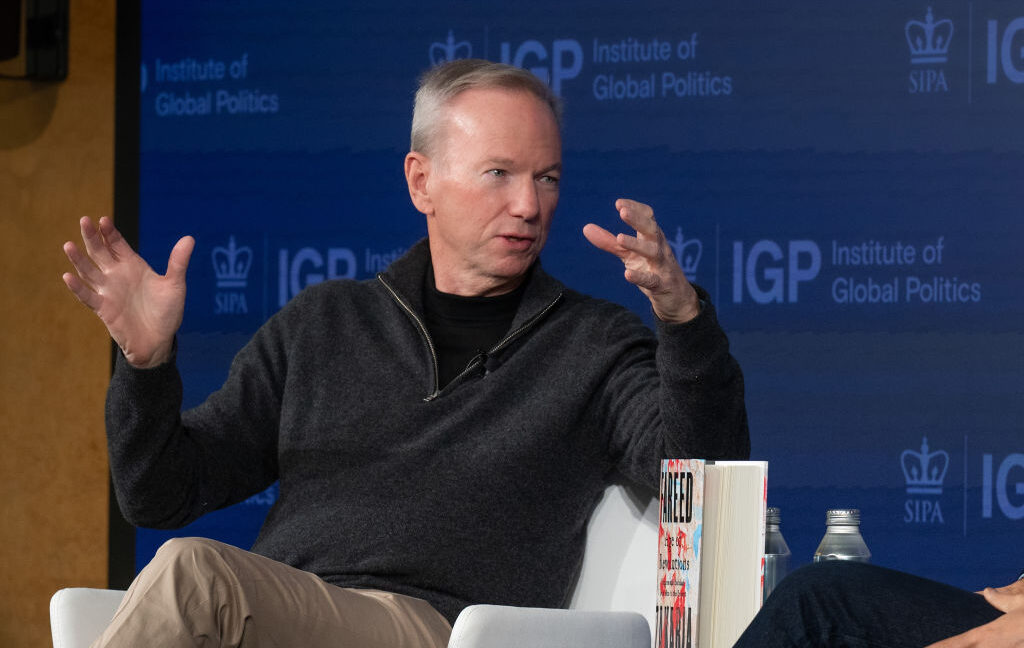
In the nearly two months since former Google chief executive Eric Schmidt acquired Relativity Space, the billionaire has not said much publicly about his plans for the launch company. However, his intentions for Relativity now appear to be increasingly clear: He wants to have the capability to launch a significant amount of computing infrastructure into space.

We know this because Schmidt appeared before the House Committee on Energy and Commerce during a hearing in April, speaking on the future of AI and US competitiveness. Among the topics raised then was the need for more electricity—both renewable and non-renewable—to power data centers that will facilitate the computing needs for AI development and applications. Schmidt noted that an average nuclear power plant in the United States generates 1 gigawatt of power.

"People are planning 10 gigawatt data centers," Schmidt said. "Gives you a sense of how big this crisis is. Many people think that the energy demand for our industry will go from 3 percent to 99 percent of total generation. One of the estimates that I think is most likely is that data centers will require an additional 29 gigawatts of power by 2027, and 67 more gigawatts by 2030. These things are industrial at a scale that I have never seen in my life."

Read full article

Comments

03 May 19:55

Texas goes after toothpaste in escalating fight over fluoride

by Beth Mole

Texas Attorney General Ken Paxton is investigating two leading toothpaste makers over their use of fluoride, suggesting that they are "illegally marketing" the teeth cleaners to parents and kids "in ways that are misleading, deceptive, and dangerous."

The toothpaste makers in the crosshairs are Colgate-Palmolive Company, maker of Colgate toothpastes, and Proctor & Gamble Manufacturing Co., which makes Crest toothpastes. In an announcement Thursday, Paxton said he has sent Civil Investigative Demands (CIDs) to the companies.

The move is an escalation in an ongoing battle over fluoride, which effectively prevents dental cavities and improves oral health. Community water fluoridation has been hailed by health and dental experts as one of the top 10 great public health interventions for advancing oral health across communities, regardless of age, education, or income. But, despite the success, fluoride has always had detractors—from conspiracy theorists in the past suggesting the naturally occurring mineral is a form of communist mind control, to more recent times, in which low-quality, controversial studies have suggested that high doses may lower IQ in children.

Read full article

Comments

30 Apr 14:10

Republicans want to tax EV drivers $200/year in new transport bill

by Jonathan M. Gitlin

WASHINGTON, DC—The House Transportation and Infrastructure Committee will meet today to discuss its proposed budget legislation, and there's a doozy in there for drivers of electric vehicles and hybrids. As part of the Republican Party's ongoing war against science and the environment under President Trump, committee chairperson Sam Graves (R-Mo.) has included some new annual fees that will cost all drivers some, but some drivers more.

Republicans plan to use the budget reconciliation process to pass this legislation, which is an expedited process that removes some of the US Senate's ability to stall. They're proposing a new annual federal motor vehicle registration fee, which state DMVs would have to collect and pass back to the federal government.

If it passes, all battery EVs would be subject to a new $200 tax. Hybrids—defined as vehicles that are propelled by both an electric motor and an internal combustion engine or other power source (which would include fuel cell EVs)—will pay $100. But someone who commutes 90 miles a day in a particulate-belching Ford F-350 Duramax diesel pickup truck gets away with a mere $20 a year, and only from October 1, 2030; until then they get to drive for free.

Read full article

Comments