There has been much discussion in the space community recently about building large data centers in orbit to avoid the environmental consequences of sprawling computing facilities on Earth. These space-based data centers could take advantage of the always-on, free fusion reactor at the center of the Solar System.
Proponents say this represents a natural step in the evolution of moving heavy industry off the planet’s surface and a solution for the ravenous energy needs of artificial intelligence. Critics say building data centers in space is technically very challenging and cite major hurdles, such as radiating away large amounts of heat and the cost of accessing space.
It is unclear who is right, but one thing is certain: Such facilities would need to be massive to support artificial intelligence.
Seven years after the first gene-edited babies were revealed, biotech startup Manhattan Genomics is reviving the idea of editing human embryos to make disease-free children.
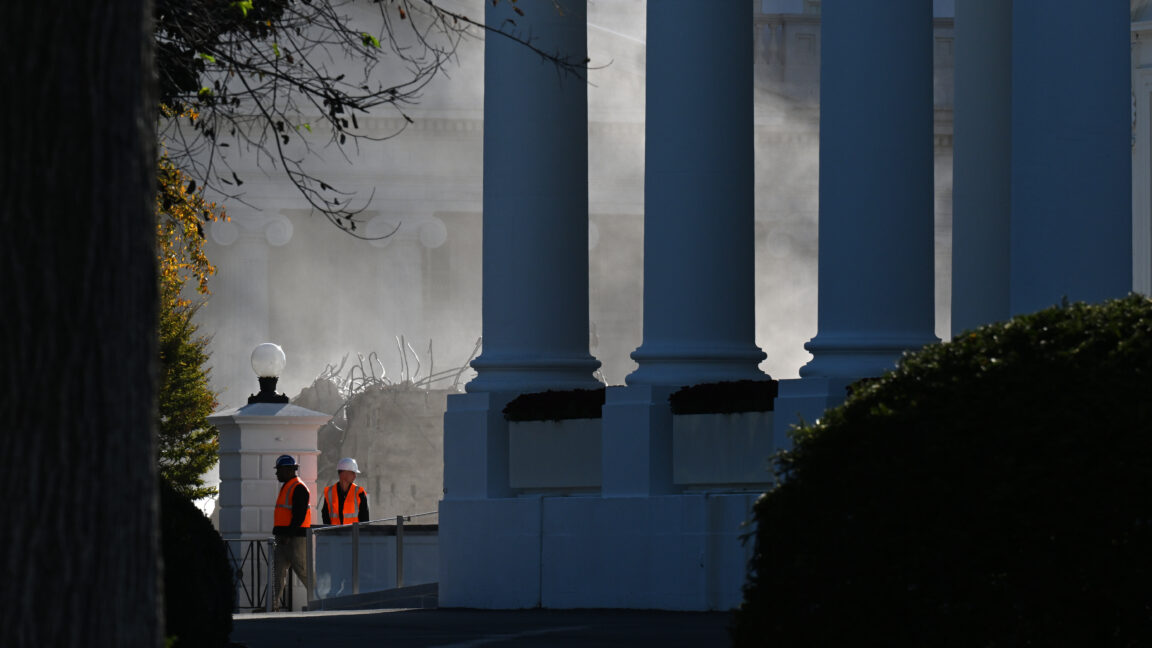
The speedy demolition of the East Wing of the White House last week has health advocates and Democratic lawmakers seeking answers about what efforts were taken, if any, to keep workers and passersby safe from potential plumes of asbestos that could arise from the destruction, according to a report by The Washington Post.
The East Wing was originally constructed in 1902 and was renovated in 1942, and asbestos was used extensively in government buildings during this period, according to the Asbestos Disease Awareness Organization (ADAO), a nonprofit focused on preventing asbestos exposure. Anyone who inadvertently breathes in asbestos fibers launched into the air by construction work could be at heightened risk of lung diseases and cancer.
“Every building of this age must undergo full asbestos inspection and abatement before any demolition begins,” Linda Reinstein, president and cofounder of ADAO, said in a press statement.
You’ll often hear plastic pollution referred to as a problem. But the reality is that it’s multiple problems. Depending on the properties we need, we form plastics out of different polymers, each of which is held together by a distinct type of chemical bond. So the method we use to break down one type of polymer may be incompatible with the chemistry of another.
That problem is why, even though we’ve had success finding enzymes that break down common plastics like polyesters and PET, they’re only partial solutions to plastic waste. However, researchers aren’t sitting back and basking in the triumph of partial solutions, and they now have very sophisticated protein design tools to help them out.
That’s the story behind a completely new enzyme that researchers developed to break down polyurethane, the polymer commonly used to make foam cushioning, among other things. The new enzyme is compatible with an industrial-style recycling process that breaks the polymer down into its basic building blocks, which can be used to form fresh polyurethane.
Government contractors face mounting costs and operational chaos as the federal shutdown stretches every closer to the longest in U.S.
But there’s another problem besides late payments and expired contracts: Companies are frightened and fearful to exercise their legal rights to recoup losses.
“After the DOGE actions to eviscerate USAID and pretty much punish many, many agencies and terminate thousands of contracts, I think the contractor community is tentative to actually enforce their rights,” David Dixon, an attorney at Pillsbury Winthrop Shaw Pittman, said Thursday as part of the law firm's DC Disrupted webinar series.
Dixon said this question he is getting from contractors reveals the depth of their anxiety:
Will the government retaliate against me for simply asking to be reimbursed for costs caused by the shutdown?
Given this is not the first shutdown the market has experienced, the processes for recovering costs are-well established through administrative means such as “requests for equitable adjustment.” Contractors use this process to seek compensation when government delays or changes increase their costs or extend timelines.
“These are regular administrative functions that every contractor should be aware of and should be able to process,” Dixon said. “Requesting an equitable adjustment should be a standard action that shouldn’t cause retaliation at all.”
But contractors are currently caught in a legal and operational vise created by the Anti-Deficiency Act, which prohibits agencies from spending money that hasn’t been allocated.
This means agency contracting officers cannot award new contracts, modify existing ones or exercise contract options.
Dixon shared a story of a company that completed work for a Federal Supply Schedule renewal on the eve of the shutdown. The company was negotiating large orders with customers.
But then the shutdown hit. The contracting officer could not exercise the option and the contract expired. The orders could not be awarded.
“What do they do with their employees now that they can’t get this contract?” Dixon said.
That is just one example of the mounting losses contractors face. Financial damage can accumulate in multiple ways:
Idle labor costs.
Storage expenses if deliverables stack up in warehouses.
Engineering delays as teams wait for approvals.
Contract termination risks because missed deadlines can trigger contract cancellations.
Contractors may have mechanisms to recovers some costs, but the Trump administration has created an atmosphere of fear.
“There was a belief among folks in the administration at the beginning of this shutdown that they could effectively create a little bit of pain for Democratic constituencies by canceling government funding, particularly grants,” said Craig Saperstein, another Pillsbury attorney.
The Office of Management and Budget made early moves to focus on “what we would think of as blue states or blue areas of states,” he said.
The tactic has brought little pressure on Democrats to come to the negotiating table. But Saperstein said the message to contractors is clear – the Trump administration is willing to use federal funding as a political weapon.
"A lot of times clients are finding they don’t want to rock the boat because the landscape’s just too uncertain,” said Aaron Ralph, a third Pillsbury attorney. “They have other awards they want to continue performing on.”
Despite the fear, contractors should not abandon their rights.
Dixon laid out three steps contractors should be taking:
Understand your contracts. Review the clauses that govern suspension of work, stop work orders, delay of work, and changes. Make sure your contract staff understand these clauses.
Document everything. Add memos to files noting what the government was supposed to do, when they did not do it and what the effect was. Accounting line items should track costs needed to be recovered.
Consider timing strategically. Contracts require that companies notify contracting officers within 30 days if they need to make a request for equitable adjustment. Companies should also keep in mind that the Contract Disputes Act gives contractors six years to submit claims from the date they accrue. As Dixon said, "it's not the end of the world" if the customer does not negotiate.
“If you are fearful right now because of the uncertainty in this administration, you should make the request for equitable adjustment as soon as possible,” he said. “But you can wait it out a little bit if you need to.”
It was just last month that Brett Kavanaugh gave his explanation for why it was perfectly okay for Homeland Security goons to profile brown people and detain them based on nothing more than the color of their skin. While his cowardly colleagues in the majority on that shadow docket decision refused to explain their thinking, Kavanaugh actually wrote a concurrence that was so out of touch with reality as to be embarrassing. But at least it was an explanation.
The key bit from him that has stood out is this:
Importantly, reasonable suspicion means only that immigration officers may briefly stop the individual and inquire about immigration status.If the person is a U. S. citizen or otherwise lawfully in the United States, that individual will be free to go after the brief encounter. Only if the person is illegally in the United States may the stop lead to further immigration proceedings.
It’s this weird, privileged, out-of-touch statement that if ICE or CBP stop you for being brown, they’ll let you go as soon as you show them that you’re an American citizen. Of course, we knew at the time that wasn’t true. Hell, there were details that Kavanaugh ignored in that very lawsuit, which Justice Sotomayor called out in her dissent. But literally in this very lawsuit was the documentation of how it wasn’t so simple:
To give just one example,Plaintiff Jason Brian Gavidia is a U.S. citizen who was born and raised in East Los Angelesand identifies as Latino. On the afternoon of June 12, he stepped onto the sidewalk outside of a tow yard in Montebello, California, where he saw agents carrying handguns and military-style rifles. One agent ordered him to “Stop right there” while another “ran towards [him].”The agents repeatedly asked Gavidia whether he is American—and they repeatedly ignored his answer: “I am an American.”The agents asked Gavidia what hospital he was born in—and he explained that he did not know which hospital. “The agents forcefully pushed [Gavidia] up against the metal gated fence, put [his] hands behind [his] back, and twisted [his] arm.” An agent asked again, “What hospital were you born in?” Gavidia again explained that he did not know which hospital and said “East L.A.”He then told the agents he could show them his Real ID. The agents took Gavidia’s ID and his phone and kept his phone for 20 minutes. They never returned his ID.
Drexel law professor Anil Kalhan quickly dubbed these bullshit pretextual stops of US citizens as “Kavanaugh stops” and the name has stuck.
While there is an effort to challenge these further in court, for now the goon squad known as ICE is unleashed even more than usual. We now know that there are at least 170 US citizens who have been held by immigration officials, and there are probably even more not yet accounted for.
It feels like every day we hear about another few:
ICE violently detain father & son walking to school—teenage boy had to be rushed to hospital."I was just going to school," kid cries out. "I'm underage!"The 16-year-old star athlete is a U.S. citizen—agents sent him to the hospital with severe injuries to his back & neck.Houston, Texas.
These Kavanaugh stops are a stain on the American concept of civil liberties and due process, and they should be a stain on Brett Kavanaugh’s legacy. Legal journalist Chris Geidner just ran a piece on 50 days of Kavanaugh stops, and what a shameful moment this is of American bigotry.
Geidner has directly submitted questions to Kavanaugh to see how he feels about all of these Kavanaugh stops that show his claim of “brief encounters” with law enforcement were bullshit:
I asked Justice Kavanaugh on October 14, “Do you have any comment on the ICE stop of Maria Greeley, a U.S. citizen, who was reportedly stopped, ziptied, and told she didn’t ‘look like’ a ‘Greeley’ despite being a U.S. citizen?“
On both occasions, I also asked Kavanaugh whether he still thinks he was correct when he wrote that these stops are “typically brief” and that all of this is fine because “individuals may promptly go free after making clear to the immigration officers that they are U. S. citizens or otherwise legally in the United States.”
Finally, I asked Kavanaugh if he was aware of the “Kavanaugh stop” terminology and whether he had any comment on it.
[….]
So, I asked Justice Kavanaugh on October 16, “Do you have any comment on the Pro Publica report that found ‘more than 50 Americans who were held after [immigration] agents questioned their citizenship’ during 2025. ‘They were almost all Latino,’ per the report.“
In addition to the other questions previously raised, I also asked Kavanaugh whether “the possibility of after-the-fact ‘excessive force’ claims” is “a sufficient answer to this ongoing, regularly occurring problem?”
Did you guess what happened? Of course you did!
I have not received a response from him or his chambers.
You can already see the horrific legacy that is forming around the concept of Kavanaugh stops. This is a legacy that doesn’t go away easily. It’s like the Dred Scott decision, the Korematsu decision, or Buck v. Bell. Supreme Court decisions that nearly everyone now looks back on in horror.
These are all horrible, hateful decisions by out-of-touch bigots, who can’t even fathom a world in which those less fortunate themselves even matter, and thus their rights and dignity are barely given a second thought.
The Supreme Court still has a chance to fix this, since Kavanaugh stops were only defined by Justice Kavanaugh in a shadow docket concurrence. While those other cases all took decades for everyone to realize how fucked up they were, this one we can see in real time what a stain it is for anyone who believes that America respects basic civil liberties like due process and concepts like probable cause.
But, for now at least, that stain should stick to Brett Kavanaugh. He’s justified this. He’s insisted these kinds of stops are no big deal, even as there was evidence then, and even with more mounting evidence now, that immigration officials don’t give a shit if you are an American citizen. If you’re darker skinned, they can treat you like shit, lock you up, beat you up, ignore your protestations and even evidence of American citizenship.
It is a deep, dark stain on America as a supposed land of freedom, and it should be tied up with Brett Kavanaugh’s legacy forever.
You’re just a commodity in Trump’s marketplace of horrific ideas.
Sure, criminal informants are seldom the trustworthiest of people, what with their stay-out-of-jail free cards being reliant on their steady production of evidence against other people. But the government does make promises to criminal informants that it’s expected to keep, not only to fulfill its legal obligations but to prevent informants from being, you know, beaten, tortured, and killed by those they associate with and rat on.
But when it’s time to eject as many people with brown skin as possible, all bets are off. If you’re a government informant, maybe it’s time to renege on your own obligations before the government gets you killed. When the Trump government sought to deport hundreds of [checks notes] Venezuelans to El Salvador’s torture prison, “world’s coolest dictator” Nayib Bukele had a favor to ask of his own: the return of nine MS-13 gang members.
Here’s the latest bit of callous evil perpetrated by some of the most banally malignant people to ever hold office, as reported by the Washington Post:
Secretary of State Marco Rubio, in a March 13phone call with Salvadoran President Nayib Bukele, promised the request would be fulfilled, according to officials familiar with the conversation. But there was one obstacle: Some of the MS-13 members Bukele wanted were “informants” under the protection of the U.S. government, Rubio told him.
To deport them to El Salvador, Attorney General Pam Bondi would need to terminate the Justice Department’s arrangements with those men, Rubio said. He assured Bukele that Bondi would complete that process and Washington would hand over the MS-13 leaders.
Quite the quid pro quo, stripping people of the protection and safety they’d been guaranteed for the sole purpose of getting the green light for mass deportations of Venezuelan migrants. Well, the sole purpose on the Trump side of the equation. On the other side, there was a benefit beyond a little more burnishing of Bukele’s “tough on crime” reputation.
It was also a key step in hindering an ongoing U.S. investigation into his government’s relationship with MS-13, a gang famous for displays of excessive violence in the United States and elsewhere.
Basically, the State Department and the Trump administration offered up these gang members as literal human sacrifices in order to pursue its mass deportation program. Nothing greases the wheels like blood, I guess, and this administration’s collective hands have been covered with the substance since Trump’s inauguration.
And, as is always the case when authoritarians engage in human trafficking to further their bigoted ideals, the government spokespeople are there to remind everyone that the ends justify the means:
“The Trump Administration’s results speak for themselves,” said Tommy Pigott, a State Department spokesman. “Hardened TdA gang members are back in Venezuela … MS-13 gang members are being prosecuted in the U.S. and El Salvador. And Americans are safer as a result of these incredible efforts.”
Neat. I supposed just summarily executing anyone suspected of drug trafficking would probably put a dent in drug trafficking but that’s the sort of thing we just don’t…. hang on a second. I’m sorry. I’m now being told this is exactly the sort of thing we do, for the first time in our government’s history. My mistake.
At least 32 people have been killed in U.S. strikes on alleged drug boats. The Trump administration has said the U.S. is in a “non-international armed conflict” with drug cartels, arguing that the narcotics they smuggle kill tens of thousands of Americans every year, constituting an “armed attack.”
“When they’re loaded up with drugs, they’re fair game, and every one of those ships were,” President Trump told reporters last week.
Yep. And we’ll never know whether or not these claims have any basis in fact because all of the evidence has been drone-striked to the bottom of the ocean. Instead, we’re just expected to accept the new normal that moves extrajudicial drone strikes from areas of international conflict and into any body of water that might contain boats with Latin/South American citizens in them.
Of course, shitting on informants probably doesn’t even raise red flags in the DEA, ATF, CIA, FBI, or any other agency that used to be primarily concerned with actual criminal cases. Most of those resources are now being spent on pursuing people only suspected of civil violations of immigration law. If you’re from anywhere south of our border, you’re nothing more than meat puppets for a tyrant and his enablers.
A new ICE proposal outlines a 24/7 transport operation run by armed contractors—turning Texas into the logistical backbone of an industrialized deportation machine.
As of this moment, the National Guard is indefinitely prevented from deploying within the Chicagoland area. The court order was issued pending the Supreme Court’s decision to rule on the matter. And because this administration is a walking, talking clown show, the information that SCOTUS is getting on the matter is hilariously stratified depending on who they’re talking to.
President Donald Trump‘s administration has told the U.S. Supreme Court he needs to deploy National Guard troops to the Chicago area in part because local police have failed to respond to what the Justice Department described as mob violence by people protesting his aggressive immigration enforcement.
Those law enforcement agencies have given the nine justices a starkly different account of protests they called limited in scale, detailing in court filings how they have responded on specific dates and explaining how a unified command they set up to coordinate efforts dealt effectively with the demonstrations.
In other words, the Trump administration is pleading the court to let it send armed troops into the third largest city in the country to protect the very people who are essentially telling the court, “Meh, we’re fine.”
That won’t stop Trump, obviously, because this was never really about safety in cities or protecting federal agents. This is purely about pushing to see just how much this administration can get away with and, to go tinfoil hat on you for a moment, to begin putting the chess pieces on the right parts of the board come election time. Major city after major city will see the attempted deployment of armed forces. Trump recently stated that he will send “more than the National Guard” if needed. I’ve seen Independence Day. I know how this works.
So, what protects us from whatever Trump’s version of “checkmate” is? Multiple things, to be sure. Popular uprising. Overcoming whatever obstacles he constructs in the midterm elections. Organizational efforts to undermine his lawless activity wherever possible.
Two Illinois National Guard members told CBS News they would refuse to obey federal orders to deploy in Chicago as part of President Trump’s controversial immigration enforcement mission — a rare act of open defiance from within the military ranks.
“It’s disheartening to be forced to go against your community members and your neighbors,” said Staff Sgt. Demi Palecek, a Latina guardswoman and state legislative candidate from Illinois’s 13th District. “It feels illegal. This is not what we signed up to do.”
Both Palecek and Capt. Dylan Blaha, who is running for Congress in the same district, described growing unease among Guard members after the White House federalized 500 troops – including members of the Illinois and Texas National Guard – to secure federal immigration facilities and personnel in the Chicago area.
“I signed up to defend the American people and protect the Constitution,” Blaha said. “When we have somebody in power who’s actively dismantling our rights — free speech, due process, freedom of the press — it’s really hard to be a soldier right now.”
Some of this isn’t new. In other cities, we’ve had National Guard members displeased with their use as political pawns in mission-less deployments to patrol peaceful cities. But I’m unaware thus far of any instances of them actually refusing orders. Such a refusal, should the order be ultimately deemed lawful, would be grounds for discharge, imprisonment, and so on. It’s a big freaking deal and would generate a ton of attention.
Which is precisely why it needs to happen.
Asked if she would refuse a direct order to deploy to Chicago, Palecek didn’t hesitate. “Absolutely. I would definitely say no,” she said. “I’m not going to go against my community members, my family and my culture. I believe this is the time to be on the right side of history.”
“Look at 1930s, 1940s Germany,” Blaha said. “There is a point where if you didn’t stand up to the Gestapo, are you just actively one of them now?”
It’s worse than that. Nazi Germany didn’t have social media, cell phone cameras, or the internet by which all of this chaos can be shared in real time. Whatever sins the German people committed by failing to stop Hitler’s party when they could, and they very much did commit those sins, it’s still true that the average German wasn’t nearly as informed as to what the Nazis were doing compared with the access to information that the American people have today. No soldier can claim ignorance. If they participate, they are knowingly complicit, full stop.
The scary part is how unfortunately rare this sort of bravery is in the military. In fact, it seems many in the military are fully embracing Trump’s fascistic tendencies.
Both Blaha and Palecek said they’ve faced retaliation for speaking publicly. Blaha disclosed that his security clearance was suspended by the Defense Department after posting a viral video urging soldiers to disobey unlawful orders. “They twisted my words,” he said. “I have about 30 days in order to provide them with a written response.”
Retribution, Palecek added, is “real.” She’s received death threats since denouncing the deployments and launching her political campaign. “It weighs on you mentally after a while,” she said.
Still, both say silence is not an option. “We were trained to stand up for what we believe in and stand up for the American people,” Blaha said.
And stand up for the Constitution, too.
Look, it must be very difficult to be a good person in the National Guard right now. You just never know when you’re going to be asked to do battle with your fellow Americans. But an oath is an oath and we should all expect, not just hope, our soldiers to behave like patriots.
Since launching Google Play (née Android Market) in 2008, Google has never made a change to the US store that it didn’t want to make—until now. Having lost the antitrust case brought by Epic Games, Google has implemented the first phase of changes mandated by the court. Developers operating in the Play Store will have more freedom to direct app users to resources outside the Google bubble. However, Google has not given up hope of reversing its loss before it’s forced to make bigger changes.
Epic began pursuing this case in 2020, stemming from its attempt to sell Fortnite content without going through Google’s payment system. It filed a similar case against Apple, but the company fell short there because it could not show that Apple put its thumb on the scale. Google, however, engaged in conduct that amounted to suppressing the development of alternative Android app stores. It lost the case and came up short on appeal this past summer, leaving the company with little choice but to prepare for the worst.
Google has updated its support pages to confirm that it’s abiding by the court’s order. In the US, Play Store developers now have the option of using external payment platforms that bypass the Play Store entirely. This could hypothetically allow developers to offer lower prices, as they don’t have to pay Google’s commission, which can be up to 30 percent. Devs will also be permitted to direct users to sources for app downloads and payment methods outside the Play Store.
Bari Weiss walked into 60 Minutes and asked the staff: “Why does the country think you’re biased?”
The question stunned them into awkward silence. And it should have—not because it caught them off guard, but because it reveals everything wrong with what passes for journalistic sophistication in our moment.
Let’s be precise about what Weiss is doing. She’s not asking whether 60 Minutes is actually biased. She’s not evaluating their coverage against standards of accuracy, fairness, or adherence to facts. She’s asking why “the country” perceives bias—which treats that perception as fact requiring accommodation regardless of whether the perception corresponds to reality.
This is false balance perfected. The sophisticated move that treats “Trump and his allies say you’re biased” as equivalent evidence to actual journalistic practice. The epistemic surrender that makes public opinion—shaped by coordinated disinformation campaigns, algorithmic manipulation, and deliberate attacks on legitimate journalism—into the arbiter of what counts as fair coverage.
When the President calls judicial review “insurrection,” when his advisers threaten to ignore court rulings, when federal agents conduct warrantless mass detentions—60 Minutes covering these facts isn’t bias. It’s journalism. And when Trump and his allies attack that coverage as partisan, the proper response isn’t “how do we address these perceptions?” It’s “we report what’s happening.”
But Weiss has built a career on reframing accommodation as courage. Her brand rests on the premise that mainstream journalism, academia, and cultural institutions have been captured by the left and need correction toward “balance.” This framework treats asymmetric reality as if it were symmetric controversy—and what the New York Timesreports about her first weeks at CBS reveals how this plays out in practice.
She’s reportedly personally booking Netanyahu, Jared Kushner, and Steve Witkoff—architects of Trump’s Middle East policy—while urging executives to identify newsroom leakers. And she’s asking a newsroom that views itself as nonpartisan to justify why coordinated attacks on them have gained traction. She’s not asking whether Netanyahu’s government has committed actions worthy of critical coverage or whether Trump’s peace plan deserves scrutiny beyond its architects’ preferred framing—she’s ensuring powerful right-wing figures get platforms while shifting the burden from those making false claims to those reporting facts.
This matters because even journalists who genuinely believe they’re defending fairness can fall into this trap. The frame is seductive: “Both sides claim bias, therefore the truth must be somewhere in the middle.” But this only works when both sides operate in good faith. When one side systematically attacks any accountability journalism as partisan while the other tries to report accurately, splitting the difference doesn’t produce balance—it produces capitulation.
The question “why does the country think you’re biased?” does something structurally insidious regardless of Weiss’s intentions. It treats coordinated attacks on legitimate journalism as evidence requiring response rather than as bad-faith manipulation requiring exposure. It makes perceived bias—manufactured through deliberate campaigns—into a problem journalism must solve by changing coverage rather than a weapon journalism must resist by maintaining standards.
The danger isn’t that journalists become propagandists overnight—it’s that they internalize propaganda’s logic while believing they’re protecting neutrality.
This is precisely how authoritarian movements capture journalism without needing to shut it down. You don’t need to close newspapers when you can convince editors that “balance” means giving equal weight to demonstrable lies and documented facts. You don’t need to jail journalists when you can make them internalize the frame that reporting what’s actually happening is “partisan” if it makes one side look bad.
The 60 Minutes staff should have answered her question directly: “The country thinks we’re biased because a coordinated disinformation infrastructure has spent decades attacking any journalism that holds Republican power accountable as ‘liberal media bias,’ and you’re now amplifying that frame by treating their attacks as legitimate concerns requiring our accommodation rather than as bad-faith manipulation requiring our resistance.”
But they sat in stunned silence instead. Because Weiss is now their boss. And her early choices clarify what she values: access to powerful right-wing newsmakers, concern about perceptions shaped by those attacking journalism, and the sophisticated frame that treats “both sides say the other is biased” as evidence requiring split-the-difference coverage.
This is how journalism dies. Not through crude censorship but through sophisticated editors who convince themselves that accommodation of authoritarian narratives is “balance,” that platforming power without sufficient scrutiny is “access,” that treating coordinated attacks as legitimate criticism is “taking concerns seriously.”
Two plus two equals four. Federal agents conducting warrantless mass detentions violates the Fourth Amendment. Stephen Miller calling judicial review “insurrection” is authoritarian rejection of constitutional governance. Covering these facts is journalism. Treating coverage of these facts as evidence of bias is surrender.
Bari Weiss is editor-in-chief of CBS News. And her first major act was asking the network’s flagship program to justify why they’re perceived as biased for doing their jobs. That tells you everything about what she’ll demand they stop doing—and why her version of “balance” is just authoritarianism with better branding.
Mike Brock is a former tech exec who was on the leadership team at Block. Originally published at his Notes From the Circus.
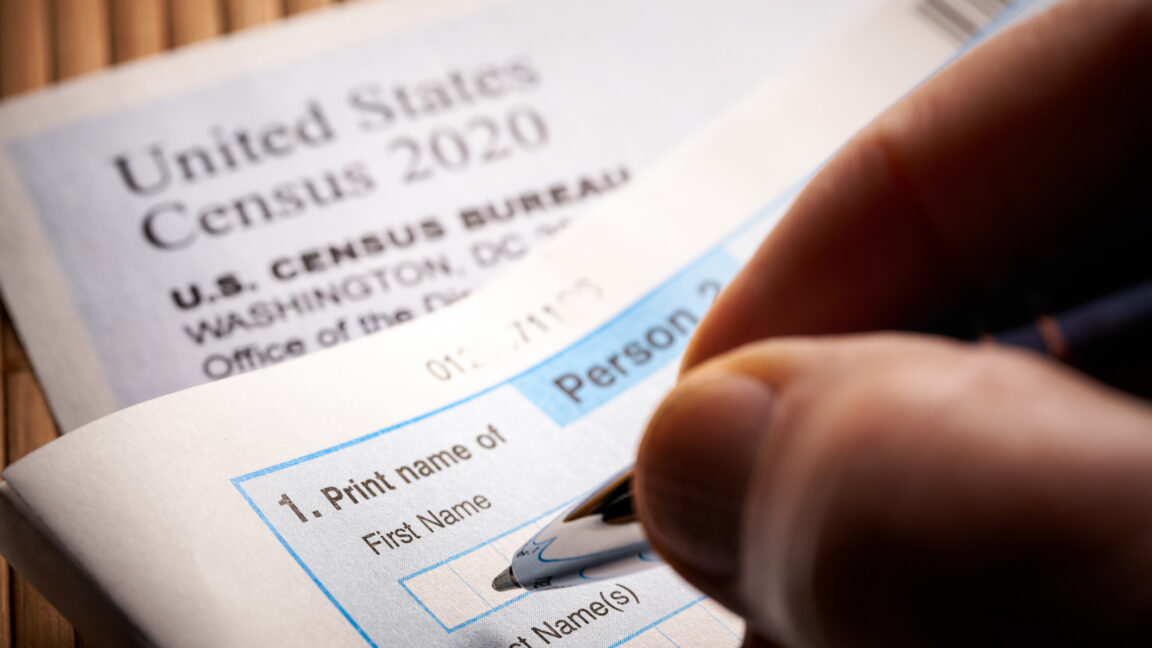
President Donald Trump and the Republican Party have spent the better part of the president’s second term radically reshaping the federal government. But in recent weeks, the GOP has set its sights on taking another run at an old target: the US census.
Since the first Trump administration, the right has sought to add a question to the census that captures a respondent’s immigration status and to exclude noncitizens from the tallies that determine how seats in Congress are distributed. In 2019, the Supreme Court struck down an attempt by the first Trump administration to add a citizenship question to the census.
But now, a little-known algorithmic process called “differential privacy,” created to keep census data from being used to identify individual respondents, has become the right’s latest focus. WIRED spoke to six experts about the GOP’s ongoing effort to falsely allege that a system created to protect people’s privacy has made the data from the 2020 census inaccurate.
Donald Trump just cut off all trade negotiations with Canada because an Ontario ad campaign quoted Ronald Reagan accurately. The quotes are real. The context is accurate. But Trump called them “fake” and “fraudulent,” and the Reagan Foundation—the institution literally tasked with preserving Reagan’s legacy—backed him up by lying about what their own guy said and even threatening frivolous litigation in support of Trump’s temper tantrum.
Now, thanks to Trump’s meltdown, millions more people are watching Reagan’s actual words. And learning that Trump’s entire tariff philosophy directly contradicts what Reagan believed and said.
The ad that triggered all this is pretty straightforward. A few weeks ago, Ontario Premier Doug Ford launched a $75 million campaign using clips from a 1987 Ronald Reagan radio address about the evils of tariffs and the benefits of free trade. You can see it here:
Ford’s politics are often Trumpian, but he’s not backing down from a stupid trade war. So he pulled Reagan’s own words and ran them as a 60-second spot.
The ad campaign is definitely targeting Republicans and business execs. It first ran on the very MAGA Newsmax and the very business-focused Bloomberg, but has been expanding to Fox News (of course), CNBC, CBS, ABC, ESPN and others.
Apparently, somewhere this week, Donald Trump saw it, and it made him sad. And when Donald Trump gets sad, he lashes out like a six-year-old. He claimed that the ad was “fake” and because of that he was cutting off all trade negotiations with Canada.
If you can’t see that image, it’s Trump spewing on social media:
The Ronald Reagan Foundation has just announced that Canada has fraudulently used an advertisement, which is FAKE, featuring Ronald Reagan speaking negatively about Tariffs. The ad was for $75,000. They only did this to interfere with the decision of the U.S. Supreme Court, and other courts. TARIFFS ARE VERY IMPORTANT TO THE NATIONAL SECURITY, AND ECONOMY, OF THE U.S.A. Based on their egregious behavior, ALL TRADE NEGOTIATIONS WITH CANADA ARE HEREBY TERMINATED. Thank you for your attention to this matter! President DJT
So, first off, it’s a bit weird to cut off all negotiations with Canada based on an ad from one province, Ontario, which is run by a politician from a different party than the Prime Minister. But, okay.
But the bigger issue is the claim that the Reagan quotes are “fake” or “fraudulent.” They’re not. The Reagan Foundation put out this statement, and the only “misrepresentation” is in the Foundation’s own statement:
That one says:
The Ronald Reagan Presidential Foundation and Institute learned that the Government of Ontario, Canada, created an ad campaign using selective audio and video of President Ronald Reagan delivering his “Radio Address to the Nation on Free and Fair Trade,” dated April 25, 1987. The ad misrepresents the Presidential Radio Address, and the Government of Ontario did not seek nor receive permission to use and edit the remarks.
The Ronald Reagan Presidential Foundation and Institute is reviewing its legal options in this matter. We encourage you to watch President Reagan’s unedited video on our YouTube channel.
So, first off, note the difference between what the Foundation said and what Trump said. The Foundation claims that the ad is “using selective audio” in a way that “misrepresents” Reagan. Trump took that claim (which was already bullshit) and said it means the ad is “fake” and “fraudulent.” It is neither.
The Foundation also suggests it might sue, which is laughable. They have no claim here and any attempt to go to court would fail, and fail in an embarrassing manner.
The Ronald Reagan Presidential Foundation has gone fully Trumpy—their website is packed with MAGA interviews—and now they’re lying about what Reagan actually said and believed. The institution designed to preserve his legacy is rewriting it to please Donald Trump.
It’s pathetic.
But, of course, the Streisand Effect kicks in, and now everyone can watch what Ronald Reagan actually said in that address:
It’s only five minutes long. Every quote in the Ontario ad is in there, accurate both in text and in context. The speech was framed around Reagan’s decision to impose tariffs on certain Japanese products in response to Japan dumping below-market semiconductors, which Reagan argued violated an earlier agreement.
However, he was quite clear throughout that he was a strong believer in free trade and against tariffs, and he was only doing this, regretfully, in response to Japan violating an earlier trade agreement.
Reagan explicitly contradicted Trump’s claim that tariffs are “very important to the national security and economy of the US.” Reagan said the opposite.
Incredibly, Trump freaking out and lying about this ad is making many more people watch it and learn what Reagan actually said about tariffs and free trade. Even CNN, which pretty typically just repeats whatever Trump says, is pointing out that Trump’s claims here are nonsense and Reagan very clearly spoke out against tariffs.
On top of all this, Canada is now cutting trade deals with China and other countries in Asia. This is effectively pushing our closest ally into the waiting arms of our biggest economic rival.
This is stunningly bad policy: a foreseeable disaster stemming from a stupid approach to trade, kicked into overdrive by a presidential temper tantrum over accurate quotes from a politician many in the MAGA world pretend to idolize. Trump lied. The Reagan Foundation lied to back him up. And now Canada is cutting deals with China while the world learns that Reagan explicitly opposed everything Trump claims tariffs accomplish.
Congratulations to everyone involved. You’ve Streisanded the world into a history lesson, and handed China a trade partner in the process.
One in six laboratory-confirmed bacteria in 2023 proved resistant to antibiotic treatment, according to the World Health Organization—all related to a variety of common diseases globally.
NASA acting Administrator Sean Duffy made two television appearances on Monday morning in which he shook up the space agency’s plans to return humans to the Moon.
Speaking on Fox News, where the secretary of transportation frequently appears in his acting role as NASA chief, Duffy said SpaceX has fallen behind in its efforts to develop the Starship vehicle as a lunar lander. Duffy also indirectly acknowledged that NASA’s projected target of a 2027 crewed lunar landing is no longer achievable. Accordingly, he said he intended to expand the competition to develop a lander capable of carrying humans down to the Moon from lunar orbit and back.
“They’re behind schedule, and so the President wants to make sure we beat the Chinese,” Duffy said of SpaceX. “He wants to get there in his term. So I’m in the process of opening that contract up. I think we’ll see companies like Blue [Origin] get involved, and maybe others. We’re going to have a space race in regard to American companies competing to see who can actually lead us back to the Moon first.”
Google’s Fi cellular service is getting an upgrade, and since this is 2025, there’s plenty of AI involved. You’ll be able to ask Google AI questions about your bill, and a different variation of AI will improve call quality. AI haters need not despair—there are also some upgrades to connectivity and Fi web features.
As part of this update, a new Gemini-powered chatbot will soon be turned loose on your billing statements. The idea is that you can get bill summaries and ask specific questions of the robot without waiting for a real person. Google claims that testers have had positive experiences with the AI billing bot, so it’s rolling the feature out widely.
Next month, Google also plans to flip the switch on an AI audio enhancement. The new “optimized audio” will use AI to filter out background sounds like wind or crowd noise. If you’re using a Pixel, you already have a similar feature for your end of the call. However, this update will reduce background noise on the other end as well. Google’s MVNO has also added support for HD and HD+ calling on supported connections.
There are levels of corruption, and then there’s whatever the hell this is.
Donald Trump is demanding that American taxpayers pay him $230 million for being prosecuted. Which is like getting a speeding ticket and then billing the state for the cost of your traffic lawyer. Except in this case, the traffic lawyer is now the judge, and the judge gets to decide how much the state pays you and you get to approve it all, and somehow this is all legal because we’ve apparently given up on the concept of shame.
The New York Times reports that Trump has filed what’s known as administrative claims demanding approximately $230 million in compensation from the Department of Justice for two federal investigations, including one that led to indictments—investigations that only stopped because he won the 2024 election.
According to the Justice Department manual, settlements of claims against the department for more than $4 million “must be approved by the deputy attorney general or associate attorney general,” meaning the person who oversees the agency’s civil division.
The current deputy attorney general, Mr. Blanche, served as Mr. Trump’s lead criminal defense lawyer andsaid at his confirmation hearingin February that his attorney-client relationship with the president continued. The chief of the department’s civil division, Stanley Woodward Jr., represented Mr. Trump’s co-defendant, Walt Nauta, in the classified documents case. Mr. Woodward has also represented a number of other Trump aides, including Mr. Patel, in investigations related to Mr. Trump or the Capitol riot on Jan. 6, 2021.
This is not normal. This has never been normal. This will never be normal. Although at this point, “normal” is doing a lot of work there, given that we’re living in a timeline where a business failure reality TV host became president, tried to overturn an election, got indicted for stealing classified documents, got re-elected, embraced every authoritarian instinct, and is now suing the government for having the audacity to notice.
According to the Times, Trump submitted two separate administrative claims through a standard government process that typically precedes lawsuits, but can also be used to “negotiate” a settlement. The first claim, filed in late 2023, seeks damages for the Russia investigation and Robert Mueller’s well-publicized (though often misrepresented) probe into Russia’s attempt to influence the 2016 election.
The second, filed in summer 2024, targets the FBI’s search of Mar-a-Lago and the subsequent prosecution for mishandling classified documents—you know, the prosecution where Trump was literally caught on tape discussing how he couldn’t declassify the documents he was showing people, and where there were famously boxes of sensitive documents stored in places like a bathroom at Mar-a-Lago.
The second claim accuses the government of “malicious prosecution” intended to sway the election:
Attorney General Garland FBI Director Wray and Special Counsel Smith’s targeting indictment and harassment of President Trump has always been malicious political prosecution aimed at affecting an electoral outcome to prevent President Trump from being re elected This malicious prosecution led President Trump to spend tens of millions of dollars defending the case and his reputation
By this logic, every criminal defendant should be able to bill taxpayers for their legal fees. And the FBI Director supposedly orchestrating this “harassment”? Christopher Wray, whom Trump personally appointed after firing James Comey. Why would he want to go after Trump?
But let’s get back to the craziest part: Trump’s former personal lawyers, now in government positions specifically because Trump appointed them, get to decide whether the government should pay their former client (and current boss) hundreds of millions of dollars for prosecuting him.
As legal ethics professor Bennett Gershman told the Times:
“What a travesty,” said Bennett L. Gershman, an ethics professor at Pace University. “The ethical conflict is just so basic and fundamental, you don’t need a law professor to explain it.”
He added: “And then to have people in the Justice Department decide whether his claim should be successful or not, and these are the people who serve him deciding whether he wins or loses. It’s bizarre and almost too outlandish to believe.”
This is amazing for multiple reasons, including that the NY Times did its usual “view from nowhere” cop-out of trying to find an expert to give them a quote because the NY Times house style is never to directly call out bullshit for being bullshit. And even that guy is like “dog, you don’t need an expert. Literally everyone can see this is the most corrupt bullshit imaginable.”
CNN’s Kaitlan Collins asked Trump directly about the claims. His response is worth reading in full because he essentially admits everything:
COLLINS: The NYT is reporting your legal team is seeking $230 million from your own DOJ now in response to the investigations into you. Is that something you want?TRUMP: It could be, yeah. I don't even talk to them about it. All I know is they would owe me a lot of money. They rigged the election.
COLLINS: The NY Times is reporting your legal team is seeking $230 million from your own Justice Department now in response to the investigations into you. Is that something you want?
TRUMP: It could be, yeah. I don’t even know what the numbers… I don’t even talk to them about it. All I know is they would owe me a lot of money, but I’m not looking for money. I’d give it to charity or something…. But look, they rigged the election.
“They rigged the election.” There it is. Trump’s entire justification for demanding a quarter billion dollars from taxpayers rests on his repeatedly debunked lie that the 2020 election was stolen from him. The same lie that led to January 6th. The same lie that has been rejected by every court that examined it, including judges Trump himself appointed. The same lie that even his own Attorney General, Bill Barr, said was “bullshit.”
Trump then tries to bolster his case by pointing to recent settlements:
As you know, in one case, 60 Minutes had to pay us a lot of money. George “Slopadopulous” had to pay us a lot of money and they already paid. You know, they paid me a lot of money.
Let’s be clear about those “settlements”: ABC and CBS didn’t settle because Trump’s claims had merit. They settled because fighting Trump—who controls the federal government and has repeatedly threatened to use that power against media companies—became too expensive and risky. And, in the case of 60 Minutes, it happened because Shari Redstone needed FCC chair Brendan Carr’s approval to sell Paramount, and everyone knew that wouldn’t be approved without paying Trump. Those settlements aren’t vindication; they’re protection money. They’re evidence of the exact kind of corrupt pressure campaign Trump is now trying to formalize by demanding payment from the government itself.
But then—and I want you to really appreciate this—he just admits the whole scam on camera:
Now, with the country, it’s interesting. Because I’m the one that makes the decision, right? And, you know, that decision would have to go across my desk.And it’s awfully strange to make a decision where I’m paying myself.[Turns to look over his shoulder]. Did you have one of those cases where you have to decide how much you’re paying yourself in damages?
No, Donald. It’s not “interesting.” It’s a conflict of interest. “Interesting” is when you learn that octopuses have three hearts. This is just corrupt. It’s bad. You’re not supposed to be in a position where you’re both the plaintiff demanding money and the defendant deciding whether to pay it out of the coffers of the US Treasury.
And it’s even worse, though he never acknowledges this, because it’s him deciding how much of the taxpayers’ dollars he gets to transfer to his own bank account. By himself. It’s horrifically corrupt, as anyone can see.
He tries to salvage this with a throwaway line about charity:
But I was damaged very greatly and any money that I would get I would give to charity.
Sure you would. This is the same Donald Trump whose charitable foundation was shut down in 2018 after a lawsuit found it had engaged in “a shocking pattern of illegality” including using charitable funds to settle business disputes, buy portraits of himself, and make illegal campaign contributions. The same Donald Trump who admitted in that case to misusing charitable funds and was ordered to pay $2 million in damages. The same Donald Trump who appears constitutionally incapable of doing anything that doesn’t personally enrich him.
But even if we believed him—even if he pinky-swore to give every penny to charity—the entire premise is corrupt. If the money should go to a good cause, how about leaving it in the federal treasury? You know, the one that’s currently empty because the government is shut down and can’t pay its bills?
Let’s zoom out for a moment, because the specific details of Trump’s grift can obscure just how unprecedented this is.
The government almost never pays compensation to people it prosecutes, even in cases of actual wrongful prosecution. When someone is exonerated after being wrongly convicted, many states don’t provide any compensation at all, and those that do typically cap it at levels far below what Trump is demanding. The idea that you deserve compensation simply for being prosecuted—when the prosecution was based on actual evidence of actual crimes you actually committed—is lunacy.
The Russia investigation that Trump claims he deserves compensation for resulted in 34 indictments, seven guilty pleas, and five people sentenced to prison. The special counsel’s report explicitly did not exonerate Trump, instead noting that if they had confidence Trump didn’t commit a crime, they would have said so. The investigation was not “malicious prosecution”—it was a legitimate investigation into serious matters of national security.
Did some people exaggerate the extent of what Mueller would find? Sure. But there remains no evidence that the investigation itself was improper. Indeed, the exact opposite is true. The investigation was done, it found some clear evidence of law breaking, and that resulted in some people going to prison.
The classified documents case was even more clear-cut. The FBI found over 300 classified documents at Mar-a-Lago, despite Trump’s lawyers claiming they’d returned everything. The evidence included surveillance footage showing Trump’s employees moving boxes of documents around to hide them from investigators. Trump was literally recorded discussing how he couldn’t declassify documents but was showing them to people anyway. This wasn’t a witch hunt—it was an open-and-shut case that only ended because Trump won an election.
And now he wants taxpayers to pay him for it.
Perhaps most disturbing is what Trump’s own comments reveal about how thoroughly he’s corrupted the Justice Department. When asked about the claims, he said, “I don’t even talk to them about it”—implying that his subordinates are pursuing this on his behalf without his direct involvement. This is almost certainly false (Trump has never been shy about directing his personal legal affairs), but even if it were true, it would mean the Justice Department is so thoroughly captured that officials are proactively working to enrich the president without being asked.
The Times notes that “administrative claims are not technically lawsuits” and that “such complaints are submitted first to the Justice Department… to see if a settlement can be reached without a lawsuit in federal court.” In other words, this is all happening behind closed doors, with no public scrutiny, no judicial scrutiny, and the Justice Department has the discretion to simply cut Trump a check.
Oh, and also this:
The Justice Departmentdoes not specifically require a public announcement of settlementsmade for administrative claims before they become lawsuits. If or when the Trump administration pays the president what could be hundreds of millions of dollars, there may be no immediate official declaration that it did so, according to current and former department officials.
Trump could pocket hundreds of millions in taxpayer money, approved by his own lawyers, and there might be no public record.
And if you think that there’s some sort of ethics rules in place to stop it, Attorney General Pam Bondi seems to have made sure nothing stands in the way here:
A White House spokeswoman referred questions to the Justice Department. Asked if either of those top officials would recuse or have been recused from overseeing the possible settlement with Mr. Trump, a Justice Department spokesman, Chad Gilmartin, said, “In any circumstance, all officials at the Department of Justice follow the guidance of career ethics officials.”
In July, Ms. Bondi fired the agency’s top ethics adviser.
Mr. Trump famously hates recusals. He complained bitterly after his first attorney general, Jeff Sessions, withdrew from overseeing the Russia investigation that is now the subject of one of his demands for money.
Trump seems to have taken the joke “no conflict, no interest!” to heart.
Look, we’ve become numb to Trump’s corruption. Every day it’s a new batshit thing, and honestly, I’m exhausted. But this one deserves to break through the noise because it’s not complicated.
The President is demanding the government pay him $230 million for investigating his crimes and prosecuting him. His own lawyers get to approve it. He’s justifying it with the Big Lie. The government is shut down and can’t pay its bills, but sure, let’s cut Trump a check. And he’s doing all of this while admitting on camera that it’s “interesting” he gets to decide how much to pay himself.
This is just theft. The president is looting the treasury, and the only people who can stop him are the Justice Department he controls, the Congress that won’t hold him accountable, and the Supreme Court that already gave him immunity for crimes.
So yeah, he’ll probably get away with it. Because we’ve built a system where the most powerful person in the country can openly steal from us and face no consequences. Trump didn’t break the system—he just realized it was already broken and decided to take advantage.
And honestly? The fact that he can admit all of this on camera and still expect to cash the check is perhaps the most depressing part of all.
I recognize that this is like the fourth impeachable thing he’s done in the past week alone, and with each new horror the old one slides off the front pages, but really, this one deserves extra attention. At a time when the government is shut down, prices everywhere are rising, and the economy is stalling, Donald Trump is looking to personally enrich himself with a quarter of a billion dollars from the US Treasury.
This is a shockingly brazen level of corruption, even for Donald Trump. And we shouldn’t let it just slide away.
Elon Musk is having a very bad week. The man who bought Twitter for $44 billion to secure unaccountable power over public discourse is discovering what unaccountable power actually looks like when wielded by someone who understands dominance better than he does.
Trump just stripped SpaceX of a government contract and handed it to Jeff Bezos. Musk’s response? Rage-tweeting at Trump officials, including the immortal question “why are you gay”—the rhetorical sophistication we’ve come to expect from the richest man-child on the planet having a public meltdown because Daddy won’t give him what he wants.
This isn’t just delicious schadenfreude, though it is that. This is the neo-reactionary project—the Silicon Valley movement to restore hierarchy and reject democratic constraints—consuming its architects in real-time. A perfect demonstration that the oligarchs funding authoritarian politics fundamentally misunderstood what they were building.
They thought they were buying hierarchy with themselves at the top. They’re discovering that authoritarian hierarchy doesn’t work that way. It requires constant demonstration of dominance through arbitrary humiliation of subordinates. There are no stable positions. No guaranteed seats at the table. No amount of money that exempts you from being the example.
Musk thought he’d bought partnership. He bought the privilege of being degraded publicly.
This is what Peter Thiel and Curtis Yarvin and the entire Silicon Valley neo-reactionary apparatus never quite explained to their fellow travelers: In the systems they’re building, someone has to be subordinate. The hierarchy they’re restoring doesn’t stop conveniently at their own necks. And Trump—whatever else he is—understands this instinctively. He knows that power in authoritarian systems isn’t demonstrated through competent governance or policy achievement. It’s demonstrated through the arbitrary exercise of dominance over those who thought themselves powerful.
Musk genuinely believed his wealth made him Trump’s equal. That his “genius” and his billions and his control of critical infrastructure (Twitter, SpaceX, Starlink) secured him a permanent seat at the table. He thought he was Roy Cohn but permanent. He thought “First Buddy” meant something.
He’s learning what Roy Cohn learned: You’re useful until you’re not. And when you’re not, the humiliation is public, arbitrary, and designed to demonstrate to everyone else what happens when you forget your place.
The contract going to Bezos isn’t about SpaceX’s technical capabilities or cost-effectiveness or any rational criterion. That’s the point. It’s about Trump demonstrating he can take from Musk and give to his rival for no reason except to show he can. And Musk—for all his billions, for all his companies, for all his supposed genius—can do exactly nothing except tweet impotently while the adults laugh at him.
This is the system they built. This is what they wanted—rule by the strong, unencumbered by democratic constraints, where power flows from dominance rather than from consent. They just thought they’d be the ones doing the dominating.
Here’s what makes it particularly delicious: Musk can’t even exit. All that crypto-libertarian fantasy about “exit” and seasteading and network states—it was always cope. You can’t exit power when the person wielding it controls access to the government contracts your companies depend on, the regulatory environment your businesses operate in, and the geopolitical decisions that determine whether your satellites stay in orbit.
Thiel’s dictum that “competition is for losers” works when you’re the monopolist. But Trump is the ultimate monopolist—of attention, of dominance, of the willingness to humiliate anyone anywhere for any reason. There’s no competing with that. Only submitting or being destroyed.
And Musk will submit. He’ll apologize. He’ll grovel. He’ll delete the tweets and post something obsequious about how President Trump is making brilliant decisions for America. Because the alternative is watching everything he’s built get systematically dismantled by someone who understands that in authoritarian systems, the point isn’t good governance—it’s demonstrating who’s subordinate.
The man who bought Twitter because he wanted absolute control is learning what absolute control actually means when someone else has it. The irony would be poetic if it weren’t so terrifying. Because this isn’t just about Musk’s bruised ego. This is about oligarchs discovering that the authoritarian systems they funded don’t stop at the people they don’t like. Hierarchy has teeth. And those teeth point in every direction.
Ask yourself: in the system you’re part of, are you ever really at the top—or always potentially the subordinate? The architects of neo-feudalism are learning the answer the hard way.
This is what authoritarian dominance looks like—cultivated by the powerful, weaponized by the dominant, and turned back on its architects.
Welcome to the world you built, Elon. How’s it feel?
Mike Brock is a former tech exec who was on the leadership team at Block. Originally published at his Notes From the Circus.
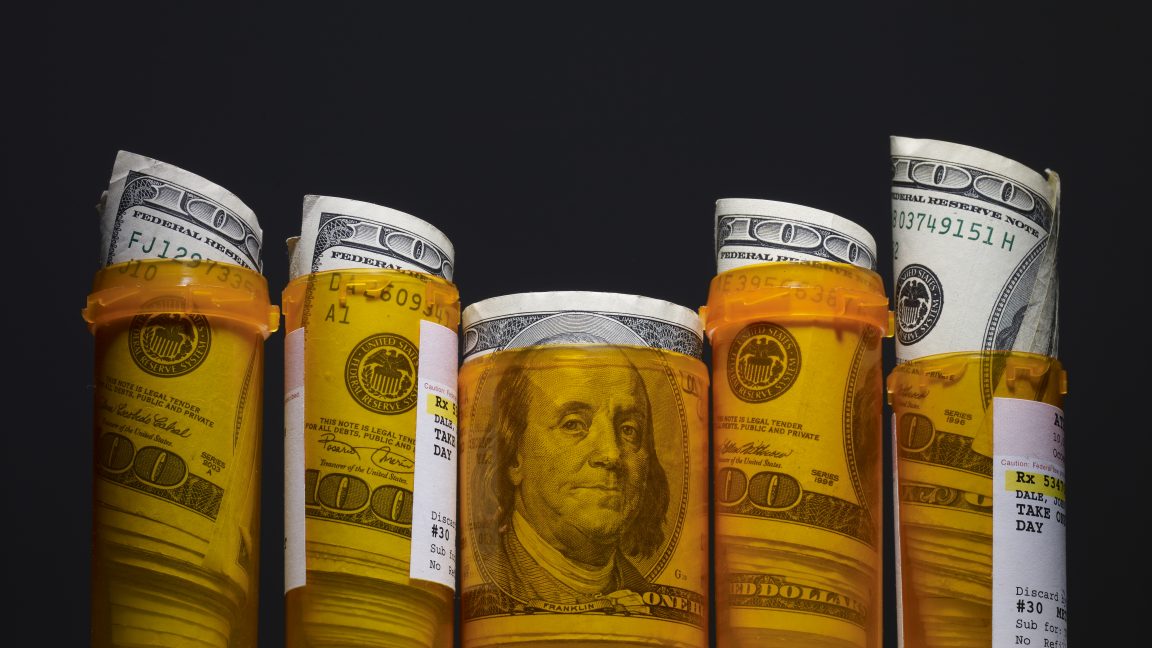
ProPublica wanted to know something simple: Where a widely used generic drug was made and whether that factory had any quality problems. Instead, we found ourselves navigating a labyrinth of company names and complex databases that few regular consumers would even know exist.
And even after all that detective work, we hit a dead end.
Atorvastatin is a generic drug that treats high cholesterol and prevents heart attacks and strokes. It’s one of the most commonly prescribed medications in the United States, and many manufacturers make it.
We started with a label on a patient’s pill bottle. It shows the name of what appears to be the drug’s manufacturer: Quallent. The only addresses on the label are in Ohio and New Jersey and are for Express Scripts, a company that manages prescription benefits for insurers and employers.
Myriam Wares for ProPublica
So we went to DailyMed, an online database with labeling information for drugs. There we found 21 pages of atorvastatin generics. We looked for Quallent and found two listings for the company.
Both showed that Quallent, based in the Cayman Islands, was just the packager of the drug. So what company manufactured it?
One label noted that Quallent sourced its pills from a drugmaker in India, another said they came from a company headquartered in Canada. Nothing on the pill bottle told us which of the two made the pills. So we looked at the markings on our patient’s atorvastatin tablets and compared them to the pill descriptions in DailyMed. Turns out the ones in our bottle were manufactured by the Canadian company Apotex.
We were lucky to be able to find even this much. The information on DailyMed included the name of the drug’s manufacturer. That’s often not the case. DailyMed also provided a partial address in Toronto, home to the global headquarters of Apotex as well as several of its plants. But the information didn’t specifically tell us if the drug is actually made at a Toronto factory.
To learn more, we scrolled to the bottom of the DailyMed page to find what’s known as the ANDA number, which is assigned when a company applies for approval to make a drug. We took that number and went to another database called the Orange Book, where all drugs approved by the Food and Drug Administration are listed.
Myriam Wares for ProPublica
We put in our ANDA number and we were able to confirm that Apotex was the manufacturer and also learn that the company received approval to start making atorvastatin in 2012, which would guide our search for FDA inspection reports about the factory.
But alas the Orange Book doesn’t tell us where Apotex makes the drug. The company’s website says it has factories in Canada, Mexico and India, but it doesn’t say which drugs are made where.
If any consumer got this far, we’d be impressed. But here’s where the search got really complicated.
Even with our ANDA number and the name Apotex, we could not find the specific factory where our atorvastatin was made. The FDA has that information — it’s on the applications that companies turn in when they apply for new drug approvals — but the agency hasn’t made those addresses available to the public.
Myriam Wares for ProPublica
Last year, we filed a Freedom of Information Act request for those locations. Months passed and we eventually sued the FDA in federal court. Finally, the agency gave us some of the addresses, but not a complete list.
In the case of our atorvastatin, no luck. The agency didn’t give us that factory’s details, saying it held back addresses for drugmakers that hired other companies — contract manufacturers — to make their medications. So even though we had information that the public doesn’t have, we were still stuck.
We went to a private firm called Redica Systems and paid to use a database of reports written by FDA inspectors after visits to drug factories. We could see inspections for various Apotex factories in Canada and India that described problems over the years in the way drugs were made. The FDA, however, blacked out the names of the medications on those reports.
That’s where we hit a final dead end. After all that, we still don’t know where our atorvastatin was manufactured and whether the factory had a troubled record.
Myriam Wares for ProPublica
We reached out to Apotex to see if we could learn more but never heard back. On its website, the company says, “Patient safety and regulatory compliance guide every stage of our manufacturing process.”
Shock and dismay have already begun as Americans face next year’s health insurance costs—and it looks like everyone will be in for some grim numbers.
So far, much of the attention has been on the stratospheric prices that Americans might see on plans they buy from Affordable Care Act marketplaces. Critical tax credits for those plans are set to expire at the end of the year, and, on top of that, insurers have proposed a median 18 percent price increase for 2026. With the higher prices and a loss of credits, some Americans could see their monthly premiums more than double.
In an analysis last month, nonpartisan health policy group KFF estimated that, on average, ACA marketplace premiums would rise 114 percent, going from $888 in 2025 to $1,904 in 2026.
When the government shutdown ends, Donald Trump will have succeeded in staging the single biggest expansion of presidential power in American history because of the single largest shift in the constitutional balance of powers ever.
In fact, he (but more particularly, his team) has been so successful at maneuvering through this shutdown that there’s no reason for them to end it. Democrats have called on Trump to get more involved in the negotiations. They’ve gotten little more than a shrug in return. The Republicans are winning, and Vegas card players know never to leave a winning hand on the table.
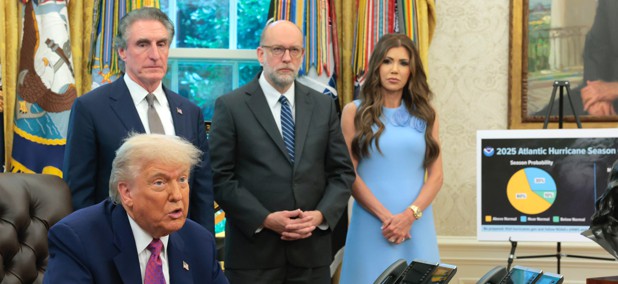
The Republicans are using two of the big tools to shape governmental action: the power of the purse, which funds what government does; and the power of government bureaucrats, who make it work. The former is the engine. The latter are the wheels. And by vastly expanding the administration’s leverage over both, it—especially OMB Director Russ Vought—is in the driver’s seat.
This is vastly more important than Elon Musk’s Department of Government Efficiency, an unguided bulldozer rambling through government. Vought’s strategy is all out of a single piece of carefully woven cloth.
Start with the engine: the federal budget. Madison, in Federalist #58, made it clear why the founders, concerned with the prospect of a strong executive, vested the power of the purse with the Congress. It was, he wrote, the “most complete and effectual weapon with which any constitution can arm the immediate representatives of the people”. There are two vital components of this: the president cannot spend money for purposes not authorized in law; and that the president cannot pick which programs he wants to spend money on and on which he does not.
There are laws, which Georgetown law professor Eloise Pasachoff has referred to as the “power of the purse statutes”, that reinforce each of those constitutional imperatives. The Anti-Deficiency Act, passed in 1870, creates penalties for the unlawful spending of money that has not been appropriated, or not appropriated for that purpose. The 1974 Impoundment Control Act creates the only legal avenue for the president to refuse to spend money that has been appropriated. The Vought strategy violates both.
For the first almost eight months of the administration, the sole emphasis has been on the latter set of violations. In most cases where the administration attempted to cancel programs, it did so without following the procedures set up by the ICA. In the shutdown, the administration has crossed the ADA lines
With the deadline for the military’s payroll looming, Trump ordered the Pentagon “to use for the purpose of pay and allowances any funds appropriated by the Congress that remain available for expenditure in Fiscal Year 2026.” The administration said it was going to use funds in the Pentagon’s research and development account. DOD did indeed have unexpended R&D funds, but Congress had not authorized draining the R&D account to pay the military, and that’s a clear violation of the ADA. As Bobby Kogan at the Center for American Progress posted on Bluesky, this mechanism “is by far the most illegal budgetary action he's taken as POTUS, potentially setting the stage to break everything.”
How does it risk breaking everything? When the administration can both decide it can spend money from any budget account on anything it wants, AND that it does not have to spend money appropriated by Congress if it does not want to, there are no limits to the budgetary powers possessed by the president. This is exactly the kind of executive overreach that worried the founders.
The Trump administration, as one of us has concluded, “appears to understand that control over the federal budget is central to control over the entire federal government.” The budget maneuvers mark a huge attack on the norms that have defined the constitutional separation of powers for 238 years.
Then let’s move to the wheels: government employees. DOGE had already virtually eliminated the U.S. Agency for International Development, large parts of the Department of Education and other parts of the government deemed “woke.”
But when the shutdown began, the firings ramped up. OMB had already asked for plans from agencies about employees who should be RIFed—fired through a “reduction in force.” The firings began with a short post from Vought, a few days into the shutdown: “The RIFs have begun.” He followed that up with more than 4,000 RIFs, and it took digging into a federal court filing to find out where they were occurring, since there was no transparency from OMB on this important step.
It didn’t take long for a scramble to begin. The Department of Health and Human Services at first said that 982 people got RIF notices. Then word came that the notices went out to 1,760 employees, including 596 employees at the Centers for Disease Control, along with more workers at the Substance Abuse and Mental Health Services Administration and the Administration for Children and Families, among others.
The administration used the RIF process to accelerate its planned shutdown of the Department of Education by laying off more employees. It slashed employment at the IRS by 1,446 people, on top of the 25 percent of the workforce who were DOGEd. In just a few days, the administration eliminated many workers at agencies that were at the bull’s eye of its strategy to transform the executive branch.
With the purse nowhere to be found during the shutdown, Vought seized its power, and his decisions in the fog of the shutdown means there’s no accountability.
The country’s founders had anticipated the risk of executive power but counted on Congress’s control of the power of the purse to rein in the irresistible instincts for expanding presidential power. One of the biggest champions of the executive, Alexander Hamilton, pointed to the importance of Congress’s role. “The legislature not only commands the purse, but prescribes the rules by which the duties and rights of every citizen are to be regulated,” he wrote in Federalist 78. But that only works if Congress chooses to exercise that command—and that it is actually meets to do so.
As always, when the supporter of the Congress, Madison, and the champion of the executive, Hamilton, agree, there’s a very powerful lesson the founders teach us. They’d be aghast at the government that emerges from the shutdown. And given the way the ongoing battles are going for the administration, there’s no reason for the administration to settle the shutdown any time soon.
Philip G. Joyce is professor of Public Policy and Donald F. Kettl is Professor Emeritus, both at the University of Maryland School of Public Policy. They have been working with colleagues on Reform for Results, a nonpartisan coalition of public policy experts dedicated to advancing the government’s mission within the American tradition of the rule of law.
Amazon Web Services experienced DNS resolution issues on Monday morning, taking down wide swaths of the web—and highlighting a long-standing weakness in the internet's infrastructure.


 FirstTime
 (@longtimehistory.bsky.social)