Shared posts

13 Apr 09:02

Healthy, Affordable Fast Food: Feminism's Holy Grail

by Emily Matchar
matchar_fastfood_post.jpg MLazarevski/flickr

Imagine a world where you could walk up to a takeout counter and get a healthy, tasty dinner for four—say, roast chicken and broccoli, fish curry and potatoes, veggie burgers with sweet potato wedges—all for less than $6 a serving, the average per-person cost of a home-cooked meal in America. Would you do it? Would you do it every day? How about three meals a day?

In last week's New York Times Magazine, Mark Bittman explored the growing world of healthy fast food, with an eye toward evaluating its tastiness. But Bittman still looks at fast food—no matter how healthy —in terms of an occasional stopgap snack—something to eat at the airport, a treat after orthodontic surgery.

I say, if we had truly healthy, truly affordable, truly delicious, truly fast fast food, it could be far more than an occasional thing. It could be a major boon to working families, to single parents, to couples who fight about who's going to fix dinner and who's going to watch the squealing, hungry kids. It could help bring a quicker end to the notorious "second shift" of housework done by working women.

If we had healthy, tasty, affordable fast food, why not eat it every day?

Related Story

Betty Friedan Did Not Kill Home Cooking

Utopian thinkers have long dreamed that the drudgery of the kitchen could one day be outsourced and professionalized, replaced by efficiencies of scale. Feminist writer Charlotte Perkins Gilman, she of "The Yellow Wallpaper" fame, also authored "The Home: Its Work and Its Influences," and "Women and Economics," which argued that it was both misery-producing and inefficient to have every woman do all her own household tasks. She envisioned a world of communal kitchens and childcare, where domestic duties would be done by experts particularly suited to the tasks, while others would do whatever they were good at—writing, bridge-building, hat-making.

In his bestselling 1888 sci-fi novel, Looking Backward, Edward Bellamy envisioned the year 2000 as a socialist utopia where cooking and housework was done by a cheerful "industrial army." Efficiency expert Martha Bensley Bruère promoted the idea of cooperative apartment buildings with meals and maid service.

There were attempts to implement these ideas—a public kitchen at Jane Addams' Hull House in Chicago; Boston's New England Kitchen, which sold cheap but nutritious meals to factory girls in the North End; World War II munitions factories which had canteens selling affordable healthy family dinners for its female workers to take home at the end of shifts. But these were largely short-lived, either because of the un-tastiness of their food (the Italian immigrants in Boston were not fond of the bland, garlic-free New England Kitchen meals), or their temporary natures.

Today, it's the received wisdom among the educated middle-class that home-cooking is best: best for health, best for budget, best for the environment, best even for children's development (the importance of sit-down family dinner, which we've heard about ad nauseam for the past 20 years, is not borne out by research, by the way). Celebrity endorsements have only made this "common sense" more entrenched. In her Let's Move initiative, Michelle Obama promotes home cooking as key to combating childhood obesity. On Jamie Oliver's Food Revolution, the British celebrity chef descended on Huntington, West Virginia to teach residents how to cook as a means of reducing the region's epic levels of obesity and diabetes. Mark Bittman has made his career plugging for home cooking against fast food, trying to demonstrate that a home-cooked meal is in fact cheaper (though he doesn't factor in time and labor costs).

"The real challenge is not 'I'm too busy to cook.'" Bittman insists. "In 2010 the average American, regardless of weekly earnings, watched no less than an hour and a half of television per day. The time is there."

And, yes, clearly eating healthy dinners at home is a much better option than eating a Whopper, a Bloomin' Onion, or a plate of steak frites at your local bistro. And cooking at home is delightful—if you like to cook. There's nothing wrong with teaching people how to cook—the more people who like to do it, the better, I say.

But many people don't like to cook, even those who know how. And many people who do like to cook don't like to do it after a long day at work. TV time, or other forms of relaxation, are not fungible with time spent cooking dinner.

This is hard to understand for many of us middle—and upper-middle class Americans, for whom cooking is a hobby and a form of relaxation, especially fulfilling after a day spent sitting motionless at a computer. We have the education and leisure time to cultivate cooking skills, enjoy farmer's markets as a form of recreation and social activity, indulge in food porn in Saveur or TasteSpotting.com. And when we don't want to cook, we can afford to go to Whole Foods or have sushi.

But when you spend all day cleaning hotel rooms or standing behind the check-out counter at Target, you're not exactly yearning to work with your hands. And when you've got two hungry, screaming children butting heads in the living room, the wait for water to boil can seem interminable.

Yet America, even as it reaches for convenience, has the deep seated belief that cooking is a personal obligation, and that shirking this obligation is lazy, harmful, bad.

This is not the case everywhere. I live in Hong Kong, where, because of tiny kitchens and long work hours, almost everyone relies on takeaway or pre-prepared foods for dinner. Some of it's crap, but some of it's healthy—stalls sell fish balls and tofu puffs and pre-sliced veggies for soup, or boxes of rice with bok choy and pork. In Singapore, outdoor "hawker centers" offer everything from fresh fruit cups to plates of sautéed pea shoots to turnip-stuffed spring rolls, all of it subsidized by the government to ensure affordability. You don't hear women around here talking about feeling guilty for not making their own dumplings.

Let me reiterate: I think cooking is great. But why should "more home cooking" be a better answer than "healthier take-out"?


12 Apr 22:38

Advisor tells you to resubmit the rejected paper to another conference - reviews are even worse

via Gfycat

by Matthias, Martin and Jürgen

12 Apr 19:44

21 Books Written by and About Women That Men Would Benefit From Reading

by Emily Temple
Justine Marie Sherry

I've only read four of these...!

tinafey_bossypants.jpg Little, Brown and Company flavorpillheader.PNG

Suburban-Angst Films
The Stages of a Woman's Life, in Photos
Margaret Thatcher in Pop Culture


This week, Salon published a great interview with Meg Wolitzer (whose just-released novel The Interestings is currently being enjoyed by more than one Flavorwire staffer). "Men," she says, "with very few exceptions, won't read books about women." Though not exactly a new idea, this pronouncement gains a little force by coming hot on the heels of GQ's "The New Canon: The 21 Books from the 21st Century Every Man Should Read," which contains (you guessed it, drumroll please, etc.) three books written by women.

Though I won't disparage any of the books that made the list, I will offer my own—as an attempt to work towards ameliorating the problem laid out by Wolitzer and neatly exemplified byGQ. After all, though there are three books by women on their list, only the Munro could really be said to be primarily about them. Below are 21 books by and about women that every man should read.

atwood.jpg

The Handmaid's Tale, Margaret Atwood

Margaret Atwood is essential reading no matter your gender, and this chilling depiction of a dystopian future is one of her best. In the Republic of Gilead, women's rights have been completely eradicated, and the country is ruled by a racist, homophobic, misogynist, ultra-conservative cult. As Flavorwire editor-in-chief Judy Berman quipped, "This is every woman's worst nightmare that men have never thought about." So think about it.


bad behavior.jpg

Bad Behavior, Mary Gaitskill

Gaitskill's incredible collection is filled with women walking the borderlands—of sexual experience, of self-actualization, of family. This book digs under your skin, titillates, forces you to re-evaluate everything you ever thought about sex and love and what it means to be a person in the world. This book is terrifying.


born.jpg

A Guide to Being Born, Ramona Ausubel

This one doesn't come out until May, but I'll recommend it now for good measure. Ausubel's luminous collection is organized around the origins of life—that is, the stages of love, conception, gestation, and birth—but her stories aren't as simple as all that. Men may never be able to feel the fetus in their stomach and be sure that it is a three-headed giraffe, but with this collection, they'll at least get a taste.


fey.jpg

Bossypants, Tina Fey

Everyone likes Tina Fey, so this shouldn't be too hard a sell. The comedian's memoir is (obviously) hilarious, but also filled with reflections on being an awkward girl, a woman in show business, and a mother. You bros will be laughing so hard that you won't even realize you're learning about what it's like to be a real-life lady.


speed.jpg

Speedboat, Renata Adler

In her aforementioned interview, Meg Wolitzer laments, "Something nebulous and thought-based—a book of ideas—people seem much more willing to have that from a man than a woman." Well, here is exactly that: a loose, penetrating, ruthless, glorious novel about a young journalist making her way through New York City.


carter.jpg

The Bloody Chamber, Angela Carter

The modern fairy tale, whether in retelling or creation, has become a ripe area for feminist thought, for explorations of sexuality, for wit and irony and vulgarity to seep out of what was once a prim little moralistic package. No one does this better than Angela Carter, whose rich retellings of the classic tales thrum with blood and language.


flame.jpg

The Flamethrowers, Rachel Kushner

Here's a special lure for all you male readers: girl racing motorcycles across salt flats. Past that, the book is gritty and searing and immediately essential, a subtle novel about art and love and truth and a woman on a knife's edge. Read it.


moore1.jpg

Self-Help, Lorrie Moore

No one does wry brilliance better than Lorrie Moore. In this collection, she will teach you everything you need to know: how to talk to your mother, how to be an other woman, how to become a writer, how to live. Darkly comic and dazzling, it's a way inside the head of all the smart women you've ever known.


kate.jpg

Heroines, Kate Zambreno

In Heroines, Zambreno traces the impact—or rather, the exiling—of the female experience on and from literature, untangling the stories of "the mad wives of modernism" both historical and fictional, "who died in the asylum. Locked away, rendered safe. Forgotten, erased, or rewritten." Enlightening and intense, it's a must-read.


kind.jpg

Kindred, Octavia Butler

In this novel, a 26-year-old modern black woman is suddenly (and then repeatedly) transported back in time to a slave plantation in the antebellum South, where she is subjected to all the harshest parts of slavery as she protects the son of a slaveowner. Rarely does social criticism come with such incendiary storytelling.


left.jpg

The Left Hand of Darkness, Ursula K. Le Guin

All right, I'm cheating with this one a little, since it can't be properly said to be about women at all—instead, it's about a human man who travels to an alien planet populated by a race of beings who are genderless, or rather unisex, able to assume either binary gender during reproduction. The novel is beautiful and filled with timeless philosophical insights as to the nature of humanity and society—a definite classic I'm happy to make an exception for here.


dora_edited-1.jpg

Dora: A Headcase, Lidia Yuknavitch

Yuknavitch's protagonist, the 17-year-old Ida, is a modern reincarnation of Freud's famous bisexual case study Dora, whom our most famous shrink deemed "hysterical." Ida may be a bit "hysterical" too—but she's taking back the term. She's raunchy, irreverent, filled with the desire to strip naked in the middle of "Nordfucks" or shave her head, sidekicked by a beautiful gang of weirdos. "I want to create new girl myths," Yuknavitch said of the book. I think everyone should read them.


second.jpg

The Second Sex, Simone de Beauvoir

"I hesitated a long time before writing a book on woman," De Beauvoir begins. "The subject is irritating, especially for women; and it is not new. Enough ink has flowed over the quarrel about feminism; it is now almost over: let's not talk about it anymore." This was in 1959—and the sentiment is as fresh now as it was then, just like (most of) the rest of De Beauvoir's lucid book, equal parts literary and philosophical. All else aside, it's one of the most classic feminist texts in the language. And men should read more of those.


warrior.jpg

The Woman Warrior, Maxine Hong Kingston

Maxine Hong Kingston's take on the memoir blends her personal experiences with traditional Chinese folktales, examining the Chinese-American experience as well as the female one, taking on the cultural source of oppression, something we could all do to think more about. She writes: "There is a Chinese word for the female I—which is 'slave.' Break the women with their own tongues!" So why even be a girl? "I refused to cook. When I had to wash dishes, I would crack one or two. 'Bad girl,' my mother yelled, and sometimes that made me gloat rather than cry. Isn't a bad girl almost a boy?" This is the kind of thing most boys never have to think about.


plath.jpg

The Bell Jar, Sylvia Plath

It's pretty much a given that everyone should read The Bell Jar, but I'll just drive the point home again—it's a look into the conflicted mind of a tortured genius snuffed out too soon.


mirth.jpg

The House of Mirth, Edith Wharton

There is so much in this book that carries over perfectly to the modern era. Sure, maybe not the idea of tableaux vivants as party diversions, but the double standards for men and women, the vicious social games women play with each other, the perils of depending on another person—these issues are all alive and well. Plus, the novel is phenomenal. Can't go wrong.


pym.jpg

Excellent Women, Barbara Pym

John Updike, male of all males, called this high comedic novel "a startling reminder that solitude may be chosen and that a lively, full novel can be constructed entirely within the precincts of that regressive virtue, feminine patience." What the never-married, witty but mild-mannered Mildred Lathbury would have to say about that, I cannot say.


colette.jpg

The Complete Claudine, Colette

Though Colette's frisky stories aren't nearly as scandalous today as they were when they were first printed, she is still a giant of French literature, and her writing is just about as daring, sexy, gorgeous, and smart as she. As this book's introduction describes it, Colette is "[a]ccessible and elusive; greedy and austere; courageous and timid; subversive and complacent; scorchingly honest and sublimely mendacious; an inspired consoler and an existential pessimist -- these are the qualities of the artist and the woman." A must for any reader who sees female writing as only one thing.


drinking.jpg

Drinking With Men, Rosie Schaap

Men love bar stories, right? Funny, smart, and insightful, Schaap's memoir as a drinking buddy will make you a better person.


inferno.jpg

Inferno, Eileen Myles

Some men might be put off by a "poet's novel," but we bet they'll be on board once they read that killer first line: "My English professor's ass was so beautiful." Myles can be difficult, but she can also be incredible, and in this story of a young poet's self-actualization, she's both. Take note.


persepolis.jpg

Persepolis, Marjane Satrapi

I maintain that Satrapi's beloved graphic memoir of growing up in Iran during the Islamic Revolution is a must-read for absolutely everyone, so including it here is a no-brainer. What does it mean to be a tough little girl into rock music in a country that suppresses their women? What does it mean to be a tough little girl? Satrapi will tell you with grace, humor and delightful illustrations.

This post also appears on Flavorpill, an Atlantic partner site.


12 Apr 17:21

Don't Daydream

12 Apr 13:32

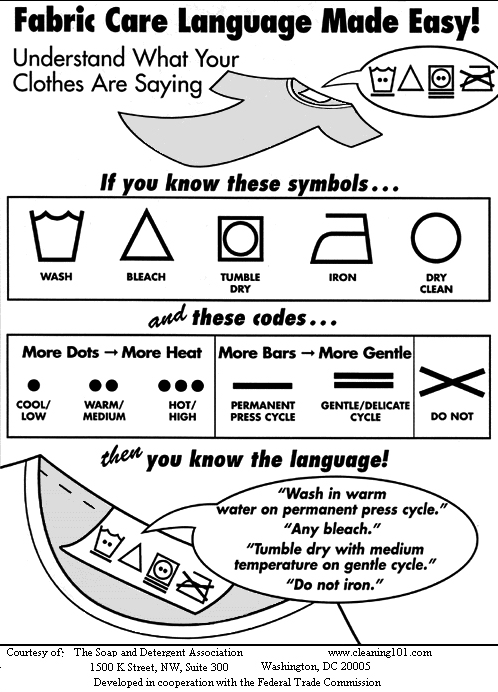
Step 295: Print this out for your laundry room

image

10 Apr 18:33

Trying to figure out how bitchy I’m allowed to be at this...

by sarahlcomics


Trying to figure out how bitchy I’m allowed to be at this stage in my life.

-sarahlcomics

08 Apr 03:38

Farm Wife

by PJM


Country Life continues today with this iconic image of a Farm Wife. The picture was taken in the 1930's, during the great depression. Funny how society today would not view this woman as attractive for the most part, but in the picture, she exudes virtue. She is a worker, and I am sure a wonderful mother and wife. Funny how much what we value has changed.
08 Apr 03:34

Maria Dee Salmonson

by raylevy

Image

Thank you to Aurora Pribram-Jones, who submitted this post about her great-grandmother, Dee.

I did not see this picture of my great-grandmother, Maria Dee Salmonson (standing, right), until I was a senior chemistry major at Harvey Mudd College, after which point I kept it framed over my desk.  My uncle’s guess is that it was taken between 1917 and 1924 in Vienna, at the State Serum Institute.

We don’t know that much about her, but she was born in Semarang in Java sometime around 1889 and was a nurse for the Dutch Red Cross.  She came to the Netherlands as a toddler and ended up in Vienna during World War I, where she met my great grandfather.  In 1927, she joined my great-grandfather in Chicago, with my grandfather in tow.  She enjoyed parties and spoke “a mishmash of several languages,” according to my grandfather, but could always make herself understood.


07 Apr 00:45

Pope Francis on Women and the Resurrection

by Sonja

I’ve been pretty swept up by the euphoria surrounding Pope Francis’s first few weeks in office. How many days now since a major accident? 22? That’s got to be a record.

Yesterday, Francis gave a speech to a general audience in St. Peter’s Square, and it seems that he spoke off the cuff a bit, since the Vatican’s official text is shorter than what others sources have him down as saying. (Does anyone have the full text or a video?) My newsfeed was filled with headlines lauding him for stressing the “fundamental” value/role/importance of women in his remarks. Even Jezebel.com was basking in the news, proclaiming that “Pope Horrifies Conservative Catholics by Saying that Women Have ‘Fundamental’ Value.” (Incidentally, the Jezebel article actually says nothing about conservatives being horrified by Francis’s remarks.)

But from what I can tell, Francis didn’t say anything new at all. And what he said wasn’t really groundbreaking. He noted in his remarks that the Gospel narratives have women as the first witnesses to the resurrection, whereas other statements in the Bible on the resurrection appearances (such as 1 Cor 15:5-8) only mention men as witnesses:

“This is because, according to the Jewish Law of the time, women and children were not considered reliable, credible witnesses. In the Gospels, however, women have a primary, fundamental role. Here we can see an argument in favor of the historicity of the Resurrection: if it were a invented, in the context of that time it would not have been linked to the testimony of women. Instead, the evangelists simply narrate what happened: the women were the first witnesses.”

One the one hand, that’s a good point: women’s testimony–as well as slaves’ or poor peoples’ testimony–was generally viewed with suspicion in the ancient world. If you were making up the story of the resurrection, it probably would have been a better move to have men as your primary witnesses. One the other hand, using “Judaism” as a foil to make Jesus look progressive with respect to women is really problematic, as Amy-Jill Levine has pointed out over and over again. There’s nothing uniquely “Jewish” about the tendency to dismiss women’s narrations of their own experience; it was a ubiquitous phenomenon in the Greco-Roman world (and still is today).

As others have noticed, though (take a look at the “What Does the Prayer Really Say” blog), Benedict XVI made the exact same point in his second Jesus book. So Francis’s address doesn’t really fit within the black-and-white, Benedict-vs-Francis paradigm that’s grown up over the last few weeks.

But more significant, I think, is that while Francis did mention women, he immediately folded them into the “mothers” category (what about women who aren’t, or who don’t want to be, mothers?), exhorted them to raise their children in the faith (assuming that the domestic realm is especially for women, and ignoring that many women do in fact teach people other than their own children), and then indirectly praised their childlike qualities:

This is beautiful, and this is the mission of women, of mothers and women, to give witness to their children and grandchildren that Christ is Risen! Mothers go forward with this witness! What matters to God is our heart, if we are open to Him, if we are like trusting children.

There’s nothing per se offensive about that, taken by itself (as is true for virtually any statement made by anyone anywhere), but read in the context of Roman Catholic writing on women, it’s not exactly progressive. Highlighting their domesticity, their children, their emotional availability, their sensitivity, as opposed to supposedly masculine qualities like logical thinking, rigid rule-following, skepticism, and stubbornness–in other words, gender essentialism to the max–is fairly standard Vatican-speak when it comes to talking about women, I would say.


Filed under: Uncategorized
07 Apr 00:20

Queen Luliuokalani, the last Queen of Hawaii.


Queen Luliuokalani, the last Queen of Hawaii.

06 Apr 17:27

Magdolna Hargittai

by raylevy

Image

Chemistry Professor (and my Dad!) Jack Levy contributed this post about his Hungarian collaborator, Magdolna (Magdi) Hargittai.  The picture above is of Magdi as a PhD student in 1970 during an electron diffraction experiment.

In the late 1990s, Magdi was a visiting research scientist at the University of North Carolina Wilmington where I am a Professor Emeritus of Chemistry.  She was doing high-level quantum chemical calculations on various metal halide molecules using computational methods.  She taught me how to apply these methods to some organic phosphorus compounds of interest to me.  We published on that work in collaboration with her husband, Istvan.

We continued to collaborate on her metal halide work over several years.  Magdi is extremely knowledgeable and meticulous in her work.  If we solved a problem with one method, she would want to test the result with even more involved calculations.

I remember Magdi saying that early in her career she and her husband were both working in the same lab on molecular structure determination using electron diffraction. An administrator suggested that they couldn’t both work in the same lab, so her husband immediately offered to find a new position.  That was the end of the problem and they continued to work together.  They raised two children, Balazs and Eszter, who are both now professors.  Magdi is now officially a STEM grandmother to Balazs’s children.

In 1996 Magdi received the Széchenyi State Prize of Hungary with her husband.  In 2010 she became a full member of the Hungarian Academy of Sciences, a rare distinction, especially for women.  She is also member of the Academia Europaea, London (since 2006).  She and her husband together received the Annual Science Communication Award of the Club of Hungarian Science Journalists in 2011 and a small planet was named after them. She also received the Distinguished Women in Chemistry/Chemical Engineering Award from IUPAC in 2011.

She has published widely; over 150 scientific papers in peer-reviewed journals; has written 12 books, both scientific and popular; among them Symmetry through the Eyes of a Chemist, 3rd Edition, Springer, 2009, Visual Symmetry, World Scientific, 2006, In Our Own Image: Personal Symmetry in Discovery, Plenum, 2000 (with her husband), Cooking the Hungarian Way, 2nd Edition, Lerner, 2002.  She also edited 11 volumes and has written about 50 articles in popular science magazines.  She writes a column for Természet Világa (The World of Nature). She is interested in the question of women in science and has given lectures on women in science all over the world.  She has interviewed over 100 prominent women scientists and now is working on a book on this topic; she wants to give role models to all young women interested in a science career.

Image

Magdi chairing an international conference in 2011.


05 Apr 22:05

Prison Labor and Taxpayer Dollars

by Lisa Wade, PhD

American companies that once looked to places like Mexico and China for cheap labor are bringing those jobs back to the U.S.  Why? Because prison labor is much, much cheaper.  Paid between 93¢ and $4.73 per day, and collecting no benefits, prisoners are a cheap labor source for about 100 companies (source).

What does this have to do with you?

If you have insurance, invest, use utilities, have a bank, drive a car, send a child to school, go to a dentist, call service centers, fly on planes, take prescription drugs, or use paper, you might be benefiting from prison labor.

If you’ve bought products by or from Starbucks, Nintendo, Victoria’s Secret, JC Penney, Sears, Wal-Mart, K-Mart, Eddie Bauer, Wendy’s, Proctor & Gamble, Johnson & Johnson, Fruit of the Loom, Motorola, Caterpiller, Sara Lee, Quaker Oats, Mary Kay, or Microsoft, you are part of this system.

When prisoners are in state and federal prisons, the U.S. taxpayer is subsidizing low wages and corporate profits, since they are paying for prisoners’ room, board, and health care.  When prisoners are in private prisons, prison labor is a way to make more money off of the human beings caught in the corrections industry.  In other words, prison labor is an efficient way for corporations to continue to increase their profits without sharing those gains with their employees.

For an extensive list of the companies contracting prison labor, click here.  You might also find interesting the video clips, embedded in this news story, of promotional videos by prison corporations that attempt to sell the idea of prison labor to companies:

Lisa Wade is a professor of sociology at Occidental College. You can follow her on Twitter and Facebook.

(View original at http://thesocietypages.org/socimages)

05 Apr 01:43

We’ll just call her Dorothy

by raylevy

secret

This post was sent by Alex, son of (top secret) STEM-ma Dorothy.

My mother was quite the techie back in the day.  She got a master’s degree in math (having to endure a professor telling her that women don’t belong in math along the way).

After receiving her master’s, she became a computer programmer.  She worked various places, from Sandia National Laboratory (I think) to JPL.  She wrote programs to simulate the flight of surface-to-surface missiles.  Her first programs were written in octal – she thought it was great when she finally got an assembler!

She complained to me about the “dumb physicists” who couldn’t understand that changing a constant took ten minutes, but changing a formula took all day.  (I should think so, if it was written in octal!)  In her complaint, there’s probably a bit of a jab at her son (me) who has a physics degree.  But notice something else – these people she’s calling “dumb” are, literally, rocket scientists.

She told me about some of the computers she worked on.  One had a whopping two registers, and a series of patch cords, so that you could re-wire the CPU.  That means that you could change the CPU’s instruction set by moving patch cords!  Debugging on such a system might get interesting – you’d have to check the cords as well as the program.  Another had trays of memory (maybe twice the footprint of a full-sized laptop, and maybe two inches high) which had 100 words (36 bits each) of vacuum tube memory.  In the morning, they’d run a memory check.  If it failed, they’d hand the tray off to a tech, slide a spare tray in, and keep running.

My mother had a Q clearance.  This was the level of security clearance needed to access nuclear secrets.  While she was at JPL, she knew in advance about the launch of Pioneer.  It was very secret, because the Russians had already launched Sputnik, and if we failed it was going to be a huge blow to national prestige.  It was so secret, she couldn’t even tell her husband (my dad) until after it had happened.

My mom retired in 1960 to raise her children.  By then, my dad had a job as a computer programmer, and we were easily able to live on his salary.  Two years after she retired, she explained to my dad how floating-point arithmetic worked.


04 Apr 00:29

The Stigma of Immigrant Languages

by Calvin N. Ho

Cross-posted at Asian-Nation.

As an undergraduate majoring in linguistics, I was fascinated with the concept of endangered languages. Colonization, genocide, globalization, and nation-building projects have killed off untold numbers of languages. As linguist K. David Harrison (my undergrad advisor) tells NPR, speakers of stigmatized or otherwise less-favored languages are pressured to abandon their native tongue for the dominant language of the nation and the market (emphasis mine):

The decision to give up one language or to abandon a language is not usually a free decision. It’s often coerced by politics, by market forces, by the educational system in a country, by a larger, more dominant group telling them that their language is backwards and obsolete and worthless.

These same pressures are at work in immigrant-receiving countries like the United States, where young immigrants and children of immigrants are quickly abandoning their parents’ language in favor of English.

Immigrant languages in the United States generally do not survive beyond the second generation. In his study of European immigrants, Fishman (1965) found that the first generation uses the heritage language fluently and in all domains, while the second generation only speaks it with the first generation at home and in limited outside contexts. As English is now the language with which they are most comfortable, members of the second generation tend to speak English to their children, and their children have extremely limited abilities in their heritage language, if any. Later studies (López 1996 and Portes and Schauffler 1996 among them) have shown this three-generation trend in children of Latin American and Asian immigrants, as well.

The languages that most immigrants to the U.S. speak are hardly endangered. A second-generation Korean American might not speak Korean well, and will not be speaking that language to her children, but Korean is not going to disappear anytime soon — there are 66.3 million speakers (Ethnologue)! Compare that with the Chulym language of Siberia, which has less than 25.

Even if they’re not endangered per se, I would argue that they are in danger. While attitudes towards non-English languages in the U.S. seem to be improving, at least among wealthier and better educated people in some more diverse cities and suburbs, the stigma of speaking a non-English language still exists.

How many of you have:

  • been embarrassed to speak your heritage language in front of English speakers?
  • been reprimanded for speaking your heritage language in school?
  • been told to “go back to [country X]” when someone overhears you speak your heritage language?

I’ve heard innumerable stories about parents refusing to speak their native language to their children. Usually, the purported rationale is that they do not want the child to have language or learning difficulties, a claim that has been debunked over and over again by psychologists, linguists, and education scholars.

I’m sure that these parents truly believe that speaking only English to their children will give them an edge, though the reverse is true. What I wonder is how much this decision had to do with an unfounded belief about cognition and child development, and how much it had to do with avoiding the stigma of speaking a language that marks you as foreign, and as “backwards and obsolete and worthless”?

Calvin N. Ho is a graduate student in sociology at the University of California, Los Angeles studying immigration, race/ethnicity/nationalism, and Asian diasporas.  You can follow him at The Plaid Bag Connection and on Twitter.

(View original at http://thesocietypages.org/socimages)

02 Apr 21:30

The Absurd Lies of College Admissions

by Megan McArdle
Why do we force prospective college students to engage in exorbitant exaggeration?
02 Apr 17:04

Hexagonal rocks

by Jason Kottke

This is an Icelandic waterfall called Litlanesfoss and the naturally occurring rock formation is columnar jointed basalt.

Litlanesfoss

The columns form due to stress as the lava cools. The lava contracts as it cools, forming cracks. Once the crack develops it continues to grow. The growth is perpendicular to the surface of the flow. Entablature is probably the result of cooling caused by fresh lava being covered by water. The flood basalts probably damned rivers. When the rivers returned the water seeped down the cracks in the cooling lava and caused rapid cooling from the surface downward. The division of colonnade and entablature is the result of slow cooling from the base upward and rapid cooling from the top downward.

One of the coolest things I have ever seen. Looks totally fake, like they built it for Fractal Falls in Polygon Gorge at Disneyland or something. Giants Causeway in Northern Ireland looks amazing as well. Check out several similar formations from around the world.

Tags: geology
01 Apr 19:14

A key feature of humility being, naturally, the urge to profess...

by djag2


A key feature of humility being, naturally, the urge to profess it in carved stone.

27 Mar 23:47

Samuel Clemens (a.k.a Mark Twain), age 15, 1850. Daguerreotype...


Samuel Clemens (a.k.a Mark Twain), age 15, 1850. Daguerreotype taken when he was a printer in Hannibal, Missouri. 

Check out that baller belt-buckle! Are you as cool as fifteen-year-old Sam?

Update: That’s not a buckle! From a reader on Facebook: “He’s holding, with his right hand on its pistol grip (remember, these images are reversed), a typesetter’s composing stick, in which the metal type for his name are inserted, ready to print. He was smart enough to know that the image would be reversed, and thus show correctly in the photo!"

27 Mar 00:01

Photo


26 Mar 20:02

Comic Relief and Treatment of Deaf People

by Lisa Wade, PhD

A couple of weeks ago I had a fever and sore throat that left me with laryngitis.  I lost my voice completely for two days and spent three additional days making no sounds at all in order to get it back.  In the meantime, I learned just a tiny bit about how people respond to the deaf.

Disclaimer: I’m sure that deaf people handle these situations with much more grace than I.  And I’m not claiming in the slightest that I know what it’s like to be deaf.  But other people thought I was deaf, and that’s where things got interesting.  (If I make any insensitive steps, please let me know.)

When I would approach someone and either hand them a note or point to my throat and shake my head, I would get a range of responses.

  • First, humorously, many people would go correspondingly mute.  I would write a note and their lips would squeeze tightly together, almost like they were trying to forcibly hold back sound.  They would assume that I couldn’t hear and I guess it didn’t occur to them that I could read lips. So I would write “Giant diet coke, please” and they would clam up and get me the soda, but then they wouldn’t say “Here you go” or “Have a nice day” or any of the other niceties that pepper daily life.
  • Second, I was shocked to discover that people would, in no uncertain terms, express pity.  They would say “Oh I’m so sorry for you!” or “That’s so sad!”  Deaf people are not necessarily sad about not being able to hear and many are deeply proud of their unique culture.  But many hearing people pity the deaf and apparently they are not afraid to say so to your face!
  • Finally, I encountered the classic reaction where people would just say what they wanted to say to me, but louder and with extra enunciation.  As if that would work if I were deaf!  I think, too, that in some of these cases they assumed I was mentally challenged.

In all, I was surprised to discover just how uncomfortable people were with the supposedly deaf me.  They were truly unprepared for interacting with a person who they thought couldn’t hear.  In their lack of preparedness and experience, they made all kinds of mis-steps.

These experiences inspired me to look up some humor and I found a comic called That Deaf Guy, written by Matt and Kay Daigle.  Matt is deaf and Kay is a sign language interpreter who can hear.  They have a little boy.  Here are three of the comics that illustrate how people react to Matt’s lack of hearing:

1 2 3

Matt and Kay’s comic is a nice window onto life as/with a deaf person and it was interesting for me to get a peek into what some deaf people might experience sometimes.

Hat tip to my friend Robb, whose therapeutic silence and similar observations preceded mine.

Lisa Wade is a professor of sociology at Occidental College. You can follow her on Twitter and Facebook.

(View original at http://thesocietypages.org/socimages)

26 Mar 00:24

Women's Magazines Objectify Women Just as Much as Men's Magazines Do

by Noah Berlatsky
Ashley-Cosmo-Cover-twilight 650.jpg Cosmopolitan

One curious thing about popular culture is that men's magazines and women's magazines often follow the same general formula. Men's magazines are mostly based around heavily eroticized images of women. And women's magazines are also based around heavily eroticized images of women.

I'm hardly the first person to point this out. Last week, as just one example, the editor of Esquire UK (disclosure: I wrote an article for the U.S. edition once) made the link. Alex Bilmes admitted that the women in the men's magazine were "objectified." He then added:

We provide pictures of girls in the same way we provide pictures of cool cars. It is ornamental. Women's magazines do the same thing.

That last bit, is, obviously, meant as something of an excuse: Men's magazines objectify women, but women's magazines do it too, so how bad can it be? He went on to argue that women's magazines enforce more rigid and damaging beauty standards than Esquire does.

Related Story

A Cultural History of Sexy Single-Moms-Turned-Criminals

Amanda Marcotte cheerfully shredded Bilmes's self-serving and unconvincing rationalization, so I don't have to. But while Bilmes's effort to excuse himself is not particularly convincing, his argument still raises an interesting question. Namely, and again—why do women's magazines look so much like men's magazines? Why do Esquire and Vogue often look like they're selling the same gendered things when, in theory, they're selling them to different gendered people?

Sharon Marcus's 2007 book Between Women: Friendship, Desire, and Marriage in Victorian England provides some possible, and surprising, answers. The basic argument of Marcus's book is that, in Victorian England, intense friendships between women were seen as an essential part of heterosexual female identity. These friendships might be platonic, they could also be sexual, or they could be somewhere in the middle. But sexual or platonic or in the middle, they were perceived as normal. In other words, during this period, an eroticized interest in other women did not mean that a woman was a lesbian. It simply meant that she was a woman. As an example, Marcus quotes from the published memoir of the married Fanny Kemble, in which the actress says that upon seeing one particularly attractive woman, she found herself "wishing it were consistent with her comfort and the general decorum of modern manners that Isabella Forrester's gown could only slip entirely off her exquisite bust."

Again, the point here is not that Kemble was gay, but rather that there was nothing at the time considered odd or unusual about a heterosexual, married woman having this kind of erotic fantasy about another woman. Marcus goes on to connect these heterosexual, eroticized female-female bonds specifically to fashion magazines of the era. Then (as now) these magazines were a venue in which women were encouraged to actively participate in the admiration of other women's bodies.

Marcus suggests that this admiration was explicitly and intentionally erotic and as evidence she points to debates about birching in the Englishwoman's Domestic Magazine. These debates were a series of letters in England's leading fashion magazine devoted to the question of whether or not mothers should punish girls (especially those past puberty) with beatings. These letters were explicit, debating how and to what extent girls should be undressed—some arguing, for example, that girls must strip themselves in preparation for punishment, and dwelling on the relative merits of bare bottoms vs. the retention of underwear. Marcus says the letters also frequently picked up on the tropes and style of Victorian pornography, including "teasing delay, first-person testimony, and punning humor." Again, the link to a sex-drenched contemporary woman's magazine like, say, Cosmo, seems fairly obvious.

There are other similarities as well. Marcus points out that many Victorian women's magazines often showed women looking at other women in their images, explicitly inviting the reader to see herself as a woman seeing/appreciating/enjoying other women. This remains a common trope in contemporary fashion magazines as well. Here's an image from the Amazon.com/Fashion ad in April's Vogue.

Vogueimage 650 berlatsky.jpg

Arm on shoulder, knees touching, hand in the pocket pointed down towards the crotch—and that intense look of fascination/desire, suggesting and modeling the reader's fascination/desire.

It's true we're a long way from the Victorian era in many ways. But still, the tropes and ideas Marcus identifies remain quite recognizable. Which means that in many ways Bilmes is more accurate than he suspects when he compares men's magazines to women's magazines. Not only do both kinds of magazines objectify women, but they both present images of women for similar—and similarly erotic—reasons. The reason images in men's magazines often look like images in women's magazines is that, despite the different audiences, they are both doing more or less the same thing. They are making women sexual objects, and serving them up to satisfy, or more likely to provoke, the desires of their readers.

Still, doing the same thing for different audiences ends up not being quite the same thing after all. Esquire is providing female bodies for men. It is telling men (as the editor himself says) that female bodies are objects to be used for their enjoyment. This is a pretty common message; men are in general and in lots of ways are told, day in, day out, that the world is organized for their erotic pleasure.

Women's magazines, on the other hand, are providing female bodies for women, and telling women that (other) female bodies are objects to be used for their enjoyment. This is a much less prevalent message, and it's not hard to figure out why so many women find it so appealing. In most ways, in most of the culture, women are told that their gazes and their pleasures are secondary. In women's magazines, though, those gazes and those pleasures are paramount. Women get to be in the position of power, looking at and consuming bodies displayed expressly for them. Men's and women's magazines, in this sense, really are different. Esquire retails yet another fantasy of mastery for men. Women's magazines, on the other hand, offer a fantasy of mastery for women.

Such a fantasy of empowerment could perhaps be seen as feminist, with a major caveat. Women's magazines do let women take the (usually male) position of master. But they also and insistently want them to continue to occupy the position of mastered object. In women's magazines, women can be the lookers, but only if they also and simultaneously imagine themselves as looked at.

Folks are generally much more comfortable thinking about women as looked at than they are thinking about women as lookers. That's why both men and women tend to assume that women looking at women's magazines identify with the women pictured—that they want to be that pictured her, rather than wanting to be with her. The fact that women are assumed to be the objects not just in men's magazines, but in women's as well, indicates just how prevalent, and how constricting, gender expectations can be. But the fact that women in women's magazines are figured, quietly but definitely, not just as objects, but as objectifiers, suggests that gender expectation can also sometimes be less restrictive than we expect, if we open our eyes.


25 Mar 22:48

The Trader Joe's Lesson: How to Pay a Living Wage and Still Make Money in Retail

by Sophie Quinton
Justine Marie Sherry

I don't know if I believe that this is the optimal way to run a business, but I really WANT to believe that this is optimal. Either way? It's the ETHICAL way to run a business.

traderjoes.jpg

Reuters

The average American cashier makes $20,230 a year, a salary that in a single-earner household would leave a family of four living under the poverty line. But if he works the cash registers at QuikTrip, it's an entirely different story. The convenience-store and gas-station chain offers entry-level employees an annual salary of around $40,000, plus benefits. Those high wages didn't stop QuikTrip from prospering in a hostile economic climate. While other low-cost retailers spent the recession laying off staff and shuttering stores, QuikTrip expanded to its current 645 locations across 11 states.

Many employers believe that one of the best ways to raise their profit margin is to cut labor costs. But companies like QuikTrip, the grocery-store chain Trader Joe's, and Costco Wholesale are proving that the decision to offer low wages is a choice, not an economic necessity. All three are low-cost retailers, a sector that is traditionally known for relying on part-time, low-paid employees. Yet these companies have all found that the act of valuing workers can pay off in the form of increased sales and productivity.

"Retailers start with this philosophy of seeing employees as a cost to be minimized," says Zeynep Ton of MIT's Sloan School of Management. That can lead businesses into a vicious cycle. Underinvestment in workers can result in operational problems in stores, which decrease sales. And low sales often lead companies to slash labor costs even further. Middle-income jobs have declined recently as a share of total employment, as many employers have turned full-time jobs into part-time positions with no benefits and unpredictable schedules. 

QuikTrip, Trader Joe's, and Costco operate on a different model, Ton says. "They start with the mentality of seeing employees as assets to be maximized," she says. As a result, their stores boast better operational efficiency and customer service, and those result in better sales. QuikTrip sales per labor hour are two-thirds higher than the average convenience-store chain, Ton found, and sales per square foot are over 50 percent higher. 

Entry-level hires at QuikTrip are trained for two full weeks before they start work, and they learn everything from how to order merchandise to how to clean the bathroom. Most store managers are promoted from within, giving employees a reason to do well. "They can see that if you work hard, if you're smart, the opportunity to grow within the company is very, very good," says company spokesman Mike Thornbrugh.

The approach seems like common sense. Keeping shelves stocked and helping customers find merchandise are key to maximizing sales, and it takes human judgment and people skills to execute those tasks effectively. To see what happens when workers are devalued, look no further than Borders or Circuit City. Both big-box retailers saw sales plummet after staff cutbacks, and both ultimately went bankrupt.

As global competition increases and cheap, convenient commerce finds a natural home online, the most successful companies may be those that focus on delivering a better customer experience. Ton's research on QuikTrip and other low-cost retailers--now a Harvard Business School case--is applicable across a variety of industries, she says. Toyota's production system, for example, gives all employees--including workers on the assembly lines--a voice in improving products.

But for a publicly traded company under pressure to show quarterly earnings, it's tempting to show quick profits by cutting labor costs. The bad economy has also made workers willing to take lower-paid positions rather than join the ranks of the unemployed. New employer-sponsored health insurance requirements under the Affordable Care Act are only going to give employers an additional incentive to shift workers to a part-time schedule. 

There are also trade-offs to investing in employees. Businesses that spend more on their workers have to cut costs elsewhere. Trader Joe's streamlines operations by offering a limited number of products and very few sale promotions. Costco stocks products on pallets, as a warehouse would. And the QuikTrip model requires investors to have the fortitude to accept possible short-term drops in profits. "You have to take a loss for a little bit," says Maureen Conway, executive director of the Economic Opportunities Program at the Aspen Institute. "You have to pay above market. You have to change how you do business."

At the upper echelons of the American workforce, salaries have soared. Companies are accustomed to thinking of their highest-level employees as "talent," and fighting to hire and reward people who will help grow the company. Now Trader Joe's and QuikTrip are proving that lower-level employees can be assets whose skills improve the bottom-line as well.


23 Mar 21:05

CS grad student Kristin Stephens named 2012-2013 Outstanding GSI

CS grad student Kristin Stephens (advisor, Dawn Song)is a recipient of the 2012-2013 Outstanding Graduate Student Instructor Award, sponsored by the GSI Teaching and Resource Center. Outstanding GSI’s are selected in recognition of exceptional achievements as a teacher.

22 Mar 19:54

Sometimes in Cambridge, no penance is ever quite enough … (The...

by djag2


Sometimes in Cambridge, no penance is ever quite enough …

(The gumshoe is on hiatus. This casenote was first taken on 10 September 2012.)

21 Mar 18:12

There’s no trusting academics. In a cloistered community where...

by djag2


There’s no trusting academics. In a cloistered community where plagiarism is the gravest crime, murder is simply a misdemeanour.

(The gumshoe is on hiatus. This casenote was first taken on 7 September 2012.)

21 Mar 18:10

Man Table

by PJM


My first question when seeing this picnic picture was, "Where are the women?" My best guess wold be that they are doing something useful. It does look like these guys have taken their picnicking to that next level as they have there own improvised table and nice chairs. The picture was taken in 1940 at a horse show near Shelbyville, Kentucky. 
20 Mar 23:33

How the DMCA Serves as a Barrier to Accessibility

by Blake Reid

My op-ed on the DMCA’s barriers to accessibility just went live at Slate’s Future Tense. Here’s an excerpt:

[A]mong the DMCA’s many flaws is a significant one of which most people aren’t aware: For more than a decade, the act has imposed a barrier to access for people with disabilities. It hinders access to books, movies, and television shows by making the development, distribution, and use of cutting-edge accessibility technology illegal.

The full piece is here.

20 Mar 23:32

Sierra Nevada to open beer tasting room on 4th St.

by Frances Dinkelspiel
The Sierra Nevada tasting room in Chico. Photo: Sierra Nevada

The Sierra Nevada brewery in Chico. Photo: Sierra Nevada

Sierra Nevada, the craft brewing company known for its pale ale, is planning to open a tasting room on Fourth Street by the end of the year.

The Chico-based company will serve around 16 different types of beer in a 1,700-square-foot space in the Read Building at 2031 Fourth St., next door to Title Nine. There will be a long bar and a number of high tables. The emphasis will be on beer, not food.

“It will be a small, intimate tasting room,” said Sierra Nevada spokesman Ryan Arnold. “It will not be a place where you get a meal or lounge around. We want you to be next to the bar where you are engaged with the staff, learning about beer.”(...)

Read the rest of Sierra Nevada to open beer tasting room on 4th St. (555 words)


By Frances Dinkelspiel. | Permalink | 28 comments |
Post tags: Albany Taproom, Beer, David Trachtenberg, Monarch Trading Co., Moxy Beer Garden, Pyramid Brewery, Rare Barrel, Ryan Arnold, Sierra Nevada, Trappist Provisions

19 Mar 21:34

Athlete’s Rape Case PARODY By @TheOnion In 2011 Is Shockingly Similar To CNN On Steubenville 2013

by Blaire

Over the weekend, CNN came under fire for seeming sympathetic to the Steubenville rapists. Their coverage included statements by legal analysts as well as reporters that expressed concern on the lasting effect the guilty verdict will have on the rapists and the rapists’ families. When reviewing this weekends coverage Kia Makarechi of the Huffington Post put it best,

“the effects of the rape on the victim seemed to be an afterthought.” CNN also, repeatedly, aired footage reveling the victim’s full name (other new outlets like MSNBC,CBS affiliates, and Fox News, continually aired the same footage).

*There is currently a petition on Change.org demanding an apology for the coverage.

No one expected satirical site, The Onion to have produced a video in 2011 with a tone so similar to segments aired a few days ago. Krister Johnson (who worked for Onion’s show SportsDome) posted the video to YouTube Sunday with the note:

I was a staff writer on the Onion’s show “SportsDome” which aired on Comedy Central in 2011. This is one of the stories we did–full credit to David Iscoe for the idea and script. It could have been produced by the CNN team covering the Steubenville rape verdict.

The post Athlete’s Rape Case PARODY By @TheOnion In 2011 Is Shockingly Similar To CNN On Steubenville 2013 appeared first on HelloGiggles.

18 Mar 18:29

A Pauper's Bible Fit for a Prince

by Sarah J Biggs

Kings_ms_5_f003rMiniature of Abner visiting King David; miniature of the Adoration of the Magi; the miniature of the Queen of Sheba presenting gifts to Solomon, Northern Netherlands (The Hague?), c 1395-1400, Kings MS 5, f. 3r


The Biblia pauperum, or 'Paupers' Bible' is a continuation of the tradition of picture Bibles, related to the earlier Bible moralisée (see Harley MS 1526 and Harley MS 1527 for examples)Images, rather than text, are the focus of the Biblia pauperum, and follow a fairly standard layout. At the centre is usually a scene from the New Testament, flanked on either side by an Old Testament scene related to it by typology.  Typology was a brand of Biblical exegesis which was extremely popular in the medieval era, and centered on the belief that people and events in the Old Testament could be viewed as prefiguring or anticipating aspects of the life of Christ.  A common 'type' depicted in this period, for example, was that of Jonah; the three days and nights that Jonah spent in the belly of the whale were believed to prefigure Christ’s burial in the tomb prior to his resurrection (see below).


Kings_ms_5_f019rMiniature of Joseph's brothers deceiving Jacob about what happened to Joseph; miniature of the Deposition of Christ in the tomb; miniature of Jonah being thrown into the sea, Northern Netherlands (The Hague?), c 1395-1400, Kings MS 5, f. 19r


In the 15th century affordable versions of this text were created, printed and decorated with woodcuts; these were likely used by clergymen to instruct their largely illiterate congregations.  Despite the name, though, most early medieval Biblia pauperum were lavish and expensive productions, well beyond the reach of all but the most wealthy. 


Kings_ms_5_f021rMiniature of David beheading Goliath with a sword; miniature of Christ's descend into Limbo (the Anastasis); miniature of Samson killing the lion, Northern Netherlands (The Hague?), c 1395-1400, Kings MS 5, f. 21r


Kings MS 5, a recent upload to the Digitised Manuscripts site, is one such manuscript.  Also known as the 'Golden Pauper's Bible', it was produced in the last years of the 14th century, probably in the court of Margaret of Cleves (c 1375-1411).  Margaret was the second wife of Albrecht I, Duke of Bavaria and Count of Holland, and their court in The Hague became a centre for art and scholarship. Kings MS 5 contains 31 scenes from the life of Christ, each accompanied by two Old Testament prefigurations and portraits of apostles and prophets.  Originally each long leaf was folded into three parts, separating the miniatures, so that the manuscript would have looked much like a normal codex, but it was later rebound into its present oblong arrangement.  Kings MS 5 is the only known surviving manuscript in this format, and is also unusual in having fully-painted miniatures rather than pen and wash illustrations.


Kings_ms_5_f029rMiniature of the Judgement of Solomon; miniature of the Last Judgement; miniature of David's order to kill the Amalekite, Northern Netherlands (The Hague?), c 1395-1400, Kings MS 5, f. 29r


The fully digitized manuscript is available here, and don’t forget to follow us on Twitter: @blmedieval.