Shared posts

22 Sep 19:46

State Courts Join State Lawmakers in Demanding Warrants for Location Information

by Hanni Fakhoury

We've all heard a lot in the last month about the government's flimsy excuse for the NSA's massive collection of telephone and Internet metadata: that this sensitive information is somehow just "business records" that don't require a warrant for government access.  That same argument has been used by the government to also justify the warrantless collection of cell site data -- the mobile company's record of which tower your phone connects to -- despite the fact that these records can reveal enormous amounts of information about where you go and with whom.

Thankfully, we're seeing some significant strides to put this dangerous idea to rest.

The New Jersey Supreme Court ruled this week that under the state's constitution police need a search warrant before tracking a person's location through their cell phone. This follows on the heels of a Massachusetts Supreme Judicial Court decision in June that found the state's constitution prohibited extensive GPS monitoring of an individual -- regardless of whether they are the driver or passenger of a car -- unless police obtained a search warrant. State legislatures are acting too; Montana recently became the first state to require police get a search warrant by statute before tracking a person's location (California had a chance to be the first state but Governor Jerry Brown vetoed the location privacy bill we sponsored last year). Massachusetts is considering similar legislation, and we submitted a support letter (PDF) encouraging them to do so. Maine recently passed a similar bill after the legislature overrode the governor's veto. And the New York Times reports over a dozen states are considering various electronic privacy bills. 

Unfortunately, at the federal level there's still more work to be done. We joined the ACLU, the Center for Democracy and Technology and the National Association of Criminal Defense Lawyers in two recently filed amicus briefs before the Fourth and Eleventh Circuit Courts of Appeal, urging these federal courts to rule the Fourth Amendment prohibits warrantless cell phone tracking. We're still waiting for the Fifth Circuit Court of Appeals to issue its decision on the constitutionality of warrantless cell tracking in a case in a case we argued in New Orleans in October 2012. And there's federal legislation pending as well, with separate bills introduced by Senator Ron Wyden (S 639) and Representative Zoe Lofgren (HR 983) that would require a warrant before a person's location can be tracked through their cell phone or other electronic device.

With the growing use of cell data as a surveillance technique, coupled with new threats from technologies like license plate scanners and "stingrays," this judicial and legislative action is a step in the right direction towards ensuring the sensitive details surrounding our location aren't stripped of privacy protection merely because we ride in a car or use a cell phone. 


Share this: Share on Twitter Share on Facebook Share on Google+ Share on Identi.ca Share on Diaspora  ||  Join EFF
31 Aug 00:54

TSA Considering Implementing Randomized Security

by schneier

For a change, here's a good idea by the TSA:

TSA has just issued a Request for Information (RFI) to prospective vendors who could develop and supply such randomizers, which TSA expects to deploy at CAT X through CAT IV airports throughout the United States.

"The Randomizers would be used to route passengers randomly to different checkpoint lines," says the agency's RFI.

The article lists a bunch of requirements by the TSA for the device.

I've seen something like this at customs in, I think, India. Every passenger walks up to a kiosk and presses a button. If the green light turns on, he walks through. If the red light turns on, his bags get searched. Presumably the customs officials can set the search percentage.

Automatic randomized screening is a good idea. It's free from bias or profiling. It can't be gamed. These both make it more secure. Note that this is just an RFI from the TSA. An actual program might be years away, and it might not be implemented well. But it's certainly a start.

EDITED TO ADD (7/19): This is an opposing view. Basically, it's based on the argument that profiling makes sense, and randomized screening means that you can't profile. It's an argument I've argued against before.

31 Aug 00:53

Counterterrorism Mission Creep

by schneier

One of the assurances I keep hearing about the U.S. government's spying on American citizens is that it's only used in cases of terrorism. Terrorism is, of course, an extraordinary crime, and its horrific nature is supposed to justify permitting all sorts of excesses to prevent it. But there's a problem with this line of reasoning: mission creep. The definitions of "terrorism" and "weapon of mass destruction" are broadening, and these extraordinary powers are being used, and will continue to be used, for crimes other than terrorism.

Back in 2002, the Patriot Act greatly broadened the definition of terrorism to include all sorts of "normal" violent acts as well as non-violent protests. The term "terrorist" is surprisingly broad; since the terrorist attacks of 9/11, it has been applied to people you wouldn't normally consider terrorists.

The most egregious example of this are the three anti-nuclear pacifists, including an 82-year-old nun, who cut through a chain-link fence at the Oak Ridge nuclear-weapons-production facility in 2012. While they were originally arrested on a misdemeanor trespassing charge, the government kept increasing their charges as the facility's security lapses became more embarrassing. Now the protestors have been convicted of violent crimes of terrorism -- and remain in jail.

Meanwhile, a Tennessee government official claimed that complaining about water quality could be considered an act of terrorism. To the government's credit, he was subsequently demoted for those remarks.

The notion of making a terrorist threat is older than the current spate of anti-terrorism craziness. It basically means threatening people in order to terrorize them, and can include things like pointing a fake gun at someone, threatening to set off a bomb, and so on. A Texas high-school student recently spent five months in jail for writing the following on Facebook: "I think I'ma shoot up a kindergarten. And watch the blood of the innocent rain down. And eat the beating heart of one of them." Last year, two Irish tourists were denied entry at the Los Angeles Airport because of some misunderstood tweets.

Another term that's expanded in meaning is "weapon of mass destruction." The law is surprisingly broad, and includes anything that explodes, leading political scientist and terrorism-fear skeptic John Mueller to comment:

As I understand it, not only is a grenade a weapon of mass destruction, but so is a maliciously-designed child's rocket even if it doesn't have a warhead. On the other hand, although a missile-propelled firecracker would be considered a weapon of mass destruction if its designers had wanted to think of it as a weapon, it would not be so considered if it had previously been designed for use as a weapon and then redesigned for pyrotechnic use or if it was surplus and had been sold, loaned, or given to you (under certain circumstances) by the secretary of the army ....

All artillery, and virtually every muzzle-loading military long arm for that matter, legally qualifies as a WMD. It does make the bombardment of Ft. Sumter all the more sinister. To say nothing of the revelation that The Star Spangled Banner is in fact an account of a WMD attack on American shores.

After the Boston Marathon bombings, one commentator described our use of the term this way: "What the United States means by terrorist violence is, in large part, 'public violence some weirdo had the gall to carry out using a weapon other than a gun.' ... Mass murderers who strike with guns (and who don't happen to be Muslim) are typically read as psychopaths disconnected from the larger political sphere." Sadly, there's a lot of truth to that.

Even as the definition of terrorism broadens, we have to ask how far we will extend that arbitrary line. Already, we're using these surveillance systems in other areas. A raft of secret court rulings has recently expanded the NSA's eavesdropping powers to include "people possibly involved in nuclear proliferation, espionage and cyberattacks." A "little-noticed provision" in a 2008 law expanded the definition of "foreign intelligence" to include "weapons of mass destruction," which, as we've just seen, is surprisingly broad.

A recent Atlantic essay asks, somewhat facetiously, "If PRISM is so good, why stop with terrorism?" The author's point was to discuss the value of the Fourth Amendment, even if it makes the police less efficient. But it's actually a very good question. Once the NSA's ubiquitous surveillance of all Americans is complete -- once it has the ability to collect and process all of our emails, phone calls, text messages, Facebook posts, location data, physical mail, financial transactions, and who knows what else -- why limit its use to cases of terrorism? I can easily imagine a public groundswell of support to use to help solve some other heinous crime, like a kidnapping. Or maybe a child-pornography case. From there, it's an easy step to enlist NSA surveillance in the continuing war on drugs; that's certainly important enough to warrant regular access to the NSA's databases. Or maybe to identify illegal immigrants. After all, we've already invested in this system, we might as well get as much out of it as we possibly can. Then it's a short jump to the trivial examples suggested in the Atlantic essay: speeding and illegal downloading. This "slippery slope" argument is largely speculative, but we've already started down that incline.

Criminal defendants are starting to demand access to the NSA data that they believe will exonerate themselves. How can a moral government refuse this request?

More humorously, the NSA might have created the best backup system ever.

Technology changes slowly, but political intentions can change very quickly. In 2000, I wrote in my book Secrets and Lies about police surveillance technologies: "Once the technology is in place, there will always be the temptation to use it. And it is poor civic hygiene to install technologies that could someday facilitate a police state." Today we're installing technologies of ubiquitous surveillance, and the temptation to use them will be overwhelming.

This essay originally appeared in TheAtlantic.com.

31 Aug 00:30

DHS Puts its Head in the Sand

by schneier

On the subject of the recent Washington Post Snowden document, the DHS sent this e-mail out to at least some of its employees:

From: xxxxx
Sent: Thursday, July 11, 2013 10:28 AM
To: xxxxx
Cc: xxx Security Reps; xxx SSO; xxxx;xxxx
Subject: //// SECURITY ADVISORY//// NEW WASHINGTON POST WEBPAGE ARTICLE -- DO NOT CLICK ON THIS LINK

I have been advised that this article is on the Washington Post's Website today and has a clickable link title "The NSA Slide you never seen" that must not be opened. This link opens up a classified document which will raise the classification level of your Unclassified workstation to the classification of the slide which is reported to be TS/NF. This has been verified by our Mission Partner and the reason for this email.

If opened on your home or work computer you are obligated to report this to the SSO as your computer could then be considered a classified workstation.

Again, please exercise good judgment when visiting these webpages and clicking on such links. You are violating your Non-Disclosure Agreement in which you promise by signing that you will protect Classified National Security Information. You may be subject to any administrative or legal action from the Government.

SSOs, please pass this on to your respective components as this may be a threat to the systems under your jurisdiction.

This is not just ridiculous, it's idiotic. Why put DHS employees at a disadvantage by trying to prevent them from knowing what the rest of the world knows? The point of classification is to keep something out of the hands of the bad guys. Once a document is public, the bad guys have access to it. The harm is already done. Can someone think of a reason for this DHS policy other than spite?

30 Aug 07:35

Big Data Surveillance Results in Bad Policy

by schneier

Evgeny Morozov makes a point about surveillance and big data: it just looks for useful correlations without worrying about causes, and leads people to implement "fixes" based simply on those correlations -- rather than understanding and correcting the underlying causes.

As the media academic Mark Andrejevic points out in Infoglut, his new book on the political implications of information overload, there is an immense -- but mostly invisible -- cost to the embrace of Big Data by the intelligence community (and by just about everyone else in both the public and private sectors). That cost is the devaluation of individual and institutional comprehension, epitomized by our reluctance to investigate the causes of actions and jump straight to dealing with their consequences. But, argues Andrejevic, while Google can afford to be ignorant, public institutions cannot.

"If the imperative of data mining is to continue to gather more data about everything," he writes, "its promise is to put this data to work, not necessarily to make sense of it. Indeed, the goal of both data mining and predictive analytics is to generate useful patterns that are far beyond the ability of the human mind to detect or even explain." In other words, we don't need to inquire why things are the way they are as long as we can affect them to be the way we want them to be. This is rather unfortunate. The abandonment of comprehension as a useful public policy goal would make serious political reforms impossible.

Forget terrorism for a moment. Take more mundane crime. Why does crime happen? Well, you might say that it's because youths don't have jobs. Or you might say that's because the doors of our buildings are not fortified enough. Given some limited funds to spend, you can either create yet another national employment program or you can equip houses with even better cameras, sensors, and locks. What should you do?

If you're a technocratic manager, the answer is easy: Embrace the cheapest option. But what if you are that rare breed, a responsible politician? Just because some crimes have now become harder doesn't mean that the previously unemployed youths have finally found employment. Surveillance cameras might reduce crime -- even though the evidence here is mixed -- but no studies show that they result in greater happiness of everyone involved. The unemployed youths are still as stuck as they were before -- only that now, perhaps, they displace anger onto one another. On this reading, fortifying our streets without inquiring into the root causes of crime is a self-defeating strategy, at least in the long run.

Big Data is very much like the surveillance camera in this analogy: Yes, it can help us avoid occasional jolts and disturbances and, perhaps, even stop the bad guys. But it can also blind us to the fact that the problem at hand requires a more radical approach. Big Data buys us time, but it also gives us a false illusion of mastery.

30 Aug 07:30

Sixth Movie-Plot Threat Contest Winner

by schneier

On April 1, I announced the Sixth Mostly-Annual Movie-Plot Threat Contest:

For this year's contest, I want a cyberwar movie-plot threat. (For those who don't know, a movie-plot threat is a scare story that would make a great movie plot, but is much too specific to build security policy around.) Not the Chinese attacking our power grid or shutting off 911 emergency services -- people are already scaring our legislators with that sort of stuff. I want something good, something no one has thought of before.

On May 15, I announced the five semi-finalists. Voting continued through the end of the month, and the winner is Russell Thomas:

It's November 2015 and the United Nations Climate Change Conference (UNCCC) is underway in Amsterdam, Netherlands. Over the past year, ocean level rise has done permanent damage to critical infrastructure in Maldives, killing off tourism and sending the economy into freefall. The Small Island Developing States are demanding immediate relief from the Green Climate Fund, but action has been blocked. Conspiracy theories flourish. For months, the rhetoric between developed and developing countries has escalated to veiled and not-so-veiled threats. One person in elites of the Small Island Developing States sees an opportunity to force action.

He's Sayyid Abdullah bin Yahya, an Indonesian engineer and construction magnate with interests in Bahrain, Bangladesh, and Maldives, all directly threatened by recent sea level rise. Bin Yahya's firm installed industrial control systems on several flood control projects, including in the Maldives, but these projects are all stalled and unfinished for lack of financing. He also has a deep, abiding enmity against Holland and the Dutch people, rooted in the 1947 Rawagede massacre that killed his grandfather and father. Like many Muslims, he declared that he was personally insulted by Queen Beatrix's gift to the people of Indonesia on the 50th anniversary of the massacre -- a Friesian cow. "Very rude. That's part of the Dutch soul, this rudeness", he said at the time. Also like many Muslims, he became enraged and radicalized in 2005 when the Dutch newspaper Jyllands-Posten published cartoons of the Prophet.

Of all the EU nations, Holland is most vulnerable to rising sea levels. It has spent billions on extensive barriers and flood controls, including the massive Oosterscheldekering storm surge barrier, designed and built in the 80s to protect against a 10,000-year storm surge. While it was only used 24 times between 1986 and 2010, in the last two years the gates have been closed 46 times.

As the UNCCC conference began in November 2015, the Oosterscheldekering was closed yet again to hold off the surge of an early winter storm. Even against low expectations, the first day's meetings went very poorly. A radicalized and enraged delegation from the Small Island Developing States (SIDS) presented an ultimatum, leading to denunciations and walkouts. "What can they do -- start a war?" asked the Dutch Minister of Infrastructure and the Environment in an unguarded moment. There was talk of canceling the rest of the conference.

Overnight, there are a series of news stories in China, South America, and United States reporting malfunctions of dams that resulted in flash floods and death of tens or hundreds people in several cases. Web sites associated with the damns were all defaced with the text of the SIDS ultimatum. In the morning, all over Holland there were reports of malfunctions of control equipment associated with flood monitoring and control systems. The winter storm was peaking that day with an expected surge of 7 meters (22 feet), larger than the Great Flood of 1953. With the Oosterscheldekering working normally, this is no worry. But at 10:43am, the storm gates unexpectedly open.

Microsoft Word claims it's 501 words, but I'm letting that go.

This is the first professional -- a researcher -- who has won the contest. Be sure to check out his blogs, and his paper at WEIS this year.

Congratulations, Russell Thomas. Your box of fabulous prizes will be on its way to you soon.

History: The First Movie-Plot Threat Contest rules and winner. The Second Movie-Plot Threat Contest rules, semifinalists, and winner. The Third Movie-Plot Threat Contest rules, semifinalists, and winner. The Fourth Movie-Plot Threat Contest rules and winner. The Fifth Movie-Plot Threat Contest rules, semifinalists, and winner.

30 Aug 07:11

Federal Judge Rejects State Secrets Claims: EFF Case To Proceed

by Unknown Lamer
The EFF has been attempting to sue the government over illegal surveillance since the Bush administration, and, despite repeated attempts to have the case dismissed because of State Secrets, a federal judge has now ruled that the case must go forward in public court, throwing out the government's State Secrets argument. From the order: Having thoroughly considered the parties' papers, Defendants' public and classified declarations, the relevant legal authority and the parties' arguments, the Court GRANTS the Jewel Plaintiffs' motion for partial summary adjudication by rejecting the state secrets defense as having been displaced by the statutory procedure prescribed in 50 U.S.C. 1806(f) of FISA. In both related cases, the Court GRANTS Defendants' motions to dismiss Plaintiffs' statutory claims on the basis of sovereign immunity. The Court further finds that the parties have not addressed the viability of the only potentially remaining claims, the Jewel Plaintiffs' constitutional claims under the Fourth and First Amendments and the claim for violation of separation of powers and the Shubert Plaintiffs' fourth cause of action for violation of the Fourth Amendment. Accordingly, the Court RESERVES ruling on Defendants' motion for summary judgment on the remaining, non-statutory claims." Although some statutory claims were dismissed, the core Constitutional questions will be litigated.

Share on Google+

Read more of this story at Slashdot.


29 Aug 19:05

US reportedly uses security agreements to intercept data from undersea fiber optic lines

by Jon Fingas

Fiber optic lines

The US government has clear incentives to safeguard against internet attacks coming through undersea fiber optic lines, but the Washington Post now hears that they're stretching the law to make this happen. The newspaper claims that federal agencies push foreign fiber operators into Network Security Agreements that, while public, are used for eavesdropping that isn't covered under their terms. In the case of an old deal with Global Crossing, the telecom firm had to allow short-notice government visits and even keep top executives in the dark. The FCC reportedly serves as the bargaining chip, delaying cable licenses until providers agree to the terms. Government officials maintain that their surveillance is legal, although that's cold comfort -- the New York Times and Wall Street Journal both allege that the Foreign Intelligence Surveillance Court has reinterpreted laws to let the NSA collect more information than it would otherwise.

[Image credit: JL Hopgood, Flickr]

Filed under: Networking, Internet

Comments

Source: Washington Post

29 Aug 18:59

MIT Project Reveals What PRISM Knows About You

by samzenpus
judgecorp writes "MIT's Immersion project sifts your Gmail, and constructs a map of your associations. Without opening a single message, it gives a clear view of who you connect with. It's a glimpse of some of what the NSA PRISM can do. From the article: 'You can assume that if the NSA is looking at your email, the information in Immersion is similar to what they will see. Consider that they probably see all of your email addresses (and not just Gmail) and that the metadata is examined along with the metadata from everyone you’ve corresponded with, and you can see just how much can be inferred from this data alone.'"

Share on Google+

Read more of this story at Slashdot.


29 Aug 18:39

Secrets And Lies

by Ken White

Last week we learned that the Foreign Intelligence Surveillance Court — which purportedly acts as a check on United States government surveillance power — has instead approved steady increases in surveillance. The FISA court has expanded the government's power to spy on us structurally (by approving surveillance categorically rather than on a case-by-case basis) and substantively (by approving supposed Fourth Amendment exceptions based on the government's assertion of a special need):

In one of the court’s most important decisions, the judges have expanded the use in terrorism cases of a legal principle known as the “special needs” doctrine and carved out an exception to the Fourth Amendment’s requirement of a warrant for searches and seizures, the officials said.

The special needs doctrine was originally established in 1989 by the Supreme Court in a ruling allowing the drug testing of railway workers, finding that a minimal intrusion on privacy was justified by the government’s need to combat an overriding public danger. Applying that concept more broadly, the FISA judges have ruled that the N.S.A.’s collection and examination of Americans’ communications data to track possible terrorists does not run afoul of the Fourth Amendment, the officials said.

Exactly how far has the FISA court gone in endorsing government spying, and what sorts of rationales has it used? The United States would prefer that you not know, and wants you to believe that you must not know, for the common good. Consider the United States' brief opposing the ACLU's request that the FISA Court release opinions discussing the scope of its own power under the PATRIOT Act:

if the Court were to find a First Amendment-based right of access to FISC opinions, the "greater risk of declassification and disclosure over Executive Branch objections" would have the potential to "chill the government's interactions with the Court." Id. at 496. This Court observed that such a "chilling effect could damage national security interests, if, for example, the government opted to forgo surveillance or search of legitimate targets in order to retain control of sensitive information that a FISA application would contain." Id. In addition, this Court found that in cases that are presented to the Court, "the free flow of information to the FISC that is needed for an ex parte proceeding to result in sound decisionmaking and effective oversight could also be threatened."

The United States government's requests to conduct surveillance beyond the traditionally understood confines of the Fourth Amendment depend on its assertion of special need. The United States government's requests to keep secret the targets of its spying, and how it is spying, and even the legal justifications for its spying, are all also premised on its assertion of special need. It appears the FISA court has been routinely accepting that assertion of special need.

There's a fundamental problem with that acceptance.

The United States government lies.

The people who represent the United States government lie.

In fact, the entire framework of secrecy and privilege is founded in lies by the United States. The state secret privilege — the half-century-old doctrine that holds that the government may ignore the rule of law by invocation of claims of secrecywas premised on a lie by the United States. This shouldn't surprise us. The United States government, through its employees, lies about a great many things. The United States government lies to us — perhaps giving us the "least untruthful" story — when we question its use of power, and then lies to us about having lied to us. The United States government lies to us about war, its purpose, and its progress. The United States government lies to us about its treatment of detainees and its justifications for that treatment. Nor are the lies all about "security." The United States government is the sort of entity — made up of the sort of people — that will tells impoverished black men that it is treating them for "bad blood" when it is actually experimentally observing their untreated syphilis.

Yet America's modern surveillance state — and the secrecy that cloaks it — is premised at every level upon the United States government saying "trust us." But how is it even minimally rational to do so? Would the United States government or its advocates repose trust in anyone who lies as frequently and unabashedly as they do? How can you trust an organization with a proven record of lying — an organization so devoted to lying that it seeks to enact rules explicitly permitting it to lie to us?

Our approach to the creeping security state cannot be premised on credulous acceptance of the government's claims of "special need." Accepting that means accepting the word of a proven liar as a justification to restrict our freedom.

Secrets And Lies © 2007-2013 by the authors of Popehat. This feed is for personal, non-commercial use only. Using this feed on any other site is a copyright violation. No scraping.

29 Aug 18:33

How Clothes Should Fit Keeps You from Looking Sloppy

by Thorin Klosowski

How Clothes Should Fit Keeps You from Looking Sloppy

We've all worn clothes that fit horribly before, and oftentimes it's just because we're terrible at finding the right fit. How Clothes Should Fit is a site that hopes to demystify how men's dress clothes are supposed to fit to make shopping and dressing process a bit easier.

The site's based on a guide book from Reddit, and its aim is pretty simple: make finding clothes that fit as easy as possible. To that end, it covers how to figure out if dress shirts, blazers, coats, chinos, jeans, dress trousers, jeans, ties, and shoes are a good fit. This includes details about where the sleeves should sit, how it should look buttoned, and plenty more. If you have trouble finding a good set of clothes that fit, the sites worth a look to educate yourself on where you might be going wrong on your shopping trips.

How Clothes Should Fit | via Hacker News

29 Aug 18:29

Garmin's $130 smartphone HUD limits distractions with line-of-sight directions

by Zach Honig

Garmin's $130 smartphone HUD limits distractions with lineofsight directions

We've become so dependent on GPS that a three-minute drive often means frequent glances at an in-car navigation companion. But taking your eyes off the road can be very dangerous, even if it's only for a moment. If you're fortunate enough to have one, a head-up display will let you get to your destination efficiently and safely, and Garmin's got a new aftermarket solution to keep you cruising on the cheap. The company's new HUD projects bright directions onto a transparent film mounted on your windshield, serving up guidance within your regular line of sight. The simple interface displays your current speed and the speed limit, turn arrows, the distance until your next turn and an ETA. The Garmin HUD is compatible with Bluetooth-equipped smartphones running Garmin StreetPilot and Navigon apps. It's expected in stores this summer with a MSRP of $129.99.

Filed under: Displays, GPS

Comments

03 Aug 05:58

Parabellum Armament (PA) Kalashnikov AK-47/AKM Tactical Carbine Weapons Accessories Adaptive Rail System (AKARS), Mechanical Advantage Release System (MARS) Magazine Release Lever and Ratchet Charging System (RCS) Left-Side Folding Charging Handle (Video!)

by David Crane
By David Crane defrev (at) gmail (dot) com All photo and video content contained in this article was shot by DefenseReview.com, and is copyrighted. DefenseReview.com owns the copyright on all photo and video content. All DR photos and videos were shot with a Sony Cyber-shot RX100 (DSC-RX100/B) Digital Camera with 20.2 MP (20.2-megapixel) still camera and 1080p

(Read More...)
30 Jul 07:58

CyanogenMod SecureSMS messaging currently in “active development”

by Robert Nelson

Koushik Dutta hasn’t offered anything specific in terms of when the SecureSMS option would be available for CyanogenMod users, however he has recently confirmed that progress is still being made. Coming by way of a recent status update, Dutta has said SecureSMS is “still in active development.” There also appears to have been another person brought on to continue development.

Screen-Shot-2013-03-04-at-4.08.52-PM-540x41711

Dutta has said that Moxie Marlinspike has “taken over development” on this project. For those not familiar with that name, he is responsible for an app called Text Secure. This app is currently available for Android users and can be found in the Google Play Store. The TextSecure app is free to download and free to use and arrives with the promise of being able to offer encryption your text messages over the air and on your phone.

Basically, this app will encrypt all messages locally (which should help if your phone is lost or stolen) and also encrypts those messages as they go out over-the-air to protect them in transit. That said, while we know Marlinspike has been brought on to continue development of the SecureSMS app for CyanogenMod, we are still in need of many of the specifics. We have seen details stating that it would be a standalone app and that it will be able to encrypt your messages so prying eyes will not be able to see them.

With that, while we are curious to see the full functionality once this arrives, this appears to be just one of the many secure SMS options in development at the moment. Earlier in the week we mentioned another called Heml.is, which is currently in development with plans to launch for both Android and iOS.
SOURCE: Google+

22 Jul 05:24

How to Install Custom Themes and Visual Styles in Windows

by Chris Hoffman
Windows has had support for themes, also known as “visual styles”, since Windows XP. By default, Windows only loads Microsoft-signed themes—but you can get around this limitation.
22 Jul 05:15

HTG Explains: The Difference Between WEP, WPA, and WPA2 Wireless Encryption (and Why It Matters)

by Jason Fitzpatrick

Even if you know you need to secure your Wi-Fi network (and have already done so), you probably find all the encryption acronyms a little bit puzzling. Read on as we highlight the differences between encryption standards like WEP, WPA, and WPA2–and why it matters which acronym you slap on your home Wi-Fi network.


21 Jul 05:21

G&A Man on the Street: Why Are Gun Owners Misunderstood?

by G&A Online Editors

It seems these days everyone has an opinion about guns and the American citizens who own them. It’s one of the biggest debates in our political landscape.

With all the opinions floating around in the media and amongst the general public, there are a few misconceptions about firearms and the people who own them, though their rationale is never really quite explained. In an effort to try and solve this phenomenon, we set out to find out why gun owners think they’re misunderstood.

21 Jul 05:16

Proposed ban on parts kits being introduced

by MAC
Jay McDaniel

Another dumb idea from Congress. :-(

You knew it was going to happen. The Congress has tried just about everything else in terms of a gun ban, so now they’re turning their attention to banning parts kits. Why ban parts kits you may ask? Because John Zawahri, the man who shot-up a Santa Monica college campus last June, obtained his rifle by ordering parts online and building it himself as reported by the Huffington Post.

John Zawahri firearms

A police photo taken of John Zawahri’s firearms and gear. Note the AR15 upper without the lower and the 1858 Remington revolver.

What the Huffington Post doesn’t tell us is how he obtained the lower receiver of the AR15 used in the shooting which is considered the firearm and isn’t something you can order online and have delivered to your house legally. Other news reports are saying that Zawahri ordered a legal 80% lower and followed instructions online on how to complete the machining processes to make the AR15 lower. A number of companies sell partially complete AR15 lowers for people to buy and build into complete rifles, which is perfectly legal in most cases. The BATF has no jurisdiction over firearms Americans make for themselves outside of the NFA laws which restrict short barreled rifles, short barreled shotguns, pistols with stocks, machine guns, suppressors, etc. which is the way it should be, IMHO.

Making a firearm really isn’t all that difficult to be honest, with $50 and 20 minutes in my local hardware store I can buy the necessary components to make a crude firearm. If I had any machining skills what-so-ever, I could knock out a far more refined firearm in a couple of days. It’s pointless to try and stop people from making legal firearms for their own use just as it was pointless to ban alcohol in 1920. Plus, we’ve now had what, a total of  one killer use a home made gun in a spree shooting out of a nation of 314 million people? It doesn’t exactly seem like an epidemic problem to me, but if Congress and the media continue with their grandstanding they may give the idea to other lunatics out there waiting in the shadows for their 15 minutes of fame.

John Zawahri's 1858 Remington revolver

A police photo of the 1858 Remington cap and ball revolver. Looking closely you can see the conversion cylinder allowing it to fire .45 Long Colt cartridges.

Apparently the inability to make a legal gun purchase also influenced Zawahri’s decision to use a replica 1858 Remington cap and ball revolver in the crime. Cap and ball black powder firearms aren’t technically considered firearms by the BATF and aren’t subject to background checks. This hasn’t been an issue in the past as few people would use a replica of an antique Civil War era handgun to commit such a crime. What was unique about his 1858 Remington replica though was that it was equipped with a conversion cylinder that allowed it to fire modern .45 Long Colt ammunition.  Both the gun and the conversion cylinder can be ordered online and shipped directly to a buyers home.

So all of this leads up to Rep. Henry Waxman introducing a bill to ban the sale of firearms kits online, the report doesn’t say if he also wishes to ban black powder firearm sales or if he wants to ban the sale of parts kits in retail stores. I guess we’ll have to wait until the bill is introduced to find out.

These Congresscritters are going to continue the assault on our 2nd Amendment rights no matter what. If one lunatic does something unspeakable they will use that as justification to ban a broad swath of firearms for all 314 million Americans. We already know anti-gun laws do absolutely nothing to reduce crime, and proposed laws such as this one will have zero effect on the commission of future crimes. But that’s not the point of these incremental laws.  The point is to take little bits and pieces of our liberty in small potentially palatable chunks so that over time they can achieve their ultimate goal — a complete ban on all firearms.


21 Jul 05:13

A Look at the BioLite CampStove: Boil Water and Charge Your Phone at the Same Time

by Mike Petrucci

If you’re looking to shave ounces on your next hiking trip, the BioLite CampStove may not be the best option. It’s heavy, you can’t use it in a downpour, the fan can be a bit noisy and it may take a little practice to learn how to use properly.

But that doesn’t mean you should write it off.

The BioLite stove is still a lot of fun and can not only be a great camping companion, but is extremely useful in other situations.

Author’s Note: This isn’t a full review or test of how well it works but an overview on the basics.

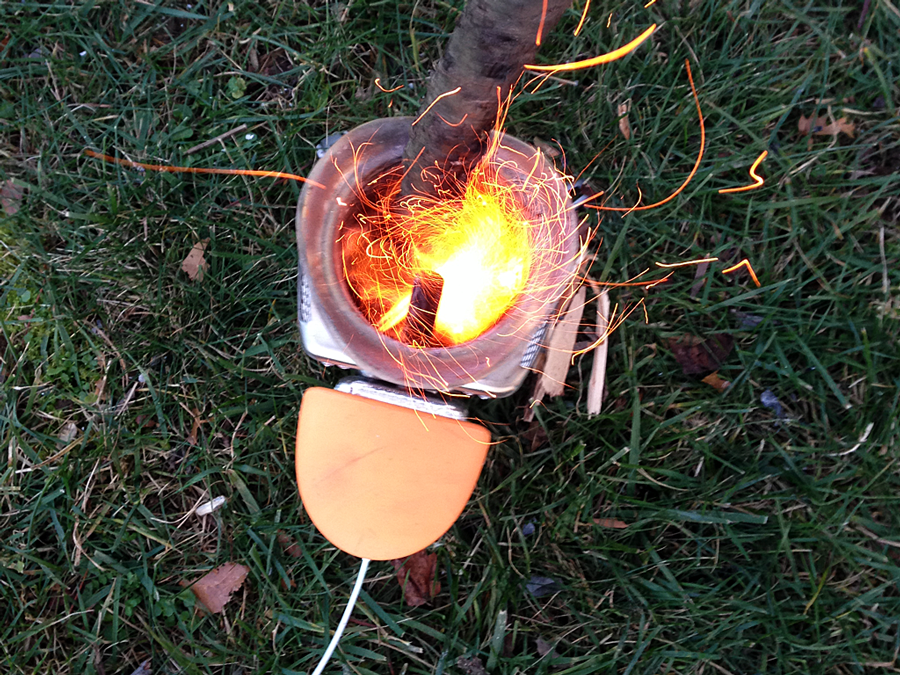
BioLite CampStove

What is It?

To describe the BioLite CampStove simply, it is a wood burning stove that converts heat into electricity in order to charge USB powered devices.

Using only the sticks and twigs you find in nature, you can charge a wide array of devices with the power converted from the mini campfire you create. Because it runs on renewable fuel found outdoors, it’s also fairly “green” (if you’re into that).

BioLite Stoves make cooking on wood as clean, safe & easy as modern fuels while generating electricity to charge phones, lights and other electronics off-grid.

I first fell in love with the idea of the BioLite CampStove when I saw that they were using them during Superstorm Sandy to charge people’s phones and provide hot beverages for those affected by the power outages.

BioLite Stove Charging

Photo © BioLite – BioLite in Action: Emergency CampStove Kits Donated

The BioLite team is based out of Brooklyn, New York and instead of just marking up the cost and selling them on the street to those in need, they gathered up a bunch of firewood and setup stations that would boil water for tea and also charge the smartphones of those trying to check-in with loved ones.

Important Information

  • Compatible Devices: Most USB-chargeable devices including smartphones
  • Fuel: Burns sticks, pine cones, pellets and other biomass
  • 4.5 minutes to boil 1 liter of water
  • Packed size: Height 8.25 inches, Width 5 inches
  • Weight: 2 lbs 1 oz / 935 grams

Why I Like It

It’s fun to build a fire. Well, maybe not for everyone and maybe not all of the time but there is something rewarding about getting a fire started and just watching the wood glow while listening to the sound of sticks crackling. This stove scratches the wood fire itch for sure.

Simply put, the BioLite CampStove is also just a neat idea. If you enjoy new technology then you’ll probably love this gadget.

Backcountry Camping

I feel that this stove is totally capable of handling your needs if you are going backcountry camping. It can provide the basics of providing heat and boiling water and as a bonus, it can charge your mobile phone.

Some will argue that you shouldn’t bring your phone let alone have the need to charge it while camping. I agree that you should embrace nature without having the need to tweet about it non-stop but my phone doubles as my camera and I like to leave with photographic memories for later.

I’ll also often store some notes about the hike on my phone and having a device that charges my phone and can also pull double duty to boil water or cook food is very useful.

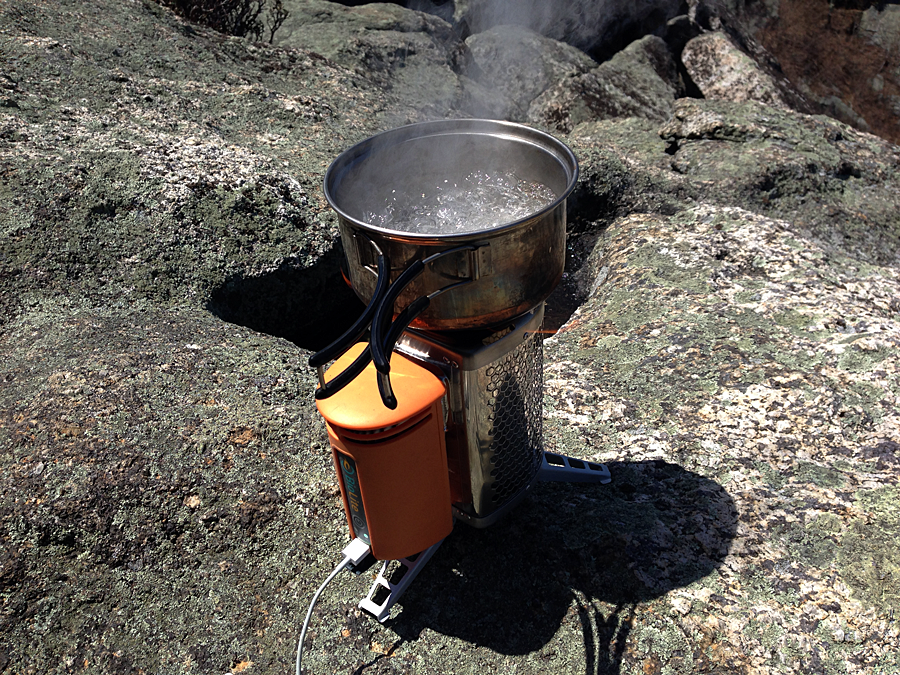
BioLite CampStove boiling water

Other Uses

Honestly, I see the BioLite stove really shining when it comes to an emergency or natural disaster. Power knocked out for a few days? You can boil water for safe drinking and cooking and keep your phone charged so you can stay up to date on what’s going on.

It can also be great to bring along in the car if you want an impromptu s’more or weenie roast. Yeah it sounds a bit goofy but it’s easy to set up and if you pack a few sticks (for fuel) beforehand, you’ll have everything you need to enjoy a hotdog in the park.

If you’re looking to do more substantial grilling, check out their new portable grill that allows you to cook about four burgers or six hotdogs at once. It even has it’s own system of HI, MED and LO temperature zones.

Real World Test

Again, not as a timed or metered test of efficiency but a in simple “Does it work?” test, I can certainly say that it works as intended.

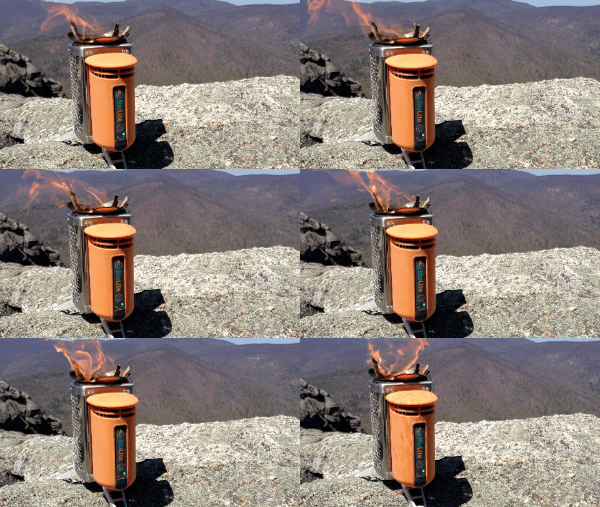
BioLite Stove in ActionWhile hiking Old Rag Mountain in Virginia, I brought along the BioLite CampStove to boil water for lunch at the summit. I found all the sticks I needed right where I set up the stove and had it going in no time. It also only took just under 5 minutes to boil the necessary water.

I recommend the BioLite stove but it may not be for everyone. Does this stove fulfill your needs? There are many camp stoves that are both lighter and more inexpensive than the BioLite and they may fit the bill perfectly.

I recommend checking out a few alternatives but if you want something fun and full of new tech, give this stove a shot.

Where to Buy

You can buy the CampStove direct from BioLite or from REI for $129.95.

19 Jul 01:42

Holder targets Stand Your Ground laws

by MAC

It’s not surprising that the Attorney General is hitting the road to condemn “stands your ground laws” in the wake of the Zimmerman acquittal. It seems the AG and the President both believe defending yourself from a violent attack is wrong. People defend themselves every day all across the country with their legally concealed weapons, so why all of a sudden are the President and AG so interested in banning guns and rolling back self defense laws?

As much as we would like to deny it, the Zimmerman case is in fact about race. It’s about the fact a Black man was killed by a “White Hispanic“, a racial classification fabricated by an over zealous media trying to fan the flames of racism to push forward a political agenda. This desire to turn a self defense shooting into a racially motivated crime for political gain has reached to the very top of our country’s leadership; to the President and the Attorney General.

It’s worth mention that the Administration is quickly moving to trump up civil rights violation charges against Zimmerman despite the fact a FBI investigation concluded Zimmerman isn’t a racist nor was he motivated by a racial bias when he acted in self defense that fateful night.

The day after Zimmerman was acquitted of murder, President Obama took to the media calling for new anti-gun laws to honor Travyon Martin. Martin feloniously assaulted Zimmerman according to the jury that acquitted the neighborhood watch volunteer for the self defense shooting. As unbelievable as it may seem, our President wants to honor a man who was killed in the commission of a crime by desecrating our Constitution and shredding our Bill of Rights. To add insult to injury, the Attorney General now wants to roll back self defense laws so violent attackers are protected under the law and people attempting to defend themselves from such attacks can be prosecuted.

There was a time when our country was suffering from out of control violent crime. 20 years ago few states had concealed carry laws and even fewer had “Castle Doctrine” or “Stand Your Ground” laws preventing prosecutors from bring charges against citizens who used deadly force to protect themselves or their families. Over the course of the last 20 years we’ve gone from only a handful of states allowing their citizens to carry concealed weapons to all 50 states passing concealed carry laws. Illinois was the last state to fall after being forced into passing a concealed carry law by a Federal Court. During that 20 year time, as more and more states passed concealed carry laws, crime across the nation continued to plummet. Today, with all 50 states having concealed carry laws on the books, our nation has the lowest violent crime rate in 20 years.

Watch this video from my friend AmistTheNoise as he breaks down violent crime statistics and trends.


Despite these compelling facts, our President and his henchmen still want to disarm us and now they want to make it illegal for us to defend ourselves from attackers. They want to roll back the last 20 years of progress in reducing crime so we can return to the days where citizens were unable to defend themselves and violent crime rates were soaring. While speaking to the NAACP this week, Eric Holder had this to say.

“These laws try to fix something that was never broken, the list of resulting tragedies is long and, unfortunately, has victimized too many who are innocent.”

Something that was never broken? Have you done any research what-so-ever into the history of violent crime in the United States, Mr. Attorney General? How in the world can you be so far out of touch with reality?

In Mr. Holders’ eyes, Trayvon Martin was an “innocent” victim despite the fact a jury found otherwise. The irony isn’t lost upon me that a man who is guilty of obstructing a Congressional investigation into his own illegal acts is now ignoring the decision of a jury who found Zimmerman innocent in the self defense shooting of Martin. The President and Holder seem to take great pleasure in ignoring laws, breaking laws and disregarding court decisions.

Despite the fact Obama, Holder and their media cronies are trying to make this a discussion about race or even Democrat vs. Republican, it’s not. Don’t be distracted by the chaff. This should be a discussion about right vs. wrong and individual liberties.  It’s about not having to flee your own home should a criminal enter it, or not being forced to take a beating at the hands of a violent attacker hoping he/she doesn’t kill you in their fit of rage.

I hope that the American people wake up to what’s going on around them. This Administration is both out of touch with reality and is completely out of control. Their continued efforts to strip Americans of our right to self defense can not be tolerated. We need to make our voices heard  – WE WILL NOT BE DISARMED AND WE WILL NOT BE VICTIMS.

17 Jul 15:26

CyanogenMod 10.1.1 update arrives with “Master Key” fix

by Robert Nelson

The latest CyanogenMod update has come available. This update will bring your handset up to version 10.1.1, but instead of arriving with a changelog full of new features, this one arrived with a few key bug fixes. More specifically, some security related bug fixes — including a fix for the “Master Key” exploit that has recently been brought to light by Bluebox Security.

cm10-1-1-update

This CM10.1.1 update will fix the Master Key exploit, which is also known as bug 8219321. And in addition to this being fixed in CM10, this issue was also patched for those using CM9 and CM7. The other items in the CM10.1.1 update include the following;

  • CVE-2013-2094 (Linux kernel exploit)
  • CVE-2013-2596 (Qualcomm-specific exploit)
  • CVE-2013-2597 (Qualcomm-specific exploit)

There was also mention of some unspecified “general device” bug fixes. Along with news of the update being available, the folks at CyanogenMod are encouraging users to update as soon as their respective build is available. A quick check of the Verizon Galaxy S III we have running CM10.1.0.3 shows the update as being available and ready. In fact, the update is being downloaded and installed as this post is being written.

bluebox-cm-patched-540

While it is a bit early comment on any issues or side effects that may come as a result of this update, we can say that is has taken care of the “Master Key” issue. We ran the Bluebox security app and are now showing the the Patch Status as being Patched. Simply put, it looks like that is one less issue that CM users have to worry about moving forward.

That said, CyanogenMod users can navigate to the settings and then into About phone -> CyanogenMod updates and hit the refresh button in the upper right to look for the update.

SOURCE: CyanogenMod

17 Jul 15:24

Google Maps v7 detailed: Latitude killed, Offline maps hidden

by Chris Davies

Google has officially detailed Google Maps for Android v7, and while there are are some useful new features, some of the most appreciated aspects of the app have been hidden or removed altogether. Spotted in the Play Store earlier today, the new app refreshes the design based on what Google did over on iOS previously, with a new Explore section that auto-predicts places to eat, drink, or stay in Google Now style cards as you type.

new_google_maps_tablets

There’s also a dedicated tablet interface for Android slates, while the reviews system has also been improved. Now, alongside Zagat reviews, there are five-star ratings from other users and your friends to help you choose a place. Offers, from participating vendors, are also embedded directly into the map itself now.

google_maps_reviews

Meanwhile, traffic has also been given a boost. Now, in addition to showing routes where there’s heavy congestion with color-coding, Google also offers more in-depth information on each incident by tapping it on the map.

google_maps_traffic

Driving directions can also flag up a new route which is potentially faster based on upcoming congestions, similar to what we’ve seen from connected standalone PNDs from TomTom and others. Google Maps now offers to reroute in order to bypass incidents, if the alternative will be quicker.

However, the app has some changes that users may not appreciate so much. My Maps support is gone, for instance, though Google says it will return in a future version. Latitude, SlashGear notes, is being axed altogether. As of August 9, 2013, Latitude will be shut down completely, and friends lists deleted.

Instead, Google suggests, Latitude addicts should jump over to Google+, which already supports check-ins and location sharing.

The other big change is the burying of offline maps. Whereas at first glance the feature is apparently gone altogether, the option to cache a section of the map missing from the settings page, in fact it’s merely accessed in a different way. Panning the map to a part you wish to cache, and then typing “OK Maps” into the search box, saves the section for later use.

new_google_maps_tablets google_maps_explore google_maps_reviews google_maps_traffic
17 Jul 15:13

Illinois Municipalities rushing to ban semi-autos before cutoff date.

by Joe

Local Illinois municipalities are rushing to beat the 10 day window they have to pass any new bans on semiautomatic firearms.

Under the legislation passed establishing Concealed Carry in Illinois, existing bans on semi-automatic firearms, or so called “assault weapons” can stay on the books. Municipalities will also have 10 days to pass any new bans.  After that, municipalities will no longer be allowed to enact any new semi-auto bans.

Several towns are looking to establish a ban as quickly and quietly as possible.  These meetings will likely be done under the cover of darkness so to speak.  They will probably not give much notice and they will be voted on in a single meeting, there won’t be time to hold them over for a future meeting.  Residents will need to be ready to mobilize, make phone calls and show up at short notice.

Don’t expect your local media to cover these meetings and announce them until after the fact.  The Illinois State Rifle Association has a full list of Townhall meetings and I recommend Illinois residents to keep a close eye on that page .

Last night in Waukegan, a ban was defeated thanks in part to sizable turnout by supporters of the Right to Keep and Bear Arms.  You can have a positive impact, none of these towns should be considered lost causes.

I urge any of you in Illinois to stay informed and make sure to make your voice heard at any potential meetings.

17 Jul 15:11

Universal Background Checks Won’t Stop a Murderer

by Fate ofDestinee

The hard faced man handling the Glock at the sales counter has just been released from prison where he rotted for 17 years, living out his sentence for the 2nd degree murder of a rival gang member. He intends to get get his hands on a gun to exact his personal brand of vengeance on the on the loose-lipped scum who gave the prosecution enough information to put him away for nearly 20 years. And, with the cash from trafficking several ounces of heroin lining his pockets, he can get the piece he needs to do that. In his head, he plays through killing the disrespecting low-life using the gun in his hands, and then looks back at the gun clerk, “I’ll take it.” The salesperson turns to the counter behind him and separates a few sheets of paperwork from a file and sets them in front of the felon. “All right,” he sighs, “first we have make sure your background check comes back clear before I can legally sell you this gun.” “I have cash right here, man,” the man protests, slamming his fist on the glass case, “I just got outta prison and I have to kill the guy who put me there! If I can’t pass this check, I’ll never be able to give that worm what’s coming to him.” “Sorry,” the clerk offers, shrugging.

Pretty ridiculous, no? The idea any criminal planning to do violence with a gun would have their murderous plans foiled by a background check is unrealistic. Criminals, by their very nature of being criminals, aren’t following the laws currently in place. It is already illegal to sell a felon or someone with a history of mental illness a firearm. Making the legal process for acquiring firearms lengthier and more restrictive for law-abiding citizens does not somehow incentivize criminals to “go legit.” In the Bureau of Justice Statistics study published in 2001 titled, “Firearm Use by Offenders,” 39.2% of firearms possessed by the surveyed inmates were acquired through illegal street dealers or other black market connections. The remaining 60% is split between an unverifiable “buddy transfer” (~40%) and retail purchases (~20%). This Federal study shows that there are illegal firearms transfers taking place, and proves that there is already a circulation of these “dirty” guns. Universal background checks won’t have any effect on the black market guns that are currently in circulation, nor will it touch future gun purchases made illegally.

The issue here is that there are already laws in place that define selling a firearm to a felon or to a mentally ill individual illegal (as well as laws that make it illegal for these felons and the mentally ill to possess firearms). It is the responsibility of the seller to ascertain the legal status of the individuals to whom they plan to transfer firearms ownership. Adding a system of universal background checks doesn’t establish a new measure of prevention for ensuring guns aren’t transferred to those who are not legally allowed to own them. It simply creates a new, unenforceable law, that makes firearm purchases needlessly burdensome …without the ability to foil a criminal’s murderous plan.

13 Jul 19:50

The credit card with a half-million-dollar credit limit

by Raymond Chen - MSFT

Corporate policies for acquiring hardware typically require going through a bunch of procedures, like issuing purchase orders, getting appropriate approvals, all the usual red tape with the purpose of preventing fraud. But the Windows 95 project was so notoriously behind schedule that upper management removed some procedural roadblocks.

To expedite the acquisition of hardware for members of the development team, the administrative assistant for the core development team was issued a corporate credit card with a credit limit of $500,000. (You can calculate what $500,000 in 1994 dollars corresponds to in today's money.) I assume the theory here was "buy first, fill out paperwork later."

"It's kind of weird having a credit card in your pocket that you could buy a house with."

13 Jul 19:10

Helping or hurting the cause?

by MAC

Every movement has it’s radical activists that purposely push things to the limit in an effort to draw attention to their cause.  Some animal rights activists have been known to throw red paint on people wearing fur coats, anti-nuclear weapons activists have been known to board Russian subs to plant flags, and some gun rights activists flagrantly break laws to draw attention to themselves and our cause.

The question is, does this help us or hurt us?  By “us” I mean those of us in the firearms community actively engaged in trying to roll back restrictive gun laws, prevent new laws from passing and preserving our 2nd Amendment rights.

On July 4th of 2013 Adam Kokesh, a controversial figure in the Libertarian/anti-war movement, filmed a short clip in Washington DC of him loading a 12ga shotgun and issuing a thinly veiled threat of revolution to politicians. In doing this he violated at least one of Washington DC’s strict gun laws and was arrested for on Tuesday of this week.  You see, in the capital of “freedom” it’s illegal to be in possession of a loaded firearm in public.  You can have a loaded firearm in your home, but the moment you leave private property with it you become a felon and face 5 years in prison plus a $5,000 fine.

Here’s the video Mr. Kokesh posted to his YouTube channel.


His actions clearly excite a base of gun owners who are fed-up with government encroachments on our rights. There are those who will waive their fists in the air and scream “HELL YEAH” while watching this video.  But on a larger scale does this help us in our fight to maintain our 2nd Amendment rights?

Ask yourself this, if a voting fence sitter was undecided about supporting a new ban on “assault rifles” and they watched this video, do you think it would sway them to our side of the argument or do you think it might push them towards supporting the new ban?  Let’s assume this fence sitter wasn’t a gun owner, or perhaps had an old .22 rifle their grandfather gave them 20 years earlier they’ve never touched since.

I suspect this video would push them towards supporting a new ban.

Now ask yourself this, do you think a Congresscritter who might be on the fence for supporting a new bill to ban “assault weapons” watched this video, do you think it would sway them towards voting for the ban or against it?

I suspect this video would be more likely to sway them towards voting to support the ban.

I can’t think of any scenario where such a stunt helps our cause politically but I can see several ways it could backfire and work against us. I don’t think something like this on its own could crush our movement, I’m just saying it doesn’t really help.

I’m all for demonstrating (I’ve attended countless pro-2nd Amendment demonstrations) and even open carrying where legal to rally our 2nd Amendment supporting troops into action. I’m even for civil disobedience at times when all other measures have failed.  But what I’m not supportive of is making a spectacle of ourselves by committing felonies then posting the videos of it on YouTube for the MSM to beat us over the head with.

Me speaking at a pro-2nd Amendment rally in my home town earlier this year.

Me speaking at a pro-2nd Amendment rally in my home town earlier this year while legally open carrying a rifle on the steps of our courthouse.

What people like Kokesh don’t realize or fail to acknowledge is that we are winning our fight for the 2nd Amendment on a national level. We’ve now passed concealed carry laws in all 50 states, we’re seeing more states ease restrictions on things like suppressors (Indiana now allows their use for hunting) and we’re making inroads into getting the BATF to back-off on certain NFA restrictions as well. Many states now have “Castle Doctrine” laws on the books making it illegal for the state to prosecute home owners for using deadly force on home invaders.  Indiana even went so far as to amend their Castle Doctrine law making it legal to use deadly force against public servants, including police, that enter your home illegally.  We’re seeings states passing bills defying the federal government by nullifying any future anti-gun laws that might trickle out of Washington.  All of this has been accomplished without a bunch of us committing felonies and posting video of it on YouTube.

We are winning the fight. We haven’t won the fight, not by a long shot, but we are winning.

There’s no need for a bloody revolution right now. You would think a combat veteran like Kokesh, who has seen the horrors of war first hand, would be a bit more reserved in calling for Americans to take up arms against other Americans. I’m certainly not there yet.

I’m not trying to discourage any of you from protesting anti-gun laws or encroachments on our liberties. To the contrary, I ENCOURAGE you to get active and to take to the streets. I help organize local events and I’ve even given speeches while carry a firearm openly on the steps of our local courthouse. The difference is I’m not purposely breaking laws and posting video of it online. If we do such things we become no better than those who would strip us of our freedoms, like David Gregory and his stunt that gained national attention.

If you disagree with me, let me know in the comments below.  I am curious what my fellow gun owners and 2nd Amendment activists think about this.

13 Jul 19:00

UPDATED: Illinois Concealed Carry Passes After Governor’s Veto Overridden

by Dylan Polk
IGOLD_004

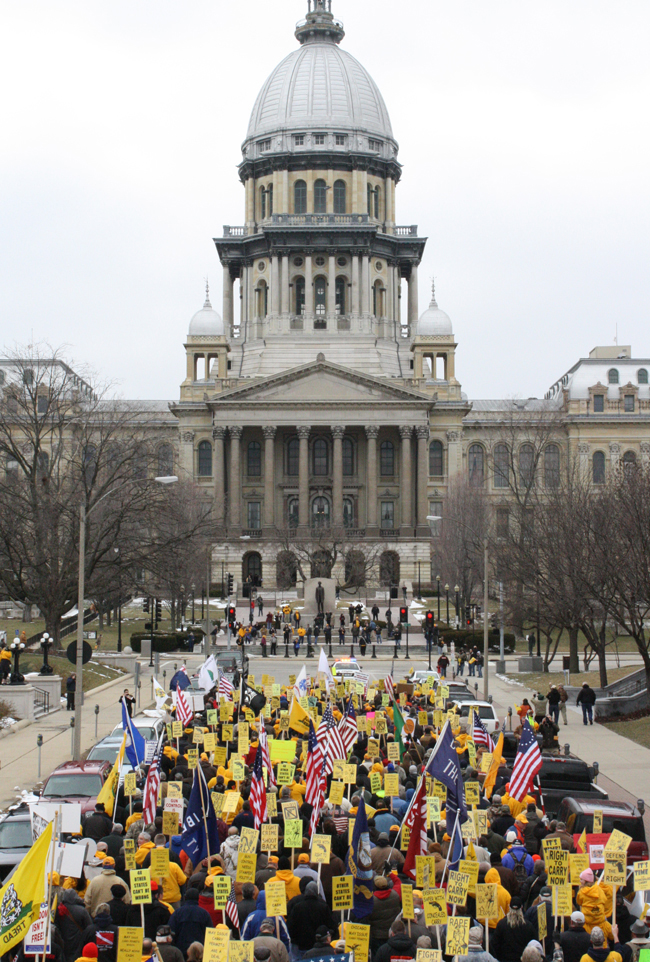
Gun owners march toward the State Capitol in Springfield, Ill., to lobby for concealed carry during Illinois Gun Owners Lobby Day on March 6, 2013.

Despite the best efforts of Chicago-area politicians to delay the inevitable, Illinois concealed carry is finally a reality.

According to The (Springfield, Ill.) State Journal-Register, after an amendatory veto by Illinois Gov. Pat Quinn, the General Assembly voted Tuesday to override the veto and passed the state Senate by a 41-17 vote, making Illinois the final state to pass a concealed carry policy.

The move comes months after a federal appeals court ruled the state’s concealed carry ban was unconstitutional and ordered state lawmakers to come up with a policy within 180 days, though that deadline was pushed back several times as Quinn took time to “review” the bill.

While the governor delayed, state’s attorneys across the state publicly refused to prosecute anyone arrested solely on the charge of carrying a concealed firearm.

The move put pressure on Quinn to take action on the bill. However, Quinn exercised an amendatory veto, saying he couldn’t accept the bill as it was written and implored the General Assembly to draft a new one—just days ahead of the state’s final deadline, after which constitutional carry would be in effect. With the veto, Quinn sought to limit gun owners to one handgun with a 10-round magazine limit and a ban on carrying in establishments serving alcohol, among other provisions.

Before Tuesday’s vote, Quinn predicted a showdown with state lawmakers, some of whom openly questioned the governor’s motives, especially given the tight deadline.

“Why would the governor want to put people in that predicament?” Rep. Brandon Phelps—a Democrat from downstate Harrisburg, Ill., and one of the bill’s sponsors—told The State Journal-Register. “That’s the problem with what’s he’s doing. I don’t think he understands what he’s doing.”

Now, the Illinois State Police have six months to make ready a system to accept a flood of concealed carry permit applications.

It may take some time, but Illinoisans will finally be granted the rights entitled to them by the Second Amendment. In a state known for imprisoned governors and other embarrassing examples of political corruption, we’re glad to see something positive finally coming from the Land of Lincoln.

As for Quinn, we wouldn’t be surprised if this snafu—and the ongoing pension battle, and the tremendous amount of debt facing the state—has a detrimental effect on his campaign in 2014.

UPDATE (7/15/13): As we predicted, state legislators are calling Quinn’s focus into question, accusing the governor of rallying support from the Chicagoland area while apparently ignoring the wishes of the rest of the state, prompting some lawmakers to wonder if a downstate candidate could challenge Quinn in 2014.

According to The Associated Press, Quinn made several stops in Chicago while trying to push further restrictions down Illinoisans’ throats—and he never went south of I-80, prompting many downstate Democrats to wonder if Quinn even cares about opinions downstate.

“I just want someone who does not forget about southern Illinois,” said Alice Harris, the Democratic Party chair in Jefferson County, Ill., near the St. Louis metro area. “Seems like all the governors forget about southern Illinois.”

Now, lawmakers wonder if a downstate Democrat could challenge Quinn for the Democratic ticket. Appealing, yes, but certainly a tall task.

“I don’t envision that a downstate candidate is going to crack the monolithic wall of Cook County, and that’s where the votes are,” said Paul Wieck, the Coles County, Ill., Democratic Party chair. “Not a ton of downstate industry and millionaires are supporting downstate Democrats.”

Meanwhile, the following message was posted to Quinn’s Facebook page the same day the General Assembly passed the concealed carry bill:

“Following a weekend of horrific violence in Chicago in which at least 70 people were shot and 12 killed, this was the wrong move for public safety in Illinois. … In a supreme overreach, this bill even included the National Rifle Association’s trademark provision—a ban on future assault weapon bans in home-rule communities—which has nothing to do with the concealed carry of handguns. Public safety should never be compromised or negotiated away. It was wrong on May 31 and it’s wrong today.”


09 Jul 04:08

Gov. Quinn has blood on his hands

by MAC

49 states now have concealed carry laws on the books allowing their citizens the ability to carry firearms for self defense. A few states, such as California, have “may issue” laws meaning a bureaucrat gets to arbitrarily decide if you’re worthy of self preservation or not. Your fame or wealth, or lack thereof, usually dictates if you’re deemed worthy or not to be trusted with defending your own life. Most states have “shall issue” concealed carry laws meaning if you apply for a permit to carry you are given one as long as you’re not legally prohibited from owning a firearm.

Not surprisingly, Illinois has been the last hold-out in passing a concealed carry law. They were so adamantly opposed to passing such a law that it took the U.S. 7th Circuit Court ordering the state to pass a concealed carry law before the state legislature took the issue seriously. As to be expected, Illinois legislators drug their feet for as long as possible in passing a concealed carry law, running the clock down on the court order to the absolute last minute. The state even fought for extensions so they could drag their feet even longer, but ultimately a bill was passed which now sits on Governor Quinns’ desk. The good Governor, in keeping pace with his fellow statists in the legislature, has decided to drag his feet too by letting the bill sit unsigned for as long as the court order would allow. At the last minute, Quinn amended the law with heavy handed restrictions to further frustrate not only his opponents but his own party members.

Through a process known as Amendatory Veto, Quinn added provisions to the new law that would restrict permit holders from carrying more than one firearm and more than 10 rounds in a single magazine. He also added a provision making it illegal to carry a firearm into any establishment that serves alcohol, which is nearly every restaurant in Illinois. The logic behind these changes, if you can call it that, is that these measures will save lives. If reducing the number of firearms which can legally be carried to (1) and limiting the amount of ammo to (10) rounds was a life saving measure, I wonder why Quinn hasn’t imposed the same restrictions on law enforcement officers in the state of Illinois.

Illinois, more specifically Chicago, continues to be the deadliest city in America. You’re safer living in Baghdad than you are Chicago, and the gun grabbers want you to believe that’s because they need more gun controls. Forget that violent crime nationwide has been plummeting for the last couple of decades despite the fact gun ownership continues to increase nationally. Not only are more Americans buying guns, but over the course of the last couple of decades we went from a handful of states issuing concealed carry permits to 49 states issuing them in 2013. If what the gun grabbers are saying was true, we would see running gun battles in the streets and murder rates skyrocketing out of control nationwide… yet the exact opposite is true. If you have any doubts about the validity of what I’ve just said or the source of my information, watch this video from AmidsTheNoise.

The problem is that gun grabbers want to subjugate the citizens and will use every lie they can possibly concoct to sell their anti-freedom agenda to the sheep — I mean citizens. A common lie told by gun grabbers is that Chicago’s murder rate is so high because guns are easy to obtain in neighboring Indiana. It’s true, Indiana is a free state that allows people to carry concealed weapons and to buy firearms without draconian restrictions. However, Indiana isn’t unique. Most states in the country have laws very similar to Indiana’s and ironically none of them have the soaring violent crime that Chicago has.

A gun grabbing professor at Yale University, Andrew Papachristos, had this commentary to add to the discussion.

“I did work on Chicago’s gun laws, and one reason why they didn’t work is because of other states’ lax laws. Chicagoans are only a few highway exits from Indiana, where gun laws are far more lax. The distance isn’t a sufficient barrier for gun crime, no matter how strict Chicago’s laws.”

You would think a college professor at an esteemed university such as Yale would have something a little more intelligent to contribute to the discussion. If easy access to firearms in Indiana is at the root of Chicago’s violent crime problem, then why aren’t we slaughtering each other in droves here in the Hoosier state? The guns that leave Indiana and migrate to Chicago represent a small fraction of the guns we have here in Hoosierland, and less than 1% of all firearms sold annually in my home state.

It boils down to this. If 49 states have concealed carry laws on the books and violent crime is dropping year after year across the board then why is Chicago, which historically has had the strictest gun control laws in the nation, the murder capital of the country? There’s only one logical answer to that question. Quinn and his gun grabbing cronies know the answer, don’t fool yourself into thinking they don’t. Quinn’s attempts to block the concealed carry law and to impose ridiculous restrictions isn’t about saving lives or preventing crime, it’s about controlling his subjects.

I’ve said it before and I’ll say it again, gun control kills innocent Americans. Every day that Quinn and his anti-gun cohorts drag their feet unnecessarily in passing Illinois CCW law is another day that innocent, unarmed and defenseless Americans die at the hands of criminals. Every time Nancy Pelosi or Dianne Feistein introduce another gun ban proposal, it’s the lives of your family and friends that hang in the balance.

07 Jul 18:42

Fenix TK75 LED Flashlight review

by Dave Rees

fenix_td70-ark

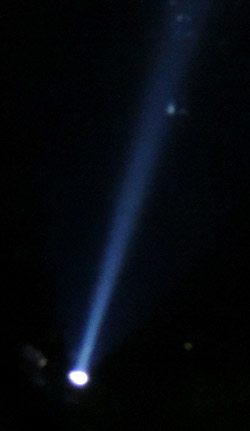
Several years ago, I reviewed the Fenix TK70 LED flashlight (see related posts) and raved about how bright and well made it was. I even gave it a nickname, referring to it as the Ark of the Covenant (AotC) because of the very bright pillar/beam of light it produces, as shown in the picture above. Well fortunately the folks at CR123Batteries.com sent me the lastest and brightest flashlight Fenix offers, the more compact, yet brighter Fenix TK75 LED flashlight to see if it can take away the AotC award from its larger sibling.

tk75_closeup2

The Fenix TK75 has three high-powered Cree XM-L (U2) LEDs with a (theoretical) lifespan of 50,000 hours. Its digitally regulated output maintains constant brightness of up to 2600 lumens (wowza). It also has reverse polarity protection to protect itself from improper battery installation and over-discharge protection circuit to protect the rechargeable batteries effectively. To protect the LEDs, Fenix uses a “tough” ultra-clear glass lens with an anti-reflective coating.

tk75_field2

This lantern produces an 80-degree flood beam angle to provide a “panoramic view” – think something akin to a car headlight on high beam. Here is the Gadgeteer Kid lighting up our field at night, a pretty good illustration of just how bright this flashlight is.

Package Contents

The the TK75 typically comes with only the lanyard and spare o-rings. But CR123Batteries sent me the Fenix TK75 LED Flashlight Package that includes not only the flashlight but four 18650 rechargeable Li-ion batteries, Fenix ARE-C1 Smart Battery Charger, and 12-volt adapter/cord.

tk75_contents

The only issue I have with the Fenix TK75 LED Flashlight Package is that the flashlight typically uses four batteries, but the charger can only accommodate two at a time, so you’ll need two recharge cycle times for all the batteries to be fully good to go.

tk75_apart2

Like the TK70, the pieces of the TK75 screw together very much like the lightsabers the Gadgeteer Kid and I built and reviewed a few years ago. The finely-threaded aluminum pieces easily twist together, sealed by a rubber o-ring. The aluminum is aircraft-grade and durable, coated with a Type III hard-anodized anti-abrasive finish. This lantern is waterproof to IPX-8 standard of 2 meters.

Features

  • Maximum 2600-Lumen Ultra High-Intensity Searching Flashlight
  • Utilizes three Cree XM-L(U2) LEDs with the individual reflector respectively with a lifespan of 50,000 hours
  • Incredible 606-meter beam throw
  • Over 8-day run time, suitable for long-time searching
  • Over 80-degree flood beam angle to provide a panoramic view
  • 4 brightness levels (Low: 18 Lumens, Mid: 400 Lumens, High: 1100 Lumens, Turbo: 2600 Lumens), Strobe, and SOS
  • Compact and portable so easy to carry
  • Intelligent Memory Circuit
  • Over-discharge protection circuit
  • Capable of standing up securely on a flat surface as a candle
  • Uses four 18650 rechargeable Li-ion batteries when needed but also can be powered by two 18650 rechargeable Li-ion batteries
  • Run time can be extended with the addition of a body tube segment and battery holder (sold as an accessory kit).  Run time will double with each segment-holder addition but brightness levels will not change.
  • Waterproof to IPX-8 standard, underwater 2 meters
  • Stainless steel bezel
  • Toughened ultra-clear glass lens with anti-reflective coating
  • Dual button switch system on the neck for quick switching
  • Type III hard-anodized finish
  • 185mm (length) x 52.5mm (diameter) x 87.5 (head)
  • 510-gram weight (excluding batteries)
  • Digitally-regulated output:  maintains constant brightness
  • Low-voltage warning function to alert users to replace the batteries
  • Reverse polarity protection guards against improper battery installation

tk75_top

The stock TK75 measures 7.3″ (length) x 2.2″ (diameter) x 3.4″ (head) and weighs 1.5 lbs with batteries. Its power source is four 2600 mAh high-capacity batteries. Although, if you do not have four 18650′s, the TK75 can be operated with just two. Four of these high-capacity batteries enable the TK75 to run 8 days (lowest beam setting) on a single charge.

tk75_handle

The dual switch system is easy to use; the right button turns the flashlight on and off and the left button cycles through the four brightness/power levels. The handle is machined for grip-ability and has a nice feel to it. The base has multiple loops/hard-points to connect the lanyard to.

tk75_chart

tk75_brightness

The TK75 has four brightness levels (Low: 18 Lumens; Mid: 400 Lumens; High: 1100 Lumens; Turbo: 2600 Lumens), plus Strobe, and SOS modes.

tk75_heatfins

The three Cree XM-L(U2) LEDs are so powerful that there are ‘high-efficiency’ heat dissipation fins engineered into the TD75 that effectively radiate heat from the LEDs and electronics within the head. This helps protect the LEDs and electronics, ensuring that they do not overheat.

tk75_lineup

Other than its light output, the thing that impresses me the most about the TK75 is its form factor. The TK75 produces a huge amount of light considering its relatively small size and weight.

tk75_inhand2

Where the TK70 is long and clumberome, the TK75 fits nicely into the palm of your hand, is easy to maneuver, and has a great quality and weight to it.

tk75_extended

Even though I really like the TK75′s compact form factor, you can purchase the Fenix TK75 Runtime Kit which adds a machined aluminum extension that screws onto the end of the barrel of the flashlight. The kit also includes the holder for additional 18650 batteries (not included). They are obviously designed to extend the run-time of the TK75 before needing to recharge the powercells. According to Fenix, the runtime will double with each segment-holder addition, but brightness levels will not change.

tk75_spire2

After using the Fenix TK75 for a month now, I can definitively say it is the new winner of the Ark of the Covenant award without a doubt. Not only is it more powerful/brighter than the TK70, but it is lighter, more compact, and has a better form factor. Its material and build quality are very good, definitely on par with a majority of the other top-end flashlights out there today. The Fenix TK75 itself without batteries is $200, but I highly recommend considering the TK75 package/kit that includes rechargeable Li-ion batteries and charger for only $27 more.

Tagged as: LED flashlight, LED lantern


Powered By WizardRSS.com | Full Text RSS Feed | Amazon Affiliate software for Amazon Store websites | Android Forums | Wordpress Tutorials
07 Jul 18:32

Cree 9.5 watt LED light bulb

by mark

I have used the Cree LED warm bulbs for a month and they are a excellent replacement for a 60 Watt incandescent bulb. The light is better than CFLs I have used. This new 800 lumen light has a color temperature of 2700K, on 9.5 watts. It has the shape and general look of a incandescent bulb and is a screw-in replacement. Its rated life is 25,000 hours and comes with a 10 year warranty At $13 from Home Depot, I see this as a game changer and a CFL killer. They work with dimmer switches.

-- Louis Nettels

Cree 9.5 watt LED light bulb
$13 from Home Depot

Available from Amazon